What future for Small Nuclear Reactors (SMRs) in Australia ?

Small nuclear reactor? It’s a lemon!
Large taxpayer subsidies might get some projects, such as the NuScale project in the US or the Rolls-Royce mid-sized reactor project in the UK, to the construction stage. Or they may join the growing list of abandoned SMR projects
In 2022, nuclear power’s future looks grimmer than ever, Jim Green, 11 Jan 2022, RenewEconomy
”……………………………………….. Small modular reactors
Small modular reactors (SMRs) are heavily promoted but construction projects are few and far between and have exhibited disastrous cost overruns and multi-year delays.
It should be noted that none of the projects discussed below meet the ‘modular’ definition of serial factory production of reactor components, which could potentially drive down costs. Using that definition, no SMRs have ever been built and no country, company or utility is building the infrastructure for SMR construction.
In 2004, when the CAREM SMR in Argentina was in the planning stage, Argentina’s Bariloche Atomic Center estimated an overnight cost of A$1.4 billion / GW for an integrated 300 megawatt (MW) plant, while acknowledging that to achieve such a cost would be a “very difficult task”. Now, the cost estimate is more than 20 times greater at A$32.6 billion / GW. A little over A$1 billion for a reactor with a capacity of just 32 MW. The project is seven years behind schedule and costs will likely increase further.
Russia’s 70 MW floating nuclear power plant is said to be the only operating SMR anywhere in the world (although it doesn’t fit the ‘modular’ definition of serial factory production). The construction cost increased six-fold from 6 billion rubles to 37 billion rubles (A$688 million), equivalent to A$9.8 billion / GW. The construction project was nine years behind schedule.

According to the OECD’s Nuclear Energy Agency, electricity produced by the Russian floating plant costs an estimated A$279 / MWh, with the high cost due to large staffing requirements, high fuel costs, and resources required to maintain the barge and coastal infrastructure. The cost of electricity produced by the Russian plant exceeds costs from large reactors (A$182-284) even though SMRs are being promoted as the solution to the exorbitant costs of large nuclear plants.
SMRs are being promoted as important potential contributors to climate change abatement but the primary purpose of the Russian plant is to power fossil fuel mining operations in the Arctic.
A 2016 report said that the estimated construction cost of China’s demonstration 210 MW high-temperature gas-cooled reactor (HTGR) is about A$7.0 billion / GW and that cost increases have arisen from higher material and component costs, increases in labour costs, and project delays. The World Nuclear Association states that the cost is A$8.4 billion / GW. Those figures are 2-3 times higher than the A$2.8 billion / GW estimate in a 2009 paper by Tsinghua University researchers.
China’s HTGR was partially grid-connected in late-2021 and full connection will take place in early 2022.
China reportedly plans to upscale the HTGR design to 655 MW (three reactor modules feeding one turbine). China’s Institute of Nuclear and New Energy Technology at Tsinghua University expects the cost of a 655 MW HTGR will be 15-20 percent higher than the cost of a conventional 600 MW pressurised water reactor.
NucNet reported in 2020 that China’s State Nuclear Power Technology Corp dropped plans to manufacture 20 additional HTGR units after levelised cost of electricity estimates rose to levels higher than a conventional pressurised water reactor such as China’s indigenous Hualong One. Likewise, the World Nuclear Association states that plans for 18 additional HTGRs at the same site as the demonstration plant have been “dropped”.

The World Nuclear Association lists just two other SMR construction projects other than those listed above. In July 2021, China National Nuclear Corporation (CNNC) New Energy Corporation began construction of the 125 MW pressurised water reactor ACP100. According to CNNC, construction costs per kilowatt will be twice the cost of large reactors, and the levelised cost of electricity will be 50 percent higher than large reactors.

In June 2021, construction of the 300 MW demonstration lead-cooled BREST fast reactor began in Russia. In 2012, the estimated cost for the reactor and associated facilities was A$780 million, but the cost estimate has more than doubled and now stands at A$1.9 billion.
SMR hype
Much more could be said about the proliferation of SMRs in the ‘planning’ stage, and the accompanying hype. For example a recent review asserts that more than 30 demonstrations of ‘advanced’ reactor designs are in progress across the globe. In fact, few have progressed beyond the planning stage, and few will. Private-sector funding has been scant and taxpayer funding has generally been well short of that required for SMR construction projects to proceed.
Large taxpayer subsidies might get some projects, such as the NuScale project in the US or the Rolls-Royce mid-sized reactor project in the UK, to the construction stage. Or they may join the growing list of abandoned SMR projects.
A failed history of small reactor projects. A handful of recent construction projects, most subject to major cost overruns and multi-year delays. And the possibility of a small number of SMR construction projects over the next decade. Clearly the hype surrounding SMRs lacks justification.
Everything that is promising about SMRs belongs in the never-never; everything in the real-world is expensive and over-budget, slow and behind schedule. Moreover, there are disturbing, multifaceted connections between SMR projects and nuclear weapons proliferation, and between SMRs and fossil fuel mining.
SMRs for Australia
There is ongoing promotion of SMRs in Australia but a study by WSP / Parsons Brinckerhoff, commissioned by the South Australian Nuclear Fuel Cycle Royal Commission, estimated costs of A$225 / MWh for SMRs. The Minerals Council of Australia states that SMRs won’t find a market unless they can produce power at about one-third of that cost.
In its 2021 GenCost report, CSIRO provides these 2030 cost estimates:
* Nuclear (SMR): A$128-322 / MWh
* 90 percent wind and solar PV with integration costs (transmission, storage and synchronous condensers): A$55-80 / MWh
Enthusiasts hope that nuclear power’s cost competitiveness will improve, but in all likelihood it will continue to worsen. Alone among energy sources, nuclear power becomes more expensive over time, or in other words it has a negative learning curve.
Dr Jim Green is the national nuclear campaigner with Friends of the Earth Australia and the author of a recent report on nuclear power’s economic crisis. , https://reneweconomy.com.au/in-2022-nuclear-powers-future-is-grimmer-than-ever/
The European Union will need to invest 500 billion euros ($568 billion) in new generation nuclear power stations!
France24 9th Jan 2022
The European Union will need to invest 500 billion euros ($568 billion) in new generation nuclear power stations from now until 2050, the bloc’s internal market commissioner said in an interview published at the weekend.
“Existing nuclear plants alone will need 50 billion euros of investment from now until 2030. And new generation ones will need 500 billion!” Thierry Breton told the Journal du Dimanche newspaper. Breton also argued that an EU plan to label energy from nuclear power and natural gas as “green” sources for investment was a vital step towards attracting that capital. The EU is consulting its member states on that proposal, with internal disagreement on whether the power sources truly qualify as sustainable options.
France24 9th Jan 2022
In 2022, nuclear power’s future looks grimmer than ever.

As new renewable energy capacity continues to boom, nuclear power generation declined in 2021 and the industry’s future is grimmer than it has ever been. The post In 2022, nuclear power’s future looks grimmer than ever appeared first on RenewEconomy.
In 2022, nuclear power’s future looks grimmer than ever — RenewEconomy Renew Economy, Jim Green 11 Jan 22,
The decline was marginal (<1 per cent): a net loss of two power reactors (six start-ups and eight 8 permanent closures) and a net loss of 2.5 gigawatts (GW) of nuclear capacity.
The marginal decline makes for a striking contrast with renewables. The International Energy Agency calculates that new renewable capacity added in 2021 amounted to nearly 290 GW – that’s more than four times Australia’s total electricity generating capacity.
Nuclear power’s contribution to global electricity supply has fallen from a peak of 17.5 percent in 1996 to 10.1 percent in 2020. Renewables reached an estimated 29 per cent share of global electricity generation in 2020, a record share.
The ageing of the world’s reactor fleet is a huge problem for the nuclear industry, as is the ageing of its workforce — the silver tsunami. The average age of the world’s reactor fleet continues to rise and by mid-2021 reached 30.9 years. The mean age of the 23 reactors shut down between 2016 and 2020 was 42.6 years.
Primarily because of the ageing of the reactor fleet, the International Atomic Energy Agency estimates up to 139 GW of lost nuclear capacity from 2018-2030 due to permanent reactor shutdowns, and a further loss of up to 186 GW from 2030-2050.
So the industry needs about 10 new power reactors (or 10 GW) each year just to maintain its 30-year pattern of stagnation. And there were indeed 10 reactor construction starts in 2021, six of them in China.
But the average annual number of construction starts since 2014 has been just 5.1. Thus, slow decline of nuclear power is the most likely outcome. An extension of the 30-year pattern of stagnation is possible, if and only if China does the heavy lifting. China has averaged just 2.5 reactor construction starts per year since 2011.
Phasing out nuclear power
The number of countries phasing out nuclear power steadily grows and now includes:
Nuclear power generation declined in 2021 and the industry’s future is grimmer than it has ever been.
The decline was marginal (<1 per cent): a net loss of two power reactors (six start-ups and eight 8 permanent closures) and a net loss of 2.5 gigawatts (GW) of nuclear capacity.
The marginal decline makes for a striking contrast with renewables. The International Energy Agency calculates that new renewable capacity added in 2021 amounted to nearly 290 GW – that’s more than four times Australia’s total electricity generating capacity.
Nuclear power’s contribution to global electricity supply has fallen from a peak of 17.5 percent in 1996 to 10.1 percent in 2020. Renewables reached an estimated 29 per cent share of global electricity generation in 2020, a record share.
The ageing of the world’s reactor fleet is a huge problem for the nuclear industry, as is the ageing of its workforce — the silver tsunami. The average age of the world’s reactor fleet continues to rise and by mid-2021 reached 30.9 years. The mean age of the 23 reactors shut down between 2016 and 2020 was 42.6 years.
Primarily because of the ageing of the reactor fleet, the International Atomic Energy Agency estimates up to 139 GW of lost nuclear capacity from 2018-2030 due to permanent reactor shutdowns, and a further loss of up to 186 GW from 2030-2050
So the industry needs about 10 new power reactors (or 10 GW) each year just to maintain its 30-year pattern of stagnation. And there were indeed 10 reactor construction starts in 2021, six of them in China.
But the average annual number of construction starts since 2014 has been just 5.1. Thus, slow decline of nuclear power is the most likely outcome. An extension of the 30-year pattern of stagnation is possible, if and only if China does the heavy lifting. China has averaged just 2.5 reactor construction starts per year since 2011.
Phasing out nuclear power
The number of countries phasing out nuclear power steadily grows and now includes:
Germany: Fourteen reactors have shut down since the 2011 Fukushima disaster and the final three reactors will close this year.
Belgium: The country’s seven ageing reactors will all be closed by the end of 2025.
Taiwan: Final reactor closure scheduled for 2025. Four reactors were shut down from 2018 to 2021 and only two remain operational.
Spain: Nuclear power capacity is expected to decline from 7.1 GW in 2020 to 3 GW in 2030 with the final reactor closure in 2035.
Switzerland: The government accepted the results of a 2017 referendum which supported a ban on new reactors and thus a gradual phase-out is underway. The Mühleberg reactor was shut down in 2019 and most or all of the remaining four ageing reactors are likely to be shut down over the next decade.
South Korea: Long-term (2060) phase-out policy with concrete actions already taken including the shut-down of the Kori-1 and Wolsong-1 reactors in 2017 and 2019 respectively, and suspension or cancellation of plans for six further reactors. The current plan is to reduce the number of reactors from a peak of 26 in 2024 to 17 in 2034.
Too cheap to meter or too expensive to matter?
Despite the abundance of evidence that nuclear power is hopelessly uncompetitive compared to renewables, the nuclear industry and some of its supporters continue to claim otherwise.
Those economic claims are typically based on implausible cost projections for non-existent ‘Generation IV’ reactor concepts. Moreover, the nuclear lobby’s claims about the cost of renewables are just as ridiculous.
Claims about ‘cheap’ nuclear power certainly don’t consider real-world nuclear construction projects. Every power reactor construction project in Western Europe and the US over the past decade has been a disaster.
The V.C. Summer project in South Carolina (two AP1000 reactors) was abandoned after the expenditure of at least A$12.5 billion leading Westinghouse to file for bankruptcy in 2017. Criminal investigations and prosecutions related to the project are ongoing, and bailout programs to prolong operation of ageing reactors are also mired in corruption.
The only remaining reactor construction project in the US is the Vogtle project in Georgia (two AP1000 reactors). The current cost estimate of A$37.6-41.8 billion is twice the estimate when construction began. Costs continue to increase and the project only survives because of multi-billion-dollar taxpayer bailouts. The project is six years behind schedule.
In 2006, Westinghouse said it could build an AP1000 reactor for as little as A$2.0 billion, 10 times lower than the current estimate for Vogtle.
The Watts Bar 2 reactor in Tennessee began operation in 2016, 43 years after construction began. That is the only power reactor start-up in the US over the past quarter-century. The previous start-up was Watts Bar 1, completed in 1996 after a 23-year construction period.
In 2021, TVA abandoned the unfinished Bellefonte nuclear plant in Alabama, 47 years after construction began and following the expenditure of an estimated A$8.1 billion.
There have been no other power reactor construction projects in the US over the past 25 years other than those listed above. Numerous other reactor projects were abandoned before construction began, some following the expenditure of hundreds of millions of dollars.
Western Europe
The only current reactor construction project in France is one EPR reactor under construction at Flamanville. The current cost estimate of A$30.1 billion — yes, over A$30 billion — is 5.8 times greater than the original estimate. The Flamanville reactor is 10 years behind schedule.
The only reactor construction project in the UK comprises two EPR reactors under construction at Hinkley Point. In the late 2000s, the estimated construction cost for one EPR reactor in the UK was A$3.8 billion. The current cost estimate for two EPR reactors at Hinkley Point is A$41.6-43.5 billion, over five times greater than the initial estimate of A$3.8 billion per reactor.
In 2007, EDF boasted that Britons would be using electricity from an EPR reactor at Hinkley Point to cook their Christmas turkeys in 2017, but construction didn’t even begin until 2018.
One EPR reactor (Olkiluoto-3) is under construction in Finland. The current cost estimate of about A$17.4 billion is 3.7 times greater than the original estimate. Olkiluoto-3 is 13 years behind schedule.
Nuclear power is growing in a few countries, but only barely. China is said to be the industry’s shining light but nuclear growth has been modest over the past decade and it is paltry compared to renewables (2 GW of nuclear power capacity added in 2020 compared to 135 GW of renewables).
There were only three power reactor construction starts in Russia in the decade from 2011 to 2020, and only four in India……………………………… https://reneweconomy.com.au/in-2022-nuclear-powers-future-is-grimmer-than-ever/
Factoring in the full cost of the radioactive wastes, the price to pay for nuclear power is astronomic.
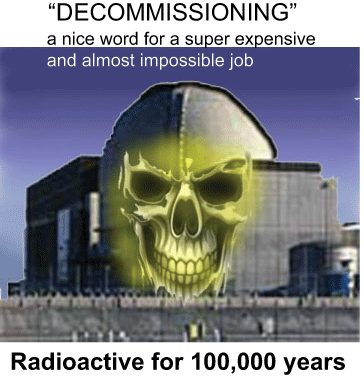
The price to pay for nuclear power is too high, https://www.scotsman.com/news/opinion/letters/the-price-to-pay-for-nuclear-power-is-too-high-readers-letters-3520498 Tim Flinn, Garvald, East Lothian, 10 Jan 22,
It doesn’t seem 30-odd years since I went with a group of sixth form A Level physics students on a tour of Dunbar’s Torness nuclear power station, now scheduled for decommissioning.
Most of them now have their PhDs and families of their own, but hopefully they all share my view that nuclear electricity remains the most toxic and expensive domestic fuel in regular use – and will remain so unless and until the problems associated with its deadly wastes are finally solved.
As things stand now the next 500 human generations will be stuck with the human and financial costs consequent upon coping with the radioactive detritus of the very first nuclear electricity generated some 80 years ago. Factoring in inflation the final price of just a single nuclear kWh will total more £s than there are particles in the universe. If anyone doubts that, let them do their own sums, or get a copy of mine (I hope they can cope with logarithms and discounting cash flows).
If the investment into nuclear energy (originally so we could keep up with the Jonses and have our own A and H bombs) had instead been ploughed into research and development of clean, safe, renewables we would long ago have had endless energy to spare and green devices to export. But we didn’t and so we haven’t. To replace one nuclear power station with yet another is to refuse to learn. Are we that stupid still?
January 10 Energy News — geoharvey

Opinion: ¶ “Here’s How To Solve The UK Energy Crisis For The Long Term – Store More Power” • The key to making sure there is enough affordable, low-carbon energy is more storage to make the most of the renewable energy available. A storage boom has been forecast over the coming decade as governments race […]
January 10 Energy News — geoharvey
Nuclear News – Australia and beyond
It’s a critical time for the world, as Russia and USA face off over Ukraine – the mainstream media showing an extraordinary ignorance on the background for all this. In Australia we get only the USA government’s point of view – I don’t know about other countries.
The UK government is poised to legislate for electricity consumers to pay for nuclear reactors long before they are built, and to cop the costs of delays, things going wrong, or the wonderful new reactors not actually operating anyway.. Meanwhile Europe continues to contort itself with the conundrum of deciding that nuclear is ”green” and worthy of tax-payer funding.
Coronavirus news– it’s all too much for me. We’re all in limbo – and a kind of mental paralysis sets in !
Climate Change. No, it hasn’t gone away. The last seven years were the hottest on record.
Some bits of good news . To cheer myself up, I’ve been reading a lot about butterflies. AND, the nearly endangered Monarch Butterflies are back – in their many thousands, Developing food crops that can thrive in dry and hot conditions.
AUSTRALIA.
The Australian government is complicit with USA and UK imperilling the health of Julian Assange, may well cause his death. The Australian media colludes with USA, UK and Australian governments’ persecution ofJulian Assange -”Crikey journal” typifies this .https://www.youtube.com/watch?v=R-OEJks1ldA .
Australia’s ambitious weapons plan -Joint Air Battle Management System (JABMS) AIR-6500.
Climate wars to die down in federal election as major parties dodge risks
Would the Murray-Darling Basin survive another Millennium drought?
New record caps stunning year of Australian solar milestones, sets tone for 2022.
INTERNATIONAL.
Extraditing Julian Assange Threatens Journalists Worldwide.
Treaties, Constitutions, and Laws Against War — limitless life What if deterrence doesn’t work?
Ukraine crisis. US-Russia Talks May Be the Last Chance . What War With Russia Would Look Like. NATO chieftain to Russia: Georgia, Ukraine belong to us, take it or leave it. On eve of Biden-Putin, NATO-Russia talks, Blinken blasts Russia as threat to European continent.
Emissions from the five major economies set to cause a doubling of extremely hot years in many nations. “Don’t Look Up:” Hollywood tackles the myths that fuel climate denial — RenewEconomy
Nuclear energy backers say it’s vital for the fight against global warming. Don’t be so sure. Nuclear is not a practicable means to combat climate change.
Six reasons to say ‘no’ — Beyond Nuclear International
To preserve the planet, we must reduce our consumption of resources..
UN chief welcomes P5 statement on nuclear war prevention . Five world powers vow to prevent spread of nuclear weapons.
Changing patterns for spreading misinformation on pandemics and climate change.
Going nuclear: Should nations unilaterally decide?
Hundreds of thousands of satellites brightening the night sky with negative effects on the ecosphere.
ANTARCTICA. Enormous Antarctic glacier becoming unstable. Maori workers exposed to radiation in cleaning up USA’s failed nuclear reactor in Antarctica.
New record caps stunning year of Australian solar milestones, sets tone for 2022 — RenewEconomy

Australia’s stunning solar year that was 2021 ended with a final flourish, after December delivered a record for utility-scale PV generation. The post New record caps stunning year of Australian solar milestones, sets tone for 2022 appeared first on RenewEconomy.
New record caps stunning year of Australian solar milestones, sets tone for 2022 — RenewEconomy
Sun Metals taps gravity energy storage tech in shift to “green zinc” — RenewEconomy

Korea Zinc’s boosts bid to make its Australian operations greenest in the world, in deal with Swiss “giga-scale” energy storage company, Energy Vault. The post Sun Metals taps gravity energy storage tech in shift to “green zinc” appeared first on RenewEconomy.
Sun Metals taps gravity energy storage tech in shift to “green zinc” — RenewEconomy
Russia’s secret nuclear waste city – Ozersk, City 40
Russian city hiding chilling Cold War secret from world https://www.9news.com.au/world/ozersk-city-40-secret-russian-city-cold-war-graveyard-of-the-earth/9644dcbb-e94f-44c6-b69e-4e3e4ca96455
By Richard Wood • Senior Journalist Jan 9, 2022 There has been a “slow-motion” disaster unfolding over the past 70 years at one of Russia’s most secretive sites. Ozersk, codenamed City 40, was the birthplace of the former Soviet Union’s nuclear weapons program at the dawn of the Cold War.

On the surface, it was a clean modern city that boasted good housing, spacious parks and high quality schools to attract the country’s top nuclear scientists.And its purpose was seen as so important that Russian authorities effectively hid it from the rest of the country and the world. But while, the work of Ozersk’s army of scientists developing Russia’s plutonium supplies was cloaked in secrecy, its environmental impact proved harder to contain.Today its legacy of radiation pollution has earned Ozersk the title ‘Graveyard of the Earth’.
Building Russia’s nuclear shield
Ozersk’s origins can be traced to the US dropping atomic bombs on the Japanese cities of Hiroshima and Nagasaki in 1945 at the end of World War II.
Alarmed at the terrifying new weapon of mass destruction, Russian leader Josef Stalin ordered his scientists to build a nuclear arsenal to combat the American threat.The Mayak plant deep in the Urals was founded in 1948 to develop essential large scale plutonium supplies for the Soviet atomic bomb. The work needed hundreds of workers.
Ozersk was founded nearby, initially as a sort of shanty town of wooden huts to house the workers. But over ensuing yeas, it grew to become a modern city of 100,000 people, with many of its citizens working at the Mayak plant.
‘Plutopias’

US environmental historian Kate Brown has described Ozersk and its counterpart nuclear cities in the US as “Plutopias”, a merging of the words plutonium and utopia. Professor Brown, who wrote Plutopia: Nuclear Families, Atomic Cities, and the Great Soviet and American Plutonium Disasters, told Nine.com.au that Ozersk residents were the envy of most Russians.
‘When I wrote about plutopia, I mean by that special, limited-access cities exclusively for plutonium plant operators who were well paid and lived comfortably. The people who lived in them were ‘chosen’,” Professor Brown said.”The plutonium cities such as Ozersk provided wonderful opportunities because not only was the housing very cheap and the wages very good, but the schools were good.”
But in Cold War Russia this all came at the price of intrusive security and curbs on personal freedom.Ozersk did not appear on maps and its citizens were struck from the national census.Residents were even forbidden to contact families and friends for up to years.
And for decades, the city was ringed by barbed wire fences and guard posts and entry was strictly controlled.
Lake of Death’
Professor Brown said both the Russians and American governments were prepared to cut corners in their dash to develop an edge in nuclear weapons.
And in 1957 one of the cooling systems at the Mayak plant, near Ozersk, failed, causing one of the tanks that contained the plant’s nuclear waste to overheat and explode.
While there were no casualties from the blast itself, more than 20 million curies of nuclear waste were swept up by the wind and scattered around the nearby countryside.The full effects of the Mayak radiation release and other incidents took years, even decades to become fully apparent, Professor Brown said.

The plutonium disasters were not big, explosive overnight affairs. They were slow-motion disasters that occurred over four decades,” she sai d.Officials from the Mayak plant also ordered the dumping of its waste into nearby lakes and rivers, which flow into the the Arctic Ocean.
Prof Brown said one of the lakes near Mayak has been so heavily contaminated by plutonium that local people have renamed it the ‘Lake of Death’.
‘Cover up’
The scale of the pollution was hushed up by Russian authorities for decades.
“Thanks to exhaustive efforts by the Soviet government and the already secretive nature of the location, for a long time, no one outside of the Ozersk area was even aware that it happened.
“It wasn’t until renegade Soviet scientists exposed the cover-up in the 1970s that scientists started to grasp the extent of the disaster.”
Radioactive spills have also happened at other secret Russian military and industry sites.In August 2019 a brief spike in radioactivity was recorded following a mysterious and deadly explosion at the Russian navy’s testing range in Nyonoksa on the White Sea.The explosion killed two servicemen and five nuclear engineers.
Campaigners expose contamination
Today the Mayak plant now serves the more peaceful purpose of reprocessing spent radioactive fuel.In Ozersk many restrictions have been eased, with residents free to leave when they want.
But the city is still surrounded by thick walls and guard fences, and entry by outsiders is strictly controlled by government officials.And while efforts have been made to clean up the environment, radiation pollution remains a threat to the health of residents.
A recent study showed that Ozersk residents are more than twice as likely to develop lung, liver, and skeletal cancers and far more likely to experience chronic radiation syndrome.Prof Brown says Russian environmental activists still face threats and persecution for exposing the radiation levels.
“They’ve paid a heavy price in terms of prosecution by the state and receiving threats of fines and even jail,” she said. “But they were determined to expose what really was disaster by design.”
Climate wars to die down in federal election as major parties dodge risks
Climate wars to die down in federal election as major parties dodge risks
Both major parties have shifted their climate policies since the 2019 election, where the Adani coal project was a lightning rod for political controversy.
Enormous Antarctic glacier becoming unstable
Boaty McBoatface craft to explore further beneath ‘Doomsday glacier’ than ever before
Glacier the size of the UK contains enough water to raise global sea levels by 65cm
Harry Cockburn, Environment Correspondent,
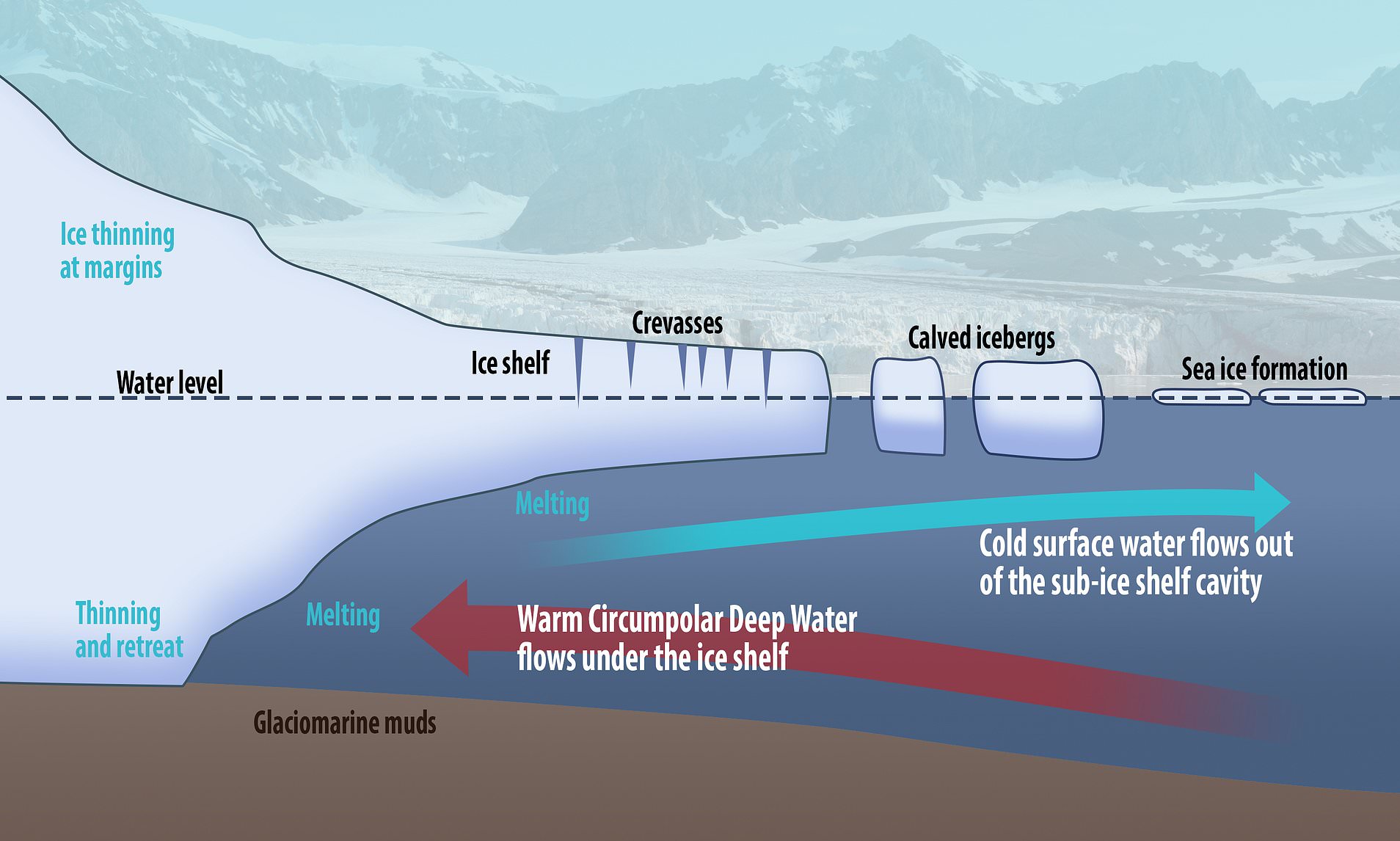
Antarctica’s enormous Thwaites glacier, AKA the “Doomsday glacier”, is the size of Britain, but is becoming increasingly unstable and poses a major risk to millions of people living on coastlines around the world.
Thwaites contains enough water to directly raise sea levels by 65cm if it collapses, but there are fears it could also spark a chain reaction leading to
even greater sea level rises of several metres. Now, a new research mission has been launched using a fleet of underwater robots, to further investigate the melting ice sheet which is – for now – holding the
glacier back.
Independent 6th Jan 2022
“Don’t Look Up:” Hollywood tackles the myths that fuel climate denial — RenewEconomy

Hollywood’s primer on climate denial illustrates five myths that fuel the rejection of science – including a favourite of Australia’s federal government. The post “Don’t Look Up:” Hollywood tackles the myths that fuel climate denial appeared first on RenewEconomy.
“Don’t Look Up:” Hollywood tackles the myths that fuel climate denial — RenewEconomy
January 9 Energy News — geoharvey

Opinion: ¶ “Unpacking People’s Attitudes Toward Solar Power” • People in the US are increasingly concerned about the climate crisis, and eliminating fossil fuels from the global energy portfolio must take place. While the vast majority of the public supports the development of large-scale community-based solar installations, not everyone agrees. [CleanTechnica] Mojave Desert concentrating solar […]
January 9 Energy News — geoharvey
The nuclear fantasy – time that we ended it -theme for January 2022.

It WAS a great dream – when the atomic scientists thought that they could assuage their guilt by inventing ”atoms for peace”
But that was a great lie. The USA raced on with nuclear reactors producing fuel for nuclear weapons. The British and Russians followed suit – then France, India, Israel, China – just about every nation wants them – Middle Eastern rulers now salivating at the thought.
Everybody piously talks about ”peaceful nuclear”. Now there’s the new champion lie – ”nuclear to save the world from climate change”.
And that feat is to be accomplished by so-called Small Nuclear Reactors (SMRs) – thousands of super-expensive little unicorns that don’t exist. The lying salesmen (who have no conscience) will keep pretending that they’re ”little”, while economies of scale demand that the reactors are put together to make Big nuclear plants.
And still the purpose is – all for the weapons industry. Technology, expertise, funding – to support that real industry – Nuclear weapons – under the sea, on land, in space! The ordinary peasant is not so keen, so investment in SMRs isn’t really happening. The thing is pushed by grandiose gurus like Bill Gates – . and even Gates knows that tax-payer funding is the intended funding system.
I recommend a couple of posts on this website:
Establishment support, secrecy and corruption, in the promotion of dangerous nuclear power. Natrium reactors, like those at Santa Susana.

And don’t think, just because these articles are about America, that the Establishments in UK, Russia France, China etc are any better. The same sort of toxic macho-men are in control of governments there, too.
Time to take the toys from the boys
A warning against fetishizing nuclear power so it’s part of every solution

the enthusiasm overlooks some ugly truths about nuclear power.
Many alternative reactor designs are pitched as if they’re novel. They’re not. A good example is the Natrium reactor
The drawbacks of sodium technology should resonate especially loudly for Californians.
The 1959 explosion of a sodium-cooled test reactor at the government’s secretive Santa Susana Field Laboratory outside Simi Valley remains the worst nuclear accident in U.S. history
Today’s younger environmental activists may be more inclined to accept these promises today because their thinking wasn’t forged in the anti-nuclear protests of the 1960s and 1970s, as was that of their older colleagues.
The danger is that they, and society, may have to learn the harsh lessons of nuclear power’s past all over again.
Nuclear energy backers say it’s vital for the fight against global warming. Don’t be so sure, Los Angeles Times, BY MICHAEL HILTZIKBUSINESS COLUMNIST , JAN. 6, 2022
No one would have believed this possible only a few years ago, but nuclear energy has been creeping up in public estimation, despite its long record of unfulfilled promise and cataclysmic missteps.
The impetus has come from government and big business, among other sources.
Billions of dollars in incentives to keep existing nuclear plants operating and to get new nuclear technologies off the drawing board were enacted as part of the $1.2-trillion infrastructure bill signed late last year by President Biden.
You don’t compromise safety to keep a nuclear plant open so you can meet a carbon target—you need to have minimum, stringent safety standards. – EDWIN LYMAN, UNION OF CONCERNED SCIENTISTS……………
Some celebrity entrepreneurs have weighed in, without demonstrating that they have given the issue the thorough consideration it deserves. Elon Musk last month tweeted that “unless susceptible to extreme natural disasters, nuclear power plants should not be shut down.”Musk didn’t, however, define “extreme natural disasters” or mention the myriad other reasons that a plant might need to be shuttered, such as advanced age, upside-down economics or dangers in its own design or operation……………..
the enthusiasm overlooks some ugly truths about nuclear power.
The history of nuclear power in America is one of rushed and slipshod engineering, unwarranted assurances of public safety, political influence and financial chicanery, inept and duplicitous regulators, and mismanagement on a grand scale.
Many of the problems originated in the government’s decision to place the technology in the hands of the utility industry, which was ill-equipped to handle anything so complicated.
This record accounts for the technology’s deplorable public reputation, which has made it almost impossible to build a new nuclear plant in the U.S. for decades. Forgetting the history threatens to stage the same drama over again.
The debate over the nuclear power future is really two separate debates.
First, there are the optimistic expectations raised by alternatives to the design of the 93 reactors currently in operation in the U.S. — reactors in which a radioactive core heats water, producing steam to drive electricity-generating turbines.
Then there’s the question of what to do with the existing reactors, many of which have lasted well beyond their design lives. Only 28 of these have remained “competitive” — that is, economically viable — according to energy expert Amory Lovins.
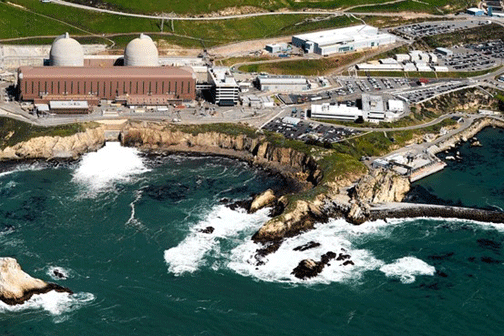
That existing fleet includes Diablo Canyon, whose owner, PG&E, said the plant was facing an unprofitable future when it made the decision to abandon plans to seek a permit renewal from the Nuclear Regulatory Commission.
Many alternative reactor designs are pitched as if they’re novel. They’re not. A good example is the Natrium reactor, which is cooled not by water but liquid sodium and is being promoted by TerraPower, a firm founded by Microsoft billionaire Bill Gates.
Far from an advanced new technology, sodium-cooled reactors date from the very dawn of the nuclear power age. They were considered as an alternative to water-cooled reactors for submarine power plants, for example, by Adm. Hyman Rickover, the founder of America’s nuclear navy.
Rickover, whose rigorous standards for technology and crew training made the nuclear navy a success, ordered a prototype sodium reactor for the submarine Seawolf. Almost instantly, the technology demonstrated its flaws.
While the Seawolf was still at the dock, the reactor sprung a leak. “It took us three months, working 24 hours a day, to locate and correct” the leak, Rickover told a congressional committee in 1957.
Rickover abandoned any thought of using the reactors in his submarines, finding them “expensive to build, complex to operate, susceptible to prolonged shut down as a result of even minor malfunctions, and difficult and time-consuming to repair,” as he advised his Navy superiors and technical experts at the Atomic Energy Commission in late 1956 and early 1957.
The drawbacks of sodium technology should resonate especially loudly for Californians.
The 1959 explosion of a sodium-cooled test reactor at the government’s secretive Santa Susana Field Laboratory outside Simi Valley remains the worst nuclear accident in U.S. history, venting an immense amount of radioactivity into the air and creating what former California EPA Director Jared Blumenfeld called “one of the most toxic sites in the United States by any kind of definition.”
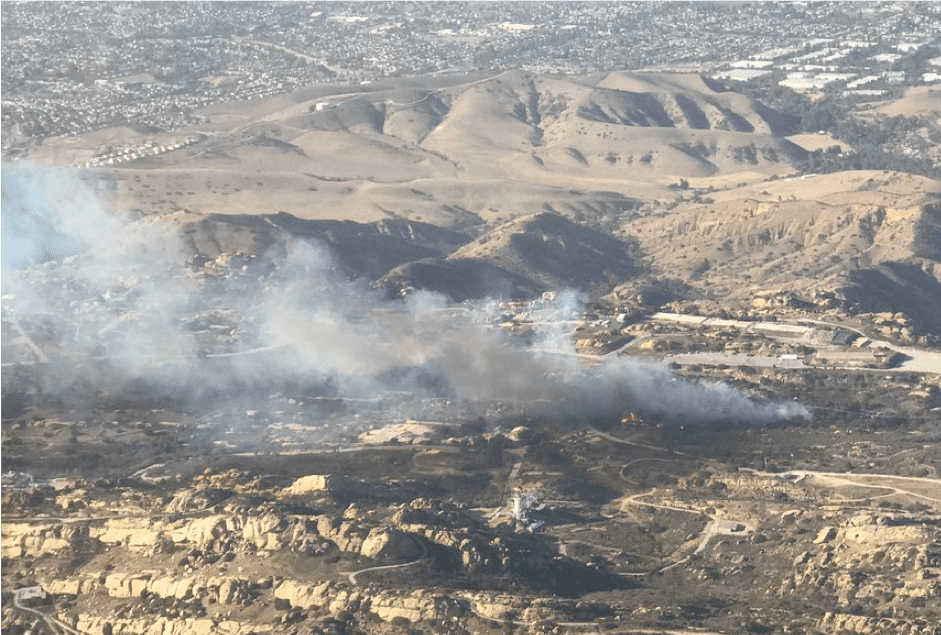
The three entities controlling portions of the site — Boeing Co., the U.S. Department of Energy and NASA — reached agreements with the state in 2007 and 2010 binding them to restore the site to “background” standards. Much of the work still hasn’t begun.
“There’s been a kind of cult that’s been trying to keep this technology alive for decades” despite persistent evidence of its inadequate reliability or sustainability, says Edwin Lyman, director of nuclear power safety at the Union of Concerned Scientists and the author of a report challenging safety and efficiency claims made for Natrium, among other alternative technologies.
“Pretty effective lobbyists” push the idea that “this is somehow a breakthrough technology that’s going to transform nuclear power,” Lyman said of sodium-cooled reactors.
“History tells us that it’s not a very reliable source of power and has a number of safety and security disadvantages that make one wonder why there’s such enthusiasm for it,” he said. None of the other alternatives, he adds, solve the most pressing problem of nuclear power: what to do with the radioactive waste produced by every plant.
………. TerraPower’s utility partner, PacifiCorp, a unit of Berkshire Hathaway (the conglomerate controlled by Warren Buffett), which is to take over the project once it’s operational, has no experience running a nuclear plant.
In any case, the Natrium reactor won’t become operational until 2028 at the earliest. That’s a deadline imposed by the government’s Advanced Reactor Demonstration Program, which is providing some of the funding…….
He cautions against “fetishizing nuclear power so it’s part of every solution.” His view is “you don’t compromise safety to keep a nuclear plant open so you can meet a carbon target — you need to have minimum, stringent safety standards.”
By that measure, there’s hardly any doubt that Diablo Canyon should be shut down, and the sooner the better.
The plant’s history makes that case…………………………………………….
The danger is that claims for the future of nuclear energy — that it will be a cheap and efficient path to a carbon-free future — will be as illusory as those of the past, when nuclear power was also promoted as safe and “too cheap to meter.”
Today’s younger environmental activists may be more inclined to accept these promises today because their thinking wasn’t forged in the anti-nuclear protests of the 1960s and 1970s, as was that of their older colleagues. The danger is that they, and society, may have to learn the harsh lessons of nuclear power’s past all over again. https://www.latimes.com/business/story/2022-01-06/column-nuclear-energy-backers-say-its-vital-for-the-fight-against-global-warming-dont-believe-them?fbclid=IwAR015ej03ZDoUA2kcNoc_mAqJS3D2N8T
1 This month
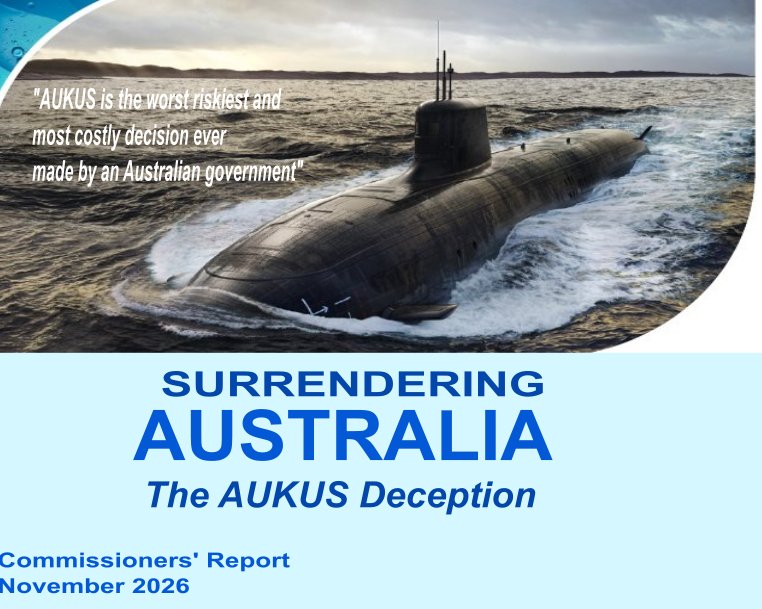
Read the Public Inquiry Report, the Commissioners’ report, Surrendering Australia: The AUKUS Deception is available to download for free at aukuspublicinquiry.com. Or just watch the replay of the National Press Club Luncheon.
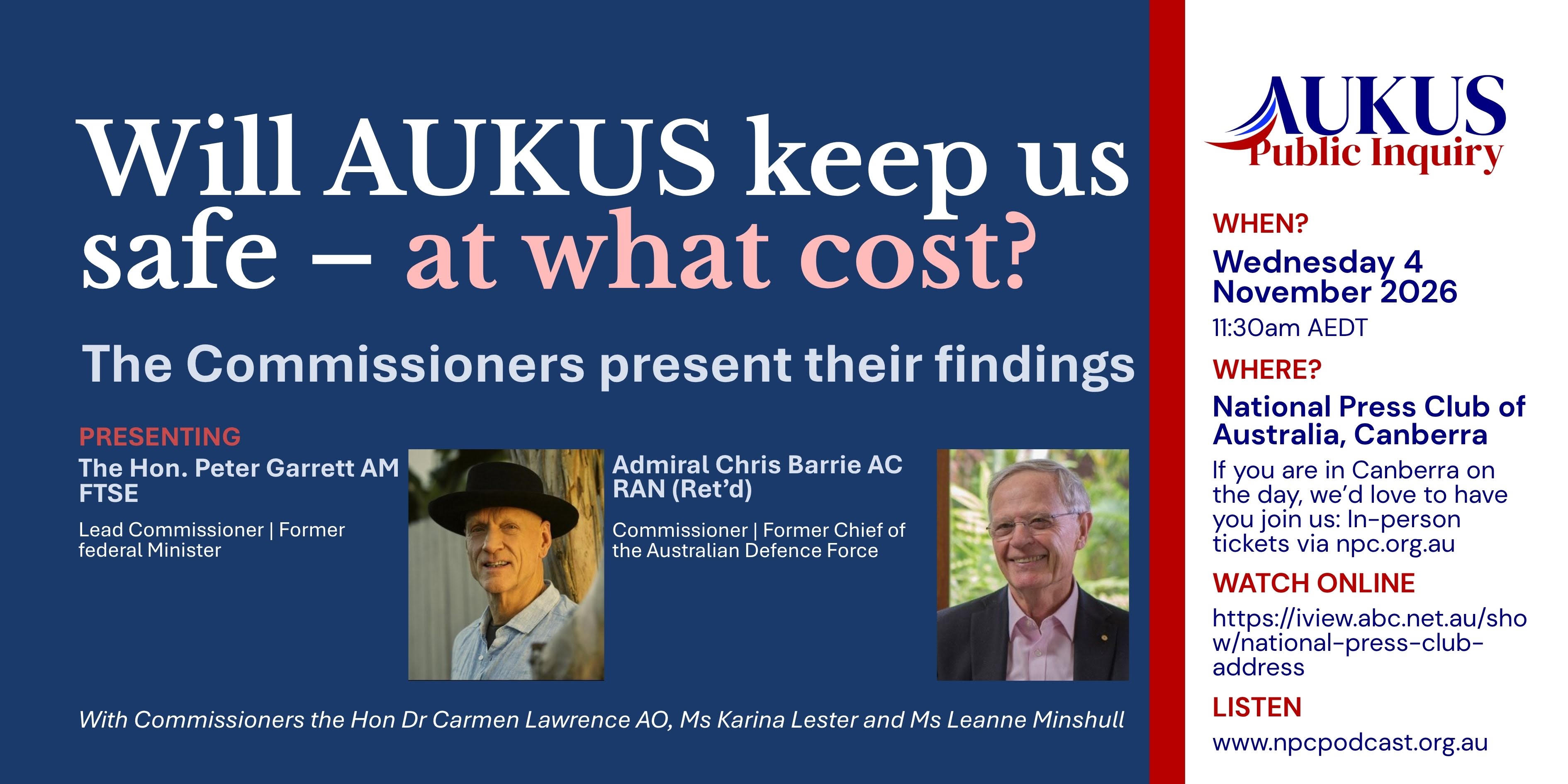
4 November – Will AUKUS keep us safe – at what cost?
the Commissioners of the AUKUS Public Inquiry present their findings at the National Press Club of Australia in Canberra. iview.abc.net.au/show/national-press-club-address
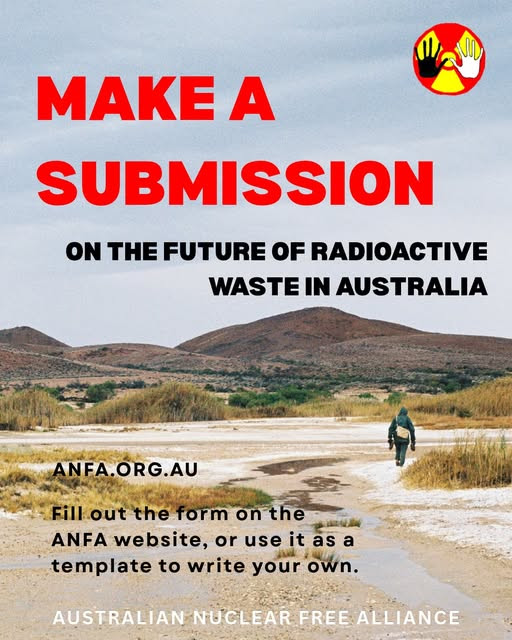
Submissions to the federal government’s new draft framework close on the 13th November 2026.
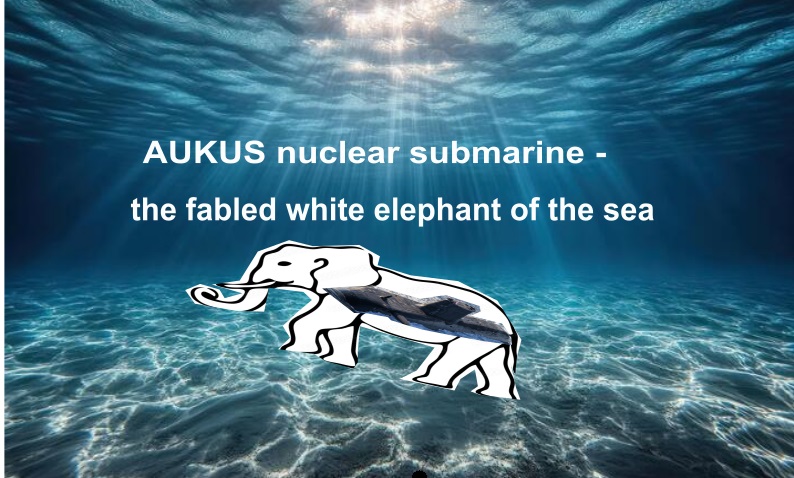
Australians deserve the truth
about
AUKUS – https://aukuspublicinquiry.com/

PETITION – To: Prime Minister Anthony Albanese and the Australian Labor Government

of the week – Australians for War Powers Reform (AWPR)
To see nuclear-related stories in greater depth and intensity

