Hundreds of thousands of satellites brightening the night sky with negative effects on the ecosphere
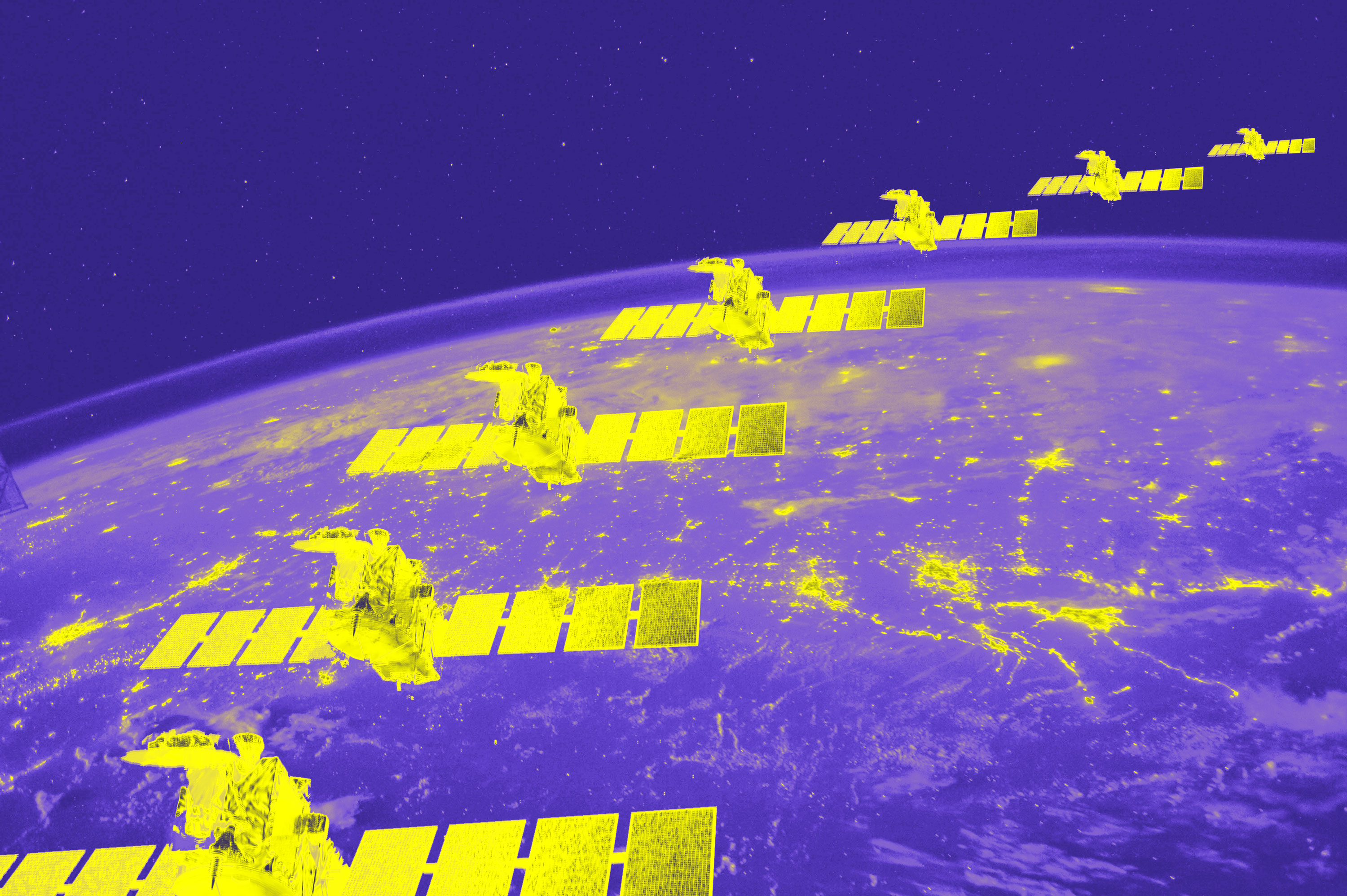
441,449 LOW EARTH ORBIT SATELLITES
Operating, Approved and Proposed
While the attention of a terrified world has been riveted on a virus, and while concern about radiation has been focused on 5G on the ground, the assault on the heavens has reached astronomical proportions. During the past two years, the number of satellites circling the earth has increased from 2,000 to 4,800, and a flood of new projects has brought the number of operating, approved, and proposed satellites to at least 441,449. And that number only includes low-earth-orbit (LEO) satellites that will reside in the ionosphere.
The satellite projects include the ones listed below. The companies are based in the United States unless otherwise indicated.
17,270 satellites already approved by the U.S. Federal Communications Commission:
- Amazon (Kuiper) – 3,236 satellites
- Astro Digital – 30 satellites
- Black Sky Global – 36 satellites
- Boeing – 147 satellites
- Capella Space Corp. – 7 satellites
- Globalstar (operating since 2000) – 48 satellites
- Hawkeye 360 – 80 satellites
- ICEYE – 6 satellites (FINLAND)
- Iridium (operating since 1998) – 66 satellites
- Kepler Communications – 140 satellites (CANADA)
- Loft Orbital – 11 satellites
- OneWeb – 720 satellites (UNITED KINGDOM)
- Planet Labs (operating) – 200 satellites
- R2 Space, LLC – 8 satellites
- Spire Global – 175 satellites
- SpaceX – 11,943 satellites
- Swarm – 150 satellites
- Telesat – 117 satellites (CANADA)
- Theia Holdings – 120 satellites
- Umbra Lab – 6 satellites
- Viasat – 24 satellites
Applications for 65,912 satellites pending before the FCC:
- Amazon (Kuiper) – 4,538 additional satellites
- AST & Science – 243 satellites
- Astra Space – 13,620 satellites
- Boeing – 5,789 additional satellites
- Black Sky Global – 14 additional satellites
- Fleet Space Technologies – 40 satellites (AUSTRALIA)
- Hughes Network Systems – 1,440 satellites
- Inmarsat – 198 satellites (UNITED KINGDOM)
- Kepler Communications – two additional constellations of 360 satellites and 212 satellites (CANADA)
- Lynk Global – 10 satellites (HONG KONG)
- Maxar Technologies – 12 satellites
- New Spectrum – 30 satellites (CANADA)
- OneWeb – 6,368 additional satellites (UNITED KINGDOM)
- Orbital Sidekick – 6 satellites
- SN Space Systems – 1,190 satellites (UNITED KINGDOM)
- SpaceX – 30,000 additional satellites
- Telesat – 1,554 additional satellites (CANADA)
- Terra Bella – 24 satellites (15 already operating)
- Viasat – 264 additional satellites
Constellations totaling 14,872 satellites announced by governments:……………
Other LEO constellations planned by U.S. and foreign companies, totaling more than 16,055 satellites:…….
Rwanda, which wants to catapult Africa into world leadership in space, filed an application with the International Telecommunication Union (ITU) on September 21, 2021 for 327,320 satellites. Its proposal includes 937 orbital planes, distributed in 27 orbital shells (layers of satellites at different altitudes), with 360 satellites in each plane.
- Rwanda Space Agency – 327,320 satellites (RWANDA)
TOTAL: 441,449 SATELLITES OPERATING, APPROVED AND PROPOSED (+18 constellations whose numbers are not yet known) Most of the above list of satellites would orbit at altitudes between about 325 km (200 miles) and 1,100 km (680 miles), except that some of Rwanda’s proposed orbits go as low as 280 km (174 miles). The above list does not include applications for satellites in geostationary orbit (GEO), or for LEO constellations of fewer than 5 satellites, or constellations in medium earth orbit (MEO) such as:
- Intelsat (at 8600 km) – 216 satellites (LUXEMBOURG)
- Mangata Networks (at 6,400 km and 12,000 km) – 791 satellites
- O3b (at 8,062 km) – 112 satellites (LUXEMBOURG)
BRIGHTENING THE NIGHT SKY Scientists have already begun to publish papers analyzing the effect all these satellites will have, not only on astronomy, but on the appearance of the night sky and the visibility of the stars to everyone on earth. An article published online on March 29, 2021 in Monthly Notices of the Royal Astronomical Society by scientists in Slovakia, Spain and the United States is titled “The proliferation of space objects is a rapidly increasing source of artificial night sky brightness.” The scattering of sunlight from all of the objects in space, wrote the authors, is causing a “new skyglow” during the beginning and end of each night that has already brightened the natural night sky by about 10 percent. The authors are concerned that “the additional contribution of the new satellite mega-constellations” would ruin the night sky to a much greater extent.
A group of Canadian astronomers have an article in the January 2022 issue of The Astronomical Journal. “Megaconstellations of thousands to tens of thousands of artificial satellites (satcons) are rapidly being developed and launched,” they write. “These satcons will have negative consequences for observational astronomy research, and are poised to drastically interfere with naked-eye stargazing worldwide.” They analyzed what the effect on astronomy will be if 65,000 new low-orbit satellites are launched. At 40 degrees latitude (mid-United States; Mediterranean; mid-China; Japan; Buenos Aires; New Zealand), say these authors, more than 1,000 of these satellites will be sunlit and visible in the sky in the summer even at midnight. At higher latitudes (northern U.S.; Canada; most of Europe; Russia), thousands of these satellites will be visible all night long. Another paper, titled Report on Mega-Constellations to the Government of Canada and the Canadian Space Agency, was commissioned by the Canadian Astronomical Society and submitted to the Canadian government on March 31, 2021. It is a moving document. …………………………………… https://www.cellphonetaskforce.org/wp-content/uploads/2022/01/441449-Low-Earth-Orbit-Satellites.pdf
What will happen if Russia and Ukraine go to war in the next year?
https://antibellum679354512.wordpress.com/2022/01/05/guest-contribution-what-will-happen-if-russia-and-ukraine-go-to-war-in-the-next-year/ Don Hank, MA Russian, Kutztown University of Pennsylvania
The not-so-carefully crafted narrative in the West is that Ukraine is the victim of the cruel aggressive Russian regime that enjoys watching others suffer, like a sadistic boy pulling the legs off grasshoppers and watching them squirm.
The coming war would all be an amusing little computer game except for the fact that the psychopathic US manipulators who indulge in this Russophobic/Sinophobic passtime are gambling with the very future of planet earth.
These reptilian predators inhabit the rarefied stratosphere of intrigue where reality and fantasy are blurred beyond usefulness. They are so far down the road of believing the product of their own overheated imagination that they have forgotten the simplest of realities, like the fact that millions of people would die instantly and half that many would watch their skin slowly peel off and their hair fall out in thick clumps after a nuclear attack. Major cities would become forests of twisted steel in a desert of glass. Military bases would be gone and aircraft carriers would sink to Davy Jones’ locker.
The war — all 30 minutes of it — would engulf the entire earth, compromising most of human, animal, plant and even microbial life. At least COVID might be conquered. Should we put that fact on the asset side of the ledger in defense of US foreign policy? Maybe not.
If the West happened to get the upper hand — killing a billion or so Eastern people (ie, Russians, Chinese, Iranians, for example), and the East killed only a half-billion Westerners, there would not be any certifiably non-radioactive champagne to uncork and sip in celebration of the “victory.” Nor would there be an intact country to host the festivities.
The sociopathic politicians whose thoughtless words and deeds triggered the conflagration would hardly be congratulated by their peers, who would turn on them with an unquenchable visceral hate.
People who understand the Kremlin and its designs don’t fall for this malarkey, but there is an army of gullible Westerners who enjoy this sort of fiction and they help perpetuate it. It is on display on these very boards.
But mercifully, most Washington politicians would not survive because the White House and capitol building would be the first targets of the Russian or Chinese ICBMs.
Of course, there are many other things that could happen if Ukraine and Russia go to war, but the main thing that the Westerner must know is that, should this happen, Russia will not be the aggressor.
It never was. The Western aggressor is setting a trap for Russia. But will it like the ending of its narrative?
Don Hank, Editor-in-Chief at New Silk Strategies (2016-present)
January 5 Energy News — geoharvey

World: ¶ “There Are Now 1,000 Electric Buses In Moscow!” • A little more than a year ago, I reported on Moscow getting its 500th electric bus. Just before Christmas, Moscow Transport got its 900th electric bus, and decorated it nicely with white and blue Christmas lights. Now, we’re barely into 2022 and the figure […]
January 5 Energy News — geoharvey
Anger as European Union is poised to subsidise the corrupt and rapacious nuclear industry

Germany and Austria have expressed their fury over a French victory on EU rules that would open the door to new investment in nuclear power. The European Commission’s proposed new “taxonomy” rules will allow private investment in atomic energy to be linked to climate policy subsidies as well as funding for gas-fuelled power stations to replace coal-fired generators.
Incensed Austrian ministers compared the Brusselsdecision, which was rushed through late on New Year’s Eve, to Adolf Hitler’s 1941 “Nacht und Nebel”, night and fog, decree to round upand destroy all resistance to the Nazis.
“The EU commission took a step towards greenwashing nuclear power and fossil gas yesterday in a night and fog action,” Leonore Gewessler, the Austrian climate protection minister, said. “They are harmful to the climate and the environment and destroy the future of our children.”
Greenpeace UK has urged Boris Johnson not to allow gas or nuclear to be included in Britain’s own green investment rules. “This loophole could be a drain for Europe’s climate ambitions, as they switch from phasing out dirty fuels, to phasing out dirty fuels only when it seems convenient. The UK must resist being pulled into this failing approach,” Doug Parr, the chief scientist and policy director of British Greenpeace, said.
Times 2nd Jan 2022
https://www.thetimes.co.uk/article/eu-capitals-at-odds-on-nuclear-power-kd2fsznr6
The pandemic is a warning: we must take care of the earth, our only home
The pandemic is a warning: we must take care of the earth, our only home
Bruno Latour
The climate crisis resembles a huge planetary lockdown, trapping humanity within an ever-deteriorating environment
‘Don’t look up’ – A piercing commentary on our malfunctioning society — Under a Banyan tree — Barbara Crane Navarro

I wish I didn’t feel so vindicated seeing the recent Netflix movie, ‘Don’t look up’. It would have been a lot better to live in a society that isn’t so accurately portrayed in the film. Critics arguing that civilization is not that stupid, greedy or inured to ignore a comet heading towards the earth completely […] […]
‘Don’t look up’ – A piercing commentary on our malfunctioning society — Under a Banyan tree — Barbara Crane Navarro
January 3 Energy News — geoharvey

Opinion: ¶ “Prediction For 2022: Plant-Based Foods Will Surge” • A whole new range of consumers has discovered plant-based items, and selections can be appealing. So, let’s make a prediction for 2022: Plant-based foods will not only transcend their current path leading to mainstream acceptance – they’ll become preferred, for lots of reasons. [CleanTechnica] Impossible™ […]
January 3 Energy News — geoharvey
Nuclear news to 4 January – Australia and overseas

As Omicron rips around the world, attention turns to medical science. In this ever-changing story, conspiracy theories are rife, and trust in science is shaken. Trust in science is diminished, too, in climate change. By and large, media and governments seem content with a ”business as usual” policy.
And now, the European Union is about to declare that nuclear power has miraculously become ”clean”, ”green” and ”sustainable” – worthy of tax-payer funding – this is a real blow to the credibility of science.
AUSTRALIA.
Australia’s nuclear-free collective efforts and achievements in 2021.
Nuclear waste from Britain heading to Lucas Heights – first load of many . Nuclear waste returning from UK to Australia. Dave Sweeney – Australia needs a genuine discussion about nuclear waste. The Australian government’s Kimba nuclear waste decision rides roughshod over Australia’s obligations under international law,
Despite war-mongering Peter Dutton, a Defence review finds it not necessary to overturn Darwin port agreement with Chinese company.
INTERNATIONAL
Why a U.S.-Russia War Would Inevitably Be a Globe-Annihilating Nuclear War.
Will the European Commission buy into the lie that nuclear power is clean and green? Angry response in Europe to the draft European Commission plans to accept nuclear power ”climate-friendly” – eligible for tax-payer financial help.
Land and water ecosystems ‘stressed to a critical point’ .
Nuclear Twilight – the ”limited” nuclear war.
Germany, France, Britain, U.S. discuss Ukraine crisis, Iran nuclear talks.
The murky world of financing Small Nuclear Reactors (SMRs).
Increased compensation for those damaged by nuclear accident – OECD.
Threat of nuclear war: Not a thing of the past. UN Nuclear Ban Treaty conference postponed again because of Covid-19.
Radioactive radiation could damage biological tissue also via a previously unnoticed mechanism.
More fusion folly — Beyond Nuclear International
World urgently needs a Paris-style agreement for biodiversity .
COP 27 – the risk of the climate summit becoming a stalemate.
Our Oceans Are Not Sewers.
The Australian government’s Kimba nuclear waste decision rides roughshod over Australia’s obligations under international law

United Nations Declaration on the Rights of Indigenous Peoples
The Australian Human Rights Commission advised that Article 29(2) of the United Nations Declaration on the Rights of Indigenous Peoples states that ‘no storage of hazardous materials shall take place on Indigenous lands without their free, prior and informed consent.’ 265
1.255 The Commission submitted that in order for Indigenous people to make informed consent, adequate resourcing to representative groups needs to be provided to ensure appropriate and informed consultation. 267
EXTRACT FROM REPORT BY FORMER SPECIAL RAPPORTEUR VICTORIA TAULI-CORPUZ IN SEPTEMBER 2017 FOLLOWING HER VISIT TO AUSTRALIA IN MARCH 2017
Self-determination and participation
When Australia officially endorsed the United Nations Declaration on the Rights of Indigenous Peoples in 2009, the Government stated its intent was to reset relations between Indigenous and non-Indigenous Australians and to build trust in order to work together to overcome the legacy of the past and shape the future together. Furthermore, in Australia’s pledge as a candidate to the United Nations Human Rights Council 2018-2010, it committed to give practical effect to the United Nations Declaration on the Rights of Indigenous Peoples and the World Conference on Indigenous Peoples’ Outcome Document.
Self-determination is a fundamental element of the Declaration whereby indigenous peoples have the right to freely determine their political status and freely pursue their economic, social and cultural development (Art. 3 of UNDRIP) and have the right to autonomy or self-government in matters relating to their internal and local affairs, as well as ways and means for financing their autonomous functions (Art. 4). The Declaration also sets out that indigenous peoples have the right to participate in decision-making in matters which affect their rights (Art. 18).
While Australia has adopted numerous policies aiming to address Aboriginal and Torres Strait socio-economic disadvantage, the failure to respect the right to selfdetermination and the right to full and effective participation in these is alarming. The compounded effect of these policies has contributed to the failure to deliver on the targets in the areas of health, education and employment in the Closing the Gap strategy and has contributed to aggravating the escalating incarceration and child removal rates of Aboriginal and Torres Strait Islanders
LETTERS PATENT
The Letters Patent, long title “Letters Patent under the Great Seal of the United Kingdom erecting and establishing the Province of South Australia and fixing the boundaries thereof”, defined the boundaries
of the Province of South Australia:
Provided Always that nothing in those our Letters Patent contained shall affect or be construed to affect the rights of any Aboriginal Natives of the said Province to the actual occupation or enjoyment in their own Persons or in the Persons of their Descendants of any Lands therein now actually occupied or enjoyed by such Natives
German Greens fight plan to funnel billions of euros into the nuclear industry via deceptive taxonomy ”sustainable” label
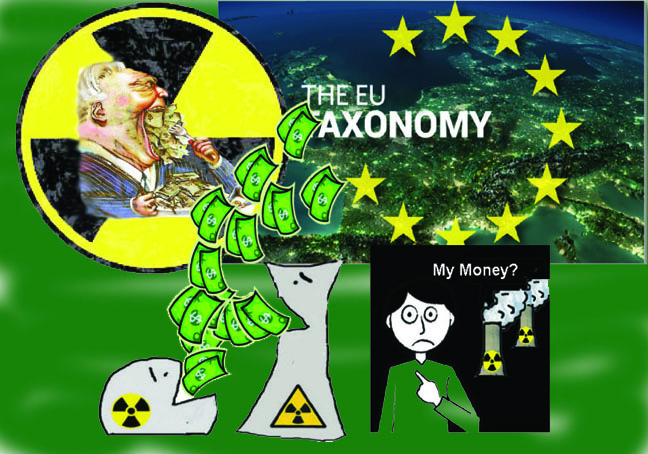
German Greens lead attack on EU plan to label nuclear power ‘sustainable’. Brussels’ proposal is central to European goal of channelling billions of euros into green investments, Ft.com, Mehreen Khan in Brussels and Joe Miller in Frankfurt 3 Jan 21,
Germany, Austria and Luxembourg have hit out at Brussels’ plans to classify nuclear power as a sustainable technology in the EU’s landmark labelling system for green investment, which is central to Europe’s plans to decarbonise the bloc’s economy. German economy minister Robert Habeck, who is a member of the Green party in the country’s governing coalition, said: “It is questionable whether this greenwashing will even find acceptance on the financial market.” He told German press agency DPA on Saturday: “In our view, there was no need for this addition to the taxonomy rules.”
Brussels’ proposal is part of a so-called “taxonomy” list, which aims to help channel billions of euros of investment needed to decarbonise the bloc’s economy. The plan, the first attempt by a leading regulator to bring clarity to investors seeking to put private capital into sustainable economic activity, covers about 80 per cent of the bloc’s emissions and is intended to be a “gold standard” for markets to decide what is truly green or not. But the process has been beset by fierce political infighting inside the European Commission and its member states.
Leonore Gewessler, Austria’s minister for climate and energy, said on Saturday that Vienna would consider suing the European Commission if the classification of nuclear power as green went ahead. Claude Turmes, Luxembourg’s energy minister, meanwhile called the inclusion of nuclear power a “provocation”. The inclusion of nuclear power is widely seen as a victory for the French government which has urged Brussels to ensure the new rules do not punish a technology that provides almost two-thirds of French electricity. Nuclear reactors do not generate CO2 emissions but produce highly toxic waste…………..
The Brussels draft text will form part of a consultation with EU countries and independent experts that will run until January 12. However, anti-nuclear EU governments do not have the power to veto the taxonomy, which diplomats say is likely to win majority support in the EU Council. Astrid Matthey, one of the independent experts who advises the commission on the rules, criticised the draft for “contradicting the very purpose of the taxonomy”.
“The conditions under which both technologies are to be included are far from ensuring that we reach the Paris climate targets and do-no-significant-harm to the environment. There is still a long way to go for this draft to become aligned with the Green Deal and the EU’s environmental targets”, said Matthey. https://www.ft.com/content/92ab113f-ab17-4492-be65-56c9173cfc53
Growing radioactive waste crisis at Fukushima nuclear power plant

The continuous accumulation of radioactive slurry and other nasty substances, coupled with the problem of finding a safe way to dispose of melted nuclear fuel debris at reactors No. 1, No. 2 and No. 3, has plant operator Tokyo Electric Power Co. frantically scratching around for ideas.
One problem is that storage containers for the tainted slurry degrade quickly, meaning that they constantly have to be replaced.
TEPCO slow to respond to growing crisis at Fukushima plant, THE ASAHI SHIMBUN, by Yu Fujinami and Tsuyoshi Kawamura, January 2, 2022, Radioactive waste generated from treating highly contaminated water used to cool crippled reactors at the Fukushima No. 1 nuclear power plant has thrown up yet new nightmarish challenges in decommissioning the facility, a project that is supposed to be completed in 30 years but which looks increasingly doubtful.
The continuous accumulation of radioactive slurry and other nasty substances, coupled with the problem of finding a safe way to dispose of melted nuclear fuel debris at reactors No. 1, No. 2 and No. 3, has plant operator Tokyo Electric Power Co. frantically scratching around for ideas.
One problem is that storage containers for the tainted slurry degrade quickly, meaning that they constantly have to be replaced. Despite the urgency of the situation, little has been done to resolve the matter.
Fuel debris, a solidified mixture of nuclear fuel and structures inside the reactors melted as a consequence of the triple meltdown triggered by the 2011 earthquake and tsunami disaster has to be constantly cooled with water, which mixes with groundwater and rainwater rainwater that seep into the reactor buildings, producing more new radioactive water.
The contaminated water that accumulates is processed via an Advanced Liquid Processing System to remove most of radioactive materials. The ALPS is housed in a 17-meter-tall building situated close to the center of the plant site.
Reporters from the Japan National Press Club were granted a rare opportunity in late November to visit the crippled facility to observe the process.
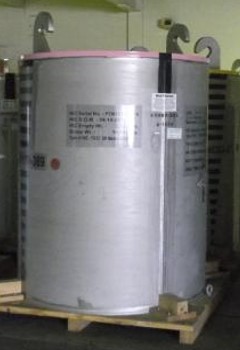
The building houses a large grayish drum-like container designed especially to store radioactive slurry. The interior of each vessel is lined with polyethylene, while its double-walled exterior is reinforced with stainless steel.
ALARMING DEVELOPMENTS The use of chemical agents to reduce radioactive substances from the contaminated water in the sedimentation process produces a muddy material resembling shampoo. Strontium readings of the generated slurry sometimes reach tens of millions of becquerels per cubic centimeter.
TEPCO started keeping slurry in special vessels in March 2013. As of November, it had 3,373 of the containers.
Because the integrity of the vessels deteriorates quickly due to exposure to radiation from slurry, TEPCO and the Nuclear Regulation Authority (NRA) predict that durability of the containers will reach the limit after exposure to an accumulated total of 5,000 kilograys of radiation–a level equivalent to 5 million sieverts.
Based on that grim forecast, TEPCO speculated the vessels will need replacement from July 2025.
But the NRA accused TEPCO of underestimating the impact of the radiation problem. It blasted the operator for measuring slurry density 20 centimeters above the base of the container when making its dose evaluation.
“As slurry forms deposits, the density level is always highest at the bottom,” a representative of the nuclear watchdog body pointed out.
The NRA carried out its own assessment in June 2021 and told TEPCO that 31 containers had already reached the end of their operating lives. Its findings also showed an additional 56 would need replacing within two years.The NRA told TEPCO to wake up and “understand how urgent the issue is since transferring slurry will take time.”………………..
With no drastic solutions in sight, a succession of containers will reach the end of their shelf lives shortly.
ANOTHER NIGHTMARE PROBLEM Radioactive slurry is not the only stumbling block for decommissioning.
In the immediate aftermath of the 2011 disaster, TEPCO stored contaminated water in the underground spaces below two buildings near the No. 4 reactor. In doing so, bags full of a mineral known as zeolite were placed in the temporary storage pools to absorb cesium so as to reduce the amount of radioactive substances.
Twenty-six tons of the stuff are still immersed in the dirty water on the floors under the buildings. Radiation readings of 4 sieverts per hour were detected on their surfaces in fiscal 2019, enough to kill half of all the people in the immediate vicinity within an hour.
TEPCO plans to introduce a remotely controlled underwater robot to recover the bags, starting no earlier than from fiscal 2023, However, it has not determined how long this will take or where to store the bags once they are retrieved.
In addition, radioactive rubble, soil and felled trees at the plant site totaled 480,000 cubic meters as of March 2021, leading TEPCO to set up a special incinerator. The total volume is expected to top 790,000 cubic meters in 10 years, but where to dispose of the incinerated waste remains unclear.
TEPCO is in a race against time. That’s the view of Satoshi Yanagihara, a specially appointed professor of nuclear engineering at the University of Fukui who has specialist knowledge on processes to abandon reactors.
“Now, only 30 years remain before the target date of the end of decommissioning set by the government and TEPCO,” said Yanagihara.As decommissioning work is due to shortly enter a crucial stage, such as recovering nuclear fuel debris on a trial basis from as early as 2022, Yanagihara noted the need for careful arrangements before forging ahead with important procedures.
“The government and TEPCO need to grasp an overall picture of the massive task ahead and discuss how to treat, keep and discard collected nuclear debris and the leftover radioactive waste with local residents and other relevant parties,” he said.https://www.asahi.com/ajw/articles/14503708
More fusion folly — Beyond Nuclear International

Fusion reactors present unsolved risks and still produce nuclear waste
More fusion folly — Beyond Nuclear International
Britain’s National Infrastructure Commission (NIC) advises government against new nuclear power projects.
UK NIC backs alternatives to nuclear, Renew Extra Weekly, 2 Jan 21, The UK Government asked the National Infrastructure Commission (NIC) for its advice on whether an additional new nuclear plant, beyond the proposed Sizewell C project, was needed to deliver the UK’s sixth Carbon (reduction) Budget, due in 2035. In response, the NIC said no, it was not needed or viable for 2035, since new nuclear was slow to deploy. It asserted that ‘it is highly unlikely that a new large scale nuclear plant is deliverable in the next 15 years; trying and failing would jeopardise delivery of the sixth Carbon Budget’. Instead it backed renewables, hydrogen and low/negative carbon technology- which is said could be deployed faster.
It noted that ‘since 1990, nuclear projects have faced significant delays all around the world. Even just in Europe around half of all plants have faced at least a 50% delay in construction, and 1 in 4 plants have faced at least a 90% delay in construction’. So it said that ‘any nuclear project schedule estimate should be expected to take at least 50% longer than planned. If a new project began development next year and took the same amount of time as the Hinkley Point C project is expected to take to complete, it would not come online until at least the mid 2040s’. So that put it well outside the 2035 timeframe.

Small Modular/advanced reactors might be a faster option, but the NIC said ‘relying on significant capacity being deployed before 2035 would be risky’. It pointed out that ‘no SMR has gone through the Generic Design Assessment process and some developer proposals are conditional on government support to progress project development. There are no SMRs in operation in countries similar to the UK.
To fill the same capacity gap illustrated in the BEIS modelling, at least six SMRs would be needed by 2035, if not more. This would require compressing the normal delivery timeline and doing things in parallel rather than in sequence, significantly increasing the risk of delays. Delivery success will also be dependent on the capability of the developer.’
Alternatives likely to be faster
Instead of these nuclear options, for delivery within the timeframe to 2035, it backed ‘renewables with a combination of gas power plants with carbon capture and storage, hydrogen fired gas plants and bioenergy with carbon capture & storage’. It said ‘these alternatives are more likely to be deliverable at scale in the next 15 years’. …………………..
even without costing analysis, it said its analysis clearly demonstrated ‘that a third new nuclear plant is not necessary to reach the 2035 emissions target and that more gas CCS, hydrogen powered gas plants, and BECCS could be deployed instead. Whilst these technologies are yet to be deployed at scale, the Commission considers them to be a lower delivery risk than nuclear.’ And it claimed that its proposed alternative technology mix was supported by analysis previously conducted for the Commission and by other bodies such as National Grid ESO & the Climate Change Committee. …………………
It’s odd that the NIC plunge into CCS and Hydrogen, rather than talking about renewables more. Maybe they are taken for granted. But if, led by wind and solar, they could be expanded much faster than BEIS and NIC envisage, then maybe we could forget about fossil CCS, BECCS and also Sizewell C. That might be helped if tidal stream technology could also get going- with CfD help, it ought to be able to by 2030. Geothermal too, for heat and power. All NIC says is that, from the BEIS analysis, it’s clear that ‘significant volumes of renewables are needed to deliver a low carbon power system by 2035. This is supported by previous analysis for the Commission and others. Rapid cost reductions and short and reliable build profiles mean that renewables will be the backbone of any future GB power system’. OK, fine, but we need details & plans now for faster expansion, along with a much improved commitment to energy saving! https://renewextraweekly.blogspot.com/2022/01/uk-nic-backs-alternatives-to-nuclear.html
January 2 Energy News — geoharvey

Opinion: ¶ “Sands Of Time Are Slipping Away For England’s Crumbling Coasts Amid Climate Crisis” • Norfolk is a real-time lesson in how weather and sea can drastically alter a landscape. One man said, “You hear about erosion, but you don’t know what it means, what it involves, until you witness it. And it’s a […]
January 2 Energy News — geoharvey
European Commission drafts plan to label gas and nuclear investments as ”green”

EU drafts plan to label gas and nuclear investments as green, Reuters, By Kate Abnett and Simon JessopSummary
EU drafts plan to label gas and nuclear investments as green Reuters, By Kate Abnett and Simon JessopSummary
EU drafts plan to label gas and nuclear investments as green Reuters, By Kate Abnett and Simon JessopSummary 2 Jan 22
- European Commission drawing up green investment rules
- Draft proposal labels nuclear, some gas plants as green
- Countries disagree on the fuels’ green credentials
- EU advisors said gas not compatible with climate goals
Jan 1 (Reuters) – The European Union has drawn up plans to label some natural gas and nuclear energy projects as “green” investments after a year-long battle between governments over which investments are truly climate-friendly.
EU countries and a panel of experts will scrutinise the draft proposal, which could change before it is due to be published later in January. Once published, it could be vetoed by a majority of EU countries or the European Parliament.
Brussels has also made moves to apply the system to some EU funding, meaning the rules could decide which projects are eligible for certain public finance.
A draft of the Commission’s proposal, seen by Reuters, would label nuclear power plant investments as green if the project has a plan, funds and a site to safely dispose of radioactive waste. To be deemed green, new nuclear plants must receive construction permits before 2045.
…………………. Gas and nuclear power generation would be labelled green on the grounds that they are “transitional” activities – defined as those that are not fully sustainable, but which have emissions below industry average and do not lock in polluting assets.
…………….. The policy has been mired in lobbying from governments for more than a year and EU countries disagree on which fuels are truly sustainable.
……………. Some environmental campaigners and Green EU lawmakers criticised the leaked proposal on gas and nuclear.
“By including them… the Commission risks jeopardising the credibility of the EU’s role as a leading marketplace for sustainable finance,” Greens president Philippe Lamberts said………. https://www.reuters.com/markets/commodities/eu-drafts-plan-label-gas-nuclear-investments-green-2022-01-01/
1 This month
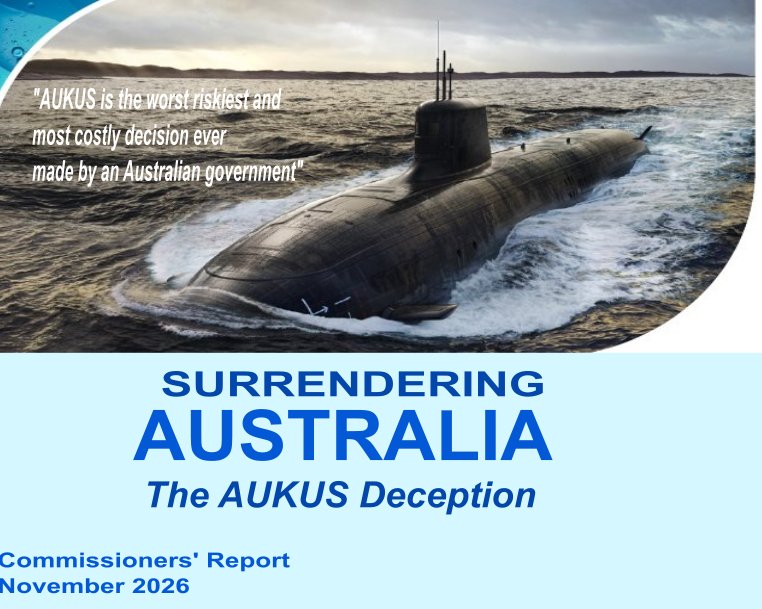
Read the Public Inquiry Report, the Commissioners’ report, Surrendering Australia: The AUKUS Deception is available to download for free at aukuspublicinquiry.com. Or just watch the replay of the National Press Club Luncheon.
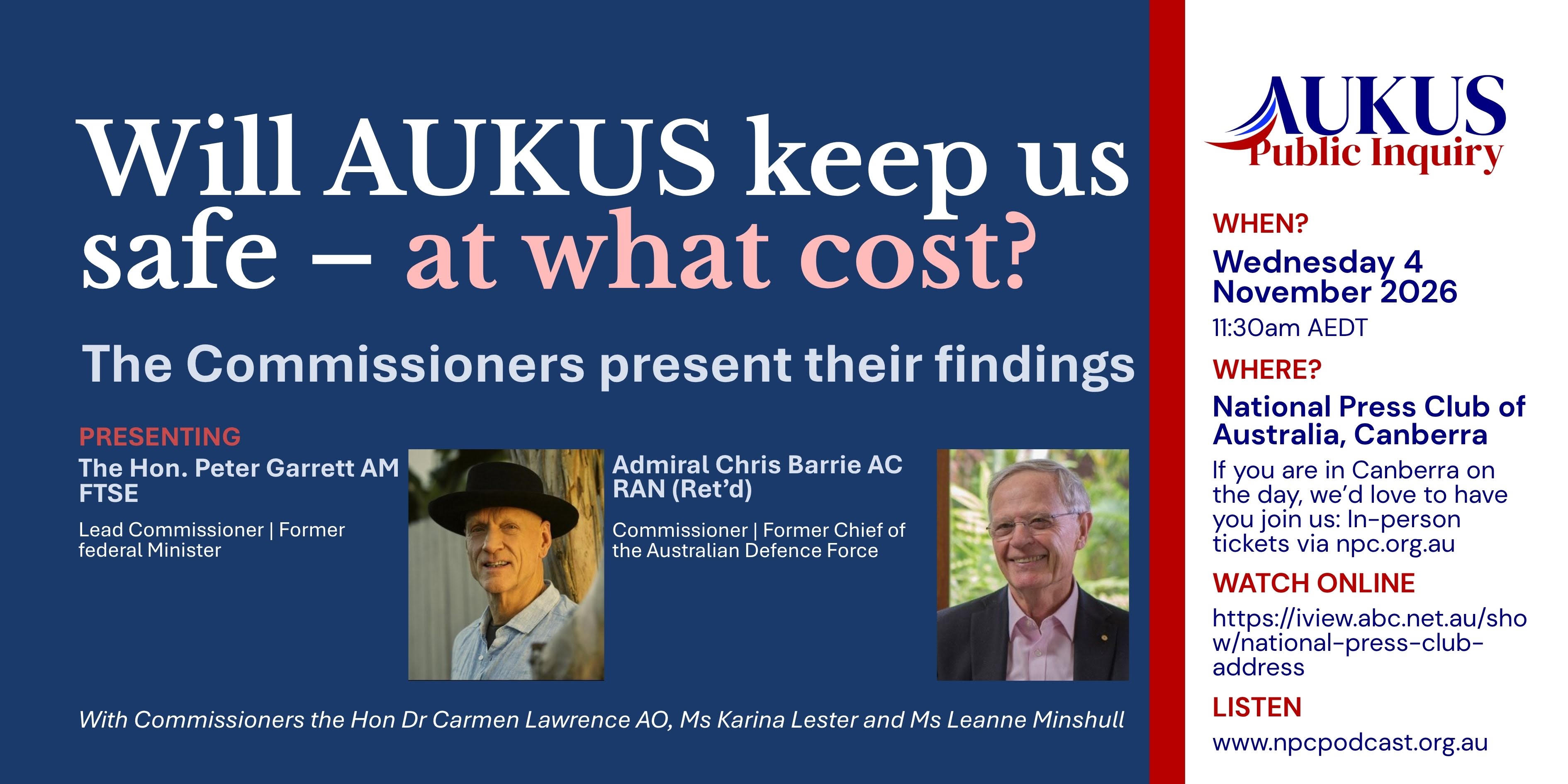
4 November – Will AUKUS keep us safe – at what cost?
the Commissioners of the AUKUS Public Inquiry present their findings at the National Press Club of Australia in Canberra. iview.abc.net.au/show/national-press-club-address
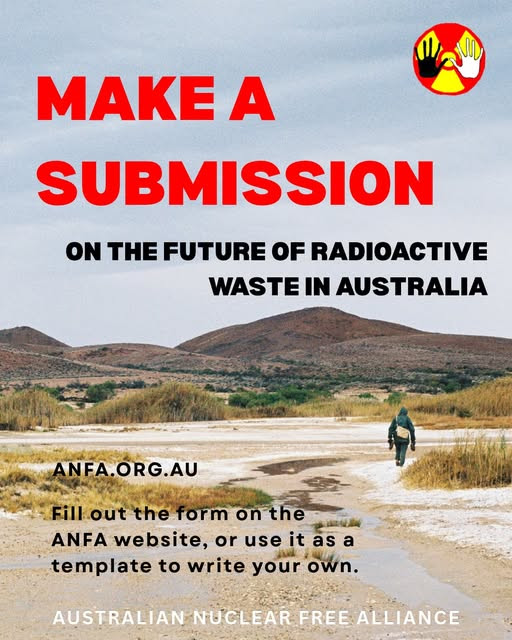
Submissions to the federal government’s new draft framework close on the 13th November 2026.
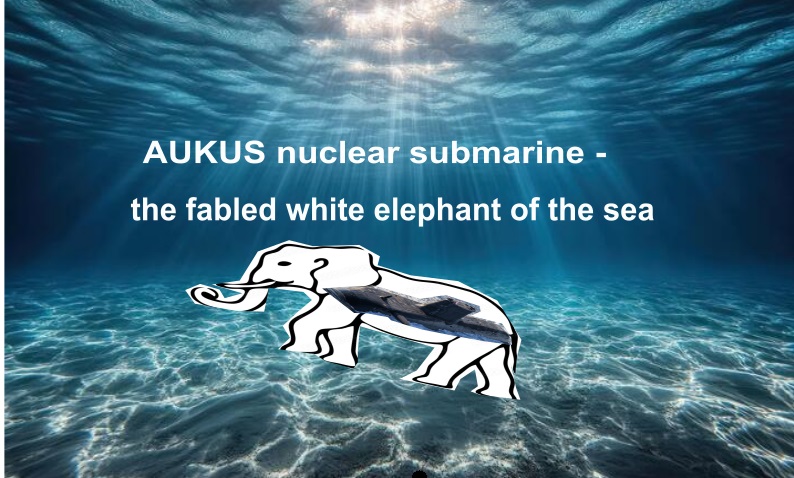
Australians deserve the truth
about
AUKUS – https://aukuspublicinquiry.com/

PETITION – To: Prime Minister Anthony Albanese and the Australian Labor Government

of the week – Australians for War Powers Reform (AWPR)
To see nuclear-related stories in greater depth and intensity

