Solar powers more than half of Australia’s grid for first time, coal at record low — RenewEconomy

As Nationals MPs met to see if they could make coal great again, solar delivered more than half of grid demand for first time, and coal output hit record low. The post Solar powers more than half of Australia’s grid for first time, coal at record low appeared first on RenewEconomy.
Solar powers more than half of Australia’s grid for first time, coal at record low — RenewEconomy
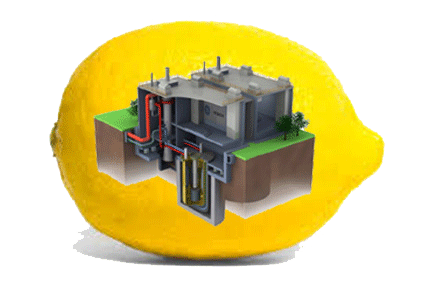
Terra Power’s Natrium nuclear reactor will be an economic lemon
This host of factors makes it reasonably certain that the Natrium will not be economically competitive.
In other words, even if has no technical problems, it will be an economic lemon.
Ramana, Makhijani: Look before you leap on nuclear https://trib.com/opinion/columns/ramana-makhijani-look-before-you-leap-on-nuclear/article_4508639b-d7e6-50df-b305-07c929de40ed.html, Oct 16, 2021
The Cowboy State is weighing plans to host a multi-billion dollar “demonstration” nuclear power plant — TerraPower’s Natrium reactor. The long history of similar nuclear reactors, dating back to 1951, indicates that Wyoming is likely to be left with a nuclear lemon on its hands.
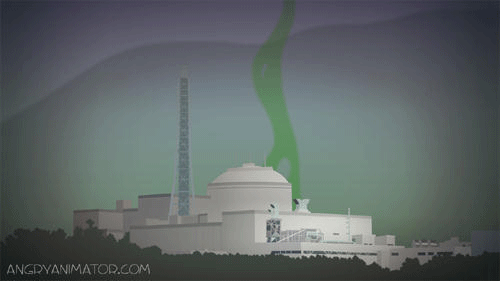
The Natrium reactor design, which uses molten sodium as a coolant (water is used in most existing commercial nuclear reactors), is likely to be problematic. Sodium reacts violently with water and burns if exposed to air, a serious vulnerability. A sodium fire, within a few months of the reactor starting to generate power, led to Japan’s Monju [at left] demonstration reactor being shut down.
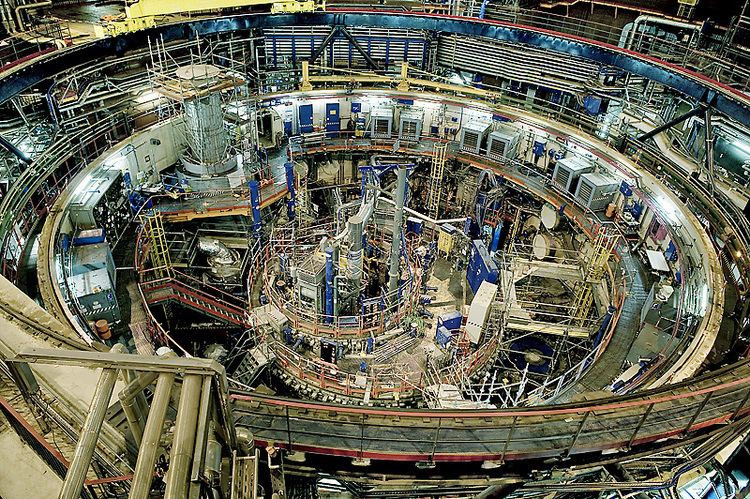
At 1,200 megawatts, the French Superphénix was the largest sodium-cooled reactor, designed to demonstrate commercial feasibility. Plagued by operational problems, including a major sodium leak, it was shut down in 1998 after 14 years, having operated at an average capacity of under 7 percent compared to the 80 to 90 percent required for commercial operation. Other sodium-cooled reactors have also experienced leaks, which are very difficult to prevent because of chemical interactions between sodium and the stainless steel used in various reactor components. Finally, sodium, being opaque, makes reactor maintenance and repairs notoriously difficult.
Sodium-cooled reactors can experience rapid and hard-to-control power surges. Under severe conditions, a runaway chain reaction can even result in an explosion. Such a runaway reaction was the central cause of the 1986 Chernobyl reactor explosion, though that was a reactor of a different design. Following Chernobyl, Germany’s Kalkar sodium-cooled reactor, about the same size as the proposed Natrium, was abandoned without ever being commissioned, though it was complete.
All these technical and safety challenges naturally drive up the costs of sodium-cooled reactors, making them significantly more expensive than conventional nuclear reactors. More than $100 billion, in today’s dollars, has been spent worldwide in the attempt to commercialize essentially this design and associated technologies, to no avail.
The Natrium design, being even more expensive than present-day reactors, will therefore be more expensive than practically every other form of electricity generation. The Wall Street firm, Lazard, estimates that electricity from new nuclear plants is several times more than the costs at utility-scale solar and wind power plants. Further, the difference has been increasing.
To this bleak picture, Terrapower has added another economically problematic feature: molten salt storage to allow its electric output to vary. Terrapower hopes this feature will help it integrate better into an electricity grid that has more variable electricity sources, notably wind and solar.
Molten salt storage would be novel in a nuclear reactor, but it is used in concentrating solar power projects, where it can cost an additional $2,000 per kilowatt of capacity. At that rate, it could add a billion dollars to the Natrium project.
This host of factors makes it reasonably certain that the Natrium will not be economically competitive. In other words, even if has no technical problems, it will be an economic lemon.
To top it all off, the proposed Wyoming TerraPower demonstration project depends on government funds. Last year, the Department of Energy awarded TerraPower $80 million in initial taxpayer funding; this may increase $1.6 billion over seven years, “subject to the availability of future appropriations” and Terrapower coming up with matching funds.
Despite government support, private capital has recently abandoned a more traditional project, the mPower small modular reactor, resulting in its termination in 2017. And it was Congress that refused to appropriate more money for the sodium-cooled reactor proposed for Clinch River, Tennessee when its costs skyrocketed, thereby ending the project in 1983.
A much harder look at the facts is in order, lest Wyoming add to the total of many cancelled nuclear projects and abandoned construction sites. Of course, the Natrium lemon might be made into lemonade by converting it to an amusement park if it is never switched on, like the Kalkar reactor, now refashioned into Wunderland Kalkar, an amusement park in Germany, near the border with the Netherlands. For energy, the state might look to its natural heritage – its wind power potential is greater than the combined generation of all 94 operating U.S. nuclear reactors put together, which are on average, about three times the size of Natrium.
M. V. Ramana is Professor and Simons Chair in Disarmament, Global and Human Security and the Director of the Liu Institute for Global Issues at the School of Public Policy and Global Affairs, University of British Columbia. Dr. Ramana holds a Ph.D. in Physics from Boston University.
Arjun Makhijani, President of the Institute for Energy and Environmental Research, holds a Ph.D. in engineering (nuclear fusion) from the University of California at Berkeley.
Rowan Ramsey, Federal Member for nuclear waste dumping, ignores HUGE PORT AUGUSTA RENEWABLE ENERGY PARK (PAREP)
Kazzi Jai No nuclear waste dump anywhere in South Australia, 17 Oct 21, You CANNOT MISS the HUGE PORT AUGUSTA RENEWABLE ENERGY PARK (PAREP) just outside Port Augusta on the approach from Adelaide on Highway 1!
Why is Rowan Ramsey so quiet over this?
It is ALL HAPPENING in his Federal Seat of Grey – and NOT ONE PEEP OUT OF HIM!!!!
NOTHING!!
Maybe he really is ONLY the Federal Member for Council Area of Kimba with EYES ONLY for a NATIONAL NUCLEAR DUMP for Kimba after all!!
Heads up Rowan! – Kimba is NOT AN ISLAND!
You drag Kimba into being a National Nuclear Dump you drag the REST of South Australia along with it!!
And in case you don’t read the article – BHP Olympic Dam/Roxby Downs is and always has been a copper mine first and foremost. The uranium contaminates the copper and they can’t sell the copper contaminated! Gold, Silver and Uranium are really just sidelines. And copper is needed more than ever for renewable energy technology.
Committing to using Renewable Energy from the PORT AUGUSTA RENEWABLE ENERGY PARK (PAREP) by BHP actually fits like a hand in glove.
 |
https://www.facebook.com/groups/1314655315214929
|
America’s paralysis on nuclear waste, as radioactive trash continues to accumulate.

GAO urges Congress to tackle nuclear waste storage impasse
‘The ghost of Yucca still stalks the policy debate and … there hasn’t been enough sustained pressure to find solutions’ By TERI SFORZA | tsforza@scng.com | Orange County Register, October 17, 2021 Who’s to blame for the paralysis that strands millions of pounds of radioactive waste at reactor sites all over the nation, and will cost taxpayers some $40 billion — and perhaps a lot more?
Congress, the U.S. Government Accountability Office says. And Congress must fix it.
In a dispassionate but merciless examination of the string of follies that has put the federal government nearly a quarter-century behind accepting waste from commercial reactors like the San Onofre Nuclear Generating Station — where 3.6 million pounds of waste must sit for years or possibly decades — the GAO chronicled the weeds that have choked the effort, then hacked through them to clear a path forward.
“Commercial spent nuclear fuel is extremely dangerous if not managed properly,” the report said. “About 86,000 metric tons of this fuel is stored on-site at 75 operating or shutdown nuclear power plants in 33 states, an amount that grows by about 2,000 metric tons each year.”
The radioisotopes produced in a reactor can remain hazardous from a few days to many thousands of years, the GAO said.
“The longer it takes the federal government to resolve the current impasse and develop a solution for the permanent disposal of commercial spent nuclear fuel, the greater the potential risk to the environment and public health, or of security incidents associated with temporary on-site storage,” the report said. “(T)he safety of long-term dry cask storage is unknown, and the risks, such as environmental and health risks, of on-site storage increase the longer the fuel is stored there.”
Attempted sabotage and theft of radioactive material are also potential security risks, the report said…………….
How to fix
Obama assembled a Blue Ribbon Commission that laid out a path forward in 2012, and it’s largely the path that the GAO urges lawmakers to embrace now. It recommends that Congress:
- Amend the Nuclear Waste Policy Act to allow the DOE to implement a new, consent-based process for siting temporary storage and permanent geologic disposal facilities.
- Restructure the Nuclear Waste Fund, which has about $43 billion in it to ensure reliable and sufficient funding.
- Create an independent board or similar mechanism to provide political insulation for a nuclear waste disposal program, as well as continuity of leadership.
- Direct DOE to develop a temporary waste management strategy that includes plans for the transportation, interim storage and permanent disposal of spent nuclear fuel.
- It’s not as if officials don’t know what to do with nuclear waste. In 1957, the National Academy of Sciences concluded that disposal in a geologic formation was the safest way to isolate nuclear waste. Myriad studies in the decades since have reached the same conclusion………………………….. https://www.ocregister.com/2021/10/17/gao-urges-congress-to-tackle-nuclear-waste-storage-impasse/
Demonising China is unhelpful while encouraging China to participate in Cop26
As Britain prepares to host the Cop26 climate conference in Glasgow next month, it is pursuing two contradictory policies that undermine its chances of success. On the one hand, it is seeking a unified global response to the climate crisis with nations agreeing to targets for the reduction of their coal and petroleum emissions.
But at the same time, it has joined the US in escalating a new cold war directed at confronting China and Russia at every
turn. The two policies have polar opposite objectives in trying to persuade China, responsible for 27 per cent of global carbon emissions, to cut back on building new coal-fuelled power stations, but at the same time demonising China as a pariah state with whom political, commercial and intellectual contacts should be as limited as possible.
Independent 15th Oct 2021
https://www.independent.co.uk/climate-change/opinion/china-russia-climate-cop26-b1939164.html
October 17 Energy News — geoharvey

Opinion: ¶ “Electrification And Energy Reduction Go Hand-In-Hand To Reduce Household Impacts” • The status quo of getting energy from natural gas, water service, and even sewer service is baked into many if not most homes, and it’s hard for the owner (and harder for a renter) to get out of that rut. Here, I […]
October 17 Energy News — geoharvey
Pro nuclear argument has ‘more holes than Swiss cheese’ Ian Lowe
Nuclear argument has ‘more holes than Swiss cheese’ CLARE PEDDIE, The Advertiser p.21 Sat 16 October
Scientist and author Professor Ian Lowe

“The costs of solar and wind are still coming down, while it requires optimism bordering on delusion to see any realistic prospect of nuclear electricity becoming competitive,”
AUSTRALIA makes more money selling cheese than uranium, according to the author of a new book on the nuclear industry who says those pushing to expand it need a reality check.
Professor Ian Lowe, an adjunct professor at Flinders University, says he wants to inject cold hard facts into the hot nuclear power debate. Professor Lowe said nuclear power was too costly for Australia, because it was four times more expensive than renewable energy and came with the problem of long term radioactive waste storage. “The costs of solar and wind are still coming down, while it requires optimism bordering on delusion to see any realistic prospect of nuclear electricity becoming competitive,”
Professor Lowe said. Launching his new book Long Half-life, The Nuclear Industry in Australia, he also referred to the chapter on the SA Nuclear Fuel Cycle Royal Commission, for which Professor Lowe was a member of the expert advisory committee and gave evidence to the citizens’ jury. “While the process followed by the royal commission was clearly best practice and its report was an exceptionally thorough document, its most contentious recommendation (on SA becoming a repository for the world’s nuclear waste) failed to achieve the level of social consent needed,” he said.
To put Australia’s nuclear industry in perspective, he said uranium accounted for 1 per cent of mineral exports, ranking with such metals as tin and tantalum. Export figures for 2019-20 were 7195 tonnes valued at $688m for uranium compared to almost 158,000 tonnes of cheese, worth about $995m. “(Nuclear) safeguards arrangements have more holes than Swiss cheese and Scientist and author Professor Ian Lowe radioactive waste is more unsavoury than an old gorgonzola, (so) I’d rather we supported cheese,” he said
Senate Inquiry quizzes Australian Nuclear Science and Technology Organisation and Australian Radiation Protection and Nuclear Safety Agency on infrastructure needs for nuclear submarines.
Nuclear agencies say it’s too early to know what infrastructure is needed to support submarine program
Rex Patrick says it’s ‘beyond comprehension’ Australia could build a nuclear-powered fleet without a domestic industry to support it, Guardian, Tory Shepherd, Fri 15 Oct 2021
Nuclear agencies say it is too early to speculate what legislative and infrastructure changes need to be made to support a nuclear-submarine project.
A senate economics committee inquiry into naval shipbuilding has been running for two years, but a public hearing on Friday was the first since the federal government announced its intention to acquire at least eight nuclear-powered submarines.
Independent senator Rex Patrick called the Australian Radiation Protection and Nuclear Safety Agency and the Australian Nuclear Science and Technology Organisation to appear. The agencies were quizzed over what nuclear infrastructure and industry would be needed to support the project, and what laws would need to be changed – however, they took most of those questions on notice.
Ansto did confirm it was consulted in March about the plan to buy nuclear-powered submarines, about six months ahead of September’s surprise announcement.
“Initial conversations started in March and we had a number of consultations between then and the announcement,” chief executive officer Shaun Jenkinson said.
Arpansa chief executive officer Carl-Magnus Larsson said his agency was briefed on the plan at the end of June or beginning of July.
The prime minister, Scott Morrison, has said there are no plans to develop a civil nuclear industry to support building submarines. He and defence say the nuclear reactors – which will be procured from the United States or the United Kingdom as part of the Aukus agreement – will not need refuelling, and therefore a domestic industry is not necessary.
Ahead of the inquiry, Patrick said: “It’s just unimaginable, it’s beyond comprehension that someone could suggest we’d be operating a nuclear operator in a submarine in a hands-off manner.
“I also want to understand what safety regime they understand to be necessary for this to be carried out,” he added.
Labor senator Kim Carr said there would have to be “extensive onshore facilities” to train people in case there’s an emergency, or a malfunction.
“I’d be interested to know how this can be done without the development of the various sustainment industries.”
“We’d need to have intensive training of all personnel to understand the linkages between the reactor and all the other bits of the boat,” he said.
“You can’t just drop it in. It’s not like a battery in a mobile phone, everything’s connected to everything else.”……….https://www.theguardian.com/world/2021/oct/15/inquiry-to-question-whether-australia-needs-nuclear-industry-to-support-submarine-program
Inquiry to question whether Australia needs nuclear industry to support submarine program
Inquiry to question whether Australia needs nuclear industry to support submarine program
Nuclear agencies will face questions over whether Australia needs an atomic industry to support a planned nuclear-powered submarine fleet at an inquiry into naval shipbuilding on Friday.
The Senate economics committee inquiry has been running for two years, but this will be the first public hearing since the federal government announced its intention to acquire at least eight nuclear-powered submarines.
Independent senator Rex Patrick has called the Australian Radiation Protection and Nuclear Safety Agency and the Australian Nuclear Science and Technology Organisation to appear.
Uncertain delivery date for nuclear submarines. Australia’s existing fleet still in use in 2050?
Nuclear submarines’ uncertain delivery date means ageing Collins class could be in use until , could be more than 50 years old by the time the Aukus deal delivers Australia’s nuclear fleet. Guardian, Daniel Hurst and Tory Shepherd
Fri 15 Oct 2021
Australia’s navy chief has left the door open to keeping some of the existing Collins-class submarines in the water until 2050, amid uncertainty about the exact schedule for acquiring new nuclear-propelled submarines.
The government is already planning to extend the life of the six Collins class submarines by 10 years, with the extensive refitting work set to cost between $3.5bn and $6bn.
But the navy chief, V-Adm Michael Noonan, indicated on Friday that a “potential” option was to refit them a second time to further extend their life.
Given the first Collins-class submarines were commissioned in the late 1990s, that option could see them used until they are about 50 years old…….
The South Australian senator Rex Patrick accused the government of being “extremely reckless” with national security amid the latest revelations…….
At a shipbuilding committee hearing on Friday – the first since the $90bn French deal was dumped – senators explored concerns about Australia facing a “capability gap” while it waited for the new submarines to be ready……….
Labor – which has backed the Aukus plan – said the evidence raised many questions for the government, including whether the Collins class submarines would be able to withstand multiple upgrades of this type.
Labor’s defence spokesperson, Brendan O’Connor, asked: “If enhanced submarine capability is critical to our national security, why would we still have 50-year-old Collins Class vessels in 2050?”……..
The Australian government has set up a taskforce, with 89 members and growing, whose job over the next year and a half is to work with the US and the UK on “identifying the optimal pathway to deliver at least eight nuclear-powered submarines for Australia”……..
It remains unclear precisely how much the Australian government will have to pay to settle contracts with France’s Naval Group and another defence contractor, Lockheed Martin………….. https://www.theguardian.com/world/2021/oct/15/nuclear-submarines-uncertain-delivery-date-means-ageing-collins-class-could-be-in-use-until-2050
Morrison agrees to go to Glasgow, Nationals to decide Australia’s climate policies — RenewEconomy

Morrison bows to pressure and will go to Glasgow, but the Nationals will decide this weekend what policies Morrison will be allowed to pack. The post Morrison agrees to go to Glasgow, Nationals to decide Australia’s climate policies appeared first on RenewEconomy.
Morrison agrees to go to Glasgow, Nationals to decide Australia’s climate policies — RenewEconomy
“Coal-o-phile Dundee”: Morrison’s climate denial outed in massive Times Square billboard — RenewEconomy

“That’s not climate denial, this is climate denial”. Australia’s climate policies exposed to the world in parody billboard in Times Square. The post “Coal-o-phile Dundee”: Morrison’s climate denial outed in massive Times Square billboard appeared first on RenewEconomy.
“Coal-o-phile Dundee”: Morrison’s climate denial outed in massive Times Square billboard — RenewEconomy
NSW draws up map for massive 8GW renewable energy zone in New England — RenewEconomy

The NSW government has drawn up the proposed map of the New England renewable energy zone, which will host 8GW of wind, solar and storage. The post NSW draws up map for massive 8GW renewable energy zone in New England appeared first on RenewEconomy.
NSW draws up map for massive 8GW renewable energy zone in New England — RenewEconomy
Vestas pledges zero waste for wind turbines, Vattenfall bans landfills for blades — RenewEconomy

Vestas promises to make wind turbines fully recyclable, while Vattenfall bans used turbine blades from landfill. The post Vestas pledges zero waste for wind turbines, Vattenfall bans landfills for blades appeared first on RenewEconomy.
Vestas pledges zero waste for wind turbines, Vattenfall bans landfills for blades — RenewEconomy
What Does Building A Nuclear Power Station Mean for CO2 Emissions As We Near COP26 ?

ON OCTOBER 14, 2021 BY MARIANNEWILDART The Following Extract is from The Ecologist’s Nuclear Dossier of 2006 – What Has CONveniently Been Unlearnt About Nuclear New Build Since Then? Quite a Lot!
What Does Building A Nuclear Power Station Mean for CO2 Emissions As We Near COP26 ? — RADIATION FREE LAKELAND
Many thanks to The Ecologist for their 2006 Nuclear Dossier written by Jon Hughes – the following extract relates to CO2 emissions from construction – which although mind numbingly enormous are the least worst thing about nuclear.
“Think nuclear power and you probably think of small amounts of highly radioactive material, safely encased in vast concrete bunkers, generating an endless and constant supply of clean electricity. Yes it’s expensive and clearly there is a problem with nuclear waste, but if it is the answer to climate change then why not?”Stop Hinkley C – then…..
and now…the largest concrete pour in the UK ever is just the beginning – Stopping Hinkley C is more important than ever.
BUILDING A NUCLEAR POWER STATION
During construction climate change is the only thing nuclear power fuels – to the tune of 20 million tonnes of C02 for each reactor
Once a decision has been taken to build a nuclear power station, the question of location arises. Firm foundations are required for a building that has to surpass an ‘Acts of God’ insurance policy for at least 100 years. It also pays for it to be built close to a plentiful water supply, as it requires 30 million gallons daily to act as a coolant to stop generators overheating and prevent catastrophic meltdown. This is a fundamental problem. Sea levels are predicted to rise by half a metre by the end of the century, according to the the ultra-cautious International Panel on Climate Change. It could be less, but it could easily be more. Such a rise threatens every coastline in Britain and around the world, as it brings with it unpredictable weather patterns.
Late last year, a confidential report from Nirex, the then government agency on radioactive waste management, warned that all the UK’s current reactor sites are at risk of flooding or erosion under such conditions. If the Greenland and Western Antarctic ice sheets start melting away, as some experts now predict, sea levels could eventually increase by as much as 12 metres.
Given this, it would not be possible to construct new reactors on old sites, which has been viewed as the ideal option. The ‘piggy backing’ would have circumvented the need for new planning permissions and a public inquiry. As it is, new sites will have to be developed further inland.
To find the right location, geological surveys are undertaken to assess the long-term viability of the land, and answer questions like will it buckle in the event of a long-term drought or sink in the event of an excessive wet period…………………….
It can be assumed from the EPR that scheduled build time for any new reactor will be set at an ambitious five years.
(One year in, Olikuoloto is nine months behind schedule.) During the construction period, greenhouse gases will be spewing into the atmosphere, fuelling nothing other than
climate change. Much of the £2bn it is conservatively estimated a nuclear power station will cost is spent on sourcing the raw materials, their manufacture and their supply, all of which are processes that use energy and cause C02 emissions to rise. If the UK government opts to keep nuclear power supplying 20 per cent of the country’s energy needs, then it is probable
that 10 such reactors would have to be built. (Worldwide, 80 new reactors are envisaged.) This is environmental damage that can’t be repaired, and will only intensify the process of climate change now. https://mariannewildart.wordpress.com/2021/10/14/what-does-building-a-nuclear-power-station-mean-for-co2-emissions-as-we-near-cop26/
1 This month
17 October, Free Public Talk on Nuclear Issues in South Australia
David Noonan will speak on public interest concerns over the new Roxby Downs Indenture Act 2026 on BHP copper-uranium mining and ore processing in SA, and on how AUKUS may face SA with a High-Level nuclear waste agenda.
Dr Jim Green will discuss international developments in the field of nuclear power including ‘small modular reactors’ and Generation 4 ‘advanced’ nuclear reactor concepts.


Help Aunty Sue Protect Her Land and Sacred Sites From Destructive Rocket Testing.
.

Australians deserve the truth
about
AUKUS – https://aukuspublicinquiry.com/

PETITION – To: Prime Minister Anthony Albanese and the Australian Labor Government

of the week – Australians for War Powers Reform (AWPR)
To see nuclear-related stories in greater depth and intensity

