July 11 Energy News — geoharvey

World: ¶ “Extreme Heat Cooked Mussels, Clams And Other Shellfish Alive On Beaches In Western Canada” • The devastating heat wave that ravaged British Columbia last week is being blamed for a massive die-off of mussels, clams and other marine animals that live on the beaches of Western Canada. The animals were exposed to the […]
July 11 Energy News — geoharvey
The world should stop tiny invisible killer radioactive particles – just as dangerous as tiny invisible killer coronaviruses – theme for July 2021

Why on earth are we so complacent about ionising radiation from nuclear activities – at the same time as the world is in uproar over the pandemic?
Is it because we don’t mind a plague of cancers, other illnesses and birth defects coming not immediately, but affecting people years later – our grandchildren and great-grandchildren?
Tiny invisible little viruses float about the air, near people who have the COVID-19 infection, or they settle on people’s hands, on objects – ever ready to be picked up by more people. Almost certainly, this virus started by jumping from wild bats to humans.
So the epidemiologists now work to trace the movement, the dispersal of the infection – and world-wide maps of COVID illness clusters are identified. The goal is to stop the present global illness, with its many deaths.
Equally, tiny particles from nuclear activities, uranium mining and milling, reactors, wastes, nuclear weapons making, nuclear bomb tests – have floated about the atmosphere, and continue to do so, reaching living creatures, and settling in water and on land. With contact, especially inhaling or ingesting these, the results are birth defects, cancer and other illnesses. Not an urgent problem? After all, it is usually only after years of exposure, that people develop these illnesses.
Where are the epidemiologists tracing the dispersal of the radioactive particles, and the resultant sicknesses and deaths?
And, these particles came, not from bats, but from a very lucrative human industry. So lucrative, that all the banks, universities, governments and other backers involved do not want the epidemiological research that would expose this global horror.
As the world wakes up to the urgent need for research and international action on Coronavirus, it is time for international action to stop the global radiation-caused epidemic, and the nuclear activities that produced it.
South Australian law demands an Inquiry into the Federal government’s nuclear waste storage plan

Robyn Wood, 10 July 21 The SOUTH AUSTRALIA NUCLEAR WASTE STORAGE FACILITY (PROHIBITION) ACT 2000, Section 14 states:If a licence, exemption or other authority to construct or operate a nuclear waste storage facility in this State is granted under a law of the Commonwealth, the Environment, Resources and Development Committee of Parliament must inquire into, consider and report on the likely impact of that facility on the environment and socio-economic wellbeing of this State.
https://www.legislation.sa.gov.au/LZ/C/A/NUCLEAR%20WASTE%20STORAGE%20FACILITY%20(PROHIBITION)%20ACT%202000.aspx?fbclid=IwAR0jBfTQuytzlMroTWvPAkMXZraWTDPbKfYim5rrdgPl95UtR3eBSuvIOv4
Australian Members of Parliament from right and left parties call on US President Biden to drop charges against Julian Assange,
Australian MPs call on US President Biden to drop charges against Assange, https://www.smh.com.au/politics/federal/australian-mps-call-on-us-president-biden-to-drop-charges-against-assange-20210629-p585a1.html By Rob Harris, June 30, 2021 Former security analyst turned federal Labor MP Peter Khalil has joined a group of Australian politicians directly lobbying the United States to drop an appeal over a British court’s ruling against the extradition of the WikiLeaks co-founder Julian Assange.
In a video message to US President Joe Biden released on Wednesday evening Australian time, 11 federal MPs from across the political spectrum have also appealed to Washington to drop its espionage charges against the Australian citizen and for the British government to allow him to return home.
Before entering politics Mr Khalil, the member for the Victorian seat of Wills, was director of National Security Policy of the Coalition Provisional Authority in Iraq. As a national security adviser to former prime minister Kevin Rudd, he was personally named in diplomatic cables sent to Washington by the US Embassy, which were later released by Wikileaks.
While he has previously criticised Mr Assange’s actions in helping obtain and leak classified information on the wars in Afghanistan and Iraq, Mr Khalil said the case was “not just about one individual”.
“In an era where rising authoritarian regimes are denying and attacking freedom of the press, such as the shut down of Hong Kong’s Apple Daily by the Chinese Community Party, it is more important than ever that when it comes to condemning the denial of press freedom the rhetoric of liberal democracies is actually matched with substantive actions to protect the right of journalists and the media to do their work freely to hold governments to account,” Mr Khalil said.
He said while the Obama administration had clearly chosen not to indict Mr Assange because it would set a damming precedent against journalistic practice and behaviour, the Trump administration aggressively pursued the case.
“Therein lies the problem. These charges are so broad-based that if successful they would go well beyond this individual case – they would impact investigative journalism and open up prosecutions of countless media doing this journalism, they would have a chilling effect on all journalists reporting on national security and foreign affairs matters,” he said.
The 49-year-old Mr Assange has been in Belmarsh Prison since April 2019 trying to avoid extradition to the US to face charges on multiple counts of conspiring with and directing others, from 2009 to 2019, to illegally obtain and release US secrets.
In doing so he aided and abetted hacking, illegally exposed confidential US sources to danger and used the information to damage the US, according to the charges. If convicted on all counts he faces a prison sentence of up to 175 years.
In 2012 Mr Assange sought asylum at the Ecuadorean embassy to avoid extradition to Sweden on a rape allegation that he denied. An investigation into the 2010 rape allegation has since been dropped by Swedish prosecutors.
He was awarded a Walkley award, Australian journalism’s highest honour, in 2011 for a “most outstanding contribution to journalism” for his “brave, determined and independent stand for freedom of speech and transparency”.
In March this year Nationals MP George Christensen, Independent Andrew Wilkie and Labor’s Julian Hill personally met with the US embassy’s charge d’affaires, Michael Goldman, arguing that Mr Assange should be allowed to return home.
A 24-member parliamentary group established to support Mr Assange’s bid to return home contains members from all major parties, including now Deputy Prime Minister Barnaby Joyce.
Prime Minister Scott Morrison said in January Mr Assange would be allowed to return to Australia if all charges were dropped. He said consular support had consistently been offered to Mr Assange, but made clear the government were “not parties to those set of proceedings”.
.
In the USA State of Ohio, pro nuclear legislation is helped along by misinformation on renewable energy

How misinformation propped up Ohio lawmakers’ latest attack on renewables
Unsupported and misleading statements were the “means to the end” for a bill to cripple new solar and wind energy in Ohio, critics say. by Kathiann M. Kowalski July 7, 2021
False and unsubstantiated claims about renewable energy have flourished for years, but critics say different forms of misinformation played a big role in Ohio lawmakers’ latest move to stifle the growth of wind and solar energy.
“Misinformation is the means to the end,” said Trish Demeter, chief of staff for the Ohio Environmental Council Action Fund. “Misinformation, bad information, misconstrued information, partial information: All of those are tactics that are supporting the goal, which is to block and kill renewable energy from being built in Ohio.”
Senate Bill 52 would let counties keep out new solar and wind farms from all or part of their territories, holding those projects to a higher standard than fossil fuel infrastructure.
Continue readingU.S. government offers meaningless assurances on Julian Assange’s well-being, as it gets right to appeal on UK court ruling against his extradition

UK High Court grants US government right to appeal on Assange extradition, World Socialist Website, Laura Tiernan7 July 2021 Stella Moris, the partner of imprisoned WikiLeaks publisher Julian Assange, spoke outside Britain’s High Court yesterday warning he is “still at risk of extradition” after a judge decided the US government can appeal an earlier court ruling that blocked his extradition on health grounds.
The judge also ruled that Assange must remain in prison until the appeal is heard, effectively extending his incarceration for at least many more months.The ruling underscores the Biden administration’s determination to ensure Assange’s removal to the US. According to a report in the Wall Street Journal, based on excerpts of the judge’s ruling supplied by the UK Crown Prosecution Service, the US government offered “assurances” that Assange would not be imprisoned in oppressive conditions and could be permitted to serve any sentence in Australia.Such assurances are meaningless. Once Assange is in US custody, those pledges will be cast aside. The Wall Street Journal reported: “The US said it reserved the right to impose special measures on Mr. Assange, or hold him in a Supermax jail, if ‘he were to do something subsequent to the offering of these assurances’ that meets the test for applying them.”
Assange has been denied bail and remains detained in London’s Belmarsh Prison despite a January decision by District Court Judge Vanessa Baraitser denying his extradition to the US. Assange faces trumped-up charges under the Espionage Act over his exposure of war crimes, illegal mass surveillance and torture by the US and its allies. He has been held captive in the UK for a decade.
Baraitser ruled January 4 that Assange’s extradition to a US federal prison would be “oppressive” because of his compromised mental health and risk of suicide. The US Department of Justice (DoJ) under President Donald Trump immediately appealed Baraitser’s decision. Two days later, Trump mounted a fascist coup attempt in Washington D.C. The Democrats under Joseph Biden and Kamala Harris have seamlessly continued US imperialism’s political vendetta against Assange.The WikiLeaks publisher is being held in violation of his First Amendment rights to free speech and freedom of the press and in breach of international human rights law.
Britain’s High Court has reportedly granted a right of appeal to the US on three grounds. The court will decide whether Baraitser applied the Extradition Act correctly; whether sufficient advance notice was given of the court’s decision, and whether “assurances” by the US over mitigating the risk of suicide were properly considered.A date for the appeal hearing has not been announced, but it will likely take place after the courts’ summer recess. This leaves Assange imprisoned at Belmarsh indefinitely in conditions long condemned by doctors and human rights lawyers as “psychological torture.”
In a letter sent yesterday to Biden and US Attorney General Merrick Garland by Doctors for Assange, 250 doctors from 35 countries demanded the dropping of all charges against the WikiLeaks publisher. They denounced his ongoing imprisonment due to the US appeal as “amounting to cruel, inhuman and degrading treatment in the UK.”……….. https://www.wsws.org/en/articles/2021/07/08/gnkp-j08.html?pk_campaign=assange-newsletter&pk_kwd=wsws
Nuclear Energy Will Not Be the Solution to Climate Change – not enough time, even if it were.
Nuclear Energy Will Not Be the Solution to Climate Change
There Is Not Enough Time for Nuclear Innovation to Save the Planet https://www.foreignaffairs.com/articles/2021-07-08/nuclear-energy-will-not-be-solution-climate-change?fbclid=IwAR1LI64yKHqz72O4z7eQXrSiZF64Bsmkm3tZhkiJHZQkB5M_J3H5Mhx9CqA By Allison Macfarlane, July 8, 2021
For all these reasons, nuclear energy cannot be a near- or perhaps even medium-term silver bullet for climate change. Given how many economic, technical, and logistical hurdles stand in the way of building safer, more efficient, and cost-competitive reactors, nuclear energy will not be able to replace other forms of power generation quickly enough to achieve the levels of emission reduction necessary to prevent the worst effects of climate change.
The world is almost out of time with respect to decarbonizing the energy sector. Doing so, experts agree, is essential to forestalling some of the most alarming consequences of climate change, including rising sea levels, droughts, fires, extreme weather events, ocean acidification, and the like. These threats have helped generate fresh interest in the potential for nuclear power—and, more specifically, innovative nuclear reactor designs—to allow people to rely less on carbon-spewing electricity sources such as coal, natural gas, and oil. In recent years, advanced nuclear designs have been the focus of intensive interest and support from both private investors such as Bill Gates—who founded TerraPower, a nuclear reactor design company, in 2006—and national governments, including that of the United States.Advocates hope that this renewed focus on nuclear energy will yield technological progress and lower costs.
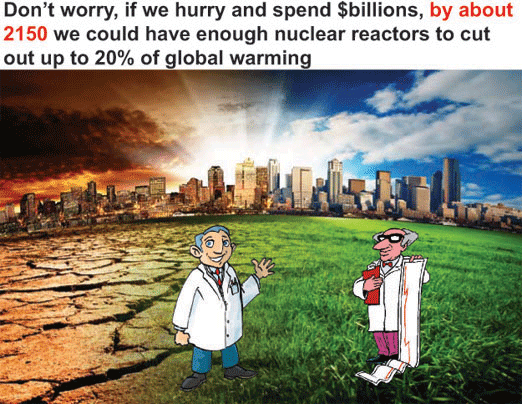
But when it comes to averting the imminent effects of climate change, even the cutting edge of nuclear technology will prove to be too little, too late. Put simply, given the economic trends in existing plants and those under construction, nuclear power cannot positively impact climate change in the next ten years or more. Given the long lead times to develop engineered, full-scale prototypes of new advanced designs and the time required to build a manufacturing base and a customer base to make nuclear power more economically competitive, it is unlikely that nuclear power will begin to significantly reduce our carbon energy footprint even in 20 years—in the United States and globally. No country has developed this technology to a point where it can and will be widely and successfully deployed.
STRUGGLING FOR VIABILITY
Nuclear power currently provides the United States with about 20 percent of its electricity, but the industry has struggled for decades to remain economically viable. When New York’s Indian Point power plant shut down its last nuclear reactor on April 30 this year, it was the 12th such closure since 2013. At least seven more U.S. reactors are slated to close by 2025.

An October 2020 analysis by Lazard showed that in the United States, capital costs for nuclear power are higher than for almost any other energy-generating technology.
There are multiple efforts underway to make nuclear reactors more efficient and, ultimately, more competitive with other forms of energy production that can cut down on carbon emissions. Each of these designs faces its own set of logistical and regulatory hurdles, however.
The power reactors currently in operation or under construction in the United States, France, Japan, and a number of other countries are all variations on the light-water reactor, a plant that is powered by low-enriched uranium fuel and cooled and “moderated” by water. (“Moderation” reduces the energy of neutrons released in a fission reaction to improve the likelihood of causing further fission in uranium fuel.) Canada operates reactors that use slightly enriched uranium fuel and are cooled and moderated by heavy water, which contains deuterium, a type of hydrogen isotope. The United Kingdom operates a single light-water reactor, as well as some gas-cooled reactors. These types of reactors are all large, capable of generating between 600 and 1,200 megawatts of electricity.
New reactor makers propose to make reactors smaller and to use different types of fuels, coolants, and moderators. One of these new designs, the NuScale reactor—a small, light-water reactor that is capable of generating 77 megawatts of electricity and emphasizes passive safety features—is in the midst of the U.S. Nuclear Regulatory Commission’s licensing process. The first customer for the NuScale design is Utah Associated Municipal Power Systems, which has plans to begin operating a plant in Idaho by 2027. The U.S. Department of Energy has backed this project with a $1.355 billion award.
NuScale has shown that it is possible for vendors of innovative new reactor designs to engage in the licensing process. The Nuclear Regulatory Commission, whose approval of new designs carries considerable weight in other countries, is working on a new regulation to license some of the more exotic designs.
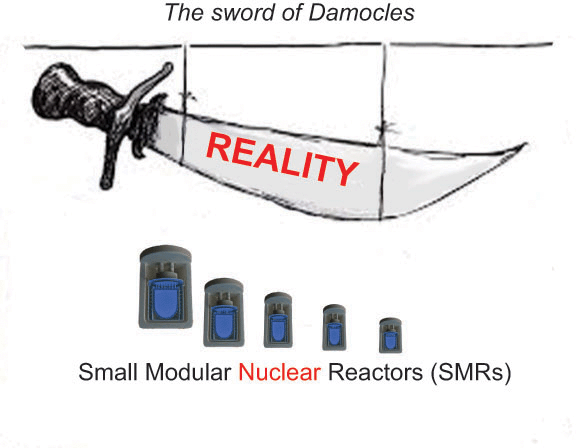
NuScale is further along in the approval process than other, more unconventional reactor designs, such as the sodium-cooled fast reactor. This is the holy grail of nuclear power—a design that creates more fuel than it uses. Eight countries have built multiple versions of this type of reactor over the last six decades at a cost of over $100 billion, but none have proven reliable enough to produce electricity competitively.
Nonetheless, the Department of Energy has decided on this design for its Versatile Test Reactor, to be constructed at the Idaho National Laboratory in conjunction with GE Hitachi and TerraPower. The Versatile Test Reactor, estimated to cost between $3 billion and $6 billion, is slated to start testing fuels by 2026.
Other startup vendors are also considering two other designs. The first is for molten salt reactors, only a few of which have ever operated. These use either fluoride or chloride salts, often mixed with lithium or beryllium. More promising are high-temperature gas reactors that use helium as a coolant and graphite, rather than water, as a moderator. The United States built and operated two of these power reactors between the 1960s and the 1980s. China, Germany, and Japan have all built and operated test versions of high-temperature gas reactors.
Another major challenge is that these new reactors must also use new fuels, which must be licensed as well as produced, managed during use, and stored and disposed of when spent. Some new reactor designs depend on the use of fuels that require higher enrichments of uranium—material that the United States currently has little capability to produce. The higher enriched fuels have set off concerns about nuclear weapons proliferation and would require international safeguards.
Even if these tricky fueling problems could be solved, unconventional reactor designs also face formidable construction challenges. Many of the new advanced designs rely on the availability of adequate sites and efficient construction to achieve profitability. But the nuclear industry has been plagued by long construction times and cost overruns. Since the 1979 Three Mile Island accident, the construction time to build most reactors in the United States has surpassed 10 years. Meanwhile, costs have skyrocketed. The Vogtle plant in Georgia is the only new build of reactors in the United States. The plant’s two reactors were initially priced at $14 billion and expected to start in 2016 and 2017 after five years of construction. Instead, construction is still ongoing and the plants may not start until 2022 at a final cost of $25 billion.
And the recent new build experience in Europe is similar: the French EPR reactor design has experienced multiple delays and large cost overruns in both France and Finland. These megaprojects face challenges in program management and quality control and regulatory issues that result in lengthy delays.
The United States is hardly an outlier in this regard. Nuclear reactors worldwide are aging and, for the most part, are not being replaced as they are shut down. In 2019, for instance, six reactors started operations and 13 units were shut down. The average age of the world’s 408 operating reactors in 2020 was 31 years, with 81 of them over the age of 41 years.
NO SILVER BULLET
For all these reasons, nuclear energy cannot be a near- or perhaps even medium-term silver bullet for climate change. Given how many economic, technical, and logistical hurdles stand in the way of building safer, more efficient, and cost-competitive reactors, nuclear energy will not be able to replace other forms of power generation quickly enough to achieve the levels of emission reduction necessary to prevent the worst effects of climate change.
Innovations in reactor designs and nuclear fuels are still worthy of significant research and government support. Despite its limitations, nuclear power still has some potential to reduce carbon emissions—and that is a good thing. But rather than placing unfounded faith in the ability of nuclear power to save the planet, we need to focus on the real threat: the changing climate. And we need strong government support of noncarbon-emitting energy technologies that are ready to be deployed today, not ten or 20 years from now, because we have run out of time. We cannot wait a minute longer.
U.S. proposals about extradition of Julian Assange are designed to keep him in prison for life
Assange fiancee rejects US proposals over possible extradition
Stella Moris says measures intended to keep her partner ‘in prison effectively for the rest of his life’, https://www.theguardian.com/media/2021/jul/08/julian-assange-fiancee-rejects-us-proposals-over-possible-extradition Ben Quinn@BenQuinn75, Thu 8 Jul 2021
US assurances that Julian Assange would not be held under the strictest maximum-security conditions if extradited from the UK have been rejected by his fiancee, who described them as a formula to keep him in prison for the rest of his life.
Details of the proposals made to British authorities emerged after permission was granted this week to appeal against January’s ruling that the Wikileaks co-founder cannot be extradited on mental health grounds.
They include assurances that Assange, if convicted in relation to charges of alleged espionage and hacking, would be allowed to serve any jail time in his native Australia.
The package contains a particular assurance that Assange would not be subject to “special administrative measures” (SAMs) in US custody or imprisoned at the “supermax” prison in Florence, Colorado, procedures reserved for high-security prisoners. The assurances were subject to change if he were to “do something” subsequently that met the US test for the imposition of the high-security measures.
Details were contained in excerpts of the UK court ruling granting limited permission to appeal, which were released by the Crown Prosecution Service.
In January, the district judge Vanessa Baraitser ruled Assange could not be extradited because of concerns over his mental health and risk of suicide in a US prison.
Stella Moris, Assange’s fiancee, described reports about US undertakings as “grossly misleading”, adding that 80,000 prisoners in US prisons were held in solitary confinement on any given day and only a handful were held in the conditions specifically mentioned in the proposals.
“The US government also says it may change its mind if the head of the CIA advises it to do so once Julian Assange is held in US custody,” she added.
In relation to him serving jail time in Australia, she said that it had always been his right to request a prison transfer to finish serving his sentence.
“What is crucial to understand is that prisoner transfers are eligible only after all appeals have been exhausted. For the case to reach the US supreme court could easily take a decade, even two.
“What the US is proposing is a formula to keep Julian in prison effectively for the rest of his life.”
Nick Vamos, a partner at the Peters & Peters law firm and a former head of extradition at the Crown Prosecution Service, said it was “highly unusual” for the US Department of Justice to offer broader assurances to a foreign court on prisoner treatment upfront. In fact, he said it had previously refused to do so in terrorism cases.
“It’s not unusual in extradition, but it is for the Americans to give this type of assurances because their previous approach over many years has been to say, ‘the US legal system is a fair one and our prison system is capable of dealing with people with all kinds of conditions,’” he said.
While a date has yet to be set for a high court hearing in relation to the US appeal, Vamos suggested things could move “quite quickly”.
While the ruling earlier this year had gone in Assange’s favour, he added: “The difficulty he and his legal team now have is that, if the court says we are denying extradition because we are concerned about his treatment, we are worried that a, b or c might happen, and the requesting state then provides an assurance which says, ‘under no circumstance will that ever happen’, then it defeats the objection.
“There’s also a longstanding history of our courts accepting the assurances from requesting states. The question is: ‘Does the assurance address it in fact or can it be undermined by suggesting that it is not quite as good as it appears or that they will dishonour it anyway?’”
Children win landmark climate change court case against Australian minister — RenewEconomy

Federal Court rules that the federal environment minister owes a ‘duty of care’ to protect children from climate impacts of coal mine expansion.
Children win landmark climate change court case against Australian minister — RenewEconomy
UK High Court Allows US to Appeal Ban on Assange Extradition;Doctors Tell Biden: Let Assange Go — Rise Up Times

“Because western media are designed to protect the powerful, most people are more aware of smears about Assange being a Russian agent or a rapist than of his victimization by a tyrannical assault on world press freedoms…”
UK High Court Allows US to Appeal Ban on Assange Extradition;Doctors Tell Biden: Let Assange Go — Rise Up Times
German coal plant closes after just six years, to produce green hydrogen from wind — RenewEconomy

A 1600MW coal generator closes for good after just six years, and will now be repurposed to produce green hydrogen from wind energy. The post German coal plant closes after just six years, to produce green hydrogen from wind appeared first on RenewEconomy.
German coal plant closes after just six years, to produce green hydrogen from wind — RenewEconomy
July 9 Energy News — geoharvey

Opinion: ¶ “Climate Change Is About Greed. It’s Time For Big Oil To Pay Us Back” • Four interconnected pieces of climate change-related news from the past two weeks reveal America’s predicament. And they also show the way forward, which ultimately must include oil companies’ paying restitution for damage that they have done to the […]
July 9 Energy News — geoharvey
Key witness in Julian Assange case admits to lies in indictment
A major witness in the United States’ Department of Justice case against Julian Assange has admitted to fabricating key accusations in the indictment against the Wikileaks founder. STUNDIN, Bjartmar Oddur Þeyr Alexanderssonbjartmar@stundin.is, Gunnar Hrafn Jónssonritstjorn@stundin.is 26 June 21,
A major witness in the United States’ Department of Justice case against Julian Assange has admitted to fabricating key accusations in the indictment against the Wikileaks founder. The witness, who has a documented history with sociopathy and has received several convictions for sexual abuse of minors and wide-ranging financial fraud, made the admission in a newly published interview in Stundin where he also confessed to having continued his crime spree whilst working with the Department of Justice and FBI and receiving a promise of immunity from prosecution.
The man in question, Sigurdur Ingi Thordarson, was recruited by US authorities to build a case against Assange after misleading them to believe he was previously a close associate of his. In fact he had volunteered on a limited basis to raise money for Wikileaks in 2010 but was found to have used that opportunity to embezzle more than $50,000 from the organization. Julian Assange was visiting Thordarson’s home country of Iceland around this time due to his work with Icelandic media and members of parliament in preparing the Icelandic Modern Media Initiative, a press freedom project that produced a parliamentary resolution supporting whistleblowers and investigative journalism.
The United States is currently seeking Assange’s extradition from the United Kingdom in order to try him for espionage relating to the release of leaked classified documents. If convicted, he could face up to 175 years in prison. The indictment has sparked fears for press freedoms in the United States and beyond and prompted strong statements in support of Assange from Amnesty International, Reporters without borders, the editorial staff of the Washington Post and many others.
US officials presented an updated version of an indictment against him to a Magistrate court in London last summer. The veracity of the information contained therein is now directly contradicted by the main witness, whose testimony it is based on.
No instruction from Assange
The court documents refer to Mr Thordarson simply as “Teenager” (a reference to his youthful appearance rather than true age, he is 28 years old) and Iceland as “NATO Country 1” but make no real effort to hide the identity of either. They purport to show that Assange instructed Thordarson to commit computer intrusions or hacking in Iceland.
The aim of this addition to the indictment was apparently to shore up and support the conspiracy charge against Assange in relation to his interactions with Chelsea Manning. Those occurred around the same time he resided in Iceland and the authors of the indictment felt they could strengthen their case by alleging he was involved in illegal activity there as well. This activity was said to include attempts to hack into the computers of members of parliament and record their conversations.
In fact, Thordarson now admits to Stundin that Assange never asked him to hack or access phone recordings of MPs. His new claim is that he had in fact received some files from a third party who claimed to have recorded MPs and had offered to share them with Assange without having any idea what they actually contained. He claims he never checked the contents of the files or even if they contained audio recordings as his third party source suggested. He further admits the claim, that Assange had instructed or asked him to access computers in order to find any such recordings, is false.
Nonetheless, the tactics employed by US officials appear to have been successful as can be gleaned from the ruling of Magistrate Court Judge Vanessa Baraitser on January 4th of this year. Although she ruled against extradition, she did so purely on humanitarian grounds relating to Assange’s health concerns, suicide risk and the conditions he would face in confinement in US prisons. With regards to the actual accusations made in the indictment Baraitser sided with the arguments of the American legal team, including citing the specific samples from Iceland which are now seriously called into question.
Other misleading elements can be found in the indictment, and later reflected in the Magistrate’s judgement, based on Thordarson’s now admitted lies. One is a reference to Icelandic bank documents. The Magistrate court judgement reads: “It is alleged that Mr. Assange and Teenager failed a joint attempt to decrypt a file stolen from a “NATO country 1” bank”………..
On the FBI radar
Thordarson’s rogue acts were not limited to communications of that nature as he also admits to Stundin that he set up avenues of communication with journalists and had media pay for lavish trips abroad where he mispresented himself as an official representative of WikiLeaks………………………. https://stundin.is/grein/13627/key-witness-in-assange-case-admits-to-lies-in-indictment/
Barngarla Determination Aboriginal Corporation (BDAC) will take legal action against nuclear dump plan if Resources Minister Keith Pitt names Napandee as the site
Barngarla will pursue judicial review if Napandee site named. https://www.portlincolntimes.com.au/story/7330119/barngarla-may-seek-legal-review/?fbclid=IwAR28Hj_22In6jE2Vd3s7ZrWBtOe0nHJxbyqdKk_xXF6hXv8Z-TNbEtBu5CEMembers of the Barngarla Determination Aboriginal Corporation (BDAC) have said the outcome of the nuclear waste amendment bill was the result they were hoping for.
The National Radioactive Waste Management Amendment (Site Specification, Community Fund and Other Measures) Bill 2020 was passed by the Australian Parliament on June 22.
The BDAC had previously raised concerns about the absence of a judicial review process by naming the Napandee site in the proposed legislation.
“The government sought to change the law to remove our democratic right to judicial review of their actions so that no court could ever assess what had been done,” they said in a previous statement.
However BDAC chair Jason Bilney said the bi-partisan support the bill received in parliament was what they were looking for, as changes were made to the bill to reinstate the ability to pursue a judicial review of the site selection process.
The bill was initially tabled in parliament in February 2020 with the intention to name the Napandee site near Kimba within the legislation.
Now federal resources minister Keith Pitt will be required to name the host site through ministerial decision, which will allow for a potential judicial review of the site selection process in future.
Mr Pitt is also not bound to name one of the three sites currently shortlisted.
Mr Bilney said it had been a “long, hard battle” for 15 months, and that he and others were in Canberra that week as the bill went through.
“It’s a good outcome for the Barngarla people, but also all Australians because it affects all Australians,” he said.
The BDAC have stated since the passing of the bill that if there is a declaration of the Napandee site, the BDAC will seek a judicial review.
“The Barngarla and farmers worked together and the senate did not agree to pass any bill which removed judicial review,” they said.
“We had certain demands, which amounted to removing site specification in the bill and removing Schedule 1.
“The government gave in to these demands and effectively amended their own bill to reflect what Barngarla, Labor and the cross bench had said we required.
“So, we have no issues with the new bill, as it is the bill that we demanded occur.
“Namely, it preserves judicial review.
“In simple terms, we won this battle in parliament and we are very grateful for Labor and the cross bench, including senator Hanson’s One Nation, the Greens, and senator Patrick.”
We even had the Explanatory Memorandum further amended to make it clear that the Minister was not limited to just the three sites in the Table and that the Table was purely a historical record.
Residents of Andrews County, Texas, speak out against plan for high level nuclear waste dump.
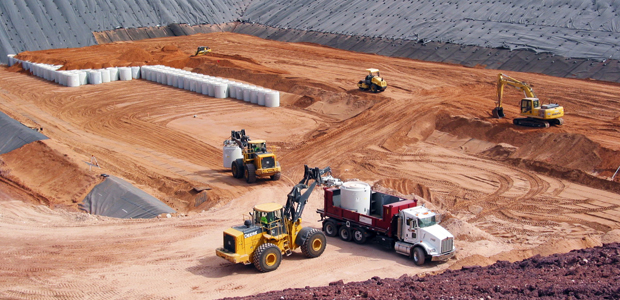
Andrews County commissioners hear from public on nuclear waste proposal, –Caitlin Randle, MRT.com/Midland Reporter-Telegram July 6, 2021, ANDREWS,
During a packed special meeting of the Andrews County Commissioners’ Court on Tuesday, residents spoke out against plans by the company Waste Control Specialists to store high-level nuclear waste.Andrews County Judge Charlie Falcon said he called the meeting to discuss whether the court should pass a resolution stating their opposition to the storage of high-level waste in the county.
….. Several residents said they were against bringing high-level waste to the community and asked the commissioners to pass a resolution opposing the project. Some also said they were angry at WCS, which currently operates a low-level waste site in Andrews, for promising that they would never store high-level waste then going back on that promise………..
Julie Stevenson, who said she was a nurse and lifelong Andrews resident, spoke to the court about the medical side effects from exposure to radiation. She said low-level radiation poisoning is akin to receiving 100 to 150 X-rays, while mid-level exposure can cause your gastrointestinal tract to shut down.
“High-level, you will die within three days,” she said. “I don’t want to take that risk for my children. I’m sure you have a lot of geologists speaking with you … but they’re looking at charts, graphs, they’re not looking at my 7-year-old son and my 87-year-old grandfather……… https://www.mrt.com/news/local/article/Andrews-County-commissioners-hear-from-public-on-16297025.php
1 This month
17 October, Free Public Talk on Nuclear Issues in South Australia
David Noonan will speak on public interest concerns over the new Roxby Downs Indenture Act 2026 on BHP copper-uranium mining and ore processing in SA, and on how AUKUS may face SA with a High-Level nuclear waste agenda.
Dr Jim Green will discuss international developments in the field of nuclear power including ‘small modular reactors’ and Generation 4 ‘advanced’ nuclear reactor concepts.


Help Aunty Sue Protect Her Land and Sacred Sites From Destructive Rocket Testing.
.

Australians deserve the truth
about
AUKUS – https://aukuspublicinquiry.com/

PETITION – To: Prime Minister Anthony Albanese and the Australian Labor Government

of the week – Australians for War Powers Reform (AWPR)
To see nuclear-related stories in greater depth and intensity

