We need grid ready for 100 pct renewables now, not in a few decades: AEMO — RenewEconomy

Australian Energy Market Operator underlines need for rapid upgrade to national grid and market systems, warning Australia is hurtling towards 100% renewables. The post We need grid ready for 100 pct renewables now, not in a few decades: AEMO appeared first on RenewEconomy.
We need grid ready for 100 pct renewables now, not in a few decades: AEMO — RenewEconomy
Will Kimba nuclear waste situation become untenable for Kimba District Council?
It is obvious that the South Australian government will have to publicly disclose all documents and information given or received by it which should presumably include all transactions with the federal government in its various guises.
The disclosures will also include the Kimba District Council which will put its councillors in an invidious position in trying to give the Kimba community impartial and independent advice while at the same time trying to justify its past actions with regard to the federal government’s proposals for the nuclear waste management facility at Kimba.
This untenable situation for the Kimba councillors may require them to stand aside while commissioners or administrators are appointed to run the Council
USA’s $634Billion nuclear weapons budget
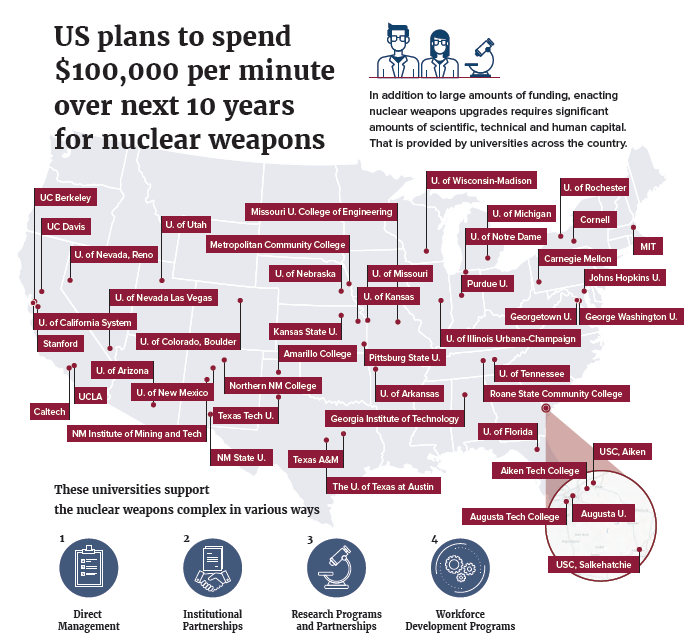
CBO: US nuclear arsenal to cost $634B over 10 years, https://thehill.com/policy/defense/555142-cbo-us-nuclear-arsenal-to-cost-634b-over-10-yearsBY REBECCA KHEEL – 05/24/21 Updating and maintaining the U.S. nuclear arsenal over the next 10 years is projected to cost $634 billion, the Congressional Budget Office (CBO) said in a report published Monday.
The cost estimate for the nuclear forces from 2021-2030 represents a 28 percent increase compared to the last CBO 10-year cost estimate two years ago.
About half of the $140 billion increase comes from the fact that the new estimate now includes 2029 and 2030 when nuclear modernization is expected to be further along and “more expensive,” CBO said.
Of the CBO’s $634 billion estimates, about $551 billion is what would be needed to fulfill the Defense and Energy departments’ current nuclear plans. The remaining $83 billion is what CBO projects could be cost overruns based on how much costs have grown for similar programs in the past, according to the report.
Of the $551 billion, about $188 billion is projected to go toward modernizing nuclear weapons and their delivery systems, the report said.
The United States is in the midst of plans to modernize all three legs of the nuclear triad that the Government Accountability Office has projected could cost $1.7 trillion over 30 years. The triad refers to delivering nuclear weapons by sea, air and land.
“Over the coming years, the Congress will need to make decisions about what nuclear forces the United States should field in the future and thus about the extent to which the nation will continue to modernize its nuclear forces,” the CBO report said.
The report could also inform the Biden administration’s expected review of U.S. nuclear policy and programs, with CBO noting “the Biden Administration is widely expected to undertake a nuclear posture review to determine the nuclear policies and forces it will pursue.”
The new CBO estimate is likely to fuel calls from some Democrats to curb the costly nuclear modernization plans, which were largely started during the Obama administration. In particular, some Democrats have frequently targeted plans to replace aging intercontinental ballistic missiles (ICBM), arguing it would be more cost-efficient to extend the life of the current arsenal.
Earlier Monday, a group of Democrats in the Senate and House, led by Sen Ed Markey (Mass.) and Rep. Earl Blumenauer (Ore.), introduced a bill to cut $73 billion from the nuclear budget.
The bill, dubbed the Smarter Approach to Nuclear Expenditures (SANE) Act, would do that by barring the development of new ICBMs, air-launched cruise missiles and submarine-launched cruise missiles. It would also cap the number of Columbia-class submarines the Pentagon can buy at eight, cut the existing ICBM fleet from more than 400 to 150 and reduce deployed strategic warheads from about 1,500 to 1,000.
Labor tries to block new regulations pushing ARENA into fossil fuels — RenewEconomy

Labor moves to cancel out Taylor’s new ARENA regulations, as department officials confirm they could extend to funding gas projects. The post Labor tries to block new regulations pushing ARENA into fossil fuels appeared first on RenewEconomy.
Labor tries to block new regulations pushing ARENA into fossil fuels — RenewEconomy
“It is crazy:” Greens push new climate laws after Coalition’s fossil fuel subsidy spree — RenewEconomy

Australian Greens propose laws to make fossil fuel companies legally liable for climate change, labelling contradictory Morrison government budget “crazy”. The post “It is crazy:” Greens push new climate laws after Coalition’s fossil fuel subsidy spree appeared first on RenewEconomy.
“It is crazy:” Greens push new climate laws after Coalition’s fossil fuel subsidy spree — RenewEconomy
NSW smart meter program to soak up solar with “everyday batteries” — RenewEconomy

Endeavour Energy gets smart about better managing record numbers of residential rooftop solar systems, with not a solar export charge in sight. The post NSW smart meter program to soak up solar with “everyday batteries” appeared first on RenewEconomy.
NSW smart meter program to soak up solar with “everyday batteries” — RenewEconomy
May 24 Energy News — geoharvey

Opinion: ¶ “Can You Charge An Electric Car With A Regular Outlet? Hell Yes!” • Can you charge an electric car with a regular outlet? This is actually a very common question. Many people even skip past asking this question and assume the answer is “no.” And you don’t even need special hardware to do […]
May 24 Energy News — geoharvey
This week in nuclear news Australia

Coronavirus. I can’t keep up with pandemic news – but it’s not going to go away – for a long time.It’s still looking like vaccination as everyone’s best hope.
Climate. G7 environment ministers have agreed that they will deliver climate targets in line with limiting the rise in global temperatures to 1.5C.
All quiet on nuclear developments this week. One news item from the UK (Hinkley project delays) clearly illustrates that very real, but rarely acknowledged connection between the coronavirus pandemic, and the fizzling out of activity in the ”peaceful” nuclear industry.But nothing stops the weapons makers and the Pentagon from pushing for more $billions for nuclear weapons. No doubt Russia, China then follow suit.
AUSTRALIA
Federal Government’s budget details indicate increased nuclear waste storage at ANSTO, Lucas Heights, rather than a rush for a nuclear waste dump at Kimba South Australia. Time to question the authorities on the nuclear waste dump mess, the incompetence of ANSTO, and the ?inactive role of Kimba nuclear waste staff . South Australian Civil and Administrative Tribunal rules that information on the Kimba nuclear waste dump can be made public
It’s not acceptable to ignore Aboriginal land owners, in order to impose high level nuclear waste on their land. Safety issues in nuclear waste dump proposal. Indigenous rights issues in Kimba nuclear waste dump proposal.
Australia has another go at cleaning up decades old pollution from old uranium mine Rum Jungle. New research on the complexity of particles from plutonium resulting from British atomic bomb tests at Maralinga. Plutonium ”hot particles” are not as stable as we assumed.
Australia has another go at cleaning up decades old pollution from old uranium mine Rum Jungle.
Research on contaminated landscape, plutonium particles, around Maralinga in outback South Australia.
Morrison’s ‘unconstitutional’ crackdown on charities. Senator Rex Patrick challenges Scott Morrison’s special arrangement to protect his government from public scrutiny.
Australia’s mining lobby exaggerates by $45 billion the taxes and royalties they pay.
INTERNATIONAL
The effects of radioactive waste water released into the ocean.
Scaling back missile defense could prevent a nuclear attack .
A world based on 100% renewable energy by 2035 is technically and economically feasible. Both Germany and Britain are decarbonising while nuclear production is greatly reducing. We already have 95% of the technologies and know how to slash emissions, remove air pollution and provide energy security and jobs.
“Advanced” isn’t the answer — New reactors as an answer to climate change are an illusion.
Scientists turn a blind eye to the fraud that is the ITER nuclear fusion project.
Should Bill Gates be viewed as a man of character and a trusted adviser to world leaders?
Tesla’s Bitcoin about-face is a warning for cryptocurrencies that ignore climate change.
Uranium Film Festival – Online for free from May 20 to May 30.
We already have 95% of the technologies and know how to slash emissions, remove air pollution and provide energy security and jobs.
South Australia’s Whyalla Council’s cop-out: just ”don’t want to know nothin” about nuclear waste through their town.

Kazzi Jai No nuclear wastec dump anywhere in South Australia, 24 May 21. Yet AGAIN – sneaky sneaky Feds are hoping for NO RESISTANCE regarding the problems arising from TRANSPORTATION OF NUCLEAR WASTE – NOT YELLOWCAKE, NOT NUCLEAR MEDICINES – ACROSS 1700KMS OF AUSTRALIA….OR IN OUR FRAGILE SEA ECOSYSTEMS!!
Josie Hocking, Whyalla
It seems that our Council don’t consider the transport of intermediate level nuclear waste through our town to be any of their business.
Dear Ms Hocking I write with regard to your question below.This question was submitted to the Ordinary Council Meeting held on Monday 17 May 2021. Below, is Council’s response (as recorded within the Minutes of the Meeting): 10. Public Question Time 10.1 Ms J Hocking – Resident 10.1.1 Transportation of Nuclear Waste.
Question 1. I, and no doubt many others, would like to know if permission is required from the Whyalla Council to allow nuclear waste to be transported through our city or port?
What is the general view of the Mayor and Councillors in this respect? Can the Federal Government override any objections by the Mayor and Councillors?
If the Mayor and Councillors are in favour of allowing this to happen, then I respectfully suggest that the decision should not be theirs alone. A vote should be held among the Whyalla residents to see whether we are willing to take the risks involved in this venture. I have seen nothing about Council’s views on this subject in the Whyalla News or anywhere else.
My personal view is that Council should be taking every opportunity to refuse to allow nuclear waste to be transported though our town, and hopefully other Councils in our neighbourhood might follow your example. Perhaps there could be a meeting between the town Councils to come up with a strategy to protect all of these towns and let them know how populations feel about this dump being imposed on our neighbourhood without proper consultation of everyone involved, and that includes the residents of all towns the nuclear waste is intended to travel through.
Answer1. Council does not have a written public policy which relates to the handling of ‘intermediate level’ nuclear waste, or any matter relating to nuclear energy.
Regarding the road/rail transport of waste through Whyalla and its surrounds, the roads which would be used in the transport of this waste, are managed and controlled by the Department of Infrastructure and Transport, including the Port Augusta Highway which is outside the Whyalla Council boundary. If waste was shipped into, or out of the Whyalla Port, this Port is owned and managed by the GFG Alliance companies, which is also outside of Council’s boundary. On behalf of Council, thank you for taking the time to submit the question under reference.
Regards, Shell Michelle ArmstrongExecutive Co-ordinator – CEO and Mayor https://www.facebook.com/groups/1314655315214929
r
·
Transport issues in Kimba nuclear waste dump plan

Looking back to the 2016 shonky South Australian Nuclear Fuel Cycle Royal Commission, – the same problems apply to the present Federal Government plan . Friends of the Earth Australia examined these- in Arguments against turning SA into the world’s nuclear waste dump.
The Royal Commission’report claimed that ”no accident involving a breach of the package and the release of its contents has occurred. The same record applies to international transport of high and intermediate level waste.”
”That claim is incorrect and is refuted by documented evidence provided to ‒ and ignored by ‒ the Royal Commission. For example a whistleblower sparked a major controversy over frequent excessive radioactive contamination of waste containers, rail cars, and trucks in France and Germany. International transport regulations for spent fuel shipments were constantly over a period of many years and this was done knowingly. Another example concerns the derailment of a train wagon carrying spent fuel in December 2013, 3 km from Paris, with testing by AREVA revealing a hotspot on the rail car.
Numerous other train derailments involving nuclear materials transport have been documented. It is unsettling to consider the multiple derailments on the Ghan train line in Australia in the relatively short period of time it has been in operation.
Transport incidents and accidents are routine in countries with significant nuclear industries. The case of the UK is pertinent. A UK government database contains information on 1018 events from 1958 to 2011 (an average of 19 incidents each year).
There were 187 events during the shipment of irradiated nuclear fuel flasks from 1958−2004 in the UK (an average of four per year):
- 33% involved excess contamination on the surface of the flask;
- 24% involved collisions and low speed derailments of the conveyance;
- 16% involved flask preparation faults, and loading/unloading faults;
- 13% involved excess contamination of conveyance;
- 11% involved faults with the conveyance; and
- the remainder included three cases involving fire on a locomotive with no damage to flasks.
The French nuclear safety agency IRSN produced a report summarising radioactive transport accidents and incidents from 1999−2007. The database lists 901 events from 1999−2007 − on average 100 events annually or about two each week. The IRSN report notes that events where there is contamination of packages and means of transport were still frequent in 2007.
Potential costs of transport accidents: Spent fuel / high level nuclear waste transport accidents have the potential to be extraordinarily expensive. Dr. Marvin Resnikoff and Matt Lamb from Radioactive Waste Management Associates in New York City calculated 355−431 latent cancer fatalities attributable to a “maximum” hypothetical rail cask accident, compared to the US Department of Energy’s estimate of 31 fatalities. Using the Department of Energy’s model, they calculated that a severe truck cask accident could result in US$20 billion to US$36 billion in clean-up costs for an accident in an urban area, and a severe rail accident in an urban area could result in costs from US$145 billion to US$270 billion.
Transport and nuclear security: Nuclear engineer Dr John Large writes: “Movement of nuclear materials is inherently risky both in terms of severe accident and terrorist attack. Not all accident scenarios and accident severities can be foreseen; it is only possible to maintain a limited security cordon around the flask and its consignment; … terrorists are able to seek out and exploit vulnerabilities in the transport arrangements and localities on the route; and emergency planning is difficult to maintain over the entire route.”
A number of nuclear transport security incidents are listed in the body of this submission (section 3.8).
Security and proliferation risks…….”Arguments against turning SA into the world’s nuclear waste dump https://nuclear.foe.org.au/waste-import-arguments/?fbclid=IwAR1yajKABFYLvMp3gFjM_DuYJFFMu4nnuc3LXxLFEBLpI7Da9-OjSv0IHrk#_ftnref4
Indigenous rights issues in Kimba nuclear waste dump proposal
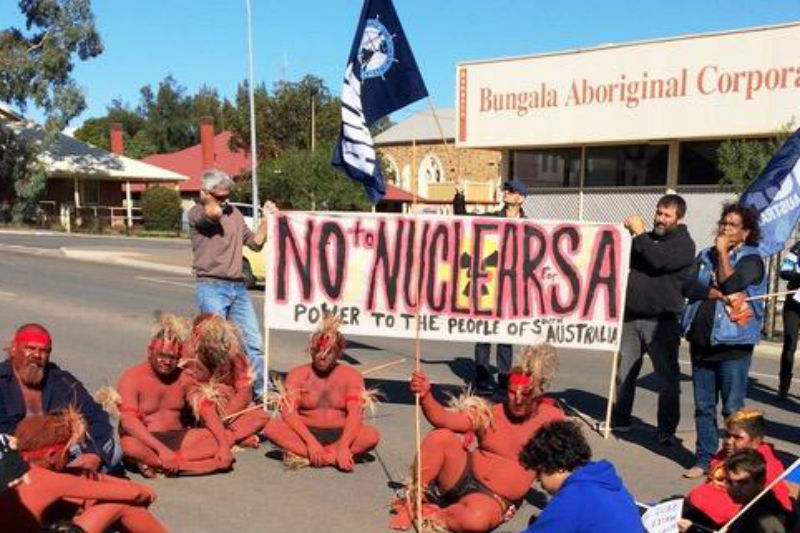
Looking back to the 2016 shonky South Australian Nuclear Fuel Cycle Royal Commission, – the same problems apply to the present Federal Government plan . Friends of the Earth Australia examined these- in Arguments against turning SA into the world’s nuclear waste dump.
”Aboriginal Traditional Owners
Our organisations hold serious concerns over past and continuing nuclear industry practices and impacts and the following comments highlight the often poor treatment of Aboriginal people by the nuclear/uranium industries in Australia and by governments pursuing or facilitating nuclear/uranium projects.
”The SA Government’s handling of the Royal Commission process systematically disenfranchised Aboriginal people. The truncated timeline for providing feedback on draft Terms of Reference disadvantaged people in remote regions, people with little or no access to email and internet and people for whom English is a second language. This was compounded when the Commission was formulated as there was no translation of the draft Terms of Reference, and a regional communications and engagement strategy was not developed or implemented. Subsequent efforts by the Royal Commission to provide translators and to translate written material were highly selective, partial and simply inadequate. Aboriginal people repeatedly expressed frustrations with the Royal Commission process.
The federal government tried but failed to impose a national nuclear waste dump on Aboriginal land in SA from 1998‒2004, then tried but failed to impose a dump on Aboriginal land in the NT from 2005‒14, and now the federal government appears to again be seeking to impose a dump on Aboriginal land in SA against the near-unanimous opposition of Traditional Owners.
At the federal level Labor and the Coalition both supported the National Radioactive Waste Management Act, which permits the imposition of a dump on Aboriginal land without any consultation with or consent from Aboriginal Traditional Owners (to be precise, the nomination of a site is not invalidated by a failure to consult or secure consent).
In SA, there is bipartisan support for the South Australian Roxby Downs Indenture Act. The Act was amended in 2011 but it retains indefensible exemptions from the SA Aboriginal Heritage Act. Traditional Owners were not even consulted about the amendments. The SA government’s spokesperson in Parliament said: “BHP were satisfied with the current arrangements and insisted on the continuation of these arrangements, and the government did not consult further than that.” Arguments against turning SA into the world’s nuclear waste dump https://nuclear.foe.org.au/waste-import-arguments/?fbclid=IwAR1yajKABFYLvMp3gFjM_DuYJFFMu4nnuc3LXxLFEBLpI7Da9-OjSv0IHrk#_ftnref4
“Advanced” isn’t the answer — New reactors as an answer to climate change are an illusion

The study’s conclusion is that pursuing “advanced” nuclear reactors is too slow, too resource-intensive and too dangerous and won’t result in improvements over light-water reactors.
The costs of these “advanced” reactors are too high to justify their flimsy promises of improvement over traditional light-water reactors, especially given that the time needed urgently to address climate change is extremely short.
New reactors as an answer to climate change are an illusion
“Advanced” isn’t the answer — Beyond Nuclear International more https://wordpress.com/read/feeds/72759838/posts/3354864782 23 May 21, Next in Talking Points series showcases USC takedown of non-light-water reactor delusions While we support efforts to guarantee better public safety protections for the public from the current fleet of light-water reactors, the position of Beyond Nuclear is that no further development of LWRs should happen, but rather that the country must expeditiously move to a 100% nuclear power phaseout.
Nevertheless, the specter of “advanced” reactors continues to loom, and many governments remain intent on squandering precious resources on attempts to develop these under the misleading guise of climate mitigation. Therefore, we believe that this comprehensive takedown of the futility of such endeavors is a valuable addition to our Talking Points series.
The full UCS report can be read here. And watch for new installments in our Talking Points series in the coming weeks.
Linda Pentz Gunter is the international specialist at Beyond Nuclear and writes for and edits Beyond Nuclear International.
By Linda Pentz Gunter
In the second in the Beyond Nuclear Talking Points series, we bring you Dr. Edwin Lyman’s definitive examination of so-called advanced reactors, or non-light-water reactors (NLWRs).
In a groundbreaking report, Lyman who is Director of Nuclear Power Safety at the Union of Concerned Scientists, debunks almost all of the industry claims for NLWRs, predominantly on the grounds of safety and security risks, but also touching on costs, time, regulations and waste.
The report — “Advanced” Isn’t Always Better. Assessing the Safety, Security, and Environmental Impacts of Non- Light-Water Nuclear Reactors — can be found in full here on the UCS website. We appreciated the opportunity to condense it into our second Talking Points, all of which are free to download, print and distribute widely.
As Lyman writes in the executive summary of the report, nuclear power in general is replete with flaws: “. . . the technology has fundamental safety and security disadvantages compared with other low-carbon sources. Nuclear reactors and their associated facilities for fuel production and waste handling are vulnerable to catastrophic accidents and sabotage, and they can be misused to produce materials for nuclear weapons.”
The study’s conclusion is that pursuing “advanced” nuclear reactors is too slow, too resource-intensive and too dangerous and won’t result in improvements over light-water reactors.
The report, and our Talking Points, lay out a number of the key arguments.
The current designs, still on paper, all present considerable safety risks. Sodium-cooled reactors could explode like a small nuclear bomb under severe accident conditions. High-temperature gas-cooled reactors use fuel that, contrary to claims, is not “meltdown proof”. Molten-salt-fueled reactors are also not meltdown-proof and, under some circumstances, the hot liquid fuel they use could heat up and destroy the reactor in minutes.
The costs of these “advanced” reactors are too high to justify their flimsy promises of improvement over traditional light-water reactors, especially given that the time needed urgently to address climate change is extremely short. Building the expensive new facilities and infrastructure NLWRs would need to manufacture, manage and eventually store their different kinds of fuels consumes resources better used elsewhere.
As with any new nuclear construction projects, the time and quantity needed to bring these to fruition in order to have any meaningful impact on carbon emissions reductions is unrealistic. At least 25,000 MWe of NLWR capacity would have to come on line globally each year between now and 2050 to reach such goals — five times the recent global rate of LWR construction — a target in which there is no basis to have any confidence whatsoever.
Given the risks and uncertainties of the NLWR designs, a strong regulator is essential. The US Nuclear Regulatory Commission is a weak one. Where extra levels of safety would be needed for NLWRs, for which there is little or no operating experience, the NRC is instead showing signs of leaning toward licensing designs chosen by the U.S. Department of Energy without requiring prototype testing first, running the risk of unanticipated reliability problems and serious accidents.
Promoters of NLWRs have made claims that these could “consume” or “burn” nuclear waste. Lyman’s paper calls this “misleading.” Such reactors, he writes, can only use a fraction of irradiated fuel as new fuel, and separating that fraction — through the necessary prior process of reprocessing — increases proliferation and terrorism risks.
Indeed, it is this necessity for reprocessing that is central to a major downside of NLWRs. Fast reactors such as the sodium-fueled reactor, typically require plutonium or highly enriched uranium-based fuels that are readily nuclear weapon-usable and therefore entail unacceptable proliferation and terrorism risks.
High-temperature gas-cooled reactors, using high-assay low enriched uranium fuel, are more proliferation-prone than light-water reactors due, in part, to the additional monitoring challenges presented by their fuel fabrication system.
Some molten salt reactor designs require on-site, continuously operating fuel reprocessing plants — pathways for diverting or stealing nuclear weapons-usable material.
The position of UCS, unlike that of Beyond Nuclear, is not openly to oppose nuclear power in principal but to ensure its safety. This is a tall order. Lyman concludes his report by saying: “. . . the bulk of nuclear energy-related research and development funding, both public and private, should be focused on improving the overall safety, security, efficiency, and cost-effectiveness of LWRs and the once-through fuel cycle.”
While we support efforts to guarantee better public safety protections for the public from the current fleet of light-water reactors, the position of Beyond Nuclear is that no further development of LWRs should happen, but rather that the country must expeditiously move to a 100% nuclear power phaseout.
Nevertheless, the specter of “advanced” reactors continues to loom, and many governments remain intent on squandering precious resources on attempts to develop these under the misleading guise of climate mitigation. Therefore, we believe that this comprehensive takedown of the futility of such endeavors is a valuable addition to our Talking Points series.
The full UCS report can be read here. And watch for new installments in our Talking Points series in the coming weeks.
Linda Pentz Gunter is the international specialist at Beyond Nuclear and writes for and edits Beyond Nuclear International.
Thyroid cancer in Fukushima children increased 20-fold — Beyond Nuclear International

In addition to thyroid cancer, other types of malignancies and other diseases triggered or adversely affected by ionized radiation are expected to increase. The FMU thyroid studies represent the only scientific study that can provide any relevant information at all about the health consequences of the Fukushima nuclear disaster. And they are currently in danger of being undermined by the proponents of nuclear energy such as IAEA, which has entered a cooperation with FMU and by the Japanese government, which is trying to dispel any concerns about the meltdowns and nuclear energy as a whole.
Increases are real and can’t be attributed to “screening effect”
Thyroid cancer in Fukushima children increased 20-fold — Beyond Nuclear International
Latest results of the Fukushima thyroid screenings confirm worrying trend https://wordpress.com/read/feeds/72759838/posts/3354864780 By Dr. Alex Rosen, 23 May 21,
In 2011, people in Japan were exposed to radioactive fallout. Some still live in contaminated regions where they are exposed to elevated levels of radiation on a daily basis: radioactive hot-spots on the side of the road, in rice paddies or in sandboxes, contaminated mushrooms or algae, contaminated groundwater, and recontamination from forest fires or flooding.
One of the most dreaded effects of radioactive exposure is the development of cancer through mutation of the DNA. Thyroid cancer in children is certainly not the most dangerous form of radiation-induced cancer, but it is probably the easiest to detect. For one thing, the latency periods before a cancer develops are relatively short, while at the same time, thyroid cancer in children is an extremely rare disease, so that even a slight absolute increase can be statistically detected.
Accordingly, in 2011, there was great pressure on Japanese authorities to investigate the development of thyroid cancer in children and adolescents in Fukushima by conducting long-term screening examinations.
For almost 10 years now, Fukushima Medical University has been regularly examining the thyroid glands of people who lived in Fukushima Prefecture at the time of the meltdowns and were under 18 years of age. Initially, this group consisted of about 368,000 individuals. Of these, 300,000 (about 82%) were successfully screened in the first few years. After the initial screening (2011-2014), follow-up examinations of these children took place every two years. The second examination has already been completed, the third examination is in its final stage, the fourth series of examinations has been running since 2018, and the fifth since 2020.
In the initial investigation in Fukushima, 116 abnormal biopsies were found. Amongst these, 101 cases of cancers were found that were so aggressive that they required surgery. The patients with abnormal biopsies were 6 to 18 years old (average of 14.9 years) at the time of the nuclear disaster. This unexpectedly high number was explained by Fukushima Medical University as a screening effect, the phenomenon of identifying more cases of disease in large-scale screening than would be expected. While the exact magnitude of this screening effect in the first round is unknown, it can be ruled out that the increased cancer rates in subsequent screenings are consequences of a screening effect, because all of these children had already been examined and found to be cancer-free in previous screenings. They must therefore have developed the cancer between the screening examinations.
In the 2nd screening round, 54 cancer cases were found in 71 abnormal biopsies (age at the time of the nuclear disaster 5-18, average of 12.6 years), in the 3rd screening round, another 27 cases were found in 31 abnormal biopsies (age at the time of the nuclear disaster 5-16, average of 9.6 years), and in the current 4th round, 16 new diagnoses have been made in 27 abnormal biopsies (age at the time of the nuclear disaster 0-12, average of 8.0 years). A total of 46 children with suspicious fine-needle biopsies are still under observation and have not yet undergone surgery. The steadily decreasing average age in the screenings is striking: with time, more and more cancer cases are becoming apparent in patients who were still very young at the time of the nuclear disaster, even under 5 years of age.
Incidentally, adolescents in the study cohort who turn 25 are excluded from the main study and transferred to a newly created cohort, the “Age 25 Milestone” group. In this group, 4 additional cases of thyroid cancer have been registered, with 7 conspicuous biopsies so far. The number of unreported cases is likely to be much higher: the participation rate in this study is just 8%. The creation of a new study cohort is generally seen as a measure by FMU to further reduce the number of diagnosed cancer cases.
In addition, there are 11 thyroid cancer cases diagnosed in children from the study cohort, but not during the official screenings. These patients were seen and diagnosed at Fukushima University Hospital. These 11 cases are not reported in the official results, although they show identical tumor entities and occurred in patients who are in the actual study cohort. The 11 cases came to light in June 2017. How many more cases have been diagnosed but not reported since then is unknown. In addition, data from other hospitals in Japan are not available, and patients from contaminated areas outside Fukushima Prefecture are not examined at all, so the unreported number of thyroid cancer cases among patients who were children in the contaminated areas at the time of the meltdowns is likely to be much higher. Nevertheless, the total number of thyroid cancer cases in Fukushima currently stands at 213 (198 official cases from the serial examinations, 4 cases from the Age 25 Milestone cohort and 11 cases from the Fukushima University Hospital).
It is interesting to compare these figures with the overall Japanese incidence rate. The official incidence rate of thyroid cancer in children under 25 in Japan is about 0.59 per 100,000 per year, which means that in the cohort of about 218,000 children, about 1.3 new thyroid cancer cases per year would be expected. Today, 10 years after the beginning of the nuclear disaster, just under 13 thyroid cancer cases would thus have been expected in the study population.
However, the actual number of thyroid cancer cases in Fukushima of 213 is higher by a factor of 16. If we consider only the 112 cases diagnosed after the initial screening and thus not suspected to be caused by a screening effect of any kind, the number of confirmed cases is 20 times higher than the number of expected thyroid cancer cases (5.5 new cases after the end of the initial 1st screening in 2014)
In the following graph, [on original] the officially confirmed thyroid cancer cases (in blue) are compared to the cases expected mathematically in the screening cohort (in orange). It can be seen that the number of cases increased steadily over the course of the initial screening, and continue to increase beyond that, in the years 2014-2020 – an effect that cannot be explained by any kind of screening effect. [Graph on original explains this]
In addition, the geographic distribution of thyroid cancer rates corresponds to the level of radioactive contamination. A significantly higher incidence of thyroid cancer in children was recorded in the 13 most severely contaminated municipalities in eastern Fukushima than in the less contaminated areas in the north, south and central parts of the prefecture. The incidence was lowest in the western part of the prefecture, where the radioactive fallout was also least pronounced.
In the following graph, [on original] the officially confirmed thyroid cancer cases (in blue) are compared to the cases expected mathematically in the screening cohort (in orange). It can be seen that the number of cases increased steadily over the course of the initial screening, and continue to increase beyond that, in the years 2014-2020 – an effect that cannot be explained by any kind of screening effect.
There seems to be a system behind this trend: Fukushima Medical University, which is in charge of the study, has been sending staff to schools in the prefecture for years to educate children about their “right not to participate” and the “right not to know”. On the study forms, there is now a prominent “opt-out” option for people who wish to be removed from the screening. FMU seems to encourage people to opt out of the study. The drop in participation can also be explained by the removal of people over 25 years from the main study. Are FMU staff concerned that the disturbing trend of increasing numbers of thyroid cancer cases will continue? Are they uncomfortable with data that contradicts the thesis, propagated since the beginning of the nuclear disaster, that the multiple meltdowns would not lead to additional cancers?
In addition to thyroid cancer, other types of malignancies and other diseases triggered or adversely affected by ionized radiation are expected to increase. The FMU thyroid studies represent the only scientific study that can provide any relevant information at all about the health consequences of the Fukushima nuclear disaster. And they are currently in danger of being undermined by the proponents of nuclear energy such as IAEA, which has entered a cooperation with FMU and by the Japanese government, which is trying to dispel any concerns about the meltdowns and nuclear energy as a whole.
The people of Japan have an inalienable right to health and to life in a healthy environment. The examination of children’s thyroid glands benefits not only the patients themselves, whose cancers can be detected and treated at an early stage, but also the entire population, which is affected by irradiation from radioactive fallout.
The correct continuation and scientific monitoring of thyroid examinations are therefore in the public interest and must not be thwarted by political or economic motives. It is important to continue to critically accompany these developments from the outside.
Dr. Alex Rosen is a pediatrician and Co-Chair of the German affiliate of IPPNW
Note: this article was first published in IPPNW Germany’s member magazine ippnw forum in 03/21
Headline photo showing thyroid cancer by National Human Genome Research Institute (NHGRI) from Bethesda, MD, USA/Wikimedia Commons
Safety issues in nuclear waste dump proposal

Looking back to the 2016 shonky South Australian Nuclear Fuel Cycle Royal Commission, – the same problems apply to the present Federal Government plan . Friends of the Earth Australia examined these- in Arguments against turning SA into the world’s nuclear waste dump.
” The so-called ‘Interim Storage Facility’ is proposed to accumulate 50,000 tonnes of high level nuclear waste before a repository begins accepting waste. There is a significant risk that high level waste will be imported and will have to remain in ‘interim’ storage ad infinitum due to i) the lack of a repository, ii) the lack of a return-to-sender clause in contracts and iii) the inability to send the waste on to a third country.”
” the fundamental lesson from the WIPP fiasco – initially high safety and regulatory standards gave way to complacency, cost-cutting and corner-cutting in the space of just 10–15 years. The Royal Commission correctly notes that high level waste “requires isolation from the environment for many hundreds of thousands of years”. How can we be confident that high safety and regulatory standards in SA would be maintained over centuries and millennia when WIPP shows that the half-life of human complacency, cost-cutting and corner-cutting is measured in years or at most decades?”
”South Australia has a track record of mismanaging radioactive waste (Radium Hill, Maralinga, Port Pirie, Arkaroola, etc.) and no experience managing high-level nuclear waste.
If there were clear recognition of the mismanagement of radioactive waste in SA, coupled with remediation of contaminated sites, we might have some confidence that lessons have been learnt and that radioactive waste would be managed more responsibly in future. But there is no such recognition in the Royal Commission’s report or from state or federal governments, and there are no plans to remediate contaminated sites. ” Arguments against turning SA into the world’s nuclear waste dump https://nuclear.foe.org.au/waste-import-arguments/?fbclid=IwAR1yajKABFYLvMp3gFjM_DuYJFFMu4nnuc3LXxLFEBLpI7Da9-OjSv0IHrk#_ftnref4
The effects of radioactive waste water released into the ocean
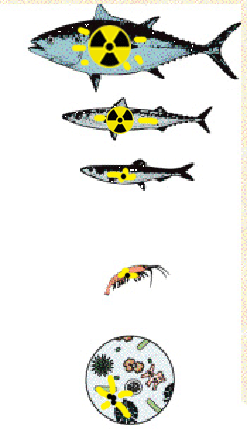
when radionuclides are present in seawater alongside commonly-occurring metals like copper, the DNA damage caused by radionuclides to the mussels was increased.
the need for transparency when it comes to nuclear technology has never been greater
After all, we are what we eat: our health as a global community depends on the health of the environment, and a contaminated ocean knows no geographical or political borders.
Nuclear power: how might radioactive waste water affect the environment? https://theconversation.com/nuclear-power-how-might-radioactive-waste-water-affect-the-environment-159483 Awadhesh Jha
Professor of Genetic Toxicology and Ecotoxicology, University of Plymouth April 30, 2021 It’s been just over a decade since the fourth most powerful earthquake of the modern era triggered a tsunami that struck Fukushima on the eastern coastline of Japan, causing thousands of deaths and leaving hundreds of thousands unable to return home. That tsunami was also responsible for the world’s worst nuclear accident since the Chernobyl disaster.
When the 14-metre wave flooded the Fukushima Daiichi plant, it shut down emergency generators, triggering a series of heat-induced meltdowns.Now, the Japanese government’s decision to allow the release of more than one million tonnes of radioactive water from the plant into the ocean has dividedopinion.
Water is a vital tool for all nuclear power stations: it’s used to cool their heat-generating radioactive cores. During the cooling process, the water becomes contaminated with radionuclides – unstable atoms with excess energy – and must be filtered to remove as many radionuclides as possible.
The filtered water is then stored in huge steel tanks or released into nearby bodies of water. As huge amounts of water are required by every plant, most nuclear facilities are built on coastlines – or, in the case of Chernobyl, surrounded by huge lakes. That way, filtered waste water can be discharged into the ocean or lake once it’s been assessed and confirmed safe by authorities.
This is how workers at Fukushima dealt with waste water while the plant was operating. But since the tsunami hit in 2011, authorities have used more than a million tonnes of water to try and cool the plant’s disabled reactors, which are still hot thanks to the long-term release of energy from the nuclear power source. All that radioactive water – which is more contaminated than standard waste water – has to go somewhere. The decision to release it into the oceans is – some would argue – the most pragmatic long-term solution.
What could the impacts be?
The process of filtering and diluting the huge amounts of water to meet safety standards will take a few years to complete. Then, we’d usually expect the water to be released gradually in small volumes through coastal pipelines. That way, any potential effects of releasing the radioactive waste will be minimised. However, the fact is that we don’t know exactly what those effects will be on marine – or human – life, given the sheer volume of water set to be released from the Fukushima plant.
Our own research has shown that a number of marine species could have their DNA damaged through extended exposure to radionuclides in seawater. It’s important to note that our conclusions are mostly drawn from studies in the lab, rather than in the real world; when a nuclear accident takes place, human safety takes priority and biological assessment often takes place decades after the original event.
That being said, our experiments with both marine and freshwater mussels found that when radionuclides are present in seawater alongside commonly-occurring metals like copper, the DNA damage caused by radionuclides to the mussels was increased. Much, much more research is needed to understand the effects of exposure to different types of radionuclides on different species.
In the meantime, anger towards Japan’s decision from fishing communities is understandable. In a world where global dependence on fisheries for food is increasing – and at least 10% of the world’s population depend on fisheries for their livelihood – a potentially contaminated environment could result in a contaminated food chain, raising consumer concerns.
We also know that around 95% of cancers in humans are triggered by exposure to toxic substances present in the environment, food included. If these substances damage genetic material within our cells, that damage must be repaired. Otherwise, the damaged cell either dies or divides. And when the latter happens, the damage – which can cause genetic mutations – is passed on to dividing cells in a process that may lead to diseases like cancer.
If that genetic damage happens to egg or sperm cells, it may be passed down from parent to child, triggering new diseases in future generations. To neutralise these complex threats, it’s key to ensure that only safe levels of nuclear waste are being released into the ocean.
Where do we go from here?
As new nuclear plants emerge in the effort to tackle climate change, the need for transparency when it comes to nuclear technology has never been greater: especially if we are to build public confidence in the benefits of nuclear energy.
When nuclear reactors are mentioned, it’s disasters which tend to spring to mind. Yet considering the long history of nuclear power generation, serious accidents – involving loss of life and severe damage to the environment – are extraordinarily rare. The huge amounts of data gathered from each disaster site have enabled powerful advances in nuclear security, making future accidents even less likely. Meanwhile, waste from the world’s nuclear reactors is being managed safely every day, although long-term solutions to waste disposal still pose a challenge.
Rapidly developing technology like nuclear fusion – mimicking the Sun’s way of generating energy by fusing hydrogen atoms to form helium, and converting that helium into energy – may eventually slash generation of nuclear waste. There’s also room for improvement of our existing nuclear facilities to help minimise waste generation: for example, by forcing radioactive byproducts to decay faster.
But while we still rely on nuclear power, the most urgent priority is to set internationally accepted regulations for radiation exposure levels across different species. After all, we are what we eat: our health as a global community depends on the health of the environment, and a contaminated ocean knows no geographical or political borders.
1 This month
17 October, Free Public Talk on Nuclear Issues in South Australia
David Noonan will speak on public interest concerns over the new Roxby Downs Indenture Act 2026 on BHP copper-uranium mining and ore processing in SA, and on how AUKUS may face SA with a High-Level nuclear waste agenda.
Dr Jim Green will discuss international developments in the field of nuclear power including ‘small modular reactors’ and Generation 4 ‘advanced’ nuclear reactor concepts.


Help Aunty Sue Protect Her Land and Sacred Sites From Destructive Rocket Testing.
.

Australians deserve the truth
about
AUKUS – https://aukuspublicinquiry.com/

PETITION – To: Prime Minister Anthony Albanese and the Australian Labor Government

of the week – Australians for War Powers Reform (AWPR)
To see nuclear-related stories in greater depth and intensity

