Nuclear news – week to 27 January

Some bits of good news–
More than 2,400 aid trucks enter Gaza under truce, UN says no big looting issues. The fastest energy change in history continues. Protection for half a million hectares of Amazonian forests
TOP STORIES. Operation Stargate, the project to make AI an “essential infrastructure”.
America’s ‘zombie’ nuclear reactors to be revived to power Trump golden age.
Nuclear- not good vibrations in France. Nuclear power: Engie CEO criticises Arizona ambitions to extend Doel and Tihange lifespan.
When Russian Radar Mistook a Norwegian Scientific Rocket for a U.S. Missile, the World Narrowly Avoided Nuclear War.
From the archives. St Louis radioactively contaminated sites visited by Dr Helen Caldicott
Noel’s notes. Nuclear waste springs eternal in the human folly. For Australia, the nuclear lobby brings out the big massage!
AUSTRALIA. Miss America and nuclear engineer Grace Stanke will be travelling around Australia with a host of other nuclear experts as a part of the National Nuclear Tour.
Is the world going nuclear? The hope and hype of nuclear as a climate solution. We know why nuclear build costs are soaring — and Australia faces the biggest increases. Military Spending vs Social Services: Australia’s Paradox.
NUCLEAR ITEMS
ECONOMICS.
- “We are no longer investing in nuclear.”- Engie, France. “A question arises in terms of nuclear power: should EDF give up its international ambitions?”
- A new report from the International Energy Agency is bullish on the global nuclear sector, but only if obstacles like cost overruns are addressed.
- East Suffolk MP warned “billions worthlessly invested” in Sizewell C. It is only a matter of time before nuclear development at Bradwell falls by the wayside.
- UAE’s nuclear company seeks to capitalise on AI-induced energy demand in US.
ENERGY California debunks a big myth about renewable energy.Europe posts record negative power prices for 2024 as renewables rise. Green energy in abundance.Wind, not nuclear, is the best way to meet Sweden’s climate goals, leading think tank says. Nine Swedish energy researchers find that new nuclear power is not needed. |
| ENVIRONMENT. Vegetation being removed to enable upgrade of Sizewell line.Hinkley Point C: EDF says fish issue could delay new plant operation |
| EVENTS. 9 February -UNITAR Hosts Forum on Nuclear Abolition: 80 Years On |
| HEALTH. Radiation. The Scientists Who Alerted us to the Dangers of Radiation – https://www.youtube.com/watch?v=OyUjtpysc2Y&t=4s |
| INDIGENOUS ISSUES. Indigenous group vows to stop nuclear waste shipments unless new deal struck. |
| LEGAL. Allied Groups Reach Historic Settlement on New Nuclear Bomb Part Production – ALSO AT https://nuclear-news.net/2025/01/21/2-b1-allied-groups-reach-historic-settlement-on-new-nuclear-bomb-part-production/ |
| MEDIA. ‘Acres of Clams’- New documentary tells story of the Clamshell Alliance – https://www.youtube.com/watch?v=RPuE9oKh6-I |
| PERSONAL STORIES. Pete Wilkinson was well known for Sizewell C campaign work. |
POLITICS.
- Memo to Trump: Modify the US policy of sole authority to launch nuclear weapons.
- Trump says he will approve power plants for AI through emergency declaration.
- Legal challenges to infrastructure plans to be blocked in Starmer growth push. Suffolk Coastal MP said priority to hold Sizewell to account.
- Heysham power station debate sparks questions on safety and incidents.
- Anti nuclear activists celebrate fourth banniversary of nuclear weapons.
| POLITICS INTERNATIONAL and DIPLOMACY. Hiroshima, Nagasaki request Trump visit to teach ‘reality’. |
| SAFETY. Lakenheath: Ministers urged to clarify nuclear deployment. Memo to Trump: Address the new threat of drone-vulnerable nuclear reactors. |
| SECRETS and LIES. North Korea beats sanctions to acquire key tool for nuclear weapons -ALSO AT https://nuclear-news.net/2025/01/24/2-b1-north-korea-beats-sanctions-to-acquire-key-tool-for-nuclear-weapons/ The Atlas Network talking about itself |
| TECHNOLOGY. Nuclear fusion: it’s time for a reality check. Bill Gates’ nuclear energy startup inks new data center deal. |
WASTES.
- Sweden’s Nuclear Waste Plan: A 100,000-Year Gamble.
- High likelihood of radioactive waste in smoldering landfill, Missouri officials say.
- UK to dispose of, not re-use, radioactive plutonium stockpile.
- UK Plutonium Disposition Strategy.
- Canada’s Nuclear Waste Management Organization’s (NWMO) proposed DGR is a speculative unproven concept.
- Northwestern Ontario nuclear waste site selection raises concerns.
- Nuclear Waste: The Dark Side of the Microreactor Boom.
- Brian Goodall slams MP over Rosyth Dockyard nuclear submarines move.
- The Changing Goal Posts of Nuclear Wastes Crazily Earmarked for “Geological Disposal” .
| WEAPONS and WEAPONS SALES. Memo to Trump: Cancel US Air Force’s Sentinel ICBM program. Memo to Trump: Cancel the sea-launched nuclear cruise missile. Nuclear Proliferation and the “Nth Country Experiment” |
Miss America and nuclear engineer Grace Stanke will be travelling around Australia with a host of other nuclear experts as a part of the National Nuclear Tour.

COMMENT. As I have predicted, the media emphasis is on “Miss America”, and the propaganda is so shallow as to be laughable. (Despite her obvious intelligence, Ms Stanke is not asked to say anything really sensible).
The tour is hoping to improve the public perception around nuclear science.
Grace Stanke told Peter Fegan on 4BC Breakfast, “I think nuclear energy and nuclear science as a whole is seen as some weird, unknown science that you have to spend 20 years in school to even so much as break into the industry, but that’s not the case.”
“Nuclear science is all around us, it’s in our homes. If you like bananas, you’re actually ingesting some radiation, smoke detectors use some nuclear technology.”
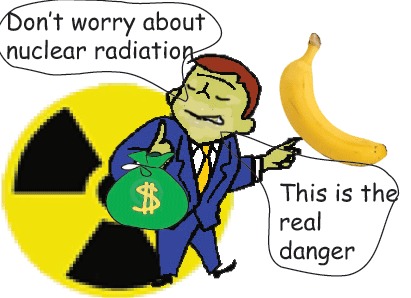
“All of these things that are part of our daily lives, so imagine how much more good nuclear science could do if we fully embrace this technology.”
Nuclear- not good vibrations in France

Renew Extra 25th Jan 2025, https://renewextraweekly.blogspot.com/2025/01/nuclear-not-good-vibrations-in-france.html
France is having problems with nuclear power. It was once the poster child for nuclear energy, which, after a rapid government funded build-up in the1980s based on standard Westinghouse Pressurised-water Reactor (PWR) designs, at one point supplied around 75% of its power, with over 50 reactors running around the country. Mass deployment of similar designs meant that there were economies of scale and given that it was a state-run programme, the government could supply low-cost funding and power could be supplied to consumers relatively cheaply.
But the plants are now getting old, and there has been a long running debate over what to do to replace them: it will be expensive given the changed energy market, with cheaper alternatives emerging. At one stage, after the Fukushima disaster in Japan in 2011, it was proposed by the socialist government to limit nuclear to supplying just 50% of French power by 2025, with renewables to be ramped up.
That began to look quite sensible when, in 2016, faults were found with the steel forgings of some of the old PWR plants. There was an extensive programme of reactor checks, with some units having to be shut down for the duration. But the industry, though chastened by stories about cover-ups, survived, and, with a new government in power led by Macron, the 50% limit was delayed. Indeed, proposals were made for significant expansion, based in part on an upgrade European Pressurised-water Reactor (EPR) design.

Macron said ‘Our energy & ecological future depends on nuclear power; our economic and industrial future depends on nuclear power; and France’s strategic future depends on nuclear power’:
The first EPR in France has been built at Flamanville on the Normandy coast, but all did not go well. It was 12 years late and four times overbudget. And new vibration problems could mean that it may not be able to run at full power. In addition, more problems (this time with stress corrosion) have been found with some of the old plants.

With at one stage, 28 of them shut down for tests and/or repairs, EDFs financial situation became increasingly weak. And, it has got worse. With, in 2024, the French government and economy also being in some disarray, it looked as if plans for more projects might have to be reconsidered, their being reports that ‘in the absence of financial commitment from the State, EDF (is) raising the possibility of halving the investments planned in the EPR2 program in 2025.’

It was the same for EDFs programme of building more EPRs in the UK- with one at Sizewell in Suffolk being proposed to follow on from the part-built one at Hinkley Point in Somerset. Indeed, the French Court of Auditors has just recommended ‘not approving a final investment decision for EDF in Sizewell C before obtaining a significant reduction in its financial exposure in Hinkley Point C’.

So what next? The somewhat beleaguered French government evidently wants the European Commission to revise EU renewable energy directive to also provide support for new nuclear! But back home, it is arguably ‘far from ready’ for a new nuclear expansion programme. And, with nuclear costs rising, the idea of treating it as ‘low risk’ compared with renewables in EU plans is being resisted. Then again EDF evidently think some new nuclear options are too risky- it has pulled out of work on its initial design for a Small Modular Reactor, so it is no longer a contender for the UK SMR competition.
What does all this mean for the UK? Well, although its overall finances are not good, up until recently, EDF has done quite well out of the UK, still running its fleet of old AGRs and its single PWR, with the UK’s funding subsidy schemes providing support for French profit-making via surcharges on UK consumers bills – in the case of the proposed new RAB scheme for Sizewell C, in advance of project completion. Indeed, some might say EDF’s exploitation of the UK has been overdone and not helpful!
Certainly, EDF’s current troubles add to the increasing level of uncertainty about Sizewell C. China had provided some backing for Hinkley, but, with there being growing concerns about security, the UK government decided that China could not be allowed to back Sizewell. So the hunt was on for new backers. However, it has proven to be hard, and with talk of the bills for these projects ballooning, allegedly to £46bn for Hinkley, the opposition lobby is getting more assertive. Hinkley Point C was originally meant to start up in 2017, but may finally get going in 2031 or so. It is a giant project, impressive in a way, but arguably not what is needed, with renewables getting so much cheaper. Same for Sizewell C- it’s getting increasingly hard to justify it.
EDF do seem to be having it tough with nuclear of late, but although the costs of the EPRs may be disputed, whatever they turn out to be, it’s far from clear if the French EPRs will be value for money. The UK has done quite well so far with renewables, which have helped it get its emissions down by a half between 1990 and 2022, compared to a 23% reduction in France, where nuclear is still predominant and renewable are, so far, less developed. Time for a change everywhere? Certainly, back in 2021, the IEA and RTE Agency in France produced a study asking if it was technically possible to integrate very high shares of renewables in large power systems like that in France. It concluded that, if coupled with adequate storage and system balancing, for renewables to supply 85-90% of power by 2050 and 100% by 2060. However, it would be expensive. But then so would continuing with nuclear, maybe more so.
The Atlas Network talking about itself
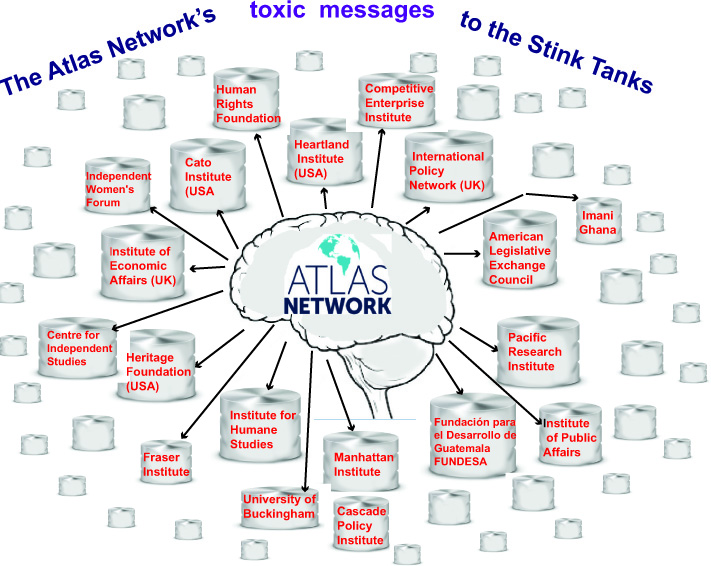
The MPS and its Atlas Network have conscientiously worked to change university campuses from places of free inquiry and critical thinking. Those beachheads in universities are matched by opportunities to find and promote “conservative” students. The idea is to shape them and potentially promote their careers in politics, the law, media, policy, academia and business.
January 26, 2025, Lucy Hamilton , https://theaimn.net/the-atlas-network-talking-about-itself/
There is much to learn about the Atlas Network from one of Ron Manners’ Mannkal Economic Education Foundation newsletters. This Mannkal newsletter was issued in April 2015. The project continues unabated.
The Atlas Network is a global interconnection of over 500 faux “thinktanks” (or junktanks), dedicated to reinforcing and propagandising the “free market” message. The Mont Pelerin Society (MPS) is considered its steering committee. The Atlas Network was designed from 1981 to metastasise similar bodies to sell “business” ideas. It finds local enthusiasts and donors around the world to eliminate obstructions to profit for American corporations and local fellow-travellers. The MPS is secretive: its membership is only rarely leaked.Ron Manners, with mining money, founded Mannkal in 1997. He is currently a life member and on the board of the MPS. He was appointed to the Advisory Council for the Atlas Economic Research Foundation in 2010. In 2020, he was awarded Atlas’s Sir Antony Fisher Achievement award. The newsletter explains that the name Mannkal originated in the cable/telex address of the company he inherited.
The Mannkal newsletter illustrates the connection to the MPS which first met in 1947. It brought together Austrian School economists such as Friedrich von Hayek and Ludwig von Mises together with the Chicago School’s Milton Friedman. The MPS, through Hayek, began the process of creating plutocrat-serving law and economics institutes in universities around America.
It also took the model provided by bodies such as the Foundation for Economic Education (FEE), founded in 1946, to create the mirage that a chorus of genuine policy experts supported the political economy that the donors desired. Friedman did much of the public relations for the project before the junktanks became more organised.
In the 1950s, Brit Antony Fisher, inspired by The Road to Serfdom, visited Hayek for advice. One of the UK junktanks in the Network explains that Hayek “told him bluntly to forget politics. Politicians just follow prevailing opinions. If you want to change events, change ideas.” He instructed Fisher to found thinktanks to help shift the prevailing mood away from the consensus that government, labour and capital all had a say in how society should operate towards a world where capital could dictate all including directing the government for its own ends.
When the co-founder of the Atlas Network Heritage Foundation, Ed Feulner, visited Australia in 1985 to conduct a workshop, he contrasted Friedman’s role marketing supply side economics, privatisation and the flat tax with the need for bodies to “set the terms and agenda of public policy.” The intent was to propagandise or “market an idea.” There must be “permanent saturation campaigns with multi-pronged, longterm strategies.” Proctor and Gamble, he explained, sell Crest toothpaste by “keeping the product fresh in the consumers’ minds.” That was to be the junktanks’ role. (These are a combination of Dr Jeremy Walker’s summaries and Feulner’s own words. The essay is well worth your time to see the history and people of Atlas in Australia.)
That Adam Smith Institute essay continues to boast that the Atlas Network had grown at the time of writing to 450 bodies. Now, the essay boasts, “They are changing events all over the world – from land reform in Peru, through privatization in Britain, public debt control in Pakistan, to low-cost education in India. And spreading the ideas of liberty in even the most unlikely places, in the Muslim world from Morocco through Turkey to Yemen and Kazakhstan; in Africa from Mali and Ivory Coast to Ethiopia; in Europe and the Far East.”
The MPS and its Atlas Network have conscientiously worked to change university campuses from places of free inquiry and critical thinking. Those beachheads in universities are matched by opportunities to find and promote “conservative” students. The idea is to shape them and potentially promote their careers in politics, the law, media, policy, academia and business.
One of Mannkal’s primary roles is the selecting of libertarian students in Western Australia for scholarships to Atlas Network junktanks around the world. In this edition of the newsletter, two report back on attending an MPS conference. One celebrated attending “networking events with prominent intellectuals and businesspeople from around the world.” Another was dazzled by, “Having dinner alongside a mining magnate, the chairman of a prominent think-tank, a famous TV presenter and an ex-CIA agent”. He continued, “I was exposed to a network rich in knowledge and influence, including a plethora of world-class academics, Nobel laureates and senior political figures.” (Nafeez Ahmed’s Alt Reich shows the significance of the CIA – and their former Nazis – in the shaping of the Atlas Network.)
Melbourne’s Institute of Public Affairs (IPA), a 1943 creation, was absorbed into the Atlas Network in the era of the Liberal Party’s battle between the Wets and the Dries. It was reportedly “hijacked” by “radicals” after people senior in the body attended an MPS conference.

The newsletter report of a third scholarship holder illustrates the Cold War dread of communism that continues to motivate the MPS and its Atlas junktanks. Former Czech president Vaklav Klaus, then a member of the MPS for 25 years, spoke at a lunch. People who have suffered under communist and socialist governments are often rolled out to warn audiences of the continuing threat of authoritarianism. The offspring of refugees who have had awful experiences in such countries provide some of the enthusiastic recruits for Mannkal.
Neoliberalism was always a bunk economics that trumpeted itself as superior because it was driven by theory and rejected evidence. In fact it was an ideology – and a network of activists – that functioned to serve the rich donors. As the project became our new normal, it created ever more dramatic inequalities, resulting in the fury and pain that drives sadopopulism. Youthful interest in social democracies has been a more productive response. In 2024, the IPA was sharing American Atlas junktank Cold War 2.0 propaganda to address the risk that youth might turn away from the “freedom” they sell.
Those of us watching the Atlas Network’s Heritage Foundation plans come to fruition in the first week of Trump’s second term see where authoritarianism lurks right now. Heritage’s Mandate for Leadershiphas come a long way since its first iteration set out the Ronald Reagan economic revolution’s steps. Now it combines its ultra-libertarian positions with authoritarian social policy and autocratic governance.
In this newsletter, Mannkal boasts of 154 scholarships available. Many are to conferences. Fifteen are “midyear internships abroad.” Another 45 are “3-month internships abroad.” The students are sent to Atlas junktanks around the world with 12 partners in particular listed. They include the inspiration for Mannkal, the FEE in Atlanta mentioned above. The Institute of Economic Affairs in London is another. That’s the body that helped create Maggie Thatcher’s economics after she was inspired by The Road to Serfdom. She co-founded another Atlas junktank, the Centre for Policy Studies.
One of the interns celebrates Maggie Thatcher’s certainty of the importance of Atlas: “It started with Sir Keith and me, with the Centre for Policy Studies, and Lord Harris at the Institute of Economic Affairs. Yes, it started with ideas, with beliefs. That’s it. You must start with beliefs. Yes, always beliefs.” Thatcher and Reagan make repeat appearances as Atlas heroes in the newsletter.
Another intern went to the New Zealand Institute, where the Chief Economist is Eric Crampton, MPS director.
The intern who was sent to Atlas headquarters in Washington was delighted to attend events at several of the Atlas junktanks including the Cato Institute (where Rupert Murdoch was a board member in the 1990s) and the Leadership Institute (party to Project 2025 and, like Heritage, to the Christian Nationalist Council for National Policy). She was impressed by Tom Palmer: Atlas’s Executive Director for International Programs. His patronising speeches at the Friedman Conference over the years can be found online.
Another of the interns was deeply grateful to spend time in Melbourne at the IPA with John Roskam. Two went to the Menzies Research Centre (MRC). One was thrilled to sit in on “meetings with high-level politicians and policy-advisors.” Mathias Corman, then Finance Minister, spoke at an MRC event about “shrinking government” in New Zealand and Australia. The Atlas Network’s Project 2025 shows how brutal the cuts to government are ultimately intended to be.
The Executive Director of the Liberal Party-affiliated MRC Nick Cater has just spent the European summer with Viktor Orbán’s junktanks in Budapest.
Scholarship donors are listed in the newsletter as Manners, Gina Rinehart, Willy Packer and Toby Nichols.
One public figure who shows the path and now models the Atlas policy influence is David Seymour, Deputy Prime Minister of New Zealand/Aotearoa. He was recruited on his university campus by the Atlas Association of Consumers and Taxpayers (ACT). The ACT is the now the political party that he leads. Seymour was awarded an Atlas “MBA” after a fortnight’s training at Atlas headquarters. He went on to work in the Canadian Atlas Frontier Center before returning to Atlas work in NZ. He is far from the only political leader with deep Atlas Network ties.
Austrian School economics is largely dead these days, although Atlas partners continue to try to resuscitate them. One of the intern reports in the newsletter says the “highlight of my experience was learning about Austrian economics, a stream of economics that is not taught in Australian high schools or universities.” There is a cogent reason why she was freshly discovering the contribution from “economists such as Ludwig von Mises, Friedrich Hayek, Joseph Schumpeter and Frederic Bastiat – important economists whose ideas or names have never once been mentioned in my four years of studying economics.” Several interns mention this inculcation of Austrian School truthiness as part of their experience.
One of the most ebullient floggers of Austrian thought in America has been Rand Paul. The intern sent to Canada’s Fraser Institute was excited to report that he met the man.
The newsletter discusses its links to the then highlight of the Atlas Network calendar in Australasian region, the Friedman Conference. In 2024, the conference was reduced to a rabble-rousing event called the Triple Conference that gave a day to libertarianism, a day to Christian Nationalism and a day to conspiracy theory nonsense.
The Mannkal newsletter also links to the History of Economic Thought Society Australia (HETSA), which hosts a Young Scholars Initiative (YSI) conference. HETSA is, anecdotally, a host to MPS figures. In 2024, this event took place at the Alphacrucis University College in NSW. Alphacrucis is the official training college of the Pentecostal Assemblies of God network, Australian Christian Churches reshaped under Hillsong’s Brian Houston. Notre Dame University, also a Catholic force in reactionary politicking and culture wars, provided the YSI organiser.
A third conference series mentioned is the “Freedom to Choose” conference, hosted by Notre Dame University and “supported” by Mannkal. The 2024 conference focused as its theme on the “enduring relevance” of Hayek’s Road to Serfdom, the book that inspired so many of the big money donors in the early history of neoliberalism.
Ron Manners pontificates on Public Choice Theory in the newsletter. This is a core aspect of Atlas’s history.
One of the key details to be gleaned from the newsletter is that this project is lifelong and often intergenerational for the donors. One of the interns at the IEA considered herself lucky to meet Hayek’s daughter who allowed the interns to “gain insight into the workings of her father first-hand!” Antony Fisher’s daughter, Linda Whetstone, was president of the MPS, chair of the Atlas Network and on the board at the IEA. Rupert Murdoch’s father Keith co-founded the IPA with Charles Kemp. Rupert was an official board member at Cato, and an unofficial conduit of the IPA, Centre of Independent Studies and MRC, whose people are regularly found on his platforms. The Kemp sons, Rod and David, were key figures in the thinktanks and the Atlas Americanisation of Australian politics.
Charles Koch has been a prime force financially and strategically at Atlas for decades.
It is hard to know how much of the change from Keynesian balanced economy to neoliberal brutality is attributable to the MPS and the Atlas Network, compared to how much might be due to the general impact of the donors and ideologues. Industry lobbies and the direct power of the plutocrats intermix with the marketing of the Atlas Network and its soft power impact for American corporations around the world.
The plutocrats ventriloquised through Atlas operations, but do not seem to feel the same compulsion to separate their goals from their faces any longer. Whether it’s Elon Musk or Gina Rinehart, they seem to feel comfortable now dictating oligarch policy for themselves.
Regardless, it’s worth watching Atlas talking about itself: the freedom it declares it fights for was always anti-democratic.
We know why nuclear build costs are soaring — and Australia faces the biggest increases
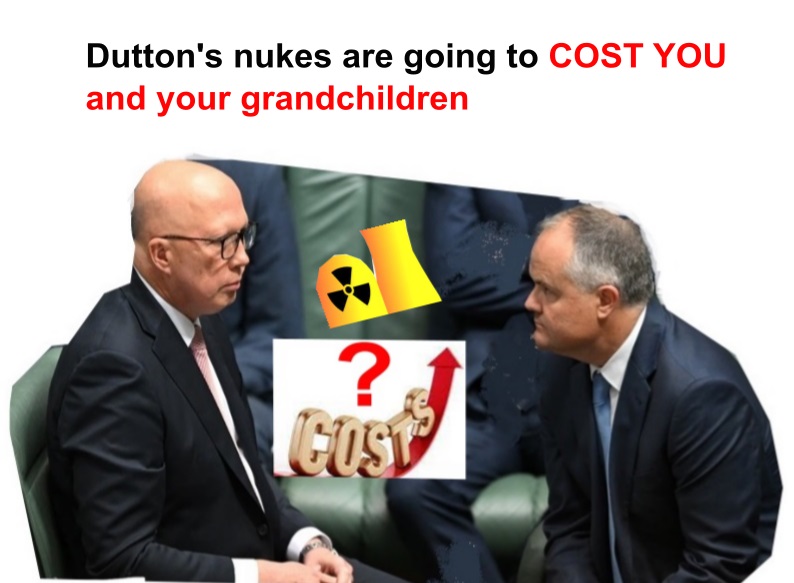
Around the world, experts have investigated why nuclear power construction costs keep going up. And we’re ignoring their lessons.
Crikey, Bernard Keane 21 Jan 25
The history of nuclear power construction is the history of costs going up and up, and delays getting longer and longer — not just over the past decade but since the 1960s. And studies of what has caused such rampant inflation show Australia is in the worst position to enter the complex and eye-wateringly expensive business of building nuclear power plants.
Global price spikes in construction materials resulting from the pandemic and the invasion of Ukraine have helped push infrastructure costs up everywhere, but significant blowouts in the construction costs of nuclear power plants are a much older story (when Crikey first covered nuclear power in Australia, in 2009, the first thing we pointed out was the cost…………………………………. (Subscribers only) more https://www.crikey.com.au/2025/01/21/australia-nuclear-energy-cost-peter-dutton/
Nuclear waste springs eternal in the human folly

25 Jan 25, https://theaimn.net/nuclear-waste-springs-eternal-in-the-human-folly/
“Hope springs eternal in the human breast;
Man never Is, but always To be blest.” – Alexander Pope, An Essay on Man, 1733
Pope goes on to say – “The soul, uneasy, and confin’d from home,
Rests and expatiates in a life to come.” I’m not sure what he means, but “never is, but always to be blest” really does suggest that the blessed solution actually never comes.
All that is fine, in the religious context. Because that way, it will all come good when we get to Heaven, in the next life.
In the nuclear waste context, the powers that be are as confident as the religious leaders, that all problems will be solved – later on, so we can go on hell-for-leather, making the poisonous trash.
‘High likelihood’ of radioactive waste in smoldering landfill, Missouri officials say
I was prompted to these thoughts by January 22nd news from Missouri – High likelihood of radioactive waste in smoldering landfill, Missouri officials say. I’ve been following this particular radioactive trash problem for at least 12 years https://nuclear-news.net/2013/05/16/radioactive-trash-in-st-louis-related-to-underground-landfill-fire/. And that fire’s still going! And that radiation is still causing cancers in the local community.
Dr Helen Caldicott, founding president of Physicians for Social Responsibility, visiting St Louis in 2016, said – the radioactive contamination in north St. Louis County is “worse than most places” she’s investigated, and called the situation “obscene.” Records reveal 75 years of government downplaying, ignoring risks of St. Louis radioactive waste.
So, the cleanup of St Louis’ County radioactive sites, contaminated by wastes from nuclear-weapons -making, goes on, with ever hopes to complete it, – while the nuclear-weapons-making goes on, creating even more radioactive trash
St Louis County is symbolic of the whole obscene nuclear waste situation across the planet.
Energy expert Kurt Cobb, writing in Oil Price, examines Sweden’s options for disposing of nuclear waste. He argues that climate change, political instability, and technological limitations could all pose threats to the long-term safety of nuclear waste storage. The Swedish plan is to fill the storage site—”60 km of tunnels buried 500 metres down in 1.9 billion year old bedrock”—sometime by 2080 at which time it will be closed.
Cobb points out that civilization, that is, human settlement in cities, has only been around about 10,000 years, but the wastes must be safe and secure for 100,00 years. The containers, copper capsules, are likely to corrode, and leak radioactive elements into groundwater, in a much shorter time.
He questions our faith in technological progress, which is supposed to absolutely solve the nuclear waste problem. It’s very like the Christian view on Alexander Pope’s statement – we’re not going to be blest in this world, so just look to life in the hereafter.
Kurt Cobb also discusses nuclear reprocessing, which brings its own problems, and still creates more waste, and he mentions other suggestions – shooting such waste into space or into the Sun.
Now here’s where I’m shocked at Mr Cobb. In all my years of reading worthy treatises on nuclear waste disposal, this is the first time I’ve found an energy expert to come up with a heretical thought like stopping making radioactive trash:
“I wonder if we were wise to create something in the first place that requires 100,000 years of care, given how heedless we as a species are to hazards of our own making that may destroy our current civilization much, much sooner than a thousand centuries from now.“
Really, Mr Cobb, wash your mouth out with soap! You don’t say things like that, if you want to be taken seriously by the world’s reputable nuclear experts.
The devil of Frontier’s nuclear modelling is not in the detail, it’s in the omissions
Alan Rai, Jan 23, 2025, ReNewEconomy
In November and December 2024, Frontier Economics released two reports on the transition required in the NEM to achieve net zero emissions by 2050, drawing on AEMO’s 2024 Integrated System Plan (ISP).
This was followed by various summaries and takeaways of the Frontier modelling by, amongst others, Steven Hamilton, Matt Kean, Kane Thornton, and David Leitch.
In contrast to some of the public reaction to date, I think Frontier’s work adds to the debate about the potential for nuclear power generation in Australia. In particular, Frontier’s work raises a philosophical question about the pace of decarbonisation we want, and our willingness to pay for it.
We might all subscribe to “Net Zero by 2050”, but the pathway to get there, as AEMO’s and Frontier’s modelling show, can clearly differ. I will return to this issue, below.
This article differentiates from what’s been publicly said and written about Frontier’s work in two important ways:
1. It focuses on the assumptions in and implications of Frontier’s modelling, whereas the bulk of the existing public discussion mixes aspects of Frontier’s analysis with political parties’ and politicians’ statements on nuclear power and their selective use of Frontier’s analysis to support their statements.
2. It discusses both of the Frontier reports, whereas the bulk of existing discussion focuses on selected aspects of Frontier’s second report.
…………………………………………………………………………………………………………………………………………………………………. In conclusion
To reiterate what I started with, I think Frontier’s work adds to the debate about the potential for nuclear power generation in Australia – their modelling poses some important philosophical questions for us.
However, the above-noted challenges means Frontier’s modelling falls short of a definitive answer to whether nuclear is appropriate, at any scale and at any future time horizon, for Australia’s power sector. As Frontier appropriately noted, their modelling is not “the last word on this matter.” https://reneweconomy.com.au/the-devil-of-frontiers-nuclear-modelling-is-not-in-the-detail-its-in-the-omissions/
26 January – WEBINAR Autonomous Armageddon: Nuclear Weapons and AI
Join us for a critical webinar on Sunday, January 26, at 2:00 PM GMT “Autonomous Armageddon: Nuclear Weapons and AI“, to explore the alarming dangers posed by the integration of artificial intelligence (AI) into nuclear weapons systems. Hosted by three Nobel Peace Prize-winning organizations dedicated to eliminating nuclear weapons, this event will feature expert speakers, including:
Moderator: Professor Karen Hallberg, Secretary General of Pugwash Conferences on Science and World Affairs, 1995 Nobel Peace Prize.
Representative of Nihon Hidankyo, 2024 Nobel Peace Prize;
Professor Geoffrey Hinton, 2024 Nobel Prize Winner in Physics;
Connor Leahy, CEO of Conjecture (AI safety research);
Dr. Ruth Mitchell, neurosurgeon and Chair of IPPNW, 1985 Nobel Peace Prize;
Melissa Parke, Executive Director of ICAN, 2017 Nobel Peace Prize; and
Together, they will discuss the general and specific risks AI presents to nuclear command and control systems, the catastrophic humanitarian and environmental consequences of nuclear war, and ongoing initiatives to mitigate these threats. We invite you to participate in this vital discussion to address the intersection of AI and nuclear weapons.
Register here or below. A recording will be made available following the session.
Nuclear news as the Trump chaos world begins

Now we enter the chaos of Trump World. It means lies, manipulations, news that you can’t trust. I cannot keep up with the Israel, Ukraine, monster China etc stuff – though it’s all on the brink of nuclear disaster.
So, from now on, I’m confining this newsletter more narrowly to NUCLEAR news. And with an emphasis on Australia, as it now faces a nuclear industry takeover, and becoming the USA’s proxy for nuclear war against China.
TOP STORIES
California wildfires: a warning to Nuclear Regulatory Commission on climate change.
Chris Hedges: The Ceasefire Charade. Report: Israel and Hamas Agree ‘in Principle’ to Ceasefire and Hostage Deal .
Becoming a responsible ancestor – about America’s nuclear wastes.
The EPR nuclear sector: new dynamics show persistent risks -La cour des comptes .
Former nuclear energy executives face federal charges in massive Ohio bribery scheme
Noel’s notes. 2025 – Australia’s dangerous nuclear dance with Dutton? The world’s blind eye to the nightmare problem of nuclear waste disposal.
AUSTRALIA. Dutton’s new nuclear nightmare: construction costs continue to explode. Virginia, we have a problem. More Australian nuclear news at https://antinuclear.net/2025/01/20/australian-nuclear-news-13-20-january-2025/
| CLIMATE. Trump’s got a radioactive time bomb under Greenland’s ice. Wildfire risks high at nuclear plants.Weatherwatch: Could small nuclear reactors help curb extreme weather? There’s a credibility gap. |
| ECONOMICS. French energy giant EDF launches search for Hinkley Point finance after damning audit report – ALSO AT https://nuclear-news.net/2025/01/19/2-b1-french-energy-giant-edf-launches-search-for-hinkley-point-finance-after-damning-audit-report/. French auditor recommends EDF delays UK Sizewell investment decision ALSO AT https://nuclear-news.net/2025/01/17/2-b1-french-auditor-recommends-edf-delays-uk-sizewell-investment-decision/Sizewell C’s future in doubt as EDF told to prioritise French nuclear power. Cost of Sizewell C nuclear project expected to reach close to £40bn. EDF Energy Juggles Maintenance Amid UK’s Nuclear Energy Challenges. Ukraine’s parliament has given the go-ahead for the purchase of two old Russian nuclear reactors. |
| ENERGY. Renewable energy sets global record…but it’s not enough. |
| EVENTS. Petition/email: Save Billions, Cancel Sizewell C |
| HEALTH. Nukes kill kids. |
| HUMAN RIGHTS. Amazon Is Censoring My Most Recent Magazine Issue. |
| LEGAL. Last Energy, Texas, Utah allege NRC overstepping in SMR regulation |
MEDIA. CBS’ 60 Minutes Exposes the Biden Administration’s Complicity in Gaza Genocid.
Interviews the Whistleblowers. ‘National scandal’: The BBC’s Gaza cover-up.
Told you so: Financial Times follows Nuclear Free Local Authorities’s lead on Sizewell C cost estimate.
How Canada supplied uranium for the Manhattan Project- documentary “Atomic Reaction“
| PERSONAL STORIES. Patrick Lawrence: The Nihilism of Antony Blinken. |
| POLITICS. Over time, over budget… will our new nuclear plants ever be built? – ALSO AT https://nuclear-news.net/2025/01/20/1-a-over-time-over-budget-will-our-new-nuclear-plants-ever-be-built/ |
| POLITICS INTERNATIONAL and DIPLOMACY. The UK military’s secret visits to Israel. |
| URANIUM. Saudi Arabia plans to enrich and sell uranium as Iran commences nuclear talks with E3. |
| WASTES. Ask the locals: NFLA Chair says it is ‘prudent and proper’ for Nuclear Waste Services to consult residents over South Copeland flooding risk. Dunfermline MP Graeme Downie calls for MoD commitment to dismantle dead nuclear submarines. |
| WEAPONS and WEAPONS SALES. Are AI defense firms about to eat the Pentagon? Outgoing CIA director says ‘no sign’ Iran developing nuclear weapons. Submarine nuclear core project faces ‘challenges’. |
Military Spending vs Social Services: Australia’s Paradox
January 18, 2025 AIMN Editorial, By Denis Hay
Discover how Australia’s currency sovereignty allows for unlimited funding yet prioritizes military spending over essential social services.
Introduction: Australia’s Spending Paradox
Despite being a currency-sovereign nation with the ability to fund public initiatives without financial constraints, Australia’s federal government consistently prioritizes military spending and corporate welfare over social services. Why is it that when it comes to healthcare, education, and housing, the government suddenly “runs out of money”?
This article explores the reasons behind these budgetary choices, exposing how ideological biases and misinformation shape public spending priorities. By understanding currency sovereignty, we can challenge these myths and advocate for a fairer allocation of public funds.
Understanding Currency Sovereignty
What Is Currency Sovereignty?
Currency sovereignty means that a government, like Australia’s, issues its own currency and controls its supply. Unlike households or businesses, it does not rely on income to spend. Instead, it creates money through the Reserve Bank of Australia (RBA). This ability allows the government to finance any program it considers necessary.
Key takeaways:
– The government cannot run out of money.
– Taxes and borrowing are tools to regulate inflation, not fund spending.
– Spending decisions are constrained by resource availability and inflation, not cash limits……………………………..
Federal Spending Priorities
Military Spending
In recent years, Australia has committed to massive defence expenditures, including the controversial AUKUS deal. For 2023-24, defence spending surpassed $52 billion, a figure justified by “security concerns” and geopolitical alliances……………………………………………………………………………………………………………………………………..
Conclusion
Australia’s federal government has the financial ability to fully fund social services while keeping other commitments. The persistent excuse of financial constraints reflects ideological choices rather than economic realities. By understanding currency sovereignty and advocating for change, Australians can push for a fairer society……………………………. more https://theaimn.net/military-spending-vs-social-services-australias-paradox/
Peter Dutton’s nuclear energy policy is unclear policy
January 18, 2025 Michael Taylor, https://theaimn.net/peter-duttons-nuclear-energy-policy-is-unclear-policy/
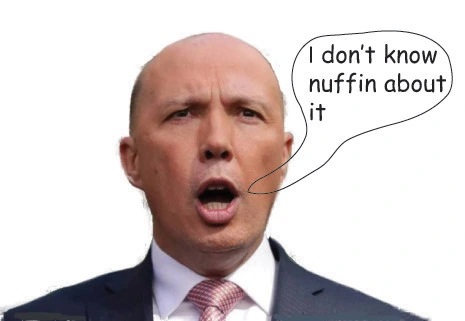
Peter Dutton’s signature nuclear energy policy has rightly been subject to significant criticism and analysis, highlighting several key issues:
- The policy has been criticised for its potential high costs. Reputable sources suggest that nuclear energy is likely to be significantly more expensive than renewable energy alternatives. For instance, the Climate Council estimates that it could increase household electricity bills by $665 annually, and the CSIRO’s GenCost report indicates that nuclear power is at least twice as expensive as renewables.
- The timeline for establishing nuclear power in Australia is considered overly ambitious. It’s estimated that it would take at least 15 years to get reactors up and running, which means significant delays in addressing immediate energy needs. This delay could lead to continued reliance on fossil fuels, thus increasing emissions rather than reducing them.
There are substantial environmental concerns related to nuclear power, including the management of nuclear waste, the risk of accidents, and the overall environmental footprint (which the industry says is nil) when considering the lifecycle of nuclear facilities. Dutton’s policy doesn’t adequately address these risks, particularly in a country such as ours with no prior nuclear energy infrastructure.- Implementing nuclear power requires overcoming significant political and regulatory hurdles. Opposition from state governments, along with existing federal bans on nuclear energy, presents legal and political obstacles. The need for new legislation and the potential for compulsory land acquisition further complicates the policy’s execution.
- The policy could deter investment in renewable energy by creating uncertainty about the future energy landscape. Investors might be reluctant to commit to long-term renewable projects if there’s a possibility that the energy market will shift towards nuclear, potentially leading to higher energy costs and less economic growth.
There are valid doubts about public support for nuclear power in Australia, particularly given historical opposition. The proposed choice of sites for nuclear reactors raises questions about community consent.- The policy focuses on nuclear at the expense of more immediately deployable and cost-effective renewable solutions (Sydney Morning Herald, paywalled). The argument is that renewable energy can be scaled up more quickly to meet current and future energy demands without the risks associated with nuclear.
- There has been a noted absence (Sydney Morning Herald, paywalled) of comprehensive costings from the Coalition for their nuclear plan, leading to skepticism about the economic claims made by Dutton. This lack of transparency has been highlighted as a major flaw.
- In summary, the policy is economically risky, environmentally questionable, and politically contentious, potentially leading to higher energy prices, slower adoption of clean energy, and increased reliance on fossil fuels in the interim.
- It looks as though Dutton is on a loser with his nuclear energy policy. He pursues it at his political peril.
TODAY 2025 – Australia’s dangerous nuclear dance with Dutton?
20 January 2025 https://theaimn.net/2025-australias-dangerous-nuclear-dance-with-dutton/
Why I must now focus on Australia’s nuclear question.
For the past 18 years, I have been running two websites dedicated to the nuclear-free cause. I started these when John Howard was proposing nuclear power for Australia. The hazards then were obvious, environmental and health damage, further oppression of Aboriginal people, threats to civil liberties, proliferation of nuclear weapons, and more.
Over the last few years, the threat of nuclear war has increased. It’s become clear that men in power have come to believe that a nuclear war can be won, despite what the scientists tell us. The idea of nuclear disarmament has gone out the window, as ever new, cleverer, bigger nuclear weapons are devised by our fine “defenders”.
While danger has increased, knowledge and understanding of history has decreased. So we have a Western world that pays no attention to the background to the war in Ukraine, and confidently believes that it is all about one “evil” man – Putin, and nothing to do with the complex story of the Donbass region of Ukraine, and its quest for autonomy.
Meanwhile the horror of the Israeli genocide of Palestinians in Gaza continues, and the Netanyahu government’s ruthless oppression there is backed by Western weapons, and moral support, – because we “don’t want to be anti-semitic, do we?” And again, the history of the region is ignored.
These two situations could so easily tip the world over the brink – to nuclear war.
But as if that were not enough – there’s more on-the-brink background. We must now hate not only Russia, but also China, and Iran, and be ready to nuclear bomb them. We must build up more nuclear weapons, – to the gratification of those lovely armaments companies and their happy shareholders.
And if that all is not enough to have us now teetering on that brink, we have the most powerful nation in the world run by a deranged President Trump, who is supported, perhaps himself controlled, by a small group of obscenely rich men of brilliant minds but lopsided morals, including the ketamine-dependent Elon Musk.
So, to get back to the point. In this crazy new world, the new USA government will destroy or control political, judicial, educational and social institutions, with the aid of Murdoch media and social media. Misinformation and lies will be rife, and it will be a struggle to find media sources that can be trusted. But decent people, with the will for co-operation and for collective action continue – we just have to find them.
I have tried, through my websites to cover those international political issues that bring nuclear war ever closer. But now, it is just too hard.
Meanwhile, back at the ranch, here in Australia, we have the unique situation of an entire continent being taken over, militarily, by the USA. Liberal and Labor governments have let it happen. Labor Prime Ministers, terrified by what happened to the one Prime Minister, Gough Whitlam, who dared to stand up to the USA, continue to kowtow to America.
If the “tech bros” and the shadowy Atlas Foundation can play a role in bringing the chaotic Donald Trump to power in the USA, they could well do the same thing here, helping to bring Dutton’s nuclear madness to Australia. However, I must give Dutton some credit, too. He now looks likely to offer all sorts of other enticements to Australian voters, and perhaps just soft pedal on the nuclear propaganda, and hope we forget about it..
It is up to those of us who are aware, and perhaps have the time, to explore the scenario of what the nuclear industry would mean for this country.
Australia is somewhat scarred by the nuclear industry already, with the abomination of the British nuclear bombing of aboriginal land in the 1950s, and with the environmental and health destruction of uranium mining. But Australia now has this unique opportunity – to be the world leader in renewable energy, and energy conservation.
Australia does not have to be “USA’s beachfront against China” as one American politician said recently. Australia does not have to be the Southern Hemisphere base for USA’s nuclear-armed bombers, and nuclear submarines.
So, anyway, I reckon that the job for aware Australians is to keep the focus on Dutton’s nuclear nuttiness, exposing its lies. For my own part, I’m narrowing the scope of my websites and newsletter, taking them back to their original theme – for a nuclear-free world.
“
Australian nuclear news -13-20 January 2025.
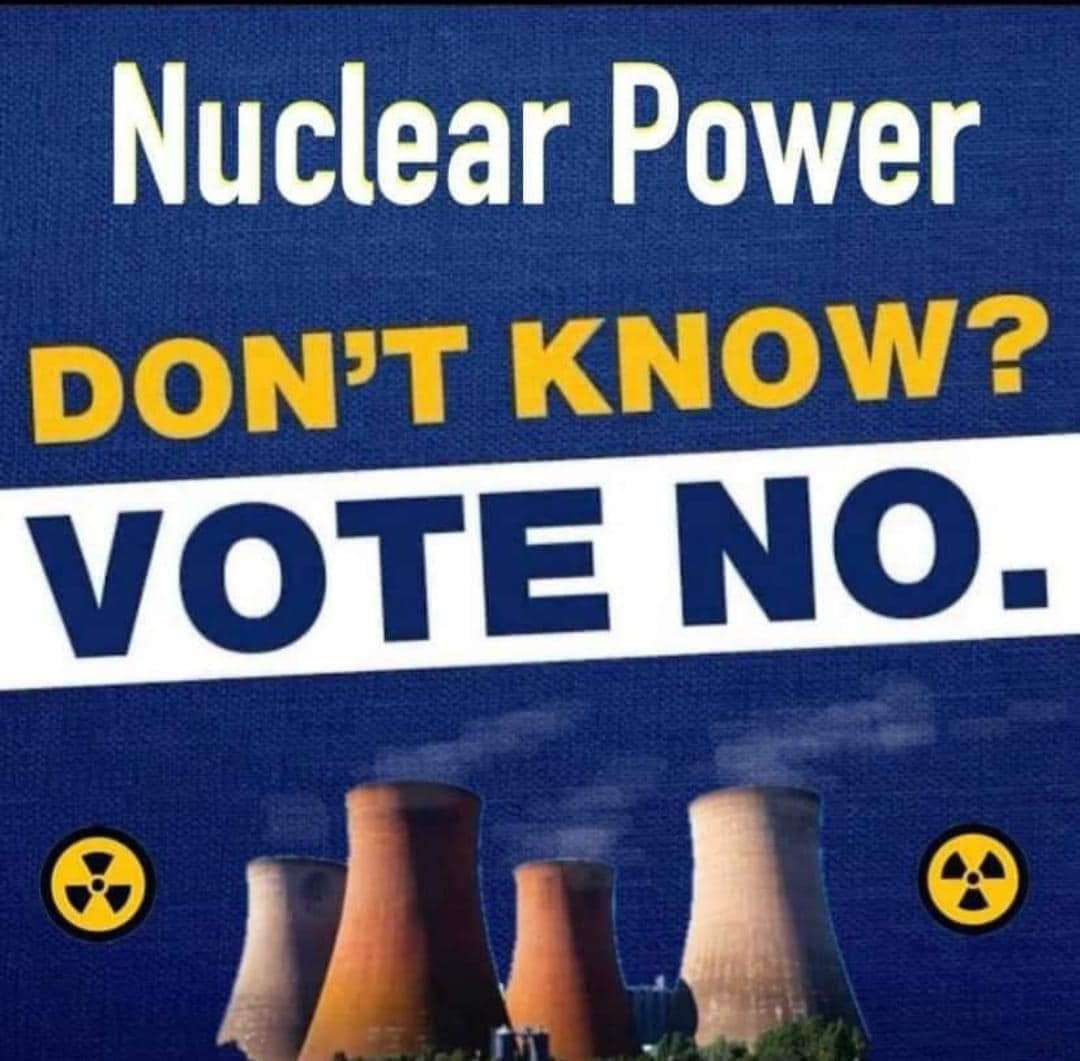
Headlines as they come in:
Dutton’s nuclear plan to wipe out Australia’s aluminium smelters .
Hey Australia, Ontario is no model for energy and climate policy.
Peter Dutton’s nuclear energy policy is unclear policy,
Lack of detail Dutton Launches Much to Do About Nothing campaign.
Peter Dutton’s “always on” nuclear power is about as reliable as wind and solar – during a renewables drought.
Dutton’s new nuclear nightmare: construction costs continue to explode.
Virginia, we have a problem.
Dutton’s nuclear plan to wipe out Australia’s aluminium smelters

Australian Financial Review, Chris BowenMinister for Climate Change and Energy, 19 Jan 25
The Coalition’s costings are predicated on large industrial facilities in the southern and eastern states of Australia halving their energy use by the end of 2030, and keeping it there.Chris BowenMinister for Climate Change and Energy
Of all the problems with Peter Dutton’s nuclear energy costings released in the dying days of 2024, probably the biggest is that the entire policy assumes much of Australian heavy industry closes over the next few years.
This is particularly ironic as Mr Dutton claims with a straight face that nuclear power is necessary for industrial growth.
The details of his so-called policy costings reveal the only way the Coalition can make nuclear energy appear cheaper than it is – even Ted O’Brien admits he’s not predicting nuclear will bring power bills down – is to assume Australia will need a lot less power.
It indicates an extraordinary degree of pessimism about Australia’s manufacturing future, specifically for electricity-hungry industries like aluminium smelting.
In releasing those figures, the Coalition has tied themselves to a future scenario predicated on large industrial facilities across the southern and eastern states of Australia halving their energy use by the end of 2030 – and keeping it there.
Specifically, the model Peter Dutton has adopted as the basis for his energy policy, shows a material drop and then permanent flatlining in industrial electricity demand for Victoria, Tasmania, Queensland and NSW.
That is, less than half the energy we need to power our biggest industrial users right now – let alone to enable growth in the future.
We need to be planning an energy system for economic growth.
Peter Dutton says he supports the aluminium industry, but his own nuclear costings rely on shutting it down.
Analysis of the timing of large loads coming off, shows it coinciding with the end dates of existing power purchase agreements for each of Australia’s four aluminium smelters across those states.
It shows a Liberal Party either cavalier about, or comfortable with Tasmania’s Bell Bay smelter closing in less than 12 months by January 2026, Portland’s smelter winding down in July 2027, plus NSW’s Tomago and Queensland’s Boyne smelter gone by July 2029…………………………………………………………………
As someone who wants to lead a country, why would Dutton be planning for an economy that’s smaller and an industrial sector that’s worse off with no growth opportunities, before he’s even begun? Why bank on job losses to bring down the cost of his electricity system?
And if you’re not planning for a contracting economy, then where’s your credible energy policy to meet growing demand in the next five, 10 and 20 years?
We need to be planning an energy system for economic growth. We need to be planning an energy system for the future, one that has bigger industry, ………………………………………………………. more https://www.afr.com/policy/energy-and-climate/dutton-s-nuclear-plan-to-wipe-out-australia-s-aluminium-smelters-20250119-p5l5l4
Hey Australia, Ontario is no model for energy and climate policy
Energy and climate strategy should prioritize options with lowest economic, environmental, technological and safety risks. Ontario’s does the opposite.
by Mark Winfield October 4, 2024,
https://policyoptions.irpp.org/magazines/october-2024/ontario-energy/
Over the past few weeks, word has begun to reach Ontario of a series of stories in the Australian media in which the province is being held up as a model for climate and energy policy Down Under.
It seems that Peter Dutton, the leader of the federal opposition Liberal (the conservative party in Australian politics), has been promoting Ontario’s nuclear heavy energy plans as a pathway for Australia.
For those in the province familiar with the ongoing saga of its energy and electricity policies, the reactions to the notion of Ontario being an example of energy and electricity policymaking have ranged from “bizarre” to “you couldn’t make this up.”
The Australian opposition leader seems to be operating on a very limited understanding of the history and current state of electricity, energy and climate policy in Ontario. A good starting point would be the delays and cost overruns flowing from the province’s initial 20-reactor nuclear construction program. Running from the 1960s through the early 1990’s, they effectively bankrupted the provincially owned utility Ontario Hydro. Its successor, Ontario Power Generation (OPG), could only be made economically viable by offloading nearly $21 billion in mostly nuclear-related debt onto electricity ratepayers.
Poor maintenance and operating practices led to the near-overnight shutdown of the province’s seven oldest reactors in 1997, leading to a dramatic rise in the role of coal-fired generation and its associated emissions of greenhouse gases (GHGs) and smog precursors. The refurbishment of the “laid-up” reactors themselves went badly. Two ended in write-offs, and the others ran billions over budget and years behind schedule, accounting for a large portion of the near doubling of electricity rates in the province between the mid-2000s and 2020.
Towards a $100-billion nuclear binge?
Only two other provinces followed Ontario’s lead on nuclear. Quebec built two reactors and New Brunswick one, each of them completed in the 1970s or the early 1980s. The Gentilly-1 facility in Quebec was barely ever operational and closed in 1977. The Gentilly-2 facility was shut down in 2012, and assessed as uneconomic, particularly in light of Ontario’s experiences in attempting to refurbish its own. The construction and then refurbishment of the Point Lepreau facility has repeatedly pushed New Brunswick Power to the brink of bankruptcy.
The current government of Ontario, led by Conservative Premier Doug Ford, has seemed determined to ignore the nuclear experiences of these provinces, and its own history of failed nuclear megaprojects. The government’s July 2023 energy plan includes the refurbishment of six reactors at the Bruce nuclear power facility (owned by OPG), and four reactors at the OPG’s Darlington facility. It subsequently added the refurbishment of four more reactors at OPG’s Pickering B facility, an option that had previously been assessed as unnecessary and uneconomic. The plant had originally been scheduled to close in 2018. There are also proposals for four new reactors totaling 4,800 MW in capacity at Bruce and four new 300MW reactors at Darlington. (The current capacity is 6,550 MW at Bruce, and 3,512 MW at Darlington.)
The total costs of these plans are unknown at this point, but an overall estimate in excess of $100 billion would not be unrealistic:
$13 billion for the refurbishment at Darlington;
approximately $20 billion for the refurbishment at Bruce;
$15 billion for Pickering B (based on Darlington costs and plant age for both this case and Bruce);
about $50 billion for the new build at Bruce, based on previous new build proposals;
and the Darlington new build (unknown, but likely $10 billion or more).
Even this 100$-billion figure would assume that things go according to plan, which rarely happens with nuclear construction and refurbishment projects.
The government’s ambitious nuclear plans have not been subject to any form of external review or regulatory oversight in terms of costs, economic and environmental rationality, or the availability of lower-cost and lower-risk pathways for meeting the province’s electricity needs. Rather, the system now runs entirely on the basis of ministerial directives that agencies in the sector, including the putative regulator, the Ontario Energy Board, are mandated to implement.
Even this 100$-billion figure would assume that things go according to plan, which rarely happens with nuclear construction and refurbishment projects.
The government’s ambitious nuclear plans have not been subject to any form of external review or regulatory oversight in terms of costs, economic and environmental rationality, or the availability of lower-cost and lower-risk pathways for meeting the province’s electricity needs. Rather, the system now runs entirely on the basis of ministerial directives that agencies in the sector, including the putative regulator, the Ontario Energy Board, are mandated to implement.
The province’s politically driven policy environment is very advantageous to nuclear proponents. When previous nuclear expansion proposals had been subject to meaningful public review, the plans collapsed in the face of soaring cost estimates and unrealistic demand projections. This was the case in the early 1980s with the Royal Commission on Electric Power Planning – aka the Porter commission, at the turn of the 1990s with the Ontario Hydro demand and supply plan environmental assessment, and in the late 2000s, with the Ontario Power Authority’s integrated power system plan review.
A halt to renewable energy
There is a second dimension to Ontario’s electricity plans that also should not be overlooked. Upon arriving in office the Ford government promptly terminated all efforts at renewable energy development, including having completed wind turbine projects quite literally ripped out of the ground at a cost of hundreds of millions of dollars. It then scrapped the province’s energy efficiency strategy for being too effective at reducing demand. Repeated offers of low-cost electricity from the hydropower-rich neighbouring province of Quebec were ignored. The results of studies by the province’s own electricity system operator on energy efficiency potential and the possible contributions of distributed generation, like building and facility-level solar photovoltaics (PV) and storage, have been largely disregarded.
These choices have left the province with no apparent option but to rely on natural gas-fired generation to replace nuclear facilities that are being refurbished or retired. With existing facilities dramatically ramping up their output, and new facilities being added, GHG and other emissions from gas-fired generation have more than tripled since 2017, and are projected to continue to increase dramatically over the next years. On its current trajectory, gas-fired generation will constitute a quarter of the province’s electricity supply, the same portion provided by coal-fired plants before their phase-out, completed in 2013. The province has recently announced a re-engagement around renewable energy, but the seriousness of this interest has been subject to considerable doubt.
Given all of this, it would be difficult to see Ontario as a model for Australia or any other jurisdiction to follow in designing its energy and climate strategy. The province has no meaningful energy planning and review process. Its current nuclear and gas-focussed pathway seems destined to embed high energy costs and high emissions for decades to come. And it will leave a growing legacy of radioactive wastes that will require management of timescales hundreds of millennia.
A rational and transparent process would prioritize the options with the lowest economic, environmental, technological and safety risks. Higher-risk options, like new nuclear, should only be considered where it can be demonstrated that the lower-risk options have been fully optimized and developed in the planning process. Ontario’s current path goes in the opposite direction. To follow its example would be a serious mistake.
1 This month
Chernobyl: The Lost Tapes – A good documentary on Chernobyl on SBS available On Demand for the next 3 weeks– https://www.sbs.com.au/ondemand/tv-program/chernobyl-the-lost-tapes/2352741955560
15 April – Zoom –Nuclear Power is Not the Solution
Apr 15, 2026 01:00 AM in Canberra, Melbourne, Sydney

Join the International Physicians for the Prevention of Nuclear War (IPPNW) on Tuesday, April 14th for a timely webinar exploring the risks associated with nuclear power and challenging the myth that it offers a simple, safe, carbon-free solution to the climate crisis

21 April Webinar: No Nuclear Weapons in Australia
Start: 2026-04-21 18:00:00 UTC Canberra, Melbourne, Sydney (GMT+10:00)
End: 2026-04-21 19:30:00 UTC Canberra, Melbourne, Sydney (GMT+10:00)
Event Type: Virtual
A virtual link will be communicated before the event.
Host Contact Info: australia@icanw.org

of the week – Australians for War Powers Reform (AWPR)
To see nuclear-related stories in greater depth and intensity
 Antinuclear