Victoria and AEMO welcome certainty of Yallourn’s early exit, as Taylor stokes fears — RenewEconomy

AEMO, the state government and industry welcome early notice of Yallourn closure, with only Angus Taylor warning of dire consequences. The post Victoria and AEMO welcome certainty of Yallourn’s early exit, as Taylor stokes fears appeared first on RenewEconomy.
Victoria and AEMO welcome certainty of Yallourn’s early exit, as Taylor stokes fears — RenewEconomy
NSW ramps up energy efficiency targets in quest to save $2.4bn in energy costs — RenewEconomy

NSW government ramps up targets under its Energy Saving Scheme, that could deliver substantial energy savings for households and businesses. The post NSW ramps up energy efficiency targets in quest to save $2.4bn in energy costs appeared first on RenewEconomy.
NSW ramps up energy efficiency targets in quest to save $2.4bn in energy costs — RenewEconomy
ACT flooded by proposals as suppliers jostle for role in electric bus fleet — RenewEconomy

ACT receives more than 100 expressions of interests from a range of suppliers to help deliver its 90 electric buses. The post ACT flooded by proposals as suppliers jostle for role in electric bus fleet appeared first on RenewEconomy.
ACT flooded by proposals as suppliers jostle for role in electric bus fleet — RenewEconomy
Hiroshima 1945, Fukushima 2011, – Japan’s nuclear horrors – theme for March 21
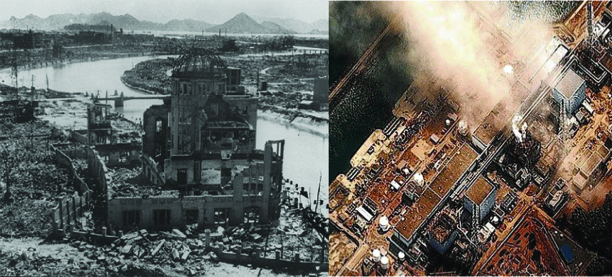
As World War 2 neared its end, with 20 million Russian soldiers killed, fighting with the Allies against Hitler, America’s government was already planning its military superiority over Russia.
What they needed was to demonstrate a weapon of huge mass destruction, that would frighten the Russians. Germany surrendered on 7 May 1945. Too late to try one out on Germany , but Japan was still in the war, (though near to giving up). So they had to hurry. Japan would be the test case – selecting the city of Hiroshima , both to test the effects of atomic bombing, and to show the Russians, on August 6th. To emphasise the USA’s military superiority, they plutonium bombed Nagasaki 3 days later.
After the war, how to get Japan ”on side” against Russia , and equally important, to show the Japanese that nuclear is really quite good.? USA helped Japan to now get an ‘economic miracle’, and better still, give Japan the benefit of ‘good nukes’.
To these crowded, seismically dangerous Japanese islands, USA promoted clusters of nuclear power stations. The nuclear industry’s image was miraculously enhanced – to Japan, and to the world.
BUT, 66 years later, Japan suffered another disastous nuclear blow, with the meltdown at the Fukushima nuclear power station. With the 10 year anniversary of this disaster, on March 11, the real cleanup is nowhere in sight, vast amounts of contaminated water are still accumulating, areas are uninahitable, and most evacuees don’t want to return. Radioactive pollution in forests is still a problem.
Sad to reflect that this one country, Japan, has suffered two great nuclear horrors – 75 years apart, with the tragic effects of both continuing. The world needs, not a celebratory, cosmetic, Olympic Games, but real international help for the people of Fukushima, and for the environmental remediation. Japan needs help to shut down the toxic nuclear industry and move to clean energy
Australia take note : New Zealanders oppose launch of U.S. military nuclear satellite

a security expert has suggested it puts New Zealand into “the kill chain” and makes New Zealand a military target.
|
NZ rocket launches may breach nuclear-free laws, say peace groups, The Spinoff
Ollie Neas | 8 Mar 21, Rocket Lab launches of satellites honing US military targeting capabilities have been criticised by the Peace Foundation, which is calling on the PM to step in.Peace groups are calling on the prime minister, Jacinda Ardern, to stop the launch of a controversial US military satellite that is scheduled for lift-off from Mahia this month, saying it may contravene nuclear-free legislation.Rocket Lab’s next mission is due to carry a satellite for the US Army’s Space and Missile Defence Command, called the Gunsmoke-J. The satellite is designed to improve US military targeting capabilities by improving how data is provided to “warfighters”. The satellite has previously been condemned by the Green Party, while a security expert has suggested it puts New Zealand into “the kill chain” and makes New Zealand a military target. Non-profit group The Peace Foundation has now added to those concerns: the launch may breach New Zealand’s nuclear-free laws. In an open letter to the prime minister, the Peace Foundation’s International Affairs and Disarmament Committee says Rocket Lab’s launches for US military agencies risk drawing New Zealand “into supporting the weaponisation of space and the related nuclear arms race”. Satellites contributing to nuclear weapons programmes cannot be approved under New Zealand law. But the Peace Foundation says New Zealand may lack the technical expertise and information necessary to properly assess whether a satellite is making such a contribution. As a result, the Peace Foundation says approvals of US military satellites should be suspended, and approval of the Gunsmoke-J satellite revoked, until greater oversight of space launches is implemented. The letter has been endorsed by 17 civic, peace and religious groups, as well as members of the public………… The US Army says the technology being demonstrated could, among other purposes, assist in “long-range precision fires” – a type of missile used to provide “precision surface-to-surface deep-strike capability”. The minister responsible for approving the satellite, Stuart Nash, told parliament last month that he was “unaware” of its “specific military capabilities”. Otago University conflict resolution and disarmament expert Kevin Clements said it is “astonishing” that Nash was unaware of the Gunsmoke-J’s specific military capabilities. “It is even worse that he is willing to rely on the US Army alone to provide the information required by him and New Zealand’s space agency in relation to the approval process,” Clements said in a statement. “Rocket Lab’s launch programme is increasingly opaque. The precise content of each payload seems intentionally ambiguous and approvals do not seem to take New Zealand’s anti-nuclear legislation into account.” Strong parallel’ with nuclear ships issue The Peace Foundation says there is a “strong parallel” between the launch of US military satellites from New Zealand and the “neither confirm nor deny” issue of the 1980s. The US policy of neither confirming nor denying whether its ships were nuclear armed led to a ban on US warships visiting New Zealand ports – the seminal moment in the anti-nuclear campaign. As with that issue, the Peace Foundation says New Zealand cannot be confident that US military satellites launched from New Zealand are not contributing to nuclear weapons systems. The Peace Foundation says assessing whether the Gunsmoke-J complies with the nuclear free law would require detailed technical knowledge of how the technology might be used in the future. “Increasingly, space-based US military assets are ‘dual-capable’ (can support nuclear and non-nuclear weapons), and dual-capable satellites used for non-nuclear targeting today can easily be used for nuclear targeting tomorrow………. Call to reform space law In light of its concerns, the Peace Foundation says greater oversight is needed over New Zealand’s space regime. It proposes assigning oversight of space launches to the prime minister, strengthening space regulations, and mandating oversight of space-launch activity to the Public Advisory Committee on Disarmament and Arms Control (PACDAC) – a body set up by the Nuclear Free Zone Act to advise the government on disarmament matters. Minutes of PACDAC meetings obtained by The Spinoff under the Official Information Act show the committee has had ongoing concerns about the consistency of space activity with New Zealand’s nuclear free law. Space Agency officials have met with the committee to assure members of the legality of launches. The Peace Foundation also calls for changes to the Technology Safeguards Agreement that New Zealand signed with the US to allow for the transfer of sensitive rocket technology. The treaty requires the US to provide “sufficient information” about its spacecraft to allow New Zealand to assess them, but also allows the US government to veto any space launch from New Zealand. “There are some very big moral questions at stake here,” says Clements. “Is this current Labour government willing for New Zealand soil to be used by Rocket Lab in order to assist US government targeting in conventional and nuclear warfare?” The Peace Foundation’s letter comes a week after Rocket Lab announced that it would list publicly on the Nasdaq stock exchange, with a valuation of $5.7 billion. Although its main launch site and production facility is in New Zealand, Rocket Lab is US owned. Its investors include major US venture capital firms as well as aerospace and defence company Lockheed Martin, which produces nuclear weapons. Rocket Lab also unveiled plans to launch a larger rocket called the Neutron, which will allow it to launch astronauts. Since 2018, Rocket Lab has launched military or intelligence payloads on seven different missions for agencies ranging from US Special Operations Command to the National Reconnaissance Office, a major US spy agency. Rocket Lab says around 30% of its business is for defence agencies. https://thespinoff.co.nz/politics/09-03-2021/nz-rocket-launches-may-breach-nuclear-free-laws-say-peace-groups/ |
|
At last! – some media questioning the story that small nuclear reactors combat climate change

Some fear that small modular reactors could rob cash from more proven low-carbon technologies. Greentech Media, JASON DEIGN MARCH 08, 2021 Small modular reactors (SMRs) — nuclear reactors using novel technologies to fit into much smaller and mass-producible packages than the behemoth nuclear power plants of today — are presented as a way of rapidly decarbonizing the grid in the face of an ever more pressing need to meet climate targets. But some opponents claim new nuclear power could have the opposite effect, slowing the fight against human-caused climate change just when things should be speeding up.In September last year, for example, the Sierra Club Canada Foundation harshly criticized Canada’s plans to foster an SMR industry.SMRs “are not the solution to climate change,” said the organization, citing a University of British Columbia study indicating that energy produced by SMRs could cost up to 10 times as much as power from renewable sources such as wind and solar.“Critics of SMRs say that developing experimental nuclear reactor technologies will take too long to make a difference on climate change and could drain billions of dollars from public coffers,” said the advocacy group.
Similar challenges have been leveled against U.S. utilities such as Duke Energy and Southern Company that include SMRs in the longer-range suite of options to fully decarbonize their power grids by 2050. Critics question whether the SMRs under development today can be commercialized fast enough to drive down emissions over the next decade or two and whether government funding to drive faster deployment might better be spent on other technologies.
That’s not the only criticism facing new nuclear. In 2014, NuScale Power, which looks likely to become the first Western SMR developer to commercialize a reactor, published a paper on the use of its SMRs for oil recovery and refining applications.
The aim of the paper was to show that SMRs could be instrumental in “reducing the overall carbon footprint of these industrial complexes and preserving valuable fossil resources as feedstock for higher-value products,” according to the authors.
Nevertheless, it doesn’t look good for the nuclear industry’s climate-fighting credentials when one of its upcoming stars is apparently touting wares to the oil and gas sector.
In a written statement, Diane Hughes, NuScale Power’s vice president of marketing and communications, told GTM that the SMR developer “does not comment or discuss what companies we may be talking to regarding potential business opportunities.”……
Doubts over government finance for SMRs
Despite this, the question remains whether it makes sense for governments to put money into SMR research and development when other low-carbon generation technologies can be used to combat climate change right away.
Nuclear skeptics such as David Toke, who researches energy politics at the University of Aberdeen in the U.K., don’t think so. SMRs “are a diversion from the development of energy systems that best mitigate climate change,” he said in an interview.
“Small reactors already exist, and they occupy a very niche zone, which is military marine, mainly. That allows very high costs. But that’s the point: They cost an awful lot of money. Just because something reduces carbon emissions doesn’t mean to say the state ought toencourage it.” ….https://www.greentechmedia.com/articles/read/whats-the-role-for-new-nuclear-power-in-the-climate-change-fight
The radiation danger to astronauts

“These are all crucial studies to be conducted in order to really understand the risks we’re exposing astronauts to,” says Meerman. “Therefore, we believe we are not there yet and we should debate whether it is safe to expand human space travel significantly
|
Long-distance space travel: addressing the radiation problem https://physicsworld.com/a/long-distance-space-travel-addressing-the-radiation-problem/ 08 Mar 2021 A team of US and Netherlands-based scientists has published a review paper highlighting ways to protect astronauts from the negative cardiovascular health impacts associated with exposure to space radiation during long-distance space travel.Cardiovascular impacts
Space radiation is currently regarded as the most limiting factor for long-distance space travel because exposure to it is associated with significant negative effects on the human body. However, data on these effects are currently only available for those members of the Apollo programme that travelled as far as the Moon – too small a number from which to draw any significant conclusions about the effects of the space environment on the human body. In addition, although exposure to space radiation, including galactic cosmic rays and solar “proton storms”, has previously been linked to the development of cancer and neurological problems, data on the consequences of space radiation exposure for the cardiovascular system are lacking. In an effort to address these limitations, researchers based at the University Medical Center (UMC) Utrecht, Leiden University Medical Center, Radboud University and the Technical University Eindhoven in the Netherlands, as well as Stanford University School of Medicine and Rice University in the US, have carried out an exhaustive review of existing evidence to establish what we know about the cardiovascular risks of space radiation. They present their findings in the journal Frontiers in Cardiovascular Medicine.
“You can argue that if NASA, ESA and other space agencies want to expand space travel, both in terms of location – for example, to Mars – and time, astronauts will be exposed to the specific space environment for longer periods of time. However, we currently do not know what the effects of exposure to these space-specific factors are,” says Meerman. “NASA currently sees space radiation as the most limiting factor for long-distance space travel, but the exact short- and long-term effects are not fully understood yet. We are therefore exposing astronauts to extremely uncertain risks. However, research into the effects of space radiation has increased over the past few years and we’re constantly gaining more knowledge on this topic,” she adds. Advanced modelsAccording to Meerman, another important factor in this discussion is the fact that we currently cannot adequately protect astronauts from space radiation. Shielding with radiation-resistant materials is very difficult since exposure levels are far higher than on Earth and the type of radiation is much more penetrating. Pharmacological methods of protecting the cardiovascular system are hampered by the fact that no effective radioprotective compounds have yet been approved. “The most important conclusion is that we actually do not know enough about the exact risks that long-distance space travel pose for the human body. Therefore, in our opinion, we should keep looking for new ways to protect astronauts from the harmful space environment before we expand human space travel,” says Meerman. Moving forward, Meerman stresses that research on the effects of space radiation should incorporate advanced models that provide a more accurate representation of the cardiovascular impacts of space radiation – such as those based on lab-created human cardiac tissue and organ-on-a-chip testing technologies. Studies should also examine the effects of combinatorial exposure to different space radiation particles, as well as combined exposure to space radiation components and other space-specific factors, like microgravity, weightlessness and prolonged hypoxia. “These are all crucial studies to be conducted in order to really understand the risks we’re exposing astronauts to,” says Meerman. “Therefore, we believe we are not there yet and we should debate whether it is safe to expand human space travel significantly.” |
|
The growing threat of space debris

|
Space Traffic Management https://www.spacedaily.com/reports/Space_Traffic_Management_999.html by Staff Writers for Launchspace, Bethesda MD (SPX) Mar 05, 2021 Those familiar with air traffic management architectures understand the constraints of aircraft flying in the atmosphere, vehicle dynamics and command and control techniques. Unfortunately, space traffic has many more degrees of freedom and much less control capability. Add to this the completely uncontrolled nature of space debris and the reality that most debris objects cannot be tracked and motion cannot be accurately measured or simulated.
In fact, orbiting debris is a product of negligence. Over the first 60 years of space flight, mission plans ended with the completion of in-space operations. Satellites were shut down and left in their orbits, subject to natural influences. Little thought was given to any collateral effects of objects “adrift” in space, because “space” was thought of as “big.” An analogy might be the ocean disposal of waste items, where junk gets lost in the vastness of the seas, either by sinking to the bottom or by simply drifting with ocean currents. By contrast, a “drifting” satellite remnant in low orbit is travelling at a speed in excess of 7.3 km/sec (16,300 mph). Since orbiting objects can travel in all directions, collisions between satellites and debris can occur at speeds of over 14.6 km/sec (32,600 mph). Of the suspected hundreds-of-thousands of debris objects in low orbits, only about 35,000 are 5 cm (2 inches) or larger in size, and only these can be tracked. The vast majority of the 1014+ junk items remain beyond current tracking capabilities, but are dangerous in terms of causing significant damage to operating satellites. The detrimental effects of space junk grow worse each year, putting international space infrastructures increasingly at risk as our communications, science and security networks rely ever more heavily on the interconnected system of satellites orbiting the skies. While we understand weather and have learned techniques to deal with it, the impact and disposition of orbital debris are not fully understood. Unlike weather, space junk is man-made and, if not properly dealt with, will significantly hinder the world’s future economy and security. It is a growing threat to space-based communications, weather forecasting, banking processes, scientific exploration, Earth observation and future space tourism. Space commerce is growing, and as this industry expands the need for an effective traffic management system will become critical to commercial growth and exploitation of space. At the moment, there are no programs in place to deal with orbital debris, even though new satellites continue to be launched. In fact, more than 50,000 new satellites may enter service in the next few years. New launches contribute to the already-large orbital debris population. With over 60 countries operating in space, the exponentially growing problem of orbital debris will take international collaborations and partnerships to conceive and develop innovative solutions and strategies as part of a worldwide space traffic management architecture. |
|
March 8 Energy News — geoharvey

Opinion: ¶ “Geothermal Energy Is Having A Magic Moment, This Time For Real – CleanTechnica Interview” • The geothermal energy industry never realized its true potential in the US, despite the seemingly magical promise of nonstop, 24/7 renewable energy sitting just below the surface of the Earth. However, it seems like things are finally starting […]
March 8 Energy News — geoharvey
March – Fukushima nuclear anniversary, news this week.
The global nuclear lobby will be glad when March is over. They were glad to see the end of January – too much public interest then in the U.N. Treaty for the Prohibition of Nuclear Weapons.
March is worse, especially because of the 10 year anniversary (11th March) of the Fukushima Daiichi nuclear meltdown, with clean-up nowhere in sight. The half-hearted hype is now on for the Olympic Games in July. The whole plan was for the Games to demonstrate that the nuclear catastrophe was actually nothing much to worry about, and yet again, to promise a ‘nuclear renaissance’.
International Women’s Day – today 8th March, is a bit of a worry for the nuclear industry. Ionising radiation is more damaging to women than to men, and polls consistently show that women oppose nuclear power. Women are rarely part of decision-making, and when they are – shock horror! With nearly equal female representation in Switzerland’s parliament – it decided to shut down the nuclear industry. In Germany, that very strong Chancellor Angela Merkel, was a supporter of nuclear power – but after the Fukushima catastrophe, she changed her mind. It’s all a dilemma for the nuke lobby – trying to get some (preferably young and glam) women into the nuclear career, – but oh dear, they might put too much emphasis on health, children’s future, etc – and hysterically change their mind, as Merkel did.
1st March – Nuclear Free and Independent Pacific Day. This day commemorates for Pacific islanders, the nuclear colonialism, that brought atomic bomb testing, radiatio-induced cancers, and continuing environmental pollution to their previously pristine lands and waters. Today, militaristic colonialism is still in full swing across the region, and is still resisted.
CLIMATE. I cannot resist referring you to the wonderful Katherine Hayhoe, interviewed on Radio Ecoshock. This woman, who is also a religious communicator, has the gift of explaining climate change entertainingly and with clarity.
Some bits of good news The first real-world data for COVID vaccines is in – and it’s really good news.
In a Japanese village ravaged by tsunami and nuclear disaster, two farmers grow indigo to rebuild community and heal
AUSTRALIA
Australia dodged a bullet in not getting nuclear power – Ian Lowe. Australian Strategic Policy Institute – a stooge for weapons industries and China-haters. Australia’s purchase of vastly expensive French nuclear-powered submarine design, adapted to diesel, now to be scrapped?
Many people, both inside and outside Kimba, want a judicial review of the government’s nuclear waste dump decision.
Transnational Memory and the Fukushima Disaster: Memories of Japan in Australian Anti-nuclear Activism.
INTERNATIONAL
Elon Musk and Bill Gates: beware of gurus toting solutions to climate change.
Nuclear energy proponents downplay its unresolved moral and ethical concerns. Despite the problems, small nuclear reactor salesmen aggressively marketing: it’s make or break time for the nuclear industry.
Some bits of good news The first real-world data for COVID vaccines is in – and it’s really good news.
In a Japanese village ravaged by tsunami and nuclear disaster, two farmers grow indigo to rebuild community and heal
ANTARCTICA. Ominous news; Antarctic ice is melting at an accelerating rate.
JAPAN.
Ex-PMs Kan, Koizumi urge Japan to quit nuclear power generation . 10 years after Fukushima nuclear disaster, – poor prospects for nuclear revival in Japan.
- Fukushima. Reuters gives a timeline of events: Fukushuma 2011 – 2021 –Heroism of Fukushima’s nuclear emergency workers.
- Fukushima nuclear decommissioning not really under control- persistent highly radioactive debris remains. Japan’s daunting task – to decommission Fukushima nuclear plant, over many decades. Fukushima wrecked nuclear plant: area remains a health and environmental disaster. Fukushima resident still can’t return home 10 years after nuclear disaster. Most 2011 quake, Fukushima crisis survivors back ending nuclear power.
- Fukushima’s Olympic makeover: Will the ‘cursed’ area be safe from radioactivity in time for Games? Fukushima Daiichi 2011-2021: The decontamination myth and a decade of human rights violations.–
- Lawsuit over the exposure to radiation of residents of Litate, after Fukushima nuclear meltdown.
- The man who saves forgotten cats in Fukushima’s nuclear zone .
- Isolated and alone – Suguru’s story reveals bullying, ostracization and government whitewash
Australia achieves record large solar energy output on Friday — RenewEconomy

Utility scale solar output its hits record level in Australia’s main grid on Friday, although it was still just half that of rooftop solar on households and business. The post Australia achieves record large solar energy output on Friday appeared first on RenewEconomy.
Australia achieves record large solar energy output on Friday — RenewEconomy
Isolated and alone — Beyond Nuclear International
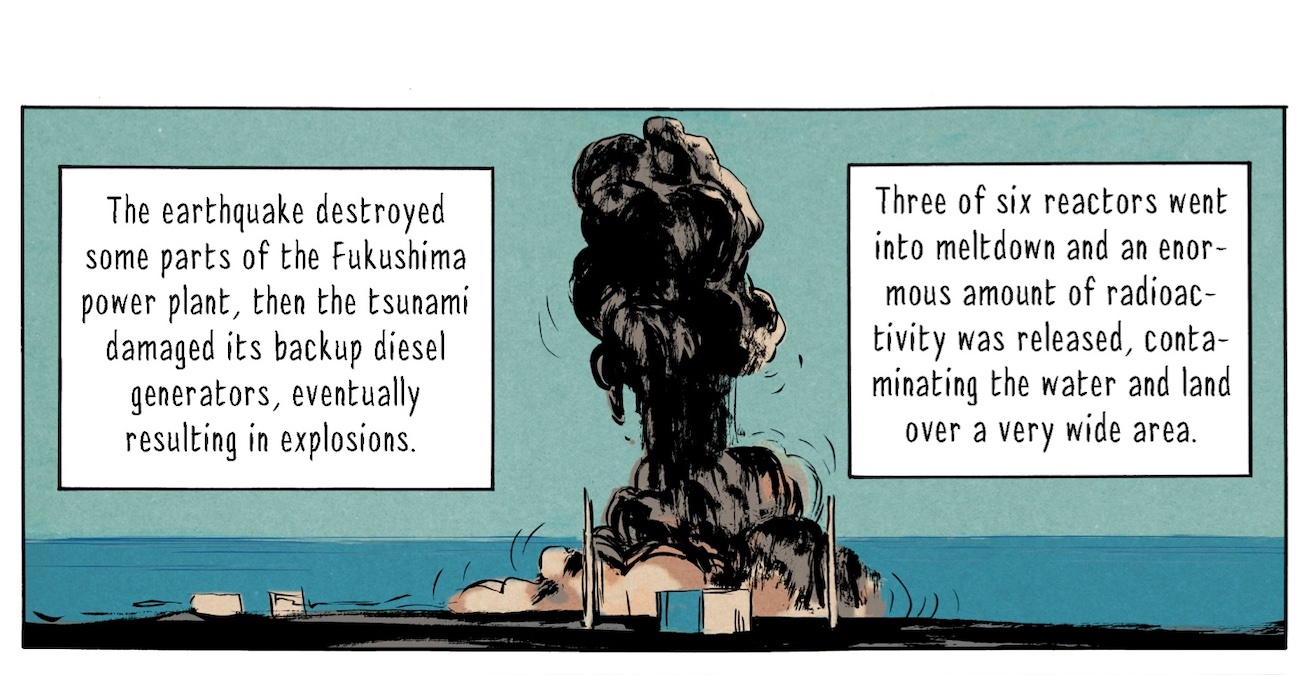
Suguru’s story reveals bullying, ostracization and government whitewash
Isolated and alone — Beyond Nuclear International

A teenager’s account of the Fukushima ordeal https://wordpress.com/read/feeds/72759838/posts/3219596582By Linda Pentz Gunter
Ten years after the March 2011 Fukushima nuclear disaster, how has the Japanese government responded and what is it like for the people affected, still struggling to return their lives to some semblance of normality? Here is how things look:
- Manuals are being distributed in schools explaining that radioactivity exists in nature and is therefore not something to be afraid of.
- The government is considering getting rid of radiation monitoring posts as these send the wrong message at a time of “reconstruction”.
- The Oversight Committee for Fukushima Prefecture Health Management Survey is discussing the possibility of stopping thyroid inspections at schools because they stress children out and overburden teachers and staff.
Depression and suicide rates among young people from Fukushima are likely to be triggered by being called “germs” and by being seen as “contaminated”.
- Those who speak out about radiation are more stigmatized today than they were 10 years ago.
- Those who “voluntarily” evacuated, recognizing that the so-called protection standards were not adequate for their region, are often ostracized from their new communities. They are seen as selfish for abandoning their homeland, friends and families “just to save themselves” and are bullied as parasites living on compensation funds, even though the “auto-evacuees” as they are known, received none.
- Those forced to evacuate are also bullied if they do not now return, accused of not trusting the government and its assertions that it is safe to do so.
- The taboo against speaking out for proper radiation protection and for compensation has grown worse as the rescheduled Olympics loom for this summer and Japan is determined to prove to the world it has fixed the radiation problem and beaten Covid-19.
- On March 1, 2021, it took three judges all of 30 seconds to dismiss a case brought by 160 parents and children who lived in Fukushima prefecture at the time of the nuclear accident, and known as the Children’s Trial Against Radiation Exposure. The class action suit sought 100,000 yen per person in damages from the government and the prefecture, due to the psychological stress brought on by the lack of measures to avoid radiation exposure after the accident.
These are some of the realities uncovered by France-based Japanese activist, Kurumi Sugita, as she interviewed those affected and began to compile a graphic short story about her findings, entitled Fukushima 3.11 and illustrated by French artist, Damien Vidal. The booklet is produced by the French NGO, Nos Voisins Lontains 3.11 (Our Distant Neighbors 3.11).
Fukushima 3.11, a long-form cartoon strip, is told in the first person by the youngest of Sugita’s interview subjects, Fukushima evacuee, Suguru Yokota, who was 13 at the time of the nuclear disaster.
Suguru was also one of the plaintiffs in the Children’s Trial, and noted after the devastating dismissal, just days before the Fukushima disaster’s 10th anniversary, that “we cannot give up” and that “the court hasn’t issued a legitimate verdict.”
In 2012, Sugita had traveled to Japan with a research project she helped create, financed by the French National Centre for Scientific Research where she worked, to set up an investigation into Japan’s nuclear victims. A list of 70 interview candidates was put together.
“I met Suguru in 2013 in Sapporo where he was living alone after he moved there from Fukushima,” said Sugita. “I also interviewed his mother and they were interviewed once a year over six years.”
A schoolboy at the time of the accident, the book follows Suguru’s account of his experiences. He encounters the refusal by his uncle to believe the dangers in the early days of the accident, “a typical denial case,” says Sugita, and he is ostracized at school where he is the only pupil to wear a mask.
Suguru’s only respite comes when his mother, who is equally alert to the radiation risks, sends him on a “radiation vacation” to Hokkaido, the first time he encounters peers who share his concerns.
Back at school and feeling isolated and alone, Suguru studies at home instead, eventually leaving the region for a different high school and then college.
The book weaves in essential information about radiation risks, and the clampdowns by the Japanese government, which withdrew support for auto-evacuees claiming, as Suguru relates it, that “these families are not victims. They are responsible for their fate.”
The book was first published in the magazine, TOPO, whose audience is predominantly teenagers and which reports on topics of current interest.
“It appealed to us to address an audience interested in world events, but not exclusively the nuclear issue,” said illustrator Vidal. “We thought our comic strip could be read by all those — and not necessarily just teenagers — who want to understand what the consequences of the nuclear accident were, and how it affected the inhabitants of Fukushima Prefecture.”
The book vividly brings home the psychological and emotional pain suffered by those who chose to recognize the true dangers posed by the Fukushima disaster, as well as the financial hardships and fracturing of families. And it exposes the depths of deliberate denial by authorities, more interested in heightened normalization of radiation exposure in the name of commerce and reputation.
Even as early as October 2011, an announcement is made that “rice produced in Fukushima Prefecture will supply school canteens again.” We see Suguru and his mother watching this news on their television, then the name-calling Suguru faces in school for bringing his own lunch. He is shown in the strip being called a “hikokumin”, which, explains Suguru, “is a really insulting word, used during the Second World War. It refers to people who are not worthy of being Japanese citizens.”
But that stigma has only become worse with time, Sugita says.
These days people are name-called “hoshano”. “Hoshano”(放射能) means radioactivity, but with a different Chinese character(放射脳) it means “radioactive brain – or brain contaminated by the fear of radioactivity”, she explains. And that is the slur in common circulation now.
Nevertheless, the book ends on a hopeful note. “Today,” concludes Suguru on the closing page, “I know I’m not alone. I hope other voices will be heard in Japan and around the world.”
It’s easy to say “never again.” But in order to ensure it, we must all continue to raise our voices, joining Suguru’s and others yearning to be heard.Read the English language version of Fukushima 3.11 on line for free. A version is also available in French. Hard copies (in French only), may be ordered from Nos Voisins Lontains 3.11 for 8€ plus shipping costs.
Fukushima Daiichi 2011-2021 — Beyond Nuclear International

Greenpeace report reveals deception and abuse
Fukushima Daiichi 2011-2021 — Beyond Nuclear International
The decontamination myth and a decade of human rights violations
The following is the Executive Summary from the new Greenpeace report. Download the full report.
As a result of a catastrophic triple reactor meltdown at the Fukushima Daiichi nuclear plant on 11 March 2011, several tens of thousands of square kilometres in Fukushima Prefecture and wider Japan were contaminated with significant amounts of radioactive caesium and other radionuclides. The first Greenpeace radiation expert team arrived in Fukushima on 26 March 2011, and Greenpeace experts have since conducted 32 investigations into the radiological consequences of the disaster, the most recent in November 2020.
This report, the latest in a series, chronicles some of our principal findings over recent years, and shows how the government of Japan, largely under prime minister Shinzo Abe, has attempted to deceive the Japanese people by misrepresenting the effectiveness of the decontamination programme as well as the overall radiological risks in Fukushima Prefecture. As the latest Greenpeace surveys demonstrate, the contamination remains and is widespread, and is still a very real threat to long term human health and the environment.
The contaminated areas comprise rice fields and other farmland, as well as a large amount of forest. Many people who lived in these areas were employed as farmers or in forestry. Residents gathered wood, mushrooms, wild fruits and vegetables from the mountain forests, and children were free to play outdoors in the woodlands and streams. Since the disaster, tens of thousands of people have been displaced from their ancestral lands. The harm extends far beyond the immediate threat to health – as well as destroying livelihoods, it has destroyed an entire way of life.
Because of the government’s actions, many thousands of evacuees have been forced to make an impossible choice: to return to their radioactively contaminated homes or to abandon their homes and land and seek to establish a new life elsewhere without adequate compensation. This amounts to economic coercion and may force individuals and families to return against their will due to a lack of financial resources and viable alternatives. Given that these people lost their livelihoods, communities, and property as a result of a nuclear disaster they had no part in creating, this is grossly unjust.
Key findings………..https://wordpress.com/read/feeds/72759838/posts/3219595498
War Mongering for Artificial Intelligence


The testimony is generously spiked with the China threat thesis
the note of warning in not being too morally shackled becomes a screech.
War Mongering for Artificial Intelligence, https://www.counterpunch.org/2021/03/02/war-mongering-for-artificial-intelligence/ BY BINOY KAMPMARK-2 March 21,
The ghost of Edward Teller must have been doing the rounds between members of the National Commission on Artificial Intelligence. The father of the hydrogen bomb was never one too bothered by the ethical niggles that came with inventing murderous technology. It was not, for instance, “the scientist’s job to determine whether a hydrogen bomb should be constructed, whether it should be used, or how it should be used.” Responsibility, however exercised, rested with the American people and their elected officials.
The application of AI in military systems has plagued the ethicist but excited certain leaders and inventors. Russian President Vladimir Putin has grandiloquently asserted that “it would be impossible to secure the future of our civilization” without a mastery of artificial intelligence, genetics, unmanned weapons systems and hypersonic weapons.
Campaigners against the use of autonomous weapons systems in war have been growing in number. The UN Secretary-General António Guterres is one of them. “Autonomous machines with the power and discretion to select targets and take lives without human involvement,” he wrote on Twitter in March 2019, “are politically unacceptable, morally repugnant and should be prohibited by international law.” The International Committee for Robot Arms Control, the Campaign to Stop Killer Robots and Human Rights Watch are also dedicated to banning lethal autonomous weapons systems. Weapons analysts such as Zachary Kallenborn see that absolute position as untenable, preferring a more modest ban on “the highest-risk weapons: drone swarms and autonomous chemical, biological, radiological, and nuclear weapons”.
The critics of such weapons systems were far away in the Commission’s draft report for Congress. The document has more than a touch of the mad scientist in the bloody service of a master. This stood to reason, given its chairman was Eric Schmidt, technical advisor to Alphabet Inc., parent company of Google, which he was formerly CEO of. With Schmidt holding the reins, we would be guaranteed a show shorn of moral restraint. “The AI promise – that a machine can perceive, decide, and act more quickly, in a more complex environment, with more accuracy than a human – represents a competitive advantage in any field. It will be employed for military ends, by governments and non-state groups.”
In his testimony before the Senate Armed Services Committee on February 23, Schmidt was all about “fundamentals” in keeping the US ascendant. Continue reading
Nuclear workers plagued by leukaemia, cancers and other illnesses
Some workers developed cancer, leukemia and other illnesses. The same held true for workers at other nuclear facilities across the nation.
The number of potentially eligible workers across the nation is uncertain. Likewise, the number of employees potentially affected at West Valley could be in the thousands when accounting for temporary workers.
“This was particularly troubling if the same workers were hired repeatedly as temporaries and received high doses each time,”
In addition, the exposure of growing numbers of individuals increased the possibility of genetic consequences for the entire population.”
 Cancer plagues West Valley nuke workers https://www.investigativepost.org/2021/03/01/cancer-plagues-west-valley-nuke-workers/
“What we were doing was insane. We were dealing with so much radiation,” he told Investigative Post from his home in New Hampshire.
“I’ve got absolutely no joints left in my knees — my knees are gone, my ankles are gone and my hips are gone,” he said.
“I wonder if it’s from working in that bathtub full of radiation.”
Pyles was one of about 200 full-time employees who operated the former Nuclear Fuel Services reprocessing facility five decades ago in the hamlet of West Valley, where the company partnered with the federal government to recycle used radioactive fuel. Other workers were hired to contain and dispose of the dangerous waste the operation left behind.
Some workers developed cancer, leukemia and other illnesses. The same held true for workers at other nuclear facilities across the nation. As a result, Congress established the Energy Employees Occupational Illness and Compensation Program in 2000.
An Investigative Post review of the program found the government has paid $20.3 million over the last two decades in cases involving at least 59 people who worked at the West Valley site.
In all, individuals have submitted claims involving 280 employees who worked at the bygone reprocessing facility or during the ongoing $3.1 billion taxpayer-funded cleanup. An undetermined number of claims have been denied; the rest are being adjudicated.
Pyles said he was unaware of the program. He isn’t alone.
The Department of Labor’s Office of the Ombudsman has repeatedly criticized outreach efforts in its annual oversight reports. Most of it has been in the form of events held near former sites. Given the passage of time and people’s movement, reaching more eligible workers is a challenge.
The workforce at West Valley involved more than full-timers. About 1,000 temporary laborers were hired by the company in any given year, according to government and media reports from the time.
The use of temporary workers was a common labor practice at the time, but few operations needed to “raise quite so large an army” as Nuclear Fuel Services, according to a Science Magazine report from the era.
The industry had a nickname for them: “sponges.”
They were hired to “absorb radiation to do simple tasks,” according to Dr. Marvin Resnikoff, a radiological waste consultant who co-authored a study of West Valley.
While working at a site like West Valley does not guarantee later illnesses or genetic complications for offspring, each exposure to radiation increases the likelihood of cancer, Resnikoff said.
“It’s what I guess I would call a meat grinder,” he said.
Exposure to radiation
1 This month
17 October, Free Public Talk on Nuclear Issues in South Australia
David Noonan will speak on public interest concerns over the new Roxby Downs Indenture Act 2026 on BHP copper-uranium mining and ore processing in SA, and on how AUKUS may face SA with a High-Level nuclear waste agenda.
Dr Jim Green will discuss international developments in the field of nuclear power including ‘small modular reactors’ and Generation 4 ‘advanced’ nuclear reactor concepts.


Help Aunty Sue Protect Her Land and Sacred Sites From Destructive Rocket Testing.
.

Australians deserve the truth
about
AUKUS – https://aukuspublicinquiry.com/

PETITION – To: Prime Minister Anthony Albanese and the Australian Labor Government

of the week – Australians for War Powers Reform (AWPR)
To see nuclear-related stories in greater depth and intensity

