French nuclear attack submarine visted Australia, then on to patrol the South China Sea
|
French Nuclear Attack Boat Patrolled South China Sea https://news.usni.org/2021/02/10/french-nuclear-attack-boat-patrolled-south-china-sea By: Xavier Vavasseur, February 10, 2021 A French Navy Rubis-class nuclear-powered submarine (SSN) patrolled the South China Sea, the French minister of armed forces announced in a series of tweets.
French armed forces minister Florence Parly called the patrol “a striking proof of the capacity of our French Navy to deploy far and for a long time in connection with our Australian, American and Japanese strategic partners.” On Monday night, Parly shed some light on the current deployment of Rubis-class SSN FS Emeraude (S604) to the Pacific region. In a series of messages on Twitter, she said: “Since September, a nuclear attack submarine (SSN Émeraude) and a support vessel (BSAM Seine) have sailed up to 15,000 km from the coasts of mainland France in the Indian Ocean and the Pacific. This extraordinary patrol has just completed a passage in the South China Sea. A striking proof of the capacity of our French Navy to deploy far and for a long time in connection with our Australian, American and Japanese strategic partners. Why such a mission? To enrich our knowledge of this area and to affirm that international law is the only rule that is valid, whatever the sea in which we sail. Nation of the Indo-Pacific (~ 2 million inhabitants), France has the 2nd largest exclusive economic zone in the world (11 million km2 of which 9 are in the Indo-Pacific). We intend to protect our sovereignty and our interests.” Naval News first reported about Emeraude’s mission to the Pacific when it stopped over in Australia. The submarine then visited the U.S. naval base in Guam and participated in an anti-submarine warfare (ASW) exercise with the U.S. Navy and JMSDF. Following an exercise with the Indonesian Navy Emeraude will likely be joining the French carrier strike group which is set to depart this week for the Indian Ocean and Persian Gulf region. |
|
American media and politicians, including Biden, in the grip of the war profiteers
Who Are the Ultimate War Profiteers? A U.S. Air Force Veteran Removes the Veil, Covert Action Magazine By Christian Sorensen, February 10, 2021 “………….The most well-known industry pressure comes in the form of lobbying both political parties and funding their congressional campaigns (with extra focus on members of pertinent committees, such as Armed Services, Intelligence, Appropriations, and Foreign Relations)
This produces tangible results. As Steven Semler of the non-corporate Security Policy Reform Institute calculated, Democratic votes on the National Defense Authorization Act
correlate strongly with the campaign cash members accepted from the war industry. On average, House Democrats who voted for the NDAA accepted four times the amount of war industry cash as those who voted against it. In the Senate, Democrats who cast supporting votes took in six times as much industry cash.
Warmonger-In-Chief
 The Executive Branch is not exempt. Rapacious financiers—including hedge fund chiefs and venture capitalists—top the list of donors to the Biden Administration, though dark money groups prevent a full understanding of the overall campaign finance picture. Between July and September at least 67 billionaires and their spouses made contributions of more than $100,000 to committees supporting Joe Biden and the Democratic Party, according to records filed with the Federal Election Commission.
Biden’s campaign received over $9 million from Donald Sussman, CEO of Palmora Partners, a multi-billion dollar hedge fund, which has more than 260,000 shares in Raytheon, a preeminent weapons manufacturer and supplier of weapons to Saudi Arabia, which recently won a $100 million contract for Afghan Air Force training.
Another of Biden’s top donors, Jim Simons, who gave over $7 million, founded Renaissance Capital, which owns 1.2 million shares in Raytheon worth over $75 million, and 130,000 shares in Lockheed Martin worth $50 million.
Big Tech is positioned prominently among donors to the Biden inauguration celebration. Biden has been clear on the campaign trail that he does not intend to cut the military budget, even going so far as stating, “I’ve met with a number of my advisors and some have suggested in certain areas the budget is going to have to be increased.” Biden’s advisors are part and parcel of the military-industrial-congressional complex. Cozying up to wealthy donors, Biden infamously assured them that “nothing would fundamentally change” in a Biden presidency. https://covertactionmagazine.com/2021/02/10/who-are-the-ultimate-war-profiteers-a-u-s-air-force-veteran-removes-the-veil/
Corporate Media Kool-aid
Corporate media prevent the public from understanding the nature of the problem. A handful of business interests owns media outlets in the United States. Profit drives corporate media. U.S. corporate media (e.g. CNN, MSNBC, FoxNews) share the same business model: air what attracts the highest ratings in order to get more advertising revenue.
Corporate media air info-tainment, designed not to inform or foster critical thinking. Informing the public is not a priority. Maintaining the existing economic order is.
To the extent that corporate media air any information at all, the information reflects the opinions of the ruling class and the dogma of Corporate America.
Politically conditioning the U.S. public, corporate media never blame the military-industrial-congressional complex or capitalism for any of the problems in the world. Aiming for high ratings and lucrative advertising revenue, corporate media self-censor and taper the spectrum of acceptable foreign policy debate. War corporations purchase advertisements on corporate “news” shows to further confine the debate. Corporate pundits and newscasters do not speak out against advertisers.
Corporate media hire career militants (e.g. former CIA Director John Brennan, MSNBC; former CIA Deputy Director Mike Morrell, CBS News; retired General Jack Keane, FoxNews) who further confine the debate. Retired generals and admirals regularly contribute to all forms of corporate media, often without disclosing existing ties to war corporations or financial investments in war.
The Smith-Mundt Modernization Act of 2012 allowed government to increase its propaganda in corporate media. Drawing funding from the wealthy donor class and large corporate interests, National Public Radio is similarly confined. NPR’s new CEO as of September 2019 is John Lansing, who recently led U.S. propaganda at the U.S. Agency for Global Media.
Other industry pressure comes in the form of funding and running pressure groups [e.g. National Defense Industrial Association (NDIA), Aerospace Industries Association (AIA), Association of the United States Army (AUSA)] to dominate the Pentagon, administer arms fairs, and push favorable policies; funding think tanks to keep the narrative neoliberal and pro-war; recruiting retired generals and admirals (e.g. Dunford at Lockheed Martin, Mattis at General Dynamics, Winnefeld at Raytheon) to leverage their knowledge for financial gain; and flooding the Pentagon’s civilian offices with corporate executives (e.g., Esper and then Austin, Secretary of Defense; Lord, Undersecretary for Acquisition and Sustainment; McCarthy, Secretary of the Army). …………
Christian Sorensen is an Air Force veteran and author of the new book entitled Understanding the War Industry. See CAM’s review of the book: Wars R Us: A Review of Christian Sorensen’s New Book. https://covertactionmagazine.com/2021/02/10/who-are-the-ultimate-war-profiteers-a-u-s-air-force-veteran-removes-the-veil/
Catastrophic’ Nuclear Power Accidents ‘Highly Likely’ If US Reactors Are Extended For 100 Years.
Professor Karl Grossman is an award-wining investigative journalist. He authored Cover Up: What You Are Not Supposed to Know About Nuclear Power and Power Crazy and is the writer and presenter of television programmes on nuclear power. Grossman tells Sputnik that “nuclear power plants in the US were never seen as operating beyond 40 years” and that plans to extend their operating licences for more than twice that amount of time is incredibly dangerous. Every day a nuclear power plant operates the intense radiation embrittles (i.e. weakens) the metal in the reactor. “If the reactor is embrittled and cracks”, Grossman says, quoting a nuclear engineer-turned whistleblower, “it’s game over”.
Sputnik: You recently co-authored an article with journalist Harvey Wasserman calling on President Joe Biden to “inspect” the US’ “embrittled reactors”. Explain what exactly an embrittled reactor is.
Professor Karl Grossman: As Arnold “Arnie” Gundersen, a nuclear engineer with more than 44 years of experience in the nuclear industry, who became a whistleblower and is now chief engineer at Fairewinds Associates, described embrittlement in a nuclear power plant to my co-author of the article, Harvey Wasserman:
“When exposed to radiation, metal becomes embrittled and eventually can crack like glass. The longer the radiation exposure, the worse the embrittlement becomes. A nuclear reactor is just like a pressure cooker and is a pot designed to hold the radioactive contents of the atomic chain reaction in the nuclear core”, continued Gundersen, whose experience includes being a licensed Critical Facility Reactor Operator. “And metals in reactors are exposed to radiation every day a plant operates”……….
Sputnik: Why do you think that embrittled reactors are “at the top of the list of nuclear power concerns”?
Professor Karl Grossman: There are numerous major concerns regarding nuclear power plants.
But embrittlement is on the top of the list because nuclear power plants in the US were never seen as operating beyond 40 years—because of embrittlement.
That’s why the operating licenses originally issued by the US government for the plants were limited to 40 years. After 40 years, they were considered to be unsafe to run—because of embrittlement…….
virtually all operating atomic reactors are producing electricity at much higher base costs than solar and wind.
So the Nuclear Regulatory Commission is seeking to try to bail out the nuclear industry—to keep it going—by allowing nuclear power plants to operate for 100 years.
The US Nuclear Regulatory Commission has been staunchly pro-nuclear through the years, captured by the nuclear industry, indeed nicknamed the Nuclear Rubberstamp Commission for doing whatever the US nuclear industry wants it to do…….
, in extending the operating licenses for nuclear power plants for decades, the US Nuclear Regulatory Commission is also allowing them to be “uprated”—to run hotter and harder to generate more electricity and to further increase the likelihood of a nuclear power plant disaster.
The bottom line: a nuclear power plant catastrophe is being invited……..
Sputnik: What exactly is it that Joe Biden or his administration can do to address these issues?
Professor Karl Grossman: Biden must step in and order the inspection for embrittlement of US nuclear power plants. The old, decrepit nuclear power plant fleet in the US—with embrittled metal components—must be inspected. And with embrittlement and other likely age-induced problems, they must be shut down.
Biden must act to prevent what would constitute nuclear suicide in the United States.
Last month, Biden announced a climate change agenda transitioning the US towards renewable energy. But taking action against fossil fuel is not enough. Nuclear power plants are also engines of global warming. The claim of the nuclear industry that atomic energy is “carbon free” is a lie. The “nuclear fuel chain” which includes uranium mining, milling and fuel enrichment is carbon intensive, and nuclear power plants themselves emit Carbon-14, a radioactive form of carbon.
Sputnik: Can these embrittled reactors simply be replaced in order to safely extend the life of the power plant?
Professor Karl Grossman: It makes no sense to replace these deadly machines when here today [we have] safe, clean, green, renewable energy—led by solar and wind.
Nuclear power plants make no sense economically. Consider the only two nuclear power plants now under construction in the US, Vogtle 3 and 4 costing $30 billion for the two and the price still rising, and solar and wind being able to producing electricity at a lower cost—and be put into operation far more rapidly. And there are additional safe, green, cost-effective, clean, renewable energy sources—energy, most importantly, that we can live with.
Sputnik: Is there a realistic alternative to extending the lives of nuclear power plants?
Professor Karl Grossman: The realistic alternative is to shut down all 94 nuclear power plants now in the US and move ahead fully implementing the use of safe, green, cost-effective clean, renewable energy technologies. And this should be emulated in countries all over the world with nuclear power plants.
Three decades ago the Union of Concerned Scientists published a book titled Renewables Are Ready. Now renewables are more than ready to power the world. https://sputniknews.com/analysis/202102101082010676-catastrophic-nuclear-power-accidents-highly-likely-if-us-reactors-are-extended-for-100-years/
Who Are the Ultimate War Profiteers?

Wall Street: the Ultimate War Profiteers
Wall Street plays the foundational role in the war industry by outright owning war corporations……
Big Finance sits at the top of the war industry by purchasing most shares of war corporations and by owning war corporations. Insatiable demand for profit places immense structural pressure on the Pentagon and Capitol Hill for sky-high U.S. military and intelligence budgets, broad deployment of troops overseas, and the opening up of governmental jobs to corporations. …………
Wars must be created and expanded, and military bases, through which to route goods and services, must be established and entrenched to satisfy investors. Notwithstanding, ending the wars first requires addressing the embedded profit motive, otherwise it is business as usual.
Who Are the Ultimate War Profiteers? A U.S. Air Force Veteran Removes the Veil, Covert Action Magazine By Christian Sorensen February 10, 2021
While war corporations, or so-called “defense contractors,” make billions in profits, Wall Street is the ultimate beneficiary of today’s nonstop wars. The prosaic nature of war profiteering—far from the work of a shadowy cabal—is precisely why the collusion is so destructive and should be outlawed.
The U.S. ruling class deploys the military for three main reasons: (1) to forcibly open up countries to foreign investment, (2) to ensure the free flow of natural resources from the global south into the hands of multinational corporations, and (3) because war is profitable. The third of these reasons, the profitability of war, is often lacking detail in analyses of U.S. imperialism: The financial industry, including investment banks and private equity firms, is an insatiable force seeking profit via military activity.
The war industry is composed of corporations that sell goods and services to the U.S. government and allied capitalist regimes around the world. Investment banks and asset management firms hold most shares of every major public war corporation.
The best-known financial firms holding the stock of war corporations include: Vanguard Group, BlackRock, State Street, JPMorgan Chase, Wells Fargo, and Wellington Management Continue reading
America’s only carbon capture plant shuts down indefinitely — RenewEconomy

Last carbon capture and storage (CCS) coal plant in the United States will shut down indefinitely from June after operators deemed it no longer economic. The post America’s only carbon capture plant shuts down indefinitely appeared first on RenewEconomy.
America’s only carbon capture plant shuts down indefinitely — RenewEconomy
AEMO to allow more wind and solar in South Australia grid, needs less gas — RenewEconomy

The amount of wind and solar allowed into the South Australia grid at any one time to be lifted significantly as new synchronous machines come on line. The post AEMO to allow more wind and solar in South Australia grid, needs less gas appeared first on RenewEconomy.
AEMO to allow more wind and solar in South Australia grid, needs less gas — RenewEconomy
AEMO names UK-based renewable energy and transition expert as new CEO — RenewEconomy

AEMO names a UK-based Australian and an expert in renewable and grid transformation as its new chief executive. The post AEMO names UK-based renewable energy and transition expert as new CEO appeared first on RenewEconomy.
AEMO names UK-based renewable energy and transition expert as new CEO — RenewEconomy
Another refinery closure shines spotlight on Angus Taylor’s refusal to embrace EVs — RenewEconomy

Another refinery closure sharpens focus on Australia’s reliance on oil imports and Angus Taylor’s unwillingness to accelerate EVs. The post Another refinery closure shines spotlight on Angus Taylor’s refusal to embrace EVs appeared first on RenewEconomy.
Another refinery closure shines spotlight on Angus Taylor’s refusal to embrace EVs — RenewEconomy
114,000 Needless Military Suicide Deaths Via Iraq and Afghanistan Wars — limitless life
OpEdNews Op Eds 2/8/2021 at 19:40:35 H2’ed 2/8/21 114,000 Needless Military Suicide Deaths Via Iraq and Afghanistan Wars By Frosty Wooldridge (Page 1 of 3 pages) (View How Many People Read This) 9 comments Become a Fan (5 fans) This past weekend, my wife Sandi and I watched a documentary of WWII in color. It covered Mussolini, and the Emperor of […]
114,000 Needless Military Suicide Deaths Via Iraq and Afghanistan Wars — limitless life
Solar could overtake coal as India’s main energy supply within ten years: IEA — RenewEconomy

A new report from the IEA shows that solar is likely to be the star of India’s future energy system, but plenty of tricky policy is needed. The post Solar could overtake coal as India’s main energy supply within ten years: IEA appeared first on RenewEconomy.
Solar could overtake coal as India’s main energy supply within ten years: IEA — RenewEconomy
February 10 Energy News — geoharvey

Science and Technology: ¶ “In The Fast Lane With Formula E” • Since the first race in Beijing in 2014, Formula E has been invigorating fans across the globe. Born in part from a desire to attract sponsors who are increasingly eco-conscious back to motorsport, the ABB FIA Formula E World Championship is a natural […]
February 10 Energy News — geoharvey
Legal aspects of KIMBA COMMUNITY OPPOSITION TO National Radioactive Waste Management Facility
 KIMBA COMMUNITY OPPOSITION TO National Radioactive Waste
 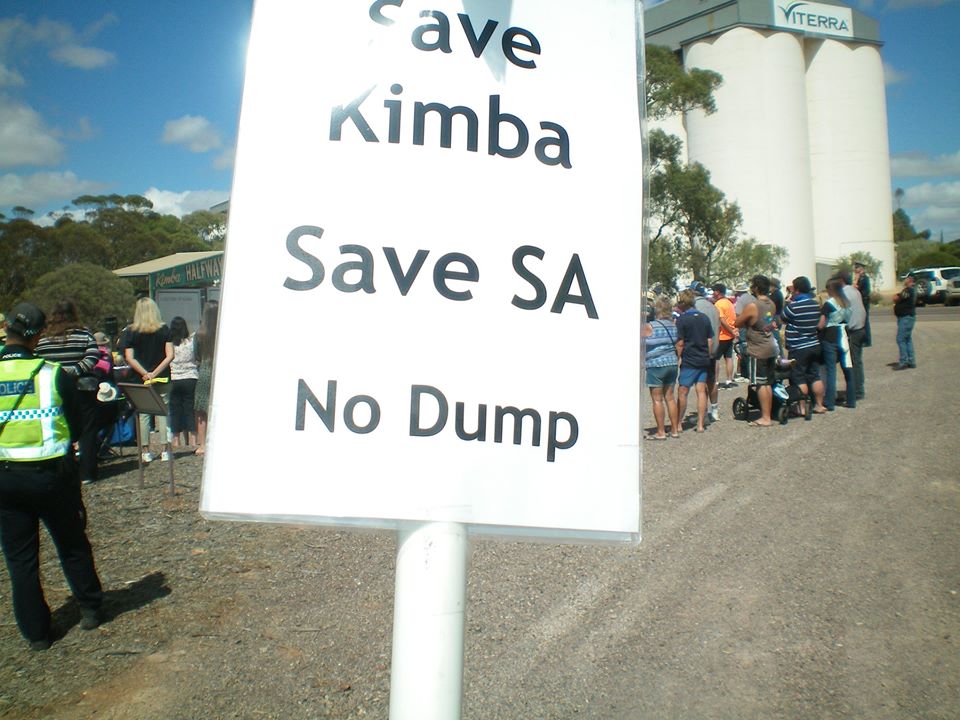 Management Facility
The decision by the High Court in the New Acland Coal case (1) was delivered only on Wednesday of last week but it is already creating a stir
In applying the rationale of that case to the Kimba situation the very marked difference is that its community members opposing the nuclear waste facility which is apparently made up of several groups including the Barngarla people suffered a much greater disadvantage than the objectors in the New Acland case as there was a real and actual bias at Kimba and not just an apprehension of bias
This view has been expressed by several lawyers including retired judges to whom I spoke and it should be a very strong and decisive outcome which will mean that the government’s proposals for Kimba will be totally aborted
The other aspect of any litigation as to the Kimba situation is that all the information given by the government will now become subject to detailed scrutiny which will show up the the disingenuous statements by Pitt and the public servants involved including ANSTO and even ARPANSA
The same will apply to all the documents including internal minutes and notes which were either not previously disclosed or else highly redacted as they will have to be produced fully without the availability of any claim of privilege
I imagine that besides Pitt and Canavan being personally embarrassed it will make the government look silly and sneaky in its actions
I understand that the Kimba opponents are already considering an initial application to the Court to have their own impartial scrutiny and assessment of the government’s proposals to be paid for by the government
No wonder that lawyers are already queuing up to take this case on for the objectors as it should be an easy one with prolonged notoriety and no doubt with ultimately substantial costs against the government
Eat your heart out Erin Brockovich!
(1). Oakey Coal Action Alliance Inc v. New Acland Coal Pty Ltd & Ors
High Court Case No. B34/2020 Judgment: 3 February 2021
No nukes in Asia…or anywhere — Beyond Nuclear International

The petition was initiated by24 countries (255 organizations) including
【Australia】Friends of the Earth Australia、Marrickville Peace Group、People for Nuclear Disarmament、Port Adelaide/Semaphore Amnesty International Australia Action Group、Remembering and Healing、Sydney Peace & Justice Coalition、Uranium Free NSW
Sign petition to demand all governments abandon nuclear power
No nukes in Asia…or anywhere — Beyond Nuclear International
Groups call for a nuclear power ban and no radioactive water dump at Fukushima
By No Nukes Asia Forum Japan • Citizens’Nuclear Information Center • Friends of the Earth Japan
On the 10th Anniversary of the Fukushima nuclear disaster, groups in Japan have initiated an international signature campaign against the discharge of contaminated water and calling for the discontinuation of nuclear power plants now! Please join this campaign by signing the petition.
The Japanese government is planning to release Fukushima’s radioactive contaminated water into the ocean. Japanese citizens, from Fukushima Prefecture and beyond, are strongly opposed to this plan.
The Fukushima Prefecture Fishermen’s Association, with the backing of the Fishermen’s Association from all over Japan, have submitted an opinion of opposition to the government. The Fukushima Prefecture Agricultural Cooperatives and Forestry Associations along with 43 local governments in Fukushima Prefecture also participated in this campaign, and 450,000 citizens from across Japan have signed a petition against the government plan.
The threat of the release of contaminated water has triggered much concern and opposition among citizenry overseas as well, including those from neighboring countries.Contaminated water from Japan’s Fukushima nuclear plant has already exceeded 1.24 million tons. We are deeply concerned about the adverse effects the water will have on the human body by way of consuming fish and shellfish, which are staples in the region’s diet.
We demand the Japanese government keep the contaminated water stored in the tanks until the water’s levels of radioactivity are significantly reduced. The government could also adopt mortar-induced radioactive waste solidification technology.
Meanwhile, in neighboring South Korea, the government has advocated for denuclearization with its energy plan on paper but has not ceased to build new nuclear power plants (NPPs). Serious safety breaches have been reported repeatedly, including (but not limited to) the recent tritium leak at Wolsong NPP in Gyeongju and the disclosure of an air gap in the containment building at Yeonggwang Hanbit NPP.
In Taiwan, the government is ostensibly advancing forward to become the first nuclear-free country in Asia under the slogan of “Zero nuclear power generation in 2025.” However, the Taiwanese government plans to hold a referendum on resuming the construction of the 4th NPP in August 2021.
The construction of NPPs continues in Turkey and India while other countries, including the Philippines, seek new opportunities to build NPPs.
Debates over safe storage and disposal of nuclear waste that will affect future generations for hundreds of thousands of years continue in Korea, Japan, Taiwan and Australia.
Ten years have passed since the Fukushima nuclear disaster yet attempts to maintain nuclear power linger on in Asia and other regions of the world. However, at a time the world is turning to renewable energy, we are becoming increasingly aware the time of nuclear power has expired.
We demand that:
·The Japanese government stop its plan to discharge Fukushima NPP’s contaminated water into the ocean;
·The Korean government disclose information on the actual state of radioactive leakage at Wolseong NPP;
·All governments abandon plans to build new NPPs and instead focus on expanding renewable energy;
·All governments discontinue the operation of hazardous NPPs and drop plans to extend their life spans; and
·Stop building nuclear waste facilities without explicit consent of residents.
The petition was initiated by24 countries (255 organizations)…………..https://beyondnuclearinternational.org/2021/02/08/no-nukes-in-asia/
America’s new $100Billion missiles are intended both for attack, and as a target.
Housed in permanent silos spread across America’s high plains, they are intended to draw fire to the region in the event of a nuclear war, forcing Russia to use up a lot of atomic ammunition on a sparsely populated area.
how little some nuclear weapons programs have to do with national defense.!
 Why is America getting a new $100 billion nuclear weapon?, https://thebulletin.org/2021/02/why-is-america-getting-a-new-100-billion-nuclear-weapon/?utm_source=Newsletter&utm_medium=Email&utm_campaign=MondayNewsletter022021&utm_content=NuclearRisk_NewWeapon_02082021 By Elisabeth Eaves, February 8, 2021 merica is building a new weapon of mass destruction, a nuclear missile the length of a bowling lane. It will be able to travel some 6,000 miles, carrying a warhead more than 20 times more powerful than the atomic bomb dropped on Hiroshima. It will be able to kill hundreds of thousands of people in a single shot.
The US Air Force plans to order more than 600 of them.
On September 8, the Air Force gave the defense company Northrop Grumman an initial contract of $13.3 billion to begin engineering and manufacturing the missile, but that will be just a fraction of the total bill. Based on a Pentagon report cited by the Arms Control Association Association and Bloomberg News, the government will spend roughly $100 billion to build the weapon, which will be ready to use around 2029.
To put that price tag in perspective, $100 billion could pay 1.24 million elementary school teacher salaries for a year, provide 2.84 million four-year university scholarships, or cover 3.3 million hospital stays for covid-19 patients. It’s enough to build a massive mechanical wall to protect New York City from sea level rise. It’s enough to get to Mars. Continue reading
The real value of the nuclear ban treaty
 The real value of the nuclear ban treaty https://thebulletin.org/2021/02/the-real-value-of-the-nuclear-ban-treaty/?utm_source=Newsletter&utm_medium=Email&utm_campaign=MondayNewsletter02082021&utm_content=NuclearRisk_ValueTPNW_02042021
By Carl Robichaud, Karim Kamel | February 4, 2021
Last month, 75 years after nuclear weapons were first used, a treaty came into force that bans them. The Treaty on the Prohibition of Nuclear Weapons (TPNW), also known as the ban treaty, is the culmination of a decade of work by civil society leaders and diplomats who, frustrated by stagnation in traditional venues, focused the lens of international humanitarian law on nuclear weapons. This approach, dismissed at first, resonated with many states that understood nuclear weapons to be inherently indiscriminatory and inhumane.
The new treaty outlaws the use or threat of use of nuclear weapons, prohibits their development and possession, bans their transfer or receipt, and prohibits stationing, deploying, or assisting with nuclear arms.
But does any of this matter? The treaty lacks verification and enforcement mechanisms. No state with nuclear weapons will join anytime soon. The nine nuclear-armed states and their allies boycotted the negotiations and pressured other states to abandon the treaty. Each has nuclear modernization programs that will stretch for decades.
Skeptics of the treaty claim it is worse than irrelevant; it will accentuate tensions, undermine collective action on urgent proliferation challenges, diminish alliance cohesion or strategic stability, and potentially establish an alternative to the Treaty on the Nonproliferation of Nuclear Weapons (NPT). We should not, they argue, take any steps that might undermine this bedrock agreement that for 50 years has helped limit the spread of nuclear arms.
These objections are overstated. Collective action against proliferation has been, and will remain, a challenge with or without the ban treaty. Moreover, the treaty was carefully drafted not to conflict with existing nonproliferation obligations, including the NPT.
These objections are overstated. Collective action against proliferation has been, and will remain, a challenge with or without the ban treaty. Moreover, the treaty was carefully drafted not to conflict with existing nonproliferation obligations, including the NPT.
But the broader point holds: The treaty does little to reduce short-term nuclear risks. That is not its point. What the treaty does is establish, in clear and certain terms, that nuclear weapons are unacceptable. Over 122 countries supported the adoption of the treaty, 51 states have ratified it, and these numbers will continue to grow. Even within states that oppose the treaty, many citizens agree with its premise. Various polls suggest more than half of Americans believe the United States should work to eliminate all nuclear weapons, and support for this view is even higher in Japan and among NATO countries. In the words of former US Defense Secretary William Perry, the ban treaty “rightly establishes abolition as the standard that all nations should be actively working to achieve, rather than an indeterminate future goal.”
The status quo, with its 16,000 nuclear weapons, is far from stable. Everyone alive today lives in the shadow of a potential nuclear war. Climate modeling suggests that even a limited nuclear war, such as one between India and Pakistan, could result in a billion deaths as the ash from burning cities “could blot out the sun, starving much of the human race.”
The treaty represents a refusal to live forever under this nuclear shadow. It reflects a belief that the status quo represents a grave inequity, in which nuclear costs are imposed upon all, while the benefits of nuclear arms accrue to the few states privileged to possess them. In a world of inequities, this is especially pernicious because it is hidden from view. In its preamble, the ban treaty calls out the disproportionate effects on marginalized communities, including indigenous peoples, societies harmed by testing, and women.
At least from a humanitarian point of view, the question has been settled: Nuclear weapons are unacceptable. That alone will not make them disappear. But, in the meantime, the ban treaty need not distract from bilateral arms-control and threat-reduction efforts. The recent agreement to extend New START should be commended, and we must establish new mechanisms to build confidence and reduce tensions. The existence of a treaty banning nuclear weapons does not contradict these efforts; on the contrary, it should help build support for more sensible nuclear postures and for prohibitions on nuclear explosive testing and the production of weapons-usable materials.
The nuclear age is in its eighth decade, a mere dot on the timeline of human history. In this brief span there have been dozens of known close calls and near misses. So long as these weapons exist, ready to use at a moment’s notice, we court disaster. The nuclear powers find themselves, as Khrushchev wrote to Kennedy during the Cuban missile crisis, in a tightening knot. Untying this knot will require a multi-generation project that brings together verification science with extraordinary foresight, diplomatic skill, and political leadership. But first it requires a change in our collective beliefs about nuclear weapons. This is the contribution of the ban treaty, and it should not be underestimated.
1 This month
17 October, Free Public Talk on Nuclear Issues in South Australia
David Noonan will speak on public interest concerns over the new Roxby Downs Indenture Act 2026 on BHP copper-uranium mining and ore processing in SA, and on how AUKUS may face SA with a High-Level nuclear waste agenda.
Dr Jim Green will discuss international developments in the field of nuclear power including ‘small modular reactors’ and Generation 4 ‘advanced’ nuclear reactor concepts.


Help Aunty Sue Protect Her Land and Sacred Sites From Destructive Rocket Testing.
.

Australians deserve the truth
about
AUKUS – https://aukuspublicinquiry.com/

PETITION – To: Prime Minister Anthony Albanese and the Australian Labor Government

of the week – Australians for War Powers Reform (AWPR)
To see nuclear-related stories in greater depth and intensity

