Butler dumped as Labor’s climate opposition collapses at a truly pivotal moment

Labor to dump Mark Butler as its opposition to Morrison’s inadequate climate and energy policies evaporates. Renew Economy, 28 Jan 21,
It’s odd how climate news tend to rhyme and counter itself across the world in perfect unison. Joe Biden has just announced a huge raft of major new climate policies, after coming to power off a campaign that focused heavily on climate. It’s a big moment, and it’s being received well by both the American energy industries and by the progressive activists that helped shape Biden’s policies.
Back in Australia, the news that opposition climate spokesman Mark Butler is losing the climate change portfolio to a member of the party’s right wing was leaked to media. What a contrast. As the federal government sinks even deeper into a climate and energy funk, the opposition marks this major global climate moment by sacking one of their best.
The total absence of any countering force to pressure a government that’s become stunningly and openly destructive on climate is a dark moment for Australia, and it’s worth exploring how we got here.
Missed opportunities are the norm
If you trace back through every big climate and energy moment of the past two years (and before that, too), the Labor party has failed catastrophically to summon any might or certainty or even bare sufficiency in their opposition to the federal government’s fossil expansion fantasies.
The climate-intensified bushfires were mostly ignored and there has been near zero debate about where COVID19 recovery cash flows.
In December last year, a crucial moment for Australia’s climate came and went. In the lead up to the moment when Australia’s government had to submit an ‘update’ to its 2030 Paris Agreement targets (known as ‘Nationally Determined Contributions, or NDCs), the Prime Minister and ‘Energy and Emissions Reductions Minister’ Angus Taylor were badly exposed.
Scott Morrison claimed to have been invited to an event held by the United Kingdom government – another climate summit talk-fest type thing. Turns out that Australia never made it onto the list; purely because Morrison’s government had steadfastly refused to upgrade their 2030 NDC from something weak, old and insufficient to something newer and better aligned with the country’s potential for climate action and level of ambition. Morrison was furious: he’d saved up a big announcement to promise not to cheat on those already-weak 2030 targets (a shift made possible only because renewable energy has outperformed expectations, and because a deadly disease dented emissions) – where was his congratulations?
2030 is what counts. The world’s performance this decade will largely decide whether net zero by 2050 is a pipe-dream or possible. And in the last months of 2020, Australia federal opposition, the Labor Party, had a brilliant opportunity to pressure the government into upgrading their 2030 climate ambitions to something more aligned with what’s required to keep the planet to 1.5C of warming (around 66% is a good indicator; a new ‘Climate Targets Panel’ announced today, suggests somewhere above 50% for 2C and 75% for 1.5C).
Of course, that didn’t happen. The absolute peak of opposition was leader Anthony Albanese labelling the rescinding of the Kyoto trick ‘pathetic‘. The reason why? Labor has itself not established what a 2030 target should be; they haven’t even set an interim pre-2050 target for emissions reductions.
There’s a popular conception that Labor’s 45% 2030 target, which it took to the 2019 federal election, was a major part in their loss. That’s generally justified on an ‘election review‘ that blamed opposition to the Adani coal mine for their loss; along with too-ambitious climate policies. “Labor should recognise coal mining will be an Australian industry into the foreseeable future and develop regional jobs plans based on the competitive strengths of different regions” said the review. It was co-chaired by Dr Craig Emerson, who recently wrote in the AFR that ending fossil fuel extraction is akin to an act of white supremacy. Albanese now reminds voters that Australia will be digging up and selling coal in 2050; the year the world ought to be mostly free from all emissions.
Of course, it only ‘cost’ Labor in 2019 due to a mixture of half-heartedness from Labor right leader Bill Shorten, severe misreporting of climate policy from media outlets (“What about the costings!!”) and the government’s relentless and ludicrous scare campaign around zero emissions transport. The alternative – of doing climate advocacy in an effective way, immune to those immature attacks – wasn’t even considered in that review.
The internal fight was won by the fossil industry
Mark Butler was one of the remaining forces for stronger climate action within the Australian Labor party is Mark Butler. He’d come into conflict with the party’s most aggressive advocate of higher emissions, Joel Fitzgibbon, who represents a coal-mining area in New South Wales. Whatever slight momentum existed within the party for climate ambition seems now to have been sidelined.
The alternative vision offered up by Labor – modelled on Ross Garnaut’s ‘superpower’, in which Australia becomes enriched through the export of zero carbon energy – is grand but still vague. There is little detail on the short term benefits that strong climate action would bring. There’s no commonly stated policy about a just transition for fossil workers, as that would entail admitting the likelihood that the industry’s on the way down – unthinkable for an unashamedly pro-fossil-mining party.
Butler is tipped to be replaced by Chris Bowen, a member of Labor’s right faction. Bowen’s Twitter history features no mention of wind, solar, coal, oil or gas, and the majority of climate mentions are criticisms of Liberal backbencher Craig Kelly. Bowen reassured voters prior to the 2019 election that he would not ban the Adani coal mine, but has also signalled potential enthusiasm about some parts of the US Democrat’s ‘Green new deal’ policy package. Bowen also led a push to make climate change a health priority, just prior to the onset of Australia’s Black Summer. bushfire season. It may not be all bad, but whether it translates into sufficient ambition seems highly questionable.
Albanese’s reshuffle was welcomed by Joel Fitzgibbon. “Fitzgibbon, who stood down from the resources portfolio after his clashes with Mr Butler at the end of last year, welcomed the news about the reshuffle but signalled he wanted a change on policy as well”.
It’s a weird request, given there is literally no policy to change, save for reaching ‘net zero’ domestic emissions in 2050 while still pumping out fossil fuels to the world. Presumably what Fitzgibbon is requesting is creating new policy, doing things like using government power to build new fossil fuel power stations, subsidising fossil mining operations even more, and changing regulations to roadblock renewables, EVs and other forms of decarbonisation. Capitulating to pro-fossil forces means that miles will be taken, after inches are given. Time will tell what this new-found position entails, but chances are that it won’t be good.
A new opportunity to waste again
This is all happening in the context of two global shifts.
First, the US Democrats won against an extremely popular authoritarian figure (for both the presidency and control of the Senate) by making climate action – and in particular, justice-driven climate action – a central focus. Today, Biden has made climate a central focus, announcing a wide range of additional initiatives that focus on communities of colour in the US. Biden just announced a plan to replace the government’s fleet of 650,000 vehicles with all-electric alternatives, cancelled the Keystone XL oil pipeline from Canada and has rejoined the Paris agreement. Of course, Biden has his own Fitzgibbon to contend with, but it hasn’t resulted in a reshaping of the party around total silence on climate.
It’s a winning formula: at least try to do what’s needed on climate, rather than hand-wringing about potential attacks from the opposition – which will always be in bad faith, and will always happen to matter the level of ambition. Make it about people – about jobs, and benefits and air and cities and land. Make it real. That seems to work.
Second, a major global climate conference will be held in November this year, in the UK. If you think the snub from the UK last year was bad, wait until you see what happens after another full year of fossil fuel advocacy and government support from Morrison and Taylor. The lead up and duration of this massive global climate event ought to be a red hot, near-perfect time to establish a clear alternative to the government’s stonewalling.
The final year of this stretch of government seems like it’ll end up the same as the first two: Morrison and Taylor worsen climate harm, while the opposition fails to oppose.
We can say with total confidence that if the Labor party had already created and popularised a climate plan that targets today’s ills, like the need for cleaner cities, more accessible transport, cheaper power and more varied and secure work, they’d be soaring in the polls even despite COVID19.
Of course doing this would paint a target on their back – but literally anything would invite bad-faith attacks from the government and the media. The best option in the face of those attacks is to build a plan so strong that it can withstand attacks, not to abandon climate policies altogether. The current approach means the party is hurtling towards an election loss, up against one of the most stunningly clumsy, pro-fossil governments in the world. https://reneweconomy.com.au/butler-dumped-as-labors-climate-opposition-collapses-at-a-truly-pivotal-moment/
Joel Fitzgibbon Demands Labor’s Climate Change Policy Be Solely Based On Keeping Him In A Job
Joel Fitzgibbon Demands Labor’s Climate Change Policy Be Solely Based On Keeping Him In A Job Betoota Advocate, WENDELL HUSSEY | Cadet | CONTACT, 28 Jan 21, As storms begin to brew in regards to Anthony Albanese’s leadership, Joel Fitzgibbon has today hit the media junket with another big demand.
This time, the Member for Hunter has called for the Labor Party to give up on trying to combat climate change and instead focus upon developing a policy solely based on keeping his parliamentary salary rolling in.
The man involved in every single federal Labor leadership spill since 2006 because the party never seems to be heading in the direction he wants, says ‘Labor needs to return to its roots.’
But, by roots, he doesn’t mean trying to develop policy that improves the lives of his predominantly working-class constituents in a long term sense, he means dropping all climate targets and continuing to try and cosy up to the dying coal industry despite the fact even giant profit-driven banks and investment funds are saying it’s not economically viable going forward…. https://www.betootaadvocate.com/entertainment/joel-fitzgibbon-demands-labors-climate-change-policy-be-solely-based-on-keeping-him-in-a-job/
Murdoch’s Australia Day award — brought to you by miners and bankers
 Murdoch’s Australia Day award — brought to you by miners and bankers
Those who promote and profit from fossil fuels have appropriated the phoney awards handed out by the obscure Australia Day Foundation. https://www.crikey.com.au/2021/01/27/rupert-murdoch-australia-day-foundation/– DAVID HARDAKER, JAN 27, 2021
On the face of it it looks to be an extraordinary decision: a prestigious honour bestowed on the media mogul whose recent hits in the United States include helping fan an insurrection against democracy via Fox News and in Australia leading the way on climate change denialism in cahoots with the Morrison government it supports.
The foundation and its awards are backed by a group of international conglomerates including mining giants BHP, Rio Tinto, Woodside and Anglo-American. Australia’s big banks, the National Australia Bank and Westpac, are also in on the act. Another leading name is CQS, the wealthy London hedge fund founded by Australian business figure Sir Michael Hintze.
Hintze is not well known in Australia, but he is at the centre of a powerful network of business and conservative UK and Australian politicians. As we reported last year he has been a force behind the climate-sceptic Global Warming Policy Foundation which has given voice to the views of Tony Abbott and Cardinal George Pell.
Nominally a business outfit, the foundation also blurs the lines with government. It is sponsored by Austrade and uses Australia House, home to the Australian High Commission, in London to hand out its “Australia Day” awards to UK and Australian figures of its choosing.
This year it gave its honorary Australian of the Year in the UK award to Conservative British MP Liz Truss who promoted the cause of Abbott as a trade adviser to the UK government. Past recipients have included Prime Minister Boris Johnson.
Hintze is not well known in Australia, but he is at the centre of a powerful network of business and conservative UK and Australian politicians. As we reported last year he has been a force behind the climate-sceptic Global Warming Policy Foundation which has given voice to the views of Tony Abbott and Cardinal George Pell.
Nominally a business outfit, the foundation also blurs the lines with government. It is sponsored by Austrade and uses Australia House, home to the Australian High Commission, in London to hand out its “Australia Day” awards to UK and Australian figures of its choosing.
This year it gave its honorary Australian of the Year in the UK award to Conservative British MP Liz Truss who promoted the cause of Abbott as a trade adviser to the UK government. Past recipients have included Prime Minister Boris Johnson.
Hintze is not well known in Australia, but he is at the centre of a powerful network of business and conservative UK and Australian politicians. As we reported last year he has been a force behind the climate-sceptic Global Warming Policy Foundation which has given voice to the views of Tony Abbott and Cardinal George Pell.
Nominally a business outfit, the foundation also blurs the lines with government. It is sponsored by Austrade and uses Australia House, home to the Australian High Commission, in London to hand out its “Australia Day” awards to UK and Australian figures of its choosing.
This year it gave its honorary Australian of the Year in the UK award to Conservative British MP Liz Truss who promoted the cause of Abbott as a trade adviser to the UK government. Past recipients have included Prime Minister Boris Johnson.
Only Rogue States Have Nuclear Weapons
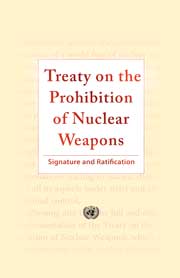 Only Rogue States Have Nuclear Weapons, https://limitlesslife.wordpress.com/2021/01/27/only-rogue-states-have-nuclear-weapons/ By David Swanson, Executive Director of World BEYOND War, and Elizabeth Murray, of Ground Zero Center for Nonviolent Action, published by Kitsap Sun, January 24, 2021
From January 18 to February 14, four large billboards are going up around Seattle that proclaim “Nuclear Weapons Are Now Illegal. Get them out of Puget Sound!”
What can this possibly mean? Nuclear weapons may be unpleasant, but what is illegal about them, and how can they be in Puget Sound?
Since 1970, under the Nuclear Nonproliferation Treaty, most nations have been forbidden to acquire nuclear weapons, and those already possessing them or at least those party to the treaty, such as the United States have been obliged to “pursue negotiations in good faith on effective measures relating to cessation of the nuclear arms race at an early date and to nuclear disarmament, and on a treaty on general and complete disarmament under strict and effective international control.”
Needless to say, the U.S. and other nuclear-armed governments have spent 50 years not doing this, and in recent years the U.S. government has torn up treaties limiting nuclear weapons, and invested heavily in building more of them.
Under the same treaty, for 50 years, the U.S. government has been obliged “not to transfer to any recipient whatsoever nuclear weapons or other nuclear explosive devices or control over such weapons or explosive devices directly, or indirectly.” Yet, the U.S. military keeps nuclear weapons in Belgium, the Netherlands, Germany, Italy, and Turkey. We can dispute whether that state of affairs violates the treaty, but not whether it outrages millions of people.
Three years ago, 122 nations voted to create a new treaty to ban the very possession or sale of nuclear weapons, and the International Campaign to Abolish Nuclear Weapons won the Nobel Peace Prize. On January 22, 2021, this new treaty becomes law in over 50 nations that have formally ratified it, a number that is rising steadily and is widely expected to reach a majority of the world’s nations in the near future.
What difference does it make for nations with no nuclear weapons to ban them? What does it have to do with the United States? Well, most nations banned landmines and cluster bombs. The United States did not. But the weapons were stigmatized. Global investors took their funding away. U.S. companies stopped making them, and the U.S. military reduced and may have finally ceased its use of them. Divestment from nuclear weapons by major financial institutions has taken off in recent years, and can safely be expected to accelerate. Continue reading
Schools of mass destruction —Universities in collusion with nuclear industry

U.S. universities have continued to build connections to the U.S. nuclear weapons complex. Although students and faculty have opposed university participation in nuclear weapons research and development at various points in the last 70 years, such participation continues.
November 15, 2020 by beyondnuclearinternational https://wordpress.com/read/feeds/2663585/posts/3150281214 An ICAN report
Universities across the United States are identified in this report for activities ranging from directly managing laboratories that design nuclear weapons to recruiting and training the next generation of nuclear weapons scientists. Much of universities’ nuclear weapons work is kept secret from students and faculty by classified research policies and undisclosed contracts with the Defense Department and the Energy Department. The following is the executive summary from ICAN’s report: Schools of Mass Destruction, with some changes made for timeliness.
Over the next ten years, the Congressional Budget Office estimates U.S. taxpayers will pay nearly $500 billion to maintain and modernize their country’s nuclear weapons arsenal, or almost $100,000 per minute. A separate estimate brings the total over the next 30 years to an estimated $1.7 trillion. In a July 2019 report, National Nuclear Security Administrator Lisa Gordon-Haggerty wrote, “The nuclear security enterprise is at its busiest since the demands of the Cold War era.”
In addition to large amounts of funding, enacting these upgrades requires significant amounts of scientific, technical and human capital. To a large extent, the U.S. government and its contractors have turned to the nation’s universities to provide this capital. Continue reading
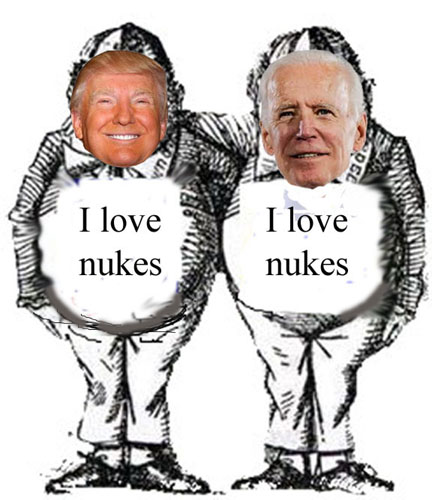
Let’s not forget that President Biden is just as pro nuclear as Trump was
|
Progressive misgivings over nuclear unlikely to derail US strategy, Paul Day , ReutersEvents, Jan 26, 2021
The new U.S. Democratic leadership is making positive noises for the continuation, and possible expansion, of the previous administration’s own beefed up nuclear strategy despite the left’s traditional aversion to the technology, say those in the industry. In a last-ditch attempt to cement Donald Trump’s administration’s advances in the nuclear power industry, the Department of Energy (DOE) Office of Nuclear Energy put out its own ‘Strategic Vision’ on Jan.
The ambitious roadmap pushes for a continuation of technological advances and investigations for existing reactors, advanced reactors and advanced nuclear fuel cycles while rebuilding U.S. global leadership in nuclear energy technology. The strategy, which some have said will likely be instantly dropped by the new administration for its own objectives, will probably be followed closely by President Joe Biden’s DOE, say others………
Part of the enthusiasm for the document, which came shortly after Trump signed an executive order that called for a revitalization of the U.S. nuclear energy sector and on the day the DOE’s Assistant Secretary for the Office of Nuclear Energy Dr. Rita Baranwal stepped down from her post, is that it doesn’t stray far from previously agreed positions………
Five Goals The ‘blueprint’ lays out five goals, breaks down each into explicit objectives and lists timelines for performance indicators. The first, ‘Enable continued operation of existing U.S. nuclear reactors’, calls to demonstrate a scalable hydrogen generation pilot plant by 2022 and begin replacing existing fuel in U.S. commercial reactors with accident tolerant fuel by 2025. Meanwhile, the goal to ‘Enable deployment of advanced nuclear reactors’ sticks to plans laid out in the Advanced Reactors Demonstration Program (ARDP) including to demonstrate two U.S. advanced reactor designs through cost-shared partnerships with industry by 2028.. …… https://www.reutersevents.com/nuclear/progressive-misgivings-over-nuclear-unlikely-derail-us-strategy
|
|
New wind farm and big battery project seeks planning approval in South Australia — RenewEconomy

Macquarie and Siemens Gamesa back new big wind and battery storage project near Hornsdale facility in South Australia. The post New wind farm and big battery project seeks planning approval in South Australia appeared first on RenewEconomy.
New wind farm and big battery project seeks planning approval in South Australia — RenewEconomy
Australia faces $100b annual bill for climate-fuelled damage, Climate Council finds — RenewEconomy

Severe impacts of global warming are becoming unavoidable for Australia and have already cost tens of billions, a new Climate Council report says. The post Australia faces $100b annual bill for climate-fuelled damage, Climate Council finds appeared first on RenewEconomy.
Australia faces $100b annual bill for climate-fuelled damage, Climate Council finds — RenewEconomy
January 27 Energy News — geoharvey

Science and Technology: ¶ “The New Use For Abandoned Oil Rigs” • There are more than 12,000 offshore oil and gas platforms worldwide. As they drain their reservoirs of fossil fuels, they become unprofitable, and then they have to be decommissioned. One way to do that is to turn their submarine structures into artificial reefs, […]
January 27 Energy News — geoharvey
Nuclear news to 27th January
Of course, the big world news is the coronavirus. Climate is as always, the vital second issue.
There was much favourable reaction to the nuclear ban treaty coming into force last week. The critics and sabotage from the nuclear weapons nations will no doubt come later.
Apart from the ban treaty, nuclear news has been very much in the background. The global nuclear industry is not wasting this ”quiet” time, but instead is ramping up and reorganising for a 2021 propaganda blitz.
Some bits of good news – Arctic Oil Drilling Plans Suffer ‘Stunning Setback’ as Almost ‘No One Shows Up’ For the Sale. UK Prioritizes Climate Crisis By Supporting Sustainability in Developing Countries With $4 Billion Plan. Startup Builds 3 Huge Indoor Farms in Appalachia Turning Coal Country into Agricultural Hub
AUSTRALIA.
Morrison government gets in early to disparage nuclear ban treaty, but Labor supports it. Australia could sign the Nuclear Ban Treaty and still keep its military co=operation with America. Australian Capital Territory politicians join calls for Australia to sign nuclear ban treaty. Get nukes out of our Super funds!
Nuclear weapons ban treaty: more than a symbolic victory. Australian government complicit in nuclear weapons, silent on Nuclear Weapons Ban Treaty. Red Cross celebrates Nuclear Ban Treaty- an incremental process towards elimination of nuclear weapons.
Kimba’s cosy nuclear corruption. The nuclear dump for Kimba propaganda continues in 2021.
INTERNATIONAL.
International Physicians for the Preve.ntion of Nuclear War comment on “The great evasion “. Treaty on Prohibition of Nuclear Weapons – a major step towards a safe world. Praise from United Nations, Pope Francis, for nuclear ban treaty coming into force. 5 nuclear activities that are now Illegal under international law. Nuclear Ban Treaty obligates countries to assist nuclear victims and remediate environments.
Russia and USA exchange documents to extend the NEW START nuclear weapons agreement.
Quietly, under the brouhaha of the pandemic, the global nuclear lobby prepares a propaganda onslaught.
Pro nuclear publicist James Conca made a very big gaffe about Fukushima disaster.
Will Australia join the global nuclear lobby’s propaganda onslaught?
‘ ‘If you tell a lie big enough and keep repeating it, people will eventually come to believe it. A lie told once remains a lie but a lie told a thousand times becomes the truth ” – Joseph Goebbels
With the sudden mysterious departure of Australia’s high priest of nuclear spin, Dr Adi Paterson, and the flummoxed and failing government push for a Kimba nuclear waste dump, – the nuclear lobby in Australia seems paralysed at present.
But the world-wide nuclear industry is anything but paralysed, and, while everyone is agonising, (justifiably), over the pandemic, it is gearing up for a big publicity spin. So I’m guress that it won’t be long before a new nuclear champion takes up the nuclearv religion role in Australia..
 This month, I’ve concentrated my efforts on the ground-breaking and historic UN Treaty for the Prohibition of Nuclear Weapons coming into force. Of course, the nuclear weapons states will try to destroy that Treaty. Failing destruction, they will aim for pooh poohing and rubbishing that Treaty. Finally they’ll go for a favourite strategy – ignoring it, and hoping that the world will just forget about it.
I don’t think that the world will forget about it. The challenge will be to help those workers and communities that depend on nuclear-weapons-making to be helped out of that toxic situation, and into life-sustaining work and activities.
MEANWHILE, as media and science correctly focus on the global coronavirus pandemic, the issue of nuclear power has pretty much disappeared from view. Nothing is happening?
Today, the nuclear weapons industry is pretty much the only reason for”peaceful” nuclear power. ”Peaceful nukes” provide the trained experts, the technology development necessary for the weapons industry. If governments and universities can be persuaded to back commercial nuclear energy, this solves a lot of probems. Especially, it helps the blur the picture onthe astronomic costs of nuclear weapons, as quite a lot of costs are covered by ”peaceful” nuclear development.
There’s another pressing reason to keep nuclear power going. It’s the horrible and never-ending cost of shutting down reactors and dealing with their toxic wastes. How much cheaper to just relicense the for 100 years? That way, the present responsible officials will all be gone, and they don’t have to worry about that problem. Heck – they’ve handed it over to our great-grandchildre, What a fine idea! NOT!!
Against this background, the nuclear lobby is girding its loins for the public perception battle.
Armed with lies – that nuclear fixes climate – that it’s cheap, is clean, works great with renewables, essential for society – blah blah, the nuclear lobby is preparing its onslaught. They generally try pretty hard to ignore matters like comparative costs, and wastes problems. But they can just lie again, if put on the spot about such problems.
Just a few quotatios from World Nuclear News :-
The barrier to nuclear is perception“
”addressing perceptions of its alleged drawbacks”
Bilbao y León – “the nuclear industry has responsibly managed all its used nuclear fuel and waste “from day one”.
“We know where every ounce of used nuclear fuel and nuclear waste is because we have been managing it throughout the history of the nuclear industry. “We know where every ounce of used nuclear fuel and nuclear waste is because we have been managing it throughout the history of the nuclear industry“. ……. https://www.world-nuclear-news.org/Articles/The-barrier-to-nuclear-is-perception,-says-
“The real challenges to nuclear are external” – ”small modular reactors ..cheaper, safer, better, and going to provide more discreet financial solutions”
The government nuclear regulatory authorities are, unfortunately, usually well onside with the industry – in what is known as “regulatory capture”. Again, from World Nuclear News –
”The hurdles advanced nuclear developers face‘ – ””We, as the regulator, are working on building public trust, confidence and social acceptance in these new technologies.’‘
Joseph Goebbels would be proud of the skills of Sama Bilbao y Leon, Director General of the World Nuclear Association. She’s great with language (as the global nuclear lobby has realised, in appointing her, and several other women to top promotional positions”
Chart of the day: European wind and solar share vs Australia — RenewEconomy

How does Australia fare in the European renewable energy stakes? 2020 was a great year for renewables, so competition is tough. The post Chart of the day: European wind and solar share vs Australia appeared first on RenewEconomy.
Chart of the day: European wind and solar share vs Australia — RenewEconomy
Nuclear weapons ban treaty is now international law — IPPNW peace and health blog
The Treaty on the Prohibition of Nuclear Weapons enters into force, three months after the 50th country, Honduras, ratified it. Nuclear weapons are now illegal under international law in every aspect. Possession is illegal; manufacture is illegal; use is illegal; threatening to use is illegal; transfer is illegal; aiding and abetting any of these things is illegal. But much remains in obscurity. Radioactive waste problems continue to fester. It seems appropriate to ask the states parties to the TPNW to set up a Global Truth Commission on Nuclear Weapons under the auspices of the United Nations.
Nuclear weapons ban treaty is now international law — IPPNW peace and health blog
January 26 Energy News — geoharvey

Opinion: ¶ “Poking The Wind Power Dragon In Ohio, One Factory At A Time” • The state of Ohio has been slow to move on the wind power revolution, and last year’s passage of the notorious HB 6 energy bill didn’t help matters much. But CleanTechnica came across One Energy, a wind company has figured […]
January 26 Energy News — geoharvey
The aerospace industry – headed for military dominance

the Space Force will be given the task to create the technologies to “control and dominate” the pathway on and off our sacred Mother Earth.
Earlier this year, Trump was able to “stand up” his new high-tech legacy branch of the military, called the Space Force. Congress was overwhelmingly in favor – that means both parties supported it
The Real Missions of Space Force….
|
Keep Space for Peace! Save the Heavens fro!m Hegemony https://www.womenagainstmilitarymadness.org/articles/2020/12/22/keep-space-for-peace-save-the-heavens-from-hegemony Bruce K. Gagnon
Recently we learned that the aerospace industry is pushing to turn a former naval air station in Brunswick, Maine, into a spaceport. Promising lots of “high tech” jobs, a bill is being pushed in Augusta, our capital, by some of the most “progressive” legislators in the state. Similarly, we are hearing from many other states where launch complexes are being promoted – from Hawaii to New Mexico to Alaska – that the industry wants some of the most pristine places on Earth to become spaceports. Why? A spaceport in Kodiak Island, Alaska (locals call it “Spacepork”), was built some years ago in spite of overwhelming opposition by local residents. They were promised that it would be used only for civilian launches. So far, all the launches at Kodiak have actually been for Pentagon (and Israeli) space-weapons technology tests. We’ve been hearing for several years now that new companies formed by tech-industry billionaires Elon Musk (whose projects include Tesla and SpaceX) and Jeff Bezos (Amazon, Blue Orbit) plan to launch as many as 35,000 mini-sats (satellites) into orbit. Imagine the enormous hole these polluting launches will punch into the ozone layer. The plan is to have a satellite orbiting over the head of every person on Earth 24 hours a day, making it possible for the new 5G wireless technology system to be profitable. Many questions are being raised about the military (dual-use) applications of these satellites as well. Space Force Continue reading |
1 This month
17 October, Free Public Talk on Nuclear Issues in South Australia
David Noonan will speak on public interest concerns over the new Roxby Downs Indenture Act 2026 on BHP copper-uranium mining and ore processing in SA, and on how AUKUS may face SA with a High-Level nuclear waste agenda.
Dr Jim Green will discuss international developments in the field of nuclear power including ‘small modular reactors’ and Generation 4 ‘advanced’ nuclear reactor concepts.


Help Aunty Sue Protect Her Land and Sacred Sites From Destructive Rocket Testing.
.

Australians deserve the truth
about
AUKUS – https://aukuspublicinquiry.com/

PETITION – To: Prime Minister Anthony Albanese and the Australian Labor Government

of the week – Australians for War Powers Reform (AWPR)
To see nuclear-related stories in greater depth and intensity

