21 And 22 January NZ Celebrates Global Nuclear Weapons Ban, 2021
 21 And 22 January NZ Celebrates Global Nuclear Weapons Ban, 2021 https://www.scoop.co.nz/stories/PO2101/S00041/nz-celebrates-global-nuclear-weapons-ban-21-and-22-january-2021.htm, 15 January 2021, Celebrations in Aotearoa New Zealand to mark the entry into force of the Treaty on the Prohibition of Nuclear Weapons (TPNW) will begin on Thursday 21 January with ICAN Aotearoa New Zealand’s Wellington and online event, and continue on Friday 22 January. Continue reading |
2021 is here: what to watch out for in Australian climate and energy politics — RenewEconomy

2021 is well underway and is already on track to be another year of climate policy shenanigans – here’s what to watch out for this year. The post 2021 is here: what to watch out for in Australian climate and energy politics appeared first on RenewEconomy.
2021 is here: what to watch out for in Australian climate and energy politics — RenewEconomy
Church leaders call on UK to sign nuclear weapons ban treaty
 UK is urged to sign UN nuclear-weapons treaty https://www.churchtimes.co.uk/articles/2021/15-january/news/uk/uk-is-urged-to-sign-un-nuclear-weapons-treaty by PAT ASHWORTH, 15 JANUARY 2021 But there is resistance to change, say peace campaigners.
CAMPAIGNERS are urging the UK to sign the United Nations Treaty on the Prohibition of Nuclear Weapons, which will come into effect on 22 January.
The Archbishops of Canterbury and York, with more than 30 Church of England bishops, called on the Government in November to accept the treaty, which, they said, would “give hope to all people of goodwill who seek a peaceful future” (News, 20 November 2020).
It has been signed by 51 states. They will now be required to stop producing, developing, testing, or stationing nuclear weapons, and will be required to help any victims of their testing and use. Their financial institutions will be expected to stop investing in companies that produce nuclear weapons.
The UK, the United States, France, and Russia have not signed the treaty. Clergy and church leaders were reminded in a briefing by the Network of Christian Peace Organisations (NCPO), on Tuesday, of the overwhelming support given to a Lambeth Conference resolution in 1998, which called on the Government and the UN to press for an international mandate for all member states to prohibit nuclear warfare.
Now was the time to fulfil that, Rebecca Johnson, one of the architects of the treaty and a founder member of the International Campaign to Abolish Nuclear Weapons (ICAN), said. Nuclear weapons must be known for what they really were — weapons of mass destruction — and the phrase “nuclear powers” must be replaced with “nuclear-armed states”.
The treaty was a legal one, but it would work by persuasion and not by coercion; it was normative in taking away any status attached to hanging on to nuclear weapons, and in labelling as pariahs those who did. “We all need to think about what we can do to bring this treaty into force in our own countries. There is an important job here for faith leaders to do,” she said.
Although the C of E had a blanket policy of not investing in companies with an interest in nuclear weapons, everyone should examine investment practice in their churches, the policy adviser on international affairs for the ecumenical Joint Public Issues Team, Steve Hucklesby, said.
The treaty brought “a very real possibility of a new norm on nuclear weapons across the whole finance and business sectors; but be clear: there is resistance to change,” he continued. Pressure could be applied to banks and pension providers if individuals saw this as something relating to their own lives. “The issue now becomes compliance with an international treaty, to be applied across the whole of an institution’s business.”
An international meeting to be held in Vienna later this year will establish mechanisms for compliance. It will be open to observers from nuclear-armed states, who will not be able to vote but who should be urged to “attend, listen, and learn,” Ms Johnson said. “It is so important for the UK to join sooner rather than later . . . to be at the table.”
Russell Whiting, who chairs Christian CND, described a world in which President Trump, or even Joe Biden, had their finger on the nuclear button, as “an incredibly dangerous place”. The treaty has been declared dangerous by the Prime Minister, and by the former Foreign Secretary Philip Hammond. These governments had “misrepresented” the treaty wherever they went, saying that it would undermine the existing non-proliferation treaty, Ms Johnson said.
The General Synod called for the elimination of nuclear weapons in July 2018, but it stopped short of urging the Government to sign the treaty. The Government’s refusal to do so was described by the Archbishop of York, the Most Revd Stephen Cotrrell, then Bishop of Chelmsford, as “hugely disappointing” and “a decision that looks like complacency”. He questioned the billions of pounds spent on Trident (News, 13 July 2018).
The general secretary of the Roman Catholic peace movement Pax Christi, Pat Gaffney, said on Tuesday that RC bishops had issued a statement asking the Government to support the treaty — a move that she described as “a huge step forward, because they have habitually said it undermined the existing non-proliferation treaty. Catholics need to write to their bishops affirming what they are doing.”
The NCPO is holding a service online at 11.30 a.m. on 22 January, to mark the treaty. It will conclude with the ringing of the peace bell at Coventry Cathedral.
Business case for small nuclear reactors ‘doesn’t fly’
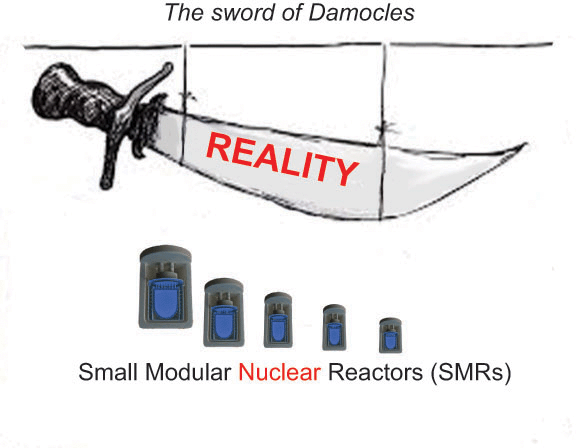 Former U.S. regulator questions small nuclear reactor technology, Business case for small reactors ‘doesn’t fly,’ says expert on nuclear waste, Jacques Poitras · CBC News Jan 15, 2021 A former head of the United States’ nuclear regulator is raising questions about the molten-salt technology that would be used in one model of proposed New Brunswick-made nuclear reactors.
The technology pitched by Saint John’s Moltex Energy is key to its business case because, the company argues, it would reuse some of the nuclear waste from Point Lepreau and lower the long-term cost and radioactivity of storing the remainder.
But Allison Macfarlane, the former chairperson of the U.S. Nuclear Regulatory Commission and a specialist in the storage of nuclear waste, said no one has yet proven that it’s possible or viable to reprocess nuclear waste and lower the cost and risks of storage.
“Nobody knows what the numbers are, and anybody who gives you numbers is selling you a bridge to nowhere because they don’t know,” said Macfarlane, now the director of the School of Public Policy and Global Affairs at the University of British Columbia.
“Nobody’s really doing this right now. … Nobody has ever set up a molten salt reactor and used it to produce electricity.”
Macfarlane said she couldn’t comment specifically on Moltex, calling information about the company’s technology “very vague.”
But she said the general selling point for molten-salt technology is dubious.
“Nobody’s been able to answer my questions yet on what all these wastes are and how much of them there are, and how heat-producing they are and what their compositions are,” she said.
“My sense is that all of these reactor folks have not really paid a lot of attention to the back end of these fuel cycles,” she said, referring to the long-term risks and costs of securely storing nuclear waste.
Moltex is one of two Saint John-based companies pitching small nuclear reactors as the next step for nuclear power in the province and as a non-carbon-dioxide emitting alternative to fossil fuel electricity generation.
Moltex North America CEO Rory O’Sullivan said the company’s technology will allow it to affordably extract the most radioactive parts of the existing nuclear waste from the Point Lepreau Generating Station.
The waste is now stored in pellet form in silos near the plant and is inspected regularly.
The process would remove less than one per cent of the material to fuel the Moltex reactor and O’Sullivan said that would make the remainder less radioactive for a much shorter amount of time.
Existing plans for nuclear waste in Canada are to store it in an eventual permanent repository deep underground, where it would be secure for the hundreds of thousands of years it remained radioactive………..
Shorter-term radioactivity complicates storage
Macfarlane said a shorter-term radioactivity life for waste would actually complicate its storage underground because it might lead to a facility that has to be funded and secured rather than sealed up and abandoned.
“That means that you believe that the institutions that exist to keep monitoring that … will exist for hundreds of years, and I think that is a ridiculous assumption,” she said.
“I’m looking at the United States, I’m seeing institutions crumbling in a matter of a few years. I have no faith that institutions can last that long and that there will be streams of money to maintain the safety and security of these facilities. That’s why you will need a deep geologic repository for this material.”
And she said that’s assuming the technology will successfully extract all of the most radioactive material.
“They are assuming that they remove one hundred per cent of the difficult, radionuclides, the difficult isotopes, that complicate the waste,” she said.
“My response is: prove it. Because if you leave five per cent, you have high-level waste that you’re going to be dealing with. If you leave one per cent, you’re going to have high-level waste that you’re going to be dealing with. So sorry, that one doesn’t fly with me.”
Macfarlane, a geologist by training, raised doubts about molten-salt technology and waste issues in a 2018 paper she co-authored for the Bulletin of the Atomic Scientists………. https://www.cbc.ca/news/canada/new-brunswick/nuclear-waste-reactors-new-brunswick-allison-macfarlane-moltex-arc-1.5873542
Trump’s behavior demonstrates that Biden must change US nuclear policy,
|
Trump’s behavior demonstrates that Biden must change US nuclear policy, Defense News, By: Lisbeth Gronlund and David Wright , 15 Jan 20, President Donald Trump’s role in inciting the shocking events at the Capitol on Jan. 6 and concerns about his state of mind highlight the grave risks posed by the policy that gives presidents the sole authority to order the use of nuclear weapons — without the need for consultation or agreement by anyone. This danger is heightened by a second policy that allows the United States to use nuclear weapons — not just in response to a nuclear attack, but also first during hostilities.
While this arrangement appears especially risky now, giving any one person the authority to order the use of nuclear weapons is inherently risky and completely unnecessary. Any use of nuclear weapons would be devastating and should require both a presidential order and the agreement of two other officials. Unlike decades ago, when sole authority was first established, there is a straightforward way to include other officials in a launch decision. President-elect Joe Biden should make this long-overdue change once in office by limiting his own authority to order a nuclear attack………………. President Biden should move quickly to implement these two policy changes — requiring the assent of two other officials to any nuclear launch order and eliminating the option of using nuclear weapons first. Doing so would make the world safer and demonstrate that the United States is committed to reducing the risk of nuclear use and to moving away from its reliance on nuclear weapons. https://www.defensenews.com/opinion/commentary/2021/01/14/trumps-behavior-demonstrates-that-biden-must-change-us-nuclear-policy/ |
|
”Small Modular Reactors”’- governments are being sucked in by the billionaires’ nuclear club”
 SNC-Lavalin Scandal-ridden SNC-Lavalin is playing a major role in the push for SMRs.
Terrestrial Energy….. Terrestrial Energy’s advisory board includes Dr. Ernest Moniz, the former US Secretary of the Dept. of Energy (2013-2017) who provided more than $12 billion in loan guarantees to the nuclear industry. Moniz has been a key advisor to the Biden-Harris transition team, which has come out in favour of SMRs.
The “billionaires’ nuclear club” …“As long as Bill Gates is wasting his own money or that of other billionaires, it is not so much of an issue. The problem is that he is lobbying hard for government investment.”
Going after the public purse
Bill Gates was apparently very busy during the 2015 Paris climate talks. He also went on stage during the talks to announce a collaboration among 24 countries and the EU on something called Mission Innovation – an attempt to “accelerate global clean energy innovation” and “increase government support” for the technologies.
Gates’ PR tactic is effective: provide a bit of capital to create an SMR “bandwagon,” with governments fearing their economies would be left behind unless they massively fund such innovations.
governments “are being suckers. Because if Wall Street and the banks will not finance this, why should it be the role of the government to engage in venture capitalism of this kind?”
It will take a Herculean effort from the public to defeat this NICE Future, but along with the Assembly of First Nations, three political parties – the NDP, the Bloc Quebecois, and the Green Party – have now come out against SMRs.
|
Mini-Nukes, Big Bucks: The Interests Behind the SMR Push https://watershedsentinel.ca/articles/mini-nukes-big-bucks-the-money-behind-small-modular-reactors/
It’s remarkable that only five years ago, the National Energy Board predicted: “No new nuclear units are anticipated to be built in any province” by 2040.So what happened?
The answer involves looking at some of the key influencers at work behind the scenes, lobbying for government funding for SMRs. |

Broome shopping centre set to host massive solar and battery system — RenewEconomy

The Western Australian town of Broome will become host to one of Australia’s largest shopping centre solar installations. The 1.2MW commercial solar installation will be added to the Broome Boulevard Shopping Centre, owned by ASX-listed property investors Primewest, constructed over the centre’s car park, and is expected supply around 45 per cent of the centre’s…
Broome shopping centre set to host massive solar and battery system — RenewEconomy
January 15 Energy News — geoharvey

Opinion: ¶ “2021: The Year the Rubber Meets the Road for Electric Trucks” • One challenge for trucking fleets looking to electrify is that only limited models of electric trucks have been available. That is changing. Manufacturers have been developing and road-testing vehicles recently, and many are slated to move into commercial production soon. [CleanTechnica] […]
January 15 Energy News — geoharvey
2020 among the top three warmest years on record, along with 2016 and 2019 — RenewEconomy

2020 confirmed as another year ranking amongst the hottest on record. The urgency of reducing emissions only gets higher every day. The post 2020 among the top three warmest years on record, along with 2016 and 2019 appeared first on RenewEconomy.
2020 among the top three warmest years on record, along with 2016 and 2019 — RenewEconomy
Why did ANSTO shut down National Medical Cyclotron, that made medical isotopes without nuclear waste?
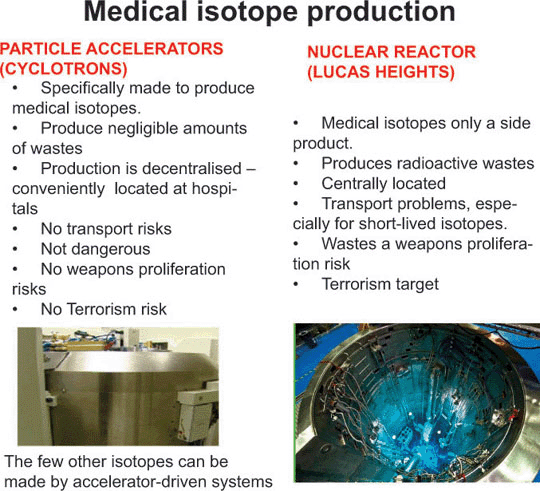
ANSTO gets a blank cheque for its nuclear waste production at Lucas Heights?
 Greg Phillips, No nuclear waste dump anywhere in South Australia , 13 Jan 2021, Congratulations Canada! “Cyclotron-produced technetium-99m approved by Health Canada”. Why rely on a global network of aging, unreliable, toxic spewing nuclear reactors when you can have a local network of clean, reliable cyclotrons? Especially when pandemics hobble global freight networks. From the article: “The process is safe and precise, employing stable targets and producing little to no long-lived radioactive waste. And, with the right target and extraction systems, these cyclotrons can be used to reliably create technetium-99m regionally and without the need for reactor-based materials.”
Because ANSTO shut down cyclotron, Australia has the problem of importing a short-lived medical isotope

|
“……..Australia lost the capacity to make the radioactive isotope iodine-123 – used in the diagnosis and treatment of cancer in the nerve cells of children – just over a decade ago with the closure of the National Medical Cyclotron in Camperdown, NSW. ………
But according to Ansto, iodine-123 is needed in clinical settings by about a dozen patients around Australia at any one time – most of them children with neuroblastoma. This means Australia now relies on imports from Japan. But with a half-life of just over 13 hours – meaning the levels of radioactivity halve every 13 hours – this isotope needs to be distributed to Australian hospitals and health centres very quickly. It expires within 33 hours of being manufactured in Japan. “The challenge with transporting nuclear medicine is the products have a short half-life,” Ian Martin, the general manager of Ansto Health, told Guardian Australia. “We need to get the isotopes from point A to point B before they decay too much to be effective, a complex task when B is in another hemisphere.” ………. https://www.theguardian.com/australia-news/2020/aug/11/australias-nuclear-medicine-agency-chartered-flights-to-deliver-childrens-cancer-treatment?fbclid=IwAR3o8Da64-dDpv0mwYL0K5jaPZreOGOaQCmDdh4ChzfwQLjsv0sFdBBVBVo 11 Aug 2020,
|
|
Scientists must tell the truth on our consumerist, ecology-killing Ponzi culture

Scientists must not sugarcoat the overwhelming challenges ahead. Instead, they should tell it like it is. Anything else is at best misleading, and at worst potentially lethal for the human enterprise.
Worried about Earth’s future? Well, the outlook is worse than even scientists can grasp , The Conversation, Corey J. A. Bradshaw, Matthew Flinders Professor of Global Ecology and Models Theme Leader for the ARC Centre of Excellence for Australian Biodiversity and Heritage, Flinders University. Daniel T. Blumstein, Professor in the Department of Ecology and Evolutionary Biology and the Institute of the Environment and Sustainability, University of California, Los Angeles, Paul Ehrlich, President, Center for Conservation Biology, Bing Professor of Population Studies, January 13, 2021
Anyone with even a passing interest in the global environment knows all is not well. But just how bad is the situation? Our new paper shows the outlook for life on Earth is more dire than is generally understood.
The research published today reviews more than 150 studies to produce a stark summary of the state of the natural world. We outline the likely future trends in biodiversity decline, mass extinction, climate disruption and planetary toxification. We clarify the gravity of the human predicament and provide a timely snapshot of the crises that must be addressed now.
The problems, all tied to human consumption and population growth, will almost certainly worsen over coming decades. The damage will be felt for centuries and threatens the survival of all species, including our own………
academics tend to specialise in one discipline, which means they’re in many cases unfamiliar with the complex system in which planetary-scale problems — and their potential solutions — exist.
What’s more, positive change can be impeded by governments rejecting or ignoring scientific advice, and ignorance of human behaviour by both technical experts and policymakers.
More broadly, the human optimism bias – thinking bad things are more likely to befall others than yourself – means many people underestimate the environmental crisis.
Numbers don’t lie
A bad situation only getting worse
The human population has reached 7.8 billion – double what it was in 1970 – and is set to reach about 10 billion by 2050. More people equals more food insecurity, soil degradation, plastic pollution and biodiversity loss.
Essentially, humans have created an ecological Ponzi scheme. Consumption, as a percentage of Earth’s capacity to regenerate itself, has grown from 73% in 1960 to more than 170% today.
High-consuming countries like Australia, Canada and the US use multiple units of fossil-fuel energy to produce one energy unit of food. Energy consumption will therefore increase in the near future, especially as the global middle class grows.
The danger of political impotence
Our paper found global policymaking falls far short of addressing these existential threats. Securing Earth’s future requires prudent, long-term decisions. However this is impeded by short-term interests, and an economic system that concentrates wealth among a few individuals.
Right-wing populist leaders with anti-environment agendas are on the rise, and in many countries, environmental protest groups have been labelled “terrorists”. Environmentalism has become weaponised as a political ideology, rather than properly viewed as a universal mode of self-preservation.
Changing course
Fundamental change is required to avoid this ghastly future. Specifically, we and many others suggest:
- abolishing the goal of perpetual economic growth………..
Don’t look away………
Scientists must not sugarcoat the overwhelming challenges ahead. Instead, they should tell it like it is. Anything else is at best misleading, and at worst potentially lethal for the human enterprise. https://theconversation.com/worried-about-earths-future-well-the-outlook-is-worse-than-even-scientists-can-grasp-153091
Joe Biden and USA nuclear weapons policies
|
What could Biden’s nuclear policy look like? King County sits only miles away from one-third of the deployed U.S. nuclear arsenal. Courier Herald , By Aaron Kunkler, January 12, 2021 For Leonard Eiger, having the U.S. Navy’s entire Pacific fleet of nuclear-armed submarines only a short excursion away doesn’t sit well with him.
The longtime anti-nuclear weapons activist and former North Bend resident has for decades worked to educate Puget Sound residents about Naval Base Kitsap Bangor, which houses around one-third of the nuclear weapons that are actively deployed. Eight of the 14 Ohio-class submarines, which carry powerful nuclear weapons, are stationed out of the base in Kitsap County. “For me there’s a real futility in thinking of, and preparing to fight, a nuclear war,” Eiger said. “Because any nuclear war, any nuclear exchange between the U.S. and Russia, is game over.” Eiger lived in North Bend for 26 years, before recently moving to the San Juan Islands. He’s been involved with the Ground Zero Center for Nonviolent Action, which stages demonstrations against — and education campaigns about — nuclear weapons. As the Donald Trump administration winds down, he’s hoping that a Joe Biden presidency will mark a turning point in the way the U.S. approaches nuclear weapons. The Trump administration didn’t make significant progress toward renewing the New START Treaty, which expires on Feb. 5 and began deploying “low-yield” nuclear weapons on submarines, he said. The administration also did not subscribe to a “no first use” policy. It also pulled out of the Iran nuclear deal. The Trump administration didn’t make significant progress toward renewing the New START Treaty, which expires on Feb. 5 and began deploying “low-yield” nuclear weapons on submarines, he said. The administration also did not subscribe to a “no first use” policy. It also pulled out of the Iran nuclear deal. And if a nuclear weapon was fired at one country, other nuclear powers wouldn’t know where it was destined, and could launch their own nukes, fearing an attack, he said. These missiles are something that Hans Kristensen, director of the Nuclear Information Project at the Federation of American Scientists, is thinking about. He said that this could make military leaders more comfortable using them from technical and humanitarian points of view because there could be less collateral damage and fallout …….. On the first use of nuclear weapons, Biden’s policy platform states that he believes the sole purpose of the U.S. nuclear arsenal is to deter other countries from attacking the U.S. with nuclear weapons. If he holds to this statement, then he would enact a no first use policy, according to Kristensen………. Treaties Biden is also hoping to resurrect two important nuclear treaties. The first is the Iran nuclear deal, which was negotiated by the Obama administration while he served as vice president. Trump withdrew from the treaty and put additional sanctions on Iran……. The second significant nuclear agreement is the New START Treaty between Russia and the U.S. The treaty limits the number of nuclear weapons that the countries can own, and have deployed, at any given time. It includes all three legs of the U.S. nuclear triad, including submarine, bomber and land-based missiles. Biden’s policy platform states he will try to renew and extend the New START Treaty. The treaty could be extended up to five years, but Kristensen said the administration could choose a shorter term. If Biden chose to go with a longer five year renewal, it would likely have a calming effect on nuclear competition between the U.S. and Russia. However, a shorter term would send signals that the two countries need to address the problems with the treaty and create something stronger, Kristensen said….. ………… For activist Leonard Eiger, the world of today is only here because of a series of fortunate events. He cited the Cuban Missile Crisis, where the U.S. and Russia came close to nuclear war in 1962. “We still live under the threat of either accidental or intentional nuclear war,” he said. “So long as nuclear weapons exist, that threat will continue to exist.”……… https://www.courierherald.com/news/what-could-bidens-nuclear-policy-look-like/ |
|
In USA’s desperate health crisis, Trump orders quick development of small nuclear reactors for military use.
Trump orders DoD to explore use of nuclear power for space, Defense News,
The order, signed Jan. 5 and posted publicly Jan. 12, is not the first time the value of nuclear power for military operations has been studied. There is a long history of the Pentagon considering the issue, which proponents believe could alleviate the department’s massive logistics challenge of keeping fuel moving around the world………
In terms of terrestrial efforts, the executive order requires the defense secretary to, within 180 days, “establish and implement a plan to demonstrate” a micro-reactor at a domestic military installation — in other words, setting up an actual test of a nuclear reactor at a U.S. military location.
However, that doesn’t mean the first test will be on a military base. One location to keep an eye on is the Nevada National Security Site, a Department of Energy location roughly 65 miles from Las Vegas…….
Noted Hans Kristensen of the Federation of American Scientists, “the signing of this at the very last minute of the Trump administration suggests someone is concerned [President-elect Joe Biden] might not support the program.”
Specific to space, the order calls for the defense secretary, in consultation with the secretaries of state, commerce and energy as well as the NASA administrator, to “determine whether advanced nuclear reactors can be made to benefit Department of Defense future space power needs” and to “pilot a transportable micro-reactor prototype.”
In addition, the order directs an analysis of alternatives for “personnel, regulatory, and technical requirements to inform future decisions with respect to nuclear power usage” as well as “an analysis of United States military uses for space nuclear power and propulsion technologies and an analysis of foreign adversaries’ space power and propulsion programs.”
……… While the order speeds up the timetable for a test of a nuclear reactor at a military installation, the idea of using nuclear power is hardly a new one for the DoD. In fact, the Pentagon currently has two different development tracts for small nuclear reactors.
The first is “Project Pele,” an effort to create a small mobile nuclear reactor in the 1-5 MWe power range, being run out of the Strategic Capabilities Office. In March 2020, the department awarded three companies a combined $39.7 million to start design work for Project Pele, with plans to select one firm in 2022 to build and demonstrate a prototype.
The second effort is run through the office of the undersecretary of acquisition and sustainment. That effort, ordered in the 2019 National Defense Authorization Act, involves a pilot program aiming to demonstrate the efficacy of a small nuclear reactor, in the 2-10 MWe range, with initial testing at a Department of Energy site around 2023. If all goes well, the goal is to have a permanent small nuclear reactor on a military base around 2027.
Even if all those timelines are hit, it is unlikely microreactors could proliferate quickly throughout the military………. https://www.defensenews.com/smr/nuclear-arsenal/2021/01/13/trump-orders-dod-to-explore-use-of-nuclear-power-for-space-systems/
1 This month
17 October, Free Public Talk on Nuclear Issues in South Australia
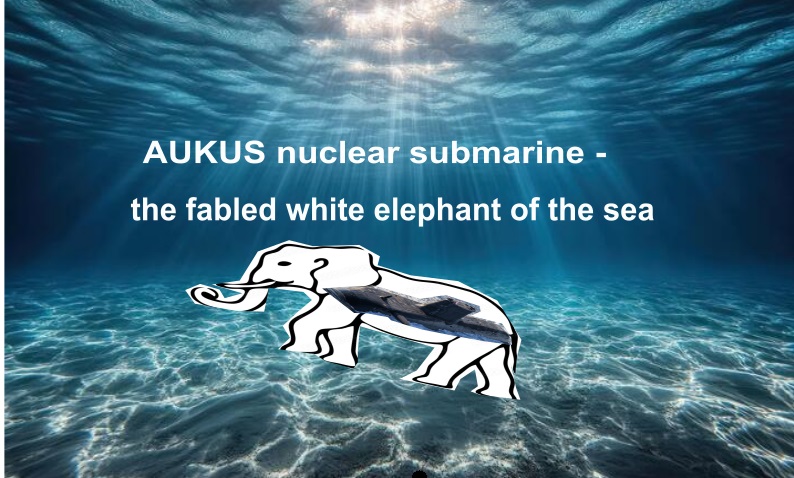
David Noonan will speak on public interest concerns over the new Roxby Downs Indenture Act 2026 on BHP copper-uranium mining and ore processing in SA, and on how AUKUS may face SA with a High-Level nuclear waste agenda.
Dr Jim Green will discuss international developments in the field of nuclear power including ‘small modular reactors’ and Generation 4 ‘advanced’ nuclear reactor concepts.


Help Aunty Sue Protect Her Land and Sacred Sites From Destructive Rocket Testing.
.
Australians deserve the truth
about
AUKUS – https://aukuspublicinquiry.com/

PETITION – To: Prime Minister Anthony Albanese and the Australian Labor Government

of the week – Australians for War Powers Reform (AWPR)
To see nuclear-related stories in greater depth and intensity

