Government’s Kimba nuclear waste dump slush fund – benefit goes straight to Kimba’s mayor
 Community grants from the National Radioactive Waste slush fund..
Of particular interest in Kimba is the 2nd largest amount allocated = $141,667 – apparently for the Mayor to get a commercial bakery in his supermarket.
Whilst in the Flinders it appears that no $ allocations were given to any individual/family owned commercial premises.
(From: National Radioactive Waste Management Facility New Community Benefit Program 2019-2022 https://www.business.gov.au/grants-and-programs/national-radioactive-waste-management-facility-community-benefit-programme/grant-recipients-2019-2022 )
Beatrice Fihn: How to implement the nuclear weapons ban treaty
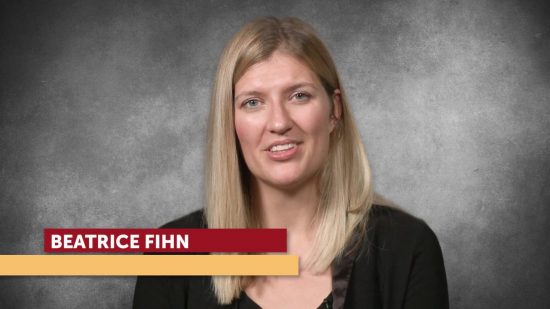
Beatrice Fihn: How to implement the nuclear weapons ban treaty, Bulletin of the Atomic Scientists, By John Mecklin, December 7, 2020
………..Beatrice Fihn, ICAN’s executive director spoke with me at length about how the Treaty on the Prohibition of Nuclear Weapons might be implemented once it was ratified by the requisite 50 countries, an event expected to happen, at the time we spoke, within a matter of months. In fact, it occurred just weeks later, and the treaty will enter into force in January 2021.
The treaty was not supported by any of the nine countries that possess nuclear weapons, including the United States. Many of those opposed to the ban treaty have contended it is an unrealistic and naïve effort that could actually undermine nuclear nonproliferation efforts. US officials have been especially critical.
Here, Fihn lays out a possible future in which the ban treaty delegitimizes nuclear weapons, and nuclear weapons countries are persuaded to decide that it is best to give up the most fearsome weapons ever created—in those countries’ own interests…….
we’re trying to sort of remind the people that this issue still exists. This is still dangerous. These weapons are still around, and we’re really hoping that the treaty, and the progression will be the starting point of moving away from these weapons. Creating a new norm, implementing the treaty—in many ways, it’s just building normative pressure, building financial pressure through divestments.
see a lot of people really, really evaluating things during this year. What is it that we prioritize? And what is security? How come 200,000 Americans are dying from a pandemic, and we are still investing $35 billion in nuclear weapons? The structures that people in power have built to protect us, such as the police force and nuclear weapons, actually harm people and kill people. Both through police violence, through nuclear testing, for example. So I see a lot of possibilities for the next term to really start questioning the decisions our governments have made on our behalf around these things. …..
I think we have to be realistic. Ideally, we would want governments to take very strong measures and threaten to boycott if this doesn’t work. But in reality, of course, it’s the big economic powers that have nuclear weapons. And many countries are very dependent on them, and it wouldn’t be realistic to think that a small country in Africa can boycott the nuclear weapon states in that way. But I definitely think that there are a lot of potentials for action. First of all, I think we need to reckon—I think particularly in the West, in Europe and maybe North America—how the power dynamics in the world are changing quite rapidly. And this idea that we in the West are the center of the power in the world might not hold for very long……..
I can also see an emergence of a new power structure. This treaty in many ways is that a lot of countries are basically banning the power tool of the [UN] Security Council. And I think that’s going to have some very significant impact. But in practical terms, what we’re hoping for is, of course, that this treaty stands next to the Chemical and Biological Weapons Convention, like the bans on all weapons of mass destruction. This completes the treaty or treaties, in a way. So that the political pressure and the reputational cost of countries that don’t join this treaty is increased. We’re looking to focus quite a lot on the divestment side, making sure that banks and pension funds are pulling their money out of producing companies. And we’ve seen that influence on landmines and cluster munitions; they have quite a concrete impact in reducing companies’ willingness to be involved in these practices…….
Every year we do this “Don’t Bank on the Bomb” report that shows that it’s growing, the number of banks that have policies against this. We’ve seen just this year, the Norwegian Oil Fund, for example, pulled out of nuclear weapons companies and referred to the TPNW as a reason. One of the super banks in Japan, Mitsubishi Bank Group, or whatever they’re called. They adopted a new policy. Deutsche Bank last year adopted a new policy with nuclear weapons after work with ICAN in Germany. The Deutsche Bank [policy] wasn’t flawless, there’s some holes still, but it’s a sign that they are reacting to this.
So we have two of the five biggest pension funds in the world, the Dutch Pension Fund as well, the public one. We’ve been working on the local cities initiative as well, trying to see if the whole trend on the climate change issue and other issues as well, that cities are taking sort of international action and seeing themselves as almost actors on an international stage. We have over 400 cities around the world now, including I think something like 30 cities with over a million people, that have joined this call to action and that are supporting the treaty and calling on their national governments to join. ……. New York City is supporting the TPNW. And it’s going to divest the city pension funds from nuclear weapons users.
……… this is an issue so solvable. I mean, it’s a lot easier to solve than climate change. It’s nine states. It’s not the whole world, it’s nine states that have them. …….. This is very old fashioned, wiping out a whole city and releasing radioactive fallout. It’s not the best strategy in any kind of warfare situation.
…….. this is all connected to power and holding power. A small group of actors are holding power and oppressing the larger majority. For people like me, for example, I’m Swedish. I live in Switzerland. Me and my family and my two countries will also die in nuclear war if there’s nuclear war. Yet, I don’t get a say. In that way, it’s much like climate change. What one country does, it’s not their own business.
…….. this is an issue that is connected to economic inequalities, sexism, racism, the disproportion in the way we use public funding and tax money in terms of protecting people—like taking the money from things that actually protect us, health care right now, education that will actually make people safer. Yet we divert it towards nuclear weapons and a hugely inflated military budget.
So I think that’s sort of what I would like to say to young people…………….
I think it’s really important to delegitimize nuclear weapons and devalue them. We’ve almost created this mythical perspective on these weapons, that they somehow are safeguarding the world and that they somehow have all these magical attributes, which isn’t true. It’s just a really giant radioactive bomb. It’s not magic, it’s not special. And it costs a lot of money and it’s very dangerous to the countries that have them, and it makes you a target of nuclear weapons. So I think it’s really important, for nuclear arms states also, to understand that the more value that’s put into nuclear weapons—both symbolic value and money value—the more vulnerable you are also to other countries getting that weapon. …….
I think what’s extremely important is that we look also, again, at research and science and see that societies that have a lot of weapons, that invest a lot of money in weapons, are less secure and safe than societies that invest a lot in health care, education, equality, for example. And these are always seen as soft issues, unrelated to national security. We really urgently need leaders who are smart, who understand how to protect their people. And protecting their people is not through spending hundreds of billions of dollars on weapons…….. https://thebulletin.org/premium/2020-12/beatrice-fihn-how-to-implement-the-nuclear-weapons-ban-treaty/?utm_source=Newsletter&utm_medium=Email&utm_campaign=ThursdayNewsletter01072021&utm_content=NuclearRisk_Fihn_12072020
What happens to the nuclear bomb codes, if Trump avoids the inauguration of Biden?
Here’s what happens to the ‘nuclear football’ if Trump skips Biden’s inauguration, Business Insider, RYAN PICKRELL, DEC 16, 2020,
- American presidents are accompanied by a military aide carrying a briefcase with the tools necessary for nuclear war.
- During presidential inaugurations, nuclear command authority and the “nuclear football,” as the briefcase is called, are transferred to the new president.
- But President Donald Trump says he will not participate in President-elect Joe Biden’s inauguration, which could complicate the transfer.
- The Pentagon told Insider there was a plan for the transfer in that scenario but declined to provide details. Nuclear-weapons experts and a former military aide who carried the briefcase were able to offer some insight though.
Trump said Friday that he “will not be going to the Inauguration on January 20th.” He did not say where he will be instead.
So what happens to the “nuclear football” that accompanies the president if Trump doesn’t show? How does it get to Biden?
“That’s a good question,” Hans Kristensen, a nuclear weapons expert at the Federation of American Scientists, told Insider. “It is an unprecedented situation.” In the nuclear age, no president has skipped their successor’s inauguration.
The transfer of the nuclear football is supposed to occur at noon as the new president is sworn in. The military aide who has been carrying the briefcase hands it off to the newly designated military aide, former Vice President Dick Cheney said in a past Discovery documentary. This traditionally happens off to the side and is not a part of the show.
If Trump is not at the inauguration, then the transfer process will be different. Still, the transfer will need to be instantaneous, said retired Air Force Lt. Col. Buzz Patterson, who carried the football for former President Bill Clinton.
USA Congress Speaker Nancy Pelosi asks military to stop Donald Trump accessing nuclear codes
 US politics live updates: Nancy Pelosi asks military to stop Donald Trump accessing nuclear codes https://www.abc.net.au/news/2021-01-09/us-politics-live-updates-donald-trump-nuclear-codes/13043904 Peter Marsh US politics live updates: Nancy Pelosi asks military to stop Donald Trump accessing nuclear codes https://www.abc.net.au/news/2021-01-09/us-politics-live-updates-donald-trump-nuclear-codes/13043904 Peter MarshHouse Speaker Nancy Pelosi says she has spoken to the chairman of the Joint Chiefs of Staff, General Mark Milley (pictured with Donald Trump above), about stopping Donald Trump from launching a nuclear strike during his final days in office. “The situation of this unhinged president could not be more dangerous, and we must do everything that we can to protect the American people from his unbalanced assault on our country and our democracy,” Pelosi said in a letter to colleagues. Reuters is reporting that Milley’s office said that Pelosi had initiated the call and Milley “answered her questions regarding the process of nuclear command authority.” A US official, speaking on condition of anonymity to Reuters, said that any use of nuclear weapons is a highly deliberative process. A person familiar with Friday’s call said Pelosi has told them that Milley has told her there are precautions in place that would prevent Trump from launching a nuclear strike, according to the Associated Press. |
|
Judge’s refusal to extradite Julian Assange is still part of cowardly process to deny freedom of information
The personal conveniently distracts from the political in the Assange story, https://www.theage.com.au/national/the-personal-conveniently-distracts-from-the-political-in-the-assange-story-20210107-p56siu.html
Elizabeth Farrelly Judge Vanessa Baraitser’s refusal to extradite Julian Assange for “mental health” reasons may look humanitarian but is in fact a deft political move. In reducing what should be an argument of law and principle to a test of personality, Baraitser managed at a blow to impugn Assange’s stability, repudiate any suggestion of innocence and open the door for America to prove the comforts of its solitary confinement and thereby win his extradition.
It’s a story of many twists and turns but underlying it throughout is a profound and widespread moral cowardice.
Baraitser’s 132-page ruling found that although the UK-US Extradition Treaty of 2003 specifically prohibits extradition for “political offence”, this provision never became law in the UK and therefore has no effect. In essence, the treaty is worthless.
The court also supported all 18 of the espionage charges against Assange, arguing that WikiLeaks’ hacking and publication “would amount to” offences in English law. Baraitser identified eight charges under the UK Official Secrets Act that would be, she said, equivalent.
Interestingly, this “would have” construction does not apply to the treaty question. Had Assange engaged in the same conduct in America, targeting British government information, he could not have been extradited because America’s “monist” system regards any treaty as law once signed. So it’s ironic that undermining this particular protection is a key US argument.
Anyone who saw the 2019 docudrama Official Secrets, chronicling the leakage by GCHQ analyst-turned-whistleblower Katharine Gun of information on US-UK dirty dealing in drumming up UN support for the Iraq war, will understand just how murky and terrifying such prosecutions can become.
This fear, and the persistent cowardice of yielding to it, is the theme of Assange’s story. I’ve written about Assange several times. I visited him in Ecuador’s embassy. Yet each time, I’ve found myself reluctant.
Seven years ago, when I met him, Assange was ebullient and hopeful, even funny. Now, as Baraitser says, he is “a depressed and sometimes despairing man who is genuinely fearful about his future”. Assange, she said, was at “high risk of serious depression leading to suicide if he were to be extradited and placed in solitary confinement for a long period”.
Baraitser noted the “bleak” conditions of Assange’s likely US confinement would include “severely restrictive detention conditions designed to remove physical contact and reduce social interaction and contact with the outside world to a bare minimum”, with family limited to one supervised 15-minute phone call a month. Detailing Assange’s mental state, she opined that his risk of suicide, in such conditions, was “very high”. This is the loophole she offers the appellant US prosecutor.
Those fears – his of 175 years in solitary (honestly, who wouldn’t top themselves?) and hers of his suicide – underpin her judgment. But there are other, more insidious fears at play here.
Such fears, I see now, feed my reluctance to revisit the Assange story: fear, in particular, of confronting the terrifying truth about our imperial system. Regardless of Assange’s innocence or guilt, the simple facts of what our controlling powers can do to you if you step out of line are terrifying.
But this small, individual fear also operates, very effectively, at nation level.
From the start, the case against Assange has contrived to turn issues of principle into questions of personality. The initial Swedish rape charges, since dropped for lack of evidence as the witness’s recollections after so long were clouded, were extremely personal, spinning off the cancellation of his credit cards upon his arrival in Stockholm, forcing him to accept hospitality; the seductions, the sex – which everyone agrees was consensual – his failure to wear a condom although asked and reluctance to take an STD test. Then the left turned against him because of the Clinton leaks – which one suspects would have been fine, had they been directed at the other side – and perceptions about Assange’s ego. He was vain, it was said, and narcissistic. As if that itself were a crime, reason enough to let him rot in solitary.
The personal and emotive nature of all this – the Swedish prosecutor’s refusal to interview him in London, Britain’s willingness to imprison him for a year on bail charges, America’s determination to prosecute him for exposing their war crimes (in the Iraq War Logs of October 2010 and the film Collateral Murder showing air crew shooting unarmed civilians from a helicopter) and the description of WikiLeaks by US Secretary of State Mike Pompeo as “a hostile non-state intelligence service” – all suggest a bigger picture, and smaller values, than mere truth or justice.
It’s often said that Assange endangered the lives of US informers but, as Baraitser notes, no causality has been shown. Even the Senate Committee on Armed Service said, “the review to date has not revealed any sensitive sources and methods compromised by disclosure”. It is said that Assange, by dumping hacked emails from Hillary Clinton’s campaign, gave us Trump. But if she was engaged in skulduggery as alleged, wasn’t it better for the world to make its own judgment?
When you look coldly at the facts it’s hard not to suspect that Sweden was coerced into the original charges and that Britain and Ecuador have been similarly pressured. Certainly Australia’s persistent refusal to intervene for Assange, an Australian citizen who has broken no Australian law, suggests a similar abject timidity in the face of US might.
That’s the fear that guys like Assange and Edward Snowden make us confront. And it’s why they deserve, at the very least, a fair and open trial.
End of an ERA: four decades of radioactive risk come to an end at Kakadu
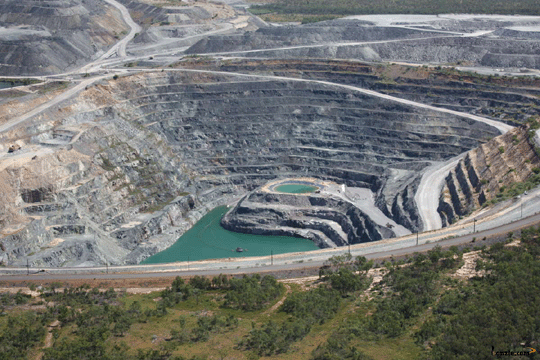 Over 40 years of high-impact uranium mining and processing at Energy Resources of Australia’s (ERA) Ranger mine in Kakadu ends today.
Australia’s longest-running uranium operation was licensed to operate until January 8, 2021.
“This is a very good day for Kakadu, the Northern Territory and Australia,” Australian Conservation Foundation nuclear campaigner Dave Sweeney said.
“The Ranger mine has generated controversy, headlines and heartache for four decades. The focus must now be on ERA and parent company Rio Tinto doing comprehensive and credible site rehabilitation and supporting the transition to a post-mining regional economy.
“Today we should also acknowledge the sustained efforts of the Mirarr Traditional Owners and the Gundjeihmi Aboriginal Corporation to protect their country and culture from the impacts of mining.
“The Mirarr opposed the Ranger mine 40 years ago, led a successful campaign to stop ERA developing a further mine at nearby Jabiluka 20 years ago, and are now driving the re-shaping of a culture- and conservation-based local economy.
“Plans for cleaning up the site of the Ranger mine are being hampered by an unrealistic rehabilitation time frame, funding uncertainty, and fears about a tailings dam leaking toxic contaminants into the surrounding national park.
“Closing Ranger, protecting Kakadu, a recent report co-authored by ACF, also found data deficiencies and technical issues, particularly around groundwater and tailings management.
“Australia has a long history of sub-standard mine rehabilitation in both the uranium and wider mining sectors. A far better approach and outcome is needed at Ranger. This work is a key test of the commitment of ERA and Rio Tinto, as well as the NT and federal governments.”
Fossil fuels benefited from the delay in renewables growth, and push for nuclear power

it’s time to let nuclear technologies retire to a well earned place in our history books. It’s deeply unfortunate that nuclear geopolitics massively extended our use of fossil fuels and hence the power of the fossil fuel industry to pivot to gas generation and delay renewables, but their time has come as well.
|
Geopolitics Of Nuclear Generation Delayed Renewables By Decades To Fossil Fuel Industry Benefit, Our Detriment, Clean Technica, December 28th, 2020 by Michael Barnard Recently someone asked me to do a thought exercise: what if we’d built renewables instead of nuclear generation? They were curious about the implications. I thought it was an interesting question, and didn’t have a great answer at hand, so I thought I’d work out what might have been.Remember, of course, that this is a thought exercise, and hence like asking how many angels could dance on the head of a pin. Well, actually, it’s a lot more sensible a discussion with a much greater likelihood of being correct than that, but undoubtedly theological-quality arguments will be made by pro-nuclear types who assert that I’m wrong. The history of electrical generation has had several phases: renewables and coal early (85,000 dams in USA alone), then nuclear and coal, then renewables and gas, and now renewables. To be clear, lots more renewables earlier with the nuclear would have been a lot better than all of that coal and gas. However, the question was whether we could have skipped nuclear entirely and gone straight to renewables. The answer is, very probably and most likely with major advantages. |
Seven beautiful Italian regions furious at sites recommended for nuclear trash
‘We’ll fight it’: Uproar over nuclear dump plan in scenic Tuscany, https://www.theage. com.au/world/europe/we-ll-fight-it-uproar-over-nuclear-dump-plan-in-scenic-tuscany-20210108-p56skh.htmly Nick Squires, January 8, 2021 Some: Italian regional leaders are fighting against plans to dump nuclear waste in some of the most picturesque areas of the country.
Some of the 67 potential sites earmarked to become a national contaminated waste facility include the rolling valleys of Tuscany and the countryside around the southern ancient town of Matera, famed for its cavernous homes.
The governors of the seven affected regions, including Piedmont, Puglia, Basilicata, Sardinia and Sicily, have accused the national government and SOGIN, Italy’s nuclear decommissioning agency, of failing to consult them. Italy closed down its nuclear power plants after a referendum in 1987 – held in the wake of the 1986 Chernobyl disaster.
The new deposit site would store waste from those power plants as well as radioactive material that is still produced by industry, hospitals and research centres.
Manolo Garosi, the mayor of Pienza, a Tuscan hill town, said he was incredulous about the prospect of a nuclear dump being located in his region.
“How can they be considering a region like ours, which has World Heritage recognition? It is totally unacceptable. This is an area of natural beauty,” he told Corriere della Sera newspaper. “I can’t imagine what tourists would say when they come here looking for beauty and discover instead radioactive waste dumps.”
Domenico Bennardi, the mayor of Matera, said locating the dump near the town would be a “slap in the face”, particularly as it was a European City of Culture in 2019. It was also used as a location for the forthcoming Bond film No Time To Die. “We’ll fight it at every level,” he said.
More than 20 of the potential dump sites are in the northern part of Lazio, famed for its Etruscan heritage, small villages and farmland. One of the sites is near the village of Gallese, where William Urquhart, a British businessman, helps run a country estate that his family has managed for more than a century.
“Of course, no one wants buried nuclear waste where they live, but it needs to be an open, transparent process. Instead, it has come as a bombshell that will frighten a lot of people.”
The publication of the map of potential sites is the first stage in a long process that could last years.
“Now that people have seen the list, they can participate in the process and express their views,” said Deputy Environment Minister Roberto Morassut.
The government said the nuclear deposit site could bring benefits to a region – there would be 4000 jobs during the four-year construction phase and up to 1000 jobs when it is operational. The 370-acre facility would cost about €900 million ($1.4 billion).
Assange denied bail after extradition blocked, will appeal to UK High Court
 Assange denied bail after extradition blocked, will appeal to UK High Court, WSW Assange denied bail after extradition blocked, will appeal to UK High Court, WSW
Thomas Scripps, 6 January 2021 WikiLeaks founder Julian Assange has been denied bail and continues to be held on remand in Belmarsh maximum-security prison.
District Judge Vanessa Baraitser handed down the decision Wednesday in Westminster Magistrates Court, after ruling on Monday against Assange’s extradition to the United States on mental health grounds. Assange will remain in custody until the prosecution’s appeal of that ruling is heard. WikiLeaks editor-in-chief Kristinn Hrafnsson announced afterwards that Assange’s legal team would be taking the bail decision to the High Court. Baraitser’s refusal to grant bail confirms that her decision not to extradite was motivated by political considerations and not any genuine concern for Assange’s health. Assange will be kept in conditions which have had a grave impact on his mental health, during a massive escalation of the UK’s COVID-19 epidemic. Speaking to the Sydney Morning Herald Tuesday, Nick Vamos, former head of special crime and head of extradition at the Crown Prosecution Service, indicated that the appeal process would likely take two to three months. In her decision, Baraitser accepted the prosecution’s insistence that Assange’s flight into the Ecuadorian embassy in 2012—after a UK court had granted him bail in connection with Sweden’s trumped-up sexual assault investigation and extradition request—was proof of his willingness to abscond in the future. This is an absurd and vindictive position…….. Assange now has a court ruling in his favour. He is, regardless, prepared to submit to stringent bail conditions amounting to effective house arrest with a GPS tag—conditions which have allowed terror suspects to receive bail. His experience of claiming asylum in an embassy has proved it “unpleasant”, in Fitzgerald’s words, and led “to him being effectively confined for some seven years” before having his asylum revoked. “That is not something that he is ever likely to repeat.” Assange also now has a family, a partner and two children, in the UK. Besides being a reason for Assange not to abscond, Fitzgerald argued, his family provides significant human rights grounds for his release on bail. On account of COVID-19 restrictions in the prison, Assange “hasn’t seen his family in person since March 2020”. He has never been able to live with them, having spent 15 months held on remand pending his extradition hearing. Assange’s family, Fitzgerald noted, is highly relevant to the question of his mental and physical wellbeing. “The grant of bail”, he said, “would allow actual physical contact with his family, that would… alleviate mental distress”. Baraitser had acknowledged the benefit of his family’s support to Assange in her ruling on extradition, which described him as a “depressed and sometimes despairing man, who is genuinely fearful about his future.” Bail would also “considerably reduce” the risk of Assange’s exposure to COVID-19. Fitzgerald pointed to the “severe outbreak” of the virus suffered by Belmarsh Prison recently and said there had been 59 positive cases prior to Christmas. He added, “on any view, the position [the state of the UK’s epidemic] is worse now and, on any view, he would be safer isolating with his family than if he was in Belmarsh.” Baraitser dismissed these concerns, declaring “this prison is managing prisoners’ health during this pandemic in an appropriate and responsible manner.”………. https://www.wsws.org/en/articles/2021/01/07/assa-j01.html?pk_campaign=assange-newsletter&pk_kwd=wsws |
|
|
The problem of ”passing the nuclear football”, if Trump avoids the inauguration
Here’s what happens to the ‘nuclear football’ if Trump skips Biden’s inauguration, Business Insider, RYAN PICKRELL, DEC 16, 2020,
- American presidents are accompanied by a military aide carrying a briefcase with the tools necessary for nuclear war.
- During presidential inaugurations, nuclear command authority and the “nuclear football,” as the briefcase is called, are transferred to the new president.
- But President Donald Trump says he will not participate in President-elect Joe Biden’s inauguration, which could complicate the transfer.
- The Pentagon told Insider there was a plan for the transfer in that scenario but declined to provide details. Nuclear-weapons experts and a former military aide who carried the briefcase were able to offer some insight though.
Trump said Friday that he “will not be going to the Inauguration on January 20th.” He did not say where he will be instead.
So what happens to the “nuclear football” that accompanies the president if Trump doesn’t show? How does it get to Biden?
“That’s a good question,” Hans Kristensen, a nuclear weapons expert at the Federation of American Scientists, told Insider. “It is an unprecedented situation.” In the nuclear age, no president has skipped their successor’s inauguration.
The transfer of the nuclear football is supposed to occur at noon as the new president is sworn in. The military aide who has been carrying the briefcase hands it off to the newly designated military aide, former Vice President Dick Cheney said in a past Discovery documentary. This traditionally happens off to the side and is not a part of the show.
If Trump is not at the inauguration, then the transfer process will be different. Still, the transfer will need to be instantaneous, said retired Air Force Lt. Col. Buzz Patterson, who carried the football for former President Bill Clinton.
Japanese town’s approval of nuclear reactor restart reflects subsidy dependence — Fukushima 311 Watchdogs

Tohoku Electric Power Co.’s Onagawa Nuclear Power Plant is pictured in Onagawa, Miyagi Prefecture, on Aug. 21, 2020. November 29, 2020 TOKYO — Japanese local governments’ dependence on “nuclear plant money” distributed by the national government was starkly highlighted recently when one town granted their approval for a reactor restart at one power plant badly […]
Japanese town’s approval of nuclear reactor restart reflects subsidy dependence — Fukushima 311 Watchdogs
65% of Fukushima evacuees have no intention of returning home: survey — Fukushima 311 Watchdogs

A research facility at Kwansei Gakuin University holds a press conference in Hyogo Prefecture on Nov. 27, 2020. November 28, 2020 Osaka – Sixty-five percent of the people who evacuated from Fukushima Prefecture after the March 2011 nuclear disaster have no intention of returning, according to a recent survey conducted by a Japanese university. While […]
65% of Fukushima evacuees have no intention of returning home: survey — Fukushima 311 Watchdogs
Almost Unnoticed Nuclear Pandemic Is Spreading in Japan — Fukushima 311 Watchdogs

By Manlio Dinucci This article was originally published in Italian on Il Manifesto. It is being republished from Global Research. Manlio Dinucci is a Research Associate of the Centre for Research on Globalization (CRG). MONTREAL (IDN) – It was not Covid-19, therefore the news went almost unnoticed: Japan will release over a million tons of […]
Almost Unnoticed Nuclear Pandemic Is Spreading in Japan — Fukushima 311 Watchdogs
January 8 Energy News — geoharvey

Opinion: ¶ “What We Learned from 100 Million Miles of Ridehailing Data” • To limit global temperature rise to 1.5°C – something the Rocky Mountain Institute believes will take the electrification of well over 50 million EVs in the US by 2030 – we must exploit every opportunity possible, including electrifying transportation network company fleets. […]
January 8 Energy News — geoharvey
Australian govt has quiet nuclear deal with China, but condemns Victoria-China medical research

Double standards on research cooperation with China, Independent Australia 4 January 2021, The Government is hypocritical in its approval of Australia’s nuclear research body to work with China on the development of nuclear reactors, writes Noel Wauchope.
PRIME MINISTER Scott Morrison’s Liberal Coalition Government seems to remain in silent approval of the Australian Nuclear Science and Technology Organisation’s (ANSTO) partnership with a Chinese company to develop Generation IV nuclear technologies such as small nuclear reactors.
But it’s a different story when it comes to the Morrison Government’s concern to put a stop to the Victorian Labor Government’s cooperation with China in developing agricultural, communications and medical research.
We hear very little about the Australian Government’s research connections with China, managed under the Australia-China Science and Research Fund (ACSRF), which has the aim of ‘supporting strategic science, technology and innovation collaboration of mutual benefit to Australia and China’.
One remarkable collaboration between Australia and China is in the strategic partnership between ANSTO and the Shanghai Institute of Applied Physics (SINAP) to develop the Thorium Molten Salt Nuclear Reactor (TMSR) and other Generation IV nuclear reactor designs.
 In March 2019, Dr Adi Paterson, then CEO of ANSTO, welcomed renewal of this agreement and was reported as stating that it was “consistent with ANSTO and Australia’s interest in and support of Generation IV reactor systems”. This statement was made at a time when Australia’s federal and state laws clearly prohibited the development of nuclear reactors.
The Age quoted anonymous senior Federal Government sources who reveal that the Australian Government may use its powers to tear up a research agreement between the Victorian Government and China’s Jiangsu province. This agreement was signed in 2012 and renewed in 2019……….
The USA partly funds the Australian Strategic Policy Institute, which strongly advises against cooperative research with China. And, of course, Victorian Liberal Opposition leader Michael O’Brien was quick to join in the chorus, condemning the Labor Government for having the deal with China.
All this makes it all the more inexplicable as to why the Australian Government should have an agreement with China to develop nuclear reactors. Under federal law, Australia prohibits establishing nuclear installations. ……..
There has been virtually no media coverage of Dr Adi Paterson’s deal with China, which goes back to 2015. I have previously written about this and the secrecy under which it was conducted.
Indeed, ANSTO’s operations and its funding have been conducted in secrecy, under the comfortable shroud of national security.
Right now, there is a move to corporatise the nuclear medicine facility at Lucas Heights as a separate entity to ANSTO. At the same time, the Government is in an unseemly rush to set up a nuclear waste dump near Kimba in South Australia. In the midst of all this came the sudden unexplained resignation of the CEO, Dr Adi Paterson.
The silence on all this is disturbing. It must be especially so for the small rural community of Kimba and for the Indigenous Title Holders as they wait in limbo for the vexed question of the nuclear waste dump to be solved. For the rest of South Australia, that is a concern, too. Victorians may well wonder why their medical research cooperation with China is seen as so dangerous. Meanwhile, is it okay for Australia’s nuclear research body, ANSTO, to work with China on the development of small nuclear reactors? https://independentaustralia.net/politics/politics-display/double-standards-on-research-cooperation-with-china,14664
1 This month
17 October, Free Public Talk on Nuclear Issues in South Australia
David Noonan will speak on public interest concerns over the new Roxby Downs Indenture Act 2026 on BHP copper-uranium mining and ore processing in SA, and on how AUKUS may face SA with a High-Level nuclear waste agenda.
Dr Jim Green will discuss international developments in the field of nuclear power including ‘small modular reactors’ and Generation 4 ‘advanced’ nuclear reactor concepts.


Help Aunty Sue Protect Her Land and Sacred Sites From Destructive Rocket Testing.
.

Australians deserve the truth
about
AUKUS – https://aukuspublicinquiry.com/

PETITION – To: Prime Minister Anthony Albanese and the Australian Labor Government

of the week – Australians for War Powers Reform (AWPR)
To see nuclear-related stories in greater depth and intensity

