Several U.S. utilities back out of deal to build Small Nuclear Reactors

|
Several U.S. utilities back out of deal to build novel nuclear power plant, Science, By Adrian Cho, Nov. 4, 2020 Plans to build an innovative new nuclear power plant—and thus revitalize the struggling U.S. nuclear industry—have taken a hit as in recent weeks: Eight of the 36 public utilities that had signed on to help build the plant have backed out of the deal. The withdrawals come just months after the Utah Associated Municipal Power Systems (UAMPS), which intends to buy the plant containing 12 small modular reactors from NuScale Power, announced that completion of the project would be delayed by 3 years to 2030. It also estimates the cost would climb from $4.2 billion to $6.1 billion………. critics of the project say the developments underscore that the plant, which is designed by NuScale Power and would be built at the Department of Energy’s (DOE’s) Idaho National Laboratory, will be untenably expensive. M. V. Ramana, a physicist who works on public policy at the University of British Columbia, Vancouver, says he’s not surprised that so many utilities have opted out of the project. The question, he says, is why so many are sticking with it. “They ought to be seeing the writing on the wall and getting out by the dozens,” he says. ………
if the NuScale plant doesn’t run constantly at full output, it will be less efficient and even more expensive to operate, in terms of cost per megawatt hour (MWh) of energy, Ramana argues. Peter Bradford, a former member of the Nuclear Regulatory Commission (NRC) and former chair of the state utility commissions in Maine and New York, says renewables coupled with short-term storage in batteries would likely be a cheaper means to even out the supply……. in the 1980s, Washington Public Power Supply System agreed to build several nuclear reactors in Washington that ran far overbudget and were never completed, leading to the biggest default on municipal bonds in U.S. history. Public utilities are particularly vulnerable to such risks, Bradford says, as other than ratepayers they have few sources of revenue that could be used to cover cost overruns. “Not only are there no deep pockets, there are no pockets,” he says. On 28 October, Heber Light & Power in Utah withdrew from the project, just 1 day after utilities in the Utah communities of Bountiful and Beaver pulled out. Still, even critics doubt the UAMPS deal will fall apart immediately. In August, the NuScale design passed a key milestone in the NRC review process, receiving its safety evaluation report, and observers expect final “design certification” to come next year. In the meantime, UAMPS is moving to complete an application to construct and operate the plant, Webb says. That application should be submitted in 2023, construction of the plant should start in 2025, he says. Before construction can start, however, UAMPS still has to line up customers to buy the full 720-megawatt output of the plant, Webb says. So far, UAMPS members involved in the project have agreed to take only a relatively small fraction of that output. So UAMPS may have to convince plenty of other folks that it’s a good deal. https://www.sciencemag.org/news/2020/11/several-us-utilities-back-out-deal-build-novel-nuclear-power-plant |
|
Frazer Nash and The South Australian Chamber of Mines and Energy (SACOME) want nuclear power – “good for the environment”!!
 SACOME pushes SA Government to back nuclear energy, Australian Mining
SACOME has also called for the state government to fund a nuclear energy forum, with South Australia holding 25 per cent of the world’s uranium resources and 80 per cent of Australia’s total uranium supply.
The chamber stated that the economic value of the nuclear fuel cycle needs to be re-examined due to the refinement and commercialisation of small modular reactors, which would be financially bolstered by South Australia’s renewable energy supply.
“SACOME supports the chief entrepreneur’s statements and calls upon the Marshall Government to establish a Nuclear Energy Forum to advance the conversation about development of a South Australian nuclear industry.”
According to Frazer Nash head of Australian business Jonathan Armstrong, the nuclear energy forum would reap positive results [??] for the environment………..https://www.australianmining.com.au/news/sacome-pushes-sa-government-to-back-nuclear-energy/
Some problems that will handicap the development of Small Nuclear Reactors
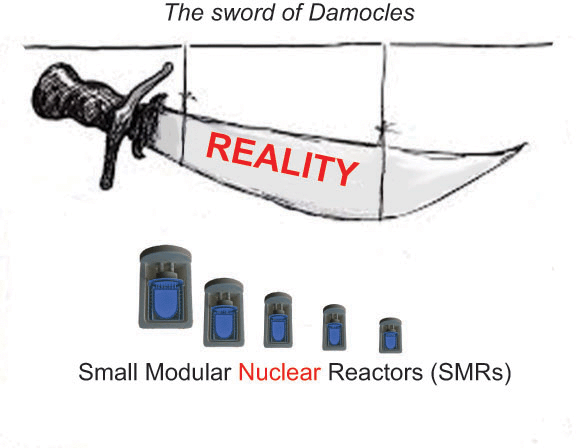 The I&C challenges for small modular reactors, Nuclear Engineering International 4 November 2020 Dr Li Li examines the instrumentation and control requirements and challenges for a new generation of small modular reactors.
REACTOR DEVELOPERS ARE DEVELOPING A wide variety of small modular reactor (SMRs)….. Many use Generation III+ pressurised water reactor (PWR) technology similar to that used in current gigawatt-scale reactors, while others are based on advanced Generation IV technologies ranging from high temperature gas-cooled reactors to molten-salt reactors.
Each design will have its own requirements for instrumentation and control (I&C) systems for the operation, monitoring and control of the reactor, turbine island and balance of plant. Even among PWRs, the design principles and I&C architectures are very different and cannot be easily replicated from one design to another.
To understand the challenges, let’s look at three competing designs: the UK SMR being developed by a consortium of companies including Rolls-Royce, Jacobs, Assystem and Atkins with support from research institutions including Nuclear AMRC; the NuScale Power Module backed by Fluor Corporation with funding from the US Department of Energy; and the Westinghouse SMR, which adapts technologies from the established AP1000 design………..
The issue of cyber security will be critical for the certification of digital I&C systems. According to the Industrial Control Systems Cyber Emergency Response Team, part of the US Department of Homeland Security, cyber-attacks and security infringement targeting control systems have increased significantly in recent years. With more digital smart devices used in nuclear power plant of any size, it must be a priority to protect the vulnerability of smart devices and digital I&C system from cyber attack and malicious sniffing from hostile individuals or organisations…….
in most cases, new codes and standards will need to be developed for advanced reactors.
The development of new codes and standards is a very lengthy process. It will take resources and time to publish a new standard for the nuclear industry, and we might not see one ready before new SMR developers file their design certification application……….
Many SMR designs, including the three considered above, have the potential to be used for co-generation of process heat, district heating or desalination. This will introduce additional complexity for regulators to approve the power plant I&C design, if the co-generation processes are located at same site for economic reasons. This brings new challenges because extra safety measures must be considered. For example, additional safety features of the control system and evacuation plan must be approved by an adequate jurisdictional authority for the orderly shutdown of both the nuclear plant and industrial processes in the event of an accident.
Author information: Dr Li Li, Head of the digital I&C group at the UK’s Nuclear Advanced Manufacturing Research Centre (Nuclear AMRC) https://www.neimagazine.com/features/featurethe-ic-challenges-for-small-modular-reactors-8345341/
Chernobyl’s bumblebees still affected by radiation
This new data shows effects on bumblebees are happening at dose rates previously thought safe for insects, and the current international recommendations will need to be re-evaluated.
|
Chernobyl: bumblebees still at risk from radiation nearly 35 years on, https://theconversation.com/chernobyl-bumblebees-still-at-risk-from-radiation-nearly-35-years-on-149055, Katherine Raines, Fellow and Lecturer, University of Stirling, November 5, 2020 In the early hours of April 26 1986, reactor four of the Chernobyl nuclear power plant in Ukraine exploded, causing the largest nuclear disaster in history. More than 350,000 people were evacuated, and a 4,700km² exclusion zone was formed in Ukraine and Belarus. Despite the intervening 34 years, there is still uncertainty about the effects of the radiation exposure on wildlife living in the Chernobyl exclusion zone (CEZ).
|
Poland’s nuclear energy plans not likely to be supported by the European Commission
Nuclear power is not considered environmentally sustainable, and there is little hope this approach will change. Therefore, the possibilities for bankrolling nuclear energy are very limited.
 Brussels’s impact on Poland’s nuclear project, https://biznesalert.com/brusselss-impact-on-polands-nuclear-project/ : Paweł Wróbel, @Pawrobel 4 Nov 20, Poland’s nuclear power plant constrsuction program has been riddled with ambiguity for many years. Neverthele, among the few certainties remains the necessity to abide by the EU law on granting state aid. The project cannot happen without Brussels. Investments in nuclear energy are one of the most expensive in the energy sector, which is why building a nuclear plant in Poland will not be possible without state support. Therefore, the European Commission will have to approve the selected financing model – Paweł Wróbel, CEO of Gate Brussels, writes for BiznesAlert.pl. Continue reading
Why AEMO’s ISP assumes over 100 pct wind and solar power, and virtually no gas — RenewEconomy

No new gas is needed for electricity generation under any of AEMO’s ISP scenarios, and wind and solar power is assumed to provide more than 100 per cent power. The post Why AEMO’s ISP assumes over 100 pct wind and solar power, and virtually no gas appeared first on RenewEconomy.
Why AEMO’s ISP assumes over 100 pct wind and solar power, and virtually no gas — RenewEconomy
Solar Insiders Podcast: Another bunch of records for solar and renewables — RenewEconomy

October was another month of records for solar and renewables across Australia. The post Solar Insiders Podcast: Another bunch of records for solar and renewables appeared first on RenewEconomy.
Solar Insiders Podcast: Another bunch of records for solar and renewables — RenewEconomy
November 4 Energy News — geoharvey

Opinion: ¶ “Fate Of Climate Crisis Hangs On Election As US Exits Paris Agreement” • On November 4, the US became the only country in the world refusing to participate in global climate efforts, with the fate of the crisis hanging on the still uncalled presidential election. Trump’s challenger, Joe Biden, would immediately rejoin the […]
November 4 Energy News — geoharvey
Darwin big battery to displace gas generators in Northern Territory — RenewEconomy

Tender opens for Darwin big battery that will support more solar and displace gas generation and slash operating costs. The post Darwin big battery to displace gas generators in Northern Territory appeared first on RenewEconomy.
Darwin big battery to displace gas generators in Northern Territory — RenewEconomy
Arizona takes important step towards 100 per cent clean power — RenewEconomy

Arizona Corporate Commission has voted to approve a plan requiring 100% reduction in carbon emissions from regulated utilities by 2050. The post Arizona takes important step towards 100 per cent clean power appeared first on RenewEconomy.
Arizona takes important step towards 100 per cent clean power — RenewEconomy
The world needs, and awaits, a reasonable and decent American Presidency, under Joe Biden

I am hopeful that Joe Biden and the Democratic Party will win this American election.
 What has this got to do with this website, which is dedicated to issues of nuclear and cimate?
Everything!
That is because the human race has got to solve these global horrors – with reasonableness, decency and fairness. That demands thoughfulness, considerateness of others, co-operation, and global effort.
The United States of America used to be a global leader – up until recently, when it has been cursed with the presidency of a narcicisstic bully, Donald Trump. Four years of a government run by this sociopath have impeded the world’s effort to slow, preferably to stop, global heating. Trump has been a willing servant of the nuclear weapons industry , indeed an investor, profiting from it. He contines to foster distrust, hatred, and division among people.
I have not been a great fan of Joe Biden. But he does bring a decency and reasonableness to politics – qualities that are essential for America and the world to face the big problems. The Democratic Party does bring a mode of co-operation, and an intelligent respect for fair and legal processes.
South Australia’s Jim Whalley provides nonsensical and misleading propaganda, spruiking small nuclear reactors

A military industry enterprise senior adviser to SA State gov is spruiking pro-International Nuclear Waste multi-decade–storage (not disposal), claiming ‘free’ nuclear energy in future, wanting to sell uranium processed into fuel rods with contracted high-level nuclear waste ‘return’ to SA, this is propaganda, non-sense and misleading.
And, by the way, The Advertiser, a pro nuclear right-wing paper, runs a poll on this – but only subscribers to this biased rag, are able to vote. Hardly suprsing that they get a pro nuclear result!
Chief entrepreneur Jim Whalley urges free nuclear power in South Australia, Nuclear energy would link up with renewable powerhouses and turn SA into a hi-tech Mecca, our chief entrepreneur says. Paul Starick, Chief Reporter, The Advertiser, Subscriber only, November 2, 2020
Chief entrepreneur, Jim Whalley, urges SA look at providing free energy through a combination of renewable and nuclear fuel, capitalising on technology advances to use small reactors to power towns across the state.
Premier Steven Marshall’s hand-picked chief entrepreneur is urging SA to consider providing free energy by coupling nuclear power with renewables to exploit a “real, natural advantage”.
Jim Whalley says hi-tech small modular nuclear reactors could be used to power places such as Adelaide, Whyalla, Port Lincoln and Mt Gambier.
Mr Whalley, who was appointed South Australia’s first chief entrepreneur in 2018 and is tasked with positioning the state as a destination for innovation, said embracing all aspects of the nuclear fuel cycle was a great opportunity that should be re-examined.
Mr Whalley, the chairman of defence firm Nova Systems and a former fighter jet pilot, told an Advertiser virtual roundtable of business leaders his “big idea” to kickstart the state from a coronavirus-induced recession was to examine free energy.
“I think energy is a real natural advantage we should have. I’d like to see us looking at providing free energy,” he said.
“We should be able to do it with renewables. We can definitely do it if we get smart about nuclear. We’ve got 42 per cent of the world’s mineable uranium. Even if we don’t start using nuclear energy, we can at least start supplying fuel rods, bring them all back, so they’re not used in weapons and bits and pieces like that. I think that does need to be looked at again.
“On the renewable side, we’ve got wind, we’ve got solar, we’ve got batteries – we should be the petri dish for future energy, and I’d like to see us take a real step forward there.”
Mr Whalley said this would make SA extremely attractive for energy-intensive industries, such as aluminium production.
“With the technology the way it’s evolving now, that stuff that we bring back and store now in another 20 years will actually be able to be used again,” said Mr Whalley, whose chief entrepreneur role is unpaid.
In November 2016, Mr Marshall withdrew support for further study of the case for a high-level nuclear waste repository, with the Liberals citing serious risks on both revenue and cost sides of the business case produced for the royal commission.
Energy and Mining Minister Dan van Holst Pellekaan said the 2016 royal commission made it clear large nuclear power generators were not economically viable.
“Small modular reactors have been proposed for several years now, but have not yet been proven up or available,” he said. “If small modular reactors become available in the future, we will assess whether they might be appropriate for our needs.”
He said SA was becoming a clean energy exporter, resulting in cheaper power. https://www.adelaidenow.com.au/news/south-australia/chief-entrepreneur-jim-whalley-urges-free-nuclear-power-in-south-australia/news-story/f0030d70b8c61535e0c79b090831a5be
315 nuclear bombs and ongoing suffering: the shameful history of nuclear testing in Australia and the Pacific
|
315 nuclear bombs and ongoing suffering: the shameful history of nuclear testing in Australia and the Pacific, https://theconversation.com/315-nuclear-bombs-and-ongoing-suffering-the-shameful-history-of-nuclear-testing-in-australia-and-the-pacific-148909, Tilman Ruff, Associate Professor, Education and Learning Unit, Nossal Institute for Global Health, School of Population and Global Health, University of Melbourne, Dimity Hawkins, PhD Candidate, Swinburne University of Technology
November 3, 2020 The Treaty on the Prohibition of Nuclear Weapons received its 50th ratification on October 24, and will therefore come into force in January 2021. A historic development, this new international law will ban the possession, development, testing, use and threat of use of nuclear weapons.Unfortunately the nuclear powers — the United Kingdom, France, the United States, Russia, China, Israel, India, Pakistan and North Korea — haven’t signed on to the treaty. As such, they are not immediately obliged to help victims and remediate contaminated environments, but others party to the treaty do have these obligations. The shifting norms around this will hopefully put ongoing pressure on nuclear testing countries to open records and to cooperate with accountability measures. For the people of the Pacific region, particularly those who bore the brunt of nuclear weapons testing during the 20th century, it will bring a new opportunity for their voices to be heard on the long-term costs of nuclear violence. The treaty is the first to enshrine enduring commitments to addressing their needs. From 1946, around 315 nuclear tests were carried out in the Pacific by the US, Britain and France. These nations’ largest ever nuclear tests took place on colonised lands and oceans, from Australia to the Marshall Islands, Kiribati to French Polynesia.
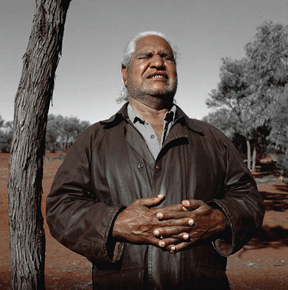
The impacts of these tests are still being felt today. All nuclear tests cause harm Studies of nuclear test workers and exposed nearby communities around the world consistently show adverse health effects, especially increased risks of cancer. The total number of global cancer deaths as a result of atmospheric nuclear test explosions has been estimated at between 2 million and 2.4 million, even though these studies used radiation risk estimates that are now dated and likely underestimated the risk. The number of additional non-fatal cancer cases caused by test explosions is similar. As confirmed in a large recent study of nuclear industry workers in France, the UK and US, the numbers of radiation-related deaths due to other diseases, such as heart attacks and strokes, is also likely to be similar. Britain conducted 12 nuclear test explosions in Australia between 1952 and 1957, and hundreds of minor trials of radioactive and toxic materials for bomb development up to 1963. These caused untold health problems for local Aboriginal people who were at the highest risk of radiation. Many of them were not properly evacuated, and some were not informed at all. We may never know the full impact of these explosions because in many cases, as the Royal Commission report on British Nuclear Tests in Australia found in 1985: “the resources allocated for Aboriginal welfare and safety were ludicrous, amounting to nothing more than a token gesture”. But we can listen to the survivors.
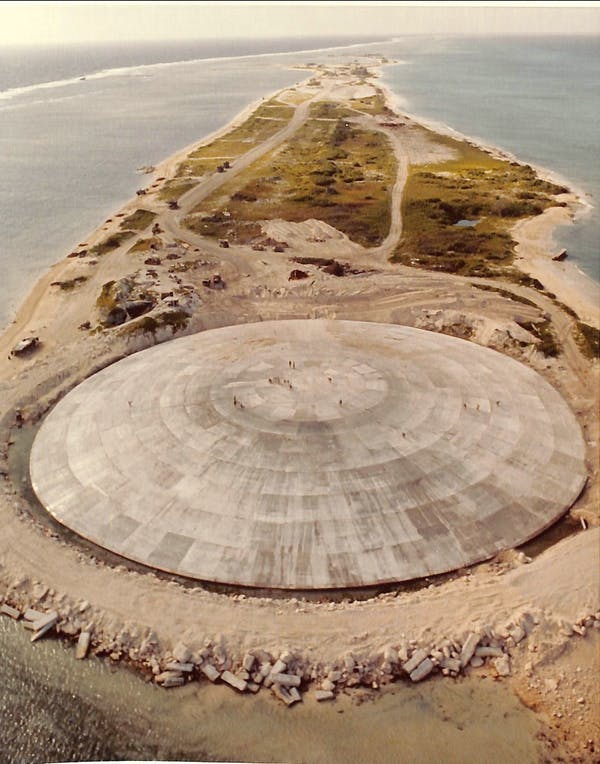
His daughter, Karina Lester, is an ambassador for the International Campaign to Abolish Nuclear Weapons in Australia, and continues to be driven by her family’s experience. She writes: For decades now my family have campaigned and spoken up against the harms of nuclear weapons because of their firsthand experience of the British nuclear tests […] Many Aboriginal people suffered from the British nuclear tests that took place in the 1950s and 1960s and many are still suffering from the impacts today. More than 16,000 Australian workers were also exposed. A key government-funded study belatedly followed these veterans over an 18-year period from 1982. Despite the difficulties of conducting a study decades later with incomplete data, it found they had 23% higher rates of cancer and 18% more deaths from cancers than the general population. An additional health impact in Pacific island countries is the toxic disease “ciguatera”, caused by certain microscopic plankton at the base of the marine food chain, which thrive on damaged coral. Their toxins concentrate up the food chain, especially in fish, and cause illness and occasional deaths in people who eat them. In the Marshall Islands, Kiritimati and French Polynesia, outbreaks of the disease among locals have been associated with coral damage caused by nuclear test explosions and the extensive military and shipping infrastructure supporting them. Pacific survivors of nuclear testing haven’t been focused solely on addressing their own considerable needs for justice and care; they’ve been powerful advocates that no one should suffer as they have ever again, and have worked tirelessly for the eradication of nuclear weapons. It’s no surprise independent Pacific island nations are strong supporters of the new treaty, accounting for ten of the first 50 ratifications. Negligence and little accountabilitySome nations that have undertaken nuclear tests have provided some care and compensation for their nuclear test workers; only the US has made some provisions for people exposed, though only for mainland US residents downwind of the Nevada Test Site. No testing nation has extended any such arrangement beyond its own shores to the colonised and minority peoples it put in harm’s way. Nor has any testing nation made fully publicly available its records of the history, conduct and effects of its nuclear tests on exposed populations and the environment. These nations have also been negligent by quickly abandoning former test sites. There has been inadequate clean-up and little or none of the long-term environmental monitoring needed to detect radioactive leakage from underground test sites into groundwater, soil and air. One example among many is the Runit concrete dome in the Marshall Islands, which holds nuclear waste from US testing in the 1940s and 50s. It’s increasingly inundated by rising sea levels, and is leaking radioactive material. The treaty provides a light in a dark time. It contains the only internationally agreed framework for all nations to verifiably eliminate nuclear weapons. It’s our fervent hope the treaty will mark the increasingly urgent beginning of the end of nuclear weapons. It is our determined expectation that our country will step up. Australia has not yet ratified the treaty, but the bitter legacy of nuclear testing across our country and region should spur us to join this new global effort. |
|
Whoever is elected US President, Morrison faces intense global pressure on climate — RenewEconomy

Despite the US on the verge of leaving the Paris Agreement, international pressure on Australia to lift its game on climate has never been higher. The post Whoever is elected US President, Morrison faces intense global pressure on climate appeared first on RenewEconomy.
Whoever is elected US President, Morrison faces intense global pressure on climate — RenewEconomy
Rest super fund commits to net-zero emission investments after Brisbane man sues
|
Rest super fund commits to net-zero emission investments after Brisbane man sues, ABC, By national science, technology and environment reporter Michael Slezak, 2 Nov 20,
A 25-year-old man from Brisbane has successfully sued one of Australia’s biggest super funds over its handling of climate change, forcing it to commit to net-zero emissions for its investments by 2050.Key points:
In 2018, Mark McVeigh sued Rest, his superannuation fund, in the Federal Court after it failed to provide him with information on how it was managing the risks of climate change. Mr McVeigh alleged Rest had breached the Superannuation Industry Act and the Corporations Act by failing to manage those risks — which could include fossil fuel companies plummeting in value or infrastructure being damaged by extreme weather. The law requires trustees of super funds to act with care, skill and diligence to act in the best interest of members — including managing material risks to its investment portfolio. In an 11th-hour settlement reached on Monday while the case was adjourned, Rest agreed its trustees have a duty to manage the financial risks of climate change. Because the case was settled out of court, the outcome doesn’t carry the same weight as a legal precedent decided in court. But Mr McVeigh’s lawyer, David Barnden, head of Equity Generation Lawyers, said the case still sets an important precedent globally. “This outcome should represent a significant shift in the market’s willingness to tackle climate risk — a shift which should set a clear precedent for the industry in Australia, and also pension funds around the world,” Mr Barnden said……….. https://www.abc.net.au/news/2020-11-02/rest-super-commits-to-net-zero-emmissions/12840204 |
|
1 This month
17 October, Free Public Talk on Nuclear Issues in South Australia
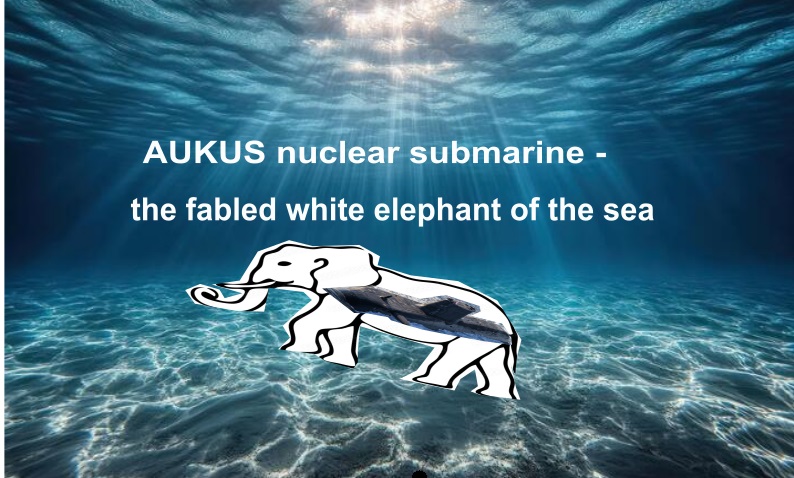
David Noonan will speak on public interest concerns over the new Roxby Downs Indenture Act 2026 on BHP copper-uranium mining and ore processing in SA, and on how AUKUS may face SA with a High-Level nuclear waste agenda.
Dr Jim Green will discuss international developments in the field of nuclear power including ‘small modular reactors’ and Generation 4 ‘advanced’ nuclear reactor concepts.


Help Aunty Sue Protect Her Land and Sacred Sites From Destructive Rocket Testing.
.
Australians deserve the truth
about
AUKUS – https://aukuspublicinquiry.com/

PETITION – To: Prime Minister Anthony Albanese and the Australian Labor Government

of the week – Australians for War Powers Reform (AWPR)
To see nuclear-related stories in greater depth and intensity

