The Coalition Nuclear Policy is a Fake
Arena Online, Darrin Durant, Jim Falk, Jim Green, 17 Apr 2025, https://arena.org.au/the-coalition-nuclear-policy-is-a-fake/
Calls for commercial nuclear power in Australia have historically all featured the Liberal National Party (LNP) promising nuclear power but later quietly shelving such plans. With a looming federal election date, that pattern seems to have returned with the Coalition running silent on nuclear power, despite the election being only weeks away. Why?
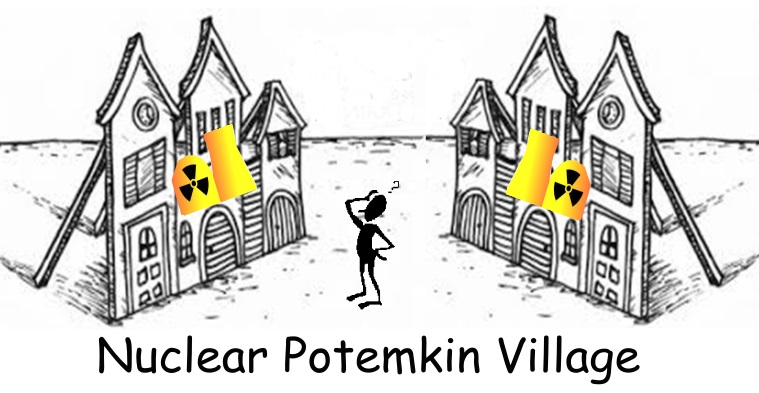
The Coalition’s policy is a bit like a Potemkin Village anyway—the fake villages said to be erected by Grigory Potemkin to impress Catherine the Great. Like them, the nuclear proposal is at best a facade, lacking essential content but acting to distract attention from division within the Coalition on emissions reductions.
Nuclear Potemkin villages
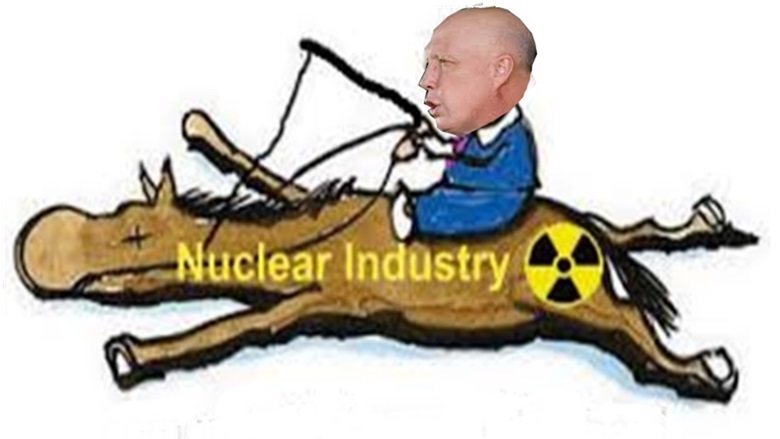
The Coalition has an electricity plan, but it is highly unlikely to actually involve nuclear reactors. The idea of nuclear reactors (large or small) with their low life-cycle emissions (at least compared to fossil fuels) provides a facade for misdirecting public attention. Behind the facade are continuing placeholders for fossil fuels, a stalling of renewables development, and a plan to keeping coal plants running as long as possible—probably switching to gas when those coal-fired power stations become technologically and economically unviable.
The long-promised Coalition nuclear plan was eventually outlined with minimal detail in June 2024 as seven reactor-site locations across New South Wales, Victoria, Queensland, South Australia and Western Australia, producing 14 gigawatt, or 38 per cent of electricity, with the first reactor supposedly coming on line by 2035–37. The claim was for an outcome ‘significantly’ cheaper than the Australian Labor Party (ALP) renewables plan. It invoked the myth of baseload power as the only route to grid reliability, and claimed it would ‘responsibly’ integrate with renewables.
On Friday 13 December 2024, when most news outlets would have already filed their stories, the Coalition released actual costings of their nuclear plan, using modelling by Frontier Economics. These costings were roundly criticized for sins of omission:
- mass under-estimations of the cost of keeping coal-plants running, the amount of planned curtailment of renewables, how much transmission nuclear would need, and the implications of not meeting net zero commitments;
- poor market-design assumptions, with the low projected cost ($263 billion less than the ALP renewables plan) being incompatible with lived experience of contemporary reactor costs. The claim of smooth renewables integration was undermined by Frontier’s own modelling suggesting solar would be curtailed to create room for nuclear;
- obfuscation of emissions, including the issue that the Coalition plan would emit more than 1.7 billion extra tonnes of carbon dioxide up to 2050 compared to the ALP renewables plan;
- assumptions about a contracted not expanded industrial manufacturing base (the Frontier scenario assumes 40 per cent less electricity use);
- systematic under-estimation of full costs of nuclear reactors (estimated in the Coalition plan to be $10 billion per gigawatt while real experience shows $15–28 billion per gigawatt).
Economic analysts have confirmed that the Coalition nuclear plan rests on accounting tricks, hiding the true cost of nuclear, ignoring the cost of petrol and gas, neglecting the cost of replacing coal-fired power stations—which will otherwise be permitted to pollute for decades—and failing to cost the damage from those higher emissions.
Astroturfing nuclear support
There is a strategic vagueness in the Coalition’s nuclear plan, which replicates a key pattern in the history of nuclear power proposals in Australia: make promises, provide insufficient detail, then walk away (rinse and repeat so long as nuclear can pretend to be a climate policy). The vagueness is strategic because the lack of essential detail in the LNP nuclear plan encourages other social actors to read their ideas into the plan. It is a form of astroturfing where the proponents of an orchestrated message attempt to hide its actual sponsors but make it appear that it is supported by unsolicited grassroots individuals.
The Frontier Economics Report purports to compare the ALP’s renewables and LNP’s nuclear plans, yet in fact compares apples to oranges, based on quite different energy-demand scenarios. The ALP scenario costs more because it serves a much higher energy consumption projection. Despite it being three years since the nuclear policy was first suggested, we have been offered no idea of what the socio-political contours of a nuclear industry would look like in Australia.
There are constitutional questions. How would the LNP garner parliamentary support to overturn both federal and state bans on nuclear facilities or impose nuclear on states? There are waste disposal questions: what confidence can publics have that vastly increasing the stock of nuclear waste to be managed would succeed, given a history of failed repository siting at Kimba, Muckaty and Woomera and a legacy of Indigenous distrust of government sowed by atomic bomb testing and the extractive industries?
There are proliferation questions. When will uncertainties in Small Modular Reactor designs be resolved in a way that permits open assessment of the proliferation risks in the nuclear fuel cycle for a nuclear-juvenile nation like Australia? There are integration questions: the Coalition assumes smooth integration of nuclear and renewables but research suggests nuclear does not ‘ramp’ well, that nuclear undermines carbon emissions mitigation strategies, and that cycling limitations and the high capital costs of nuclear make nuclear power poor fits within renewables-heavy grids.
Only half-baked answers by a flood of interest groups attempt to fill the empty policy space. Thus, the Minerals Council of Australia (MCA) has engaged in disinformation in their support of nuclear power, attacking renewables seemingly because adopting nuclear would diminish investor confidence in renewables. Whereas the MCA engages in corporate and parliamentary lobbying, media networks such as The Australian and Sky News have populated the mainstream media with repackaged climate denial and delay talk: renewables are economic black holes, solar and wind are unreliable, and decarbonization transitions need to be managed (glacially).
Popup nuclear groups, including Nuclear for Climate and WePlanet (an offshoot of the UK fossil-fuel funded RePlanet) litter the online social media spaces with new denialism. Old denialism denied anthropogenic warming. New denialism, a ‘regime of obstruction’, throws sand in the gears of the decarbonization transition to keep fossil capital in the driving seat. The effects and urgency of climate mitigation are sidelined, disarming the objection that nuclear is too slow and piecemeal. Renewables-based climate solutions are discredited. These popup public groups reinvent the rationalist critique of environmentalism, deriding anti-nuclear critics as emotional. The scientism of the popup nuclear groups is palpable.
The astroturfing effect—creating a perception of broad public support where little exists—is in part explained by an effect discussed by the experimental psychologist F.C. Bartlett in his Remembering (1932). His argument was that the complexity of a response is a function of the complexity of the responding agents, not the stimulant. Audiences fill a simple message with missing meaning. With the LNP plan, plural, polarized publics have loaded up the vague nuclear proposal (closer to a meme than a policy) with meanings. The LNP simply prodded audiences with rhetoric about ‘renewables will not cut it’ and ‘we need reliable power’, then let the existing regime of obstruction interest-groups jump in. In this way, public support for nuclear is manufactured. It’s astroturfing, via experimental psychology and the politics of division.
The Coalition nuclear plan: A Claytons policy
The Australian Coalition government has repeatedly advanced nuclear as the solution to a problem, falling in love with nuclear publicly, and then ghosting it after a brief flirtation.
The John Gorton-led Coalition Government sought to build a reactor at Jervis Bay in 1969, but the idea floundered by 1971. The John Howard-led Coalition government introduced legislation in 1998 to ban nuclear facilities in Australia, ostensibly to secure support for a new research reactor at Lucas Heights but also reflecting bipartisan agreement that commercial nuclear power lacked political legitimacy in Australia.
Yet in 2006 the Howard government commissioned a task force to spruik the potential for commercial nuclear power. The Report, authored by Ziggy Switkowski and released in 2007, suggested Australia could start in 2020 to build twenty-five reactors that by 2050 would supply one-third of Australia’s electricity. However, by 2007 the Coalition again tried to run dead on nuclear power. Having announced reactor siting would be decided according to commercial decisions, community backlash saw the Coalition first backtrack by promising binding local plebiscites for any proposed location, then shelve any nuclear legislation until after the election. Howard lost his seat, and the Coalition did not raise nuclear again.
Until they did. The South Australian (SA) Liberals pushed for a nuclear power royal commission and the SA Labor Party obliged in 2016. In 2017 the New South Wales Liberals called for a debate on nuclear power. In 2019, the federal Liberals established a parliamentary commission to canvas what would be needed to introduce commercial nuclear power into Australia. In May 2022, Peter Dutton, then in government and (supposed) fan of nuclear power, stated that nuclear was ‘not on the table’, citing concerns to reduce costs rather than raise them. Yet in October 2022 the Liberals (now from opposition) introduced a bill to remove nuclear prohibitions.
What changed? One suggestion is to be found in a podcast that emerged in 2023, where the Coalition’s Minister Matt Canavan (who introduced the bill) admitted his colleagues were ‘not serious’ about nuclear power and only engaging with it ‘because it fixes a political issue for us’.
The Australian LNP has a plan for commercial nuclear power reactors in Australia that is a Claytons energy policy. Some may recall that Claytons was a non-alcoholic beverage, marketed in the 1970s and 1980s, and promoted as ‘the drink you have when you’re not having a drink’. To refer to ‘a Claytons’ means to refer to a shadow of the real thing, a substitute, an imitation. Nuclear power in Australia is the energy policy you have when you do not have a viable energy policy.
Australian nuclear news 14 – 21st April
Headlines as they come in :
- Fact Check: No, Mum, Nuclear Won’t Reduce Costs By 25%
- No walk in the park for nuclear reactors at life’s end.
- HALF-BAKED!
- Nukes kill kids.
- Dotty and Cretinous: Reviewing AUKUS.
- The real cost of living fix is renewables, not nuclear.
- Dutton’s nuclear revival smells rotten to Gens Y and Z
- 10 reasons why nuclear energy is a bad idea for Australia.
- Tim Wilson, secretive money and “think” tanks. Australia’s democracy is at stake.
- The Australian investors betting big on fusion – the “holy grail” of nuclear tech.
- Nuclear Fantasies and Migrant Fearmongering: Dutton’s Debate Playbook Is a Fact-Free Zone
- The Coalition Nuclear Policy is a Fake.
- Peter Dutton’s nuclear power plan could lead to major electricity shortages, analysis says.
- Peter Dutton insists there’s enough water for his seven nuclear plants, contradicting shadow frontbencher
- Forget nuclear, Australia is on fast lane to 100pc renewables.
- Dutton’s nuclear push will cost renewable jobs
- Victorian Liberal leader distances state party from Peter Dutton’s nuclear proposal: ‘Our focus is gas’
- Coalition’s nuclear power pitch falling flat with some voters, Vote Compass data suggests.
- Rightwing lobby group Advance says it makes ‘no apology’ for support given to anti-Greens groups
Forget nuclear, Australia is on fast lane to 100pc renewables
by Andrew Blakers | Apr 11, 2025 https://michaelwest.com.au/forget-nuclear-australia-is-on-fast-lane-to-100pc-renewables-solar/
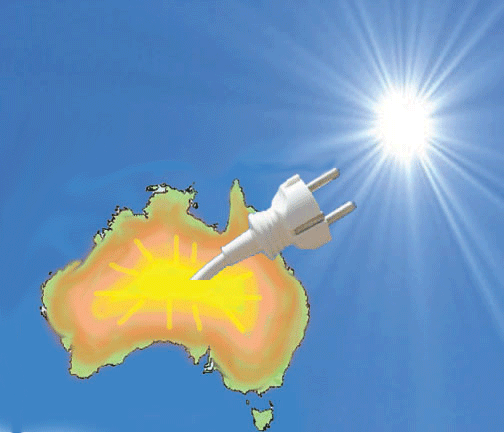
Gas is the talk of the town, while nuclear is not, but a massive increase in solar power generation capacity has already put Australia on the fast track to a 100% renewable energy future. Solar cell engineer
Andrew Blakers explains.
An academic living in cold Canberra retired his gas heaters a few years ago and installed electric heat pumps for space and water heating. His gas bill went to zero. He also bought an electric vehicle, so his petrol bill went to zero.
He then installed rooftop solar panels that export enough solar electricity to the grid to pay for electricity imports at night, so his electricity bill also went to zero. That Canberra academic will get his money back from these energy investments in about eight years.
I am that academic.
Solar energy is causing the fastest energy change in history. Along with support from wind energy, it offers unlimited, cheap, clean and reliable energy forever.
With energy storage effectively a problem solved, the required raw materials impossible to exhaust — despite some misconceptions in the community — and an Australian transition gathering pace,
“solar and wind are becoming a superhighway to a future of 100 percent renewable energy.“
While the technological arguments for solar and wind power are compelling, it’s clear renewables have to overcome obstacles.
One is the division over the impact of the rollout of renewable energy infrastructure. It has divided affected communities across the country and needs to be addressed. Generous compensation and effective education about large regional economic opportunities are good ways forward.
There is also the political debate about what form Australia’s energy transition should take.
Solar surge
Yet, beyond those issues, solar offers unlimited energy for billions of years and provides the cheapest energy in history with zero greenhouse gases, zero smog and zero water consumption.
That explains why solar energy generation is growing tenfold each decade and, with support from wind, dominates global power station construction markets, while global nuclear electricity generation has been static for 30 years and is largely irrelevant.
In 2024, twice as much new solar generation capacity — about 560 gigawatts — was added compared with all other systems put together. Wind, hydro, coal, gas and nuclear added up to about 280 gigawatts.
There will be more global solar generation capacity in 2030 than everything else combined, assuming current growth rates continue. Solar generation will pass wind and nuclear generation this year and should catch coal generation around 2031.
About 37 percent of Australia’s electricity already comes from solar and wind, with an additional 6 percent from hydroelectric power stations that were built decades ago.
“More solar energy is generated per person in Australia than in any other country.”
Solar is by far the best method of removing fossil fuels, which cause three-quarters of global greenhouse gas emissions, from the economy.
In Australia, 99 percent of new generation capacity installed since 2015 has been solar and wind, and it is all private money. The energy market is saying very clearly that solar and wind have won the energy race and energy policies are consistent with reaching the government target of 82 percent renewable electricity by 2030.
Solar on the roof coupled with energy storage in a hot water tank, an EV battery and a home battery allows a family to ride through interruptions to gas, petrol and electricity supply and that energy resilience can apply at domestic, city, state and national levels.
Managing the balance
Balancing high levels of solar and wind energy to avoid supply interruptions is straightforward at low cost using off-the-shelf technology available from vast production lines. New transmission brings new solar and wind power into the cities and also smooths out the vagaries of local weather by transmitting solar and wind electricity to where it is needed.
For example, if it is raining in Victoria and sunny in New South Wales, then electricity can be transmitted south. Storage comprises batteries for short-term storage of a few hours and pumped hydro energy storage for hours to days.
“Together, batteries and pumped hydro solve the energy storage issues.“
Pumped hydro energy storage provides about 95 percent of global energy storage. It typically comprises two reservoirs located a few kilometres apart and with an altitude difference of between 500 and 1,000 metres.
On sunny or windy days, renewable sources like solar or wind power are used to pump water into the uphill reservoir, and during the night, the water flows back downhill through the turbine to recover the stored energy.
The same water can go up and down between the reservoirs for 100 years. Global potential pumped hydro energy storage is equivalent to two trillion electric vehicle batteries.
Australia has about 300 times more pumped hydro energy storage potential than needed to support 100 percent renewable electricity. It already has three pumped hydro systems, with two more under construction.
Globally, the world has more than 820,000 potential pumped hydro sites, which is about 200 times more than we need to support a 100 percent renewable energy system.
When eventually complete, Snowy 2.0 will provide 85 percent of energy storage in the national energy market at a cost 10 times lower than equivalent batteries and with a lifetime that is five times longer.
Myths and misconceptions
There are those — often vested interests — who throw up arguments against solar energy, regardless of what the facts say about its merits.
Here are a few:
- It takes up valuable farmland. Most of the area in solar and wind farms remains in use for agriculture. The area withdrawn from agriculture to generate all our energy from solar and wind is very small, equating to about the size of a large living room per person.
- The rural landscape can’t fit in any more solar and wind farms. Heat maps developed by researchers at the Australian National University show the vast number of good locations for solar and wind farms.
- Renewable infrastructure is a blight on the landscape. Hosts of solar and wind farms (and their neighbours) are generously compensated, while hosts of transmission lines are paid more than $200,000 per km. All the solar farms, wind farms, transmission and pumped hydro are in regional areas, which means that vast amounts of money and employment are flowing into regional areas. Solar farms are usually invisible from other properties. Open-cut roads, buildings, open-cut coal mines and gas fields are also visible in the landscape. People in cities have a far more cluttered view from their windows than rural people.
- We will run out of critical minerals. No critical minerals are required, only substitutable minerals. Solar panels require silicon for the solar cells, glass, plastic and conductors, which are made from extremely abundant materials.
- We will drown in solar panel waste. The amount of solar panel waste generated when all energy (not just electricity) comes from solar amounts to about 16 kg per person per year (mostly glass). Panel waste is a small and solvable problem.
Nuclear Energy Means Climate Action Delay: O’Donnell and Winfield

Susan O’Donnell and Mark Winfield, https://www.theenergymix.com/nuclear-energy-means-climate-action-delay-odonnell-and-winfield/ 16 Apr 25
What is the best way for utilities to delay the transition from fossil fuels? Propose to build nuclear reactors.
Electricity utilities wanting to “decarbonize” have several options for replacing the fossil fuel (coal, oil and gas) plants on their grids: aim to increase energy efficiency and productivity; add new renewable energy and storage resources; consider adding carbon capture and storage (CCS); or propose to build new nuclear reactors.
By objective measures, building new nuclear power plants will cost more, take longer to deploy, and introduce catastrophic accident risks—relative to improving energy productivity, expanding renewables with energy storage, and developing distributed energy resources. CCS suffers from limits of appropriate geology, reduced plant efficiency, and high costs.
However, if the goal is to keep fossil fuel-fired plants operating as long as possible, promising to build more nuclear energy has definite appeal.
Reactor design, planning, and build times are notoriously long—usually measured in decades—with well-established patterns of significant “unexpected” delays. Delaying while waiting for the promised new nuclear builds or reactor refurbishments maintains the status quo, effectively kicking actual climate action well down the road.
The two Canadian provinces with operating nuclear power reactors, Ontario and New Brunswick, provide case studies in this strategy. Both provinces are investing in significant new fossil gas generating infrastructure while waiting for new reactor designs to be developed and then built.
In Ontario, greenhouse gas emissions from the electricity sector have already risen dramatically as fossil gas plants are run to replace out-of-service nuclear reactors, and the province proposes to add more gas-fired generating capacity to its system. After a nearly decade-long hiatus, it only recently proposed a feeble reengagement with renewable energy. New nuclear reactor builds at Darlington, Bruce, and now Wesleyville, with timelines stretching well into the 2030s and 40s, remain the centrepiece of its energy (and supposed) climate strategy.
New Brunswick’s NB Power plans to add 600 MW of new nuclear power at its Point Lepreau nuclear site on the Bay of Fundy. Calls to build renewables instead have been rebuffed. In 2018, the province invited two nuclear start-up companies to set up in Saint John and apply for federal funding. Despite generous support from federal and provincial taxpayers, the companies have been unable to attract matching private funds. The NB Power CEO recently said she is “unsure” if the ARC-100, the reactor design promoted in 2018 as the closest to commercialization, will be ready by “the late 2030s.”
Meanwhile, the government recently announced support for building a large fossil gas plant, the biggest power project in the province in more than a decade.
The reality is that the new nuclear reactors being pushed by proponents are largely “PowerPoint reactors”—unproven and unbuilt designs. The BWRX-300 reactor that Ontario Power Generation (OPG) is proposing for its Darlington site, for example, lacks a fully-developed design, including key elements like safety systems. The Canadian Nuclear Safety Commission (CNSC) still gave OPG a licence to build it, while the U.S. Nuclear Regulatory Commission is still reviewing the design and asking for more information.
Recent analyses from the U.S. Tennessee Valley Authority also suggest the cost of the reactors will be far higher than OPG has claimed, and the timeline to construction and completion by 2030 seems less and less likely.
The new Monark design for a CANDU reactor that AtkinsRéalis (formerly SNC Lavalin) is proposing for the Bruce Power nuclear site is even further behind the BWRX-300 in development. According to the CNSC, the Monark is at a “familiarization and planning” stage, with no date set for even the first, preliminary stage of the design review.
The Monark’s main competitor is the AP-1000 reactor by Westinghouse. In 2002, the company submitted the AP-1000 design for formal review by the U.S. Nuclear Regulatory Commission. Two reactors came online in 2023 and 2024 at the Vogtle plant in Georgia, more than two decades later and twice the original timeline. Prior to the Vogtle project, the last reactor to come online in the U.S. took more than five decades from the start of construction to supplying power to the grid.
The final cost of the recent Vogtle project, at US$36.8 billion, was more than twice the original budget. If the same cost profile is applied to Ontario’s nuclear expansion projects, the total bill to Ontario electricity ratepayers and taxpayers could exceed $350 billion.
Promising to build more nuclear power is a political path to climate action delay and a distraction from a sustainable and decarbonized energy system transition. There is a reason why the International Energy Agency predicts that despite new nuclear reactor builds, nuclear energy will provide only eight percent of electricity supplies globally by 2050. In the meantime, while renewables development continues to accelerate globally, Canadian utilities, detoured by nuclear and CCS ambitions, double down on fossil gas and drift further and further behind in the global energy revolution.
Dr. Susan O’Donnell is adjunct research professor and lead investigator of the CEDAR project at St. Thomas University in Fredericton. Dr. Mark Winfield is a professor at the Faculty of Environmental and Urban Change at York University in Toronto, and co-chair of the faculty’s Sustainable Energy Initiative.
.
Victorian Liberal leader distances state party from Peter Dutton’s nuclear proposal: ‘Our focus is gas’

Brad Battin says he had a conversation with the federal opposition leader about the ‘language’ he would use about plans to build a nuclear reactor in eastern Victoria
Benita Kolovos Victorian state correspondent, https://www.theguardian.com/australia-news/2025/apr/15/victorian-liberal-leader-brad-battin-distances-state-party-from-peter-dutton-nuclear-proposal
The Victorian opposition leader says he discussed the language he would use to distance the state party from the federal Coalition’s campaign to build a nuclear reactor in the Latrobe Valley, telling Peter Dutton “it’s your campaign”.
The Loy Yang coal-fired power station in the Latrobe Valley east of Melbourne is one of seven proposed sites for the federal Coalition’s proposal to build nuclear reactors, the centrepiece energy policy the federal Liberal leader will be taking to the 3 May poll.
But in his first interview with Guardian Australia since becoming the state Liberal leader in December, Brad Battin was clear to separate his team from the proposal, saying: “Our focus is gas, let the feds get on with what they’ve got to get on with.”
He confirmed he had not spoken to anyone in the federal Coalition about its two-and-a-half-year consultation plan for each proposed nuclear site, with the issue “barely raised” at all on the campaign trail.
However, Battin said a conversation had taken place with Dutton and his office about how he would handle questions on the policy.
“I’ve had the conversation with Dutton and his office around what my language is going to be, which is basically saying, ‘We’re happy to have a conversation at the right time. But for us, it’s your campaign at the moment. Our priority, our focus, is on gas,’” he said.
Battin said the federal Coalition would need state parliament to overturn Victoria’s Nuclear Activities (Prohibitions) Act of 1983, which bans the construction and operation of nuclear facilities in the state. Asked if he would be happy with that law being overturned, he said: “I’ll let you know on 4 May.”
Without the support of state parliament, Battin said a Dutton government would face a “difficult process” under section 109 of the constitution, which allows federal law to override state law in the case of conflict.
At his campaign launch on Sunday, Dutton vowed that Australia would become a “nuclear-powered nation” under the Coalition if elected. He said nuclear energy would reduce the need for “sprawling solar and windfarms or laying down 28,000km of transmission lines”.
Battin, however, said most Victorians wanted cheaper energy but “don’t know what the answer to that is yet”.
He said that as existing gas fields in Victoria’s Gippsland and Otway basins continue to deplete, the state should prioritise expanding onshore gas exploration instead.
The comments mark a shift in tone for Battin, who has spent months sticking to a carefully worded position that the Victorian Coalition was open to an “adult conversation” about the policy. He has also repeatedly refused to provide a personal view on nuclear energy.
How climate change could disrupt the construction and operations of US nuclear submarines

By Allie Maloney | April 14, 2025 https://thebulletin.org/2025/04/how-climate-change-could-disrupt-the-construction-and-operations-of-us-nuclear-submarines/ Allie Maloney is the Herbert Scoville Jr. Peace Fellow with the Nuclear Information Project at the Federation of American Scientists. Maloney holds two bachelor’s degrees in international affairs and political science from the University of Georgia. Previously, she was a Richard B. Russell Security Leadership Fellow at the University of Georgia’s Center for International Trade and Security.
The US Defense Department is currently in the midst of a multi-decade-long nuclear modernization effort that includes replacing all the nuclear submarines making up the sea leg of the US nuclear triad. The nuclear-armed and -powered submarines—which hold over half of deployed US nuclear warheads—are known for their “survivability,” thereby providing the United States with second-strike capability even after a surprise attack.
But climate change could make the US submarine force inoperable over the coming decades.
Rising sea levels and extreme weather events increasingly threaten the submarine force’s infrastructure, which is mainly located in at-risk flood areas. This vulnerability reveals the precarious state of nuclear weapons—which the Defense Department considers the “backbone of America’s national security”—to the threat of climate change.
Threat multiplier. The Navy plans to spend $130 billion on procuring new Columbia-class nuclear-powered ballistic missile submarines (SSBNs) over the next two decades to replace the current Ohio-class fleet. The delivery of the lead boat—the USS District of Columbia (SSBN-826)—has already been delayed by 12 to 16 months due to insufficient work instructions, low material availability, and disruptions from the COVID-19 pandemic. It is now only about halfway through construction. According to the Government Accountability Office, budget overruns are five to six times higher than estimates by the Navy and General Dynamics Electric Boat, the submarine’s building company. As the Pentagon spends more and more on modernizing its nuclear submarines, natural disasters are likely to disrupt supply chains and damage nuclear facilities, sinking costs further.
In recent years, the Defense Department has started to acknowledge climate change as a “threat multiplier”—albeit slowly. Acknowledging the billions of dollars climate change could cost the Navy in the future, the Pentagon now incorporates inclement weather disasters and other climate effects into military planning and base structures. However, during the first Trump administration, the Navy quietly ended the climate change task force put in place by the Obama administration, which taught naval leaders how to adapt to rising sea levels. As the new Trump administration wipes all mention of climate change and other environmental measures from federal agency websites, climate-related measures may also be halted despite being critical for the viability of naval missions.
Most of the naval construction and operations infrastructure for the United States’ ballistic missile submarines are located on the Pacific and Atlantic coasts. Due to sea level rise and increased inclement weather attributed to climate change, these facilities are becoming more vulnerable to flooding. The intensity and number of hurricanes in the North Atlantic region have increased since the 1980s and will continue to do so as ocean temperatures keep rising, further threatening coastal areas. These incidents are highly costly and disruptive to operations. According to a Congressional Research Service report, the Defense Department has 1,700 coastal military installations that could be impacted by sea level rise. In 2018, Tyndall Air Force Base in Florida suffered $4.7 billion in damages from Hurricane Michael.
Infrastructure at risk.……………………………………………………………………………………………………………………
Self-induced vulnerability. The Navy’s Final Environmental Assessment for the Columbia class submarines estimated that homeporting at Kings Bay, Georgia, would result in emissions of 998 metric tons of carbon dioxide equivalent. This is equivalent to 1,108,593 pounds of coal burned and the amount of carbon sequestered by 1,001 acres of US forests in one year. General Dynamic’s greenhouse gas emissions for 2023 were around 713,874 metric tons—over 700 times higher. While it had committed to reducing GHG emissions in 2019, the company’s emissions have increased since taking on several Pentagon contracts related to nuclear modernization.
The geophysical threats the nuclear deterrent faces show just how precarious these weapons are. As the United States builds new ships for national security, it also contributes to the sinking of its bases. A nuclear weapon buildup is vulnerable to changing environments and cannot save the United States from the looming threat of climate change.
Dutton’s nuclear push will cost renewable jobs
by Charlie Joyce, https://australiainstitute.org.au/post/duttons-nuclear-push-will-cost-renewable-jobs/
As Australia’s federal election campaign has finally begun, opposition leader Peter Dutton’s proposal to spend hundreds of billions in public money to build seven nuclear power plants across the country has been carefully scrutinized.
The technological unfeasibility, staggering cost, and scant detail of the Coalition’s nuclear proposal have brought criticism from federal and state governments, the CSIRO, the Climate Council, the Electrical Trade Union (ETU), the Climate Change Authority, the Australia Institute, and independent energy experts.
The CSIRO, among others, has refuted the Coalition’s claim that nuclear will be cheaper than renewables; instead, they have shown the energy produced by Australian reactors would cost approximately eight times more than the same amount of energy produced by renewables. If this cost is passed on to consumers, the average household would pay $590 per year more on their power bill. Unsurprisingly, Australia Institute polling has found that fewer than one in twenty Australians (4%) are prepared to pay this nuclear premium.
The cost alone should be enough to bury this nuclear proposal. But it is also important to recognise how the Coalition’s plan will impact – and fail – workers.
False promises
The Coalition has proposed that large nuclear reactors would be built on the sites of five operational or recently decommissioned coal fired power stations: Liddell and Mount Piper in New South Wales, Tarong and Callide in Queensland, and Loy Yang in Victoria. In doing so, the Coalition has promised that nuclear energy would be a source of stable and plentiful work for the communities where coal-fired power plants are phasing down.
This is a false promise. Six coal fired power stations have already closed in the past decade, with 90% of Australia’s remaining coal-fired power stations set to close in the next decade. These communities are already undergoing structural adjustment, and they need new sources of employment now. But this is not what the Coalition’s plan delivers. The Coalition outlines that the first two nuclear reactors would not come online until the mid-2030s – more than a decade from now – while the remainder would be completed by 2050.
And energy and technology experts agree that even this timeline is impossible. On average, a nuclear reactor takes 9.4 years just to build in countries with established and capable nuclear industries. Former Australian Chief Scientist Alan Finkel has estimated that it would take until the mid-2040s at the earliest for Australia to build an operational nuclear reactor. Moreover, analysis from the Institute for Energy, Economic & Financial Analysis (IEEFA) has found that, in economies comparable to Australia’s, every single nuclear reactor project experienced multi-year delays and cost blowouts of up to three and a half times over budget. It is hard to see how Australia, which lacks the experienced workforce, training and research base, or regulatory framework, would buck this trend.
Lost jobs
While the Coalition’s nuclear plan would not bring jobs to the communities that need them, it might have the real effect of depressing investment in renewables.
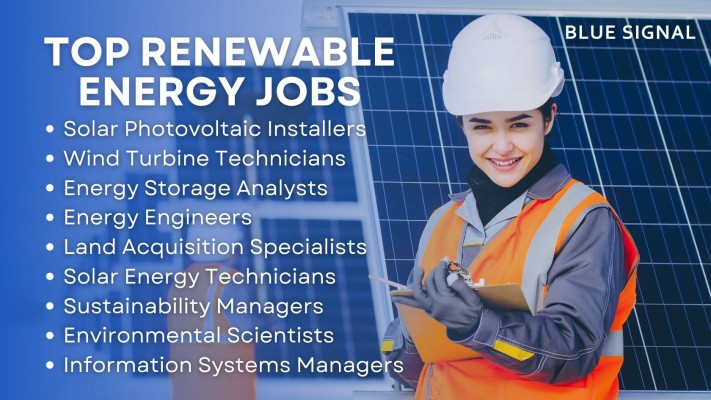
Renewable energy already generates approximately 40% of Australia’s energy and is by far the cheapest form of electricity. Renewable energy industries already account for the employment of tens of thousands of workers, and Jobs and Skills Australia estimates that approximately 240,000 new workers will be required in industries associated with clean energy by 2030.
But this requires ongoing and expanding investment in renewables, which the Coalition’s nuclear policy is likely to derail. The Clean Energy Council has estimated that by capping renewable energy to 54% of total use (as the Coalition’s modelling has assumed), 29GW of renewable energy generation projects would not be built – squandering an expected 37,700 full-time-equivalent construction jobs and 5,000 ongoing jobs in operations and maintenance. By limiting renewables investment, prolonging fossil fuel usage, and diverting investment towards nuclear energy, the full employment opportunities of the renewable energy transition are lost.
Scarce and dangerous work
If the Coalition’s nuclear plan does come to fruition it will hardly create any ongoing jobs for the communities that have undergone structural readjustment. According to analysis from the Nuclear Energy Agency, while the peak period of construction of the average 1GW nuclear power plant can demand up to 3,500 workers, ongoing operations and maintenance will only require about 400 workers – with only a quarter of these being onsite blue-collar jobs that might provide work for the people who will have lost jobs with the closure of coal-fired power stations. Most jobs will be in administration, regulatory compliance, energy, marketing, sales, science and emergency personnel – and many of them are likely to be located away from the nuclear facility itself.
Disturbingly, any jobs on-site may put the health of workers at risk. Recent analysis of multiple studies of the health impacts of nuclear power plant employment across multiple countries found that workers have a significantly higher risk of mesothelioma and circulatory disease due to exposure to radiation. Nearby residents also exhibit a significantly higher risks of cancer, with children under the age of five at particular risk. And this does not even factor in the risk of sudden plant failure and reactor meltdown on workers and communities – a risk sharpened by the Coalition’s plan for these reactors to be built on geological fault lines with heightened earthquake risk.
Australian workers have much to gain from the renewable energy transition, including cheaper power, new clean technology industries, and hundreds of thousands of new jobs. The Coalition’s nuclear plan only brings false promises, lost jobs, and – if the plan comes to fruition – few jobs and potentially dangerous work.
Coalition’s nuclear power pitch falling flat with some voters, Vote Compass data suggests

ABC By Vote Compass reporter Isabella Higgins and Claudia Williams, Topic:Australian Federal Elections, Sat 12 Apr 25 [excellent tables]
The Coalition’s pitch for nuclear power in Australia appears to be struggling for support among some key voters, as the nation prepares to vote on its energy future.
New data from the ABC’s Vote Compass survey shows respondents are divided on nuclear energy, while support for climate change action appears to have softened.
About 47 per cent of ABC Vote Compass respondents said they strongly disagreed or somewhat disagreed with building nuclear power plants, while 38 per cent were somewhat or strongly supportive.
Perth local Gabriel Maddock said she’s made up her mind on nuclear energy, and it is a decision she is making with her young children in mind.
“I don’t think it will be better for the environment, it’s going to be hugely expensive, and I think there’s serious safety risks,” the 35-year-old told the ABC.
ABC Vote Compass found views towards nuclear were split along party lines, while men were more supportive, and those over 65 were the age group most likely to be unsupportive.
According to Vote Compass data, 29 per cent of males strongly disagree with the plan while 41.9 per cent of females disagree.
However, the data shows strong support from those who intend to vote for the Coalition with 44 per cent saying they agree Australia should build nuclear power plants.
This contrasts with those who plan to vote for independents, Labor and the Greens — with just 7, 5, and 4 per cent respectively in strong agreement.
This data comes from a sample of more than 270,000 and has been demographically weighted…………………………………………………………………………………………………
The Coalition is promising by 2050 Australia will get 38 per cent of its power from nuclear energy, 54 per cent from renewables, and 8 per cent from storage and gas.
Some experts have questioned the projected cost and timelines of the Coalition’s nuclear plan.
Meanwhile, Labor plans to have a grid almost totally powered by renewable energy, with the target of reaching 82 per cent of renewable energy by 2030 and fully renewable by 2050.
Ms Maddock is concerned that a switch to nuclear power would lead to more carbon emissions in the shorter term.
“From a climate perspective, it seems like it’s solving one environmental issue with another, because nuclear waste is a very difficult thing to deal with,” she said.
“Why would we do that when we could continue developing our renewable power, something Australia is really in a position to be a leader in.”……………………………………………………………………………
Vote Compass is an educational tool designed to promote electoral literacy and civic engagement. While not a conventional public opinion poll, Vote Compass responses can be analysed using statistical methods similar to those used in polling to try to adjust for sampling bias.
Responses have been weighted by gender, age, education, language, religion, place of residence and past vote to account for the selection effects of the sample, enabling us to make statistical inferences about the Australian population.
Nuclear news – not the industry handouts

Some bits of good news – ‘Friendship benches’ are coming to England.
Power to the people: the rise of community energy
How an Ancient Yemeni Tradition Is Reviving Bee Populations.
TOP STORIES.
Trump’s Iran talks can succeed if the administration embraces reality rather than myth. Trump has threatened Iran over an ultimatum that likely cannot be met.
From the archives – ‘How Many Nuclear Bombs Has The US Air Force Lost?
Climate. Arctic sea ice hit a record low as global powers eye shipping routes.
Noel’s notes. The irrational optimism of the nuclear power lobby.
AUSTRALIA.
- Community groups furious Coalition nuclear plan would go ahead even if locals oppose it.
- As the debate around renewables and nuclear continues, here is what the experts say.
- How US Dependence is Not in Our Best Interest.
- What if a Fukushima-sized nuclear accident happened near you? – https://www.youtube.com/watch?v=VIModFC_9kI
- Nuclear would funnel up to 200 Gigalitres away from Australian farms annually.
- Going nuclear will decimate jobs in regions first, stop billions in new investment.
- Israeli Defence Force courts Australian universities amid anti-war protests.
- More Australian nuclear news at https://antinuclear.net/2025/04/10/australian-nuclear-news-7-14-april/
ATROCITIES. Israel is About to Empty Gaza . How Israel hunts and executes Palestinian medics.
| ETHICS and RELIGION. The Journey Beyond Nukes Begins with an Apology. |
| EVENTS. In Chicago: Testimonies of Korean Atomic Bomb Victims and International People’s Tribunal Promotion Events. |
| HISTORY. We thought it was the end of the world’: How the US dropped four nuclear bombs on Spain in 1966 |
| LEGAL. The top Republicans in the Arizona Legislature want the federal government to cut back regulations on the nuclear energy industry. |
| MEDIA. Media Find Ways to Minimize Israel’s Murder of Paramedics. When will progressive media acknowledge and condemn US enabled genocide in Gaza. |
| OPPOSITION to NUCLEAR .Attacked, demonized and forced into hiding. Nuclear waste returns to Germany amid protests. The 2025 Nuclear-Free Future Awards. Youth Leading the Charge for a Nuclear-Free Future. Raising Funds to Stop Lake District Coast Sub-Sea Nuclear Dump. NFLAs ‘shout up’ for National Parks to be spared from nuclear development. |
| SPACE. EXPLORATION, WEAPONS. ESA’s new documentary paints worrying picture of Earth’s orbital junk problem. |
| TECHNOLOGY. The Flamanville EPR nuclear reactor will not be able to deliver its full power without major works – ALSO AT https://nuclear-news.net/2025/04/12/1-a-the-flamanville-epr-nuclear-reactor-will-not-be-able-to-deliver-its-full-power-without-major-works/ Radiation Monitoring – Scottish university in ‘world-first’ for nuclear technology. UK Government convenes AI Energy Council, but could be ignoring hidden climate impacts in supply chains. |
| WASTES. Nuclear waste sparks fury in Germany. |
| WAR and CONFLICT. Russia holds all the cards. |
| WEAPONS and WEAPONS SALES. Inside the New Mexico lab where the U.S. is moving into the most terrifying chapter of the nuclear arms race. Walt Zlotow: Trump, Hegseth off by nearly 1 trillion on national security budget. To Secure U.S. Energy Dominance, the Department of Defense Selects Eligible Companies for the Advanced Nuclear Power for Installations Program. |
Rightwing lobby group Advance says it makes ‘no apology’ for support given to anti-Greens groups

Advance has also focused on the anti-renewables movement, appearing at “energy forums” across the country and events held by groups set up to oppose the roll-out of offshore wind and solar energy.
Ariel Bogle, 13 Apr 25 https://www.theguardian.com/australia-news/2025/apr/13/rightwing-lobby-group-advance-says-it-makes-no-apology-for-support-given-to-anti-greens-groups?CMP=share_btn_url
Spokesperson acknowledges supply of flyers, T-shirts and corflutes to ‘dozens of community groups’ seeking to defeat party’s candidates.
The rightwing advocacy group Advance has acknowledged it is paying for election materials attacking the Greens to be used by third-party groups during the election campaign.
“Advance is working with hundreds of volunteers from dozens of community groups to defeat Greens candidates and we make no apology,” a spokesperson said.
The spokesperson said Advance did not fund groups directly but “we absolutely pay for anti-Greens campaign material to be at the disposal of volunteers”.
“This includes 2m flyers and thousands of T-shirts and corflutes.
“Again, we make no apologies.”
The group’s plan to focus its election campaign on reducing the Greens vote has been no secret. Advance’s executive director, Matthew Sheahan, claimed in a February email to supporters it had already raised $7.6m to “smash the Greens” and about $2m to target Labor. The group has spent more than $200,000 in the past week to promote posts from Facebook pages with names such as “Greens Truth”.
But it has not previously talked publicly about the extent of its support for other groups hostile to the Greens, including those that take exception to the party’s position on the Israel-Gaza war or on renewable energy.
The type of assistance Advance has on offer was revealed by two Jewish advocacy groups at a forum hosted by the Australian Jewish Association (AJA).
Simonne Whine of J-United, which campaigned against the Greens in the recent Prahran byelection in Victoria, said her group had reached out to Advance to get its campaign started.
“They were fantastic, efficient, strategic, well resourced,” she said. “They supplied the flyers, the T-shirts and the corflutes, and shipped everything to Melbourne, helping us hit the ground running.” Advance even paid for a picnic to thank volunteers, Whine said.
During last year’s Queensland state election, the Queensland Jewish Collective (QJC) also focused on the Greens vote in Brisbane seats such as Maiwar and Moggill. One of the group’s directors, Roz Mendelle, told the AJA forum QJC had spoken with Advance after seeing its work during the campaign against the Indigenous voice to parliament.
“When time came … to do something against the Greens here in Brisbane, I knew who to turn to,” Mendelle said, claiming that Advance kept “a healthy distance” while the campaign was under way. According to an event invitation seen by Guardian Australia, QJC held a volunteer event with Advance in February.
Mendelle is a co-director of a new group, Minority Impact Coalition (MIC), which has started a billboard campaign against Labor and the Greens in multiple states. A spokesperson for both groups said neither QJC nor MIC had received materials or funding from Advance.
“We had agreed to share volunteers for the federal election,” she said. “However, our volunteers do not want to work with Advance at the federal election so we have made the decision to do our own groundforce campaign.”
During the AJA briefing, Mendelle showed an image of a billboard paid for by QJC that read: “The Greens: They’ve changed for the worse.”
“This is also inspired by the Advance messaging,” she said. “But from there, we gained our footing, and we decided to just speak our truth.” MIC is using the same mobile billboard provider as Advance in Queensland, NSW and Victoria – STT Advertising.
In return, Advance has also used content from groups such as J-United on social media, sharing pictures of its “local grassroots community members” on its Greens Truth Facebook page.
The likely electoral impact of the anti-Greens strategy remains somewhat elusive. The Greens hold only four seats in the lower house, of which the three they won in Brisbane at the last election appear vulnerable. They have six senators up for re-election. By contrast, six new teal independent MPs were elected in 2022 – if they hold those seats or even increase their numbers, they might be expected to have a greater say in the event of a hung parliament.
“They’ve clearly worked out how to get conservative people fired up enough to throw money at them, and the way to do that is by attacking the Greens,” said Peter Lewis, the executive director of Essential, which is conducting qualitative research for the ALP. “But it’s not going to do anything to help the Liberals win back teal seats.”
The Advance spokesperson said: “Our campaign against the Greens won’t defeat teals because it was never meant to. We have been crystal clear for the past 18 months that our focus is on the Greens this election.”
Sheahan told an Australian Jewish Association forum in 2024: “Our goal is to just expose the Greens policies so that people don’t vote for them … A partial benefit will be that we think that will also reduce the teal vote.” His logic for that claim was unclear.
Anti-renewables
Advance has also focused on the anti-renewables movement, appearing at “energy forums” across the country and events held by groups set up to oppose the roll-out of offshore wind and solar energy.
As Guardian Australia has previously documented, the Facebook account for Advance spokesperson Sandra Bourke is active in dozens of local Facebook groups and pages opposing renewable projects in places such as Lake Borumba and Mount Fox in Queensland, regularly sharing Advance content.
Bourke is a regular speaker at these rallies and events – unusually for the outfit, which generally avoids a public-facing presence.
Grant Piper is the former chair of the National Rational Energy Network (NRen), which brought together community groups opposed to renewable energy projects and hosted events including the Reckless Renewables rally in Canberra last year.
That’s where Piper first met Advance. “We didn’t tie any formal knots, but we could tell we were pushing after the same thing when it comes to renewables,” Piper said.
NRen, which has rebranded as Let’s Rethink Renewables, has had discussions with Advance “all the way through”, he said, although it has remained independent. Bourke, one of NRen’s original members, is now Advance’s spokesperson and the face of its campaign against the Greens.
According to Piper – who appeared in Advance’s anti-renewables Dollars & Destruction video series – the organisation is a natural ally for groups that feel they are mostly excluded from the conversation taking place in parliament and the media.
“Advance is helping get publicity for the grassroots people who have been shut out of everything,” he said.
Others who have teamed up for the Greens Truth campaign include groups that emerged from the anti-lockdown movement, the Freedom party and Reignite Democracy Australia – which makes clear to prospective volunteers that their details will be shared with Advance.
Another NRen member and former One Nation candidate, Katy McCallum, was the MC at a “Goodbye Greens Rally” in Brisbane in late March, where QJC also appeared. Along with other event backers such as the Libertarian candidate Jim Willmott, she thanked Bourke and Advance for their help at the event.
“If our other good mate Sandra Bourke … from Advance hadn’t have jumped on, this would not be happening today,” she said.
Dump nuclear, restore momentum – new poll shows opportunity for Coalition
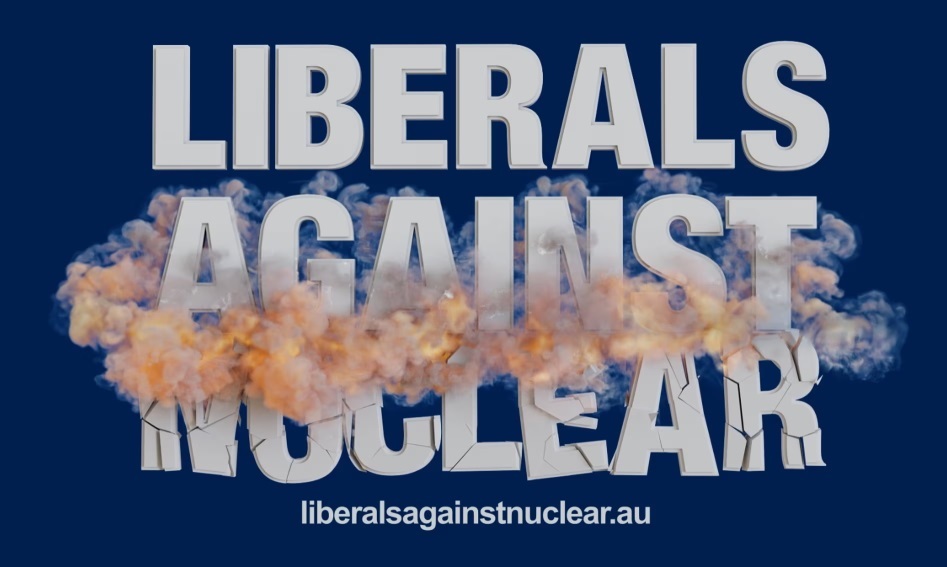
Liberals Against Nuclear. 14 Apr 25
New polling shows the Liberal Party would increase its primary vote by 2.8 percentage points if it abandoned its nuclear energy policy, according to research commissioned by Liberals Against Nuclear.
Andrew Gregson, spokesperson for Liberals Against Nuclear, said the polling demonstrates that the same political flexibility recently shown by Peter Dutton on the work-from-home policy should be applied to the Coalition’s nuclear energy plan.
“Peter Dutton has shown he can make hard-headed decisions when they’re needed to win government. Our polling shows dumping nuclear would deliver an immediate 2.8% boost to the Liberal primary vote in key seats – potentially the difference between winning and losing this election,” Mr Gregson said.
The uComms survey of 5,177 voters across 12 marginal electorates, including Liberal-held seats and those targeted for recovery from Labor and independents, found that 50.6% of undecided voters are less likely to vote for the Coalition because of its nuclear policy.
“Just as Mr Dutton recognised that the work-from-home policy was hurting his standing with women voters, our polling shows that dropping nuclear would increase the Liberal vote among women by four percentage points,” Mr Gregson said.
“The Coalition’s backdown on forcing public servants back to the office full-time shows Mr Dutton can listen to voters and change direction when necessary. We’re simply asking for that same political flexibility to be applied to a fiscally irresponsible nuclear policy that’s proving even more unpopular.”
Mr Gregson noted that 48% of respondents indicated they don’t support nuclear power at all, with concerns about reducing investment in renewable energy (17.3%), nuclear waste management (14.6%), and high build costs (11.6%) topping the list of voter concerns.
“Our message to Liberal candidates is simple – even if you personally support nuclear energy, this polling shows dropping the policy gives you the best chance of winning your race. We’re running out of time, but it’s not too late to make this change and give the Coalition its best shot at forming government.”
Community groups furious Coalition nuclear plan would go ahead even if locals oppose it
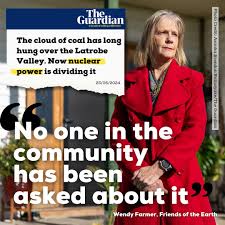
Critics of policy say residents should be ‘very angry’ they will not be able to veto generators in their towns despite promise to consult them.
Tory Shepherd, 13 Apr 25, https://www.theguardian.com/australia-news/2025/apr/13/community-groups-furious-coalition-nuclear-plan-would-go-ahead-even-if-locals-oppose-it
There is a “growing backlash” to the Coalition’s nuclear plan, with community groups furious at the lack of consultation and angered that the policy would not give local communities the power of veto and that nuclear plants would be built regardless of local opposition.
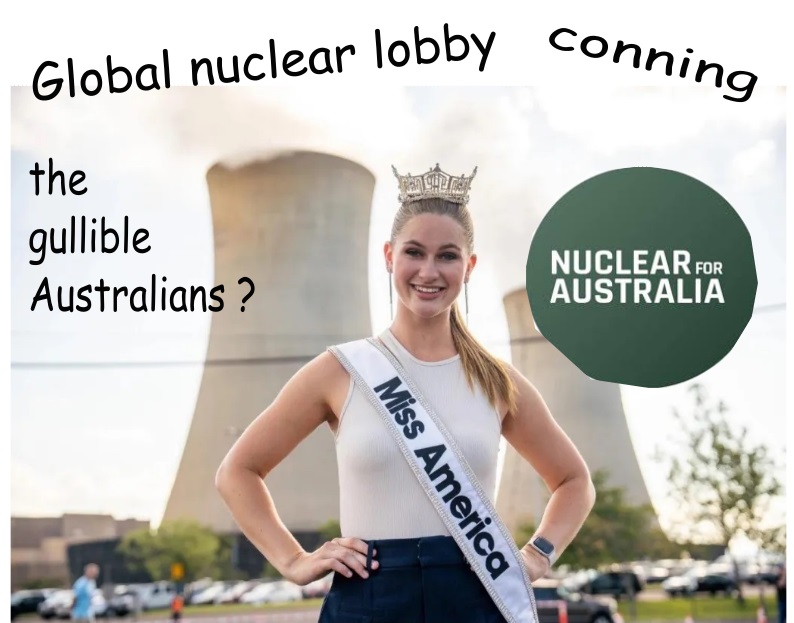
Opponents say the pro-nuclear lobby group Nuclear for Australia has been hosting information sessions but that it makes it overly difficult for people to attend and ask questions, and is not able to answer those questions that are posed.
Wendy Farmer, who has formed an alliance of the seven regions affected by the Coalition’s pledge to build nuclear reactors on the site of coal-fired power stations, says Australians should be “very angry” that they will not be able to veto any planned nuclear generators in their towns despite the Coalition’s promise to carry out a two-and-a-half-year consultation.
She refuses to call the policy a “plan” because of that lack of consultation. “They haven’t even looked at these sites,” she said.
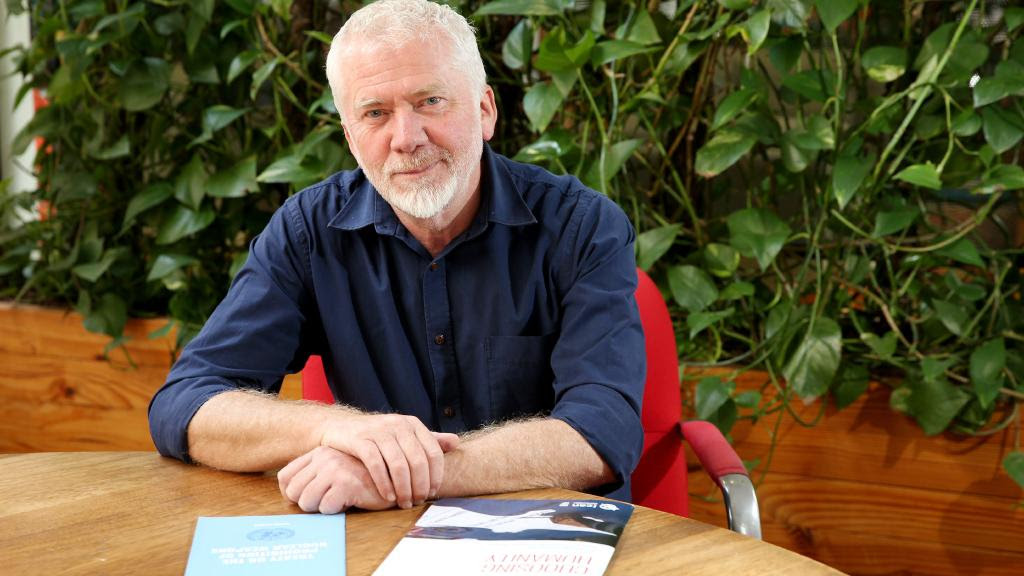
Dave Sweeney, the Australian Conservation Foundation’s nuclear free campaigner, says it is “more con than consultation”. And he says in his many years in nuclear-free campaigns he has never seen so many sectors – including unions, state leaders, energy producers, businesses and protest groups – aligned against nuclear.
The Coalition has pinpointed Tarong and Callide in Queensland, Liddell and Mount Piper in New South Wales, Loy Yang in Victoria, and small modular reactors (SMRs) in Port Augusta in South Australia and Muja, near Collie in Western Australia.
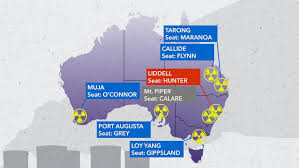
It says the $331bn nuclear plan will make electricity cheaper, while critics have called its costings a “fantasy”.
The Liberal party did not respond to questions about the lack of consultation and lack of veto power.
The alliance said there “has been no consultation or free prior and informed consent from traditional custodians”.
“You never asked locals if they want nuclear reactors in their back yards, instead you threaten compulsory acquisition and federal overrides with no right to veto,” it said in a petition to the Coalition.
It said the plan was a “distraction” designed to “create false debate” when communities are already transitioning away from fossil fuels to renewable energy.
Jayla Parkin, a Collie resident and community organiser for Climate Justice Union, said pro-nuclear information sessions had not provided any answers and had tried to stop First Nations people from entering.
Nuclear for Australia has held two information sessions with “expert speakers” in the town.
One elder was “devastated” after initially being refused entrance to a meeting last year, Parkin said. “She wanted to get the information,” Parkin said. “Not everyone is simply for nuclear or against. We are for being informed on what’s going to happen.”
At a January meeting, elders were told they couldn’t go in because of something wrong with their registrations, which Parkin then sorted out. Once inside, she said questions had to be submitted via an app.
Not a single question could be answered … like ‘Where is the water coming from?’, ‘How will this benefit Collie?’, and ‘Where are you going to store the radioactive waste?’” she said.
Since then, the community had heard nothing, she said.
Nuclear for Australia, founded by Will Shackel and boasting the entrepreneur Dick Smith as a patron, describes itself as a grassroots organisation with no political affiliation.
Information sessions have featured Grace Stanke, a nuclear fuels engineer and former Miss America who says being called “Barbenheimer” is one of her favourite compliments.
Shackel told SBS that Nuclear for Australia Google people when they try to register for the sessions.
“If we believe that someone is a known protester … someone who could cause a physical threat to people in there, we will not allow them in,” he said.
Farmer, also the president of Voices of the Valley, said Nuclear for Australia was “silencing people” by only allowing questions through an app and filtering them.
Nuclear for Australia has also taken out ads in local newspapers claiming 77% of coal jobs are transferable to nuclear plants and that nuclear workers are paid 50% more than other power generation-related jobs.
The fine print shows those claims come from a US nuclear industry lobby organisation and refer to the situation in the US.
Farmer said that, “adding insult to injury”, the advertisements misspell Latrobe Valley as La Trobe Valley and, in one case, an ad aimed at Latrobe was put in an SA newspaper.
“Regional communities are desperate for jobs now,” Farmer said. “Nuclear is not the answer.”
Protesters heckled the opposition leader, Peter Dutton, for not meeting with the community when he visited Collie in October last year.
“Collie doesn’t like it when people like that come to our town and hide,” Parkin said. “People have questions … at least openly answer them.”
In Perth last week Dutton was asked about criticism from Collie residents that he hadn’t heard their concerns about nuclear power and whether he would commit to visiting the town during the election campaign.
“I’ve been to Collie before,” he said. “There are seven locations around the country, and I won’t be able to get to all of them.”
Those communities knew the Coalition was offering them “the ability to transform”, he said.
Greg Bannon is from the Flinders Local Action Group, which was formed to oppose plans to build a nuclear waste dump in SA.
He said the community had not heard much apart from a February information session held by Nuclear for Australia. He said there were concerns about the safety of any power plant and the impact on the local environment. “Port Augusta … is probably the most stupid place to put a nuclear power station in the world,” he said, pointing to the unique nature of Spencer Gulf and its flat “dodge” tides.
“Any leakage … the water would end up in the top end of the gulf, with only one place to go, through Port Lincoln, the fish nurseries, the mangroves … only 50km further south is Point Lowly near Whyalla, where the annual migration of the southern giant cuttlefish occurs, which is a unique event in the world,” he said.
The other point, Bannon said, was that the region had already transitioned away from baseload power to renewables.
Guardian Australia has approached the Coalition and Nuclear for Australia for a response.
Tom Venning was preselected to replace retiring MP Rowan Ramsey in Grey, the federal electorate that Port Augusta sits within. He said he supported the policy as part of a “credible path to net zero” and that if the Coalition formed government there would be a two-and-a-half-year community consultation and an independent feasibility study.
“I’m committed to keeping my community fully informed and involved,” he said, adding that he would take any concerns seriously and would work with local leaders and the energy minister to address them.
Sweeney said the Coalition already appeared to be backing away from its commitment to nuclear and appeared reluctant to bring it up.
On Friday Dutton said people would flock to nuclear if they subsidised it but that they could “subsidise all sorts of energies”.
“I don’t carry a candle for nuclear or any other technology,” he said.
Farmer said: “There is a growing backlash.
“We are keeping it as a hot topic – because the Coalition doesn’t want to talk about nuclear, we will.”
Going nuclear will decimate jobs in regions first, stop billions in new investment.
Cancelling new transmission projects will decimate opportunities for electrical workers and apprentices in exactly the regional areas where opportunities are needed, says ETU national secretary Michael Wright
Rachel Williamson, Apr 10, 2025 https://reneweconomy.com.au/going-nuclear-will-decimate-jobs-in-regions-first-stop-billions-in-new-investment/
Regional areas will suffer the most from job and investment losses stemming from the Coalition’s energy promises, according to analyses from alarmed energy sector stakeholders.
The Coalition’s push for nuclear, a policy that was announced with much fanfare in December but has largely disappeared from the election hustings, will result in the loss of $58 billion in direct investment in renewable and storage, and cause the loss of 42,000 full time jobs, the Clean Energy Council says.
Opposition leader Peter Dutton’s Budget reply promised to abolish the $19 billion Rewiring the Nation fund will also cause the immediate loss of jobs, the Electrical Trades Union (ETU) says.
The ETU analysis suggests 2000 electrical worker jobs will disappear this year if work stops on major network projects, rising to 7000 job losses in 2029 when building work on new transmission is expected to peak.
The costs are the direct impact from the Coalition’s promise to build seven nuclear reactors across Australia.
In December, it outlined a vision of small modular reactors becoming operational by a hugely ambitious timeline 2035 – notwithstanding the fact that these do not exist as commercial technology yet – and predicted the first large reactor operational by 2037.
But that vision requires renewable generation taking up no more than54 per cent of the total energy supply in 2050 – compared to Labor’s target of 82 per cent by 2030 – and cutting funding for new transmission by 79 per cent to allow room both in the grid and budget, according to modelling by think tank Frontier Economics.
At what cost?
The overall cost of abruptly changing the country’s energy course will be high, according to numbers crunched in a Clean Energy Council analysis.
Their data shows the size of the loss in the years before 2030 alone, and the size and longevity of the damage to investment decision making.
“The energy sector doesn’t plan based on three-to-four-year election cycles. These are 30–40-year investment decisions and investors need to see continued confidence in the sector through stable, long-term policy settings to keep investing in Australia,” says CEC CEO Kane Thornton.
“We need the right policy settings in place and both government and industry working together to accelerate the delivery of cheap, reliable and modern clean energy that works for Australia.”
Renewable generation is set to reach 54 per cent of the National Energy Market (NEM) by 2028 from projects that are being built or have financial backing today.
Preventing renewable energy generation from growing past that level would mean cancelling almost 29 gigawatts (GW) of large scale solar and wind currently proposed or in planning and the $58 billion of capital investment they will need.
Some 37,7000 construction jobs per annum won’t happen, nor will 5000 jobs annually in operations and maintenance, just between 2026 and 2030.
Regional areas will miss out on $68 billion of economic activity and landholders will miss out on $2.7-3.4 billion in payments over a 25-year project life cycle.
Communities will lose a further $696 million in direct contributions from renewable energy projects.
And to top it off, household bills will be $449 higher, according to the Clean Energy Council NEM bill analysis in March of the impact of going nuclear.
Regions will hurt the most
While the nuclear proposal is seen by many analysts as a smokescreen for keeping decrepit coal plants running longer, the immediate ramifications will hit hardest and immediately in the regions.
Renewable energy projects are delivering jobs and financial investment in country areas long neglected by national and state budgets, says Renew Economy‘s David Leitch.
“This is the greatest economic opportunity the regions will ever face in Australia, at least in the last 100 years, and probably in the next 100 years,” he said during a Smart Energy Conference talk on Wednesday.
Cancelling new transmission projects will decimate opportunities for electrical workers and apprentices in exactly the regional areas where opportunities are needed, says ETU national secretary Michael Wright.
“Peter Dutton is planning a jobs bloodbath for the electrical industry,” he said in a statement.
“Cancelling new transmission construction] deprives nearly 12,000 electrical workers, their communities and their families of a living across the country.”
Its analysis suggests that staying the course under the Australian Energy Market Operator’s (AEMO) Step Change plan would lead to almost 43,000 new jobs by 2050. Dutton’s energy plan would lead to an aggregate of almost 25,000 job cuts.
Other jobs that will disappear include construction workers and truck drivers, due to halting new renewable projects in order to meet the 54 per cent cap, says Thornton.
Capping renewables at 54 per cent would not only see Australia miss out on billions of dollars of capital investment and economic growth, but thousands of jobs… and billions of dollars in community benefits would be left on the table,” he said in a statement.
“We need all sides of politics to embrace this private-sector investment into regional Australia and the thousands of well-paid jobs this industry generates every year.
“These are real dollars for farmers, real dollars for country towns and real blue-collar jobs that pay Australians’ bills.”
The irrational optimism of the nuclear power lobby

12 Apr 25, https://theaimn.net/the-irrational-optimism-of-the-nuclear-power-lobby/
Australia’s Opposition Party is the prime example of this unfounded optimism. Liberal Coalition leader Peter Dutton is full of enthusiasm in his nuclear plan :
Our plan will deliver a net-zero electricity grid by 2050 and a strong and resilient economy. It will set our country up for decades to come. At the front of this next wave of growth will be those communities which host zero-emissions nuclear plants. Not only will local communities benefit from high paying, multi-generational jobs but communities will be empowered to maximise the benefits from hosting an asset of national importance .……….
A Federal Coalition Government will initially develop two establishment projects using either small modular reactors or modern larger plants such as the AP1000 or APR1400. They will start producing electricity by 2035 (with small modular reactors) or 2037 (if modern larger plants are found to be the best option).
Dutton and his chief nuclear spruiker, Ted O’Brien, gloss easily over concerns about costs, safety, water shortage, environmental effects, timing, and of comparisons with wind and solar power.
Ted O’Brien is indeed a master at this stuff. He looks just the right guy to be a reassuring expert to farmers, and rural communities. His background in marketing shows, with his perfect marketing style. Pleasant, affable, -even warm, calm and confident, O’Brien doesn’t need the detailed facts to interfere with his comfortable assertions about Australia’s wonderful nuclear energy future.

“because hand on heart that’s in our national interest It is the right thing to do I It is why othercountries all around the world are now introducing nuclear energy It’s in Australia’s interest …….We’ll always have to focus on what is right for Australia.
Australia is already behind the eight ball when it comes to zero-emission nuclear energy. The sooner we get going the betterIt has proven around the world to be the fastest way to decarbonise electricity grids.”
Australia, geographically remote from the countries that do have nuclear power, is vulnerable to this kind of “style over substance” persuasion.
If we look at the substance of what is going on in those countries, we find a very mixed bag indeed. The national governments of France, USA, UK, Canada, Japan, Russia, are all for new nuclear power – encouraging and subsidising big and (so far non-existent) small nuclear reactors. Not so much China, which is going allout for renewable energy.
The politicians might be backing nuclear power – but the economic realities tell a different story:
BRITAIN: Let’s start with the COSTS – Hinkley Point C nuclear will cost at least £75 billion – highly unlikely that Sizewell C will be any cheaper. Then there’s the WASTES problem – Nuclear bosses quizzed by MPs over Sellafield’s £130 billion century-long clean up. And there’s the OPPOSITION to the industry and to its wastes – Resistance to nuke dump grows in South Copeland.
FRANCE. is in all sorts of trouble with its nuclear programme – France delays EPR2 reactors to 2038. The Flamanville EPR nuclear reactor will not be able to deliver its full power without major works. Squabble with Britain over who pays for France’s nuclear projects in the UK. And there’s The poisonous problem of France’s nuclear waste
USA – COSTS – USA nuclear power companies feeling the financial pain- future very dubious. Failure of small nuclear reactor project. Attempts to restart old reactors – Groups Demand DOE Environmental Impact Statement Before Agency Bails Out Palisades Zombie Reactor Restart.
JAPAN. has a huge nuclear WASTE problem. And it’s not just the Fukushima continuing waste disaster. There is little enthusiasm in government or community for reviving the nuclear industry – TEPCO’s rehabilitation plan delays expose limits to nuke power reliance.
CANADA. The government is gung-ho for nuclear power, but here is strong and well-informed opposition to it. And those pesky indigenous opponents are having legal wins on waste plans, – the wastes problem does put a damper on new nuclear.
These are all nations that are stuck with existing nuclear reactors, many of them aging, and stuck with the very significant waste problem – which, by the way, doesn’t get a mention from the comforting Mr Ted O’Brien.
Australia’s Liberal-National Coalition has as its main policy, the setting up of a tax-payer funded nuclear industry. This is a breathtakingly bold step for a Liberal party, traditionally the champion of private enterprise, and sworn enemy of socialism.
The Coalition doesn’t seem to have much else in the way of policies. Their leader, Peter Dutton. is currently inclined to shut up a bit about nuclear. https://www.youtube.com/watch?v=12RE1WGl-VQ
It’s up to Ted O’Brien to work his marketing magic. He will probably be helped with his “style above substance” message, by well-funded groups like Advance and The Atlas Network.
Well, it worked in America. Voters, tired of all the bad stuff, turned away from facts and policy details, and voted for an entertaining charlatan. It could work in Australia, and would certainly be a triumph for the nice Mr O’Brien.
1 This month
17 October, Free Public Talk on Nuclear Issues in South Australia
David Noonan will speak on public interest concerns over the new Roxby Downs Indenture Act 2026 on BHP copper-uranium mining and ore processing in SA, and on how AUKUS may face SA with a High-Level nuclear waste agenda.
Dr Jim Green will discuss international developments in the field of nuclear power including ‘small modular reactors’ and Generation 4 ‘advanced’ nuclear reactor concepts.


Help Aunty Sue Protect Her Land and Sacred Sites From Destructive Rocket Testing.
.

Australians deserve the truth
about
AUKUS – https://aukuspublicinquiry.com/

PETITION – To: Prime Minister Anthony Albanese and the Australian Labor Government

of the week – Australians for War Powers Reform (AWPR)
To see nuclear-related stories in greater depth and intensity

