Agressive defence policy – Australian Strategic Policy Institute has too much influence on government and media
 The recent announcement about a fresh $270 billion to rev up the defence force – even one equipped with long range hypersonic missiles (an impossibility at this stage) – will tempt our Whitehall Warriors to overreach with their rhetoric and provoke a reaction from a much superior power that would be highly destabilising for us and for others. In the lead of this, stirring up the government, is the notorious Australian Strategic Policy Institute whose original purpose was to provide objective analysis of strategic issues but not to be a stentorian advocate of an aggressive foreign and defence policy. At its head is our very own ‘Secular Santamaria’, Peter Jennings, who gets disproportionate airplay on these matters by a susceptible government and media.
Militarism and Popularism, a dangerous mix https://johnmenadue.com/military-matters-and-popularism-by-andrew-farran/, By ANDREW FARRAN | On 2 July 2020
The recent announcement about a fresh $270 billion to rev up the defence force – even one equipped with long range hypersonic missiles (an impossibility at this stage) – will tempt our Whitehall Warriors to overreach with their rhetoric and provoke a reaction from a much superior power that would be highly destabilising for us and for others. In the lead of this, stirring up the government, is the notorious Australian Strategic Policy Institute whose original purpose was to provide objective analysis of strategic issues but not to be a stentorian advocate of an aggressive foreign and defence policy. At its head is our very own ‘Secular Santamaria’, Peter Jennings, who gets disproportionate airplay on these matters by a susceptible government and media.
As the government has become heavily focussed on China, it being the military threat, what the government says and does from now on must be seen in that light. Considering the huge imbalance between Chinese and Australian military capabilities – our GDP is about 5% of China’s; the military comparison is much the same – one must ask if we were to engage militarily against China what optimum outcome would/could we seek? At the least it would be our survival, but the probability is that even that would incur great cost, involving great destruction.
Were we to engage in conjunction with the US, the outcome would be similar or worse as our most effective or currently valued capabilities (e.g. Pine Gap) would be picked out for destruction. To engage with the US in any case would be a mistake as we can assume that any such conflict would be initially and ultimately one directly between China and the US. Indications are that the US would not be exercising ‘leadership’, or what goes for leadership, for any purpose other than its own. That is the foreseeable and inexorable trend now. Australia, it must be stressed, does not lie naturally in the sphere of influence of either China or the US, which gives it the option of dealing with both pragmatically and rationally on a case by case basis.
Over time Australia has been, and continues to be, obsessed by an overriding sense of insecurity about its place in the region, and the world generally, causing its strategic policy to be fixated on the inevitability of conflict, discounting its ability to sustain an effective role in an orderly and stable world. Since the 1970s we have been engaged in wars of little or no strategic relevance, at a disproportionate cost in lives and substance. The only military examples of constructive relevance was our unarmed intervention in 1999 in East Timor under INTERFET, and peacekeeping operations in the Southwest Pacific under RAMSI in 2003, both with the full acceptance of the affected parties.
The strategic implications of Covid-19 are that we may be expected to do more on these lines and not more of the over-reaching interventionism of the kind witnessed in recent decades in the Middle East. We should act as an independent power within our own capabilities and not harness ourselves to the interests of any foreign power which complicates our relationships with others, especially our neighbours. If we continue to be connected ‘at the hip’ with one unreliable and irrational major power we will again be the first casualty of any misconceived adventurism.
What might justify a heightened build up of military capabilities, though not on the lines now proposed? It is said that the post-COVID-19 world will be poorer and more hand-to-mouth in nature than before, when there was a sense of order under a rules-based system. Hopefully elements of the rules-based system will be retained in the region, though it may break down in some places because of the pressures of poverty and dissatisfaction. As the much earlier UN Secretary-General, the late Dag Hammarskjold, famously remarked, the UN multilateral system “was not created to take mankind to heaven, but to save humanity from hell”.
To have the ability to assist regional states threatened by poverty and disease within, and disorder from without, may be a good thing in which Australia could have an effective (essentially peacekeeping or stabilising) role.
For that role we should develop a force structure suitable for the purpose, not for extraneous long-range purposes as would now seem to be the case. We should also, militarily and otherwise, develop a top-class counter-cyber capability both for our own protection and the protection of others. With regard to supply lines, these are predominantly serviced by foreign owned planes and ships for whose protection others have responsibility. If picked on by unfriendly fire, that would elevate a conflict beyond the region.
Overall, in this less stable situation, Australia should work closely with Japan, Indonesia and Vietnam to shore up regional cohesion, and with New Zealand in specific projects for stability and development in the South Pacific. Punching above our weight could lead to brawls. Punching at our weight is the way to go.
No nuclear waste dump near Lake Huron: opposition of indigenous people, Saugeen Ojibway Nation, the deciding factor
 OPG ends quest for nuclear waste dump on Lake Huron, Opposition of Saugeen Ojibway Nation is pivotal, The Voice By Jim Bloch For MediaNews Group Jun 30, 2020
The quest for a deep geologic repository for nuclear waste on the lip of Lake Huron in Ontario is dead.
The 15-plus-year-old effort by Ontario Power Generation to build the underground dump for low and intermediate nuclear waste from Ontario’s 20 reactors appeared to end in January, following the vote of the Saugeen Ojibway Nation against the repository. Eighty-six percent of the first nation voted against the dump, 1,058-170.
SON is made up of the Chippewas of Nawash Unceded First Nation and the Chippewas of Saugeen First Nation. Their territory includes the Bruce Peninsula and runs down the coast of Lake Huron past Goderich and along the shores of Georgian Bay to just beyond Collingwood. SON has roughly 4,500 members.
OPG officially terminated the project on May 27 in a letter to Jonathon Wilkerson, the Federal Minister of Environment and Climate Change, asking for the withdrawal of its application for a building license and ending the environmental impact assessment for the DRG.
“… OPG has informed the Canadian Nuclear Safety Commission that we do not intend to carry out the Project and have asked that the application for a Site Preparation and Construction License be withdrawn,” said Lise Morton, vice president of OPG’s Nuclear Waste Management Division. “Similarly, OPG requests the minister to cancel the environmental assessment for the Project.”
Wilkerson responded on June 15.
“I accept Ontario Power Generation’s request to withdraw the project from the federal environmental assessment process…,” said the minister.
Wilkerson also forwarded his decision to Rumina Velshi, president of the Canadian Nuclear Safety Commission……..
The long term safety of the project — located less than a half-mile from Lake Huron, one of the five Great Lakes that provide drinking water to at least 34 million people in two countries — was at the heart of the controversy. …..
The underground dump was designed to store 200,000 cubic meters of nuclear waste, some of which would remain toxic for at least 100,000 years, roughly 10 times longer than the Great Lakes have been in existence; some of it would remain lethal for more than a million years.
Depositing so much toxic waste on the edge of 20% of the world’s surface fresh water was dubbed as insanity by critics, who pointed to the possibility of the DGR being overtopped by fresh water tsunamis like the Great Lakes Hurricane of 1912, breached by seismic activity in the region, of which there has been a significant amount, threatened by rising lake levels due to climate change, or even targeted by terrorists.
Critics noted that all major underground repositories for nuclear waste to date have failed. https://www.voicenews.com/news/opg-ends-quest-for-nuclear-waste-dump-on-lake-huron/article_9c8334ac-bb07-11ea-8003-7fbee9888ced.html
Canberra unprepared for climate upheavals that will rock the nation — RenewEconomy
Covid-19 should teach us the value of being fully prepared for catastrophic risks. But on climate, the Australian Government is walking blindfolded off a cliff. The post Canberra unprepared for climate upheavals that will rock the nation appeared first on RenewEconomy.
via Canberra unprepared for climate upheavals that will rock the nation — RenewEconomy
AEMO hails “major step forward” as it registers biggest solar farm in West Murray — RenewEconomy
AEMO says registration of biggest solar farm in West Murray region a major step forward for local grid. The post AEMO hails “major step forward” as it registers biggest solar farm in West Murray appeared first on RenewEconomy.
via AEMO hails “major step forward” as it registers biggest solar farm in West Murray — RenewEconomy
The suspension of the Tokyo OLympic Games 2020 — limitless life
The suspension of the Tokyo OLympic Games 2020 Dear Friends, Please allow me to draw your attention to the crucial facts relevant to the Tokyo Olympic Games. The Tokyo Metropolitan Government is confronted with the serious financial shortage due to the Coronavirus crisis.(934.5billion yen reduced to 80.7 billion yen!) The influential economic […]
via The suspension of the Tokyo OLympic Games 2020 — limitless life
July 1 Energy News — geoharvey

Opinion: ¶ “Is The Hydrogen Tech ‘Revolution’ Hope Or Hype?” • In his speech on the planned economic recovery, the prime minister said hydrogen technology is an area where the UK leads the world. He hopes it’ll create clean jobs in the future. But is the hydrogen revolution hope or hype? Hydrogen has come a […]
“Clean Energy” Who are they Kidding? The Moorside Site Again under Threat of New Nuclear Crapola. —

The Nuclear Industry is SUPER KEEN to promote itself as Clean Energy what with the Springfields Nuclear Fuel Manufacturing site (near the Preston New Road frack site) now calling itself a “Clean Energy Technology Park” and the Extinction Rebellion Public Relations guru saying she has “followed the science” and her nuclear mentor George Monbiot along […]
via “Clean Energy” Who are they Kidding? The Moorside Site Again under Threat of New Nuclear Crapola. —
City of Adelaide reaches 100 per cent renewables through Flow Power deal — RenewEconomy

City of Adelaide reaches 100 per cent renewables target under deal with Flow Power that will combine wind and two new solar plants. The post City of Adelaide reaches 100 per cent renewables through Flow Power deal appeared first on RenewEconomy.
via City of Adelaide reaches 100 per cent renewables through Flow Power deal — RenewEconomy
Steggall calls for conscience vote on zero carbon bill to kickstart Covid recovery — RenewEconomy
Independent MP calls for conscience vote on zero carbon bill as a pathway to stronger climate targets and to kick start green economy recovery. The post Steggall calls for conscience vote on zero carbon bill to kickstart Covid recovery appeared first on RenewEconomy.
via Steggall calls for conscience vote on zero carbon bill to kickstart Covid recovery — RenewEconomy
Australia claims Kyoto success, but three decades as a climate wrecker is all it can boast — RenewEconomy
Morrison government takes credit for “beating” targets as Kyoto Protocol ends, but Australia left with a three decade legacy of inaction on climate. The post Australia claims Kyoto success, but three decades as a climate wrecker is all it can boast appeared first on RenewEconomy.
City of Sydney completes switch to 100 per cent renewable supply — RenewEconomy

City of Sydney now running on 100 per cent renewables, as power begins flowing from regional solar and wind projects. The post City of Sydney completes switch to 100 per cent renewable supply appeared first on RenewEconomy.
via City of Sydney completes switch to 100 per cent renewable supply — RenewEconomy
Nine new solar farms and two big batteries proposed for South Australia — RenewEconomy

Nine new solar farm proposals and two new big batteries unveiled in flood of applications to South Australia energy regulator. The post Nine new solar farms and two big batteries proposed for South Australia appeared first on RenewEconomy.
via Nine new solar farms and two big batteries proposed for South Australia — RenewEconomy
Labor rejects National Radioactive Management Amendment Bill. 2020- Josh Wilson MP
Hansard , Mr JOSH WILSON (Fremantle) Senate Committee Inquiry into National Radioactive Management Amendment Bill. 2020. “…….. There is no question that Australia needs to make progress when it comes to the proper long-term storage of nuclear waste. It is just that this bill doesn’t help take us towards that end. It’s taken us 40 years and it’s cost$55 million to get us to this point. ……..
Effectively this bill seeks to rush and force the issue of community acceptance, which is a mistake. The ministerhas the power to make the decision in question. You can only guess that the reason for this legislation is to lockin an outcome, when the minister and the government accept that there are some concerns with the communityacceptance process that has occurred so far.
The bill effectively also wants to ignore, avoid and further neglect the key issue of a permanent disposal site for intermediate-level waste. There are two kinds of waste that this bill proposes to send to a site in South Australia—low-level waste and intermediate-level waste—and they are very different. A lot of what has been said, including what the minister said in introducing this bill, glides over that difference in a way that is wrong and is certainly not helpful in terms of getting to where we need to get to with a permanent disposal site for low-level waste and a permanent site for intermediate-level waste…..
We have to get towards a long-term disposal solution, and yet this bill raises two serious questions about how the government wants to take us there. There’s concern over the site selection process, which goes to the question of consultation, engagement and community agreement, and there are concerns about the purpose and function of the facility…….
Departmental officials came before the energy and environment committee when we were inquiring into nuclear energy, and they gave us some very rough estimates of what the construction of the site itself would cost. That will be somewhere around $340 million to $350 million. That’s for the construction of the site, and that was described to us as a conservative estimate.Bizarrely, there is no current process underway with even a single dollar of government resources going towards the issue of a permanent disposal site for intermediate-level waste. It’s quite strange. It’s almost hard to believe that, when it’s taken us 40 years to get to the brink of a permanent site for low-level waste, there is not yet any departmental group or any taskforce on this and there’s not a single dollar going to the process of site selection,engineering design or anything else around the question of a permanent disposal site……
There is plenty of room [at Lucas Heights] in that interim storage facility, so there’s no issue with space as far as intermediate-level waste is concerned, and there’s no issue in relation to safety or health concerns either……where is the evidence that there is anyproblem with the intermediate-level waste staying where it is, as it should do, until the government of Australiaidentifies and resources an appropriate permanent disposal site for intermediate-level waste? …..When the interim facility was set up, there was no suggestion it was only for a few years. The licence that exists for the storage of the intermediate-level waste at Lucas Heights runs to 2055. …
ARPANSA is aware that some stakeholders have interpreted ARPANSA’s decisions regarding the IWS— which is the intermediate-level storage— as a requirement for relocation of the waste stored in the IWS, even suggesting that there is an urgent need for relocation. This is not correct. ARPANSA has not raised safety concerns regarding storage of waste at the IWS. ANSTO seems to share this view. ANSTO has indicated to ARPANSA that the mandatory recertification of the TN-81 casks every 10 years can be carried out at the IWS
But the claims that the government and government members in this place have made that intermediate-level storage needs to go to South Australia because there’s no room for it and that there are health and safety concerns about where it is currently are rubbish.
And so it should stay where it is as a spur to the government to get on with the process, which currently hasn’t even started, of finding and resourcing a permanent disposal site. That is not occurring, and that’s one of the chief flaws of this bill. ……
They need to immediately start and resource the process of a permanent disposal site for intermediate-level waste. They should commit to maintaining that waste where it is currently stored, which is another reason for an inquiry on this issue.
……..there are members of the government running around saying that nuclear power should be part of our energy mix in our communities across Australia. Frankly, that is not only deeply irrational but ridiculous and unhelpful in the task this bill presents to us.
This bill is not a sensible or appropriate way in which to move towards the waste storage solution. It puts the program at risk. That’s why we don’t support the bill.
South Pole warming at triple the global average
‘Nowhere to hide’: South Pole warms up with climate change a factor, https://www.smh.com.au/environment/climate-change/nowhere-to-hide-south-pole-warms-up-with-climate-change-a-factor-20200629-p55797.html, by Peter Hannam, June 30, 2020 The South Pole, the most remote part of the planet, has been warming at triple the global average, as natural variability joins with climate change to produce an abrupt shift in temperature trends.The findings, published Tuesday in the Nature Climate Change journal, show surface temperatures at the South Pole were stable in the first couple of decades of instrument records into the 1980s.
A record-breaking cold for a spell then made way for even warmer temperature anomalies from the early 2000s. For the 1989-2018 period, the mercury rose an average of 0.6 degrees per decade, or three times the global warming rate, the researchers found.
The report on the flipping of temperature trends at the most southerly point comes as abnormal warmth continues to bake the planet’s other polar extreme. The Russian town of Verkhoyansk last week reported 38 degrees, the warmest reading ever recorded within the Arctic Circle.
For Antarctica, the recent accelerated warming is estimated to be about two-thirds the result of natural variability with the role of rising greenhouse gases contributing about one-third, said Kyle Clem, a post-doctoral research fellow at New Zealand’s Victoria University.
The rapid warming “lies within the upper bounds of natural variability”, Dr Clem said. “It’s extremely rare and it appears very likely that humans played a role.”
The research shows “there’s no place on earth that’s immune to global warming”, he said. “There’s nowhere to hide – not even up on the Antarctic Plateau.”
Sitting at 2835 metres above sea level – or 600 metres higher than Mt Kosciuszko – on a rocky continent, the South Pole is exposed to different weather processes than its polar opposite. By contrast, the North Pole rests on shifting sea ice with the seabed more than four kilometres below.
Dr Clem, along with other researchers from the US and the UK, found changing circulation patterns in the Pacific and Southern Ocean determine which parts of Antarctica warm or cool.
For instance, the western tropical Pacific has periods when is warmer or cooler than usual.
The warmer period – known as the negative phase of the so-called Interdecadal Pacific Oscillation – set in about 2000. During this phase, there is more storm activity in the tropics which in turn spawns more high- and low-pressure systems that send heat far into the high latitudes.
The circumpolar westerly winds, which have been strengthening and contracting polewards under climate change – also play a role in amplifying the transfer of warmth into Antarctica.
When those two patterns align, as they have in recent decades, the South Pole warms but some parts, such as western Antarctica warm at a slow pace or even cool, as the frigid air shifts around.
Michael Mann, Director of the Earth System Science Centre at the University of Pennsylvania, said the study provided “a very detailed and useful analysis” of the forces at play in the far south.
If anything, though, the researchers’ use of model simulations to reach conclusions about regional trends probably understates the role of human-caused climate change.
“In short, what the authors attribute to natural internal cycles might just be a shift in atmospheric circulation that is actually due to human-caused climate change but isn’t accurately captured in the average over models,” Professor Mann said, in an email that included those italics.
The recent polar extremes – including eastern Siberian temperatures above 40 degrees – were important because “what happens in the poles doesn’t stay in the poles”, the prominent climate scientist said.
Changes at the South Pole itself were not as critical as the warming of the Southern Ocean, which is leading to the collapse of the West Antarctic ice shelves and the destabilisation of the interior ice sheet.
“This was not well predicted by climate models, meaning we are further along when it comes to the destabilisation of ice sheets and the commitment to rising sea levels than we expected to be at this point,” Professor Mann said.
It’s time to get emotional about climate change

Rebecca Huntley on why it’s time to get emotional about climate change, SMH, By Caitlin Fitzsimmons, June 28, 2020 —Rebecca Huntley had to submit her manuscript for her new book on climate change just as the country was entering lockdown for coronavirus.
The book, How to Talk about Climate Change in a Way that Makes a Difference, to be published this Thursday July 2, is based on social science rather than science. What scientists know about climate change is the jumping off point for Huntley’s exploration of the psychology behind activism, disengagement and denial.
“I nearly called it How to Talk about Climate Change with Your Drunk Uncle,” says Huntley, a social researcher and author. “It’s a bit derogatory but it’s about the idea that everybody who is concerned about climate change has somebody in their life who wants to pick a fight with them about it. Do we fight them or not?”
If the book is about the human factor in the climate change equation and society has just been through major disruption in the form of the pandemic and lockdown, it begs the question whether anything has changed since April, when she submitted her final edits.
The short answer is yes. Huntley says the way the pandemic has played out, at least in Australia, has given her unexpected hope.
She knew greenhouse emissions would go down if people stayed at home, industry was closed and flights were grounded and she knew there would be stories, some of them apocryphal, about wildlife reclaiming human spaces.
stories about low emissions and environmental rejuvenation would mean that people associated climate action with personal deprivation, that we’ve all got to be locked in our homes, losing our jobs, not being able to hug our aunt and uncle and not being able to go on holidays … or out to dinner and the movies,” Huntley says. “I thought if people thought that was the sacrifice we have to make in order to do something about climate change, it would be hugely detrimental.”
The book’s thesis is that the climate change argument won’t be won by reason alone: it’s time to get emotional. Huntley writes about her own emotional transformation from a citizen who believed in the science of climate change and tried to act accordingly to a citizen who believed in the science of climate change and organised her entire personal and professional life accordingly. Her belief in the scientific consensus did not shift, her world-view did……. https://www.smh.com.au/environment/climate-change/rebecca-huntley-on-why-it-s-time-to-get-emotional-about-climate-change-20200625-p5561z.html
1 This month
25 October – Film –Britain’s Nuclear Bomb Scandal: Our Story – part of the Adelaide Film Festival,
Screening and Conversation
A screening of Britain’s Nuclear Bomb Scandal: Our Story (2024) followed by a talk with 2026 Bettison and James Awardee and Tradtional Owner Karina Lester in conversation with Simone Tur.
When: Sun 25 Oct, 12:00pm-Screening, 1:15pm-Talk
Where: The Mercury
Free admission, register below by clicking on BUY TICKETS and select free event tickets, at end of web page:
https://www.adelaidefilmfestival.org/program/2026/britains-nuclear-bomb-scandal-our-story
.
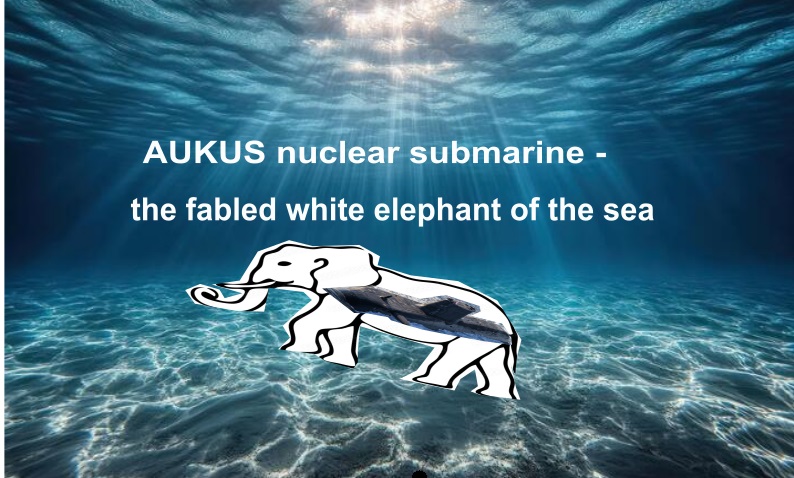
Australians deserve the truth
about
AUKUS – https://aukuspublicinquiry.com/

PETITION – To: Prime Minister Anthony Albanese and the Australian Labor Government

of the week – Australians for War Powers Reform (AWPR)
To see nuclear-related stories in greater depth and intensity

