Trump, AUKUS and Australia’s Dim Servitors
November 22, 2024, Dr Binoy Kampmark, https://theaimn.com/trump-aukus-and-australias-dim-servitors/
There is something enormously satisfying about seeing those in the war racket worry that their assumptions on conflict have been upended. There they were, happily funding, planning and preparing to battle against threats imagined or otherwise, and there comes Donald Trump, malice and petulance combined, to pull the rug from under them again.
What is fascinating about the return of Trump to the White House is that critics think his next round of potentially rowdy occupancy is going to encourage, rather than discourage war. Conflict may be the inadvertent consequence of any number of unilateral policies Trump might pursue, but they do not tally with his anti-war platform. Whatever can be said about his adolescent demagogic tendencies, a love of war is curiously absent from the complement. A tendency to predictable unpredictability, however, is.
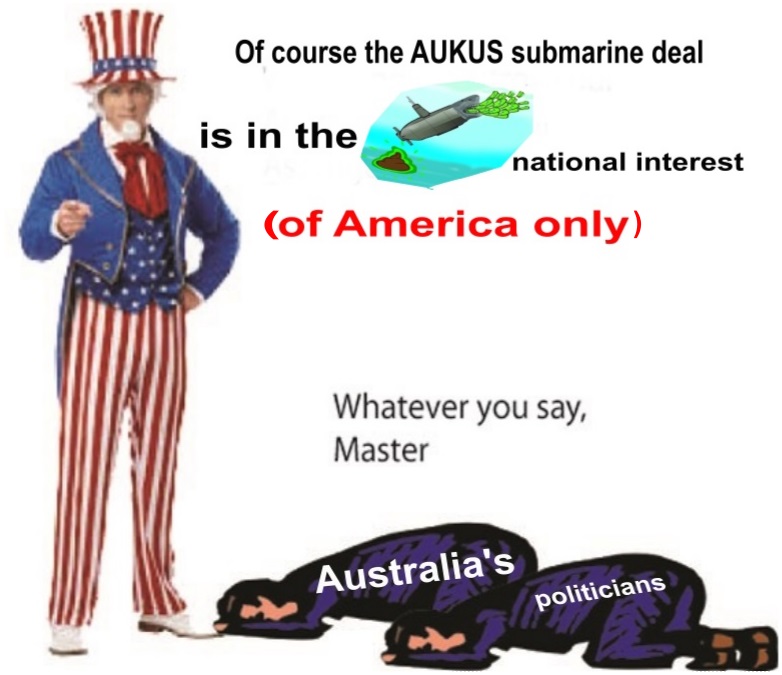
The whole assessment also utterly misunderstands the premise that the foolishly menacing trilateral alliance of AUKUS is, by its nature, a pact for the making of war. This agreement between Australia, the UK and the US can hardly be dignified as some peaceful, unprovocative enterprise fashioned to preserve security. To that end, President Joe Biden should shoulder a considerable amount of the blame for destabilising the region. But instead, we are getting some rather streaky commentary from the security wonks in Australia. Trump spells, in the pessimistic words of Nick Bisley from La Trobe University, “uncertainty about just what direction the US will go.” His policies might, for instance, “badly destabilise Asia” and imperil the AUKUS, specifically on the provision of nuclear–powered submarines to the Royal Australian Navy. On the last point, we can only hope.
The Australians, being willing and unquestioning satellites of US power, have tried to pretend that a change of the guard in the White House will not doom the pact. Australian Foreign Minister Penny Wong expressed a “great deal of confidence” that things would not change under the new administration, seeing as AUKUS enjoyed bipartisan support.
Australia’s ambassador to the US, Kevin Rudd, is also of the view that AUKUS will survive into the Trump administration as it “strengthens all three countries’ ability to deter threats, and it grows the defence industrial base and creates jobs in all three countries.”
Another former ambassador to Washington, Arthur Sinodinos, who also occupies the role of AUKUS forum co-chair, has pitched the viability of the trilateral pact in such a way as to make it more appealing to Trump. Without any trace of humour, he suggests that tech oligarch Elon Musk oversee matters if needed. “If Musk can deliver AUKUS, we should put Musk in charge of AUKUS, and I’m not joking, if new thinking is needed to get this done,” advises the deluded Sinodinos.
The reasoning offered on this is, to put it mildly, peculiar. As co-head of the proposed Department of Government Efficiency, Musk, it is hoped, will apply “business principles” and “new thinking”. If the Pentagon can “reform supply chains, logistics, procurement rules, in a way that means there’s speed to market, we get minimum viable capability sooner, rather than later.”
These doltish assessments from Sinodinos are blatantly ignorant of the fact the defence industry is never efficient. Nor do they detract from the key premise of the arrangements. Certainly, if an anti-China focus is what you are focusing on – and AUKUS, centrally and evidently, is an anti-China agreement pure and simple – there would be little reason for Trump to tinker with its central tenets. For one, he is hankering for an even deeper trade war with Beijing. Why not also harry the Chinese with a provocative instrument, daft as it is, that entails militarising Australia and garrisoning it for any future conflict that might arise?
Whatever the case, AUKUS has always been contingent on the interests of one power. Congress has long signalled that US defence interests come first, including whether Australia should receive any Virginian class submarines to begin with.Trump would hardly disagree here. “Trump’s decisions at each phase of AUKUS cooperation will be shaped by zero-sum balance sheets of US interest,” suggests Alice Nason of the University of Sydney’s US Studies Centre rather tritely.
If Trump be so transactional, he has an excellent example of a country utterly willing to give everything to US security, thereby improving the deal from the side of Washington’s military-industrial complex. If there was one lingering, pathological complaint he had about Washington’s NATO allies, it was always that they were not doing enough to ease the burdens of US defence. They stalled on defence budgets; they quibbled on various targets on recruitment.
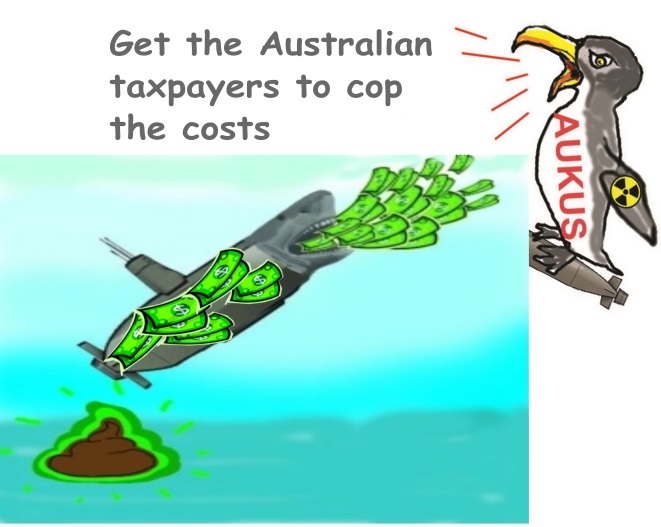
This can hardly be said of Canberra. Australia’s government has abandoned all pretence of resistance, measure or judgment, outrageously willing to underwrite the US imperium in any of its needs in countering China, raiding the treasury of taxpayer funds to the tune of a figure that will, eventually, exceed A$368 billion. Rudd openly acknowledges that Australian money is directly “investing into the US submarine industrial base to expand the capacity of their shipyards.” It would be silly to prevent this continuing windfall. It may well be that aspect that ends up convincing Trump that AUKUS is worth keeping. Why get rid of willing servitors of such dim tendency when they are so willing to please you with cash and compliments?
TODAY. Danger of a nuclear catastrophe as Ukraine sends missiles to Kursk area in Russia
We keep getting told how very dangerous it is for the Russians to be sending drones and now missiles into Ukraine, above all, because they might hit Zaporizhzhia and other nuclear facilities. And yes, this is true, (although the Russians have been relatively restrained, so far, about use of missiles).
We all do know how awful this war is, and what radiological devastation would be released, if the Russians, or the Ukrainians, struck the Zaporizhzhia Nuclear Power Station, the largest in Europe. Rafael Grossi of the International Atomic Energy regularly reminds us of that danger, – (while almost simultaneously touting nuclear power stations as so very safe, and the essential cure for climate change.)
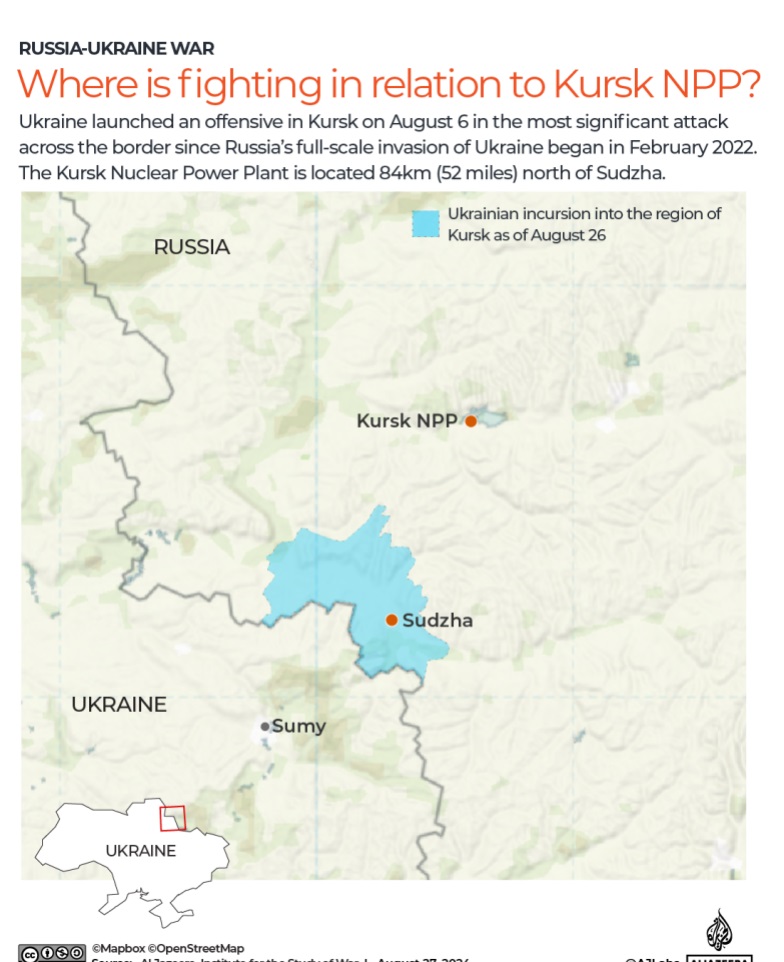
But what we don’t hear about – in our the media’s joyous promotion of a Ukrainian victory over Russia,- is the grave danger posed by American and British missiles fired by the Ukrainians into the Russian area of Kursk.
All sorts of “good reasons” for the Ukrainians doing this – to lower the morale of Russians, to destroy masses of North Korean troops gathering in the area, to hold onto a piece of Russian land as a bargaining chip if ever there’s a negotiation with Russia.
But no mention of Kursk nuclear power station, with its four Soviet RBMK-1000 reactors. The 2 operating reactors have no protective dome.– the same design as those at the Chernobyl nuclear plant which in 1986 became the scene of the world’s worst civilian nuclear disaster. Construction of the Kursk-2 power plant is under way, using essentially new reactors of the VVER-510 type, which began in 2018. The Kursk NPP is among the three largest nuclear facilities in the country.

In August 2024, the remains of a Ukrainian drone were found within the area of the Kursk nuclear power plant, located roughly 100 metres (328 feet) from the plant’s spent fuel nuclear storage facility.
Ukraine fired at least 10 British-provided Storm Shadow missiles into Russia’s Kursk Oblast, The Wall Street Journal and several other media outlets reported on Wednesday.
You have to look to alternative media, to get any grip on what is happening in this conflict. Dave DeCamp , writes in ANTIWAR:
The US and the UK reportedly authorized Ukraine’s use of the Storm Shadows in strikes on Russian territory after President Biden gave the green light for Ukraine to use the ATACMS, US-made missiles with a range of about 190 miles. Ukraine launched ATACMS into Russia for the first time on Tuesday.
Both the Storm Shadows and ATACMS require intelligence from Western countries for Ukraine to fire them, meaning the US and NATO are now directly supporting long-range strikes on Russian territory.
Our corporate Western media continues with its sacred utterance that “Ukraine must and will defeat Russia”. We never hear about the previous 8 long years of the Ukraine government’s war against its own region in the Donbass, a largely Russian-speaking region, which wanted to keep its autonomous status, supposedly guaranteed by the Minsk agreements . All this precipitated Russia’s action in February 2022. Zelensky was originally elected on a platform of honouring this agreement and negotiating with Russia.
But I digress.
The thing is, we are not being told the truth about this war. And Kursk is a kind of flashpoint that the Western mindset apparently does not understand.
The battle of Kursk
It is ironic that the battle of Kursk in 1943, the single largest battle in the history of warfare , is regarded as the “last gasp of Nazi aggression“. The Nazis invaded Kursk, but were defeated by the Russian forces. Russia lost an estimated 800,00 casualties. This battle, along with the Battle of Stalingrad several months earlier, is regarded as a turning point in World War 2.
It is sad, that in recent commemorations of World War 2, the role of Russia in defeating the Nazis is somehow erased. Oh well, we know from Hollywood’s portrayal of this war, it was the Americans who beat the Nazis.
NATO supports the missile attacks on Russian territory. It is possible that Kursk – the scene of a huge defeat of the 1943 German Nazi war machine, – could now be destroyed by the NATO-USA war machine, which includes Germany
Signing US/UK nuclear deal would shred Australia’s credibility: Turnbull
Australia would kill its credibility internationally if it were to embrace domestic nuclear power to please key foreign allies, Malcolm Turnbull has warned, accusing the Coalition of gaslighting voters over power prices.
Amid a heated fight in parliament over a nuclear agreement signed by the United States and the United Kingdom at the COP29 talks in Azerbaijan this week, the former prime minister said Australia had distinct advantages on renewable energy and must make decisions in its national interest.
“The job of the Australian prime minister is to stand up for Australia and recognise Australia has distinct interests and distinct characteristics,” Mr Turnbull told The Australian Financial Review.
“Simply falling into line and being some sort of sycophantic copier of everybody else’s agendas doesn’t bring you in any respect.”
The former Liberal leader’s comments followed Britain and the US signing a deal for civil nuclear collaboration at the summit in Baku, part of plans to combine billions of dollars for research and development of new technologies.
An early version of the British government’s statement announcing the deal said Australia would be among a number of other countries signing on. But the UK government conceded on Tuesday that Australia had been included in the statement erroneously.
The original statement, viewed by the Financial Review, said countries signing on would include Canada, France, Japan, South Korea, South Africa, China, Switzerland and Australia.
But the updated agreement, published online by UK Energy Secretary Ed Miliband, has the names of participating countries removed and says only that Russia will remain excluded because of its invasion of Ukraine.
A spokeswoman for Energy Minister Chris Bowen, who is representing Australia at the talks, ruled out any participation, noting Australia had no nuclear energy industry and a federal ban on nuclear power is in place.
The government said Australia would remain as an observer to the deal, and support scientists in other nuclear research fields.
In question time on Wednesday, Acting Prime Minister Richard Marles accused the Coalition of exaggerating the significance of the statement.
“Every expert out there makes it completely clear that what we are awaiting is a 20-year duration before we could reasonably expect to have nuclear energy in this country, were we to go down that path,” he said.
“Even then, all we are talking about is a contribution of 4 per cent to the electricity grid.
“What we are pursuing is policies in the here and now, which are being pursued around the world: firmed renewable energy, which is the cheapest form of energy, which is being brought online around the world.”
Mr Dutton accused the government of a stubborn refusal to consider nuclear, as countries including South Korea, Turkey and Nigeria had joined another pledge to triple global nuclear power by 2050. He said nuclear could “reduce emissions and deliver energy at a reasonable cost”.
Long a critic of Mr Dutton’s leadership, Mr Turnbull said nuclear would not complement renewable energy.
“That is nonsense. That’s gaslighting, quite frankly,” he said. “What complements renewables is something that is flexible. We have 4 million households in Australia. Over a third of all Australian homes have got solar panels on. It’s the highest percentage of solar household solar penetration in the world.”
Tom McIlroy is the Financial Review’s Canberra Bureau Chief based in the press gallery at Parliament House. He was previously the AFR’s political correspondent. Connect with Tom on Twitter. Email Tom at thomas.mcilroy@afr.com
Paul Smith edits the technology coverage and has been a leading writer on the sector for 20 years. He covers big tech, business use of tech, the fast-growing Australian tech industry and start-ups, telecommunications and national innovation policy. Connect with Paul on Twitter. Email Paul at psmith@afr.com
Albanese government gives firm ‘no’ to joining UK-US agreement to advance nuclear technology
The Conversation, November 19, 2024, Michelle Grattan, Professorial Fellow, University of Canberra
The Albanese government has been put on the spot by a new agreement – which it has declined to join – signed by the United Kingdom and the United States to speed up the deployment of “cutting edge” nuclear technology.
The original version of the British government’s press release announcing the agreement said Australia, among a number of other countries, was expected to sign it.
But the reference was removed from the statement.
The UK Energy Secretary Ed Miliband and the US deputy Secretary of Energy David Turk signed the agreement in Baku during COP29…….
A spokesperson for Energy Minister Chris Bowen, who is at the COP meeting, said: “Australia is not signing this agreement as we do not have a nuclear energy industry.
“We recognise that some countries may choose to use nuclear energy, depending on national circumstances.
“Our international partners understand that Australia’s abundance of renewable energy resources makes nuclear power, including nuclear power through small modular reactors, an unviable option for inclusion in our energy mix for decarbonisation efforts.”
Australia would remain as observers to the agreement to continue to support its scientists in other nuclear research fields, the spokesperson said………
In parliament, acting Prime Minister Richard Marles said for Australia to pursue a path of nuclear energy would add $1200 to the bills of each household in this country.
………………………Update: UK government seeks to clear things up
Later The Guardian reportred: “The UK government has conceded it made a mistake in including Australia in a list of countries that has signed up to a US-UK civil nuclear deal”. https://theconversation.com/albanese-government-gives-firm-no-to-joining-uk-us-agreement-to-advance-nuclear-technology-244041
Rio Tinto to take full control of controversial mine in Kakadu
By Simon Johanson, 20 Nov 24, https://www.smh.com.au/business/companies/rio-tinto-moves-to-shut-down-controversial-mine-in-kakadu-20241120-p5ks2q.html
The last chapter in one of Australia’s big environmental battles is set to play out after mining giant Rio Tinto moved to take full control of the controversial Ranger uranium mine near the World Heritage-listed Kakadu National Park.
Rio, the world’s second-biggest miner by market value, told the ASX on Wednesday it will compulsorily acquire the remaining shares it does not own in its subsidiary Energy Resources of Australia (ERA), taking control of the contentious Ranger uranium mine and neighbouring Jabiluka deposit, one of the world’s richest known sources of untapped uranium.
ERA wound up its uranium oxide operation at Ranger in 2021, but the cost of rehabilitating the mine is on track to exceed $2.2 billion and concerns have lingered among traditional owners, the Mirarr people, about ERA’s intentions, particularly after it applied for a 10-year mining lease extension over Jabiluka in March this year.
Rio, which owned a large stake in ERA, began working with ERA on rehabilitating the mine in 2021. ERA was legally required to rehabilitate the operation by 2026 estimating it would cost $500 million, but budget blowouts and differences between ERA’s board and Rio led to a fractious relationship with its majority shareholder before Rio reached an agreement with ERA to take over management of the mine’s rehabilitation in April this year.
The push to mine Jabiluka at one stage sparked fierce opposition among traditional owners and environmental campaigners in 1998. Thousands of protesters took part in a human blockade at the site and hundreds were arrested in the ensuing clampdown.
The lease area covers a sacred site with hundreds of ancient rock art galleries. In the end, Jabiluka was never mined, and ERA pledged it would not develop the area as long as the Mirarr remain opposed to it.
Rio’s Australia chief executive Kellie Parker reaffirmed the dual London-Australia listed miner had “no intention to invest in mining or development of the Jabiluka deposit”.
“Proceeding with compulsory acquisition, after participating for our full entitlement in the ERA capital raising, underlines our commitment to Ranger’s rehabilitation,” Parker said.
Australian Conservation Foundation campaigner Dave Sweeney said Rio’s takeover of Ranger brings certainty to the delivery of rehabilitation works.
“There is a massive shortfall in funding for the Ranger clean-up and Rio has deeper pockets, more talent and greater reputational exposure than ERA,” Sweeney said.
ERA launched a capital raising in October that resulted in $766.5 million to fund rehabilitation of the Ranger mine. Rio bought its maximum entitlement in the raising, which pushed its shareholding up from 86 per cent to 98 per cent.
It immediately said it would move to mop up the remaining shares held by minority investors in ERA under the compulsory acquisition rules of the Corporations Act for the same price, $0.002 per ERA share, as the entitlement offer.
“We remain committed to the successful rehabilitation of the Ranger Project Area to a standard that will establish an environment similar to the adjacent Kakadu National Park, a World Heritage site,” Parker said.
ERA’s board said it would keep shareholders informed of any subsequent developments and steps taken by Rio Tinto.
The global miner’s purchase of new shares under the capital raising will boost its voting power in ERA to 98.43 per cent, overwhelming a vocal minority of shareholders who were seeking to block Rio boosting its stake and who have been pushing for the Jabiluka deposit to be developed.
Britain’s Nuclear Bomb Scandal: Our Story review – how the UK’s atomic testing programme devastated lives

Trauma, terror and potential medical effects that last for generations – those who experienced the fallout of nukes in Australia and the Pacific tell their horrifying tale
Jack Seale, Thu 21 Nov 2024 https://www.theguardian.com/tv-and-radio/2024/nov/20/britain-nuclear-bomb-scandal-our-story-review
Grenfell, the Post Office, infected blood, Hillsborough … Britain has witnessed a long series of injustices where walls of silence and lies have stopped the powerless inconveniencing the powerful by telling their whole truths. To that list, in the section where further disclosure is still urgently required, we should add the UK’s nuclear testing scandal. This calmly scathing documentary sets out the case.
Post-second world war, the US and the USSR engaged in a nuclear arms race, and Britain – desperate to cling to its place at the world’s top table – felt obliged to join them. As it tried to keep up with developments in atomic and hydrogen bombs, nuclear tests were desired, but letting off nukes anywhere near regular British citizens was politically unviable, so distant lands were sought and human guinea pigs identified.
The locations chosen were Pacific atolls and the Australian outback and coast; the unwitting human test subjects were, as well as the local people, around 39,000 British and Commonwealth servicemen and scientists. Between 1952 and 1963, they witnessed 45 atomic and hydrogen bombs being detonated, along with hundreds of other radioactive experiments. Many of those affected, who had been stationed at the blast sites so the effects on humans could be monitored, are interviewed in this film.
Leading the talking heads are British veterans who, as young men in the 1950s and 60s, were offered the chance to sail halfway around the world to serve their country. Initially, when they arrived at, say, Christmas Island or the Monte Bello archipelago off the coast of north-western Australia, they were in paradise, living a life of sunshine, beer, seafood and beach football with, as one says, “no idea what we were letting ourselves in for”. Now, they live with cancers and other health problems they are convinced are linked to what they experienced – or with the traumatic memories of coming face to face with humanity’s most powerful, awful creation.
Not every study has backed the men’s claims about the negative health impacts of the nuclear tests, but plenty have and, in any case, the problem is that the picture is incomplete. Court cases and dogged freedom of information requests have been required to access records from the Ministry of Defence, the existence of which the MoD had previously denied. But the veterans still wouldn’t have enough to claim for compensation, even if Britain had an equivalent to the nuclear-testing compensation schemes that exist in other countries.
Here and now, we have the men’s own testimony, which is frightening. Their recollection of sitting on a beach with their bare hands over their eyes, waiting for an unholy explosion to go off in the sea behind them, is eerie and nightmarish. One man’s memory of being flown in a plane through a mushroom cloud, looking down at a crimson inferno below before being flipped upside down by the force of the explosion, is hard to even comprehend.
Almost more upsetting are the tales of what came next, particularly among the men’s offspring. Children were born with disabilities and disfigurements; grandchildren show signs of genetic defects. The official line remains that there is no correlation between this and the tests, and that “no information is withheld from veterans”. The veterans, bitterly and tearfully, disagree.
Then there is the small matter of the Indigenous Australians whose ancestral homelands were deemed to be uninhabited before British nuclear tests were carried out. At Emu Field in south Australia in 1953, warnings about the prevailing wind were ignored, and the radioactive cloud was blown towards an Indigenous community that included the late Yami Lester, who was blinded by radiation exposure and became an anti-nuclear campaigner. We hear his famous description, given in 1999, of “this black mist coming over and quietly rolling through the mulga trees, black and shiny, oily looking”. Community members reported unusual, serious health issues within hours.
There is also an interview with Australian air force veteran and whistleblower Avon Hudson, who risked imprisonment to draw attention to the effects of the tests at Maralinga, a little south of Emu Field. Hudson, a resolute but deeply sad man, leads the film-makers to the programme’s starkest image: the cemetery in the small military town of Woomera, with its rows of tiny graves. The surge in infant deaths and stillbirths was never satisfactorily explained.
Hudson fought for a royal commission, which convened in 1984 and went some way to healing the damage done in Australia, but the surviving Brits – now grandfathers, sharp of mind but with faces etched by worry, and with their time running out – are still waiting for a public inquiry, for compensation, and for the release of their own full medical records. Answering their questions honestly looks like the least we can do.
Britain’s Nuclear Bomb Scandal: Our Story aired on BBC Two and is on iPlayer.
Australia mistakenly included on list of countries joining US-UK civil nuclear deal, British government says

Albanese government denies media reports it is signing up to collaboration to share advanced nuclear technology
Guardian Adam Morton in Baku and Sarah Basford Canales, 19 Nov 24
The UK government has conceded that Australia was mistakenly included on a list of countries that were expected to sign up to a US-UK civil nuclear deal.
The Albanese government flatly denied media reports on Tuesday that it would join the UK and the US in a collaboration to share advanced nuclear technology. The UK and the US announcement said they would speed up work on “cutting-edge nuclear technology”, including small modular reactors, after inking a deal at the Cop29 UN climate summit in the Azerbaijani capital of Baku.
The UK government’s original media release noted Australia was one of 10 countries “expected” to sign on to the agreement, but mention of Australia was removed a short while later. The other nine countries were also removed…………………………………………………………………..
………… The acting prime minister, Richard Marles, told question time Australia was not signing up to the deal.
“It is an agreement which goes to civil nuclear energy – that means nuclear reactors which provide energy to cities and to electricity grids, and we do not have that in this country, and so as a result … this agreement is not relevant to Australia,” Marles said.
The Australian climate change and energy minister, Chris Bowen, and the UK minister for energy security and net zero, Ed Miliband, on Tuesday morning in Baku signed a climate and energy partnership to cooperate on renewable energy technology and investment and help “coordinate global climate action under the Paris agreement”. https://www.theguardian.com/environment/2024/nov/19/australia-mistakenly-included-on-list-of-countries-joining-us-uk-civil-nuclear-deal-british-government-says
AUKUS will ‘cannibalize’ other programs with no budget boost: Former top Aussie general
At the same conference, US Deputy Secretary of State Kurt Campbell urged the incoming Trump administration to work closely with Australia and New Zealand to counter a “relentless” China and not to turn inward.
BREAKING DEFENSE, By Colin Clark November 20, 2024
SYDNEY — Sounding the alarm that the AUKUS nuclear submarine deal will eat into non-naval priorities, the former head of the Australian Defense Force today called for a significant boost in defense spending, up to 3 percent of GDP.
Sir Angus Houston was Australia’s top military officer from 2005-2011 and was tapped to co-lead the recent Defense Strategic Review, making him a key, respected voice on matters of defense. While the DSR TKTKT, his comments today reflect what he sees as changed situation. The review and its Integrated Investment Plan projected a $55.5 billion AUD budget for 2024-25, rising to $67.9 billion in 2027-28 — roughly 2.2 percent of GDP.
………………………in comments at the US Studies Centre here, Houston made clear he wasn’t just talking about spending more because of the threats. He made an important structural point, that Australia must increase its defense spending so that buying and building nuclear powered attack submarines — the AUKUS program with the US and UK — does not consume too much of the defense budget.
Houston said the AUKUS boats “must be a net addition to Australia’s military capability. The only way they can be a net addition to Australian military capability is to increase our defense spending by 3 percent plus of GDP as we move into and through the 2030s.”
If that does not happen, it will mean the military can only buy the subs “through the cannibalization of other military capability. So that is the challenge for us. And I don’t think either side of the body politic in Australia has really come to terms with that.”
The question of whether AUKUS will eat up other programs for the Australian defense community has been an open one ever since the project, the most expensive endeavor in the country’s history, was launched. Officials have largely towed the line that the Lucky Country can do everything.
………………………………..there may be signs of budget pressure emerging already. Earlier this month, Australia killed a $5.3 billion AUD satellite contract with Lockheed Martin, with one analyst saying more cuts will likely have to happen as the true cost of AUKUS emerges.
The current government in Canberra has pledged to increase defense spending by $50.3 billion over the next decade, with the plan being to hit $100 billion by 2033. That would put the country at 2.4 percent — well below what Houston believes is needed……………………………………………………………………………………………
Unlike some NATO countries, which Trump has criticized for spending too little, Australia has committed more than $6 billion USD to expanding the tripartite sub industrial base and plans to spend a total of $368 billion on Virginia- and SSN AUKUS-class subs. https://breakingdefense.com/2024/11/former-top-aussie-general-warns-aukus-will-cannibalize-other-programs-with-no-defense-boost/
Australian nuclear news headlines 18 – 25 November

Headlines as they come in:
- Submissions to Parliamentary Inquiry into nuclear power generation in Australia – (Part one)
- Coalition-linked nuclear expert questioned by parliament over coal industry ties
- Nuclear is not really back.
- Consultation, full disclosure, and an environmental audit: Nuclear Free Local Authorities’ triple demand of Australian government over nuke sub waste dump down under
- Trump, AUKUS and Australia’s Dim Servitors.
- Signing US/UK nuclear deal would shred Australia’s credibility: Turnbull.
- Britain’s Nuclear Bomb Scandal: Our Story review – how the UK’s atomic testing programme devastated lives.
- Australia mistakenly included on list of countries joining US-UK civil nuclear deal, British government says
- AUKUS will ‘cannibalize’ other programs with no budget boost: Former top Aussie general.
- Albanese government gives firm ‘no’ to joining UK-US agreement to advance nuclear technology
- Nuclear Propaganda Exposed.
- Big batteries and EVs to the rescue again as faults with new nuclear plant cause chaos on Nordic grids.
- David Crisafulli stares down LNP division on abortion and nuclear power
Big batteries and EVs to the rescue again as faults with new nuclear plant cause chaos on Nordic grids
The Australian Energy Market Operator has already made clear that its biggest headache is managing the unexpected outages of big generators, such as the ageing and increasingly unreliable coal fired power stations that the federal Coalition wants to keep open while it waits for nuclear to be rolled out and commercial SMRs to be invented.
Giles Parkinson, Nov 19, 2024 https://reneweconomy.com.au/big-batteries-and-evs-to-the-rescue-again-as-faults-with-new-nuclear-plant-cause-chaos-on-nordic-grids/?fbclid=IwY2xjawGqC8xleHRuA2FlbQIxMQABHadLKvCjeIJudeDt86k27LkV53Q1FcfYmtcRSA_HGcWU1b1TmW7voTgIOA_aem_wwFpyxMordh4V_FbOJ3lfw
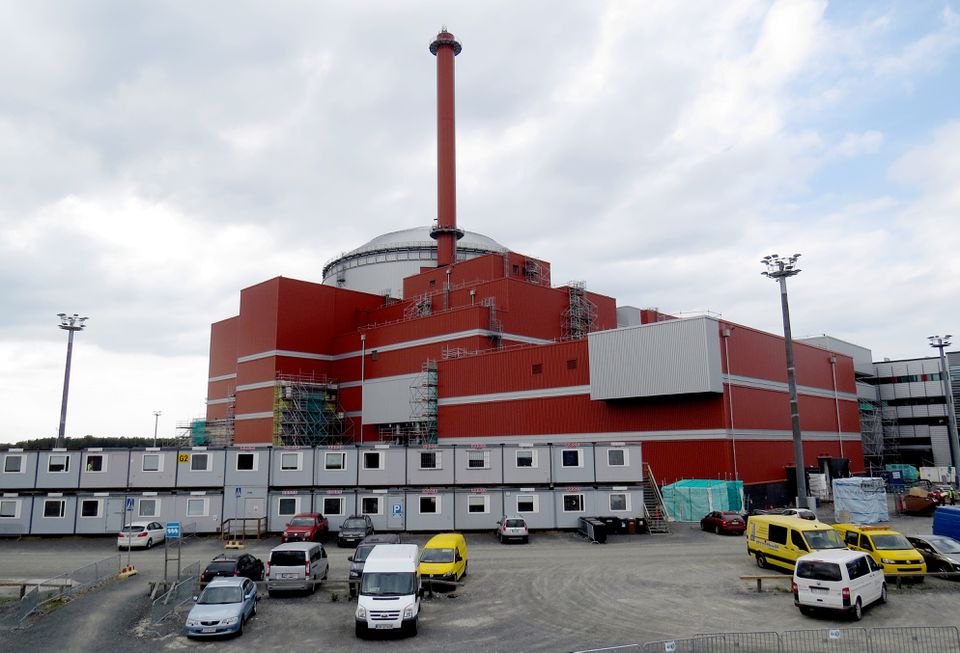
The newest and most powerful nuclear reactor in Europe that was delivered more than a decade late and nearly four times over budget is also proving to be a headache for grid operators now that it is finally up and running.
On Sunday, the 1,600 megawatt Olkiluoto 3 nuclear reactor tripped again, the latest in a series of faults and outages that have plagued the new facility and caused the market to reach out for back-up power to fill the gap.
Olkiluoto owner TVO says the reactor tripped on Sunday due to a turbine malfunction in the generator’s seal oil system. “The repair is taking longer than expected, and based on the current information, the plant is estimated to return to electricity production in approximately two days,” it said in a statement.
It’s not the first time the unit has failed. In October, it was forced to reduce power suddenly when one of the reactor’s control rods unexpectedly dropped into the reactor.
Its sister reactor, Olkiluoto 2, was off line for three weeks due to a faulty water-cooled rotor that had to be replaced and will run for months at reduced output because of the fear of failure.
But on Sunday, when the entire 1,600 MW capacity of Olkiluoto 3 was taken out of the system with no notice, it had a big impact on the grid, sending frequency plunging to 49.55 Hz, well outside the normal band.
“Olkiluoto is starting to compete with the Swedish nuclear power plant, Forsmark, for being the leading cause of major (loss of generation) disturbances in the Nordic power system,” writes Andreas Barnekov Thingvad, a Denmark-based trading systems director at battery company Hybrid Greentech.
He says his company contributed to the market response to stabilise frequency (see graph on original ) and the grid with its portfolio of batteries and virtual power plants, including electric vehicles.
Olkiluoto was finally connected to the grid last year, at an estimated cost of €11 billion ($18 billion) compared to the original budget of €3 billion. That cost blowout forced its developer, the French company Areva, to be bailed out by the French government.
When it did come online, nuclear boosters in Australia hailed it as being responsible for a steep fall in electricity prices. They failed to mention the fact that the reactor was more than a decade late, and Finland was forced to turn to highly expensive Russian gas in the interim to make up the shortfall.
Indeed, TVO, the reactor owner, says now that the new reactor has been commissioned, there is often too much production on the Finnish grid, and the reactor has to be dialled down, or curtailed, in much the same way that renewables often are. It is still not allowed to run at full capacity.
“The electricity system in Finland faces on an increasingly frequent basis a situation where more down-regulating production capacity is needed because there is too much production,” TVO notes.
The new reactor has also spent large periods off line (see the graph above from TVO’s most recent interim report). Its annual outage was supposed to last 37 days, but stretched to double that, to 74 days. TVO blamed “defect repairs and technical problems with inspection equipment took more time than had been planned.”
The point of this story is to highlight another bit of nonsense from the nuclear lobby, who like to claim that renewable sources such as wind and solar require back up, while nuclear does not.
That is simply not true, and the world’s big investment in pumped hydro in the 1970s and 1980s was principally designed to provide back up to nuclear reactors then in vogue. Ontario has ordered some of the world’s biggest batteries to support its nuclear fleet, most of which will be offline for several years for upgrades and maintenance.
Thingvad noted the multiple recent outages that had occurred in both the Finnish and Swedish nuclear reactors over the last few months:
- – On November 17th, at 15:25:51, Olkiluoto 3 had another turbine failure, tripping all 1600 MW of generation and causing the Nordic system frequency to drop to 49.59 Hz. The failure is expected to last several days.
- – On September 3rd, Olkiluoto 3 experienced a fault that caused it to drop 640 MW, leading the Nordic frequency to fall to 49.77 Hz.
- – On June 10th, Forsmark Block 3 experienced a reactor trip of 1172 MW, causing the Nordic system frequency to drop to 49.61 Hz.
- – On June 3rd, 2024, Olkiluoto 3, with 1600 MW, suddenly tripped due to a turbine malfunction. The Nordic system frequency dropped to 49.58 Hz.
- – On May 13, 2024, the Forsmark Block 1 nuclear power plant in Sweden, which has a capacity of 1 GW, tripped due to a grid failure. Forsmark experienced multiple outages – each of at least a gigawatt – in 2023.
- The scale of such outages would be significant in a grid like Australia, where the biggest single unit – at the Kogan Creek coal fired generator in Queensland – is 750 MW.
If, as the federal Coalition proposes, it wants to put in units sized at a gigawatt or more, then the market operator will have to invest in more standby capacity in case of the inevitable trips and outages.
The bigger the unit, the more back up power that is required. Wind and solar may be variable, but those variations are easily and reliably predicted. The sudden loss of a 1,600 MW facility is not.
The Australian Energy Market Operator has already made clear that its biggest headache is managing the unexpected outages of big generators, such as the ageing and increasingly unreliable coal fired power stations that the federal Coalition wants to keep open while it waits for nuclear to be rolled out and commercial SMRs to be invented.
“The repeated outages at Olkiluoto and Forsmark nuclear plants are a stark reminder of the critical need for grid resilience and diversification in our energy systems,” noted Eric Scheithauer-Hartmann, a German-based energy executive.
“It’s encouraging to see companies like Hybrid Greentech stepping up to support the Nordic power grid with advanced battery storage and intelligent energy solutions.
“As we continue to face challenges with traditional power generation, investing in smart grid technologies and renewable integration isn’t just beneficial—it’s essential for maintaining stability and meeting future energy demands.”
Nuclear Propaganda Exposed

At the UN COP29 climate summit in Baku, Azerbaijan a Declaration to Triple Nuclear Energy by 2050 led by the US and UK was also endorsed by 31 countries. The declaration falsely claims that nuclear power has net-zero carbon emissions while ignoring ongoing problems of radioactive waste and enviornmental impacts.
The acting Australian prime minister, Richard Marles, declined to join the pact, stating, “pursuing a path of nuclear energy would represent pursuing the single-most expensive electricity option on the planet.” Several international indigenous groups and activists protested at COP29 against the pact and nuclear greenwashing in general.
Lynda Williams, November 20, 2024, https://www.counterpunch.org/2024/11/20/nuclear-propaganda-exposed/
As a physicist and concerned citizen, I find myself outraged every time I scroll through social media and encounter tweets from the Department of Energy (DOE) and the Office of Nuclear Energy (ONE) touting nuclear power as “clean, safe, and carbon-free.” This narrative not only misrepresents the dirty reality of nuclear power but also obscures the significant environmental and health risks associated with its production and waste. It’s infuriating to see government agencies knowingly lie and promote such misleading information, while ignoring the pressing issues faced by communities affected by the toxic reality of the nuclear power industry – propaganda paid for by US taxpayers!
Oh, Canada! Leading the Charge Against Nuclear Greenwashing
Finally, someone is doing something about it—but not in the U.S., where you’d expect it. In Canada, a coalition of seven environmental organizations recently filed a formal complaint with the Competition Bureau against the Canadian Nuclear Association (CNA), accusing it of misleading the public by marketing nuclear power as “clean” and “emissions-free.” Based on Canada’s Competition Act, the complaint challenges the CNA for violating provisions related to false or misleading advertising, similar to greenwashing regulations in other countries, where deceptive environmental claims distort market competition and misinform consumers.
The complaint argues that the CNA omits critical information about the environmental damage and health risks associated with the nuclear fuel cycle, including uranium mining, radioactive waste management, and the impacts on communities near nuclear facilities. By selectively framing nuclear power as a climate solution, the CNA diverts attention and resources away from truly sustainable alternatives like solar and wind energy.
In the U.S., similar deceptive practices could be challenged under the Federal Trade Commission (FTC) Act, which includes the FTC’s Green Guides. These guidelines require that any environmental claims be substantiated, transparent, and not misleading about the overall environmental impact. Yet, industry organizations like the Nuclear Energy Institute (NEI) and the American Nuclear Society (ANS) continue to promote nuclear power as a “clean” energy solution to climate change while conveniently ignoring the lifecycle emissions, radioactive waste, and long-term environmental costs.
Leading the charge in Canada are groups such as the Canadian Environmental Law Association (CELA), Environmental Defence Canada, and the Sierra Club Canada. Here in the U.S., organizations like the Union of Concerned Scientists (UCS), Natural Resources Defense Council (NRDC) and the Sierra Club could take similar action against the NEI and ANS by leveraging the FTC’s guidelines to expose deceptive marketing practices in the nuclear sector.
Small Modular Reactors: A Costly and Dangerous Gamble
The Biden administration has funneled billions into developing Small Modular Reactors (SMRs), touting them as the future of “clean” energy. This renewed investment includes funding from the Bipartisan Infrastructure Law and the Inflation Reduction Act, which together allocate billion of dollars to accelerate the deployment of next-generation nuclear technologies which are riddled with technological problems and have no real launch date on the horizone. SMRs are still in the design and testing phase and the earliest they could come online is at least a decade away. The push for SMRs is also bolstered by private sector investments, particularly from tech companies looking to power energy-intensive AI by restarting moth balled nuclear power plants like Three Mile Island and to build future SMRs in these locations that also serve as short term storage for thousands of tons of highly radioactive nuclear fuel waste.
Global Greenwashing Nuclear at COP29
The push for nuclear expansion is a global effort led by the International Atomic Energy Agency (IAEA) one of the most powerful agencies at the United Nations whose mission is to promote nuclear power around the globe. At the UN COP29 climate summit in Baku, Azerbaijan a Declaration to Triple Nuclear Energy by 2050 led by the US and UK was also endorsed by 31 countries. The declaration falsley claims that nuclear power has net-zero carbon emissions while ignoring ongoing problems of radioactive waste and enviornmental impacts. Most climate experts agree nuclear power is not a solution to climage change due to high cost and delays. The acting Australian prime minister, Richard Marles, declined to join the pact, stating, “pursuing a path of nuclear energy would represent pursuing the single-most expensive electricity option on the planet.” Several international indigenous groups and activists protested at COP29 against the pact and nuclear greenwashing in general. According to Leona Morgan, Diné organizer with Don’t Nuke the Climate, “Nuclear is not carbon-neutral. It’s fueled by fossil fuels… they just simply don’t count the carbon footprint before the nuclear power plant or after the nuclear power plant.”
Let’s Be Real: Nuclear Power is Not Clean or Green
Sure, nuclear fission may not produce direct carbon emissions, but the nuclear fuel cycle—including uranium mining, reactor construction, radioactive waste management, and decommissioning—creates significant greenhouse gas emissions. In places like the Diné Navajo Nation, uranium mining has already caused immeasurable harm. Over 500 abandoned uranium mines and mills continue to contaminate the land and water with radioactive waste, leading to severe health problems that affect multiple generations. The DOEʻs failure to clean up abandoned mines and address these ongoing harms while simultaneously promoting the narrative of “clean, safe, carbon-free” nuclear power is not just unethical—it’s a dangerous distraction from real solutions for our energy needs and the fight against climate change.
In addition to the delayed deployment of SMRs, there are future problems with going nuclear. High grade uranium resources are finite, with estimates suggesting “peak Uranium” reserves may only last another 10 to 15 years at current consumption rates. This means that SMRs could face fuel shortages before they even become widespread. As high-grade deposits run dry, the industry may turn to in-situ leaching (ISL) methods, which pose severe environmental risks, particularly groundwater contamination. Furthermore, reprocessing nuclear waste—an extremely hazardous and costly endeavor—is not currently practiced in the U.S. due to its dangers. However, as peak uranium approaches, reprocessing may be reconsidered as a necessary evil if we rely on nuclear power as a primary source of energy.
Better Use of Funds: Investing in Renewables
Instead of funneling billions into new unproven nuclear projects, those funds should be redirected to renewable energy sources that are ready for deployment today to reduce carbon emissions. The billions allocated for SMRs could fund solar panels on rooftops for every house in a city the size of Las Vegas. Investments in wind farms and solar plants can achieve far greater reductions in CO2 emissions without the risks of radioactive waste.
Congress has the power to reprogram funds from nuclear projects to support wind, solar, and energy storage, providing immediate climate benefits.
Tim Judson, executive director of Nuclear Information and Resource Service (NIRS), told Democracy Now at COP29 that the push for nuclear power is an “elaborate greenwashing scheme.” “The nuclear industry is, pound for pound, the most subsized energy industry in history and the fact that their pumping more and more money into it as the industry is on the verge of decline is one of the most false solutions we are talking about in the climate talks. If nuclear had to stand on its own two feet, it would phase out within a decade.”
The Way Forward: Taking Action While We Can
US citizens concerned about the DOE’s misleading promotion of nuclear power and SMRs can take meaningful action by contacting the Senate Committee on Energy and Natural Resources to advocate for oversight of nuclear greenwashing and request the reprogramming of funds from SMR development to renewable energy initiatives. Individuals can file complaints with the FTC and the DOE Office of Inspector General for industry and government greenwashing. We can also support non-profit environmental groups and ask that they follow Canada’s lead to hold the nuclear industry and government agencies accountable. With the Trump administration poised to make sweeping cuts to federal agencies and roll back nuclear safety oversight and regulations, citizen advocacy is more crucial than ever before.
We don’t need to face this challenge alone. Over the past four years, several formal complaints and legal actions have been initiated against nuclear greenwashing in the Eurpoean Union, Austria, South Africa and now Canada. In confronting the extremism of the Trump administration, it’s more vital than ever to collaborate with other nations committed to challenging nuclear misinformation and demand real sustainable energy solutions that prioritize our planet over corporate interests.
Lynda Williams is a physicist and environmental activist living in Hawaii. She can be found at scientainment.com and on Bluesky @lyndalovon.bsy.social
Trump’s rapid path to dictatorship
John Quiggin writes – 20 Nov 24
We don’t need to speculate any more. Trump has announced the dictatorship, and there is no sign of effective resistance. The key elements so far include
Extremists announced for all major positions, with a demand that they be recess appointments, not subject to Senate scrutiny
A state of emergency from Day 1, with the use of the military against domestic opponents
Mass deportations, initially of non-citizens and then of “denaturalised” legal immigrants
A third term (bizarrely, the nervous laughter that greeted this led to it being reported as a joke).
A comprehensive purge of the army, FBI and civil service
It’s clear that Trump will face no resistance from the Republican party. There’s an outside chance that the Supreme Court will constrain some measures, such as outright suppression of opposition media, but that won’t make much difference.
It’s possible that Trump will overreach in some way, such as carrying out his threat to execute political opponents before the ground is fully prepared. Or, his economic policies may prove so disastrous that even rigged elections can’t be won. But there is no good reason to expect this.
I can’t give any hopeful advice to Americans. The idea of defeating Trump at the next election is an illusion. Although elections may be conducted for some time, the outcome will be predetermined. Street protest might be tolerated, as long as it is harmless, but will be suppressed brutally if it threatens the regime. Legal action will go nowhere, given that the Supreme Court has already authorised any criminal action Trump might take as president.
The models to learn from are those of dissidents in places like China and the Soviet Union. They involve cautious cultivation of an alternative, ready for the opportunity when and if it comes.
For Australia, the easy, and wrong, course of action will be to pretend that nothing has happened. But in reality, we are on our own. Trump is often described as “transactional”, but this carries the implication that having made a deal, he sticks to it. In reality, Trump reneges whenever it suits him, and sometimes just on a whim. If it suits Trump to drag us into a war with China, he will do it. Equally, if he can benefit from leaving us in the lurch, he will do that
Our correct course is to disengage slowly and focus on protecting ourselves. That means a return to the policy of balancing China and the US, now with the recognition that there is nothing to choose between the two in terms of democracy. We need to back out of AUKUS and focus on defending ourselves, with what Sam Roggeveen has called an “echidna” strategy – lots of anti-ship missiles, and the best air defences we can buy, from anyone willing to supply them.
I’ll be happy to be proved wrong on all this.
David Crisafulli stares down LNP division on abortion and nuclear power
Consternation remains in the ranks about way Queensland party handled two divisive issues, sources say
Guardian, Ben Smee 17 Nov 24,
The Queensland premier, David Crisafulli, has told Liberal National party members the party “does not exist for culture wars” in an address seeking to stare down potential division about his positions on abortion rights and nuclear power.
Crisafulli’s speech to the LNP state council meeting in Rockhampton on Sunday was his first opportunity to speak directly to the organisational wing, and party members, since last month’s state election victory.
Despite the election success, LNP sources say there remains consternation in the ranks about the way the party handled divisive issues including abortion and nuclear power, where the views of the grassroots membership – and the private views of many MPs – are at odds with Crisafulli’s promises not to change existing laws.
The premier did not directly mention either issue. But his speech to members hinted at “scare campaigns” by Labor during the election and said these would not work in four years if the party kept its word.
“One thing I can guarantee you about me … that is my word counts for something and I value a culture when you say you’re going to do something you do it, and when you say you won’t do something, you won’t do it,” Crisafulli said……………………………………. more https://www.theguardian.com/australia-news/2024/nov/17/david-crisafulli-stares-down-lnp-division-on-abortion-and-nuclear-power
Plan to dispose of nuclear waste from Aukus submarines unanimously rejected by Adelaide council
City of Port Adelaide Enfield’s mayor says she hadn’t received correspondence about storage or disposal before or after bill passed federal parliament
Guardian Petra Stock, 18 Nov 24
Plans to dispose of low-level nuclear waste from Aukus submarines at an Adelaide naval facility have been unanimously opposed by the local council for the area, who say they weren’t consulted.
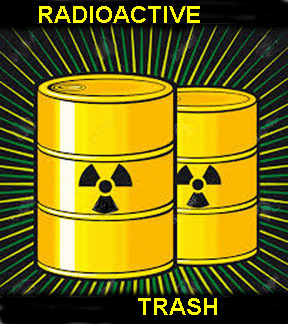
The Osborne naval shipyard, 25km north of Adelaide CBD, and HMAS Stirling at Garden Island 50km south of Perth in Western Australia, have both been designated as “radioactive waste management facilities” for nuclear waste from Aukus submarines under the Australian naval nuclear power safety bill, which passed parliament in October.
Last week, the City of Port Adelaide Enfield – responsible for the area surrounding the Osborne shipyard – voted to unanimously oppose the storage and disposal of radioactive waste at the site.
Its mayor, Claire Boan, said council had been briefed on aspects of the Aukus project but it had not received any correspondence or communication about management and disposal of nuclear waste at the site.
“While the decision-making regarding this is out of the control of the council, we will continue to advocate for our community and lobby for community consultation throughout the process,” she said.
Rex Patrick, a former independent senator for South Australia, said the situation highlighted the lack of consultation and transparency regarding Aukus nuclear waste.
“Albanese called for Dutton to disclose where he was going to put his nuclear power reactors, and yet there’s been complete secrecy around the entire process associated with where they’ll put the high-level waste from naval reactors,” he said.
No public announcements have been made about the site selection or consultation process for dealing with the high-level nuclear waste associated with the Aukus submarines, which the government agreed Australia would dispose of in March last year……………………….. https://www.theguardian.com/environment/2024/nov/18/plan-to-dispose-of-nuclear-waste-from-aukus-submarines-unanimously-rejected-by-adelaide-council
Nuclear and related news – week to 19 November

Some bits of good news – No Matter Who Wins, the Real Work of Sustainability Will Continue. ‘Lost’ species thriving again in Scottish waters. Indian Soldiers Swap Candy with Chinese After Diplomacy Deescalates Troops at Diwali
TOP STORIES
. Trump’s Appointments Reflect a More Openly Hawkish Face of US Empire.
Media Coverage of Amsterdam Soccer Riot Erases Zionist Hatred and Violence.
Big tech, bigger lies. America Can’t Afford a
Climate. ‘No sign’ of promised fossil fuel transition as emissions hit new high.
This year has been masterclass in human destruction, UN chief tells Cop29.
- Fossil Fuel Giants Paying Thousands to Sponsor COP29 Events. Almost 500 carbon capture lobbyists granted access to Cop29 climate summit.
- COP 29 hosts accused of detaining climate defenders.
- A ‘Cop of peace’? How can authoritarian, human rights-trashing Azerbaijan possibly host that?
- Cop29 could change the financial climate for the world’s wealthy polluters.
Noel’s notes. Cop 30 Climate Summit probable change of venue – CorporateHub, Hades Time to ban Israeli sporting teams, just as the world banned South African teams in the 1970s.
AUSTRALIA.
B-2 Bomber Strikes in Yemen and their significance for Australia. Nuked: The Submarine Fiasco that Sank Australia’s Sovereignty, book by Murray Horton. World teeters on brink as Trump and cronies prepare to flood the zone with shit. The 101 ways Google serves up Australians to known scammers. More Australian nuclear news headlines at https://antinuclear.net/2024/11/16/australian-nuclear-news-11-18-november/
NUCLEAR ITEMS
| ARTS and CULTURE. The Atom & Us: Min-Kyoo Kim. |
| CLIMATE. **Evaluation of Nuclear as a Solution **-ALSO AT https://nuclear-news.net/?s=Evaluation+of+Nuclear+as+a+Solution |
| CIVIL LIBERTIES. “America First” Means Stomping Out Free Speech In The US In Order To Help Israel. |
ECONOMICS. Ratepayers First: The Economic Case Against Nuclear’s Data Center Dreams.
Nuclear Decommissioning Services Market Expected to Reach $11.79 Billion by 2034. What to know about Elon Musk’s contracts with the federal government.
| EMPLOYMENT. Hinkley Point C ‘using cheap foreign labour’, say striking workers. ALSO AT |
| ENERGY. Donald Trump’s election victory deals blow to US clean energy industry – ALSO AT https://nuclear-news.net/2024/11/13/3-b1-donald-trumps-election-victory-deals-blow-to-us-clean-energy-industry/ At COP29, IRENA Outlook calls for ambitious NDC update a ‘Make or Break’ for Global Goal to Triple Renewables by 2030 The Future of Nuclear Power is Wrought with Challenges. |
| ENVIRONMENT. North Somerset Council says no to ‘crazy’ EDF salt marsh plan. Farmers slam ‘crazy’ plans to flood 1,500 acres to save fish from a power plant. Leaked tritium reached the Mississippi. |
| EVENTS. 19 November – Webinar – Resisting the nuclear export and import policies in the age of climate crisis – Webinar on the International Joint Response to Nuclear Expansion- No Nukes Asia Forum (NNAF) |
INDIGENOUS ISSUES. Ontario campaigners opposed to nuclear waste dumps suffer setbacks, but all is not lost as Canadian First Nations still to vote.
Project Pele: for Hawaii, DoD nuclear project besmirches Pele.
LEGAL. Imprisoned ex-Ohio House Speaker Larry Householder to ask Donald Trump for clemency, campaign attorney says.
MEDIA.
- A new era dawns: America’s tech bros now strut their stuff in the corridors of power.
- How Trump Will Seek Revenge on the Press.
- How a Secluded 1984 Conference Forged Israel’s Unprecedented Influence Over US Media.
- A comprehensive review of the revolving door between Fox and the second Trump administration.
SECRETS and LIES.
The media’s role in lying about Amsterdam violence just keeps getting darker. https://www.youtube.com/watch?v=2HFM_V1rnPA
Secrecy ramping up as problems mount in the UK nuclear programme.
Inside the secret plan to re-open America’s most infamous nuclear power plant code named Tetris.
| SPINBUSTER. Dispatch from a nuclear petting zoo. |
| TECHNOLOGY. Nuclear Fusion, forever the energy of tomorrow? |
| WASTES. Other sites considered for UK’s nuclear waste disposal. Missing: One nuclear waste dump site. Answers to the name of GDF.. |
WAR and CONFLICT.
- A new nuclear arms race is beginning: It will be far more dangerous than the last one.
- Israeli Military Planning To Stay in Gaza Through 2025.
- Biden Authorizes Ukrainian Long-Range Strikes Into Russia Using ATACMS Missiles – Reports.
- Witnesses describe alleged Ukrainian war crimes in Donbass city.
WEAPONS and WEAPONS SALES. Biden’s Last Minute US-Saudi Deal Could Open Door to Nuclear Arms Race.
1 This month
Chernobyl: The Lost Tapes – A good documentary on Chernobyl on SBS available On Demand for the next 3 weeks– https://www.sbs.com.au/ondemand/tv-program/chernobyl-the-lost-tapes/2352741955560
15 April – Zoom –Nuclear Power is Not the Solution
Apr 15, 2026 01:00 AM in Canberra, Melbourne, Sydney

Join the International Physicians for the Prevention of Nuclear War (IPPNW) on Tuesday, April 14th for a timely webinar exploring the risks associated with nuclear power and challenging the myth that it offers a simple, safe, carbon-free solution to the climate crisis

21 April Webinar: No Nuclear Weapons in Australia
Start: 2026-04-21 18:00:00 UTC Canberra, Melbourne, Sydney (GMT+10:00)
End: 2026-04-21 19:30:00 UTC Canberra, Melbourne, Sydney (GMT+10:00)
Event Type: Virtual
A virtual link will be communicated before the event.
Host Contact Info: australia@icanw.org

of the week – Australians for War Powers Reform (AWPR)
To see nuclear-related stories in greater depth and intensity
 Antinuclear