New Zealand puts Australia to shame – with its environment – pandemic recovery programme
Australia’s destructive COVID-19 recovery
An opportunity for Australia
Economic stimulus through conservation and land management is not yet recognised as a way for Australia to respond to both the COVID-19 crisis and long-standing conservation needs.
Australian governments, if they invested similarly to New Zealand, could create jobs in the short term in any desired target region, based on economic and environmental need….
|
Let’s fix Australia’s environment with any pandemic recovery aid – the Kiwis are doing it https://theconversation.com/lets-fix-australias-environment-with-any-pandemic-recovery-aid-the-kiwis-are-doing-it-139305 5 June 20, Lachlan G. Howell, John Clulow,John Rodger, Ryan R. Witt The COVID-19 pandemic is causing significant economic challenges for Australia. With April figures showing more than 800,000 people unemployed and last month 1.6 million on JobSeeker payments, a key focus will be job creation.
Lessons should be learned from what’s happening in New Zealand, where the government is funding projects that revive the environment. Unfortunately, Australia seems to be going the other way. New Zealand gets itAs part of New Zealand’s innovative Wellbeing Budget the government will invest NZ$50 billion in a direct COVID-19 recovery response. Of that, NZ$1.1 billion will be spent on creating 11,000 “nature jobs” to combat unemployment and supplement pandemic-affected sectors. This unique investment will be delivered in a number of targeted environmental programs. Continue reading
|
Challenge in USA to nuclear wastes going to another state for ?permanent “Interim storage”
 Beyond Nuclear Files Federal Lawsuit Challenging High-Level Radioactive Waste Dump  for Entire Inventory of U.S. “Spent” Reactor Fuel, Common Dreams, 5 June 20, Petitioner charges the Nuclear Regulatory Commission knowingly violated U.S. Nuclear Waste Policy Act and up-ended settled law prohibiting transfer of ownership of spent fuel to the federal government until a permanent underground repository is ready to receive it. WASHINGTON – Today the non-profit organization Beyond Nuclear filed an appeal with the U.S. Court of Appeals for the District of Columbia Circuit requesting review of an April 23, 2020 order and an October 29, 2018 order by the U.S. Nuclear Regulatory Commission (NRC), rejecting challenges to Holtec International/Eddy-Lea Energy Alliance’s application to build a massive “consolidated interim storage facility” (CISF) for nuclear waste in southeastern New Mexico. Holtec proposes to store as much as 173,000 metric tons of highly radioactive irradiated or “spent” nuclear fuel – more than twice the amount of spent fuel currently stored at U.S. nuclear power reactors – in shallowly buried containers on the site. But according to Beyond Nuclear’s petition, the NRC’s orders “violated the Nuclear Waste Policy Act and the Administrative Procedure Act by refusing to dismiss an administrative proceeding that contemplated issuance of a license permitting federal ownership of used reactor fuel at a commercial fuel storage facility.” Since it contemplates that the federal government would become the owner of the spent fuel during transportation to and storage at its CISF, Holtec’s license application should have been dismissed at the outset, Beyond Nuclear’s appeal argues. Holtec has made no secret of the fact that it expects the federal government will take title to the waste, which would clear the way for it to be stored at its CISF, and this is indeed the point of building the facility. But that would directly violate the 1982 Nuclear Waste Policy Act (NWPA), which prohibits federal government ownership of spent fuel unless and until a permanent underground repository is up and running. No such repository has been licensed in the U.S. The U.S. Department of Energy’s (DOE) most recent estimate for the opening of a geologic repository is the year 2048 at the earliest. In its April 23 decision, in which the NRC rejected challenges to the license application, the four NRC Commissioners admitted that the NWPA would indeed be violated if title to spent fuel were transferred to the federal government so it could be stored at the Holtec facility. But they refused to remove the license provision in the application which contemplates federal ownership of the spent fuel. Instead, they ruled that approving Holtec’s application in itself would not involve NRC in a violation of federal law, and that therefore they could go forward with approving the application, despite its illegal provision. According to the NRC’s decision, “the license itself would not violate the NWPA by transferring the title to the fuel, nor would it authorize Holtec or [the U.S. Department of Energy] to enter into storage contracts.” (page 7). The NRC Commissioners also noted with approval that “Holtec hopes that Congress will amend the law in the future.” (page 7). “This NRC decision flagrantly violates the federal Administrative Procedure Act (APA), which prohibits an agency from acting contrary to the law as issued by Congress and signed by the President,” said Mindy Goldstein, an attorney for Beyond Nuclear. “The Commission lacks a legal or logical basis for its rationale that it may issue a license with an illegal provision, in the hopes that Holtec or the Department of Energy won’t complete the illegal activity it authorized. The buck must stop with the NRC.” “Our claim is simple,” said attorney Diane Curran, another member of Beyond Nuclear’s legal team. “The NRC is not above the law, nor does it stand apart from it.”……… “When Congress passed the Nuclear Waste Policy Act and refused to allow nuclear reactor licensees to transfer ownership of their irradiated reactor fuel to the DOE until a permanent repository was up and running, it acted wisely,” said Kevin Kamps, radioactive waste specialist for Beyond Nuclear. “It understood that spent fuel remains hazardous for millions of years, and that the only safe long-term strategy for safeguarding irradiated reactor fuel is to place it in a permanent repository for deep geologic isolation from the living environment. Today, the NWPA remains the public’s best protection against a so-called ‘interim’ storage facility becoming a de facto permanent, national, surface dump for radioactive waste. But if we ignore it or jettison the law, communities like southeastern New Mexico can be railroaded by the nuclear industry and its friends in government, and forced to accept mountains of forever deadly high-level radioactive waste other states are eager to offload.” In addition to impacting New Mexico, shipping the waste to the CISF site would also endanger 43 other states plus the District of Columbia, because it would entail hauling 10,000 high risk, high-level radioactive waste shipments on their roads, rails, and waterways, posing risks of radioactive release all along the way………. Besides threatening public health and safety, evading federal law to license CISF facilities would also impact the public financially. Transferring title and liability for spent fuel from the nuclear utilities that generated it to DOE would mean that federal taxpayers would have to pay for its so-called “interim” storage, to the tune of many billions of dollars. That’s on top of the many billions ratepayers and taxpayers have already paid to fund a permanent geologic repository that hasn’t yet materialized. … https://www.commondreams.org/newswire/2020/06/04/beyond-nuclear-files-federal-lawsuit-challenging-high-level-radioactive-waste?utm_campaign=shareaholic&utm_medium=referral&utm_source=twitter |
|
Nuclear missile submarines in the Indo-Pacific
Increasing Indo-Pacific nuclear boats and the impact on strategic stability Defence Connect, Stephen Kuper, 5 June 20, As the Indo-Pacific continues to evolve economically and strategically, one of the traditional measures of great power status – nuclear attack and missile submarines – will become more prominent. For ASPI academic Stephan Fruehling, this will have a dramatic impact on the strategic stability and calculus Australia depends upon.
Much like the submarine competition between the US and Soviet Union, this new arms race is resulting in fleets of hunter-killers and strategic missile submarines stalking the depths, however the US and China are far from the only emerging and established Indo-Pacific nations seeking to leverage the power of nuclear submarines.
The growing proliferation of advanced nuclear weapons systems, including the relatively crude, yet still capable submarine launch ballistic missiles recently tested by North Korea, and the increasingly capable nuclear-powered submarine fleets introduced by China and Russia, South Korea has moved to address a tactical and strategic shortfall: a lack of nuclear-powered submarines.
While seemingly a shock move, the South Korean strategic policy institute, the Korea Defense Network (KDN), commissioned a research review into the feasibility of developing an indigenous nuclear-powered attack submarine.
It is reported that the results suggested that South Korea consider building a nuclear-powered attack submarine modelled after the French 5,300-tonne Barracuda Class submarine, the design model for Australia’s own fleet of $50 billion Attack Class submarines.
India also fields a growing array of domestic and foreign nuclear submarine designs in both the attack and ballistic missile variants providing an already tense regional balance of power with yet another platform to complicate the tactical and strategic decision making processes for many nations, including Australia……..
For Australia, this raises the question, can the nation depend on the nuclear umbrella provided by the US or, for that matter, the UK at a stretch? If not, what is the solution for Australia? ……..https://www.defenceconnect.com.au/maritime-antisub/6227-increasing-indo-pacific-nuclear-boats-and-the-impact-on-strategic-stability
Australia must plan for future disasters, bushfires, floods – NSW Resilience Commissioner
 NSW Resilience Commissioner Shane Fitzsimmons is urging Australians to start planning now for future disasters. SBS, 5 June 20, Resilience NSW Commissioner Shane Fitzsimmons says Australia’s disaster recovery will be “quite significant” and that people should start planning for future disasters.
The former NSW Rural Fire Service boss says the country has faced unprecedented damage and destruction during the bushfire season, which was compounded by storms and floods and the COVID-19 pandemic.
“There are communities that have been so profoundly impacted and affected, and whilst there’s a tremendous focus on the rebuilding of infrastructure, on people’s homes, it’s a massive undertaking,” he said in an online webinar on Friday.
The commissioner is urging individuals, families, businesses, industries, and governments to begin having conversations about how they might respond to disruptions caused by disasters in the future to build resilience…….. https://www.sbs.com.au/news/australians-told-to-start-planning-for-future-disasters-following-profound-bushfire-impact
Australian media watchdog found Andrew Bolt breached press standards by vilifying Greta Thunberg
Andrew Bolt breached media standards calling Greta Thunberg ‘deeply disturbed’, watchdog rules, SBS, The Australian media watchdog has found Andrew Bolt breached press standards by attempting to “diminish the credibility” of Greta Thunberg on the basis of her disability.
BY MAANI TRUU, 5 June 20 A column by News Corp writer Andrew Bolt mocking teenage climate change activist Greta Thunberg breached standards by attempting to “diminish the credibility” of her opinions on the basis of her disability, the Australian media watchdog has found.
The column, published online in August last year, referred to the 17-year-old as “freakishly influential”, “deeply disturbed”, and a “strange girl”.
“I have never seen a girl so young, with so many mental disorders, treated by so many adults as a guru,” Bolt wrote.
The Australian Press Council found the article breached General Principle 6 of its standards of practice, which requires media organisations to avoid causing offence, distress, prejudice, or a substantial risk to the health and safety of an individual, unless publishing the story is in the public interest. …..
“[The column] attempts to diminish the credibility of Ms Thunberg’s opinions on the basis of her disabilities and by pillorying her supporters on the basis of her disabilities,” the watchdog’s findings, published on Thursday, read. ……. https://www.sbs.com.au/news/andrew-bolt-breached-media-standards-calling-greta-thunberg-deeply-disturbed-watchdog-rules
Russia’s anti nuclear movement – and government reprisals against it
 nd radioaсtive threats” Report “Anti–nuclear resistance in Russia: problems, protests, reprisals” Produced by RSEU’s program “Against nuclear and radioaсtive threats”
In the city of Krasnoyarsk, Rosatom plans to build a national repository for high–level radioactive waste. A site has been selected on the banks of Siberia’s largest river, the Yenisei, only 40 km from the city. Environmental activists consider this project, if implemented,to be a crime against future generations and violates numerous Russian laws. Activists are also concerned that waste from Ukraine,Hungary, Bulgaria (and in the future from Belarus, Turkey, Bangladesh, and other countries) could be transported there as well. (47)
June 5 Energy News — geoharvey

Opinion: ¶ “Big Oil’s Race To Net Zero” • Shell, BP, and Total have all been pretty active in the renewables department in the past few years. Investors want to see a more sustainable business, governments are pushing for cleaner energy, and environmental activists are applying pressure to take responsibility for carbon footprints. So, how […]
Why it’s time to get moving on decarbonising Australia’s transport — RenewEconomy
One of the simplest ways to reduce transport emissions is converting machines that run on the combustion of fossil fuels to machines that run on green electricity. The post Why it’s time to get moving on decarbonising Australia’s transport appeared first on RenewEconomy.
via Why it’s time to get moving on decarbonising Australia’s transport — RenewEconomy
Sharing the Earth — GarryRogers Nature Conservation
We are in a planetary recession marked by biodiversity collapse, climatic upheavals, freshwater shortages, global toxification, and unprecedented human and nonhuman displacements (Ripple et al, 2017). The only positive outlook lies in deep solutions and new narratives. Protecting at least half the Earth, terrestrial and marine, offers such an outlook.
YELLOWCAKE COUNTRY – WEBINAR SERIES

Don’t miss the first Yellowcake Country webinar next Wednesday 10 June from 5.30 pm – 7.00 pm (AWST) |  NSW/VIC/ACT/QLD: 7.30pm | NT/SA: 7.00 pm.
We’ll be hearing from international activists from Taiwan, India and Japan who will share their powerful stories of the impacts of the nuclear industry in their country that are being directly fuelled by Australian uranium.
Speakers include;
Dr.Vaishali Patil, Indian social activist who will speak on the anti-nuclear movement in Konkon region of Maharashtra state where they are working to stop the proposed Jaitapur nuclear power plant.
Shi Ting Chen, nuclear-free and climate justice campaigner, for Green Citizens’ Action Alliance (GCAA) Taiwan who work to improve the social justice and enhance environmental sustainability by promoting energy transition and creating a nuclear-free and coal-free society.
Tomohiro Matsuoka, Japanese, environmental, social and governance research consultant with extensive knowledge on the Japanese nuclear industry. Tomohiro has worked with victims of the Fukushima nuclear disaster and will share his story of visiting Fukushima in 2019.
The hour and a half format will include guest speakers presentation and plenty of time for questions and discussion. For more information on the event, click here.
This is an online-only event. Please use the video Zoom link to join: https://zoom.us/j/89620002692
This exciting webinar will facilitate the continued public debate about the risks and responsibilities of our involvement in the global nuclear trade. We will bring together a powerful, united movement across the world to share stories for a nuclear free future.
A reality check on the cost of nuclear power for Australia
 Nuclear cost and water consumption – The elephants in the control room, Open Forum.com.au. Peter Farley | December 20, 2019 Cost There are four nuclear plants being built around the world where public information on costs is reasonably reliable.
These are Plant Vogtle in the US (US$27.5bn, 2.2GW), Framanville France (€12.4bn+, 1.6 GW), Olkiluoto in Finland (around €10 bn+, 1.6 GW) and Hinckley Point in the UK (₤22 bn+, 3.2 GW). There are two further plants whose power costs have been published, Akkuyu in Turkey US$127/MWh and Barakah in the Emirates US$110/MWh. It should be emphasised that none of these costs are the full cost recovery. For example in the British case it is estimated that some $10 bn has been spent by others on upgrading the grid and backup power supplies. In Turkey the cost of the plant is just that, and doesn’t include civil works, grid connections, cooling water supply. In the US plant Vogtle has benefited from some US$8bn of federal government loan guarantees and an unusual form of financing where customers have paid about 8% premium on their bills for 10-12 years before the plant is to be commissioned. All of the plants get catastrophe insurance and some security from their government and most have inadequate bond structures for long term waste storage. They also rarely pay for cooling water. Many have preferential supply agreements which will require other cheaper sources of power to turn off to allow the nuclear plants to keep running. However, even on the published information, nuclear power plants in democracies are running at about A$13m/MW. In our case we do not have an experienced nuclear workforce, Australian construction costs are higher by 20-30% for large projects – and there are 5,000 tradesmen on site at Plant Vogtle out of a workforce of 9,000 as nuclear power plants are very large projects. We do not have the heavy fabrication facilities required, and these cost hundreds of millions to build For example the Osborne Naval Shipyard design for 1/10th of the throughput of a nuclear fab shop cost $380m. Even the inspectors would have to be imported. So it is reasonable to suggest that new nuclear in Australia would cost at least A$16m per MW including subsidised construction finance, resulting in a first day of operation cost of a 2.2 GW plant of A$41 bn. Amortised over 50 years station life at a very low weighted average cost of capital at 5.5% – lower than plant Vogtle – that still works out at about $2.4 bn/yr. Due to the variability of demand in Australia the plants would be unlikely to be able to achieve a capacity factor above about 80% – halfway between the US and France and higher than Korea. So over a typical year a two unit 2.2 GW plant would be expected to generate about 15,500,000 MWh meaning the fixed costs per MWh would be $2.4bn/15.5m or $156/MWh. The daily running costs of US nuclear plants average out at US$40/MWh. This is lower than France and almost certainly lower than any new nuclear plant in Australia could achieve due to the much larger American skill base, higher utilisation and lower operating temperatures. The best case for Australia would be A$60+ for maintenace and operation. Thus an Australian nuclear power station could be expected to deliver power at a cost of A$216/MWh. Now if you use the cheaper Barrakah design at about US$5,300/MW and allow for 15 years of inflation at 1.5% to allow time for the project to come online, and a modest 10% Australian premium, power here could be produced at about A$10.4 bn per GW. After a slightly lower capacity factor of 75%, about the same as Korea, and a realistic WACC of 6.5% the ammortisation amounts to $107/MWh with a similar A$60/MWh operating and maintenance cost and the total delivered cost of power is a mere A $167/MWh. This figure aligns closely with the figure quoted by the CEO of the Barrakah plant some years ago at US$110/MWh The costs of a renewable alternative It should be noted that many of the arguments about relative costs are based on the figures used in the Finkel report. These are well out of date. Nuclear power has become even more expensive and actual renewable contracts in Australia are down 40-50% on the Finkel figures. Thus if we dispersed 2 GW of wind $3.6 bn, 1.2 GW of tracking solar $1.8bn, 2 GW of rooftop solar $2.5 bn, 1 GW of waste/biomass/geothermal $2.5bn and 1 GW/15GWh of pumped hydro $1.8 bn and 1 GW/ 2 GWh of batteries $1.2bn across the NEM the total cost would be $13.5 bn. Annual generation would be 17,500 GWh – more than the nuclear plant – and minimum available output would be 2.5 GW+. Typical hot day peak demand at 5pm would be about 4GW. About 30% of generation would go through storage at 85% efficiency, so net output would be around 16,500 GWh. Some would be curtailed so we can assume a similar annual output to the nuclear plant. However the operating costs average around $18 and the capital, even if amortised over 30 years are only $59/MWh for a total of $77 including backup. In summary, for 1/3rd of the investment, in one third of the time, we can get renewable power and backup for 1/3rd of the cost of nuclear power……https://www.openforum.com.au/nuclear-cost-and-water-consumption-the-elephants-in-the-control-room/?fbclid=IwAR2M3NxMjfrDJNWTG9tatKSARHGUKWVcG_CE-bSW5wtnAbwhGnYxd1ElugU |
|
Graham Mantle: substantial bribe and biased propaganda, as the Australian Government foists a nuclear waste dump on a farming community
 Graham Mantle, To the Committee of Inquiry: National Radioactive Waste Management Amendment (Site Specification, Community Fund and Other Measures) Bill 2020 [Provisions] Submission 44
The possibility of a National Radioactive Waste Management Facility at Kimba concerns far more than 61.58% of the people of Kimba. (Approximately 600 in favour)
I submit that this facility, together with a substantial bribe for Kimba, is being foisted on South Australia and the Eyre Peninsula in particular because no other state wants it. The fact that it has taken the government five
years to gain a 61.58% majority of the Kimba population of 1057 speaks for itself.
I have seen the kind of persuasive information to which the people of Kimba have been subjected. The ‘information’ fed to them carefully avoided mention of the possibility or probability of adverse perceptions, not only towards Kimba and what is grown there, but towards the entire Eyre Peninsula and even South Australia as a whole. viz “ South Australia – oh yes, the nuclear dump state…”
Farming, though rewarding, is a tough game and, after overcoming all the other issues, you don’t need adverse
perceptions when it comes to selling your produce. Tourism, too, can be a fickle business and perceptions are
vital to attracting visitors to the peninsula.
The Barngarla traditional owners a voice for over 3000 First Nation people who reside on Eyre Peninsula have
been denied a hearing in this deliberation. That is inexcusable in the spirit of reconciliation. They, together with
all who live on the Eyre Peninsula, have a right to be heard.
Finally, I draw your attention to South Australian Legislation:
Nuclear Waste Storage Facility (Prohibition) Act 2000.
This Act binds the Crown in right of the State and, in so far as the legislative power of the State permits, in all
its other capacities.
The objects of this Act are to protect the health, safety and welfare of the people of South Australia and to
protect the environment in which they live by prohibiting the establishment of certain nuclear waste storage
facilities in this State.
I implore you to reject the proposal to put a radioactive waste facility at Kimba.
With respect
Graham Mantle
Injustice of UK court process regarding Julian Assange. Assange too sick to attend

2. In addition to other ongoing health concerns, Assange faces the serious risk of exposure to Covid in Belmarsh prison, and has been advised that even going to the video room to take part in hearings is unsafe. This is another reason he should be immediately released.
3. Assange’s lawyers have long complained they have had insufficient access to him in prison. Under lockdown conditions, they have had no access to him at all. They have repeatedly flagged that this lack of access seriously impacts their ability to prepare his defence.
4. One of the next steps agreed today is that psychiatric reports on Assange from the prosecution and defence will be due to the court on 31 July. Remember that UN Special Rapporteur @NilsMelzer has expressed alarm many times that Assange shows symptoms of psychological torture.
5. It is a welcome step that the continuation of the full extradition hearing was adjourned, as lockdown conditions present clear barriers to open justice – but 7 September may not be late enough to make a meaningful difference. Also the court is still struggling to find a venue.
6. It remains extremely frustrating that the court does not adequately accommodate NGO observers. I have never experienced so much difficulty accessing a trial in any country as at Woolwich Crown Court in February, and the teleconference option we now have is far from sufficient.
7. The press are also facing severe restrictions. Only 6 journalists have been allowed to attend in person the past 2 hearings, with others limited to the awful phone line. This case is of high public interest and a better solution must be found before the full hearing resumes.
8. Assange’s next callover hearing has been scheduled for 29 June at 10 am. We urge the court to find workable solutions to enable his safe attendance and ensure the press and observers are able to properly monitor proceedings. /END
Massive amounts of money flow from U.S. taxpayers into the nuclear industry
 The Crushing Cost Of Nuclear Waste Is Weighing On Taxpayers, Oil Price
By Haley Zaremba – Jun 19, 2019 The Maine Yankee nuclear power plant hasn’t produced a single watt of energy in more than two decades, but it cost U.S. taxpayers about $35 million this year.” So begins a powerful report this week about the crushing cost of nuclear waste storage by the Los Angeles Times……..
In the United States, where the nuclear industry is ailing, this is particularly bad news. More plants are shutting down than are going online, and many of the nuclear plants that are continuing to function are able to do so in large part thanks to government subsidies at the state level, which is to say, even more taxpayer dollars.
The Trump administration, for its part, has made efforts to combat the rising prices of nuclear waste storage–albeit extremely controversial ones. Just this month, “in a move that will roll back safety standards that have been observed for decades” says not-for-profit news organization Truthout, “the Trump administration reportedly has plans to reclassify nuclear waste previously listed as “high-level” radioactive to a lower level, in the interest of saving money and time when disposing of the material.”
While this may be a quick fix for the massive amounts of money flowing out of taxpayer pockets and into the nuclear energy industry, it’s certainly not a sustainable solution for what could easily become a national health crisis if mismanaged. ……https://oilprice.com/Alternative-Energy/Nuclear-Power/The-Crushing-Cost-Of-Nuclear-Waste-Is-Weighing-On-Taxpayers.html
Concerns raised over pension investments in nuclear weapons
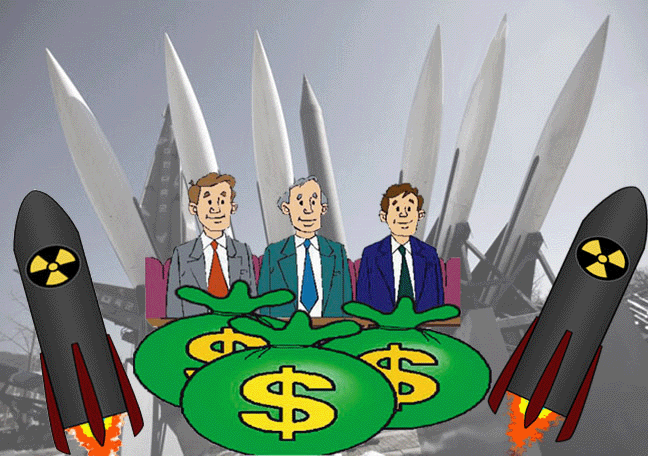

“Once this is ratified by 50 states and comes into effect as a new piece of international law, the implications will be significant for nuclear armed states and financial institutions alike.
“The biggest banking corporations have a global reach and cannot disregard international law.”
03/6/20 A report by the UK Nuclear Weapons Financing Research Group has raised concerns about the number of pension providers investing in companies that are producing nuclear weapons.
The report, Banks, Pensions and Nuclear Weapons: Investing in Change, found that among pension providers, policy on restricting investment in nuclear weapons is generally limited to ethical funds. Continue reading
1 This month
25 October – Film –Britain’s Nuclear Bomb Scandal: Our Story – part of the Adelaide Film Festival,
Screening and Conversation
A screening of Britain’s Nuclear Bomb Scandal: Our Story (2024) followed by a talk with 2026 Bettison and James Awardee and Tradtional Owner Karina Lester in conversation with Simone Tur.
When: Sun 25 Oct, 12:00pm-Screening, 1:15pm-Talk
Where: The Mercury
Free admission, register below by clicking on BUY TICKETS and select free event tickets, at end of web page:
https://www.adelaidefilmfestival.org/program/2026/britains-nuclear-bomb-scandal-our-story
.
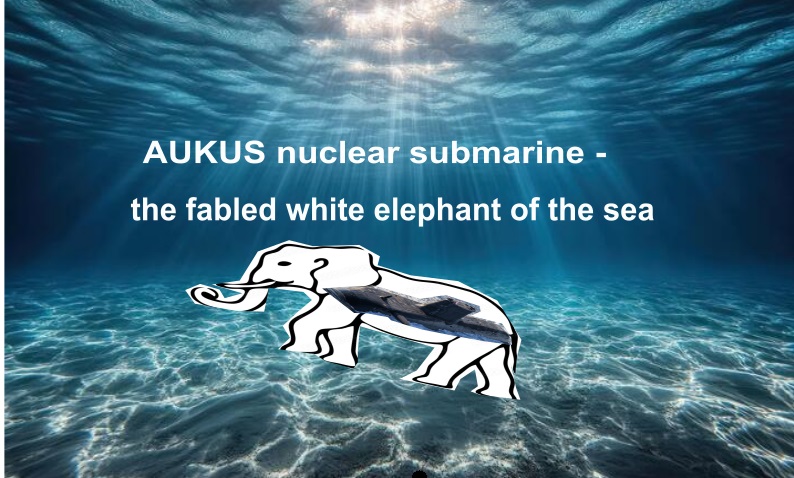
Australians deserve the truth
about
AUKUS – https://aukuspublicinquiry.com/

PETITION – To: Prime Minister Anthony Albanese and the Australian Labor Government

of the week – Australians for War Powers Reform (AWPR)
To see nuclear-related stories in greater depth and intensity

