Trump to divert aid money for poor countries to bolster the nuclear industry
 Trump’s push to use global aid for nuclear projects alarms development groups, The Hill, BY REBECCA BEITSCH – 05/06/20 A new effort by the Trump administration to bolster the nuclear industry is eyeing a surprising source of financing — a fund designed to fight poverty in developing countries. In a list of official recommendations to President Trump last month, the Nuclear Fuels Working Group argued the U.S. needs to sell nuclear power technology abroad and battle the influence of countries like China and Russia that have become dominant suppliers. One way to do that, the group said, is to lift restrictions at the U.S. International Development Finance Corporation (DFC) to let the agency fund nuclear projects alongside other development work. But development groups worry that tapping the DFC to greenlight nuclear projects will do more to promote American interests than alleviate poverty.
“I struggle to see it as something they should be doing,” Conor Savoy, executive director of the Modernizing Foreign Assistance Network. There’s also a concern that the projects won’t benefit the poorer countries the DFC is charged with helping. Setting up nuclear power systems requires a higher level of infrastructure, meaning overseas projects might be more likely to find a home in Eastern Europe than Sub-Saharan Africa. “The DFC was supposed to invest in those countries very sparingly,” Savoy said of wealthier nations.
To access DFC funds for an initiative of this kind, the agency would have to lift its prohibition on supporting nuclear projects, a move that only requires an internal policy change, without any congressional action. The agency has signaled a willingness to make that change. “DFC welcomes the recommendation in the administration’s Nuclear Fuel Working Group report to remove DFC’s prohibition on financing nuclear power projects in developing countries. Access to affordable and reliable power is essential for developing countries to advance their economies,” the agency said in a statement Monday…….
The DFC was started in 2019, replacing its predecessor — the Overseas Private Investment Corporation — with double the funding and fewer restrictions on how to spend it. But the $60 billion agency also has an expanded mission: elevating the world’s poorest countries while also advancing U.S. foreign policy. Development experts, however, say there’s been an imbalance between those two goals in the agency’s short history…….
There’s been a skewing toward more national security areas. They’ve tried to counter that by highlighting their more development-focused projects, but in terms of volume of commitments, in terms of sheer volume of money, it does seem to be skewing more toward national security priorities and less toward development,” Savoy said…….. https://thehill.com/policy/energy-environment/496295-trumps-push-to-use-global-aid-for-nuclear-projects-alarms
|
|
Technology leaps driving cost of solar PV electricity in Australia to just A$30/MWh — RenewEconomy
Technology leaps and improved efficiency are driving down the cost of solar PV electricity in Australia to $A30/MWh, below operating cost of most coal and gas. The post Technology leaps driving cost of solar PV electricity in Australia to just A$30/MWh appeared first on RenewEconomy.
via Technology leaps driving cost of solar PV electricity in Australia to just A$30/MWh — RenewEconomy
May 6 Energy News — geoharvey
Science and Technology: ¶ “Climate change and Covid-19: Five charts that explain the impacts” • No war, no recession, and no previous pandemic has had such a dramatic impact on emissions of CO₂ over the past century as Covid-19 has in a few short months. But we have to remember that atmospheric CO₂ will not […]
South Australia minister aiming for 100 per cent renewables before 2030 — RenewEconomy
South Australia minister says he has determined that the state reach its target of “net 100 per cent renewables” before 2030, rather than later. The post South Australia minister aiming for 100 per cent renewables before 2030 appeared first on RenewEconomy.
via South Australia minister aiming for 100 per cent renewables before 2030 — RenewEconomy
Canberra is a model for using climate action to drive economic recovery, minister says — RenewEconomy
ACT climate change minister says action on climate change is a win-win for economic development, and should be used to drive a post Covid-19 economic recovery. The post Canberra is a model for using climate action to drive economic recovery, minister says appeared first on RenewEconomy.
W.A. sees no new thermal generation being built, even with no state RET — RenewEconomy
Western Australia energy minister says the state has no need for a renewable energy target because “all future generation will be renewable,” thanks to low costs. The post W.A. sees no new thermal generation being built, even with no state RET appeared first on RenewEconomy.
via W.A. sees no new thermal generation being built, even with no state RET — RenewEconomy
Australia’s largest solar farm set for construction after Neoen wins deal with CleanCo — RenewEconomy
Neoen’s massive 400MW solar farm with 150MW battery storage in Queensland’s Western Downs to go ahead after signing PPA with state-owned renewables generator, CleanCo. The post Australia’s largest solar farm set for construction after Neoen wins deal with CleanCo appeared first on RenewEconomy.
Victoria research breakthrough promises safer, “better” batteries — RenewEconomy
Deakin-led research team says it has found the ingredients to create safer, more efficient, higher energy density batteries for use in households and industries. The post Victoria research breakthrough promises safer, “better” batteries appeared first on RenewEconomy.
via Victoria research breakthrough promises safer, “better” batteries — RenewEconomy
ARENA funds study into smarter solution for system strength issues plaguing solar, wind projects — RenewEconomy
Powerlink gets ARENA funding to look at system strength issues and smarter solutions that may include battery storage, and a more centralised approach. The post ARENA funds study into smarter solution for system strength issues plaguing solar, wind projects appeared first on RenewEconomy.
Tilman Ruff: the Australian government has not made the case for Kimba nuclear waste site: a transparent public review is needed
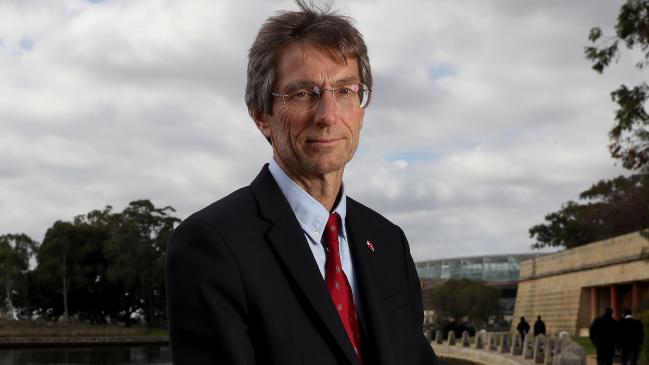
Tilman A Ruff AO MB, BS (Hons), FRACP –
Associate Professor, Nossal Institute for Global Health, School of Population and Global Health, University
of Melbourne
Co-President, International Physicians for the Prevention of Nuclear War (Nobel Peace Prize, 1985)
Founding international and Australian Chair, International Campaign to Abolish Nuclear Weapons (Nobel
Peace Prize 2017), Australian Committee member
Re: National Radioactive Waste Management Amendment (Site Specification, Community Fund and Other Measures) Bill 2020 [Provisions]
I have deep concerns about the federal government’s proposed changes to the National Radioactive Waste Management Act. The government has not made a clear case for the planned national facility at Kimba, and its process has been restricted and inadequate.
In particular, I am concerned that the planned changes:
- restrict or remove options for judicial review of the government’s site selection
under current laws; - unreasonably reduce the rights and options of the Barngarla Traditional Owners
and other directly impacted parties and have not been made with proper
consultation; - exclude key environmental and cultural heritage protection laws from being
applied; - . fail to make any clear or compelling radiological public health case for double handling of long-lived intermediate level wastes (ILW) bat significant public expense
- do not provide any certainty about the long term management of Australia’s radioactive waste
- are not consistent with international best practice in relation to siting, community consultation or procedural fairness around radioactive waste management, and;
- do not recognise or respect long standing South Australian legislation prohibiting any federal radioactive waste facility
Katrina Bohr – an undemocratic farce – the National Radioactive Waste Management “community consultations”
 Katrina Bohr – Submission to National Radioactive Waste Management Amendment (Site Specification, Community Fund and Other Measures) Bill 2020 [Provisions] Submission 84
The site selection process in South Australia has not been democratic. From the Traditional land owners to the pastoralists and agricultural land owners, many voices that have not been heard.
There has been a flood of information cascading the communities of Kimba, Quorn and Hawker for numerous years.
In 2018, in Minister Matt Canavan’s words when questioned in Parliament on his definition of Broad Community Support, said-
1. The formal vote in the Kimba Council area and the Flinders Ranges Council area is only
one input, and a very important factor.
2. Submissions and views of people that live outside the formal regions-who also have an
interest in stake.
4. The number is not just a simple majority.
In a meeting with Alexander Scott, the then Assistant Adviser to Matt Canavan, we were informed that the Minister would be looking at submissions after the postal vote.
However, the Minister’s decision was immediate upon ballot results.
Kimba only.
Nuclear Waste is not what South Australia needs or wants. A National Nuclear Waste Facility should not be carried by a small remote community. The Department’s process involved imposing themselves onto small communities, and into
people’s homes. That’s personal, and it affects the health and well being of individuals in the communities,
and the community as a whole.
I’m presuming that the Hawker and surrounds are just collateral damage.
The Government’s process from the site selection right through to the final decision has not
been a consultative one . The concerns of those who live in Kimba are very real. Were the views of indigenous people taken into account, as was stated by the Minister in Parliament?
There are many unanswered questions.
Webinar Registration Free Assange – Stop the Extradition
Webinar Registration Free Assange – Stop the Extradition Time May 6, 2020 07:00 PM in London
https://us02web.zoom.us/webinar/register/WN_Ei2DGsIzTsex6XdoK50szg? link_id=5&can_id=3294684aa2f19f5e6bb632e712ba9105&source=email-3-vital-meetings&email_referrer=email_787333___subject_1060111&email_subject=3-vital-meetings
Organised by Greater Manchester Manchester Stop the War Coalition
Speakers:
Renata Avila – Wikileaks legal team
Tim Dawson – National Union of Journalists
John Rees – Stop the War Coalition
John Shipton – anti-war activist and Julian Assange’s father
Chair: Penny Hicks, Greater Manchester Stop the War Coalition
Renata Avila is an international human rights lawyer and Co-convener of the Progressive International. She has been a part of the legal and advocacy team of Julian Assange and WikiLeaks for more than a decade.
Tim Dawson is an NUJ past President and represents the NUJ and the International Federation of Journalists on the campaign against Julian Assange’s extradition.
John Rees is a writer, broadcaster and activist, one of the organisers of the People’s Assembly and co-founder of Stop the War Coalition.
John Shipton is Julian Assange’s father, an anti-war activist dedicated to the campaign to drop the extradition charge and see his son freed.
BOGUS CLAIMS AND DODGY FED GOVT NUCLEAR WASTE DUMPS PROCESS
 Kim Mavromatis Nuclear Fuel Cycle Watch Australia, 5 May 20
What we now know is 2,789 submissions in total were received by Scomo’s Fed Govt [reported at the Kimba Consultative Committee meeting 23rd February 2020] and 94.5% of those submissions opposed dumping nuclear waste on farmland near Kimba. But that didn’t stop Scomo’s Fed govt and Senator Canavan from naming the site on farmland near Kimba. Not only did they ignore the Barngarla Native Title Holders of country, they also ignored the majority of the submissions that were opposed to the dumps near Kimba. And Scomo’s Fed govt BOGUS broad community support claim is nothing but a FRAUD. All the figures need to be independently scrutinised. https://www.facebook.com/groups/1021186047913052/
It would be worthwhile to act on climate change, to prevent rapid global heat rise

|
‘Blown away’: Safe climate niche closing fast, with billions at risk, https://www.theage.com.au/environment/climate-change/blown-away-safe-climate-niche-closing-fast-with-billions-at-risk-20200504-p54pod.html By Peter Hannam, May 5, 2020 As much as one-third of the world’s population will be exposed to Sahara Desert-like heat within half a century if greenhouse gas emissions continue to rise at the pace of recent years.Scientists from China, the US and Europe found that the narrow climate niche that has supported human society would shift more over the next 50 years than it had in the preceding 6000 years.
As many as 3.5 billion people will be exposed to “near-unliveable” temperatures averaging 29 degrees through the year by 2070. Less than 1 per cent of the Earth’s surface now endures such heat. That heat compares with the narrow 11- to 15-degree range that has supported civilisation over the past six millennia, according to research published Tuesday in the journal Proceedings of the National Academy of Sciences. “Absent climate mitigation or migration, a substantial part of humanity will be exposed to mean annual temperatures warmer than nearly anywhere today,” the paper said. Xu Chi, a researcher at China’s Nanjing University and one of the paper’s authors, said: “We were frankly blown away by our own initial results. As our findings were so striking, we took an extra year to carefully check all assumptions and computations.” “Clearly we will need a global approach to safeguard our children against the potentially enormous social tensions the projected change could invoke.” Among the most exposed nations will be India – where many people live in “already-hot places” – with as many as 1.2 billion people likely to be forced to move if population and warming trends continue. For Nigeria, the number exposed could be 485 million, according to a media release distributed along with the paper. The scenario used projected the total populations in India and Nigeria to reach 2.2 billion and 600 million, respectively, by 2070, Dr Xu told the Herald and The Age. In Australia, areas of Western Australia and the Northern Territory home to about 200,000 people will be at risk. The research extended current population and greenhouse gas emissions trends into the future, and excluded impacts from the coronavirus pandemic on both. The researchers also considered possible rainfall changed. “The global pattern of population distribution seems less constrained by precipitation – while there is also an optimum around 1000 mm [of rainfall a year ] – so we focused on temperature,” Dr Xu said. “Changes of precipitation regime would definitely have impacts, but such impacts together those of temperature change would be more complex to foresee.”
Compared with pre-industrial-era conditions, temperatures globally will be about 3 degrees hotter by 2070. But as land warms faster than the oceans, the rise for people on average will be about 7.5 degrees, the paper found. Should the world adopt strong emissions reductions – the so-called Representative Concentration Pathway 2.6 – it would “substantially reduce the geographical shift in the niche of humans and would reduce the theoretically needed movement to about 1.5 billion people”, the paper said. Still, that number would account for about one in seven of the world’s population. “Each degree of temperature rise above the current baseline roughly corresponds to 1 billion humans left outside the temperature niche, absent migration,” it said.
The researchers added that upheavals among populations – and the ecosystems that support them – could happen well before 2070. “Migration inevitably causes tension, even now, when a relatively modest number of about 250 million people live outside their countries of birth.” Tim Lenton, director of the Global Systems Institute at the University of Exeter and one of the paper’s authors, said: “The good news is that these impacts can be greatly reduced if humanity succeeds in curbing global warming.” Marten Scheffer, a professor at Wageningen University and an author of the report, said the response to the coronavirus should give cause for some optimism that climate change’s looming threats could also be tackled. “The COVID-19 response revealed that if a problem appears to be urgent and serious, humanity globally is able to act massively if needed, even if there are economic costs,” he told the Herald and The Age. “Perhaps this may serve to make it feel more doable to address global warming too. Our findings indicate that that would be worthwhile.” |
|
Investors urge governments to go green for coronavirus recovery
 Investors urge governments to go green for coronavirus recovery, The Age ,By Mike Foley, May 4, 2020 Major investors, Australian superannuation funds and the International Energy Agency are urging governments to seize the green opportunity to drive economic growth after the coronavirus pandemic and avoid the risks they see in high carbon emitting projects.“Recovery plans that exacerbate climate change would expose investors and national economies to escalating financial, health and social risks in the coming years,” said a statement from the Investor Agenda group – an international coalition of institutional investors and asset managers whose members hold more than US$80 trillion under management. Large-scale energy generators such as coal and gas fired power plants and their heavy duty transmission networks, as well as gas powered manufacturing facilities, are built to deliver a return on investment over decades. Investors argue international commitments to tackle climate change and reduce emissions such as the Paris Agreement create an unacceptable risk for long-term investment in emissions intensive projects…… The Clean Energy Council, which represents renewable energy companies that employ more than 28,000 workers said governments had “an opportunity to transform Australia forever”. In its Clean Recovery report released on Tuesday the Council said wind and solar projects totalling 30 gigawatts energy capacity, which already have development approval, would generate $50 billion in investment across the supply chain 50,000 construction jobs and 4000 permanent positions. The Council also said support for large and small-scale renewables, such as rooftop panels, and an accelerated roll-out of batteries would create a “smart energy system” that could deliver flexibility and lower costs for consumers with low-emissions. This week, the International Energy Agency, an intergovernmental energy forecast adviser, highlighted opportunities in the energy sector in the wake of COVID-19. Global energy demand is forecast to fall a whopping 6 per cent this year, seven times more than during the global financial crisis….. The Council also said support for large and small-scale renewables, such as rooftop panels, and an accelerated roll-out of batteries would create a “smart energy system” that could deliver flexibility and lower costs for consumers with low-emissions. This week, the International Energy Agency, an intergovernmental energy forecast adviser, highlighted opportunities in the energy sector in the wake of COVID-19. Global energy demand is forecast to fall a whopping 6 per cent this year, seven times more than during the global financial crisis…. Emma Herd, chief executive of the Australian Investor Group on Climate Change, said “government policy that spurs fresh private investment in clean energy … will lead to much needed jobs and economic growth”. “The Australian government should be looking to integrate recovery plans with its technology investment roadmap, long-term emissions reduction strategy, grid modernisation planning and bushfire recovery to build greater resilience and reduce climate risk,” Ms Herd said. https://www.theage.com.au/politics/federal/investors-urge-governments-to-go-green-for-coronavirus-recovery-20200504-p54pmu.html |
|
|
1 This month
25 October – Film –Britain’s Nuclear Bomb Scandal: Our Story – part of the Adelaide Film Festival,
Screening and Conversation
A screening of Britain’s Nuclear Bomb Scandal: Our Story (2024) followed by a talk with 2026 Bettison and James Awardee and Tradtional Owner Karina Lester in conversation with Simone Tur.
When: Sun 25 Oct, 12:00pm-Screening, 1:15pm-Talk
Where: The Mercury
Free admission, register below by clicking on BUY TICKETS and select free event tickets, at end of web page:
https://www.adelaidefilmfestival.org/program/2026/britains-nuclear-bomb-scandal-our-story
.
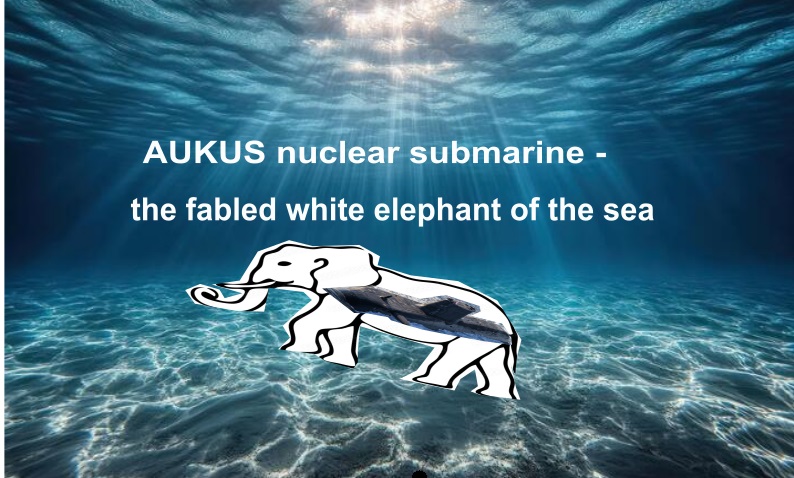
Australians deserve the truth
about
AUKUS – https://aukuspublicinquiry.com/

PETITION – To: Prime Minister Anthony Albanese and the Australian Labor Government

of the week – Australians for War Powers Reform (AWPR)
To see nuclear-related stories in greater depth and intensity

