Greasing Palms: The Thales Blueprint for Corruption
July 30, 2024, by: Dr Binoy Kampmark, https://theaimn.com/greasing-palms-the-thales-blueprint-for-corruption/
It is a point verging on the trite: an arms corporation suspected of engaging in corrupt practices, spoiling dignitaries and officials and undermining the body politic. But one such corporation is France’s Thales defence group, which saw raids on their offices in France, the Netherlands and Spain on June 26 and June 28. The prosecutors are keen to pursue charges ranging from standard corruption and attempts to influence foreign officials to instances of criminal association and money laundering.
It is clear in this that even the French republic, despite having a narcotics grade addiction to the international arms industry, thought that Thales might have gone just that bit far. Some 65 investigators from the Nanterre-based office responsible for battling corruption, financial and fiscal offences have been thrown into the operation. A further twelve magistrates from the National Financial Prosecutor’s Office (PNF), with the assistance of the European agency Eurojust, aided by Dutch and Spanish officials, have all been involved in this sprawling enterprise.
The police raids arise from two separate investigations. The first, starting at the end of 2016, involved suspicions of corruption pertaining to a foreign official, criminal association and money laundering. The topics of interest: the sale of submarines to Brazil, along with the construction of a naval base.
The second commenced in June 2023, with claims of suspected corruption and influence peddling, criminal conspiracy and money laundering connected with the supply of military and civilian equipment to overseas clients.
Giving little by way of details, a spokesperson for Thales insisted that the corporation “strictly complies with national and international regulations.” It had “developed and implemented a global compliance program that meets with the highest industry standards.” That, it may well turn out, is precisely the problem.
The company propaganda on such compliance with national and international regulations is plentiful and fabulously cynical. After a time perusing such material, one forgets that this is a defence outfit much dedicated to sowing the seeds of death, a far from benign purpose. Group Secretary and General Counsel Isabelle Simon, for instance, is quoted as saying that the company, over the course of two decades “has developed a robust policy on ethics, integrity and compliance, which are the foundations of our social responsibility and the key to building a world we can all trust.”
The anti-corruption policy, so it is claimed, is also “regularly reviewed and updated to reflect increasingly strict international rules and requirements on corruption and influence peddling,” a point “further strengthened by Thales’s progress towards ISO 37001 certification.”
Typical of the guff surrounding modern organisational behaviour, the company wonks assume that workshops and training sessions are the way to go when inspiring a spirit of compliance. The more sessions you run, and the more do you do, the more enlightened you become. In boasting about its “zero tolerance on corruption,” we are told that 11,270 “training sessions on corruption and influence peddling were delivered in 2019-2020.”
Other features are also mentioned to ward off any suspicions, among them a code of conduct intended to stomp on any corrupt practices, a “corruption and influence peddling risk map,” a disciplinary system, an anti-bribery management system and an internal whistleblowing program.
Thales also got what it wanted, effectively bypassing, with the blessing of the defence department, a competitive tender process. This took place despite a 2017 offer from the global munitions company, NIOA, and the ANAO’s own recommendation to pursue an appropriate tender option. All in all, the audit found that “Defence’s management of probity was not effective and there was evidence of unethical conduct.”
This is putting it mildly, given that Thales had not only been involved in drafting the criteria for the request for tender (RTF) documents (some 28 workshops were held for that purpose between October 2018 and August 2019), but did so deficiently. In October 2019, this very point was made by the Defence Department, which noted no fewer than 199 “non-compliances” by the company against the RTF.
Apart from giving officialdom their time in the sun of oversight and regulation, chastening investigations into corruption do little to alter the spoliation that arises from the defence industry. Defence contractors are regularly feted by government authorities, often with the connivance of the revolving door. Yesterday’s officials are today’s arms sales consultants. The defence sector, notably for such countries as France, is simply too lucrative and important to be cleansed of its unscrupulousness. Even as these investigations are taking place to ruffle Thales, the Brazilian military establishment, by way of example, has happily continued doing business with the French weapons giant.
In February last year, the defence group trumpeted securing a contract with the Brazilian Airspace Control Department (DECEA) for the supply and installation of ADS-B ground surveillance stations to improve the safety of commercial civil aviation. The effort is not negligible: 66 stations to be installed in over 20 Brazilian states.
On June 17, the company announced the acquisition by the Brazilian Air Force of the Ground Master 200 Multi-mission All-in-one (GM 200 MM/A) tactical air surveillance radars. With much bluster, the announcement goes on to describe such radars as giving the user “superior situational awareness for air surveillance, as well as ground-based air defence (GBAD) operations up to Mid-Range Air-Defence (MRAD).” Some gloating follows: “The contract signed with the FAB consolidates Thales’ position as a leader in the radar market in Brazil.” One can only wonder how many palms were greased, and local regulations breached, for that to happen.
Prime Minister Albanese’s hypocrisy on matters nuclear
Reverse nuclear secrecy. Albo or Dutton? What’s the scam?
Michael West Media, by Rex Patrick | Jul 28, 2024
“……………………………………………………………………..At the same time, the Prime Minister has launched a full-scale attack on Dutton’s half-baked scheme to build seven nuclear power reactors. Albanese’s problem is that much of Labor’s critique of Dutton’s contentious plans applies to AUKUS too.
It’s hard to criticise power reactors when you’re the man who stamped approval on the $368B AUKUS program as you swung by the political Kabuki show in San Diego last year.
Which leaves the Prime Minister exposed as a hypocrite on an issue he would like to put at the centre of his election campaign. https://michaelwest.com.au/reverse-nuclear-secrecy-albo-or-dutton-whats-the-scam/
Australians blame wind, solar for high power bills as media campaigns take hold

Misinformation fueling bizarre beliefs
Putting out conflicting information about the energy transition suits anti-renewables groups for that myth to persist as it supports the status quo,
Rachel Williamson, Jul 29, 2024, https://reneweconomy.com.au/australians-blame-wind-solar-for-high-power-bills-as-media-campaigns-take-hold/
Australians have forgotten why their power bills are going up, with more than a third now blaming renewables, and not rising fossil fuel prices for their monthly or quarterly pain, according to an Ipsos survey released on Monday.
Everyday Australians are also struggling to understand the transition at all as misleading statements, such as the National Party favourite that offshore wind turbines kill whales, make it harder to sort fact from fiction.
Based on misinformation shared on social media, by word-of-mouth, and in mainstream media, 68 per cent of Australians believe transitioning to renewable energy generally will result in higher power prices.
Some 37 per cent of Australians think that closing coal power stations, specifically, and replacing them with wind and solar farms, are already lifting power prices.
That figure is 10 per cent higher than it was in 2022, when the start of the Russian war in Ukraine sent coal prices sky-high and consumer power bills rocketing.
The Ipsos survey showed increases in negative perceptions around closing coal power stations and replacing them with wind and solar farms across seven different metrics.
These covered fewer people believing that renewables will help air quality, to more people believing the shift will damage job prospects, economic growth, energy reliability, and cost of living generally.
It recorded a sharp hike of 13 per cent in the number of people who want the government to make energy bills a policy priority, and sharp decrease in those wanting Australia to be a climate leader.
Two plus two still equals four
But it’s not difficult to see why more Australians are now associating wind and solar farms with higher power bills and cost of living more generally, says the Grattan Institute’s Allison Reeve.
“It’s only very recently that we’ve come to this point where renewables have become the cheapest form of energy, so people who don’t think about energy all the time for a living will have a shortcut in their brain and say ‘oh renewables are more expensive’,” she says.
“Rewiring that shortcut will take that time.”
The news cycle is full of articles about renewables, or Liberal and National MPs’ nuclear red herrings, whereas two years ago political leaders were reminding consumers that coal prices were the cause of rocketing wholesale energy prices.
Furthermore, Reeve says Australians may still be paying for those high 2022 wholesale power prices in their Default Market Offers, because retailers contract for energy years in advance.
Re-Alliance national director Andrew Bray says delays in delays in upgrades to transmission infrastructure and requirements to burn gas are also driving prices up.
Today, what energy consumers are being told is that renewables are delivering massive wholesale price drops while at the same time being gifted marginal discounts to their bills.
Add in the fact that electricity retailers are surprising consumers across the country – and not just in New South Wales (NSW) as happened to Renew Economy editor Giles Parkinson – with radically higher time-of-use tariffs when electricity meter settings are changed, and consumers have a reason to associate high power bills with the energy transition.
Misinformation fueling bizarre beliefs
Putting out conflicting information about the energy transition suits anti-renewables groups for that myth to persist as it supports the status quo, Reeve says.
Despite a third of Ipsos’ respondents saying they want to know more about what Australia is doing to meet its climate goals, misinformation is getting in the way.
Nearly two-thirds of the respondents believed statements such as that electric vehicles are as bad for the planet as petrol cars, based on word-of-mouth rumour, social media, and articles in mainstream media.
Other “somewhat and very believable” statements believed by 50 per cent of the Ipsos survey respondents include that offshore wind farms will hurt whales, building more renewable energy generation will lead to more blackouts and brownouts, and that wind farms take more energy to build than they provide to the grid over their lifetime.
No one knows what is really happening
Australians still love the idea of living in a clean, green land, but a lack of awareness about how close the country is is causing widespread pessimism.
There is still strong support for the energy transition generally, with nearly two thirds of Australians still wanting the country to move away from fossil fuels and towards renewable energy.
But few people know what is actually happening.
Half think the transition won’t happen at all or that Australia has no plans to make it happen, 45 per cent believe the country will miss its emissions target in 2030.
And more than half don’t understand the actions Australia is taking to meet its net zero commitments.
Counteracting the nuclear spin, and more – week to 29 July

Some bits of good news. The Gambia’s decision to uphold ban on Female Genital Mutilation (FGM) a critical win for girls’ and women’s rights. Oceana Canada Celebrates Major Conservation Victory: Underwater Mountains off the Coast of B.C. Now Permanently Protected, under indigenous guidance. Great Green Wall has revived Africa’s degraded landscapes
**************************************
TOP STORIES.
What the top UN court’s ruling means for Israel. Netanyahu Commands, US Obeys.
Rolling stewardship of nuclear waste.
Young Changemakers Advocate for Nuclear-Free Future through Educational Journey in Kazakhstan.
Climate. Severe heatwave in Iran forces shops and public institutions to close
Noel’s notes. Militarism: How NATO is co-opting women and young people – with a veneer of peace and fun. The digital system threatens the nuclear industry – it’ll get worse with AI. Absolutely fed up with Facebook and Google’s censorship of nuclear issues.
************************************************
AUSTRALIA. Dutton’s nuclear delusion an exercise in stupidity. Czech nuclear deal shows CSIRO GenCost is too optimistic, and new nukes are hopelessly uneconomic. Aussies react to Dutton’s Nuclear Policy – https://www.youtube.com/watch?v=9o4S335dXM4
Canada rejects AUKUS nuclear submarine deal. AUKUS and the pride of politicians.
From the archives. Gina Rinehart’s threat to the proud independence of Australia’s Fairfax newspapers.
Respect and responsibility: Jabiluka safe as uranium mining lease for Kakadu site not renewed8.
Lots more Australian news at https://antinuclear.net/2024/07/23/australian-nuclear-news-headlines-22-29-july/
NUCLEAR ITEMS
CLIMATE. Hungary to allow nuclear plant to exceed Danube water temperature limit. Huge wildfire rips into California.
ECONOMICS.
- Critical AUKUS contract doubles in price and now a year late.
- ‘ Regulated Asset Base’ system mulled in Japan to add nuke plant construction costs to rates.
- Point Lepreau nuclear station down till at least September, costing utility extra $71M ALSO AT https://nuclear-news.net/2024/07/24/3-b1-point-lepreau-nuclear-station-down-till-at-least-september-costing-utility-extra-71m/ A New Brunswick reaction to the exorbitant costs of Point Lepreau nuclear power station.
- Spain: Nuclear Industry Reels After Tax Increase.
- UK / New Energy Minister Underlines ‘Absolute Support’ For SMRs, But Less Certain On Wylfa Plans.
- French nuclear giant ORANO slips into the red following Niger-French breakup. EDF looks towards future projects after flagging tough second half.
| EDUCATION. Bangor University to collaborate with Rolls Royce and the University of Oxford to develop nuclear power for space. | ENERGY. Solar doesn’t need a toxic “friendship” with nuclear power. | ETHICS and RELIGION. A letter to the children of tomorrow. “Nuclear disarmament is a right to life issue” – Catholic Archbishop John C Wester. |
EVENTS. 30 July Webinar: Halt Holtec – the Nuclear Mafia Atomic People will be broadcast on Wednesday 31 July on BBC Two and BBC iPlaye 6 August WEBINAR. Never Again! Remembering the Atomic Bombing of Hiroshima and Nagasaki
| LEGAL. A $36.8 billion lesson from Georgia– “The most expensive electricity in the world”Potential claims against NANO Nuclear Energy Inc. The World Court Has Cleared the Fog Hiding Western Support for Israel’s Crimes.Hundreds protesting Netanyahu visit arrested at US Capitol. Two legal actions against the hasty commissioning of Flamanville nuclear reactor. | MEDIA. BBC correspondent exposes ‘collapse of journalistic norms’ after 7 Oct. Meta’s Policy On Zionism Exposed: Cyberwell Scrambles After Israel Ties Revealed. U.S. media downplays and ignores ICJ ruling declaring Israeli occupation illegal. We published an analysis from a leading economist on soaring nuclear costs. Facebook removed it |
OPPOSITION to NUCLEAR . Nuclear energy not the way to go: coalition Taiwan. UK Nuclear Free Local Authorities back joint statement condemning AUKUS nuclear proliferation. Nuclear Free Local Authorities congratulate marchers on Lakenheath protest.
| PEACE. 2024 Golden Rule Voyage Begins! | PERSONAL STORIES. ‘Atomic bomb hell must never be repeated’ say Japan’s last survivors. | PLUTONIUM. Is nuclear waste able to be recycled? Would that solve the nuclear waste problem? |
| SAFETY Safety warnings as cracks rise at Torness nuclear plant. Japan Nuclear Restart Suffers Major Setback. | TECHNOLOGY. Humans should teach AI how to avoid nuclear war—while they still can. | WASTES. Radioactive Wastes from Nuclear Reactors. |
| WAR and CONFLICT. Israel nearing ‘all-out war’ – foreign minister. Washington gives Netanyahu ‘full backing’ to expand war on Lebanon: Israel Report. While Netanyahu is feted in U.S. Congress, Israeli airstrike hits a school sheltering people in Gaza, killing at least 30. Scottish parliamentarian highlights ‘nuclear annihilation risk’ in major UN speech | WEAPONS and WEAPONS SALES. Will US defend Japan with nukes or turn it into the line of fire? US Forces Japan to be upgraded to warfighting command. Tit for tat? Putin warns Russia may resume production of intermediate-range nuclear weapons. EU sets date of transfer of Russian money to Ukraine for arms purchases. |
Jabiluka uranium mine lease not renewed in decision heralded as ‘huge win’

NT government opts not to grant 10-year lease after considering wishes of Indigenous people and federal government advice
Australian Associated Press, Fri 26 Jul 2024, https://www.theguardian.com/australia-news/article/2024/jul/26/jabiluka-uranium-mine-lease-not-renewed-in-decision-heralded-as-huge-win?CMP
The lease on the Northern Territory’s Jabiluka uranium mine will not be renewed, months after its remote surrounding area was granted new protections.
Energy Resources Australia (ERA) had applied for a 10-year lease renewal on the Jabiluka uranium mine, but was knocked back on Friday.
The NT mining minister, Mark Monaghan, said the decision to not renew was based partially on advice from the federal government.
“We have gone through a thorough process to ensure that all stakeholder views have been considered in this decision,” he said.
“The federal government advice, along with the wishes of the Mirarr people, were critical to this process and outcome.”
The Northern Territory government declared special reserve status over the Jabiluka area, which is in the surrounds of Kakadu national park, in May.
This prevents any future applications for the grant of a mineral title over the Jabiluka area once the current lease ceases on 11 August.
The Australian Conservation Foundation welcomed the decision, calling it a “huge win” for traditional owners.
“This decision allows a line to be drawn under the divisive era of uranium mining in Kakadu,” a statement read.
“This is a responsible decision that ends the threat that has hovered over this very special place for four decades.”
Mirarr people have long opposed any mining in the area, holding protests in the late 1990s and early 2000s when more than 5,000 people travelled to Kakadu to prevent uranium mining at Jabiluka.
Energy Resources of Australia, a subsidiary of the Rio Tinto Group, has been contacted for comment
A $36.8 billion lesson from Georgia, USA, – “The most expensive electricity in the world”

In May, the plaintiffs along with four other prominent Georgia consumer groups released a report, Plant Vogtle: The True Cost of Nuclear Power in the United States. The analysis detailed how the U.S. Department of Energy, Georgia Power, and the Georgia Public Service Commission (PSC), conspired to force Georgians into purchasing the most expensive electricity in the world, costing ratepayers $10,784 per kilowatt, compared to $900 to $1,500 per kilowatt (KW) for wind or solar. Recent Georgia Power electricity bills have shown the bill increase to be in the 30-40% range.
Again and again, the Georgia Public Service Commission (PSC) was warned about the astronomical cost of the Vogtle reactors and the financial toll it will bear on Georgians for decades to come.
Ratepayers beware. New nuclear power plants will gouge customers
From Georgia Conservation Voters Education Fund and Georgia WAND
Georgia consumer groups have filed a major lawsuit against the State of Georgia [AF1] in federal court, alleging Georgia lawmakers violated the state’s constitution by unilaterally postponing Georgia Public Service Commission (PSC) elections. According to the lawsuit, the PSC election’s unlawful postponement allowed the sitting commission members to rubberstamp the largest utility rate increases in Georgia history and grant utility companies the authority to charge Georgians for cost-overruns and mishaps. The groups argue that the charges may not have been passed onto consumers if elections were held as regularly scheduled.
House Bill 1312, which Georgia legislators passed in April, delays the election of new PSC members until at least 2025, giving multiple sitting PSC members an extra two years in office. Georgia’s constitution requires that PSC terms shall be six years, and therefore cannot be lengthened without a constitutional amendment. All PSC members have had their office terms extended to eight years, and one nine years as a result.
…………………………………….Brionté McCorkle, plaintiff and executive director of Georgia Conservation Voters Education Fund, said: “Georgians are fighting every month to stay ahead of rising costs for food, housing, and now energy. These aren’t optional costs. They’re things we need to survive. Public Service Commissioners like Tricia Pridemore, Fitz Johnson, and Tim Echols have allowed Georgia Power to take money out of the pockets of hard-working Georgians – and it has to end.”
In May, the plaintiffs along with four other prominent Georgia consumer groups released a report, Plant Vogtle: The True Cost of Nuclear Power in the United States. The analysis detailed how the U.S. Department of Energy, Georgia Power, and the Georgia Public Service Commission (PSC), conspired to force Georgians into purchasing the most expensive electricity in the world, costing ratepayers $10,784 per kilowatt, compared to $900 to $1,500 per kilowatt (KW) for wind or solar. Recent Georgia Power electricity bills have shown the bill increase to be in the 30-40% range.
Additional Key findings in the May Vogtle report included:
- Plant Vogtle allowed Georgia Power to expand its rate base, the assets on which they earn a guaranteed rate of return, by over $11 billion. Yet their share of Vogtle is 1,020 megawatts, making it the most expensive electricity in the world at $10,784/KW. Normal (wind, solar, natural gas) generation prices range from $900 to $1500/KW.
- Vogtle Units 3 & 4 took 15 years to build and cost $36.8 billion, well over twice the projected timeline and cost.
- Vogtle independent construction monitors documented that Georgia Power provided materially false cost estimates for at least ten years, falsehoods used to justify expanding Plant Vogtle. Similar false cost estimates sent South Carolina utility executives to jail for that state’s failed nuclear plant, which started construction at the same time as Plant Vogtle.
Patty Durand, consumer advocate, founder of Cool Planet Solutions and a recent candidate for the Georgia PSC, said:
“Again and again, the Georgia Public Service Commission (PSC) was warned about the astronomical cost of the Vogtle reactors and the financial toll it will bear on Georgians for decades to come. Commissioners repeatedly declined to protect ratepayers from cost overruns and ignored PSC staff recommendations to cancel the project. People went to prison for actions like this in South Carolina, yet we have had no accountability for the same, and worse, behavior here. Instead, the state legislature decided to shield current commissioners from facing voters by delaying PSC elections indefinitely. This is clearly unconstitutional. This is un-American.” https://beyondnuclearinternational.org/2024/07/28/a-36-8-billion-lesson-from-georgia/
Respect and responsibility: Jabiluka safe as uranium mining lease for Kakadu site not renewed.

The Australian Conservation Foundation has welcomed the decision of the federal and Northern Territory governments to not extend the uranium mining lease over Jabiluka, in Kakadu, which has been held by Energy Resources Australia (ERA) for more than 40 years.
“This is a responsible decision that ends the threat that has hovered over this very special place for four decades,” said ACF’s nuclear free campaigner Dave Sweeney.
“This is a huge win for the Mirarr Traditional Owners and for all who love Kakadu, Australia’s largest national park.
“It is a tribute to people’s concern and action over decades.
“It is a testament in particular to the sustained and unwavering efforts of the Mirarr, led by Yvonne Margarula, to defend their country and culture against the damage that inevitably accompanies uranium mining.
“This decision allows a line to be drawn under the divisive era of uranium mining in Kakadu.
“ERA’s full attention should now turn to cleaning up the mess left at the Ranger uranium mine, also on Mirarr country.
“ACF commends the federal government and looks forward to the government working with the Mirarr to advance the Ranger rehabilitation and the lasting protection of this magnificent region and the Kakadu World Heritage area.”
The Mirarr led a successful campaign 25 years ago to stop uranium mining at Jabiluka.
ACF has proudly walked alongside the Mirrar on this journey.
Solar doesn’t need a toxic “friendship” with nuclear power
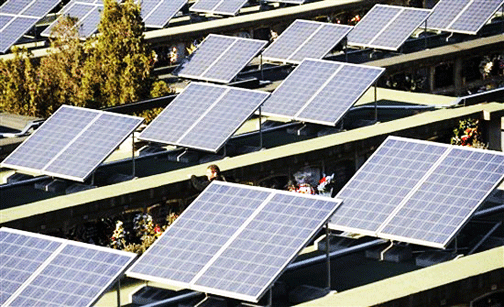
Heidi Lee Douglas, Jul 26, 2024. https://reneweconomy.com.au/solar-doesnt-need-a-toxic-friendship-with-nuclear-power/
Federal Opposition Leader Peter Dutton has been in regional Queensland this week promoting hi nuclear plan, which claims nuclear and solar both have a future in Australia’s energy mix.
Yeah, nah.
A new report released this week by the Queensland Conservation Council has revealed building a 1,000 MW nuclear power station in Queensland in 2040 would knock out 3,700 GWh of cheap renewable energy from the grid.
It is the equivalent of shutting an average of 45,000 Queensland household solar systems every day, according to the new analysis.
The report reinforces what other experts are saying – that rooftop solar and nuclear cannot co-exist – and reveals just how detrimental any proposal for nuclear would be for Queensland solar homeowners’ hip pockets.
To make nuclear power plants economically viable, nuclear must run at full capacity. That means a direct clash with rooftop solar whenever the sun is up, and to enable nuclear power production during the day they’ll have to stop rooftop solar panels from exporting to the grid.
The simple truth is adding nuclear power to the Australian energy mix will undermine the interest of rooftop solar owners.
Australia has an abundance of sunshine and renewable resources. Queensland already leads the world with uptake of household-scale solar, with the Sunshine State reaching a record 1 million rooftop solar installations earlier this year.
The second, third, fourth and fifth highest rates of rooftop solar output in Australia are in Bundaberg, Mackay, Toowoomba and Hervey Bay. These communities have the most to lose if their solar output is shut off during the day by nuclear.
With more Australian households nationwide having rooftop solar than swimming pools, it’s time for the Liberals and Nationals to start listening and stop ignoring people power, literally and politically.
Australians have already voted with their rooftops for cheaper, cleaner solar energy, with more than three million rooftop solar installations. Australians have a strong and abiding love of the cost saving, independence and security that comes from making their own solar power.
In fact we’ve invested $25 billion of our own money into rooftop solar, and are the envy of the eye worldwide for our home-grown renewable energy.
Everyday Australians are world leading energy producers – not just energy consumers. Every home solar rooftop should be treated with the respect of being a sustainable home solar energy “farmer”, bringing the cost of power down for all Australians, and simultaebously reducing our carbon emissions.
At Solar Citizens we work with community members from across the political spectrum who, time and again, have been vocal in support of solar because they are empowered by rooftop solar. We know how strong this movement of solar homeowners is. And it would be unwise for political leaders to forget it.
A smarter government investment would be to grow access to rooftop solar for households currently locked out of the benefits of clean energy including renters, people living in apartments or social housing and low-income households. And provide Australian households with assistance for a battery rebate, like the highly succcessful solar rebate.
Enabling more people to install home batteries will mean we can store cleaner, cheaper energy during the day and use it at night or when needed most. This would provide long term energy relief for households, improve our power network reliability and help cut network costs for all by avoiding transmission costs.
Rooftop solar coupled with home batteries delivers the win-win of cost-of-living relief with cheaper power and less climate pollution.
Put simply, solar and renewables would not happily co-exist in a toxic ‘frenemy” relationship’ with nuclear. Instead, we urgently need a great Aussie marriage of home solar with home batteries.
Heidi Lee Douglas is CEO of Solar Citizens, an independent, community-based organisation working to protect and grow solar and renewable energy and clean transport in Australia.
Forget nuclear: 5B says plunging price of PV means giga-scale solar farms the future for old coal plants
Sophie Vorrath, Jul 26, 2024, RenewEconomy,
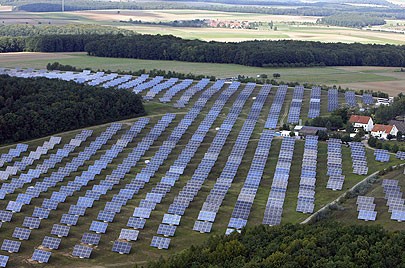
Australian solar innovator 5B says the plunging price of photovoltaic technology has made the company’s prefabricated Maverick arrays cost-competitive with single axis tracking solar plants – and in some cases cheaper, depending on the quality of the solar resource.
In a presentation to the Large-scale Renewable Generation & Storage Summit in Sydney on Thursday, 5B deputy CEO Nicole Kuepper-Russell said the company’s value proposition was “really singing” since module prices fell to just over 10 cents per watt in China in March.
The low cost of solar was a hot topic at the conference, as was the falling cost of storage.
In a presentation by former Clean Energy Finance Corporation chief Oliver Yates, the renewables investment guru argued cheaper batteries mean most existing government and industry plans should be “shredded and start again” to account for the “new solar/battery economic frontier.”
Representing Valent Energy – the energy storage focused joint venture between Gaw Capital and BW ESS – Yates said the cost of dispatchable renewables was now around $200/MWh – $65/MWh for solar production and $135/MWh for battery storage – and “anything producing power higher than that is ridiculous.”
For 5B – as Kuepper-Russell’s presentation illustrated, below [on original]– the levelised cost of energy for a solar project using its Maverick arrays hit price parity with the LCOE of single axis tracker solar towards the end of last year, and has steadily become cheaper as panel prices continue to fall……………………………………………………………………………………………………………………… more https://reneweconomy.com.au/forget-nuclear-5b-says-plunging-price-of-pv-means-giga-scale-solar-farms-the-future-for-old-coal-plants/
Coalition to fast-track nuclear power.

Pearls and Irritations, By Ian McAuley, Jul 27, 2024
The Coalition’s nuclear power idea is based on an obsolete model of electricity supply
Circulating in the media are three arguments against nuclear power in Australia. One is based on safety, an emotive issue, involving unresolved questions about future costs, and the dangers are probably overstated. The danger issue doesn’t need to be argued, however, because the main problems with the Coalition’s nuclear power plans have to do with cost and the long time before the first kWh would be generated.
Those impediments were confirmed in a speech earlier this month by AEMO CEO Daniel Westerman: Australia’s energy transition: What’s needed to keep the momentum going. He said:
Our ISP [Integrated System Plan] does not model nuclear power because it is not permitted by Australian law, and development of nuclear power generation is not a policy of any government. But we know from our work with the CSIRO on the GenCost report that nuclear is comparatively expensive, and has a long lead time. Even on the most optimistic outlook, nuclear power won’t be ready in time for the exit of Australia’s coal-fired power stations.
The Australian Academy of Technological Sciences and Engineering has just released an assessment of the viability of small modular nuclear reactors, which feature strongly in the Coalition’s proposals. These reactors are still at an early development stage: it will be many years before they become established. Although the study does not explicitly address costs, it does point out that early adopters are likely to face much higher costs than those who wait for SMRs s to become a mature product. As ATSE President Katherine Woodthorpe explains on ABC Breakfast, small modular reactors are unlikely to become a realistic energy source in Australia for decades, and our large coal-fired generators are closing in the next few years.
Writing in The Conversation Asma Aziz of Edith Cowan University reminds us of another cost component not covered in the Coalition’s plans: Without a massive grid upgrade, the Coalition’s nuclear plan faces a high-voltage hurdle. The Coalition’s idea is about replacing retiring coal-fired generators with nuclear plants, plugged into the existing transmission infrastructure. But as she points out, demand for electricity is growing rapidly, which means the cost of upgrading the transmission network should be included in the Coalition’s plans. (It is already included in the costings for renewable energy.) The other point she stresses is that all power plants, whatever their technologies, are subject to outages, planned and unplanned. A distributed set of comparatively small solar and wind plants therefore need less transmission redundancy than large centralized nuclear plants.
There is a fourth, and more basic problem with the Coalition’s nuclear proposal. It’s based on an old and inflexible “base load” model, which was determined by the technology of coal-fired generation. There has to be enough capacity in the system to cope with demand peaks, and that was achieved by keeping the boilers hot, keeping the generators spinning, and shovelling in heaps of coal as demand rose. Nuclear is a little different, in that shovels aren’t involved, but the principle is the same.
There are now more flexible and lower-cost ways to meet peaks……………………………………………………………
All the above is in the context of a debate about the comparative cost of nuclear energy and renewables. The Australian community is being distracted from that debate, because the Murdoch media and Coalition-aligned think tanks are spreading absurd misinformation and disinformation about the cost of renewable energy. ……
Even if nuclear power plants were cheaper than renewables (they’re certainly not), there is no way they could replace coal-fired stations as they come to the end of their lives. The lead time for nuclear power is just too long. As Michael West explains, there is a constellation of forces, including the Institute of Public Affairs, Putin’s mate Tucker Carlson, and the Murdoch media, pushing to keep oil and gas burning. That would have to involve new “base-load” coal-fired stations: there is no way to extend the life of our old stations for twenty or more years while nuclear power gets developed.
The other driver of the Coalition’s policy is an intention to cripple the renewable industry through creating uncertainty. That way they can confirm their claim that the government’s renewable plans are failing. It’s doubtful that any seriously cashed-up investor is convinced by the Coalition’s nuclear argument, but the belief that next year’s election could see the election of a government of Trumpian crazies is enough to make investors cautious. ………………more https://johnmenadue.com/coalition-to-fast-track-nuclear-power-north-korean-style-weekly-roundup/
Anthony Albanese slams Opposition’s nuclear ‘obsession’ as he doubles down on renewables push at NSW Labor conference
Prime Minister Anthony Albanese has hit out at Peter Dutton’s nuclear plan, as he doubled down on the government’s push for renewables as the path forward for Australia’s energy future during his address at the NSW Labor conference.
Sky News, Adriana Mageros, Digital Reporter, July 27, 2024
Prime Minister Anthony Albanese has slammed the Opposition’s “obsession with nuclear power”, as he doubled down on the government’s renewables push at the New South Wales Labor conference.
Mr Albanese delivered his speech to hundreds of delegates on Saturday at the annual Labor event, which will run for two days at Sydney’s Town Hall.
Security was earlier heightened in the Sydney CBD as Pro-Palestine protesters gathered outside the venue ahead of the Prime Minister’s arrival.
Speaking to delegates, Mr Albanese declared Labor’s bid for cleaner and renewable energy will produce a “new generation” of manufacturing jobs, particularly across regional Australia.
However, he claimed the Liberal Party’s nuclear agenda was putting this job growth at risk.
“They brag about driving the car industry out of Australia when they were last in government, and now they want to sacrifice a new generation of manufacturing jobs,” Mr Albanese said.
“All in the name of their obsession with nuclear power.”
Mr Dutton unveiled his long-awaited nuclear energy policy in June, proposing to build seven nuclear reactors across regional Australia should the Coalition win the next election.
The proposed power plants would be built on existing sites of aging coal-fired power stations, which are heading into retirement.
“It’s been over a month since the Liberals finally announced their plan for nuclear reactors in every state on the mainland, but they can’t find a single investor to back it,” Mr Albanese said.
“They won’t tell people what the cost of building these reactors will be, and they won’t tell you how long it will take.
“They don’t have an answer about how or where they will safely store the nuclear waste.
……………………………………………………………………………………. In his speech to delegates on Saturday, the Prime Minister also announced the government will be working with traditional owners to make the uranium mine at Jabiluka in the Northern Territory part of the Kakadu National Park.
“This means there will never be mining at Jabiluka,” Mr Albanese declared.
“The Mira people have loved and cared for their land for more than 60,000 years.
“Our government will work with them to keep it safe for all time.”…………………. https://www.skynews.com.au/australia-news/politics/anthony-albanese-slams-oppositions-nuclear-obsession-as-he-doubles-down-on-renewables-push-at-nsw-labor-conference/news-story/2ac731547651c7f26f08aec10676b0a1
Canada rejects AUKUS nuclear submarine deal

the main concern should be that this deal further locks Australia into US exceptionalism and attempted hegemony in our region. The Albanese government has repeatedly sought to reassure that our sovereignty has been preserved, but this is very difficult to accept given the extent to which our funding underwrites the US submarine-production program. Moreover, it’s likely Australia’s learning and launch activities will further integrate this country into the operational aspects of the American war machine, such that US leaders may effectively give all the instructions in terms of deployment and other activities.
John Hewson , professor at the ANU Crawford School of Public Policy and former Liberal opposition leader.
Some news this month might have given the government pause. Canada – with the longest coastline in the world and a security situation in its Arctic and north changing significantly as the region becomes more accessible, particularly with more Russian and Chinese activity – decided not to join the AUKUS arrangement and buy nuclear submarines. Instead it is considering cooperating with Germany and Norway as partners in a submarine program and will purchase 12 conventionally powered under-ice capable submarines for about $60 billion.
Compare this with the eye-watering cost of Australia’s acquisition: $368 billion for eight Virginia-class and next-generation SSN-AUKUS nuclear submarines with a vague delivery schedule.
Of course, defenders of the AUKUS deal will argue it is more than just an arrangement to buy submarines. They will claim it instead to be a broad, trilateral security arrangement for the Indo-Pacific region that also fosters technology exchanges between the three countries, and helps to build a conventionally armed nuclear-powered submarine force for Australia.
Nevertheless, the deal has been widely criticised and, given its huge cost, it’s worth asking why these criticisms haven’t resonated. One of its most vocal and effective opponents has been former prime minister Paul Keating, who has labelled it “the worst deal in history” and “the worst international decision by a Labor government since the former Labor leader Billy Hughes sought to introduce conscription”. He has slammed the deal particularly for allowing defence interests to trump diplomacy.
It has also been strongly criticised within the Labor Party and union structures: by some 50 units of the party from branches and electoral conferences, and leading unions including the Electrical Trades Union, the CFMEU and the Australian Manufacturing Workers’ Union. The Nobel Prize-winning, Australian-led International Campaign to Abolish Nuclear Weapons has also rejected it for the risks of nuclear proliferation. China’s reaction to the deal was to warn that we are “on a path of error and danger”.“The main concern should be that this deal further locks Australia into US exceptionalism and attempted hegemony in our region … Moreover, it’s likely Australia’s learning and launch activities will further integrate this country into … the American war machine…”
There has also been a host of technical concerns, including in relation to the supply of fuel to run the subs. Keating has drawn a comparison with an alternative deal proposed by the French that emerged after the Morrison government rescinded the original agreement to replace Australia’s ageing Collins-class fleet with the so-called Attack-class sub. This proposal, he says, came with a firm delivery date in 2034 at fixed prices, but was ignored by the government. Technically these French subs would have required only 5 per cent enriched uranium, instead of 95 per cent, weapons grade, for fuel. That this feature was ignored by the government should come as no surprise, as the Coalition has provided no detail about the enriched uranium fuel – neither supply nor cost – for its announced seven nuclear power plants.
However, the main concern should be that this deal further locks Australia into US exceptionalism and attempted hegemony in our region. The Albanese government has repeatedly sought to reassure that our sovereignty has been preserved, but this is very difficult to accept given the extent to which our funding underwrites the US submarine-production program. Moreover, it’s likely Australia’s learning and launch activities will further integrate this country into the operational aspects of the American war machine, such that US leaders may effectively give all the instructions in terms of deployment and other activities.
This should be an even greater concern having heard the Republican candidates for this year’s election speak at their national convention in Wisconsin. Both Donald Trump and J.D. Vance are committed to an even tougher line against China and Australia risks being used somewhat as a pawn in their response to what they like to refer to as the “China threat”. On the contrary, as I have suggested many times, the threat is not so much from the rise of China as it is related to the decline in the global standing of the US. It’s easy to imagine how Trump and Vance could only make this worse, especially by threatening tariffs on Chinese goods.
The Trump–Vance commitment to return to tariff protections flies in the face of voluminous accumulated evidence concerning the costs and disadvantages of doing so. This will certainly not restore the rust-belt states to their former glory as these candidates are promising. China’s only “sin” has been to grow its economy to rival that of the US. The US has lost any cost advantage it may once have enjoyed in manufacturing as well as its edge in technology – most recently in the production of electric vehicles. Just ask Tesla, which now bases much of its production in China.
And the halcyon days of inflation control in the ’90s were much more the result of China flooding the world with cheap manufactured goods, than any effective application of monetary policy. The US was a major beneficiary of this, which is so easily overlooked in its current cost-of-living crisis.
Surely Australia wouldn’t want to end up being pressured to park nuclear submarines along the Chinese coast as part of a US demonstration of strength? Nor should we allow ourselves to be dragged by the US into some conflict with China over Taiwan.
The Albanese government has had considerable difficulty justifying the cost of the AUKUS deal, and so it should. Governing is about priorities and, true enough, national security is a priority. It’s also true that the government has been able to deal effectively with many domestic priorities, such as providing non-inflationary cost-of-living assistance. Defence procurement has long been somewhat ring-fenced from the normal discipline applied to other departments in the Expenditure Review Committee processes, however. It’s no defence to spend so much on submarines, when so much more could have been done in other national priority areas, including education and the care sectors. This is especially so in light of the attendant risks of a deal such as AUKUS.
With the mounting tension between the US and China, world leaders should be increasingly concerned about the threat of another drift to a Cold War situation.
The need for a circuit breaker is clear. I was pleased recently to join the signatories to an open letter drafted by two former foreign affairs ministers, Gareth Evans and Bob Carr, for détente: “a genuine balance of power between the US and China, designed to avert the horror of great power conflict and to secure a lasting peace for our people, our region, and the world.”
Given the state of the world, and its pronounced geopolitical uncertainty, it is disappointing that neither the US nor China has yet responded to the proposal, and surprising that the Albanese government hasn’t embraced it as a mechanism to advance the point that Australia, as a middle-ranking power, has and can continue to punch above its weight in the global interest.
This is especially so given the benefits that Australia as a nation has reaped from the economic rise of China.
Surely a situation can’t be allowed to develop whereby the United States and China embark on trade protection and military conflict.
At the very least, there should be the imperative of a global discourse on this. Unfortunately, attitudes are hardening in Europe and the US – perhaps to the point where the outcome will be gratuitous harm?
This article was first published in the print edition of The Saturday Paper on July 27, 2024 as “Canada’s smart lead on nuclear subs”.
Shoalhaven’s nuke-free vote

Shoalhaven City Councillors voted unanimously to remain a nuclear-free zone at Monday night’s ordinary meeting. A motion was tabled seeking council reaffirm its 2006 position that it would oppose any plan or attempt to establish a nuclear reactor or power plant in the region or in the Jervis Bay Territory. It comes after federal Opposition Leader Peter Dutton flagged seven nuclear sites across Australia in June.
Australia / Academy Report – small nuclear reactors ‘high-risk when compared to existing energy options’

Cost and performance of nuclear technology ‘has not yet been demonstrated’
The least risky option if Australia plans to deploy small modular reactors would be to wait until after several designs have been commercialised and successfully operated in other countries, a report by the Australian Academy of Technological Sciences & Engineering (ATSE).
The report, Small Modular Reactors – The technology and Australian context explained, says SMRs could potentially form part of Australia’s future low-carbon energy mix, using existing transmission infrastructure and contributing to baseload power, or providing dispatchable power in a high-renewables grid.
But the report notes that as an emerging technology, in 2024 the cost and operational performance of this technology “has not yet been demonstrated”.
It says SMR development globally in “a nascent state” with associated uncertainty in costs and timelines. The report also highlights the relatively small size of the Australian nuclear-capable workforce……………………………..
An Australian government that wished to pursue a prototype SMR earlier than the 2040s would need to undertake legislative reform, acquire social licence, work directly with developers, and build the requisite skilled workforce.”
ATSE president Katherine Woodthorpe said: “Overall, the associated timescales, expense, skills gap, legal and regulatory barriers, and social acceptance of nuclear power means the technology is high-risk when compared to existing energy options……………… https://www.nucnet.org/news/academy-report-highlights-least-risky-option-for-smr-deployment-7-5-2024
Jabiluka’s priceless heritage permanently protected.

“This day will go down in history.”
Gundjeihmi Aboriginal Corporation, representing the Mirarr Traditional Owners of Jabiluka, has today welcomed the decision of Northern Territory Mines Minister Mark Monaghan to refuse mining company Energy Resources of Australia’s application to extend the Jabiluka mining lease. This decision ensures that no mining will happen at Jabiluka, ending a decades-long fight by Mirarr and their supporters.
Mirarr Senior Traditional Owner Yvonne Margarula (pictured above) said:
“We have always said no to this mine, government and mining companies told us they would mine it but we stayed strong and said no. Today I feel very happy that Jabiluka will be safe forever. Protecting country is very important for my family and for me”
The Special Reservation (under the NT Mines Act) will protect Jabiluka from the threat of any mining and takes effect from August 11th when the current lease expires. The next steps for Government will be to seek inclusion in the World Heritage estate and to work with Mirarr to establish a new set of arrangements to incorporate the area into Kakadu National Park.
Gundjeihmi Aboriginal Corporation CEO Thalia van den Boogaard said:
“This news has been a long time coming. It’s a hugely significant day for the Mirarr and for all Australians. Jabiluka will never be mined and the internationally significant natural and cultural value of the site is finally being recognised and will now be protected. The Mirarr and their supporters have been steadfast in their opposition to this mining project for over four decades. Now the job starts of caring for Jabiluka as the heritage of all Australians.
“Mirarr are very concerned that ERA has been in serious financial decline for the past 18 months. Focus now needs to be put on the rehabilitation of the nearby former Ranger uranium mine. It is up to the mining company and the Commonwealth Government to ensure that site is fully rehabilitated so it can be safely returned to the Mirarr and included in the national park.”
Mirarr Traditional Owner Corben Mudjandi welcomed the news:
“This day will go down in history as the day the Mirarr finally stopped Jabiluka. It is great day for the Mirarr people, for Kakadu, the Northern Territory and for Australia. This proves that people standing strong for Country can win. We look forward to welcoming all Australians to share our cultural heritage for decades to come.”
1 This month

of the week – Disrupting War & Militarism in Oceania. Active solidarity. Radical practice.
 Antinuclear