US war games in Pacific seek global participation in imperialist maneuvers

Hawaiian activists call on nations who condemn the genocide in Gaza to withdraw from Rim of the Pacific War Games organized by the US military and illegally hosted on Hawaiian land.
July 13, 2024 by Kawenaʻulaokalā Kapahua, Joy Lehuanani Enomoto, https://gpja.org.nz/2024/07/14/us-war-games-in-pacific-seek-global-participation-in-imperialist-maneuvers/
Every two years, the Indo-Pacific Command Center of the United States convenes the largest maritime war exercises on the planet. With over 35,000 troops participating, 29 nations, 46 naval surface ships, 4 nuclear submarines, and a multitude of air and ground forces, the Rim of the Pacific military exercises, or RIMPAC, is one of the most destructive training events globally.
Through these exercises, the US consolidates its control of the Pacific. RIMPAC began as an annual training exercise in 1971 and became bi-annual in 1974. Since it began, some of the historically worst human rights abusers like the US, Australia, Canada, and Israel have participated in the exercise. The US has a long history of using the Hawaiian islands for target practice. In 1965, the US Navy detonated a bomb on the Kaho’olawe the equivalent of 500 tons of dynamite, breaking the island’s water table and carpeting the island with unexploded ordinances.
Hawaiʻi was illegally seized by American sugar planters in 1893 who were supported by the US military and sought the Hawaiian harbor of Puʻuloa (Pearl Harbor) for a coaling station. In 1898, the US Congress, which had actually lost the treaty of annexation, illegally took Hawaiʻi by joint resolution. Hawaiʻi has remained under illegal occupation by the US and its military since then.
US militarism destroys our land through RIMPAC
RIMPAC as a symptom of the US empire has immense environmental and cultural ramifications. Geopolitically, the exercises are used to control trade routes, train genocidal regimes, and posture against China. Since Obama’s “Pivot to Asia” strategy, the US has shifted from cold war tactics of diplomacy and arms procurement to hot war tactics of aggressive invasion and unchecked military build-up. RIMPAC is used to test weapons and military technology for weapons manufacturers.
The US military’s largest base in our islands is Pōhakuloa, a sacred region of Hawaiʻi Island, thousands of acres utilized as a firing range to train militaries in the tactics of warfare, suppression, and invasion. Mākua Valley was a former civilian town turned into a firing range between World War II and 2004, which filled the valley with unexploded ordinances, white phosphorus, and other forever chemicals. The US Marine base at Mōkapu is built upon one of the most ancient villages in Hawaiʻi where residents were expelled to make room for the base. In addition to the massive pollution and raw sewage spills the base puts out into the surrounding ocean, it is also a sacred burial site where many iwi kūpuna (ancestral bones) are buried near the coast.
RIMPAC also threatens vulnerable and delicate ecosystems and our vast oceanic nature reserves which are restricted conservation zones except for the military. The US Navy has faced multiple lawsuits for the death of whales from mass beachings to escape naval sonar, multiple helicopters and planes have crashed onto our beaches and ocean, and sea turtles lose access to their traditional nesting grounds due to the practice of amphibious assaults on our beaches. The US military is the largest driver of the climate crisis and RIMPAC’s environmental impact only adds to this catastrophe by risking the livelihood of ocean nations through repeated missiles, explosions, and heavy metal waste being driven into the Pacific as a result of these exercises. Therefore, RIMPAC is in direct violation of its own Marine Species Awareness Training (MSAT) and its own Protective Measures and Assessment Protocols (PMAP) which require that the Navy be in compliance with the Marine Mammal Protection Act and the Endangered Species and ensure mitigation to prevent any injury, behavioral change, or death. Each year RIMPAC is planned, the US Navy Indo-Pacific Command requests exemption to these laws from NOAA and the Department of Defense, with extraordinary requests to allow incidental “takes” (deaths) of marine mammals in the millions. There is also no limit to the number of marine birds it can take during the exercises. RIMPAC threatens no less than 12 endangered species.
RIMPAC: Exporting violence
Besides its obscene show of environmental destruction, RIMPAC supports the repression of Indigenous cultures throughout the world by actively training regimes that are currently inflicting genocide or other human rights violations on its Indigenous peoples. RIMPAC plays out various “future scenarios of potential terrorists.” In 2022, RIMPAC enacted a pretend invasion of North Korea, going house to house executing a regime change operation with houses decorated with pictures of Kim Jong Un. Prior to that, in 2016, RIMPAC used the Hawaiian Islands to play out a scenario of imaginary so-called “enemy states” seeking to expand power that played counter to Western influences. And of course, there is the constant saber-rattling and escalation against China which is used as a scapegoat by the new US Cold War.
RIMPAC also brings with it a significant increase in gender-based violence. Studies have shown a significant leap in human trafficking and sexual exploitation, especially of young Native Hawaiian girls every year. In 2022, a former US Naval petty officer was sentenced to 20 years in prison for the sex trafficking of Native Hawaiian girls. The influx of more than 25,000 international military personnel into Hawaiʻi ensures a constant market for the exploitation of women and gender non-conforming people.
RIMPAC exposes enduring US military dominance
This year’s exercises are notable given the current geopolitical context. RIMPAC is taking place amid the ninth month of Israel’s genocidal war in Gaza. This war has isolated the US and its junior partner Israel and united much of the world in the demand for a ceasefire and in opposition to the West’s murderous violence against Palestinians and oppressed people across the world.
However, some of the voices that have been strongest on the world stage in condemning Israel and the US today have sent their Armed Forces to participate alongside the US and Israel in RIMPAC. Countries such as Colombia, Brazil, Chile, Ecuador, Mexico, and Indonesia, are participating, and have either closed their Israeli embassies or publicly renounced Israel for its ongoing genocide of the Palestinian people. While the mood in the Global South is one of challenging Western dominance and hypocrisy, challenging US military supremacy as its bloc leads spending at 74.3 percent, proves to be harder.
Yet, these war games are not mere pastimes and excursions, they are a declaration of national values and a statement of political intention. The strategies and tactics, weapons and technologies practiced and mastered at RIMPAC are utilized by participant nations for weaponization at home. Be it for the worst form of atrocities such as genocide or repression of any form of resistance to the state, or to control “free trade” routes to ensure capital continues to move for the benefit of the international capitalist elite. In other words, RIMPAC trains governments that have a long history of developing repressive techniques to control their colonies and are now deploying those same techniques on its citizens. As with all imperialist activities, it is up to the social and people’s movements of the respective impacted nations to take a stand and reject this continuous arming and military expansion of our collective oppressors.
The Hawaiian people stand arm in arm with the peoples of the world to demand an end to these war games and to sharpen our fight against US imperialism and colonialism, which today is the biggest threat to the survival of our planet—especially those of us from island nations in the “strategic” Pacific. It is people’s movements who will mobilize to remind the governments of those participating nations that they must withdraw from this exercise, end their collaboration with the Israeli Occupation Forces, and stand firm upon their declarations at the United Nations and other various forums. Together we can build a better world.
Kawenaʻulaokalā Kapahua is a community organizer with Hui Aloha ʻĀina, Honolulu branch, a leading Hawaiian independence organization. He is based out of Honolulu, Hawaiʻi, is a PhD student of Political Science at the University of Hawaiʻi and is also a labor organizer.
Joy Lehuanani Enomoto is a community organizer, Pacific Islands Studies scholar, and artist who lives in Honolulu, HI. She is currently the Executive Director of the demilitarization organization, Hawaiʻi Peace & Justice, and the vice president of the Hawaiian sovereignty organization, Hui Aloha ʻĀina o Honolulu.
TODAY. The NATO statement – absurdity and collective suicide?

I know that I am sounding callous, but I can’t help noticing that Trump’s close shave with an assassination attempt has been a boon for the mainstream media – taking attention away from the foolish and disastrous farce of the NATO summit in Washington.
There they all were, the over-paid stuffed shirts in their suits, dutifully agreeing, as required, to a plan, led by Joe Biden who said in a recent interview “I’m running the world. “
I don’t think that Biden has dementia. That whole interview showed him to be rational and well-informed. But it also showed his determination to be the one. (Very much the same determination as Trump’s.)
And all the stuffed shirts fell in gladly. Much easier than thinking.
Some things are just too hard to think about, when you’re keeping your focus firmly on your well-paid, prestigious job, and how important you are.
Things like mindless unquestioning agreement to the Washington Summit Declaration, which was totally obsessed with continuing and winning the war in Ukraine according to Biden’s current policy — and at a time and on terms set by Ukraine and its allies, not by Russia.
All wars end with some kind of a negotiation. However, in 1945, world War 11 ended with the unconditional surrender of Germany, after the absolute crushing of Berlin, and suicide of the Nazi leadership, – and then the unconditional surrender of Japan, after two nuclear bombs had been dropped on two Japanese cities.
Is that what Biden wants for the ending of the Ukraine war? Russia’s unconditional surrender?
Most wars end in a negotiation between the two sides – and not after that kind of devastating WW11 victory. And in those negotiations, both sides get a say. Russia has made several offers to negotiate, but no way will the USA countenance any such talks. The NATO Summit was not allowed to consider any negotiations – and not one voice was raised to question this attitude!
The NATO Summit ignored real threats to world peace and stability, the genocide in Gaza, (depicted as Israeli self-defence) – and the heating climate and its effects.
The big thing seemed to be to idolise the ever-attention-seeking Zelensky in his military attire, and not to give a thought to the continuing bloodbath – as Russia loses many thousands of troops, but Ukraine with its smaller population, loses proportionately more troops and lacks the capacity to regenerate losses .
Our taxes pay these men (and the odd token woman) to strut the NATO stage, and to all happily, zombie-like, agree to the extraordinarily unwise plans of the Washington Summit Declaration
Things like:
- Ukraine’s “irreversible path” to de jure NATO Membership
- Military assistance to €40 billion annually to Ukraine. Minimum baseline funding of €40 billion within the next year, and to provide sustainable levels of security assistance for Ukraine to prevail (- Russia’s unconditional surrender?)
- transfer of NATO F-16 fighter jets from Denmark and the Netherlands to Ukraine,
- approval for F-16s to attack inside Russian territory.
- Pledge of Long-Term Security Assistance for Ukraine
Russia’s “red line” has long been the inclusion of Ukraine in NATO. Putin has warned against attacks on sites within Russia, and has threatened the use of “tactical nuclear weapons”. Zelensky has previously supported negotiation plans with Russia, but the USA wouldn’t let this happen.
If you look at the map, you can see that on its Western side , Russia is pretty well surrounded by NATO countries, where of course, there can be military bases aimed at Russia. One of the largest is Ukraine – so of course, Russia does not want a NATO military base there – with weapons, possibly nuclear, aimed at Russia.
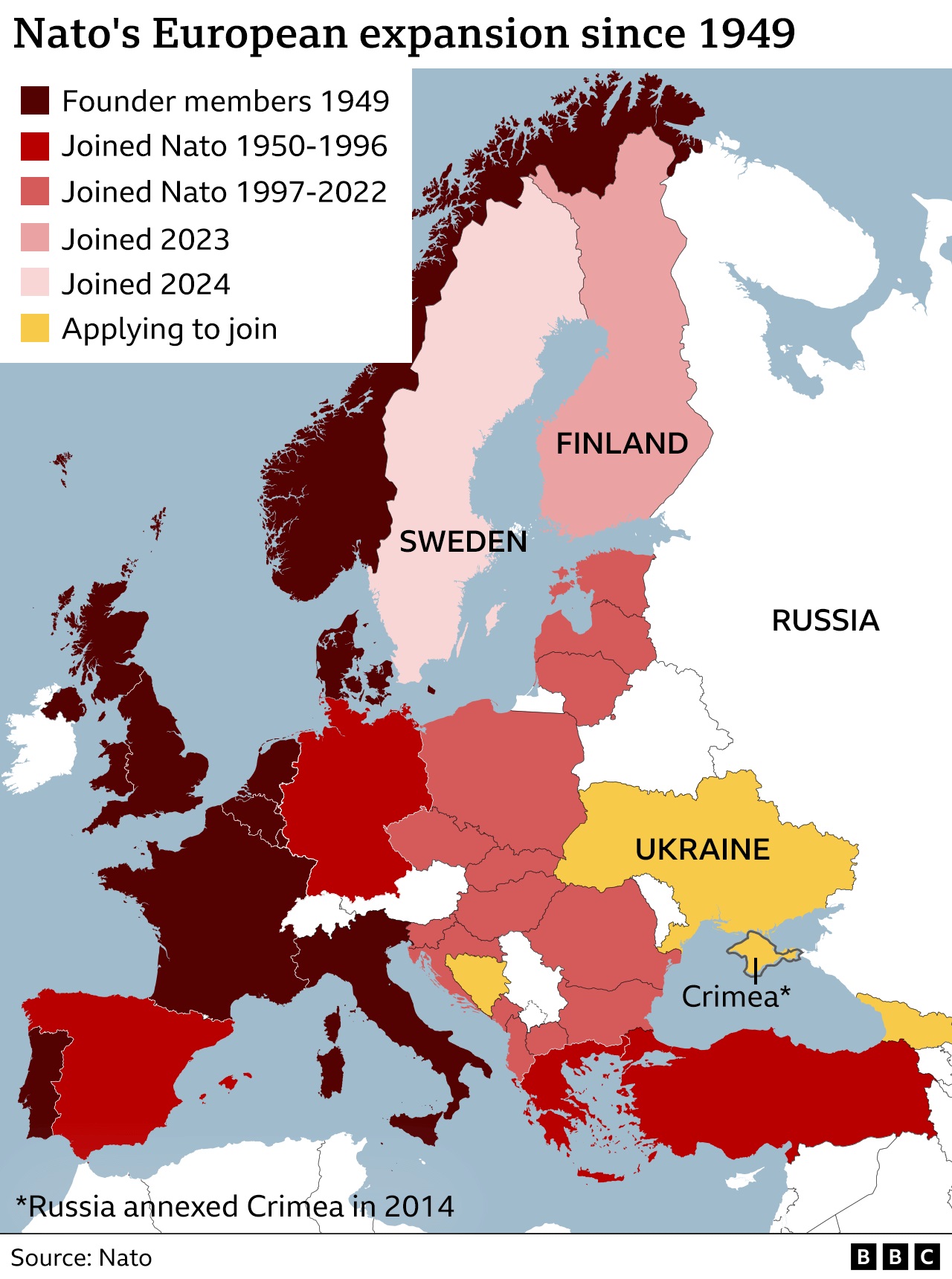

As pointed out by Joe Lauria – “NATO leaders haven’t demonstrated a willingness to give up any of their collective or individual power, which is devolving rapidly into collective and individual madness.
They don’t want to lose their role in Biden “running the world.” Even if realists in Washington prevailed over the neocons in arguing that Ukraine can’t win this war, NATO leaders proclaim they can’t afford to lose it. Not because Putin will be at the Eiffel Tower by Christmas, but because so many political careers in the West would be ruined.
From Keir Starmer to Olaf Scholz, to Giorgia Meloni, Emmanuel Macron and Joe Biden, a defeat in Ukraine would signify that they gambled their personal ambition — as well as their nations’ treasure and the lives of hundreds of thousands of Ukrainian men — and lost it all.
Instead of settling, they’re willing to drag us all into the existential crisis that could end it all. “
Renewables v nuclear: the facts point to one clear winner
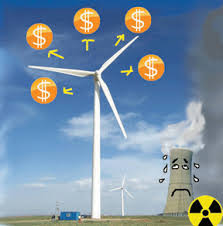
July 12, 2024, Rod Sims, Professor, former chair of the ACCC https://www.smh.com.au/environment/climate-change/renewables-v-nuclear-the-facts-point-to-one-clear-winner-20240709-p5js95.html
Australia needs the trifecta: lowest cost, reliable and zero-emission electricity. Given that we now have a debate about the merits of two very different zero-emission technologies, renewables versus nuclear, we seem agreed on the need for zero-emission electricity.
When we seek lowest cost and reliable electricity, Australia’s huge natural advantage of best-in-world solar and wind, combined with a range of technologies to firm these, are clearly the superior option.
Solar and wind can supply power at about $60-80 a megawatt hour, much cheaper in some areas. When this is firmed so that we have 24/7 reliable electricity using, say, pumped hydro, batteries or gas-fired peaking generation, the cost rises to about $110MWh. This is all known technology and much in use in Australia today.
With recently built nuclear plants in the US, UK and the European Union, nuclear power comes in at $200-$300MWh, at best, based on running 90 per cent of the time, and that is in countries that already have nuclear power. In the CSIRO’s most recent analysis of nuclear power costs, it uses the capital costs in South Korea based on what is achievable from that country’s continuous builds of nuclear power plants and the benefits of learning as it goes. South Korea also produces most components of the nuclear value chain, so it has expertise on all aspects of the plant readily available.
On this basis, the CSIRO finds that nuclear is only 1.5 to two times more expensive than firmed renewables. However, it acknowledges that building initial nuclear plants could cost as much as 100 per cent more than it assumes in its analysis. It also acknowledges that South Korea’s costs are much lower than nuclear build costs in Western countries. For planning purposes, therefore, we should consider nuclear in Australia as at least three times more expensive than firmed renewables, not the 1.5 to two times used by CSIRO.
Of course, countries with old nuclear plants will have lower costs than those embarking on new nuclear builds. The average age of nuclear plants in France is close to 40 years. Even with this history, however, the latest nuclear plant in France – Flamanville – came in at four times the predicted price and 12 years late. Indeed, of the five third-generation nuclear plants built this century in Western counties, all have had huge cost and time overruns. Their experience should guide Australia now.
Coalition policy is to build the new plants by 2035-37, which is unrealistic, according to the vast majority of experts and recent experience in Western economies. Australia needs low-cost and reliable electricity now, and can’t wait up to two decades for nuclear to be built. Further, in Western countries with which we compare ourselves, the cost of nuclear power is trending higher on average as more is built. This contrasts with renewables, for which the costs have been continually falling – by about 90 per cent for solar and 70 per cent for wind since 2010.
An energy system largely dominated by wind and solar can be 24/7 reliable. Different regions, and indeed solar and wind, will have different run times. Further, they can be backed up by batteries and pumped hydro, which can charge up when power prices are extremely low in the middle of the day, and discharge in the evening peak when the sun is no longer shining. Absent this, we can rely on gas-fired peaking generation plants which, with their low capital costs yet high operating costs, are ideal to help fill gaps in power supply.
While pumped hydro and batteries will play increasing roles, for now the lights need never go out if we rely on gas-fired peaking generation. Extremely poor policy and planning over at least a decade has seen a gas shortage in Victoria, NSW and South Australia. If we face reliability problems in Australia, these are man-made, not an inherent part of using renewables as the core of our electricity system.
Further, we may or may not miss the government’s target of 82 per cent renewables by 2030, but this is irrelevant to the choice we face between renewables and nuclear. We would not get much nuclear power until the 2040s.
It is a shame that there is no embrace of the first best policy to get to net-zero electricity: putting a price on the damage caused by carbon emissions. Then we could allow various options to compete and the market to get us to where we need to go. Without a carbon price, however, we are left not with a market-determined decision but one dictated by government.
We are forced then to look at the facts and form a view. When this is done, renewables plus the many available options to firm them are the clear choice for Australia.
Rod Sims, a former chair of the ACCC, is a professor at the Crawford School of Public Policy, ANU, and chair of the Superpower Institute. The institute was founded by economist Ross Garnaut, a director at Zen Energy, which is building the Western Sydney Pumped Hydro Project.
NATO Washington Summit Declaration – a delusional March of Folly

Just reading through this Declaration, it appears to me that NATO is preparing for war against the Russian Federation in the immediate future.

13 July 24
The NATO Declaration reminds me of Barbara Tuchman’s book The March of Folly describing the European Geopolitical Machinations leading up to the First World War. Its comments about Ukraine are delusional—detached from reality.
Maybe NATO itself will not becoming involved in hostilities against Russia in Ukraine, but this Statement is paving the way for NATO States to get involved in hostilities against Russia in Ukraine. Ultimately this will prove to be a distinction without a difference.
When implemented this Statement will make Ukraine a de facto NATO Member State with all the existentially dangerous consequences that would ensue from there. Its talking about Ukraine’s “irreversible path” to de jure NATO Membership is deliberately designed to rule out negotiations with Russia since Ukraine’s neutrality from NATO has always been the bottom line of Russia’s position, which is most reasonable.
Its comments about Russia are paranoid and delusional and existentially dangerous and irresponsible. Since the USA IS NATO, the Biden administration did the first draft of this Statement for the other NATO States to sign on to with some minor tweaks and emendations by them.
But still this Statement represents how paranoid, delusional, irresponsible, reckless and existentially dangerous the Biden administration is not only against Russia but also against North Korea, Iran and China, among others.
As this Statement admits the European Union has finally come out of the closet to reveal itself as the Political and Economic Arms of the NATO Military Alliance.
NATO is now moving into the Pacific where it is trying to replace and replicate the failed SEATO Pact. NATO is also moving into the Middle East where it is trying to replace and replicate the failed CENTO Pact. Its Pledge of Long-Term Security Assistance for Ukraine makes it perfectly clear that the United States, NATO, and the NATO States have no interest in a negotiated resolution to the situation in Ukraine with Russia despite the recent overtures by President Putin that he was prepared to negotiate. Although Putin’s demands were maximalist, they can serve as a basis for opening peace negotiations among Russia, the United States, and Ukraine. This Statement definitively rejects those overtures.
– Official text: Washington Summit Declaration issued by the Heads of State and Government participating in the meeting of the North Atlantic Council in Washington, D.C. 10 July 2024, 10-Jul.-2024 https://www.nato.int/cps/en/natohq/official_texts_227678.htm
Game of Mates. The Australian War Memorial and its military industrial conflicts of interest.
Why doesn’t Kim Beazley, chair of Australian War Memorial, which is undergoing a $550 million expansion, disclose his board roles with multinational arms companies? Who else is involved?

ELIZABETH MINTER, AND MICHELLE FAHY, JUL 12, 2024 https://undueinfluence.substack.com/p/game-of-mates-the-australian-war?utm_source=post-email-title&publication_id=297295&post_id=146535914&utm_campaign=email-post-title&isFreemail=true&r=1ise1&triedRedirect=true&utm_medium=email
The Australian War Memorial Council’s website makes no mention of chair Kim Beazley’s roles with multinational weapons companies Luerssen and Lockheed Martin and is coy about another Council member’s full-time role with French weapons multinational Thales, which has just been referred to the National Anti-Corruption Commission.

A recent report by the national auditor general into the development of the Australian War Memorial found serious deficiencies. Steps were taken to dodge ministerial oversight; conflicts of interest were not adequately documented and declared; known conflicts were not adequately managed; key personnel did not declare prior employment with tenderers; and there were deficiencies in the quality of advice to the minister.
One draft contract for $1.05 million was split into two contracts with the same supplier, with both contracts being signed on the same day. Another contract under an official order for a maximum value of $319,572 was later varied upwards to $999,999—one dollar under the $1 million threshold required for ministerial approval.
The Australian War Memorial’s purpose is to commemorate the sacrifice of those Australians who have died in war or on operational service and those who have served our nation in times of conflict. It was designed as a place of quiet reflection and contemplation.
‘Military Disneyland’
However, thanks to long-running sponsorship deals over the years with global weapons manufacturers, including BAE Systems, Lockheed Martin and Thales, the AWM is being transformed into what has been termed a military Disneyland, boastfully celebrating combat triumph with displays of military hardware and exhibitions.
We now honour our dead in a place sponsored by the companies that are so handsomely rewarded financially by the wars that kill our citizens
In its report, the Auditor-General further noted that an entity’s culture will be determined by the ‘tone at the top’ set by its leadership, noting that the AWM’s Council members and Senior Executive Service officers declare interests annually.
However, the Auditor-General stated that, ‘AWM did not undertake any specific probity planning or review its processes for Council and staff to reflect the increased probity risks arising from the scale and volume of the procurement activities relating to the [then] $498 million development project.’
Kim Beazley’s many roles
Should the public be told, for example, that Labor luminary Kim Beazley, the chair of the War Memorial Council, which is responsible for the conduct and control of the Memorial’s affairs, is an adviser to Lockheed Martin and that he was also on the board of Lockheed Martin Australia for almost two years (2016-2018) in between his roles as ambassador to the US and Governor of WA? Lockheed Martin manufactures the lethal F-35 fighter jet that Israel is using to drop bombs on Gaza.
Beazley’s 349-word profile on the website of the Australian Strategic Policy Institute (ASPI), where he is a distinguished senior fellow, similarly contains no mention of his roles with Lockheed.

ASPI’s mission is to contribute an ‘independent voice to public discussion’ and ‘bring alternative sources of advice’ to ‘key strategic and defence policy issues’. Beazley writes regularly for ASPI, including this article on naval shipbuilding earlier this year, but he and ASPI neglected to mention that Beazley is also on the board of Luerssen Australia, which has the $3.6 billion contract to build offshore patrol vessels for Australia’s navy.
Why is there no mention of Beazley’s close engagement with these two multinational arms companies in his 350-word profile on the AWM website? Beazley’s profile mentions his role as Governor of WA, his dedication to federal politics for nearly 30 years, his ministerial portfolios, his Companion of the Order of Australia honour, his advocacy for Indigenous people and the community, his educational achievements, his US ambassadorial role, his roles in academia, and his distinguished fellowships, all of which indicate a lifetime of public service.
The media release announcing Beazley’s role as Council chair on 2 December 2022 also omitted his Lockheed Martin and Luerssen roles.
Conflicts of interest
Also, why wasn’t the public told for a long time that another member of the War Memorial Council is a Key Account Manager with the French multinational weapons manufacturer Thales?
Daniel Keighran, a Council member for eight years, has been employed for at least five years by Thales, a sponsor (corporate partner) of the War Memorial and one of the top handful of suppliers to the Defence Department in Australia.
Thales was last week referred to the National Anti-Corruption Commission after the national auditor-general released yet another excoriating report into procurement by the Defence Department, finding evidence of ‘unethical conduct’. Thales received a $1.2 billion contract to run two Commonwealth-owned munitions facilities in 2020 despite an assessment that found its bid was ‘deficient’, ‘high risk’ and did not offer value for money.
Until recently, there was no mention in Keighran’s Council profile of his Thales role, as is evident from a snapshot taken on February 22, 2024, by the Wayback Machine, which takes snapshots of websites over time.
While the Council has since updated Keighran’s profile, his full-time employment at Thales is still only obliquely referred to as a ‘current association’.
War Memorial Council
Sitting alongside Keighran and Beazley at War Memorial Council meetings are the chiefs of each military service, who are ultimately responsible for arms procurement. They are Chief of Army Lieutenant General Simon Stuart; Chief of Navy, Vice Admiral Mark Hammond; and Chief of Air Force Air Marshal Stephen Chappell.
Notwithstanding the deficiencies outlined earlier, the Auditor-General found that the management of the development project had been largely effective. In a media release, the Australian War Memorial welcomed ‘the positive findings of this report,’ which ‘illustrate the significant achievements, particularly across critical matters involving probity and transparency.’
The Minister for Veterans’ Affairs, Matt Keogh, said the government was concerned by the report and that ‘an urgent briefing’ had been requested from the ANAO on its findings and recommendations, ‘and we will discuss these with the Australian War Memorial’s management as a priority’.
This article was first published by Michael West Media on 9 July 2024
US-made missile suddenly ‘transformed’ into a ‘Russian’ one and killed 40 civilians

One video clearly shows a SLAMRAAM (Surface Launched AMRAAM) missile falling and hitting a civilian building. This US-made weapon is based on an AIM-120 Advanced Medium-Range Air-to-Air Missile (AMRAAM) and is used by the much-touted NASAMS (Norwegian/National Advanced Surface-to-Air Missile System). However, the Neo-Nazi junta is insisting that the weapon in question is a Russian Kh-101 long-range air-launched cruise missile.
Drago Bosnic, InfoBrics, Tue, 09 Jul 2024, https://www.sott.net/article/493060-US-made-missile-suddenly-transformed-into-a-Russian-one-and-killed-40-civilians
On July 8, the Russian military launched large-scale strikes on various targets across Ukraine. According to the mainstream propaganda machine, one strike was “particularly deadly”, as it allegedly “killed 41 civilians” and “destroyed a children’s hospital”. Reuters says:
“Russia blasted the main children’s hospital in Kyiv with a missile in broad daylight on Monday and rained missiles down on other cities across Ukraine, killing at least 41 civilians in the deadliest wave of air strikes for months.”
The report tried playing into the emotional aspects with the graphic descriptions of parents and children affected by these “evil Russian strikes”. Reuters says that “parents holding babies walked in the street outside the hospital, dazed and sobbing after the rare daylight aerial attack”, while “windows had been smashed and panels ripped off, and hundreds of Kyiv residents were helping to clear debris”.
While on his way to the NATO summit in Washington DC, the Neo-Nazi junta frontman Volodymyr Zelensky claimed more than 170 people were injured, while around 100 buildings were damaged, including the aforementioned children’s hospital and a maternity center in Kiev, as well as children’s nurseries, a business center and homes. He also stated that “Russian terrorists must answer for this” and that “being concerned does not stop terror, condolences are not a weapon”. The Kiev regime announced a day of mourning for today, calling the strikes “one of the worst air attacks of the war”, insisting it “demonstrated that Ukraine urgently needed an upgrade of its air defenses from its Western allies”. Interestingly, they also claim that their air defenses allegedly “shot down 30 of 38 missiles”. Quite peculiar that the Neo-Nazi junta forces are “so successful” in shooting down Russian missiles.
At the same time, they still “urgently need” NATO-sourced SAM (surface-to-air missile) systems. The question is, which is it? Either the current air defenses are not enough, meaning that the reports about shootdowns are a blatant lie, or the reports are “true”, meaning that the Kiev regime forces don’t really need “better air defenses“. After all, they “regularly shoot down” two out of six 9-S-7760 “Kinzhal” air-launched hypersonic missiles. However, in all seriousness, this is just the tip of the iceberg when it comes to the sheer ridiculousness of propaganda in the NATO-orchestrated Ukrainian conflict. For instance, Reuters reports that it obtained “an online video showing a missile falling towards the children’s hospital followed by a large explosion” and insists that “the location of the video was verified from visible landmarks”. And indeed, there’s horrifying footage of children injured by the shrapnel and falling debris.
The political West is now also using the UN to spread the narrative about the “brutal Russian attack”. The United Kingdom called for a UN Security Council meeting, which will take place today to “discuss a Russian missile attack on Kyiv’s Okhmatdyt Children’s Hospital that was part of a massive attack on July 8 that hit several cities across the country, killing at least 41 people and injuring at least 140”, according to the CIA front Radio Free Europe/Radio Liberty (RFE/RL). So, once again, we’re seeing the UN being used for the political West’s “soft power” projection purposes. It should be noted that the reports about injuries to civilians are true, as the footage is certainly undeniable. However, there’s a “slight problem” with the narrative. Namely, the video that Reuters referenced is also indisputable evidence that Russia didn’t conduct the aforementioned strike on the children’s hospital in Kiev.
One video clearly shows a SLAMRAAM (Surface Launched AMRAAM) missile falling and hitting a civilian building. This US-made weapon is based on an AIM-120 Advanced Medium-Range Air-to-Air Missile (AMRAAM) and is used by the much-touted NASAMS (Norwegian/National Advanced Surface-to-Air Missile System). However, the Neo-Nazi junta is insisting that the weapon in question is a Russian Kh-101 long-range air-launched cruise missile. The mainstream propaganda machine is also pushing the same narrative, despite the fact that the Russian missile has a massive warhead weighing 400 kg, meaning that the explosion would’ve completely leveled any building, which was simply not the case with the one damaged by the SAM fired by the Kiev regime forces. What’s more, it’s highly likely that the Russian cruise missile has an upgraded warhead weighing 800 kg, meaning that the discrepancy is far worse.
In case such a missile hit any residential area, the death toll would’ve been in the hundreds, if not thousands. However, the mainstream propaganda machine doesn’t really care about such inconsistencies. All it cares about is its vaunted narrative. That’s precisely why they quote Zelensky’s statements about “Russian terrorists” while also openly talking about NATO’s and Neo-Nazi junta’s terrorist attacks against Russian schoolchildren as if it were a “completely normal thing”.
However, apart from the video evidence showing that Russia didn’t conduct the aforementioned strike, there’s also the history of other blatant lies by the Neo-Nazi junta. Namely, it regularly uses SAM systems without any consideration for civilians, such as in the case of Przewodow, a Polish village that was hit by 5V55K SAMs fired by the Kiev regime forces back in mid-November 2022. Two civilians were killed.
The Neo-Nazi junta was adamant that Russia “deliberately” attacked Poland. At the time, I argued that the location of the incident was nowhere near the engagement range of any Russian SAM system that uses the 5V55K missiles. All evidence suggested that the weapon was fired from an older iteration of the Soviet-era S-300 SAM system. At the time, the Kiev regime forces still operated several versions, with the vast majority belonging to the S-300P/PS/PT series. The missile in question has a maximum engagement range of approximately 45 km.
Updated versions of the post-Soviet era were never deployed in Ukraine, while the closest Russian air defense units are at least 150-200 km away, in Belarus, and operate much more advanced systems such as the S-400. Poland itself later confirmed that the Neo-Nazi junta lied, even leading to strained relations between the two. The latest incident is in no way different.
Comment: This attack is not in Russia’s playbook, but evidently a page out of Kiev’s.
TODAY. The insanity of rampant mindless new technology
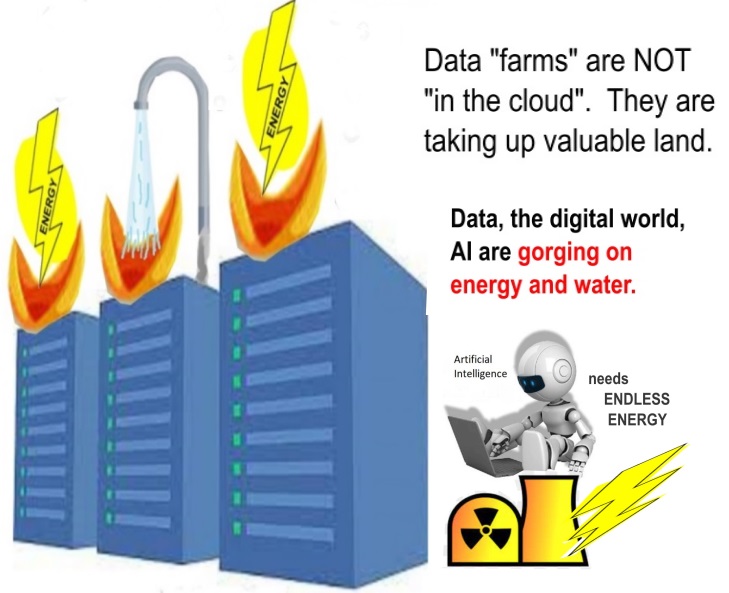
It’s not that I’m against new technology. It has many benefits. It’s just that there can be too much of a good thing.
As an illustration, I’m looking at the plan to employ “human-like” robots to provide companionship to lonely aged people, in particular, to those with dementia. In Australia, there’s a government-encouraged plan that is developing these robots. The robots are meant to provide cheery company and entertainment, to groups of old people and to individuals. They can initiate games, blow bubbles, and provide a stream of wisecracking banter (I heard a sample of this on Australia’s ABC Radio National).

above – “Nadine” – robot, Japan
Just what a dementia person needs- NOT! The last thing that a demented person needs is smart-aleck wisecracks. What they do need is a gentle touch, a human hand leading them for a walk, very little talk, and simple talk, not stuff that will add to their confusion. What they need is empathy – and that’s one thing that a robot cannot give.
Of course, the robot gobbles up electricity. And that must cost a bit, but presumably cheaper than paying a human to do this task?
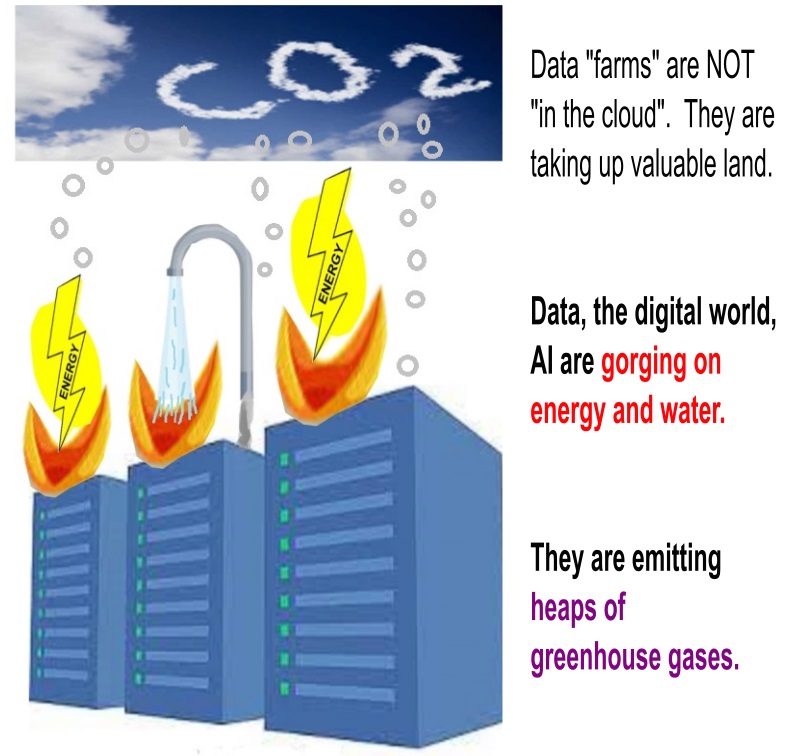
The companion robot is just one example of the useless bits of new technology that waste not only our time, but also huge amounts of electricity and water.
Consider how many trillions of unnecessary emojis, emails, digital posts of all kinds, must be increasingly stored in those dirty great steel data containers that are deceptively called “the cloud” . The big deception is that we’re supposed to think that there’s some kind of innocuous beneficial vapour, into which all our digital rubbish just fades away.
That massive dirty digital steel rubbish “cloud” bank is forever guzzling electricity and the necessary cooling water.
As artificial intelligence races away, and the squillionares like Jeff Bezos rule the world, unhindered wasteful new technology is leading us towards a collective insanity. The nuclear lobbyists must be licking their lips – as electricity usage booms with AI, the argument for nuclear energy booms, too.
There would be many ways to limit our digital use, if only there was a general acceptance of the idea of moderate use, and the motivation to be more frugal in our digital management.
Rampant energy use for completely wasteful purposes not only destroys employment for humans, but it also leads to the toxic world of nuclear power, (and of course, its twin, nuclear weapons.)
South Australia’s renewable triumph is stunning proof that Dutton’s nuclear plans are a folly

Giles Parkinson, Jul 12, 2024 https://reneweconomy.com.au/south-australias-renewable-triumph-is-stunning-proof-that-duttons-nuclear-plans-are-a-folly/
When the federal and state governments were deciding on a location to announce a funding deal that will underwrite South Australia’s final leap to its remarkable goal of 100 per cent net renewables within the next three years, Port Augusta was the obvious choice.
The city at the top of the Spencer Gulf, like the neighbouring Whyalla, is everything that the climate deniers, the renewable naysayers, the conservative media and the federal Coalition say is not possible.
Port Augusta once played host to the state’s ageing and incredibly dirty coal generators. Whyalla was the subject of taunts from former prime minister Tony Abbott that it would be rendered a ghost town by a carbon price.
Now the two cities are host to thriving renewable energy hubs, new green industries and technologies that will help propel the state into a clean energy future.
And it is remarkable how little is actually known about the achievements of South Australia beyond its borders. Already it is at an annual average of 70 per cent renewables, and by 2027 it intends to be the first in the world to reach 100 per cent net renewables primarily through wind, solar and storage.
Just to be clear, that does not mean that it will consume only renewables. “Net” means that the amount of power it produces from wind and solar during the year will be equivalent to the amount it consumes. But it will still export and import as needs must.
It’s a stunning achievement, and still one that the naysayers insist is not possible. The state has become a globally significant testing ground in technologies – it hosted the first Tesla big battery that helped change the thinking on future grids around the world – and it is addressing and solving complex engineering issues that many experts thought were too difficult and some still say are insurmountable.
More importantly, it is doing this as a result of bipartisan policy. Labor kicked it off more than a decade ago by making itself the most welcoming state for wind and solar.
The Liberal state government set the target of reaching 100 per cent renewables by 2030. Labor is now back in power and has accelerated that target to 2027. It is marvellous what can be achieved when the coal lobby is removed and not pulling the strings of the politicians and public mood.
Despite all this, the achievements in South Australia remain largely ignored by the rest of the country.
The announcement by federal energy minister Chris Bowen and state energy minister Tom Koutsanstonis about the funding deal for a gigawatt of new wind and solar and 600 MW (2,400 MWh) of battery storage – to ensure the 100 per cent net renewable target is met – barely rated a mention in mainstream media outside the state.
Yet it is here, in Port Augusta, that federal Opposition leader Peter Dutton has decided should be one of seven sites – along with Collie, Liddell, Mt Piper, Loy Yang, Callide and Tarong – that should play host to their nuclear power plant proposals.
They were chosen, the Coalition tells us, because they are locations that still have or once supported coal fired power generators, and – they claim – would have available transmission capacity. But as Koutsantonis pointed out during his visit this week, that is simply not the case. That capacity has already been taken up by other projects.
“This site here where the Port Augusta power station once sat is now at capacity in terms of our renewable transmission lines to Adelaide,” he told journalists. “So the idea you can just plug in a nuclear power station here is just folly.
“I haven’t seen Peter Dutton here. I haven’t seen the Commonwealth Opposition here at all talking to the state government about their pretend plans for nuclear power in South Australia.”
Indeed, it is not surprising that Dutton has not shown up: South Australia is not just shining a path to the future, it is a real life repudiation of the folly of the federal Coalition’s nuclear plans, and the sheer nonsense of its claims.
Let’s remember that the Coalition and the conservative media’s nuclear arguments are based almost entirely around the assumption that wind and solar cannot power a modern economy.
South Australia proves them wrong, emphatically so. The grid is reliable, wholesale power prices are falling, and will continue to do so as it free itself from the yolk of fossil gas. Legacy industries are being revived by the growth of wind and solar, new industries are being established, and big business with big loads are being attracted to the state.
The once broke Whyalla steelworks, for example, has based its revival around plans for “green steel” underpinned by wind and solar, and BHP will power its giant Olympic Dam mine with a unique “firmed renewables” contract sourced from the state’s biggest wind project and a big battery.
The state’s transmission operator ElectraNet reports inquiries amounting to several gigawatts of new load from industries attracted to cheaper and greener power, and apparently not the least bit concerned about the scare campaigns that the lights will surely go out.
South Australia is already at the stage where enough rooftop solar is generated in the middle of the day to meet all local demand. That will soon occur in other states too, including Western Australia, effectively eliminating grid demand and requiring storage or new load or exports to soak up the excess.
As every major utility in Australia makes clear, the era of always-on base-load power is well and truly passed in such grids. South Australia has not just shut down its last coal generators, and is closing down its remaining combined cycle gas plants, which perform a similar role. The gaps will be filled by facilities that are fast and flexible. There is simply no room in the grid for an always-on nuclear plant.
“This site is taken. So I’m not quite sure where he’s planning to build this or how he’s planning to build this,” Koutsantonis said.
“If Peter Dutton was serious about what he was talking about, he would have come to us earlier and spoken to us about it, consulted with us. For whatever reason, he hasn’t even stepped a foot on this site to actually have a look at it.”
Bowen has been taking that message across the country. “This whole precinct’s being transformed … into a renewable energy hub, a green cement hub and a critical minerals hub,” he said at Port Augusta.
The next day, Bowen popped up in Lithgow, at the site of another mooted nuclear site, the Mount Piper coal generator, where the asset owner Energy Australia also outlined plans to build pumped hydro, a giant battery and to convert its coal plant into a “flexible” asset rather than an “always on” baseload asset in the interim.
“Traditionally Mount Piper has been a full-load, continuous load power station, and today it’s becoming much more flexible,” EnergyAustralia’s head of operations and projects Sue Elliott said. “It now operates during the day and seasonally depending on renewable availability in the market.
“We are progressing planning for a Lake Lyell Pumped Hydro Project … and we’re also planning a 500 megawatt, four hour Mount Piper Battery Energy Storage System right here on site to take advantage of transmission assets.”
As Bowen pointed out, this is real investment happening now, not some time in the distant future.
“I’m not sure if Mr Dutton and (Opposition energy spokesman Ted) O’Brien have been here yet, but they have a plan for nuclear power, which is at least 30 years away,” he said.
“They admit 2035 at its earliest; even that is wildly ambitious and optimistic and unrealistic. But that doesn’t fix the problems today.
“It doesn’t create jobs today. It doesn’t create investment today and, indeed, it will chill investment. It will stop people investing in the alternative plans because of the investor uncertainty created by having a nuclear plan, which is never going to happen – it’s a fantasy.”
South Australia, and its charge towards 100 per cent renewables, is very real. And worth talking about.
Yet another huge procurement bungle has been unearthed. Guess where?
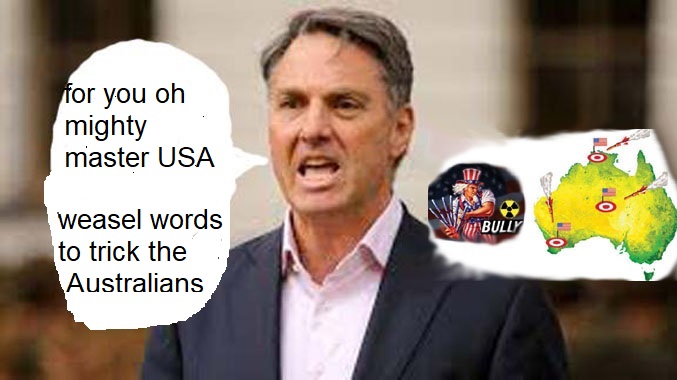
A procurement process so blatantly rotten that the beneficiary itself tried to stop it? It could only happen in Defence.
Crikey BERNARD KEANE, JUL 12, 2024
The hits keep coming for Defence. The Australian National Audit Office has just revealed another big bungled project by the department, one that was a decade in the making.
While it lacks the champagne glamour of the Defence-Thales munitions scandal and only costs hundreds of millions, not billions, the debacle over “myClearance” demonstrates that Defence’s inability to manage procurement — a core task for such an institution — is department-wide.
It’s also a likely unique case of procurement process so bad that the company that benefited objected to it.
myClearance” might sound like a colonoscopy prep, but it is in fact the notional answer to longstanding problems with the systems used by the Australian Government Security Vetting Agency within Defence to vet people for security clearances across the public sector — a process much criticised by other agencies for its glacial speed.Richard Marles takes on reality, comes off second-best in growing Thales scandalRead More
In 2014, Defence decided that its vetting platform needed to be replaced, and thus began what became the Vetting Transformation Project — given impetus, no doubt, by the Abbott government’s hysteria over the Snowden revelations and the idea of “inside threats” used to……………(Subscribers only) more https://www.crikey.com.au/2024/07/12/defence-procurement-rotten-myclearance/?utm_medium=Social&utm_source=Twitter#Echobox=1720756332
Power-hungry data centres are booming in Australia. Can the grid cope?
By Nick Toscano, July 12, 2024, https://www.theage.com.au/business/companies/power-hungry-data-centres-are-booming-in-australia-can-the-grid-cope-20240711-p5jssa.html
An explosion in the number of data centres in Australia is looming as a new test for the energy grid amid warnings they might soon require as much as electricity as two giant coal-fired power stations are capable of generating.
As cloud-based computing [nb there is no “cloud”] and artificial intelligence (AI) accelerate demand for data storage, Melbourne and Sydney have emerged as key locations for tech companies building vast industrial facilities to house their servers that send and receive data 24/7, known as data centres.
These data centres, which need huge amounts of electricity to run high-intensity computing and cooling systems, are already major power users in Australia – consuming about 5 per cent of available generation.
They are expected to drive further electricity demand growth alongside homes switching from gas to electric appliances and the growing adoption of electric cars.
However, new modelling from UBS suggests official forecasts may be underestimating the scale of the added demand that data centres could drive in the coming years.
The investment bank calculates between 3.3 gigawatts and 5 gigawatts of demand – equivalent to the combined generating potential of approximately two of Australia’s biggest coal-fired power plants – could be added to the east coast grid by 2030 on the back of growth in data centres and artificial intelligence.
At the top end of the range that could equate to up to 15 per cent of overall grid demand, which could add significant strain to supplies and push up prices unless properly managed.
The data centre boom is coming at a time of upheaval for Australia’s main grid as it transitions to cleaner energy, while the coal plants that have supplied the bulk of its power for decades increasingly bring forward their closures.
Although renewables’ share of the mix is growing, there are worries it’s not happening fast enough, with authorities fearing a shortfall of generation, storage and transmission lines to protect against the threat of price rises or blackouts once coal exits the grid.
Analysts at Morgan Stanley believe the grid will be able to accommodate extra demand from data centres’ growth, which it forecasts to rise from 5 per cent to about 8 per cent by 2030.
However, the system will face more strain next decade when the majority of the nation’s remaining coal-fired power plants are expected to have closed, they said.
“We see the power requirement for new Australian data centres as manageable for the Australian power system to 2030, but power could become a constraint in the 2030s given planned coal plant closures,” they said.
UBS said data centres may provide benefits for grid planners trying to maintain system stability, given they offer consistent minimum demand 24/7 – similar to the role of aluminium smelters. But they would add “incremental pressure” during evening peak demand periods once the sun sets and solar output recedes, Allen said.
The spread between daytime and evening wholesale prices could widen to up to 70 per cent by 2030 due to coal closures and delays to the renewable rollout, he added.
Don’t make my home a nuclear power hub- nuclear reactors in Latrobe Valley unsafe and unrealistic.

As some Coalition MPs have let slip, talk of nuclear reactors is really code language for extending the life of coal and gas for at least 20 years until nuclear reactors can be regulated, built and actually generate energy into the Australian energy grid. This is incompatible with our global commitment to limit warming to 1.5 degrees and will see Australians more vulnerable to extreme heat, fires and floods.
By Hayley Sestokas, July 10 2024, https://www.canberratimes.com.au/story/8691386/nuclear-reactors-in-latrobe-valley-unrealistic-and-unsafe/
Earlier this year the federal Coalition began spruiking their ill-conceived idea to build nuclear reactors on the land of retired coal-fired power plants as a solution to Australia’s energy future. That talk has now reached fever pitch as Peter Dutton announced his proposed sites last week – including in the Latrobe Valley.
Leaving aside for a moment the prohibitive costs and safety concerns associated with nuclear reactors – it seems clear that Peter Dutton nor his Coalition colleagues bothered doing their homework or actually speaking to local people on the ground before naming the Latrobe Valley as a potential site.
If he had conducted even a superficial survey of community attitudes to the proposition of turning the Latrobe Valley into a nuclear power hub, he would have realised quickly that the vast majority of the community can see this proposition for what it is – a dangerous distraction that ignores the more urgent need for safe mine rehabilitation.
As it currently stands, the so-called retired coal mine sites being referred to are facing ongoing issues associated with rehabilitating the existing toxic and unstable mine pits that remain full of flammable coal. It doesn’t take too much of a mental stretch to realise that mixing old unstable mine pits and nuclear reactors is not likely to end well.
The Latrobe Valley also sits in an earthquake hotspot near the fault lines of the Strzelecki Ranges. The Fukushima nuclear disaster, which led to mass evacuations, hundreds of billions of dollars of economic loss and the release of large amounts of radioactive contamination to the air and ocean, clearly showed the danger of building a nuclear reactor on a fault line.

The other glaring gap in the nuclear push is water. According to the World Nuclear Institute, one nuclear reactor requires between 1514 and 2725 litres of water per megawatt hour. That equates to billions of gallons of water per year, all of which requires intensive filtering.
So where, might we ask, is all this water going to come from? Especially at a time when it’s not clear where the millions of litres of water for rehabilitating all three mine pits are going to come from. We are already in the midst of a looming water crisis without the added intensive drain of a nuclear facility.
As recently as 2019 local MP Darren Chester already publicly stated that the government had no plans to change the moratorium in place on nuclear power – let alone that his own electorate would be the site on which it would be staged.
Mr Chester has previously said safety concerns would need to be ameliorated and the development would need to demonstrate direct “social and economic benefits”. So it sounds like having opposed the nuclear push it now seems he is prepared to support his Coalition’s nuclear pipedream, at the right price.
As the area that has powered Victoria for decades, people in the latrobe valley know better than anyone that we are now in the midst of a clean energy transition. we can’t afford to wait decades for nuclear reactors when we have clean sun and wind energy right here and right now, already powering 40 per cent of our electricity grid.
It is also disingenuous that after decades of inaction and outright climate denial from the Coalition parties, the same party are now spruiking nuclear as the fastest way to reduce emissions. Instead, the Coalition needs to get with the program and focus on the fast and fair rollout of renewable energy as we phase out burning coal and methane gas.
As some Coalition MPs have let slip, talk of nuclear reactors is really code language for extending the life of coal and gas for at least 20 years until nuclear reactors can be regulated, built and actually generate energy into the Australian energy grid. This is incompatible with our global commitment to limit warming to 1.5 degrees and will see Australians more vulnerable to extreme heat, fires and floods.
While many local people are experiencing a worsening cost-of-living crisis, the federal Coalition is proposing we transition Australia to the most expensive source of energy in the world. The current levelised cost of energy (LCOE) puts nuclear generated electricity at $US180 per megawatt hour compared to $US50 for onshore wind and $US60 for utility-scale solar.
In addition to the very high cost of electricity from nuclear reactors is the huge cost to build them. In the UK, the Hinkley Point C reactor was originally budgeted to cost £18 billion, it will now cost up to £46 billion with inflation factored in. This is in a country with an established regulatory framework and nuclear industry.
Despite the reassurances of those in the Coalition who really should know better, there is still no long-term solution for the radioactive waste from nuclear reactors that meets community expectations for safety and environmental protection. Australia currently struggles to store low-grade waste from nuclear medical facilities, let alone the more radioactive waste from nuclear power reactors.
Dating right back to when the British first tested nuclear weapons in central Australia in the 1950s and ’60s in South Australia, First Nations communities, particularly in remote areas, have borne the brunt of the harm caused by nuclear activities in Australia.
First Nations communities continue to protest and take legal action against radioactive waste burial on country. There are communities who are still unable to access their land due to radioactive waste – let’s not add to that shameful legacy. Not here, not anywhere.
In pitching this radioactive, future technology, the Coalition is ignoring the fact that the clean energy transition is already well under way – and the Latrobe Valley community is out in front with a vision for a healthy, sustainable and safe future in our region. Gippsland has more than 25 large renewable energy projects in the pipeline, worth $54 billion.
With the support of the local community, these projects are already delivering the kinds of jobs and energy solutions we need now, not two decades away.
Hayley Sestokas is the Latrobe Valley community organiser for Environment Victoria.
The dirty history of ‘Nukey Poo’, the reactor that soiled the Antarctic.
By Nick O’Malley, July 10, 2024 , https://www.theage.com.au/environment/conservation/the-dirty-history-of-nukey-poo-the-reactor-that-soiled-the-antarctic-20240708-p5jrzd.html
The rekindled nuclear debate in Australia has stirred old memories in some of a little-known chapter of our region’s history, when the US Navy quietly installed what today we might call a small modular reactor at the US Antarctic base on Ross Island.
The machine, nicknamed “Nukey Poo” by the technicians who looked after it, was installed at McMurdo base in 1961, when Antarctic exploration was expanding and nuclear energy had developed a bright futuristic sheen.
Things did not end well.
Back then, as now, Antarctic missions relied upon lifelines with distant homes. Supplies had to be carried long and sometimes dangerous distances. The US kept its Antarctic sites supplied via an ongoing supply mission called Operation Deep Freeze, which was based at the McMurdo Naval Air Facility.
According to an article on the Nukey Poo incident published in 1978 by the Bulletin of the Atomic Scientists – a journal concerned with the potential danger of nuclear technology, founded by Albert Einstein and veterans of the Manhattan Project – while a gallon of diesel cost the US Navy US12¢ back then, by the time the Americans shipped supplies to McMurdo, diesel cost 40¢ a gallon. At South Pole station, diesel was worth $12 a gallon.
But the then US Atomic Energy Commission had a solution to save costs on transporting supplies. What if McMurdo, and other distant US bases, were supplied by small transportable nuclear reactors? Congress agreed and soon the Martin Marietta Corporation won a contract to build them.
In an advertisement in Scientific American, the company boasted in language reminiscent of today’s debate over modular reactors that “because nuclear energy packs great power in little space, it’s extremely useful when you need electricity in remotes spots. It’s portable and gives you power that last for years …” Soon, the company said, nuclear power might be carrying us to outer space and frying our eggs.
A reactor named PM-3A (PM stood for “portable, medium powered”) was shipped out in sea crates and installed at McMurdo – which is within New Zealand-claimed Antarctic territory – over the summer of 1961 and became known on the base as Nukey Poo. Because cement would not cure in the frigid climate, the reactor was not encased in concrete, rather its four major components sat in steel tanks embedded in gravel and wrapped in a lead shield.
Admiral George Dufek described the moment as “a dramatic new era in man’s conquest of the remotest continent”. The US administration was certain the reactor did not violate the Antarctic Treaty’s declaration that “any nuclear explosions in Antarctica and the disposal there of radioactive waste material shall be prohibited”.
Within a year, Nukey Poo caused its first fuss, a hydrogen fire in a containment tank that led to a shutdown and energy shortages. Icebreakers fought to break through and fuel for generators was delivered by helicopter, which burned as much as they delivered over the course of a flight. Over the following years, Nukey Poo proved so unreliable and expensive to maintain that the military gave up hopes of using the technology to displace diesel at other remote locations.
In 1972, the navy began the three-year task of decommissioning the reactor and decontaminating the site. During that process, they discovered corrosion that technicians feared may have caused leaks of irradiated material. No detailed investigation was done. The secretary of the US National Academy of Sciences said the program was ended due to a series of malfunctions and the possibility of leaks, the Bulletin of the Atomic Scientists reported. The New Zealand government declared the decision was economic.
Either way, it was decided not only to remove the reactor, but half the hillside it was built into. Eventually 12,000 tonnes of irradiated gravel and soil was removed on supply ships to be buried in concrete lined pits in the United States.
The young Australian scientist, Dr Howard Dengate, who had run one of the NZ bases, hitched a lift on one those ships, the Schuyler Otis Bland, in 1977. Dengate recalls a grumpy captain who once swore at him for inviting bad luck on the ship by whistling on deck. The captain, Dengate recalled this week, blamed him for “whistling up” the storm that struck the vessel before the Australian disembarked in New Zealand and the ship sailed on to the US.
Though the reactor was little discussed in the wider world, no secret was made on the base of the reactor or its impact. Indeed, Dengate recalled finding an operating manual for the reactor in the American rubbish pits that New Zealanders had developed the habit of fossicking in.
But the story did not end there.
In 2011, an investigation by journalists of News 5 Cleveland found evidence that McMurdo personnel were exposed to long-term radiation, and in 2017 compensation was paid to some American veterans of the base. A year later, New Zealand officials announced that it was possible that New Zealand staff were also affected.
It has since been reported that four New Zealanders had raised claims about their ill health since their time in the Antarctic.
In 2020, the Waitangi Tribunal, a permanent commission in New Zealand to investigate cases against the Crown, launched inquiries. They are not yet complete.
Asked if he was concerned about travelling with the irradiated material, Dengate said he was not. “We were young and dumb and adventurous,” he told this masthead of his time in the Antarctic.
Decoded: Defence Department’s deadly deceits
After nine months of denial and disinformation, the Australian government has been forced to confirm its deadly exports to Israel
Undue Influence MICHELLE FAHY, JUL 09, 2024
After spending nine months denying any weapons were going to Israel, senior Australian government ministers are now in damage control after a Defence Department official admitted for the first time since the Hamas attack on Israel on 7 October 2023 that there are active export permits relating to Israel that cover the transfer of parts and components.
Labor MPs from Prime Minister Anthony Albanese down have spent months attacking political opponents on this issue.
This was Defence Minister Richard Marles just weeks ago on ABC Melbourne radio: ‘So, to be clear, what the Greens are alleging is that somehow we are supplying Israel with weapons which are being used in the conflict in Gaza. That is absolutely false, and that is a total lie.’
Following the revelations about active permits, senior government ministers have doubled down and introduced a perverse phrase – ‘non-lethal parts’ – to defend the continued export of key parts and components into the F-35 fighter jet supply chain.
The F-35 is being used by Israel over Gaza, and the global supply chain, of which Australia is a key part, services this combat aircraft. In June, the US agreed to sell 25 more F-35 fighter jets to Israel.
More than 70 Australian companies have been awarded over $4.13 billion in global production and sustainment contracts through the F-35 program so far.
Minister Marles and Foreign Minister Penny Wong both recently referred to Australia’s export of ‘non-lethal parts’, having spent eight months insisting: ‘Australia is not sending weapons to Israel and has not done so for the past five years.’
Israel is accused of committing genocide in Gaza in a case that is before the International Court of Justice. Israel is also accused of deliberately causing the starvation of Palestinians in Gaza, according to the International Criminal Court. Australia’s response to both cases has been muted, at best.
Non-lethal’ parts
The F-35 would not operate without all its parts and components. Australia remains the sole source of a number of them, as I reported for Declassified Australia in April.
The proposition that the Australian parts used in a lethal weapon system could be separately considered ‘non-lethal’ indicates a government intent on damage control.
‘Lethal’ is the first word that arms manufacturer Lockheed Martin uses to describe its F-35 fighter jet. It markets the aircraft as the most lethal fighter jet in the world.
In a testament to that, in March the F-35A version was operationally certified to carry a nuclear bomb – the first fighter jet or bomber to be granted nuclear-capable status since the 1990s
The UN Arms Trade Treaty (ATT) makes no mention of the lethality of the individual parts or components that comprise the weapons (“conventional arms”) it covers.
Two weeks ago, the UN published a damning report on Israel’s extensive use of heavy bombs with wide area effects in densely populated areas in Gaza since 7 October: ‘The scale of human death and destruction wrought by Israel’s bombing of Gaza…has been immense.’
High Commissioner for Human Rights Volker Türk said: ‘The requirement to select means and methods of warfare that avoid or at the very least minimise to every extent civilian harm appears to have been consistently violated in Israel’s bombing campaign.’
Last December, the head of the F-35 joint program office, Lieutenant General Michael Schmidt, gave evidence at a US Congressional hearing that confirmed Israel was using its F-35s in the bombing attacks.
Lt-Gen Schmidt said the F-35 program office had been moving ‘at a breakneck speed to support…Israel…by increasing spare part supply rates’.
Lockheed Martin has acknowledged that ‘every F-35 built contains some Australian parts and components’.
The government’s ‘non-lethal parts’ messaging is at odds with a significant UN statement issued on 20 June, which included and named multinational arms companies in its call to cease supplying Israel with arms, ‘even if [the arms transfers] are executed under existing export licenses’.
Under the headline ‘States and companies must end arms transfers to Israel immediately or risk responsibility for human rights violations’, the statement named 11 multinationals – including Lockheed Martin, BAE Systems, Boeing, Northrop Grumman, Rheinmetall and RTX/Raytheon – which all have significant operations in Australia.
These companies, by sending weapons, parts, components, and ammunition to Israeli forces, risk being complicit in serious violations of international human rights and international humanitarian laws,’ the statement said.
Government in damage control
The Albanese government was forced to employ new language following evidence given by a Defence Department official in a recent Senate Estimates hearing………………………………………………..
What is a ‘weapon’?
The senior ministers were forced to change tack because the favoured line of all Labor MPs since Israel launched its newest and deadliest war against Palestine has cracked under sustained scrutiny.
The carefully crafted statement that ‘Australia is not sending weapons to Israel and has not done so for the past five years’ contains two elements designed to mislead: ‘weapons’ and ‘to Israel’.
All Labor MPs, including the Prime Minister, use the word ‘weapons’ repeatedly without defining it, knowing the vast majority of Australians will assume it means ‘weapons’ in the usual broad sense.
However, the government is cynically relying on a narrow military definition.
The Defence Department’s Hugh Jeffrey, in a previous Senate hearing, said the Department’s chosen definition of ‘weapon’ was ‘derived from’ definitions in the UN Arms Trade Treaty (ATT), ‘which classifies what weapons are’.
‘Under the UN definition, weapons are defined as whole systems, like armoured vehicles, tanks and combat helicopters,’ he said……………………………………………..
UN experts referred to the Geneva Conventions when warning countries that any transfer of weapons or ammunition to Israel that would be used in Gaza was likely to violate international humanitarian law:
‘States must accordingly refrain from transferring any weapon or ammunition – or parts for them – if it is expected…that they would be used to violate international law.
Such transfers are prohibited even if the exporting State does not intend the arms to be used in violation of the law…as long as there is a clear risk.’
This article was first published at Declassified Australia on 1 July 2024, https://undueinfluence.substack.com/p/decoded-defence-departments-deadly?utm_source=post-email-title&publication_id=297295&post_id=146424013&utm_campaign=email-post-title&isFreemail=true&r=1ise1&triedRedirect=true&utm_medium=email
Squadron Energy says innovation needed to overcome jump in wind costs, but nuclear not the answer

ReNewEconomy, Sophie Vorrath, Jul 10, 2024
The CEO of the Andrew Forrest owned renewables developer Squadron Energy says the cost of developing onshore wind energy projects has jumped by up to 50 per cent over the past four years, presenting industry with a “very big challenge” as it works to deliver tens of gigawatts of new capacity in Australia.
Speaking at Australia Wind Energy 2024 in Melbourne on Wednesday, Squadron chief Rob Wheals said industry would need to act swiftly to overcome the jump in wind costs that, alongside other roadblocks, are getting in the way of scaling up development.
Wheals says about two-thirds of the cost of delivering an onshore wind project are made up of construction and installation costs and that, since 2020, developers have seen those costs increase by as much as 50 per cent
……………………………………………………………………………………………………… Esposito, Wheals and various other global wind energy executives including from RES, Goldwind and RWE, also noted that the grid connection situation, at least, is improving, with network companies, market bodies and governments joining forces to boost visibility and speed up critical project connection processes.
Cost problems – and the impacts of Australia’s predictably unpredictable energy politics – still need some nutting out.
“My message to us as an industry is that we … need to do the heavy lifting. We need to do that heavy lifting now,” Wheals told the conference.
“We’re looking at a four- to five-fold increase from today through to 2050. …We can’t afford to be distracted by the nuclear debate and, in fact, nuclear won’t be there in time for us anyway…………. https://reneweconomy.com.au/squadron-says-innovation-needed-to-overcome-jump-in-wind-costs-but-nuclear-not-the-answer/—
How would a switch to nuclear affect electricity prices?
The Conversation, 10 July 2024, Roger Dargaville, Monash University
Peter Dutton has announced that under a Coalition government, seven nuclear power stations would be built around the country over the next 15 years.
Experts have declared nuclear power would be expensive and slow to build.
But what might happen to energy prices if the Coalition were to win government and implement this plan?
How might we estimate the cost of nuclear?
By 2035, 50–60% of the existing coal-fired fleet will very likely have been retired, including Vales Point B, Gladstone, Yallourn, Bayswater and Eraring – all of which will have passed 50 years old.
These five generators contribute just over 10 gigawatts of capacity. It’s probably not a coincidence that the seven nuclear plants proposed by Dutton would also contribute roughly 10 gigawatts in total if built.
Neither my team at Monash University nor the Australian Energy Market Operator has run modelling scenarios to delve into the details of what might happen to electricity prices under a high-uptake nuclear scenario such as the one proposed by the Coalition. That said, we can make some broad assumptions based on a metric known as the “levelised cost of electricity”.
This value takes into account:
- how much it costs to build a particular technology
- how long it takes to build
- the cost to operate the plant
- its lifetime
- and very importantly, its capacity factor.
Capacity factor is how much electricity a technology produces in real life, compared with its theoretical maximum output.
……………………………………………………….CSIRO’s GenCost report assumed a value of $8,655 per kilowatt for nuclear, so the true levelised cost of electricity of nuclear power in Australia may end up being twice as expensive as CSIRO has calculated.
………….Other factors play a role, too
Another factor not accounted for in the GenCost assumptions is that Australia does not have a nuclear industry. Virtually all the niche expertise would need to be imported.
And very large infrastructure projects have a nasty habit of blowing out in cost –
……………………………………………………………………………………………. A likely increase in energy costs
In summary, in a free market, it is very unlikely nuclear could be competitive.
But if a future Coalition government were to bring nuclear into the mix, energy costs for residential and especially industrial customers would very likely increase. https://www.firstlinks.com.au/switch-nuclear-affect-electricity-prices
1 This month

of the week – Disrupting War & Militarism in Oceania. Active solidarity. Radical practice.
 Antinuclear