Massive cask of nuclear waste to arrive in Sydney
Monolithic cask of nuclear waste to arrive, https://www.mandurahmail.com.au/story/7559502/monolithic-cask-of-nuclear-waste-to-arrive/
- Tracey Ferrier 21 Dec 21,
Monolithic cask of nuclear waste to arrive, https://www.mandurahmail.com.au/story/7559502/monolithic-cask-of-nuclear-waste-to-arrive/Tracey Ferrier
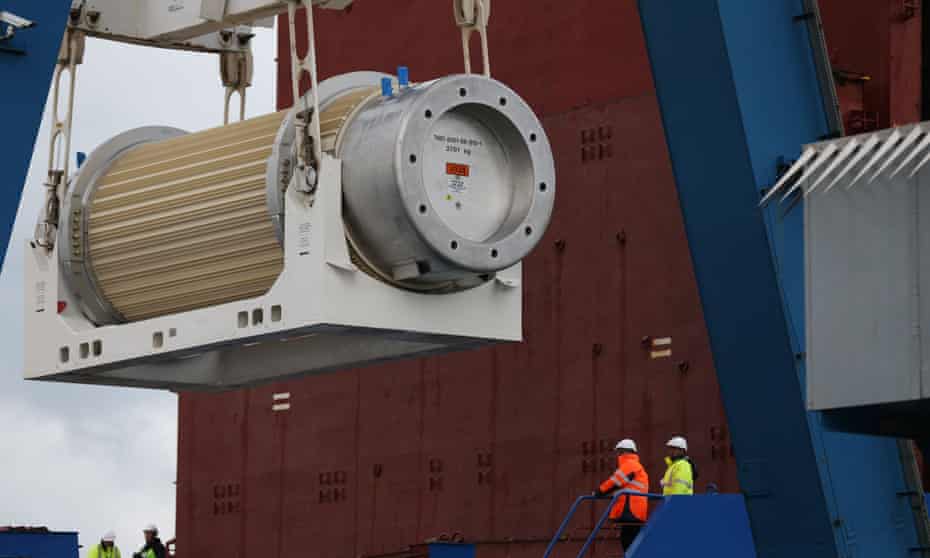
A monolithic steel cask designed to withstand an earthquake and a jet strike will arrive in Sydney next year, carrying two tonnes of radioactive waste.
For security reasons authorities won’t say when the hulking capsule – containing four 500kg canisters of ‘intermediate-level material’ – will arrive from the UK.
But it will hardly be an inconspicuous affair: the cask itself weighs 100 tonnes and resembles something from NASA’s space program.
Its forged steel walls are 20cm thick, it’s 6.5m long and three metres wide.
Back in 2015, when the first cask of its type arrived, it was carrying 20 tonnes of Australian nuclear waste that had been reprocessed in France.
About 600 police and security officers were involved in the mission to truck it from Port Kembla, near Wollongong, to Lucas Heights, the southern Sydney suburb that serves as the country’s nuclear technology hub.
It is safe to assume that next year’s arrival will involve an equally elaborate, high-security operation.
The Australian Nuclear Science and Technology Organisation operates the Lucas Heights compound.
It was home to the High Flux Australian Reactor (HIFAR), which supported nuclear medicine and science before it was closed in 2007 and superseded by the Open Pool Australian Lightwater reactor, also at Lucas Heights.
The waste that’s due to arrive in 2022 is from HIFAR’s operations and ANSTO says the material is being “repatriated” under the international principle that countries must be responsible for their nuclear leftovers.
However what’s coming won’t actually be what is left of the 114 spent fuel rods HIFAR sent to the UK for reprocessing in 1996.
The Australian Nuclear Science and Technology Organisation operates the Lucas Heights compound.
It was home to the High Flux Australian Reactor (HIFAR), which supported nuclear medicine and science before it was closed in 2007 and superseded by the Open Pool Australian Lightwater reactor, also at Lucas Heights.
The waste that’s due to arrive in 2022 is from HIFAR’s operations and ANSTO says the material is being “repatriated” under the international principle that countries must be responsible for their nuclear leftovers.
However what’s coming won’t actually be what is left of the 114 spent fuel rods HIFAR sent to the UK for reprocessing in 1996.
“Specifically it’s not the material we sent, it’s an equivalent, almost swapping the material that came from reprocessing our waste, for equivalent material that was produced at another UK site.”
Mr Griffiths says the UK had to demonstrate that what will be sent to Australia is “within the measurement boundaries” of the accepted definition of intermediate level waste, which can remain radioactive for thousands of years.
ANSTO also had to satisfy the national regulator on that point.
While saving money wasn’t the objective, Mr Griffiths says the waste exchange agreement means taxpayer-funded ANSTO will save $12 to $13 million in shipping costs.
ANSTO’s Pamela Naidoo-Ameglio has promised the cask’s arrival will be a “routine and safe operation”
“This will be the second repatriation project and 12th successful transport of spent fuel or reprocessed waste which ANSTO has carried out since 1963,” she said in a statement on Monday.
“For all of the obvious and standard security reasons, we can’t comment on the specific route or timing of this transport.”
The new cask will sit alongside the original one at Lucas Heights until Australia’s new national nuclear waste storage facility is constructed at Napandee, near Kimba, on South Australia’s Eyre Peninsula.
The facility is up to the design phase and is being contested by Indigenous owners, so the casks are likely to remain at Lucas Heights for a number of years.
Once Napandee is operational, the casks will be moved there and stored, pending a final solution that will involve deep burial.
Australia’s radioactive waste results from nuclear medicine, research endeavours and industrial applications. Australia does not produce nuclear power.
Expansion of nuclear engineering at University of New South Wales
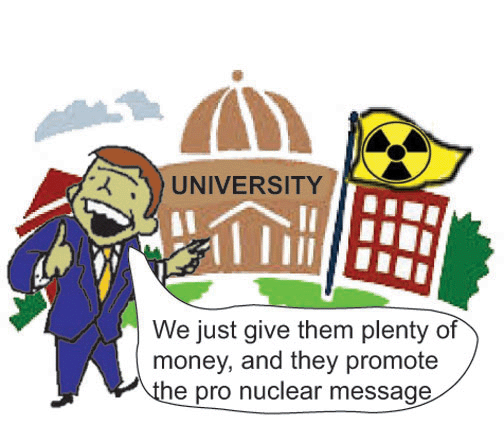
Australia’s only nuclear engineering program expands, Manufacturers Monthly, September 27, 2021 The Sir William Tyree Foundation has donated $1 million to the University of New South Wales (UNSW) to support expanding nuclear engineering program and foster the skills in Australia for using future technology.
The program prepares students for careers in high-tech industries including nuclear science, nuclear medicine, mining and resources, energy, manufacturing, aerospace, space exploration and defence……….
This gift builds on the foundations laid down to develop a high-tech nuclear industry in Australia, which will be essential if we choose to adopt nuclear energy …….. Sir William Tyree’s daughter and chair of the foundation board, Robyn Fennell said.
“To make this a reality, nuclear engineering programs like UNSW’s are critical in ensuring Australia has the home-grown skills to support that choice. My father believed strongly in the benefits of nuclear energy as a safe, clean Ed. [there’s that word again – it’s a lie] power source for Australia and our gift continues to support that vision.” ……..
Sutherland Shire doesn’t want any more nuclear waste stored at Lucas Heights in their Shire
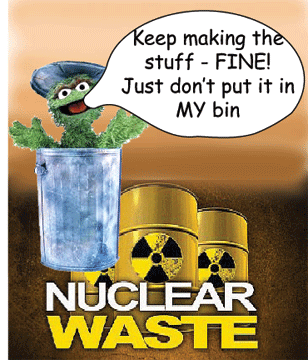
Council calls on Hughes MP to take stand against ANSTO nuclear waste expansion plan St George and Sutherland Shire Leader
Sutherland Shire Council is calling “in the strongest terms” for Hughes MP Craig Kelly to take a stand against a proposed new nuclear waste facility at ANSTO, Lucas Heights.
Mayor Steve Simpson told this week’s council meeting, “I would like to see less of his medical skills [COVID comments] and much more of an assertion that the [nuclear] waste should not be kept in his electorate”.
Mr Kelly hit back, accusing councillors of “scaremongering”.
The council unanimously resolved that, while continuing to support research and innovation at ANSTO and its benefits for treatments for cancer and in nuclear medicine, a submission be made to the independent regulator ARPANSA opposing the construction of an Intermediate Level Waste Capacity Increase (ILWCI) facility at the Lucas Heights campus.
A letter will also be written to the federal Minister for Resources and Water Keith Pitt, requesting the matter of the establishment of a National Radioactive Waste Management Facility be given urgent priority.
The final part of the motion stated: “Council puts in the strongest term Cr Michael Forshaw, a former senator, said previous MPs for Hughes, Robert Tickner and Danna Vale, “were strong on this issue in pushing the need for a permanent repository, or store, for our nuclear waste”…………. https://www.theleader.com.au/story/7435883/updated-council-challenges-craig-kelly-over-nuclear-waste/?fbclid=IwAR1dY5en839aPPJMae32D-5ivaPFQR7CWpn0sLX2lih3slzz4
Wollemi Mine? Experts label Barilaro’s plan for new coal “corrupt”, unviable
 |
|
Wollemi Mine? Experts label Barilaro’s plan for new coal “corrupt”, unviable Michael West Media, By Callum Foote|September 3, 2021
The NSW government is pushing through new coal exploration areas in the state’s mid-west, which have been labelled unviable and “corrupt” by independent experts even as the G7 call a halt on all new coal mining reports Callum Foote.
It’s better known for its rare Wollemi Pine but in the grotesque tradition of aggressive fossil fuel development, even as the world pulls out of coal mining, it may now be known for its Wollemi Mine.
Rylstone, a small town in the Central Tablelands of NSW, 25 km from Mudgee, is under threat from a suite of proposed coal exploration areas that the NSW government has been trying to auction off since mid-last year.
Despite the NSW government’s attempts to cultivate a green brand, John Barilaro’s 2020 Strategic Statement on Coal Exploration and Mining in NSW has opened up productive farmland, adjacent to the world-heritage listed Wollemi national park to brand new coal exploration.
Together, the proposed new coal release areas will encompass over 10 thousand hectares of land in Hawkins and Rumker areas surrounding Rylstone. This comes after the federal and Northern Territory governments together opened a landmass totalling 110,000km sq to gas exploration in 2021 alone.
Expert analysis
The NSW Government’s support of new coal infrastructure makes little sense to Rod Campbell, Research Director at The Australia Institute, “as an economist, it seems inconceivable that a new thermal mine in Rylstone, that couldn’t begin operations till 2030 could be economically viable.” According to Campbell, the proposed exploration areas “only makes sense that it is either a political deal or corruption.”
The NSW Government might have a difficult time finding buyers for their coal exploration licences as coal miners rush to disinvest from the industry. BPH, the worlds largest miner, is currently trying to pay anyone US$275 million to take Mt Authur, the biggest thermal coal mine in Australia, off their hands. In a report to investors this year, BHP wrote down a further $2.2 billion on their thermal coal assets as they attempt to transition to “future-facing” commodities.
Campbell believes that “it seems incredibly unlikely any serious mining company would be interested in developing a mine in the region.” Any proposed development would not be operational till “at least the second half of this decade and would face intense opposition and be very hard to finance,” said Campbell. ……………. https://www.michaelwest.com.au/wollemi-mine-experts-label-barilaros-plan-for-new-coal-corrupt-and-unviable/
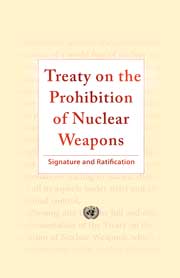
On Hiroshima Day, the City of Newcastle reaffirms its commitment as a Nuclear Free Zone, supporting United Nations Treaty on the Prohibition of Nuclear Weapons
Hiroshima Day flag-raising reaffirms City’s commitment to Nuclear Free Zone, Mirage News, 8 Aug 21, City of Newcastle reaffirmed its long-held commitment to declaring the city a Nuclear Free Zone, raising the Hunter Peace Group and International Campaign to Abolish Nuclear Weapons (ICAN) flags in Civic Park in recognition of Hiroshima Day.
Observed each year on 6 August, 2021 marks the 76th anniversary of the devastating bombing of Hiroshima and Nagasaki by US forces.
In support of ongoing efforts to raise awareness about the campaign toabolish nuclear weapons, the flags were flown alongside the Australian and Aboriginal flags to mark the historic anniversary.
It followed a Lord Mayoral Minute supported by City of Newcastle councillors in June, acknowledging the City’s long-standing history with local, national and international peace movements, dating back to 29 June 1982 when the City first declared Newcastle a Nuclear Free Zone under Lord Mayor Joy Cummings AM, and resolving to establish with Hunter Peace Group a dedicated Newcastle Peace Park at Tighes Hill Reserve, adjacent to Islington Park.
Peace parks exist in many cities across the country, including Adelaide, Hobart and Canberra, and more locally at Cessnock and Tanilba Bay.
Lord Mayor Nuatali Nelmes said the City of Newcastle was proud to support these efforts as a progressive city.
“The City of Newcastle has a long and proud history of activism against nuclear weapons, particularly as a city with a large working port,” Cr Nelmes said.
“Former Newcastle Lord Mayor Joy Cummings was a passionate advocate for the peace movement, inspiring strong community support and joining with Hunter Peace Group, trade unionists and activists to hold demonstrations on the importance of nuclear disarmament and protecting Newcastle as a Nuclear Free City and port.
I am honoured to uphold that mission today on behalf of the City, in which there is no place for nuclear weapons in modern society.”
Hunter Peace Group Secretary Lynda Forbes said the group was pleased to continue this important work with the City of Newcastle.
While ever there is nuclear testing being conducted across the globe, Hunter Peace Group believes it is important to continue to commemorate the anniversaries of the bombing of Hiroshima and Nagasaki, to draw public attention to the threat that nuclear weapons pose to communities throughout the world,” Ms Forbes said.
“Despite City of Newcastle supporting the United Nations’ Treaty on the Prohibition of Nuclear Weapons in 2019, and advocating to the Federal Government in 2020, Australia is yet to sign and ratify the treaty, which came into force in January this year.
………..https://www.miragenews.com/hiroshima-day-flag-raising-reaffirms-citys-609135/
NSW Productivity Commission Has “Lost The Plot” On Nuclear Power,
NSW Productivity Commission Has “Lost The Plot” On Nuclear Power, Solar Quotes, June 3, 2021 by Michael Bloch The Electrical Trades Union has weighed in on the New South Wales Productivity Commission’s recommendation to lift the ban on nuclear electricity generation for small modular reactors.
The recommendation was one of many contained in the Commission’s 371-page “Rebooting the economy” whitepaper released last week.
……….. Small modular reactors operating as terrestrial power stations are vaporware at this point; they do not exist. The Commission notes a U.S. company expects to have its first small modular reactor operating by 2026. “Expecting” gives wiggle room for that to not happen and it’s not unreasonable to assume it won’t given the challenges the SMR technology faces, including the renewables juggernaut.
ETU: Nuclear Power “Not The Answer”
With renewables and storage rapidly evolving and their cost continuing to plummet, it sounds a bit nutty to be even considering SMRs – and the Electrical Trades Union agrees.
“The Productivity Commission has lost the plot if it thinks small modular reactors, a technology that has been ‘just around the corner’ since the 1970’s but still doesn’t exist, is the answer to NSW’s productivity growth,” said ETU National and NSW Secretary, Allen Hicks. “Even if someone finally manages to build one that works, the electricity price forecast for their output is six times more expensive than renewables.”
The Commission notes low-cost renewables pose an additional risk to the economics of large reactors, but doesn’t seem to tweak to the fact they pose the same threat to SMRs…..
Mr. Hicks’ advice:
“Boosting the economy, providing more jobs, and dealing with climate change are big problems, but nuclear power is not the answer.”
But something that wins the trifecta are renewables such as wind and solar power along with supporting technologies.
The 70,000-member strong Electrical Trades Union says it has a long history of opposing uranium mining and the nuclear power industry, and has had a ban on members working in both sectors since 1945. You can learn more about the ETU’s stance on its “No Future For Nuclear” website. Mr. Hicks’ advice:
“Boosting the economy, providing more jobs, and dealing with climate change are big problems, but nuclear power is not the answer.”
But something that wins the trifecta are renewables such as wind and solar power along with supporting technologies. https://www.solarquotes.com.au/blog/productivity-commission-nuclear-mb2021/
New South Wales Productivity Commission slammed for recommending nuclear power while ignoring offshore wind,

NSW Productivity Commission slammed for recommending nuclear power while ignoring offshore wind, https://www.miragenews.com/nsw-productivity-commission-slammed-for-571554/
Maritime Union of Australia
The NSW Productivity Commission is under fire for recommending the NSW Government lift the state’s ban on nuclear power while ignoring proven, lower-cost renewable energy sources such as offshore wind.
Among 60 recommendations aimed at driving productivity and economic growth, the NSW Productivity Commission White Paper released this week proposed the ban on nuclear generation be lifted for small modular reactors.The same report made no mention of offshore wind generation, despite the proven technology producing a growing share of electricity around the world and several major proposals awaiting approval off the NSW coast.
This is despite the CSIRO’s most recent report on electricity generation costs showing that SMR nuclear reactors cost approximately $16,000 per kilowatt, nearly three times offshore wind. Recent UK analysis has found the cost of developing offshore wind is even lower.
The Maritime Union of Australia said it was staggering that the NSW Productivity Commission would recommend resources be thrown into small modular nuclear reactors — a technology that doesn’t yet exist — instead of cheaper, cleaner, proven technologies like offshore wind.“It is unbelievable that the NSW Productivity Commission would propose a major regulatory overhaul for a theoretical technology that doesn’t operate anywhere on earth, yet not even mention one of the fastest growing forms of energy generation,” MUA Deputy National Secretary Warren Smith said.
Rather than waste years debating a theoretical technology, which will come with huge costs and substantial safety concerns, the NSW Government should be getting on with supporting the development of reliable, cheap, and plentiful offshore wind resources.“The NSW Productivity Commission’s focus on an industry that doesn’t even exist, while ignoring a proven technology that can deliver power and jobs for NSW right now, shows an ideological pro-nuclear agenda has been put ahead of the state’s economic interests.“Small nuclear reactors have been promised for half a century, but as yet not one exists. Most countries with nuclear power are moving away from the technology, with new reactors running hugely over budget, requiring massive taxpayer subsidies, and locking in higher power prices for consumers.“In contrast, offshore wind technology continues to mature, delivering massive growth at ever-lower prices.
“Australia has the advantage of long coastlines close to population centres, along with highly skilled seafarers and offshore oil and gas workers who could be utilised to construct local wind projects.“The development of an offshore wind industry would also provide an opportunity to transition highly-skilled workers from fossil fuel industries into a clean, green alternative.“With the urgent need to reduce carbon emissions to address global heating, it’s absurd that the NSW Productivity Commission would suggest sitting on our hands for a decade in the hope a theoretical technology will magically fix the problem when we already have solutions available.“NSW has an opportunity to become a major exporter of clean, renewable energy, securing our economy for the future, but only if the Berejiklian Government takes immediate steps to support proven technologies.”
New South Wales Deputy Premier in the grip of the nuclear lobby

NSW Deputy Premier says nuclear power is the future as ban remains Radio 2 GB, 04/06/2021, BEN FORDHAM NSW Deputy Premier John Barilaro says nuclear power is the way forward.However, it is currently illegal in Australia along with the mining of uranium in states like NSW.Mr Barilaro told Ben Fordham he’s looking at reintroducing a bill to lift the ban on mining uranium.“If you really want clean, green energy … to run an average home for 75 years it takes 150 tonnes of coal, to do it with uranium you’re talking about 2kg.“We would be ripe as a nation if we lift the ban today to absolutely embrace it.” https://www.2gb.com/nsw-deputy-premier-says-nuclear-power-is-the-future-as-ban-remains/
Small nuclear reactors for New South Wales ? – dirty, dangerous, and uneconomic
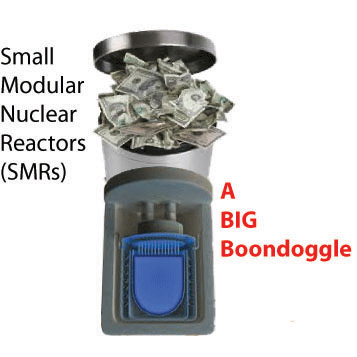
Expensive and dangerous: Nuclear doesn’t stack up https://www.miragenews.com/expensive-and-dangerous-nuclear-doesnt-stack-up-570069/m Electrical Trades Union
Lifting the ban on nuclear power generation in NSW using unproven small-scale reactors will only push up power bills, damage the environment and compromise safety, according to the Electrical Trades Union.
ETU National and NSW Secretary, Allen Hicks, said nuclear power would be hugely expensive compared to renewable energy, and that small nuclear reactors were still a pipe dream.
The recommendation around small scale reactors is one of 60 contained in the NSW Productivity Commission’s White Paper, which is supposedly designed to reboot the state’s economy.
“The Productivity Commission has lost the plot if it thinks small modular reactors, a technology that has been ‘just around the corner’ since the 1970’s but still doesn’t exist, is the answer to NSW’s productivity growth,” Allen Hicks said.
“Even if someone finally manages to build one that works, the electricity price forecast for their output is six times more expensive than renewables.
“Why does the Productivity Commission want NSW residents paying six times more for their electricity?”
“There are massive offshore wind projects waiting for federal approval off the NSW coast near Newcastle, Wollongong and Eden. Rather than pie-in-the sky nuclear nonsense we should get on with approving this clean energy and getting it into out grid.
The commission says lifting the ban would provide another source of firming capacity in the grid. But its own report admits “a wide degree of uncertainty” about small-scale nuclear reactors, mainly due to cost.
NSW Treasurer Dominic Perrottet said the government “will consider everything” in the report.
But Mr Hicks said the State Government must hit the stop button on nuclear power, as the business model for a dirty and dangerous technology did not stack up.
“Even if they improve the technology, a small modular reactor would take far too long to build, and we don’t have time to waste in the fight against climate change,” Mr Hicks said.
“Globally, most countries are moving away from nuclear power. Few new reactors are being built and nuclear companies are going bankrupt or facing financial distress.
Mr Hicks said the government should instead continue to focus on renewable energy.
“With a bit of foresight, some investment and some big thinkers, Australia is uniquely positioned in the world to become a renewable energy leader.
“Boosting the economy, providing more jobs, and dealing with climate change are big problems, but nuclear power is not the answer.”
Hunters Hill low level radioactive trash to be sent to USA
Are you turning green?‘: Neighbours’ relief as radioactive land to be shipped overseas, rioritised. https://www.smh.com.au/national/nsw/are-you-turning-green-neighbours-relief-as-radioactive-land-to-be-shipped-overseas-20210429-p57nk3.html. , 30 Apr 21,
April 30, 2021 — Up to 1800 tonnes of contaminated land affecting six waterfront properties in one of Sydney’s wealthiest suburbs will be sealed up and shipped to the US in a NSW government resolution that ends decades of anxiety over the harbourside blight.
After more than 100 years, pollution from a carbolic acid plant and a uranium refinery that led to the government’s acquisition of three Hunters Hill homes since the 1980s, and later prompted a parliamentary inquiry over health concerns, will be exported to Idaho over a meticulous, 18-month operation starting from July.
Following media reports that deaths and illnesses of former residents could possibly be attributed to contamination, a NSW parliamentary inquiry was set up in 2008 to determine the extent of radioactivity on the site, concluding it was difficult to establish any link between any reported cancer cases and the low doses of radiation.
However, it found there was a need to remediate the site, which included the government-owned foreshore.
In 2012, Property NSW attempted to have the material sent to a landfill in Kemps Creek, in western Sydney, but the proposal was abandoned after fierce backlash from the community.
A May 2019 proposal to encapsulate the contaminated material onsite in purpose-built cement “containment cells” was also rejected by residents as well as the local council………
Mr Stokes said the latest proposal had overwhelming support from the community and that he was pleased the stakeholders had finally reached an agreement.
“This safe and secure plan will mean these waterfront properties, which have laid dormant for decades, can now be used once the waste is safely moved away,” Mr Stokes said.
Member for Lane Cove and government minister Anthony Roberts, whose electorate serves the area, said the decision would be welcomed by residents after the waste “caused a lot of stress over the decades”.
Two of the three lots owned by the government are empty, while one contains an unused four-storey home with an indoor swimming pool that will have to be demolished. It is likely all lots will be sold on the private market once they are decontaminated.
According to a recent NSW government report on the remediation project, the fresh plan involves excavating the contaminated soil, sealing it in bags, loading them into shipping containers and transporting them to a secure facility in Matraville before shipping them overseas in scheduled consignments.
Property and Housing Minister Melinda Pavey said ANSTO would oversee the excavation and transport of the material and the safety of residents would be prioritised.
New South Wales Energy Minister ”excited about the opportunities” for nuclear power
Energy minister backs nuclear option , Daily Telegraph, 14 Mar 21,
NSW’s energy minister has said the state is “excited about the opportunities” being afforded by nuclear power as he denied climate policies were leading to the closure of coal-powered plants…… (subscribers only)
Central Coast Council will maintain the Nuclear Free Policy
 Council’s Nuclear Free Policy lives on, Coast Community News, FEBRUARY 12, 2021 Council’s Nuclear Free Policy lives on, Coast Community News, FEBRUARY 12, 2021
Central Coast Council will maintain the Nuclear Free Policy put into place by the former Gosford Council. Coast Community News, Administrator Dick Persson rejected a Central Coast Council staff report which wanted to revoke the policy, amid applause from the public gallery, at the Council meeting on February 8. Only about a dozen members of the public attended the meeting but at least two of them carried home-made anti-nuclear signs. Another two people spoke at the public forum in favour of keeping the policy in place. The Greens member and former Wyong councillor Sue Wynn spoke as did Australian Conservation Foundation Central Coast president Mark Ellis. To the surprise of the gallery, when the speakers concluded, Persson said he agreed with everything they had said and the gallery burst into applause. Persson suggested someone had been working through a list of policies that needed removing and that at the last meeting he had dealt with some. This week the only policy on the list was the anti-nuclear policy and it stood out “like the proverbial”, he said…….. https://coastcommunitynews.com.au/central-coast/news/2021/02/councils-nuclear-free-policy-lives-on/ |
|
Retain Gosford’s nuclear free zone status.
 Keep the Coast nuclear free, https://coastcommunitynews.com.au/central-coast/news/2021/02/keep-the-coast-nuclear-free/ Donna Carey, Narara Ecovillage, Narara Keep the Coast nuclear free, https://coastcommunitynews.com.au/central-coast/news/2021/02/keep-the-coast-nuclear-free/ Donna Carey, Narara Ecovillage, NararaFEBRUARY 12, 2021 I am passionately in favour of retaining Gosford’s nuclear free zone status. No one who I have engaged with, in person or on social media, is in favour of this being rescinded. Opening up Central Coast Council like this would allow the use, storage of or transportation through the LGA of nuclear weapons, waste or material for the first time since 1984. I am strongly opposed to this action being facilitated. It also paves the way for small-scale nuclear facilities on the Central Coast. In addition, it is on the public record that Taylor Martin MLC is in favour of small-scale nuclear reactors to generate electricity. The rationale for this proposal is that “the handling and mining of radioactive materials is now highly regulated at a State and Federal level” and “any public concern regarding nuclear-related activities is best dealt at the State and Federal level”. However, this is not completely correct, and legislation is slowly changing. In 2019, a NSW Upper House inquiry into the Uranium Mining and Nuclear Facilities (Prohibitions) Repeal Bill 2019 recommended repealing the original bill in its entirety. Uranium exploration is also already permitted under current legislation; its mining just currently is not. There is no certainty that “there are no known uranium deposits on the Central Coast” (Item 4.1, Attachment 3, Council agenda, Feb 8). As you are aware, the former Wyong Shire Council had a similar nuclear free zone policy, which was revoked in April, 2014, and “policies from the former Gosford City and Wyong Shire Councils still apply in their respective former Local Government Areas, until a new policy is adopted for the Central Coast Council region” (https://www.centralcoast.nsw.gov.au/council/forms-and-publications/policies). My first preference would be for the nuclear free zone to be extended back into the previous Wyong LGA. If our Council’s “financial crisis” is your main order of business in your role as Administrator, Mr Dick Persson, I urge you to focus on this being the main issue at hand. I also thought that you said that it was not your role to go back over previous decisions. Please resist allowing your professional integrity to be compromised by the Council’s Environment and Planning department, which will pave the way for future nuclear power generation, uranium mining, and/or the storage of nuclear waste on the beautiful Central Coast. |
|
|
Disarray in New South Wales Right-wing parties, over One Nation’s Bill to overturn ban on uranium mining
 Environmental groups have been critical of the government’s consideration of Mr Latham’s bill, with the Nature Conservation Council warning uranium mining would threaten water supply.
Berejiklian government to pursue its own uranium push, By Alexandra Smith, August 24, 2020
The Berejiklian government will pursue its own push to allow uranium mining in NSW, after cabinet ministers backed away from supporting One Nation’s nuclear power bill in the upper house.
The bill, introduced by Mark Latham, would lift the 33-year ban on uranium mining and nuclear power, but on Monday night cabinet agreed that it would consider its own bill.
In March, Deputy Premier John Barilaro stunned colleagues when he said his party would support Mr Latham’s bill, despite not taking the issue to the Nationals’ party room.
Mr Barilaro, a long-time supporter of nuclear power, said the government should “lift the ban on nuclear energy” and confirmed his party would support it.
But the move angered several senior ministers, with one saying: “I did not get into Parliament to support a One Nation bill”, while another said: “Crossbenchers don’t set the government’s agenda”.
A shift in policy around uranium mining in NSW has still not been considered by the Coalition joint party rooms, which will not meet this week because only the upper house is sitting.
Mr Barilaro has now been tasked with commissioning more research around uranium mining and will report back to cabinet before any policy decisions are made.
A senior minister said Transport Minister Andrew Constance told cabinet that he could not support the One Nation bill because it could significantly impact electorates, including Bega.
Another minister told cabinet that there needed to be strategic and economic merit and community consultation around uranium mining.
Asked about the bill before it was presented to cabinet on Monday, NSW Energy Minister Matt Kean said uranium was not a viable resource.
“Right now the uranium price is about $30 per pound, that is well below the price needed to extract this from the ground. I think this is more about headlines than actually going to see anything result from digging it out of the ground,” Mr Kean said.
A senior minister, who spoke on the condition of anonymity because the issue was before cabinet, said “uranium mining will never happen so it’s just about letting Barra [Barilaro] have a win.”
“Sometimes the fights with Barra are just not worth it,” the minister said.
Mr Latham could bring the bill on for a vote this week, after the Legislative Council was recalled for another week of sitting days. The bill has been sitting on the business paper for more than a year.
The upper house is also expected to focus this week on troubled public insurer icare.
Environmental groups have been critical of the government’s consideration of Mr Latham’s bill, with the Nature Conservation Council warning uranium mining would threaten water supply.
The council’s chief executive Chris Gambian said the “sweetheart deal with One Nation yet again places multinationals ahead of the people of regional and rural NSW”.
A parliamentary inquiry report recommended the government support the nuclear power bill.
Uranium ban brought benefit to New South Wales
 Uranium ban brought us benefit, Newcastle Herald, Dave Sweeney, Australian Conservation Foundation 23 Aug 20,
THE state government’s proposed removal of a long-standing and popular ban on uranium mining in New South Wales flies in the face of evidence, community interest and market reality. The global uranium price remains depressed following the Fukushima nuclear disaster and is not likely to recover. The uranium market is over supplied and existing producers are shelving projects across Australia and around the world.
In November 2019 the CEO of the world’s largest uranium miner, Canadian company Cameco, stated that “not only does it not make sense to invest in future primary supply, even the lowest-cost producers are deciding to preserve long-term value by leaving uranium in the ground.”
The ban has served NSW well. It has provided policy certainty and avoided the radioactive waste and legacy mine issues affecting other places, including Kakadu, where a massive $1 billion clean-up is underway at the former Ranger mine. This poorly conceived piece of gesture politics could lead to lower tier and inexperienced mining companies cutting corners and increasing environmental and community risk and it simply makes no sense for NSW to jump aboard a sinking nuclear ship. NSW’s energy future is renewable, not radioactive.
1 This month
7 April – WEBINAR – Australia and the Doomsday Clock – Preventing nuclear war through NoFirstUse and other policies
Online | Tuesday April 7, 4:00-5:30pm, Australian Eastern Time / 8:00-9:30am Central Europe Time
– Access the registration link
15 April – Zoom –Nuclear Power is Not the Solution
Apr 15, 2026 01:00 AM in Canberra, Melbourne, Sydney

Join the International Physicians for the Prevention of Nuclear War (IPPNW) on Tuesday, April 14th for a timely webinar exploring the risks associated with nuclear power and challenging the myth that it offers a simple, safe, carbon-free solution to the climate crisis

of the week – Australians for War Powers Reform (AWPR)
To see nuclear-related stories in greater depth and intensity
 Antinuclear