Liberal-National Coalition in nuclear disarray
|
Mr Barilaro’s position is also causing division in his National Party, with some of the party’s coastal MPs concerned that his position would put their seats at risk. The Nationals’ leader last week declared his party would support Mr Latham’s bill when it comes back before the upper house for a vote this month. The bill would allow the bans on uranium mining and nuclear power to be lifted but it has not yet been considered by the Liberal or National party rooms or cabinet. It follows a parliamentary inquiry report, which said the government should support the bill. But the issue has caused such anger within Liberal ranks that one senior minister told the Herald they would quit cabinet before supporting Mr Latham’s bill. A senior Liberal minister said: “I did not get into Parliament to support a One Nation bill”, while another minister said: “Crossbenchers don’t set the government’s agenda”. “It’s amazing that John Barilaro listens to the views of One Nation over his colleagues,” a fourth senior minister said. Last week, Local Government Minister and Liberal MP Shelley Hancock told Parliament she would not support a nuclear reactor in her electorate. But Mr Barilaro shot back and said the Liberals repeatedly say they “support technology agnostic energy policy” but then refuse to have a discussion about the role of nuclear. “Forget about this being a crossbench bill, I would take this to my party room and then put up my own bill if I need to,” Mr Barilaro said. |
|
|

New South Wales South Coast to become a nuclear wasteland? That’s the plan of the National Party
Nationals to support nuclear power;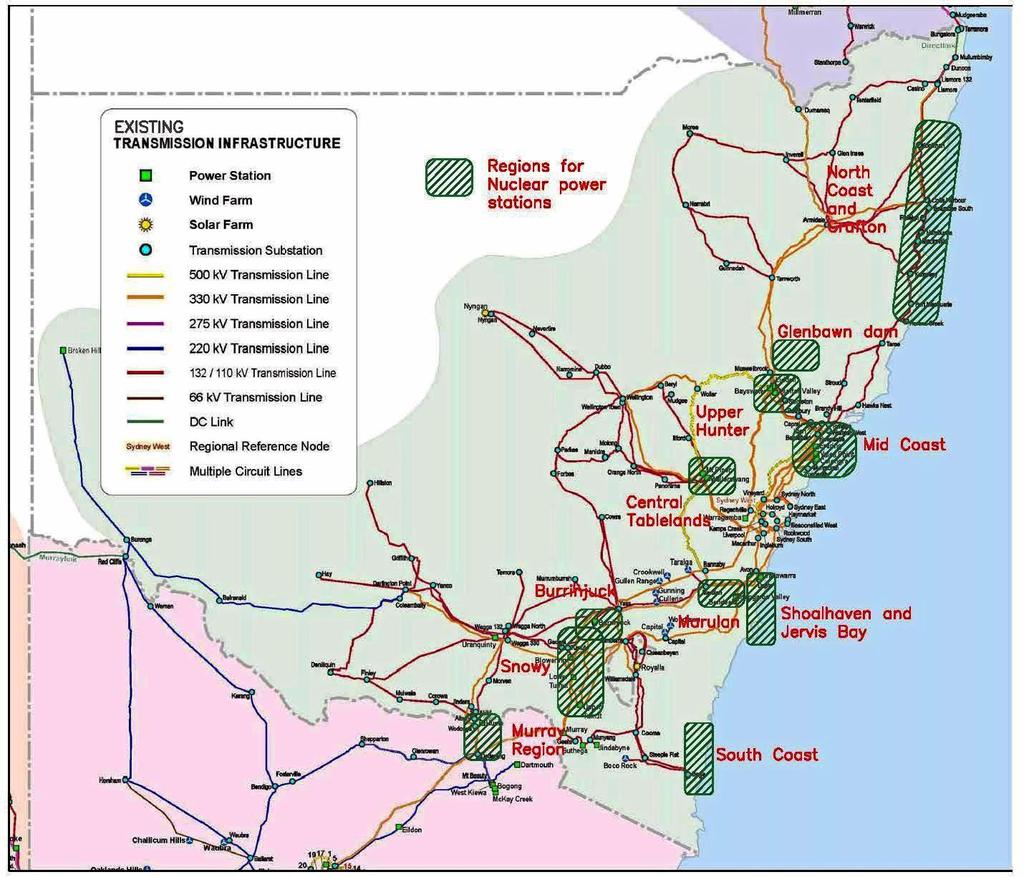 Far South Coast flagged as possible location https://www.begadistrictnews.com.au/story/6665667/nationals-to-support-nuclear-power-far-south-coast-flagged-as-possible-location/, Albert McKnight 6 Mar 20,
The Nationals will support a bill to allow nuclear power in NSW, while separately the Far South Coast has been flagged as a possible location for a nuclear power plant.
When speaking to Sky News earlier this week, Deputy Premier John Barilaro confirmed The Nationals would support a bill proposed by One Nation on the matter, and said the state would not achieve its 2050 net zero emissions target without nuclear energy.
Mr Barilaro has been vocal about the nuclear power issue for years, last year saying it was “guaranteed baseload energy with zero emissions, no fossil fuels and probably the cheapest cost to the average Australian household”.
In a study by Nuclear for Climate Australia published on its website, the area between Bermagui and Merimbula is among 18 proposed areas of interest in NSW for a nuclear power station.
Under its proposal it states the South Coast has potential if included with other power plants that could be built at East Gippsland, the Snowy Mountains or Jervis Bay.
While it states the coast has many sites with “good access to once-through sea water cooling” – running a large amount of water through a power plant’s condensers then discharging it into a waterway with only a small amount of evaporation – an extensive grid upgrade would be required for a 2.2GW plant.
Shadow Minister for Climate Change and Energy Adam Searle confirmed a McKay Labor Government would maintain a ban on uranium exploration, extraction and export.
“Nuclear is the most expensive form of power and its waste is a disaster for the environment,” he said.
“Regional and coastal communities now face the grim prospect of becoming a nuclear power plant wasteland, as a result of Mr Barilaro leading this government by the nose.”
Shadow Minister for the Illawarra and South Coast Ryan Park said coastal communities would never embrace nuclear energy.
“This has clearly divided the Liberal-National Government,” he said.
“[Member for South Coast] Shelley Hancock has already said she would not support nuclear plants on the South Coast.”
He said Member for Bega Andrew Constance should do the same. Mr Constance has been approached for comment.
One Nation’s Mark Latham introduced the bill to lift the ban on nuclear power and uranium mining in NSW, saying it would “create jobs, investment” and “undertake the long-term planning needed to keep the lights on”.
Does NSW need nuclear power? Write a letter to the editor
Nature Conservation Council says the Nationals’ support for nuclear power is a “dangerous and expensive distraction”
|
Environment groups say nuclear push a “dangerous distraction” to clean energy debate, Macquarie Port News, 6 Mar 20, THE Nature Conservation Council says the Nationals’ support for nuclear power is a “dangerous and expensive distraction” from the coal to clean energy debate and is not the sustainable, long-term priority for the environment. Deputy premier John Barilaro has confirmed The Nationals will support a One Nation bill to allow nuclear power in NSW, reigniting debate on the controversial topic. NSW One Nation leader Mark Latham’s Uranium Mining And Nuclear Facilities (Prohibitions) Repeal Bill is currently before the upper house and, if successful, would see the 36-year prohibition on uranium mining and nuclear lifted.
NSW Labor hit back immediately confirming it would not introduce nuclear power in NSW, if elected. Port Macquarie, Kempsey, Grafton and Coffs Harbour have all been flagged as regions of
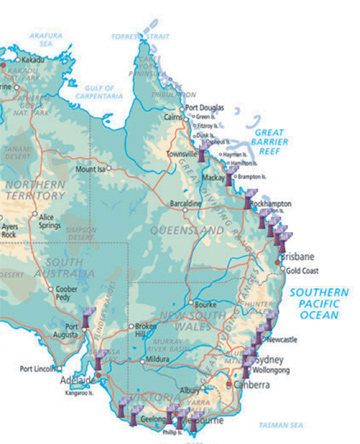 interest for nuclear power plants. interest for nuclear power plants.Other regions include the Upper Hunter (Singleton, Muswellbrook), Shoalhaven (Jervis Bay, Nowra), Central West (Lithgow), Snowy Mountains, and Albury/Wodonga. “Local MPs Leslie Williams and Stephen Bromhead need to tell us whether they support their leader’s plans to make it legal to build a nuclear power plant on the Mid-North Coast,” Nature Conservation Council chief executive Chris Gambian said. “Nuclear power is extremely dangerous and leaves a legacy of radiation pollution that lasts generations. “It is a dangerous and expensive distraction from urgent work we need to do to transition from coal to clean energy and storage. “People on the Mid-North Coast don’t want nuclear power and they don’t need it. “Clean energy is by far the cheapest, cleanest and most sustainable way to meet our energy needs and it offers regional areas a very bright future. “The transition from dirty coal and gas to clean solar, wind and storage will attract $25 billion of investment, result in the construction of about 2,500 wind turbines and installation of more 42 million solar panels across the state.”….. Newcastle MP Tim Crakanthorp slammed the Nationals’ move and condemned the Nationals’ “reckless support” for nuclear power in NSW at its 2019 conference. https://www.portnews.com.au/story/6665518/environment-groups-say-nuclear-push-a-dangerous-distraction/ |
|
Nuclear free has served NSW well and should remain- Australian Conservation Foundation
 Nuclear free has served NSW well and should remain, https://www.miragenews.com/nuclear-free-has-served-nsw-well-and-should-remain/ Nuclear power has no role in Australia’s energy future and is a dangerous distraction from the climate challenges facing Australia.
A pro-nuclear NSW upper house inquiry initiated by One Nation MLC Mark Latham has recommended removing the state’s long-standing legislative ban on uranium mining and opening the door to nuclear power, but Labor committee members have reaffirmed their party’s opposition to uranium mining and nuclear energy.
The inquiry report recommends the repeal of the Uranium Mining and Nuclear Facilities (Prohibitions) Act, but a dissenting statement by Labor committee members says a ‘Labor Government will maintain a ban on uranium exploration, extraction and export’ and a ‘Labor Government will not introduce nuclear power in NSW’.
The Australian Conservation Foundation said Australia was blessed with outstanding renewable resources and did not need to explore dangerous nuclear energy options. “The state ban on uranium mining has served NSW well and should remain,” said ACF nuclear campaigner Dave Sweeney.
New South Wales upper house Inquiry, stacked with pro nuclear people, recommends lifting nuclear bans
 NSW upper house recommends lifting bans on nuclear energy
Michael Mazengar, 4 March 2020, A NSW upper house parliamentary committee has recommended that prohibitions on the exploration and use of nuclear energy in NSW be lifted, a move that environmental groups fear will be the first step towards the establishment of an Australian nuclear power industry.
The upper house inquiry, which was stacked with pro-nuclear members of the legislative council, concluded that state parliament prohibitions on nuclear developments should be repealed, and argued that nuclear energy would be necessary to support future NSW electricity supplies.
The inquiry was instigated at the behest of One Nation member of the NSW upper house, and former federal Labor leader, Mark Latham and was formed to consider the Uranium Mining and Nuclear Facilities (Prohibitions) Repeal Bill 2019, tabled by Latham that would repeal legislation that prohibits uranium mining and the construction of a nuclear power station in New South Wales……
A recent update to the CSIRO GenCost assessment found that nuclear power represents one of the most expensive sources of new generation capacity, noting the lack of existing power stations in Australia and the lack of industry knowledge on the construction and operation of a nuclear plant.
Australia’s uranium mining sector has also struggled in recent years, following a significant reduction in global demand for nuclear fuels as a result of the 2011 Fukushima nuclear disaster in Japan.

 In a dissenting statement included in the report, the Labor members of the committee said that their party would continue to oppose the development of nuclear industries.
“On the basis of current technologies and costs, we remain unconvinced of the benefits nuclear power may bring. We remain mindful of the challenges caused by managing and storing spent fuel rods and radioactive waste that lasts many lifetimes,” the dissenting Labor report says.
“Nuclear power continues to have question marks both over its lasting environmental impact via waste as well as its cost. Labor believes the future of energy generation for NSW lies in clean and renewable energy sources, supported by firming and storage.”
“A Labor government will maintain a ban on uranium exploration, extraction and export. A Labor Government will not introduce nuclear power in NSW.
 Greens MLC David Shoebridge, who serves as the party’s energy spokesperson, labelled the committee’s findings as dangerous and nonsensical, saying that the pursuit of nuclear power would ultimately cost NSW households more and that any development of the industry would take so long that it would simply work as a way to prop up the coal industry.
Every megawatt of new nuclear power costs at least three times new fossil-fuelled power and at least six times that of solar or wind power,” Shoebridge said.
“Those costs are based only on the construction and operation of nuclear power plants and entirely ignore the billions more required to decommission and manage the radiation from a nuclear power plant for hundreds of years after it closes.”
“Recent history tells us clearly that even if it was given an immediate greenlight not one megawatt of nuclear power in Australia will be available until well beyond 2040. The effect of nuclear advocacy is to prolong the life of coal-fired power.”……. https://reneweconomy.com.au/nsw-upper-house-recommends-lifting-bans-on-nuclear-energy-90875/
Liberals coy about nuclear power, Premier Gladys thinks “it doesn’t matter to the people of New South Wales”
NSW Deputy Premier John Barilaro backs bill to overturn nuclear power ban https://www.abc.net.au/news/2020-03-04/john-barilaro-backs-bill-to-overturn-nuclear-power-ban/12024960, By state political reporter Ashleigh Raper New South Wales Liberals must decide whether they support the overturning of a ban on uranium mining that could also pave the way for nuclear energy in the state.
Key points:
- A bill put forward by One Nation MP Mark Latham supports a pathway to nuclear power
- Deputy Premier John Barilaro has long-supported a push towards nuclear energy
- A parliamentary inquiry will deliver findings in September
A parliamentary inquiry, led by Liberal MP Taylor Martin, has recommended that the law prohibiting uranium mining and nuclear facilities should be repealed.
The inquiry was looking into a bill put forward by One Nation MP Mark Latham in the Upper House and, through its recommendations, supports the piece of legislation.
Deputy Premier John Barilaro says the Nationals will support the bill, so too will the Shooters, Fishers and Farmers.
Mr Barilaro has long-supported nuclear energy and hopes the Nationals’ support will put pressure on the Commonwealth.
“That will put the focus on the Federal Government because without the Federal Government lifting its ban, there’s no way we will see a nuclear industry here in Australia,” he told Sky News.
Labor will oppose the bill, along with the Greens and Independent MP Justin Field.
So far, the Liberals don’t have a position because the issue hasn’t gone before cabinet.
Local Government Minister Shelley Hancock today said in budget estimates she wouldn’t support uranium mining or facilities in her electorate on the South Coast.
“There will never be any uranium mining on the South Coast,” she said.
“And I oppose any facilities on the South Coast.”
In Question Time, Premier Gladys Berejiklian was asked by Labor whether the Liberal Party wanted to lift the ban like its Coalition partner, but she wouldn’t be drawn.
“The Deputy Premier has been talking about this for two to three years,” she said.
“Get a better strategy for Question Time. I say to those opposite, ask me questions that matter to the people of New South Wales.”
She told Parliament the Government didn’t need to respond to the inquiry findings until September, but Upper House MPs are likely to vote on the legislation before that time.
New South Wales National Party will support Latham’s nuclear power bill, says Barilaro
 Barilaro says Nationals will support Latham’s nuclear power bill, https://www.smh.com.au/politics/nsw/barilaro-says-nationals-will-support-latham-s-nuclear-power-bill-20200304-p546pe.html, By Alexandra Smith, March 4, 2020 Deputy Premier John Barilaro says the NSW Nationals will support Mark Latham’s bill to allow nuclear power in NSW, in a move likely to cause a split in the junior Coalition party.In his strongest comments yet, Mr Barilaro, a long-time supporter of nuclear power, said the government should “lift the ban on nuclear energy” and confirmed his party would support it. Barilaro says Nationals will support Latham’s nuclear power bill, https://www.smh.com.au/politics/nsw/barilaro-says-nationals-will-support-latham-s-nuclear-power-bill-20200304-p546pe.html, By Alexandra Smith, March 4, 2020 Deputy Premier John Barilaro says the NSW Nationals will support Mark Latham’s bill to allow nuclear power in NSW, in a move likely to cause a split in the junior Coalition party.In his strongest comments yet, Mr Barilaro, a long-time supporter of nuclear power, said the government should “lift the ban on nuclear energy” and confirmed his party would support it.
But the position has not been taken to the Nationals’ party room, and several MPs said there would be serious concern among some members, including those who hold coastal seats. A report into Mr Latham’s bill was tabled in Parliament on Wednesday, recommending the state government support repealing laws that ban uranium mining and nuclear facilities. The report followed an inquiry into the One Nation leader’s private member’s bill, which is before the upper house. The bill would allow the ban on uranium mining and nuclear power be lifted. The issue dominated question time on Wednesday, with Energy Minister Matt Kean stressing the government’s focus was “cheap reliable energy” provided by renewables. Despite Mr Barilaro’s stance, Premier Gladys Berejiklian said the government had until September to respond to the report but MPs will vote on Mr Latham’s bill later this month. Speaking on Sky News on Tuesday night, Mr Barilaro said: “I would say here today that the National Party will support his [Mr Latham’s] bill in relation to lifting the ban on mining uranium and nuclear energy.” He said it follows a motion at last year’s party conference, which supported nuclear power. But a senior Nationals MP said the issue could be very problematic for coastal MPs, where there is a strong Greens vote and anti-mining sentiment. “I think much of the party room will be agnostic but I think if you speak to the coastal Nats, they will have a very different view. This would be very problematic for them.” The MP confirmed Mr Barilaro had not taken the issue to the Nationals’ party room. Nationals MP Geoff Provest, who holds the North Coast seat of Tweed, said he would be “worried about the decision” to support Mr Latham’s bill. “Our job is to represent our communities and I think a few coastal Nats might have a few concerns,” he said. Asked whether Mr Barilaro had told Mr Latham that the Nationals would support his bill, Mr Latham said: “What he has said on Sky is consistent with what he has told me.” The group Nuclear for Climate Australia has identified 12 sites as “regions of interest” in NSW for nuclear reactors, including the area between Coffs Harbour and Port Macquarie, Grafton, Shoalhaven and the South Coast. Cabinet has not considered the issue, and the Liberals do not yet have a position on nuclear power. But in budget estimates on Wednesday, Liberals’ Local Government Minister and South Coast MP Shelley Hancock said she would not support a reactor in her electorate. There will never be any uranium mining on the South Coast and I oppose any facilities on the South Coast,” she said. Chair of the inquiry who looked into Mr Latham’s bill, Liberals’ MP Taylor Martin said, “the prohibitions on uranium mining and nuclear energy reflect the outdated fears of the 1980s”. “On the balance of evidence gathered for this inquiry, nuclear power in its emerging small scale applications is a compelling technology where energy policy settings seek to decarbonise emissions while delivering secure, reliable and affordable energy to the NSW grid,” Mr Martin said.
Labor’s energy spokesman Adam Searle said nuclear would produce the “most expensive electricity” which would “cripple homes and businesses across the state”. “The future of energy generation for NSW lies in clean and renewable energy sources, supported by storage,” Mr Searle said. |
|
Massive fires merge across the New South Wales – Victoria border
Dry heat, shifting winds and powerful gusts fanned more than 100 blazes devouring drought-parched bushland throughout southern NSW overnight, as the East Ournie Creek and the Dunns Road fire zones came together north of Mount Kosciuszko on Friday evening, near the village of Tooma.
Meantime, the Morton fire in the Southern Highlands near Bundanoon was upgraded to emergency warning level about 1am on Saturday as north and north-westerly winds gave way to a strong southerly change. ……
North and north-westerly winds gave way to a southerly change overnight, which combined with merging fires, provided additional challenges from multiple entry points. Mr Clark said they were “expecting fires to potentially spread in two directions overnight”.
“What we’re really seeing with a number of these fires merging is a number of small fires started by lightning strikes, across the landscape. And as they grow, we see fires merging,” RFS spokesman Anthony Clark said.
“It provides a challenge for firefighters as when they merge, it increases the size and opens up more uncontained perimeter.”
Early on Saturday, more than 2500 firefighters were battling 147 blazes in NSW, as the bushfires crisis escalated across four states. More than 60 of those NSW fires were uncontained.
Residents were also fleeing fire fronts tearing through parts of eastern Victoria and Kangaroo Island off South Australia, where crews faced rising winds, bone-dry bushland and blistering temperatures. Also homes in Perth were under threat…….
Winds gusting up to 90km/h swept through the state later in the evening. Temperatures soared past 40 degrees in inland areas, while the RFS warned large blazes in the south-east could spread under worsening conditions, or shoot off embers that might create spot fires.
The blustery conditions were expected to bring mixed fortunes for firefighters overnight – dropping temperatures on the ground while making blazes more unpredictable after dark…… https://www.smh.com.au/national/nsw/fires-on-the-nsw-and-victorian-border-likely-to-merge-as-winds-worsen-20200110-p53qby.html
New South Wales’ bushfire conditions are getting worse
|
NSW bushfire conditions about to go from bad to much worse, https://thenewdaily.com.au/news/state/nsw/2019/12/14/nsw-bushfire-conditions-to-worsen/ Firefighters battling more than 100 blazes across NSW have seen their chances of respite vanish, with the latest weather forecasts predicting conditions will worsen again early next week as temperatures rise.Smoke from bush and grass fires burning around Sydney will see the city endure another hazy day on Sunday, the Rural Fire Service says.
More than 110 fires were burning across the state on Saturday night, 60 of which were not contained. Some 1500 firefighters were tackling the blazes, with no let-up on the horizon, Greg Allan from the RFS said. “Tomorrow we’re seeing a lot more widespread very high fire danger,” he told AAP. “We will see conditions deteriorate with worsening weather early into mid-next week. We’re going to be seeing a lot more higher temperatures across the state.” Total fire bans have been issued for the Central Ranges, Northern Slopes and North Western areas amid very high fire danger ratings on Sunday and more bushfire smoke will affect the Sydney Basin, the fire service said. “Smoke from fires burning on the outskirts of Sydney will settle across the Sydney Basin again overnight and tomorrow,” the RFS tweeted. “There is a possibility the smoke will clear slightly but remaining dense throughout the day.” An emergency warning issued on Saturday afternoon for the Gospers Mountain fire in Wollemi National Park northwest of Sydney was later downgraded to advice level. The Ruined Castle fire in the Blue Mountains remained at watch and act level on Saturday night. Maximum temperatures next week are forecast to reach the high 30s or early 40s in areas including Dubbo, Orange, Mudgee, Moree, Bourke, Parkes and on Sydney’s western fringe at Penrith. Authorities have warned people to remain vigilant about their health as air quality remains poor in parts of Sydney. Some 724 homes, 49 facilities and 1582 outbuildings had been destroyed so far this fire season. Six people have died and 2.7 million hectares have been scorched. |
|
Bushfires crisis in New South Wales, smoke pollution in Sydney, and even New Zealand
The NSW bushfire crisis has people “living in fear” with more than 100 blazes burning across the state and Sydney choking on harmful smoke pollution.
Firefighters will have a brief window over the weekend to get on top of the crisis before the weather deteriorates early next week.
The Bureau of Meteorology has painted a grim picture for the coming week, with winds forecast to whip dangerous fire grounds and no rain relief in sight. At one point on Friday there were nine fires burning at an emergency level, including the massive Gospers Mountain blaze, which has merged with neighbouring fire grounds to create a “megafire”.
Smoke from the fires was drifting to New Zealand and affecting communities there, NSW Rural Fire Service commissioner Shane Fitzsimmons said on Friday.
There were 108 fires burning in NSW on Friday afternoon, with 74 of those burning out of control.
Hazardous air pollution readings were recorded in many parts of the state, with emergency departments seeing an increase in presentations for respiratory issues…….
NSW Premier Gladys Berejiklian said residents from the South Coast up the Queensland border are “living in fear”.
“The difference now as we lead into the summer months is previously [bushfires] were pretty much confined to the northern part of NSW but what we are seeing this week is our resources stretched across the entire coastline,” she told reporters……
Fire crews have arrived from interstate as well as New Zealand and Canada, while a team from the US will arrive on Saturday.
Total fire bans will be in place on Saturday for the far north coast, New England, the northern slopes, the greater Hunter, greater Sydney, the central ranges and the nortwestern regions…… https://www.sbs.com.au/news/nsw-living-in-fear-as-bushfires-continue-to-rage
Huge bushfire North of Sydney, with conditions forecast to worsen
 Australia fires: five blazes merge north of Sydney as conditions forecast to worsen, More than 100 bushfires were burning in New South Wales on Friday, more than half of them out of control, Guardian, Ben Doherty and Helen Davidson, Fri 6 Dec 2019 Five fires burning to the north of Sydney joined up into one huge conflagration on Friday, with out-of-control blazes threatening homes and lives.On a day that brought choking smog to Sydney, the premier of New South Wales said the entire coastline of the state was on fire.
Six people have died, and more than 680 homes have already been lost to bushfires in NSW this fire season, and on Friday more than 100 fires were burning, more than half of them out of control. Eight fires have emergency warnings, which means they pose an immediate risk to lives and property.
The largest fire – a conglomeration of five blazes which have joined up north of Sydney – has burned over 335,000 hectares.
The forecast for coming days is for more hot, dry conditions. Strong winds are likely to continue to fan blazes towards towns and properties.
The NSW premier, Gladys Berejiklian, said while fires had been burning across the state for weeks, the sheer scale of the current fire threat was stretching crews’ ability to fight the blazes……..
Sydney has been choked by thick smoke for almost a week.
Hospital emergency departments have seen a 25% increase in people presenting with asthma and breathing problems, and ambulance crews are responding to between 70 and 100 call-outs a day for respiratory conditions, including to school children as young as six.
Some schools across the state have been closed because of the fire risk, while others have kept children inside because of the worsening air quality…… https://www.theguardian.com/australia-news/2019/dec/06/australia-fires-five-bushfires-merge-north-of-sydney-as-conditions-forecast-to-worsen
Sydney afflicted with smoke, as many fires out of control in New South Wales
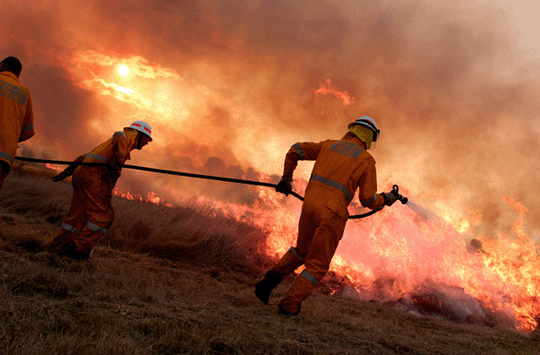 Sydney set for more ‘poor’ air quality as NSW South Coast bushfires continue to burn, SBS, 3 Dec 19, The Bureau of Meteorology says smoke is forecast to linger in parts of Sydney on Tuesday, creating “poor” air quality in the city…….. The state government says air quality on Tuesday will be “poor due to particles” from the extensive smoke coming from bushfires burning across the state…… Sydney set for more ‘poor’ air quality as NSW South Coast bushfires continue to burn, SBS, 3 Dec 19, The Bureau of Meteorology says smoke is forecast to linger in parts of Sydney on Tuesday, creating “poor” air quality in the city…….. The state government says air quality on Tuesday will be “poor due to particles” from the extensive smoke coming from bushfires burning across the state……
There were 119 bush and grass fires burning across NSW on Monday evening with 48 of these uncontained. The out-of-control fire at Currowan is burning across almost 25,000 hectares and is being pushed east towards coastal communities but tempered overnight as gusty northeasterly winds moderated…… Two million hectares of NSW land have been burnt since July in more than 7000 fires, with authorities dubbing it the “most challenging bushfire season ever”. Six people have died while 673 homes have been destroyed to date. https://www.sbs.com.au/news/sydney-set-for-more-poor-air-quality-as-nsw-south-coast-bushfires-continue-to-burn |
|
More than 160 bush and grass fires are burning across New South Wales
NSW firefighters battle 100 new blazes, Herald Sun, Heather McNab, 27 Nov 19, More than 160 bush and grass fires are burning across NSW after about 100 fresh blazes ignited in a 24-hour period.
The NSW Rural Fire Service on Wednesday evening said 163 fires were burning in NSW with 75 uncontained. There were more than 2200 personnel in the field working to slow the progress of the blazes.
The Bureau of Meteorology said thunderstorms which hit Sydney on Tuesday afternoon and the state’s northeast in the evening had produced large hailstones and damaging winds – while lightning also sparked fresh fires.
“Over the past 24 hours, around 100 new fires kicked off,” the RFS posted on Twitter at 5.30pm on Wednesday.
“Crews will work over coming days to control this large number of fires ahead of forecast elevated fire danger on Saturday,” the agency posted later that evening…….. https://www.heraldsun.com.au/news/breaking-news/almost-130-fires-burning-across-nsw/news-story/67d86650512ce39d8af0cb2e34109b21
Power bills to fall by $40 as New South Wales Central West becomes wind and solar power hub,
|
Power bills to fall by $40 as Central West becomes wind and solar power hub, Central West Daily News, David Fitzsimons 26 Nov 19
The Central West will become the focus of wind and solar energy generation in NSW under a state government plan that would see 450 construction jobs created and household electricity bills cut by $40 a year. Energy Minister Matt Kean said Australia’s first Renewable Energy Zone would be developed in the Central West over the next few years. Mr Kean said the 3000 megawatt pilot program was aimed at attracting up to $4.4 billion in private sector investment into the region for clean energy generation…….
The Central West project is the first of three planned for NSW as part of the NSW Electricity Strategy which was unveiled by Mr Kean. It said the Central West was chosen for the pilot because it has “significant existing investment and investor interest.”…… https://www.centralwesterndaily.com.au/story/6508798/power-bills-to-drop-by-40-as-central-west-becomes-hub-for-wind-and-solar-power/?fbclid=IwAR0WqMLLb5ODbAA0EU-h8VPtnfVoU8PYrvFIEhNhuTeOVKunqnhR4f3PWms |
|
|
How are Australian States progressing on renewable energy? South Australia way ahead
 South Australia leading the nation in renewable energy, https://thenewdaily.com.au/news/national/2019/11/25/renewable-energy-winners/ Samantha Dick
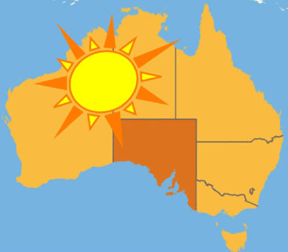
South Australia is shifting to renewable energy faster than any other state or territory.
This is despite the federal government’s “lack of leadership” and continued support for major fossil fuel projects, says the Climate Council.
|
Progress is based on how much electricity is derived from renewable energy, proportion of households with rooftop solar, large-scale wind and solar capacity per capita, and policies to support the transition. South Australia earned this year’s top spot for generating more than half of its electricity from wind and solar, and for setting a target of net 100 per cent renewable energy in the 2030s. Following closely in second place was the Australian Capital Territory, which is on track for 100 per cent renewable energy from 2020. The ACT has also announced impressive plans to achieve net zero emissions by 2045 by cutting emissions from transport and cities. Tasmania was in third place for making headwinds toward 100 per cent renewable energy by 2022, and for researching three pumped hydro sites that could supply energy to Victoria over the next 10 to 15 years. Victoria was ranked fourth, winning points for planning the nation’s most ambitious large-scale wind and solar projects, and for legislating a renewable energy target of 50 per cent by 2030. However, more than 80 per cent of the state’s power still comes from fossil fuels, meaning it has a long way to go to catch up to the frontrunners. Further behind in fifth place was Queensland, where nearly half of Australia’s large-scale renewable energy projects were completed last year. But despite making big improvements, the Queensland government lost marks for continuing to support new fossil-fuel projects like the Adani coal mine. The Adani coal mine, backed by the federal government, will put out an estimated 7.7 billion tonnes of greenhouse gases over 60 years through extracting 2.3 billion tonnes of coal. It is also unlikely the Sunshine State will meet its target of 50 per cent renewable energy by 2030.
|
|
1 This month

of the week – Australians for War Powers Reform (AWPR)
To see nuclear-related stories in greater depth and intensity
 Antinuclear