In Alice Springs everyone has an opinion on the Pine Gap spy base, but no-one wants to talk about what happens inside.
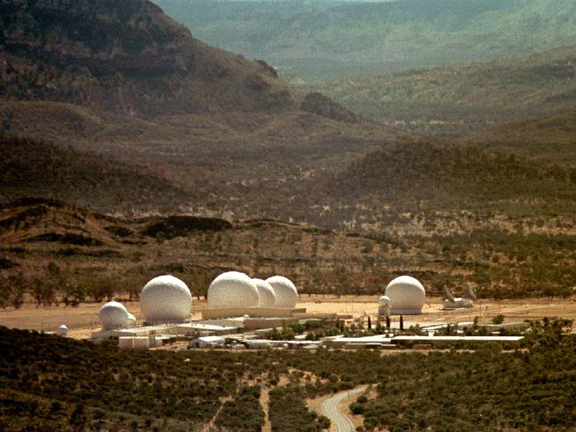
I wanted to hear from the traditional owners of the Arrernte land it was built on, and from the spies tasked with finding targets in Afghanistan and Iraq during the Global War on Terrorism. But how do you investigate something as secretive as Pine Gap when everyone who works there has made a promise never to talk about what they do?
serious claims being made that intelligence gathered at the facility was being used in the Israel-Gaza war.
By Alex Barwick for Backstory, Thu 16 May 2024. https://www.abc.net.au/news/backstory/2024-05-16/backstory-expanse-podcast-spies-in-the-outback-pine-gap-barwick/103844652
In journalism, it’s often politicians who won’t answer your questions.
But in my outback town, it’s just as likely to be the neighbours who won’t, or rather can’t, answer this basic conversation starter: “So, what do you do at work?”
That’s because about 800 of the town’s 25,000 residents are employed at the most secretive intelligence facility in Australia — the Joint Defence Facility Pine Gap — on the edge of Alice Springs/Mparntwe.
When I rolled into this beautiful landscape 16 years ago and began working at the ABC’s Alice Springs bureau, it quickly became clear I wouldn’t hear from this significant section of the community.
Given local radio is all about connecting with the community and sharing people’s stories, this silence felt strange.
My curiosity grew and the book Peace Crimes, written by long-term local journalist Kieran Finnane, motivated me to start looking deeper.
I wanted to know what was going on in my backyard, but I knew trying to make a podcast about a secret military facility hidden in a secluded valley in Central Australia wouldn’t be easy.
Telling this story in a town the size of Alice Springs would undoubtedly feel personal and would likely offend parts of the community.
It’s a line regional journalists walk all the time — telling stories that are in the public interest, while living in the community that is affected by them.
Covering difficult stories in a small town
The words we write as journalists — or say, like in the Expanse: Spies in the Outback podcast — do have real world implications for real people.
That includes everyone from my neighbours, to the parents of my kids’ friends, to people I see regularly at community events.
For them, it’s not a story – it’s their life.
And that can get awkward.
But there are stories in the public interest that the Australian government won’t comment on and this often means they’re shrouded in mystery, or rife with rumour.
Pine Gap is one of those stories.
What goes on beneath the cluster of enormous, oversized-golf-ball-shaped domes covering the military base’s listening antenna on the desert floor, raises big questions for all of Australia, not just my town.
The Pine Gap intelligence-gathering facility is often described as the jewel in the crown of our military partnership with the United States.
But what have we got ourselves into, and do we benefit from it?
Protesters, politicians and spies
Over the past six months, I’ve had lots of off-the-record coffees, trawled the news and library archives, followed some bizarre leads and heard plenty of wild stories, as I have tried to understand the goings-on behind the razor wire.
I wanted to know why America’s Central Intelligence Agency (CIA) decided to build a so-called “space base” in outback Australia in the mid 1960s.
What motivated former prime minister Gough Whitlam to rock the boat and promise to reveal its secrets to the public?
Why were thousands of people so convinced it was a nuclear target they flocked to the desert to demand its closure?
And how had it drawn Australia onto one battlefield after the next through its large-scale surveillance and intelligence gathering?
While plenty of people outside Alice Springs/Mparntwe have never heard of this desert spy base, most people in town have an opinion on it.
There are three main camps: those who say it’s vital for the town’s economy and global peace; those who still see it as a nuclear target and want it shut down; and those who feel generally apathetic to its existence.
And yet, nobody really talks about Pine Gap.
Still, I felt it was important to really understand the diversity of views on this outback spy base as I conducted my research.
I wanted to hear from the traditional owners of the Arrernte land it was built on, and from the spies tasked with finding targets in Afghanistan and Iraq during the Global War on Terrorism.
But how do you investigate something as secretive as Pine Gap when everyone who works there has made a promise never to talk about what they do?
I certainly wasn’t looking to see anyone exiled to Russia like Edward Snowden after he leaked a raft of National Security Agency (NSA) documents, including information on Pine Gap.
In the end, gentle, determined persistence meant I was able to tell the Pine Gap story in a way that lifted the lid but didn’t put national security at risk, and that (I hope) was sensitive to the lives of those in Alice Springs affected by it.
Back in the national spotlight
And then, in late 2023 as I tracked down activists, former spies and politicians … protesters were suddenly blocking the road to Pine Gap again.
There were serious claims being made that intelligence gathered at the facility was being used in the Israel-Gaza war. With Pine Gap back in the spotlight, I knew I had to look deeper.
This spy base, which became operational in 1970 during the Cold War, had expanded through the decades in scale and capability and was more relevant than ever.
The Australian government says Pine Gap is one of the country’s “most longstanding security arrangements” with the United States but it does not comment on its operation.
As each episode of Expanse: Spies in the Outback has been released, I’ve received emails and text messages that confirm why it was an important story to tell.
Some people have been shocked and appalled, while others have been grateful to learn we have this secret intelligence facility in our backyard.
Even in my own town of Alice Springs, where everyone knows someone who works at Pine Gap, there is an appetite to know more – regardless of how uncomfortable that might be.
Follow Expanse: Spies In The Outback on the ABC listen app to hear every episode of season three.
‘Disarm now’: Anti-nuke advocate’s message to world leaders at Pine Gap protest.

Following the breakdown of a nuclear treaty, an antinuclear advocate wants world leaders to hear a message she’s made from the doors of a top secret Territory spy base.
12 Aug 25,https://www.ntnews.com.au/journalists/gera-kazakov
An antinuclear ambassador for a Nobel prize winning group has delivered a message to world leaders at the edge of a Red Centre spy base, days after Russia pulled out of an arms treaty following an American missile test in the Top End.
ICAN ambassador Karina Lester was one of a dozen demonstrators who gathered at the edge of the Pine Gap Joint Defence Facility restricted area on Sunday, where she told world leaders to “disarm now” when speaking with this masthead.
“Get rid of your weapons. Lets fund and focus on world peace, not arm up and test missiles,” she said.
Ms Lester’s visit to the border of the Pine Gap restricted zone on Hatt Rd comes a day after she gave a speech at the sixth Yami Lester memorial event in Alice Springs – an event named after her father.
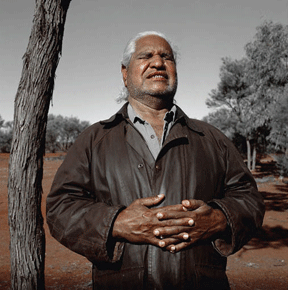
Mr Lester, a Yankunytjatjara elder who died in 2017, was blinded by the British nuclear tests in northern South Australia in the 1950s.
He was blinded as a child, and spent his life advocating against nuclear weapons – a mantle his daughter has taken up with ICAN, who won a Nobel Peace Prize in 2017 for their antinuclear advocacy.
The group got to the edge of the Pine Gap restricted at about 4.30pm Sunday, where they were again met with a police blockade at where the restricted zone begins.
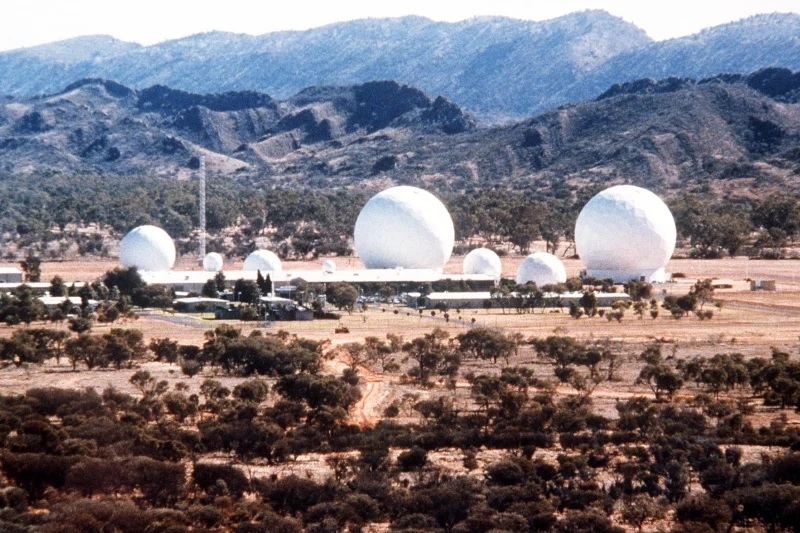
Two unmarked Toyota LandCruisers followed the convoy to their meeting place, and a police drone was also observed overhead.
The group heard from speakers who opposed the US-run base, with members of the crowd holding signs reading “Yankee go home” while others held Palestinian flags.
At the conclusion of the demonstration, the group gathered for a photo and chanted “land back, close Pine Gap” while various media outlets filmed and photographed them.
Federal NSW Greens senator David Shoebridge was also billed to be at the Pine Gap demonstration on Sunday, but pulled out due to covid, this masthead understands.
The Greens defence and foreign affairs spokesman said the political party has opposed the US-run base “for decades” but did not comment on why he was unable to come on Sunday when asked by this masthead.
US military waste contractor with flawed safety record backing Australian N-waste dump
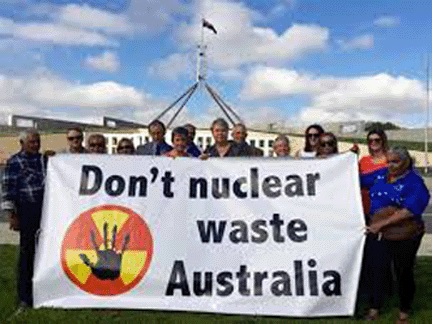
Declassified Australia can report that over a 10-year period from 2012 to 2022, during which Amentum managed the WIPP facility, multiple highly hazardous incidents occurred.
Amidst allegations of “gross mismanagement”, the dangerous incidents at the WIPP facility cost US taxpayers at least US$2 billion, and caused a three-year closure of the nuclear waste plant while redesign, repair, and remediation efforts were undertaken.
Jorgen Doyle, June 7, 2025 https://johnmenadue.com/post/2025/06/us-military-waste-contractor-with-flawed-safety-record-backing-australian-n-waste-dump/
A US military mega-contractor assisting an Australian company to develop a proposal for a nuclear waste dump in Central Australia has a flawed safety record in handling nuclear waste storage.
A DECLASSIFIED AUSTRALIA SPECIAL INVESTIGATION
In Alice Springs, Central Arrernte Country, the giant American military contractor, Amentum Holdings, is responsible for the day-to-day running of facilities for the secretive US-Australian Pine Gap satellite surveillance base. Now it’s involved in developing a proposed nuclear waste dump in Central Australia.
Declassified Australia can reveal that Amentum’s Alice Springs-based workforce of 400 people provides a myriad of support services to keep the ever-expanding base functioning, including infrastructure management, facilities operations, and maintenance services.
The proposal for the low-level nuclear waste dump comes as the Australian Government is seeking ways to manage and ultimately dispose of high-level nuclear waste from nuclear reactors in the proposed AUKUS submarines, as well as from other defence-related nuclear and hazardous waste, including visiting US and UK nuclear-powered submarines and warships.
As Declassified Australia exclusively reports, despite Amentum having a problematic record of nuclear waste management overseas, it is now involved in the nuclear waste disposal business in Australia.
Proposed Chandler waste facility
Amentum has been contracted to advise Australian hazardous waste company, Tellus Holdings, on the Chandler nuclear waste dump in Central Australia.
The Chandler nuclear waste dump is proposed to be constructed within a salt formation on Southern Arrernte country, 15km from the Aboriginal community of Titjikala and 120km south of Alice Springs.
The Northern Territory Environmental Protection Authority’s assessment report for the Chandler dump describes the project components as including construction of an underground salt mine at a depth of up to 860 metres, permanent hazardous waste disposal vaults within mined-out salt caverns, temporary above-ground storage facilities for hazardous waste, and associated infrastructure like haul roads, access roads, and salt stockpiles.
In August 2024, Tellus announced that the company had contracted Amentum to conduct a Strategic Review of the project to assess timelines, feasibility and potential international waste streams to be disposed of at the facility.
Sydney-based Tellus Holdings was founded in 2009 and describes its mission as “providing advance[d] end-to-end solutions for managing the world’s most challenging hazardous materials”. The company operates Australia’s first geological repository for low-level nuclear waste which started in 2021 at Sandy Ridge, 240km northwest of Kalgoorlie.
When Tellus’ American-born chief executive Nate Smith, a former attorney at powerful Wall Street law firm Sullivan & Cromwell, was interviewed on ABC Radio last August, he cited the proximity of Amentum’s workforce based in Alice Springs as a strong reason for selecting Amentum to carry out the strategic review of the proposed nuclear waste dump.
Declassified Australia can exclusively reveal that at an NT Defence Week presentation held in Alice Springs in May 2024, an Amentum speaker stated that the company is contracted directly by the US Government, and “employs roughly 400 people” providing services to the Pine Gap base.
According to an attendee at the event, the speaker said Amentum provides the operation services and maintenance of facilities, utilities management, renovation, security, environmental health and safety, catering, and housing services.
The company regularly posts ads for the employment of new contractors to provide services like cleaning, gardening and even swimming pool repair. On some days, the speaker said, there have been as many as 200 contractors for Amentum working on site at the spy base, 15km south of Alice Springs.
Amentum and the US military
Based in Virginia, Amentum is one of the US’s largest military contractors. The company employs 53,000 people across 80 countries, and provides services as diverse as chemical and biological weapons decommissioning, US army helicopter training, to running the Nevada Bombing Range and the Kennedy Space Centre.
As well as supporting the US’s most important satellite surveillance base outside the US at Pine Gap, Amentum also works extensively in managing and maintaining US military facilities, primarily in West Asia and sub-Saharan Africa.
The company operates in Bahrain, Jordan, Kuwait, Saudi Arabia, Qatar and the United Arab Emirates, where it provides operations and maintenance services on US military installations.
In Iraq, it manages and maintains US air force bases; and has previously operated in Afghanistan, where it maintained helicopters for the Afghan Air Force, and serviced airfields and trained Afghan police, until US forces evacuated the country.
In Somalia, Amentum is assisting in the construction of six new military bases, while in Ethiopia it is working to “enhance biosafety and biosecurity” at a vaccine lab and training facility.
Amentum is also involved more directly in training armed militias and military forces. In western Africa, the company operates in Benin, where it trains the country’s armed forces for “counter-terrorism” operations.
However, Amentum’s activities have been subject to controversy, even by the standards of a global military contractor.
Amentum is providing training to three of Libya’s armed groups as part of attempts to unify major armed factions in Tripoli to “counter Russian influence” within the country and across the African continent.
The company is currently defending a case before a US court on charges of human trafficking in Kuwait, through its predecessor companies AECOM and DynCorp. The companies allegedly participated in abusive practices against 29 interpreters working under US Army contracts during the US-led invasion of Iraq, “Operation Iraqi Freedom”. The abusive practices included forced labour under threat of deportation and arrest.
Amentum’s nuclear activities
In addition to its military contracts, Amentum has been working to support the development of nuclear reactors and facilities across a number of countries.
In the UK, Amentum has recently been selected as project manager for the proposed Sizewell C nuclear power plant on the Suffolk coast.
In South Africa, the company is working on extending the life of the country’s only nuclear reactor by 20 years. In the Netherlands, Amentum has been commissioned to undertake technical feasibility studies for two proposed new nuclear reactors.
It is on the American continent that Amentum’s reputation for managing nuclear facilities has suffered serious blows.
In 2012, Amentum formed the Nuclear Waste Partnership, a limited liability company, with BWX Technologies, in order to bid on a US Department of Energy contract to operate and manage a US nuclear weapons waste disposal facility in New Mexico, known as the Waste Isolation Pilot Plant.
Amentum’s experience managing the WIPP nuclear weapons waste disposal facility is cited as one of the reasons Tellus selected Amentum as its partner to carry out the strategic review of the planned Chandler project.
However, Declassified Australia can report that over a 10-year period from 2012 to 2022, during which Amentum managed the WIPP facility, multiple highly hazardous incidents occurred.
The incidents, described by an expert on the WIPP as a “horrific comedy of errors”, transformed a facility once regarded as “the flagship of the [US] Energy Department” into an object of serious concern.
Amidst allegations of “gross mismanagement”, the dangerous incidents at the WIPP facility cost US taxpayers at least US$2 billion, and caused a three-year closure of the nuclear waste plant while redesign, repair, and remediation efforts were undertaken.
Nuclear weapons waste disposal
The WIPP is, like Tellus’ proposed Chandler Project in Central Australia, located within a salt formation. Salt formations are generally considered ideal for the storage of nuclear waste because of their geological stability, capacity to dissipate heat generated by waste, low permeability to water and gasses, and self-sealing properties.
The WIPP site is massive. Its underground footprint currently includes 10 excavated “panels”, each consisting of seven rooms, totalling 100 acres. An 11th panel is under construction, and the US Department of Energy intends to expand the site to eventually consist of nineteen panels.
The facility has received more than 14,000 shipments of military nuclear waste since becoming operational in 1999. Its 800-strong workforce transfers transuranic waste received in drums to storage rooms 655 metres underground for permanent disposal.
The WIPP facility exclusively receives waste from the US’s nuclear weapons program, including tonnes of excess plutonium. Waste originating from 22 Department of Energy facilities, including the infamous Los Alamos National Laboratory (birthplace of the atomic bomb) is transferred to the WIPP facility for long-term storage.
There are proposals for the WIPP to take waste now classified as “high-level” once that waste has been ‘reclassified’ as transuranic (non-uranium) waste. This would pave the way for its storage at WIPP.
“Reclassification of nuclear waste could make disposal simpler and cheaper” is the breezy conclusion of one such proposal written by the editorial staff of Nature journal.
The site is legislated to receive 175,564 cubic metres of waste, and as of 2021, had reached 56.7% of its capacity.
Originally slated to begin closure in 2024, expansion plans and permit modifications have led nuclear watchdog groups to warn that what was only intended as a pilot plant is morphing into “Forever WIPP”.
The US Department of Energy itself now admits that “ final facility closure could begin no earlier than 2083”.
Faulty design and handling at the Waste Isolation Pilot Plant
On 5 February 2014, less than 18 months into the Nuclear Waste Partnership’s management of the WIPP site, a truck caught fire within the facility, and six workers were hospitalised with smoke inhalation.
A subcontractor under the Nuclear Waste Partnership subsequently sued the company for “gross mismanagement of a major construction contract” involving reconstruction of an underground air-monitoring system that failed during the truck fire.
The subcontractor alleged that the Nuclear Waste Partnership, run by Amentum and BWX Technologies, “was such a disorganised project manager that it caused repeated delays and cost overruns, resulting in multiple breaches of contract”.
The subcontractor claimed that NWP “used faulty designs that caused chronic problems and forced crews to redo large and expensive parts of the project”.
The faulty problems cited by the subcontractor included “a flawed design in hollow-roof panels requir[ing] an extensive redesign that dragged on for almost a year and at times forced work to shut down in other areas”.
Further, “[t]he building’s foundation had to be redesigned, requiring crews to move underground pipes they had already installed; and [a] defective design plagu[ed] the building’s control system”.
Less than a fortnight after the truck fire, on 14 February 2014, a barrel containing americium, plutonium, nitrate salts and organic kitty litter ruptured at the facility.
The rupture quickly spread contaminants “through about one-third of the underground caverns and tunnels, up the exhaust shaft, and into the outside environment”, exposing 22 workers at the WIPP facility to low levels of radioactive contamination.
Following the incident, the site was shuttered for three years. Clean-up efforts cost US$640 million, and a further US$600 million in operational costs were accrued during the years 2014-2017 while the site was being remediated and not accepting new waste.
In addition, the US Government paid US$74 million to New Mexico to settle permit violations involving the radiation release and the truck fire two weeks earlier.
Once costs associated with temporarily storing the nuclear waste that had been destined for WIPP are taken into account ( “hotel costs”, including the weekly inspection of more than 24,000 barrels of nuclear waste for leaks), the long-term cost of the incidents to US taxpayers is likely in excess of US$2 billion.
The WIPP site finally reopened in 2017 after three years of remediation efforts. The installation of a new ventilation system to replace the previous one contaminated in the incident of February 14, 2014 cost an additional US$486 million, and was only completed in March 2025.
A safety analysis conducted prior to the WIPP facility becoming operational reassured regulators that the likely frequency of accidents involving the release of radioactive material at the facility would be once every 200,000 years.
However the two serious incidents of February 2014, resulting in a three-year closure of the WIPP facility, occurred just 15 years into the site’s operation.
The US Department of Energy faced years of pressure from nuclear watchdog groups to end the Amentum and BWX partnership responsible for running the WIPP from 2012.
The Department finally decided not to renew Amentum and BWX partnership’s decade-long contract managing the WIPP nuclear weapons waste disposal facility. They exited in 2022.
The proposed Australian project
Back in Central Australia, Amentum’s strategic review of the Chandler Project is due to be completed soon.
Neither Tellus nor Amentum responded to a series of questions put to them about aspects of the nuclear waste dump project.
With Tellus eager to push on, the massive international nuclear waste dump proposed for Southern Arrernte country 120km south of Alice Springs could commence as early as 2028.
Jabiluka uranium mine lease not renewed in decision heralded as ‘huge win’

NT government opts not to grant 10-year lease after considering wishes of Indigenous people and federal government advice
Australian Associated Press, Fri 26 Jul 2024, https://www.theguardian.com/australia-news/article/2024/jul/26/jabiluka-uranium-mine-lease-not-renewed-in-decision-heralded-as-huge-win?CMP
The lease on the Northern Territory’s Jabiluka uranium mine will not be renewed, months after its remote surrounding area was granted new protections.
Energy Resources Australia (ERA) had applied for a 10-year lease renewal on the Jabiluka uranium mine, but was knocked back on Friday.
The NT mining minister, Mark Monaghan, said the decision to not renew was based partially on advice from the federal government.
“We have gone through a thorough process to ensure that all stakeholder views have been considered in this decision,” he said.
“The federal government advice, along with the wishes of the Mirarr people, were critical to this process and outcome.”
The Northern Territory government declared special reserve status over the Jabiluka area, which is in the surrounds of Kakadu national park, in May.
This prevents any future applications for the grant of a mineral title over the Jabiluka area once the current lease ceases on 11 August.
The Australian Conservation Foundation welcomed the decision, calling it a “huge win” for traditional owners.
“This decision allows a line to be drawn under the divisive era of uranium mining in Kakadu,” a statement read.
“This is a responsible decision that ends the threat that has hovered over this very special place for four decades.”
Mirarr people have long opposed any mining in the area, holding protests in the late 1990s and early 2000s when more than 5,000 people travelled to Kakadu to prevent uranium mining at Jabiluka.
Energy Resources of Australia, a subsidiary of the Rio Tinto Group, has been contacted for comment
Coalition nuclear policy leaves traditional owners of Kakadu uranium mine worried
ABC News, By Jane Bardon, 3 July 24
In short:
Kakadu traditional owners are worried the Coalition’s nuclear policy will drive demand for uranium mining on their land at Jabiluka.
Energy Resources of Australia (ERA) and traditional owners have asked the NT and federal governments to decide whether to extend the Jabiluka uranium mining lease.
What’s next?
ERA’s majority shareholder Rio Tinto is worried the Jabiluka lease stoush could drive up the costs of rehabilitating its closed Ranger Uranium Mine.
Mirarr traditional owner Corben Mudjandi is desperate for his spectacular land at Jabiluka to be incorporated into Kakadu National Park, which surrounds it, rather than mined for its uranium.
“Its sacred to us, and it’s a piece of human history, 65,000 years, we want Jabiluka not mined; we want to show people the beauty of nature, and what we call home,” he said.
Mr Mudjandi is worried the federal Coalition’s plan to open nuclear plants if it wins government could drive demand for Jabiluka’s uranium.
The Mirarr are also concerned that almost a year after Energy Resources of Australia (ERA) applied to extend its uranium mining lease over Jabiluka for another decade, the Northern Territory and federal governments have not yet decided whether to reject or approve it.
ERA’s current lease expires on August 11.
“The government are following process, but of course we hope they don’t support the application extension,” Mr Mudjandi said.
Senior Mirarr traditional owner Yvonne Margarula said she was worried that although ERA’s Jabiluka lease agreement enabled traditional owners to veto mining, they felt under constant pressure to change their minds.
“The mining companies might come back asking again and again, it’s annoying them asking more, enough is enough, so I hope the government is going to help us,” she said………………………………..
……………………….Professor of Archaeology at Griffith University Lynley Wallis said the Mirarr had a strong case for Jabiluka to be incorporated into Kakadu instead of mined, because of its 65,000 year-old-evidence of occupation.
“Archaeologically the escarpment that’s encapsulated within the Jabiluka mineral lease is unparalleled,” she said.
“There are hundreds of rock shelter sites, almost all of which have paintings in them, of which are incredibly well preserved, and then there are amazing objects that have been cached in those rock shelters, ceremonial wooden objects, grinding stones, spear points and scrapers.
………. the lease agreement includes a traditional owner right to veto mining……………
Lynley Wallis said the Jabiluka mining lease did not provide adequate protection.
“While a company holds a mineral lease over Jabiluka it is possible for them to apply to develop the resources in that land, and any development would pose imminent threat to the cultural sites that are within the lease,” she said.
While some of ERA’s minority shareholders want to keep the Jabiluka lease, which they estimate is worth $50 billion, its majority shareholder Rio Tinto does not.
Jabiluka is ERA’s only potentially valuable asset, but Rio Tinto estimates the rehabilitation costs would be much more than potential profits.
The cost of ERA’s rehabilitation of its neighbouring closed Ranger Uranium Mine on the Mirarr’s land has now blown out to more than $2.5 billion.
ERA is expected to run out of funds by September, and Rio Tinto has promised to fund Ranger’s rehabilitation.
But the ABC understands Rio Tinto is concerned ERA’s application to extend the Jabiluka lease is worrying Mirarr traditional owners so much, that they could delay further agreements needed on how the Ranger mine rehabilitation continues, adding to the project’s soaring costs.
Dave Sweeney, the Australian Conversation Foundation’s nuclear policy spokesman, has called on both governments to end the prospect of mining at Jabiluka.
“ERA are not making any money,” he said.
“They should be focused on getting the assured financial capacity on delivering on their legal obligations rather than appeasing minority shareholders in a fanciful push for a project that will never happen, but increases pressure on traditional owners who’ve had too much for too long.”
A spokesman for the federal Resources Minister Madeleine King said it was up to the NT government whether to renew ERA’s lease.
The spokesman said when Ms King provides her advice to NT government, she would “consider information about Jabiluka in good faith and with appropriate consultation”.
The NT Mining Minister Mark Monaghan would not explain why his government had not made a decision on the lease.
“We’re not delaying the decision, the decision is going through what is a process,” he said.
NT Opposition leader Lia Finocchiaro has backed ERA’s argument on why the lease should continue.
“Importantly that maintains the veto rights for the Mirarr people which we believe continues to be a very important right for them to have,” she said. worried
Summary of Australian federal and state/territory nuclear/uranium laws and prohibitions.

Current prohibitions on nuclear activities in Australia: a quick guide
From Jim Green, 30 May 2024
https://www.aph.gov.au/About_Parliament/Parliamentary_departments/Parliamentary_Library/pubs/rp/rp2324/Quick_Guides/NuclearActivitiesProhibitions
PDF Version [564KB]
Dr Emily Gibson
Science, Technology, Environment and Resources; Law and Bills Digest Sections
This quick guide provides an overview of current prohibitions on nuclear activities under Commonwealth, state and territory laws. It considers the primary legislation most relevant to current policy debates about domestic nuclear energy only and consequently does not consider recent changes to Commonwealth law to facilitate Australia’s acquisition of conventionally-armed, nuclear-powered submarines under the AUKUS partnership.[1] It also does not include consideration of Australia’s international obligations in respect of nuclear activities, including the safeguarding of nuclear materials and the non-proliferation of nuclear weapons.
If a domestic nuclear energy industry were to progress, it is expected that a comprehensive framework for the safety, security and safeguarding of the related nuclear material would need to be legislated to accommodate such an industry.[2] Consideration of these issues is beyond the scope of this paper.
What are nuclear activities?
A nuclear activity is any process or step in the utilisation of material capable of undergoing nuclear fission; that is, any activities in the nuclear fuel cycle.[3] Nuclear activities therefore include:
- mining of nuclear or radioactive materials such as uranium and thorium milling, refining, treatment, processing, reprocessing, fabrication or enrichment of nuclear material
- the production of nuclear energy
- the construction, operation or decommissioning of a mine, plant, facility, structure, apparatus or equipment used in the above activities
- the use, storage, handling, transportation, possession, acquisition, abandonment or disposal of nuclear materials, apparatus or equipment.
Prohibitions on nuclear activities
Commonwealth
Nuclear activities are regulated under the Australian Radiation Protection and Nuclear Safety Act 1998 (ARPANS Act) and the Environment Protection and Biodiversity Conservation Act 1999 (EPBC Act).
Australian Radiation Protection and Nuclear Safety Act 1998
The ARPANS Act establishes a licensing framework for controlled persons (including a Commonwealth entity or a Commonwealth contractor) in relation to controlled facilities (a nuclear installation, a prescribed radiation facility, or a prescribed legacy site).[4] A nuclear installation includes a nuclear reactor for research or the production of radioactive materials for industrial or medical use, and a radioactive waste storage or disposal facility with an activity that is greater than the activity level prescribed by the Australian Radiation Protection and Nuclear Safety Regulations 2018.[5]
The ARPANS Act allows the CEO of the Australian Radiation Protection and Nuclear Safety Agency (ARPANSA) to issue licences for controlled facilities.[6] In issuing a facility licence, the CEO ‘must take into account the matters (if any) specified in the regulations, and must also take into account international best practice in relation to radiation protection and nuclear safety’.[7]
However, subsection 10(2) of the Act expressly prohibits the CEO from granting a licence for the construction or operation of any of the following nuclear installations: a nuclear fuel fabrication plant; a nuclear power plant; an enrichment plant; or a reprocessing facility.[8] This prohibition does not appear to apply to a radioactive waste storage or disposal facility.
Environment Protection and Biodiversity Conservation Act 1999
The EPBC Act establishes 9 matters of national environmental significance (MNES) and provides for the assessment and approval of these actions if the action has, will have, or is likely to have a significant impact on the MNES.[9] ‘Nuclear actions’ are one of the MNES.[10] Where a nuclear action is determined to be a controlled action (that is, one likely to have a significant impact and requiring assessment and approval under the Act), the assessment considers the impact of a nuclear action on the environment generally (including people and communities).[11]
The Act establishes offences for the taking of nuclear actions in those circumstances.[14]
Similarly, the Act provides that a relevant entity (as set out below) must not take an action (including a nuclear action) unless a requisite approval has been obtained under Part 9 of the Act or a relevant exception applies:
- a person must not take a relevant action on Commonwealth land that has, will have or is likely to have a significant impact on the environment[15]
- a person must not take a relevant action outside Commonwealth land if the action has, will have or is likely to have a significant impact on the environment on Commonwealth land[16]
- the Commonwealth or a Commonwealth agency must not take inside or outside the Australian jurisdiction an action that has, will have or is likely to have a significant impact on the environment inside or outside the Australian jurisdiction.[17]
The Act establishes offences and civil penalty provisions for the taking of an action in those circumstances.[18]
Subsection 140A(1) prohibits the Minister for the Environment from granting an approval for a nuclear action relating to specified nuclear installations. These installations are a nuclear fuel fabrication plant, a nuclear power plant, an enrichment plant, and a reprocessing facility.
Potential reform of the nuclear action trigger
The second independent review of the EPBC Act, completed in October 2020 by Professor Graeme Samuel (Samuel Review), recommended that the nuclear actions MNES be retained.[19] The review recommended that ‘the EPBC Act and the regulatory arrangements of [ARPANSA] should be aligned, to support the implementation of best-practice international approaches based on risk of harm to the environment, including the community’.[20]
In 2022, the Government’s Nature Positive Plan adopted this approach and stated, ‘[a] uniform national approach to regulation of radiation will be delivered through the new National Environmental Standards’.
In February 2024, a policy draft of the National Environmental Standard for Matters of National Environmental Significance indicates that ‘nuclear actions’ will be renamed ‘radiological exposure actions’ and states:
Relevant decisions must:
Not be inconsistent with the ARPANSA national codesfor protection from radiological exposure actions including in relation to:
- human health and environmental risks and outcomes; and. radiological impacts on biological diversity,
- the conservation of species and the natural health of ecosystems.[22]
States and territories
States and territories generally regulate nuclear and radiation activities through either the health or the environmental protection portfolios. The relevant legislation provides for the protection of health and safety of people, and the protection of property and the environment, from the harmful effects of radiation by establishing licensing regimes to regulate the possession, use, and transportation of radiation sources and substances.[23] Mining of radioactive materials is regulated through the resources portfolio.
In addition, as outlined below, the states and territories have legislation prohibiting certain nuclear activities or the construction and operation of certain nuclear facilities. Importantly, where permitted, nuclear activities (including mining) would also be subject to assessment and approvals under a range of other legislation, including planning and environmental impact assessment, native title and cultural heritage, and radiation licensing laws at the state or territory and Commonwealth level.
New South Wales
Exploration for uranium has been permitted under the Mining Act 1992 since 2012.[24] However, the mining of uranium is prohibited by the Uranium Mining and Nuclear Facilities (Prohibitions) Act 1986 (NSW Prohibitions Act).[25]
The NSW Prohibitions Act also prohibits the construction and operation of certain nuclear facilities, including uranium enrichment facilities, fabrication and reprocessing plants, nuclear power plants, and storage and waste disposal facilities (other than for the storage and disposal of waste from research or medical purposes, or the relevant radiological licensing Act).[26]
Northern Territory
The Atomic Energy Act 1953 (Cth) provides that the Commonwealth owns all uranium found in the territories.[27] Uranium exploration and mining in the Northern Territory (NT) is regulated under both NT mining laws (the Mineral Titles Act 2010 and the Mining Management Act 2001) and the Atomic Energy Act.[28] The Ranger Uranium Mine operated until 2021 and is now undergoing rehabilitation.[29]
The Nuclear Waste Transport, Storage and Disposal (Prohibition) Act 2004 (NT) prohibits the construction and operation of nuclear waste storage facilities, as well as the transportation of nuclear waste for storage at a nuclear waste storage facility in the NT.[30] Nuclear waste is defined as including waste material from nuclear plants or the conditioning or reprocessing of spent nuclear fuel.[31]
This Act also:
- prohibits public funds from being expended, granted or advanced to any person for, or for encouraging or financing any activity associated with the development, construction or operation of a nuclear waste storage facility
- would require the NT Parliament to hold an inquiry into the likely impact of a nuclear waste storage facility proposed by the Commonwealth on the cultural, environmental and socio‑economic wellbeing of the territory.[32]
Queensland
Exploration for and mining of uranium are permitted under the Mineral Resources Act 1989. However, it has been government policy to not grant mining leases for uranium since 2015.[33] The government policy ban extends to the treatment or processing of uranium within the state.[34]
The Nuclear Facilities Prohibition Act 2007, in similar terms to the NSW Prohibitions Act, prohibits the construction and operation of nuclear reactors and other nuclear facilities in the nuclear fuel cycle.[35]
Unlike other state and territory prohibition legislation, the Nuclear Facilities Prohibition Act would require the responsible Queensland Minister to hold a plebiscite to gain the views of the Queensland population if the Minister was satisfied that the Commonwealth Government has taken, or is likely to take, steps to amend a Commonwealth law or exercise a power under a Commonwealth law to facilitate the construction of a prohibited nuclear facility, or if the Commonwealth Government adopts a policy position of supporting or allowing the construction of a prohibited nuclear facility in Queensland.[36]
South Australia
The exploration and mining of radioactive material (including uranium) is permitted in South Australia (SA), subject to approvals under the Mining Act 1971 and the Radiation Protection and Control Act 2021 (RP&C Act).[37] For example, uranium is mined at Olympic Dam, Four Mile and Honeymoon. However, conversion and enrichment activities are prohibited by the RP&C Act.[38]
The Nuclear Waste Storage Facility (Prohibition) Act 2000 prohibits the construction or operation of a nuclear waste storage facility, and the import to SA or transport within SA of nuclear waste for delivery to a nuclear waste storage facility.[39]
The Nuclear Waste Storage Facility (Prohibition) Act prohibits the SA Government from expending public funds to encourage or finance the construction or operation of nuclear waste storage facilities.[40] The Act would also require the SA Parliament to hold an inquiry into the proposed construction or operation of a nuclear waste storage facility in SA authorised under a Commonwealth law.[41]
Tasmania
The exploration and mining of atomic substances (which includes uranium and thorium) is permitted under the Mineral Resources Development Act 1995 (Tas), subject to approval.
Victoria
The Nuclear Activities (Prohibitions) Act 1983 prohibits a range of activities associated with the nuclear fuel cycle, including the exploration and mining of uranium and thorium, and the construction or operation of facilities for the conversion or enrichment of any nuclear material, nuclear reactors and facilities for the storage and disposal of nuclear waste from those prohibited activities.[42]
Western Australia
Exploration for and mining of uranium is permitted under the Mining Act 1978. A state policy ban on mining approvals was overturned in November 2008;[43] however, this was reinstated in June 2017, with a ‘no uranium’ condition on future mining leases.[44] The ban does not apply to 4 projects that had already been approved by the previous government.
The Nuclear Activities Regulation Act 1978 aims to protect the health and safety of people and the environment from possible harmful effects of nuclear activities, including by regulating the mining and processing of uranium and the equipment used in those processes. The Nuclear Waste Storage and Transportation (Prohibition) Act 1999 also prohibits the storage, disposal or transportation in Western Australia of certain nuclear waste (including waste from a nuclear plant or nuclear weapons).[45]
Can the Commonwealth override a state ban on nuclear activities?
The Commonwealth Parliament only has the power to make laws in relation to matters specified in the Constitution of Australia, including in sections 51, 52 and 122. Assuming the Commonwealth has a sufficient head of power to legislate, section 109 of the Constitution specifically provides for circumstances in which there might be an inconsistency between Commonwealth and state laws:
When a law of a State is inconsistent with a law of the Commonwealth, the latter shall prevail, and the former shall, to the extent of the inconsistency, be invalid.
Therefore, even though some states have enacted prohibitions on certain nuclear activities within their jurisdictions, the Commonwealth Parliament could enact specific legislation in relation to nuclear activities so that such activities can take place within those jurisdictions. One such example is the National Radioactive Waste Management Act 2012 (Cth), which provides for the establishment of a national radioactive waste management facility at a site to be declared by the responsible Commonwealth Minister. Section 12 of that Act provides that state and territory laws have no effect in regulating, hindering, or preventing such a facility
Further information
- ‘Who we regulate’, ARPANSA
- ‘State & territory regulators’, ARPANSA
- ‘Uranium and thorium’, in Geoscience Australia, Australia’s Energy Commodity Resources, 2023 Edition, (Canberra: Geoscience Australia, 2023).
ERA applies to extend lease on Jabiluka uranium mine against traditional owners’ wishes
ABC Rural / By Daniel Fitzgerald, Thu 21 Mar 2024
- In short: Mining company ERA has applied to extend its lease on the Jabiluka uranium deposit for another 10 years.
- Mirarr traditional owners are fiercely opposed to the lease extension and any mining at Jabiluka.
- What’s next? ERA’s lease application will be assessed by the NT government and the company needs to spend at least $2.4 billion to rehabilitate the former Ranger uranium mine.
A mining company has lodged an application to renew its lease on a uranium deposit surrounded by Kakadu National Park, against the wishes of Indigenous traditional owners.
Energy Resources Australia (ERA) operated the Ranger uranium mine, 250 kilometres east of Darwin, from 1981 to 2021, and is now rehabilitating the mine, at a cost of over $2.4 billion.
Since 1991, the company has also had a the lease on the nearby Jabiluka site — which is one of the world’s largest and richest uranium deposits.
ERA had approval to mine Jabiluka but faced significant opposition from Mirarr traditional owners, which led to a blockade of the mine site by 5,000 people in 1998 and the company’s eventual decision to stop the mine’s development. …………………………………………….
Traditional owners oppose plans
Mirarr traditional owners rejected ERA’s claims that it was in their best interests for the Jabiluka lease to be extended.
Corben Mudjandi said his people were opposed to ERA renewing its lease and had no confidence in the company.
“ERA has a very big problem at Ranger, and this application isn’t helping with that,” Mr Mudjandi said.
“ERA says it wants to protect our cultural heritage at Jabiluka. The best way of doing that is to include it in the World Heritage listed Kakadu National Park where it belongs.”
In 2022, the Mirarr said they were “appalled” an independent report commissioned by ERA suggested traditional owners might reverse their opposition to mining Jabiluka.
ERA to raise funds for Ranger clean-up
Last week, ERA reported a net loss after tax of $1.38 billion in 2023, which included an increase to its rehabilitation provision for Ranger.
ERA had total cash resources of $726 million at the end of 2023 and flagged an equity raise later this year to fund further rehabilitation at Ranger.
“What guarantee is there that this company will be operating in 12 months’ time?” Mr Mudjandi said.
“[Applying to extend Jabiluka] is big talk from a company that is $2 billion short of rehabilitation at Ranger.”
Gundjeihmi Aboriginal Corporation, which represents the Mirarr, said it would seek formal protection of Jabiluka’s cultural heritage through the NT Sacred Sites Act and the Commonwealth Aboriginal and Torres Strait Islander Heritage Protection Act.
“We’ve heard very encouraging words from this company when they assured us Ranger would be cleaned up by January 2026 and look how wrong that turned out to be,” Gundjeihmi chief executive Thalia van den Boogaard said. …………. https://www.abc.net.au/news/2024-03-21/era-lodges-application-to-extend-jabiluka-uranium-lease-nt/103613966
Uranium clean-up way over budget, running late… sounds like true nuclear power
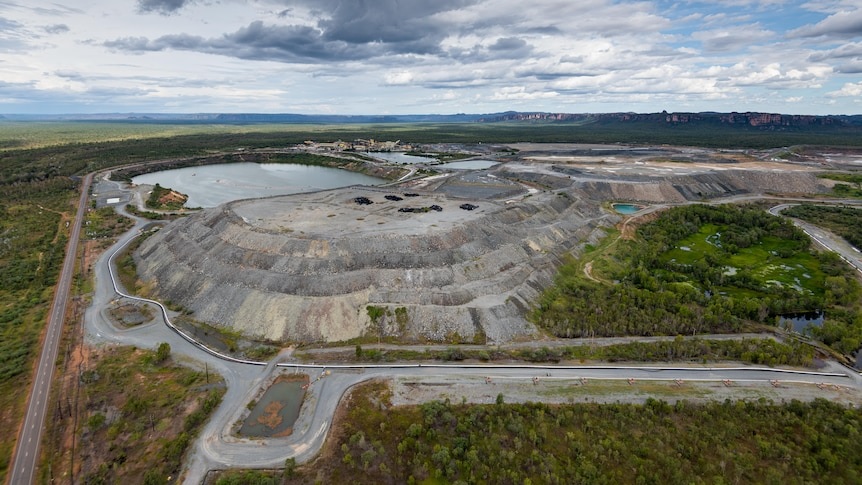
The company cleaning up the Ranger uranium mine in Kakadu says the project is running badly over budget and already late.
Crikey GLENN DYER AND BERNARD KEANE, SEP 28, 2023
Peter Dutton and the radioactive gang of nuclear spruikers in the media seem to think that if only they call for a “mature debate” long enough, small nuclear reactors (SMRs) will just pop into being.
But like any energy source, nuclear power comes with a host of practical challenges that don’t seem to feature in the op-eds and speeches about how SMRs are just around the corner.
Take, for example, the plight of Energy Resources of Australia (ERA) — the almost wholly owned subsidiary of Rio Tinto that operated the Ranger uranium mine in Kakadu in the Northern Territory from 1980 until 2021, when it was closed and rehabilitation work started………………………..(Subscribers only) more https://www.crikey.com.au/2023/09/28/uranium-mine-clean-up-over-budget-running/
Memo to Energy Resources of Australia : You have one job – clean up Kakadu uranium mess
https://www.acf.org.au/memo-to-era-you-have-one-job-clean-up-kakadu 26 Apr 23
Northern Territory and national environment groups have a clear message for Energy Resources Australia at ERA’s annual meeting in Darwin: focus on repair.
ERA is the former uranium mining company that operated the controversial Ranger uranium mine in Kakadu for 40 years, until the cessation of commercial operations in 2021.
The company, majority (86%) owned by Rio Tinto, is now responsible for delivering Australia’s costliest and most complex mine rehabilitation project.
ERA also holds the nearby Jabiluka mineral lease – the site of sustained and successful protest by the Mirarr Traditional Owners and civil society supporters from across Australia and around the world.
Despite Rio’s clear acknowledgement that any possible mining window for Jabiluka is now firmly closed, ERA continues to promote Jabiluka as an asset.
“Rio Tinto has formally accepted there is no credible business case or pathway to advance mining at Jabiluka,” said Environment Centre NT analyst Naish Gawen.
“Rio has stated it will no longer report a Mineral Resource for Jabiluka. It’s time for ERA to do the same.”
Environmentalists inside and outside the meeting will urge the ERA Board to drop the fiction of drilling at Jabiluka and address the fact of required repair at Ranger.
“Repairing the heavily impacted Ranger site is ERA’s legal responsibility,” said ACF’s nuclear policy analyst Dave Sweeney.
“ERA and Rio Tinto will be closely watched and long judged on their performance of this responsibility.”
ERA hopes to raise $369 million to continue rehabilitation of Ranger uranium mine in Kakad
ERA hopes to raise $369 million to continue rehabilitation of Ranger uranium mine in Kakadu The operator of a decommissioned uranium mine in Kakadu National Park is hoping to raise $369 million to continue paying for rehabilitation, with its current funds due to be exhausted by the end of September. Energy Resources Australia (ERA) has been trying to find enough money to return the Ranger uranium mine, 250 kilometres east of Darwin, to its pre-mining state, after operations shut in January 2020.
Darwin, Australia in the forefront for USA’s Pacific war against China

preparing for possible island battles in the Western Pacific by acquiring additional bases in the area.
The first such installation to be established is the Marine Rotational Force (MRF) in Darwin, Australia. Located by the Timor Sea in Australia’s Northern Territory, the MRF facility is closer to the southern Philippines and the South China Sea than to, say, Sydney or Melbourne. As a result of an agreement signed by President Obama during a visit to Australia in 2011, the U.S. presence has grown from just 200 Marines in the first rotation to approximately 2,500 today. While in Australia, these troops engage in a six-month stint of training and exercises, usually in conjunction with Australian military personnel. In the event of a war with China, the Darwin facility could also be used to support combat operations throughout the South China Sea area.
Restructuring the Force
With China now identified by the U.S. Department of Defense as the most dangerous, or “pacing” threat to U.S. national security, all of the military services have been instructed to prepare for a U.S.-China conflict. Accordingly, both the U.S. Army and the Marine Corps are restructuring their Asia-oriented forces — those committed to the Pentagon’s Indo-Pacific Command (INDOPACOM) — to be capable of conducting multiple offensive and defensive operations throughout the Western Pacific. This has generally entailed lightening their arms and equipment to allow for easy deployment and acquiring more forward operating bases in the region. Both also seek new mobile missile systems (often called “precision fires”) for attacks on enemy ships and land installations.
Pentagon Prepares for Island Combat in the Pacific as US-China Tensions Rise The U.S. has been securing new basing facilities and conducting large-scale combat exercises in the Western Pacific. By Michael T. Klare , TRUTHOUT, February 28, 2023
“………………………………………………… the notion of another major amphibious campaign in the Pacific has largely evaporated. Recently, however, the U.S. Army and Marine Corps have begun preparing for precisely such a contest as China has emerged as the principal adversary to U.S. hegemony and neighboring Pacific islands have acquired fresh strategic significance.
Any major U.S. conflict with China, it is widely believed, will largely entail air and naval operations in China’s maritime areas, notably the East and South China Seas and the waters surrounding Taiwan. Such a clash, strategists assume, will involve intense air and sea battles for control of these areas. But, as in World War II, the fighting will also envelop any islands housing the air and naval bases of either side, such as China’s installations on islands in the South China Sea and U.S. bases in Japan, Okinawa and the Philippines. Aside from air and missile attacks on these island facilities, either or both sides may seek to occupy them through amphibious assault, resulting in the sort of brutal combat seen in those same areas during World War II.
These islands are all part of (or enclosed within) what Chinese strategists call the “the first island chain” — the long string of archipelagos stretching from Japan in the north to the Ryukyus and Taiwan in the middle and the Philippines and Borneo in the south, together acting as a sort of barrier to Chinese naval projection into the greater Pacific. (Strategists also speak of a second, outer island chain, consisting of the Mariana Islands and the western Caroline Islands.)
The United States has long maintained a major military presence on islands up and down the first chain, both to project U.S. power into the region and to sustain U.S. combat operations in the event of a war. These include the major concentration of Air Force and Navy forces in Japan, the large Marine Corps contingent on Okinawa and bare-bones facilities in the Philippines. Along with any U.S. ships in the area, these bases would be among the primary targets for Chinese air and missile attacks at the onset of a U.S.-China conflict, followed, conceivably, by amphibious assaults aimed at occupying or demolishing them — which would no doubt provoke an aggressive U.S. response.
Located between the Chinese coastline and the first island chain are several contested island groups — the Spratly Islands in the South China Sea and the Senkaku Islands in the East China Sea — that could also become sites of U.S.-Chinese fighting in the event of a future conflict. The Spratlys are claimed in their entirety by China and in part by Brunei, Malaysia, the Philippines and Vietnam; the Senkakus (called the Diaoyu by the Chinese) are claimed by both China and Japan.
Both island groups have witnessed clashes between Chinese vessels and those of the other claimants in recent years, and the U.S. has vowed to assist its allies in defending their territorial claims against future Chinese harassment. Should China attempt to test this pledge in some significant fashion — say, by seizing islands now occupied by Filipino personnel — U.S. forces might engage in an amphibious operation to repel such an attack. A Chinese attempt to occupy the Senkakus — now administered by Japan — could produce a similar result, especially given President Biden’s recent assertion that the U.S. mutual defense treaty with Japan extends to the Senkakus.
To further complicate the picture, China has established military installations on some of the islands and atolls it claims in the South China Sea, in some cases using sand dredged from the seafloor to expand their size to allow the construction of airstrips. These installations, outfitted with an array of anti-air and anti-ship missiles, pose a potential threat to U.S. and allied warships operating in the area and so would constitute a prime target for amphibious assault in the event of a major U.S.-China conflict.
Restructuring the Force
With China now identified by the U.S. Department of Defense as the most dangerous, or “pacing” threat to U.S. national security, all of the military services have been instructed to prepare for a U.S.-China conflict. Accordingly, both the U.S. Army and the Marine Corps are restructuring their Asia-oriented forces — those committed to the Pentagon’s Indo-Pacific Command (INDOPACOM) — to be capable of conducting multiple offensive and defensive operations throughout the Western Pacific. This has generally entailed lightening their arms and equipment to allow for easy deployment and acquiring more forward operating bases in the region. Both also seek new mobile missile systems (often called “precision fires”) for attacks on enemy ships and land installations…………………………………………………………………………………………………………………………………………………………
Training for Pacific Island Wars
To put all these plans into practice, both military branches have been conducting large-scale combat exercises in the Western Pacific and securing new basing facilities there.
Especially indicative of the Marines’ new thinking is a series of exercises called “Resolute Dragon,” held in conjunction with the Japan Self-Defense Forces (JSDF) over the past two years. Although ostensibly focused on defending Japan’s main islands, the exercises appear to embody a larger strategic sweep, involving joint amphibious operations throughout the region.
During Resolute Dragon 2021, held December 4-17 of that year, some 2,650 Marines and 1,400 soldiers from the JSDF engaged in simulated maritime assault operations. …………………………………
Resolute Dragon 2022, held last October, retained many features of the 2021 version but included an additional twist: while 1,600 U.S. Marines were training alongside JSDF soldiers in Japan, another 1,900 were partnered with Philippines Marine Corps personnel in a parallel exercise,…………….. also involved participation by the JSDF Amphibious Rapid Deployment Brigade and Republic of Korea Marines, suggesting the multinational and region-spanning nature of U.S. planning for future amphibious operations.
………………………………………………. Guam was again the site of a simulated airborne assault one year later,
…………………………………. Acquiring Forward Operating Bases
In addition to these training and restructuring efforts, the Army and Marine Corps are preparing for possible island battles in the Western Pacific by acquiring additional bases in the area.
The first such installation to be established is the Marine Rotational Force (MRF) in Darwin, Australia. Located by the Timor Sea in Australia’s Northern Territory, the MRF facility is closer to the southern Philippines and the South China Sea than to, say, Sydney or Melbourne. As a result of an agreement signed by President Obama during a visit to Australia in 2011, the U.S. presence has grown from just 200 Marines in the first rotation to approximately 2,500 today. While in Australia, these troops engage in a six-month stint of training and exercises, usually in conjunction with Australian military personnel. In the event of a war with China, the Darwin facility could also be used to support combat operations throughout the South China Sea area.
Just recently, on February 2, Secretary of Defense Lloyd Austin signed an agreement with Philippine President Ferdinand Marcos Jr. affording the U.S. military access to four more bases in his country, in addition to four other facilities the Pentagon has been allowed to use under a previous accord.
The acquisition of these bases, along with all the other developments described above, demonstrate just how far the Army and Marine Corps have proceeded in their efforts to prepare for major combat operations in the Western Pacific. Clearly, senior Pentagon officials believe that a war with China is becoming increasingly likely, and that, when and if such a conflagration erupts, it will entail heavy fighting over key islands in that region.
………………………………… With diplomacy making little progress in resolving U.S.-China tensions, both sides are continuing to arm and train their forces for combat over the critical island bases of the Western Pacific. And while these contests may not resemble those of World War II in every respect, the simulated battles enacted in exercises like Forager and Resolute Dragon suggest they will be equally ferocious and bloody. https://truthout.org/articles/pentagon-prepares-for-island-combat-in-the-pacific-as-us-china-tensions-rise/?eType=EmailBlastContent&eId=b8136138-3739-4340-98df-2fe56169438b
Sacred site, nuclear target are neighbours
26 February 2023, By ROD MOSS https://alicespringsnews.com.au/2023/02/26/sacred-site-nuclear-target-are-neighbours/
At the distant point of the track is the Joint Defence Facility, colloquially known as the Space Base or Pine Gap. Prior to awareness of Kweyrnpe, I’d joined peace activists in the 1980s, protesting at its gates about its role in war, surveillance and nuclear targeting.
Not until the mid nineties did I understand the significance of Kweyrnpe to the Hayes families when Patrick senior asked me to take him there to talk about the paintings.
He’d mentioned it was a sacred site when, as its TO, he’d been toured through the defence facility.
His grandson, Vernon Alice had accompanied him. The base was honouring an agreement with the TOs whenever new installations occurred though the family remain none the wiser about its inner workings.
Some of the younger men had spent time in Big House, the correctional centre, visible to the south of Kweyrnpe.
Whatever privations they’d endured, several admitted it wasn’t too bad as, unlike many inmates, they’d been on their own country which possibly explained the casual acceptance of many of their sentences and recidivism.
Initially it was the rock formations that fascinated me and those and the sky were painted first. But it wasn’t finished with me. Or me with it.
Some weeks later I imagined, then added, a wild dog pack lurching stealthily towards the viewer over; intruders beneath that apocalyptic sky.
The ridge to the right separates the initiated men’s site, with its overhang of protected paintings, from the women and children’s side which is adorned with native pines / alukerrwe.
Though no signage existed in the small car park at the time of this painting, a visitors book and a board with brief information about its significance for Arrernte has been erected advising on appropriate behaviour. A simplified story about the place also fronts the paintings.
Internal briefing reveals Northern Territory government approach to defence regarding AUKUS nuclear submarines
ABC By Jacqueline Breen 8 Nov 22
The Northern Territory government quietly approached the defence department seeking to discuss Australia’s nuclear submarine program, according to internal briefing documents.
Key points:
- Defence says it initiated talks with ‘priority’ states, while the NT approached the department for talks
- The NT government says a review of the Top End’s ‘suitability and readiness’ is underway
- A government advisor says nuclear submarines from the AUKUS partners could rotate through Darwin
Amid rising tensions in the Indo-Pacific region, Australia last year announced plans to build a fleet of nuclear submarines as part of the AUKUS defence pact with the United States and United Kingdom.
The NT’s interest in the nuclear submarines has been revealed in a defence department briefing given to the incoming Albanese government after the May election.
The briefing was released under Freedom of Information laws in September, but the NT’s approach to the department’s Nuclear-Powered Submarines Taskforce has not been previously reported.
Large parts of the undated brief were redacted but a short section on “stakeholder engagement” was published in full…………………………………
The ABC asked what the NT government had sought to discuss with the taskforce, including whether it included the prospect of hosting the nuclear submarines in Darwin harbour.
A spokesperson for Chief Minister Natasha Fyles said: “The NT government is undertaking a review to assess the Territory’s suitability and readiness to support the Federal Government.”………………….
Defence hints at ‘services and support’ that might be needed in Darwin harbour
Visiting Australian and international submarines are seen periodically in Darwin harbour.
But it is generally considered an unfavourable training ground or deployment point because of the long stretches of shallow waters stretching out from the coast.
A shortlist of three potential locations for a new base for the nuclear submarines — all of them on the east coast — was announced in the lead up to the federal election…………………………
US and UK nuclear subs should rotate through Darwin, advisor says
Last week, Four Corners revealed plans for the deployment of up to six nuclear-capable American B-52 bombers in the Top End, as part of an ongoing expansion of military activity in Australia’s north.
Following the report, deputy chief minister Nicole Manison was asked whether the deployment would put the NT at greater risk from potential adversaries………..
Defence and national security are among the key “growth” sectors the NT government hopes will drive its ambitious push to achieve a $40 billion economy by 2030.
To help maximise defence investment in the Top End, Labor created the Canberra-based position of Defence and National Security Advocate to lobby government and industry on the NT’s behalf.
The current advocate, defence analyst Alan Dupont, declined an interview request.
But he has previously argued for an NT role in the transition to nuclear boats, which may not be ready before Australia’s current conventional fleet needs replacing.
“The navy’s nuclear-powered submarines are unlikely to be in the water much before 2040,” he wrote after the AUKUS deal was announced.
“Having our submariners train and operate as joint crews on American and British nuclear submarines rotating through Darwin and Perth would help fill the looming submarine capability gap.” https://www.abc.net.au/news/2022-11-08/nt-govt-seeking-involvement-aukus-nuclear-submarine-program/101585724
Energy Resources of Australia’s investor Willy Packer completely wrong on Jabiluka uranium
https://gac-v3.katalyst.com.au/news_items/era-minorities-completely-wrong-on-jabiluka— Kirsten Blair, 10 Oct 122, The Mirarr Traditional Owners of the Ranger Uranium Mine totally reject the commentary of Energy Resources of Australia minor investor Willy Packer as completely wrong. Like ERA’s former Independent Board Committee, Mr Packer mistakenly considers the question of Jabiluka’s development as simply being about Traditional Owner consent.
Representing the Mirarr, the Gundjeihmi Aboriginal Corporation (GAC) seeks to bring clarity to the debate, including correcting misunderstandings about the contemporary significance of cultural heritage, insurmountable environmental and technical challenges at the site and the true costs of mining in the Kakadu region.
“It is simply wrong to say that anyone can just change their mind about Jabiluka in the future. This place is unique, Kakadu is World Heritage listed because of its value to the whole world. This isn’t about Traditional Owners agreeing to mining, they are defending heritage that matters to all of us. It is also wrong to ignore the fact that mining at Ranger produced a two-billion dollar clean-up bill. This is not just something interesting for valuers to toss around. What Packer wants is offensive to the majority of Australians,” CEO of Gundjeihmi Aboriginal Corporation Justin O’Brien said.
“It’s also wrong to ignore the scale of the rehabilitation. The task is massive. ERA must rehabilitate Ranger to a standard such that it may be incorporated into the surrounding national park. The company is obliged, among other requirements, to physically separate tailings from the environment for 10,000 years.
“Further mining in Kakadu National Park would be insane,” Mr O’Brien said.
Mr Packer has raised the prospect of the compensation of ERA’s minority shareholders. “Mr Packer is asking to be compensated for his wager on an impossible project. It’s nonsensical and contrary to standard business risk. This is why investors shouldn’t and don’t run mining companies.
“We are living in the 21st century; iconic cultural heritage of international significance is not up for negotiation. Our hearts go out to the Traditional Owners at Juukan Gorge. Their loss has focused the nation and indeed the international investment community on supporting Traditional Owners and protecting cultural heritage. Everyone wants to ensure Kakadu National Park is protected.
“Mr Packer needs to stop blaming Rio Tinto for his own ignorance about cultural heritage. Of course, Rio Tinto, now knows better after Juukan Gorge.”
Mr O’Brien said the role of directors within ERA is to be perfectly honest with the market, including all minor investors. “Unlike many other proposed projects on Aboriginal land, Jabiluka is utterly impossible – it is unfeasible both culturally and technically. Rio Tinto has acknowledged this. It is hardly a secret.
“Mr Packer has complained of something having gone “terribly wrong” with his gamble at Jabiluka. In fact, the only thing ‘terribly wrong’ has been the false hope of ignorant investors.”
Ranger Mine uranium-contaminated waste trucked to Darwin suburb.
finding 50 kg of uranium tailings waste off-site is not a “small scale” event as claimed by ERA, and near three months for this radioactive event to make the media…
Potentially ‘deadly’ toxic waste accidentally trucked into Darwin
Energy Resources Australia is investigating how Ranger Mine toxic waste came to be transported through the Kakadu National Park and left on a truck in a Darwin suburb.
In June an excavator at Ranger Mine used to dig uranium tailings, was removed from the site with 50kg of mixed material still inside the vehicle.
The removal of any toxic waste is a major breach of Energy Resources Australia’s Ranger Mine rehabilitation plan as it poses a deadly contamination risk to people and the environment.
According to Energy Resources Australia the compacted waste was in a steel encased void of an excavator and not detected by radiation screening before leaving the site………………………
Supervising Scientist Keith Taylor said the breach was “regrettable” but he was confident there was no risk posed to people or the environment.
“There have been other incidents of this nature, most notably the 2004 prosecution which is of public record,” he said.
“There have been others as well but that is the most notable.”
Mr Taylor said scientists and ERA were working together to review the ‘clearance processes,’ which includes a radiation screening.
Mirarr Traditional Owners and the NLC were made aware of the incident on June 3.
In February, ERA announced the rehabilitation plan for Ranger Mine had blown out to an estimated $1.2bn.
It left the company scrambling for cash and relying heavily on its major shareholder Rio Tinto.
1 This month

of the week – Australians for War Powers Reform (AWPR)
To see nuclear-related stories in greater depth and intensity
 Antinuclear