Independents pressure Australia on nuclear ban treaty ahead of UN meeting
November 24th, 2023
11 independent parliamentarians have issued a public call on the Prime Minister to keep Labor’s promise to sign and ratify the UN Treaty on the Prohibition of Nuclear Weapons, ahead of the treaty’s Second Meeting of States Parties on 27 November – 1 December in New York.
The letter, which is signed by Kate Chaney MP, Zoe Daniel MP, Dr. Helen Haines MP, Senator David Pocock, Dr. Monique Ryan MP, Dr. Sophie Scamps MP, Allegra Spender MP, Zali Steggall OAM MP, Senator Lidia Thorpe, Kylea Tink MP, and Andrew Wilkie MP, states that “nuclear weapons do not promote security, they undermine it. We don’t accept the everlasting presence of these weapons.” They “urge the Government to advance its signature and ratification of the Ban Treaty without delay, to bring Australia in line with our South-East Asian and Pacific island neighbours.”
In regards to the letter, Federal Member for Goldstein, Zoe Daniel MP, said: “Voters supported Labor at the election, believing in good faith that they would implement their platform.
“Signing and ratifying was Labor Party policy before the election and has been reaffirmed since.
“In the most perilous times since the height of the Cold War this treaty is needed more than ever; voters want it and so do the vulnerable nations of the Pacific whose backyards were used for nuclear testing without their permission.
“Look at what Labor does, not what it says.”
Australia will attend the Second Meeting of States Parties as an observer, with a parliamentary head of delegation, after attending the first Meeting of States Parties in June 2022. It is expected that several states, including Indonesia, will ratify the treaty during the meeting, bolstering universalisation efforts. Around 100 countries will attend, along with over 400 civil society delegates.
Gem Romuld, ICAN Australia Director, welcomed the independents’ statement and Australia’s attendance at the meeting, but said the Albanese Government must do more, in line with their policy platform to sign and ratify the treaty.
“We welcome the Australian government’s engagement with the Treaty on the Prohibition of Nuclear Weapons, but observing meetings isn’t enough. There is clearly broad support for signing on to this treaty in the Australian Parliament, as indicated by the independents’ statement to the PM.
“Labor needs to make good on their promise to join the majority of our South East Asian and Pacific neighbours and sign and ratify the TPNW. We hope that Australia’s attendance at this meeting will spur efforts towards this urgent goal.”
Romuld is joining the international ICAN delegation at the meeting, including Yankunytjatjara-Anangu woman and second-generation nuclear test survivor Karina Lester, and current ICAN Executive Director, former Labor MP Melissa Parke.
Malaysian Govt urged to halt Australian company Lynas’ thorium extraction plan

https://www.thestar.com.my/news/nation/2023/11/24/govt-urged-to-halt-lynas-thorium-extraction-plan
SEVERAL DAP lawmakers have urged the government to review Lynas Malaysia’s license and stop the plan for thorium extraction from the waste produced at the factory of the rare earth producer.Chow Yu Hui (PH-Raub) said that he remains unconvinced that Lynas Malaysia was capable of extracting thorium.
“Let us not forget that the amount of waste from the Lynas plant was as large as five hills behind its factory. Will the new thorium extraction technology and Lynas be able to manage the radioactive waste which is expected to reach 1.2 million metric tonnes?” he asked reporters at the parliament media centre yesterday.
Oct 24, Science, Technology and Innovation Minister Chang Lih Kang announced that Lynas Malaysia would be allowed to import lanthanide concentrates until its licence expires in March 2026.
He also said that the Atomic Energy Licensing Board (AELB) decided to amend Lynas Malaysia’s license conditions after the company made a proposal to the licensing board about its thorium extraction technology.
With this, Chang said radioactive waste will not be produced after extraction and cracking and leaching activities are carried out on the lanthanide concentrate.
Khoo Poay Tiong (PH-Kota Melaka) said the Science, Technology and Innovation Ministry had announced on May 10 regarding the renewal of Lynas Malaysia’s license until Dec 31.
However, Khoo said that within a period of five months, the government, via AELB, had reviewed Lynas’ licence conditions.
“This matter has raised many concerns regarding the radioactive pollution and safety of locals,” said Khoo, who also wanted to know the parties that came up with the idea of thorium extraction.“We also want clarification from the government on what the possible market for thorium is,” he said.
Tan Hong Pin (PH-Bakri) also pointed out that thorium extraction technology was still in its initial phases, even at the international level.
“To what extent can thorium be extracted, used and commercially extracted? What are the effective measures that can be taken by the government to address the issue and ensure that Lynas will adhere to all the international standards in managing radioactive waste?” asked Tan.
On Nov 16, Chang promised that AELB will closely monitor the thorium extraction process from Lynas Malaysia’s waste material.
Fine print bombshell – share information which “undermines trust in government”, face jail

by Rex Patrick | Nov 21, 2023 https://michaelwest.com.au/government-review-of-secrecy-provisions-an-assault-on-democracy/?utm_source=newsletter&utm_medium=email&utm_term=2023-11-23&utm_campaign=Michael+West+Media+Weekly+Update
The Government has released its ‘Review into Secrecy Provisions’ whose fine print contains the greatest assault on democracy and accountability in many years, writes Rex Patrick.
Secrecy is woven into the fabric of the Australian Government. There are eleven general secrecy offences in the criminal code, 295 non-disclosure duties in 102 laws that attract criminal liability, and 569 specific secrecy offences in 183 laws.
A rationalisation and a review of secrecy laws was long overdue.
But buried in this review is a bombshell. Carried out by the Attorney-General’s Department, the review report makes a key recommendation that disclosure of information that could cause a loss of trust in Government should be criminalised.
Paragraph 146 states:
“… disclosure of information that harms the effective working of Government undermines the Australian community’s trust in government and the ability of Commonwealth departments and agencies to deliver policies and programs. It is appropriate that conduct which causes or is likely to cause prejudice to the effective working of government be covered [by secrecy provisions enforceable under the criminal code]”
The national security bureaucrats’ view seems to be that secrecy is essential to ensure trust in government!
The infamous character of Sir Humphrey Appleby in the Yes Minister TV show would be so proud.
If implemented, this recommendation would raise for public servants a criminal penalty for anything embarrassing, anything that might put a question in the way of policy information or even any wrongdoing by officials to the extent that revealing such might undermine confidence in government.
Review origins
The review stemmed from a report of the Parliamentary Joint Committee on Intelligence and Security looking into the 2019 ABC and the Smethurst media raids.
The review was intended to be the first step in a process that would ensure that these laws protect and are consistent with essential public interests, including the public interest in transparency in government decision-making, parliamentary scrutiny and accountability, and effective media investigations and reporting.
The recommendation of the Review that the Government create a new sweeping secrecy offence is quite at odds with the original objectives of this exercise, and is indeed quite contrary to proper principles of transparency, scrutiny and accountability of government.
While the review recommends the repeal of some redundant and outdated secrecy offences and non-disclosure duties, this very modest wind back of secrecy will be completely submerged by the development of “a new general secrecy offence” for inclusion in the Criminal Code Act 1995.
Protecting the leaders
To be clear, public servants already have a duty not to disclose information unless they are authorised to do so, or they are required/permitted to disclose it by law.
But it’s one thing to say that public servants should operate in a ‘privacy of government’ environment, it’s completely another thing to say that everything they discuss or write about is confidential and they should go to jail if they reveal anything.
Under the current ‘privacy of government’ arrangements, we are supposed to let the government quietly get on with business overseen by Parliament, the Auditor-General, the Ombudsman, the National Anti-Corruption Commission (NACC) and law enforcement, the Freedom of Information Regime and whistleblower protection.
This all sounds good; except the Parliament is very weak on oversight, the Auditor-General and Ombudsman are underfunded, the NACC operates in complete secrecy, the FOI regime is totally broken and whistleblower protections are simply non-existent.
Secrecy overreach
But even if the accountability of government systems did work, the Secrecy Review’s recommendation is overreach. It just re-enforces a culture of secrecy inside government that is already in need of a secrecy exorcism.
The much better view is that of former Sir Anthony Mason, AC KBE GBM KC in the High Court Case of Commonwealth v John Fairfax & Sons Ltd (“Defence Papers case“) [1980], before he was Chief Justice, when he said:
“It is unacceptable in our democratic society that there should be a restraint on the publication of information relating to government when the only vice of that information is that it enables the public to discuss, review and criticize government action.
His judicial pronouncement trumps the bureaucratic authors of a review that presses a recommendation that aims to protect senior leadership and ministers from embarrassment and the exposure of incompetence using the threat of criminal punishment. But his views only last until new laws are passed.
A captured Attorney General
The next question, of course, is whether the Attorney-General and the Government will act on this recommendation and remain beholden to his national security bureaucrats?
If his past record of betraying whistleblowers and his refusal to pursue Freedom of Information reforms is any guide, there aren’t any grounds for optimism.
Proceeding down this path would deal a great blow to democratic accountability and public interest journalism.
Proceeding down this path would deal a great blow to democratic accountability and public interest journalism.
It would embed the already harmful secrecy culture that exists across a vast expanse of government activity and could also blow a hole in Australia’s already weak and failing FOI regime.
But does the Government and the Attorney General want a political fight over a move towards excessive and unjustified secrecy? We will have to see, but if they do go down this path it’s a fight they’re sure to get.
A four-decade-old Pacific treaty was meant to preserve the ‘peaceful region’. Now experts say it’s being exploited
“We regret that the Aukus agreement … is escalating geopolitical tensions in our region and undermining Pacific-led nuclear-free regionalism,” says the Pacific Elders’ Voice,
the US and the UK will increase rotations of nuclear-powered submarines to Australia,
Pacific countries rushed to join the TPNW six years ago, reflecting their longstanding concerns about nuclear testing legacies. It’s the same regional sentiment that spurred the earlier Treaty of Rarotonga.
Daniel Hurst in Rarotonga
Nearly 40 years after the Treaty of Rarotonga came into force, the region is on edge about another rise in geopolitical tension
…………………………………………………………………………….heightened concerns permeated the region in the months leading up to the crucial meeting in the Cook Islands in August 1985 where leaders endorsed a nuclear-free zone.
Hawke, the Australian prime minister at the time, hailed the negotiations as a “dramatic success” that would send “a clear and unequivocal message to the world”, with the treaty leaving major powers in no doubt about the region’s desire to preserve “the South Pacific as the peaceful region which its name implies”.
But nearly 40 years after the Treaty of Rarotonga came into force, the region is on edge about another rise in geopolitical tensions – and critics say gaps in the treaty’s coverage are now being exploited.
“The treaty was really important to a lot of people, especially for grassroots activists,” says Talei Mangioni, a Fijian-Australian board member of the International Campaign to Abolish Nuclear Weapons Australia.
But it was quite watered down. And so even though we celebrate it today, what activists were saying in the 1980s and what progressive states like Papua New Guinea, Solomon Islands and Vanuatu were saying was that it wasn’t comprehensive enough.”
Mangioni, who researches the legacy of the Nuclear Free and Independent Pacific Movement, adds: “That’s what’s left us now with things like Aukus exploiting certain loopholes that have remained in the treaty.”
A hotbed of great-power competition?
When leaders met last week in the Cook Islands for the annual meeting of the Pacific Islands Forum (Pif), the Treaty of Rarotonga was once again on everyone’s lips.
The host of the summit, prime minister Mark Brown of the Cook Islands, argued the region “should rediscover and revisit our Rarotonga treaty to ensure that it reflects the concerns of Pacific countries today, and not just what occurred back in 1985”.
The treaty – signed on the 40th anniversary of the US atomic bombing of the Japanese city of Hiroshima – reflected “the deep concern of all forum members at the continuing nuclear arms race and the risk of nuclear war”.
Also known as the South Pacific Nuclear Free Zone Treaty, it designated a vast area from the west coast of Australia to Latin America where its parties must prevent the “stationing” (critics say this was always a deliberately ambiguous word) of nuclear weapons.
“The treaty prohibits the use, testing or stationing of nuclear explosive devices in the South Pacific,” the Cook Islands News explained on 7 August 1985.
“It does not prohibit countries from transporting nuclear devices through the zone nor does it prohibit nuclear-powered or equipped ships from calling in ports within the area.”
Today the parties to this treaty are Australia, Cook Islands, Fiji, Kiribati, Nauru, New Zealand, Niue, Papua New Guinea, Samoa, Solomon Islands, Tonga, Tuvalu and Vanuatu.
Once again, many of these nations are worried about the Pacific becoming a hotbed of great-power competition and the risk of that spiralling into conflict. Aukus feeds into some of those fears.
“We regret that the Aukus agreement … is escalating geopolitical tensions in our region and undermining Pacific-led nuclear-free regionalism,” says the Pacific Elders’ Voice, a group of former leaders whose members include Anote Tong, the ex-president of Kiribati.
The legality of a treaty – and the spirit of it
Under the Aukus plan, Australia will buy at least three Virginia class nuclear-powered submarines from the US in the 2030s, before Australian-built boats enter into service from the 2040s.
In the meantime, the US and the UK will increase rotations of nuclear-powered submarines to Australia, all aimed at deterring China from unilateral action against Taiwan or destabilising activities in the increasingly contested South China Sea.
One point of sensitivity is that it will be the first time a provision of the Nuclear Non-Proliferation Treaty regime has been used to transfer naval nuclear propulsion technology from a nuclear weapons state to a non-weapons state.
The Australian government has worked assiduously behind the scenes to reassure Pacific leaders on a key point about Aukus.
“Certainly when I was talking to people about it I would explain how it was consistent with the Treaty of Rarotonga,” says the Australian minister for the Pacific, Pat Conroy.
Donald Rothwell, a professor of international law at the Australian National University, concurs. The treaty, he notes, does not deal with nuclear-propelled submarines.
“My view is that Aukus is consistent with Australia’s Treaty of Rarotonga obligations,” Rothwell says.
“Pacific states may have concerns about the potential stationing of US and UK nuclear-armed warships in Australian ports under Aukus. The stationing of such vessels, as opposed to port visits, would be contrary to the treaty.”
The Australian prime minister, Anthony Albanese, sought to allay any Aukus-related concerns when he briefed Pacific leaders during the Pif meetings last week and appears to have held off any open rebellion.
Albanese insists the treaty remains “a good document” and “all of the arrangements that we’ve put in place have been consistent with that”.
But anti-nuclear campaigners point to the planned new aircraft parking apron at the Tindal base in the Northern Territory that will be able to accommodate up to six US B-52 bombers.
The US refuses to confirm or deny whether the aircraft on rotation would be nuclear-armed, in line with longstanding policy.
“We should delineate between a legalistic interpretation of the Treaty of Rarotonga and the spirit of it,” says Marco de Jong, a Pacific historian based in Aotearoa New Zealand.
“Pacific nations are growing increasingly frustrated at Australia’s reliance on loopholes and technicalities.”
Australia: the regional outlier
The Nobel prize-winning International Campaign to Abolish Nuclear Weapons says a good way for Australia to reassure the region about its long-term intentions would be to sign the newer Treaty on the Prohibition of Nuclear Weapons (TPNW).
This is an idea Albanese previously supported enthusiastically but which appears stalled.
One potential problem is that the US has warned that the TPNW – which includes a blanket ban on helping others to use or threaten to use nuclear weapons – wouldn’t allow for close allies like Australia to enjoy the protection of the American “nuclear umbrella”.
Documents obtained by the Guardian under freedom of information laws show the Australian defence department has warned the Labor government that the TPNW is “internationally divisive” because the nuclear weapons states “are all opposed”.
But Mangioni, a member of the Youngsolwara Pacific movement of activists, counters that Pacific countries rushed to join the TPNW six years ago, reflecting their longstanding concerns about nuclear testing legacies. It’s the same regional sentiment that spurred the earlier Treaty of Rarotonga.
“I would say that Australia is indeed the outlier compared to the rest of the Pacific states,” Mangioni says.
“Australia depends on nuclear deterrence as its policy but the rest of the Pacific states are nuclear abolitionists.” https://www.theguardian.com/world/2023/nov/19/a-40-year-old-pacific-treaty-was-meant-to-maintain-the-peaceful-region-now-experts-say-its-being-exploited
A Duty to Obey: David McBride, Whistleblowing and Following Orders
Australian Independent Media November 19, 2023, Dr Binoy Kampmark
The unpardonable, outrageous trial of Australian whistleblower David McBride was a brief affair. On November 13, it did not take long for the brutal power of the Commonwealth to become evident. McBride, having disclosed material that formed the Australian public about alleged war crimes by special forces in Afghanistan, was going to be made an example of.
McBride served as a major in the British army before becoming a lawyer for the Australian Defence Force, serving two tours in Afghanistan over 2011 and 2013. During that time, he gathered material about the culture and operations of Australia’s special forces that would ultimately pique the interest of investigators and lead to the Brereton Inquiry which, in 2020, made 36 referrals to the Australian Federal Police related to alleged war crimes.
McBride was subsequently charged with five national security offences. He was also denied immunity from prosecution under the near-unworkable provisions of the Public Interest Disclosure Act 2013 (Cth).
A central contention of the Crown was that McBride had, first and foremost, a duty to follow orders as a military lawyer. Such a duty flows on from the oath sworn to the sovereign, and no public interest could trump that undertaking. “A soldier,” contended Trish McDonald in her astonishing submission, “does not serve the sovereign by promising to do whatever the soldier thinks is in the public interest, even if contrary to the laws made by parliament.”
Even a layperson’s reading of the oath would surely make a nonsense of this view, but Justice David Mossop was in little mood to suggest otherwise. “There is no aspect of duty that allows the accused to act in the public interest contrary to a lawful order.” It was a point he would be putting to the jury, effectively excluding any broader public interest considerations that might be at play in disobeying a military order.
For anybody vaguely familiar with military law since the Nuremberg trials of Nazi leaders in 1945, such orders are never absolute, nor to be obeyed without qualification. Following orders without question or demur in all cases went out – or so the 1945 trials suggested – with Nazi officialdom and the Third Reich. There are cases when a soldier is under a positive duty to disobey certain orders. But McDonald was trapped in a fusty pre-Nuremberg world, evidenced by her use of a 19th century authority on military justice that would have sat well with the German defence team: “There is nothing so dangerous to the civil establishment of the state as an undisciplined or reactionary army.”
Chief counsel representing McBride, Stephen Odgers, hoped to drag Australian military justice into the twenty-first century, reaffirming the wisdom of Nuremberg: there are times when a public duty supersedes and transcends the narrow demands of authority, notably when it comes to the commission or concealment of crimes. The oath McBride swore as a member of the ADF to serve the sovereign comprised an element to act in the public interest, even when opposed to a lawful order…………………………………………..
With the trial resuming on November 17, Mossop issued another stinging order: that the Attorney-General’s office remove classified documents in McBride’s possession that could be presented to the jury at trial. As one of the defence team, Mark Davis, told reporters, “We received the decision just this afternoon, which was in essence to remove evidence from the defence.” In doing so, “The Crown, the government, was given the authority to bundle up evidence and run out the backdoor with it.”
With such gloomy prospects, McBride requested a new indictment on lesser charges, to which he pleaded guilty. Facing sentencing in the new year, he may be eligible to serve time outside carceral conditions, though a decade long stint is also in the offing. “The result of today’s outcome,” wrote transparency advocate and former Senator Rex Patrick, “is one brave whistleblower likely behind bars and thousands of prospective whistleblowers lost from the community.”………………………………………………………………………………………………………………..more https://theaimn.com/a-duty-to-obey-david-mcbride-whistleblowing-and-following-orders/
Barngarla traditional owners win national conservation award for successful radioactive waste campaign news on radioactive waste
16 NOVEMBER 2023, https://www.acf.org.au/barngarla-rawlinson-award-win—
The Barngarla Determination Aboriginal Corporation has been awarded the 2023 Peter Rawlinson Award for a successful seven-year campaign to protect their country in South Australia from the long-term threats posed by radioactive waste.
The award, which celebrates outstanding voluntary contributions to protect the environment, was announced at the Australian Conservation Foundation’s AGM in Melbourne tonight.
“In August 2023, a David and Goliath struggle came to an end when federal Resources Minister Madeleine King announced the federal government would not advance a plan inherited from the former Coalition government to locate a national radioactive waste facility near Kimba on SA’s Eyre Peninsula,” said ACF’s nuclear free campaigner Dave Sweeney.
“The federal waste plan was deeply flawed and inconsistent with international best practice.
“The Barngarla always opposed radioactive waste on their country and repeated calls for Morrison government ministers Matt Canavan and Keith Pitt to scrap the plan were ignored.
“For seven years, against sustained pressure and propaganda, they stood firm.
“In July 2023, the Federal Court found Minister Pitt’s decision to declare the Kimba site was not valid because it was biased, rather than based on an independent and thorough process.
“Federal Labor’s subsequent decision to accept the court’s judgment was a prudent and a proper call and offers an important chance to change the government’s approach to this complex issue.
ACF thanks the Barngarla and acknowledges the sustained and successful efforts of a proud community to honour their past and protect their future. All of us are richer as a result.”
Established in 1992, the Rawlinson Award is given annually in memory of ACF Councillor Peter Rawlinson – a zoologist, lecturer in biological science and environmental campaigner.
The Militarised University: Where Secrecy Goes to Thrive

Across Australia’s universities, the AUKUS military initiative between the US, UK and Australia, primarily focused on developing nuclear powered technology for a new submarine design, has titillated the managerial wonks of the tertiary education sector. In September, the Defence Department announced that 4,000 additional Commonwealth supported places (CSPs) for undergraduate students would be funded as part of its “Nuclear-Powered Submarine Student Pathways” strategy.
Then come the true villains of the peace, the arms manufacturers and companies that make the military-university-industrial complex intimate and obscene.
November 14, 2023, by: Dr Binoy Kampmark, https://theaimn.com/the-militarised-university-where-secrecy-goes-to-thrive/
For anyone wishing to bury secrets, especially of the unsavoury sort, there is one forum that stands out. Call it a higher education institution. Call it a university. Even better, capitalise it: the University. This is certainly the case in Australia, where education is less a pursuit of knowledge as the acquiring of a commodity, laid out spam for so much return. On that vast island continent, the university, dominated by a largely semi-literate and utterly unaccountable management, is a place where secrets are buried, concealed with a gleeful dedication verging on mania.
In its submission to what will hopefully become the Australian Universities Accord, the Australian Association of University Professors (AAUP) notes the following: “Unfortunately, university managements are increasingly disconnected from and unaccountable to academic values and academic communities. Students, Government and granting bodies, pay universities to deliver services according to academic values, but academics are impeded from working in accordance with academic values by interfering management. Further, the managers themselves do not work in accordance with academic values.”
Those in the defence industry have taken note. By turning such institutions of instruction into supply lines for research and development in armaments, they can be assured of secrecy conditions the envy of most intelligence agencies. Consulting, viewing, gaining access to relevant agreements, documentation and projects for reasons of public discussion is virtually impossible. These are always seen as “commercial” and “in confidence”.
Only the overly fed and watered members of the University Politburo are granted such access. Entry into the arcana of its deliberations is ceremonially tolerated via Academic Board meetings or Senatorial deliberations. Furthermore, academics throughout the university sport a reliable, moral flabbiness that will prevent them from spilling the beans and airing a troubled conscience, even in cases where leaking the documentation might be possible. Middle class, mortgage-laden status anxiety is the usual formula here, one that neuters revolutionary spirits – not that there was much to begin with.
Across Australia’s universities, the AUKUS military initiative between the US, UK and Australia, primarily focused on developing nuclear powered technology for a new submarine design, has titillated the managerial wonks of the tertiary education sector. In September, the Defence Department announced that 4,000 additional Commonwealth supported places (CSPs) for undergraduate students would be funded as part of its “Nuclear-Powered Submarine Student Pathways” strategy.
Institutes have sprung up running short courses to rake in the cash, such as the UWA Defence and Security Institute, which proudly claims to have created the “essential course for those seeking to gain a greater understanding of AUKUS Pillar 1 (nuclear powered submarines) and the impacts for Western Australia and beyond.” A course running for thirteen hours does not seem particularly hefty, but this is a field of glitz over substance.
Then come the true villains of the peace, the arms manufacturers and companies that make the military-university-industrial complex intimate and obscene. One of interest here is Israel’s Elbit Systems. For years, it has hammered out a reputation for manufacturing such lethal products as the Hermes 900 drone, which was first deployed in 2014 against targets in the Gaza Strip. It supplies the lion’s share of drones used by the Israeli Defence Forces for strikes and surveillance (the figure may be as high as 85%).
The company has managed to beef up many an activist’s resumé. Members of the Palestine Action group claim to have scored a victory in securing the permanent closure of two of Elbit’s sites in 2022, including the London head office. “The cracks in Elbit’s warehouse windows,” the organisation trumpeted in August this year, “do not simply represent cosmetic damage but also symbolise the crumbling foundations of Elbit’s relationship with the British State’s so-called defence interests.”
The corporation has also fallen out of favour with a number of investors. HSBC and the French multinational AXA Investment Managers divested from the company in 2018 and 2019 given its role in producing and commercialising cluster munitions and white phosphoros shells. In May 2022, the Australian sovereign wealth fund, Future Fund, excluded Elbit Systems Limited from its investment portfolio for much the same reasons.
Despite this blotched and blotted record, Elbit could still stealthily establish a bridgehead in the university sector down under through its creation, in 2021, of a Centre of Excellence in Human-Machine Teaming and Artificial Intelligence in Port Melbourne. Elbit Systems of Australia (ELSA) had two special clients: the state government of Victoria, which provided some funding via Invest Victoria, and RMIT University’s Centre for Industrial AI Research and Innovation. The two-year partnership with ELSA’s Centre of Excellence was intended to, according to ELSA’s then managing director and retired Major General Paul McLachlan, “research how to use drones to count the number of people in designated evacuation zones, then to co-ordinate and communicate the most efficient evacuation routes to everyone in the zone, as well as monitoring the area to ensure that everyone has been accounted for.”
Despite such seemingly noble goals, the opening ceremony in February 2021 had a distinctly heavy military accent, with senior representatives from the Royal Australian Airforce, DST (Defence Science and Technology) Group and the Capability Acquisition and Sustainment Group (CASG). No one present could deny that technology used in the context of civilian evacuations in the face of natural disaster could just as well be deployed in a military security context. As Antony Loewenstein has observed, “If you partner, as a state or a university, with a company like Elbit, you have blood on your hands because the record of Elbit in Israel-Palestine, on the US-Mexican border and elsewhere is so damned clear.”
Since the Hamas attacks on Israeli soil that took place on October 7, the ELSA-RMIT-Victorian relationship has seemingly altered. A war of horrendous carnage is being waged in the Gaza Strip. Activists claim to have scored a famous victory in securing the university’s hazy termination of any partnership with ELSA. “This is a significant victory for the Boycott, Divestment and Sanctions movement in Australia,” claims Hilmi Dabbagh of BDS Australia. “Australian universities have been put on notice that they will be targeted if they partner with any Israeli company or institution complicit in human rights abuses and attacks on Palestinians.”
Such confidence is admirably fresh, if a touch green. It is worth looking at the university statement, which is revealing in ways that have been entirely missed in the enthusiastic pronouncements of the BDS movement. The university claims to “not design, develop or manufacture weapons or munitions in the university or as part of any partnership. With regard to Elbit Systems, RMIT does not have a partnership with Elbit Systems or any of their subsidiaries, including Elbit Systems of Australia (ELSA).” Such wording avoids the language of termination, leaving the question open as to whether it ever had an arrangement to begin with, with its requisite project links. This will, as with much else, be deemed commercial, in confidence, and buried in the bowels of secrecy we have come to expect from the antipodean university sector.
Targeting Gaza From US Spy Hub in Australia
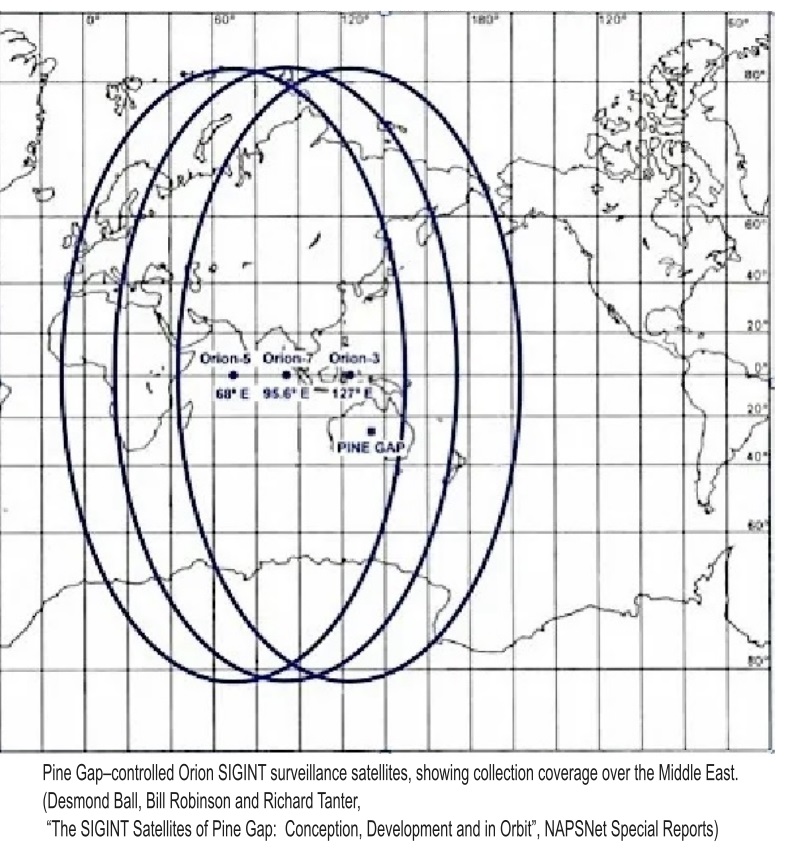
Peter Cronau reports on Canberra’s secret support for Israel’s brutal assault on Palestinians in Gaza through NSA intelligence satellites in the U.S. Pine Gap base near Alice Springs.
Peter Cronau, Declassified Australia https://consortiumnews.com/2023/11/03/targeting-gaza-from-us-spy-hub-in-australia/
The Pine Gap U.S. surveillance base located outside of Alice Springs in Australia is collecting an enormous range of communications and electronic intelligence from the brutal Gaza-Israel battlefield — and this data is being provided to the Israel Defence Forces.
Two large Orion geosynchronous signals intelligence satellites, belonging to the U.S. and operated from Pine Gap, are located 36,000 kms above the equator over the Indian Ocean. Frosxxxdxxxxxm there, they look down on the Middle East, Europe and Africa, and gather huge amounts of intelligence data to beam back to the Pine Gap base.xxxxxc
After collecting and analysing the communications and intelligence data for the U.S. National Security Agency (NSA), Pine Gap is providing it to the Israel Defence Forces, as it steps up its brutal assault on Palestinians in the Gaza enclave.
Pine Gap facility is monitoring the Gaza Strip and surrounding areas with all its resources, and gathering intelligence assessed to be useful to Israel,” a former Pine Gap employee has told Declassified Australia.
David Rosenberg worked inside Pine Gap as “team leader of weapon signals analysis” for 18 years until 2008. He is a 23-year veteran of the NSA.
“Pine Gap has satellites overhead. Every one of those assets would be on those locations, looking for anything that could help them.”
“Pine Gap facility is monitoring the Gaza Strip and surrounding areas with all its resources, and gathering intelligence assessed to be useful to Israel.”
Rosenberg says the personnel at Pine Gap are tasked with collecting signals such as “command and control” centres in Gaza, with Hamas headquarters often located near hospitals, schools and other civilian structures. “The aim would be to minimise casualties to non-combatants in achieving their objective of destroying Hamas.”
Since the Oct. 7 Hamas attack on Israel that killed over 1,400 Israelis, both military and civilian, the Israel Defence Forces has bombed hundreds of targets inside Gaza, killing far more than Hamas militants. An estimated 9,000 people so far have been killed, including most shockingly 3,600 children.
United Nations agencies have deplored the nearly four-week Israeli bombing campaign saying,
“Gaza has become a ‘graveyard’ for children with thousands now killed under Israeli bombardment, while more than a million face dire shortages of essentials and a lifetime of trauma ahead.”
Pine Gap’s Global Role
The sprawling satellite ground station outside Alice Springs, officially titled Joint Defence Facility Pine Gap (JDFPG), has been described as the United States’ second most important surveillance base globally.
About half the 800 personnel working at the Central Australian base are American, with Australian government employees making up fewer than 100 of the increasingly privatised staff.
The base is no mere passive communication collector. Personnel at the Pine Gap base provide vital detailed analysis and reporting on SIGINT (signals intelligence) and ELINT (electronic intelligence) it collects.
As well as surveillance of civilian, commercial and military communications, it provides detailed geolocation intelligence to the U.S. military that can be used to locate with precision targets in the battlefield.
This was first conclusively documented in a secret NSA document, titled “Site Profile,” leaked from the Edward Snowden archive to this writer and first published by ABC Australia in 2017:
“RAINFALL [Pine Gap’s NSA codename] detects, collects, records, processes, analyses and reports on PROFORMA signals collected from tasked target entities.”
These PROFORMA signals are the communications data of radar and weapon systems collected in near real-time — they likely would include remote launch signals for Hamas rockets, as well as any threatened missile launches from Lebanon or Iran.
“Pine Gap detects, collects, records, processes, analyses and reports on PROFORMA signals collected from tasked target entities.
This present war in Gaza is not the first time the dishes of Pine Gap have assisted Israel’s military with intelligence, including the detecting of incoming missiles, according to this previous report.
“During the [1991] Gulf War, Israeli reports praised Australia for relaying Scud missile launch warnings from the Nurrungar joint U.S.-Australian facility in South Australia, a task now assigned to Pine Gap.”
During the early stages of the 2003 U.S. invasion of Iraq, the NSA installed a data link to send early warning of any Iraqi missile launches detected directly to Israel’s Air Force headquarters at Tel Nof airbase, south of Tel Aviv.
Israel’s Access to ‘Five Eye’ Jewels
The NSA “maintains a far-reaching technical and analytic relationship with the Israeli SIGINT National Unit (ISNU),” according to documents published by The Intercept in 2014. The documents show the NSA and ISNU are “sharing information on access, intercept, targeting, language, analysis and reporting.”
“This SIGINT relationship has increasingly been the catalyst for a broader intelligence relationship between the United States and Israel.
“The Israeli side enjoys the benefits of expanded geographic access to world-class NSA cryptanalytic and SIGINT engineering expertise.”
It’s thanks to the Pine Gap base, with its satellites so strategically positioned to monitor the Middle East region, along with its targeting and analysis capability, that Israel is able to make use of these benefits.
Another leaked document, a targeting exchange agreement from the U.K.’s surveillance agency, GCHQ, reveals one of the “specific intelligence topics” shared among the NSA, GCHQ and ISNU was “Palestinians.” The document states that “due to the sensitivities” of Israeli involvement that particular program does not include direct targeting of Palestinians themselves.
The NSA considers their intelligence-sharing arrangement as being “beneficial to both NSA’s and ISNU’s mission and intelligence requirements.”
This wide intelligence sharing arrangement potentially opens up to the Israelis the “jewels” of the Five Eye global surveillance system collected by the NSA global surveillance network, including by Australia’s Pine Gap base.
Declassified Australia asked a series of questions of the Australian Defence Department about the role of the Pine Gap base in the Israel-Gaza war, and about the legal protections that may be in place to defend personnel of the base should legal charges of war crimes be laid. No response was received by deadline.
Peter Cronau is an award-winning investigative journalist, writer, and film-maker. His documentaries have appeared on ABC TV’s Four Corners and Radio National’s Background Briefing. He is an editor and cofounder of DECLASSIFIED AUSTRALIA. He is co-editor of the recent book A Secret Australia – Revealed by the WikiLeaks Exposés.
This article is from Declassified Australia.
Mapping the revolving door between government and the weapons industry
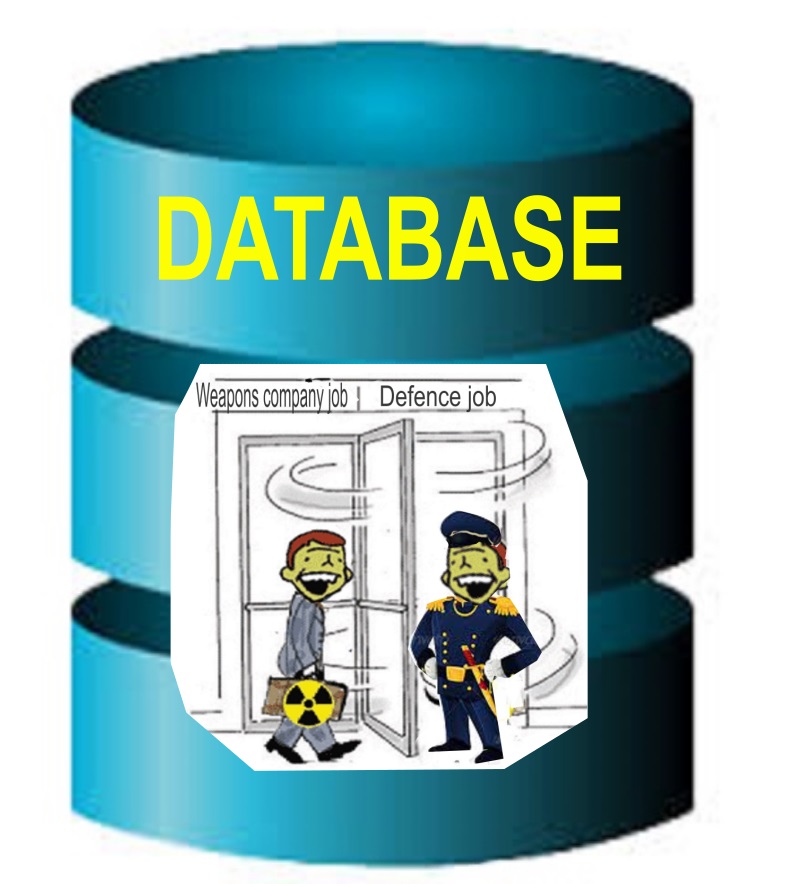
Undue Influence revolving door database progresses
MICHELLE FAHY, Undue Influence Substack, NOV 4, 2023
Some 80 per cent of the United States’ four star generals and admirals go on to work for US weapons-making companies, it was revealed last month. US arms industry expert William Hartung also noted that with the Pentagon’s budget soaring towards US$1 trillion a year, and security challenges posed by Russia and China front and centre, an independent assessment of the best path ahead for the US was vital.
Yet, he said, “more often than not, special interests override the national interest in decisions on how much to spend on the Pentagon, and how those funds should be allocated”.
Hartung’s revelations were made possible by US research tracking the revolving door between the US government and the weapons industry.
In Australia, the defence budget is also rising. At the same time, transparency and accountability from our politicians and the Defence Department continues to decline.
The US research has reinforced the importance of the Australian revolving door database that I am creating, in collaboration with a research assistant and a technical specialist. This project was made possible by a grant from the Jan de Voogd Peace Fund.
Revolving door a feature in major defence procurement in Australia
My two-part investigative feature, first published by Declassified Australia in July, put the spotlight on the revolving door between the Australian government and the world’s sixth largest arms manufacturer, BAE Systems. It also contributed to a referral to the National Anti-Corruption Commission (NACC).
The investigation revealed close links between government and industry – information that will be included in the revolving door database – and provided a rare insight into the Australian revolving door in action. It exposed how the government gave former senior BAE insiders influential behind-the-scenes roles before and during a tender process that BAE went on to win. Few of these senior roles were publicly acknowledged by the government.
The procurement of the Hunter class frigates, now at $46 billion (and rising), is Australia’s second largest ever defence acquisition. The Greens’ defence spokesman David Shoebridge made the referral to the NACC.
Database progress to date
The revolving door database has been funded by the Jan de Voogd Peace Fund (administered by the NSW Quakers). The project is being auspiced by the Medical Association for Prevention of War.
The database architecture is now complete following a detailed and complex development process which enables arms company contract data to be extracted from the government’s public databases. The website will aggregate hundreds of contract values into a single annual figure for each major arms corporation, updated daily. With major multinational arms makers having up to 20 or more relevant subsidiaries, it is vital to be able to combine the total value, and this is what the database will do.
The names of people who have occupied 60 senior military, political and defence-related positions back to the year 2000 have been compiled. We will now investigate the existence of subsequent arms-related private sector positions.
How you can help
- Send information on revolving door appointments
Email us at undueinfluence@protonmail.com with information about revolving door appointments that have occurred since 2000 between the defence-related public sector and the arms industry (in either direction). - Fund our ongoing investigative work
While much of my focus in the coming months will be on the revolving door database, I am determined to continue my investigative research and writing as there is much more to be revealed. If you are able to upgrade [on Substack] from a free to a paid subscription to Undue Influence, it would be greatly appreciated. The grant funds are exclusively for work on the database and our regular investigative research and writing continues to rely heavily on reader subscriptions…………………..
https://undueinfluence.substack.com/p/mapping-the-revolving-door-database-progress?utm_source=post-email-title&publication_id=297295&post_id=138509639&utm_campaign=email-post-title&isFreemail=true&r=1ise1&utm_medium=email
Australia must lobby US for ‘no first use’ of nuclear weapons, says ex-minister Gareth Evans
Former foreign minister says it is ‘sheer dumb luck’ that arms have not been used in the past 78 years and urges leadership on control measures
Daniel Hurst, Guardian, 1 Nov 23
Labor luminary and former foreign minister, Gareth Evans has urged Australia to lobby the US to promise “no first use” of nuclear weapons, warning that global arms control agreements “are now either dead or on life support”.
Evans says that in the wake of sealing the Aukus nuclear-powered submarine deal, the Albanese government should give “some comfort to ALP members and voters that we are really serious about nuclear arms control”.
Evans told Guardian Australia it was “sheer dumb luck” that the world had avoided a nuclear attack in the 78 years since the bombing of Hiroshima and Nagasaki, and “it is utterly wishful thinking to believe that this luck can continue in perpetuity”.
Evans joined arms control experts and former senior diplomats in urging the prime minister, Anthony Albanese, to take “a leadership role in addressing the rising nuclear threats in our region”.
Australia should appoint “a high-level envoy to engage our regional partners on an agenda of nuclear confidence building and preventive diplomacy measures”, according to a letter from the Asia-Pacific Leadership Network for Nuclear Non-Proliferation and Disarmament (APLN).
While the group’s letter to Albanese is not specific about policy measures, Evans offered his own view that Australia’s status as a close US ally “gives us a particularly significant potential role” in pushing to reduce nuclear risks.
“The most immediately useful step we could take would be to support the growing international movement for the universal adoption of No First Use doctrine by the nuclear-armed states,” Evans told Guardian Australia…………………………………….
In a stark warning about the security environment, Evans said the risk of nuclear weapons being used through human error, miscalculation or system error was “greater than ever, not least given new developments in AI and cyber-offence capability”.
“Nearly 13,000 nuclear warheads are still in existence, with a combined destructive capability of close to 100,000 Hiroshima- or Nagasaki-sized bombs, and stockpiles, especially in our own Indo-Pacific region … are now growing again,” he said.
“The taboo against their deliberate use is weakening, with Russia’s president, Vladimir Putin, talking up this prospect in language not heard since the height of the cold war.”
In addition to seeking universal support for “no first use”, Evans said other potential risk-reduction measures include cutting the number of weapons ready for immediate use……………………………………………….
The APLN letter gained support from high-powered experts including John Carlson, the former head of the Australian Safeguards and Non-Proliferation Office, and Ramesh Thakur, a former UN assistant secretary general.
Other signatories included John Tilemann, a former diplomat and international civil servant with the International Atomic Energy Agency, and Gary Quinlan, a former Australian ambassador to the UN.
The leader of the Greens in the Senate, Larissa Waters, backed the letter with the former Australian Democrats leader Natasha Stott Despoja and the former Labor minister for international development Melissa Parke. https://www.theguardian.com/australia-news/2023/nov/01/australia-must-lobby-us-for-no-first-use-of-nuclear-weapons-says-ex-minister-gareth-evans #nuclear #antinuclear #nuclearfree #NoNukes
AUKUS nuclear submarine deal triggers accusations over cost and construction
SMH, By Daniel Keane 30 Oct 23
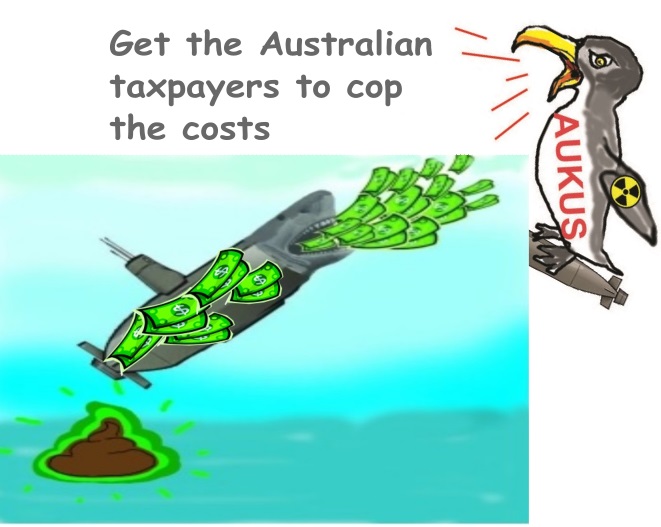
South Australia’s premier remains insistent that the nation’s future nuclear-powered submarines should be constructed in Adelaide, despite a prominent call for the vessels to instead be built by, and purchased from, another AUKUS nation in order to save taxpayers “billions and billions of dollars”.
Key points:
- Alexander Downer has called for all of the nation’s future nuclear subs to be built overseas
- But SA premier Peter Malinauskas says Australia should build them “for national security reasons”
- Mr Downer also said the question of storage of AUKUS nuclear waste needs to be addressed
Former foreign affairs minister Alexander Downer has described the AUKUS project’s $368 billion price tag as “eye-watering”, and said he expects a future federal government to abandon the local construction element of the deal.
“We’re just going to wreck Australia if we keep promising to spend money on any manner of projects and have no idea where the money is going to come from,” Mr Downer told the ABC on Sunday.
“I don’t think the existing federal parliament or the next one is going to make a decision on this, but I think down the years, in the end, the federal government will decide that this is just too expensive, and they will buy the submarines from overseas.
“I’d be almost certain of that.”
Responding to similar comments Mr Downer made in The Weekend Australian, SA premier Peter Malinauskas said it is vital that Australia develops the ability to build the vessels “for national security reasons”, but also because “neither the US nor the UK in the long term have the capacity” to construct Australia’s entire fleet.
“They are struggling to meet their own demand,” Mr Malinauskas said.
Under the current terms of the AUKUS pact, Australia will get three US-made Virginia-class submarines while it builds up to eight nuclear-powered submarines of its own.
Mr Malinauskas accused Mr Downer of “misunderstanding” the intentions and expected outcomes of AUKUS…………………………………………………………..
But Mr Downer has rejected the premier’s comments, and in turn accused Mr Malinauskas of failing to understand the economics of AUKUS.
“I have a challenge to the premier — to explain where all this money is going to come from, and why does the premier think it’s better we spend eye-watering amounts of money on building nuclear submarines in Adelaide rather than investing … in other parts of our economy?” Mr Downer said……………………
“Peter Malinauskas and [SA opposition leader] David Speirs will be well and truly retired by the time this project comes about.
“It’s easy for them to make any manner of promises about times in the future, which will be way beyond their political life span — we can all make promises about the Second Coming.”
Mr Downer also said the question of storage of nuclear waste from the subs had not been satisfactorily addressed.
“There’s some elements of the Labor Party who have reservations, or are opposed to, nuclear-powered submarines and any association with nuclear power, and so I part company with them on that,” he said.
“But you’re going to have to store the waste somewhere. I’m not sure where that will be stored.” https://www.abc.net.au/news/2023-10-29/sa-premier-defends-aukus-after-alexander-downer-questions-cost/103036822
The Independent and Peaceful Australia Network (IPAN) steps up drive to keep U.S. military expansion out of Australia
By Bevan Ramsden | 26 October 2023 https://independentaustralia.net/politics/politics-display/ipan-steps-up-drive-to-keep-us-military-expansion-out-of-australia,18020
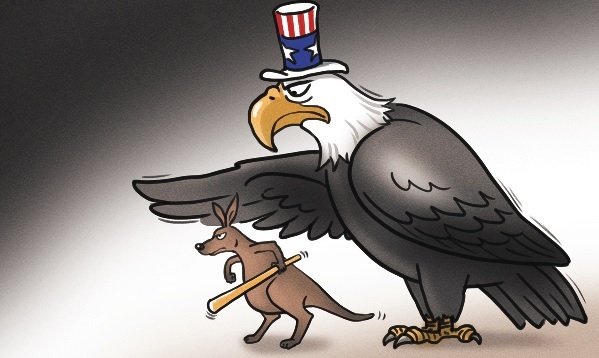
The Independent and Peaceful Australia Network (IPAN) has produced a petition opposing the Force Posture Agreement (FPA) which is enabling U.S. militarisation of Australia in preparation for the U.S. to support/launch war from the Australian continent against China.
The e-petition to Parliament is an instrument for peace calling for the termination of the FPA.
It can be signed HERE.
The devastation of war, currently in Ukraine and in Palestine, confronts us on TV on a daily basis. All peace-loving people cry out for a ceasefire on both war fronts to enable, hopefully under United Nations auspices, conferences of all affected parties to find solutions that meet the security needs of all parties and free non-combatants from the horrors of war.
But concern about these wars should not blind us to the preparations for war occurring on our own continent under the auspices of the United States and with the enthusiastic complicity of successive Australian governments.
When defence matters are discussed, much is made of the U.S.-Australia alliance. But when the U.S. militarisation of Australia is considered, the alliance pales into insignificance compared to the U.S.-Australia FPA. It emerged as a concept from former President Barack Obama’s “Pivot to Asia” of the U.S. armed forces, in which he announced the stationing of U.S. marines in Darwin each year to train for war with our Defence Force.
The “Pivot” was a strategy designed to “contain” China and maintain U.S. hegemony in the Asia/Pacific area. President Obama’s concept was enthusiastically received by all politicians of both major parties.
Subsequently, the Gillard and Abbott Governments, in conjunction with their U.S. defence counterparts, produced a greatly expanded concept, the FPA, providing “an operational posture” for U.S. forces in Australia, a gateway for U.S. militarisation of Australia. It was signed by the Abbott Government and the United States Government in 2014.
The FPA:
- facilitates the stationing in Darwin, for six months each year, of up to 2,500 U.S. Marines; they are trained and equipped for immediate deployment and while in Australia, train for war in exercises with the Australian Defence Force. They are not under the control of the Australian Government. They are under the control of the U.S. Indo-Pacific Command;
- facilitates unimpeded access to Australia’s airfields and airport facilities for U.S. fighter planes and bombers including the stationing of up to six B-52 bombers at RAAF Base Tindall. B-52 bombers were used to devastate Vietnam in that war and some are capable of carrying nuclear weapons;
- facilitates unimpeded access to Australia’s seaports for U.S. naval vessels including their nuclear submarines at HMAS Stirling in WA;
- facilitates the establishment of storage facilities for aircraft fuel, spare parts and munitions under U.S. military control. This includes huge fuel storage facilities at East Arm, Darwin and logistics facilities for storage of equipment, munitions and spare parts at Bandiana in Victoria;
- opened the door for the embedding of U.S. military intelligence operatives within the Australian defence intelligence organisation now called the Combined Intelligence Centre — Australia; and
- under the FPA, a U.S. command centre has been established in Darwin to control U.S. aircraft operations and another command centre in Darwin to control U.S. marine operations.
In short, the U.S. could launch and control military operations from Australia.
I have stressed the words “unimpeded access” because they are the words used in the Agreement.
Article IV of the FPA states:
…United States Forces and United States Contractors shall have unimpeded access to and use of Agreed Facilities and Areas for activities undertaken in connection with this Agreement.
Australia hereby grants to the United States operational control of Agreed Facilities and Areas…
Part 4 of Article VII states:
‘As mutually determined by the Parties, aircraft, vehicles, and vessels operated by or for United States Forces shall have access to aerial ports and seaports of Australia and other locations, for the delivery to, storage and maintenance in, and removal from the territory of Australia of United States Forces’ prepositioned materiel.’
Activities under Article IV include:
‘…training, transit, support, and related activities; refuelling of aircraft; bunkering of vessels; temporary maintenance of vehicles, vessels, and aircraft; temporary accommodation of personnel; communications; prepositioning of equipment, supplies, and materiel; deploying forces and material; and such other activities as the Parties may agree.’
Summing up, the FPA, with the enthusiastic support of the Australian Government, is facilitating increased U.S. militarisation of Australia to support U.S. military operations in the Indo-Pacific from which it could launch or support a war against China. This has been done with the agreement of both major political parties.
The FPA lasts 25 years from the date of signing but has a clause facilitating termination if either party gives one year’s notice.
IPAN is campaigning to have this FPA terminated. This would be a strong step in the direction of keeping Australia out of another U.S. war. And this time, one which would have a catastrophic impact on the Australian people.
If you wish to join this campaign, IPAN has a parliamentary e-petition which is open until 15 November 2023 for signature and it can be accessed by using your mobile phone and this QR code. [on original] #nuclear #antinuclear #NoNukes
Australians Call to End Long Persecution of WikiLeaks’ Julian Assange.
ROBIN ANDERSEN, 25 Oct 23 https://fair.org/home/australians-call-to-end-long-persecution-of-wikileaks-julian-assange/
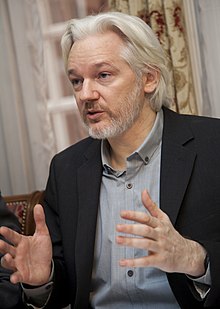
As WikiLeaks founder and Australian citizen Julian Assange has nearly exhausted his appeals to British courts against a US extradition order, Australia has ramped up its advocacy on his behalf. Six Australian MPs held a press conference outside the US Department of Justice on September 20 to urge the Biden administration to halt its pursuit of Assange (Consortium News, 9/20/23).
They came representing an impressive national consensus: Almost 80% of Australian citizens, and a cross-party coalition in Australia’s Parliament, support the campaign to free Assange (Sydney Morning Herald, 5/12/23). Opposition leader Peter Dutton joined Prime Minister Anthony Albanese in urging Assange’s release.
The day before, an open letter to the Biden administration signed by 64 Australian parliamentarians appeared as a full-page ad in the Washington Post. It called the prosecution of Assange “a political decision” and warned that, if Assange is extradited, “there will be a sharp and sustained outcry” from Australians.
Given what is at stake for freedom of the press in the Assange case, and the intensified pressure from Australia—a country being wooed to actively enlist in the US campaign against China by spending $368 billion on nuclear submarines and supersonic missiles (Sydney Morning Herald, 8/10/23)—we ought to expect coverage from the Washington Post, New York Times and major broadcast networks. But coverage of the press conference was virtually absent from US corporate media.
Prosecuting publishing
The US has been seeking to extradite Assange from Britain on charges relating to the leaking of hundreds of thousands of documents to international media in 2010 and 2011, many of which detailed US atrocities carried out in the Afghanistan and Iraq wars and other human rights violations, such as the torture of detainees at Guantánamo Bay (Abby Martin, 3/10/23).
In 2019, President Donald Trump’s administration brought Espionage Act charges against Assange for obtaining and publishing leaked documents, a dramatic new attack on press freedom (FAIR.org, 8/13/22). Assange could face 175 years in a supermax prison if convicted under the Espionage Act, “a relic of the First World War” meant for spies (American Constitution Society, 9/10/21), and not intended to criminalize leaks to or publications by the press. The Biden administration has rolled back much of the legal mechanism used by Trump to attack journalists, but President Joe Biden has reaffirmed the call to extradite Assange.
Assange also coordinated with international news outlets to publish other material known as Cablegate about the “inner-workings of bargaining, diplomacy and threat-making around the world” (Intercept, 8/14/23). Indeed, the New York Times (e.g., 11/28/10) published many articles based on the WikiLeaks documents, which had been sent to Assange by US army whistleblower Chelsea Manning.
US officials have repeatedly justified their case by charging that Assange put lives at risk; to date, no evidence has surfaced that any individuals were harmed by the leaks (BBC, 12/1/10; Chelsea Manning, Readme.txt, 2022). As the Columbia Journalism Review (12/23/20) admonished, don’t let the Justice Department’s
misdirection around “blown informants” fool you—this case is nothing less than the first time in American history that the US government has sought to prosecute the act of publishing state secrets, something that national security reporters do with some regularity.
US officials have repeatedly justified their case by charging that Assange put lives at risk; to date, no evidence has surfaced that any individuals were harmed by the leaks (BBC, 12/1/10; Chelsea Manning, Readme.txt, 2022). As the Columbia Journalism Review (12/23/20) admonished, don’t let the Justice Department’s
misdirection around “blown informants” fool you—this case is nothing less than the first time in American history that the US government has sought to prosecute the act of publishing state secrets, something that national security reporters do with some regularity.
In failing health after suffering a stroke, Assange has been held in London’s high-security Belmarsh Prison since he was removed from the Ecuadorian Embassy in April 2019. He had sought asylum at the embassy in London in 2012 to avoid being sent to Sweden for questioning over sexual assault allegations, because Sweden would not provide assurances it would protect him from extradition to the US. Sweden dropped charges against Assange in November 2019 (BBC, 11/19/19), after he was in British custody.
International condemnation
The Australian diplomatic mission coincided with the convening of the UN General Assembly in New York City, where President Lula da Silva of Brazil condemned the prosecution of Assange, offering yet another opportunity for US corporate media to cover the strong international opposition to Assange’s treatment.
A video (9/19/23) of Lula speaking at the opening of the UN General Assembly was widely circulated on social media. “Preserving press freedom is essential,” Lula declared. “A journalist like Julian Assange cannot be punished for informing society in a transparent and legitimate way.”
Former British ambassador Craig Murray commented about Lula’s reception at the UN (Twitter, 9/17/23):
It is really not normal for the hall at the UN General Assembly to break into this kind of spontaneous applause. The US has been losing the room internationally for a decade. The appalling treatment of Julian is a focus for that.
US media absence
Yet, with a few exceptions (Fox News, 9/20/23; The Hill, 9/21/23; Yahoo News, 9/21/23), none of this made the major US news outlets.
Over a week later, Business Insider (10/1/23) ran a long piece that featured an interview with Gabriel Shipton, Assange’s half-brother. It pointed out that Assange had become an obstacle to US plans to involve Australia in its aggression toward China, quoting the PM. But the piece also hashed through a number of long-debunked claims, including one that reminded readers that Mike Pompeo once called Assange “a fugitive Russian asset” (FAIR.org, 12/03/18; Sheerpost 2/25/23), and another that repeated US assertions that WikiLeaks releases would put the US at risk.
The New York Times has been conspicuously absent from the coverage of Assange. Though the Times signed a joint open letter (11/28/22) with four other international newspapers that had worked with Assange and WikiLeaks, appealing to the DoJ to drop its charges, the paper has remained almost entirely silent on both Assange and the issues raised by his continued prosecution since then.
As FAIR pointed out, during the Assange extradition hearing in London, the Times
published only two bland news articles (9/7/20, 9/16/20)—one of them purely about the technical difficulties in the courtroom—along with a short rehosted AP video (9/7/20).
There were no editorials on what the case meant for journalism. FAIR contributor Alan MacLeod noted that the Times seemed to distance itself from Assange and WikiLeaks, and its own reporting on the Cablegate scandal, coverage that boosted the papers’ international reputation.
Other opportunities for coverage have been missed by the Times. For instance, Rep. Rashida Tlaib wrote a letter (4/11/23), signed by six other members of the Progressive Caucus, calling for the DoJ to drop the charges against Assange. Tlaib cited support from the ACLU, Amnesty International, Reporters Without Borders, the Committee to Protect Journalists, Defending Rights & Dissent and Human Rights Watch, and many others, stating that his prosecution “could effectively criminalize” many “common journalistic practices.” The letter was covered by The Nation (4/14/23), the Intercept (3/30/23), Fox News (4/1/23), The Hill (4/11/23) and Politico (4/11/23), but the Times and other major newspapers were conspicuously silent.
When Assange lost his most recent appeal against extradition in June, a few outlets reported the news online (e.g., AP, 6/9/23; CNN, 6/9/23), but not a single US newspaper report could be found in the Nexis news database. (Newsweek‘s headline framed the news as a “headache for Biden”—6/8/23—rather than a blow for press freedom.) The Times only vaguely referred to the news (Assange “keeps losing appeals”) two weeks later in a feature (6/18/23) on the late whistleblower Daniel Ellsberg, who had criticized Biden’s decision not to drop the case against Assange.
The world is watching
A huge collective breath is being held as the world watches to see what will happen to Assange, the most famous publisher on the globe. Will he be returned to his country and his family by Christmas, as the Australian MPs have requested? Or will Britain and the US continue to slowly execute him?
Assange’s case is expected to be discussed during Prime Minister Albanese’s current visit to the US, which includes a state dinner hosted by Biden on October 25. MP Monique Ryan, part of the pro-Assange delegation, told news outlets: “Our prime minister needs to see this as a test case for standing up to the US government. There are concerns among Australians about the AUKUS agreement, and whether we have any agency” (Business Insider, 10/1/23).
As Common Dreams (9/19/23) quoted from the delegation’s letter:
We believe the right and best course of action would be for the United States’ Department of Justice to cease its pursuit and prosecution of Julian Assange…. It is well and truly time for this matter to end, and for Julian Assange to return home.
South Australia takes another bold leap into deep green energy future
There is little doubt that South Australia is leading the world on the
integration of wind and solar. Now, it’s about to take an even bolder
leap into a deep green energy future through its hydrogen jobs plan.
The state has sourced more than 70 per cent of its electricity demand from wind
and solar over the past year, and when RenewEconomy interviewed state
energy minister Tom Koutsantonis on Sunday afternoon for its Energy
Insiders podcast, it was nearing the end of a 60-hour period where it
average more than 100 per cent wind and solar. Earlier that day, the state
had reached a stunning new peak of 264 per cent “potential” wind and
solar, the combination of renewable energy actually produced, and the
renewable energy curtailed by the lack of a market.
South Australia response to the this excess of green energy is to encourage even more, with
another bold step that it hopes will make it a global leader in green
hydrogen, just as it has done with renewables.
Renew Economy 25th Oct 2023
Australian Submarine Agency stated Osborne, South Australia for building nuclear submarines, – but Osborne is totally unsuitable!

25 Oct 23
The latest reliable information is that Osborne, South Australia, is unsuitable for the construction of the new hybrid nuclear power submarines in that it is far too small.
Besides it in its inherent size, being too small without any capacity for expansion, the submarines building
facility will require two concentric buffer zones for which there is simply no room based on the reports in
InDaily.
The first of these buffer zones will be immediately surrounding the Osborne complex and will be a “
shoot to kill“ buffer zone for high security.
The external buffer zone surrounding the first one will be fairly substantial and is to ensure complete
environmental and similar protection
It is therefore daydreaming to put up Osborne for the construction of the hybrid nuclear powered
submarines
From INDAILY 11 October 2023, Radiation monitoring at SA nuclear subs: – “In a written response to InDaily, a spokesperson from the Australian Submarine Agency said they had informed the State Government, Port Adelaide Enfield Council, and the PortnAdelaide residents Environment Protection group of the environmental baseline contamination assessment at Osborne.
“This assessment will determine existing levels of non- radiological contaminants and background radiation on the preferred site for the Submarine Construction Yard and surrounding areas,” the spokesperson said.” –
This is at first instance no more than a good political photoshoot based on ignorance .
It seems that as pointed out by Rex Patrick the government has failed to learn anything from the ill fated and expensive Kimba situation
Having regard to the warnings by ANSTO it also seems that yet again there is no consensus by the various organs of the federal government
Finally it is interesting that Susan Close who is the deputy premier of South Australia and is ostensively regarded environmental scientist has had little to say on this situation which is similar to her stance on Kimba.
Both the federal and state governments should heed the excellent study entitled RESET OF AMERICA’S NUCLEAR WASTE MANAGEMENT Strategy and Policy by Professor Rod Ewing and his assembled experts to properly understand the implications and requirements of the possible start of a nuclear installation such as in this instance.
The work now being undertaken should immediately start a safety case for full community consultations which seems most appropriate since media polls suggest that more than 70% of South Australia’s population is against any nuclear activity
This situation is just another black mark for the International Atomic Energy Agency (IAEA) for not approving the implementation of AUKUS under the nonproliferation treaty
1 This month

of the week – Australians for War Powers Reform (AWPR)
To see nuclear-related stories in greater depth and intensity
 Antinuclear