Australia needs ‘drastic’ renewables boost as nuclear not an option for decades, says centre-right thinktank
Blueprint Institute says nuclear ban should be lifted, but disagrees with Coalition opposition to green energy rollout
Guardian Adam Morton, 20 oct 23
A centre-right thinktank is calling for “drastically accelerated deployment” of renewable energy, batteries and electricity transmission infrastructure and acknowledged there is no prospect of nuclear energy playing a role in Australia before 2040.
The report by the Blueprint Institute, not yet released but seen in draft form by Guardian Australia, says the ban on nuclear energy should be repealed and argues small modular nuclear reactors (SMRs) could play a “small but vital role” in minimising costs in reaching net zero emissions in the power grid by 2050.
The report, due to be published soon, is set to land during a polarised debate about the future of energy and the pace of decarbonisation.
The Coalition and parts of the media have attacked the Albanese government’s renewable energy policy and have called for the rollout to be slowed, a position at odds with scientific warnings that emissions cuts need to accelerate. The opposition leader, Peter Dutton, has suggested SMRs could be built on the site of old coal plants.
The Blueprint Institute report says reaching the government’s target of 82% renewable energy by 2030 will be a major challenge, but does not provide support for those challenging the goal. It says the country has “no choice, at least in the short-term”, but to “double down on renewable energy” and proven “firming” technology to avoid “calamitous blackouts” as old coal plants close.
“This means a drastically accelerated deployment of batteries, solar, onshore wind, pumped hydro, and gas, along with a corresponding build out of transmission infrastructure,” the report says.
The report says the potential role of nuclear energy in Australia is “strictly limited to a decade or more from now – specifically, from 2040”……………………………….
Bruce Mountain, director of the Victoria Energy Policy Centre, said the report’s findings had “no great policy weight” because it was impossible to accurately predict the cost of cutting emissions from the grid in the long-term given technological change was happening so rapidly…………………..
He said nuclear energy was not well suited to playing a minor role in a grid already overwhelmingly running on renewable energy, and its introduction would be “likely to require the abandonment of a good deal of already existing renewable generation”………………….. more https://www.theguardian.com/environment/2023/oct/19/australia-needs-drastic-renewables-boost-as-nuclear-not-an-option-for-decades-says-centre-right-thinktank
Radioactive instrument missing at South Australian steel plant
The West Australian, Neve Brissenden and Jacob Shteyman AAP, Thu, 19 October 2023
Authorities are scratching their heads after a piece of radioactive material went missing at a steel plant in South Australia.
The Environmental Protection Authority was called to the Liberty OneSteel site on the Eyre Peninsula three weeks ago with reports of a missing industrial bin level gauge – a measuring instrument containing a small radiation source.
Despite a combined effort of the Australian Radiation Protection and Nuclear Safety Agency, police, firefighters and steelworkers, the device – which is about the size of a domestic gas BBQ cylinder – is yet to be found.
The EPA said there was no risk to the public and the 35-year-old device had low levels of radioactivity.
…………………………………….A spokesman for ARPANSA said a team of experts with specialised detection equipment were performing “extensive radiological searches for the missing item”.
He said repercussions would be determined by the regulator and the missing devices were not unusual. https://thewest.com.au/news/radioactive-instrument-missing-at-sa-steel-plant-c-12256768
‘Cottage industry’: Gurus say nuclear no match for solar energy
Professor Green described nuclear as “pie in the sky” – including the small modular reactor technologies that have enthused the British government and the opposition in Australia as countries race to transition to green energy.
Hans van Leeuwen https://www.afr.com/companies/energy/cottage-industry-gurus-say-nuclear-no-match-for-solar-energy-20231013-p5ebxp
Hans van Leeuwen covers British and European politics, economics and business from London. He has worked as a reporter, editor and policy adviser in Sydney, Canberra, Hanoi and London. Connect with Hans on Twitter. Email Hans at hans.vanleeuwen@afr.com
London | The debate on nuclear power is a distraction from solar, which is about to tip into exponential growth that will sweep aside all other energy sources, say Australia’s much-garlanded pair of leading solar inventors.
Andrew Blakers and Martin Green, often dubbed the “fathers of photovoltaics”, described nuclear energy as “a cottage industry”, with no chance of reaching economies of scale in any useful timeframe.
Solar, though, “is going to take over energy it is in a way that will be utterly astonishing for most people”, Professor Blakers said.
“It is going to do it as fast as we went from film photography to digital photography. In the space of 20 years, basically we’re going to flip from solar being a few per cent to solar being everything but a few per cent. It really is the fastest energy change in all of history by a large margin,” he said.
The two men were in London to collect the latest in a string of prizes for their work on PERC solar photovoltaic technology, which has brought down the cost of solar panels by 80 per cent in the past decade.
At Buckingham Palace on Thursday (Friday AEDT), the King awarded them and their colleagues Aihua Wang and Jianhua Zhao with the Queen Elizabeth Prize for Engineering.
Professor Green described nuclear as “pie in the sky” – including the small modular reactor technologies that have enthused the British government and the opposition in Australia as countries race to transition to green energy.
“They are going to have a few prototypes up by 2030, but it really needs the economy of volume to get the prices down to where they’re projecting,” he said. “So you need to be selling hundreds of these things, not just a few sample ones.”
He also said that the history of power generation had been about reducing costs by making things bigger. “It’s going against historical trend, I think, imagining that you can do things cheaply by making a lot of [smaller ones].”
Professor Blakers said nuclear was simply not in the net-zero race. “This year, it looks like the world will do about 500 gigawatts of solar and wind – maybe 400 gigawatts of solar, 100 gigawatts of wind. Hydro will do about 20 gigawatts, nuclear will do approximately one, gas and coal maybe 50,” he said.
“Solar has been growing at 20 per cent a year for a long time. If it continues to grow at this level, we will completely decarbonise the world by the early 2040s. This is how fast it’s happening. It’s so cheap compared with anything else.”
Nuclear, meanwhile, had not increased its capacity in the past 13 years, he said, adding no more than a gigawatt a year.
“You cannot grow an industry from one to multi-thousand gigawatts, which is what you’d need per year, in any reasonable timeframe. It’s impossible unless you put it on a war footing,” he said.
“You just don’t have enough engineers, scientists, raw materials, the factories, the factories to build the factories, the factories to build the factories to build the factories – it just doesn’t happen.”
Grids: the big hurdle
Both men were convinced that battery technologies and costs would continue to fall, driving increasingly rapid growth. The one big obstacle in Australia was transmission.
“Basically, you need a lot of new transmission to bring the new solar and wind into cities. And we’re not building it,” Professor Blakers said.
“Transmission only becomes important once you get up to 30, 40 per cent solar-wind. We’re currently 33 per cent solar-wind, and we will be 75 per cent by 2030. We don’t have a transmission problem yet. But in two years’ time, we’ll have a major one, and everyone can see that.”
He said initiatives to increase compensation to land owners should overcome the remaining community resistance.
Professor Green said the growth of solar energy use would not unseat China’s dominance of the supply chain for solar panels.
“Solar is basically going to demolish the market for coal and gas. And the geopolitical question is whether India, Europe and the US would tolerate having 80 or 90 per cent of the global solar industry coming out of China,” he said.
“It’s very hard to see other countries competing with China. The momentum they’ve got.”
He said India might become a major manufacturer, but its industry’s development would not be as co-ordinated and co-operative as China’s had been.
China, though, would have to address the demand of its customers for higher environmental and social standards – creating an opportunity for Australia to become a player in providing green-friendly metallurgical-grade silicon.
No charges or fines for Western Australia’s wayward radioactive capsule
Perth Now, Neve Brissenden, AAP, October 12, 2023
An investigation into the disappearance of a potentially deadly radioactive mining capsule in outback Western Australia has concluded with no charges or fines laid.
The item, measuring 8mm by 6mm, fell out of a density gauge while being trucked from a Rio Tinto mine in the Pilbara region to Perth in January.
Search crews spent six days scouring a 1400km route amid warnings the caesium-137 in the capsule could cause radiation burns or sickness if handled, and potentially dangerous levels of radiation from prolonged exposure.
The capsule was eventually found two metres from the Great Northern Highway by specialist equipment designed to pick up emitted radiation.
The truck arrived in the Perth suburb of Malaga on January 16 but it was not until nine days later that a technician realised the capsule was missing.
-ADVERTISEMENT-
The missing capsule sparked international headlines and national media coverage in addition to widespread interest in WA.
An investigation by WA’s Radiological Council found no charges or fines should be laid………………………
“Recommendations have been made about areas for improvement in gauge design and assessment and in transport of radioactive sources in WA,” the council’s chair Andrew Robertson said.
Under the Radiation Safety Act, the council said it could not release details of the investigation to “maintain security and public safety”.
“The incident was a rare event which has implications for other radiation safety bodies,” Dr Robertson said.
The Department of Health said it was sharing the findings with other jurisdictions to ensure the incident did not happen elsewhere.
Under WA laws, the maximum fine for failing to safely store or transport radioactive material is $1000.
In February, WA Health Minister Amber-Jade Sanderson said the government was looking at increasing the outdated and “unacceptably low” penalty……………………………………………. more https://www.perthnow.com.au/business/mining/no-charges-or-fines-for-was-wayward-radioactive-pill-c-12183902
The case of Yaroslav Hunka, and its echoes in Australia’s history
Jayne Persian 9 Oct 23 https://overland.org.au/2023/10/the-case-of-yaroslav-hunka-and-its-echoes-in-australias-history/?fbclid=IwAR3fq-DqIxk7y61nKGzy77tlYkYp9vU9JaywMHQdzsQEcC6nrbU5dzrIrFk
Dr Jayne Persian is a Senior Lecturer at the University of Southern Queensland and the author of Fascists in Exile: Post-War Displaced Persons in Australia, forthcoming with Routledge Studies in Fascism and the Far Right.
On 22 September, during a visit to the Canadian Parliament by Ukrainian President Volodymyr Zelenskyy, Speaker Anthony Rota publicly introduced ninety-eight-year-old Yaroslav Hunka as a constituent ‘who fought for Ukrainian independence against the Russians’ as part of the First Ukrainian Division during the Second World War. He was ‘a Ukrainian hero, a Canadian hero, and we thank him for all his service.’ Hunka received a standing ovation from all present.
This scene was reported two days later by an antifascist site on Twitter, who pointed out that the First Ukrainian Division was also known as the Waffen-SS Galizien Division. Canadian academic Ivan Katchanovski linked to a veterans’ webpage in which Hunka wrote that he had been a volunteer recruit to the Galizien Division in 1943. Hunka had also uploaded photographs showing him in uniform with the ‘boys’.
The Kremlin immediately reacted, with spokesman Dmitry Peskov arguing that ‘such sloppiness of memory is outrageous.’ Opposition Leader, Pierre Poilevre, described this incident as the worst diplomatic embarrassment in Canada’s history. Rota resigned, and Prime Minister Justin Trudeau was forced to apologise unreservedly.
These embarrassing episodes continue to occur in countries that resettled the post-war displaced persons of Central and Eastern Europe. This mass of around one million people had refused to return to homes that were under Soviet control. As well as concentration camp inmates and forced labourers, these political refugees included soldiers who had fought in German military units, as well as civilian collaborators. Security screening was difficult and there was also some sympathy from the Allied military authorities for veterans on the losing side. Whole cohorts were resettled in Britain, including 8,000 Ukrainian members of the Waffen-SS Galizien Division. Ukrainian nationalist declarations were also treated seriously. While all Ukrainian displaced persons held either Polish or Soviet Union citizenship, they were treated as a separate group quite quickly.
Many of these men should have been charged with war crimes. The German-led Holocaust had relied on the firepower and administrative skill of non-German Central and Eastern Europeans, including Ukrainians. Ukrainian anti-Soviet and anti-Polish nationalists were initially involved in individual and group paramilitary acts, including voluntary local pogroms and/or acts of murder before or beside the German occupation. One of the pogroms, which involved the massacre of 12,000 Jews, was named Aktion Petliura after the Ukrainian nationalist leader Symon Petliura, who had been assassinated by a Ukrainian Jew (this assassination itself framed as retaliation for earlier pogroms) in 1926.
After the initial wave of pogroms, Ukrainians became progressively involved with an institutionalised German genocidal machinery. Ukrainians joined a Ukrainian Auxiliary Police Force (Schutzmannschaft), the German security police (Sicherheitspolizei, SiPo) and the intelligence agency (Sicherheitsdienst des Reichsführers-SS, SD). Others hunted Jews in their forest warden jobs. Local policemen were empowered to kill anyone the Germans defined as enemies of the state, including Jews; indeed, the Germans relied on the dramatically increased numbers of local forces to do the dirty work of the Holocaust, including the shooting of children. Between 1941 and 1944, 1.6 million Jews had been murdered in Ukraine. In 1943, 100,000 of these men volunteered to join the Waffen-SS Galizien Division. In this capacity, they have been accused of murdering Polish civilians.
The United Nations’ International Refugee Organisation resettled the displaced persons in the United States, Australia, Canada, and the United Kingdom. The western world was eager to use the labour of these healthy, white, and stridently anti-communistic young men. Australia resettled 170,700 displaced persons including Poles, ‘Balts’ (Estonians, Latvians and Lithuanians), Yugoslavs, Ukrainians and Hungarians. There was immediate criticism by Jewish groups and sections of the press that the new migrants included war criminals but these were roundly dismissed as Soviet communist propaganda.
Decades later, all four of the main resettlement countries instituted judicial processes against the alleged perpetrators of the Holocaust who were now resident in their countries. In Australia, such men were guaranteed a fair criminal trial: the evidence, for crimes that occurred over forty-five years before, had to include documentary and material evidence and, ideally, eyewitnesses to the alleged individual perpetrator carrying out a war crime. Of course, the nature of the Holocaust was such that very few eyewitnesses to genocide survived in order to testify against individual killers.
After a flawed investigative process, only three men were charged. All three were Ukrainians who had resettled in Adelaide. Ukrainian auxiliary policeman Mikolay Berezowsky was accused of being party to a mass murder of 102 Jewish villagers. Henry Wagner, an ethnic German liaison officer between the German and Ukranian auxiliary police force, was charged with being party to two mass murders, including the shooting of nineteen part-Jewish children. Forest warden Ivan Polyukhovich was accused of hunting and killing Jews under the German occupation, and in taking part in a mass shooting. However, the evidence bar was so high that there were no convictions.
Immediately after the unsuccessful war crimes trials, Ukrainians again attracted attention with an award-winning novel by Helen Demidenko, purporting to be written by a Ukrainian-Australian and based on the life story a member of that community. To the great embarrassment of the Australian literati, Demidenko was soon unmasked as English-Australian Helen Darville, who had attended the Polyukhovich trial with a young man who was noticed to be repeatedly muttering ‘Jews’.
Many responses to Ivan Katchanovski’s tweets shedding light on this unsavoury history — one that Canada and Australia share — claimed that this was not the time to be critiquing Ukraine or Ukrainian nationalists. Ukraine was, of course, invaded by Russia in 2022 and that war is ongoing. Most in the West sympathise with, and support, Ukraine’s fight. And Russia has attempted to smear all Ukrainians with accusations of Nazism, which is simply not true. Dismissing inconvenient histories and the problematic pasts of individual migrants to both Canada and Australia, however, is not useful.
The complicity of the West in assisting perpetrators to escape justice should be acknowledged, and we must be wary of any attempt to normalise fascist views and actions in the public sphere.
Radiation monitoring at SA nuclear subs site starts – but community consultation is lacking.
The first steps in monitoring radioactive contamination at the state’s new nuclear-powered submarine shipyard and nearby dolphin sanctuary is starting, sparking calls for far greater consultation with residents.
Belinda Willis, In Daily 11 Oct 23
New documents released under the Freedom of Information Act reveal details of an 18-month contract to collect soil, groundwater and marine water samples at the future subs site and the nearby sanctuary to establish a baseline for checking future radiation levels.
Documents released to former federal senator and submariner Rex Patrick show samples will be delivered to the Australian Nuclear Science and Technology Organisation “for radiological analysis”.
The test findings will be used to build an Environmental Contamination Baseline Assessment so radioactive activity where the nuclear-powered submarines are built or docked can be closely monitored.
Patrick said the papers raised new concerns about South Australians not being consulted about regulations and the handling of operational nuclear waste at the $2 billion shipyard, saying there “is absolutely no community engagement, there’s no attempt to establish social licence” about having nuclear reactors on site.
“(The monitoring is) in order to be able to understand the magnitude of a leak or the nature of a problem that might develop in the future,” Patrick said, adding that people living in Port Adelaide and Osborne “probably aren’t aware that this activity is taking place”.
Sadly, the Defence Department is not interested in being open and transparent about what they are doing around nuclear stewardship and safety,” Patrick said.
“There is no community engagement and there is no social licence being developed. It’s a foolish approach noting that ANSTO has warned defence of the need for social licence.
“Perhaps they’re setting themselves up for another ‘Kimba’ style court case.”
Patrick was referring to a recent court decision that led to the dumping of a site for a low-level radioactive waste site at Kimba in South Australia despite years of consultation and the more than $100 million spent on the process………………………………………………..
Under the AUKUS deal with the United States and United Kingdom, Australia is obtaining eight nuclear-powered submarines at an estimated taxpayer cost of $268-$368 billion.
Defence Minister Richard Marles has said submarines will be built at Osborne and also that waste from spent nuclear reactors from the submarines will be stored on defence land.
Port Adelaide Enfield Mayor Claire Boan said the local council “has not been briefed on the specifics of this matter i.e. management of radioactive materials”, but said council staff has had an initial meeting with defence staff regarding the environmental impact assessment for this development required under federal and state regulations. ……..
The documents released to Patrick show the Submarine Construction Yard will span about 75 hectares and is made up of four distinct areas.
Nearby is the 12,000-hectare Adelaide Dolphin Sanctuary which is the home of up to 60 bottlenose dolphins and is visited by another 400 to feed and nurse their calves in the Port Adelaide River and Barker Inlet.
Mutton Cove Conservation Reserve is also nearby.
South Australia’s Defence Minister Susan Close, who is also Port Adelaide’s member of parliament, did not respond to questions about whether people living in her electorate have been consulted about work at the nuclear-powered submarine construction site.
The Minister and Premier Peter Malinauskas have been vocal supporters of the project, the Premier having flown to the United Kingdom to meet with the UK submarine builders. https://indaily.com.au/news/2023/10/11/secrecy-surrounds-radiation-monitoring-at-sa-nuclear-subs-site/
David McBride facing life sentence as war criminals go unpunished
By John Jiggens | 9 October 2023
The whistleblower of Australian war crimes in Afghanistan is facing life in prison for exposing the truth, while the perpetrators remain free. Dr John Jiggens reports.
AFGHAN WAR CRIMES whistleblower David McBride is facing a secret trial on 13 November that could result in him serving a life sentence for leaking classified information that formed the basis of ‘The Afghan Files’, a 2017 ABC exposé revealing allegations of misconduct by Australian special forces in Afghanistan.
Although the allegations were substantiated by the Brereton Inquiry, which found “credible information” of war crimes committed in Afghanistan by Australian SAS personnel, in a startling similarity to the Julian Assange case, only the whistleblower is being prosecuted while those who committed war crimes go unpunished.
David McBride finds himself charged with theft of government property. Under the National Security Information Act, one of a slew of draconian laws that came in after 9/11, the Government can close the court and present secret evidence that only the judge is permitted to see, and whose contents neither the defendant nor their legal representatives are permitted to know.
During his tours to Afghanistan as a legal officer in 2011 and 2013, David McBride became increasingly concerned that the war was being dictated by politics rather than the best interests of Australia and Australian soldiers.
The rules of law and war were not being followed and were being breached with impunity because of the indifference of higher command. While some soldiers were committing war crimes, others were being wrongly prosecuted to cover up for the higher-ups. There was something terribly wrong with Defence: they weren’t defending the country anymore, they were simply defending the Government, putting out whatever good news stories the Government wanted.
In an interview with Andy Paine for 4ZZZ Paradigm Shift, McBride said:
“You can’t win wars if you just keep saying: ‘We’re beating the enemy’, even if we’re not. ‘This is good’, even if it’s not. ‘We’re going to give a medal to this guy because he’s a brave hero’, even if he’s not.”
McBride’s own “through the looking glass” experience came when he was involved in a case where it seemed the military was trying to put decent soldiers in gaol to protect bad soldiers. The only reason they did this, he reasoned, was because the really bad soldiers were famous people and if they went down, politicians could go down with them, so they needed scapegoats. It was all PR.
McBride said:
And that sickened me, to see good soldiers sacrificed in order to protect bad soldiers so as to protect the minister’s popularity.
We’ve learned from the United States, where everything is just a PR exercise. If we go on like this we’re going into another war, another unjust, unjustified, unwinnable war, where more Australian soldiers are going to die. And that is wrong. You don’t do that. You don’t sacrifice the lives of Australians; you don’t send them to places where they can’t win for political goals. So I’m not fighting about the last war, I’m also worried about the next.
……………………………………………………………….. In 2013, McBride made internal complaints about certain SAS soldiers, though he expected it would go nowhere because effectively he was complaining to the very people who had committed the cover-ups. As expected, the internal complaint failed, but it took eight months in which McBride busied himself, gathering documents marked secret that he would give to the ABC.
……………………………… Whether the documents McBride is being prosecuted for leaking are genuinely about national security or are simply hiding war crimes and cover-ups, is something that will be argued in the coming month at David McBride’s trial. What will emerge is unclear. Defence has the power to close the court down: under the National Security Information Act, the Government can clear the court and present evidence to the judge that no one – not even the accused or their lawyers – can see.
If you live in Lismore, you can hear David McBride speak about this at Star Court Theatre, Lismore, at 6:30 PM on 12 October. He will be supported by the globe-wandering John Shipton (father of Julian Assange), back from France, Switzerland and Brazil, to speak about the worldwide campaign of support Assange’s family have been building as his extradition to the U.S. draws near.
Is nuclear energy feasible in Australia (and how much would it cost)?
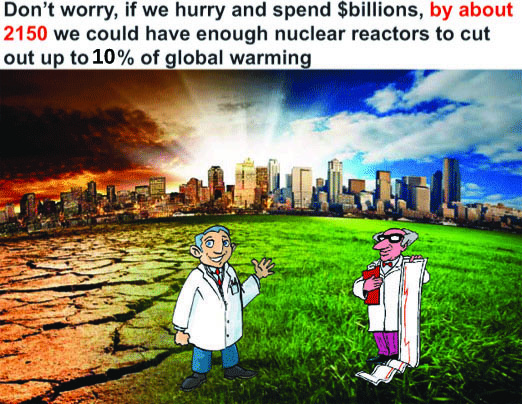
What problem is nuclear trying to provide a solution for, asks Ernst & Young climate change and sustainability partner Emma Herd. “If it’s cost of living, it’s expensive. If there are challenges with social licence for renewables then nuclear has got 10 times more social licence problems. If it is the need to rapidly deploy low-emissions energy technology to replace coal then nuclear takes a long time to get approval for, let alone to build, let alone to get up and operating. If it’s the need for rapid decarbonisation, again, it’s too slow.”
Debate has erupted over nuclear energy’s role in Australia’s shift from fossil fuels. Could it work? And why is it so controversial?
SMH, By Mike Foley, OCTOBER 7, 2023
Australia is in the middle of an unprecedented energy revolution, switching from the fossil fuel-powered electricity grid that’s been the bedrock of the nation’s economy for decades to clean energy, through a rush of renewables as wind and solar farms spring up across the country.
The shift is being driven by Australia’s commitment to help tackle climate change by cutting damaging greenhouse emissions.

But a fiery political debate has erupted over the future of Australia’s energy supply in recent months, with federal Opposition Leader Peter Dutton demanding the Albanese government remove the nation’s longstanding ban and deploy what he claims is clean, cheap and reliable nuclear power…………..
What would be the costs? And how does nuclear power work?
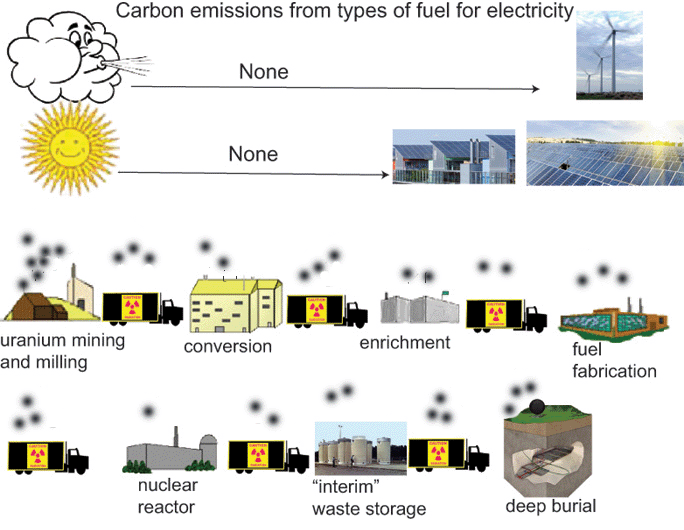
………………………………………………………………………… This atomic fission also creates zero greenhouse gases, [ed. note: in the reactor operation, but not in the entire fuel cycle] which is a key benefit cited by nuclear energy advocates, but its opponents point to the dangers associated with storing the radioactive waste and the potential for spent fuel from nuclear reactors to be used to make nuclear weapons.
Past accidents have undermined public confidence……………………………..

…………………………………. In Australia, a national ban on nuclear energy was put in place by the Howard government in 1999, after horse-trading with the Australian Democrats over the government’s signature green reform, the Environment Protection and Biodiversity Conservation Act, which stated that the relevant minister could not approve a nuclear power plant.
Seven years later, the Howard government asked Telstra chief executive and trained nuclear physicist Ziggy Switkowski to investigate the merits of nuclear power in Australia. That report delivered a hammer blow to the industry. Switkowski found that nuclear power could compete economically with coal power only if a politically contentious carbon tax was imposed.
In 2019, Switkowski also told a parliamentary inquiry there was little prospect for Australia to develop a nuclear energy industry because the “window for large gigawatts to go in nuclear generators has now closed for Australia”. He said a nuclear industry would take too long to establish and be too costly to build compared to alternative infrastructure. He also said it was unlikely the industry could establish enough support to gain a social licence to operate.
“Given that the investment in a power station, particularly a big one, would begin at $US10 billion and go up from there, and it would take around 15 years to make it work, you can’t progress without strong community support and bipartisanship at the federal level, and there is not too much evidence of that,” he said.
But now the federal Coalition is calling for the nuclear energy ban to be abolished.
……………………………. Nuclear energy proponents argue nuclear should replace coal. Those advocates include the Minerals Council, prominent Nationals including leader David Littleproud and former leader Barnaby Joyce, and some Liberal MPs including Dutton and his climate change and energy spokesman, Ted O’Brien.
……………………………….Renewable energy advocates point out that investors are flocking to large-scale wind and solar projects, which are pumping cheaper energy into the grid and outcompeting coal. The Australian Energy Market Operator (AEMO), which manages the electricity grid, says a grid based on renewables will be just as reliable as a system centred on baseload power.
Could we get a nuclear industry happening in time?
Speed is of the essence, say climate scientists. Global emissions are on track to exceed the goal of the Paris Agreement to limit global warming to less than 2 degrees, a level that would avoid the worst damages from climate change. While renewables are available now, and cheaply, it would likely take decades to establish a nuclear energy industry in Australia.
Australia’s former chief scientist, Alan Finkel, told this masthead in August it was highly unlikely Australia could open a nuclear power plant before the early 2040s, pointing out the autocratic United Arab Emirates took more than 15 years to complete its first nuclear plan using established technology.
What problem is nuclear trying to provide a solution for, asks Ernst & Young climate change and sustainability partner Emma Herd. “If it’s cost of living, it’s expensive. If there are challenges with social licence for renewables then nuclear has got 10 times more social licence problems. If it is the need to rapidly deploy low-emissions energy technology to replace coal then nuclear takes a long time to get approval for, let alone to build, let alone to get up and operating. If it’s the need for rapid decarbonisation, again, it’s too slow.”
Herd says it would take decades of investment in enabling services for the nuclear energy value chain before a new plant could be built, on top of the likely 20 years needed to plan, gain approval for and build a plant.
“Nuclear has got not just a 20-year timeframe to build something, it’s actually probably more a 30- to 50-year timeframe to build an industry,” she says. This includes either educating or importing a generation of nuclear experts to design and operate facilities, capability to construct the complex facilities, creating a bureaucracy to administer the industry and writing the laws to govern it.
Could nuclear energy solve the power line ‘problem’?
A key sticking point in the Opposition’s criticism of renewable energy is the Albanese government’s push to build some 10,000 kilometres of power lines to link the plethora of renewable energy projects springing up across the country with major cities. AEMO has forecast that could cost around $13 billion by 2030. Nuclear energy advocates say those costs could be avoided by building nuclear plants on the sites of existing coal plants, where existing transmission lines converge.
In fact, even if there were no renewable energy expansion, expensive new transmission lines are still needed to upgrade the grid and increase its capacity in line with population growth, but they have been delayed. Energy experts are increasingly worried that time is running out, risking Australia’s ability to compensate for the looming closures of coal-fired power plants.
A major factor in the delays is community backlash against transmission lines, with farmers denying land access to private companies. Littleproud is leading the charge against the renewable energy rollout and backing farm groups in their protest. Backed by Dutton, he has accused the government of running a “reckless race” to renewables and is calling for a halt to privately run transmission projects, for a Senate inquiry or summit into renewable energy and for a national discussion on removing Australia’s moratorium on nuclear power.
Isn’t there a new type of nuclear technology now?
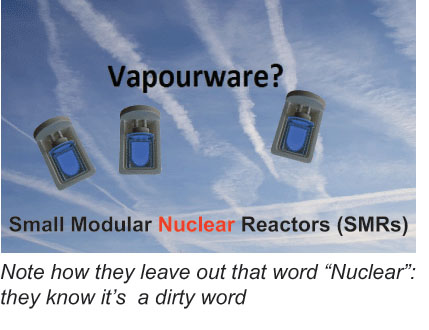
With Dutton heading the push for a plan to replace Australia’s existing fleet of coal plants with nuclear, Littleproud has declared he is open to having a plant in his Queensland electorate. The Coalition says Australia could deploy the next-generation of nuclear technology called small modular reactors, which are based on the energy units in nuclear submarines.
Finkel has said that, from a “purely engineering” perspective, nuclear technology is appealing, with zero emissions, a continuous supply of baseload power and a small mining footprint for fuel. But he has said that small modular reactors are not currently viable technology. “There’s no operating small modular reactor in Canada, America or the UK, or any country in Europe.”
Finkel noted that private company Nuscale is aiming to commission 12 small modular reactors starting from 2029, but he said it would take at least a decade to follow suit in Australia.
Is nuclear cheaper?
A joint study by the CSIRO and AEMO, the GenCost report, calculated the future cost of energy generation for a range of technologies. It found that solar and wind energy generation would cost between $60 and $100 per megawatt hour by 2030, including back-up power from either batteries, pumped hydro or gas plants. (This figure also includes CSIRO and AEMO-termed “sunk costs” of new transmission lines.)
GenCost forecast that one megawatt hour of power from a small modular reactor in 2030 would cost between $200 and $350 per megawatt hour.
Another energy advisory, Lazard from the US, calculated the levelised cost of nuclear and renewables – which means the average net present cost of electricity generation for a generator over its lifetime. It found that one megawatt hour from solar power, including back-up storage, costs between $72 to $160 per megawatt hour, while a traditional nuclear plant costs from $220 to $347.
Why is the politics of nuclear toxic?
Even if the Albanese government wanted to open a debate over the future of nuclear power in Australia, the party’s official policy platform that is formed by rank and file members states Labor will “prohibit the establishment of nuclear power plants and all other stages of the nuclear fuel cycle in Australia”.
While it’s not impossible for politicians to ignore the policy platform, it is extremely challenging.
In any case, the government has come out swinging against the opposition’s call for nuclear power in Australia. Bowen……………………. https://www.smh.com.au/politics/federal/is-nuclear-energy-feasible-in-australia-and-how-much-would-it-cost-20231004-p5e9qc.html
Jacqui Lambie’s nuclear response to secret flights for submarine project
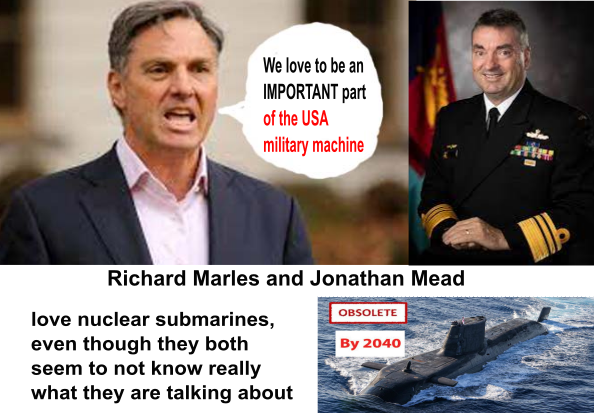
Independent Senator Jacqui Lambie has slammed the decision to slug taxpayers $630,000 a month in “secret” travel costs.
Samantha Maiden, news.com.au 7 Oct 23
Independent Senator Jacqui Lambie has slammed the decision to slug taxpayers $630,000 a month in “secret” travel costs for bureaucrats working on Australia’s nuclear submarine project.
Despite the fact that the first submarine won’t be delivered to Australia under the deal until 2040, new documents reveal scheme has already blown up $15 million in travel costs alone in two years.
But bizarrely, the Defence Department has redacted the commercial airline departure times “for security reasons” suggesting it might reveal patterns of travel and put bureaucrats lives and safety at risk…………………………………………………………
It’s the same reason the defence department is refusing to reveal details of Defence Minister Richard Marles’ VIP flights suggesting it could put his safety in danger.
Australia plans to acquire a total of eight nuclear powered submarines (SSNs) under the $368bn deal.
But at least three of the subs and up to five of the eight will be Virginia-class submarines it will buy from the United States.
New data revealed under freedom of information laws reveal that Vice Admiral Jonathan Dallas Mead, the navy’s nuclear-powered submarine taskforce chief, has spent $197,000 on 8 overseas trips alone.
That’s contributing to the $15 million in global travel costs, a figure that adds up to $633,000 per month.
Defence representatives travelled to the United States and United Kingdom, and our AUKUS partners travelled to Australia, as part of the 18-month consultation period.
“Fifteen million bucks is a shocking amount to spend on travel, that‘s a bill of $633,000 a month for the Australian tax payer,” Senator Lambie said.
Defence personnel don’t get frequent flyer points – but do get status points.
“Admiral Mead alone has spent $197,000 on eight overseas trips, I bet his status points are looking good,” she said.
“It‘s not a submarine – it’s a gravy boat! And why all this secrecy?
“The government says the flights have been redacted because it‘s a national security matter, what a load of rubbish, these flights are in the past, there’s no national security issue.”
“Australia seems to be footing most of the bill for the AUKUS submarines, what is the UK and the US paying?.”
“This government campaigned on transparency and yet they are failing Australians when it comes to public scrutiny.“
Senator Lambie asked the Department of Defence how much had actually been spent out of the $300 million that was allocated to the task force in the financial year of 2022-23.
In response, the department confirmed that Defence representatives travelled to the United States and United Kingdom, and AUKUS partners travelled to Australia, as part of the 18-month consultation period.
The total expenditure for the Nuclear Powered Submarine Taskforce over the 18-month consultation period (16 September 2021 to 31 March 2023) was $139.2m.
A breakdown of class of travel is not held…….. https://www.news.com.au/national/politics/jacqui-lambies-nuclear-response-to-secret-flights-for-submarine-project/news-story/0bb81fa011f5c3128e9caa7361a7ef2d
Nuclear-Powered Fixations: The Trump-Pratt Disclosures
The speed with which AUKUS was entered into by the Scott Morrison government in September 2021, an agreement which also brought no demurral or any murmurs of dissent from the then Labour opposition of Anthony Albanese, had a rank smell to it. For one thing, it has seen Australia further trapped in an insidious game of military competition being waged against China at the behest of US interests, militarising the country and mortgaging the budget to the tune of $368 billion over the course of two decades.
October 7, 2023. by: Dr Binoy Kampmark https://theaimn.com/nuclear-powered-fixations-the-trump-pratt-disclosures/—
In April 2021, the Australian billionaire Anthony Pratt had a meeting with Donald Trump at his Mar-a-Lago club. According to an ABC News report, “Pratt told Trump he believed Australia should start buying its submarines from the United States, to which an excited Trump – ‘leaning’ towards Pratt as if to be discreet – then told Pratt two pieces of information about US submarines: the supposed exact number of nuclear warheads they routinely carry, and exactly how close they supposedly can get to a Russian submarine without being detected
The report, citing “sources familiar with the matter,” goes on to mention that Pratt “allegedly shared the information with scores of others, including more than a dozen foreign officials, several of his own employees, and a handful of journalists.” The net, in other words, proved rather large, with emails and conversations taking place on the subject with three former Australian prime ministers, 10 Australian officials, 11 of Pratt’s employees and six journalists.
The revelation has emerged as part of an ongoing investigation by special counsel Jack Smith into Trump’s retention of classified documents on leaving the White House. Some of the documents, hoarded at Mar-a-Lago, covered US military matters, nuclear weapons, and spy satellites
What is buried in the latest spray and foam of the Trump disclosures to Pratt is whether that encounter had any bearing on the broader strategic thinking in Canberra and its links to the US military industrial complex. The AUKUS security agreement between the United States, the United Kingdom and Australia contemplates the transfer of at least three US nuclear powered Virginia class boats, along with the construction of a specific co-designed nuclear-powered boat for the Royal Australian Navy (RAN). Did Pratt’s enthusiasm for US nuclear submarines percolate through to other officials, think-tankers and courtiers working for Washington’s interests?
Former Australian Prime Ministers Paul Keating and Tony Abbott have told the Australian Financial Review that Pratt never raised the issue of purchasing US nuclear submarines with them. Who, then, were the other prime ministers who received Pratt’s gobbets of wisdom? Surely Scott Morrison must figure, given his role in brokering the AUKUS agreement.
The ABC News report does acknowledge that a number of Australian officials who featured in the Pratt disclosures were “involved in then-ongoing negotiations with the Biden administration over a deal for Australia to purchase a number of nuclear-powered attack submarines from the United States.”
A number of Australian commentators have tried to minimise the significance of the Trump-Pratt encounter, thereby revealing visible smoke plumes. “We’ve had submariners serve on US nuclear submarines for years,” stated former Australian ambassador to the US Joe Hockey. “I find it hard to believe that in a conversation between Anthony Pratt and Donald Trump, anything of great significance was discussed that would have an impact on the national security of either Australia or the United States.”
Former Australian Defence Department official Peter Jennings, who also served as executive director of the US-funded and parochially pro-Washington think-tank, the Australian Strategic Policy Institute, for over a decade, saw little reason to be concerned about the content of the disclosures. Most of the material on US submarines was already in the public domain. His concern, rather, was with Trump’s cavalier approach to national security information. “It’s just the 1000th example of why Trump is unfit to be president,” he tut-tutted. Jennings, along with the other members of the paid-up Washington consensus in combating Beijing, is no doubt losing sleep about Trump redux. Were Trump to return to the White House, all bets about Australia getting its nuclear-powered submarines are off.
The speed with which AUKUS was entered into by the Scott Morrison government in September 2021, an agreement which also brought no demurral or any murmurs of dissent from the then Labour opposition of Anthony Albanese, had a rank smell to it. For one thing, it has seen Australia further trapped in an insidious game of military competition being waged against China at the behest of US interests, militarising the country and mortgaging the budget to the tune of $368 billion over the course of two decades.
AUKUS also brought with it the abrupt termination of Canberra’s contract with the French Naval Group to construct twelve diesel-electric attack submarines for the RAN. This proved to be a disastrous affair for Australian diplomacy, savaging French-Australian relations and also advertising, to the region, the abject repudiation of Australian sovereignty.
While it should be stressed that Pratt faces no charges of illegality or impropriety, nor features in the 40 charges Smith is levelling against Trump, the Mar-a-Lago meeting with a former US president may prove critical in identifying a nexus with Canberra’s irrational interest in US-nuclear powered technology and the point at which that fascination ended the last vestiges of Australian independence.
Why Nazis still call Australia home
June 6, 2001, Issue 451 https://www.greenleft.org.au/content/why-nazis-still-call-australia-home?fbclid=IwAR0c5JRnrDTxKQy88O6uDOuhIYDPdjsDwn-Dh-sK-4L41HQ3uvHE_mJ_on8
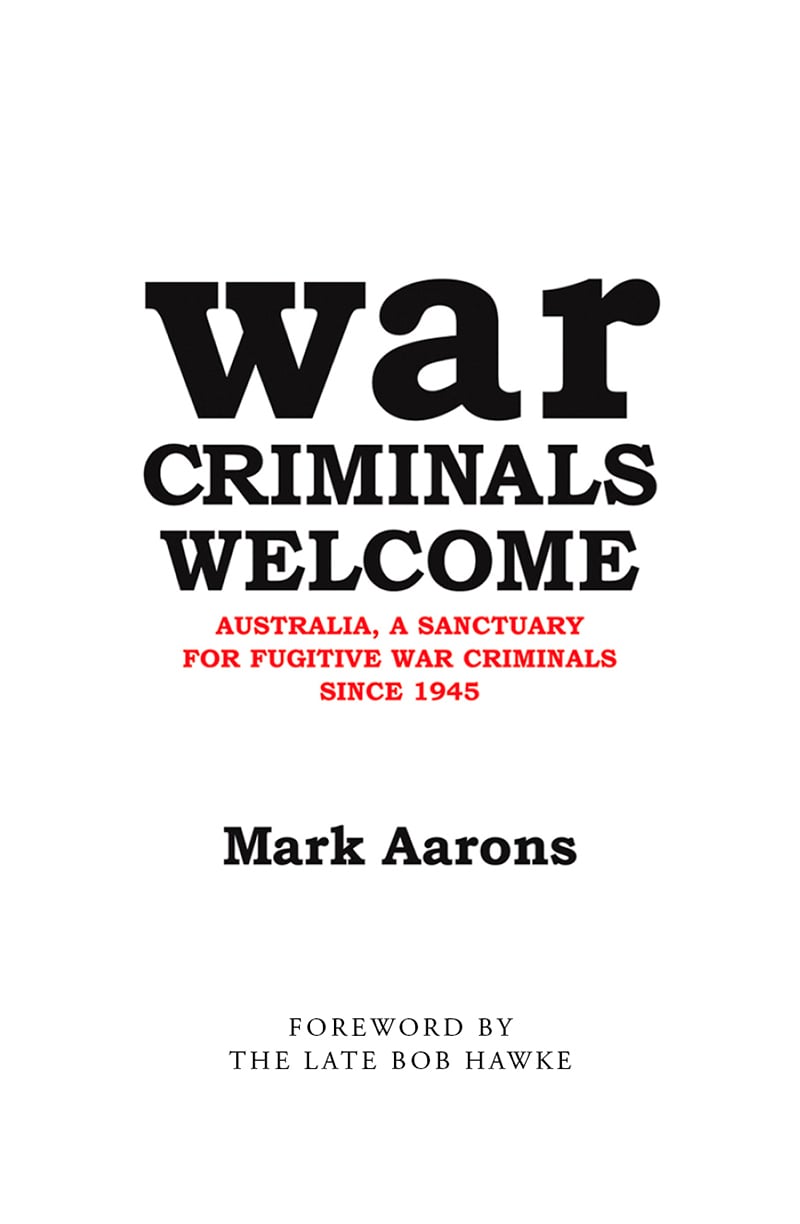
War Criminals Welcome: Australia, A Sanctuary for War Criminals since 1945
By Mark Aarons
Black Inc, 2001
649 pp, $34.95 (pb)
When justice minister Amanda Vanstone said that the alleged Latvian war criminal Konrads Kalejs was “welcome” to stay in Australia, it was a revealing slip of the tongue. Since 1947, when the first Nazi war criminals arrived in Australia, “successive governments have knowingly allowed hundreds of men responsible for the cruel imprisonment, torture, rape and mass execution of tens of thousands of innocent civilians to make Australia home”. This is the damning conclusion of Mark Aarons’ book on how and why Labor and Liberal governments have allowed Nazi killers into Australia and protected them.
When the first European refugees arrived in Australia after the second world war, under the displaced persons migration scheme, their number included dozens of fascist collaborators from central and eastern Europe. Amongst them were officers, like Kalejs, of the Arajs Kommando, the Nazi-controlled Latvian security police, a volunteer police auxiliary which, by mass shootings, mobile gas vans or deportation to concentration camps, wiped out Latvia’s 70,000 Jews and murdered other racial, religious and political targets of the Nazis.
There were also Croatian fascists, whose cruelty is said to have sickened even hardened German Nazis. One of them was Srecko Rover, alleged to be the fanatical officer in charge of a mobile killing unit which massacred Jews, Serbs and, especially, communist-led partisans in the Balkans. Recruited by US intelligence before arriving in Australia in 1950, Rover immediately began a decades-long career as an ASIO agent and organiser of terrorist operations against left-wing migrants and President Josep Bros Tito’s communist Yugoslav government.
How did these killers slip through the screening process which was supposed to weed out war criminals from genuine refugees? Post-war confusion, incompetence, diffidence and corruption by Allied immigration officials in Europe were partly to blame. But more important was the Cold War political climate.
Many anti-socialist conservatives thought the Allies had fought the wrong war (it should have been with Hitler against Stalin). Australia’s attorney-general Bob Menzies in the 1930s was an admirer of the Nazi state as a bulwark against “atheistic Bolshevism”. The Nazi war criminals may have been anti-Semitic mass murderers but they were anti-communists and therefore welcome.
These Nazis found a ready champion in ASIO. Allied intelligence agencies gave the Nazis a clean bill of health in the screening process, allowing them to assume false identities or lie about their past, and frequently recruiting them as agents. ASIO put them to use as spies and covert operatives against the migrant left.
When Australian governments were forced to investigate suspected war criminals, they happily relied on ASIO which was far more interested in putting Nazis on the payroll than investigating their crimes. When the Yugoslav government requested the extradition of Milorad Lukic and Mihailo Rajkovic in 1951 for their fascist war crimes at POW camps, the head of ASIO in Western Australia reported that the two men, ardent anti-communists and supporters of Menzies, “represent a body of Yugoslavs who cause infinitely less trouble to this organisation than the great body of their fellow immigrants”, as well as providing “invaluable assistance to ASIO”, as ASIO boss Charles Spry wrote to the head of the Commonwealth Department of External Affairs.
Post-war Labor and Liberal governments ignored mounting evidence of Nazi arrivals. Refugees, immigration staff, crew members of US Army transport ships and even ASIO’s predecessor, the Commonwealth Investigation Service, reported anti-Semitic incidents, including serious assaults, on the refugee ships and in the migrant reception camps and hostels. The blood group tattoos, or scars from their removal, observed under the left armpit were a giveaway of SS membership. Nazi memorabilia, such as Hitler statues and swastikas, were regularly seized in the migrant camps.
When the import of Nazis turned to the so-called Volkdeutsche, ethnic Germans expelled from Stalinist Europe under the terms of the post-war settlement, many brought with them not only trade skills for major infrastructure projects but Nazi ideology and a past of war crimes committed in support of the invading German armies.
On the Snowy Mountains hydro-electric scheme, for example, an Auschwitz survivor recognised an SS officer who had served at the camp. At the Commonwealth Railways project in Port Augusta, Nazi cells were seen doing drills, giving “Heil Hitler” salutes and assaulting other migrants.
All these reports were angrily dismissed by Arthur Calwell, the ALP immigration minister, as “gross and wicked falsehoods”. His Liberal successor, Harold Holt, denigrated the Jewish community’s charges that Nazis were active in Australia as those of a minority sectional interest.
Both Labor and Liberal governments conducted a systematic cover-up of the import of Nazis to hide their connivance in assisting them into Australia to counter the left.
The Liberals were least shy about openly embracing their new anti-communist buddies. A Hungarian fascist was president of the Hungarian branch of the New Australian Liberal and Country Movement. Following the establishment by Nazi emigres in Australia in 1957 of the Anti-Bolshevik Bloc of Nations (ABN), a peak body of ultra-right migrant groups, senior Liberal politicians flocked to support it. Victorian Premier Henry Bolte and prime ministers John Gorton, Billy McMahon and Malcolm Fraser were just a few who shared platforms down the decades with their fascist hosts whom they extolled as noble anti-communist “freedom fighters”.
The first ABN president, a Hungarian mayor who organised and participated in the murder of his town’s 18,000 Jews, was a wanted war criminal, known to ASIO, who nevertheless became a prominent member of the Liberals’ Migrant Advisory Council.
In the 1970s, the Nazi emigres became entrenched in the NSW branch of the Liberal Party. Heading a powerful, extreme-right, pro-fascist faction (dubbed the “Uglies”) was Leo Urbancic, a senior Nazi propagandist in Slovenia during the war. Such propaganda created a climate that made the mass killing of Jews, communists and Allied soldiers acceptable.
In 1961, when Liberal federal attorney-general Garfield Barwick announced that the government had “closed the chapter” on war criminals in Australia, an amnesty was in effect granted to Nazi murderers. This was presented, with twisted Cold War logic, as a triumph of democracy over “Communism”, the government trumpeting the “right of asylum” as its excuse for rejecting the Soviet Union and Eastern European countries’ requests for the extradition of war criminals. It was one in the eye for the evil Reds. The Labor “opposition”, which did not want to be seen as “soft” on communism, remained silent on the amnesty.
It took 40 years before an Australian government formally recognised the fact that Nazi war criminals were in Australia. In 1986, Labor Prime Minister Bob Hawke, under pressure created by Aarons’ exposure of Nazi war criminals in an ABC radio series, established the Special Investigations Unit to track down Nazis for prosecution in Australia under an amended War Crimes Act.
However, because of the evidence trail having grown cold, the age of key witnesses and accused, and a lack of bureaucratic support, only three of the 800 suspects who were investigated were brought to trial, none successfully (thanks to obstructionist judges and prosecution blunders). Hawke also prevented the SIU from investigating ASIO’s role in protecting and employing Nazi war criminals. Labor Prime Minister Paul Keating pulled the plug on the unit in 1992.
Australia remains the only Western country with a significant Nazi war criminal problem which has no legislation to allow the deportation of suspects for trial in their homelands. The Howard government did pass legislation to deal with war criminals who arrived in Australia after 1997 (50 years behind the times as usual).
Only the Kalejs case has disturbed the complacent political waters, embarrassing the government into rushing through an extradition treaty between Australia and Latvia.
For more than 50 years, the Australian capitalist establishment has opened its doors and closed its eyes to fugitive Nazi mass killers. Aarons’ book is a solid, impressively documented indictment of successive Labor and Liberal governments’, top public servants’ and the spy agencies’ complicity in harbouring Nazis and war criminals.
Today, as thousands of refugees fleeing tyrannies around the world languish in Australian detention centres, they may well be wondering why the red carpet was rolled out for right-wing murderers and what this shows about the true colours of Australia’s “democratic” government.
France attempts to pressure Australia to stop engaging with UN nuclear weapons ban treaty
https://www.icanw.org/france_pressures_australia_to_stop_engaging_with_un_nuclear_weapons_ban_treaty 2 Oct 23 #nuclear #anti-nuclear #Nuclear-Free #NoNukes
Recent statements by a French diplomat to “the Australian” newspaper criticizing Australia’s decision to observe the UN Treaty on the Prohibition of Nuclear Weapons (TPNW) reveal the panicked efforts by nuclear-armed states to undermine the treaty as support for the ban continues to grow. It also shows a European state with a dark colonial legacy continuing to exert pressure on the Pacific – an area heavily impacted by French nuclear testing – instead of respecting national sovereignty.
On 2 October an article in “the Australian” newspaper cited an unnamed French diplomat claiming that Australia’s support for the Treaty on the Prohibition of Nuclear Weapons “undermines the primacy of the Nuclear Non-Proliferation Treaty (NPT)” and “is contradictory with Australia’s ambition to reinforce its partnership with NATO.”
Both of these statements are not only hamfisted attempts at pressuring the Australian government away from the TPNW, they are also factually incorrect: The TPNW was carefully crafted to reinforce, complement, and build on the NPT, which obligates its parties – including France – to negotiate further legal measures to achieve nuclear disarmament under Article VI, and NATO members face no legal barrier to joining the treaty, so long as they commit not to engage in or support any nuclear-weapon-related activities. Moreover, several NATO partners are already TPNW parties (Austria, Ireland, Kazakhstan, Malta, Mongolia, New Zealand) or signatories (Algeria, Colombia).
These declarations show France’s mounting concern over the growing support for the TPNW. The statements themselves are no surprise, as France has stridently protested the TPNW ever since it was adopted at the UN in 2017 with the backing of 122 states. France insists it has a legitimate right under the NPT to possess nuclear weapons, while ignoring its commitments to pursue negotiations in good faith for nuclear disarmament under the same treaty. What is new is the fact that this pressure is being exerted publicly, and on a state that is largely seen as an ally on security issues. Previously, France has limited this kind of pressure for formerly colonised states, particularly in Africa.
Australia’s growing support for the TPNW
The Australian Labor Party, which has been in power since May 2022, adopted a resolution in 2018 committing it to sign and ratify the TPNW in government. This was moved by Anthony Albanese, who now serves as prime minister and has been a vocal supporter of the TPNW. He said at the time: “Our commitment to sign and ratify the nuclear weapon ban treaty in government is Labor at its best.” Labor reaffirmed this position in 2021 and most recently on 18 August 2023. The government also has confirmed its intention to observe the treaty’s upcoming meeting of states parties in New York (2MSP) and is evaluating whether to sign and ratify the treaty.
This is an encouraging step, but ICAN’s Executive Director, former Labor MP Melissa Parke, has criticised the government’s delay in ratifying the treaty: “It’s not enough to keep promising to sign the treaty without acting. We want to see the Prime Minister put pen to paper, without delay. Labor’s commitment on nuclear disarmament and non-proliferation will be hollow if Australia fails to do so.”
Speaking to the revelation that French diplomats are exerting pressure on Australia to consider, she said: “Our two countries have never seen eye to eye on nuclear weapons. France shouldn’t be lecturing Australia on nuclear policy. We can make our own decisions, in our own interests – and for the global common good.”
France’s unresolved nuclear legacy in the Pacific
From 1966 to 1996, France tested 193 nuclear weapons in Maohi Nui/French Polynesia, a Self Governing Territory of France in the Pacific. In 1974, Australia famously took France to the International Court of Justice in a bid to force an end to its atmospheric nuclear testing in the Pacific, as the impacts of nuclear weapons are not contained by national borders. Yet France only ended its Pacific nuclear test explosions once it was confident it had developed non-explosive testing methods sufficiently for new weapons development, and it refuses to acknowledge and address the catastrophic legacy of its nuclear tests to this day.This legacy is also a subject of hot debate at the national level in France. On 28 September, only days before France’s criticisms of Australia, the assembly of French Polynesia unanimously adopted a resolution supporting the TPNW, highlighting the region’s history as the site of numerous French nuclear tests. The resolution underscores the TPNW as a humanitarian disarmament treaty and emphasises the deep concerns of the French Polynesian population regarding this issue. While French Polynesia cannot currently access the assistance and rehabilitation outlined in Articles 6 and 7 of the TPNW due to France’s non-ratification, it sends a resounding message in favour of the treaty to Paris.
Pacific island States support the Treaty on Prohibition of Nuclear Weapons – a problem for Australia in joining AUKUS nuclear military alliance

French criticism of nuclear ban treaty highlights Canberra’s dilemma #nuclear #anti-nuclear #nuclear-free #NoNukes
The Interpreter, NIC MACLELLAN, 2 Oct 23
Can Australia rebuild a strategic military partnership with France at
the same time as independence movements claim Pacific support?
On 28 September, the Assembly of French Polynesia unanimously passed a resolution endorsing the Treaty on the Prohibition of Nuclear Weapons (TPNW), the nuclear ban treaty that entered into force in 2021. Even though France refuses to sign the treaty, and still controls the defence and foreign policy of French Polynesia, the local legislature in Tahiti with its new pro-independence government sees TPNW as setting a new norm in international law. The resolution encourages “the participation of France as an observer state at the next TPNW Meeting of the States Parties”, to be held in New York in late November. It also calls on the French government to “work towards France’s adherence to this new international norm.”
A key reason for this pointed message to Paris are the TPNW provisions that call for assistance to nuclear survivors and clean-up of contaminated nuclear test sites. The Ma’ohi people are still seeking compensation for the health and environmental effects of 193 French nuclear tests at Moruroa and Fangataufa.
Beyond this, French Polynesia’s critique of nuclear weapons echoes the views of the majority of members of the Pacific Islands Forum. Unlike Australia, nine independent Pacific Island countries and Aotearoa-New Zealand have already signed and ratified the TPNW.
At the recent Australian Labor Party (ALP) National Conference in Brisbane, the party re-confirmed its support for signing the TPNW – under restrictive conditions – and agreed to send an observer to the next Meeting of State Parties. However key ALP leaders are opposed to signing, and nuclear weapons states such as the United States and France, having long derided the treaty, are now ramping up their opposition to it.
A front-page story in The Australian on 2 October cited an unnamed French diplomat who criticised Australia over its tentative moves towards signing TPNW, though the story fails to mention last week’s resolution from the Assembly of French Polynesia…………………………………………….
the Australian government has held a series of meetings with key French ministers to rebuild relations disrupted by AUKUS, including a summit between Defence Minister Richard Marles and French counterpart Sebastien Lecornu in September 2022, and a 2+2 meeting of defence and foreign ministers in January. Marles and Lecornu are organising the South Pacific Defence Ministers meeting in Noumea in December, to the dismay of the FLNKS independence movement, which is in the midst of talks with the French state over a new political status for New Caledonia.
Last year, Marles congratulated Emmanuel Macron on his re-election to the French presidency, proclaiming “France is our neighbour. France is a Pacific country. And as such, France deeply matters to Australia.”
But France is a European colonial power, not a Pacific country. It is recognised by the United Nations as the administering power of non-self-governing territories. It has responsibilities for decolonisation under international law. Australian governments may be reluctant to talk publicly about this, but the issue of self-determination is firmly on the regional agenda, posing difficult choices for all Forum member countries (as shown by recent debates over West Papua, Bougainville, Guam, etc).
Another problem is that, in both Australia and France, the perspectives of leaders from Francophone island communities are usually missing from the public debate about France’s role in Indo-Pacific security. It’s rare to see the media or think tanks cite President Louis Mapou of New Caledonia or newly elected President Moetai Brotherson of French Polynesia. Both will be attending the next Pacific Islands Forum summit in Rarotonga as it discusses regional security – for the first time, leaders from both French territories in the Forum are supporters of independence and sharp anti-nuclear critics.
So, can Australia rebuild a strategic military partnership with France at the same time as its Pacific neighbours are seeking an independent and sovereign state?
As Penny Wong travelled to Noumea last April, becoming the first Australian Foreign Minister to address the Congress of New Caledonia, Mapou was eager to strengthen ties with Canberra around trade, investment and people-to-people engagement. He also diplomatically highlighted key differences around Australia’s close alignment with the United States under the AUKUS partnership:
The independence movement of New Caledonia – of which I’m a member – is in favour of non-alignment. We regularly attend the summits of the Non-Aligned Movement. From the earliest days, we have supported a nuclear free Pacific – that’s even set out in the preamble of the draft Constitution of Kanaky that we submitted to the United Nations in 1986. When Australia decides to align itself with the United States in the framework of AUKUS to acquire nuclear submarines, it raises the question: if it starts here, where will it end? How does this impact the Treaty of Rarotonga and the Boe Declaration on security?
The Albanese government has proclaimed its support for a world without nuclear weapons. But talk is easy. It’s getting harder for the ALP government to balance tensions between its role as an AUKUS partner, a strategic partner with France and the “security partner of choice” for the island nations of the Pacific, which are deeply opposed to nuclear weapons. Why should Australia side with a European colonial power against its closest neighbours? https://www.lowyinstitute.org/the-interpreter/french-criticism-nuclear-ban-treaty-highlights-canberra-s-dilemma
Sydney smashes 1 October heat record as Victoria fights bushfires

Sydney has endured its hottest ever start to October on record as fire
danger warnings were issued across NSW – and as two bushfires threatened
campers and towns in eastern Victoria.
Guardian 1st Oct 2023
Australia does not need a new “nuclear medicine” factory – clean, safe, cyclotrons can do the job.
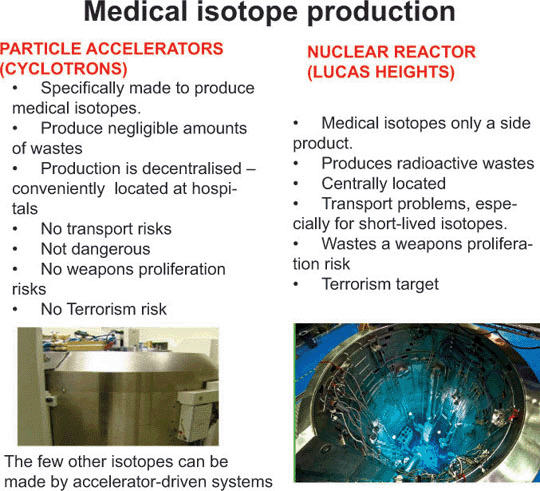

I read with interest Liam Mannix’s report in yesterday’s edition of The Sydney Morning Herald regarding the new nuclear medicine factory but was surprised that with his scientific knowledge he did not question the need for this facility so aptly described as a factory
27 Sept 23
Mannix would be well aware that the medical profession worldwide is turning away from reactor generated medicine due to its inherently dangerous and risky nature and its extremely high manufacturing costs
The isotopes generated by reactors for medical purposes such as at Lucas Heights are being replaced mainly by cyclotron produced isotopes but also other alternatives which are completely free of any risk to the patients and can be produced by relatively easier and safer means at a greatly reduced cost than at Lucas Heights
The only reason that isotopes produced by nuclear reactors are used for medical purposes is that their manufacture is invariably highly and unrealistically subsidised by government grants as is the case with ANSTO in Australia which is globally a prime example of that largesse .
The rapid growth in the international use of cyclotron isotopes for medical therapies is making the production of isotopes by nuclear reactors (like at Lucas Heights) obsolete
As a result there is now need for a new facility for the continued production of isotopes for medical purposes by ANSTO and in fact the current production at Lucas Heights could be stopped immediately with huge savings in government expenditure and no effect on the provision of medical therapies due to the use of much safer alternatives
ANSTO is claiming that the major part of its existence representing 80% of its undertaking is the current production of nuclear medicine isotopes by using its OPAL reactor at Lucas Heights for that purpose but this appears to be no more than a self perpetuating exercise to justify its survival
It is therefore a completely nonsensical if not deliberately disingenuous statement by Science Minister Ed Husic to claim that the “nuclear medicine precinct (of ANSTO) in Sydney will revolutionise the domestic production of nuclear medicines and improve the lives of thousands of Australians”
1 This month

of the week – Australians for War Powers Reform (AWPR)
To see nuclear-related stories in greater depth and intensity
 Antinuclear