New nuclear medicine factory to replace ageing site at Lucas Heights reactor
SMH By Liam Mannix, September 26, 2023 —
Hundreds of millions of dollars will be spent building a new radioactive medicine factory at the Lucas Heights nuclear reactor in Sydney, replacing an ageing and accident-prone facility.
The new manufacturing centre will produce the radioactive drugs doctors use to image the heart, lungs, kidney and brain for diagnosing and tracing diseases such as cancer. The current facility has been plagued by safety breaches, including in 2017 when a worker suffered radiation burns.
The federal government has been tight-lipped on costs ahead of a competitive tender process, but equivalent facilities in other countries have often come with price tags exceeding $400 million. The factory is expected to open in the mid-2030s…………
The facility will replace Lucas Heights’ trouble-plagued Building 23, built in 1959 as a research laboratory and later repurposed to make nuclear medicine.
Building 23 recorded seven “events with safety implications” in 2017 and 2018.
The worst of these occurred in 2017, when a worker dropped a vial of radioactive Molybdenum-99, covering their hands in the liquid.
Despite wearing two pairs of gloves, the worker suffered radiation burns and blistering.
ANSTO, which operates Lucas Heights, initially estimated the worker had been exposed to a mild dose of radiation. But an investigation by the radiation safety regulator determined the dose could have been 40 times higher than the legal annual radiation exposure limit.
The Australian Radiation Protection and Nuclear Safety Agency was so concerned, it issued a direction notice to ANSTO demanding an independent review of radiation safety in 2018, noting seven separate safety incidents within two years…………..
Like the current facility, the new one will assemble and test nuclear medical products, particularly Molybdenum-99, or Mo-99.
ANSTO is a major supplier of Mo-99, a radioactive substance that naturally decays to form Technetium-99m (Tc-99m), the workhorse of nuclear medicine. The organisation supplies about 12,000 doses a week, shipping them to facilities across Australia and the region.
Tc-99m can be used as a radioactive dye. Doctors inject it, allow it to accumulate in target organs or tissues, and then image the radiation it releases using special cameras. Tc-99m is particularly useful because it exposes patients to only a low dose of radiation.
To make Mo-99, plates of uranium are inserted into the Lucas Heights nuclear reactor, known as OPAL, which stands for open-pool Australian lightwater reactor……………………………………………………..more https://www.smh.com.au/national/new-nuclear-medicine-factory-to-replace-ageing-site-at-lucas-heights-reactor-20230925-p5e7g8.html
Uranium clean-up way over budget, running late… sounds like true nuclear power
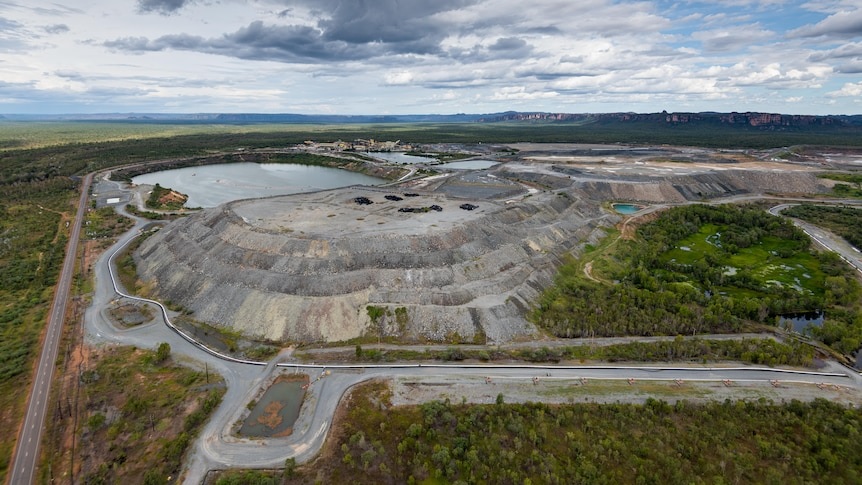
The company cleaning up the Ranger uranium mine in Kakadu says the project is running badly over budget and already late.
Crikey GLENN DYER AND BERNARD KEANE, SEP 28, 2023
Peter Dutton and the radioactive gang of nuclear spruikers in the media seem to think that if only they call for a “mature debate” long enough, small nuclear reactors (SMRs) will just pop into being.
But like any energy source, nuclear power comes with a host of practical challenges that don’t seem to feature in the op-eds and speeches about how SMRs are just around the corner.
Take, for example, the plight of Energy Resources of Australia (ERA) — the almost wholly owned subsidiary of Rio Tinto that operated the Ranger uranium mine in Kakadu in the Northern Territory from 1980 until 2021, when it was closed and rehabilitation work started………………………..(Subscribers only) more https://www.crikey.com.au/2023/09/28/uranium-mine-clean-up-over-budget-running/
Nuclear power on Surf Coast “incomprehensible”, says Greens MP
Surf Coast Times, September 28, 2023 BY James Taylor
GREENS MP and former City of Greater Geelong councillor Sarah Mansfield has pushed back against Opposition Leader Peter Dutton’s support for nuclear power at old mine sites, saying it would be “incomprehensible” to build a reactor at the former Anglesea mine.
During a visit to Ocean Grove last week, Mr Dutton said he wanted a “mature discussion” about nuclear energy in Australia, and touted the benefits of small modular reactor (SMR) technology as a viable solution to decarbonising the economy.
Alcoa’s Anglesea coal mine and power station supplied power to the former Point Henry smelter and closed in August 2015.
Asked if a nuclear reactor would be a hard sell for people in Geelong, the Bellarine and the Surf Coast, Mr Dutton replied: “Well, is there a coal mine that’s operating here at the moment that’s coming to end of life?”…………………………………………………………………………………….
Ms Mansfield, who became a Member for Western Victoria at the 2022 state election, said in a letter to this newspaper that she was “deeply concerned” by Mr Dutton’s comments.
“His arguments promote dangerous misinformation about nuclear technology.
“Moreover, the suggestion that these reactors could be placed at old mine sites (such as the Anglesea Alcoa site) is incomprehensible.”
She said nuclear power was not safe, clean, or renewable.
“The health risks associated with uranium mining and nuclear reactors are well established. Imagine the devastation to our beautiful coast and communities if there was a nuclear accident? Then the waste – where will it go? Australia already struggles to deal with medical industry nuclear waste.
“And to claim it is zero emissions is simply wrong. No energy source is completely emissions-free when you consider whole of life emissions (e.g. transport, materials, construction) – and nuclear produces greater emissions than renewables like solar and wind.
“It’s hard to believe the Coalition is serious about this proposal. They know that coal and gas are on the way out, but they’re blocking renewables and have come up with a nuclear fantasy that no reasonable economist or energy expert is willing to back.”
Labor has rubbished the Coalition’s proposal, with Energy and Climate Change Minister Chris Bowen saying modelling from his department found replacing Australia’s coal-fired power stations with SMRs would cost $387 billion. https://timesnewsgroup.com.au/surfcoasttimes/news/nuclear-power-on-surf-coast-incomprehensible-says-greens-mp/
Push for nuclear energy ignores glaring problem
It’s a pressing problem that won’t go away but the ‘solution’ isn’t what it seems – and it’s wildly expensive too.
Herald Sun, David Llewellyn-Smith, 21 Sept 23
ANALYSIS
Federal politics is currently debating the usefulness of nuclear power versus renewables. As usual, the debate is replete with hysteria and rubbery figures designed to evoke high emotion and partisanship over reason and good policy.
The debate began when Energy Minster Chris Bowen released figures this week indicating that the Opposition’s proposed shift to Small Nuclear Reactors (SMR) would cost $387bn.
Opposition leader, Peter Dutton, countered with the claim that Labor’s renewables rollout will cost $1.5tr if investment in new distribution networks, polls and wires, is included.
………………………………………………in practice, there are some very big problems with SMRs.
The most pressing is that they do not currently exist. There are only two working prototypes worldwide. They might exist in the future in economic form if many of them are manufactured. But, for now, only China and Russia are operating them, and they were very expensive to build.
Australia would not want to become dependent upon such tyrannies for strategic technology. Nor should we punt an urgent energy transition on an unproven technology that could take decades to become economic.
Other drawbacks include NIMBYs and nuclear waste.
Conversely, wind, solar and batteries do not face these problems.
Dutton is right that Australia’s energy regulators are concerned about the need to expand poles and wires networks to bring in new wind and solar farms. However, this is short-term.
Critically, as battery technology advances in both power and cost, more localised energy production and storage investment will take off. The technologies are already widespread and coming down in cost.
More to the point, such decentralisation means fewer poles and wires not more.
Peter Dutton’s $1.5tr of new network cost is a preposterous figure that could string a gold-plated cable around Australia several times…………………………………………….
the coup de grace for renewables is cost. Renewables plus batteries are far cheaper than SMRs. …………. https://www.heraldsun.com.au/business/economy/push-for-nuclear-energy-ignores-glaring-problem/news-story/a1a6fdcabab448ce60642adcfcd9318a
The push for nuclear energy in Australia is driven by delay and denial, not evidence.
Adam Morton 21 Sept 23 https://www.theguardian.com/commentisfree/2023/sep/21/nuclear-energy-australia-smokescreen-climate-denialism-coalition
Unsubstantiated claims of nuclear energy’s worth distracts from the urgency to act now on climate crisis
he vague, ideological push for nuclear energy backed by the Coalition and News Corp and given legitimacy this week on the ABC’s Q+A should be treated as what it is: the latest step in a decades-long campaign of delay and denial on the climate crisis.
Nuclear energy likely has a role to play in the global shift to zero-emissions energy in places that already use it or that have few other options. As with other technology, its role may grow or recede over time as the world moves. This stuff is going to change.
But no case has been made to support claims it has a place in the rapid transition under way in Australia. The reason for this is pretty straightforward: the technology that is being spruiked – small modular reactors (SMRs) – doesn’t exist. Not meaningfully.
That alone tells you that, with few exceptions, the current wave of nuclear boosterism is at its heart an anti-renewable energy campaign.
It is based on an arrogant and – despite the reams of column inches given over to it – unsubstantiated rejection of the detailed evidence from the Australian Energy Market Operator (and plenty of others) that solar, wind, hydro, batteries and other “firming” support can provide a reliable, affordable, low-emissions electricity supply.
Coincidentally or otherwise, many prominent members of the pro-nuclear and anti-renewable energy campaign dismiss climate science. Some do it directly. Others do it indirectly by arguing there is no urgency to act.
The primary sources of this climate rejection are the federal Coalition, the Australian newspaper and the misinformation sewer of Sky News After Dark. The Australian is happy to run unquestioning news stories claiming multibillion-dollar “black holes” in renewable energy plans based on flawed analyses by former mining executives, but then devote pages to tut-tutting over an estimate by Chris Bowen’s energy department that says nuclear energy would be – shock horror – really expensive.
This is, of course, a newspaper that gives more space to contrarian campaigns by individual scientists who claim that the Great Barrier Reef is not under threat and the Bureau of Meteorology’s temperature records cannot be trusted than it does to the overwhelming weight of thousands of peer-reviewed science papers. Considered and balanced scepticism is healthy. The Australian’s coverage of these issues has the rigour of an old bloke shouting in the corner of a pub as last drinks are served.
The Coalition’s position on nuclear energy is a little more slippery. In its limited defence, we’re only 16 months on from the last election and it’s reasonable that it doesn’t yet have a developed energy policy. But the language it uses is not that of a party gently exploring an idea. Peter Dutton has asserted that Australia could build nuclear plants, which are banned here, on existing coal-fired plants.
The Coalition considered, and rejected, abolishing the nuclear ban while it was in power for nearly nine years. Then, the party stuck with its status quo on climate, including hyping a subsidised “gas-fired recovery” that never happened. Now, Dutton and Ted O’Brien, the energy and climate spokesperson, speak of nuclear as the obvious solution and mock those who back the rollout of renewable energy and transmission lines.
Bowen’s back-of-envelope claim is that it could cost $387bn to replace every Australian coal plant with nuclear SMRs – a step that, at this stage, the Coalition has not proposed. O’Brien’s response was to cite the nuclear-heavy Canadian province of Ontario as an example of a power grid that is much cleaner and cheaper than here.
This was a red herring. The Ontario system runs on old, large-scale nuclear technology that nobody is proposing for Australia. It has a different cost profile, has been heavily subsidised and a new plant has not been completed for 30 years.
A true comparison would involve looking at the cost of SMRs today and considering what it would cost to start an industry in Australia.
The CSIRO, which has looked at the evidence, concluded this is near impossible due to a lack of robust data. It says there are only two known SMRs in operation – one in Russia (on a barge) and one in China. Both suffered the cost blowouts and delays that have become common with nuclear projects.
According to the International Atomic Energy Agency, there are more than 80 other SMR designs in development, only some of which would be used for electricity generation if successful. But it says their economic competitiveness is “still to be proven in practice”.
The CSIRO, which has looked at the evidence, concluded this is near impossible due to a lack of robust data. It says there are only two known SMRs in operation – one in Russia (on a barge) and one in China. Both suffered the cost blowouts and delays that have become common with nuclear projects.
According to the International Atomic Energy Agency, there are more than 80 other SMR designs in development, only some of which would be used for electricity generation if successful. But it says their economic competitiveness is “still to be proven in practice”.
But the idea Australia should wait for an unproven technology to possibly arrive when it already has extraordinary clean energy resources at its disposal defies all logic.
There is a genuine opportunity cost here. Time focused on the nuclear sideshow is playing into the delay game. I’m giving it succour just by writing this column.
Meanwhile, the world is in the grip of the hottest year on record. The fire season is under way in mid-September. Antarctic sea ice is at a record low level. Credible bodies such as the Australian Academy of Technological Sciences and Engineering now argue the country should be aiming to be net zero by 2035 – a date by which, if things go really well, just a small handful of SMRs may be in operation.
The transition away from fossil fuels is genuinely challenging. There are huge policy and social licence issues that need to be navigated so the rollout of renewable energy can accelerate. Emissions from transport, major industry and agriculture are not coming down. We barely talk about what adapting to the changes under way will mean.
But solutions are available. Imagine what might be possible if the political energy dedicated to the nuclear energy furphy went into developing those.
Replacing Australia’s retiring coal power stations with small nuclear reactors could cost $387bn, analysis suggests
The figure adds fuel to the growing political dispute over the pace and form of Australia’s energy transition
Daniel Hurst https://www.theguardian.com/australia-news/2023/sep/18/replacing-australias-retiring-coal-power-stations-with-small-nuclear-reactors-could-cost-387bn-analysis-suggests
The federal government says it would cost as much as $387bn to replace Australia’s retiring coal-fired power stations with the form of nuclear power proposed by the Coalition.
The figure, produced by the energy department, is the projected cost of replacing all of the output from closing coal-fired plants with small modular reactors.
The opposition leader, Peter Dutton, has previously suggested that Australia “could convert or repurpose coal-fired plants and use the transmission connections which already exist on those sites”.
However, he has not been explicit about how much of the coal-fired electricity output would be replaced with nuclear-sourced energy – an uncertainty that makes projecting the cost difficult.
The figure adds fuel to the growing political dispute over the pace and form of Australia’s energy transition.
The government said the new analysis showed a minimum of 71 small modular reactors – providing 300MW each – would be needed if the policy were to fully replace the 21.3GW output of Australia’s retiring coal fleet.
“According to the 2022-23 GenCost report modelling under the current policies scenario, this could cost $387bn,” a government summary said.
“This is due to the estimated capital cost of $18,167/kW for [small modular reactors] in 2030, compared to large scale solar at just $1,058/kW, and onshore wind at $1,989/kW.”
The government said this would represent “a whopping $25,000 cost impost on each Australian taxpayer”.
The minister for climate change and energy, Chris Bowen, said the opposition wanted to promote the benefits of “non-commercial” small modular reactor technology “without owning up to the cost and how they intend to pay for it”.
“Peter Dutton and the opposition need to explain why Australians will be slugged with a $387bn cost burden for a nuclear energy plan that flies in the face of economics and reason,” Bowen said.
“After nine years of energy policy chaos, rather than finally embracing a clean, cheap, safe and secure renewable future, all the Coalition can promise is a multi-bullion-dollar nuclear-flavoured energy policy.”
Dutton identified Liddell as a possible site for a small modular reactor when he gave a pro-nuclear speech in July.
At the time, Dutton said he saw nuclear “not as a competitor to renewables but as a companion” and he wanted “an Australia where we can decarbonise and, at the same time, deliver cheaper, more reliable and lower emission electricity”.
He called on the government to consider removing legislative prohibitions on new nuclear technologies – a step the former Coalition government didn’t attempt during its nine years in power – “so we do not position Australia as a nuclear energy pariah”.
Dutton further accused Bowen of burrowing “so deeply down the renewable rabbit hole that he refuses to consider these new nuclear technologies”.
“The new nuclear technology train is pulling out of the station. It’s a train Australia needs to jump aboard.”
The estimates released by the government on Monday are partly based on the costs for small modular reactors outlined in the CSIRO’s GenCost report.
That report notes that global commercial deployment of small modular reactors is “limited to a small number of projects and the Australian industry does not expect any deployment here before 2030”.
The report notes some uncertainty around the projections.
“Nuclear SMR current costs are not reported since there is no prospect of a plant being deployed in Australia before 2030,” said the CSIRO report, released in July.
“However, some improved data on nuclear SMR may be available in future reports and projected capital costs for SMR have been included from 2030 onward.”
The federal government has set a goal of 82% of electricity coming from renewable energy by 2030, up from about 35% today.
To achieve this, the federal government has committed $20bn in low-cost finance for “rewiring the nation” – updating transmission lines – but is facing pushbacks from rural communities.
Antarctic sea-ice at ‘mind-blowing’ low alarms experts

2
The sea-ice surrounding Antarctica is well below any previous recorded
winter level, satellite data shows, a worrying new benchmark for a region
that once seemed resistant to global warming. “It’s so far outside anything
we’ve seen, it’s almost mind-blowing,” says Walter Meier, who monitors
sea-ice with the National Snow and Ice Data Center. An unstable Antarctica
could have far-reaching consequences, polar experts warn. Antarctica’s huge
ice expanse regulates the planet’s temperature, as the white surface
reflects the Sun’s energy back into the atmosphere and also cools the water
beneath and near it. Without its ice cooling the planet, Antarctica could
transform from Earth’s refrigerator to a radiator, experts say.
BBC 17th Sept 2023
Peter Dutton wants Australia to jump on the VERY UNECONOMIC “nuclear train”

| NUMBERS NUKE PETER’S PIPE DREAM – Crikey Worm 18 Sept 23 |
Opposition Leader Peter Dutton’s push to switch coalmine sites out for small nuclear reactors (SMRs) would cost us $387 billion, the Department of Climate Change and Energy found, because we’d need at least 71 to match the coal power. Guardian Australia reports that’s about $25,000 a taxpayer — far more per megawatt hour than cheap power from the sun or wind, per the latest Net Zero Australia report.
Not that it’s stopped Dutton from droning on about Australia needing to jump on the “nuclear train”. Do we? China has 50 gigawatts of nuclear power capacity and 95-120 gigawatts of solar expected this year alone, The Conversation adds. Multibillion-dollar SMRs in the US, France, Finland and the UK have either blown way over budget, way over time, or been abandoned altogether. This comes as the South Australian Chamber of Mines & Energy — whose biggest member, the AFR ($) notes, is uranium miner BHP — told the state government nuclear is the “logical solution”./************************************************************************************************************************************************************************************************************************************************************/**************************************************************************************************************************************************************************************************************************************************************//////////////////////////////////////////////////////////////////////////////////////////////////////////.lOpposition Leader Peter Dutton’s push to switch coalmine sites out for small nuclear reactors (SMRs) would cost us $387 billion, the Department of Climate Change and Energy found, because we’d need at least 71 to match the coal power. Guardian Australia reports that’s about $25,000 a taxpayer — far more per megawatt hour than cheap power from the sun or wind, per the latest Net Zero Australia report. Not that it’s stopped Dutton from droning on about Australia needing to jump on the “nuclear train”. Do we? China has 50 gigawatts of nuclear power capacity and 95-120 gigawatts of solar expected this year alone, The Conversation adds. Multibillion-dollar SMRs in the US, France, Finland and the UK have either blown way over budget, way over time, or been abandoned altogether. This comes as the South Australian Chamber of Mines & Energy — whose biggest member, the AFR ($) notes, is uranium miner BHP — told the state government nuclear is the “logical solution”.
Eating the three-eyed fish: where is Australia on nuclear wastewater in the Pacific?

As is usual in this framing, the peoples of the Pacific – the people impacted most by the decisions of rich, developed nations sitting on the edge of the vast ocean home of the Pacific Islands – have been ignored.
Our “Pacific family” is no doubt, once again, deeply disappointed by Australian inaction and acquiescence. A government “committed” to the Pacific is apparently not entirely on board with supporting the aspirations of its peoples – at least not when it comes to their aspirations to not live in a radioactive ocean.
by Emma Shortis https://australiainstitute.org.au/post/eating-the-three-eyed-fish-where-is-australia-on-nuclear-wastewater-in-the-pacific/00
The Australian government’s muted response to Japan’s release of Fukushima wastewater into the Pacific raises serious questions about its commitment to the region and Australia’s history of standing against nuclear testing.
In August, Japan began what will be a decades-long process of releasing more than one million tons of treated wastewater from the Fukushima nuclear meltdown into the Pacific Ocean.
Though deemed in compliance with international safety standards by the International Atomic Energy Agency (IAEA), the release of water containing tritium – a form of radioactive hydrogen – has been met with significant opposition.
Most of that opposition has come, unsurprisingly, from China. In June, a Chinese foreign ministry spokesperson said that the “ocean is humanity’s common good, not Japan’s private sewer.”
Opposition from Japan’s other neighbours and allies, meanwhile, has been muted. After expressing significant concerns, the governments of nearby nations like Korea have apparently been assuaged by promises of regulatory compliance – notwithstanding the continued opposition of local environmental and industry groups.
What appears to have happened is that the release of irradiated water into the world’s biggest ocean has been drawn all too quickly into either side of the now well-worn battle lines of “strategic competition” in the Indo-Pacific. Opposition and acquiescence fell easily, and predictably, into the binary framing of US President Biden’s world of democracies versus autocracies. So the focus of dissent has been on China.
As is usual in this framing, the peoples of the Pacific – the people impacted most by the decisions of rich, developed nations sitting on the edge of the vast ocean home of the Pacific Islands – have been ignored.
Pacific Islander peoples have been expressing their significant, historically grounded concerns about the Fukushima release since the plan was announced. In June, a member of the Pacific Islands Forum independent panel of experts, appointed to support the Pacific Islands in consultations with Japan over the release, questioned the IAEA sign-off, arguing that “the critical, foundational data upon which a sound decision could be made was either absent or, when we started getting more data…extremely concerning.”
The “unanimous conclusion” of the expert panel was that “this is a bad idea that is not defended properly at this point, and that there are alternatives that Japan should really be looking at.”
So where is Australia, an apparently critical player in the stability and prosperity of the Indo-Pacific, in all this?
This country, we have long been told, is “committed to our Pacific family, and to working together to realise our shared vision for a stable, secure and prosperous region, and to support the aspirations of Pacific island countries.”
But in a short statement released by the Department of Foreign Affairs and Trade just before the wastewater release began, the Australian government expressed “confidence in the process that has led to the decision by Japan to release the treated water.” In February, Foreign Minister Penny Wong acknowledged the concerns of Pacific Islanders, but was assured that “transparency and trust” were in place. In a move redolent of an iconic Simpsons episode, diplomatic staff at the Australian Embassy in Tokyo even went so far as to enjoy a meal of “Fukushima fish and chips”.
Our “Pacific family” is no doubt, once again, deeply disappointed by Australian inaction and acquiescence. A government “committed” to the Pacific is apparently not entirely on board with supporting the aspirations of its peoples – at least not when it comes to their aspirations to not live in a radioactive ocean.
This muted reaction is doubly disappointing from a country, and a party, that has a long and proud history of both contesting nuclear activity in the Pacific and standing up to Japanese efforts to trample environmental consensus.
For decades, and particularly in the 1990s, Australian labor governments stood alongside Pacific Island nations in furiously contesting French nuclear testing. Stretching into the 2000s, Australian governments remained staunch in their opposition to Japanese “scientific” whaling. In both cases, Australia successfully expressed significant opposition to the damaging actions of an important strategic ally. In both cases, that opposition was mostly contained to the specific issue at hand, and did not impinge on broader security relationships – which, even if they became tense, never broke down completely and have now fully recovered.
In the same Department that joyously expressed its “confidence” in Japan and effectively ignored its “family” in the Pacific, there is – or at least there should be – deep institutional knowledge of how to manage strong disagreements and successfully cordon them off from deeper security ties. Our history should make us confident that we can – and should – share and support the legitimate, evidence-based anger of our Pacific family.
So why isn’t the Australian government condemning, loudly, the release of nuclear wastewater into the world’s largest ocean?
As is becoming increasingly clear, the Labor Party’s decision to support the Morrison government’s pursuit of nuclear-powered submarines has far-reaching consequences. That decision, made within a matter of hours, has unthinkingly shattered many labor traditions – the most relevant of which here is that long, proud history of labor governments unapologetically standing against rich and powerful nuclear powers treating the Pacific as a dumping ground.
The insistence that Australia “needs” AUKUS has apparently created a reluctance to engage in that discussion in good faith, most likely to avoid the topic of nuclear waste as much as possible – now, because of Labor’s doubling down on AUKUS, a sensitive topic domestically.
AUKUS also points to another factor – this government’s extreme insecurity over issues of foreign and security policy. As was made clear at Labor’s recent national conference, party leadership is determined not to be wedged on issues of national security. Despite all the talk of being able to have “adult conversations”, the government is not willing to allow even the slightest appearance of concession to China, around which every aspect of foreign and security policy now revolves. While on paper, wastewater dumping looks like it should fall into Wong’s category of “cooperate where we can”, in reality, we cannot be opposed to something China opposes, because we are not, and can never be, on the same side about anything – even if that thing is the dumping of radioactive wastewater into the Pacific.
This framing of a world divided into enemies and allies now extends into all of Australia’s relationships. The Australian government’s reaction to the Fukushima release, and its broader relationship with Japan, make that abundantly clear. As a member of the Quad, alongside India and the United States, Japan is regarded as critical to “stability” in the Indo-Pacific and to countering or containing China. That now means, apparently, that Japan can effectively dictate Australian policy – it can be assured of our “confidence” that dumping radioactive water in the Pacific Ocean is fine, actually, and that also, we’d better not even consider phasing out the export of fossil gas to a critical ally, lest we undermine our own security and the stability of our region.
Taken together, all of this – bad faith engagement with the Pacific, AUKUS, and the ongoing insistence that our own use and export of fossil fuels is necessary to regional stability – reveal a deeply uncomfortable truth about this labor government.
Despite all assurances to the contrary, it does not take climate change seriously. Nor does it take nuclear hygiene seriously. And questions have to be asked about its long-term commitment to nuclear disarmament.
Like its predecessors, this government is hiding behind security in order to avoid doing the hard work on climate. That weakness, which extends across all areas of domestic and international policy, is why the Australian government is not “committed” to “our Pacific family”, not really.
In failing to support Pacific Islanders’ aspirations for a nuclear-free Pacific, and in failing to rapidly decarbonise, the Australian government shows “our family” who we are, every day. And they see it.
This, in the words of the Prime Minister, is how Australia deals with “the world as it is.” Our Pacific family could be forgiven for thinking that our vision of a “bright future” for the world is one in which nuclear-powered submarines prowl silently through a rising, irradiated Pacific.
Big batteries and solar push new boundaries on the grid
The rapid evolution of Australia’s energy system continues apace as the
mild weather of spring and new production benchmarks give voice to the new
capacity that has been added over the past 12 months. As noted earlier this
week, spring is the season for new records because of the good conditions
and moderate demand.
In South Australia on Sunday, solar set a new record
of 120 per cent of local demand in the state (the excess was exported to
Victoria) and on Wednesday and Thursday it was the turn of wind and battery
storage. Wind hit a peak of 141.4 per cent of local demand at 4.35am on
Thursday morning. That wasn’t a record in itself, but the big share of
wind and later solar during the daytime was accompanied by a record amount
of activity from the state’s growing fleet of big batteries.
Renew Economy 14th Sept 2023
Nuclear subs challenge trains 10 year old children for war

By Sue WarehamSep 11, 2023 https://johnmenadue.com/nuclear-subs-challenge-trains-10-year-old-children-for-war/
It’s time for education ministers across the country to show leadership and protect our children from vested interests and pro-war propaganda.
On 19 June, the Defence Department launched its Nuclear-Powered Submarine Propulsion Challenge, for years 7 – 12 students across the nation. The program seeks to engage the enthusiasm of young people for the complex and hugely controversial nuclear submarine program, in the hope that some of the students will want to contribute to this form of war-fighting when they leave school.
The nuclear submarine proposal has implications that go far beyond the understanding of the students targeted for this program (which include those as young as 11 years). They include the nuclear weapons proliferation potential, the consequences of a war – possibly nuclear war – with China, for which the submarines are planned, the problem of high-level, long-lived nuclear waste for which there is no solution anywhere, and the matter of what else will suffer financially as we attempt the gargantuan task of paying for this program. In the absence of any awareness or understanding of this context, the schools program is little more than propaganda.
The program fits with the growing prevalence of private weapons company-sponsored STEM (science, technology, engineering and maths) programs in schools. Their purpose is to create positive brand name associations, such as happy memories, from which can flow varying degrees of attachment to the corporate brand. Company logos are displayed on all materials, and there is often direct contact between students, teachers and company representatives. An underfunded public education system is perfect for the companies’ purposes, because overstretched teachers will welcome material that might make their job a little easier.
There is ample evidence that children are very susceptible to the creation of positive associations with an advertised product. Even into adolescence, children don’t necessarily have the skills to critically assess the intentions behind persuasive marketing tactics, or understand what a brand or product really represents.
The militarisation of STEM education is not confined to our schools (and universities, which comprise a huge network in themselves of weapons company partnerships). The National Youth Science Forum has as its primary sponsor Lockheed Martin, the world’s biggest weapons maker. The Questacon National Science and Technology Centre in Canberra receives major funding for its Engineering is Elementary program from the Defence Department, with ADF engineers being actively involved in delivering the program.
The industry’s need is for a workforce socialised to accept warfare as inevitable and the industry itself as always a force for good. The “Minors and Missiles” report of the Medical Association for Prevention of War outlines the problem, its extent in Australia and how it can be addressed. The new organisation Teachers for Peace works to this end also.
In relation to the nuclear submarine challenge for schools, on 1 July the Adelaide Advertiser published an article “Kids, 10, training for to build a workforce for AUKUS, SA’s $368bn nuclear submarine project”, about the Beacon program in some schools, run in conjunction with weapons giant BAE Systems. Among other activities, it allows students to virtually load and fire weaponry, one student stating “It’s a lot more fun, it’s like playing a video game but it’s a lot more educational”. Such presentation of warfare and its associated hardware to children as a game – which extends also to our war commemoration – is an abuse of their right to aspire to live in a peaceful society.
An additional concern with the Nuclear-Powered Submarine Propulsion Challenge is that it anti-democratically circumvents strong community opposition to a technology – nuclear power – which has been consistently rejected by the Australian people. Barely a person in the country, including in our parliament, was even asked about the nuclear submarines, and yet the opposition to the proposal is strong, with much highly critical commentary. To ignore all that and go straight to the next generation with exciting prizes is reprehensible.
On 31 August, the Federal Executive of the Australian Education Union (AEU) passed a strong resolution reaffirming the AEU’s deep commitment to peace and its opposition to militarism. In relation to the nuclear submarine challenge, the resolution stated that the AEU “condemns this program, and the use of Australian schools by the Defence Department, in drawing secondary students into the government’s development of new industries focused on armament manufacture and industries associated with warfare.”
It continued “A politicised pro-AUKUS curriculum has no place in our schools, alongside other private industries who attempt to use schools as a vehicle for promotion of their own products and profits hidden behind spurious educational benefits for students.”
The AEU is to be applauded. It’s time for education ministers across the country to show the same leadership in protecting our children from vested interests and pro-war propaganda.
Nuclear energy remains weapon of choice for climate deniers and coal lobby.
ReNeweconomy, Giles Parkinson 11 September 2023
The Nationals, and the Liberal Party coalition partners, are in furious
agreement: They are not the slightest bit serious about strong climate
action, and the only difference between former National leader Barnaby
Joyce and current leader David Littleproud is that Joyce wants to stop the
pretence.
Littleproud, let’s remember, believes that net zero 2050 means
not having to do much any time soon. Like too many corporates, and the
fossil fuel industry in particular, it’s an excuse to sit around and do
nothing – make some grand promises and wait for some new technology to come
along that doesn’t disrupt their business plan. Nuclear, and small modular
reactors, are a perfect tool for this. SMRs don’t exist in any western
country, do not have a licence to exist, and no-one – even in the nuclear
industry – seriously believes they will be in commercial production within
a decade, if then.
Renew Economy 11th Sept 2023
Federal government spent $100 million on now abandoned nuclear waste dump near Kimba

ABC News, By Ethan Rix, 12Sept 23,
Key points:
- The Federal Resources Minister said the government had spent $108.6 million
- The Commonwealth abandoned plans to build the facility after a Federal Court ruling
- Former SA senator Rex Patrick said the “waste” of taxpayer money could have been avoided
………………………. Senator Rennick also questioned whether the government would find a new location for the NRWMF before May 17, 2025 and if the government would consider placing the facility within the Woomera Prohibited Area.
Ms King said that information about a future site and any further spending would be available once the government had “considered options and made decisions in due course”……………………………………………………………
Former resources minister had ‘foreclosed mind’
Federal Court Justice Natalie Charlesworth found there had been apprehended bias in the decision-making process under then-resources minister Keith Pitt.
Justice Charlesworth found that Mr Pitt — who formally declared the site in 2021 — could be seen to have had a “foreclosed mind” on the issue “simply because his statements strongly conveyed the impression that his mind was made up”.
The court set aside the declaration from 2021 that the site at Napandee, a 211-hectare property, be used for the facility.
Following the Federal Court ruling, Ms King told federal parliament in August that Australia still needed a nuclear storage facility and that the government remained committed to finding a solution that did not involve the Napandee site.
………………………………Mr Patrick said he was concerned that the current Labor government had not learnt any lessons from the recent Federal Court ruling.
“The lesson that needs to be learned, in relation to this, is you need to properly engage [with] a community to get a social licence,” he said.
He said it was clear the government “has their eye on” the Woomera Prohibited Area as a potential location for the facility, which is a military testing range more than 400 kilometres north of Adelaide.
“They are simply not being transparent — they’re not talking about it and that’s going to end up in tears in several years’ time.”
A spokesperson for Ms King said she has instructed her department to develop “policy options” for managing Commonwealth radioactive waste into the future. https://www.abc.net.au/news/2023-09-11/commonwealth-kimba-napandee-nuclear-waste-dump-100-million/102840994
Australia’s Navy Pursues Nuclear Submarines and AI-Powered Ghost Sharks

the potential for AI-driven robots to make lethal decisions independently,
https://www.gktoday.in/australias-navy-pursues-nuclear-submarines-and-ai-powered-ghost-sharks 10 Sept 23
Australia’s Navy is adopting two contrasting approaches to advanced submarine technology to address the challenges posed by a rising China. On one hand, Australia is investing in a costly and slow project to acquire up to 13 nuclear-powered attack submarines. On the other hand, Australia is rapidly developing AI-powered unmanned submarines called “Ghost Sharks,” AI-powered subs will be delivered in the near future, offering a cost-effective and swift solution to enhance naval capabilities. The divergent approaches highlight the transformative impact of automation and AI on modern warfare.
How do the cost and delivery timelines of the nuclear submarines and Ghost Sharks differ?
The nuclear submarines are estimated to cost over AUD$28 billion each and will not be delivered until well past the middle of the century. In contrast, Ghost Sharks have a per-unit cost of just over AUD$23 million and will be delivered by mid-2025.
Significance of the Ghost Shark project
The Ghost Shark project illustrates the transformative impact of automation and AI on modern warfare, offering a cost-effective and swift solution to enhance naval capabilities. Such AI-powered unmanned submarines can operate autonomously, descend to greater depths, and be deployed in large numbers without risking human lives. They offer increased flexibility, cost-effectiveness, and the ability to perform maneuvers that might be impossible for crewed submarines.

Link to Geopolitical Challenges?
Australia’s investments in advanced submarine technology are linked to the geopolitical challenges posed by a rising China in the Asia-Pacific region. These developments are part of efforts to maintain military capabilities and respond to regional security concerns.
nfluence of AI
AI technology is influencing the development of various military capabilities, including autonomous weapons, fighter drones, swarming aerial drones, and ground combat vehicles. AI is also playing a role in data analysis and decision support for military commanders.
The AI technology arms race has high stakes in terms of military dominance and geopolitical influence. Winning the race could reshape the global political and economic order, with potential consequences for peace and stability in the Asia-Pacific region.
Challenges of AI
Challenges and concerns include the potential for AI-driven robots to make lethal decisions independently, the need for regulation related to the military application of AI, and the ethical considerations of using AI in warfare, including the targeting of combatants and non-combatants.
Private Sector’s Role

Private companies like Anduril are actively involved in developing AI-powered military technologies. They are contributing to the development of autonomous systems, sensor fusion, computer vision, edge computing, and AI, with applications in various defense domains, including submarines, drones, and counter-drone systems.
Nuclear submarines are now a core Labor value?
By Margaret Reynolds, Sep 9, 2023, https://johnmenadue.com/nuclear-submarines-are-now-a-core-labor-value/
Perhaps AUKUS should be renamed MAUKUS – the Morrison, Albanese, United Kingdom and United States agreement – to clearly identify those responsible. Indeed, it is surprising that neither Defence Minister Richard Marles nor Defence Industry Minister Pat Conroy invited Australian Labor Party National Conference delegates to support a motion of appreciation to former Prime Minister Morrison for providing a ready-made defence policy for the Labor Government.
Does Kim Beazley support AUKUS as an Historian, Former Defence Minister or Former Ambassador to the United States?
As a former Defence Minister it is entirely predictable that Kim Beazley would be an enthusiastic cheerleader for the massive $368 billion nuclear submarine deal now in place. Writing with Peter Dean for the Australian Strategic Policy Institute, “The Strategist”, Beazley celebrates the success of AUKUS at the recent ALP National Conference in Brisbane.
“There was no rebellion. In the end support for AUKUS was resoundingly endorsed.”
However, as an historian he should be more diligent in presenting evidence to support his claim.
In the lead up to the National Conference, there was considerable angst within government and party hierarchies, anxious about dissent on two fronts, AUKUS and Palestine. The Prime Minister himself led the charge announcing there would be no debate on these policy issues. Clearly this was unacceptable and mobilised many members in Labor branches and trade unions to express their concerns about the way a major defence decision had been taken without open and independent consideration about the risks and costs to the Australian community. The need for an AUKUS debate at the National Conference became a media focus so ultimately of course the ban was withdrawn.
However, it is important to record that at the conclusion of debate the vote was not put to conference delegates for a democratic show of hands to record the numbers in support as that was deemed too politically risky. Instead, this motion of such significance to the future of Australia was passed on the voices and various reports have estimated that about one third of delegates voiced their opposition.
The ALP National Conference focus on AUKUS has revealed grass root activism across Australia questioning our lack of independence, our increased militarisation and unknown agreements which lock us into future American defence policy. Labor Against War, a network of ALP branches, is leading a strong and growing movement against Australia outsourcing its defence policy. Unionists, students, church and peace groups are active in many communities determined that Australia must not be led into another war launched from Washington. The Australian Education Union is leading a revolt against the way the Defence Department is encroaching on schools’ curriculum and university students oppose those staff who welcome defence grants to further the training of nuclear submariners.
Furthermore, a number of these groups are already in contact with our Asia Pacific neighbours who are distressed that so many billions of dollars are being directed into our military infrastructure while Australian dollars are so limited in tackling the impacts of climate change in the region.
The Lowy Institute April 2023 Survey of Australian attitudes reveals that neither the Albanese Government nor the Australian Labor Party can assume their current defence policy is “resoundingly endorsed“ by the community. Polling attitudes to defence policy show widely divergent opinions.
- 48% consider AUKUS will make us safer, while 44% consider the agreement makes us less safe.
- Nuclear powered submarines are supported by 33%, but only 28% consider they will deter conflict, while 30% believe they will contribute to greater risk.
- The cost of Australia’s nuclear powered submarine program is supported by 27% but rejected by 44%.
- 28% consider Australia should invest more in defence to deter our enemies but 40% wanted investment closer to home.
- There was limited support for foreign military to be based in Australia with 22% supporting the UK and 17% the U.S
Neither the Albanese Cabinet nor the defence and security establishments can ignore the increased disquiet many Australians share about the way AUKUS has been imposed on future generations without rigorous scrutiny and independent assessment. We have witnessed two Prime Ministers, Scott Morrison and Anthony Albanese, fail their due diligence test requiring expert analysis of the economic, social and environmental impacts of AUKUS. Perhaps indeed this defence policy should be renamed MAUKUS, -the Morrison, Albanese, United Kingdom and United States agreement to clearly identify those responsible! Indeed, it is surprising that neither Defence Minister Richard Marles nor Defence Industry Minister Pat Conroy invited National Conference delegates to support a motion of appreciation to former Prime Minister Morrison for providing a ready-made defence policy the Labor Government could so easily adopt!
According to the article in “The Strategist”:
“Nuclear powered submarines are now a core Labor value and a critical part of the party’s platform to support both deterrence and self-reliance.”
Really? Just how could nuclear powered submarines be regarded as a core value? How will Australia’s eight nuclear submarines deter an aggressor? And how does an outsourced defence policy make us self-reliant when it ties us closer to allies with a record of warfare?
The US Congressional Research Service has reported 251 American military interventions around the globe 1991 -2021 (Multipolarista, September 2022) so it is only realistic for Australians to worry about our future security depending on a country so preoccupied with military solutions.
Kim Beazley has a proud record of service to the Australian people and long history of commitment to the real values of the Australian Labor Party.
Perhaps as he takes on his new role as chair of the Australian War Memorial, he will need to review his understanding of Australia’s war history, which highlights the tragic consequences of Australia’s subservience to foreign governments.
1 This month

of the week – Australians for War Powers Reform (AWPR)
To see nuclear-related stories in greater depth and intensity
 Antinuclear