Ominous forecast for Australia’s bushfire dangers
- The bushfire outlook from August warned of above-normal bushfire conditions for most of the east coast this summer, as well as parts of all states and the ACT
- Monday’s update expands the above-normal region further north in Queensland, across to northern Victoria and further along the Tasmanian coast
- Experts say the only thing that would change this outlook would be widespread rainfall, which is not likely this summer
The outlook was already bad, with above-normal fire potential for most of the east coast.We’re already dealing with a fire season for the record books — crews exhausted, millions of hectares burnt, scores of houses destroyed — but an update of the danger ahead paints an even more ominous picture.
Where is above normal?
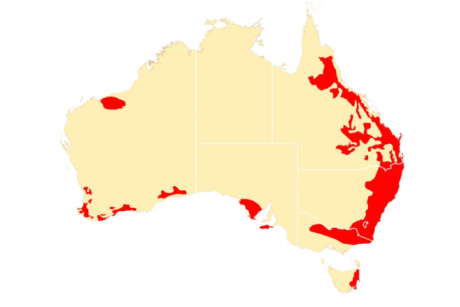
Above-normal fire danger is expected for most of the east coast, eastern Tasmania, northern Victoria, Kangaroo Island and the Eyre Peninsula in South Australia, parts of south-west Western Australia and a patch up north.
But that doesn’t mean everywhere else is in the clear — for many areas of southern Australia, dangerous fires in summer are normal…..
Keep up to date with warnings from your local fire authority, ABC Radio and ABC Emergency on Facebook.
Australia, you have been warned. https://mobile.abc.net.au/news/2019-12-16/bushfire-outlook-update-makes-for-more-grim-reading/11802452
In the interests of the coal lobby, Australia sabotaged the UN climate talks
Australia took a match to UN climate talks while back home the country burned https://www.theguardian.com/commentisfree/2019/dec/16/ australia-took-a-match-to-un-climate-talks-as-back-home-the-country-burned Julie-Anne Richards The gleeful coal lobby stalked the Madrid COP25 meeting halls as the Morrison government threw out compassion and international citizenship. I’ve been at the climate summit in Madrid for the past two weeks. The question I was constantly asked was: “What will it take for Australia to treat the climate crisis seriously?” International friends, colleagues and strangers looked on in horror at the effects of the bushfires and outright amazement at the Morrison government’s denial of the link between the fires and Australia’s coal industry, and seeming lack of concern at this extreme impact of climate change.
The ray of hope is the youth, demanding their future back. The rest of us have a responsibility to join them, to back their calls however we can. Force our government to show compassion. Demand genuine climate action. We can do this. Other governments are – New Zealand is showing us up. It is our government that is failing us, failing our neighbours, failing our youth. We’ve got no choice but to demand they act, and refuse to give up until they do. See you at a youth-led climate rally soon.
• Julie-Anne Richards is executive director of Climate Action Network Australia
Liberal-Party-dominated committee recommends removing Australia’s ban on nuclear power
 The Energy Minister says there are no plans to lift the moratorium, and any lifting has to be bipartisan. Labor wrote a dissenting report so there seems to be no chance of bipartisanship.
|
|
Parliamentary committee recommends lifting ban on modern nuclear power technology The Advertiser,14 Dec 19
Stopping short of a full go-ahead, the government-dominated committee called for more economic and scientific analysis…… However, Labor members of the committee said the economics did not stack up and it would be “irrational” to pursue nuclear power. “There is simply no case for wasting time and resources on a technology that is literally the slowest, most expensive, most dangerous, and least flexible form of new power generation,” committee deputy chair Josh Wilson and fellow Labor members said in a dissenting report. Labor and independent Zali Steggall both called for a national energy policy but the recommendation was struck down. “A national energy policy is an essential prerequisite to the consideration of lifting the moratorium on nuclear energy,” she said. Energy and Emissions Reduction Minister Angus Taylor, who initiated the inquiry, said the Government would take its time to consider the report. “The Government has no plans to lift the longstanding moratorium on nuclear energy,” he said. “Any changes … would need bipartisan support and broad community acceptance.” The committee, which received more than 300 submissions and held hearings around the country, made three broad recommendations. Firstly, it called for a holistic, strategic approach that would learn from international partners, identify opportunities, build bipartisanship and put “the community at the centre”. Secondly, the Australian Nuclear Science and Technology Organisation should be tasked with categorising nuclear into old and new technology — so-called Generation III+ and beyond which have in-built safety features. The Productivity Commission should look at economics and the Australian Radiation Protection and Nuclear Safety Agency at safety, waste, skills and governance. In addition an unspecified expert body should “educate and inform Australians”. Thirdly, the Federal Parliament should lift the ban on Generation III+ and beyond, conditional on the recommended scientific assessments. Finally, with state and territory government, the Commonwealth should commit to any approval only after “the prior informed consent of local impacted communities”.  |
|
Pro nuclear nonsense from Geoff Russell – “we’re all toast without nuclear power”
 Once again, New Matilda gave nuclear lobbyist Geoff Russell a forum for an attack on a critic of the nuclear industry. (Steggall’s Chicken On Nuclear Family, While Party Politics Buggers Inquiry, 16 Dec 19.) On this occasion, New Matilda was trashing a very mild nuclear critic, Zali Steggall.
So we’re “all toast” without nuclear power? This is nonsense. Even Geoff Russell knows that to get up and running the thousands of nuclear power plants that would be needed to stall global heating – would take decades. That means that, with the speed of global heating, nuclear power would be too late to make any difference. (And that’s if nuclear power really were effective against climate change – which it isn’t, when you consider the whole carbon emitting nuclear fuel cycle from uranium mining to deep disposal of wastes) Meanwhile, energy efficiency, wind and solar power, are quickly set up, quickly effective, and provide energy fuel that is genuinely zero carbon.
Bushfire near power plant (just as well it’s not a NUCLEAR power plant)
| Blaze burns near power plant as another fire destroys homes, SMH 17 Dec 19 |
| A fire that has burnt almost 400,000 hectares in the Hawkesbury is burning in the vicinity of a power station responsible for 10 per cent of NSW’s electricity. The area, north-west of Lithgow, is home to the Mount Piper Power Station, the fourth-largest in the state, and the Springvale coal mine. |
An emergency warning was issued for the Gospers Mountain fire about 4pm on Monday as it headed towards Wallerawang, Lidsdale and Blackmans Flat, in the state’s Central Tablelands.
This area, north-west of Lithgow, is home to the Mount Piper Power Station and the Springvale coal mine.
Mount Piper is the fourth-largest power station in the state and has large stockpiles of coal……
NSW RFS Inspector Ben Shepherd said crews were aware that the fire was burning just six kilometres east of the station, but believed there was “no current threat”. …. https://www.smh.com.au/environment/weather/blaze-approaches-power-plant-as-another-fire-destroys-homes-20191216-p53khc.html
In fealty to the global nuclear industry, the Liberals line up the nuclear dump site, amendments to law, deepwater port
 1. Kimba = ‘Napandee’ to be announced by Canavan as the National radioactive Suppository in January;
2. Very shortly, ANSTO & ARPANSA will say that they cannot implement the recommendations from the nuclear energy select committee unless the Environment Conservation & Biodiversity Act is amended ~ so the Libs will attempt to cripple that legislation. Once they achieve that, then
3. This deep water port connected by rail to Kimba will allow not only the shipment of Australian, but also the 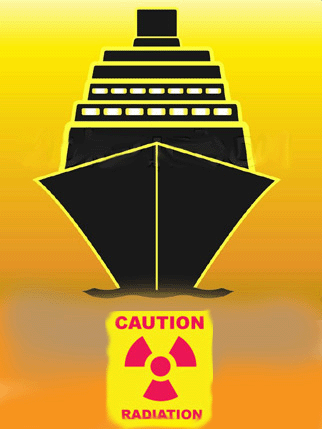 importation of international waste……
Through connection to the national rail and road network, Cape Hardy will become an internationally significant intermodal hub for agriculture, mining, and energy investment that can drive the region’s economy into the next century.
https://minister.infrastructure.gov.au/mccormack/media-release/25-million-support-cape-hardy-port-precinct?utm_source=miragenews&utm_medium=miragenews&utm_campaign=news
In the rush to get a nuclear waste dump site, the Dept of Industry, Innovation and Science has ignored the transport dangers
 Paul Waldon No Nuclear Waste Dump Anywhere in South Australia, 16 Dec 19
The lack of consultation regarding determination of transport routes and availability of resources, training, and infrastructure for emergency preparedness, response, and risk management for potential incidents during shipment only shows the DIIS has yet put the nuclear cart before the horse in their rush to secure a radioactive dump within a non compatible environment. more https://www.facebook.com/groups/1314655315214929/
While ignorant tunnel-visioned politicians kowtow to irrigators, the Murray River system faces death
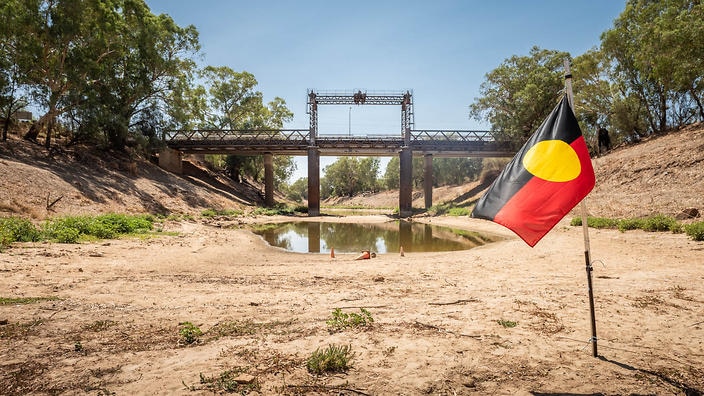
Water wars: will politics destroy the Murray-Darling Basin plan – and the river system itself?
Drought is not the only threat to the river system: the plan to save it is in doubt as states spar over the best way forward, Guardian, Anne Davies
The basin states – Queensland, New South Wales, Victoria and South Australia – as well as the federal government, are due to meet on Tuesday in Brisbane amid threats from the NSW Nationals that it will walk away from the plan unless major changes are made.
“We simply can no longer stand by the Murray-Darling Basin plan in its current form, the plan needs to work for us, not against us,” NSW Nationals’ leader John Barilaro warned last week.
“NSW is being crippled by the worst drought on record and our future is at risk. The plan should be flexible, adaptive and needs to produce good environmental outcomes for this state.”
NSW has already flagged that it will be asking to be relieved of its remaining contributions towards the environmental water target – it has committed to saving a further 450GL – while Victoria is balking at meeting its commitments as well.
There have also been calls from various ministers to end environmental flows during the drought and to instead allocate more water for agriculture. In particular is unhappiness from NSW at the amount of water stored in the lower lakes in South Australia. That will be fiercely resisted by SA. Continue reading
New South Wales’ bushfire conditions are getting worse
|
NSW bushfire conditions about to go from bad to much worse, https://thenewdaily.com.au/news/state/nsw/2019/12/14/nsw-bushfire-conditions-to-worsen/ Firefighters battling more than 100 blazes across NSW have seen their chances of respite vanish, with the latest weather forecasts predicting conditions will worsen again early next week as temperatures rise.Smoke from bush and grass fires burning around Sydney will see the city endure another hazy day on Sunday, the Rural Fire Service says.
More than 110 fires were burning across the state on Saturday night, 60 of which were not contained. Some 1500 firefighters were tackling the blazes, with no let-up on the horizon, Greg Allan from the RFS said. “Tomorrow we’re seeing a lot more widespread very high fire danger,” he told AAP. “We will see conditions deteriorate with worsening weather early into mid-next week. We’re going to be seeing a lot more higher temperatures across the state.” Total fire bans have been issued for the Central Ranges, Northern Slopes and North Western areas amid very high fire danger ratings on Sunday and more bushfire smoke will affect the Sydney Basin, the fire service said. “Smoke from fires burning on the outskirts of Sydney will settle across the Sydney Basin again overnight and tomorrow,” the RFS tweeted. “There is a possibility the smoke will clear slightly but remaining dense throughout the day.” An emergency warning issued on Saturday afternoon for the Gospers Mountain fire in Wollemi National Park northwest of Sydney was later downgraded to advice level. The Ruined Castle fire in the Blue Mountains remained at watch and act level on Saturday night. Maximum temperatures next week are forecast to reach the high 30s or early 40s in areas including Dubbo, Orange, Mudgee, Moree, Bourke, Parkes and on Sydney’s western fringe at Penrith. Authorities have warned people to remain vigilant about their health as air quality remains poor in parts of Sydney. Some 724 homes, 49 facilities and 1582 outbuildings had been destroyed so far this fire season. Six people have died and 2.7 million hectares have been scorched. |
|
In blistering heat, Perth’s bushfire will keep burning for days
Perth bushfire emergency continues as firefighters spend a fourth day trying to protect lives, homes, BY GIAN DE POLONI AND JAMES CARMODY, ABC, 16 Dec 19, A bushfire threatening lives and homes in Perth’s north has remained at emergency level for a fourth consecutive day — and it may stay there for several more, with flames being fanned further up the coast.
Key points:
- The fire has burnt through 12,000 hectares, destroying several structures
- DFES’ commissioner says difficult times are ahead and warns of further damage
- Authorities say they don’t believe arson is to blame for the fire
Hundreds of firefighters battling the blaze were able to slow its spread on Friday night but they spent Saturday dealing with changes in wind direction and another day of blistering heat.
The emergency warning is in place for a 45-kilometre stretch of coast including the towns of Guilderton, Seabird and parts of Two Rocks.
The smaller communities of Woodridge, Caraban, Gabbadah, Neergabby, Wilbinga, Yeal, Redfield Park, Sovereign Hill, the Seatrees and Breakwater estates and parts of Beermullah, Muckenburra, Wanerie, Neergabby and Yanchep remained in the the emergency warning zone on Sunday morning.
Fire danger has been declared for the metropolitan region, the Pilbara, Goldfields Midlands, the Great Southern, the mid-west Gascoyne, as well as the south-west and lower south-west of the state. ……..
Fire will burn for days
Department of Fire and Emergency Services (DFES) superintendent Gary Baxter said the fire could burn for more than a week.
“I don’t suspect that we’re going to extinguish it anytime in the next week or so but certainly we’ll try and get containment lines strengthened,” he said.
“Controlling it is a different thing but containing it over the next few days is an objective you’d hope in the next couple of weeks to fully extinguish the fire.
“That’s to completely extinguish 100 per cent of the fire ground — that’s a complete blackout — so that over the next few weeks and into the next couple of months of over summer we don’t have to revisit the same patch.”……
No relief from blistering heat
The fire has been fuelled by heatwave conditions that saw temperatures in the city top 40 degrees Celsius on Friday and Saturday, with similar conditions expected for Sunday.
The blaze has so far burnt through close to 12,000 hectares of bushland, tearing through the Yanchep National Park………
Yanchep National Park and the Wilbinga Conservation Park remains closed.
There was a total fire ban across the Perth metropolitan area on Saturday.
The Red Cross has established a hotline number for people affected by the fire to get in touch with family and friends; 1800 351 375 https://mobile.abc.net.au/news/2019-12-14/yanchep-and-two-rocks-bushfire-could-burn-for-days/11800060
Albanese attacks Coalition’s nuclear ‘fantasy’ as Greens say report should ‘alarm all Australians’
 Albanese attacks Coalition’s nuclear ‘fantasy’ as Greens say report should ‘alarm all Australians’,https://www.theguardian.com/australia-news/2019/dec/14/albanese-attacks-coalitions-nuclear-fantasy-as-greens-say-report-should-alarm-all-australians Government-dominated committee calls for partial lifting of nuclear ban and for greater work on nuclear technology, Australian Associated Press
Sat 14 Dec 2019 The Labor leader, Anthony Albanese, has described the call from Coalition MPs to lift a longstanding ban on nuclear energy as “fantasy”.
A 230-page report released on Friday by the chairman of the parliament’s energy committee and Liberal MP Ted O’Brien said nuclear energy should be considered as part of Australia’s future energy mix.
The government-dominated committee called for further work on nuclear technology and the partial lifting of the current moratorium on nuclear energy to allow for “new and emerging nuclear technologies”.
O’Brien said nuclear energy would also complement the government’s climate policy.
“If we’re serious about reducing greenhouse gas emissions, we can’t simply ignore this zero-emissions base-load technology,” he said.
A dissenting report by Labor MPs said there was no economic case for pursuing nuclear energy and safety issues had not been addressed.
Nuclear power has never overcome the dangers that we have seen played out around the world time after time,” Albanese told reporters on Friday after finishing off his week-long trip to Queensland.
“This is a fantasy from the government in order to avoid the real decisions that are needed of having a national energy policy that drives down emissions, drives down prices, and creates jobs.”
The inquiry, sought by the energy minister, Angus Taylor, received more than 300 submissions.
The Greens’ nuclear power spokesman, Sarah Hanson-Young, said the committee’s report should “alarm all Australians”.
She said the report opens the door to nuclear power stations and subsequent waste dumps here in Australia.
“This is absurd at best and dangerous at worst,” she said in a statement.
Australia on the nose at UN climate talks
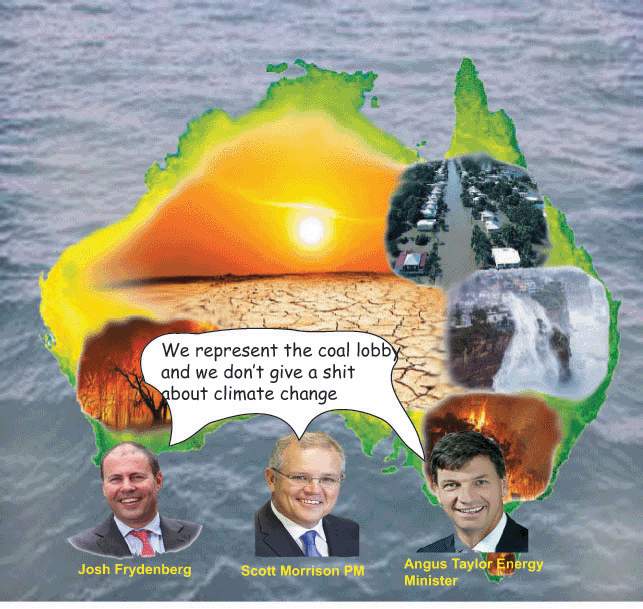 Not winning friends’: Australia cops blame as climate talks extended, SMH, By Peter Hannam. December 14, 2019 Global climate talks have been extended into the weekend as nations wrangle over carbon accounting issues, including whether Australia should be able to slash its Paris emissions reduction goals using a surplus from an earlier era….. Not winning friends’: Australia cops blame as climate talks extended, SMH, By Peter Hannam. December 14, 2019 Global climate talks have been extended into the weekend as nations wrangle over carbon accounting issues, including whether Australia should be able to slash its Paris emissions reduction goals using a surplus from an earlier era…..
International media singled out Australia’s insistence it be allowed to count “over-achievement” during the 2012-20 Kyoto Protocol period to reduce its abatement task during the 2021-30 Paris accord as one brake on progress. Sweden’s TT News Agency blamed the stalled talks on Australia, Saudi Arabia and Brazil. https://www.smh.com.au/environment/climate-change/not-winning-friends-australia-cops-blame-as-climate-talks-extended-20191214-p53jyk.html |
|
Climate change, bushfires, and Australia’s lack of climate policy
|
The link between climate change and our bushfire holocaust, New Daily, Michael Crooks-15 Dec 19, On December 10, an Liberal MP bucked a trend: he put climate change and the eastern Australian bushfire crisis in the same sentence.“These bushfires have been caused by extreme weather events … the exact type of events scientists have been warning us about for decades that would be caused by climate change,” said NSW Environment Minister Matt Kean at the Smart Energy Summit in Sydney, where he pushed for the nation to be more reliant on renewable energy.
“We cannot allow ideology and politics to get in the way of … the health of our planet for generations of Australians.” Climatologists worldwide agree that the perilous journey of climate change is underway, unfolding in Australia as hotter summers, bleached tropical reefs and, according to some, the bushfires still raging in NSW and Queensland……. Is climate change causing the current bushfires?It’s hard to say definitively, according to the scientists TND interviewed. “The answer is probably yes,” said Dr Floris van Ogtrop, an environmental scientist at the University of Sydney. “We will most likely experience longer and more intense droughts as the climate warms. And hotter, dryer conditions lead to increased bushfire risk.”….. Is Australian policy behind the rest of the developed world with regards to reducing greenhouse emissions?Yes, according to a new report co-prepared by think tanks the NewClimate Institute, the Climate Action Network and Germanwatch. “Australia is one of the largest exporters of fossil fuels in the world,” said Prof Hughes. “So it’s not just what we burn, it’s what we ship off elsewhere. “We have some of the best renewable resources anywhere. We have no excuse.”…..https://thenewdaily.com.au/news/national/2019/12/14/bushfires-climate-change-or-not/
|
|
|
Australia’s rainforests used to be too wet to burn. Not now.
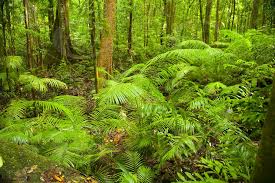
Scientists thought Australia’s rainforests were too wet to burn – then climate change hit, SBS News visits the Paluma Range National Park in Queensland to see firsthand how the trees and species inhabiting the area have been impacted. SBS NEWS, BY RACHEL CARY 15 Dec 19,
The Great Barrier Reef is currently the poster child for the impacts of climate change, but just inland from the coast, Queensland’s rainforests are being hit just as hard.
Forests that were once considered too wet to burn are more increasingly doing exactly that.
Professor Steve Williams from James Cook University has been observing the Paluma Range National Park, near Townsville, for 25 years. In that time, he says the area has changed a lot.
That’s not really that normal,” Professor Williams says.
“We were right on the edge, so that’s kind of within the range of possibility, but it’s basically a sign of what’s been happening and a sign of what’s to come.”
The Australian Conservation Foundation says rainforests were once considered too wet to burn.
Its CEO Kelly O’Shanassy says the Paluma Range National Park rainforest isn’t the only one now affected.
“Just in the last few years, we’ve seen rainforests in northern Australia burning,” she says.
“In the last few weeks we’ve been seeing rainforest in Queensland and New South Wales burning and a few years ago we saw very wet forests in Tasmania burning.”…….
The Wet Tropics Management Authority says climate change is the biggest threat to rainforests.
It released a climate adaption plan earlier this year and is calling for urgent action from governments and communities to limit climate change impacts.
The ACE says if we lose the rainforests it will severely impact the ecosystem.
“Rainforests are like the air conditioners for our planet,” Ms O’Shanassy says.
“Rainforests attract water so they attract rain for our planet.” ……
Professor Williams fears a longer drier dry season will see more fires impacting the Paluma Range National Park.
“Rainforests have been mostly considered to be fireproof, but if you get a long enough dry season that’s dry enough… and especially if you combine that with the impacts of a cyclone… then you’ve got the possibility of really severe fires going through.
“That’s a complete game-changer”. HTTPS://WWW.SBS.COM.AU/NEWS/SCIENTISTS-THOUGHT-AUSTRALIA-S-RAINFORESTS-WERE-TOO-WET-TO-BURN-THEN-CLIMATE-CHANGE-
Is the Minister Against the Environment, Angus Taylor, really bad at arithmetic, or just a liar?
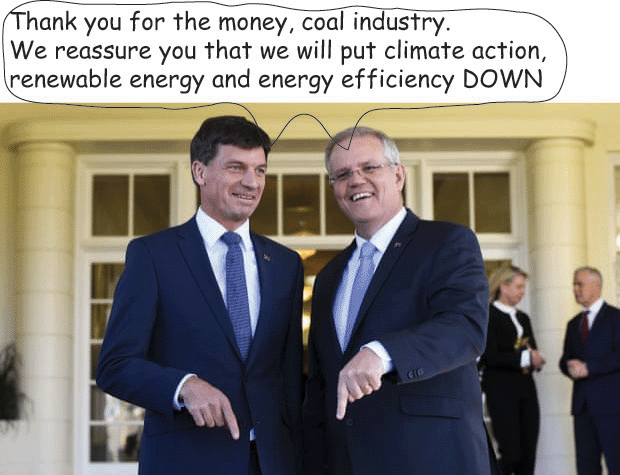 Angus Taylor spotted fiddling more figures, New Daily, 15 Dec 19 Angus Taylor spotted fiddling more figures, New Daily, 15 Dec 19The Minister for the Environment and Energy, Angus Taylor, seems to have a problem with numbers, whether it’s the Sydney City Council’s travel budget or what year Naomi Wolf was at Oxford. His latest figure fiddling though is much bigger and more serious than either of those embarrassments. And it’s possibly more absurd. At the COP25 climate summit in Madrid last week, Mr Taylor was pushing the government line that Australia would meet and exceed its Paris agreement to reduce greenhouse gas emissions by 26 per cent from 2005 levels by 2030 – “in a canter”, according to Prime Minister Scott Morrison. But all the while, Mr Taylor had a graph from his department showing the claim was, shall we politely say, “false”. Without much fanfare, the Department of Environment and Energy earlier this month published its annual emissions projections. At the core of the report is the accompanying graph of Australia’s emissions of millions of tonnes of CO2-equivalent from 1990 projected out to 2030. Blind Freddy can see the government’s forecast reduction from nearly 600Mt in 2005 to 511Mt in 2030 does not represent 26 per cent. It’s actually less than 15 per cent. But with Mr Taylor’s talent for figure fiddling, the sun rises in the west, bears no longer defecate in the woods, and somehow less than 15 per cent is turned into more than 26 per cent. Because he says so. Blind Freddy can see the government’s forecast reduction from nearly 600Mt in 2005 to 511Mt in 2030 does not represent 26 per cent. It’s actually less than 15 per cent. But with Mr Taylor’s talent for figure fiddling, the sun rises in the west, bears no longer defecate in the woods, and somehow less than 15 per cent is turned into more than 26 per cent. Because he says so.\The government attempts this particular distortion of reality by claiming “carry-over credits” from overachieving in the previous Kyoto agreement reached in 1997. (That ‘overachievement’ was totted up primarily in LULUCF – “land use, land use change and forestry” – an area particularly prone to creative accounting as it involves such things as promising not to clear bush at some stage in the future.) How inconvenient that the government’s graph, including buying some for LULUCF, goes back to 1990 and shows our emissions reduction from then, or from the 611Mt peak in 2006, is still less than 15 per cent. [graph on original] The government’s claim is an international joke. What’s worse is that the Madrid meeting was supposed to be about moving the needle on from the Paris agreement. Salient nations were supposed to be able to feel the heat, smell the smoke, see the glaciers melt and therefore work to achieve more than Paris. Instead, Mr Taylor led Australia as one of the recalcitrant countries sabotaging that reasonable aim. And claiming black was white, or at least that coal isn’t a problem, wasn’t the Environment Minister’s only fiddle. He also declared that Australia is backing an unprecedented wave of clean energy investment. Well, yes – and no. Australia is enjoying a surge in clean energy generation investment this year, but then it falls away quite rapidly, as shown in another graph, this time by the construction industry analysts at Macromonitor. [graph on original] Macromonitor reckons the next clean energy investment boom doesn’t kick in until the middle of the decade when the need for storage – pumped hydro, batteries – is more acute. … https://thenewdaily.com.au/news/politics/australian-politics/2019/12/16/angus-taylor-emmissions-numbers/ |
|
1 This month
.

Australians deserve the truth
about
AUKUS – https://aukuspublicinquiry.com/

PETITION – To: Prime Minister Anthony Albanese and the Australian Labor Government

of the week – Australians for War Powers Reform (AWPR)
To see nuclear-related stories in greater depth and intensity

