Australia’s environment department is unlawfully withholding documents from the public
 The Transparency Project Freedom of information Environment department illegally withholds thousands of FOI pages
More than 10,000 pages of documents have not been made public, including records on Adani and the Angus Taylor grasslands saga , Guardian, Christopher Knaus @knausc Wed 16 Oct 2019
Australia’s environment department is unlawfully withholding more than 10,000 pages of freedom of information documents from the public, including internal records on Adani and the Angus Taylor grasslands affair.
The department has failed to place documents on its FOI disclosure log for the past 10 months, meaning material it has released to individual applicants is not visible to the wider public.
The failings, first reported by the Mandarin, are a breach of FOI law, which compels government agencies to publish documents online within 10 working days of giving them to the initial applicant.
It means more than 10,000 pages have not been published on the log, including internal records on its decision to approve the controversial groundwater plan for the Adani coalmine and on Taylor’s interactions with an investigation into land-clearing by a company he and his family part-owned.
Guardian Australia understands the department’s conduct has been the subject of an official complaint to the information watchdog, the office of the Australian information commissioner (OAIC). The OAIC typically does not comment on ongoing investigations………
Peter Timmins, a lawyer and highly-regarded FOI expert, said it showed a broader problem with the federal government’s attitude toward FOI.
“It shows a broader problem really about the state of FOI if we have agencies that can disregard quite clear obligations to make documents released publicly available on their disclosure log,” Timmins said. “The broader problem is that I think without appropriate leadership – and that really is at the highest level of government – about the importance of transparency and integrity, we see these breaches occur.”…….. https://www.theguardian.com/australia-news/2019/oct/16/environment-department-illegally-withholding-thousands-of-foi-pages
Australian Prime Minister Morrison’s attitude to Pacific Islanders – “Take the Money and Shut Up about Climate Change”
 Take the money and shut up’: Ex-Tuvalu PM slams Morrison’s climate bargaining, The Pacific nation of Tuvalu is one of the world’s most vulnerable countries to the effects of climate change. SBS News has spoken to its former leader about Australia’s ‘lack of climate action’. Take the money and shut up’: Ex-Tuvalu PM slams Morrison’s climate bargaining, The Pacific nation of Tuvalu is one of the world’s most vulnerable countries to the effects of climate change. SBS News has spoken to its former leader about Australia’s ‘lack of climate action’.
SBS 23 OCT 19
BY NICK BAKER
Former Tuvalu Prime Minister Enele Sopoaga has accused the Morrison government of trying to buy the silence of Pacific Island leaders who are vocal about climate change. Mr Sopoaga, who has been a fierce advocate on climate change action, told SBS News on Wednesday that Prime Minister Scott Morrison’s climate policies were “un-Pacific” and that Australia was letting down the region. Earlier this year, Australia said it will steer $500 million of existing aid towards the Pacific to help the region cope with climate change. But Mr Sopoaga said some Pacific leaders felt like they were being told to “take the money and shut up”. “Putting this money on the table – $500 million – and then expecting Pacific Island countries like Tuvalu to say ‘OK, we’ll stop talking about climate change’, it’s not on … This is completely irresponsible.” He said greater action on climate change back in Australia was more important than Pacific aid. “Any amount of money that is coming with the Step-Up [Pacific aid program] cannot be seen as an excuse for no action at a domestic level to cut down on greenhouse emissions.”…….. HTTPS://WWW.SBS.COM.AU/NEWS/TAKE-THE-MONEY-AND-SHUT-UP-EX-TUVALU-PM-SLAMS-MORRISON-S-CLIMATE-BARGAINING
|
|
|
Judge denies Julian Assange a delay in extradition hearings

|
WikiLeaks founder Julian Assange denied delay to extradition hearing by London judge, https://www.abc.net.au/news/2019-10-22/wikileaks-founder-assange-in-court-to-fight-extradition/11625042 The full extradition hearing of WikiLeaks founder Julian Assange will go ahead in February 2020 after a London judge declined a request by his lawyers to delay proceedings by three months.
Key points:
The 48-year-old appeared in a packed court on Monday to fight extradition to the United States, where he faces 18 counts, including conspiring to hack into Pentagon computers and violating an espionage law. Britain’s former Home Secretary Sajid Javid signed an order in June allowing Assange to be extradited to the US, where authorities accuse him of scheming with former Army intelligence analyst Chelsea Manning to break a password for a classified government computer. He could spend decades in prison if convicted. Assange and his legal team said he needed more time to prepare his case, but failed to convince District Judge Vanessa Baraitser that a slowdown was justified. The full extradition is still set for a five-day hearing in late February, with brief interim hearings in November and December. Assange — clean shaven, with his silvery-grey hair slicked back — defiantly raised a fist to supporters who jammed the public gallery in Westminster Magistrates Court. After the judge turned down his bid for a three-month delay, Assange, speaking very softly and at times appearing to be near tears, said he did not understand the proceedings. He said the case was not “equitable” because the US government had “unlimited resources” while he did not have easy access to his lawyers or to documents needed to prepare his battle against extradition while confined to Belmarsh Prison on the outskirts of London. Lawyer Mark Summers, representing Assange, told the judge that more time was needed to prepare Assange’s defence against “unprecedented” use of espionage charges against a journalist. Mr Summers said the case has many facets and would require a “mammoth” amount of planning and preparation. He also accused the US of illegally spying on Assange while he was inside the Ecuadorian Embassy seeking refuge, and of taking other illegal actions against the WikiLeaks founder. “We need more time,” Mr Summers said, adding that Assange would mount a political defence. Mr Summers said the initial case against Assange was prepared during the administration of former president Barack Obama in 2010 but wasn’t acted on until Donald Trump assumed the presidency. He said it represented the US administration’s aggressive attitude toward whistleblowers. Representing the US, lawyer James Lewis opposed any delay to the proceeding. The case is expected to take months to resolve, with each side able to make several appeals of rulings. The judge said the full hearing would be heard over five days at Belmarsh Court, which would make it easier for Assange to attend and contains more room for the media. Assange’s lawyers said the five days would not be enough for the entire case to be heard. Health concerns for Assange Outside the courthouse, scores of his defenders — including former London mayor Ken Livingstone — carried placards calling for Assange to be released. Wikileaks editor-in-chief Kristinn Hrafnsson said it was a “big test case for journalism worldwide”. “This should be thrown out immediately because this is a total violation of a bilateral treaty between the US and the United Kingdom which basically states that you cannot extradite someone for political offences, and this is a political case,” he said. Regarding Assange’s health, Mr Hrafnsson said he was in a “stable condition” but was living in “de facto solitary confinement”. “After three or four weeks it starts to bite in and you can feel that he is suffering,” he said. Assange supporter Malcolm, who did not give his surname, told the ABC there was “not nearly enough” people actively campaigning for Assange’s freedom, and he wanted to see the whole street blocked at the next hearing. Another supporter accused the Australian government of failing to “defend their own citizen”. The crowd outside court was largely well-behaved but briefly blocked traffic when a prison van believed to be carrying Assange left court. |
|
Federal govt open door to international high level nuclear waste dump
Nuclear Shipment Truth Exposed
If the Fed Govnt establish proposed nuclear waste dumps in SA and they get away with reclassifying reprocessed vitrified High Level Nuclear Waste from France as Intermediate Level Nuclear Waste, on arrival back in Australia (like they plan to do) – then it opens the door for importing International High Level Nuclear Waste into Australia, and dumping in SA as reclassified Intermediate Level Nuclear Waste. Reprocessed vitrified High Level Nuclear Waste is highly radioactive and contains 95% of the total radioactivity (the worst elements) from Nuclear reactor spent nuclear fuel – is long lived – and is classified High Level Nuclear Waste everywhere in the world except Australia.
Once again, Aaron Patrick subtly slants this story in the pro nuclear direction.
Mr Forshaw, who chaired an inquiry into the replacement of the Lucas Heights reactor, on Monday said that he didn’t regret Parliament’s decision, and isn’t convinced that nuclear can compete with other energy sources on cost.
|
Read down to the article’s later paragraphs (in red) to get a better picture
 of what is really going on. AND – of what is really going on. AND –
The man who helped ban nuclear has second thoughts, https://www.afr.com/companies/energy/the-man-who-helped-ban-nuclear-has-second-thoughts-20191021-p532n4 Australian Financial Review Aaron Patrick, Senior Correspondent, Oct 21, 2019 Twenty-one years after the Federal Parliament banned nuclear power, one of the senators responsible would like Australia to have another look at the energy source.
In 1998, Michael Forshaw, a Labor senator, agreed to a Greens proposal to insert a clause into a proposed law on nuclear safety that prohibited using nuclear power to generate electricity. Now, as parliamentary inquiries at the federal level and in NSW and Victoria investigate nuclear power, Mr Forshaw is one of a number of Labor figures open to reconsidering whether nuclear can play a role in combating climate change. “I think the debate is good because there have been people who have been the strongest environmentalists for many years who now say nuclear is a clean source of energy,” he said in an interview from the Sutherland Shire, where he is a councillor. “Nuclear energy is certainly on one case cleaner that some of the more traditional forms of energy, such as coal-fired power stations. But the problem is of course what do you do with the nuclear waste. We still haven’t got to Australia settling on a site for the waste we currently produce.” Pro-nuclear advocates regard the events of late 1998 as one of the great, unheralded missteps in the history of energy policy. The medical industry was desperate for the Lucas Heights nuclear reactor – then located in bushland west of Sydney – to continue because it produced radioisotopes vital for the treatment of cancer and other diseases. The 40-year-old reactor needed to be replaced, and the government wanted to merge the Australian Radiation Laboratory and the Nuclear Safety Bureau into a single independent regulator, the Australian Radiation Protection and Nuclear Safety Agency, according to a brief history by Bright New World, a pro-nuclear lobby group. The Greens and Australian Democrats decided to tap into anti-nuclear sentiment coursing through society by raising concerns about where the nuclear waste would be stored. The Greens, which wanted to attract votes from the bigger Democrats party, saw a political opportunity to demand that the new law would state that it did not “authorise the construction or operation” of a nuclear power plant or uranium enrichment facility. As a junior Labor spokesman for health, Forshaw had responsibility for the legislation in the upper house. On December 10, not long before the Senate broke for lunch, he announced that the Labor Party had agreed to the proposal, ensuring it would pass. “We understand that there is no either medium-term or long-term intention on the part of the government to proceed to construct such facilities,” then senator Forshaw said. “On that basis alone, one would think that the government should be prepared to support this amendment.” Needing the Senate’s support to replace the ageing Lucas Heights plant with a new Argentinian reactor, prime minister John Howard’s government didn’t bother opposing the clause. Only 10 of the 76 senators were present for the vote, including three from the Greens and Australian Democrats. “The rest just accepted it without any opposition,” the Bright New World history says. The process took six minutes. Eleven hours later the law was approved by the House of Representatives, without a vote, at the direction of health minister Michael Wooldridge. “I believe the amendments agreed to by the Senate will strengthen this legislation,” Dr Wooldridge told the lower house. Waste concerns lingerMr Forshaw, who chaired an inquiry into the replacement of the Lucas Heights reactor, on Monday said that he didn’t regret Parliament’s decision, and isn’t convinced that nuclear can compete with other energy sources on cost. The Greens senator who proposed the ban, Dee Margetts, wasn’t well enough to answer questions, a party spokeswoman said. “I am sure she would believe it is still the right decision though,” she said. “Dee never wavered in her stance on issues.” Mr Forshaw said political agreement was needed on a central location to store nuclear waste for hundreds of years. Once that was settled, a rational debate about the cost and benefits of nuclear power would be appropriate, he said. We should store our own. That’s the requirement under international agreement. It’s a real travesty we haven’t been able to sort that out. “If we can’t get governments to make a decision about where to make a long-term nuclear storage facility – if we can’t get that right I think we are a long way from making a reasoned decision on something like a nuclear power station.” Other figures from the left who have expressed conditional support for nuclear energy include University of Queensland economist John Quiggin, Industry Super Funds chief economist Stephen Anthony, green-energy advocate Simon Holmes a Court and Australian Workers Union national secretary Daniel Walton. The Labor Party remains adamantly opposed, and environment spokesman Mark Butler has already begun to stoke fear among voters about the risk of nuclear reactors. Former NSW premier Bob Carr, who was an early Labor Party supporter of nuclear power, said he had become pessimistic about overcoming public opposition. “If a continent can’t settle on a location for a toxic waste incinerator despite 30 years of discussion, can you really tell me which locality is going to put its hand up to host the country’s first nuclear power reactor?” he said on Monday. The US National Aeronautics and Space Administration estimated in 2013 that nuclear power prevented 1.8 million deaths between 1971 and 2009 by displacing coal and other polluting sources of energy. |
|
14 Regional News Media join the campaign for press freedom
|
Australian Community Media joins fight for press freedom and your right to know, The Islander, 21 Oct 19, Today, Australian Community Media joins other media outlets in an unprecedented campaign to defend growing threats to freedom of the press in Australia.
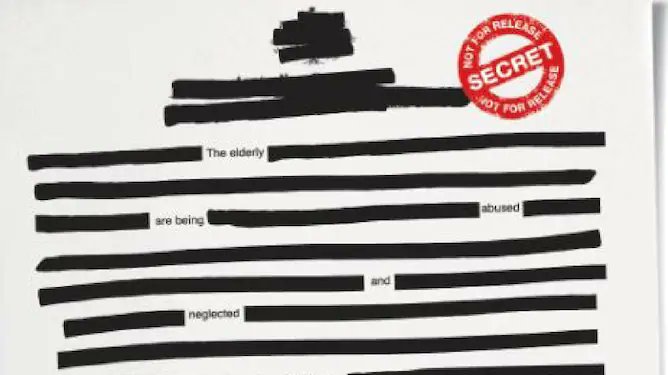
The front pages of all 14 of ACM’s daily newspapers, like other leading newspapers around the country, have been symbolically censored to highlight the need to fight for the public’s right to know in the face of increasing attempts by government and government agencies to suppress information, prosecute whistleblowers and criminalise legitimate public interest journalism.
In your nation’s capital, the front page of The Canberra Times today features a redacted document and asks the question: “When government keeps the truth from you, what are they covering up?” The powerful message is repeated on the front pages of the Newcastle Herald, The Border Mail and, in Victoria, The Courier in Ballarat, The Standard in Warrnambool and the Bendigo Advertiser. Front-page news has also been censored in The Examiner and The Advocate in Tasmania as well as in NSW’s Illawarra Mercury, The Northern Daily Leader in Tamworth, The Daily Advertiser in Wagga Wagga, Bathurst’s Western Advocate, Dubbo’s Daily Liberal and the Central Western Daily in Orange. Australia’s Right to Know, a coalition of leading media organisations and industry groups including ACM, has launched a website, yourrighttoknow.com.au, to illustrate the dangers of increasing federal government secrecy, and to urge Australians to stand up for their right to know. The website showcases public interest journalism that has exposed banking malpractice, neglect and abuse in aged-care homes and the Australian Tax Office’s power to take money out of people’s bank accounts without their knowledge. The #righttoknow campaign will advertise across print, digital, radio and television, including commercials aired for the first time across all TV channels on Sunday night. The campaign follows June’s Australian Federal Police raids on the ABC and the home of News Corp journalist Annika Smethurst. Both media organisations are still awaiting confirmation of whether the journalists targeted will face prosecution. Research commissioned by the media coalition shows that while 87 per cent of Australians value a free and transparent democracy where the public is kept informed, only 37 per cent believe that it’s happening……..https://www.theislanderonline.com.au/story/6447711/its-time-to-fight-for-your-right-to-know/?cs=1777&fbclid=IwAR3Ae84LVpOPIrkyRGTee5XkyFqWCw-3w3aKzN_1B3s34nUVOTD-2yrlMPU |
|
A Media Freedom Act for Australia?
work, https://theconversation.com/australia-needs-a-media-freedom-act-heres-how-it-could-work-125315?utm_medium=email&utm_campaign=Latest%20from%20The%20Conversation%20for%20October%2022%202019%20-%201440613637&utm_content=Latest%20from%20The%20Conversation%20for%20October%2022%202019%20-%201440613637+CID_dab722b5Rebecca Ananian-WelshSenior Lecturer, TC Beirne School of Law, The University of QueenslandOctober 22, 2019 Australians picked up their morning papers yesterday to find heavily blacked-out text instead of front-page headlines. This bold statement was instigated by the “Your Right to Know” campaign, an unlikely coalition of Australian media organisations fighting for press freedom and source protection.A key reform advocated by a range of organisations and experts – including our research team at the University of Queensland – is the introduction of a Media Freedom Act. Unlike human rights or anti-discrimination legislation, there is no clear precedent for such an act.
So what exactly might a Media Freedom Act look like and is it a good idea?
Raids and response
It was the June raids on the home of News Corp journalist Annika Smethurst and the ABC’s Sydney headquarters that revealed the fragile state of press freedom in Australia. Two parliamentary inquiries into press freedom are on foot, with public hearings before the Senate committee starting last Friday.
Parliament will soon face the question: can we protect national security without sacrificing that cornerstone of liberal democracy, press freedom? If so, how?
Home Affairs Minister Peter Dutton’s immediate response to the raids was to state that journalists would be prosecuted if they received top-secret documents. A month later, Dutton issued a ministerial directive to the AFP that emphasised the importance of press freedom and the need for restrained action against journalists.
Attorney-General Christian Porter’s subsequent directive was more moderate, ensuring that he would have the final say on whether journalists would be prosecuted on the basis of their work “in a professional capacity as a journalist”.
These directives may reflect a burgeoning appreciation within government of the importance of the press in ensuring democratic free speech and accountability.
However, the laws that undermine press freedom by targeting journalists and their sources remain on the books. These laws include many of the now 82 (and counting) national security laws enacted since September 11 2001. This is more than anywhere else in the world and some of these laws grant the government uniquely severe powers of detention and interrogation.
A Media Freedom Act could serve three key roles, making it an appropriate and advantageous option in the protection of national security, press freedom and democracy.
Recognise the fourth estate
First, a Media Freedom Act would recognise and affirm the importance of press freedom in Australia. This recognition would support the fourth estate role of the media and demonstrate Australia’s commitment to democratic accountability and the rule of law. It would carry the weight of legislation rather than the relative flimsiness of ad hoc directives.
In this way, a Media Freedom Act would represent a clear commitment to the public’s right and capacity to know about how they are governed and power is exercised.
The act would also recognise that press freedom is not an absolute, but may be subject to necessary and proportionate limitations.
A culture of disclosure
econd, it would support a transition from a culture of secrecy to a culture of disclosure and open government across the public sector. This role could be served by requiring the public sector (including law enforcement and intelligence officers) to consider the impact of their decisions on press freedom and government accountability and to adopt the least intrusive option that is reasonably available.
This requirement echoes Dutton’s directive. It is already part of the law of Victoria, the ACT and Queensland, where free expression is protected within those jurisdictions’ charters of rights. Like the charters, a federal Media Freedom Act would aim to bring about a cultural shift and contribute to the gradual rebuilding of trust between government and the media.
At federal level, the parliament must already consider the impact of a new law on freedom of expression under the Human Rights (Parliamentary Scrutiny) Act. A Media Freedom Act could reinforce the importance of parliament and the public sector considering the impact on press freedom when it debates and enacts new laws.
Journalism is not a crime
Third, and most importantly, a Media Freedom Act would protect press freedom by ensuring legitimate journalism was excluded from the scope of criminal offences.
It is important that this be in the form of an exemption rather than a defence. This has no substantial legal impact. But, crucially, an exemption conveys that the journalist had not engaged in criminal wrongdoing.
It also places the onus on the prosecution to prove the exemption doesn’t apply. This therefore alleviates the chilling effect on press freedom caused by the threat of court action.
The framing of the protection will attract debate (what, after all, is a journalist? And what is journalism?).
A good starting point is the existing journalism defence to the general secrecy offence in section 122.5 of the Criminal Code. For that defence to apply, the person must have:
- dealt with the information in their capacity as a “person engaged in the business of reporting news, presenting current affairs or expressing editorial or other content in news media”
- have reasonably believed that engaging in the conduct was in the public interest.
A single act or many amendments?
A Media Freedom Act is not a panacea; it would not avoid the need for a detailed review of Australia’s legal frameworks for their impact on press freedom.
In particular, protections for private sector, public sector and intelligence whistleblowers need attention. Suppression orders and defamation laws also have a serious chilling effect on Australian journalism. However, the present approach of considering dozens of individual schemes for their discrete impact on press freedom, and seeking technical amendments to each to alleviate that impact, is cumbersome, illogical and destined to create loopholes.
Australia’s national security laws are uniquely broad and complex. At present, an inconsistent array of (notably few) journalism-based defences and exemptions from prosecution are scattered across these laws. Inconsistency leads to confusion, and overlapping offences make it even more difficult for journalists to know when they are crossing the line into criminal conduct.
The imperative to protect press freedom is fundamental and deserving of general recognition and protection. In light of these concerns, our international obligations and the rule-of-law concerns for legal clarity, consistency and proportionality, it is time for a Media Freedom Act.
Momentum grows for the rescue of Julian Assange
|
Growing calls for Australian government to defend Julian Assange https://www.wsws.org/en/articles/2019/10/19/assa-o19.html?
fbclid=IwAR2smK6ChQzsIB7Ndld4N_No68RpVViDz5V-RH7qTiYfWmFWFdqkThOA-DQ
By Oscar Grenfell, 19 October 2019 Over the past week, several prominent public figures, including federal members of parliament, have called on the Australian government to fulfil its obligations to defend WikiLeaks’ publisher Julian Assange, including by taking steps to prevent his extradition from Britain to the US.The statements come in the lead-up to British extradition hearings in February, that will decide whether Assange is dispatched to the US. He faces a maximum sentence of 175 years in an American prison for exposing US war crimes and diplomatic intrigues. There are concerns within the Australian political and media establishment that the refusal of successive governments to defend Assange, an Australian citizen and journalist, has generated widespread anger and opposition. The fear in ruling circles is that if Assange is extradited, or if his parlous health continues to deteriorate, the latent support for him will coalesce into a political movement against the entire official set-up. In a statement to the House of Representatives on Wednesday, independent MP Andrew Wilkie declared that Assange is “an Australian citizen and must be treated like any other Australian. He was not in the US when he provided evidence of US war crimes in Iraq. He can’t possibly have broken their laws.” Wilkie said that if Assange is extradited to the US, he “faces serious human rights violations including exposure to torture and a dodgy trial. And this has serious implications for freedom of speech and freedom of the press here in Australia, because if we allow a foreign country to charge an Australian citizen for revealing war crimes, then no Australian journalist or publisher can ever be confident that the same thing won’t happen to them.” He concluded by stating: “Put simply, he must be allowed to return to Australia.” Wilkie, a former intelligence agent who resigned to speak out against “weapons of mass destruction” lies used to justify the illegal 2003 invasion of Iraq, has previously condemned the assault on democratic rights. In 2010 and 2011, he made statements and spoke at public events in defence of Assange. Alongside the Greens and a host of civil liberties organisations, however, Wilkie has largely remained silent about the WikiLeaks founder’s plight for a number of years and has boycotted all actions taken in his defence. Wilkie said that if Assange is extradited to the US, he “faces serious human rights violations including exposure to torture and a dodgy trial. And this has serious implications for freedom of speech and freedom of the press here in Australia, because if we allow a foreign country to charge an Australian citizen for revealing war crimes, then no Australian journalist or publisher can ever be confident that the same thing won’t happen to them.” He concluded by stating: “Put simply, he must be allowed to return to Australia.” Wilkie, a former intelligence agent who resigned to speak out against “weapons of mass destruction” lies used to justify the illegal 2003 invasion of Iraq, has previously condemned the assault on democratic rights. In 2010 and 2011, he made statements and spoke at public events in defence of Assange. Alongside the Greens and a host of civil liberties organisations, however, Wilkie has largely remained silent about the WikiLeaks founder’s plight for a number of years and has boycotted all actions taken in his defence. Joyce, a populist who has sought to build a base of support in rural areas, was well aware of the sentiments in favour of Hicks among workers in regional centres and country towns. He played a role in the sordid agreement brokered by Howard, which saw Hicks returned to Australia in 2007. Hicks was forced to serve out a bogus prison sentence in Australia and was banned for a year from speaking to the media. In comments to the media on Monday, former Labor foreign minister Bob Carr hinted at the concerns animating the comments in defence of Assange by such figures from within the political establishment. Carr told the Sydney Morning Herald that ordinary people would be “deeply uneasy” about the prospect of an Australian citizen being handed over to the “living hell of a lifetime sentence in an American penitentiary.” He criticised current Foreign Minister Marise Payne over her claim that she made “friendly” representations on behalf of Assange to US Secretary of State Mike Pompeo. Pompeo has denounced Assange as a “demon” who is not entitled to any democratic rights and labelled WikiLeaks as a “non-state hostile intelligence service.” Carr stated: “I think the issue will gather pace, and in the ultimate trial there will be a high level of Australian public concern, among conservative voters as much as any others.” In his strongest comments in defence of Assange yet, Carr declared: “We have an absolute right to know about American war crimes in a conflict that the Australian government of the day strongly supported. We wouldn’t know about them except for Assange.” Carr is no political innocent. During his decades in the Labor Party, he functioned as a secret informant for the US embassy, beginning in the 1970s. He was a leading minister in the Gillard Labor government which refused to defend the WikiLeaks founder and instead pledged to assist the US campaign against him. That Carr has spoken out now is a measure of the fears within the ruling elite that the defence of Assange will animate millions of workers, students and young people in the coming period. In keeping with the central role of Labor in the US-led pursuit of Assange, no prominent current figure in the party has joined the calls for him to be defended. When the WikiLeaks’ founder was illegally expelled from the Ecuadorian embassy and arrested by the British police in April, Labor MP Tanya Plibersek shared a Tweet denouncing his supporters as “cultists.” Julian Hill, a little-known federal backbencher representing a working-class electorate in outer Melbourne, is the only Labor MP to have spoken out. He told the Guardian on Thursday that Assange is “an Australian and, at the very least, we must be vigorously consistent in opposing extradition to countries where he might face the death penalty.” Prime Minister Scott Morrison responded this week by blandly declaring that Assange must “face the music” in the US. Senior government ministers have previously maligned Assange, repeating the lies concocted by the US intelligence agencies to discredit him. Liberal Senator James Paterson attempted to provide a more sophisticated argument for the government’s refusal to defend Assange, telling the Sydney Morning Herald last week that both Britain and the US were “rule-of-law countries.” Paterson piously stated: “This is not the case in many other countries in the world. Sadly, we know there are Australian citizens detained right now in China and Iran who are not facing free and fair legal systems … and the Australian government does have a greater obligation to assist those citizens.” The suggestion that the Australian government has a responsibility to defend its citizens in some jurisdictions, but not in others, is a legal fiction that has no basis in Australian or international legislation. Paterson’s statements, moreover, fly in the face of repeated warnings by United Nations officials and human rights organisations that Assange’s legal and democratic rights have been trampled upon by the British and US authorities. Paterson’s comments point to the real reason why successive Australian governments, Labor and Liberal-National alike, have joined the US-led vendetta against Assange. Their participation in the attacks against him has gone hand in hand with unconditional backing for the US alliance and support for Washington’s military build-up in the Asia-Pacific region, in preparation for war against China. The record demonstrates that no faith can be placed in any section of the political or media establishment to defend Assange or any democratic rights. All the official parties and institutions in Australia are implicated in the persecution of the WikiLeaks founder. They will take action only to the extent that they fear the political consequences if they do not. Workers, students and young people must be mobilised as part of an international movement demanding the immediate freedom of Assange and all class war prisoners. This is the only way that an Australian government will be forced to uphold its responsibility to prevent Assange’s extradition to the US and allow him to unconditionally return to Australia. |
|
No benefit to Australia in planning for nuclear power – Tilman Ruff
 Nuclear Promises, by Tilman Ruff, Back on the political agenda in Australia, but for what benefit? ARENA, 17 Oct 2019
In 2006 the Howard government commissioned nuclear enthusiast and former chair of the Australian Nuclear Science and Technology Organisation Ziggy Switkowski to undertake a review of nuclear power for Australia. …..
Switkowski’s review recommended twenty nuclear power stations up and down the east coast of Australia. Perhaps mostly intended as a political wedge for Labor and a distraction, proposed postcodes were not forthcoming from the government. At the first shadow cabinet meeting just weeks after its 2007 loss to Labor, the Coalition quickly and quietly dropped the nuclear-power dalliance that had proved distinctly unpopular.
So why are there currently four inquiries under way federally, in New South Wales and Victoria, looking for prospects to resurrect a decomposing corpse? If there were a level playing field, nuclear power would have been cremated a long time ago. The findings of recent inquiries and decisions in Australia and internationally underline this point.
A July 2019 report by the German Institute for Economic Research found no role for nuclear power in battling the climate catastrophe, given nuclear power’s innate connection with nuclear weapons: ‘…nuclear energy can by no means be called “clean” due to radioactive emissions, which will endanger humans and the natural environment for over one million years’. All nuclear energy production, it went on to say, ‘harbors the high risk of proliferation’. Its survey of the 674 nuclear power plants built between 1951 and 2017 showed that,
private economic motives never played a role. Instead military interests have always been the driving force behind their construction… In countries such as China and Russia, where nuclear power plants are still being built, private investment does not play a role either.
The study found that, even ignoring the expense of dismantling nuclear power plants and the long-term storage of nuclear waste, private investment in nuclear power plants would result in significant losses: ‘investing in a new nuclear power plant leads to average losses of around five billion euros’. It concluded that ‘nuclear energy is not a relevant option for supplying economical, climate-friendly, and sustainable energy in the future’.1
A December 2018 report by CSIRO and the Australian Energy Market Operator (AEMO) found that the cost of power from small modular nuclear reactors would be more than twice as expensive as power from wind and solar PV with some storage costs included (two hours of battery storage or six hours of pumped hydro storage).2 …….
In 2016 the highly pro-nuclear South Australian Nuclear Fuel Cycle Royal Commission found that nuclear power was not economically viable.4 While most recently, in January 2019, the Climate Council, comprising Australia’s leading climate scientists and other policy experts, issued a statement arguing that nuclear power reactors ‘are not appropriate for Australia and probably never will be’:
Nuclear power stations are highly controversial, can’t be built under existing law in any Australian state or territory, are a more expensive source of power than renewable energy, and present significant challenges in terms of the storage and transport of nuclear waste, and use of water.5
So what’s going on? Objectively, nuclear power is uniquely associated with a litany of profound dangers. Now that it is already at least twice as expensive as solar and wind power plus storage, each with negligible downsides, a natural death should have occurred long ago.
The current flurry of promotion of nuclear power in Australia seems to have several drivers. It is a convenient distraction for a government beholden to vested fossil-fuel interests, with no serious energy policy, overseeing still-ballooning Australian greenhouse-gas emissions. It is a sop to ideologues claiming credit for bringing the Coalition unexpectedly back to power. And it is a little nod to the goblins that keep alive the potential need for Australia to acquire its own nuclear weapons, recently given a fillip by Hugh White and a large amount of airplay.
So it is necessary to remind ourselves of some of the reasons that the most hazardous way to boil water to make electricity has no place here, or anywhere.
Nuclear power fuels nuclear proliferation It was recognised way back in 1977 by the Ranger Uranium Environmental Inquiry, which preceded the expansion of commercial uranium mining in Australia, that nuclear power contributes to an increased risk of nuclear war, and that ‘this is the most serious hazard associated with the industry’…..
Australian history underscores the inseparable ‘Trojan horse’ consequences. The government of Prime Minister John Gorton commenced construction of Australia’s first nuclear power reactor at Jervis Bay in New South Wales in the late 1960s, largely to accelerate Australia’s capacity to build its own nuclear weapons. Australian Atomic Energy Commission (AAEC) chair J. P. Baxter spoke of ‘the indissoluble connection between the peaceful and military uses of nuclear materials’. A briefing to the minister for the interior in 1969 stated: ‘From discussions with the AAEC officers it is understood that in establishing the Australian nuclear power industry it is desired to provide for the possibility of producing nuclear weapons…’.10 Gorton later admitted: ‘We were interested in this thing because it could provide electricity to everybody and it could, if you decided later on, it could make an atomic bomb’…….
As the costs of nuclear power have risen to become more than twice as expensive as either wind or solar power with storage, it has become increasingly obvious that some governments maintain civilian nuclear infrastructure and workforce expertise principally to support their nuclear-weapons programs and naval propulsion, including nuclear missile–carrying nuclear-powered submarines. Such governments include those of France, Russia, the United Kingdom and the United States
Nuclear reactors create enormous radiological hazards over geological time Every phase of the nuclear fuel chain from the mining of uranium to radioactive waste disposal emits radiation and involves risks to health and the biosphere. In seventy years, no deep geological repository or other final disposal solution for highly radioactive waste from nuclear reactors is operating. The capacity of any repository to effectively and reliably isolate waste from the biosphere for a million years and keep it secure from use in radiological weapons over periods orders of magnitude longer than the longevity of any previous human institution cannot be sure. And this is a significant impost on future generations.
In addition to many near-misses, at least fifteen accidents have occurred involving fuel or core damage, with substantial risk of uncontrolled radioactive release, in a variety of reactor types in Canada, Germany, Japan, Slovakia, the United Kingdom, Ukraine and the United States. …….
Nuclear reactors and their spent fuel pools contain large amounts of radioactivity that is more long-lived than that produced by nuclear weapons. Both require continuous cooling. Unlike the several layers of engineered containment around nuclear reactors, spent fuel pools have no containment other than a simple roof over them. At the Fukushima Daiichi plant severely damaged in the 2011 nuclear disaster, 70 per cent of the total radioactivity at the site was in the spent fuel pools…….
The web of links between nuclear weapons, nuclear reactors, and the materials that power both are deep and inextricable. Nuclear power cannot solve our climate crisis, and it aggravates the existential danger posed by nuclear weapons. Jumping out of the climate-crisis frying pan and into the fire of radioactive incineration, nuclear ice age and famine is a lose-lose dalliance with extinction. Promotion of nuclear power as a claimed climate-friendly energy source is a lose-lose proposition. As noted in 2010 by the board of the Bulletin of the Atomic Scientists, ‘Nuclear war is a terrible trade for slowing the pace of climate change’.17 Nuclear power is pushed along because of powerful vested interests and a desire to keep powder dry for nuclear weapons. The twin concurrent existential threats of climate disruption and nuclear war demand win-win solutions. A healthy and sustainable future for life on earth requires that we rapidly transition to renewable energy systems and net zero carbon emissions, and that we prohibit and eliminate nuclear weapons, with the utmost urgency. https://arena.org.au/nuclear-promises-by-tilman-ruff/
Australian media push for press freedom (pity they’re not helping Julian Assange, though)
|
‘A culture of secrecy’: what is the Right to Know campaign about? Media companies say their journalists are being stopped from holding the powerful to account. What’s stopping them? What do they want government to do about it? Why should you care? The Age By Fergus Hunter, OCTOBER 20, 2019 All of Australia’s major media organisations have joined forces to call for reforms to protect public interest journalism in Australia. Australia’s Right to Know coalition includes Nine, News Corp, the ABC, SBS, The Guardian, and journalists’ union the Media, Entertainment and Arts Alliance. The campaign, an unprecedented show of unity between competitors, is pushing for stronger protections for media freedom after years of perceived deterioration. The outlets are seeking to combat a growing culture of secrecy that restricts journalists’ ability to hold the powerful to account.
Did anything, in particular, spark this?Media organisations in Australia have long been concerned about threats to journalism, but the issue exploded into the public consciousness following two consecutive police raids earlier this year. On June 4, police conducted a six-hour raid on the home of News Corp political journalist Annika Smethurst over an April 2018 story. The story had revealed a proposal for electronic intelligence agency the Australian Signals Directorate to take on an expanded domestic role and that figures inside government were concerned about the idea.
Did anything, in particular, spark this?Media organisations in Australia have long been concerned about threats to journalism, but the issue exploded into the public consciousness following two consecutive police raids earlier this year. On June 4, police conducted a six-hour raid on the home of News Corp political journalist Annika Smethurst over an April 2018 story. The story had revealed a proposal for electronic intelligence agency the Australian Signals Directorate to take on an expanded domestic role and that figures inside government were concerned about the idea.
What was the government’s response?Prime Minister Scott Morrison and senior colleagues defended the police raids as the independent actions of an agency doing its job to protect national security. They have responded to the broader furore over press freedom by calling a parliamentary inquiry and issuing directives to agencies emphasising the importance of a free press. The inquiry, conducted by the intelligence and security committee, is examining the impact of national security laws on press freedom. This inquiry has heard from media outlets, government officials and independent experts. It is being conducted alongside a more wide-ranging press freedom inquiry by a Senate committee. Officials, including senior figures at the Australian Security Intelligence Organisation and the Department of Home Affairs, have defended the need for a high level of secrecy, criticised media coverage and argued that some of the recommendations put forward by media organisations would threaten national security. Ministers and officials have declined to rule out pursuing charges against the News Corp and ABC journalists targeted in the raids.
Home Affairs Minister Peter Dutton has issued a directive to the federal police stating they should consider the “importance of a free and open press” and broader public-interest implications before involving media outlets in investigations. Attorney-General Christian Porter also instructed Commonwealth prosecutors not to charge journalists under certain secrecy laws without his approval. Porter has said he would be “seriously disinclined” to authorise the prosecutions. Privately, the Morrison government has indicated a scepticism that media freedom is something that grabs the public’s attention. There is also hostility within the Coalition towards any changes seen as weakening national security. With these political and policy factors in mind, the government does not yet seem convinced of the need for sweeping law reform. What do the media companies want to achieve?Australia’s Right to Know coalition has six key proposals for “necessary and urgent” reform. The changes would strengthen rights and protections for public-interest journalism.
|
|
Complications and secrecy about the Australian govt’s plans for nuclear waste dumping in the Flinders Ranges
No Nuclear Waste Dump Anywhere in South Australia, 21 Oct 19, https://www.facebook.com/groups/1314655315214929/
MINUTES OF THE SPECIAL MEETING OF THE FLINDERS RANGES COUNCIL HELD IN THE QUORN COUNCIL CHAMBERS ONWEDNESDAY 16 OCTOBER 2019 COMMENCING AT 6 PM,
http://frc.sa.gov.au/…/FRC%20Special%20Minutes%20-%2016%20O…
“4.2 NRWMF Risk Assessment and SWOT
Moved Councillor Taylor, Seconded Councillor Reubenicht
That: a. pursuant to Section 90(2) of the Local Government Act 1999, the Council orders that all members of the public with the Exception of the Acting Chief Executive Officer, Acting Finance & Administration Manager and T Davies be excluded from attendance at the meeting for Agenda Item 4.2 – NRWMF Risk Assessment and SWOT Analysis;
b. the Council is satisfied that pursuant to Section 90(3)(i) of the Local Government Act 1999, the information relates to litigation that the council believes on reasonable grounds will take place, involving the council; and
c. the Council is satisfied that the principle that the Meeting be conducted in a place open to the public has been outweighed in the circumstances because of the potential litigation.
CARRIED (255/2019) Council moved into Confidence and all members of the public left the Chambers at 6:54pm”
**************************************************************************
Tim Bickmore Also…. The SWOT plan supposed to be released publicly on November 7… “Meeting moved out of Confidence and was reopened to attendance of the Public at 8:12pm
Moved Councillor Reubenicht, Seconded Councillor Anderson
That Pursuant to Section 91(7) of the Local Government Act 1999, the Council orders that the following document(s) (or part) shall be kept confidential, being document(s) (or part) relating to a matter dealt with by the Council on a confidential basis under Sections 90(2) and 90(3)(i) of the Local Government Act 1999:
• NRWMF SWOT Analysis and Risk Assessment;
• The Minutes of Special Meeting 16 October 2019; and
That the order shall operate until the Minister or his authorised representative gives consent for the information to be released either in draft or final form or 7 November 2019 whichever
is the sooner.
Kazzi Jai Omg! So…..if you use the SWOT – even though it is financed by the Feds – it is in contravention of our State Legislation and so the Council is open to liability? Is that correct?
The Feds ALWAYS THOUGHT that they have this one in the bag with respect to SWOT – that’s why they were happy to finance it but set the ballot date anyway!
Arrogant &%$#%&s
-
Kazzi Jai Can’t a copy get “accidentally released”? Just like ScoMo’s talking points email?
Or get the Feds to release it – since they said this is an “open and transparent process” supposedly??Noel Wauchope I don’t really understand what this is all about, but methinks that perhaps the nuclear lobby’s waste dump plans just got a tad more complicated?Kazzi Jai, It will be IF the Feds don’t step in and release the SWOT results!
Kazzi Jai The Councils will RUE THE DAY they EVER had anything to do with this whole sorry process!! The Bribe Money should have been the BIG Warning Light!
Three ANSTO nuclear workers exposed to radiation
Three workers exposed to radiation, By SEAN PARNELL, Australia’s $200m nuclear medicine facility breached its licence when three staff members were exposed to radiation….. (subscribers only) https://www.theaustralian.com.au/subscribe/news/1/?sourceCode=TAWEB_WRE170_a_GGN&dest=https%3A%2F%2Fwww.theaustralian.com.au%2Fscience%2Fthree-workers-exposed-to-radiation%2Fnews-story%2Fc61467842c331fa0cc811a1fe16d70f1&memtype=anonymous&mode=premium&v21suffix=60-b
Prime Minister Scott Morrison caught out pretending about renewable energy
Morrison ‘pretending on renewable energy’, Herald Sun,
According to Mr Butler, renewable energy investment had collapsed by more than 50 per cent in the first half of the year.
He said Prime Minister Scott Morrison had been caught out pretending Australia was leading the world on renewable energy investment.
“(This is) against the advice of his own government department,” Mr Butler told reporters on Saturday.
“Power bills are going up (and) wholesale prices are up by 158 percent since 2015 alone, according to the Grattan Institute.
“Because of this collapse in renewable energy investment, thousands of good, well-paying jobs in that industry, which are growing everywhere else around the world, are also now at risk.”
In September, the Clean Energy Council announced it feared power prices would rise if the federal government did not extend the renewable energy target. The group said new renewable energy investment projects plunged this year, after reaching a high in late-2018……..https://www.heraldsun.com.au/news/breaking-news/morrison-pretending-on-renewable-energy/news-story/48b7e0e29cc88e693fb16ea73eb0a6b3
ANSTO’s nuclear medicine problems
 Why is there no mention of the fact that all meedical radioisotopes, including technetium 99m can now be produced by a cycclotron, without need of a nuclear reactor?
ANSTO suffers nuclear medicine meltdown, THE AUSRALIAN, SEAN PARNELL, FREEDOM OF INFORMATION EDITOR, OCTOBER 18, 2019
The marketing material sent out by the Australian Nuclear Science and Technology Organisation was clear: its planned nuclear medicine facility, ANM, costing $169m and due by the end of 2016, was a big deal.
State of the art. World-class. A significant improvement on the existing facilities that already performed a lifesa NM will position Australia as a global leader in the high-end manufacturing of nuclear medicine used in over 45 million medical procedures globally each year to diagnose cancers, heart disease and skeletal conditions,” ANSTO boasted……
Atomic angst
Alongside Australia’s nuclear reactor in southwest Sydney are several buildings crucial to the production of nuclear medicine.
On the morning of August 22, 2017, around 7am, one of ANSTO’s quality control analysts dropped a vial containing a solution of the isotope Mo-99 in Building 23 at the reactor site. There, Mo-99 produced in another building is used to make Tc-99m generators for use in nuclear medicine.
Experts would later express alarm at what the worker had been required to do, likening it to “reaching around a tree truck with both hands, to perform a critical procedure” — using tongs to remove the cap from a small bottle. It was an accident waiting to happen.
Building 23 is an older facility, relying on manual labour more than automation, having originally been intended for research, not manufacturing. Even though the breakage was inside a fume cabinet it still contaminated the worker’s gloves — two pairs, worn as a precaution — and, worryingly, the skin underneath.
A specialist oncologist determined the worker had been exposed to about 20 times the statutory annual dose limit of radiation. The Australian Radiation Protection and Nuclear Safety Agency deemed it a level 3 serious incident on the International Nuclear and Radiological Event Scale (INES) and notified the International Atomic Energy Agency. It was the first time ARPANSA had reported a level 3 incident, on a scale ranging from 0, where there are no safety implications, to level 7 events such as Chernobyl and Fukushima.
“The injury has caused skin blistering, erythema and desquamation,” ARPANSA reported to parliament in February last year.
“Recent medical observations dated January 2018 showed the tissue damage to the skin of both hands is ongoing. The healing will take months and there is a risk of longer term effects.”
ARPANSA found ANSTO in breach of legislation on the basis it “had many opportunities to prevent the accident or reduce the likelihood of occurrence and/or severity of the accident consequence” and had failed to act.
ANSTO vowed to do better. However, three further safety incidents, as well as a conveyor breakdown in Building 23 that halted production of generators, led ARPANSA to issue a rare formal direction to ANSTO demanding an independent review.
Staff under pressure
The review found culture and morale at ANSTO Health, its nuclear medicine arm, had “significantly deteriorated” under internal changes and constant pressure to do more with less……..
at the end of last year the IAEA sent its own 20-member review team to inspect Australian facilities and, primarily, the regulatory system in which they operated.
Early this year they made a series of recommendations, including that the commonwealth “take actions with specific milestones to address decommissioning of facilities and radioactive waste management by assuring the strategies, programs, funding and technical expertise for safe completion are in place”……..
in June, the ANM facility had to be shut down after the hands of three workers were exposed to radiation, two of whom received a dose that exceeded the recommended annual limit.
The incident was classified level 2, and ARPANSA last month again found ANSTO in breach. Building 54 was hastily reopened before the ANM facility was cleared to resume production.
Then, last month, the unthinkable happened: the ANM facility broke down due to a mechanical fault with a gate valve at the top of a dissolution cell.
Fixing it would be no easy task, made more complicated by the presence of radiation and the effort needed to contain it.
There were no immediate safety concerns for workers but ANSTO has been forced to import Mo-99 ever since.
Currie says importing Mo-99 at least involves less wastage than the previous scenario whereby Mo-99 was traded away for generators, both of which have a limited shelf life…..
ANSTO has never revealed the full cost of the imports and other contingencies, but recently raised its prices.
Industry, Science and Technology Minister Karen Andrews hasn’t had much to say about all the problems but the government directed another $56m to ANSTO in the last budget.
Funding for new facilities has yet to be allocated.
Maralinga nuclear test site used to house thousands of people, now there’s just three
Maralinga nuclear test site used to house thousands of people, now there’s just three, ABC North and West SA , By Gary-Jon Lysaght and Samantha Jonscher
Between 1956 and 1963, when the British government tested nuclear weapons in outback South Australia, Maralinga was home to thousands of soldiers and scientists.
 The land was taken from its traditional owners, the Maralinga Tjarutja, before an official hand back in 2009.
Now, Oak Valley to the north is the largest Aboriginal community on the Maralinga Tjarutja lands.
But the former military test site itself is home to three people — two caretakers and a tour guide…….https://www.abc.net.au/news/2019-10-19/maralinga-living-and-working-at-nuclear-test-range/11603496
1 This month
.

Australians deserve the truth
about
AUKUS – https://aukuspublicinquiry.com/

PETITION – To: Prime Minister Anthony Albanese and the Australian Labor Government

of the week – Australians for War Powers Reform (AWPR)
To see nuclear-related stories in greater depth and intensity

