Black Mist Memories
Aboriginal and veteran delegates tell Australian parliament the horrors of nuclear testing
By Gem Romuld, International Campaign to Abolish Nuclear Weapons, Australia
In mid-June, four special people who know intimately the personal impacts of nuclear weapons testing, on physical health, mental health, and on the land, travelled to Parliament House in Canberra, Australia’s capital city.
The four were:
Karina Lester: Yankunytjatjara Anangu woman, senior Aboriginal language worker, ICAN Ambassador. Karina’s late father was blinded by the Totem 1 nuclear test at Emu Field.
June Lennon: Yankunytjatjara, Antikarinya and Pitjantjatjara woman who survived the Totem 1 nuclear test as a baby. Her mother, Lallie, and brother Bruce, were recipients of compensation due to their ill-health, caused by radioactive contamination.
Douglas Brooks: was stationed at Monte Bello Islands as a serving member of the Royal Australian Navy in 1956. He was aboard HMS Alert when a 98 kiloton nuclear bomb was detonated just ten miles away, exposing him and the rest of the crew to the full blast of the explosion.
Maxine Goodwin: is the daughter of an Australian nuclear veteran, who became ill as a result of his involvement in the first atomic test in Western Australia. He passed away at 49, leading Maxine to a lifelong search for the truth on how the tests have affected veterans and their families.
The delegates brought their expertise and personal testimonies to speak with parliamentarians about recognition, respect, and repair, and to urge Australia to sign and ratify the Treaty on the Prohibition of Nuclear Weapons……………………………………
They spoke about the shock of witnessing a nuclear test, the post-traumatic stress disorder that followed, the oily black mist that coated and poisoned the land, the wide range of mental and physical health impacts, the loss of loved ones far too early, the lack of recognition of suffering, the lack of accountability, the impact of government lies and obfuscation.
They argued that Australia must join the ban to prevent such humanitarian harm from happening again, and also to fulfill its obligations under Articles 6 & 7 to provide assistance to victims and remediate impacted environments. It’s about the past, the present and the future.
………………………………………………………………….. Josh Wilson MP and Senator Jordon Steele-John both delivered powerful speeches in Parliament, respectively available here and here.
………………………………………Further detail on the delegates’ meetings and media attention is in this blog post. https://beyondnuclearinternational.org/2023/07/23/black-mist-memories/
US Republicans threaten to block AUKUS deal

By Anthony Galloway, The Age, July 21, 2023
Australia’s AUKUS submarine deal with the United States has hit a hurdle with Senate Republicans threatening to block the sale unless President Joe Biden boosts funding for the domestic production line.
Republican members of the Senate Armed Services Committee on Friday moved to block legislation which would enable the sale of US Virginia-class submarines to Australia.
Under the AUKUS deal, Washington was set to sell Canberra between three and five of its own nuclear submarines in the 2030s before Australia begins building a new class of boat with Britain.
But the ranking Republican on the Senate Armed Services Committee, senator Roger Wicker, said Biden needed to commit more money to guarantee “we have enough submarines for our own security before we endorse that pillar of the agreement”.
Wicker said Australia’s commitment of US$3 billion ($4.4 billion) for the US production line would not be enough to meet the needs of both countries.
“The president needs to submit a supplemental request to give us an adequate number of submarines,” he told US news outlet Politico…………………………………………………….. https://www.theage.com.au/politics/federal/foolish-us-republicans-threaten-to-block-aukus-deal-20230721-p5dqc3.html
Start from scratch call as nuclear dump plan shelved
Yahoo Sport, Tim Dornin, Wed, 19 July 2023
The Commonwealth needs to go back to the drawing board on plans for a nuclear waste dump and put all options back on the table, the South Australian government says.
Following the Federal Court’s move to set aside a decision to build the dump on SA’s Eyre Peninsula, Deputy Premier Susan Close said it was important for the Commonwealth to take a cautious approach to where the facility might best be located.
“I think it’s important they start from the beginning about where it’s most suitable,” she said.
“Where is the material coming from, where is the geological stability and where is the community acceptance?”
Dr Close said the previous coalition government had botched the process, exaggerating the urgency for the facility and excluding the Indigenous community.
“As a result, it’s come a cropper in the court, as it should have,” she said.
The deputy premier said given the level of angst surrounding the Kimba location in SA, it would be best to start from scratch.
The previous government decided to build the dump at Napandee, near Kimba, in November 2021, when it announced it had acquired 211 hectares of land with the proposed facility subject to heritage, design and technical studies…….
But the proposal faced strong opposition from the Barngarla traditional owners and environmental groups.
Earlier this year the Barngarla went to the Federal Court seeking a judicial review of the government’s declaration and on Tuesday Justice Natalie Charlesworth upheld one of their four grounds.
She said the only appropriate order was to set aside the whole of the declaration made by former resources minister Keith Pitt.
The Barngarla Aboriginal Determination Corporation welcomed the decision, describing the fight against the dump as crucial to First Nations people around the country.
Resources Minister Madeleine King said Labor had worked with the Barngarla people in the last term of parliament to ensure they secured the right to seek judicial review of the decision to acquire the site and that she would review the judgment. 2023
https://au.sports.yahoo.com/start-scratch-call-nuclear-dump-072229979.html
Time for dump to be dumped for good.

The state’s peak environment group has strongly welcomed today’s Federal Court judgement that sets aside the declaration of Napandee (Kimba) as the site for the Australia’s nuclear waste facility.
“Today is an extraordinary vindication of the years’ long struggle by the Barngarla people to stand up for their Country, their Dreaming and their right to be heard,” said Conservation SA Chief Executive Craig Wilkins
“This case was never about whether imposing nuclear waste on Kimba was the right thing to do, but now the court has declared that the process the Federal Government undertook was never even legal.
“The Morrison Government, first with Matt Canavan as Minister, then with Keith Pitt, tried to force through a deeply divisive and deeply flawed proposal.
“They stuffed up the process and their relationship with the local community, particularly the Barngarla Traditional Owners.
“Now this comprehensive judgement has been handed down, there is only one appropriate course of action open for the Albanese Government and the Federal Resources Minister Madeleine King: to declare the Kimba waste dump dead and buried.
“It was Labor’s amendment to the Morrison Government’s legislation that gave the Barngarla their day in court today. The Albanese Government now needs to move quickly to reassure the Barngarla they will shelve the project in its entirety.
“Today’s monumental decision offers an exciting opportunity to reset the relationship between the Federal Government, Aboriginal people and nuclear waste.
“In many ways the real work starts now: to find the final resting place for Australia’s long lived radioactive waste – not a deeply deficient and illegal process to park the waste temporarily in above ground sheds in South Australia.
“Huge congratulations to Jason Bilney, Chair of the Barngarla Aboriginal Determination Corporation, Barngarla Elders and the rest of the community for the stunning result, and for standing strong on behalf of all Australians,” he said.
South Australian Greens Welcome Court Decision to Stop Nuclear Waste Facility in Kimba

The Greens have welcomed the decision of the Federal Court to overturn the federal Ministerial declaration to select Napandee near Kimba as the proposed site for a national nuclear waste facility.
The decision comes after the Barngarla people, the traditional owners of Kimba, challenged the proposed facility, arguing that they had failed to be properly consulted and the facility would impact sacred sites.
Quotes attributable to Tammy Franks MLC:
“It was a major concern that the Barngarla people as traditional owners had not consented to this proposed facility, contradicting longstanding SA legislation. The Greens are proud to have stood in solidarity with the Barngarla people in their pursuit of justice.
“It has been a longstanding view of SA Labor that for a nuclear radioactive dump or storage facility the traditional owners should have a right of veto. The Greens look forward to the Malinauskas Government working with traditional owners to ensure their sites and stories are protected.
Nuclear waste on Aboriginal land ?- and the Voice to Parliament?
The Australian government is in the process of holding a referendum that would give the indigenous people a Voice to Parliament. Imposing nuclear waste on Aboriginal land is not a good look, is it?
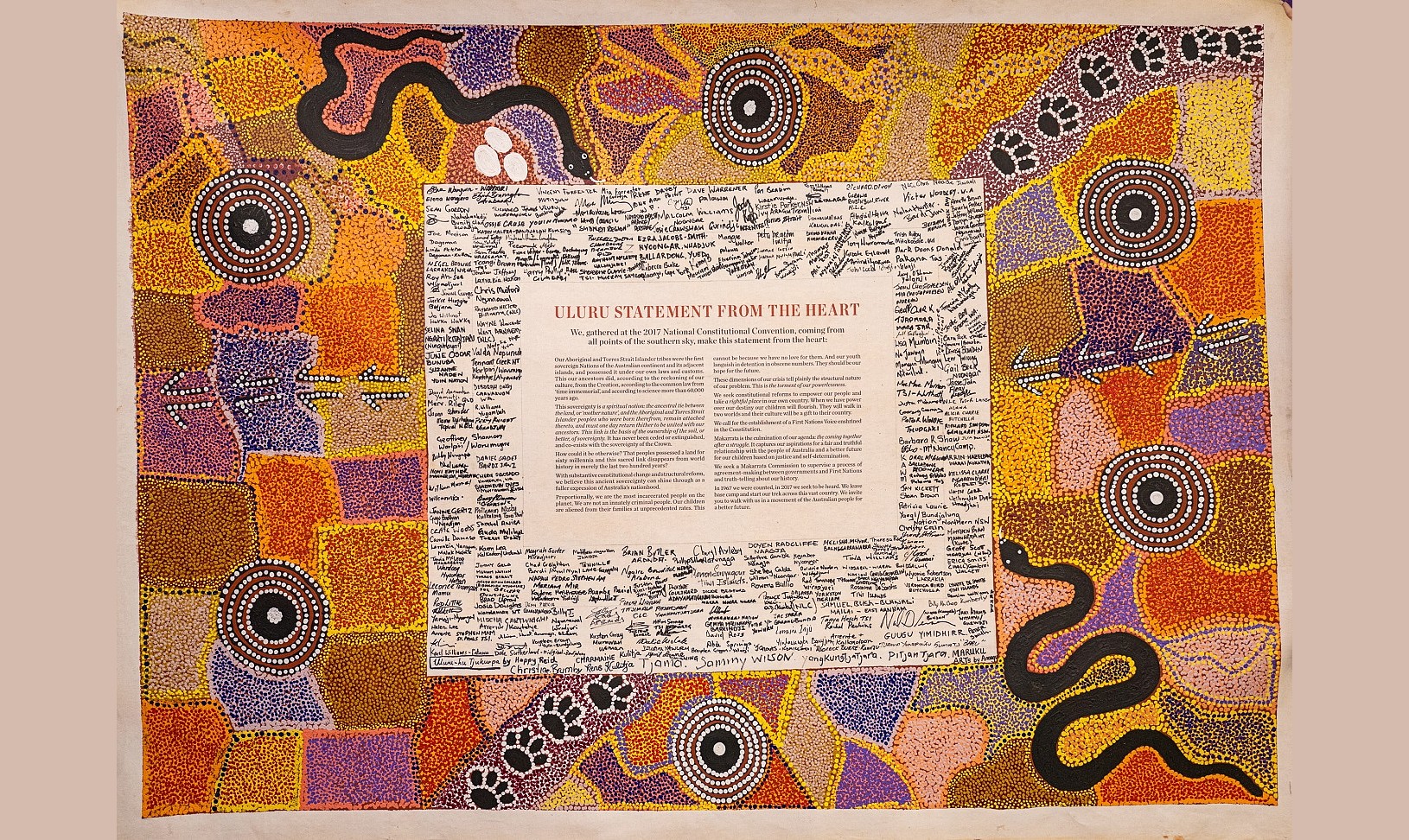
This morning, I heard Professor Ian Lowe, talking to a English journalist, about yesterday’s court decision, which supported the Barngarla people’s opposition to nuclear waste dumping on their land.
Prof Lowe eloquently summarised the importance of this legal decision:
-the Aboriginal people were not consulted when the Morrison Liberal Coalition decided to make a nuclear waste dump on their traditional land.
– this raises problems for the Australian government in selecting any land in this country for nuclear waste dumping
-this has international implications – about any country where the rulers want to impose a nuclear waste dump on indigenous land
-this has implications for the ill-advised (corrupt firm PWC was the advisor) AUKUS decision by the Albanese government to buy U.S nuclear submarines at $369billion. That decision included Australia taking responsibility for the high level radioactive trash from the nuclear submarines. Where to dump that trash?
Of course, the Australian government does have the power to impose the nuclear waste dump anyway, against indigenous wishes, even against South Australian State government wishes,
The Australian government is in the process of holding a referendum that would give the indigenous people a Voice to Parliament. Imposing nuclear waste on Aboriginal land is not a good look, is it?

Labor must hear Indigenous voice against Kimba nuclear site
Jim Green and Michele Madigan, https://indaily.com.au/opinion/2023/07/17/labor-must-hear-indigenous-voice-against-kimba-nuclear-site/—
Ahead of tomorrow’s expected federal court decision on a Barngarla Traditional Owners challenge to the planned Kimba nuclear waste site, Jim Green and Michele Madigan say federal Labor must be consistent on listening to Indigenous concerns.
If the Albanese Labor government wants to restore confidence in its plan for an Indigenous Voice to Parliament, it needs to walk the talk and respect Aboriginal voices.
Currently, the government is ignoring the Barngarla Traditional Owners who are unanimous in their opposition to the government’s plan for a national nuclear waste dump (or ‘facility’) near Kimba on South Australia’s Eyre Peninsula.
Labor inherited the Kimba dump plan from the Morrison Coalition government. Barngarla Traditional Owners were excluded from a so-called ‘community ballot’ by the Morrison government. The results of an independent, professional survey of Barngarla Traditional Owners ‒ which found absolutely no support for the proposed dump ‒ were also ignored.
Jason Bilney, Chair of the Barngarla Determination Aboriginal Corporation, said: “It is a simple truth that had we, as the First People for the area, been included in the Kimba community ballot rather than unfairly denied the right to vote, then the community ballot would never have returned a yes vote.”
Federal parliament’s Joint Committee on Human Rights Committee unanimously concluded in an April 2020 report that the Morrison government was violating the human rights of Barngarla people. Even the Coalition members of the committee endorsed the report.
But the Morrison government continued to ignore the human rights of the Barngarla people.
The Morrison government also tried ‒ but failed ‒ to pass legislation which would deny Barngarla Traditional Owners the right to a judicial review of the nomination of the Kimba dump site. The draft legislation was blocked by Labor, minor parties and independent Senators.
It took 21 years for the Barngarla people to secure Native Title of their country through a court determination. Six months later, the Morrison government nominated Barngarla country for the proposed nuclear waste dump.
It was expected ‒ or at least hoped ‒ that the incoming Albanese Labor government would dump the controversial dump proposal after the May 2022 election. But Labor has pressed ahead with the Kimba dump proposal, led by federal resources minister Madeleine King.
Labor isn’t responsible for the plan to dump nuclear waste on Kimba farming land. But that’s no excuse for continuing with a controversial and strongly-contested proposal.
Labor’s position is that Barngarla Traditional Owners can challenge the dump plan in the courts. And that is what is happening: the Barngarla Determination Aboriginal Corporation launched a legal challenge against the Morrison government’s declaration of the Kimba dump site. The matter is before the Federal Court and a decision is expected on July 18 (with the proviso that an appeal to the full bench of the Federal Court may follow).
There are at least two problems with Labor’s position. Firstly, the government has vastly greater resources to contest a legal challenge. Indeed the government has spent $13 million fighting the Barngarla Traditional Owners in the Federal Court. Barngarla Traditional Owners haven’t even spent half a million dollars; and needless to say they have many pressing demands on their limited resources.
There is no other example in recent Australian history of this level of legal attack on an Aboriginal group.
Secondly, the relevant laws are stacked against the interests of Traditional Owners. In 2007, the Howard Coalition government passed legislation ‒ the Commonwealth Radioactive Waste Management Act ‒ allowing the imposition of a nuclear waste dump on Aboriginal land with no consultation or consent from Traditional Owners.
At the time, Labor parliamentarians described the legislation as “extreme”, “arrogant”, “draconian”, “sorry”, “sordid”, and “profoundly shameful”. But when the Gillard Labor government amended the legislation in 2012 ‒ and renamed it the National Radioactive Waste Management Act ‒ the amendments were superficial and still allowed for the imposition of a nuclear waste dump with no consultation or consent from Traditional Owners.
Even if the Federal Court finds that the government has acted within the law, the plan to impose a nuclear dump despite the unanimous opposition of Barngarla Traditional Owners is immoral.
It contradicts the spirit of the Voice to Parliament currently being championed by the Albanese government. Jayne Stinson, Chair of the SA Parliament’s Environment, Resources and Development Committee, said: “In this day and age, when we’re talking about Voice, Treaty and Truth, we can’t just turn around and say, ‘Oh, well, those are our values but in this particular instance, we’re going to ignore the voice of Aboriginal people’. I think that’s just preposterous and it’s inconsistent with what most South Australians would think.”
The government has spent $13 million fighting the Barngarla Traditional Owners in the Federal Court
It contradicts Labor’s professed support for the United Nations Declaration on the Rights of Indigenous Peoples, which states that “no storage or disposal of hazardous materials shall take place in the lands or territories of indigenous peoples without their free, prior and informed consent”.
Susan Close, now Deputy Premier of South Australia, said in 2019 that it was a “dreadful process from start to finish” that led to the nomination of the proposed Kimba dump site and that SA Labor is “utterly opposed” to the “appalling” process which led to Kimba being targeted.
Close noted in 2020 statement, titled ‘Kimba site selection process flawed, waste dump plans must be scrapped’, that SA Labor “has committed to traditional owners having a right of veto over any nuclear waste sites, yet the federal government has shown no respect to the local Aboriginal people.”
Of course, Close was speaking about the Morrison government but SA Labor continues to call for the federal government to abandon the proposed dump and for Traditional Owners to have a right of veto.
Yet the federal Labor government stubbornly persists.
Sadly, federal Labor has form on these issues. In February 2008, Labor Prime Minister Kevin Rudd highlighted the life-story of Lorna Fejo ‒ a member of the stolen generation ‒ in the historic National Apology to Aboriginal People in Parliament House.
At the same time, the Rudd government was attempting to impose a nuclear waste dump on her country in the Northern Territory. Fejo said: “I’m very, very disappointed and downhearted about that [the National Radioactive Waste Management Act]. I’m really sad. The thing is ‒ when are we going to have a fair go? Australia is supposed to be the land of the fair go. When are we going to have fair go? I’ve been stolen from my mother and now they’re stealing my land off me.”
Labor’s nuclear racism is disgraceful and it diminishes all Australians.
Several steps should be taken to rectify the situation. To date, the issue has been managed by resources minister Madeleine King. There appears to have been little or no input from caucus, Cabinet or the Prime Minister’s Office. That needs to change.
Secondly, Labor will hold its national conference in Brisbane in mid-August. If it hasn’t already done so, Labor should take the opportunity presented by the conference to announce that it will no longer attempt to impose a dump against the opposition of Barngarla Traditional Owners.
So much the better if a national conference resolution adopts SA Labor’s policy that Traditional Owners should have a right of veto over any proposed nuclear dumps. That would give traditional owners across the country some confidence that their voice will be heard as the government progresses plans to store and dispose of waste arising from nuclear submarines in the coming decades.
Court rules in favour of Barngala people, preventing nuclear waste facility in Kimba

Joseph Guenzler – July 18, 2023 https://nit.com.au/18-07-2023/6853/court-rules-in-favour-of-barngala-people-preventing-nuclear-waste-facility-in-kimba
The Barngarla people of South Australia’s Eyre Peninsula are rejoicing as the Federal Court has overturned the decision to construct a nuclear waste facility on their land in Kimba.
The proposed facility was to store radioactive waste categorised as low and intermediate level.
The Barngarla traditional owners took the matter to the Federal Court, seeking a judicial review. They argued that the facility would disrupt a site of great significance and claimed that they were not adequately consulted before the plan received approval in 2021.
“It was important to stop this dump because the Seven Sisters Dreaming goes through there,” said Barngarla Elder Aunty Dawn Taylor, who was born at Kimba.
“Having a waste dump out there would have just destroyed everything.”
The Barngarla native title area covers more than 34,000 square kilometres on Eyre Peninsula, including the town of Kimba.
On Tuesday, the court ruled in favor of the native title group.
As a result, the future of the project is now uncertain as the court has invalidated the federal government’s previous declaration made in 2021, which designated the site for the nuclear waste facility.
Justice Natalie Charlesworth ruled in favor of the Barngarla people, citing a perceived bias in the decision-making process due to “pre-judgment.”
Justice Charlesworth also found there was an error of law, but said it did not have a “material effect” on the outcome of the declaration of the site.
A separate hearing will address the matter of legal costs, which are expected to be substantial.
The decision was met with enthusiasm by opponents of the nuclear facility, who gathered at the Federal Court building and expressed their joy upon hearing the verdict.
Speaking outside the building in Adelaide’s CBD, Barngarla Determination Aboriginal Corporation (BDAC) chairman Jason Bilney said it had been a “David and Goliath” battle that had left him “very emotional”.
“It’s been proud win for Barngarla, as well as other First Nations, to continue this fight and get this message out,” he said.
“The lesson is, it’s about truth telling… and it’s about listening to the First Nations people and who we are today and we’ve prevailed and we’ve won.”
“The money that the government’s spent to take us to court could be better spent for the rest of Australia, everyday Australians and the community, instead of taking First Nations people to court, it’s very disrespectful — we’ve been here over 60,000 years.”
Justice Charlesworth has decided to withhold any definitive orders regarding the judicial review until both parties have had a chance to review her judgment.
However, she has indicated that the most suitable course of action is to invalidate the entire declaration made by former resources minister Keith Pitt concerning the proposed facility.
Merri-bek City Council is a Nuclear-Free Zone
Council stands against the use of nuclear power and weapons and has declared Merri-bek as a Nuclear-Free Zone. Nuclear weapons pose a significant threat to our world. This decision reflects our commitment to the safety and wellbeing of our community, and our support for global peace and security.
As part of our Nuclear-Free Zone declaration:
- We oppose the storage and transportation of uranium, nuclear waste, or any other materials connected to the nuclear industry in Merri-bek, including nuclear submarines. This excludes the use of radio-isotopes in hospitals.
- We oppose the establishment of nuclear facilities or nuclear submarine repair facilities in Merri-bek.
- We will display signage at the entrances to our municipality declaring our nuclear-free position.
In addition to this declaration, Merri-bek is one of 43 Australian councils that support the Treaty on the Prohibition of Nuclear Weapons and call on the Australian Government to take this action.
Merri-bek has also joined the International Campaign to Abolish Nuclear Weapons’ Cities Appeal. The Cities Appeal includes cities and towns across the world in support of the treaty.
Our nuclear-free stance aligns with Council’s Human Rights Policy 2016-2026. The danger presented by nuclear weapons impacts on humanity, our right to life, international law, and sustainability.
We encourage Merri-bek community members and other councils to join us in advocating for a safer and more sustainable future, free from the risks associated with nuclear power and weapons.
Dutton wants Australia to join the “nuclear renaissance” – but this dream has failed before.

What stopped the nuclear noughties was a bigger problem: economics. Governments looking at nuclear saw the cost and time over-runs and decided it wasn’t worth it.
in Australia, promises to create a nuclear power industry from scratch based on as yet unproven technologies and in competition with cheap renewables is simply delusional.
The Conversation John Quiggin 11 July 23
Last week, opposition leader Peter Dutton called for Australia to join what he dubbed the “international nuclear energy renaissance”.
The same phrase was used 20 years ago to describe plans for a massive expansion of nuclear. New Generation III plants would be safer and more efficient than the Generation II plants built in the 1970s and 1980s. But the supposed renaissance delivered only a trickle of new reactors – barely enough to replace retiring plants.
If there was ever going to be a nuclear renaissance, it was then. Back then, solar and wind were still expensive and batteries able to power cars or store power for the grid were in their infancy.
Even if these new smaller, modular reactors can overcome the massive cost blowouts which inevitably dog large plants, it’s too late for nuclear in Australia. As a new report points out, nuclear would be wildly uncompetitive, costing far more per megawatt hour (MWh) than it does to take energy from sun or wind.
The nuclear renaissance that wasn’t
Early in the 21st century, the outlook for nuclear energy seemed more promising than it had in years. ……………………………………….
The time seemed right for a nuclear renaissance – especially in the United States. Between 2007 and 2009, 13 companies applied for construction and operating licenses to build 31 new nuclear power reactors. But all but two of these proposals stayed on paper.
The first, in Georgia, is expected to be completed this year after running way behind schedule and way over budget. The other project in South Carolina was abandoned in 2017 after billions of dollars had already been poured into it. The same disastrous cost and time blowouts have hit new reactors in France (Flamanville, 10 years behind schedule), Finland (Olkiluoto, which opened this year after a 14 year delay) and the UK (Hinkley Point C, still under construction with cost and time blowouts).
China has built a trickle of new nuclear plants, commissioning three or four a year over the last decade. China currently has about 50 gigawatts (GW) of nuclear power capacity. This pales into insignificance compared to the nation’s extraordinary expansion of solar, with 95-120 gigawatts of additional capacity expected this year alone.
Nuclear falls short on cost, not politics
What went wrong for nuclear? Despite the claims of some nuclear advocates, the renaissance in the 2000s did not fall short because of political resistance. Far from it – the renaissance had broad political support in key markets.
And, unlike in the 1970s where intense anti-nuclear sentiment was tied to fears of nuclear war, environmentalists in the 2000s had refocused on the need to stop burning carbon-based fuels. Anti-nuclear campaigns and protest marches were almost non-existent.
What stopped the nuclear noughties was a bigger problem: economics. Governments looking at nuclear saw the cost and time over-runs and decided it wasn’t worth it.
As megaproject expert Bent Flyvbjerg has shown, cost overruns like these are typical. First of a kind nuclear plants offer an extreme example of the problem. To date, no Generation III or III+ design has been produced at scales large enough to iron out the inevitable early problems.
At the same time, other energy sources were growing in importance.
In Australia, the writing was on the wall by 2007, when an inquiry found new nuclear power would struggle to compete with either coal or renewables. A string of subsequent inquiries have come to precisely the same conclusion.
Could it be different this time?
To make nuclear viable these days, advocates believe, means making it safe, cheap and easy to build. No more megaprojects. Instead, build small reactors en masse on factory production lines, ship them to where they are needed and install them in numbers matching the needs of the area.
Advocates hope the efficiency of factory production will offset the lower efficiency associated with smaller capacity. Ironically, off-site mass production and modular installation is the basis of the success of solar and wind.
To date, the most promising reactor design is NuScale’s VOYGR. It has yet to be produced and the US company has no firm orders. It does have preliminary agreements to build six reactors in Utah by 2030 and another four in Romania.
If all are built, that’s still less than the capacity of a single large Gen III plant. More strikingly, it’s about the same as the new solar capacity installed every single day (~710 MW) this year around the world.
Even with US government subsidies, NuScale estimates its power would cost A$132 per MWh. In Australia, average wholesale prices in the first quarter of 2023 ranged from $64 per MWh in Victoria to 114 per MWh in Queensland.
So why, then, is Australia’s opposition still talking about new nuclear? Dutton claims Australia’s future nuclear submarines to be built under the AUKUS deal are “essentially floating SMRs”. This is a red herring – while submarine reactors are small, they are not modular.
The simplest answer is political gain. Announcements like this yield political benefits at low cost.
The US, UK and France have decades of experience in nuclear power, even if failures outnumber successes. So yes, there is a slim chance the latest “nuclear renaissance” will succeed in these countries.
But in Australia, promises to create a nuclear power industry from scratch based on as yet unproven technologies and in competition with cheap renewables is simply delusional. https://theconversation.com/dutton-wants-australia-to-join-the-nuclear-renaissance-but-this-dream-has-failed-before-209584?utm_source=substack&utm_medium=email
Bowen: “Australia will be renewable energy superpower, not a nuclear backwater”
ReNewEconomy, Giles Parkinson 7 July 2023
Federal energy minister Chris Bowen has slammed Opposition leader Peter Dutton’s call for nuclear power in Australia, saying they are slow to build, impossible expensive and not needed in Australia.
“Here we go again,” Bowen told reporters after a meeting of state and federal climate and energy ministers in Tasmania on Friday, where the main topics of discussion were the new capacity investment scheme to help storage and a fast connections process for wind and solar.
“Mr. Dutton shows he does not understand renewable energy,” Bowen said.
“He did not get the memo from the Australian people last year, when they threw out his climate denying government.
“He has not changed and I say this. Peter Dutton as prime minister would be worse for the climate than Scott Morrison. And that takes him doing. The man who carried a lump of coal into the House of Representatives was better on climate than Peter Dutton. That’s the low bar that Peter Dutton has managed to get below.”
Bowen mocked Dutton’s reference of both “small” nuclear reactors and “micro” nuclear reactors, neither of which exist in commercial form anywhere in the world.
“The nuclear for Australia committee called for 80 of these things … where will they go? What will the cost be?
“Some of his own party have acknowledged they cost $10 billion each. The only thing small about a small modular reactor is its output. nothing small about its cost.
“:His deputy Mr. Littleproud, the leader of the National Party, said it wouldn’t cost a cent which will come as a considerable surprise surprise to the nuclear industry that they’re going to build them for free.
“We’ve had 10 years of denial and delay. And now we have an attempt at a distraction. I’ll tell you what the future of Australia is, a renewable energy superpower, not a nuclear backwater. https://reneweconomy.com.au/bowen-australia-will-be-renewable-energy-superpower-not-a-nuclear-backwater/
Queensland’s Liberal National Party leader Crisafulli rejects Dutton’s push for nuclear power
No nukes in Qld: Crisafulli rejects Dutton’s plan Financial Review, Mark Ludlow, Queensland bureau chief, 10 July 23
Queensland Liberal National Party leader David Crisafulli has rebuffed federal leader Peter Dutton’s push to repurpose the state’s retiring coal-fired power stations for nuclear power, saying it will never get off the ground without bipartisan support.
As Mr Dutton attempts to put nuclear power back on the agenda as a way to help Australia to reach net zero by 2050, Labor has ridiculed the idea as too expensive, despite the price of small modular reactors coming down in recent years.
Mr Crisafulli, who could become premier at Queensland’s state election next year, according to the latest opinion polls, said there was no point discussing nuclear power until it was endorsed by both major parties.
“Until both sides of federal parliament agree that is the course of action, it is not going to happen,” Mr Crisafulli told The Australian Financial Review.
“I’m not spending any energy on it – pardon the pun – because no one will invest in it unless both sides agree to it. It’s a reality.”
When asked what he would do if he and Mr Dutton won their respective elections and it became federal government policy, Mr Crisafulli said investors would still steer clear of nuclear power until Labor was behind it.
Federal Labor is vehemently opposed to nuclear power, …………………………………………….
Nuclear: Coalition remains trapped by climate and technology denial

RenewEconomy, Giles Parkinson 7 July 2023 ………………… make no mistake, in Australia, it is a war – a political one raging between science, engineering and economics on one hand, and single minded ideology on the other.
The nuclear push by the federal Coalition and its industry backers has been brewing for some time, and has now reached a crescendo with Opposition leader Peter Dutton calling for nuclear to be included in Australia’s mix, and accusing Labor of being “mesmerised” by renewables and storage.
Dutton’s position is sadly inevitable, and entirely predictable.
Having been the author of the Aukus deal which has committed Australia to spending up to $360 billion on half a dozen nuclear submarines – none of which would be delivered within 20 years – it follows that the Coalition should be signing up to another technology that could cost just as much and be just as delayed.
Dutton’s comments on Friday – in a speech to the rabid anti-renewables and climate “think tank”, the IPA – is yet more confirmation that the Coalition has no interest in doing anything about climate change.
This week the planet experienced its two hottest days on record, likely its hottest week, and is facing its hottest year in 2023 or 2024 as the El Nino strengthens its influence.
The need to accelerate emissions cuts, and finally deliver policies consistent with a 1.5°C scenario, has never been clearer. But the Coalition – after 10 years in power doing absolutely nothing – is still running in the opposite direction.
The Coalition denies the science. “Climate change has always been a scam,” LNP Senator Gerard Rennick tweeted last month, not for the first time echoing the thoughts of a majority of his Coalition colleagues.
The Coalition hates renewables: “It’s a trifecta of idiocy,” said former and still aspiring Nationals leader Barnaby Joyce on Labor’s 82 per cent renewable target, before putting a call out to groups to join a mass protest against wind and solar on the steps of Parliament House.
Nuclear: Coalition remains trapped by climate and technology denial
Giles Parkinson 7 July 2023 29
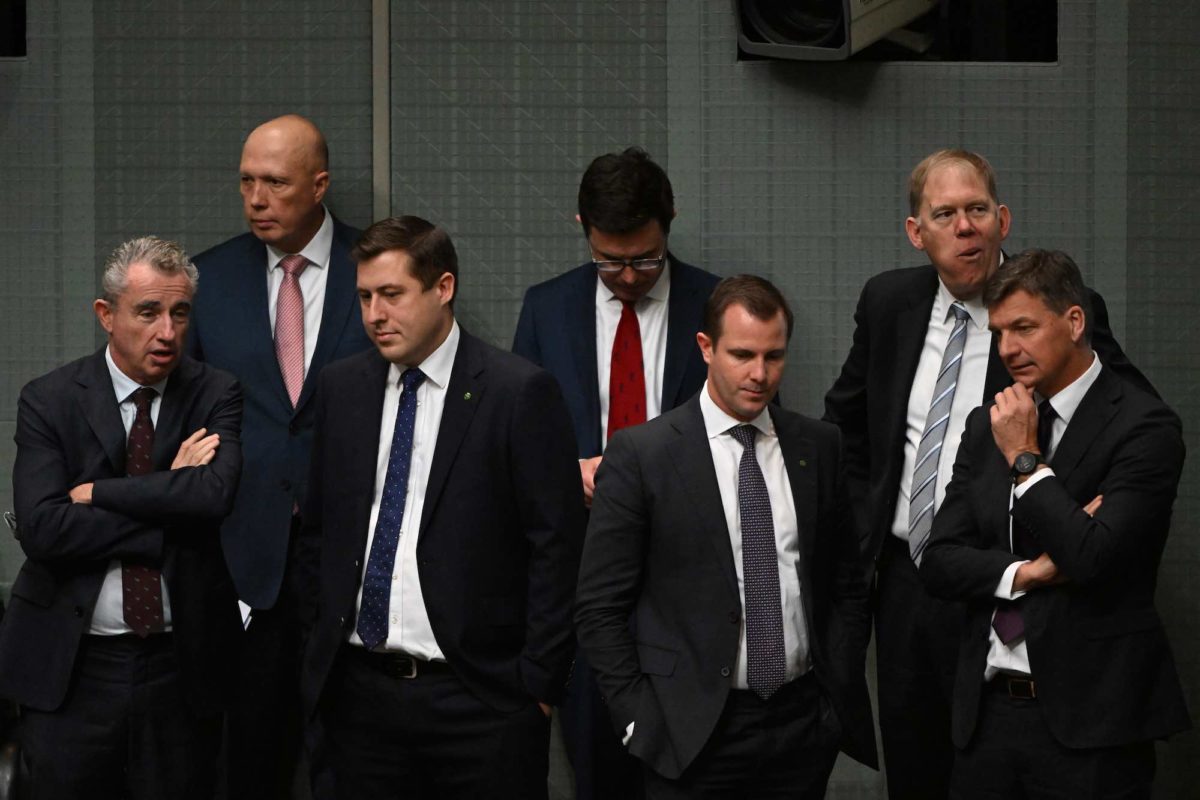
The nuclear war drums are beating again: Not just in the Ukraine, which now has to fact up to the threats from Vladimir Putin and the chest-beating of his Belorussian puppet Alexander Lukashenko, but also in Australia’s energy debate.
And make no mistake, in Australia, it is a war – a political one raging between science, engineering and economics on one hand, and single minded ideology on the other.
The nuclear push by the federal Coalition and its industry backers has been brewing for some time, and has now reached a crescendo with Opposition leader Peter Dutton calling for nuclear to be included in Australia’s mix, and accusing Labor of being “mesmerised” by renewables and storage.
Dutton’s position is sadly inevitable, and entirely predictable.
Having been the author of the Aukus deal which has committed Australia to spending up to $360 billion on half a dozen nuclear submarines – none of which would be delivered within 20 years – it follows that the Coalition should be signing up to another technology that could cost just as much and be just as delayed.
Dutton’s comments on Friday – in a speech to the rabid anti-renewables and climate “think tank”, the IPA – is yet more confirmation that the Coalition has no interest in doing anything about climate change.
This week the planet experienced its two hottest days on record, likely its hottest week, and is facing its hottest year in 2023 or 2024 as the El Nino strengthens its influence.
The need to accelerate emissions cuts, and finally deliver policies consistent with a 1.5°C scenario, has never been clearer. But the Coalition – after 10 years in power doing absolutely nothing – is still running in the opposite direction.
The Coalition denies the science. “Climate change has always been a scam,” LNP Senator Gerard Rennick tweeted last month, not for the first time echoing the thoughts of a majority of his Coalition colleagues.
The Coalition hates renewables: “It’s a trifecta of idiocy,” said former and still aspiring Nationals leader Barnaby Joyce on Labor’s 82 per cent renewable target, before putting a call out to groups to join a mass protest against wind and solar on the steps of Parliament House.
Now the Coalition is is hoisting its petard to a plan to fritter away tens of billions, if not hundreds of billions, on a technology that – as former chief scientist Alan Finkel pointed out in a recent episode of the Energy Insiders podcast – would be impossible to deploy in Australia within 20 years………………..
“There’s a big one under construction at the moment, a 3.2 gigawatt gigawatt system under construction in England called Hinkley, C, and the price per gigawatt is north of $15 billion,” Finkel said. “It’s just the most expensive capital expenditure that you could imagine.” (Apart, maybe, from Australia’s submarine order).
Nuclear: Coalition remains trapped by climate and technology denial
Giles Parkinson 7 July 2023 29
The nuclear war drums are beating again: Not just in the Ukraine, which now has to fact up to the threats from Vladimir Putin and the chest-beating of his Belorussian puppet Alexander Lukashenko, but also in Australia’s energy debate.
And make no mistake, in Australia, it is a war – a political one raging between science, engineering and economics on one hand, and single minded ideology on the other.
The nuclear push by the federal Coalition and its industry backers has been brewing for some time, and has now reached a crescendo with Opposition leader Peter Dutton calling for nuclear to be included in Australia’s mix, and accusing Labor of being “mesmerised” by renewables and storage.
Dutton’s position is sadly inevitable, and entirely predictable.
Having been the author of the Aukus deal which has committed Australia to spending up to $360 billion on half a dozen nuclear submarines – none of which would be delivered within 20 years – it follows that the Coalition should be signing up to another technology that could cost just as much and be just as delayed.
Dutton’s comments on Friday – in a speech to the rabid anti-renewables and climate “think tank”, the IPA – is yet more confirmation that the Coalition has no interest in doing anything about climate change.
This week the planet experienced its two hottest days on record, likely its hottest week, and is facing its hottest year in 2023 or 2024 as the El Nino strengthens its influence.
The need to accelerate emissions cuts, and finally deliver policies consistent with a 1.5°C scenario, has never been clearer. But the Coalition – after 10 years in power doing absolutely nothing – is still running in the opposite direction.
The Coalition denies the science. “Climate change has always been a scam,” LNP Senator Gerard Rennick tweeted last month, not for the first time echoing the thoughts of a majority of his Coalition colleagues.
The Coalition hates renewables: “It’s a trifecta of idiocy,” said former and still aspiring Nationals leader Barnaby Joyce on Labor’s 82 per cent renewable target, before putting a call out to groups to join a mass protest against wind and solar on the steps of Parliament House.
Now the Coalition is is hoisting its petard to a plan to fritter away tens of billions, if not hundreds of billions, on a technology that – as former chief scientist Alan Finkel pointed out in a recent episode of the Energy Insiders podcast – would be impossible to deploy in Australia within 20 years.
Make no mistake, Finkel is a fan of the technology. “From a purely engineering point of view, nuclear is fantastic,” he told the podcast.
But he says while the technology works, and he believes the safety issues can be managed, building big nuclear is “insanely slow to do”, and “very, very expensive.”
“There’s a big one under construction at the moment, a 3.2 gigawatt gigawatt system under construction in England called Hinkley, C, and the price per gigawatt is north of $15 billion,” Finkel said. “It’s just the most expensive capital expenditure that you could imagine.” (Apart, maybe, from Australia’s submarine order).
As for SMRs, or small modular reactosr, Finkel notes that the most advanced company is called NuScale in the US. Approvals for its technology are being fast-tracked by nuclear regulators, but it’s already taken seven years.
At best, its first pilot plant will be operating by the end of the decade. And Australia will have to wait and see how that plant operates, and hope for cost reductions and production to be achieved, before it could commit to going down the same path.
“I cannot see any possibility of Australia, even if we went at full speed ahead, having small modular reactors before 2040,” Finkel said.
And by then, Finkel says, Australia will have a zero emissions or a near zero emissions and reliable, affordable electricity system based around wind, solar and storage. And expensive nuclear would then have to compete with cheaper, reliable renewables power.
Just to reinforce that assessment, IEEFA reported earlier this year the eyewatering cost blowouts of NuScale’s proposed SMRs, now more than doubled the estimated price flagged in 2021.
“No one should fool themselves into believing this will be the last cost increase for the NuScale/UAMPS SMR,” IEEFA wrote.……………………………
It would be insanity to do what the Coalition wants Australia to do – keep coal burning, and slow down the rollout of renewables and other technologies such as EVs, and wait for nuclear, just to keep the mining lobby and other powerful interests onside.
But of course that’s exactly what the Coalition intends to do. It is keenly aware of one important part of the path to net zero: it can be done, and it can be done at low cost, but it’s biggest hurdle is the lack of political will. And the LNP intends to make that hurdle as big as they can.
Labor has, of course, rejected the nuclear push. Jason Clare said the government does not support nuclear power.
“They cost about $400 billion bucks and take years and years to build,” Clare told Nine’s Today Show, which the Coalition might argue didn’t seem to be a problem when it came to nuclear submarines……………………………. https://reneweconomy.com.au/nuclear-coalition-remains-trapped-by-climate-and-technology-denial/
Peter Dutton ramps up nuclear power push and claims Labor down ‘renewable rabbit hole’

Opposition leader to tell Institute of Public Affairs that domestic reactors are natural next step from Aukus pact
Daniel Hurst, 8 July 23
The opposition leader, Peter Dutton, has ramped up calls for nuclear power in Australia, casting the move as a way to avoid dependence on wind and solar technology from China and a natural next step from the Aukus pact.
Dutton will make the comments on Friday at an event organised by the Institute of Public Affairs, a Liberal-aligned thinktank that has publicly opposed curbs on coal-fired power and has lobbied against the net zero by 2050 policy.
He will use the speech in Sydney to call for a debate about removing the legislative ban on nuclear power in Australia, a step that was not taken during the nine years of Coalition government, in which he was a senior member.
Dutton’s pitch comes just days before the Liberal National party in Queensland holds its state conference, where delegates are expected to propose several pro-nuclear resolutions.
He is likely to find a receptive audience for the message at the IPA, given that the thinktank’s executive director, Scott Hargreaves, has publicly called for the scrapping of all subsidies for renewable energy and also urged political leaders to “hit the pause button on our headlong rush towards reliance on greater renewable energy”.
In the speech, Dutton will argue that most of the leading solar panel manufacturers and wind turbine companies are based in China………………………
By contrast, Dutton will say that Australia could source Small Modular Reactors (SMRs) or Micro Modular Reactors (MMRs) from the US, UK, France “and other trusted partners”.
Dutton will point to the bipartisan commitment to building nuclear-powered submarines in Australia under the Aukus deal.
“The submarines are essentially floating SMRs,” he will say.
The sheer amount of money being invested in research and development in the next generation nuclear-powered submarines will surely see military advancements complement the development of civil nuclear power industries around the world.”………………………………..
A report by the Australian Conservation Foundation in October said the next generation of nuclear reactors being advocated by the Coalition would raise electricity prices, slow the uptake of renewables and introduce new risks from nuclear waste.
Last year Bowen ruled out consideration of nuclear power because he said “it is by far the most expensive form of energy”.
The prime minister, Anthony Albanese, has also mocked the push, saying that after “22 failed plans” the Coalition now wants “to go towards nuclear energy”. He has said in question time that Liberals must nominate “where the plants are going to be”.
But the idea appears popular within parts of the Coalition’s base. Three pro-nuclear resolutions are set to be debated at the Queensland LNP conference this weekend, including one urging a Dutton-led government to provide “baseload energy, such as nuclear as an adjunct to coal”.
Another proposed resolution wants the next LNP state government to “review the education curriculum to ensure that energy supply, including nuclear energy, and impacts of renewable energy are taught factually https://www.theguardian.com/australia-news/2023/jul/07/peter-dutton-ramps-up-nuclear-power-push-and-claims-labor-down-renewable-rabbit-hole
Inside ‘nuke school’, the elite US training ground preparing Australian submariners for an AUKUS future

(Looking forward to? Life for months on end in a cramped space, no sunlight or fresh air, very little private space, closed atmosphere – all smells recirculated. Limited news, limited communication with family. Water supplies rationed. Stress and boredom. And it’s dangerous.)
The sale of Virginia-class submarines to Australia requires the approval of the US Congress, and significant changes are needed to a complex set of export controls restricting how sensitive technology is transferred.
By North America bureau chief Jade Macmillan and Bradley McLennan in Charleston
“………………. Three members of the Royal Australian Navy have graduated from the Nuclear Power School in South Carolina, more commonly known as ‘nuke school’.
Three members of the Royal Australian Navy have graduated from the Nuclear Power School in South Carolina, more commonly known as ‘nuke school’…………
Years out from Australia’s acquisition of nuclear-powered subs, the graduation is an early step towards making AUKUS a reality.
But there are still major hurdles ahead when it comes to the broader workforce challenges presented by the plan……………………….
The Australians will now have to complete another set of practical learning, which will include spending time on retired nuclear-powered subs known as moored training ships.
After that, they’ll receive further training in Connecticut before being assigned to a Virginia-class sub…………………..
AUKUS presents major workforce challenges for Australia
The AUKUS plan, announced in San Diego earlier this year, will see Australia acquire a total of eight nuclear-powered submarines at a cost of up to $368 billion.
US submarines are increasing their visits to Australian ports from this year, and from 2027 HMAS Stirling naval base in Western Australia will host rotations of American and British subs under what’s known as ‘Submarine Rotational Force-West’.
Australia is expected to buy at least three Virginia-class submarines from the US from the early 2030s, before building its own nuclear-powered boats in Adelaide to be known as SSN-AUKUS.
They will be based on a British design using US technology, with the first scheduled to be delivered in the early 2040s…………….
“It’s going to require a massive amount of infrastructure, incredible workforce demand, both in terms of technical skills and numbers.
“It just seems like that’s going to be a pretty heavy lift on the part of Australia to do nuclear ship construction.”…………………………….
Virginia-class submarines carry around 132 people, nearly three times the size of the crew onboard the Collins-class boats Australia has now.
And unlike the Collins, nuclear-powered subs do not need to surface regularly to recharge, meaning they can stay submerged for months at a time…………………………………………
The new subs will be built in South Australia, while Western Australia’s HMAS Stirling is undergoing an $8 billion expansion.
…………………………………………….. Challenges lie ahead to bring AUKUS to fruition
Aside from skills and workforce issues, there are other major challenges that still need to be overcome to bring AUKUS to fruition.
The sale of Virginia-class submarines to Australia requires the approval of the US Congress, and significant changes are needed to a complex set of export controls restricting how sensitive technology is transferred.
Questions also remain over how the US will deliver the promised Virginia-class submarines, given the pressure its own shipyards are under to meet local demand.
The US Chief of Naval Operations, Admiral Michael Gilday, last month said it was “too early” to provide an answer on exactly where the subs would come from…………… https://www.abc.net.au/news/2023-07-08/aukus-nuke-school-training-australian-navy-submariners/102572156
1 This month

of the week – Australians for War Powers Reform (AWPR)
To see nuclear-related stories in greater depth and intensity
 Antinuclear