Despite South Australia’s renewable energy success, are the Liberals targetting S.A. again for an international nuclear trash dump?
|
Peter Malinauskas, 31 Oct 18, Fight To Stop Nuclear Waste Dump In Flinders Ranges SA
The announcement of the Port Augusta solar thermal plant was a triumph for the people of Port Augusta and all South Australians.
It was yet another example of South Australia’s leadership in renewable energy, delivering additional generation here to reduce reliance on the eastern states. I fear the Liberals’ decision to bring in consultants and launch a review raises serious questions about the future of this project. https://www.facebook.com/PMalinauskasMP/?__tn__=%2CdkCH-R-R&eid=ARA9wZFVO6K1Yf4iuQdXwuqm_ILh3yd-wNnFA-6nFFSIfvolHfmNYeWS0zOo0gyZLKSKzXcPcVV6NfmD&hc_ref=ARSWfctYX7ZwbQuJUeIxXfPqqClGqdM3 Barb Walker shared a post. Fight To Stop Nuclear Waste Dump In Flinders Ranges SA, 31 Oct 18 What’s to review??? The sun is shining and it’s been pushing towards 40° in Port Augusta and the Flinders Ranges today. We are the renewable energy capital of Australia up here!!! Sunshine galore! But instead the Federal Government have steamrolled our communities and are pushing a federal nuclear waste dump. On top of that, Cori Bernardi now has a dumb idea that a nuclear power station in our State would bring down power prices!!! What next? Are they also targeting S.A. to be the toilet for an international high grade nuclear waste dump to pay for his filthy, nuclear, multi billion dollar folly? |
|
City of Sydney calls on Australian govt to sign up to the UN Nuclear Weapons Ban Treaty
Last night, the City of Sydney unanimously adopted a motion calling on the Australian Government to sign and ratify the UN Treaty on the Prohibition of Nuclear Weapons. Congratulations!
We hope many cities and towns will join Sydney and Melbourne in endorsing the ICAN Cities Appeal.
Radioactive pollution problems: Australia’s rare earths mine in Malaysia
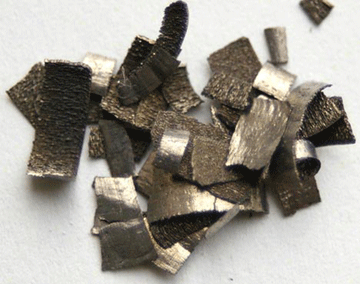 Australian mining plant in Malaysia faces radioactive waste inquiry, As China, the world’s largest producer of rare earth metals, scales back its export operations, the future of Australia’s industry is under a cloud. https://www.sbs.com.au/news/australian-mining-plant-in-malaysia-faces-radioactive-waste-inquiry By Jarni Blakkarly 30 Oct 18, The Chinese government has announced a slashing in the production of rare earth metals, a type of metal used in a range of high-tech products from mobile phones to wind turbines and electric cars.
The country, which is the largest producer and consumer of rare earth metals, has cut its quota for the separation and smelting of rare earths by 36 percent, Reuters reported last week.
China produces roughly 80 per cent of the world’s rare earth metals and the move will likely send global prices skyrocketing. Meanwhile, the joint Australian-Malaysian rare earths operation run by Perth company Lynas, the only major production plant outside of China, is having its own problems.
Earlier this month, the Malaysian government launched a broad parliamentary inquiry into the mine and the management of its radioactive waste.
The Australian company mines rare earth metals in Western Australia before shipping them to Malaysia for processing.
Resources analyst Dylan Kelly from finance group CLSA told SBS News: “It is really critical in a strategic sense as the only real rare earth producer outside of mainland China and one that is high in quality and it is highly sought after in terms of strategic interest, not just for the Japanese, but also the US.”
But questions remain over the management of radioactive waste from the plant and what long-term solutions are in place for its management.
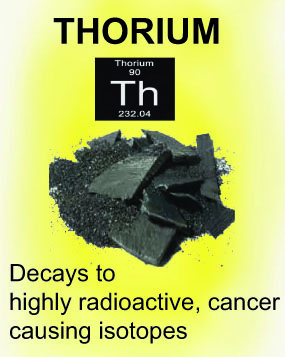 RMIT Professor of environmental engineering Gavin Mudd told SBS News all rare earths processing involves the generation of radioactive thorium and sometimes uranium waste.
The company’s current long-term waste management plans involve repurposing that waste into a soil fertilizer product, but Professor Mudd says not enough has been done yet to guarantee the by-product would be safe.
“Historically the rare earths industry hasn’t got a good track record in being able to demonstrate that safety case,” he said.
While the current government inquiry appears unlikely to shut the processing plant down in its entirety, Professor Mudd says more can be done in terms of increasing environmental reporting and public disclosure around the plant.
Lynas declined to comment to SBS News ahead of the inquiry, but in the past has defended its waste management practices as safe and transparent.
When the plant was approved in 2012 it set a wave of protests by thousands of concerned locals, which was largely ignored by the government.
But with the Opposition coming to power in a surprise election victory in May, the new government is taking a closer look at the plant.
Local Kuantan MP Faziah Salleh says the company needs to develop a new long-term storage plan for the radioactive waste.
“The company has to think about how they dispose of their radioactive waste, because Malaysians, especially people of [the city of] Kuantan, will not except the waste being left … dumped in our backyard, as it is right now,” she said.
The inquiry is due to report back to the government before the end of the year.
Lucas Heights nuclear reactor in disarray – costs and safety problems
Delays hold back nuclear medicine – SEAN PARNELL, OCTOBER 26, 2018 https://www.theaustralian.com.au/national-affairs/health/delays-hold-back-nuclear-medicine/news-story/16d8606ac2f0e5c1d8e9010ea316aa74
Australia’s production of nuclear medicine is in disarray, with a promised world-class manufacturing plant running two years behind schedule, unresolved questions over waste management, and broader concerns over ageing facilities and safety issues at Lucas Heights.
A conveyor breakdown in June at building 23 — where a series of safety incidents prompted a damning independent review — has caused ongoing supply issues throughout Australia and overseas.
The Weekend Australian has learned the existing plant will not be able to resume full domestic production of generators until next year. Amid the disruptions, the Australian Nuclear Science and Technology Organisation has been forced to import generators and trade local ingredients with an American producer. It is refusing to detail how much the inefficient workaround is costing.
One of the safety incidents that prompted a rare intervention by the regulator was caused by a wheel falling off a trolley. It has now emerged the conveyor breakdown was caused by damage to the guide rails that other trolleys use and the conveyor chain guides themselves.
With nuclear medicine stakeholders expressing frustration at the ongoing delays, and a perceived lack of transparency by ANSTO, Industry, Science and Technology Minister Karen Andrews has asked the agency to respond to the internal review as a priority.
“I’ve also sought assurance from ANSTO that they are supplying the market at normal levels,” Ms Andrews said.
Stakeholders had raised concerns with the minister’s predecessor without response and point to continuing practice restrictions.
A new $168.8 million plant, to be known as ANSTO Nuclear Medicine, was meant to be operational in 2016 and as much as triple the production of generators, making Australia a major global player. However, it will not be operational before early next year — ANSTO will not say if the budget has blown out — and license conditions set by the Australian Radiation Protection and Nuclear Safety Agency add to the challenges.
ARPANSA will not allow any overall increase in production until the existing plant is decommissioned, adding to delays, and is demanding more information on plans for a new waste-management facility — including contingency plans should it, too, be delayed.
The ANM would also rely on building 23 which, like the existing plant, was built in the 1950s and is past its use-by date. The independent review revealed ANSTO wanted to replace the building “but federal government budget restrictions have meant that this has not been progressed”.
“A number of additions and modifications have been made to the facility, but these cannot possibly resolve all of the issues associated with a facility not designed for its current use,” the review concluded.
Ms Andrews would not be drawn on the issue, saying it was a matter for ANSTO to respond to the independent review, which also raised concerns over culture.
ARPANSA is overseeing the independent review and has given ANSTO more time to respond to the recommendations.
Legal action in Western Australia means delay, uncertainty, for Cameco’s Yeelirrie uranium mine
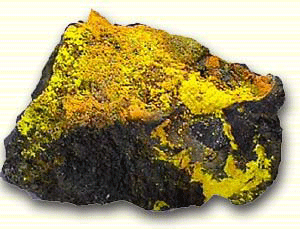  Federal nod for Cameco’s Yeelirrie uranium mine hinges on WA court challenge https://www.kalminer.com.au/?business/mining/federal-nod-for-camecos-yeelirrie-uranium-mine-hinges-on-wa-court-challenge-ng-b881003720z Federal nod for Cameco’s Yeelirrie uranium mine hinges on WA court challenge https://www.kalminer.com.au/?business/mining/federal-nod-for-camecos-yeelirrie-uranium-mine-hinges-on-wa-court-challenge-ng-b881003720z
It means the environmental status of Australia’s largest undeveloped uranium deposit, Canadian major Cameco’s Yeelirrie project near Wiluna, will likely remain uncertain until at least the second half of 2019, almost three years after its approval by former WA environment minister Albert Jacob. Yeelirrie is particularly sensitive because WA’s Environmental Protection Authority initially recommended it be refused on the basis it would make 11 species of rare subterranean invertebrates, known as stygofauna, extinct. WA-based Federal Environment Minister Melissa Price, whose sprawling Durack electorate includes Yeelirrie, told the Kalgoorlie Miner a legal challenge led by anti-nuclear campaigners and a handful of traditional owners was one reason for the delay, with Cameco previously stating it believed the process would be complete early this year. “My department advised that it was prudent to wait for the result of the WA Supreme Court proceedings before finalising the Federal assessment,” she said. “This ensures that we know the State decision is valid and we can avoid overlapping with any State approval conditions.” A Cameco spokesman said the company was working with Ms Price to achieve an outcome as soon as possible. The Conservation Council of WA is hopeful of winning a second appeal against Mr Jacob’s decision in WA’s Supreme Court, after an initial challenge was thrown out in February. Even if the action is unsuccessful the delay could buy opponents of the mine time to see out the conservative Morrison Government and leave the final decision in the hands of a Labor minister, with a hearing not expected to take place until next year. The group’s director Piers Verstegen said it would be “irresponsible” for Ms Price to make a decision on the project while the legal action was afoot. Yeelirrie was discovered by Western Mining Corporation in 1972 and prepared for development in the early 1980s before Labor leader Bob Hawke’s defeat of Malcolm Fraser in 1983 brought in the “three mine policy”, halting new uranium developments. It was sold for $430 million to Cameco by BHP in 2012, but the 128 million-pound yellowcake deposit has remained on ice since then in the face of a subdued uranium market and tricky approvals process. Federal Labor does not currently oppose the development of uranium mines, unlike their WA counterparts who agreed to let Yeelirrie and three other mines in WA, approved under the watch of the Barnett government, be mined in the future on ‘sovereign risk’ grounds. Mr Verstegen claimed Mr Jacob’s Yeelirrie decision set a bad precedent for future decisions on developments that posed a threat to wildlife. “The legal precedent is the same, it could be applied to any species that could be signed off for extinction by the minister,” he argued. “We’re taking that very seriously and that’s why we’re taking these steps to challenge it in the courts.” |
Nuclear lobby revs up its frenzied campaign in Australia. Ben Heard is their front man.
 Frazer-Nash Consultant, Ben Heard, will be speaking at The International Mining and Resources
 Conference (IMARC) in Melbourne on Wednesday 31 October. Nuclear Fuel Cycle Watch South Australia.
Steve Dale “Ben will be giving the keynote address, “Nuclear power in Australia: an ongoing debate”, which discusses the changing nature of the Australian power industry.”
 It is only an ongoing debate because lobbyists and unknown sourced lobbying money have such a corrupting influence on our politics. The nuclear push is reaching fever pitch because a lot pro-nuclear pollies will probably be gone after the next election – and the cross bench may get their wish of a Federal ICAC – which could shine a spotlight on the corrupting influence of Nuclear cack lobbying. https://www.facebook.com/groups/1021186047913052/permalink/2171512056213773/?comment_id=2173512052680440¬if_id=1540684271625148¬if_t=group_comment
New member of Parliament, Kerryn Phelps, will push for strong role for Climate Change Authority
 First thing’: Phelps set sights on reviving fortunes of climate body, Brisbane
  Times, By Peter Hannam, 27 October 2018 Kerryn Phelps, the likely new member for Wentworth, will push for the revival of the near-defunct Climate Change Authority as part of her efforts to advance action on global warming at a federal level.
Dr Phelps, who appears to hold an unassailable lead of 1783 votes for the seat vacated by former prime minister Malcolm Turnbull, said her determination to emphasise cutting carbon emissions and advancing renewable energy was reinforced by a meeting in Sydney on Saturday with ex-Kiribati president Anote Tong.
Dr Phelps said that while Mr Tong’s island nation faced immediate threats from rising sea-levels, the former leader stressed that “sooner or later everyone will be on the frontline” from threats wrought by a warming world.
The independent candidate said it was clear from this month’s byelection that climate change – and the lack of federal policies – was among the highest concerns for Wentworth voters.
If she takes her seat in Parliament as expected next month, Dr Phelps said an early target will be to restore the Climate Change Authority.
It’s the first thing that we could actually do – to reinstate the funding and the scientific credibility of the Climate Change Authority,” Dr Phelps told Fairfax Media. “It’s very important that we do have an independent authority looking at the evidence and providing advice to governments.”……
Many Pacific islands are low-lying or have populations clustered to coasts that facing inundation from rising sea levels. Salt water intrusion into groundwater and exposure to more powerful cyclones are other risks.
Earlier this month, environment minister Melissa Price was accused of disrespecting the Pacific leader by telling him during a chance meeting in a Canberra restaurant that the region was “always” seeking cash and she had her chequebook ready. Ms Price denied she made such comments but she did ring later to say she wished no offence……. https://www.brisbanetimes.com.au/environment/climate-change/first-thing-phelps-set-sights-on-reviving-fortunes-of-climate-body-20181027-p50cd3.html
Ben Heard and pro nuclear company Frazer Nash pushing for nuclear Australia
New industry white paper for Australia from published for the coming mining conference: ‘Identifying the role for nuclear power in Australia’s energy transition’. “Free download” from International Mining and Resources Conference – but ya gotta fill in dirty great forms to read it. The nuke lobby doesn’t want outsiders in on this
Climate change policy – the wrecking ball that destroys Australia’s prime ministers
What has been clear is that the task is hugely difficult for reasons Kevin Rudd recently underlined.
One is the daunting task of convincing a current generation to make sacrifices for a future one.
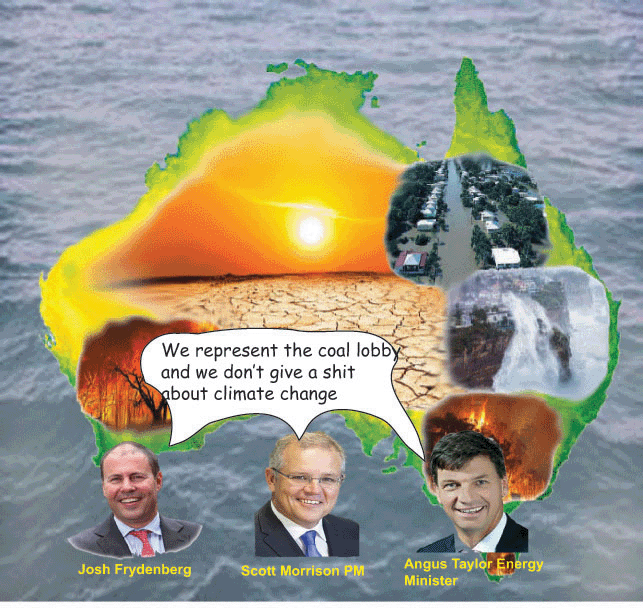
Australian politics an unwieldy wrecking ball claiming PM’s careers, IT HAS already destroyed four Aussie prime ministers, and now the very same wrecking ball is about to smash Scott Morrison as well. News.com.au 29 Oct 18 Malcolm Farr@farrm51
IT’S the uncontrollable wrecking ball of Australian politics which so far has smashed the careers of four prime ministers.
And now it could be swinging Scott Morrison’s way, just as it had towards Kevin Rudd and Julia Gillard from Labor, and his Liberal colleagues Tony Abbott and Malcolm Turnbull.
This demolition beast is climate change policy and the inability of politicians to present coherent schemes of their own or to resist misrepresenting those of rivals.
To dodge the ball of policy destruction Prime Minister Morrison is attempting to please everyone.
He wants a system which will lower emissions, encourage coal-fired power stations, force private power companies to divest assets, promote new generating technologies, and cut household electricity bills.
It’s a political strategy more than a global warming response, constructed to appease the array of cemented positions on energy policy within the Liberal Party rather than the wishes of consumers, including business.
It has a touch of former prime minister Tony Abbott’s unsuccessful Direct Action scheme and a taste of former prime minister Malcolm Turnbull’s National Energy Guarantee. Continue reading
As Antarctica thaws, China, Russia and others move in

|
China and Russia are eyeing up Antarctica — and experts say Australia should be more concerned, ABC, 28 Oct 18 By Holly Robertson Australia is spending $2 billion on a new Antarctic icebreaker — the biggest single investment in the history of our Antarctic program.
Key points:
The state of the art RSV Nuyina — which was floated last month — will primarily support Australia’s scientific research team in Antarctica, but it also has another purpose: shoring up our territorial claim to 42 per cent of the icy continent, where countries including China and Russia have been ramping up their presence…….. What is Australia’s role in Antarctica? The Australian Antarctic Territory covers a whopping 5.9 million square kilometres, making it nearly 80 per cent of the size of Australia and the largest Antarctic claim of any country, according to the Australian Antarctic Division. Australia has three year-round research stations on Antarctica, as well as one on Macquarie Island, and conducts dozens of scientific research programs. But in recent years Antarctic experts have been critical of the Australian Government’s commitment to our efforts on the icy continent, both in terms of funding and attention. “Australia’s standing in Antarctic affairs is eroding because of historical underinvestment at a time when new players are emerging in Antarctica,” expert Tony Press warned in a 2014 Government-commissioned report.
Who are the new players and what are they doing there? Six other countries lay claim to parts of Antarctica — Argentina, Australia, Chile, France, New Zealand, Norway, and the United Kingdom — while many more also have research stations there and take part in joint scientific projects. In the past decade, China and Russia in particular have both ramped up their presence in Antarctica. China in particular has become a “leading polar player” in just 10 years and now spends more in Antarctica than any other country, according to a report by Anne Marie Brady, an expert on China and the Antarctic at the University of Canterbury in New Zealand………. there remains a divide between the countries that want to keep it pristine, such as Australia and New Zealand, and the ones that hope to eventually exploit its potential, like China and Russia, as global resources decline and a ban on mining comes up for renegotiation in 2048. But even more crucial, according to Dr Brady, is that Antarctica has emerged as a site of global strategic importance……… What does this mean for Antarctica’s future — and ours? The Antarctic Treaty of 1959 does not necessarily guarantee Australia’s claim to territory on the icy continent, as many people seem to think. In fact, La Trobe University’s Daniel Bray says that the treaty “essentially set aside all claims to Antarctica in order to create a legal [framework] to manage human activity on the continent”.
|
|
Scott Morrison’s desperate electricity measures have no real policy future
 Sensible electricity rules await the next government, Brisbane Times By Ross Gittins, 28 October 2018 You can call it populism or you can call it desperation. In the case of Scott Morrison’s recent problem-solving efforts, desperation fits better. And wouldn’t you be?
Morrison is probably right in concluding it’s too late in the piece to be worried about carefully considered, long-lasting solutions to the many problems contributing to his government’s unpopularity………
Morrison has an election to avoid losing. If Tony Abbott hadn’t greatly compounded the problem by abolishing the carbon tax, you could feel a bit sorry for Morrison. The monumental stuff-up of the move to a national electricity market, with its price blowouts at every level – generation, transmission and distribution, and retail – was decades in the making.
Only with the doubling of retail prices over the past decade has realisation dawned that the federalgovernment can’t escape ultimate political responsibility for a “national” market run by a squabbling committee of state and territory energy ministers.
But Morrison’s announcement last week of a desperate collection of good, bad and indifferent measures to get retail prices down in a hurry – or at least appear to be getting them down – seems no better than a crude attempt to bludgeon some quick retail price cuts out of the three oligopolists that have come to dominate the market.
As was powerfully demonstrated by the events leading to the overthrow of Malcolm Turnbull, no government whose members can’t agree that the threat of climate change is real is capable of achieving a policy regime that restores a stable future for the energy industry. …….https://www.brisbanetimes.com.au/business/the-economy/sensible-electricity-rules-await-the-next-government-20181028-p50cfq.html
Australian govt documents name Whyalla, Port Pirie, Port Lincoln as possible ports for nuclear waste transport
 Dan Monceaux shared a link.Nuclear Fuel Cycle Watch South Australia
They include: Whyalla and Port Pirie (in the event of the Hawker site being chosen) and Whyalla, a yet-to-be-constructed port and Port Lincoln (should a site near Kimba be selected). Options are being explored regarding road and/or rail corridors.
The technical documents in which these details are found can be downloaded at the link https://radioactivewaste.gov.au/site-selection-process/key-documents-and-faqs?fbclid=IwAR2FpBZP-wqi6hdIDVh6P8hCWw-Lb0tWb_bk94THxjO9df8nSrdqRazZzeYbelow. https://www.facebook.com/groups/1021186047913052/
ZEN Energy and the stunning solar future for South Australia
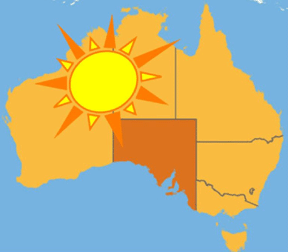 Natural Advantage, 14 years ago, Richard Turner rigged up a solar-powered battery to bring some modern convenience to his kids’ cubby house. In 2018, after an incredible journey, the business is ready to revolutionise the economy and transform our state’s prosperity.
Established in 2004 in South Australia, ZEN Energy was created by Richard to get solar powered battery storage into Australian homes.
In 2010 ZEN was the state’s fastest growing company. In 2012, BRW magazine wrote up ZEN as the fourth fastest growing company in the country.
This year, British billionaire industrialist Sanjeev Gupta bought 50.1 per cent of ZEN, creating the new entity SIMEC ZEN Energy as part of his plan to own the power supply to the Whyalla Steelworks – purchased in 2017.
Gupta’s plan for ZEN is simple: power the steelworks and the associated businesses nationally with the cheapest electricity available. And in 2018 the cheapest electricity available is renewable.
But cheap doesn’t come easy. ZEN Energy is only around for Sanjeev Gupta to invest in because a lot of hard work across many generations has come before it………..
Richard isn’t mad the State Government awarded Tesla the contract for the Hornsdale battery; in many ways the Tesla brand cleared the political path for action. Richard is more frustrated by the language and mindset of the state that seems – at so many levels – to believe it’s helpless.
Tech-billionaire batteries and steel factory saviours make good headlines – but ZEN Energy tells the far more credible story of this state’s ongoing industry, creativity and resilience.
It just so happens that ZEN Energy’s story starts in a cubby house in a suburban backyard.
Richard’s children Laura and James wanted to put a little light and TV in the cubby house to make it feel more homely and play later into the evening, and so Richard scooped the kids up into the car and headed for the local hobby shop to see what they could buy. The family bought a little solar panel, a regulator, a converter and a battery. Richard recalls the guy at the shop pulling out a whiteboard marker and writing Ohm’s Law on the shop’s whiteboard.
Watts = Volts x Amps.
Rigging up the system and flicking the switch, a light went on in Richard’s mind at the same time as he lit up his kid’s cubby house. There was a business here……….
“South Australia could be the Middle East of the new world,” says Richard.
The statement catches us off guard both in its simplicity and its severity.
“We’ve got the very best renewable energy generation resource in the world,” says Richard.
“We’ve got the best sun here. We’ve got the best wind here. We’ve got these unique wind patterns that come across the roaring forties, across the Australian Bight that split up and down the Eyre Peninsula. We have nearly two gigawatts of wind power here, and there’s bugger all in the rest of Australia.”
But it’s not the raw product Richard is referring to explicitly when he says South Australia could be the Saudi Arabia of renewable energy. Richard is talking about the whole value chain of the renewable economy epitomised by Sanjeev’s GFG Alliance.
Liberty One Steel in Whyalla (as it has been renamed) and its associated heavy industry across the country will have massive demand for electricity. ZEN will be the clean, green and low-cost energy supply. Off the back of our natural and renewable resources, Richard forecasts radical change in the fortunes of this state.
“When we produce the very lowest cost of power you’re going to have all this new industry evolve. All these traditional industries will revive and gravitate to the region and will employ five times as many people as you employed in a coal-fired power station,” says Richard.
Whyalla – a town built for 100,000 people – has never had more than a quarter of that live there. “We can see, in five years, there’ll be close to 100,000 in Whyalla,” says Richard.
And with low-cost energy we can start to refine – not just mine.
Richard skips from the lithium to graphite reserves of Australia (graphite makes up lithium ion batteries 30 per cent by weight). He speaks with vigour about our clean hydrogen future – hydrogen being a huge and growing fuel source for the energy intensive economies of Korea and Japan who don’t have the renewable energy resources of South Australia.
Sanjeev Gupta will build cars in Australia – electric vehicles – Richard confirms. They’ll be built in either Victoria or South Australia. Regardless of where the cars are built, Richard says, “all the car metals and composite materials will come out of our own factories, powered by the natural energy of the sun”.
Within three-to-five years, renewables will become the dominant energy source in Australia – with coal and gas very much playing a secondary role to fill gaps in energy supply until new hydro facilities come online. Vast arrays of batteries will support critical areas prone to power fluctuations and the national energy regulator AEMO has committed to running immediate pilot programs in the worst affected areas.
Grid scale batteries will reduce severe outages by kicking into action microseconds after a power fluctuation occurs, effectively stabilising the grid. The stability these batteries will create is already causing the industry to predict electricity prices to fall by up to 30 per cent next year.
From bottom of the ladder in the old fossil-fuel energy system, South Australia is set to jump to the top in the new, renewable energy economy. And while the headlines published in our daily paper may continue to put us down, the story of this next stage in our state’s history is far more fantastic.
“South Australia is going to have the most abundant, stable electricity production centre in Australia and probably on earth,” says Richard – a fifth generation South Australian. “In years to come you won’t want to be protecting SA’s power – you’ll be exporting it both interstate and around the world.” https://citymag.indaily.com.au/habits/power/natural-advantage/?fbclid=IwAR0pgkI1MFhRalb81RPawsieK-NCgyYLxAYyqGNo0aGKsnC-SQcSMvvmBc4
Note to Cory Berardi. Nuclear power plants do not really mitigate global warming
 Here is the MIT white paper whereby the Conservative Senator promotes nuclear power for decarbonisation of S.Aust electricity generation [18 pages].
What this paper (like most pro-nuke promo’s) fails to mention is that building & then operating a NPP instigates massive upfront carbon deficit thereby INCREASING GHGE; then it takes decades of no probs operation to slowly claw back that initial spike in anthropogenic global warming. And the more you build the greater that initial shock to the biosphere.
All NPP carbon offset claims depend upon whole life 25-40+year scenario’s: NPPs do not somehow magically produce instant carbon mitigation.
Things are crook for the Liberals, when the IPA blasts them on energy policies!
Institute of Public Affairs blasts Coalition’s ‘un-Liberal’ energy policies. IPA’s John Roskam says government should ‘stop all subsidies to coal, wind and anything else’ Paul Karp @Paul_Karp, 27 Oct 2018 The Institute of Public Affairs has blasted the Morrison government’s “big stick” in energy policy – a threat to break up energy companies in a bid to lower prices – accusing it of breaching Liberal values and endangering investment.
The IPA executive director, John Roskam, told Guardian Australia that “heavy-handed intervention” was “positively un-Liberal” and would open the door for Labor to campaign on policies bashing big businesses – which are “simply responding to the policy settings the government itself has created” to make a profit.
Roskam also warned against any form of subsidy for electricity generation including renewables subsidies, underwriting new power generation and indemnifying coal power against a possible future carbon price.
The intervention from the influential rightwing thinktank exposes divisions in the conservative side of politics on energy policy. Some, including MP Craig Kelly and former prime minister Tony Abbott, have called for an end to renewable subsidies and withdrawal from the Paris agreement, in line with demands from the IPA.
The Morrison government has indicated it wants to preserve popular solar subsidies and to stay in Paris while it pushes ahead with competition measures to lower price in the absence of a policy to reduce emissions by 2030.
Roskam said breaking up energy companies “continues the trend of targeting particular industries” as the Coalition did with the bank tax in the 2017 budget and would “further confuse Australians” about what it stands for.
“The idea that the government would determine the shape and size of the industry in this way cuts across every principle of the Liberal party,” he said. “If you want a guarantee that nobody will ever invest in Australia again, this is how you do it.”
The Coalition has promised policies to encourage new generation – including providing a floor price, contracts for difference and government loans – and has not ruled out using those measures to support new coal-fired power stations.
The energy minister, Angus Taylor, has said the government should address investors’ concerns about “political risks”, in a sign it could also indemnify coal power against future emissions reduction policies such as a carbon price. Taylor has also said there is “no plan” to change the small-scale renewable energy scheme.
Roskam said the government should “stop all subsidies to coal, wind and anything else” because “picking winners should be an anathema to the Liberal party”.
Although the IPA wants to see more coal power, Roskam said the government should “reduce the regulatory barriers to them being funded”, not keep the barriers and overcome them with subsidies……
……. Roskam said the Liberal Party is “hopelessly conflicted on climate change” and “riven down the middle”…….
Despite the suggestion emissions and price reductions are incompatible, renewables are forecast to lower prices while coal subsidies would increase energy costs…… https://www.theguardian.com/australia-news/2018/oct/27/institute-of-public-affairs-blasts-coalitions-un-liberal-energy-policies

1 This month
25 October – Film –Britain’s Nuclear Bomb Scandal: Our Story – part of the Adelaide Film Festival,
Screening and Conversation
A screening of Britain’s Nuclear Bomb Scandal: Our Story (2024) followed by a talk with 2026 Bettison and James Awardee and Tradtional Owner Karina Lester in conversation with Simone Tur.
When: Sun 25 Oct, 12:00pm-Screening, 1:15pm-Talk
Where: The Mercury
Free admission, register below by clicking on BUY TICKETS and select free event tickets, at end of web page:
https://www.adelaidefilmfestival.org/program/2026/britains-nuclear-bomb-scandal-our-story
.

Australians deserve the truth
about
AUKUS – https://aukuspublicinquiry.com/

PETITION – To: Prime Minister Anthony Albanese and the Australian Labor Government

of the week – Australians for War Powers Reform (AWPR)
To see nuclear-related stories in greater depth and intensity

