Omigawd! Nuclear zealot Jonathon Mead is to get his own little government department nuclear supergroup
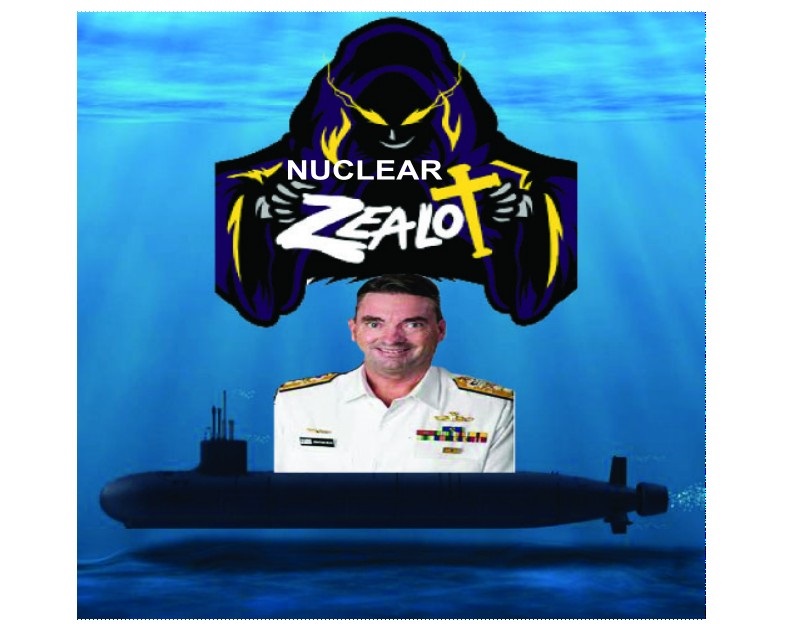
While the exact contours, structure and mandate of the group are yet to take shape, the role of this new organisational arrangement bears examination. Driven by the complexities of nuclear technology, the group’s remit reaches outside conventional defence policy domains into areas such as education and industrial policy that are usually led by domestic policy agencies at the federal and state level.
Planning for Australia’s nuclear submarine ‘supergroup’ , 30 Mar 2023, |Hugh Piper, The Strategist,
“………. With the nuclear-powered submarines to be acquired under the AUKUS partnership, Australia has set itself perhaps the most ambitious public-procurement undertaking in its history. To match the scale of this venture, according to a report in The Australian, the submarine taskforce led by Vice Admiral Jonathan Mead will evolve and grow into a new ‘a stand-alone group inside Defence that will draw personnel from across the government’.
In public-service speak, a ‘group’ is usually the largest organisational unit in a federal government department, headed by a deputy-secretary-level public servant or a three-star military officer. That the submarine acquisition is being elevated to this level reflects the magnitude of the enterprise and the fact that it will become a permanent and dominant feature of the Australian defence organisation for decades to come.
Equally interesting, though, is the scope of this new group in Defence. The Australian described it as a multiagency group ‘responsible for all elements of the program, including safety, non-proliferation and regulatory measures, international engagement, education and training, industry development and project management’. Its head will have ‘a direct reporting line to Defence Minister Richard Marles’.
While the exact contours, structure and mandate of the group are yet to take shape, the role of this new organisational arrangement bears examination. Driven by the complexities of nuclear technology, the group’s remit reaches outside conventional defence policy domains into areas such as education and industrial policy that are usually led by domestic policy agencies at the federal and state level.
Defence will have to acquire new policy capabilities to tackle these issues—but also develop networks and institutional relationships with a much wider range of domestic stakeholders. Moreover, the government will need to decide the exact limits of Defence’s policy leadership. Education and industrial policy are, for instance, intrinsically linked to labour and innovation policy.
The reported scope of the group also includes policy domains and functions that the Department of Foreign Affairs and Trade would conventionally lead, namely international engagement and non-proliferation. For Defence instead to take leadership of these areas would mark a fundamental shift in the division of labour in Australian foreign policy.
………………………… There needs to be room for proper consideration of broader foreign policy equities within a structure that is unapologetically mission-focused on delivering defence capability. As the mixed reaction in the Indo-Pacific to AUKUS has demonstrated, Australia can’t assume an overall permissive environment for its strategic policy, so diplomacy is as vital to manifesting the submarines as building a nuclear industrial base. These risks are, however, manageable through effective governance.
…………..There’s also speculation that it could have its own budget line separate from the rest of Defence https://www.aspistrategist.org.au/planning-for-australias-nuclear-submarine-supergroup/
Aukus subs deal firms China support for Asean nuclear weapon-free zone
Beijing ‘willing’ to become first nuclear-armed state to sign treaty pledging to keep the weapons out of Southeast Asia
China’s efforts to woo its neighbours is a counter to US alliance building in the region, which now includes nuclear-powered submarines for Australia
Laura Zhou SCMP, 28 Mar 23
China is willing to sign a treaty making Southeast Asia a nuclear weapons-free zone, in Beijing’s latest effort to woo its neighbours and counter Washington’s decision to speed the sale of nuclear-powered submarines and technology to Australia.
Chinese Foreign Minister Qin Gang made the pledge at a meeting with Kao Kim Hourn, secretary general of the Association of Southeast Asian Nations, in Beijing on Monday. It would make China the first major nuclear power to commit to the zone.
Asean secretary general Kao Kim Hourn (left) and Chinese foreign minister Qin Gang in Beijing on Monday. Photo: Xinhua
China is willing to sign a treaty making Southeast Asia a nuclear weapons-free zone, in Beijing’s latest effort to woo its neighbours and counter Washington’s decision to speed the sale of nuclear-powered submarines and technology to Australia.
Chinese Foreign Minister Qin Gang made the pledge at a meeting with Kao Kim Hourn, secretary general of the Association of Southeast Asian Nations, in Beijing on Monday. It would make China the first major nuclear power to commit to the zone.
“China is willing to take the lead in signing the protocol to the Southeast Asia Nuclear Weapon Free Zone treaty and advocate with Asean for solidarity and win-win cooperation to safeguard regional security and stability,” he said.
The treaty has been in force since 1997 and obliges the 10 Asean member states “not to develop, manufacture or otherwise acquire, possess or have control over nuclear weapons; station or transport nuclear weapons by any means; or test or use nuclear weapons”.
None of the five recognised nuclear-armed states – China, France, Russia, Britain and the US – has acceded to the treaty’s protocol, which implies a commitment not to use nuclear weapons within the zone or against any contracting state.
Chinese President Xi Jinping said in 2021 that Beijing was ready to sign the protocol – also known as the Bangkok Treaty – “at the earliest possible date”, just months after the US-led Aukus alliance with Australia and Britain was unveiled.
The latest pledge comes at a time when China is increasingly vigilant towards Aukus, which two weeks ago announced a pathway for Australia to acquire three, possibly five, US nuclear-powered submarines by the early 2030s.
In his meeting with Kao, Qin said China’s domestic and foreign policies had maintained “a high degree of stability and continuity”, according to a Chinese foreign ministry readout.
Qin said China’s policies would “inject more stability into regional peace and tranquillity, while providing more strong momentum for regional development and prosperity”………………….
Beijing is strongly opposed to Aukus and the Quad – a US-led partnership with Japan, India and Australia – which together form the centrepiece of Washington’s strategy of building alliances to contain China, in its view.
The Aukus announcement – which may pave the way for Canberra to eventually build its own attack submersibles – was described by Chinese foreign ministry spokesman Wang Wenbin as “nothing but selfish”. The US, Australia and Britain “had gone further down a wrong and dangerous road”, he said.
The deal also intensified regional concerns in Southeast Asia. Hours after the announcement, Malaysia said it was important for all countries to refrain “from any provocation that could potentially trigger an arms race or affect peace and security in the region”.
Indonesia, another major power in Southeast Asia, urged Australia to comply with its non-proliferation treaty obligations, saying that it was the responsibility of all countries to maintain peace and stability in the region………………………….. https://www.scmp.com/news/china/diplomacy/article/3215103/aukus-subs-deal-firms-china-support-asean-nuclear-weapon-free-zone
Diana Rickard Submission – Australia’s nuclear bans reflect public rejection of the nuclear industry, and support for clean renewables.
Submission No 74. against Environment and Other Legislation Amendment (Removing Nuclear
Energy Prohibitions) Bill 2022
Nuclear Power is not needed in Australia. Germany is decommissioning its last two nuclear reactors.
There is enough science and technology to provide reliable and sustainable renewable energy for
industrial and residential needs in Germany and in Australia, we have more than enough sunlight,
wind and water to provide clean and sustainable energy for our needs.
- Our legislative prohibitions reflect public and community concern over and rejection of
nuclear power and nuclear waste storage in Australia. - Australia does not need reactor meltdowns, fires and explosions as happened at
Chernobyl and the Fukushima Daiichi nuclear power site. We have inherited colonial
nuclear bomb testing sites and uranium processing sites that still need rehabilitating
costing billions of dollars and these weapon testing sites have caused sickness and
permanent disability to people caught up in their poisonis a disgrace that should not be
repeated. - There is still no permanent nuclear waste disposal facility operating anywhere in the
world for high-level nuclear waste generated by nuclear power reactors. - Uranium mined in Australia is used for failed nuclear reactors and weapons proliferation
overseas and the international safeguards system has not been funded anywhere near
what it would take to avoid or even monitor this. We should avoid further
contamination from dirty and dangerous nuclear power plants in Australia adding to this
problem. - Talk of AUKUS nuclear powered submarines and B52s carrying nuclear weapons while on
Australian soil makes me very uneasy that we could become a military target. The risk of
reactors becoming military targets (as has been the case with research reactors in the
Middle East on multiple occasions) remains a serious concern. - Many countries do not have clear and unambiguous rules governing nuclear power and
nuclear waste. This is despite the fact that inadequate regulation is widely accepted as a
main cause of the Fukushima disaster. In a country like Australia where a national motto
in the 1980s was ‘ Near enough is good enough’ followed by ‘Where the bloody hell are
you?’ hardly shows our commitment to clear, accountable and sustainable rules-based
governance on vital issues, does it? - If we remove prohibitions to nuclear power, we would then need significant reforms in
existing legislation not designed to deal with nuclear power. We would then need a
massive increase in government resources as well as recruiting an appropriately skilled
and capable workforce. - With resources concentrating on getting nuclear power right, essential resources to help
us tackle human-induced climate change, secure a national renewable energy policy and
deliver modern environmental protection legislation would be lost.
Australia is suffering massive infrastructure, livelihood and life loss due to climate change floods that
should be once in a hundred years but are happening regularly. Our environment is suffering
through massive landclearing by other than small, family farmers or miners.
We cannot trust our future to greedy people and foreign corporations with no care except to make
short-term profit even when it destroys our national interest and iconic environment.
Nuclear power plants are unsustainable, corporately owned and dirty. Renewable energy can
operate independently of large, asset-greedy business interest and can be installed on homes and in
small paddocks. Renewable energy belongs to the people and does not harm the environment as
surely as nuclear energy does. https://www.aph.gov.au/Parliamentary_Business/Committees/Senate/Environment_and_Communications/Nuclearprohibitions/Submission
Jean M Christie -Submission – nuclear power is expensive, polluting, and too slow to be of any use to Australians.

Environment and Other Legislation Amendment (Removing Nuclear Energy Prohibitions) Bill 2022 Submission 78
For several reasons, nuclear power is inappropriate for Australia. These are as follows.
Since 2010, nuclear power has actually become more expensive, rising in cost by 33%.
Nuclear power reactors produce waste, and Australia does not have a deep underground repository for
nuclear waste. At present, the residents of Kimba, South Australia, are engaged in a legal battle with the
Commonwealth of Australia, as they fight to protect their home from becoming a dumping ground for
nuclear waste generated in New South Wales.
The development of nuclear power is very time-consuming, and Australia lacks a workforce with the
necessary skills to do this.
Thus nuclear power is expensive, polluting, and too slow to be of any use to Australians.
Furthermore, nuclear power plants are rendered unsafe by the effects of climate change. These effects
include warming water sources, sea-level rise, storm damage, and drought. In military and terrorist events,
nuclear power plants are obvious targets, as malicious forces seek to cut off electricity supplies. In addition,
the electricity necessary to cool such reactors is also disrupted, and the risk of nuclear core meltdowns
increased. We are seeing this now in Ukraine, as Russia directs missile strikes at Ukrainian nuclear power
plants. Even in peacetime, risks are present, as demonstrated by the tragic nuclear meltdown and waste spill
in Fukushima, Japan, which has rendered surrounding areas uninhabitable.
Thus nuclear power is expensive, polluting, slow in availability, and very risky with regard to national
security. I urge politicians to support renewable energy, in order to protect the environment, and prevent
further climate disruption. . https://www.aph.gov.au/Parliamentary_Business/Committees/Senate/Environment_and_Communications/Nuclearprohibitions/Submission
The three big questions Australia’s leaders must answer about the Aukus deal

Gareth Evans, Guardian, 21 Mar 23,
The public has a right to know why we are making such a drastic shift in our defence strategy and spending, writes Australia’s former foreign minister
Love Paul Keating or loathe him, admire or abhor his invective, he has raised questions about the Aukus deal which are hugely important for Australia’s future and demand much more compelling answers than we have so far received from government ministers past or present.
The big three for me are whether, for all the hype, the submarines we are buying are really fit for purpose; whether an Australian flag on them really means we retain full sovereign agency in their use; and if it does not, whether that loss of agency is a price worth paying for the US security insurance we think we might be buying……………
is the Aukus fleet – on the brave assumption the vastly complicated acquisition program does not become the “goat rodeo” (fiasco) predicted by some respected US-based analysts – really our best buy? If the purpose of our new boats is to be a useful, albeit numerically marginal, add-on to US underwater capability in the South China Sea and around Taiwan, they can play that role well. But if their primary purpose is to prevent continental Australia – and our Indo-Pacific sea-lanes – from possible attack, it remains entirely legitimate to demand a detailed explanation as to how that task could be better performed by the Aukus fleet than the 20 or more sons-of-Collins we could buy for the same price, given that only three nuclear-propelled boats are likely to be on station at any given time.
The core issue is how comfortable we should be in so obviously shifting the whole decades-long focus of our defence posture away from the defence of Australia – which has always included a strong presence in our archipelagic north and, within a very considerable radius, the sea-lanes so crucial to our trade – toward a posture of distant forward defence. The case must be made, not just asserted.
The second big unanswered – or less than persuasively answered – question is whether, by so comprehensively further yoking ourselves to such extraordinarily sophisticated and sensitive US military technology, Australia has for all practical purposes abandoned our capacity for independent sovereign judgment. Not only as to how we use this new capability, but in how we respond to future US calls for military support.
There were assurances at the time of the first Aukus announcement by the US secretaries of state and defense that “there will be no follow on reciprocal requirements of any kind” and “no quid pro quo”. But in my own experience that is not quite the way the world – and American pressure – works………………..
When it comes to decisions to go to war, we have too often in the past, most notably in Vietnam and the Iraq war of 2003, joined the US in fighting wars that were justified neither by international law nor morality, but because the Americans wanted us to, or we thought they wanted us to, or because we wanted them to want us to…………………………
My last big question may be unanswerable for now, but should be getting far more attention. Just how much security has our devotion to the US and our ever-increasing enmeshment with its military machine, really bought us, should we ever actually come under serious attack?
While the Anzus treaty requires the US “to act” in these circumstances, it certainly does not require that action to be military. I am afraid that we should be under no illusion whatever that, for all the insurance we might think we have bought with all those past down-payments in blood and treasure and our “century of mateship”, the US – whoever is president – will be there for us militarily in any circumstance where it does not also see its own immediate interests under threat……………… https://www.theguardian.com/commentisfree/2023/mar/21/gareth-evans-the-three-big-questions-australias-leaders-must-answer-about-the-aukus-deal?CMP=Share_iOSApp_Other
Inside the AUKUS machine: scrutinising the political links to defence contracts
there has not been nearly enough scepticism about the AUKUS deal from Australia’s major media players
Led by a prime minister with a penchant for fudging reality, the $368 billion AUKUS submarine deal leaves much unexamined.
DAVID HARDAKER, MAR 28, 2023 https://www.crikey.com.au/2023/03/28/inside-aukus-submarine-deal-political-links/
This is part one in a series. For the full series, go here.
There is much about the AUKUS deal that is surprising — if not shocking.
There is the astronomical cost of $368 billion, double the most extravagant guesstimates made by experts before Prime Minister Anthony Albanese’s announcement in San Diego earlier this month.
There are the hurried circumstances in the run-up to the federal election — all done within 24 hours — in which the ALP opposition committed itself to the deal proposed by then prime minister Scott Morrison.
And there is the extreme secrecy that has surrounded AUKUS from its inception, with Morrison having orchestrated events on a need-to-know basis, only ever consulting those who had a direct interest in expanding Australia’s defence budget.
The AUKUS arrangement emerged from the final desperate days of one of Australia’s worst governments. It was led by a prime minister who had a habit of fudging reality and who secretly sought to accumulate the powers of five of his ministerial colleagues, without having a coherent rationale.
At the same time, there has not been nearly enough scepticism about the AUKUS deal from Australia’s major media players. Some have even been offended that former prime minister Paul Keating would raise serious questions, focusing more on the manner than the substance of what he said.
For these reasons, Crikey will be introducing a bit of sunlight — the best disinfectant — into the fetid corners of the AUKUS machine.
You don’t have to be a China stooge to question AUKUS, yet that is how much of the public debate has been conducted so far.
To begin our coverage, this week we report on the activities of two of the biggest political names from the Coalition’s decade in office. They are former treasurer Joe Hockey and former defence minister (and before that minister for defence industry) Christopher Pyne.
The two have one thing in common: they both leapt from public office directly into the lucrative world of defence industry and investment. In Hockey’s case, he ceased his role as Australia’s ambassador to the US on January 30 2020. ASIC records show that his consultancy, Bondi Partners (which relies on Washington contacts), was registered on January 29 2020.
In Pyne’s case, he ceased as defence minister and retired from federal Parliament in April 2019. Within a month, the Pyne & Partners business name was registered. The record shows that predecessor entities had been set up by a former Pyne staffer before Pyne retired. These moves are separate from Pyne’s work with consulting firm EY, which he began within weeks of leaving Parliament. Pyne’s work with EY, where the former defence minister advised on defence matters, led to a Senate inquiry into whether or not he had breached ministerial standards.
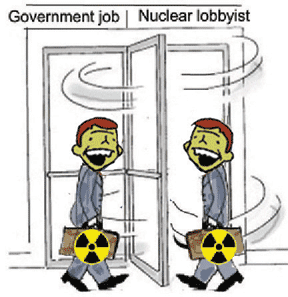
Pyne and Hockey aren’t the first from the political class to turn to the defence industries after leaving office. The political revolving door is well known.
Continue readingJan Wu – submission – renewables are very suitable for Australia, not dirty nuclear power.
With solar and wind energy now well developed, we do not need to have
nuclear power, having one less problem of considering how to dispose the
nuclear waste one day.
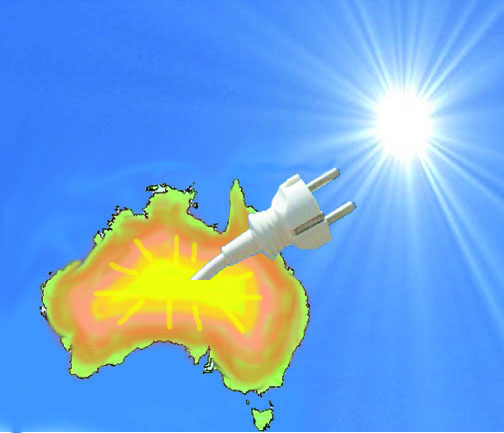
the government should invest on solar power, since we have vast unused land in
the middle of the country, covered with sun, by using solar energy, we might be
also able to address our desertification problem as well. https://www.aph.gov.au/Parliamentary_Business/Committees/Senate/Environment_and_Communications/Nuclearprohibitions/Submission
AUKUS is ‘going against’ Pacific nuclear free treaty – Cook Islands leader

Cook Islands Prime Minister Mark Brown has joined a growing list of Pacific leaders to object to the $US250 billion nuclear submarine deal between Australia, United Kingdom and the United States (Aukus).
The Aukus project, which will allow Australia to acquire upto eight nuclear-powered submarines, has been widely condemned by proponents of nuclear non-proliferation.
It has also fuelled concerns that the submarine pact, viewed as an arrangement to combat China, will heighten geopolitical tensions and disturb the peace and security of the region, which is a notion that Canberra has rejected.
Brown, who is the Pacific Islands Forum (PIF) chair, told Cook Islands News he was concerned about the Aukus deal because it is “going against” the Pacific’s principal nuclear non-proliferation agreement.
We’ve all abided by the Treaty of Rarotonga, signed in 1985, which was about reducing the proliferation of nuclear weapons and nuclear vessels,” he told the newspaper.
The Treaty of Rarotonga has more than a dozen countries signed up to it, including Australia and New Zealand.
But it is what it is,” he said of the tripartite arrangement.
“We’ve already seen it will lead to an escalation of tension, and we’re not happy with that as a region.”
Other regional leaders who have publicly expressed concerns about the deal include Solomon Islands PM Manasseh Sogavare, Tuvalu’s foreign Minister Simon Kofe, and Vanuatu’s Climate Change Minister Ralph Regenvanu.
With Cook Islands set to host this year’s PIF meeting in October, Brown has hinted that the “conflicting” nuclear submarine deal is expected to be a big part of the agenda.
“The name Pacific means peace, so to have this increase of naval nuclear vessels coming through the region is in direct contrast with that,” he said.
“I think there will be opportunities where we will individually and collectively as a forum voice our concern about the increase in nuclear vessels.”
Brown said “a good result” at the leaders gathering “would be the larger countries respecting the wishes of Pacific countries.”
“Many are in opposition of nuclear weapons and nuclear vessels,” he said.
“The whole intention of the Treaty of Rarotonga was to try to de-escalate what were at the time Cold War tensions between the major superpowers.”
This Aukus arrangement seems to be going against it,” he added.
Michele Kwok Submission – nuclear power is not clean -it’s polluting at every stage
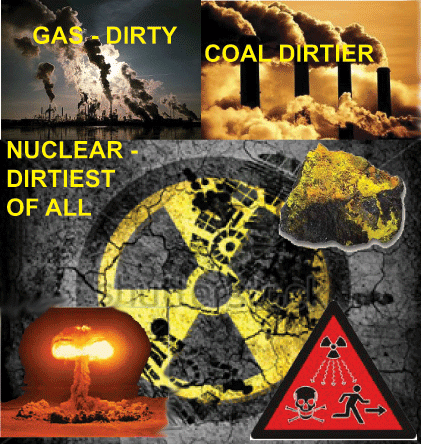
Environment and Other Legislation Amendment (Removing Nuclear Energy Prohibitions) Bill 2022 Submission 80
It’s concerning that nuclear energy is viewed as clean energy and as a solution to climate crisis.
Every stage of the production pollutes.
Uranium poses high risk in ground water contamination, currently a subject of concern all over the world due
to related severe health problems to humans, as groundwater is the main drinking water source in remote
communities.
Nuclear energy is very expensive compared to wind and sun energy Every power reactor construction project in Western Europe and the US over the past decade has been a disaster: True costs have exceeded company and government estimates by $10 billion or more for all these projects, and delays range from 7 to 13 years. Unsurprisingly, few new reactors are being built.
There is no viable means to manage nuclear waste.
Overall, not economical, too risky and the negative impacts on health should be a concern for us all. https://www.aph.gov.au/Parliamentary_Business/Committees/Senate/Environment_and_Communications/Nuclearprohibitions/Submission
Alan Hewett submission to Senate Nuclear Inquiry- Nuclear power could only delay Australia’s transition to clean renewable energy
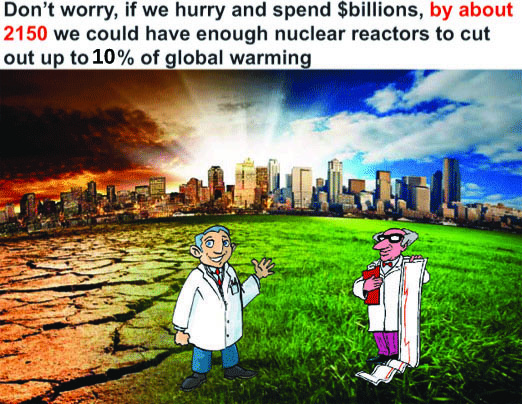
Environment and Other Legislation Amendment (Removing Nuclear Energy Prohibitions) Bill 2022 Submission 92
The federal Department of Industry, Science, Energy and Resources expects 69% renewable
supply to the Australian National Electricity Market by 2030. The Albanese Labor government’s
target is 82% renewable supply by 2030.
South Australia has already reached 67% renewable supply and will comfortably meet the target of 100% net renewable supply by 2030.
Nuclear power could not in any way facilitate Australia’s energy transition ‒ it could only delay the
transition and make it more expensive and contentious
Nuclear power would unnecessarily introduce risks of catastrophic nuclear accidents and military or terrorist attacks. It would inevitably bequeath future generations with streams of high-, intermediate- and low-level
nuclear waste. We urge all politicians and political parties to focus on the transition to a lowcarbon economy and to reject nuclear power because it is too slow, too expensive, too dangerous, and those promoting it are mostly the same people trying to slow and derail the transition to a low-carbon economy. https://www.aph.gov.au/Parliamentary_Business/Committees/Senate/Environment_and_Communications/Nuclearprohibitions/Submission
Unions question Labor over AUKUS nuclear submarines
Canberra Times, By Tess Ikonomou, March 28 2023
Australia’s union movement has criticised plans to acquire nuclear-powered submarines under the AUKUS partnership, declaring support for a “nuclear-free defence policy”.
Prime Minister Anthony Albanese earlier this month revealed the $368 billion pathway Australia will take to get the boats under a security pact with the US and UK.
ACTU president Michele O’Neil said unions were seeking more detail from the government so they could discuss what this meant for workers in worried communities.
“The ACTU has a long-standing policy of opposition to nuclear power, nuclear waste and proliferation,” she told the National Press Club in Canberra on Tuesday.
“We also have a long-standing policy position that supports a nuclear-free defence policy.”
Under the nuclear submarine program, US and UK boats will start rotating through Western Australia from as early as 2027.
Ms O’Neil said there had not been the chance to talk through the acquisition of nuclear-powered submarines due to a lack of information.
“There are safety issues for us,” she said…………………………….. https://www.canberratimes.com.au/story/8139050/unions-question-labor-over-aukus-nuclear-submarines/
Senator Barbara Pocock demolishes the arguments put up for small nuclear reactors, and for nuclear submarines

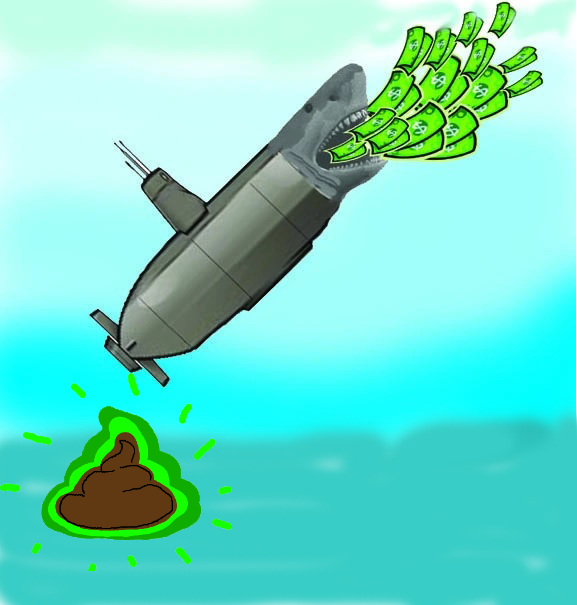
There is a long list of reasons why the $368 billion spend proposed for AUKUS is a terrible idea, but it’s not least that the government has no viable solution to care for the weapons-grade nuclear waste and keep us safe.
Senator BARBARA POCOCK (South Australia) : THE SENATE CHAMBER SPEECH, Wednesday, 22 March 2023
“The proposal for nuclear power for Australia is wrong on many counts. Small modular nuclear power generation is too expensive, it’s not operating commercially and it’s a distraction from what we have to really get on with, which is a very fast move to renewables. We senators in this place have a responsibility to consider realistic proposals to advance citizens’ interests, not run impractical, risky, uncommercial proposals up the flagpole on behalf of, in this case, nuclear industry spruikers.
Last time I looked, only two small modular reactors were in operation on the planet, one in China and one Russia. In both cases the cost blowouts have been huge. Many other such next-generation nuclear reactors have been cancelled as people have worked out that renewables are the cheaper, more-reliable way forward.
But I want to especially focus on what Senator Canavan has raised, and that’s the question of nuclear waste disposal. The truth is that finding a permanent solution for the safe storage of nuclear waste arising from power generation remains a big, dangerous problem everywhere—a very expensive problem. The UK has 70 years of waste, 260,000 tonnes of it, from its nuclear power plants, in unsafe temporary storage. It’s a major problem for that country and its citizens.
The US nuclear industry has similarly been plagued by dangerous leaks and failures. No long-term solution exists in the US for waste from power generation or from nuclear powered submarines.
South Australians have had some experience with these issues. In 2016 our citizens had a very close look at a proposal that we take the world’s nuclear power waste and store it. We were promised an income stream of $51 billion. That’s a lot of money, but South Australians said no. The world’s largest citizens jury of 350 South
Australian citizens read the fine print. They saw that the proposal was for temporary storage for above-ground for more than a century. They said no to the false promise of huge incomes but especially to the safety risks and the fact that those who spruik nuclear power never offer a long-term waste solution that is safe and that will last the 100,000 years that is needed.
First Nations people across South Australia in particular said no. They remember Maralinga. This is a national challenge of long standing.
Since Australia first started producing nuclear waste, 70 years ago, five successive governments have tried and failed to find a suitable place for the permanent storage of our relatively small quantities of low-level and intermediate-level waste. Low-level waste, arising from medical use, must be stored safely for 300 years, and it’s nowhere near as dangerous as intermediate waste, but no community in this country has agreed to take and store that waste. Intermediate-level waste, arising from research at Lucas Heights, must be safely stored for 10,000 years. The previous government began a process towards that storage at Kimba, and it’s been bitterly disputed at every step of the way since, opposed by farmers, by community members and by First Nations people.
The Barngarla people are currently in the Federal Court fighting the current government, which is spending hundreds of thousands of dollars to oppose the voice of the Barngarla people.
In the case of AUKUS, the fuel from decommissioned submarines is nuclear weapons grade, and it requires military-scale security. It must be stored safely not for 300 years, not for 10,000 years, but for 100,000 years, and neither the UK nor the US have been able to find permanent storage solutions for their own submarine waste. So, given that successive governments have continuously failed to manage much-less-dangerous radioactive waste in Australia, our government would find it very difficult in this country to find a solution to dispose of nuclear waste or AUKUS submarine waste. Traditional owners of the future in particular should have a say and a veto about any such proposal.
There is a long list of reasons why the $368 billion spend proposed for AUKUS is a terrible idea, but it’s not least that the government has no viable solution to care for the weapons-grade nuclear waste and keep us safe.
The Australian public is right to be sceptical and concerned about waste disposal in relation to AUKUS. There is no plan, and the same argument applies to any ill considered, expensive adventurism around nuclear power.
Our children need practical, affordable action on renewable energy that cuts carbon pollution, not pies in the sky that generate toxic waste for which there are no safe solutions.”
In Australian conventional media, when it comes to discussion on AUKUS, only certain limited views are permissable.

Social media and independent news sites have had a significant effect on opening up the political debate over the AUKUS deal, writes Professor John Quiggin.
Social media and independent news sites have had a significant effect on opening up the political debate over the AUKUS deal, writes Professor John Quiggin.
Opening the Overton window. Independent Australia, by John Quiggin | 24 March 2023
ONE OF THE MOST useful ideas in thinking about political debate is that of the Overton window, named after American political scientist Joseph Overton. The Overton window is the range of ideas considered permissible in public discussion at any given time.
Overton’s crucial insight was that, while active participants in political debate could only take positions within the window of acceptable views, outside bodies like think tanks could help to shift it.
……………………………….The Overton window provides a way of thinking about current policy debate, particularly the treatment of the AUKUS deal by the mass media. At one end of the Overton window is the hyperbole of warmongers like Matthew Knott gushing that Australia is ‘no longer a middle power’ to the more cautious view that perhaps we should have had some public discussion before such a major change.
The mass media has been vigorous in policing even the slightest dissent within the political class, such as the questions raised, cautiously, by a handful of Labor backbenchers. It has responded with fury to criticism from those it can’t control like Paul Keating and Malcolm Turnbull. And, as usual, it has done its best to ignore criticism from outside the Overton window.
Although think tanks like the Australia Institute still play a role, the biggest challenge to the mainstream media’s role in policing debate has come from social and alternative media. The ease of communication through the internet is reflected in social media sites like Facebook, Twitter and more recently Mastodon, which have largely displaced older models of blogging. Equally important has been the proliferation of online magazines like Independent Australia and Crikey, and the rise of single-author newsletters distributed through Substack and Medium.
At least regarding issues like AUKUS, there is an Overton window for social and alternative media. Almost all opinions are critical, with the dominant viewpoint being that the project is economically wasteful and puts Australia in danger of being dragged into war. The most positive views to be found on Twitter are “Labor inherited this from Morrison” and “cheer up, it will probably never happen”. The only point of contact with the political class Overton window is the view that we need to discuss this further.
Traditional mass media still has a greater reach than online alternatives. But it can no longer constrain debate within the Overton window defined by the political class.
May Day March planned – against AUKUS

The Age (print version) , David Crowe, Matthew Knott,23 Mar 23,
Laboutr organisers will escalate their concerns about the AUKUS defence pact by movingan annual workers’ march to the NSW city of Port Kembla to oppose its use as a base for a future submarine fleet.
The organisers agreed on Tuesday night to relocate the MayDay March from Wollongong out of growing c oncern at the prospect that nearby Port Kembla could become the eas-coast home for eight nuclear-powered vessels.
“the battle for Port Kembla has begun” said Arthur Rorris, the secretary of the South Coast Labour Council, a longstanding Labor member and one of the organisers of the annual march.
The move cam after former Labor cabinet minister Kim Carr added hi svoice to concerns about AUKUS in the wake of criticism from former prime minister Paul Keating………………..
The location of the fleet is a major obstacle because the AUKUS plan includes$10 billion for an east coast base to house the submarines, with Brisbane and Newcastle named as options, but the idustrial city of Port Kembla seen as the government’s most likely choivce.
The protest will focus attention on AUKUS befoe Albanese heads to the G-7 summit in Japan on May 19 and United States President Joe Biden visits Sydney for the Quad summit in the same months, with expectatins that tehpresident will address federal parliament.
Rorris said the groups concerns about AUKUS were about the national interest and nota “not-in-my-backyard” protest.
The name is Port Kembla not Fort Kembla” he said.
“We will not cop lectures about the national interest from spooks and arms dealers”, he said……….
Big Tech, weapons, tax havens, even Rupert Murdoch – secrets from the Future Fund investment vault

AUKUS wins
Paul Keating’s words still resonate in Aussie minds,
“At the Kabuki show in San Diego … there’s three leaders standing there, only one is paying, our bloke, Albo.“
Michael West Media, Philip Dorling and Rex Patrick | Mar 26, 2023
The secretive Future Fund’s chairman Peter Costello might not like it, but Freedom of Information requests are peeling back the lid on the Fund’s weighty overseas investments. Philip Dorling and Rex Patrick report the more controversial ones.
Big Tech, Big Pharma and Big Oil are the top of the pops in a newly released list of Future Fund Investments across the United States, United Kingdom and a range of tax havens, notably among the Cayman Islands.
These revelations come on top of revelations earlier this year about ethically and environmentally questionable Future Fund investments in China.
The latest FOI drilling into the side of the vault also shed light on the Fund’s investments in arms manufacturers, Chinese companies operating out of the Caymans as well as politically controversial investments in Rupert Murdoch’s right-wing media empire.
It’s so infuriated Senator Barbara Pocock, who has been pursuing the Fund’s investment practices the Senate. “It should not take FOI requests for Australian citizens to find out where their own money is being invested. The Future Fund is suffering from a corrosive secrecy disease.
The public should know about these Future Fund investments in carbon polluting fossil fuels, in arms manufacture and in companies based in tax havens – not to mention the Murdoch and Fox media empires. It’s time to come clean.
Big Tech
In what may be its largest investment in a single publicly listed foreign company, the Future Fund holds a $793 million stake in tech giant Microsoft. Other very large Future Fund tech investments include Google owner Alphabet ($559.9m), NVIDIA ($346.8m), Cisco Systems ($288.2m), Meta Platforms ($256.4m) and Intel Corp ($240.0m). Amazon comes in with a rather more modest investment of $187 million.
Given the vital importance of IT and telecommunications policy for Australian governments, business, our economy and society, disclosure of the nature and scale of these publicly funded investments is clearly in the public interest.
However, it only comes after the Future Fund was forced to abandon its deep preference for secrecy and resistance to scrutiny through FOI.
Pharma, energy and mining………………………………..
AUKUS wins
Paul Keating’s words still resonate in Aussie minds,
At the Kabuki show in San Diego … there’s three leaders standing there, only one is paying, our bloke, Albo.
But it appears the Future Fund is well ahead of Albo, with investments in leading American and British aerospace and defence manufacturers including Raytheon Technologies ($91.9m), Lockheed Martin Co ($75.1m), General Dynamics ($65.3m), Northrop Grumman ($41.5m), Honeywell International ($76.0m), BAE Systems ($20m), and Rolls-Royce ($0.7m).
A number of these companies will be deeply involved with the AUKUS nuclear submarine project, so maybe this a return path for a tiny share of the eye-watering $368 billion AUKUS price tag.
Tax haven heaven………………………………………………………
Backing Murdoch
In the end however, two quite modest investments in the United States may prove to be among the Future Fund’s more controversial holdings – a $6.3 million stake in News Corp and $13.5 million in Fox Corp which have been notable political allies of Coalition governments.
That’s $19.8 million in the two companies controlled by media mogul Rupert Murdoch and his primary channels of national and global political influence………………………………………….
The Future Fund is an independent, statutory body but it wouldn’t be entirely surprising if a “Defund Murdoch” campaign emerges.
Last month Treasurer Jim Chalmers wrote about the need to bring ethics and values into national economic and financial policy. Perhaps he should call in Costello for a chat about ESG (Environmental, Social & Governance). https://michaelwest.com.au/big-tech-weapons-tax-havens-even-rupert-murdoch-secrets-from-the-future-fund-investment-vault/
1 This month
17 October, Free Public Talk on Nuclear Issues in South Australia
David Noonan will speak on public interest concerns over the new Roxby Downs Indenture Act 2026 on BHP copper-uranium mining and ore processing in SA, and on how AUKUS may face SA with a High-Level nuclear waste agenda.
Dr Jim Green will discuss international developments in the field of nuclear power including ‘small modular reactors’ and Generation 4 ‘advanced’ nuclear reactor concepts.


Help Aunty Sue Protect Her Land and Sacred Sites From Destructive Rocket Testing.
.

Australians deserve the truth
about
AUKUS – https://aukuspublicinquiry.com/

PETITION – To: Prime Minister Anthony Albanese and the Australian Labor Government

of the week – Australians for War Powers Reform (AWPR)
To see nuclear-related stories in greater depth and intensity

