The Wangan & Jagalingou Family Council’s fight against the Adani mine
 PART 1
http://www.4zzzfm.org.au/news/audio/2016/12/06/wangan-jagalingou-family-councils-fight-against-adani-mine-part-1
6 December 2016:
“Part 1 “The Adani mine is getting a lot of press after a recent protest in Melbourne rallied for the environment and the damages that the mine will cause.
However, here in QLD the Wangan and Jagalingou Family Council is fighting an extensive legal battle against the mine to protect their country in Central Queensland .
“Brisbane Line Reporter Jack McDonnell spoke with Murrawah Johnson a spokesperson from the Wangan and Jagalingou Family Council about the Adani mine and the councils campaign.
To gain a perspective of how long they have been battling this decision I asked her to tell her story about how she travelled around the world last year lobbying banks so they wouldn’t fund this mine.”
Click the link for part 2:
http://www.4zzzfm.org.au/news/audio/2016/12/06/wangan-jagalingou-family-councils-fight-against-adani-mine-part-2
Australia can get to zero emissions, as rooftop solar booms
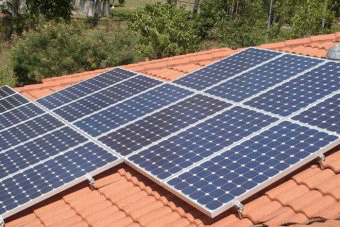 Households to power up to half Australia, zero emissions within reach: CSIRO, The Age, Adam Morton , 6 Dec 16
As the Coalition backs away from a pledge to consider a climate change policy that the energy industry says it needs, a new study is projecting a rapidly growing mass electricity generator for Australia in the decades ahead: the public.
Consumers using rooftop solar panels and batteries will produce between a third and half of Australia’s electricity by mid-century if the right policies are introduced, according to a roadmap from the CSIRO and power and gas transmission body Energy Networks Australia.
The two-year analysis also found an emissions intensity scheme for the electricity sector – a form of carbon trading that was to be considered by a government climate policy review until that plan was abandoned on Tuesday afternoon – would be the cheapest way to cut carbon dioxide emissions.
It suggests it could save customers $200 a year by 2030, while helping create a reliable electricity grid with zero emissions by 2050. Energy Networks chief John Bradley said a low-cost shift to zero emissions would depend on a national climate and energy plan with bipartisan support.
“By contrast, carbon policy which could change dramatically at every election, or differs in every state, is a recipe for a high-cost and less secure electricity service,” Mr Bradley said.
His call for the Coalition and Labor to come together on climate policy echoes that made by bodies representing energy generators and major industrial companies.
The Electricity Network Transformation Roadmap forecasts that up to 10 million households and small businesses would have solar panels, battery storage, smart homes and electric vehicles if pricing and incentives were changed to better reflect demand. This would “transform the grid into a platform more like the internet, where customers can trade and share energy”.
It recommends an emissions intensity scheme for power stations be introduced by 2020, following a similar call by the Climate Change Authority, now dominated by Coalition-appointed board members.
On Tuesday, Environment and Energy Minister Josh Frydenberg backed away from saying the government would consider this sort of scheme as part of a wide-ranging departmental review of climate policy next year. A handful of Coalition backbenchers, including Cory Bernardi and Craig Kelly, had called for any form of carbon pricing to be rejected…….
The report found thermal plants, including coal and gas fossil fuels, would be critical in balancing intermittent renewable energy in the years ahead, but would eventually be replaced by technologies using battery storage and biomass.
Getting there would present significant technical, economic and regulatory challenges. It would transform the system away from its original design – large centralised power stations – to a much more decentralised network.
It said a coordinated plan for 2050 could:
- Make average annual household bills $414 less than they otherwise would have been.
- Cut network costs to consumers by 30 per cent.
- Avoid $16 billion in spending on poles and wires.
- Lead to customers with solar panels, battery storage and electric vehicles earning $2.5 billion a year from network businesses.
The roadmap comes ahead of the Friday release of an interim report into electricity reliability led by chief scientist Alan Finkel, commissioned after South Australia suffered a statewide blackout in September. http://www.theage.com.au/federal-politics/political-news/households-to-power-up-to-half-australia-zero-emissions-within-reach-csiro-20161206-gt4ztf.html
Finkel review of the National Electricity Market – an opportunity to learn from Germany
The terms of reference for the Finkel review recognise the need to integrate energy and climate policy in Australia.
What can Australia learn from Germany’s remarkable energy transition?, https://theconversation.com/what-can-australia-learn-from-germanys-remarkable-energy-transition-69648 The Conversation, December 5, 2016 The Australian government is reviewing our electricity market to make sure it can provide secure and reliable power in a rapidly changing world. Faced with the rise of renewable energy and limits on carbon pollution, The Conversation has asked experts what kind of future awaits the grid.
The Finkel review of the National Electricity Market is an opportunity to consider how Australia can transition its electricity system to be less carbon-intensive.
Germany’s energy transition is often held up as an incredible success story. Starting from a sector relying predominantly on fossil fuels and nuclear energy in the 1990s, renewable energy now provides about 30% of Germany’s electricity.
Germany is on track to achieve its 80% renewable target by 2050. This transformation has been the result of a range of policy measures.
The depth and breadth of these legal and regulatory reforms can provide valuable lessons for Australia. Continue reading
South Australian Labor govt clings to its nuclear waste dream
 Nuclear roadblock warning but door still open, says Tom Kenyon
 http://www.adelaidenow.com.au/news/south-australia/nuclear-roadblock-warning-but-door-still-open-says-tom-kenyon/news-story/e19a89bfb94a87bbe14d2a18d082da0a Adam Langenberg, Political reporter, The Advertiser November 15, 2016 A SOUTH AUSTRALIAN high level nuclear facility looks further off into the distant future after one of its most strident backers outlined a series of roadblocks before a statewide referendum could be held.
“I think if you go to a population with a vague question, should we have a nuclear waste facility in SA, to be honest I think the result of that referendum would be not much better than what we saw from the Citizens Jury,” Mr Kenyon said.
“If it was ever going to happen firstly it would need bipartisan support to at least continue those investigations and continue discussions.
Then you would need to have quite a lot of information, and I would suspect you would need to know how much you were going to get paid and how much it was going to cost you to store and to know that you almost certainly need to know a site and you would need to have most likely an agreement of a community around a site.”
Asked if the Government could expect support of the Parliament to continue those discussions, Mr Kenyon responded “not at the moment”.
Liberal Treasury spokesman Rob Lucas, the first opposition MP to publicly air concerns about the proposal, told the conference the economic risks were “too great”.
“I always thought it was a naive and ill informed view that you would ever get majority support, whether it be from a Citizens Jury or any other process.
“Frankly if you were going to take on this particular challenge it was going to be an issue of leadership where ultimately the government of the day and the Parliament would have to say, we think it’s in the best interests of South Australia and even though there’s a majority view against it; we’re prepared to support it in terms of the public interest.” http://www.adelaidenow.com.au/news/south-australia/nuclear-roadblock-warning-but-door-still-open-says-tom-kenyon/news-story/e19a89bfb94a87bbe14d2a18d082da0a
Australian uranium mining companies going down the gurgler?
 Writing on the wall for Paladin Energy Ltd, The Motley Fool, Mike King – December 1, 2016 Uranium miner Paladin Energy Ltd (ASX: PDN) faces the prospect of being unable to repay US$212 million due in April 2017 and being forced into liquidation.
The troubled company has seen its share price slump more than 65% this year alone. The planned sale of 24% of its Langer Heinrich Mine (LHM) to CNNC Overseas Uranium Holdings (COUH) for US$175 million appears unlikely to complete before the end of 2016. Now Paladin has been forced to consider other ‘contingencies’ to repay the 2017 convertible bonds.
Not only that but Paladin also needs to raise working capital as it struggles to generate positive cash flow with uranium prices trading under US$20 per pound – the lowest prices in more than 12 years. As Paladin admits, that’s a level that no producer in the world can sustainably break even, and most producers are experiencing negative cash flows.
That’s a long way away from Paladin’s all-in cash expenditure of extracting uranium of US$38.75 per pound (lb). Even the company’s C1 cash costs of US$25.88/lb are well above the spot price of uranium. Paladin is forecasting all-in costs of around US$30/lb for the 2017 financial year, but it’s clear that even at that level, the company is going backwards.
Energy Resources of Australia Limited (ASX: ERA), majority owned by Rio Tinto Limited(ASX: RIO) faces a similar prospect to Paladin and is likely to shut up shop in 2021, once it has finished processing stockpiles at its Ranger uranium mine.
The problem for uranium miners around the world is that since the Fukushima nuclear incident in 2011, uranium prices have steadily fallen from above US$60/lb to its current price under US$20/lb……
Paladin faces the prospect of sinking into administration unless it can find a white knight willing to take a minority stake in its mine – or make an outright bid for the whole company.
That appears highly unlikely. http://www.fool.com.au/2016/12/01/writing-on-the-wall-for-paladin-energy-ltd/
Toro Energy, uranium miner, CEO Vanessa Guthrie chucks away the poisoned uranium chalice
 Toro Energy rings in the changes at the top as Dr Vanessa Guthrie departs http://www.proactiveinvestors.com.au/companies/news/169921/toro-energy-rings-in-the-changes-at-the-top-as-dr-vanessa-guthrie-departs-169921.html
Turnbull must reject dirty deal with Adani
Don’t put the interests of big polluters ahead of the interests of the Australian people. PM Malcolm Turnbull appears to be preparing to give multinational mining company Adani $1 billion of Australian taxpayers’ money to fund a coal-carting railway line from the Galilee Basin to the Great Barrier Reef coast.
Media reports today say up to $1 billion of the Northern Australia Infrastructure Facility (NAIF) has been earmarked for the project.
“It seems Prime Minister Turnbull is preparing to put the interests of big polluters ahead of the interests of the Australian people and misuse a billion dollars of public money to support the mega-polluting Carmichael coal project,” said ACF CEO Kelly O’Shanassy.
“This would be a serious misuse of public money, a breach of previous assurances and would turn NAIF into the ‘Dirty Energy Finance Corporation’.
“Adani has a mining licence, but no social licence.
“Any investment in coal in the 21st Century is a dud investment. Australians will lose this money and it will fund the death of the much-loved Great Barrier Reef.
“The Northern Australia Infrastructure Facility (NAIF) is supposed to fund projects that are in the public interest, not coal mines that will create more reef-wrecking climate pollution and jeopardise up to 70,000 jobs that rely on a healthy Great Barrier Reef.
“The NAIF board must release the assessment documents that show how it has determined the environmental and social benefits of this project.
“The government wouldn’t fund SPC Ardmona or the car industry, but it appears willing to fund a billionaire coal company with a dubious environmental record.”
In India, Adani has faced numerous accusations of damaging the environment and failing to comply with regulations and laws.
“If Adani is unable to fund the mine, Australia will be left with a railway to nowhere and an unpaid billion dollar loan,” Ms O’Shanassy said. “Prime Minister Turnbull can choose to entrench Australia’s dependence on a dirty, declining industry or protect the reef and steer us to a brighter, cleaner future.”
Canberra shows off its renewable energy success
 Canberra’s renewable energy facilities host open day, Canberra Times, Stephen Jeffery , 5 Dec 16 Canberra’s renewable energy providers threw their doors open on Saturday to showcase the ways the ACT and southern NSW are helping to reduce carbon emissions.
The Renewable Energy Trail, celebrating 2016 Renewable Energy Day, took Canberrans and tourists to sites across the ACT and surrounding areas of NSW. The day kicked off, under appropriately sunny skies, at the Mount Majura Solar Farm, which began operations this year.
A bus took visitors to Canberra Institute of Technology’s Renewable Energy Skills Centre of Excellence and Renewables Battery Test Centre, before moving on to the “Big Dish” at the Australian National University, a display of electric vehicles in Tuggeranong, and Googong Dam’s mini hydroelectric facility.
A separate bus ventured into NSW, touring the Woodlawn Bioreactor and wind farm.
ACT Environment Minister Mick Gentleman and Climate Change Minister Shane Rattenbury officially opened the event…..The Renewable Energy Trail was held in the same week a report found the ACT well ahead of other Australian states and territories in emission reduction targets.
The ACT also won the Carbon Disclosure Project’s award for “Best Renewable Target” during the week. http://www.canberratimes.com.au/act-news/canberra-life/canberras-renewable-energy-facilities-host-open-day-20161203-gt39xt.html
Northern Territory appoints too many mining representatives to its Mining Advisory Committee
Concerns mining industry over-represented on NT Government-appointed board, ABC News, 4 Dec 16 By Sara Everingham The NT Environmental Defenders Office has raised concerns the mining industry is over-represented on the mining board, which was set up and appointed by the former Country Liberals Government.
A new report revealed that a directive to Glencore’s McArthur River Mine (MRM) by the Department of Primary Industry and Resources — formerly the Northern Territory Mines Department — was overruled by the Government-appointed mining board.
The report by the mine’s independent monitor, the Erias Group, said the NT Mines Department made an order last year after officers on an MRM site visit reported “unapproved works” where waste rock containing metals and salt had been placed in a facility approved for benign material only.
“The use of non-benign material in close proximity to the McArthur River diversion channel and lack of adequate environmental controls represent a risk to the environment,” the department’s officers reported.
The department directed MRM to move the material but MRM appealed against the order to the Mining Board arguing the works were temporary.
The board, now also known as the Mining Advisory Committee, found in MRM’s favour.
The principal lawyer from the NT Environmental Defenders Office, David Morris, said he was concerned the department’s directive had been overruled.
“It’s of concern to me that mining officers who go down and spend a significant amount of time on the site have said ‘we think material has been placed inappropriately, we think that’s putting the environment at risk’ and the Mining Board said ‘well no we’re going to agree with Glencore who’s appealed this decision’,” Mr Morris said………. http://www.abc.net.au/news/2016-12-03/makeup-of-nt-mining-board-questioned/8089756
Public submissions on renewed call for ACT Jupiter wind farm
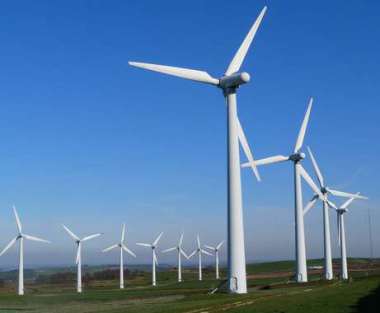 Second time lucky? Jupiter wind farm application lodged again, Canberra Times, 4 Dec 16 Katie Burgess
The company behind the controversial Jupiter wind farm has taken another swing at getting the green light to build 88 wind turbines near Canberra, a year after NSW officials sent them back to the drawing board.
The NSW Department of Planning and Environment struck out EPYC’s application to build the wind farm five kilometres out of the Tarago township last October, after it found the company had not sufficiently addressed environmental and community concerns.
But the joint Australian-Spanish venture has come back to the NSW Department of Environment and Planning with a revised proposal, which has now opened for public consultation.
While the original Jupiter wind farm proposal was to build 100 turbines across 25 rural properties, the new one outlines plans to build 88 turbines across 23 rural properties.
EPYC project manager Ibrahim Eid said the revised environmental impact statement included consultation with community members up to three kilometres away.
But residents of the surrounding regions have vowed to once again fight the proposal, which EPYC has been trying to get off the ground since 2014………
The wind farm will be within 15 kilometres of two operational wind farms, one approved wind farm and a solar farm.
The environmental impact statement acknowledged there could be wind turbines within two kilometres of properties not part of the farm.
It also stated there were 43 threatened fauna species, including the glossy black cockatoo and the spotted-tail quoll, however the turbines, substations and other ancillary buildings would be built on cleared paddocks.
The company will carry out targeted ecological surveys to determine where each wind turbine will sit.
Public submissions on the proposed wind farm close in February. http://www.canberratimes.com.au/act-news/second-time-lucky-jupiter-wind-farm-application-lodged-again-20161130-gt1f9j.html
Rooftop solar energy boom, but warnings on quality
there are companies out there using the rebate wind-down as a “scare tactic” to convince people to invest now. And a lot of these companies, Morris warns, will be pedalling poor quality and “dumb” solar.
The CEC, meanwhile, launched a new campaign “advising people buying solar panels to look for an Approved Solar Retailer to make sure they get the best possible quality and service – and avoid getting a bad deal.”
Another rooftop solar boom – this time with warnings http://reneweconomy.com.au/another-rooftop-solar-boom-time-warnings-35846/By Sophie Vorrath on 1 December 2016 Record low solar panel prices, combined with the ratcheting-down or removal of federal and state policy levers, are sparking a boom in Australia’s residential and commercial solar markets, while also prompting warnings to consumers to avoid the lure of cheap and nasty solar products – and installers. Retailers and wholesalers in the solar PV market have reported experiencing “unprecedented demand” in the month of November, which looks set to continue into December, the first month of the Australian summer. Continue reading
United Nations uphold their ruling in favour of Julian Assange
 UN rejects UK appeal on Assange, Justice for Assange On 30 November 2016, the United Nations rejected the United Kingdom’s attempt to appeal the UN’s February ruling in favour of Julian Assange.
The decision therefore stands and the UK and Sweden are once again required to immediately put an end to Mr. Assange’s arbitrary detention and afford him monetary compensation.
Earlier this year the United Nations concluded the 16 month long case to which the UK was a party. The UK lost, appealed, and today – lost again. The UN instructed the UK and Sweden to take immediate steps to ensure Mr. Assange’s liberty, protection, and enjoyment of fundamental human rights. No steps have been taken, jeopardising Mr. Assange’s life, health and physical integrity, and undermining the UN system of human rights protection.
Now, the United Nations has found that the United Kingdom’s request for review of this decision (filed on March 24) was inadmissible; the United Kingdom has now reached the end of the road in its attempt to overturn the ruling. As a member of the Security Council and the United Nations Human Rights Council, the United Kingdom must respect its commitment to the United Nations, and release Mr. Assange immediately. Now, more than ever, moral leadership is required; maintaining Mr. Assange’s effective detention (which stands at six years as of 7 December, 2016) will only serve to green light future abuses against defenders of free speech and human rights.
Mr. Assange stated “Now that all appeals are exhausted I expect that the UK and Sweden will comply with their international obligations and set me free. It is an obvious and grotesque injustice to detain someone for six years who hasn’t even been charged with an offence.”….. https://justice4assange.com/?rejects
Yingiya Mark Guyula is Confirmed as the Member for Nhulunbuy
 Court of Disputed Returns Dismissed, Yingiya Mark Guyula is Confirmed as the Member for Nhulunbuy
http://www.yingiya.net/news/court-of-disputed-returns-dismissed-yingiya-mark-guyula-is-confirmed-as-the-member-for-nhulunbuy 1 December 2016:
MLA for Nhulunbuy Yingiya Guyula has expressed relief and satisfaction at the dismissal of the Electoral Commissioner’s challenge to his election to the NT Legislative Assembly
by consent orders sought by both parties and made by Justice Southwood today in the Court of Disputed Returns.
““From the moment it was suggested that I might be disqualified from nominating for Parliament
because of my claimed membership of a local government advisory body called the Milingimbi Local Authority,
I have said that I was never a member of that body,” Mr Guyula explained.
“I did not nominate to be a member, I did not consent to being appointed to the Authority by the East Arnhem Regional Council (“EARC”), and I did not even know it had passed a resolution to appoint me.
In fact when I was asked whether I wanted to be nominated and appointed I said no because I was too busy working in remote homeland schools and would not be able to attend regular meetings.”
“Mr Guyula’s lawyer Ken Parish explained that his evidence was not disputed, and
was corroborated by evidence from other Milingimbi community members.
Moreover, the Electoral Commission accepted in submissions to Justice Southwood that Mr Guyula had attended a handful of Authority meetings not as a member of that body but as a djirrikaymirri or senior elder of the Guyula Djambarrbuyngu tribe. …
“Mr Guyula said that the most pleasing aspect of today’s result was that he would now be
free to focus completely on providing effective representation for the people of Nhulunbuy
and North East Arnhem Land in Parliament over the next 4 years.
“I stood for Parliament with the aim of helping to create harmony, understanding and mutual respect between Yolngu and Balanda people, laws and institutions.
Today’s Court decision is one small but important step on the road to achieving that aim,” Mr Guyula said.”
Need to examine Australia’s electricity system – Victorian network fault
 Vic network fault causes outages in South Australia, conservatives blame renewables, REneweconomy By Giles Parkinson on 1 December 2016 A major fault on the Victorian transmission network overnight caused power outages in South Australia for up to an hour, and forced the Portland smelter in Victoria to also go offline.
The Australian Energy Market Operator (AEMO) said that at 01:33 AEDT on December 1, the South Australian power system separated from Victoria, due to an unknown issue on the Victorian transmission network
“The root cause still under investigation,” AEMO said, but added “it is important to note that this event was not related to the Black System event in South Australia on September 28.”
It is believed that the fault lay in an Ausnet feeder line to the Heywood Interconnector in Western Victoria, when a transmission line conductor “hit the ground.”…….
questions have been raised about the decisions by the market operator, which chose to take no preventative measures, and for many underlined the fragility of a centralised grid, and the risks of storms, bushfires and other outages on an elongated network.
It has led to calls for a think about the design of electricity markets, and a push to localised grid and local renewable generation. AGL CEO Andrew Vesey, and many others, said the best security could be offered by more localised generation, and that meant renewable energy, and more storage. http://reneweconomy.com.au/vic-network-fault-causes-outages-in-south-australia-conservatives-blame-renewables-84808/
Smart planning now will enable reliable renewable electricity
Reliable renewable electricity is possible if we make smart decisions now, The Conversation, December 1, 2016 The Australian government is reviewing our electricity market to make sure it can provide secure and reliable power in a rapidly changing world. Faced with the rise of renewable energy and limits on carbon pollution, The Conversation has asked experts what kind of future awaits the grid…….
Findings from research overseas and in Australia show people are more likely to die during power outages. This is because of the increased risk of accidents, extreme cold or heat, food poisoning and communications breakdowns that can delay emergency responders.
So whatever our electricity grid looks like in the future, it will need to be reliable………
The cost of reliability
Our recent research took a highly conservative approach to testing the cost question.
We assumed that there would be no future improvements in technology from what is currently viable and no future decrease in electricity demand. We also used renewable resource supply (sunshine and wind) from 2010 because this was one of the most challenging years for renewables.
Our findings indeed showed that strategies to manage the variability of renewable resources were effective in a 100% renewable energy mix of rooftop solar, wind, large-scale solar, hydro and biofuels.
In one scenario, for instance, current demand could be matched with supply at a cost of producing electricity around 20c per kilowatt hour (the current levelised cost of coal-fired electricity is 7.8-9.1c per kWh), with overall installed capacity of 162 gigawatts (2.5 to 3 times what is installed today), relatively low transmission losses and with less than 20% wasted electricity.
The interconnected eastern Australian transmission grid would need to be 2.5 times the current size, and would need to be linked to the grids in Western Australia and the Northern Territory.
Recent developments look positive for renewables
But recent developments mean that the costs and constraints for reliable renewable energy are not likely to be as conservative as our scenario.
Battery storage has benefited from rapid improvements in technology even in the short period since our research in 2015. Significant battery storage could even mean a restructuring of our largely centralised (big power stations) network to a more decentralised one that includes rooftop solar panels and battery storage.
Decentralisation of power generation opens up the possibility of using waste heat from power generation in buildings to reduce power demand (such as tri-generation).
Our research also indicates that investing in more dispatchable technologies can reduce wasted energy, the cost of energy, the grid expansion required, and overall generation capacity.
With the price of renewables decreasing, the transition to renewables may have benefits for power producers and power consumers.
Future constraints and opportunities for renewable energy are uncertain, but we can’t wait for perfect certainty before we plan and act. In Australia we have some of the world’s leading experts in the field with a range of sophisticated modelling capabilities at hand. These assets could be the foundation of collaboration with policymakers to transition to reliable renewable energy. https://theconversation.com/reliable-renewable-electricity-is-possible-if-we-make-smart-decisions-now-68585

1 This month
17 October, Free Public Talk on Nuclear Issues in South Australia
David Noonan will speak on public interest concerns over the new Roxby Downs Indenture Act 2026 on BHP copper-uranium mining and ore processing in SA, and on how AUKUS may face SA with a High-Level nuclear waste agenda.
Dr Jim Green will discuss international developments in the field of nuclear power including ‘small modular reactors’ and Generation 4 ‘advanced’ nuclear reactor concepts.


Help Aunty Sue Protect Her Land and Sacred Sites From Destructive Rocket Testing.
.

Australians deserve the truth
about
AUKUS – https://aukuspublicinquiry.com/

PETITION – To: Prime Minister Anthony Albanese and the Australian Labor Government

of the week – Australians for War Powers Reform (AWPR)
To see nuclear-related stories in greater depth and intensity

