Prep work to start next week on Kimba Nuclear Waste dump, despite Government assurances not to pre-empt court case

https://www.nationaltribune.com.au/prep-work-to-start-next-week-on-kimba-nuclear-waste-dump-despite-government-assurances-not-to-pre-empt-court-case/?fbclid=IwAR1twuStY12rRYgZ-APTeOHNplE3dAStSxXM19ZZN1KQEkB7S957Bh8UfxQ 11 Nov 2022 Australian Greens
In a letter from Minister for Resources, Madeleine King to Greens Senator Barbara Pocock, it is revealed that despite the ongoing court case against the Barngarla Determination Aboriginal Corporation (BDAC), preparatory works will be going ahead starting next week.
In Senate estimates last night, Senator Pocock pushed the Senator representing the Minister for Resources, Tim Ayres, for answers around the future of the Kimba Site.
SA Labor does not support the dump, the SA people do not support the dump and have not been properly consulted, the Traditional Owners have unequivocally opposed it at every opportunity. The Government is continuing to spend $50 000 per week of taxpayer money in legal costs for something with no social license.
Senator Tim Ayres used the ongoing court case to dodge Senator Pocock’s questioning throughout estimates. He stated that the Government would respect and not pre-empt the outcome of the case. Despite this, it’s clear initial works will be proceeding as early as next week as per Minister King’s Letter.
It’s clear the process of site selection was mishandled. The Labor government now has the opportunity to halt works and review the decisions made previously, to show the Kimba community and the Barngarla people that they are committed to proper consultation and respecting first nations voice and rights.
“Minister for Resources, Madeleine King, has today informed me that preparatory works will be starting on the Kimba Site next week. Although it is not construction of the facility yet, this is a significant escalation that goes against reassurance in last nights estimates that court proceedings will be respected.
“Throughout estimates questioning last night, Senator Tim Ayres repeatedly stated that they would respect and not pre-empt the outcome of the court case. The letter I received right before estimates is a direct contradiction to this statement.
“I am deeply concerned that these preparatory works are going ahead.
“The site selection process was done without proper community consultation. This is a terrible decision inherited from the previous government. Labor can still turn this around. They must stay true to their word and immediately halt all works.
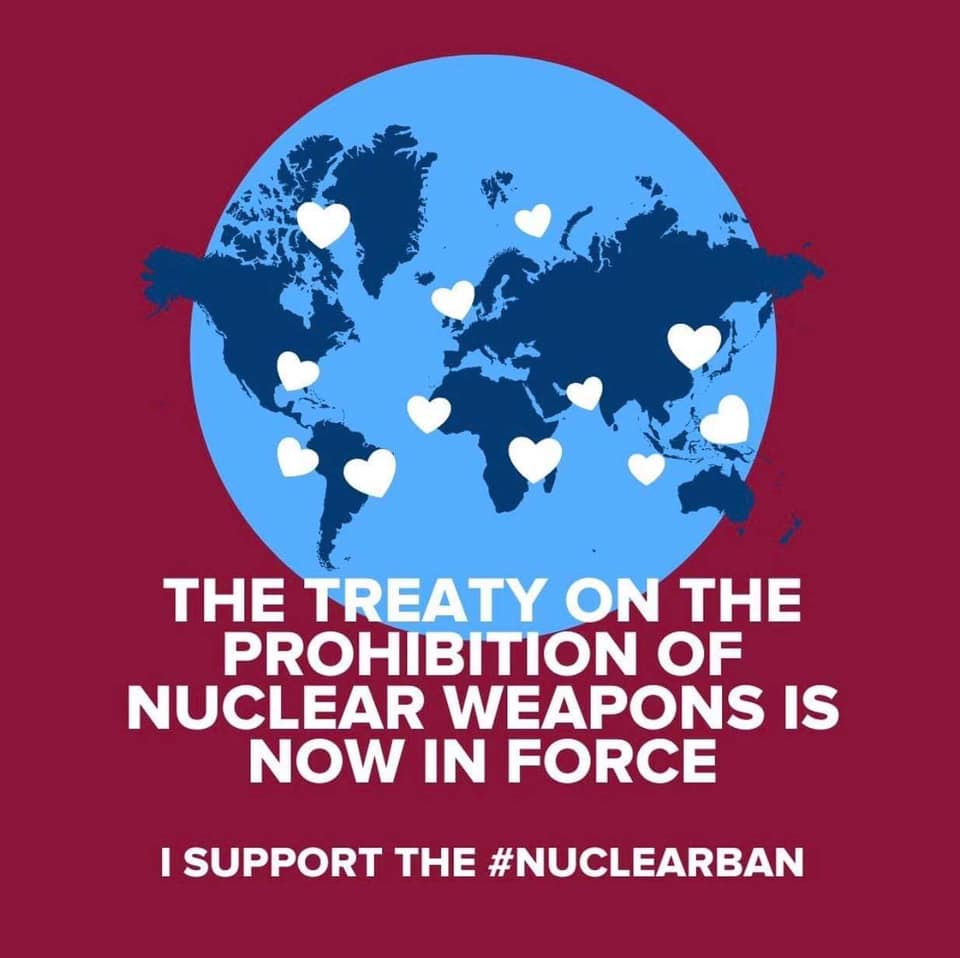
Australia’s reassessment of the Treaty on the Prohibition of Nuclear Weapons
https://www.icanw.org/australia_tpnw 15 Nov 22,
At the United Nations in October, Australia formally ended five years of opposition to the 2017 Treaty on the Prohibition of Nuclear Weapons. Rather than voting against an annual UN General Assembly resolution urging countries to join the landmark treaty – as it had done in previous years under its former conservative government – Australia abstained for the first time. Campaigners welcomed this shift as a “small but important step forward”.
Indonesia and New Zealand, two of Australia’s closest neighbours, also praised the move. The Indonesian ambassador to Canberra, Siswo Pramono, said the change would “give encouragement to others to believe that we are on the right path” in seeking a world free of nuclear weapons: “Your voice matters. Your stance matters.” New Zealand’s foreign ministry said it was “pleased to observe a positive shift” in Australia’s position and “would, of course, welcome any new ratifications as an important step to achieving a nuclear-weapon-free world”.
But the United States warned Australia against joining the treaty, arguing it could hamper defence arrangements with its allies, as the treaty “would not allow for US extended deterrence relationships, which are still necessary for international peace and security”. It added: “The United States does not believe that progress toward nuclear disarmament can be decoupled from the prevailing security threats in today’s world.”

ICAN Australia’s director, Gem Romuld, said Australia must make its own decision on joining the TPNW based on the will of the Australian people. “It’s no surprise that the US don’t want their allies to sign on, because if we claim protection from their so-called ‘nuclear umbrella’ then it helps justify their continued retention and possible use of these illegal and indiscriminate weapons,” she said. An opinion poll in March found 76 per cent of Australians support signing the TPNW, with 6 per cent opposed and 18 per cent undecided.
Until last month’s UN vote, Australia was the only member of a regional nuclear-weapon-free zone treaty to oppose the annual resolution on the TPNW. Nuclear-weapon-free zones cover 116 countries, including all those in Southeast Asia and the South Pacific – many of which were instrumental in the negotiation and adoption of the TPNW in 2017. Under the 1985 South Pacific Nuclear Free Zone Treaty, Australia accepted a legal obligation never to acquire nuclear weapons or host them on its territory.
Following the election of a Labor government this May, Australia began a reassessment of its position on the TPNW. According to the foreign ministry, it is examining a number of important questions “to inform [Australia’s] approach to the TPNW in close consultation with partners, and civil society stakeholders”. Specifically, it is “taking account of the need to ensure an effective verification and enforcement architecture, interaction of the [TPNW] with the Nuclear Non-Proliferation Treaty (NPT) and achieving universal support”.
The review stems from a resolution adopted by the Australian Labor Party at its national conference in 2018, which committed the party to sign and ratify the TPNW in government after considering the above factors. Anthony Albanese, the Labor leader and new prime minister, initiated the resolution. He said at the time: “Our commitment to sign and ratify the nuclear weapon ban treaty in government is Labor at its best.” The party reaffirmed its position in 2021.
Three in four federal Labor parliamentarians, including Mr Albanese, have also individually pledged to work for Australia’s signature and ratification of the treaty. So too have parliamentarians from the Australian Greens and other parties. In September, 10 independent federal parliamentarians issued a joint statement urging the Labor government to “make use of every opportunity to advance Australia’s position in support of the [TPNW]”, and a cross-party parliamentary friendship group for the TPNW was formed.
As evidence of the Labor government’s “constructive engagement” with the TPNW, Australia attended as an observer the first meeting of states parties to the TPNW in Vienna in June. Susan Templeman, a Labor parliamentarian, headed the official delegation. Ahead of the meeting, 55 former Australian ambassadors and high commissioners sent a letter to the prime minister urging him to act swiftly on Labor’s pre-election pledge to sign and ratify the treaty.
“Membership of the TPNW is compatible with Australia’s alliance commitments and will make a positive contribution to the security objectives we share,” the ex-diplomats wrote. “We have previously signed and ratified treaties – on landmines, cluster munitions and nuclear testing – to which the United States is not a party.” Notably, three other Asia–Pacific countries designated by the United States as major non-NATO allies are TPNW states parties: New Zealand, the Philippines and Thailand.
According to the Albanese government, it “shares the ambition of TPNW states parties of a world without nuclear weapons and is committed to engaging constructively to identify possible pathways towards nuclear disarmament”. Its decision to attend the first meeting of states parties, its abstention on the recent UN vote, and its ongoing engagement with civil society organisations, including ICAN, reflect this commitment.
While a formal cabinet decision to support and join the TPNW is still pending, the government’s initial steps in this direction are cause for optimism. “We look forward to a formal decision by the Albanese government to sign and ratify the TPNW – in line with its pre-election pledge,” said Ms Romuld. “The overwhelming majority of Australians support joining this treaty, and progress towards disarmament is more urgent than ever.”
Australia’s Science Minister Melissa Price closer to the Liberal Opposition than to Labor, as she backs small nuclear reactors to beat climate change,
Cain Andrews, Broome Advertiser13 November 2022
https://thewest.com.au/news/broome-advertiser/melissa-price-backs-nuclear-option-at-kimberley-economic-forum–c-8830423?utm_source=csp&utm_medium=portal&utm_campaign=Isentia&token=I%2B8Lt5WlhmDNscyeuxIQVQFzxLQ5%2B1qpkHjt6nRSfUzPC3SzvTQhzcbYGKkZDsSmzHZw4gVfNhHWTYBPdyPXwA%3D%3D
Durack MP Melissa Price called for Australia to adopt nuclear power to tackle climate change.
Speaking at the Kimberley Economic Forum on November 10, Ms Price said that the Coalition failed to effectively communicate its climate policy heading into the election, and the Opposition was now calling for an “informed and honest debate” on how nuclear technologies can be part of Australia’s decarbonisation mix over the next four years.
Echoing Federal Opposition Leader Peter Dutton, Ms Price cited new reactor technologies, Australia’s large uranium deposits and the potential to lower power prices as key factors in the Coalition’s advocacy for nuclear energy.
“Australians are hungry for affordable, reliable and secure sources of power that emit zero emissions,” Ms Price said.
“And while renewables play a huge part in painting this picture, it’s at times when the wind is not blowing and the sun’s not shining, that nuclear could play its part.
“In fact, there’s over 70 designs of small modular reactors that are currently in development or construction in 18 separate countries.”
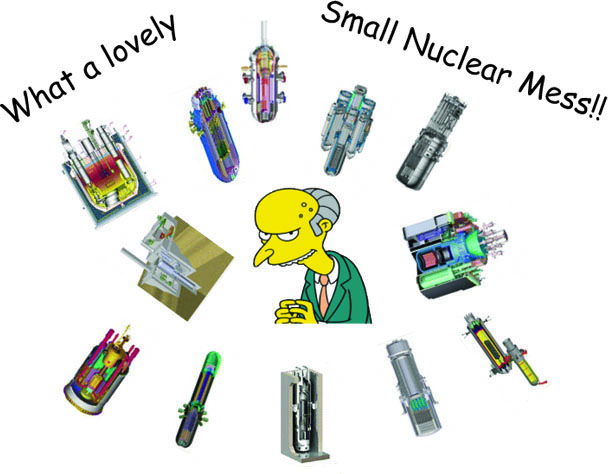
Despite her comments, one of Australia’s leading scientific agencies, the Commonwealth Scientific and Industrial Research Organisation , still views nuclear power as a non-starter, even with new reactor technologies.
A CSIRO report released in June found there was “no prospect” of nuclear small modular reactors being introduced to Australia in the next decade given the technology’s “commercial immaturity and high cost”.
It also found renewables such as solar and wind remained the “cheapest new-build electricity generation option in Australia”.
The Australian nuclear lobby is at it again. Nine right-wing rural senators push to change the laws on nuclear activities
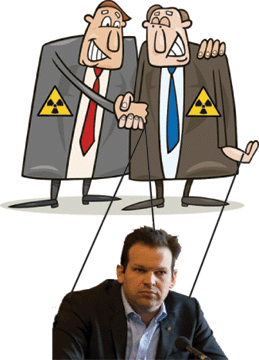
Senator Matt Canavan has a chequered history when it comes to his attitudes and statements on energy and resources
Sept 2021 Canavan cold on the push for nuclear power – and talked up the prospects of coal exports. “Obviously, if we can’t find a long-term solution for that level of waste it’s pretty hard to fathom that we could go beyond that for the production of nuclear energy that does produce a larger amount and more waste of a higher category to manage.”
Augus 31 21 Canavan tweeted called on Australia to boycott Glasgow, labelling the conference a “sham”
August 28 21 – lead the charge in his party’s anti-science war, with the CSIRO a main target
August 11 21 “Myself and Member for Flynn, Ken O’Dowd, we’re happy to have a nuclear power station in our backyard.”
Canavan was called out, in March 21 for his inaccurate hype about small nuclear reactors
.
“On 27 October 2022 the Senate referred the Environment and Other Legislation Amendment (Removing Nuclear Energy Prohibitions) Bill 2022 to the Environment and Communications Legislation Committee for inquiry and report by 31 March 2023.
The close date for submissions is 12 December 2022.
About this inquiry:
The bill would amend the Australian Radiation Protection and Nuclear Safety Act 1998 to remove the prohibition on the construction or operation of certain nuclear installations; and Environment Protection and Biodiversity Conservation Act 1999 to remove the prohibition on the Minister for Environment and Water declaring, approving or considering actions relating to the construction or operation of certain nuclear installations. https://www.aph.gov.au/Parliamentary_Business/Committees/Senate/Environment_and_Communications/Nuclearprohibitions?fbclid=IwAR1ZJyT5tShsXWXm9q2XGv4aHPnN7r_gj6V1VNNNmET3YAfCQWG7RSJ21bQ
The leader is this push is Senator Matt Canavan, Strangely, Canavan resigned from the task of being in charge of the nuclear waste dump program, in order to pursue his own politcal ambitions in a spill in the National Party.
Others include Jacinta Yangapi Nampijinpa Price– Country Liberal Party, (Northern Territory)
David Julian Fawcett – Liberal Party, (SA), Alex Antic – Liberal (SA) David Van -Liberal Party (Victoria), Ross Cadel – National Party (NSW), Gerard Rennick – Liberal National Party ( Queensland)
·Note from Kazzi Jai – at Fight to stop a nuclear waste dump in South Australia
I’ll get back to you on this, but judging by last Thursday’s Senate Estimates, it sounds like there is again a push for nuclear energy by vested interests….Seems people like Matt Canavan – the Senator who RESIGNED from being Minister in charge of the dump SO THAT HE COULD PURSUE HIS OWN POLITICAL AMBITIONS in a spill in the Nats….and now crows about putting SCIENCE into these debates AND NOT POLITICS – absolutely LAUGHABLE….anyway he OPENED the Global Uranium Conference 2022 last week
AND he was in my opinion disruptive in the Senate Estimates sitting, interjecting when Minister Ayres was answering a question FROM A DIFFERENT SENATOR! Matt Canavan was given A LOT OF LATTITUDE in my opinion from the Seat…..GIVEN ALSO THAT BOTH HOUSES OF PARLIAMENT ARE NOT RULED BY THE COALITION! Seems OLD HABITS die hard!
The definitive case against nuclear subs
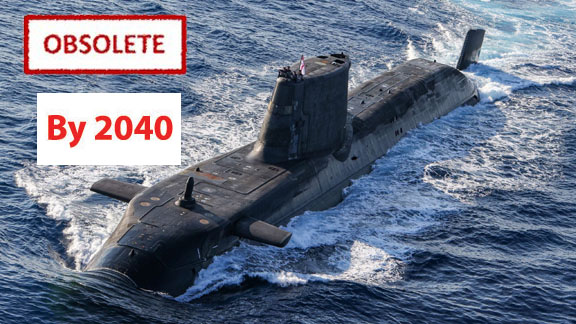
Australia needs submarines, but conventional ones are more than adequate for the nation’s security. Australia’s north is archipelagic, which means smaller, shorter-ranged submarines can close maritime avenues of approach.
Australia needs submarines, but conventional ones are more than adequate for the nation’s security. Australia’s north is archipelagic, which means smaller, shorter-ranged submarines can close maritime avenues of approach.
The Saturday Paper, Albert Palazzo -adjunct professor at UNSW Canberra. He was a former director of war studies for the Australian Army. November 12, 2022
It’s more than a year since Australia scuttled its submarine deal with France in favour of the nuclear-powered submarine arrangement Scott Morrison announced as part of the AUKUS agreement. There’s been a change of government and more announcing, yet any real detail on why we need such boats, how we’ll get them, which ones they’ll be and how much they’ll cost remains unknown. What has become increasingly clear, however, is that these warships are a massive boondoggle for which there is little strategic justification.
Australia maintains its defence forces to provide for the nation’s security. Every capability the Australian Defence Force acquires undergoes a detailed decision process that includes an examination of how the weapon meets national security requirements. With the nuclear-powered submarine program, however, Australia’s starting point was an announcement confirming the acquisition and the AUKUS agreement, an order of proceedings that conveniently bypassed the messy and challenging aspects of justification for the purchase.
Perhaps skipping this phase was necessary because the rationale given for the acquisition is unsound. At best, it is a desire to be seen to be supporting the ANZUS Treaty. What is not being asked is whether support for the alliance should be the main basis for the acquisition of such expensive platforms with such narrow utility.
Like a kid in a lolly shop, Australia has been given permission to buy the biggest treat on display … What is missed, however, is that being in the inner sanctum generates a massive obligation – and some day that bill may fall due.
What does Australia intend to do with its fleet of nuclear-powered submarines? The answer seems to be that we’ll project power into the East and South China seas, in order to deter our largest trading partner, China, from taking actions inimical to Australian and American interests.
If China is a threat today, why is the government planning to acquire a platform that will not be available for 15 years or more? Shouldn’t the priority be on more readily available weapons? These would include off-the-shelf conventional submarines, additional long-range strike missiles, and drones of all kinds.
Even once Australia has acquired its entire fleet of eight submarines, only two or three are likely to be available for operations at any one time. Deterrence necessitates the ability to intimidate one’s opponent. China is a large country with great industrial depth and a population accustomed to hardship. It also has 66 submarines of its own and more on the way. It is hubris to expect Australia will be able to intimidate a great power, at least on its own.
More worryingly, the seas in which Australia aims to operate are within China’s anti-access/area denial zone, an area guarded by missiles, mines, aircraft and ships, and of such lethality that even the United States is unsure it could penetrate without massive losses. Even if our future submarines did get inside this defensive zone, they would not last long. Essentially, these submarines should not be expected to return home.
Survivability is an important criterion for such an expensive purchase. Enthusiasts point to the better survival potential of nuclear-powered submarines because they remain submerged for longer periods, thereby making detection harder. By contrast, conventional subs must periodically surface to recharge their batteries. But this is an advantage that is fast becoming irrelevant. Sensor technology is improving and becoming pervasive, as demonstrated daily in the war in Ukraine. It is a very big gamble to act on a presumption that sub-surface sensors will not improve in the 15 to 20 years before Australia’s submarines become operational. In fact, a study from Australian National University’s National Security College expects that before 2050 the oceans will become fully transparent to hunters from above.
Any defensive advantage currently possessed by nuclear-powered submarines will be gone.
More questions need to be asked: What is the strategic benefit of being able to operate off the Chinese coast? How do nuclear-powered submarines improve Australia’s security? And are there better options for the nation’s defence?
The answers to the first two questions are: “There is none” and “They don’t.” The third answer is: “Yes, there are indeed better options.” Australia needs submarines, but conventional ones are more than adequate for the nation’s security. Australia’s north is archipelagic, which means smaller, shorter-ranged submarines can close maritime avenues of approach. …………
Supporters of the nuclear-powered submarine pay too little attention to the project’s opportunity cost. According to experts at the Australian Strategic Policy Institute, the eight planned submarines will cost at least $116 billion, and likely much more – upwards of $200 billion, according to some analysts. Australia needs submarines, but conventional ones are more than adequate for the nation’s security. Australia’s north is archipelagic, which means smaller, shorter-ranged submarines can close maritime avenues of approach………………………….. more https://www.thesaturdaypaper.com.au/opinion/topic/2022/11/12/the-definitive-case-against-nuclear-subs
Memo G20 – there is a greater enemy than China to fight
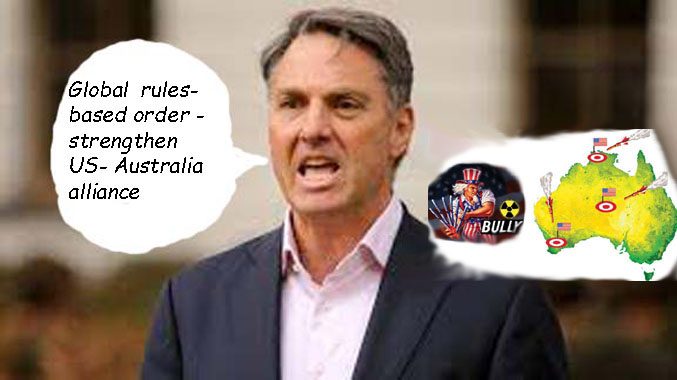
But Australia’s biggest diplomatic effort is going into creating a bifurcated world, preparing to fight another war for another imperial power, surrendering our sovereignty and our military in the process – and happy to remain in the rear on climate.
The Albanese Government shows no sign of changing course, plunging ahead with Australia’s biggest defence spend – submarines designed to sit off China’s coast as part of an offensive force – and hosting American long-range strategic bombers.
Michael Pascoe, The New Daily, 12 Nov 22,
When Earth faces an existential threat in the movies – aliens, rogue asteroids, that sort of thing – human beings unite to fight Armageddon.
Turns out real life isn’t like that.
Right now our quality of life and, for many millions, perhaps billions of people, their actual lives are in imminent danger. So what policy is Australia championing in the face of global disaster?
As a middle power that, in the past, has sometimes punched above its weight, what influence are we trying to exert to save the world? Unite and fight the killer aliens? Pool our talents to divert the asteroid? Nah.
We’re pushing for a hopelessly divided world, ignoring the real problem to fiddle about with less challenging matters, concentrating on supporting one superpower’s economic interests over another.
Tipping Points
Earth is approaching horrific climate change tipping points. It’s not a matter of an extra few tenths of a degree, some more monster bushfires and extra floods.
It’s about sudden collapse in the systems that sustain us.
But Australia’s biggest diplomatic effort is going into creating a bifurcated world, preparing to fight another war for another imperial power, surrendering our sovereignty and our military in the process – and happy to remain in the rear on climate.
The United States’ determination to exert its global primacy isn’t the main game. Much of the world understands that, but not our insular Anglosphere and certainly not the group think that pervades Canberra.
Once Australia hoped to be a bridge between the US and China. That hope was dashed by the gross ineptitude and crass stupidity of the Morrison government, leaping at the opportunity to out Sinophobe the Americans, locking Australia into America’s confrontational agenda.
The Albanese Government shows no sign of changing course, plunging ahead with Australia’s biggest defence spend – submarines designed to sit off China’s coast as part of an offensive force – and hosting American long-range strategic bombers.
“It makes sense to actually normalise the relationships,” Mr Albanese said before heading off to Asia for ASEAN and G-20 summits and, hopefully, a meeting with President Xi.
“We want to see a stabilisation in the relationship.”
Upping the ante
Upping the offensive weaponry ante seems a strange way of normalising a relationship while demanding China roll back the trade penalties imposed after Morrison’s diplomatic blundering. (And regarding Mr Albanese’s alleged “$20 billion” trade sanctions – the figure is bogus. Our wine industry has certainly been hurt, but our other commodity exports have had no trouble finding other markets paying just as well, if not better. Ask any coal miner.)
Back in the main game, climate change doesn’t seem to figure as a headline issue for Mr Albanese at the G20. And it seems not to be for US President Biden ahead of his meeting with President Xi. He is more interested in establishing rules for dividing the world.
Meanwhile, the COP27 climate change summit is underway in Egypt. All the news coming out of it ranges from bad to worse.
Joe Biden is dropping in on his way to Asia. Prime Minister Albanese is skipping it. The approaching climate change tipping points are a very real threat to Australia. Despite what you’re likely to hear on television and read in the mainstream newspapers, China is not.
We won’t be serious about climate change until it is seen as a human problem, not one with national borders. Like COVID, borders don’t register with greenhouse gases. One of the issues at COP27 is rich nations (high carbon intensity people) needing to pay to help poor nations (low carbon intensity people) move to sustainable energy.
Caught in bizarre inertia
Australians are among the world’s very worst polluters. Our previous and present governments prefer not to look at the problem like that, the Albanese government is content with being a little less worse on climate than the coalition governments of the previous nine years………… https://thenewdaily.com.au/opinion/2022/11/12/michael-pascoe-g20-china/
Climate change, not China, is Australia’s real security danger

The definitive case against nuclear subs The Saturday Paper, Albert Palazzo -adjunct professor at UNSW Canberra. He was a former director of war studies for the Australian Army. November 12, 2022 “……………………………………………………………. Too many security officials hold to the mistaken belief that China is the most significant threat Australia faces. In fact, climate change deserves the top spot. Climate scientists, United Nations officials and military commanders themselves, including current US Secretary of Defense Lloyd Austin, consider climate change an existential threat to survival. Any threat posed by China is much more limited. At worst, China’s challenge to the US-led world order could result in America’s withdrawal from the Western Pacific. Climate change could lead to the end of the human project and take countless other species down with us.
China represents, at most, a second-order threat, but it is China that draws the obsessive focus of much of the current generation of security thinkers. It does not make sense for Australia to invest so much in a weapon system that has no utility against the nation’s most dangerous threat, yet this is what is happening.
Advocates of nuclear-powered submarines also propose that constructing these vessels in Adelaide will help sustain a sovereign shipbuilding industry. In fact, the opposite is the likely result. Once in service these vessels will actually increase Australia’s dependence on the US and foreign contractors. This is because many of the sub’s critical components, weapons and systems will be made by foreign parties. Australian sailors might even need shadow US sailors to co-staff technical positions until Australia generates enough nuclear-savvy personnel of its own.
The government has announced it will invest between $168 billion and $183 billion in what it has called a national naval shipbuilding enterprise, with the goal of sustaining and growing a domestic shipbuilding capability and securing Australian jobs for the future. Such a capability is a noble goal, but what has been left unexplained is why it should be such a priority compared with foreign-dominated industries that are more critical to the nation’s future wellbeing.
Last summer, for example, Australian transport risked grinding to a halt as a result of the urea crisis, which led to a serious shortage of AdBlue, a vital diesel fuel additive. Without AdBlue, the nation’s fleet of long-haul trucks would have stopped moving, resulting in supermarkets running out of food, farmers not harvesting their crops and the mining industry coming to a halt. Yet there has been no talk of taxpayer-supported AdBlue production in Australia. Similarly, many medicines are imported, as are a host of important everyday items, such as baking powder and matches. Unlike shipbuilding, these industries apparently warrant no support.
If one wanted a truly sovereign defence industry, then the product that might mandate the level of support proposed for the subs is microchips. Virtually all military and civilian technology contains chips, yet Australia is happy to remain fully reliant on overseas suppliers for this most important of components. Establishing a domestic industry would require a huge subsidy, as well as additional investment in tertiary education and precursor manufacturing processes. Without these chips, however, no weapon system is truly sovereign.
So why the nuclear-powered subs, if they make so little sense? The obvious answer is to support the alliance. Instead of aiming for self-reliance, Australia has always preferred to seek the protection of a great power. But there is another reason: like a kid in a lolly shop, Australia has been given permission to buy the biggest treat on display. Nuclear-powered subs are one of America’s most closely guarded technologies. If Australia gets them, it will be a clear sign that, like Britain, we have been admitted to a very exclusive club, the inner sanctum of US security. What is missed, however, is that being in the inner sanctum generates a massive obligation – and some day that bill may fall due. https://www.thesaturdaypaper.com.au/opinion/topic/2022/11/12/the-definitive-case-against-nuclear-subs
Internal briefing reveals Northern Territory government approach to defence regarding AUKUS nuclear submarines
ABC By Jacqueline Breen 8 Nov 22
The Northern Territory government quietly approached the defence department seeking to discuss Australia’s nuclear submarine program, according to internal briefing documents.
Key points:
- Defence says it initiated talks with ‘priority’ states, while the NT approached the department for talks
- The NT government says a review of the Top End’s ‘suitability and readiness’ is underway
- A government advisor says nuclear submarines from the AUKUS partners could rotate through Darwin
Amid rising tensions in the Indo-Pacific region, Australia last year announced plans to build a fleet of nuclear submarines as part of the AUKUS defence pact with the United States and United Kingdom.
The NT’s interest in the nuclear submarines has been revealed in a defence department briefing given to the incoming Albanese government after the May election.
The briefing was released under Freedom of Information laws in September, but the NT’s approach to the department’s Nuclear-Powered Submarines Taskforce has not been previously reported.
Large parts of the undated brief were redacted but a short section on “stakeholder engagement” was published in full…………………………………
The ABC asked what the NT government had sought to discuss with the taskforce, including whether it included the prospect of hosting the nuclear submarines in Darwin harbour.
A spokesperson for Chief Minister Natasha Fyles said: “The NT government is undertaking a review to assess the Territory’s suitability and readiness to support the Federal Government.”………………….
Defence hints at ‘services and support’ that might be needed in Darwin harbour
Visiting Australian and international submarines are seen periodically in Darwin harbour.
But it is generally considered an unfavourable training ground or deployment point because of the long stretches of shallow waters stretching out from the coast.
A shortlist of three potential locations for a new base for the nuclear submarines — all of them on the east coast — was announced in the lead up to the federal election…………………………
US and UK nuclear subs should rotate through Darwin, advisor says
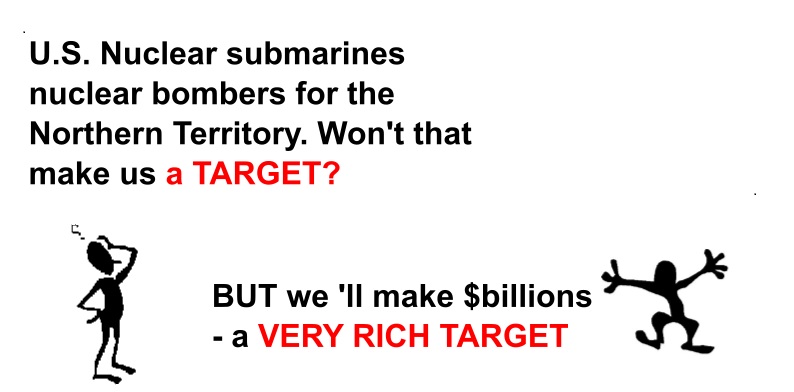
Last week, Four Corners revealed plans for the deployment of up to six nuclear-capable American B-52 bombers in the Top End, as part of an ongoing expansion of military activity in Australia’s north.
Following the report, deputy chief minister Nicole Manison was asked whether the deployment would put the NT at greater risk from potential adversaries………..
Defence and national security are among the key “growth” sectors the NT government hopes will drive its ambitious push to achieve a $40 billion economy by 2030.
To help maximise defence investment in the Top End, Labor created the Canberra-based position of Defence and National Security Advocate to lobby government and industry on the NT’s behalf.
The current advocate, defence analyst Alan Dupont, declined an interview request.
But he has previously argued for an NT role in the transition to nuclear boats, which may not be ready before Australia’s current conventional fleet needs replacing.
“The navy’s nuclear-powered submarines are unlikely to be in the water much before 2040,” he wrote after the AUKUS deal was announced.
“Having our submariners train and operate as joint crews on American and British nuclear submarines rotating through Darwin and Perth would help fill the looming submarine capability gap.” https://www.abc.net.au/news/2022-11-08/nt-govt-seeking-involvement-aukus-nuclear-submarine-program/101585724
AUKUS and nuclear submarines: Defence Minister Richard Marles sets Australia’s course in lockstep with USA-UK’s animosity to China.
the United States wants to build the first several nuclear-powered submarines for Australia and provide it with a submarine fleet by the mid-2030s in response to China’s growing military power.
Australia Sets New Defense Course To Establish Nuclear Submarines Fleet – Defense Minister

https://eurasiantimes.com/australia-sets-new-defense-course-to-establish-nuclear-submarines/—By EurAsian Times Desk November 8, 2022
Australia has set the course of its next defense strategy, which includes the development of nuclear-powered submarines to repel attacks far from the country’s shores, Australian Defense Minister Richard Marles said on Tuesday.
“Increasingly, we are going to need to think about our Defence Force in terms of being able to provide the country with impactful projection, meaning an ability to hold an adversary at risk much further from our shores across the full spectrum of proportionate response,” Marles said, delivering a speech at a university in Canberra, as quoted by the Australian Financial Review newspaper.
The minister also said that the new defense strategy relies on the establishment of a submarine fleet in cooperation with the United States and the United Kingdom within the AUKUS trilateral partnership.
Australia, the US, and the UK announced the AUKUS defense partnership in September 2021. The first initiative announced under the AUKUS pact was the development of nuclear-powered submarine technology for the Royal Australian Navy, which prompted the Australian government to abandon a $66 billion agreement with France’s Naval Group company for the construction of diesel-electric submarines.
Earlier, the Wall Street Journal had reported that the Biden administration is in the middle of discussions to expedite the construction of Australia’s first nuclear-powered submarines as guaranteed in the AUKUS defense pact.
The report said on Friday, citing Western officials, that the United States wants to build the first several nuclear-powered submarines for Australia and provide it with a submarine fleet by the mid-2030s in response to China’s growing military power.
The United States’ recommendation has not yet been formally approved, but a final decision on this matter is expected in March, the report said.
The report also highlighted the challenges the United States would face to complete the task, including the need to secure billions of dollars to expand its submarine-production capacity and a contribution from Australia to back the effort.
The White House said in a press release that Australia, the United Kingdom, and the United States – the countries that comprise the AUKUS security pact – have made significant progress toward ensuring that Australia would acquire conventionally armed, nuclear-powered submarines. The AUKUS allies will provide the submarines at the earliest possible date, the release said.
In September, the three allies announced the new trilateral security partnership, forcing Australia to abandon its $66 billion contract with France to receive 12 state-of-the-art conventionally-powered attack submarines from the United States.
In May, the Chinese Foreign Ministry said the AUKUS security pact is provoking an arms race in the South Pacific without any consultation with island countries of the region.
China believes that the AUKUS partnership escalates the arms race in the region and urges the US, the UK, and Australia to commit to the non-proliferation of nuclear weapons, Chinese Defense Ministry spokesman Tan Kefei had said earlier.
“The trilateral security partnership and cooperation on nuclear submarines between the US, the UK and Australia create serious risks of proliferation of nuclear weapons, escalate the regional arms race, undermine regional peace and stability as well as threaten global peace and security,” Tan had said.
The official noted that China had always believed that any regional cooperation should strengthen mutual trust among countries in the region and pose no threat to others.
“We urge the US, the UK, and Australia to abandon the Cold War mentality and ‘zero-sum game’ ideas and fulfill its obligations in good will regarding non-proliferation of nuclear weapons,” the spokesman had added
Government accused of hiding ‘lazy $591 million’ in extra costs from scrapped French submarine program
ABC, By defence correspondent Andrew Greene, 8 Nov 2022
Details of up to $591 million in additional expenses for the cancelled French submarine program have emerged, including asset writedowns on unused infrastructure and re-employment programs in Adelaide.
Key points:
- The extra costs to taxpayers only came to light in a late-night hearing
- $470 million has been spent on a South Australian facility which will have to be partially bulldozed
- A talent pool program costing $28 million has secured 223 jobs
The extra costs to taxpayers were revealed by officials from the government-controlled enterprises Australian Naval Infrastructure (ANI) and Australian Submarine Corporation (ASC) during a late-night Senate estimates hearing on Monday.
Last year the Morrison government cancelled the $90 billion Attack-class submarine program with French company Naval Group, in favour of nuclear-powered boats under the AUKUS partnership.
Earlier this year the Albanese government agreed to an $830 million compensation payment to Naval Group for the scrapped project, but more than half a billion dollars in other costs has now emerged in parliament.
In Senate estimates ANI confirmed a $300 million asset writedown related to the Osborne North Development project, a naval yard constructed for the now scrapped French designed Future Submarine project.
The committee was told $470 million has been spent to date on the Osborne North facility, including some assets which could still be repurposed for the new nuclear submarine program.
However ANI CEO Andrew Seaton told Greens senator David Shoebridge a partly-built “platform land-based test facility” which had been designed for the French submarines would probably now have to be bulldozed.
Separately the head of ASC also revealed that the cost of rehiring workers from the scrapped French submarine program is expected to reach $291 million over three years, but may be extended by the Defence department.
Since beginning six months ago, the Sovereign Shipbuilding Talent Pool (SSTP) has cost $28 million, with 223 workers hired by ASC following the scrapping of the French submarine program………………
Senator Shoebridge said the additional costs had been “ferreted away off the Defence budget”, but the public was paying the price for the scrapped submarine project.
“Only in a bungled multi-billion Defence project would a government even try to hide a lazy $591 million in additional costs,” he said.
“When we pay an extra $591 million for not building submarines we lose those funds for public housing, schools or income relief.
“While there are strategic arguments for retaining skilled staff, the fact that the ASC contract costs $1.3 million for every job is astounding.” https://www.abc.net.au/news/2022-11-08/591-million-most-in-costs-scrapped-french-submarines-australia/101629310
Military buildup in Australia stirs fears

Greg Sheridan, foreign editor of the right-wing, Rupert Murdoch-owned newspaper The Australian, wrote in a commentary on Nov 1 that the reports of the B-52 deployment heralded a “growing ‘prewar’ environment”.
https://global.chinadaily.com.cn/a/202211/09/WS636b0813a3105ca1f2274e75.html By KARL WILSON in Sydney | China Daily Global , 2022-11-09,
Reports of nuke-equipped US aircraft for base fit with secretive tradition
The pandemic and rising household bills have left most Australians blissfully blind to a military buildup that has been taking place in the country’s north.
The Australian Broadcasting Corporation’s flagship current affairs program Four Corners aired on Oct 31 a report outlining how the United States is upgrading a major Australian air force base near Darwin in the Northern Territory that will house at least six nuclear-capable B-52 bombers.
The initiative will also involve major infrastructure upgrades at the Tindal Royal Australian Air Force base and a massive fuel storage depot near Darwin.
In addition, the report exposed a major upgrade to the highly secretive Pine Gap intelligence-gathering facility near Alice Springs in Central Australia. So secretive is this facility that only a few Australians have clearance to enter it. During the Cold War, the former Soviet Union had the facility marked as a “must “target in the event of a nuclear war.
Greg Sheridan, foreign editor of the right-wing, Rupert Murdoch-owned newspaper The Australian, wrote in a commentary on Nov 1 that the reports of the B-52 deployment heralded a “growing ‘prewar’ environment”.
Australian Defense Minister Richard Marles, in a media conference on Nov 2, tried to play down the significance of the military buildup, saying that nuclear-capable US bombers had been visiting Australia since the 1980s.
In a media briefing on Oct 31, Chinese Foreign Ministry spokesman Zhao Lijian, when asked to comment on the reports, said the move by the US and Australia “escalates regional tensions, gravely undermines regional peace and stability, and may trigger an arms race in the region”.
“China urges parties concerned to abandon the outdated Cold War zero-sum mentality and narrow geopolitical mindset, and do more things that are good for regional peace and stability and mutual trust among all parties,” he said.
Zhao said that any defense and security cooperation between countries must “contribute to regional peace and stability and must not target any third party or undermine their interests”.
But Marles said that those against the buildup should “take a deep breath”.
“What we’re talking about is a US investment in the infrastructure at Tindal, which will help make that infrastructure more capable for Australia as well,” the minister said.
Objection voiced
David Shoebridge, an Australian Greens senator and the group’s defense spokesman, objected to the B-52 deployment, saying in a tweet: “This is a dangerous escalation. It makes Australia an even bigger part of the global nuclear weapons threat to humanity’s very existence — and by rising military tensions it further destabilizes our region.”
Indonesia has, in the past, voiced its concern over Australia’s nuclear direction, especially following the formation of the AUKUS security pact for military cooperation with the United Kingdom and the US.
Jim Green, national nuclear campaigner with environmental and social justice organization Friends of the Earth Australia, said: “The plan to base nuclear-capable B-52 bombers at RAAF Tindal escalates and worsens a pattern of Australia providing practical and political support for the US nuclear weapons program.”
In an email to China Daily, Green said: “Australia should refuse to allow US nuclear weapons to be located on Australian territory under any circumstances. The federal Labor government has committed to signing and ratifying the UN’s Treaty on the Prohibition of Nuclear Weapons. The stationing of nuclear weapons on Australian soil flies in the face of the government’s commitment to the UN Treaty.”
Reports of the impending deployment came days after the administration of US President Joe Biden released a Nuclear Posture Review that nonproliferation advocates said makes catastrophe more, rather than less, likely.
When it comes to the US’ deployment of weapons of mass destruction in the region, Australia is not alone.
The Saipan Tribune noted in a report in January that during the Cold War, Guam was a target of the Soviet military in part because it was home to US Navy submarines that carried intercontinental ballistic missiles containing nuclear warheads. “The United States has not spent … money to fully protect Guam and the Chamorro people from military attack,” the report said, referring to the Indigenous people in Guam.
And the same holds true for Australia.
US warns Australia against joining treaty banning nuclear weapons

US embassy in Canberra says treaty ‘would not allow for US extended deterrence relationships’
Daniel Hurst, 9 Nov 22,
The US has warned Australia against joining a landmark treaty banning nuclear weapons, saying the agreement could hamper defence arrangements between the US and its allies.
But New Zealand said it was “pleased to observe a positive shift” in Australia’s position in a United Nations vote and “would, of course, welcome any new ratifications as an important step to achieving a nuclear weapon-free world”.
The comments follow the Albanese government shifting Australia’s voting position on the treaty on the prohibition of nuclear weapons to “abstain” after five years of blanket opposition by the Coalition government.
The relatively new treaty imposes a blanket ban on developing, testing, stockpiling, using or threatening to use nuclear weapons – or helping other countries to carry out such activities. But so far it has been shunned by all of the nuclear weapons states and many of their allies.
The US embassy in Canberra said the treaty “would not allow for US extended deterrence relationships, which are still necessary for international peace and security”.
That is a reference to Australia relying on American nuclear forces to deter any nuclear attack on Australia – the so-called “nuclear umbrella” – even though Australia does not have any of its own atomic weapons.
The embassy said the treaty also risked “reinforcing divisions” within the international community…………………………
The comments are a sign of the pushback Australia faces from its top security ally if it gets closer to signing and ratifying the treaty – although that still seems distant.
New Zealand said it welcomed “constructive developments in Australia’s approach” to the treaty, including the shift from opposing a NZ-backed resolution on the topic at the UN general assembly first committee last month.
New Zealand’s minister for disarmament and arms control, Phil Twyford, has met with Australian representatives.
A spokesperson for the Ministry o
f Foreign Affairs and Trade said New Zealand continued to urge all countries that were not yet a party to the treaty to sign and ratify it “at the earliest opportunity”, while acknowledging it was “for Australia to determine its position”.
The Australian prime minister, Anthony Albanese, has been involved in advocacy against nuclear weapons and has described them as “the most destructive, inhumane and indiscriminate weapons ever created”.
Albanese moved the motion at Labor’s 2018 national conference backing the TPNW, saying the task would not be easy or simple but it would be “just”.
The treaty now has 91 signatories, 68 of which have formally ratified it, and it entered into force last year.
Friends of the Earth urge all South Australian federal Labor politicians to push for the scrapping of Kimba nuclear waste plan.
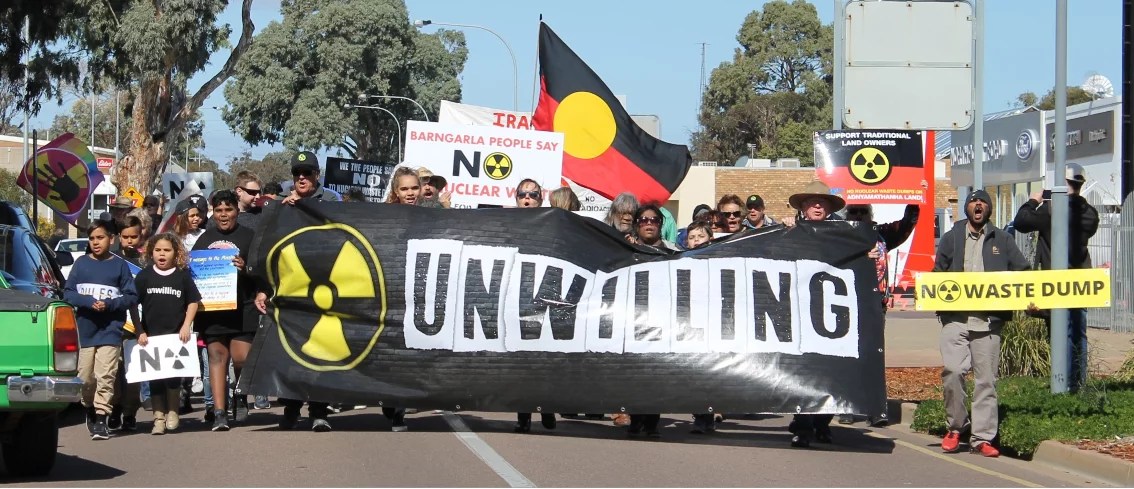
From Friends of the Earth – The letter below was sent today to all South Australian federal ALP politicians.
We are writing in regard to the proposed construction of a National Radioactive Waste Management Facility (nuclear waste dump) at Napandee, near Kimba in South Australia.
We wish to thank the SA Labor Caucus for its resolution at the recent South Australian ALP State Convention supporting “a veto right for the Barngarla community on this facility”. The resolution states, “Continuing with this project, including ancillary earthworks outside of current legal injunctions, despite the opposition of the Barngarla people, undermines efforts toward reconciliation.”
As a Labor Party politician elected to federal parliament to represent South Australia, we urge you to push for the implementation at the federal level of SA Labor’s position on this matter. We are concerned that the current Minister for Resources Madeleine King is following the lead of the bureaucracy in pursuing the former Coalition government’s policy on the nuclear waste dump.
Napandee was announced as the chosen site for the permanent disposal of low level radioactive waste (LLW) and temporary storage of intermediate level radioactive waste (ILW) in February 2020 by then federal resources minister Senator Matt Canavan. It was subsequently officially declared on 26 November 2021 by Senator Canavan’s successor Mr Keith Pitt MP. There is no reason why the current Labor government should allow itself to be bound by policies of the previous government promoted by National Party politicians Senator Canavan and Mr Pitt.
To pursue this project risks undermining the Labor government’s signature policy of enshrining in the Constitution a First Nations Voice to Parliament. A voice to parliament would enable Aboriginal and Torres Strait Islander people to provide advice to the parliament on policies and projects that impact their lives. The clear advice from the Barngarla people, the Traditional Owners of this area, is that they don’t want a nuclear waste dump on their land. The Barngarla people were excluded from a community ballot conducted by the Kimba District Council in November 2019, so they conducted their own independent poll. Not a single Traditional Owner voted in favour of the dump.
Besides the Barngarla people, significant other affected communities have not been consulted. A facility that would involve transportation of radioactive waste through South Australia should involve consultation with all communities along the transport route and with the wider public. No such consultation has occurred.
There are better alternatives to a centralised waste dump in regional South Australia. The overwhelming majority of the waste comes from the Australian Nuclear Science and Technology Organisation’s (ANSTO) Lucas Heights facility. The safest and most secure place to continue to manage and store the waste is at Lucas Heights, especially given that the proposed Napandee site would only provide temporary storage for intermediate level radioactive waste (ILW). A final disposal site for ILW would still have to be found. What is the point of double handling it?
We urge you to push for the federal government to promptly overturn the previous government’s declaration of the Napandee site and to cease all work at the site.
Australia is addicted to fighting other people’s wars

The legal status of the island [Taiwan] as a province of China is clearly little understood; or that military involvement, as far as international law is concerned, would be an illegal invasion of China and would be seen in that way in many parts of the world.
This brings us back to the question of war with China over the future of Taiwan. So many decisions and commitments have already been made in secret that going to war will be easy. The only question left to us now is can involvement in a likely catastrophe be avoided? Or will our addiction to war and our insouciance about its consequences finally catch up with us?
https://johnmenadue.com/australia-is-addicted-to-warfare/ By Henry ReynoldsNov 6, 2022,
How do we explain that half the Australian community thinks we should go to war with China? After twenty years of conflict in the Middle East, will our addiction to war and our insouciance about its consequences finally catch up with us in an American war over Taiwan?
‘Paddy the Irishman’ was one of the stock characters who appeared in the cartoons in the Sydney Bulletin in the early C20th. In one of the cartoons Paddy addressed the readers but behind him was a sketch of what appeared to be a brawl. He asked:’ Is this a private fight or can anyone join in’? I was reminded of the cartoon after reading two news items published last week.
The first was a report of the results of a YouGov survey into public opinion about attitudes to a possible future war over the fate of Taiwan. I found the results both surprising and troubling. As the Guardian reported, almost half of Australians (46%) believe the country should send troops to help defend Taiwan against China if required. More surprising was that it was a much higher percentage than in the U.S with(33%) or Japan with (35%).
Two days later the government announced that it was setting aside $475 million for assistance to Ukraine and dispatching 70 ADF personnel to Britain to help train their soldiers. No matter how sympathetic we might be about the beleaguered nation, Australian involvement is quite strange. Ukraine has the strong support of the thirty members of NATO, many with much larger armies and defence budgets than Australia. Are we just making a declaration that we wish to now tag along as NATO’s camp followers? And if our Department of Defence has a lazy half billion dollars it would have been more appropriate to spend it as a gesture of reparation for the destruction and devastated families we left behind after twenty years of war in Iraq and Afghanistan. We might then be able to convince observers all over the world that our empathy is not colour coded.
How do we explain that half the community thinks we should go to war with China? We might well have thought that twenty years of conflict in the Middle East with little to show for it had mollified our addiction to warfare. What is outstanding here is the combination of belligerence and insouciance. Little thought seems to have been given to the possibility of landing troops on Taiwan and of ever getting them back again. The legal status of the island as a province of China is clearly little understood; or that military involvement, as far as international law is concerned, would be an illegal invasion of China and would be seen in that way in many parts of the world.
But the government’s slapdash preparation for war is far more consequential. There are innumerable military exercises on land, sea and in the air. Weapons and tactics are methodically tested. We have an ongoing enquiry into strategic objectives. But is anyone calculating the cost of war with China? Is there any serious assessment of the impact on the national economy which might well be devastated? Do we have any precedents for a country that decided to go to war with its major trading partner? Has anyone considered what would happen to large segments of the mining industry? And what would happen to shipping to and from Australia?
Access to Japan and South Korea would be seriously inhibited. And regardless of outcomes we would have to assume that we would have hostile relations with China for a generation and more. Then there is the question of our large Chinese community. Do our war mongers give them any consideration? Would they just be treated with restless suspicion or would a government under pressure consider the detention which was imposed on Germans and Italians during the Second World War? All this and more for Taiwan which many Australians could not mark on a map? How much suffering does our defence establishment estimate they will subject us to? Have they any idea? Do they actually want to know?
All of these questions remind us of outstanding features of Australia’s distinctive history of engagement in wars in far- away places against enemies who presented no threat to the homeland. The British inducted us into a tradition of engagement in Imperial adventurism. They were incessantly at war somewhere in the world for most of the C19th. As the great liberal Prime Minister William Gladstone observed: ‘The English piously believe themselves to be a peaceful people. Nobody else is of the same belief.’ At the time of federation the Australian colonies followed the British into conflict in both South Africa and China. It was the start of a long tradition.
The Empire made it easy for the Australians to go to war. Enemies were chosen for them. The decisions about where, when and how to fight were presented ready- made. Debate about strategy, legality or morality was left to Britain. Loyalty to Crown and Empire was sufficient motivation for the majority and was used as a gag to smother dissent. So going to war could proceed without serious debate about Australia’s obligations or responsibilities as a nascent nation state or the wider ramifications of its geographical location. Return from wars was also easy. If things did not turn out as expected there was no need for introspection because Australia had been there merely to lend a hand. The Australians showed themselves to be proficient and resourceful warriors. And that was enough. There was no need to give serious thought to warfare itself. Ultimate responsibility, reassessment and soul searching could be left to the British. This was graphically illustrated in the case of the South African War of 1899-1902. There was far more dissent in Britain than in Australia and there was almost nothing like the profound reassessment which resulted in the war being seen as disgraceful descent into ‘methods of barbarism’.
How the patterns are replicated! Our behaviour in our ‘American wars’ in Iraq and Afghanistan is similar to that of earlier ’British’ ones. Going to war was easy. Using our legal inheritance from the common law which determined that war and treaty making are the preserve of the Crown or more correctly the Prime Minister. As many people now understand it can all be done without reference to the parliament. Our enemies were chosen for us. The fact that we knew comparatively little about the location didn’t matter. The legality and morality of the conflict was defined in Washington. Even the rhetoric was borrowed including repeated reference to the non- existent ‘weapons of mass destruction.’ Return from war was just as easy. There was no public scrutiny about whether the wars were a good idea, whether the cost in lives and billions of dollars was worth it. War seems to be the only aspect of government which escapes any serious cost/benefit analysis. There was little of the soul searching which followed the Iraq war in Britain and America.
This brings us back to the question of war with China over the future of Taiwan. So many decisions and commitments have already been made in secret that going to war will be easy. The only question left to us now is can involvement in a likely catastrophe be avoided? Or will our addiction to war and our insouciance about its consequences finally catch up with us?
Australia’s ongoing nuclear submarine debacle – A tangle of overlapping interests’
https://undueinfluence.substack.com/p/a-tangle-of-overlapping-interests?utm_source=post-email-title&publication_id=297295&post_id=82059669&isFreemail=true&utm_medium=email Michelle Fahy 5 Nov 22
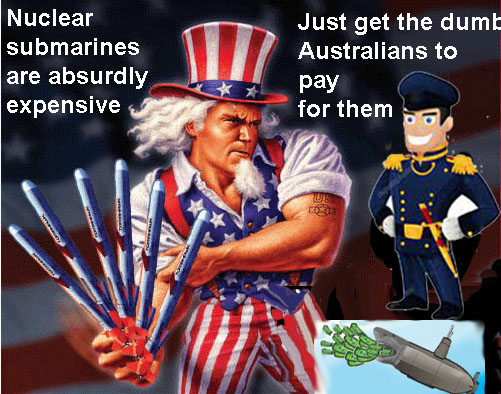
The federal government’s secret hiring from 2015 of numerous former US Navy officials to advise on Australia’s submarine procurement was exposed by The Washington Post a fortnight ago. “Some of the retired admirals have worked for the Australian government while simultaneously consulting for US shipbuilders and the US Navy, including on classified programs,” the Post said. The US officials benefited financially from “a tangle of overlapping interests”. The Post revealed that one former US admiral had been consulting to Australia while also occupying a full time position as chairman of the board of Huntington Ingalls Industries, a US company that builds US nuclear-powered submarines. That arrangement was abandoned in April this year due to conflict of interest concerns.
Australian defence experts Mike Scrafton and Richard Tanter have outlined the implications of these revelations in John Menadue’s public policy journal, Pearls and Irritations.
Mike Scrafton said, “What remains unclear now is the extent to which the abandonment of the French submarine and the decision to pursue a nuclear powered version was influenced by the Americans. The dramatic shift to the AUKUS project casts the role of the ex-US officials in a different light.”
Red flags have been a feature of Australia’s submarine procurement process since the original deal with France’s Naval Group in 2016. Concerns there included the government’s selection of Naval Group despite it being under investigation for corruption in three earlier shipbuilding contracts, with a fourth investigation added after Australia handed Naval Group the deal. Neither this alarming fact, nor other questionable aspects of the deal, triggered a rethink to find a more suitable contractor. The Washington Post revelations now raise even more questions about the backroom dealings in this disastrous extended procurement process.
1 This month
7 April – WEBINAR – Australia and the Doomsday Clock – Preventing nuclear war through NoFirstUse and other policies
Online | Tuesday April 7, 4:00-5:30pm, Australian Eastern Time / 8:00-9:30am Central Europe Time
– Access the registration link
15 April – Zoom –Nuclear Power is Not the Solution
Apr 15, 2026 01:00 AM in Canberra, Melbourne, Sydney

Join the International Physicians for the Prevention of Nuclear War (IPPNW) on Tuesday, April 14th for a timely webinar exploring the risks associated with nuclear power and challenging the myth that it offers a simple, safe, carbon-free solution to the climate crisis

21 April Webinar: No Nuclear Weapons in Australia
Start: 2026-04-21 18:00:00 UTC Canberra, Melbourne, Sydney (GMT+10:00)
End: 2026-04-21 19:30:00 UTC Canberra, Melbourne, Sydney (GMT+10:00)
Event Type: Virtual
A virtual link will be communicated before the event.
Host Contact Info: australia@icanw.org

of the week – Australians for War Powers Reform (AWPR)
To see nuclear-related stories in greater depth and intensity
 Antinuclear