Defence Minister Richard Marles delighted to welcome American nuclear-powered Virginia Class fast-attack submarine
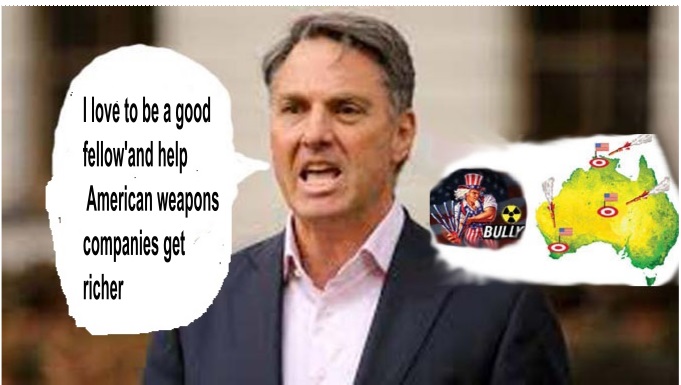
Virginia Class nuclear sub visit a plain delight for Marles. The Mandarin, By Julian Bajkowski, Tuesday November 29, 2022
For a routine visit, on a routine deployment, defence minister Richard Marles is plenty excited about the USS Mississippi, a very large nuclear-powered Virginia Class fast-attack submarine that not-so-quietly slipped into Fleet Base West, better known as HMAS Stirling, located off the coast of Perth.
The latest movement in Australia’s strategic dance to get nuclear-powered subs under the AUKUS agreement, the Mississippi’s overt visit and attendant official ceremonies are part of a growing local showcase of military-equipment makers intent on securing Australia’s business.
Smaller (and cheaper) than the gargantuan Ohio Class ballistic missile submarines that previously could carry as many as 150 Tomahawk cruise missiles (or 24 Trident multiple-warhead ballistic missiles), Virginia class subs are slated to number around 34 over the life of the program.
The Virginia boats are essentially the bulk-buy of the US combat submarine fleet, providing maritime hunt and attack capability as well as being a surveillance and weapons launch platform.
The fact that there are plenty of them and that there is still life in the construction cycle makes them potentially attractive to Australia, because they are a known quantity with an established skills base that could be transferred here under the AUKUS arrangement.
Marles has already had a Mississippi sneak peek.
“I had the opportunity to tour the USS Mississippi as part of my visit to Pearl Harbour in Hawaii last month, alongside US Defense Secretary Lloyd Austin,” Marles said……….
The Albanese government is also trying to normalise the visitation to Australia of nuclear vessels as very much business as usual.
….. “The USS Mississippi is the second US nuclear-powered vessel to visit Australia in 2022, following a visit by the USS Springfield in April.
“The visit reflects the ongoing strength of Australia’s alliance with the United States and builds on previous visits of nuclear-powered submarines from our AUKUS partners.” https://www.themandarin.com.au/206847-virginia-class-nuclear-sub-visit-a-plain-delight-for-marles/
‘Publishing is not a crime’: media groups urge US to drop Julian Assange charges

First outlets to publish WikiLeaks material, including the Guardian, come together to oppose prosecution
Guardian, Jim Waterson Media editor, 28 Nov 22
The US government must drop its prosecution of the WikiLeaks co-founder Julian Assange because it is undermining press freedom, according to the media organisations that first helped him publish leaked diplomatic cables.
Twelve years ago today, the Guardian, the New York Times, Le Monde, Der Spiegel, and El País collaborated to release excerpts from 250,000 documents obtained by Assange in the “Cablegate” leak. The material, leaked to WikiLeaks by the then American soldier Chelsea Manning, exposed the inner workings of US diplomacy around the world.
The editors and publishers of the media organisations that first published those revelations have come together to publicly oppose plans to charge Assange under a law designed to prosecute first world war spies.
“Publishing is not a crime,” they said, saying the prosecution is a direct attack on media freedom.
Assange has been held in Belmarsh prison in south London since his arrest at the Ecuadorian embassy in London in 2019. He had spent the previous seven years living inside the diplomatic premises to avoid arrest after failing to surrender to a UK court on matters relating to a separate case.
The then UK home secretary, Priti Patel, approved Assange’s extradition to the US in June but his lawyers are appealing against this decision.
Under Barack Obama’s leadership, the US government indicated it would not prosecute Assange for the leak in 2010 because of the precedent it would set. The media outlets are now appealing to the administration of President Joe Biden – who was vice-president at that time – to drop the charges.
The full letter sent by the media organisations
Publishing is not a crime: The US government should end its prosecution of Julian Assange for publishing secrets.……………………………………………………………….. more https://www.theguardian.com/media/2022/nov/28/media-groups-urge-us-drop-julian-assange-charges?CMP=Share_AndroidApp_Other
Nukes Corp Australia carries on

https://wordpress.com/read/feeds/89854964/posts/4401845915 25 Nov 22
Several times in the months since voters blatantly defied Rupert Murdoch’s direction to return the government of Scott Morrison, News Crap Australia has demonstrated its willingness to continue campaigning for the Liberal and National parties.
Not long after voters got it so very wrong and dared to elect a Labor Party government, new Opposition Leader Peter Dutton floated the idea of Australia adding nuclear power to its energy mix.
……………. one thing is clear, on the nuclear issue Mr Dutton has – as usual – enjoyed the active support of the Coalition parties’ advertising agency of choice, News Crap Australia.
Further evidence of the Murdoch media’s handiwork on behalf of Mr Dutton and his nuclear campaign has been on show in the national broadshit The Australian in just the past few days. (below on original)
Given that a group of pro-nuclear scientists will present their case at an event in Canberra today, we’ll no doubt see more and more Liberal Party advertisements… sorry, we’ll no doubt see more news stories and commentary in News Crap Australia outlets right up to the next federal election
It is difficult to fathom the commercial logic behind the nuclear push by News Crap Australia.
Surely, as our MGH researchers argue, young Australians are likely to be the strongest advocates of action to tackle climate change through the wider embrace of renewable energies.
They are also likely to be the last to support nuclear power with its long-term problems of waste storage and disposal and its ability to impact the health of individuals when things go wrong. Just think Chernobyl, Three Mile Island, and Fukushima.
So does News Crap Australia really believe it will attract the next generation of news consumers to its side by peddling the nuclear option?
Or does its obligation to the Coalition parties outweigh even the long-term size of its subscriber base?
What caused the Anthony Albanese China change? Better advisors?
Pearls and Irritations, By Bruce HaighNov 23, 2022,
To say that the Australian Prime Minister, Anthony Albanese, has been poorly advised would be an understatement. For reasons best known to himself he picked up and ran with a posse of advisers from the corrupt and inept Morrison regime. A big mistake.
They ran with a strong anti-China pro-AUKUS line. They briefed and backgrounded the press accordingly. It was frustrating and disappointing to watch. They were in thrall to and in some instances being paid by the US Industrial/Military complex. Australian Strategic Policy Institute, (ASPI ), being a case in point. Through the Washington Post we learnt that Morrison had installed senior US defence officers and officials in the Australian department of defence. Their influence still pervades. They are credited with having wrecked the French submarine deal.
These influencers and the many other players combining to bring us the sum total of the US alliance have brought considerable pressure on the Australian government to adopt a hostile stance against China and to go all the way with AUKUS. As I write Australian taxpayer money is being poured into defence facilities in Australia to make them ready for US use, from nuclear submarines to B52’s and marines.
None of these preparations have been put to the Australian people. All are, for whatever reason, secret. No thought has been given to tabling details relating to AUKUS in the Australian Parliament.
Albanese has been swept along and until now has been prepared to go with these arrangements which fundamentally challenge Australian sovereignty and were designed to wreck our trading and diplomatic relations with China. All to advantage the United States. This orgy of self-destructiveness was overseen and orchestrated by so called think tanks, some university based, sympathetic public servants and defence officers whose careers have come to depend on following ‘the line’, even down to believing that the acquisition of nuclear submarines and the basing of B52’s is somehow beneficial to Australia. The media, particularly the Murdoch media, has been captive to this narrative. Some such as Sheridan, Hartcher and Grant have sought to lead it.
Albanese rattled the sabre, sometimes bizarrely. ………………………………..
In contrast, mostly behind the scenes, the Foreign Minister, Penny Wong, worked assiduously and with great intellectual rigour to build bridges to the Chinese. …………………………..
Albanese secured his meeting with Xi, I would say largely on the efforts of Wong whose advice was finally listened to. Faced with Prime Ministerial loss of face the hawks in Canberra buckled to the very sensible approach Wong and her advisers had taken toward China.
Has Albanese learnt anything from this? The lesson should be that he ceases to listen to adviser’s once close to Morrison. If the Labor party wishes to implement their ambitious and long overdue reforms, they can no longer afford to keep these people on board.
Home Affairs, Immigration, Defence all need a strong broom through them. Twenty five years of LNP immaturity, selfishness, greed, corruption and absence of an agenda that included the public good has wreaked havoc and urgently needs to be addressed.
Wong has a formidable mind, she is strong character, more people in the Labor Party should be heading her advice and accepting her judgement. https://johnmenadue.com/what-caused-the-anthony-albanese-china-change-better-advisors/
Australia’s debt to the world greater given our ‘real’ carbon emissions
New data revealing Australia’s greenhouse gas emissions are much higher than reported means pressure is on the Federal Government to go beyond current commitments toward global climate action, writes professor Jeremy Moss.
Independent Australia, 24 Nov 22, THE RECENT Conference of the Parties to the United Nations Framework Convention on Climate Change (COP27) meeting in Egypt must ultimately be judged a failure.
While the inclusion of loss and damage in the final deal was a step forward, we can’t ignore that after nearly 30 years of COP the world still can’t agree to phase out fossil fuels as part of the agreements.
The 636 representatives of the fossil fuel industry who attended would be pleased with this outcome. Representatives from the fossil fuel industry outnumbered some countries’ delegates ten to one.
Australia’s Federal Government will claim it as a success. However, new data revealing Australia’s greenhouse gas emissions are much higher than reported means pressure is on to go well beyond current commitments.
Despite praise by U.S. envoy John Kerry on Australia’s climate “u-turn” for the Albanese Government’s commitment to a 43 per cent emission reduction target by 2030, after ten years of inaction, much more will be expected of Australia to play our part in preventing global climate breakdown.
When we hear the Government talk up its climate credentials, we need to bear in mind new data released by ClimateTRACE this week which shows that Australia’s domestic emissions were likely to have been 620 metric tons of carbon dioxide equivalent (Mt CO2-e) in 2021 — a figure more than 20 per cent higher than we reported to the United Nations Framework Convention on Climate Change (UNFCCC) of 488 Mt CO2-e.
Climate Justice Project describes the tracker thus:
‘The new emissions tracker ClimateTRACE uses satellite monitoring of more than 70,000 sites worldwide to produce real-time, facility-level #globalemissions inventories. The tracker, produced by a non-profit coalition, was launched by former U.S. Vice President Al Gore at COP27 in Egypt.’
This discrepancy by Australia is equivalent to roughly twice the volume of emissions from the agriculture sector of 77 Mt CO2-e.
Worse still is the continued contribution made by the fossil fuel export industry. Being one of the world’s largest suppliers of cheap tax-payer-subsidised fossil fuels is a major contribution to climate change.
No amount of “arms dealer defences” from governments and big corporations can mask the fact that supplying fossil fuels is a crucial part of the carbon equation and ought to be allocated some share of the blame.
In Australia’s case, the emissions from exported fossil fuels are double our domestic emissions and they have been rising steadily over the last five years. Those emissions are bigger than the emissions of the UK.
So, where does this leave us?
Firstly, we need to properly measure and account for all of our actual domestic emissions to combat our contribution………………………….more https://independentaustralia.net/politics/politics-display/australias-debt-to-the-world-greater-given-our-real-carbon-emissions,16997#.Y38CW-u8BQQ.twitter
Premier Peter Malinauskas reaffirmed South Australian Labor’s position that the Barngarla people have the right to veto the Kimba nuclear waste dump project
Criticism over site works for SA nuclear waste dump
The Albanese Government has come under fire after it confirmed preliminary works will begin at the site of a proposed national nuclear waste facility on the Eyre Peninsula, despite a Federal Court challenge to the project still being underway.
InDaily Jason Katsaras 16 Nov 22
In correspondence seen by InDaily, federal Resources Minister Madeleine King said preliminary works would begin at Napandee near Kimba, but they were not construction works.
“Site characterisation activities will commence next week on the site, which are low-level, localised investigative studies to gather more detailed data on matters such as the site’s geology, hydrology, seismology and baseline radiological conditions,” she said…………………………………..
the Australian Conservation Foundation said the move effectively pre-empted a court bid to block the project.
“While these works are not the start of facility construction, they are a clear sign of intention and are inconsistent with repeated federal government assurances that it will not pre-empt the outcome of a current Federal Court challenge by Barngarla Native Title holders to the validity of the former government’s selection of the site,” it said.
In December, the local Bangarla people, represented as The Barngarla Determination Aboriginal Corporation, applied for judicial review of the decision to suspend work on the planned nuclear dump, arguing they weren’t properly consulted before the site was selected.
“This week they will have boots on the ground – it’s a significant escalation and a conscious choice,” ACF spokesman Dave Sweeney said.
“Federal Labor inherited a divisive and deficient approach to radioactive waste management from the former government.
“The decision to commence site works is a poor one, but not an irreversible one. It should not be advanced by a federal Labor government.”
The choice of site for the nuclear waste facility has been a hotly contested issue in the region since the then Liberal Government acquired the 211-hectare agricultural site in Napandee in 2021.
In September, Premier Peter Malinauskas reaffirmed South Australian Labor’s position that the Barngarla people have the right to veto the project.
“I think that the traditional owners of the land on a project as controversial and as significant as this one, and as long-lasting as this one, are entitled to have a say and that is what has underpinned our position,” he said. https://indaily.com.au/news/2022/11/16/protest-over-site-works-for-sa-nuclear-waste-dump/
US big defense and Australia’s nuclear crossroads
For the fiscal year 2022, the Pentagon budget proposal includes billions of dollars for new nuclear delivery vehicles, with a handful of contractors as the primary beneficiaries, including General Dynamics, Northrop Grumman, Lockheed Martin and Raytheon, along with Huntington Ingalls, Honeywell, and Bechtel.
Australia’s privilege is to pay the bill.
In Canberra, some conservatives see these trends as positive. They want to turn Australia into a world-class military-industrial complex – a more advanced version of the “arms depots” in Taiwan and Ukraine.
The Biden administration has made Australia a central part of its defense strategy. It needs a military-industrial complex in the country which is being forced into the kind of nuclear escalation that two of three Australians oppose.
These strategic objectives are very much in the interest of US Big Defense. But they are not in Australia’s national interest.
By Dan Steinbock | chinadaily.com.cn | 16 Nov 2022-
In late October, Australia dropped its opposition to a landmark treaty banning nuclear weapons in a vote at the United Nations. The shift in its voting position to “abstain” after five years of “no” is significant.
The Treaty on the Prohibition of Nuclear Weapons (TPNW) prohibits the development, testing, stockpiling, use and threats regarding the use of nuclear weapons.
The change comes as the US is planning to deploy nuclear-capable B-52 bombers to the country, where the weapons will be positioned close enough to strike China.
US pressure vs. Australian aspirations
Defending the vote, foreign affairs minister Penny Wong stresses Australia has “a long and proud commitment to the global non-proliferation and disarmament regime” and the government supports the treaty’s “ambition of a world without nuclear weapons.”
The Australian labor government is now facing extraordinary pressure due to its stand. Recently, the US warned Australia against joining the TPNW. As the US embassy in Canberra put it, the treaty “would not allow for US extended deterrence relationships.” It argues that the agreement could hamper defense arrangements between the US and its allies.
The original commentary was published by China-US Focus on Nov 15, 2022.
Beatrice Fihn, executive director of the International Campaign to Abolish Nuclear Weapons (ICAN), the Nobel-awarded organization behind the TPNW, called the US embassy’s comments “irresponsible” adding, “Using nuclear weapons is unacceptable, for Russia, for North Korea and for the US, UK and all other states in the world. There are no ‘responsible’ nuclear armed states. These are weapons of mass destruction and Australia should sign the #TPNW!”
Only 6% of Australians support nuclear arms
Australian Prime Minister Anthony Albanese believes that “nuclear weapons are the most destructive, inhumane and indiscriminate weapons ever created.” That was the basis for his 2018 motion to commit the Labor Party to supporting the TPNW.
The Labor’s 2021 platform included a commitment to signing and ratifying the treaty “after taking account” of factors including the development of “an effective verification and enforcement architecture.”
Recently, New Zealand said it was “pleased to observe a positive shift” in Australia’s position in the UN vote and “would, of course, welcome any new ratifications as an important step to achieving a nuclear weapon-free world.”
The treaty now has 91 signatories, 68 of which have formally ratified it, and it entered into force last year.
An overwhelming majority of Australians backs the government’s position. According to an Ipsos poll taken in March, 76% of people support the country signing and ratifying the treaty, while only 6% are opposed.
The real gap is between the profit objectives of the US Big Defense and the peaceful aspirations of Australian people.
AUKUS at stake
In 2021, Australia angered France by canceling a deal to build a fleet of submarines and opting to build nuclear-powered submarines with US and UK technology. According to the new trilateral security pact (AUKUS) between the United States, the UK and Australia, Washington and London will “help” Canberra to develop and deploy nuclear-powered submarines……………………………
Winners and losers
If the stakes are so high, why this interest in the weapons of mass destruction? Here’s the simple answer: follow the money.
The Pentagon and the Department of Energy have been ramping up a three-decades-long plan to build a new generation of nuclear-armed bombers, submarines and missiles, coupled with new warheads. The price tag for operating current weapons and building new ones could reach a confounding $2 trillion. The cost of nuclear weapons deployment, development, and procurement could soar to $634 billion.
For the fiscal year 2022, the Pentagon budget proposal includes billions of dollars for new nuclear delivery vehicles, with a handful of contractors as the primary beneficiaries, including General Dynamics, Northrop Grumman, Lockheed Martin and Raytheon, along with Huntington Ingalls, Honeywell, and Bechtel. Australia’s privilege is to pay the bill.
In June, Australia announced a $585 million settlement with France’s Naval Group as compensation for scuppering a submarine contract with Paris. According to current estimates, Australia’s nuclear submarines could cost up to $171 billion.
Australia is today among the four largest importers of arms, globally. In 2021, it spent over $1.2 billion on the import of weaponry, according to SIPRI, making the formerly-peaceful nation the world’s No.1 importer of deadly capability. Since two-thirds of Australia’s military imports come from the US, America’s Big Defense is the great beneficiary of the trend
According to recent disclosures by The Washington Post, the Pentagon’s high-level influence operations in Australia have escalated since the mid-2010s. The results are stunning. Between 2012-16 and 2017-21, Australia’s share of global arms exports doubled. In the period, that translates to an increase of a stunning 92%; more than in any other arms exporter worldwide, except for South Korea and India.
Economic costs of geopolitics
In Canberra, some conservatives see these trends as positive. They want to turn Australia into a world-class military-industrial complex – a more advanced version of the “arms depots” in Taiwan and Ukraine.
In the past, US-Australian bilateral interests converged in security matters, but diverged in trade and investment. However, a decade ago, I argued in a Reuters analysis that Australia was “no longer immune to the stagnation in the West.” Worse, the past decade has witnessed a drastic shift toward hawkish geopolitics at the expense of welfare……………………………..
Whose national interest?
In January, Australia agreed to a $3.5 billion deal with the US to acquire more than 120 tanks and other armored vehicles to upgrade its military fleet. In November, Australian media reported that up to six US nuclear-capable B-52s would be sent to the Royal Australian Air Force’s Tindal base in northern Australia. The move led China to accuse the US of stoking nuclear tensions in the region.
The Albanese government faces the prospect of a blowout in defense spending which reflects annual growth of 7.4% in nominal terms and 3.8% in real terms. While the economy faces prospects of stagnation and the population is aging, defense spending is increasing two to three times faster than economic growth. That’s untenable.
The Biden administration has made Australia a central part of its defense strategy. It needs a military-industrial complex in the country which is being forced into the kind of nuclear escalation that two of three Australians oppose.
These strategic objectives are very much in the interest of US Big Defense. But they are not in Australia’s national interest.
https://www.chinadaily.com.cn/a/202211/17/WS63758e0ea31049175432a3c8.html
Albanese must use Xi meeting to return us to the Howard-Abbott golden age of Australia-China relations (this from Murdoch’s Sky News !!!)
Good leadership isn’t about exclusivity. It’s about the careful management of competing interests and alliances and a recognition we need to lean on China for economic success and prosperity.
Sky News Sherry Sufi SkyNews.com.au Contributor and Political Commentator November 16, 2022
It feels like yesterday when Prime Minister Tony Abbott hosted Chinese Premier Xi Jinping in 2014 for a State Reception at Parliament House, Canberra.
In his address, Xi praised Australia’s goodwill towards China.
The fact that this friendship has since deteriorated with our largest trading partner is lamentable.
Prime Minister Anthony Albanese’s recent willingness to meet with Xi should be welcomed by both sides of politics.
A meeting of this nature is long overdue.
In recent years, there has been no shortage of quasi-apocalyptic warnings by commentators about China’s emerging global assertiveness.
The one-sided nature of this commentary hasn’t helped de-escalate the tensions either.
We’ve been fixated on China’s treatment of Uighur minorities in Xinjiang, its overreach in Tibet, Hong Kong and Taiwan, as well as its handling of COVID-19.
China insists there is no persecution of minorities.
Rather, it’s only cracking down on Uighur separatist terrorists affiliated with the East Turkestan Islamic Movement (ETIM).
The United States had ETIM listed as a terrorist organisation from 2002 to 2020.
The listing was only removed after the pandemic when relations with China began to deteriorate — intriguing in its own right.
Chinese intellectuals argue that if China had been the one to annex a strategically vital British port city — let’s say Portsmouth — and turned it into a Chinese colony for 156 years, Britain would also be doing all it could to re-integrate the liberated territory back into its administrative architecture.
That’s how China sees Hong Kong.
China maintains the US actively backed the Kuomintang party during the Chinese Civil War (1927-1949) because the American objective was to run an American-aligned vassal state — Taiwan — in the middle of the South China Sea.
That’s how China sees Taiwan — an American puppet in China’s maritime backyard.
Yet the US would never, for instance, tolerate China backing Puerto Rican separatists and running a Chinese-aligned vassal state in the middle of the Gulf of Mexico in America’s maritime backyard.
Every time the Chinese hear us say “China can’t be trusted because it’s militarising the South China Sea” — they chuckle at our hypocrisy.
Guess what, the South China Sea was already heavily militarised — just not by the Chinese, but by our allies, the Americans.
For decades, the US has hosted combat-ready military bases across South Korea, Japan, the Philippines and Guam.
We keep telling ourselves “our problem is the Chinese government, not Chinese people”.
This almost implies that since we’re not anti-Chinese “people” somehow that gives us a free pass to be anti-Chinese on everything else — including its right to manage strategic risks using precedents set by none other than the US itself.
Let’s face it, Australian governments since the Abbott era inserting themselves into Chinese domestic affairs has brought us zero benefits for Australia.
As for those wondering, should we just let China bully us economically?
Obviously not — but there’s more to this than simplistic rhetoric.
Remember, it wasn’t China that forced Australian businesses to export our iron ore, coal, copper, precious stones, cotton, barley, wine, dairy, beef and seafood among other commodities.
Australian businesses made conscious decisions to enter into agreements with Chinese trading partners due to the allure of lucrative mutual benefits — that is Capitalism 101.
Free trade is what gave China economic leverage over us. …………………………………………
What’s not reasonable is running one-sided commentary on how China deals with its domestic issues across Xinjiang, Tibet, Hong Kong or Taiwan.
That stuff was never our core business…………………………………………
It’s now up to Albanese to return us to the golden age of Australia-China relations.
Dr Sherry Sufi is a Political Commentator and Analyst. His PhD thesis was on language and nationalism. https://www.skynews.com.au/insights-and-analysis/albanese-must-use-xi-meeting-to-return-us-to-the-howardabbott-golden-age-of-australiachina-relations/news-story/96780217a608f66f9daa52f47f99ceb4
What’s happening with the radioactive waste facility in South Australia?

Ed. I always like it when the nuclear lobby brings up their tired old argument about bananas. It shows their contempt about the intelligence of ordinary people.
“Australian Radioactive Waste Agency CEO Sam Usher standing in front of a 100-tonne TN-81 transport and storage cask that contains intermediate level waste (ILW) at ANSTO’s Interim Waste Store.
The container is so well shielded that a person standing 10m away for one hour would receive the equivalent radiation dose to eating half of one banana. Credit: ARWA.”
When high level nuclear waste is returned to Australia ANSTO reclassifies it as intermediate level on the very weak argument of the classifications in Europe being different to Australia…… it seems ludicrous that it should assume its own manner of classification and against the treaty adopted classifications of IAEA and adhered to by other countries.
Cosmos By Clare Peddie / 18 November 2022,
Multiple hurdles stand in the way, but the Australian Radioactive Waste Agency is pressing ahead with plans for Kimba.
More of a mausoleum than a crypt, the burial chamber planned for Australia’s decaying radioactive waste will consist of free-standing concrete vaults, above-ground, on agricultural land near Kimba on South Australia’s Eyre Peninsula.
The first National Radioactive Waste Management Facility (NRWMF) will be 1710km west of Australia’s Nuclear Science and Technology Organisation (ANSTO), by road. That’s an 18-hour drive from Lucas Heights in Sydney, across the Hay Plains and through the Riverland, on the most direct route.
While precise transport routes remain undecided, the federal government is clear that the vast majority (97%) of the waste destined for Kimba will come from ANSTO.
The NRWMF will be the final resting place for Australia’s low-level waste (LLW) and a secure half-way house for intermediate-level waste (ILW), which will be interred for 50 years before being moved to a more suitable facility, below ground.
At least, that’s the current plan. There’s a court case to be heard, a public inquiry to be instigated and a series of regulatory hurdles to be cleared before construction can begin.
2021 Radioactive Waste Inventory
Australia’s National Inventory of Radioactive Waste 2021 reveals ANSTO is expected to produce 12,972 cubic metres of LLW and 3753 cubic metres of ILW. (That adds up to 16,725 cubic metres, out of the national total 17,163 cubic metres.)
Australia has no High Level waste. [ed note: The government and ANSTO reclassify spent nuclear fuel as not being high level waste, but “Intermediate Level“]
| OWNER | FUTURE | LEGACY | TOTAL |
| ANSTO | 10,665 | 2,307 | 12,972 |
| Defence | 88 | 70 | 158 |
| CSIRO | 40 | 44 | 84 |
| ARPANSA | – | 66 | 66 |
| Hospital | 2 | – | 3* |
| Other Commonwealth | – | 2 | 2 |
| Research and education | 1 | 1 | 2 |
| Total | 10,796 | 2,490 | 13,286 |
Australia’s low level waste, in cubic metres. Source.
| OWNER | FUTURE | LEGACY | TOTAL |
| ANSTO | 2,198 | 1,555 | 3,753 |
| CSIRO | 62 | 12 | 74 |
| Defence | 2 | 21 | 23 |
| ARPANSA | – | 22 | 22 |
| Industry | 3 | – | 3 |
| Hospital | – | – | 1* |
| Other Commonwealth | – | 1 | 1 |
| Research and education | – | – | – |
| Total | 2,265 | 1,611 | 3,877 |
Australia’s intermediate level waste, in cubic metres. Source.
On November 29, the Morrison Government’s Resources Minister, Keith Pitt, declared the NRWMF would be established 24km west of Kimba at Napandee, a 211 hectare property.
But the Traditional Owners, the Barngarla People, did not provide consent. And they had made their opposition abundantly clear, in the lead-up to the announcement.
So within a week, the Barngarla Determination Aboriginal Corporation (BDAC) announced their intent to challenge the Minister’s decision. The application for judicial review was lodged in the Federal Court on December 20 and a separate constitutional challenge followed. The case will go to trial in March.
Federal Resources Minister Madeleine King says she “will not pre-empt the outcome of the court process currently underway” and has repeatedly refused requests from BDAC, conservationists and Greens Senator for SA, Barbara Pocock, to halt work on the project until the case is heard…………………………..
Australian Radioactive Waste Agency (ARWA) Chief Executive Officer, Sam Usher, says the declaration of the site was a “significant milestone for Australia and its nuclear industry” and the “culmination of a long process” of site selection.
But it’s also the start of another lengthy process, with many regulatory hurdles along the way…………….
“Even going through the construction, we still need to apply for operating licences for the facility through ARPANSA (the Australian Radiation Protection and Nuclear Safety Agency) … We are not anticipating the facility to become operational until early in the next decade.”
Key regulatory and approval steps
- Draft Environmental Impact Statement
- EPBC Environmental Impact Assessment
- NRWMF Siting License
- Safeguards Permit
- Public Works Committee Approval
- NRWMF Construction License
- NRWMF Operating License
Recruited from the nuclear waste industry in Britain and appointed in January, Usher was called to address the Committee to help resolve the timing of a public inquiry required under state law.
The Nuclear Waste Storage Facility (Prohibition) Act 2000 seeks to “protect the health, safety and welfare of the people of South Australia and to protect the environment in which they live by prohibiting the establishment of certain nuclear waste storage facilities in this State”.
It states: “If a licence, exemption or other authority to construct or operate a nuclear waste storage facility in this State is granted under a law of the Commonwealth, the Environment, Resources and Development Committee of Parliament must inquire into, consider and report on the likely impact of that facility on the environment and socio-economic wellbeing of this State.”
When the Committee sought Usher’s opinion on the timing of a public inquiry, he suggested the Environmental Impact Statement, “expected to be completed in the next three or four years or so”, would address the “environmental and socio-economic wellbeing impacts” on the state.
But he added that “delivery of the facility is a matter of national importance” and override powers within the National Radioactive Waste Management Act 2012 would be used where necessary.
As ARWA Principal Legal Counsel Kirsty Braybon put it: “Commonwealth legislation puts in place a process whereby we can effectively override the state laws that stop us from doing what we need to do.”
On reflection, Committee chair and Labor MP Jayne Stinson told Cosmos that she felt the “threshold” for a public inquiry had not been met and would not, for a long period of time.
“It’s really the most massive exercise in ‘How long is a piece of string?’. There are so many movable parts in this equation that it’s very difficult to tell, but it is most likely that this could stretch out well beyond the next term of parliament,” she said.
She said the phrase “construct or operate” was significant, pushing the timing of the inquiry further into the future. The Committee would also want to see the court case resolved first, especially as the Premier recently reinforced SA Labor’s long-held position that the Barngarla People should have the right to veto the project.
“In this day and age, when we’re talking about Voice, Treaty and Truth, we can’t just turn around and say, ‘Oh, well, those are our values but in this particular instance, we’re going to ignore the voice of Aboriginal people’. I think that’s just preposterous and it’s inconsistent with what most South Australians would think,” Stinson said.
“So yes, we do think that the voices of Aboriginal people should be front centre in this debate, and I would say that’s not just the view of the Premier, but of our Cabinet and also our Party.”
Barngarla Determination Aboriginal Corporation Chair, Jason Bilney, is frustrated about having to fight another legal battle so soon after the two-decade effort to win native title.
While it is true that there is no native title on the site in question, that’s because it is freehold land. The former farm is surrounded by parcels of native title land, within the Barngarla Determination boundary. (Native title is extinguished by certain forms of property tenure).
Mr Bilney maintains that the site is a “very significant place for Barngarla people, we’ve travelled through it, it’s part of our songlines, our storylines and it’s connected to female dreaming, through the aquifers running underneath it”.
Objections to the facility also run deep, because there is a history of past injustices surrounding nuclear weapons testing, so any talk of radioactive waste reopens old wounds. And then there are questions around the “temporary” storage of long-lived radioactive waste.
“We don’t want the dump on our country, and we were excluded from the start,” he says……………………….
Nuclear industry expert Professor Ian Lowe, says ILW “needs to be securely stored for many thousands of years in a properly engineered site”.
He agrees that the “sensible approach … would be to continue storing the ILW securely at Lucas Heights while there is a proper process of designing a permanent disposal site and consulting communities to negotiate informed consent for a location”.
ARWA is working with CSIRO to review and assess technical ILW disposal options, but this process has barely begun………………………
Money is flowing into the town, with the third round of community grants announced on November 2 injecting a further $2 million into projects such as upgrades to the Kimba District Hospital facilities, a new Kimba Youth and Community Hub, a ‘shop local’ marketing initiative to support local businesses, and refurbishment of the Kimba Op Shop. This builds on $4 million of grants and 50 projects already funded in Kimba under the program.
There’s the promise of 45 ongoing jobs in the facility, plus all of the construction work.
And there’s plenty of work for scientists in the next phase of “site characterisation works” to begin this week………….. https://cosmosmagazine.com/technology/radioactive-waste-facility-australia/
Australia sticks to US nuclear subs despite French criticism
Australia’s prime minister says he remains committed to building a fleet of submarines powered by U_S_ nuclear technology despite the French president describing the plan as a “confrontation with China.”
abc news, ByROD McGUIRK Associated Press, November 18, 2022, CANBERRA, Australia –– Australia’s prime minister said Friday he remained committed to building a fleet of submarines powered by U.S. nuclear technology despite the French president describing the plan as a “confrontation with China.”…………..
Prime Minister Anthony Albanese has stood by the so-called AUKUS agreement to embrace nuclear technology since he came to power at elections in May. Whether Australia opts for a version of the U.S. Virginia-class or British Astute-class submarine will be announced in March………..
Macron on Thursday criticized the AUKUS deal, telling reporters that France had offered Australia, which has no nuclear energy industry, diesel-electric subs that could be independently maintained.
“It was not in a confrontation with China because these were not nuclear-powered submarines,” Macron said through an interpreter.
But Albanese’s predecessor Prime Minister Scott Morrison chose the “exact opposite: To enter into a confrontation by going nuclear,” Macron added.
When the AUKUS deal was announced in September last year, China’s foreign ministry condemned the export of U.S. nuclear technology as “highly irresponsible.” Some of Australia’s neighbors fear it could lead to an arms race in the region………
Macron on Thursday said the prospect of France supplying Australia with submarines remained “on the table.”
Albanese said Australia was continuing to discuss with France “how we can cooperate in defense.”……………… https://abcnews.go.com/International/wireStory/australia-sticks-us-nuclear-subs-french-criticism-93538269
Radioactive waste works at Napandee, South Australia, ‘pre-emptive and unjustified’.

Dave Sweeney, Australian Conservation Council, 15 Nov 22, Preliminary earthworks at a contested site proposed for a national radioactive waste facility in regional South Australia are pre-emptive and unjustified, Australia’s national environment group says.
Federal Resources Minister Madeleine King has confirmed ‘site characterisation works’ are set to commence this week at Napandee, near Kimba on the Eyre Peninsula.
While these works are not the start of facility construction, they are a clear sign of intention and are inconsistent with repeated federal government assurances that it will not pre-empt the outcome of a current Federal Court challenge by Barngarla Native Title holders to the validity of the former government’s selection of the site.
“Advancing this project at this time is effectively pre-empting the court process,” said Australian Conservation Foundation nuclear free campaigner Dave Sweeney.
“This is a political choice, not a radiological requirement. ACF calls on Resources Minister Madeleine King to revisit this decision and reconsider this project.”
The federal waste plan, initiated by the former government and driven by former ministers Canavan and Pitt, faces a growing list of critics as well as a legal challenge.
SA Premier Peter Malinauskas recently supported the Barngarla Native Title holders’ right to veto the project and last month the SA Labor state convention stated the waste plan ‘undermines efforts toward reconciliation.’
Eyre Peninsula grain producers, Barngarla people and Unions SA, along with state and national environment, Indigenous and civil society groups, have united in opposition to the plan and the highly curated process.
“Federal Labor inherited a divisive and deficient approach to radioactive waste management from the former government,” Dave Sweeney said.
“The plan is not responsible, necessary or consistent with international best practice or Labor’s stated values and platform.
“The decision to commence site works is a poor one, but not an irreversible one. It should not be advanced by a federal Labor government.”
Prep work to start next week on Kimba Nuclear Waste dump, despite Government assurances not to pre-empt court case

https://www.nationaltribune.com.au/prep-work-to-start-next-week-on-kimba-nuclear-waste-dump-despite-government-assurances-not-to-pre-empt-court-case/?fbclid=IwAR1twuStY12rRYgZ-APTeOHNplE3dAStSxXM19ZZN1KQEkB7S957Bh8UfxQ 11 Nov 2022 Australian Greens
In a letter from Minister for Resources, Madeleine King to Greens Senator Barbara Pocock, it is revealed that despite the ongoing court case against the Barngarla Determination Aboriginal Corporation (BDAC), preparatory works will be going ahead starting next week.
In Senate estimates last night, Senator Pocock pushed the Senator representing the Minister for Resources, Tim Ayres, for answers around the future of the Kimba Site.
SA Labor does not support the dump, the SA people do not support the dump and have not been properly consulted, the Traditional Owners have unequivocally opposed it at every opportunity. The Government is continuing to spend $50 000 per week of taxpayer money in legal costs for something with no social license.
Senator Tim Ayres used the ongoing court case to dodge Senator Pocock’s questioning throughout estimates. He stated that the Government would respect and not pre-empt the outcome of the case. Despite this, it’s clear initial works will be proceeding as early as next week as per Minister King’s Letter.
It’s clear the process of site selection was mishandled. The Labor government now has the opportunity to halt works and review the decisions made previously, to show the Kimba community and the Barngarla people that they are committed to proper consultation and respecting first nations voice and rights.
“Minister for Resources, Madeleine King, has today informed me that preparatory works will be starting on the Kimba Site next week. Although it is not construction of the facility yet, this is a significant escalation that goes against reassurance in last nights estimates that court proceedings will be respected.
“Throughout estimates questioning last night, Senator Tim Ayres repeatedly stated that they would respect and not pre-empt the outcome of the court case. The letter I received right before estimates is a direct contradiction to this statement.
“I am deeply concerned that these preparatory works are going ahead.
“The site selection process was done without proper community consultation. This is a terrible decision inherited from the previous government. Labor can still turn this around. They must stay true to their word and immediately halt all works.
Australia’s reassessment of the Treaty on the Prohibition of Nuclear Weapons
https://www.icanw.org/australia_tpnw 15 Nov 22,
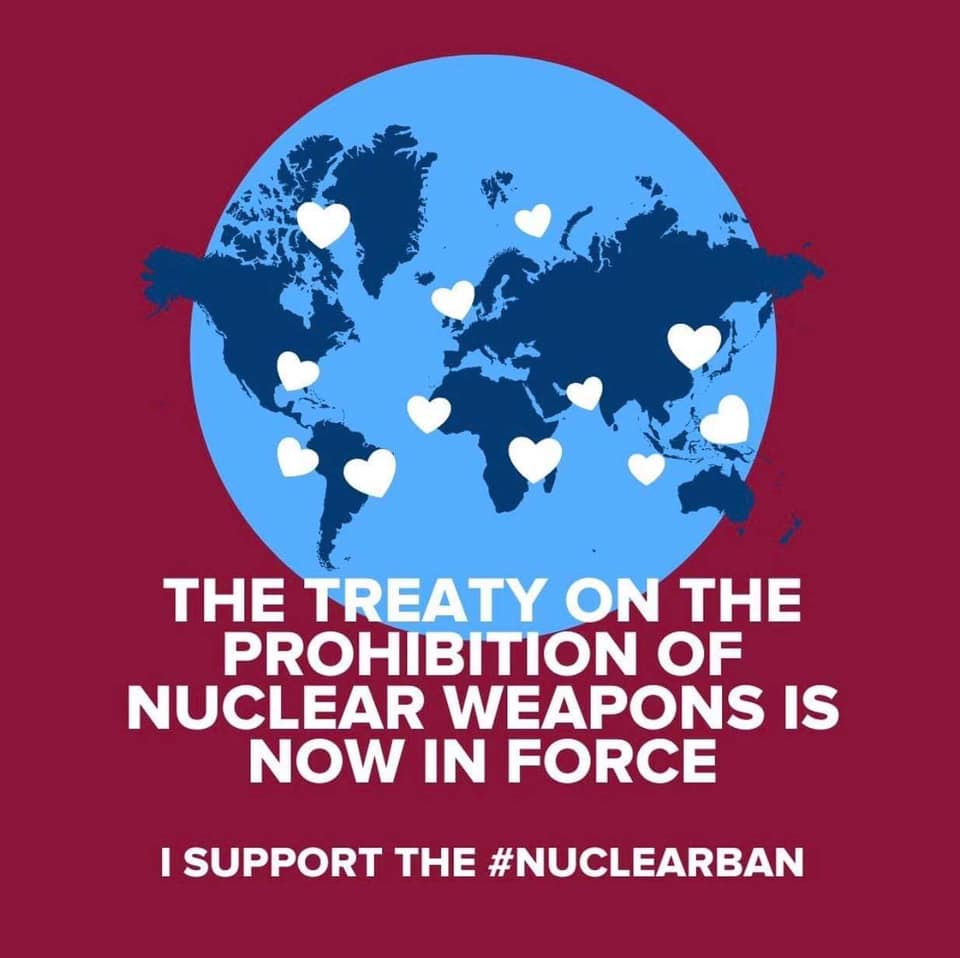
At the United Nations in October, Australia formally ended five years of opposition to the 2017 Treaty on the Prohibition of Nuclear Weapons. Rather than voting against an annual UN General Assembly resolution urging countries to join the landmark treaty – as it had done in previous years under its former conservative government – Australia abstained for the first time. Campaigners welcomed this shift as a “small but important step forward”.
Indonesia and New Zealand, two of Australia’s closest neighbours, also praised the move. The Indonesian ambassador to Canberra, Siswo Pramono, said the change would “give encouragement to others to believe that we are on the right path” in seeking a world free of nuclear weapons: “Your voice matters. Your stance matters.” New Zealand’s foreign ministry said it was “pleased to observe a positive shift” in Australia’s position and “would, of course, welcome any new ratifications as an important step to achieving a nuclear-weapon-free world”.
But the United States warned Australia against joining the treaty, arguing it could hamper defence arrangements with its allies, as the treaty “would not allow for US extended deterrence relationships, which are still necessary for international peace and security”. It added: “The United States does not believe that progress toward nuclear disarmament can be decoupled from the prevailing security threats in today’s world.”

ICAN Australia’s director, Gem Romuld, said Australia must make its own decision on joining the TPNW based on the will of the Australian people. “It’s no surprise that the US don’t want their allies to sign on, because if we claim protection from their so-called ‘nuclear umbrella’ then it helps justify their continued retention and possible use of these illegal and indiscriminate weapons,” she said. An opinion poll in March found 76 per cent of Australians support signing the TPNW, with 6 per cent opposed and 18 per cent undecided.
Until last month’s UN vote, Australia was the only member of a regional nuclear-weapon-free zone treaty to oppose the annual resolution on the TPNW. Nuclear-weapon-free zones cover 116 countries, including all those in Southeast Asia and the South Pacific – many of which were instrumental in the negotiation and adoption of the TPNW in 2017. Under the 1985 South Pacific Nuclear Free Zone Treaty, Australia accepted a legal obligation never to acquire nuclear weapons or host them on its territory.
Following the election of a Labor government this May, Australia began a reassessment of its position on the TPNW. According to the foreign ministry, it is examining a number of important questions “to inform [Australia’s] approach to the TPNW in close consultation with partners, and civil society stakeholders”. Specifically, it is “taking account of the need to ensure an effective verification and enforcement architecture, interaction of the [TPNW] with the Nuclear Non-Proliferation Treaty (NPT) and achieving universal support”.
The review stems from a resolution adopted by the Australian Labor Party at its national conference in 2018, which committed the party to sign and ratify the TPNW in government after considering the above factors. Anthony Albanese, the Labor leader and new prime minister, initiated the resolution. He said at the time: “Our commitment to sign and ratify the nuclear weapon ban treaty in government is Labor at its best.” The party reaffirmed its position in 2021.
Three in four federal Labor parliamentarians, including Mr Albanese, have also individually pledged to work for Australia’s signature and ratification of the treaty. So too have parliamentarians from the Australian Greens and other parties. In September, 10 independent federal parliamentarians issued a joint statement urging the Labor government to “make use of every opportunity to advance Australia’s position in support of the [TPNW]”, and a cross-party parliamentary friendship group for the TPNW was formed.
As evidence of the Labor government’s “constructive engagement” with the TPNW, Australia attended as an observer the first meeting of states parties to the TPNW in Vienna in June. Susan Templeman, a Labor parliamentarian, headed the official delegation. Ahead of the meeting, 55 former Australian ambassadors and high commissioners sent a letter to the prime minister urging him to act swiftly on Labor’s pre-election pledge to sign and ratify the treaty.
“Membership of the TPNW is compatible with Australia’s alliance commitments and will make a positive contribution to the security objectives we share,” the ex-diplomats wrote. “We have previously signed and ratified treaties – on landmines, cluster munitions and nuclear testing – to which the United States is not a party.” Notably, three other Asia–Pacific countries designated by the United States as major non-NATO allies are TPNW states parties: New Zealand, the Philippines and Thailand.
According to the Albanese government, it “shares the ambition of TPNW states parties of a world without nuclear weapons and is committed to engaging constructively to identify possible pathways towards nuclear disarmament”. Its decision to attend the first meeting of states parties, its abstention on the recent UN vote, and its ongoing engagement with civil society organisations, including ICAN, reflect this commitment.
While a formal cabinet decision to support and join the TPNW is still pending, the government’s initial steps in this direction are cause for optimism. “We look forward to a formal decision by the Albanese government to sign and ratify the TPNW – in line with its pre-election pledge,” said Ms Romuld. “The overwhelming majority of Australians support joining this treaty, and progress towards disarmament is more urgent than ever.”
Australia’s Science Minister Melissa Price closer to the Liberal Opposition than to Labor, as she backs small nuclear reactors to beat climate change,
Cain Andrews, Broome Advertiser13 November 2022
https://thewest.com.au/news/broome-advertiser/melissa-price-backs-nuclear-option-at-kimberley-economic-forum–c-8830423?utm_source=csp&utm_medium=portal&utm_campaign=Isentia&token=I%2B8Lt5WlhmDNscyeuxIQVQFzxLQ5%2B1qpkHjt6nRSfUzPC3SzvTQhzcbYGKkZDsSmzHZw4gVfNhHWTYBPdyPXwA%3D%3D
Durack MP Melissa Price called for Australia to adopt nuclear power to tackle climate change.
Speaking at the Kimberley Economic Forum on November 10, Ms Price said that the Coalition failed to effectively communicate its climate policy heading into the election, and the Opposition was now calling for an “informed and honest debate” on how nuclear technologies can be part of Australia’s decarbonisation mix over the next four years.
Echoing Federal Opposition Leader Peter Dutton, Ms Price cited new reactor technologies, Australia’s large uranium deposits and the potential to lower power prices as key factors in the Coalition’s advocacy for nuclear energy.
“Australians are hungry for affordable, reliable and secure sources of power that emit zero emissions,” Ms Price said.
“And while renewables play a huge part in painting this picture, it’s at times when the wind is not blowing and the sun’s not shining, that nuclear could play its part.
“In fact, there’s over 70 designs of small modular reactors that are currently in development or construction in 18 separate countries.”
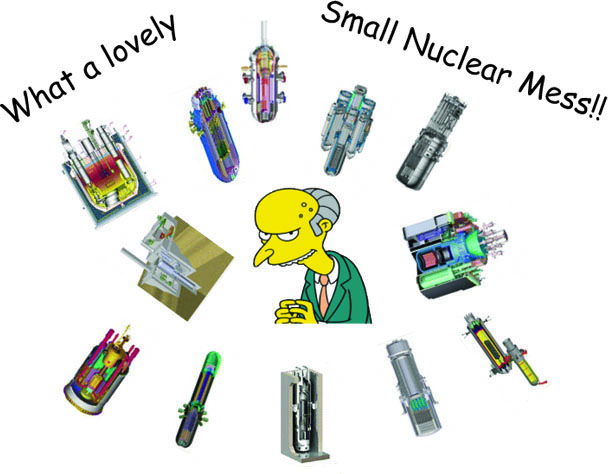
Despite her comments, one of Australia’s leading scientific agencies, the Commonwealth Scientific and Industrial Research Organisation , still views nuclear power as a non-starter, even with new reactor technologies.
A CSIRO report released in June found there was “no prospect” of nuclear small modular reactors being introduced to Australia in the next decade given the technology’s “commercial immaturity and high cost”.
It also found renewables such as solar and wind remained the “cheapest new-build electricity generation option in Australia”.
The Australian nuclear lobby is at it again. Nine right-wing rural senators push to change the laws on nuclear activities
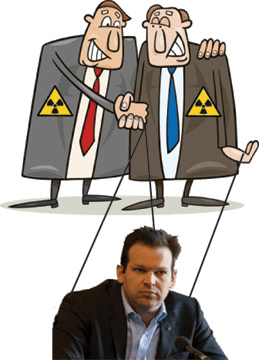
Senator Matt Canavan has a chequered history when it comes to his attitudes and statements on energy and resources
Sept 2021 Canavan cold on the push for nuclear power – and talked up the prospects of coal exports. “Obviously, if we can’t find a long-term solution for that level of waste it’s pretty hard to fathom that we could go beyond that for the production of nuclear energy that does produce a larger amount and more waste of a higher category to manage.”
Augus 31 21 Canavan tweeted called on Australia to boycott Glasgow, labelling the conference a “sham”
August 28 21 – lead the charge in his party’s anti-science war, with the CSIRO a main target
August 11 21 “Myself and Member for Flynn, Ken O’Dowd, we’re happy to have a nuclear power station in our backyard.”
Canavan was called out, in March 21 for his inaccurate hype about small nuclear reactors
.
“On 27 October 2022 the Senate referred the Environment and Other Legislation Amendment (Removing Nuclear Energy Prohibitions) Bill 2022 to the Environment and Communications Legislation Committee for inquiry and report by 31 March 2023.
The close date for submissions is 12 December 2022.
About this inquiry:
The bill would amend the Australian Radiation Protection and Nuclear Safety Act 1998 to remove the prohibition on the construction or operation of certain nuclear installations; and Environment Protection and Biodiversity Conservation Act 1999 to remove the prohibition on the Minister for Environment and Water declaring, approving or considering actions relating to the construction or operation of certain nuclear installations. https://www.aph.gov.au/Parliamentary_Business/Committees/Senate/Environment_and_Communications/Nuclearprohibitions?fbclid=IwAR1ZJyT5tShsXWXm9q2XGv4aHPnN7r_gj6V1VNNNmET3YAfCQWG7RSJ21bQ
The leader is this push is Senator Matt Canavan, Strangely, Canavan resigned from the task of being in charge of the nuclear waste dump program, in order to pursue his own politcal ambitions in a spill in the National Party.
Others include Jacinta Yangapi Nampijinpa Price– Country Liberal Party, (Northern Territory)
David Julian Fawcett – Liberal Party, (SA), Alex Antic – Liberal (SA) David Van -Liberal Party (Victoria), Ross Cadel – National Party (NSW), Gerard Rennick – Liberal National Party ( Queensland)
·Note from Kazzi Jai – at Fight to stop a nuclear waste dump in South Australia
I’ll get back to you on this, but judging by last Thursday’s Senate Estimates, it sounds like there is again a push for nuclear energy by vested interests….Seems people like Matt Canavan – the Senator who RESIGNED from being Minister in charge of the dump SO THAT HE COULD PURSUE HIS OWN POLITICAL AMBITIONS in a spill in the Nats….and now crows about putting SCIENCE into these debates AND NOT POLITICS – absolutely LAUGHABLE….anyway he OPENED the Global Uranium Conference 2022 last week
AND he was in my opinion disruptive in the Senate Estimates sitting, interjecting when Minister Ayres was answering a question FROM A DIFFERENT SENATOR! Matt Canavan was given A LOT OF LATTITUDE in my opinion from the Seat…..GIVEN ALSO THAT BOTH HOUSES OF PARLIAMENT ARE NOT RULED BY THE COALITION! Seems OLD HABITS die hard!
1 This month


Help Aunty Sue Protect Her Land and Sacred Sites From Destructive Rocket Testing.
.

Australians deserve the truth
about
AUKUS – https://aukuspublicinquiry.com/

PETITION – To: Prime Minister Anthony Albanese and the Australian Labor Government

of the week – Australians for War Powers Reform (AWPR)
To see nuclear-related stories in greater depth and intensity

