Medical warning on radiation risks in unnecessary CT scans
 Less is the new more: choosing medical tests and treatments wisely The Conversation,Tammy Hoffmann A/Prof Clinical Epidemiology, Bond University; NHMRC Research Fellow at The University of Queensland Chris Del Mar Professor of Public Health at Bond University
29 April 2015 “……Not so long ago, getting an x-ray for acute back pain was the norm. Although it’s now known that they don’t help most cases, they are still used far more frequently than is necessary.
Acute non-specific low back pain is a very common problem that, most of the time, gets better without any treatment. We are not sure anything, except staying active, helps it resolve faster.
X-rays are only helpful to diagnose the rare causes of acute back pain such as cancer (spread from some other origin), infection (very rare nowadays), osteoporotic fractures in elderly folk, or exceptional narrowing of the spinal canal. Most of these have some clinical indications that doctors look out for.
X-rays not only have little to contribute, they have downsides too.
First, they detect problems that may not be relevant (such as disc-space narrowing) and can lead to more investigations, such as computed tomography (CT) scans. Rarely does anything detected from the x-rays or the further investigations contribute to the better management of the condition and resolve a person’s back pain faster.
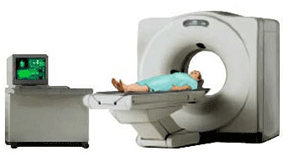
Second, x-rays themselves are directly harmful: accumulated doses of radiation increase the risk of cancer. While the doses are very small for plain x-rays, they are much higher for CT scans…….
One move comes from government. Last week federal Health Minister Sussan Ley ordered a review of Medicare item numbers to prune away activities funded from the public purse that are useless.
Another initiative, launching in Australia this week, comes from the clinical professions themselves: the Choosing Wisely campaign. It aims to encourage a conversation between clinicians and patients about tests, treatments and procedures that may provide little or no value, and which may cause harm.
The Choosing Wisely campaign first launched in America in 2012 as collaboration between the American Board of Internal Medicine Foundation, Consumer Reports and nine medical speciality societies. Each society developed a list of five treatments, tests or services that were commonly provided but whose necessity should be questioned and discussed.
The campaign has expanded, with 70 societies now participating. Thirteen countries have adapted and implemented Choosing Wisely…….
These lists are not just for clinicians. As we recently wrote on The Conversation, our research showed most people overestimate the benefits and underestimate the harms of tests, screens and treatments.
These unrealistic and overly optimistic expectations often result in patients asking clinicians for tests and treatments. Some of these are unnecessary and will provide little, if any, benefit and may cause harm………http://theconversation.com/less-is-the-new-more-choosing-medical-tests-and-treatments-wisely-40756
This week’s Nuclear Notes, from Mia Pepper
 Mia Pepper , Beyond Nuclear 30 April 15 Last week the Federal Government gave conditional approval to the Kintyre uranium mine proposal on the edge of Karlamilyi National park. You can still send a message to the minister even though he’s made the decision here online action supporting Parnngurr’s. You can read the minister conditions here – which basically says they need to resubmit everything before they can start mining – reaffirming our frustration that everything we looked at through public review was a draft and could change as it goes through the DMP assessment. An article about this in the NW Telegraph is attached.
Also this week we saw the Mineral Council of Australia push for the Government to reconsider nuclear power as they also celebrated the $4 million gift to Climate denialist Bjorn Lomborg (*sigh). The South Australian Royal Commission has released papers for comment please have a look and make comment – if anyone is keen we’d love volunteer help to look through a make comment on behalf of CCWA, ANAWA or WANFA. Can pick your choice of org. We have computers, internet, photocopiers and phones to assist you in doing this.
Last week the Nuclear Non Proliferation Treaty Conference was opened in NYC – some strong statements have been made about the humanitarian cost of war and nuclear weapons, and calls to ban nuclear weapons. Unfortunately Australia is not one of those countries. Can see statements from Austria and
Mexico. Reaching Critical Will have put together this great little briefing book on the NPT, for a short read on background and demands for this conference. Yesterday there was a great action against US warships in Fremantle with Dr Death, the doomsday clock, Baloney Abbott and the CWA *concerned womyn anarchists – thanks to all involve for a very fun, engaging and peaceful protest.
The World Uranium Symposium in Quebec has now been and gone – check out the very inspiring declaration from the Symposium.
And remember to tune in to Understorey – and the Radioactive Show this week for all the latest nuclear and peace news.
Even the pro Nuclear Royal Commission admits the threat of the nuclear industry to precious groundwater
 Groundwater a significant issue: nuclear royal commission, IN Daily,
 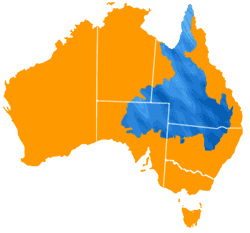 Adelaide Indpendent News, 30 April PETER GILL | 30 APRIL 2015 The potential impact of a nuclear waste storage facility on South Australia’s groundwater systems is one of the “significant issues” that need to be addressed in any consideration of expanding the nuclear fuel cycle, according to the royal commission.The second issues paper published by the royal commission says the siting and operation of a waste storage or disposal facility must take potential environmental impacts into account.
“In addition to the management of radiative exposure, a significant issue is the potential for the contamination of groundwater sources.
“Addressing that issue requires an understanding of the current frequency, flow and volume of surface and ground waters. “Management of water resources from sourcing and storage will be required if such a facility were to be sited in South Australia.
“Also significant is the potential risk of land contamination at handling, storage and disposal sites.
“Aside from its ecological impact upon animals and plants, contamination of the environment has implications for the health and safety of humans who use those resources.”
The issues paper, entitled Management, Storage and Disposal of Nuclear and Radioactive Waste,was released last week and followed the royal commission’s first public forum in Mt Gambier. Similar forums will be held in Port Augusta today (Thursday 30 April), Port Pirie tomorrow, and Berri on 5 May………http://indaily.com.au/business-insight/2015/04/30/groundwater-a-significant-issue-nuclear-royal-commission/
Minerals Council pushes for overturning of Australia’s environmental laws
When Oscar Archer spruiked on ABC Radio National for then entire nuclear chain to be set up, he left the first and most important step as a little addition near the end of his spruik. That was the necessity of overturning Australia’s Federal and State environmental laws. The Nuclear Lobby now takes this up
 Review emissions target, nuclear ban: Minerals Council The Minerals Council of Australia has called for a review of the ban on nuclear power and warned that Australia’s post-2020 emission-reduction target cannot be properly formulated without extensive economic modelling……
Western Australia ready to gamble with the radioactive uranium industry
The uranium lobby is one of the nation’s most powerful.
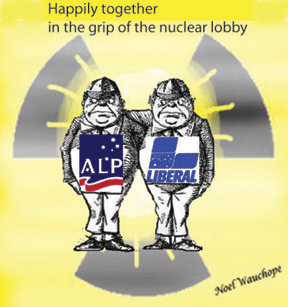 The State Labor Opposition carries on that it supports a uranium ban however this is hogwash. It was former Prime Minister Julia Gillard’s Government, helped along by Gary Gray and Martin Ferguson, who talked up uranium mining no less than Bob Hawke did, and who negotiated with India. State Labor despite its promises at its annual conferences will never reinstate the ban on uranium.
Western Australia ready to dice with uranium & radiation, The Stringer by Gerry Georgatos April 26th, 2015 “…….Yesterday, the Federal Government ‘green  light’ welcomed in a uranium mine in the Pilbara. There are now four uranium projects in advanced development stages. The Government will sell the underwriting of revenue and jobs but it is their mining chums who will get rich not the Australian nation – but the burden of any radiation leaks will be borne by the Australian people.
Mining companies are investing huge fortunes in research, exploration and development projects for the mining of uranium. Nuclear energy is not just touted but will be the energy fuel of the future. Previous and incumbent Australian Governments have signed off uranium export deals and not just with India.
Western Australia has four uranium mining projects in the advanced stages leading to their establishment – Kintyre, Mulga Rock, Wiluna and Yeelirrie.
For now, they are mostly by the communities – Homelands – of First Peoples. The communities are being told that jobs will be waiting for them at the uranium sites. The uranium sites are being sold as world’s best practice – Continue reading
United Nations forum supports Kimberley Land Council’s plea to save Aboriginal communities from closure

Australian Capital Territory helps Victoria’s wind energy industry to get going
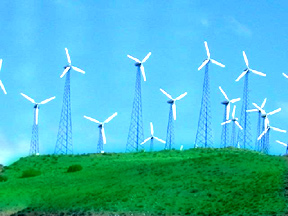 Coonooer Bridge Wind Farm a renewable win for Victoria in dire environment, SMH April 28, 2015 Tom Arup Environment editor, The Age It’s been a torrid few years for renewable energy in Australia, with jobs being shed and investment drying up. The Victoria landscape has been no exception.
So it is perhaps to some state shame that one of the few recent Victorian projects to get the financial go-ahead has been backed by the Australian Capital Territory.
On Tuesday renewable energy firm Windlab announced it has signed a deal with a Japanese company for the final financing for a $50 million wind farm north-west of Bendigo, meaning construction will now begin mid-year.
The Coonooer Bridge Wind Farm will have a modest six turbines and generate up to 19.4 megawatts of power, enough for 14,000 homes It is one of three wind projects supported by the ACT government via feed-in-tariffs, with winning projects selected earlier this year through an auction. Company RES Australia was also backed to build a 80.5 megawatt wind farm near Ararat.
The auctions are part of the ACT’s goal to have 90 per cent of its electricity needs come from renewable power by 2020. Continue reading
Forced evictions: Australian govts make way for uranium miners
50 City of Perth armed police raided an Indigenous homeless camp at Matagarup, and drove off mostly elderly women and young mothers with children. The people in the camp described themselves as “refugees … seeking safety in our own country”. They called for the help of the United Nations High Commissioner on Refugees.
Australian politicians are nervous of the United Nations. Abbott’s response has been abuse. When Professor James Anaya, the UN Special Rapporteur on Indigenous People, described the racism of the “intervention” , Abbott told him to, “get a life” and “not listen to the old victim brigade.”
The planned closure of Indigenous homelands breaches Article 5 of the International Convention for the Elimination of Racial Discrimination (ICERD) and the Declaration on the Rights of Indigenous People (UNDRIP).
Forced evictions are Australia’s latest racist assault on Aboriginal  People, Ecologist 28 Apr 15 28th April 2015 Australia’s deliberate and calculated attacks on its indigenous population carry many of the hallmarks of genocide, writes John Pilger. And things are getting worse, not better, as states that have grown rich by exploiting Aboriginal land evict and demolish remote Aboriginal communities. Australia has again declared war on its Indigenous people, reminiscent of the brutality that brought universal condemnation on apartheid South Africa.
Aboriginal people are to be driven from homelands where their communities have lived for thousands of years.
In Western Australia, where mining companies make billion dollar profits exploiting Aboriginal land, the state government says it can no longer afford to“support” the homelands.
Vulnerable populations, already denied the basic services most Australians take for granted, are on notice of dispossession without consultation, and eviction at gunpoint. Yet again, Aboriginal leaders have warned of “a new generation of displaced people” and“cultural genocide”.
Genocide is a word Australians hate to hear. Genocide happens in other countries, not the ‘lucky’ society that per capita is the second richest on earth. Continue reading
Choosing Wisely campaign warns on unnecessary radiation medical procedures
Unnecessary tests: Choosing Wisely campaign targets brain scans, food allergy tests SMH, April 29, 2015 Harriet Alexander Common medical procedures including brain scans, food allergy tests and long-term reflux medication are unnecessary and possibly harmful for many patients and should be radically reduced, doctors have warned.
Five of the peak specialty medical groups has identified 24 tests and treatments that physicians and patients should question in a national campaign that aims to influence treatment standards in hospitals and medical practices across Australia.
Each college or association has listed five examples, including tests that lead to false positives or expose patients to radiation without generating a useful diagnosis and treatments that new research has proved ineffective…….
The Australian College of Emergency Medicine’s immediate past president Sally McCarthy said 40 to 60 per cent of diagnostic tests were of little or no benefit to patients.
“It’s phenomenal, so it’s in everyone’s interests to not waste resources by diverting them to stuff that doesn’t need to be done,” Dr McCarthy said.
Most of the tests and treatments identified by the colleges were known to be ineffective, but junior doctors and nurses could be more prone to ordering unnecessary tests because they did not want to miss anything, she said……..
The Choosing Wisely campaign, co-ordinated by the not-for-profit organisation NPS MedicineWise, has been modelled on an initiative of the same name launched in the United States in 2012 and has since been adopted in Canada, Italy, the Netherlands and Germany.
NPS MedicineWise chief executive Lynn Weekes said few items on the list would be controversial among clinicians, but many recommended them anyway.
The aim of the campaign was to start a conversation.
“But doctors are careful, they’re worried that they’re going to be sued, they do practise a bit of defence medicine,” Dr Weekes said.
“It may be the system is putting pressures on them in terms of the way the hospital works that just makes this the easier route. So it’s a combination of factors.”………http://www.smh.com.au/nsw/unnecessary-tests-choosing-wisely-campaign-targets-brain-scans-food-allergy-tests-20150429-1mv8n3.html
Minerals Council wants to overturn Australia’s environmental laws- in the cause of the nuclear chain
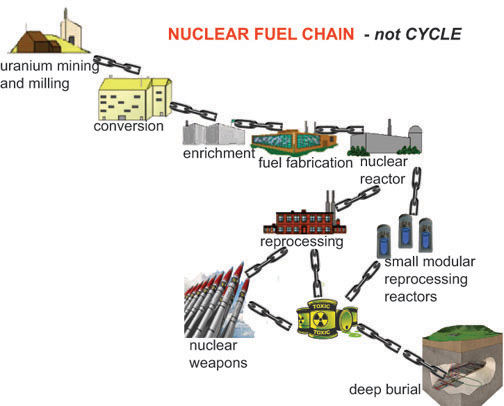
I recently reported on the plan outlined by pro nuclear propagandist Oscar Archer to bring the entire
nuclear fuel chain to Australia.
In Archer’s glossy spiel on how great it would be – he just barely touched on the fact that Australian federal and state environmental laws will have to be overturned.
Now the Minerals Council comes out spruiking for this overturning of laws as the first step in the toxic chain of events to bring the toxic nuclear chain to Australia
Review emissions target, nuclear ban: Minerals Council The Minerals Council of Australia has called for a review of the ban on nuclear power and warned that Australia’s post-2020 emission-reduction target cannot be properly formulated without extensive economic modelling… (registered readers only)
Fibs and half-truths told by the South Australian Nuclear Royal Commission
Confusing and dishonest propaganda is already the modus operandi of South Australia’s Nuclear Royal Commission.
How Kevin Scarce, the (only known) Commissioner reported on their visit to Mt Gambier:
1. Public response “It is clear from our first public forum held in Mount Gambier this week that the community is keenly interested in having their say on the nuclear fuel cycle.
2. Information provided “It was also clear that the Issues Papers were a valued source of information for the community, as the information is evidence-based and provides helpful guidance on the topics which submissions will best assist the inquiry”.
What really happened at Mt Gambier.:
1. Public (dubious) response Royal Commission (presumably Kevin Scarce + unknowns) held public forum at Mt Gambier on April 20. Only 35 people attended. Then Commissioner talked with “business leaders” . – a lot of secrecy about who’s involved in this Royal Commission.
2, Information (not) provided. Out of 4 Issues Papers touted by the Commission, in fact only one EXPLORATION, EXTRACTION AND MILLING (of Uranium and Thorium) (very narrow and inadequate) has yet been released..
New Matilda’s Guide to Greg Hunt’s Climate Nonsense
A Simple Guide To Understanding Greg Hunt’s ‘Nonsense’ Carbon Con, New Matilda 26 Apr 15 More than a decade in, Australia still doesn’t have a credible carbon abatement policy. Thom Mitchell explains.
Environment Minister Greg Hunt is doing a stellar job of muddying the rising, warming waters which threaten to submerge the government’s “inadequate” climate policies, but experts say his claims are “quite outrageously misleading”.

After half a decade of rhetoric the government’s Emissions Reduction Fund (ERF), the centre-piece of its ‘Direct Action’ climate policy, has faced its first real test. Continue reading
Australia’s role in the global nuclear industry crisis – – theme for May 2015
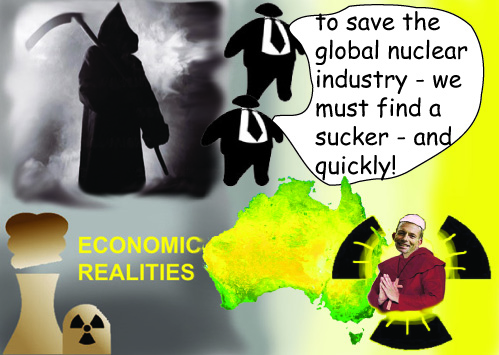
The global nuclear industry may pretend otherwise, but it is in crisis. The commercial nuclear industry is an economic disaster. The first and greatest nuclear nation, USA, has learned this. So has France. Britain now undergoes this painful realisation.
As these “old” nuclear countries realise the collapse of their nuclear industry, they turn to marketing nuclear technology overseas, in a desperate effort to make the industry viable. This gets complicated, because the desire for nuclear weapons is a strong motive for buyers – India, Pakistan, Saudi Arabia? – countries that really do not need nuclear power, but like the option of nuclear weapons..
Within the nuclear industry there’s been a division between the interests of the big “conventional” uranium fired nuclear reactors, and the supporters of small nuclear reactors and thorium fuelled reactors.
Here’s where Australia comes in. Somewhat culturally isolated, Australia is a sitting duck for a clumsy plan to put all these technologies together, and for the global nuclear salesmen to present a united face, and try to sell the whole lot to Australia.
These nuclear marketers (Canada’s Lavalin, France’s AREVA, USA’s Westinghouse, GE Hitachi) are desperate for Australia to accept this scheme. Afflicted at home by public anxiety about radioactive trash, they really do need to be able to tell their citizens – “Don’t worry – Australia will take the trash – we can keep on making it.”
Australian company Paladin discharges uranium sludge into rivers in Malawi
Malawi: Paladin Starts Discharging Uranium Wastes Into Public Rivers, AllAfrica, By Bishop Witmos Karonga April 23: Few months after Paladin Africa Limited differed with civil society organizations (CSOs) and some chiefs in Karonga over the disposition of uranium wastes into public water, the company has started discharging the effluent into Sere River.
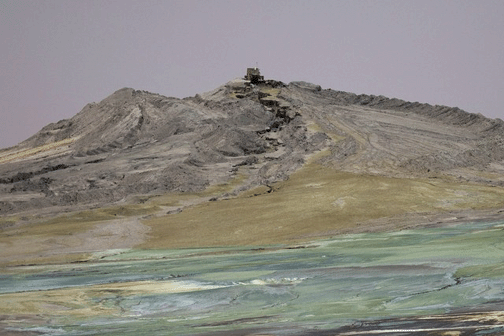
Paladin Africa Limited, a member of the Paladin Energy group of companies, suspended its operations at Kayelekera Mine in the district in May, 2014, due to unstable uranium prices at an international market. The project is now on care and maintenance.
Malawi News Agency (Mana) has established Paladin invited Paramount Chief Kyungu and the District Commissioner (DC) for Karonga, Rosemary Moyo, to a meeting in Lilongwe early April this year (2015),to brief them about the company’s recent decision.
Paladin Africa Acting General Manager in Malawi, Greg Walker, confirmed in a telephone interview that the company, indeed, started releasing the uranium wastes into the public rivers………
Sere River flows into North Rukuru River, then into Lake Malawi.
When asked why the company decided to brief Paramount Chief Kyungu and the Karonga DC about their action in Lilongwe instead of explaining it to the general populace of Karonga, Walker said the company conducted enough meetings with relevant authorities in the district……..
Despite the decision by Paladin to start discharging its effluent into the public water, some people in the district feet it would have been safer if the company had constructed another dam where the wastes would be transferred into.
Chairperson for Karonga District Council, Patrick Kishombe, said in an interview the plan to release the waste water from the storage dam into Sere River is raising fears amongst communities who feel the water is not fully treated and could be a health hazard.
“This, I believe, will lead into many hazards, like killing of fish in Lake Malawi and may also cause skin cancer to some people,” said Kishombe.
Uranium contains gamma rays, particles that cause skin cancer to human kind, according to experts.
In developed nations, mining companies construct a stable tank that stores all the wastes, ready for transportation to recommended disposal sites. ……http://allafrica.com/stories/201504231621.html
Slump in uranium production by Australian company Paladin
 Paladin uranium output slumps THE AUSTRALIAN, 24 Apr 15 Paladin said today production at the group’s Langer Heinrich mine during the March quarter had slumped 10 per cent from the December quarter to 1.23 million pounds of uranium oxide.
1 This month.
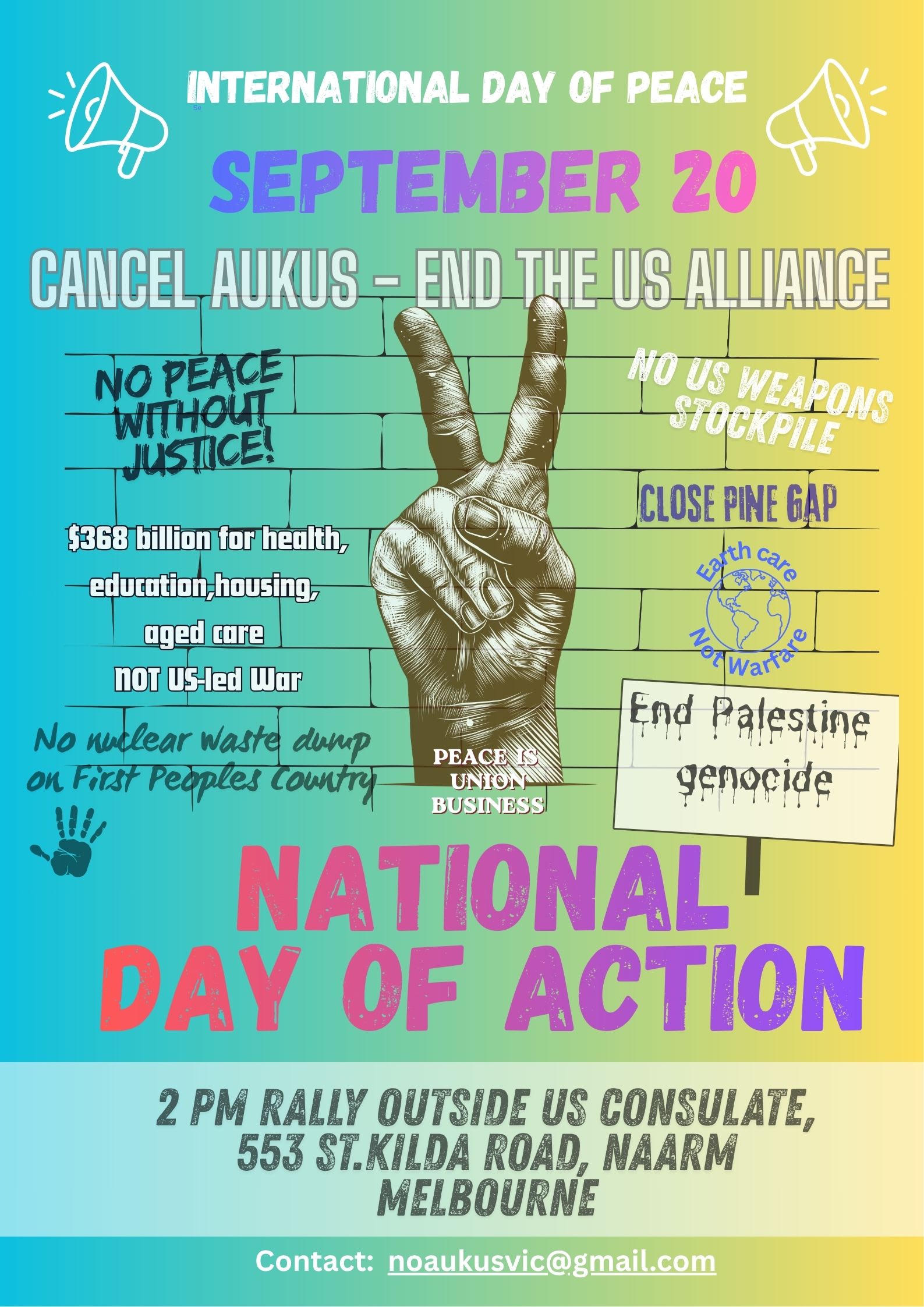
20 September –National Day of Action in Melbourne on the International Day of Peace

Help Aunty Sue Protect Her Land and Sacred Sites From Destructive Rocket Testing.
.

Australians deserve the truth
about
AUKUS – https://aukuspublicinquiry.com/
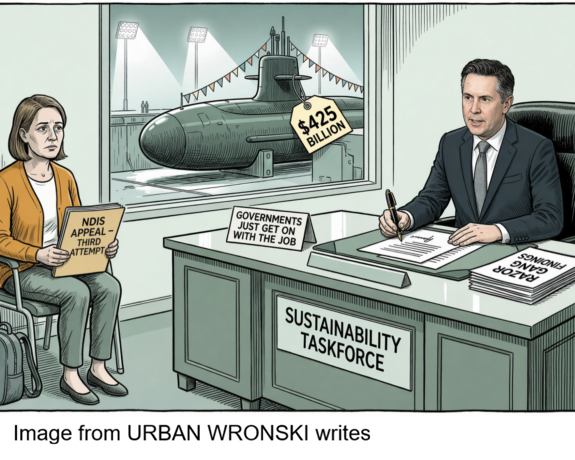

PETITION – To: Prime Minister Anthony Albanese and the Australian Labor Government

of the week – Australians for War Powers Reform (AWPR)
To see nuclear-related stories in greater depth and intensity
 Antinuclear