The appalling hidden history of what British settlement did to Tasmania’s Aborigines
 Invasion, Theft, Rape, Murder: The Aboriginal Holocaust in Tasmania Atlanta Black Star, March 19, 2014 by Runoko Rashid DEDICATED TO TRUGANINI “……..The first people of Tasmania, known as Palawa, were marked by tightly curled hair, with skin complexions ranging from black to reddish-brown. They had broad noses, wide mouths, and deep-set brown eyes. They were relatively short in stature with little body fat. They were the indigenous people of Tasmania and their arrival there began at least 35,000 years ago. With the passage of time, the gradual rising of the sea level submerged the Australian-Tasmanian land bridge and the Black aborigines of Tasmania experienced more than 10,000 years of solitude and physical isolation from the rest of the world……..
As early as 1804 the British began to slaughter, kidnap and enslave the Black people of Tasmania. Continue reading
Australian Senate votes against repealing the carbon tax
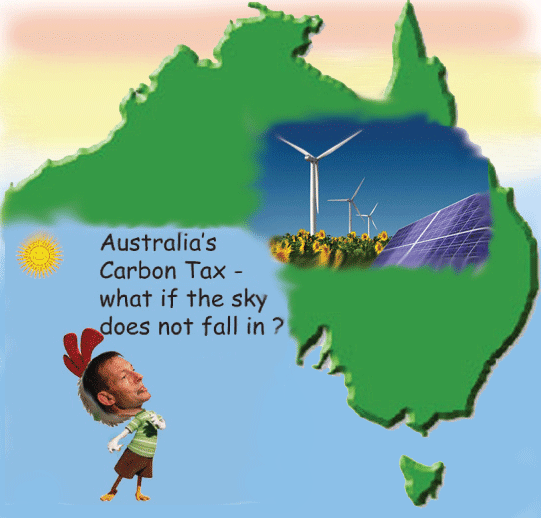 Senate votes to block carbon tax repeal legislation ABC News By political correspondent Emma Griffiths 20 March 14, The Senate has voted down legislation to axe the carbon tax – a core election promise of Prime Minister Tony Abbott.
After months of debate Labor and the Greens combined to vote against the repeal laws 33 votes to 29 today.Labor, which introduced the carbon pricing scheme in 2012, says the Coalition’s alternative policy to tackle climate change, called Direct Action, will be ineffective and too expensive.
“Without a credible alternative, Labor cannot support the abolition of the existing clean energy policies,” Opposition climate change spokesman Mark Butler said.Greens leader Christine Milne has issued a statement saying the current law, maintaining a price on carbon, must stand.”The Senate has rejected Tony Abbott’s do-nothing approach on global warming and voted to maintain the price on pollution,” she said.
The carbon pricing scheme was brought in by the Gillard Labor government, after extensive negotiations with the Greens, and currently charges polluters about $25 per tonne of carbon emissions……..
Earlier today, the Government had already reintroduced carbon tax-related legislation that could set the stage for a double dissolution election on the issue.The Coalition wants to axe the multi-billion-dollar Clean Energy Finance Corporation (CEFC) but the Senate rejected the legislation in December…….
The laws were brought back before Parliament this morning, and if voted down again would give the Government a trigger to call an election of both houses of Parliament……….http://www.abc.net.au/news/2014-03-20/senate-votes-to-block-carbon-tax-repeal-legislation/5334020
Australian Medical Association says wind farms do no cause adverse health effects
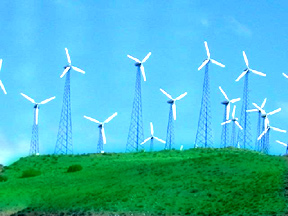 AMA statement on wind power should reassure Australians says CEC http://www.renewableenergymagazine.com/article/ama-statement-on-wind-power-should-reassure-20140319 Robin WhitlockTuesday, 18 March 2014 The Australian Clean Energy Council (CEC) has welcomed a public statement by the Australian Medical Association dismissing claims of adverse health effects from wind turbinesThe CEC said that the AMA statement should provide additional peace of mind for communities living in the vicinity of existing or proposed wind power projects. CEC Policy Director Russell Marsh added that the AMA statement followed similar recommendations by health and acoustic bodies across Australia, to the effect that there is no evidence to link wind farms and adverse health effects.
“Other groups that have made positive statements on wind farm noise and health recently include the New South Wales and Victorian health departments, the South Australian Environmental Protection Agency and the Association of Australian Acoustical Consultants” said Mr Marsh. “The National Health and Medical Research Council, the national peak body for health research, also released a draft position statement several weeks ago that stated there was ‘no reliable or consistent evidence that proximity to wind farms or wind farm noise is directly associated with health effects’.”
Mr Marsh went on to report that no credible Australian health or acoustic organisations are opposing wind farms and that people should therefore feel reassured by that.
There has been a steady misinformation campaign in Australia over several years waged by those opposed to wind farms. This makes it even more important that developers of wind power projects should maintain good relations with the communities living in the vicinity of existing or proposed wind farms.
The CEC has now developed community engagement guidelines for wind farms in addition to a community expectations guide.
For additional information: Clean Energy Council (CEC) Community Engagement Guidelines
Palmer United Party to the rescue of Australia’s Renewable Energy Target?
 Renewable Energy Target – Even Clive Palmer Gets It http://www.energymatters.com.au/index.php?main_page=news_article&article_id=4227 Australia’s renewable energy sector has perhaps found an unexpected ally in Clive Palmer and the Palmer United Party (PUP). After PUP’s WA candidate, Zhenya ‘Dio’ Wang, expressed support for the Renewable Energy Target to be left as is and labelled the controversial RET review a ”waste of taxpayers’ money”, Mr. Palmer backed Mr. Wang’s views and told Fairfax Media he was a supporter of renewable energy.
 Grassroots solar advocacy groups Solar Citizens applauded Mr. Wang’s public statement of support for the RET.
“Mr Wang’s media release of earlier today, which acknowledged the importance of the renewable energy target (RET) and the jobs it creates, is great news for all solar loving West Australians” said Lindsay Soutar, National Director of Solar Citizens.
“WA Senate candidates need to understand that West Australians want more renewable energy, and that’s why all parties should reveal their position on solar and the RET before Western Australians go to the polls.”
The Australian Solar Council also congratulated Palmer United Party (PUP) for pledging their support for the Renewable Energy Target to stay exactly as it is. “Politicians know Australians love solar because it cuts household power bills. They know that supporting the Renewable Energy Target at the Senate election will deliver them votes,” said Australian Solar Council Chief Executive John Grimes.
“Not supporting the Renewable Energy Target will cost them votes.”
The Council says it will be publishing a preliminary solar scorecard in The West Australian on March 22 to show where the various players stand on the issue of solar. It will also be engaging a substantial TV advertising campaign in the lead up to the WA Senate election.
“More than 12,000 Australians (1,200 West Australians) would lose their jobs if the Renewable Energy Target was axed”, said Mr Grimes.
Close to 150,000 households in Western Australia have installed solar panelsand many more have expressed and interest in doing so. Under the Renewable Energy Target, support is provided for the purchase of systems.
Call for electric highway in Western Australia
 Electric car devotees push for electric highway in Western Australia ABC News, By Claire Moodie 18 Mar 2014, Australia’s first ‘electric highway’ will be rolled out in Western Australia if Perth devotees of the cars have their way.The push is on for a network of charging stations in up to 35 towns in Western Australia’s south west, including the tourist getaway of Margaret River.
It would be a game changer for electric vehicle (EV) owners, many of whom currently think twice about leaving the city.”You can’t just drop into a petrol station,” said Patti McBain, whose converted Ford Focus has a range of about 125 kilometres.”You have to plug in somewhere.”…….
Kirsten Rose of the Sustainable Energy Association says Australia is lagging behind due to the lack of public policy on electric cars.”There is little or no support for getting these cars on the road at the moment,” she said. Ms Rose says Australia needs to follow the lead of the US and Europe and introduce financial incentives, such as rebates, if it is to get up to speed with the benefits of EVs.
The rest of the world is well ahead of us in this game. Motor Trade Association chief executive Stephen Moir “In our cities, air quality and air pollution is an increasing issue and EVs have no emissions so there is a very significant public health benefit that needs to be quantified,” she said.
The Motor Trade Association agrees incentives need to be introduced if electric cars are to move from a niche market into the mainstream. Chief executive Stephen Moir says although prices are falling, the average electric vehicle on the Australian market is about twice the price of its petrol equivalent.
The Electric Vehicle Association says while the upfront costs are high, the running costs are minimal. “Once you’ve bought the electric car or motorcycle, you’re looking at less than three cents per kilometre to drive whereas a petrol-powered car might be something like 12,” Mr Jones said.
“The fact that you can generate your own electricity on your roof for free and charge your car and drive around for free, is a winner.”And they need virtually no maintenance.”http://www.abc.net.au/news/2014-03-18/push-for-an-electric-highway-in-wa/5329442
Australia’s transformation from centralised to decentralised energy generation
A ‘new normal’ has not yet been established but all the indications are that the emerging model will lower the cost of new infrastructure, improve competition and greatly improve the degree to which existing infrastructure is used efficiently.
Distributed generation has already succeeded in moving beyond a characterisation as a niche part of the energy industry. However the speed of that transition will depend on the extent to which the market allows for innovation and how quickly the new entrants of today are allowed to become the incumbents of tomorrow.

Centralised to decentralised energy: What does it mean? REneweconomy, By David Green on 16 March 2014 We are in the early stages of a transformation in the way we build, operate and finance our electricity infrastructure in Australia. For decades, Australia’s electricity sector – just like most across the western world – has operated on a model of centralised, state-owned power plants, typically co-located with major sources of fuel. This has meant that not only have a small number of large power plants provided the vast bulk of electricity needs, but that often these plants have been physically clustered together in places like the Latrobe Valley in Victoria and the Hunter Valley in New South Wales. Today, Australia’s energy market is increasingly integrated into one large east coast market and several smaller grids, with the Victorian market fully liberalised. Others, such as Queensland, Western Australia, and Northern Territory are still largely state-owned, and the remaining states are in various degrees of transition.
The core logic behind the physical co-location of generation plants was that the economic efficiency gains from being positioned close to the fuel source (typically coal or large hydro) were greater than the economic inefficiency of transmission losses from transporting power long distances to major population and industrial centres.
New technology and the economic dynamic of the market mean this is now changing. Continue reading
Hooray, Labor Leader Bill Shorten speaks out on Climate Change
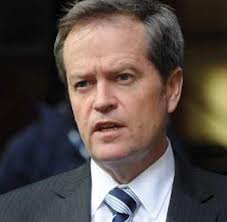 Bill Shorten vows to fight climate change deniers and conspiracy theorists The Age, March 17, 2014 James Massola Political correspondent Opposition Leader Bill Shorten has lashed out at the conspiracy theorists, keyboard warriors and social media trolls who have hijacked the debate about man-made climate change. There’s an important difference between tackling the misinformation peddled by climate change deniers, and stooping to their level.
And Mr Shorten has pledged to be a “disciple of science and innovation”, promising the Labor Party will encourage risk-taking and entrepreneurialism and warning “Australia can either get smarter or get poorer – we can choose to compete or give up”.
The Opposition Leader has been under sustained political pressure from the federal government to support the repeal of the carbon tax, but he has promised to vote against repeal if the alternative is the government’s Direct Action policy. He has also committed to taking a market-based system for pricing carbon to the 2016 election.
“Labor won’t be walking away from our action on climate change – or bowing to the will of a Prime Minister who offers cynical nostrums that emissions trading is rendered meaningless because it deals with an ‘invisible, odourless substance’,” he said.
Mr Shorten told the annual Science Meets Parliament conference in Canberra on Monday the climate change debate was a “cautionary tale for what happens if we abandon the field to the conspiracy theorists and keyboard warriors, the social media trolls and the angry shouts of talkback radio”.
“Too many of us took the popular support for action on climate change for granted,” he said.
“A mistake that has seen Australia move from a co-operative conversation on the best international method for dealing with the causes of climate change and mitigating against its effects to an argument poisoned by allegations of conspiracy and alarmist ‘warmism’.”… http://www.theage.com.au/federal-politics/political-news/bill-shorten-vows-to-fight-climate-change-deniers-and-conspiracy-theorists-20140317-34×01.html
Abbott govt shows its allegiance to BHP and Rio Tinto
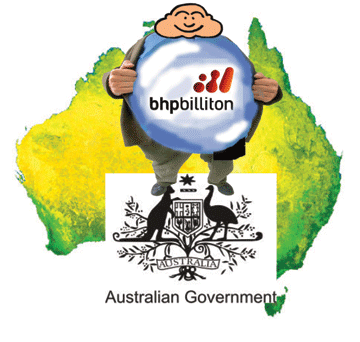 Taxpayers fund $110m loan to venture run by BHP, Rio Tinto The Age, March 18, 2014 Peter Ker, James Massola Australian taxpayers will lend $US100 million ($110 million) to a mining joint venture run by BHP Billiton and Rio Tinto in Chile, under the latest funding deal by Australia’s controversial Export Finance and Insurance Corporation.
The loan to two of Australia’s largest and most profitable companies is being made despite recent criticism of EFIC by the Productivity Commission. It advised the corporation to focus more on small exporters who were unable to secure finance rather than wealthy multinationals.
It also comes at a sensitive time for the Abbott government, which has denied financial assistance to companies such as Alcoa and Holden, amid its campaign to ”end the age of entitlement”.
Under the terms of the latest loan, the $US100 million will be lent to a holding company called Minera Escondida Limitada, which is 57.5 per cent owned by BHP and 30 per cent owned by Rio. Japanese companies Mitsubishi and Nippon Mining own the rest…..http://www.theage.com.au/business/mining-and-resources/taxpayers-fund-110m-loan-to-venture-run-by-bhp-rio-tinto-20140317-34y5u.html
Victoria’s govt joins Abbott’s war on green energy schemes – to axe Energy Efficiency Target
 Victorian Energy Efficiency Target Threatened http://www.energymatters.com.au/index.php?main_page=news_article&article_id=4223 18 March 14 The war on green schemes relating to energy is continuing – the latest victim could be the Victorian Energy Efficiency Target (VEET).
The VEET scheme is designed to make energy efficiency improvements more affordable. It commenced on 1 January 2009 and was legislated to continue in three-year phases until 1 January 2030.
However, it may meet a very premature end. On Sunday, the Herald Sun published a story on a “secret government report” into the scheme that recommended it be abolished and replaced by 2015. Among the reasons reportedly stated is the scheme has been labeled inefficient and a burden to other electricity users.
The Clean Energy Council says claims axing the scheme would provide substantial power bill relief are wrong; as is the conclusion it is ineffective. “The program is getting through to those that need it most and previous studies have shown that it is working well at a low cost,” said Clean Energy Council Chief Executive David Green.
“Two out of every five households in the program have below-average incomes and a third are on some form of welfare.”
Among the products covered under the scheme are selected solar hot water systems and heat pumps. Water heating represents one of the most greenhouse gas and energy intensive activities in a household. This is particularly so in Victoria given much of the state’s electricity generation is through the burning of brown coal – one of the filthiest fossil fuels.
Mr Green said the ‘secret’ modelling released to select media outlets should be fully released for public scrutiny and is confident that scrutiny will reveal VEET is continuing to deliver, both in terms of household savings and the economic activity it creates.
According to the Clean Energy Council, VEET has slashed energy costs for approximately 1.3 million households and businesses; plus has supported thousands of jobs in Victoria’s economy.
Australian Renewable Energy Agency (ARENA) helping remote miners with hybrid energy
the mining industry, although a little shy about risking the money on such brave new projects, is one of the best places for ARENA to make investments, to offset those risks and help industry to find the confidence to get involved in experimenting with renewable energy sources that, in the long run, will deliver lower operating costs for everything from small exploration camps, right up to production level power generation
Hybrid power meeting the challenges for a renewable mining future, Australian Mining, 17 March, 2014 Ben Hagemann Miners are finally starting to look at ways to get their power generation off the grid with renewable energy sources.
Although the technology is burgeoning, the way of the future lies with hybrid power generators……….In remote locations where there’s little to no access to grid power, which means most Australian resource sites, the problem of power generation needs in mining camps, construction projects, exploration crews, and telecommunications is usually dealt with by traditional diesel fired generators. Continue reading
Solar PV will take over from coal as new financing models favour solar
 Solar PV to replace coal as “incumbent” technology REneweconomy, By Giles Parkinson on 17 March 2014 Australia is embarking on a radical transformation of its electricity system that will see solar PV transition from being “disruptive” technology to the “incumbent” technology, displacing coal and sparking a radical change in the way that electricity is provided.
This is the assessment from Clean Energy Council CEO David Green (pictured), who in a presentation last week said generation will move from its traditional place at the point of supply to at or near the point of use; the primary role of the grid will be converted to that of a back-up “battery”; and consumers will play a key role in a more competitive market.
Green told a Davos Connection conference on infrastructure last week that the core logic behind having large scale generation plants close to their fuel source (coal or hydro) was being challenged by shifts in the basic cost parameters of many sources of energy allow generation (mostly solar) to be built closer to where it is used.
It was clear, he said, that solar PV has been taken up more rapidly in lower-income suburbs than higher income – because of the attraction for lower-income households to get a lower, fixed rate of electricity.
Now, new financing models – such as leasing and community ownership, as well as models for renters – was likely to spark a third wave of investment in solar PV. ….
……….RenewEconomy’s Take: Green is right, and this speech is welcome. It is about time that the clean energy industry articulates such a vision for the future in a co-ordinated and vigorous manner. There is much at stake.
As in the US, there is a mixture between those who see opportunity, and those who see only threat. Right now, it appears, it is the latter dominating policy settings. The utilities are resisting change, and so are the government owners.
The carbon price is being wound back, the renewable energy target is under threat, and energy efficiency schemes are also being wound back. In the meantime, tariffs and regulations appear ready to be deployed to slow down the uptake of the solar and solar storage and other technologies. It should be a quite battle..http://reneweconomy.com.au/2014/solar-pv-replace-coal-incumbent-technology-38095
Bernie Fraser deplores Abbott Govt’s policies opposing action on Climate Change
 Abbott government is putting business profits ahead of the community: Bernie Fraser http://www.theage.com.au/federal-politics/political-news/abbott-government-is-putting-business-profits-ahead-of-the-community-bernie-fraser-20140313-34os6.html March 13, 2014 Lisa Cox National political reporter Former Reserve Bank governor Bernie Fraser says the Abbott government is working in the short term interests of business and not the long term interests of the community in its policies on climate change.
Mr Fraser, in an address to the National Press Club, has also expressed surprise at the “brazenness and scale” of the campaign waged by the government and big business against the carbon and mining taxes.
The chairman of the Climate Change Authority, which the government plans to abolish, said on Thursday that the debate over climate policy in Australia was now devoid of balance and maturity.
Australians must learn from Aboriginal management of the land

The massive destruction whites have inflicted on the landscape is unforgiveable. Now we have no excuse. Gammage has told us how it was done. Let’s hope it is not too late. As Gammage says, one day we might be able to call ourselves Australian.
Australia: How the Aboriginal people managed ‘the biggest estate on Earth Review by Coral Wynter
The Biggest Estate on Earth: How Aborigines made Australia
By Bill Gammage
Links, March 13, 2014 – Links International Journal of Socialist Renewal –– This is an extraordinary book, one that will increase your appreciation of the country’s first people, as we begin to understand their amazing knowledge and sheer genius in the way they cared for the land, or as Bill Gammage calls it the “biggest estate on Earth”.
Gammage describes with many examples how the Aborigines looked after the land. No corner was forgotten, including deserts, rainforests and rocky outcrops, across the entire continent for at least 60,000 years until the colonisers began to destroy all this labour after their arrival in 1788.
The Aborigines judiciously used fire to create parklands, with huge, stately trees and grass underneath on rich black soil to feed, then harvest kangaroos and wallabies, as well as to grow yams and spinach. They used cool fires to preserve and maintain the biodiversity of Australia’s orchids, ferns, fruit trees and edible plants. They used “templates” to judiciously burn areas with plants sensitive to fire.
Australia in 1788 was a paradise, which was much more than just sustainable, but instead yielded an abundance of food, which could feed a huge population, some estimates say as many as 8 million people. Continue reading
Market outlook for solar power to 2025
 Solar PV in Australia, Market Outlook to 2025, 2013 Update – Capacity, Generation, Levelized Cost of Energy (LCOE), Investment Trends, Regulations and Company Profiles Market Watch LONDON, March 13, 2014 /PRNewswire/ — Reportbuyer.com just published a new market research report: Solar PV in Australia, Market Outlook to 2025, 2013 Update – Capacity, Generation, Levelized Cost of Energy (LCOE), Investment Trends, Regulations and Company Profiles Solar PV in Australia, Market Outlook to 2025, 2013 Update – Capacity, Generation, Levelized Cost of Energy (LCOE), Investment Trends, Regulations and Company Profiles Summary “Solar PV in Australia, Market Outlook to 2025, 2013 Update – Capacity, Generation, Levelized Cost of Energy (LCOE), Investment Trends, Regulations and Company Profiles” is the latest report from GlobalData, the industry analysis specialists that offer comprehensive information and understanding of the solar PV market in Australia.
Labor’s miserable silence on Climate Change
Bill Shorten was right when he called it a defining issue for our parliament and our nation. It’s also a defining issue for Labor, and for  him
him
Climate change bad guys apply heat to Labor, The Age March 14, 2014 Gay Alcorn While the vocal sceptics have free rein on climate change, Labor is disturbingly quiet. “……..The conservative Lord Deben, the head of Globe International which assesses climate laws worldwide, told the Financial Times last month that the Australian government’s policies were ”so unintellectual as to be unacceptable; I mean it is just amazing”. Of its survey of 66 countries, Australia was one of only two winding back climate change laws.
But what of Labor, whose supporters and parliamentary members overwhelmingly do accept the mainstream science and the need to take strong measures to minimise damage to our economy and our way of life?
[Bernie] Fraser’s criticism of the ALP stings because Labor lacks the excuse of ignorance or the hard right’s conviction that climate change is a left-wing plot to destroy capitalism. Continue reading
1 This month
17 October, Free Public Talk on Nuclear Issues in South Australia
David Noonan will speak on public interest concerns over the new Roxby Downs Indenture Act 2026 on BHP copper-uranium mining and ore processing in SA, and on how AUKUS may face SA with a High-Level nuclear waste agenda.
Dr Jim Green will discuss international developments in the field of nuclear power including ‘small modular reactors’ and Generation 4 ‘advanced’ nuclear reactor concepts.


Help Aunty Sue Protect Her Land and Sacred Sites From Destructive Rocket Testing.
.

Australians deserve the truth
about
AUKUS – https://aukuspublicinquiry.com/

PETITION – To: Prime Minister Anthony Albanese and the Australian Labor Government

of the week – Australians for War Powers Reform (AWPR)
To see nuclear-related stories in greater depth and intensity

