Indonesia solar power project being developed by Australian solar consortium
Australian solar consortium to develop 250 MW Indonesian project REM , 11 February 2013 SGI-Mitabu, a joint venture between The Solar Guys International and Mitabu Australia, is developing a 250 MW solar power project under an agreement with Indonesia’s Ministry of Energy. What’s more, it says it will finance the whole thing through reliance of a form of Islamic financing.
Western Australia’s opportunity to lead in renewable energy
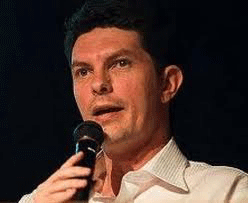 Greens’ plan for clean power by 2029 http://www.watoday.com.au/wa-news/state-election-2013/greens-plan-for-clean-power-by-2029-20130210-2e6in.html#ixzz2KclQE7OS February 11, 2013 Robyn Preston Switching over to 100 per cent renewable energy by 2029 is not only achievable, it will save the average family money, according to Greens’ party leader Scott Ludham. WA Greens’ party leader Scott Ludham launched the Green Energy 2029 proposal on Sunday and said Western Australia cannot afford to wait decades to make the change to renewable energy sources.
The Greens say that with WA’s abundance of sunlight, wind and geothermal resources, changing to renewable energy over the next 16 years will not cost anymore than what has been proposed by the Liberal-National Government he said.
“The state government is actually proposing to spend a quarter of a billion dollars refurbishing the obselete Muja coal-fired power station and that for me is all you need to know about how wrong this government’s prorities are,” said Mr Ludham. Continue reading
The Australian uranium industry is in a bad way – with a doubtful future
 recent steps by BHP to cuts of its uranium program — from the delay of the uranium production expansion plan at the Olympic Dam project to the selling of a large Yeelirrie deposit located in Western Australia.
Recent Ranger and Olympic Dam issues along with various problems related to notable Australian uranium projects like Angela/Pamela, Kintyre, Oban, Wiluna and Koongarra, amongst others, have also caused concerns about the future development dynamics of the local uranium industry.
Australia’s uranium industry hits turbulence Mining.com, Vladimir Basov | February 8, 2013 Recent news from Australia raises serious concerns about the future development of its domestic uranium industry. While established players are exiting the market, others are lining up to explore new areas and have made some positive moves.
Open-pit mining operations at Ranger mine were terminated at the end of November 2012. Continue reading
Radiation in consumer products:Australian Radiation Protection and Nuclear Safety Agency calls for comments
 Draft IAEA Safety Guide for Comment: DS458 – Radiation Protection and Regulatory Control for Consumer Products
By Judi Anderson – 08 February 2013
 The IAEA has requested comment on a draft safety guide DS458 – Radiation Protection and Regulatory Control for Consumer Products. The object of the document is to provide recommendations for the application of the requirements relating to the system of regulatory control for consumer products laid down in Radiation Protection and Safety of Radiation Sources: International Basic Safety Standards – Interim Edition (IAEA Safety Standards Series No. GSR Part 3 (Interim)).
so that we can forward a consolidated Australian response to the IAEA by the due date.
Something Australia can be proud of – beautiful Koongarra preserved from uranium mining
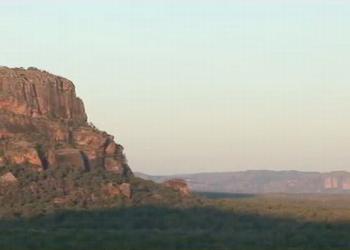 Australia Places Aboriginal Land in Park to Bar Uranium Mining http://ens-newswire.com/2013/02/07/australia-places-aboriginal-land-in-park-to-bar-uranium-mining/ CANBERRA, Australia, February 7, 2013 – After 34 years of campaigning to keep uranium mining out of his ancestral land of Koongarra, Djok Senior Traditional Owner Jeffrey Lee sat in the House of Representatives Wednesday to watch this land be protected forever.
Environment Minister Tony Burke introduced a bill to repeal the Koongarra Project Area Act – a 1979 law excluding Koongarra from the original boundaries of Kakadu National Park because of its potential to be the site for a uranium mine.
“In 2010, the Government promised Mr. Lee that we would incorporate Koongarra into Kakadu National Park, to ensure that the threat of mining was banished forever,” Burke said. Koongarra is an area of native woodland of great environmental and cultural significance, now incorporated within the boundaries of Kakadu National Park. Kakadu is located within the Alligator Rivers Region of the Northern Territory of Australia, 171 kilometers southeast of the territorial capital, Darwin.
The Koongarra uranium deposit is estimated at about 14,000 tonnes. Mining companies, most recently the French company AREVA, have been trying to mine the deposit for decades despite the opposition of traditional owners. Continue reading
The frightening ignorance of Australia’s Liberal/National Party about the science of climate change
 It would be tempting to think that this was just Barnaby Joyce, and attacking renewables with his incoherent gusto would have been laughable – were it not for the fact that he will be a senior minister in an Abbott government, and that his views are shared by the likes of Abbott, finance spokesman Andrew Robb, treasurer in waiting Joe Hockey, and the energy spokesman Ian Macfarlane – and dozens of others.
the Coalition continues to speak from a position of ignorance – or possible from regulatory capture from the industry incumbents.
Barnaby Joyce’s renewables target: 100% ignorance REneweconomy, By Giles Parkinson 7 February 2013 We are barely a week into this seven-and-a-half month election campaign, and it is already clear that the “alternative” government of Tony Abbott is out on a seek and destroy mission on any policy that might serve to promote the development of renewable energy, in particular those emerging renewables that will seal the fate of the incumbent coal generators.
First it was the promise to repeal the carbon price, then the ambiguity over the renewable energy target, and then the attempt to neuter the Clean Energy Finance Corporation even before it was up and running. Then they unleashed Barnaby Joyce in The Senate.
“What is this insane lemming-like desire to go to renewables going to do to our economy?” Joyce told the Senate, before veering off into a rant about wind farms in every back garden, how they were expensive, didn’t work half the time, and will never replace coal, gas, hydro or nuclear.
Again, he betrayed the reason for his antipathy to renewables – the climate, he said, had barely changed despite the introduction of the carbon price six months ago – repeating the idiotic statement made by Tony Abbott in his first address of the year. Continue reading
Senator Scott Ludlam explains Clean Energy Finance Corporation funding for solar thermal energy
“We have the technology, we have the institutional set-up and now we have the funding mechanism to make [concentrated solar thermal] plants like this a reality in Australia largely in part because of the leadership shown by Senator Milne, by Adam Bandt and by our former leader, Senator Bob Brown, in bringing the Clean Energy Finance Corporation into being.
Barnaby Joyce’s renewables target: 100% ignorance REneweconomy, By Giles Parkinson 7 February 2013 “…….the most informed speech came from Ludlam (right) and it’s worth a read. We won’t republish it in entirety, but here is a good excerpt. And here is a link.
“I think that many people, when they consider solar energy, think of rooftop solar panels. That is fine. We have seen huge falls in the cost of that technology as economies of scale kick in, particularly with the research and development leadership that Australia has shown over previous years, coupled with the massive manufacturing capacity of China. This has led to huge falls in the cost of PV. For example, in Perth—the latest figures I have from last September—218 megawatts of peak electricity was generated from the rooftops of the residents of Perth.
It is interesting to note that the largest renewable energy installation in Western Australia is actually the city of metropolitan Perth. Because costs have fallen so fast—with halting policy assistance from both federal and state that comes and goes; rebates that get slashed and reintroduced, different schemes that come and go 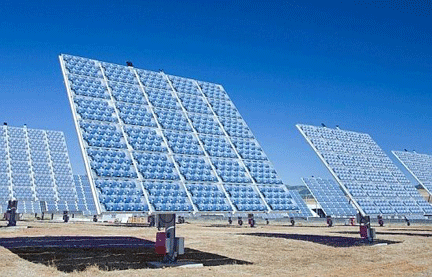 and even so people have done the right thing—we are now seeing large-scale deployment of solar energy in Western Australia and right around the world. So, PV is a big deal.
“But, what we want to raise today—and the reason the motion is worded as it is—is that there are major changes occurring in concentrating solar thermal technology which does not use photovoltaics, it does not require the rare earth minerals, it does not require advanced electronics or miniaturisation or particularly advanced manufacturing technologies. Continue reading
26 January – for Aboriginal people a day to mourn huge losses
Australia Day or Invasion Day: A Day of Contrasts Feb 7, 2013 “……..Invasion Day – A Day to Mourn Huge Losses”………As a strong contrast, 26 January is also marked and observed as the Invasion Day by the aborigines of country who live a traditional life. It represents the invasion of their land. Why should they celebrate this day or what calls for the celebration, is a pertinent question every aborigine has in his/her mind. Unanswered, it is a cause of dissatisfaction and unhappiness even today.
Aborigines of Australia call this day by different names. They are: ‘Day of Mourning’, ‘Invasion Day’, and ‘Survival Day’. As an effort to unite all aboriginals in their fight for sovereignty this day is also celebrated by many as the ‘Aboriginal Sovereignty Day’ by many people who believe in fighting back for their rights.
Why do they call it the Day of Mourning?
When the First Fleet landed in the Sydney Cove, it altered the lives of aborigines of the nation for all times to come. It was the day that saw the abduction of people, killing of local resistance and forceful eviction. They consider it as a day when they lost their land to the invaders. The darkest things of the day are the death in custody and loss of family. Basically the aborigines were stripped of all their rights. As this day represents the massacres that took place, it is a day of deep sorrow to them.
What has caused this Dissatisfaction?
Aborigines feel that:
- They were driven out of their lands
- The struggle led to killing of aboriginals
- They were not allowed to follow their customs and culture
- They were not allowed to teach their language
- They were disrespected.
The deprivation of rights and the deaths caused by this invasion is etched on the minds of the aboriginals not to view the day as a day of celebrations. The attack on their culture and lifestyle has given them the cause to display their dissatisfaction or unhappiness through various activities like re-enactments of Phillip’s landing which was accepted as part of the ceremonies for the Australia Day celebrations. The aborigine’s stage protests on this day to show their dissatisfaction staging protests to show their loss.
This day being a day of great contrasts, is both celebrated and mourned by two different groups of people of Australia. While the day represents achievements, joy and fun, it also marks the sorrow of people who were unable to exercise their rights. http://actco-australia.org/2013/02/australia-day-or-invasion-day-a-day-of-contrasts/
Koongarra permanently protected from uranium mining
GUNDJEIHMI ABORIGINAL CORPORATION 7 Feb 13 Mirarr Traditional Aboriginal Owners today welcomed Environment Minister Tony Burke’s introduction of a bill which clears the way for the incorporation of the Koongarra area into Kakadu National Park. This move recognises the long held Aboriginal aspiration to protect this unique area from the threat of uranium mining.
The introduction of the Completion of Kakadu National Park (Koongarra Project Area Repeal) Bill was also welcomed by the Djok Senior Traditional Owner of the Koongarra area, Jeffrey Lee AM. Mr Lee was in the Federal Parliament to witness the introduction of the bill, accompanied by a delegation representing the Mirarr. Jeffrey Lee was awarded the Order of Australia in 2012 in recognition of his work to protect his country and gift it to the nation. He has firmly opposed uranium mining on his country on the grounds of the deep cultural significance of Koongarra to its Traditional Owners and concerns about the dangers of uranium.
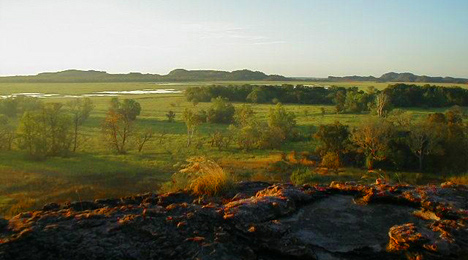
In his long struggle to protect his country Mr Lee has drawn inspiration from Yvonne Margarula, the Senior Traditional Owner of the neighbouring Mirarr people. Since the 1990s Yvonne Margarula has led the Mirarr opposition to the proposed Jabiluka mine, north of Koongarra and the existing Ranger uranium mine also on Mirarr land. Ms Margarula spearheaded the international campaign against mining at Jabiluka. Her resolve and leadership guided the campaign and prompted a special UNESCO mission, resolutions in the European Parliament and US Congress and several Australian parliamentary inquiries. In the late 1990s Ms Margarula won several prestigious international awards in recognition of her work to protect her country.
In 2001, the Rio Tinto majority owned mining company Energy Resources of Australia acknowledged the opposition of the Mirarr traditional owners and agreed to halt work at Jabiluka.
Ms Margarula said, “Traditional Owners must be allowed to make their own decisions about development on their country. Jeffrey has been speaking out to protect his country and we support him. He has always said no to mining at Koongarra and we support him when he says he wants to see that country put into the National Park. We want to see the same protection for Mirarr country.”
The Mirarr people have this month executed a renegotiated agreement for the existing Ranger mine, which was imposed on them in 1978. This agreement, along with provisions of the federal Atomic Energy Act, provides for the Ranger area to also be included into Kakadu National Park as the mine is rehabilitated.
The executive officer of Gundjeihmi Aboriginal Corporation, Justin O’Brien, said, “This action by the government is to be applauded, although the name of the bill incorrectly implies that this completes the national park. There is further work to be done and we still look forward to the day when all of Kakadu is included in the National Park and adequately protected from unwanted industrial development.”
A WRITTEN STATEMENT FROM MR LEE IS ATTACHED TO THIS STATEMENT Continue reading
Delay for uranium mining in Queensland – it’s not economic
 Mining uranium “a little time” away http://blogs.abc.net.au/queensland/2013/02/mining-uranium-a-little-time-away.html 04 February 2013 by Emma Cillekens Mining uranium in Queensland is still “a little time” away, according to the chair of a committee appointed by the State Government to assess best practice approaches to the mining.
The Uranium Implementation Committee toured Mount Isa late last week to speak to local authorities, mining companies and traditional owner groups about mining uranium.
The group also visited the last operating uranium mine in the state, Mary Kathleen mine (pictured), which closed in the early 80s.
Committee chair Paul Bell says there are still a couple of things that need to be considered before uranium mining can happen.
“There’s a challenge at the moment, the price [of uranium] is very low,” he said.
“Any application for a mining application approval will in itself take two to three years.”
The committee will spend three weeks working on recommendations and will present a report to the State Government next month.
Jeffrey Lee – Aboriginal elder who put his country before $millions – saving Koongarra from uranium mining
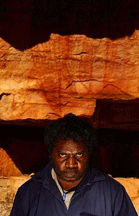 Aboriginal elder spurns million dollar offer from uranium minershttp://www.mining.com/aboriginal-elder-spurns-millions-of-dollars-from-uranium-miners-58963/Marc Howe | February 6, 2013 An elder from the Djok aboriginal community has hailed a move by the federal government to prevent the mining of uranium on his ancestral lands.
On Wednesday the federal government introduced a bill to incorporate 1228 hectares of the Koongarra, the traditional land of the Djok people, into the Kakadu National Park, thus preventing efforts by uranium mines to develop the area’s resources.
Jeffrey Lee, an elder of the Djok people, welcomed the decision after fighting for over three decades to prevent uranium extraction in the area, as well as spurning million dollar offers from miners.
“I have said no to uranium mining at Koongarra because I believe that the land and my cultural beliefs are more important than mining and money,” said Mr. Lee.
A French company reportedly offered Mr. Lee $5 million to withdrawn his opposition to uranium development plans.
Although Koongarra lies within the Kakadu area, a ruling in 1979 prevented its inclusion in the park, in order to leave open the possibility of development of its uranium resources, estimated to stand at around 14,000 tonnes.
Former Prime Minister Bob Hawke as well as Federal Environment Minister Tony Burke joined Mr. Lee to make the announcement as well as hail the government’s decision.
Even without govt subsidy renewable energy in Australia now cheaper than coal and gas
Renewables now cheaper than coal and gas in Australia http://reneweconomy.com.au/2013/renewables-now-cheaper-than-coal-and-gas-in-australia-62268 By Giles Parkinson 7 February 2013 A new analysis from research firm Bloomberg New Energy Finance has concluded that electricity from unsubsidised renewable energy is already cheaper than electricity from new-build coal and gas-fired power stations in Australia.
The modeling from the BNEF team in Sydney found that new wind farms could supply electricity at a cost of $80/MWh –compared with $143/MWh for new build coal, and $116/MWh for new build gas-fired generation.
These figures include the cost of carbon emissions, but BNEF said even without a carbon price, wind energy remained 14 per cent cheaper than new coal and 18 per cent cheaper than new gas.
“The perception that fossil fuels are cheap and renewables are expensive is now out of date”, said Michael Liebreich, chief executive of Bloomberg New Energy Finance.
“The fact that wind power is now cheaper than coal and gas in a country with some of the world’s best fossil fuel resources shows that clean energy is a game changer which promises to turn the economics of power systems on its head,” he said.
But before people, such as the conservative parties, reach for the smelling salts and wonder why renewables need support mechanisms such as the renewable energy target, BNEF said this was because new build renewables had to compete with existing plant, and the large scale RET was essential to enable the construction of new wind and solar farms. Continue reading
BHP had made “some very bad decisions” regarding Olympic Dam uranium mining- slashes jobs –
 VIDEO http://www.abc.net.au/news/2013-02-06/bhp-billiton-slashes-jobs-at-sa27s-olympic-dam/4504834
  ABC News, 7 Feb 13, BHP Billiton slashes jobs at Olympic Dam mine BHP Billiton is cutting dozens of jobs at its Olympic Dam mine in the South Australian outback, but it is unclear exactly how many positions will go.
At least 60 employees and an unknown number of contractors will lose their jobs.
In a statement, BHP Billiton said a reduction in functional and operational roles at Olympic Dam was necessary and would affect employees and contractors…..
Paladin and Rio Tinto uranium mining companies – the Ugly Australians in Malawi and Namibia, despite Bob Carr’s praise
 What have interested Australian companies, or the Australian government, done to address these concerns?…….
what should we make of Australian Defence Force chief General David Hurley’s alarming indication that there might be a role for the ADF in protecting “Australian interests” in Africa?
Multinational miners: magnanimous or malevolent? Kellie Tranter – lawyer and Humna Rights Activist, FEBRUARY 1, 2013 BY KELLIE TRANTER “……..Malawi “…….Minister Carr praised the work of Australian mining company Paladin, referring to its strong corporate social responsibility. Paladin operates Malawi’s biggest uranium mine, the Kayelekera.
In June 2008, The Bench Marks Foundation released a report ‘Corporate Social Responsibility and the Mining Sector in Southern Africa’ which suggested that when Paladin struck its deal with the Malawi government to mine uranium, it was agreed that it would get a 100% capital write off, a reduction in corporate tax from 30% to 27.5% and a scrapping of the 10% resource rent tax. Paladin was also to be exempt from the standard 17.5% import VAT or duty and a royalty rate reduced from 5% to 1.5% in the first three years and 3% thereafter.
Now Malawi’s opposition party, the People’s Transformation Movement (PETRA), have given the Malawi Government a 14 day ultimatum to explain why the Kayelekera deal cannot be renegotiated. However, there are reports that the agreement with the previous government (of late President Mutharika, a former World Bank economist) includes a clause that the government will not take any action that will seriously change the financial aspects of the project for the period of 10 years. Residents are also concerned that the Malawi Government retains only a 15% equity in Paladin (Africa) Limited (PAL) a subsidiary of Paladin and has given “breathing space” on taxes for 10 years. Continue reading
Australian Nuclear Free Alliance – a force in the federal elections 2013
 Christina Macpherson, 5 Feb 13 Australian politicians be warned! You’d better get clued up about uranium and nuclear issues. Because you will be put on the
  spot. These are not party political issues – they’re too important for that. The Australian Nuclear Free Alliance (ANFA) will be talking to, and scrutinising, politicians of all persuasions. And voters will want to know where the candidates stand , on these critical issues.
Yesterday I was privileged to attend Day 2 of the National Nuclear Free Strategy meeting, held in Melbourne by the Australian Nuclear Free Alliance. Quite an eye opener – to join these informed, capable and dedicated campaigners from many organisations, who came together from the Northern Territory and 5 States – all with the same goal – a nuclear free Australia.
I counted 19 different organisations represented, and in several cases, such as Friends of the Earth, and the Medical Association for the Prevention of War, several representatives and from different States.
Most of these organisations run on the proverbial shoe-string, yet have talented and competent members. and have already achieved much success.
ANFA now takes up the challenge of awakening Australia’s politicians, media, and public to critical matters for this election year:
- The Muckaty court case – and The ongoing saga of the Aboriginal traditional owners’ rights to oppose nuclear waste dumping on their land.
- The need to thoroughly review uranium mining, in the light of the continuing Fukushima radiation disaster, (not to mention the parlous state of the uranium industry), and to stop the development of uranium mining in New South Wales, Queensland, and Western Australia.
We will be hearing much more from ANFA, as the year progresses. And, we’ll be hearing, in each State, from the groups that make up ANFA – here are just a few:
- Gundjiheimi Aboriginal Corporation
- Western Australian Nuclear Free Alliance (strong Aboriginal presence)
- Japanese for Peace
- Environment Centre of Northern Territory
- Medical Association for the Prevention of War
- Australian Student Environment Network
- Radio 3CR – Radioactive Show
- Footprints for Peace
- Australian Conservation Foundation
- International Campaign to Abolish Nuclear Weapons
- Friends of the Earth
- Beyond Nuclear Initiative
- Uranium Free New South Wales
- Conservation Council of Western Australia
- Australian Manufacturing Workers Union
- Electrical Trades Union
- Protest Barrick (Canada)
- Australian Greens – Senator Scott Ludlam
- another distinguished guest – Professor Richard Broinowski
1 This month.
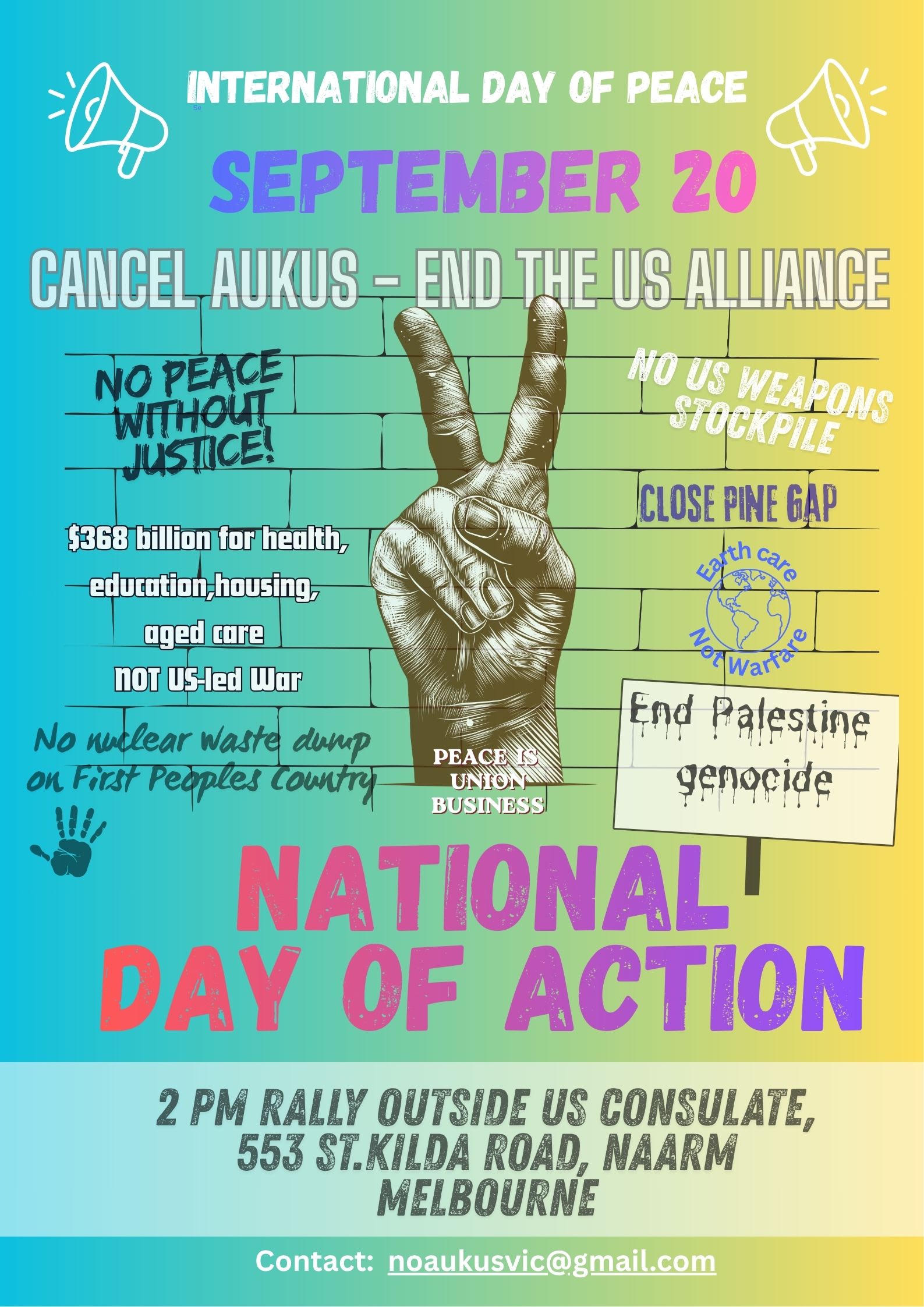
20 September –National Day of Action in Melbourne on the International Day of Peace


Help Aunty Sue Protect Her Land and Sacred Sites From Destructive Rocket Testing.
.

Australians deserve the truth
about
AUKUS – https://aukuspublicinquiry.com/


PETITION – To: Prime Minister Anthony Albanese and the Australian Labor Government

of the week – Australians for War Powers Reform (AWPR)
To see nuclear-related stories in greater depth and intensity
 Antinuclear