Australia’s New National Radioactive Waste Bill targets Muckaty Station, on Aboriginal land

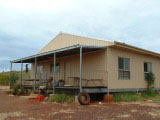 Natalie Wasley, 8 Feb 12, David Wroe’s opinion piece in the Age on February 8 “First radioactive dump gets the green light” omits a numbers of key issues in the current battle to build the Northern Territory nuclear waste dump. NT Country Liberal Senator Scullion’s amendment to proposed legislation would provide a $10 million cash injection to the Territory as compensation (quite insignificant when you consider this facility will be operating for at least 300-400 years), but there was never any danger of the Coalition not supporting Minister Ferguson’s legislation.
As pointed out in the House of Reps debate, it bears uncanny similarity to the Coalition’s legislation it purports to replace, the main difference being it specifically targets Muckaty-a site nominated in the Howard era. Mr Wroe’s piece also ignores the ongoing opposition to the waste dump from the NT government and many Traditional Owners of the Muckaty Land Trust, who have built broad national support for their campaign and launched a federal court challenge against the nomination of the Muckaty site. If I was David’s driving instructor, I would tell him to look more carefully at the traffic signals.
First radioactive dump gets the green light, The Age, David Wroe February 8, 2012 Australia is set to get its first radioactive waste dump with the government agreeing to a Coalition demand for $10 million for the Northern Territory, which will host the dump.
Energy Minister Martin Ferguson told ABC radio’s PM program yesterday that the government would agree to a demand from Northern Territory Nationals Senator Nigel Scullion for the $10 million fund for education, health and infrastructure, ensuring the passage of the legislation through the Senate.
The preferred site is Muckaty Station, near Tennant Creek. The dump will take medical waste and reprocessed fuel rods from the Lucas Heights reactor. http://www.theage.com.au/opinion/political-news/first-radioactive-dump-gets-the-green-light-20120207-1r5ge.html#ixzz1lqYBS82y
Australia’s Labor and Liberals agree on bribing Northern Territory to agree to nuclear waste dump
Canberra dangles $10m nuclear waste dump carrot, ABC Radio 774, By Anna Henderson and Louise Willis February 08, 2012 The Federal Government has made an agreement with the Opposition that will pave the way for Australia’s first national radioactive waste dump.
The Radioactive Waste Management Bill is listed for debate in the Senate today.
Northern Territory Country Liberals Senator Nigel Scullion says he has secured Labor support for a minimum $10 million fund that would be paid to the jurisdiction that accepts the facility.
Resources Minister Martin Ferguson says the Government is prepared to support the Opposition plan.
The Greens want the legislation delayed.
They say details surrounding the Government’s preferred site of Muckaty Station in the Northern Territory have not been finalised……
Greens Senator Scott Ludlum says it is wrong to proceed while Indigenous groups wage a court battle over ownership of the land.
“I think it is totally inappropriate that the Bill is before the Senate while the Government doesn’t yet know whose land they are dealing with,” he said.
“There is a very serious challenge by the traditional owners of the Barkly region, a challenge to the Federal Government and to the Northern Land Council.
“They are basically saying they had no right to give up the land in the first place. “I find it offensive.” http://www.abc.net.au/news/2012-02-08/20120208-2410m-muckaty-nuclear-waste-dump-carrot/3817866/?site=melbourne
Lynas rare earths plant suits Malaysia’s politicians, not Malaysia’s people

 Lynas plant a done deal from the start , malaysiakini, Feb 7, 2012 “……Manjit Bhatia: These protests against Lynas are very worthwhile. The Lynas project should never have been given the green light in the first place, let alone a temporary licence by the Umno-BN regime.
What’s really galling is that the regime went ahead with the latter despite Lynas failing to provide all of the mandatory guarantees needed. Worse, though: were there any public consultations about the project to start with? I feel the protests at Lynas aren’t big enough to put sufficient political pressure on the company to reconsider its operations…..
If the bulk of Malaysians do not join their Lynas protestors and stop the project dead in its tracks and soon, then you’ve lost the chance forever – unless Pakatan Rakyat wins government and scuttles the project entirely.
Although Malaysians have to cop a huge compensation bill to Lynas, it’ll be worth it. Just wear the fiscal pain for a decade.
Pemerhati: This is the price Malaysians pay for electing corrupt and greedy Umno thieves as their leaders……
CiViC: The concern now is exposing our people, our land to radioactive waste, radiation and pollution. This is not the people’s needs.
Thousands of people have protested, and still the dirty corrupt BN government pushes it through. And please don’t start with economic gains and such bull, there are no gains here since Lynas needs not pay tax, and the guarantee they have posted is not even enough to clean the plant itself, what more pollution beyond that…. http://www.malaysiakini.com/news/188438
Poo Power: why not? – it’s cleaner than nuclear
Poo Power: from poultry waste to renewable energy,PhysOrg.com, February 7th, 2012 Using curbside, commercial and biowaste from its poultry industry, the City of Greater Bendigo is building a business case that could see the introduction of Australia’s first multiple stream waste to energy facility.
The economic and environmental initiative is being undertaken with the help of Masters students from the University of Melbourne Graduate School of Business & Economics.
The students will conduct a feasibility analysis on the project over the next fortnight….. The student project is part of the University of Melbourne’s Faculty of Business & Economics Volunteer Business Practicum, a program that allows students to provide a genuine contribution to a business or community while gaining valuable work experience….. The students will work with the City of Greater Bendigo Council until mid-February, when they will present their findings to the council and their peers.
More information:
See http://www.gsbe.un … acticum.html for more information.
Provided by University of Melbourne http://www.physorg.com/wire-news/90052149/poo-power-from-poultry-waste-to-renewable-energy.html
Australian Greens move to prevent hasty imposition of nuclear waste dump in Northern Territory

 The Australian Greens today vowed to continue the fight against the planned nuclear waste dump at Muckaty Station in the Northern Territory.
The Government has listed the National Radioactive Waste Management Bill for debate tomorrow. Greens Senator Scott Ludlam said Labor’s attempt to force the Bill through the Senate before the completion of a Federal Court case over the status of the land in question was a disgrace.
“The Traditional Owners do not want this eternal radioactive waste dump on their country. The locals don’t want it. The Northern Territory government does not want it. Traditional Owners visited the parliament last year and Dianne Stokes wept here telling the story of her country. There is a Federal Court case currently unresolved as to the status of this land, yet the Government pushes on – led by a minister obsessed with the nuclear industry.”

“This legislation does not just represent a problem for Muckaty – it places enormous and virtually unchecked power in the hands of one minister.”
“In 2007 the IAEA noted examples of states which, having used undemocratic methods lacking public involvement and acceptance, have ‘had to reconsider their programs’. One of the conclusions of the study was that ‘reassessment can become necessary because past decisions were not reached through socially acceptable process’.”
“Last month, in a report to the US Energy Secretary, the Blue Ribbon Commission on America’s Nuclear Future strongly recommended a ‘consent-based approach to siting nuclear waste storage… noting that ‘trying to force such facilities on unwilling communities has not worked’. And indeed Labor’s stated policy aims to ‘establish a consensual process of site selection, which looks to… the centrality of community consultation and support’, yet the Government ignores both Labor policy and the lessons of history.”
“The Greens will move an amendment to establish a genuinely Independent Commission on the Long Term Safe Storage, Transport and Management of Australia’s Radioactive Waste to find a real solution to this problem.”
“South Australia resisted a nuclear waste dump and won. A Territory has less power and that is why the Government, like the Howard Government before it, targeted the Northern Territory – because it believed it could not resist. But it can and it will resist.”
Senator Ludlam will move to amend the bill to delay its debate until after the resolution of the case over the traditional ownership of the land in the Government’s sights.
Grattan Institute”s misleading attack on Solar Feed-in Tariffs
 The new Grattan, FOOT OFF THE GAS:GRATTAN WRONG ON SOLAR WRONG ON FEED-IN TARIFFS, Beyond Zero Emissions, 6 Feb 2012 Institute report “No quick fix for Australia’s future energy challenge” contains misleading comparisons, flawed analysis and glaring omissions on vital energy issues confronting Australia.
#1. The report makes a misleading comparison between the cost of wholesale fossil fuel electricity and the cost of solar photovoltaic electricity which currently competes in the retail electricity market and not the wholesale market.
“We do not expect a suburban Woolworths to compete with food prices at the Footscray Wholesale Fruit and Veg market. Yet this is what the Grattan Institute has done by ignoring the differences between the wholesale and retail electricity markets” says Matthew Wright,
Executive Director of Beyond Zero Emissions. “Rooftop Solar photovoltaic has halved in price in the last 24 months. This is a staggering cost reduction, and is in stark comparison to rapidly increasing rising gas prices”.
#2 The report claims that there are no viable energy storage options for renewable energy.
Matthew Wright explained that the Grattan Institute report’s conclusions “ignores Solar Thermal Power (Molten Salt Power Towers with integrated thermal storage tanks). It ignores this game-changing technology, already commercially deployed in baseload, intermediate and peaking configurations in Spain and under construction at a number of sites in the US. This technology is commercially available, off the shelf and ready for deployment in Australia. Rapid cost reductions have been projected by the International Energy Agency, the US Continue reading
How Australia’s Energy Minister sabotages renewable energy
ARENA Needed To Address Solar Flagships ‘Mess’ : Milne, by Energy Matters, 6 Feb 2012, Australia’s Solar Flagships program has faced continual delays and problems, sparking a call from the Greens to expedite the setting up of the Australian Renewable Energy Agency (ARENA) to take over the administration of the scheme.
Australian Greens Deputy Leader, Senator Christine Milne has blasted Energy Minister Martin Ferguson for his handling of Solar Flagships to date, an initiative designed to see construction of large-scale, grid connected solar farms.
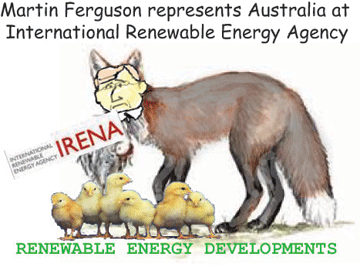
“Martin Ferguson has mismanaged this process from start to finish, helping to keep renewable energy from challenging coal’s dominance,” said Senator Milne.
“It is vital to see ARENA get off the ground as soon as possible to take political interference out of renewable energy scheme design and decisions and put them in the hands of a statutory independent authority.”…. Continue reading
Giles Parkinson questions Grattan Institute’s pro nuclear spin
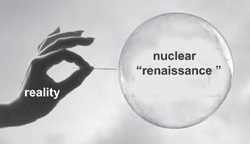 No easy choices, but a strong case for energy action, REneweconomy, By Giles Parkinson on 6 February 2012 “……..There are several glaring omissions from the report: it does not adequately take into account energy efficiency and the impact that that will have on future energy demand, nor does it adequately address the prospects that large scale renewables and small scale distributed energy will have a dramatic change on the function of the grid– it assumes that it will continue to be defined by baseload and peaking sources, when studies in Europe and elsewhere suggest a more dynamic change.
It’s right, though, that renewables will be limited to their scope without cost-effective storage, and the technologies for these are promising but uncertain. And it’s put off the highly contentious discussion about which policies and how to a later report…. the Grattan Institute’s energy program director Tony Wood, also seems un-necessarily pessimistic about costs. The report recognizes that the costs of incumbent technologies will rise to $100-$150/MWh – up from
around $40-$60/MWh – which it uses as its benchmark. Wood, says, however, that if CCS fails to deliver and nuclear is not deployed, then the price of energy could go “through the roof.”
That’s not the view, however, of the EU, which believes that the transition to renewables will cost no more than continuing with fossil fuels, or the IEA, which notes in its “high renewable scenario” that the increased use of renewables – up to 75 per cent – in the event that nuclear is not deployed as widely as some may hope and CCS fails to deliver – may be less than 10 per cent more than otherwise. http://reneweconomy.com.au/2012/no-easy-choices-but-a-strong-case-for-energy-action-98145
Grattan Institute shows its true pro nuclear colours
 Australia’s relatively new “think tank” – the Grattan Institute, has done some good work on
  environmental and climate change issues.
However, let’s not forget that it is largely funded by BHP.
And, sure enough, today, Grattan Institute shows itself in its true pro nuclear colours. Its latest report puts a subtle case for nuclear power, and a subtle brake on renewable energy development.
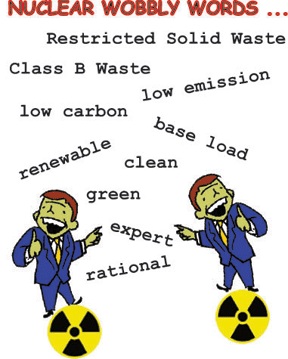
A good clue to when there’s a sophisticated and subtle spruik for nuclear, is when they drop the term “renewable” in favour of “low emission” – Christina Macpherson
Low-emission technology ‘needs support’ SMH Julian Drape, February 5, 2012 Once Labor’s carbon tax kicks in governments will need to decide how to best provide extra support for low-emissions technologies, including nuclear energy and carbon capture and storage (CCS), a Melbourne-based think tank says.
The Grattan Institute has studied the potential of wind, solar, geothermal, bio-energy, nuclear and CCS to generate near-zero emissions power. Its report, No Easy Choices, to be released on Monday, says that given the lack of any “sure bets” Australia should keep all options on the table.
That includes perhaps the most controversial technologies, nuclear and CCS, Grattan energy program director Tony Wood told AAP.
Both may be needed if Australia is to meet its target of reducing greenhouse gas emissions by 80 per cent by 2050.
“If you ignore those two that’s very risky because it’s very difficult to believe that renewables can get there without prices going through the roof,” Mr Wood said.
He argues that while Australia might be better off waiting for other countries to develop cheaper and better nuclear plants, it has a very strong interest in developing CCS…….
The report acknowledges that nuclear and CCS are unlikely to be demonstrated in Australia anytime soon “unless government takes on most of the material risk of the project”….The Gillard government, at the behest of the Greens, is establishing a $10 billion Clean Energy Finance Corporation which will leverage private sector financing for renewable energy and clean technology projects…..
But the Grattan Institute report says more needs to be done aside from support for research and development.
It advocates scrapping all existing subsidies for fossil fuels and technology-specific programs such as solar feed-in tariffs.
Further, it calls on governments to expand exploration and mapping of solar and geographical resources to aid in the development of solar thermal and geothermal energy and the location of suitable sites for carbon storage.
Finally, the think tank’s report stresses the need for a complete overhaul of Australia’s distribution network.
Australia’s compulsory airport scanning will be of the safer type – not ionising radiation
It’s a pity that the Australian government has not yet explained clearly their choice of millimetre wave radio waves scanners for compulsory use in Australian airports.
 They might be compulsory, but these scanners do not emit ionising radiation, and are therefore not a cancer risk in public health terms. The American system, (which does allow passengers the choice of a “pat down” examination instead), uses the “backscatter” type, which does subject passengers to low level of ionising radiation.- Christina Macpherson
Australian Airports To Get Compulsory Body Scans, Gismodo, 5 Feb 12, Danny Allen In a $28 million security upgrade, new “no scan, no fly” laws are expected to be proposed this week for Aussie international airports — removing the option to request a pat down instead. After trials last year, full body scanners (from the same company used in US checkpoints) will roll out in Sydney, Melbourne, Brisbane, Adelaide,
In Sydney and Melbourne, the government trialled competing scanner technology specifically designed not to identify gender or reveal body details. Gizmodo covered these: ThruVision (passive terahertz radiation detection) and L3 Communications (millimetre wave radio waves). Ultimately, the latter got the nod, and has been approved by
Australia’s Privacy Commissioner.
Images will be deleted after each traveller is cleared. Continue reading
Australian rare earths company Lynas involved in Malaysia’s coming election
Rare earth plant and general election 2012-02-03 , By LIM SUE GOAN Translated by SOONG PHUI JEE Sin Chew Daily, 6 Feb 2012, “……….Since the AELB has granted the Lynas a temporary operating licence (TOL), Lynas should have complied with the 11 recommendations made by the IAEA. The authority has also listed another five extra conditions under the TOL, including a detailed plan for a permanent disposal facility (PDF), to avoid repeating a similar waste disposal issue of the Bukit Merah rare earth plant.
However, why is Lynas given 10 months after the TOL’s issuance date to submit the plans and location of the PDF? In addition, the authority also has the right to appoint independent consultants to evaluate Lynas’ adherence to the set standards and regulations. Does it mean that the government may suspend the plant’s operation, if the conditions are found broken?
Also, Lynas must comply with the financial assurance condition by paying the government a US$50 million security bond in installments. However, it is not the main concern as the people’s health is priceless. With Lynas’ financial strength, US$50 million is nothing.
Would the anti-Lynas protest groups compromise after so much have been done by the government? Would the MCA and Chinese community groups change their stand? From the attitude of the Anti-Lynas groups and the public response, the Bukit Merah rare earth plant tragedy seems to be still clear in their minds. Under the international trend of concern over environmental issues, it is quite impossible to eliminate the opposition voices from the public.
The people resist even high-tension cables, telecommunication towers and garbage incinerator, how would they tolerate a rare earth plant that could bring radiation problems?
In addition, the authorities have left some doubts in dealing with the issue. For example, why the construction work of the plant was not suspended during the period when Lynas is required to fully comply with the 11 recommendations put forward by the IAEA? The progress of the construction work of the Mount Weld plant in Western Australia has even gone beyond expectation. Lynas had also constantly announced the date of operation, seemed like it was very sure of being granted an operation licence.
The uproar might be avoidable if the government has high credibility and supervision efficiency, which are also the key of the issue. http://www.mysinchew.com/node/69705
Although the Lynas rare earth plant is the world’s largest rare earth plant with the capacity to meet a fifth of the world’s demand, the people’s health is still the most important issue. The rare earth plant issue will be a thorny issue for the election.
Australian farmers missing opportunity to profit by farming energy
 Farmers squeezed out of energy boon, MATTHEW CAWOOD, Stock and Land 04 Feb, 2012 LANDHOLDERS should be capitalising on seismic changes in how we generate energy, says Matthew Wright, but instead they are being
pushed aside.
Mr Wright, executive director of Beyond Zero Emissions, thinks the thrust of current government policy will be to deny many landholders the ability to profit from wind generation, while compromising the enterprises of other landholders who host coal seam gas (CSG) operations without sharing in CSG profits.
Beyond Zero Emissions, a non-profit organisation, has the goal of moving Australia “from a 19th century fossil fuel based economy to a 21st century renewable powered clean tech economy”.
Wind turbines are “about as benign as it gets” for power generation, Mr Wright said, adding CSG is a “fairly destructive option for resource exploitation”.
Continue reading
Greens and Australian Conservation Foundation speak out against Lynas plan for Malaysia
Rare-earths decision big boost for Lynas SMH, Peter Kerr and Vince Chadwick February 3, 2012 “…….Dave Sweeney of the Australian Conservation Foundation said the low-lying, coastal environment meant holding ponds containing toxic waste might be breached during the wet season.
Mr Sweeney also drew attention to the timing of the board’s decision, which came days after a member of the opposition party in Malaysia said her party would not approve the plant if it won power at coming elections. ”There would be questions being asked and confidence being eroded in the integrity of the approval process, which appears to have become politicised,” Mr Sweeney said.
Lynas had been unable to start exporting ore to Malaysia for refining since its $100 million Mount Weld mine in Western Australia opened in August.
Federal Greens senator Scott Ludlam questioned the business model of exporting rare earths to Malaysia, which takes three weeks, rather than processing them at home. ”This imposes an economic cost on Australia and an environmental cost on Malaysia,” he said.
Nuclear renaissance becoming a stillbirth in Southeast Asia?
In Malaysia, the government has quietly put a proposal to build two 1,000 MW nuclear power plants “on the back burner,” said a senior government source.
The decision came after environmentalists targeted a plan by Australian rare earths miner Lynas Corp to commission a processing plant in central Malaysia that would have to dispose of radioactive waste….
 Analysis: Southeast Asia goes slow on nuclear, Reuters, By John Ruwitch HANOI Feb 2, 2012 “…..Vietnam, Indonesia, Malaysia, the Philippines, Thailand and Singapore are among some 35 countries considering going down the nuclear path, likely doubling the number of operational reactors in the next few decades, according to Lloyds Register.
But even the most ambitious plans will run up against barriers and constraints. In most Southeast Asian countries where there is interest in nuclear power, politics are holding it back. Indonesia’s National Atomic Energy Agency has been researching reactors for more than four decades and preparing the human resources, but the political will is lacking. Continue reading
The Ugly Australian – Lynas rare earths company’s rocky ride in Malaysia
 Malaysian group to file suit to challenge approval for Aussie rare earth plant Washington Post, : February 2 LAWSUIT PLANNED: A Malaysian group representing villagers and civil groups will file a legal challenge to the government’s decision to approve a $230 million rare earths plant by Australian miner Lynas Corp., a lawmaker said Thursday. http://www.washingtonpost.com/business/industries/malaysian-group-to-file-suit-to-challenge-approval-for-aussie-rare-earth-plant/2012/02/02/gIQAmIwDlQ_story.html
Key victory, but battle is not over yet BY: ROWAN CALLICK, : The Australian February03, 2012 “….Environmental concerns have been driving greater political involvement in Malaysia as the population becomes better educated.
Growing ecological awareness has provided a common cause for middle-class activists of the three races — Malays, Chinese and Indians — who have tended otherwise to be divided by the country’s political parties…. The plant approval intensifies the need for Lynas to operate it impeccably and to build its community relations, because an election is almost certain to be called in Malaysia later this year. Opposition leader Anwar Ibrahim has already warned that his three-party coalition would scrap the plant if it wins the election.
 Fuziah says Lynas plant will scare off other investors, The Malaysian Insider, By Shannon Teoh January 31, 2012 KUALA LUMPUR, — Kuantan MP Fuziah Salleh has hit back at Lynas Corp, insisting that the presence of the Australian miner’s RM2.5 billion rare earth plant would deter investors from Pahang.
Earlier today, Lynas executive chairman Nicholas Curtis warned against any move by Pakatan Rakyat (PR) to shut the company’s refinery, which has raised fears of radiation pollution, saying such action would deter foreign investors.
Fuziah, who has led protests by locals and environmentalists against the plant, said yesterday the federal opposition would shut down the plant if it won a general election that must be called by May next year.
“Would any foreign investor want to site their operations right beside a rare earth plant? Would companies like Siemens want to set up near Lynas?
“This is not a strategic investment in terms of risk versus benefit. We don’t need rare earth to be high-tech. Germany doesn’t have rare earth,” she told The Malaysian Insider…… Continue reading
1 This month


Help Aunty Sue Protect Her Land and Sacred Sites From Destructive Rocket Testing.
.

Australians deserve the truth
about
AUKUS – https://aukuspublicinquiry.com/

PETITION – To: Prime Minister Anthony Albanese and the Australian Labor Government

of the week – Australians for War Powers Reform (AWPR)
To see nuclear-related stories in greater depth and intensity
 Antinuclear