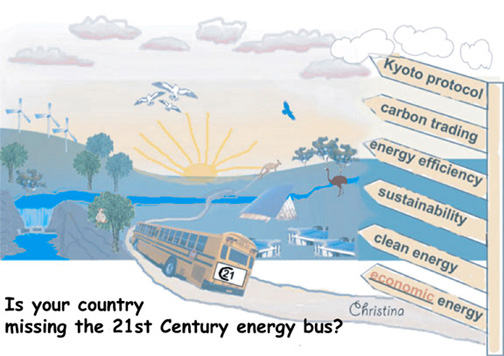
CSIRO set to lead Australia’s renewable energy revolution
 CSIRO maps out Australia’s energy future, Australian Broadcasting Corporation Broadcast: 05/07/2011, Reporter: Michael Troy The CSIRO is at the forefront of development of renewable energy generation but Australia is struggling for investment in commercialisation.Transcript, PHILIP LASKER, PRESENTER: Australia’s power grid is about to be reshaped with the introduction of a carbon tax. The CSIRO has outlined its vision for a low-carbon future, with a mix of renewables, geothermal and lower-emissions coal supplying all of Australia’s power needs within 30 years.
The research and development is continuing apace, but funding for commercialisation has stalled, with investors shying away from Australian companies.
…….With the new battery – called an UltraBattery – there is enough stored energy in this one container to power 1,000 homes for a day. The batteries also even out the power fed into the grid…….http://www.abc.net.au/lateline/business/items/201107/s3262006.htm
Selling solar energy from Australian home rooftops

 AUSTRALIA SAYS HOUSEHOLDS CAN SELL SOLAR ENERGY FOR US$40, Utility Products, 6 July 2011 Australian households can sell their solar energy for about A$38 (US$40.48) for every megawatt hour of electricity generated.
The Office of the Renewable Energy Regulator says the average market price for a Renewable Energy Certificate, which is equivalent to one megawatt hour of electricity generation, is $38.39 in 2011.
The office released its annual report on Tuesday which showed more than 160,000 homes and businesses installed solar energy last year.
That was an increase of more than 100,000 on the previous year.
“Growth in the installation of solar panels was encouraged by various state and federal initiatives including Solar Credits,” the report said.
Solar credits make solar panel installation cheaper for home owners.
The ORER accredited 24 more renewable energy power stations in 2010, bringing to 316 the total number of accredited renewable energy power stations in Australia.
Those stations can generate power to the equivalent of more than 1.9 million homes.
Julia Gillard to reveal Australia’s carbon pricing package on July 10

 Australia to unveil carbon price scheme on July 10, 04 Jul 2011,Source: Reuters
* Australian PM Gillard to unveil carbon package on July 10
* Scheme tipped to have a A$20 a tonne carbon price
* Carbon trading set for 2015, first scheme outside Europe, New Zealand
By Rob Taylor, CANBERRA, – Australia’s minority Labor government will unveil plans for the biggest national emissions trading scheme outside Europe on Sunday, with Prime Minister Julia Gillard staking her future on a carbon price already worrying voters and business.
Gillard said on Monday her cabinet, and a committee of government, Greens and independent lawmakers who have been working on the scheme, would finalise remaining details of the carbon tax later this week.
Concerns the plans to tackle climate change will push up prices have been hurting the minority government’s popularity, but Gillard said she was determined to push ahead with the plan, which is a make or break issue for her government.
The government is aiming to bring legislation for the scheme into the lower House of Representatives in August, with a vote in the Senate expected around October or November. (Additional reporting by James Grubel; Editing by Ed Davies and Yoko Nishikawa)
“A carbon price is an important reform that will create incentives to lower Australia’s carbon pollution at the lowest cost to the economy,” Gillard said in a statement, adding she would introduce the laws to parliament later this year…..http://www.trust.org/alertnet/news/australia-to-unveil-carbon-price-scheme-on-july-10
Australia’s radioactive waste water problem at Ranger uranium mine
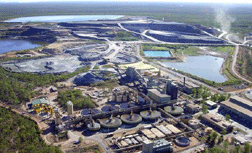 the company is not planning to start processing its radioactive waste water for two more wet seasons.
Mr Mudd says a higher dam wall will mean the company will have even more radioactive water to process.
“In that sense it is still the temporary, sort of step-by-step measures,”
Ranger uranium waste water treatment plan attacked, ABC News, By Jane Bardon, 5 July 11 An environmental engineer says Energy Resources of Australia (ERA) should not have reopened its uranium mine within Kakadu National Park last month without committing to a waste water treatment plan. Continue reading
Australians investing in solar power, but choosing Europe
Australian Greens negotiate a generous renewable energy fund

It is understood the Greens have negotiated a fund to invest in renewable energy which will be paid for from the proceeds of pricing carbon and worth up to $2 billion a year.
Greens secure billions for renewable energy as price of tax exemption for drivers, Sydney Morning Herald, Phillip Coorey, July 4, 2011,
A MULTIBILLION-DOLLAR fund for renewable energy and a review of the fuel tax regime are key concessions won by the Greens from the government in exchange for agreeing to exempt petrol from the carbon price. Continue reading
Dr Jim Green exposes the nuclear spin of Ziggy Switkowski and Barry Brook
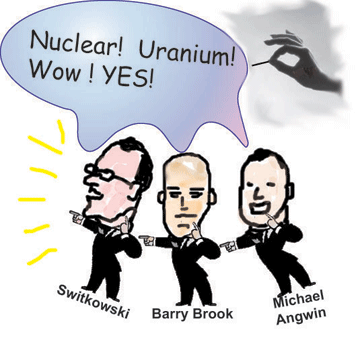 Unfortunately, Prof. Barry Brook has really abdicated a neutral position on this event. His clear support of nuclear power seems to have impacted his critical thinking skills … Every time he states something in this crisis is ‘impossible’, it seems to happen the next day.”…………Switkowski ignores the widespread human exposure to radiation from Fukushima and the likely resulting long-term cancer death toll.
Western Australia Labor Party policy on nuclear power and uranium mining
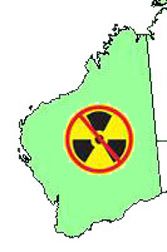 Labor policy adopted- 25th June 2011, Chapter 4: Economics, Industry and Regional Development, Minerals and Energy
Uranium Mining and Nuclear Energy
241. Recognising the hazards and dangers of nuclear power, especially relating to:
a. The safety of the nuclear fuel cycle;
b. The unsolved problems pertaining to the reprocessing and storage of radioactive wastes and spent fuel;
c. The growing concern about the biomedical effects of even low radiation
d. The coupling of nuclear energy and nuclear weapon developments
e. The added danger of a future plutonium economy and the threats to civil liberties involved in a nuclear economy; and
f. The fact that Labor policy contained herein on fossil fuels, energy conservation and renewable resources will ensure Western Australia energy self sufficiency.
242. Labor will:
a. Reject nuclear power as an option for electricity generation in Western Australia;
b. Oppose the establishment of a nuclear enrichment facility in the State;
c. Reject the establishment of nuclear processing plants or the storage of nuclear wastes in the state;
d. allow no uranium mining or development in Western Australia; and
e. The platform recognises WA long and continuous opposition to uranium mining. The commencement and continuation of any uranium project is inconsistent with Labor Policy. Labor will accept no obligation to complete approval processes or honour contractual arrangements entered into by a previous government where such approvals or contracts are directed towards an outcome inconsistent with Labor s, restrictions and conditions applicable to the mining, processing, sale and transportation of uranium platform.
f. place thorium under the currently mines in Australia as outlines in the Resources and Energy section of the National Platform, so far as they relate to nuclear non-proliferation.
Nuclear power a No No for Australia for the foreseeable future
 The Labor Party has reaffirmed its opposition to nuclear power and the Coalition has dropped its tepid support for the introduction of nuclear power.
A poll by Roy Morgan Research several days into the Fukushima crisis found that 61% of Australians oppose the development of nuclear power in Australia, nearly double the 34% that support it.
A Lowy Institute poll in June came up with near-identical results. The Morgan poll found that just 12% of Australians would support a nuclear plant being built in their local area, 13% would be anxious but not oppose it, and 73% would oppose it.
Fukushima: the political fallout in Australia, Green Left, July 4, 2011, By Jim Green, “…..Nuclear power in Australia, TEPCO has for many years put profits ahead of safety and this is the root cause of the nuclear disaster., Commonsense and prudent emergency planning would have protected emergency diesel generators against the March 11 tsunami. Working generators would have prevented the explosions and fires by maintaining reactor cooling.
The problems were not limited to TEPCO — they were (and are) systemic problems arising from the control of Japan’s nuclear industry by a clique of corporate executives, supine regulators and captured bureaucracies.
Similar problems are evident in Australia. In the past year, three whistleblowers have raised concerns about safety standards at the Lucas Heights nuclear research reactor site operated by the Australian Nuclear Science and Technology Organisation (ANSTO). Continue reading
Atomic veterans’ compensation case drags, as nuclear test victims die
A seemingly disproportionate number of the 26,000 servicemen, also from Australia, Fiji and New Zealand, sent to the sites had died prematurely of a range of illnesses including cancer and heart disease. Complaints of skin disease and infertility were common, while many offspring were sickly…….
Britain urged to settle nuclear payout for veterans, THE AUSTRALIAN , 4 July 11, The British government was under pressure last night to settle a multimillion-pound fight with more than 1000 veterans of nuclear tests in Australia and the Pacific or risk wasting even more money on a “morally unjustifiable” legal battle that could drag on for years.Supporters of the pensioners, who participated in Britain’s atomic bomb trials in the Pacific in the 1950s, said that it was time for the Ministry of Defence to follow the world’s four other main nuclear powers and pay compensation.
A group of veterans who are dying of cancer and other conditions at a rate of about three a month will this month go to the Supreme Court to challenge an attempt by the MoD to have their landmark case thrown out. Continue reading
91% of Australians want strong government policy for renewable energy
 The sheer number of people we spoke to eclipsed any of the focus groups or randomised polls that are traditionally used to gauge the public mood.
The support we found for renewable energy was overwhelming. The people we spoke to support renewable energy and they want to see politicians get on with the job of bringing it online.
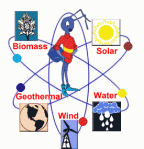 The real public opinion on renewable energy, The Drum, Andrew Bray, 29 June 11 “…….. to test the case, the 100% Renewable Energy campaign decided to bypass the media and get it straight from the horse’s mouth. We wanted to hear directly from our communities what they thought about renewable energy.
From February to May of this year, community groups associated with the campaign conducted over 14,000 face-to-face conversations at people’s doors, in their lounge rooms, at markets and community events and on the sidelines of football matches. Conversations took place from Bega to Bunbury and Cairns to Hobart. Continue reading
Call to governments for a nuclear-free Asia Pacific
 Nuclear power has no part in building a climate-friendly and sustainable future.
A large and growing number of scientific studies have detailed the wide range of energy supply and energy efficiency options that can be deployed to meet energy demand while sharply reducing greenhouse gas emissions…..
Friends of the Earth Asia Pacific is calling for Government‘s in our region like Korea, Japan, Malaysia, Sri Lanka and Australia to transition into nuclear free societies.
Friends of the Earth Asia Pacific region will pursue a nuclear free world as a region and in our individual countries.
Nuclear Free Asia, The Hankyorah, 30 June 11, Activists from 15 countries participating in the Friends of the Earth Asia Pacific meeting held at the Haja Center in Seoul announce a declaration for Nuclear Free Future, June 30.
The statement as follows: Overcoming Fukushima’s Nuclear Crisis – Creating Nuclear Power Free Asia Pacific region
Several months after the Fukushima nuclear disaster, we are beginning to get a sense of the likely long-term impacts. Continue reading
Australia missing out on renewable energy boom
A clean energy finance corporation is needed as part of the carbon pricing package to unlock the clean energy boom in Australia.Support for a clean energy finance corporation has come from the largest investors in Australia, such as the peak bodies in the super funds industry. Investors are ready to play their part.
Renewable boom is leaving us stumbling, The Canberra Times, BY SIMON O’CONNOR, 29 Jun, 2011 “……. Today, there is a global race to take advantage of the boom in renewable energy and countries like China, South Korea, Germany and the US are leaving us for dead. Often using technologies that were developed here.
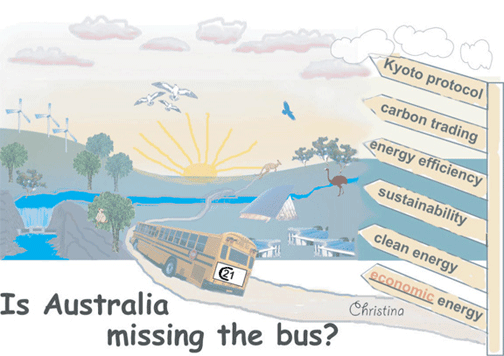
We’re pretending not to notice as another clean energy technology manufacturer shuts up shop and heads offshore because Australia doesn’t have the right support to attract the investment needed.
Early this month, an Adelaide solar cell manufacturer closed its doors and relocated to the US after deciding an Australian-based operation wasn’t viable. After receiving $8million in state and federal research and development grants to develop super-slim solar panels pioneered at the Australian National University in Canberra, Origin Solar is heading to Idaho, taking with it the knowledge, the investment and the potential for a stack of new jobs. Continue reading
IAEA’s inadequate report on Lynas’s rare earths project’s safety
“the report seems to say things are okay, but read between the lines. The IAEA is trying to say in a very nice way that Malaysia cannot do it.”
Fuziah, who is PKR vice-president, said that she would provide an alternative report with the help of an Australian radiation consultant.
Fuziah ‘tears up’ IAEA report, Free Malaysia Today , Tashny Sukumaran, June 30, 2011, KUALA LUMPUR: Kuantan MP and staunch anti-Lynas protester Fuziah Salleh today “tore up” the IAEA report, claiming that it had glossed over several important aspects related to the Lynas Corp rare earth plant in Gebeng, Kuantan. Continue reading
Australia’s second Invasion, Aboriginal land for uranium industry
 In the Northern Territory, the Gillard government is in effect driving Aboriginal communities into apartheid areas where they will be “economically viable”. The unspoken reason is that the Northern Territory is the only part of Australia where Aborigines have comprehensive land rights; and here lie some of the world’s biggest deposits of uranium..
……The most powerful political force in Australia is the multibillion-dollar mining industry. Canberra wants to mine and sell, and those bloody blackfellas are in the way again. But this time they are organised, articulate, militant. They know it is a second invasion. Having finally uttered the forbidden word, white Australians should stand with them…..
The invasion of Australia Australia’s forbidden word has been uttered at last. And with it is comes a new Aboriginal articulacy, John Pilger, guardian.co.uk, 1 July 2011 The City of Sydney council has voted to replace the words “European arrival” in the official record with “invasion”. Continue reading
1 This month


Help Aunty Sue Protect Her Land and Sacred Sites From Destructive Rocket Testing.
.

Australians deserve the truth
about
AUKUS – https://aukuspublicinquiry.com/

PETITION – To: Prime Minister Anthony Albanese and the Australian Labor Government

of the week – Australians for War Powers Reform (AWPR)
To see nuclear-related stories in greater depth and intensity
 Antinuclear