Despite Australia’s laws prohibiting nuclear development, Angus Taylor signs up for development of small nuclear reactors with UK.
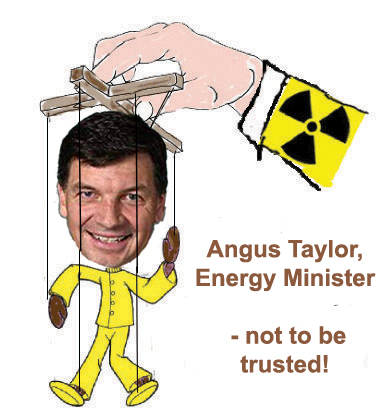
It is understood the co-operation will involve “leveraging” the expertise of the Australian Nuclear Science and Technology Organisation in waste processing and advanced materials to help advance development of small modular reactors
Top union leader backs Angus Taylor’s nuclear deal with UK https://www.afr.com/policy/energy-and-climate/top-union-leader-backs-angus-taylor-s-nuclear-deal-with-uk-20210730-p58eiz Jacob Greber, 13 Aug 21,
One of Australia’s leading union leaders has lent support to Energy Minister Angus Taylor’s decision to enable Australian scientists to work with the UK on next-generation nuclear power development even as two Labor MPs slammed the idea of such power plants as “deeply moronic” and “toxic” to the environment and human health.
Daniel Walton, head of the Australian Workers Union called for “open and pragmatic energy solutions” to reduce carbon footprints at reliable and affordable rates…….
Mr Taylor signed a letter of intent this week with his British counterpart, Kwasi Kwarteng, for both countries to collaborate on low-emissions technology, including “advanced nuclear designs and enabling technologies”.
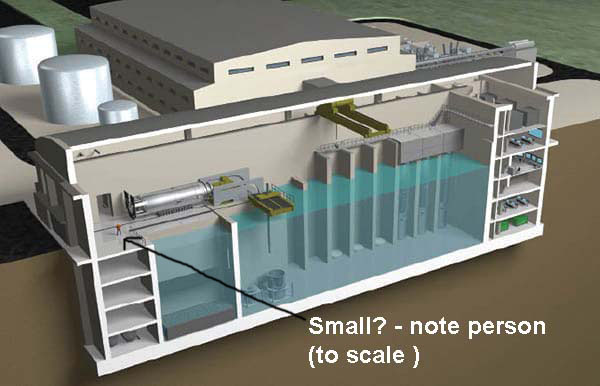
It is understood the co-operation will involve “leveraging” the expertise of the Australian Nuclear Science and Technology Organisation in waste processing and advanced materials to help advance development of small modular reactors, which are about the size of a standard shipping container. ( small? deceptive spin – see below for an example)
In Wyoming, a company owned by Bill Gates, TerraPower, is seeking approval for a nuclear power plant that proponents say would replace 200 local coal-related jobs within a year.
Reports of the UK-Australia nuclear tie-up triggered an immediate backlash from two West Australian Labor MPs.
“Nothing better demonstrates the Liberals’ deeply moronic approach to energy and economics,” Josh Wilson, federal MP for Fremantle, tweeted on Friday. “Nuclear power is not only ferociously expensive, but also slow, inflexible and toxic to the environment and human health.”
Perth MP Patrick Gorman accused the Coalition of failing to listen to West Australians….. https://www.afr.com/policy/energy-and-climate/top-union-leader-backs-angus-taylor-s-nuclear-deal-with-uk-20210730-p58eiz
A Day in the Death of British Justice – the case of Julian Assange

WikiLeaks has given us real news about those who govern us and take us to war, not the preordained, repetitive spin that fills newspapers and television screens. This is real journalism; and for the crime of real journalism, Assange has spent most of the past decade in one form of incarceration or another, including Belmarsh prison, a horrific place.
Diagnosed with Asperger’s syndrome, he is a gentle, intellectual visionary driven by his belief that a democracy is not a democracy unless it is transparent, and accountable.
JOHN PILGER: A Day in the Death of British Justice, Consortium News, August 12, 2021 The reputation of British justice now rests on the shoulders of the High Court in the life or death case of Julian Assange.
I sat in Court 4 in the Royal Courts of Justice in London Wednesday with Stella Moris, Julian Assange’s partner. I have known Stella for as long as I have known Julian. She, too, is a voice of freedom, coming from a family that fought the fascism of Apartheid. Today, her name was uttered in court by a barrister and a judge, forgettable people were it not for the power of their endowed privilege.
The barrister, Clair Dobbin, is in the pay of the regime in Washington, first Trump’s then Biden’s. She is America’s hired gun, or “silk”, as she would prefer. Her target is Julian Assange, who has committed no crime and has performed an historic public service by exposing the criminal actions and secrets on which governments, especially those claiming to be democracies, base their authority.
For those who may have forgotten, WikiLeaks, of which Assange is founder and publisher, exposed the secrets and lies that led to the invasion of Iraq, Syria and Yemen, the murderous role of the Pentagon in dozens of countries, the blueprint for the 20-year catastrophe in Afghanistan, the attempts by Washington to overthrow elected governments, such as Venezuela’s, the collusion between nominal political opponents (Bush and Obama) to stifle a torture investigation and the CIA’s Vault 7 campaign that turned your mobile phone, even your TV set, into a spy in your midst.
WikiLeaks released almost a million documents from Russia which allowed Russian citizens to stand up for their rights. It revealed the Australian government had colluded with the U.S. against its own citizen, Assange. It named those Australian politicians who have “informed” for the U.S. It made the connection between the Clinton Foundation and the rise of jihadism in American-armed states in the Gulf.
Continue readingUK High Court sides with US against Assange
UK High Court sides with US against Assange, WSW,Thomas Scripps11 August 2021 , The UK’s High Court has allowed the United States to appeal on two additional grounds the refusal of Julian Assange’s extradition by a lower court.Assange, the founder of WikiLeaks still held in Belmarsh maximum security prison, is threatened with extradition on charges under the Espionage Act with a potential life sentence for revealing state war crimes, torture, surveillance, corruption and coup plots.
On January 4, District Judge Vanessa Baraitser blocked extradition, ruling that it would be oppressive by virtue of his mental health and put him at substantial risk of suicide.Lawyers for the US government sought to appeal the decision on the five grounds:
- That Baraitser made errors of law in her application of the test under section 91 of the 2003 Extradition Act, which bars extradition if the person’s mental or physical condition would render it unjust or oppressive.
- That she ought to have notified the US ahead of time, to give the government the opportunity to provide assurances to the court that Assange’s health would be looked after.
- That the judge should not have accepted or at least given less weight to the evidence of the defence’s principal psychiatric expert, Professor Kopelman.
- That Baraitser erred in her overall assessment of the evidence on suicide risk.
- That the US has since provided the UK with a package of assurances about the conditions in which Assange would be held.
The US was initially granted leave to appeal on grounds one, two and five, but denied three and four. At a preliminary hearing yesterday in front of Lord Justice Holroyde and Mrs Justice Farbey, that decision was overturned and grounds three and four were granted as well.
Their decision confirms that the January 4 ruling against extradition was only a tactical pause in an ongoing pseudo-legal manhunt, which is again proceeding apace.
Baraitser’s original decision accepted every one of the prosecution’s anti-democratic, factually unsustainable arguments except on the single point of Assange’s mental health, leaving his fate hanging by a thread. Now the US is being given the opportunity to bulldoze this last remaining obstacle.As Assange’s legal team argue in their Notice of Objection, none of the points made in the appeal by the US stand up to scrutiny………………
https://www.wsws.org/en/articles/2021/08/11/assa-a11.html?fbclid=IwAR1KNVz7_kATvh53WeOYZ5iKOlCrE3-4Q9jGh9dv79DUkXxeezC91VXjmbU
Resources Minister Keith Pitt to declare Napandee farm, South Australia, as nuclear waste dump site
Pitt to declare nuclear site, Louis Mayfield, 12 Aug 21,
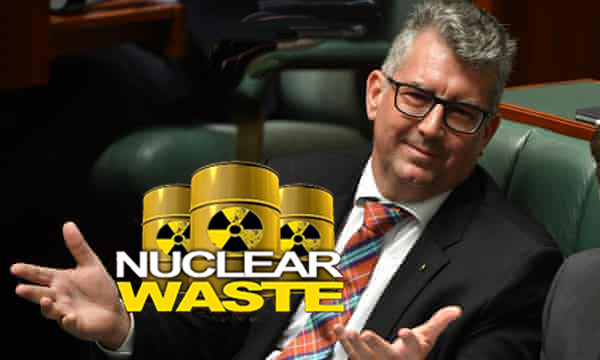
Federal Resources Minister Keith Pitt intends to declare the Napandee area at Kimba the proposed site for the National Radioactive Waste Management Facility (NRWMF).
More consultation will be undertaken before the decision is made official, but it’s an important milestone in a long and arduous site selection process which began six years ago…….
“I have reviewed the relevant information, which has informed my decision to proceed in accordance with the Act. I am issuing a notice to declare Napandee, and will seek the views of those with rights or interest in the site.”
The intention to declare Napandee as the NRWMF site will kick-start the legislative process of the federal government acquiring the site for the purpose of hosting the facility.
………… A period of further consultation will now occur, with the Minister considering relevant comments ahead of deciding whether to proceed with declaring the Napandee site.
Next the Australian Radioactive Waste Agency (ARWA) will develop various detailed applications to relevant regulators. This process is expected to take a number of years to complete.
These applications will also include further consultations with community and Traditional Owner groups.
However the Australian Conservation Foundation (ACF) see the Australian Nuclear Science and Technology Organisation (ANTSO) Intermediate Level Solid Waste Storage Facility at Lucas Heights as a long-term solution for storing nuclear waste.
It comes as the federal government invest $60 million to extend the interim storage capacity for Intermediate Level Waste at the ANSTO site in southern Sydney
In a submission made to the Public Works Committee inquiry, the ACF argue that extended interim storage at existing federal facilities at ANSTO would be a “possible and prudent” option to explore.
“ACF maintains that Intermediate Level Waste (ILW) should remain securely stored at ANSTO until an agreed and evidence based long term management site and strategy is developed,” the submission read. https://www.whyallanewsonline.com.au/story/7382644/pitt-to-declare-nuclear-site/
Uranium mining and high cancer rates in Aboriginals around Ranger mine
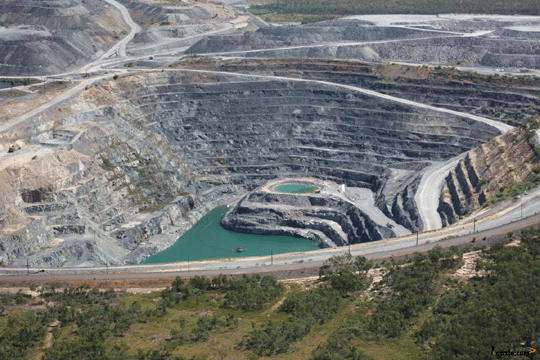
Kakadu mining and radiation, The Saturday Paper 14 Aug 21, Max Opray Carved out of the pristine surroundings of Kakadu National Park in the Northern Territory, the Ranger uranium mine has long been a site of deep controversy.
The mine may have been decommissioned in January, but concerns remain about its legacy, as the Mirarr traditional owners suffer through a mysterious health crisis.
The stillbirth rate among Aboriginal people living near the mine is more than twice as high as among Indigenous Australians elsewhere in the Top End, and rates of cancer are almost 50 per cent higher.
A six-year Northern Territory investigation into the issue failed to identify the cause, noting only that risk factors relating to diet, smoking and alcohol consumption were higher in the local population than in other Aboriginal populations.
The investigation was conducted by staff at the Population and Digital Health Branch of the Northern Territory Department of Health and overseen by an independent reviewer in cancer, epidemiologist professor Bruce Armstrong.
The report, published in November 2020, concluded ionising radiation from uranium mining was unlikely to be linked but did not categorically rule it out.
However, a Flinders University Centre for Remote Health analysis of the government investigation, published in the Medical Journal of Australia this month, found that the parameters of the inquiry were too narrow.
“Cancer is a complex condition,” Dr Rosalie Schultz, author of the analysis, tells The Saturday Paper. “A study like this can’t find a definitive cause.”
The Alice Springs GP was concerned that the main outtake of the report was that Aboriginal people should smoke and drink less.
“Statistically, it didn’t look like smoking and drinking caused the excess cancer rate,” she says. “It’s almost like blaming people rather than looking into the reasons – why is it people are smoking and drinking more in that area in particular, for instance?”
With more than 200 documented leaks, spills and other incidents associated with the mine, Schultz argues the impact of Ranger was multifaceted, including social consequences not considered by the investigation. “Things like destruction of waterbirds and creeks, the worry of that when you get your food and livelihood from the land,” she says.
A senate estimates committee heard in 2009 that 100,000 litres of contaminated water a day was leaking from the mine’s tailings dam into rock fissures beneath Kakadu.
In another breach in 2004, dozens of mine employees were found to have showered in and consumed water containing 400 times the legal limit of uranium.
In response to the release of the Territory government report, Reuben Cooper, chair of the Red Lily Health Board Aboriginal Corporation, welcomed messages “to encourage reduction in smoking and alcohol consumption” but said the findings offered an incomplete picture.
“This investigation does not discuss the reasons for higher rates of smoking and alcohol consumption in the Gunbalanya–Kakadu region,” he said, “which could include factors such as cultural dislocation, stress and royalty payments. Nor does it discuss the potential social impacts that the uranium mining industry has had on the population in the region.”
Schultz’s analysis expands further on these points, noting how unevenly distributed royalty money can increase inequality and the ways in which locals were deprived of a sense of agency and authority.
“The inquiry didn’t look at other knowledge, such as the Dreaming stories about sickness country,” Schultz says.
Centuries before Western science understood the dangers of radioactive substances, Aboriginal people were avoiding the uranium-rich sites near Kakadu, which were considered inappropriate places to camp.
The Dreaming stories of the Jawoyn people warn against disturbing stones or drinking water in what they called “sickness country” south of Ranger, beneath which Bula the creator is said to lie dormant.
In and around the Ranger site itself, the Dreaming stories of the Mirarr warn of sacred sites that are dangerous to disturb……………..
With no data available about individual exposure to ionising radiation, the report authors concluded this was unlikely to have been a contributing factor based on measurement of environmental radiation levels, consumption of bush tucker, and airborne exposure to radon gas.
Justin O’Brien, chief executive of the Gundjeihmi Aboriginal Corporation, which represents the Mirarr people, says the “shocking paucity of data” extends to all aspects of the health and social impacts of the mine. “It’s a very limited data set, so no wonder the findings are inconclusive,” he says………..
With the mine decommissioned in January this year, O’Brien is concerned about whether operators Energy Resources of Australia, a subsidiary of Rio Tinto, will properly rehabilitate the Ranger site, warning that radioactive waste from uranium mining can remain hazardous for tens of thousands of years.
“This is just the first chapter of the legacy of this mine, and the world is watching Rio Tinto,” he says. “The mining company has been given five years to complete all the rehabilitation work – this is patently insufficient.”…………
For Schultz’s part, the monitoring of Ranger failed even in the context of Western science. “They didn’t do what was recommended to consider local perspectives and concerns,” she says. “It was a top-down epidemiological approach, where if you can exclude ionising radiation, the mine is off the hook. It feels like the science is taking a narrower approach now – we used to have researchers embedded in communities. Forty years later … we just look at five data points and that’s it.” https://www.thesaturdaypaper.com.au/life/health/2021/08/14/kakadu-mining-and-radiation/162886320012251#mtr
Radioactive Dump ~ call for submissions ~ open until October 22nd 2021
Radioactive Dump ~ call for submissions ~ open until October 22nd 2021
“As part of the process of declaring a site for the National Radioactive Waste Management Facility, our department is collecting comment(s) from nominators of land and persons with a right or interest in the nominated land at Napandee, near Kimba in South Australia, as the preferred site for the proposed
facility.”
https://consult.industry.gov.au/arwa/nrwmf-site-declaration/
ENuFF[SA]
Office Admin
https://www.facebook.com/sanuclearfree/
Labor Party – State and National opinions on the plan for nuclear waste dump at Kimba, South Australia
Labor opinions on the waste dump (state and federal)
The Transcontinental Oct 2019 (Pt Augusta newspaper)
Deputy Opposition leader slams federal government’s nuclear waste site selection process
“We are utterly opposed to the process,” says Deputy Leader of the Opposition Susan Close regarding the current federal approach to a national radioactive waste facility in regional South Australia.
“We understand there is a need to do something with Australia’s domestic waste but they have gone about it so badly that they have put the community off.
“They haven’t done the due consideration that they ought to be doing of what the possibilities physically are.”
At a recent state conference, the South Australian Labor Party adopted a policy contesting the federal government’s site nomination and selection process.
They have called for full transparency, broad public input and best practice technical and consultative standards.
Ms Close condemned the federal government’s current approach to building a potential facility at sites in Kimba and Hawker.
“It is a federal issue but we just have a view about it that they have gone about it in an appalling way,” Ms Close said.
“They get to make the decision, we don’t have have any capacity even if we were in government to do anything, but what they have done is asked landholder if anyone wants to have this and left the Aboriginal community out.
“For some reason, the only three sites they are looking at are in South Australia which is very strange.”
ALP Media Release “Kimba site selection process flawed, waste dump plans must be scrapped. (Kimba is in Eddie Hughes’s electorate). Sept 15, 2020
Quotes attributable to Shadow Minister for Environment Susan Close
“This was a dreadful process from start to finish, resulting in fractures within the local community over the dump.
The SA ALP has committed to traditional owners having a right of veto over any nuclear waste sites, yet the federal government has shown no respect to the local Aboriginal people.”
Quotes attributable to Member for Giles Eddie Hughes
“This report clearly reflects that any mediation undertaken with the Barngarla people did not have any legal or political weight.
This has been a very divisive process from the beginning due to individual land owners nominating the sites.
Instead of rushing this quick fix by dumping in SA, the federal government should do the work on a long-term plan for the management of nuclear waste in Australia.
We clearly have an obligation to manage our domestic nuclear waste in a responsible way for the long term. This proposal falls far short of meeting that obligation.”
ALP Assistant Shadow Minister for the Environment Josh Wilson MP has stated in a speech “Social license missing from Coalition’s nuclear push” to federal Parliament (11 June 2020):
“But where is the evidence that there is any problem with the intermediate-level waste staying where it is, as it should do, until the government of Australia identifies and resources an appropriate permanent disposal site for intermediate-level waste? … But the claims that the government and government members in this place have made that intermediate-level storage needs to go to South Australia because there’s no room for it and that there are health and safety concerns about where it is currently are rubbish. And so it should stay where it is as a spur to the government to get on with the process, which currently hasn’t even started, of finding and resourcing a permanent-level disposal site. That is not occurring. … They need to immediately start and resource the process of a permanent disposal site for intermediate-level waste. They should commit to maintaining that waste where it is currently stored…”
ALP Senator Murray Watt stated in regard to a NRWMF Bill 2020 (Hansard p.20-21, 21 June 2021): “… Labor will act in accordance with scientific evidence and with full transparency, broad public input and best-practice technical and consultative standards, taking into account the views of traditional owners, to progress responsible radioactive waste management. … Labor is concerned that, to date, the government has been unable to provide any assurances on progress towards establishing a permanent facility for intermediate-level waste. We note that the community will expect a clear plan for a permanent facility to safely secure intermediate waste. It is hard to understand why, to date, so few resources have been allocated to the creation of a permanent, intermediate-level waste storage facility. In the absence of such resources or planning, the government should explain why the existing intermediate-level waste should be moved from one temporary storage facility to another. Labor will continue to hold the government to account and press for the department to explain how it plans to establish a permanent underground repository for waste of this nature.”
Labor Premier Mike Rann successfully fought the Howard government over a federal nuclear waste dump and Premier Jay Weatherill committed in 2017-18 to an Indigenous right of veto over any federal nuclear waste dump siting on their lands in SA. All South Australians have a right to a Say.
The SA legislation:
Nuclear Waste Storage Facility (Prohibition) Act 2000
We have SA legislation prohibiting the building of a dump, but according to the constitution, federal legislation overrides state legislation whenever there is a conflict. I’ve asked both Peter Malinauskas and Susan Close if SA Parliament would need to overturn our state prohibition legislation before building a dump, but they don’t know. The legislation requires “A Public inquiry into the environmental and socio-economic impact of nuclear waste storage facility if a licence or authority to construct a facility is granted.” – we need to ask Labor to do all they can to make sure this happens.
UN Declaration on the Rights of Indigenous People re Hazardous Waste disposalThe “United Nations Declaration on the Rights of Indigenous People” (2007) Article 29 calls on States “to ensure that no storage or disposal of hazardous material shall take place in the lands or territories of indigenous peoples without their free prior and informed consent.”
Senator Matt Canavan, and MP Ken O’Dowd ”happy to have a nuclear power station” in their backyard – (Gladstone Queensland).

Nats push to lift nuclear ban, senator happy to see plant in regional Queensland, Mandurah Mail , Jamieson Murphy , 11 Aug 21,
The Nationals will attempt to lift Australia’s ban on nuclear power, with a senior senator stating he’d be happy to see a nuclear power station in regional Queensland.
The Nationals senators will try to remove the prohibition with an amendment to the Environment Protection and Biodiversity Conservation (EPBC) Act, which is due to be debated as the government seeks to overhaul the regulations.
Queensland senator Matt Canavan said despite being a devisive issue, it was time to put the nuclear power option on the table……
“Myself and [Nationals] Member for Flynn, Ken O’Dowd, we’re happy to have one in our backyard.
“Gladstone, I think, would support a nuclear power station with open arms, because they want to keep their manufacturing jobs, their aluminium smelter, their refinery. There’s thousands of jobs there.”…….
Senator Canavan was asked if lifting the prohibition on nuclear power would be an olive branch to get the party to support a 2050 net-zero target.
“I don’t support a net-zero emissions target because it won’t change the environment and it will send thousands of Australian jobs to other countries,” Senator Canavan said.
The proposal appears unlikely to be supported by the Liberal Party.
Senator McMahon indicated the push to lift the ban on nuclear power was the policy of the Nationals senate team, rather than the party’s position.
This story Nats push to lift nuclear ban, senator happy to see plant in the regions first appeared on Farm Online. https://www.mandurahmail.com.au/story/7380478/nats-push-to-lift-nuclear-ban-senator-happy-to-see-plant-in-the-regions/?cs=9397&utm_source=website&utm_medium=index&utm_campaign=sidebar
Resource Minister Pitt’s intention to declare site for the National Radioactive Waste Management Facility
Samantha Chard, General Manager, Australian Radioactive Waste Agency at Department of Industry, Science, Energy and Resource, 12 Aug 21, The Hon Keith Pitt MP, has given notice that he intends to make a declaration under the National Radioactive Waste Management Act 2012 (the Act). This declaration would confirm part of the land at Napandee as the site for the National Radioactive Waste Management Facility (NRWMF).
Under the Act, this consultation is a prescribed process with set timelines.
The intention is announced under section 18 of the Act. Persons with rights or interests are invited to comment on the proposed declaration by Friday 22 October 2021.
Comments can be made online at https://consult.industry.gov.au/arwa/nrwmf-site-declaration, and a comments form will also be available for download from the website. Comments can be posted to the address on the form.
Following the comments period, the Minister will consider any relevant comments in regard to his intended declaration. He may then ‘declare’ Napandee as site for the facility. Acquisition of the site to host the NRWMF by the Australian Government will occur at the time specified in that declaration.
Senator Matt Canavan all for nuclear energy; economists are not so sure

‘‘nuclear power is clearly a workable way of producing clean energy,” Senator Canavan said
Nationals senators call for end to ‘nonsensical’ nuclear power ban, SMH, By Mike Foley August 10, 2021 Nationals senators have called for Australia’s ban on nuclear power to be lifted so the technology can be explored as a clean energy source as the federal government faces increased pressure to set a deadline for net-zero emissions.
A Coalition-dominated parliamentary inquiry last year found the ban should be partially lifted but Energy and Emissions Reduction Minister Angus Taylor said at the time the government had no plans to alter the moratorium, which has been in place since 1998.
Speaking on behalf of the Nationals Senate team on Tuesday, Queensland senator Matt Canavan said Australia’s “nonsensical prohibition” on nuclear power prevented investigation of the technology, which in time could become an economically viable source of emission-free power.
…….nuclear power is clearly a workable way of producing clean energy,” Senator Canavan said.A government source said the Nationals senators had raised the issue in Tuesday’s joint party room meeting but there were no plans for a change of policy at this point………..
Senator Canavan, who has been a vocal supporter of public funding for new coal plants, conceded nuclear power was not currently commercially attractive but said the moratorium should be lifted so the technology could be developed.
……..Tim Buckley, an analyst with the Institute for Energy Economics and Financial Analysis, said there was “no economic logic” to pursuing nuclear power, noting the only viable current technology came from China and Russia.
“The National party are pushing a technology that, if we look at Hinkley Point in the UK, involves a power price that is three to four times the price of renewables in Australia today,” he said. “The average development time of the Finnish, French and British for nuclear power plants is about 20 years.
“Do the Nats understand the only technology comes from China and Russia?”
Environment Minister Sussan Ley was contacted for comment. https://www.smh.com.au/politics/federal/nationals-senators-call-for-end-to-nonsensical-nuclear-power-ban-20210810-p58hix.html
National Party rallies around for the nuclear industry

We need to make nuclear case: Littleproud, Manning River Times, Georgie Moore , 10 Aug 21,
Australians might not be ready for nuclear power, but deputy Nationals leader David Littleproud thinks it’s a good idea.
Nationals senator Sam McMahon is trying to overturn Australia’s nuclear power ban through changes to a bill aimed at simplify environmental hoops projects need to jump through…….
He said politicians needed to make the case for change to instil public confidence.
“At this juncture, I don’t think we can give them that confidence,” Mr Littleproud said.
………. “The only realistic way to bring down carbon emissions in our nation is to use our natural resources and move down a nuclear path.”
As it stands, the government is a vote short of getting its environmental approvals bill through the Senate.
It had been due for debate on Wednesday before being taken off the final draft of the Senate program.
Resources Minister Keith Pitt told parliament the environment reforms would help combat “green lawfare” against coal and gas projects.
One Nation leader Pauline Hanson flagged her party would give the government two of the three votes it needed.
Centre Alliance senator Stirling Griff, and independents Rex Patrick and Jacqui Lambie, are all understood to remain opposed to the bill.
They argue an independent watchdog and tougher environment standards are required before other changes could be considered.
Senator Lambie has questioned why Australia didn’t replace coal-fired power with nuclear to achieve emissions reduction goals. https://www.manningrivertimes.com.au/story/7380924/we-need-to-make-nuclear-case-littleproud/
National Party renews its push for nuclear energy, wants to change the Environment Protection Act
Nationals stir up uranium debate: ‘We need to move down a nuclear path’ Stockhead Eddy Sunarto 10 Aug 21,” …….. Speaking on the Sky News channel, deputy Nationals leader David Littleproud has called for a revival of Australia’s nuclear industry, saying that politicians need to make the case for an eventual nuclear energy use in the country.
Littleproud, who’s also the Minister of Agriculture, told Sky that politicians need to have a mature, broad conversation to convince the public of the need to lift the ban on nuclear energy.
His comments were backed by Nationals senator Sam McMahon, who wants the nuclear ban to be overturned through a bill aimed at streamlining environmental approvals.
The bill in question is the Environment Protection and Biodiversity Conservation Act of 1999, which currently restricts uranium mining to some degree but prohibits nuclear plants altogether.
“The only realistic way to bring down carbon emissions in our nation is to use our natural resources and move down a nuclear path,” McMahon said………. https://stockhead.com.au/energy/nationals-stir-up-uranium-debate-we-need-to-move-down-a-nuclear-path/
”Long Half-Life” – Professor Ian Lowe on Australia’s nuclear dilemma

AUSTRALIA’S NUCLEAR DILEMMA – PROF. IAN LOWE https://westender.com.au/australias-nuclear-dilemma-prof-ian-lowe/ by Kerrod Trott Aug 9, 2021 This book is a clarion call for sanity at a time when we can finally get the nuclear monkey off our back – highly recommended.’
Peter Garrett
Ian Lowe’s new book – Long Half-life – The Nuclear Industry in Australia – is a timely and riveting account of the political, social and scientific complexities of the nuclear industry, revealing the power of vested interests, the subjectivities of scientists and the transformative force of community passion.
In describing the book, Ian Lowe said:
The discovery of large uranium deposits in the Northern Territory suggested that Australia could become a major exporter of radioactive minerals. The Fox Report, commissioned by the Whitlam government to study the environmental impacts of the proposed Ranger uranium mine, broadened into an inquiry into the social and political issues of producing uranium.
The report concluded that exporting uranium would be quite profitable for the mining company but would have limited overall economic impact and provide modest employment. It also recommended that any decision to export uranium should recognise the inherent problems of nuclear energy, radioactive waste and weapons proliferation, so limits on expansion of production should be set and the policy “should be the subject of regular review”.
It noted that the 1976 UK Royal commission had argued that using nuclear power should be limited until it was convincingly demonstrated that the highly radioactive waste could be safely contained “for the indefinite future”. Deciding to approve export of uranium from Ranger, the Fraser government assured the public that the waste problem had been solved and that exports would be subject to the strictest safeguards. The waste problem had
not been solved, and still hasn’t, while the safeguards have been systematically watered down every time they looked like impeding sales.
The economic benefits turned out to be even more modest than the Fox report projected. Instead of exports from Ranger expanding to 30,000 tonnes a year, they amounted to 120,000 tonnes over 40 years, 3,000 tonnes a year. Similarly, when the Olympic Dam mine in SA was being developed in 1982, it was claimed it would employ nearly 3000 people and pay $100 million a year in royalties to government. By 1997 it employed about 950 people, while royalties for the first twenty years of operation totalled $60 million.
The 2016 SA Royal Commission concluded that there could be a significant economic opportunity in managing the waste from nuclear power stations in Japan, South Korea and Taiwan. The Commission warned such a major investment would require clear public support, so the government established a citizens’ jury to consider the issues; to the surprise of the elected politicians, the citizens strongly recommended against the proposal, which was subsequently dropped. The issue raised important questions about trust in experts and trust in governments to manage complex long-term issues.
Malcolm Fraser, the Liberal Prime minister who had in 1977 approved Australia becoming a major exporter of uranium, in later life realised the problems this was creating. Large volumes of high-level waste are still being stored near nuclear power stations, with most of the countries involved still having no clear plan to manage those materials for the unimaginably long periods required. The Nuclear Non-Proliferation Treaty has not led to the weapons-holding nations disarming, so predictably others have joined the nuclear club, with the real risk that tensions in the Korean peninsula, the Indian sub-continent or the Middle East could lead to the catastrophic consequences of nuclear weapons being used against cities.
Concern about the moral responsibility for the uses of Australian uranium raises the question of the social licence to continue exporting. Writing an opinion piece in 2014, Fraser warned that we have “the elements of a perfect storm for nuclear calamity” and urged Australia to become a global leader in the campaign to abolish nuclear weapons. Unless they are banned, he said, ‘the risks of nuclear weapons being used will grow towards inevitable use”. That warning should at least provoke a review of uranium exports, as recommended 45 years ago by the Fox Report.
ABOUT THE BOOK:
Long Half-life: The Nuclear Industry in Australia, Ian Lowe
Published August 2021 by Monash University Publishing
ABOUT THE AUTHOR:Professor Ian Lowe AO is emeritus professor of science, technology and society at Griffith University in Brisbane, as well as being an adjunct professor at Sunshine Coast University and Flinders University. His previous books include A Big Fix and Living in the Hothouse.
Climate change has already hit Australia.
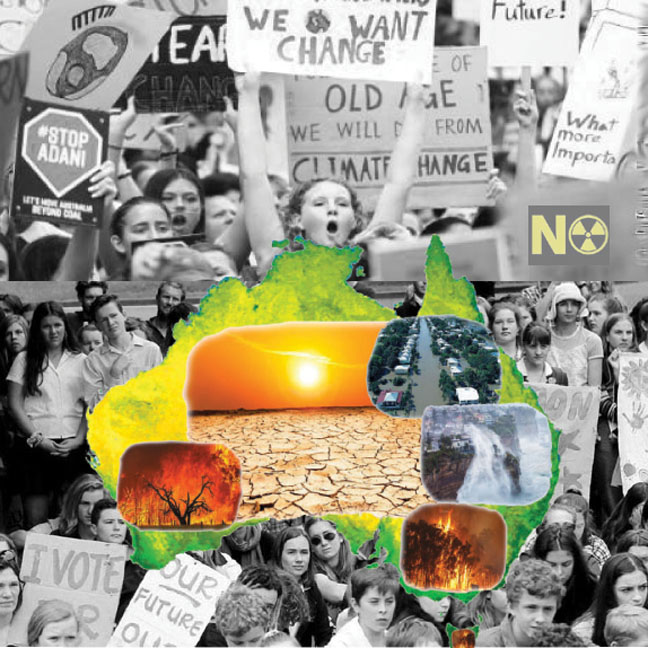
Climate change has already hit Australia. Unless we act now, a hotter, drier and more dangerous future awaits, IPCC warns https://theconversation.com/climate-change-has-already-hit-australia-unless-we-act-now-a-hotter-drier-and-more-dangerous-future-awaits-ipcc-warns-165396?utm_medium=email&utm_campaign=Latest%20from%20The%20Conversation%20for%20August%2010%202021%20-%202026619923&utm_content=Latest%20from%20The%20Conversation%20for%20August%2010%202021%20-%202026619923+CID_a4c10fc2998953c0ef465aaf49de1468&utm_source=campaign_monitor&utm_term=Climate%20change%20has%20already%20hit%20Australia%20Unless%20we%20act%20now%20a%20hotter%20drier%20and%20more%20dangerous%20future%20awaits%20IPCC%20warns
Michael Grose Climate projections scientist, CSIRO, Joelle GergisSenior Lecturer in Climate Science, Australian National University, Pep Canadell, Chief research scientist, Climate Science Centre, CSIRO Oceans and Atmosphere; and Executive Director, Global Carbon Project, CSIRO, Roshanka Ranasinghe, Professor of Climate Change impacts and Coastal Risk, 9 Aug 21,
Australia is experiencing widespread, rapid climate change not seen for thousands of years and may warm by 4℃ or more this century, according to a highly anticipated report by the Intergovernmental Panel on Climate Change (IPCC).
The assessment, released on Monday, also warns of unprecedented increases in climate extremes such as bushfires, floods and drought. But it says deep, rapid emissions cuts could spare Australia, and the world, from the most severe warming and associated harms.
The report is the sixth produced by the IPCC since it was founded in 1988 and provides more regional information than any previous version. This gives us a clearer picture of how climate change will play out in Australia specifically.
It confirms the effects of human-caused climate change have well and truly arrived in Australia. This includes in the region of the East Australia Current, where the ocean is warming at a rate more than four times the global average.
We are climate scientists with expertise across historical climate change, climate projections, climate impacts and the carbon budget. We have been part of the international effort to produce the IPCC report over the past three years.
The report finds even under a moderate emissions scenario, the global effects of climate change will worsen significantly over the coming years and decades. Every fraction of a degree of global warming increases the likelihood and severity of many extremes. That means every effort to reduce greenhouse gas emissions matters.
Australia is, without question, warming
Australia has warmed by about 1.4℃ since 1910. The IPCC assessment concludes the extent of warming in both Australia and globally are impossible to explain without accounting for the extra greenhouse gases in the atmosphere from human activities.
The report introduces the concept of Climate Impact-Drivers (CIDs): 30 climate averages, extremes and events that create climate impacts. These include heat, cold, drought and flood.
The report confirms global warming is driving a significant increase in the intensity and frequency of extremely hot temperatures in Australia, as well as a decrease in almost all cold extremes. The IPCC noted with high confidence that recent extreme heat events in Australia were made more likely or more severe due to human influence.
These events include:
the Australian summer of 2012–13, also known as the Angry Summer, when more than 70% of Australia experienced extreme temperatures- the Brisbane heatwave in 2014
- extreme heat preceding the 2018 Queensland fires
- the heat leading into the Black Summer bushfires of 2019-20.
The IPCC report notes very high confidence in further warming and heat extremes through the 21st century – the extent of which depends on global efforts to reduce greenhouse gas emissions.
If global average warming is limited to 1.5℃ this century, Australia would warm to between 1.4℃ to 1.8℃. If global average warming reaches 4℃ this century, Australia would warm to between 3.9℃ and 4.8℃ .
The IPCC says as the planet warms, future heatwaves in Australia – and globally – will be hotter and last longer. Conversely, cold extremes will be both less intense and frequent.
Hotter temperatures, combined with reduced rainfall, will make parts of Australia more arid. A drying climate can lead to reduced river flows, drier soils, mass tree deaths, crop damage, bushfires and drought.
The southwest of Western Australia remains a globally notable hotspot for drying attributable to human influence. The IPCC says this drying is projected to continue as emissions rise and the climate warms. In southern and eastern Australia, drying in winter and spring is also likely to continue. This phenomenon is depicted in the graphic below.[on original]
Climate extremes on the rise
Heat and drying are not the only climate extremes set to hit Australia in the coming decades. The report also notes:
- observed and projected increases in Australia’s dangerous fire weather
- a projected increase in heavy and extreme rainfall in most places in Australia, particularly in the north
- a projected increase in river flood risk almost everywhere in Australia.
Under a warmer climate, extreme rainfall in a single hour or day can become more intense or more frequent, even in areas where the average rainfall declines.
For the first time, the IPCC report provides regional projections of coastal hazards due to sea level rise, changing coastal storms and coastal erosion – changes highly relevant to beach-loving Australia.
This century, for example, sandy shorelines in places such as eastern Australia are projected to retreat by more than 100 metres, under moderate or high emissions pathways.
Hotter, more acidic oceans
The IPCC report says globally, climate change means oceans are becoming more acidic and losing oxygen. Ocean currents are becoming more variable and salinity patterns – the parts of the ocean that are saltiest and less salty – are changing.
It also means sea levels are rising and the oceans are becoming warmer. This is leading to an increase in marine heatwaves such as those which have contributed to mass coral bleaching on the Great Barrier Reef in recent decades.
Notably, the region of the East Australia Current which runs south along the continent’s east coast is warming at a rate more than four times the global average.
The phenomenon is playing out in all regions with so-called “western boundary currents” – fast, narrow ocean currents found in all major ocean gyres. This pronounced warming is affecting marine ecosystems and aquaculture and is projected to continue.
Where to from here?
Like all regions of the world, Australia is already feeling the effects of a changing climate.
The IPCC confirms there is no going back from some changes in the climate system. However, the consequences can be slowed, and some effects stopped, through strong, rapid and sustained reductions in global greenhouse gas emissions.
And now is the time to start adapting to climate change at a large scale, through serious planning and on-ground action.
People of the Pacific condemn Talisman Sabre Military Exercises
9 Aug 21, Groups from the Pacific region condemn the recent military exercises in Australia as damaging to the environment, health and peace in the region.
After two weeks of high intensity combined forces training, the U.S. forward-deployed America Expeditionary Strike Group is moving again as Australia’s largest warfighting exercise, joint exercise Talisman Sabre 2021 (TS21), winds down.
On July 24, at the height of Talisman Sabre, representatives from Pacific nations including Australia, New Zealand, Guahan (Guam), Hawaii (USA), Japan, Rep of Korea, West Papua and the Philippines called for an end to Talisman Sabre – and all exercises in the Pacific.
Their statements of concern and commitment to collaboration for peace in the Pacific can be heard here.
TS21 saw 17,000 U.S., Australian and allied troops engaging in combined land, sea and air manoeuvres inland and along the Queensland coast.
This year’s exercise marked many firsts, among them:
● The first year the ADF did not engage in Public Environment Report
● South Korea participating in Talisman Sabre for the first time, sending a destroyer. Japan, U.K., Canada, New Zealand also participated, with France, Germany, India and Indonesia present as observers.
● U.S. forward deployed Expeditionary Strike Group. America, part of the 7th Fleet, joining the exercise.
● The first use of U.S. Patriot missiles in Talisman Sabre – reportedly the first use in the Southern Hemisphere.
● First involvement of U.S.F-35B fighter jets and to integrate non-US aircraft into HIMARS system.
● First to use regional township of Hughenden and to activate RAAF Base RAAF Base Scherger in Queensland’s far north, Cape York near Weipa.
Robin Taubenfeld spokesperson for Friends of the Earth Australia and Pacific Peace Network member group said: “The Pacific Peace Network condemns Talisman Sabre. At this time of global health and climate crisis, there is no justification for ongoing investment in war or increased military activity. We call for the Pacific to be honoured for its name; rather than as a stage for sabre rattling, it should be a region of peace. ”
“2021 was a year for many notable firsts for Talisman Sabre. Though smaller in size, the exercise targeted a greater number of defence and non-defence areas and used more lethal firepower than previous exercises. If this is the down-sized version of Talisman Sabre, we are alarmed at what post-pandemic iterations of the exercise might bring.”
“2021 was the first year the ADF did not engage in the Public Environment Report (PER) process around the exercise, despite its spread into regional locations and numerous non-defence areas.”
The ramping up of firepower, the spreading of activity to Queensland’s northernmost region and the increased number of participating nations sends a clear message of U.S. allied strength to China.”
“With tensions mounting in the South China Sea, allied governments may spruik the benefits of interoperability with the U.S.”
“Many of their constituents and people around the Pacific, however, have grave concerns about the increasing presence of U.S. troops and the social and environmental cost of ongoing militarism in the region and want to see these exercises cancelled.”
For more information or interviews:
Robin Taubenfeld 0411118737 robin.taubenfeld@foe.org.au
Annette Brownlie 0431597256 Ipan.australia@gmail.com
1 This month
Chernobyl: The Lost Tapes – A good documentary on Chernobyl on SBS available On Demand for the next 3 weeks– https://www.sbs.com.au/ondemand/tv-program/chernobyl-the-lost-tapes/2352741955560
15 April – Zoom –Nuclear Power is Not the Solution
Apr 15, 2026 01:00 AM in Canberra, Melbourne, Sydney

Join the International Physicians for the Prevention of Nuclear War (IPPNW) on Tuesday, April 14th for a timely webinar exploring the risks associated with nuclear power and challenging the myth that it offers a simple, safe, carbon-free solution to the climate crisis

21 April Webinar: No Nuclear Weapons in Australia
Start: 2026-04-21 18:00:00 UTC Canberra, Melbourne, Sydney (GMT+10:00)
End: 2026-04-21 19:30:00 UTC Canberra, Melbourne, Sydney (GMT+10:00)
Event Type: Virtual
A virtual link will be communicated before the event.
Host Contact Info: australia@icanw.org

of the week – Australians for War Powers Reform (AWPR)
To see nuclear-related stories in greater depth and intensity
 Antinuclear