Submission: Medical Association for the Prevention of War (MAPW) supports a new Intermediate Level Solid Waste Storage Facility at Lucas Heights

MAPW supports the construction of a new Intermediate Level Solid Waste Storage Facility at Lucas Heights.
MAPW strongly recommends:
• an open and independent review of nuclear waste production and disposal in Australia, and
• progressing a shift to cyclotron rather that reactor-based production of isotopes for nuclear medicine as rapidly as feasible.
Arguments that radioactive waste should all be at one site overlook the ongoing need for hospitals to store clinical waste. After nuclear medicine is used in a patient, the vast majority of the residual material and radioactively-contaminated equipment is stored on site while the radioactivity decays away. Within a few days, it has lost so much radioactivity that the material can go to a normal rubbish tip. There will always need to be multiple waste storage locations at sites which utilise radiopharmaceuticals.
Clean cyclotron production of Tc99m has recently been approved and is being implemented in
Canada. This should rapidly become the future of isotope production
Medical Association for the Prevention of War (MAPW) 30 July21, Submission to the Public Works Committee regarding Australian Nuclear Science and Technology Organisation Intermediate Level Solid Waste Storage Facility Lucas Heights, NSW.
SUMMARY
MAPW supports the construction of a new Intermediate Level Solid Waste Storage Facility at Lucas Heights. As noted in the ANSTO submission, there will be minimal expected impact on the community and ANSTO has excellent existing security.
This contrasts with the massive distress and community division in regional and remote communities that has been created by a succession of nuclear waste storage proposals.
This facility will be useful over a much greater timeframe if ANSTO’s rapidly expanding production of isotopes for nuclear medicine is reined in. This very heavily subsided export business has only a small minority of the radiopharmaceuticals produced being utilised in the care of Australians. There is no evidence whatsoever of more than minimal cost recovery. The burgeoning amounts of ILW produced will be a liability for Australians or many generations.
More reliable, safer, cheaper and much cleaner cyclotron production of technetium99m (Tc99m) has been shown to work and is being implemented in Canada. Japan, the USA, the UK and several European countries are all looking to implement cyclotron.
The proposed new ILW facility provides an opportunity to identify and implement world’s best practice ILW disposal options and update and reset nuclear medicine production tocleaner, cheaper and more reliable methods.
MAPW strongly recommends:
• an open and independent review of nuclear waste production and disposal in
Australia, and
• progressing a shift to cyclotron rather that reactor-based production of isotopes for nuclear medicine as rapidly as feasible.
Individual criteria will now be addressed.
Continue readingA reminder to gullible followers of Angus Taylor – small nuclear reactors are just not economically viable.

Paul Richards 31 July, 21, SMR is no more than a conventional nuclear reactor, broken down, isolating, the reactor component.
Branding one component, small.’mass produced’ Small reactors destroys the economies of scale of conventional reactors, and they are no longer economically viable.
As every reactor ever built, needs, the other components to function.Same $US trillion-dollar infrastructure, mining, milling, yellowcake, fuel rod manufacture, transport, construction, production, output for the earth’s highest-priced electricity.
Anyone claiming unspent nuclear fuel can be run through twice is lying.The nuclear state has not been able to run unspent fuel through once more, in over 60 years, speaking to economic viably. Let alone the countless times it needs to transmute to make this claim real.
Something to think about is uranium. Uranium is at historic low prices, and running fuel through once more is not even viable.The price will rise, as the resource is limited, making it even far less viable economically.
Australian Labor Party does not trust Angus Taylor’s ”moronic” approach to energy and economics
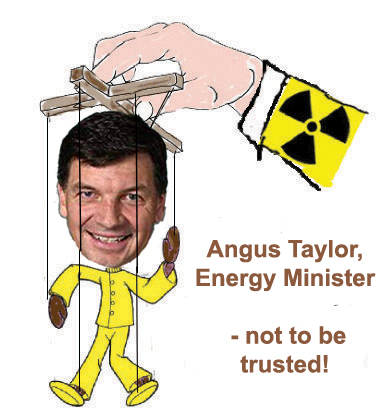
“Nothing better demonstrates the Liberals’ deeply moronic approach to energy and economics,” Josh Wilson, federal MP for Fremantle, tweeted on Friday.
“Nuclear power is not only ferociously expensive, but also slow, inflexible and toxic to the environment and human health.”
Top union leader backs Angus Taylor’s nuclear deal with UK, Jacob Greber AFR, Senior correspondent 30 July 21 One of Australia’s leading union leaders has lent support to Energy Minister Angus Taylor’s decision to enable Australian scientists to work with the UK on next-generation nuclear power development even as two Labor MPs slammed the idea of such power plants as “deeply moronic” and “toxic” to the environment and human health.
Daniel Walton, head of the Australian Workers Union called for “open and pragmatic energy solutions” to reduce carbon footprints at reliable and affordable rates.
If nuclear energy “ticks those three boxes, we should give it serious consideration,” Mr Walton told AFR Weekend. “If it doesn’t tick those boxes, we should move to the next solution.”
Mr Taylor signed a letter of intent this week with his British counterpart, Kwasi Kwarteng, for both countries to collaborate on low-emissions technology, including “advanced nuclear designs and enabling technologies”.
It is understood the co-operation will involve “leveraging” the expertise of the Australian Nuclear Science and Technology Organisation in waste processing and advanced materials to help advance development of small modular reactors, which are about the size of a standard shipping container……….
Reports of the UK-Australia nuclear tie-up triggered an immediate backlash from two West Australian Labor MPs.
“Nothing better demonstrates the Liberals’ deeply moronic approach to energy and economics,” Josh Wilson, federal MP for Fremantle, tweeted on Friday. “Nuclear power is not only ferociously expensive, but also slow, inflexible and toxic to the environment and human health.”
………….Mr Taylor said many Australians, particularly younger Generation Y and X voters, are looking at nuclear plants as a way of getting reliable power.
“All of it comes down to the genuine economic argument. If it’s uncompetitive against existing fossil fuels, then it won’t stack up,” he said. “But we’ll never know that if we never explore nuclear development. https://www.afr.com/policy/energy-and-climate/top-union-leader-backs-angus-taylor-s-nuclear-deal-with-uk-20210730-p58eiz
Australia’s carbon emissions down 20% due to wide take-up of renewable energy

Telegraph UK, 29th July 2021, For Australia’s part, our experience with technology-orientated pathways
gives us confidence that with the right investments and partnerships, a prosperous net-zero world is well within our reach.
On the ground, our real-world rollout of renewables has made clear to Australian firms and families the immense benefits of investing in clean technology. Because of their embrace of our new energy future, Australia’s emissions are down over 20 per cent on 2005 levels and green technology continues to be taken
up at record levels right across our nation.
https://www.telegraph.co.uk/news/2021/07/29/technology-key-free-prosperous-net-zero-world/
Submission: Sisters of St Joseph South Australia Reconciliation Circle on “ANSTO Intermediate Level Solid Waste Storage Facility Lucas Heights, NSW”

We have noted in the federal budget the allocation of $59.8 million to ANSTO. The PWC Inquiry should consider that proposed indefinite storage of ANSTO nuclear fuel waste and ILW in SA is untenable and compromises safety and security in SA. We respectfully remind the Committee that ANSTO’s premise to transfer ILW into indefinite storage in regional SA is contrary to International Best Practice (IBP) and does not comply with ARPANSA Committee advice.
Submission No. 5: Parliamentary Standing Committee on Public Works. Michele Madigan, Josephite SA Reconciliation Circle 27th July 2021 Inquiry: “ANSTO Intermediate Level Solid Waste Storage Facility Lucas Heights,NSW” Public Submission by the Josephite SA Reconciliation Circle. The Sisters of St Joseph South Australia (SA) Reconciliation Circle and their AssociateMembers welcome the opportunity to make a Public Submission to the Inquiry: “ANSTO Intermediate Level Solid Waste Storage Facility Lucas Heights, NSW”
In summary: Our members see as key the need for the Public Works Committee to actively encourage ANSTO to modify their storage facility for Intermediate Level Waste to keep the nation’s highest level of radioactive waste – intermediate long lived waste – on site until the final deep geological storage site is ready to receive it.
Our members include those who have been involved since 1998 with the vexed question of the federal government’s determination to store the nation’s highest level radioactive waste – intermediate long lived radioactive waste- in above ground temporary storage, with no planned final site.
Since 2015, these and other more recent members have been concerned and have taken action about the federal government’s latest plan to transport such waste to either the Flinders Ranges SA or the Kimba region SA. In this we have had good cause to stand with boththe Traditional Owners: the Adnyamathanha in the Flinders Ranges and the Barngarla in the
Kimba region.
Of course as South Australians we are also speaking for ourselves and many other South Australians concerned with various worrying aspects of the present federal government’s plans, including the inherent safety issues of such dangerous waste for communities along thetransport routes (yet to be determined or at least yet to be publicly released.)
We have noted in the federal budget the allocation of $59.8 million to ANSTO. The PWC Inquiry should consider that proposed indefinite storage of ANSTO nuclear fuel waste and ILW in SA is untenable and compromises safety and security in SA. We respectfully remind the Committee that ANSTO’s premise to transfer ILW into indefinite storage in regional SA is contrary to International Best Practice (IBP) and does not comply with ARPANSA Committee advice.
It is well known that the Dr Carl-Magnus Larsson former head of the regulator body ARPANSA has stated publicly on June 20th 2020 that ‘there is ample room at ANSTO for decades to come.’
Duty of Care As members of government the Public Works Committee will be well acquainted with the principle of ‘duty of care.’ Department officials seemingly have chosen an arbitrary number of 100 years for the proposed transported highly dangerous material to be left above ground with no definite contingencies to safeguard such.
Burden on Future Generations: Our members put it to the Committee that the present plans are simply ‘kicking the can down the road’ leaving a task for future generations that our present federal government is simply not willing to take on itself. And further that once transported and ‘stored’ there is no guarantee at all that the highly toxic material will not simply remain where it is.
Time frame. Clearly there are few Australians alive today who were born in 1921. One hundred years is beyond the knowledge of most of us. The fact that the ILW and other Lucas Heights material are by ANTSO’S own admission, toxic for an unimaginable 10,000 years, means that it is extremely irresponsible policy to be complicit or even advocating for such material to leave the direct care of ANSTO’s expertise and high security to be simply stored above ground on farming land, half way across the country from the nation’s nuclear experts.
ANSTO’S highly dangerous nuclear fuel wastes as well as their Intermediate Level Nuclear Waste need radiation shielding, safe expert handling and high security – and of course isolation from adults, children, animals and the environment lands and ground waters. This will not happen in the proposed above ground facility – even for 100 years.
Recommendation: We put to members of the Public Works Committee: that the present allocation of funding to ANSTO for safe and secure storage include the capacity to modify their storage facility to enable on site continuous storage of ANSTO’s own nuclear fuel waste and long lived intermediate level radioactive waste until such time as a permanent best practice underground final suitable storage site is found and
completed.
We thank you for receiving and noting oursubmission. https://www.aph.gov.au/Parliamentary_Business/Committees/Joint/Public_Works/ANSTOLucasHeights/Submissions
No-one can get finance to build a uranium mine in Australia.

NO-ONE CAN GET FINANCE TO BUILD A URANIUM MINE IN AUSTRALIA https://www.ccwa.org.au/no_finance_toro?utm_campaign=nuclear_news172&utm_medium=email&utm_source=ccwa
BY K-A GARLICK JULY 26, 2021 CCWA nuclear-free campaigner Kerrie-Ann Garlick attended last week’s Toro meeting to raise concerns that the company’s most recent uranium proposal differs from its currently approved plan.
Toro Energy’s general meeting last Friday heard the death toll sounding on WA’s uranium hopefuls.
Toro Chair Richard Homsany told the meeting that no one can get finance to build a uranium mine in Australia. He also acknowledged that Toro’s conditional environmental approval for its stalled Wiluna project expires on January 9, 2022. From this date, Toro will not be able to mine without making project changes that would require further state government scrutiny and approval.
In 2017 the McGowan Labor government introduced a policy ban on uranium mining in WA but inherited four uranium mine proposals with existing approvals granted by the former Barnett government. By the end of January 2022, the current Ministerial approvals for all four of the states proposed uranium mines will expire if they do not commence mining.
Approval for Cameco’s Kintyre expired and was not renewed in March 2020, Vimy Resources Mulga Rock project approval expires in December 2021 and both Yeelirrie (Cameco) and Wiluna (Toro) are set to expire in January 2022. If any of these companies want to mine they will need to seek approval for amendments to Ministerial conditions. This may trigger a new assessment or a suite of other conditions being applied.
CCWA nuclear-free campaigner Kerrie-Ann Garlick attended last week’s Toro meeting to raise concerns that the company’s most recent uranium proposal differs from its currently approved plan. “Toro is now focused on developing a JV uranium project at Lake Maitland. This is completely separate from the existing approval for the Wiluna project and would require a whole new environmental assessment. It is our view that this could not be advanced because of the existing policy ban on uranium mining in WA.”
“The Wiluna uranium mine proposal is uneconomic and they don’t have the funding to develop it. There is almost no scenario in which the Wiluna uranium mine could be developed ahead of the approval expiry in January 2022”
“It is refreshing that the Toro Board are realistic about the current highly negative market conditions for uranium. No one is financing uranium mines and that is unlikely to change by January. It is increasingly likely that we will reach a point in January 2022 where there are no operating mines and no active approvals for uranium mining in WA,” Ms Garlick concluded.
Submission Noel Wauchope: to Federal Inquiry into nuclear waste storage.
Noel Wauchope 27 July 21, To: Parliamentary Standing Committee on Public Works Inquiry: “ANSTO Intermediate Level Solid Waste Storage Facility Lucas Heights, NSW” Public Submission. I do not write as someone who is opposed to Australia having a plan for the permanent disposal of the nuclear wastes that are generated at Lucas Heights. Quite the reverse. Australia must face up to the necessity for such a plan.
However, ANSTO’s proposal for a temporary storage of these long lasting toxic wastes, at Napandee, South Australia, is NOT such a plan. As the licensing body, ARPANSA, has acknowledged, these highly hazardous nuclear fuel wastes can be safely and securely stored at Lucas Heights. Indeed ARPANSA has licensed this storage for at least 40 years to come. There is absolutely no need to trek this highly dangerous stuff for 1700 km to a small rural community, in a richly agricultural area – for so-called ”temporary” storage . At Napandee, they may well become ”stranded wastes”, while the necessity for permanent disposal remains ”a can kicked down the road”.
ARPANSA is still to consider the licensing application for the Napandee nuclear waste facility plan. ANSTO should not be able to continue with its process for the Napandee plan before this; ARPANSA Approval for proposed indefinite duration above ground nuclear fuel waste and Intermediate Level Waste storage in SA may not be granted.
Therefore, it is up to the Public Works Committee to require and confirm ANSTO public works that will comply with the Contingency to keep
Intermediate Level Wastes at Lucas Heights until a final disposal option is available.
It has not been made clear that there are really two separate proposals by the National Radioactive Waste Management for radioactive waste storage in South Australia
- for Low-Level Waste disposal facility in SA for an indefinite period.
- above ground nuclear fuel waste and ILW storage
ARPANSA will expect separate License Applications for these two proposals.
On transparency. ANSTO has been secretive about its plans regarding Intermediate Level Wastes. At least two significant reports to ARPANSA, required as part of
ARPANSA Licensing Conditions and due to the regulator by 30 June 2020, and ARPANSA’s reply, should be made available to the PWC, and publicly available.
On safety and security. As ARPANSA has noted, the double handling of Intermediate Level Waste in transporting it from one temporary storage to another temporary storage, is not consistent with international best practice. The safety and security problems of course also involve the communities en route, over such a long distance. Yet the NRWM taskforce has not engaged with these communities, surely that engagement must be a requirement for such a plan
On the undemocratic process. The National Radioactive Waste Management plan for this facility at Napandee rides roughshod over the rights of South Australians, who have had no say in this decision. It is an affront to South Australia, with its clear law prohibiting nuclear activitis. THe Eyre Peninsula region ‘s communities have had no say. Importantly, the traditional owners of the area.the Barngarla people, were eluded from the local vote, and are clearly against the dump plan.
On the hypocritical claim of ”medical necessity”. The publicity from ANSTO and from MInister Pitt has portrayed this facility as a ”medical necessity”, which it very obviously is not. As this submission primarily concerns the public works at ANSTO, I won’t go into that issue now. But it is pretty obvious to all but the somewhat brainwashed Kimba supporters of the plan, that the mostly short-lived medical radioactive wastes are dealt with at the local level, with no need for the elaborate centralised plan for Napandee. https://www.aph.gov.au/Parliamentary_Business/Committees/Joint/Public_Works/ANSTOLucasHeights/Submissions
Victoria’s Bayside Council call on Australian government to support the UN nuclear weapons ban treaty
Bayside Council supports nuclear prohibition,, https://www.miragenews.com/bayside-council-supports-nuclear-prohibition-601949/ 26 July 21, Bayside City Council has become the 11th Council in Victoria to join the call for the Australian Government to sign and ratify the United Nations (UN) Treaty on the Prohibition of Nuclear Weapons.
In a unanimous decision at the July 2021 Council Meeting, Bayside Councillors declared their support and are now calling on the Australian Government to sign the Treaty without delay.
Nuclear weapons pose a threat to communities throughout the world, and we believe all people, including our residents, have the right to live in a world free from this threat,” Mayor Cr Laurence Evans said.
“Any use of nuclear weapons, whether deliberate or accidental, would have catastrophic, far-reaching and long lasting consequences for people and the environment.”
Australia has not signed or ratified the Treaty, despite committing to pursue nuclear disarmament under the 1970 nuclear Non-Proliferation Treaty.
“It’s time for Australia to sign and get on the right side of history,” Cr Evans said.
Part of the Council resolution includes writing to the Foreign Affairs Minister, and the local Federal member of parliament, advising of Council’s support to the Treaty.
t was also resolved that Council will take steps to ensure that funds administered by Bayside City Council are not invested in companies that produce nuclear weapons.
Bayside City Council is the 11th Victoria Council to join the International Campaign to Abolish Nuclear Weapons (ICAN) Cities Appeal- a global call from cities and towns in support of the UN Treaty on the Prohibition of Nuclear Weapons.
(ICAN) is a coalition of non-governmental organisations in 100 countries promoting the implementation of the United Nations Treaty on the Prohibition of Nuclear Weapons. Founded in Melbourne in 2007, ICAN was awarded the 2017 Nobel Peace Prize
Submission: AZARK PROJECT says that Kimba nuclear waste plan is completely unnecessary, and irrelevant to nuclear medicine.
national nuclear waste facility at Kimba the existence or otherwise of which will have no effect whatsoever on the production of nuclear medicine by ANSTO

the importance and use of nuclear medicine locally is significantly
decreasing as there is a general reluctance and reduction by modern medicinein using nuclear isotopes for medical purposes in preference to much safer means to diagnose and treat medical conditions which were previously the
subject of nuclear medicine.
Parliamentary Standing Committee on Public Works Inquiry into the Australian Nuclear Science and Technology Organisation Intermediate Level Solid Waste Storage Facility at Lucas Heights
SUBMISSIONS BY AND ON BEHALF OF AZARK PROJECT PTY LTD, Peter Remta 26 July 21
INTRODUCTORY SUMMARY OF SUBMISSIONS
A. The proposed increase in the nuclear waste storage capacity at Lucas Heights by constructing a new storage facility is a completely unnecessary and expensive exercise which is only perpetuating the government’s inappropriate plans for a waste management facility at Kimba.
B, Serious and urgent consideration should be given to the establishment of the underground nuclear waste facility at Leonora by Azark Project due to its international recognition and acceptance for its unsurpassed suitability and safety.
C. Several members of the Committee should be excluded from any participation in deciding the merits of establishing or funding of the facility for the additional storage since they have previously made ill-founded and unjustified statements praising the proposals for Kimba…….
Continue readingSubmission: Barry Wakelin – ”interim” storage of nuclear waste at Kimba is a poor plan, with no commitment to planning for a permanent solution
Despite assurances from responsible Ministers, that a permanent ILW site selection process decision is in train, there is no evidence that the Parliament is making any endeavour to fulfil that promise, particularly when it is recalled that the construction (in 2007) of the OPAL nuclear reactor was conditional upon that promise being kept ,which it is too apparent never happened.
Sumission No. 4 Public Works Submission – Barry Wakelin OAM, Kimba, S A, 23 Juy 21,
I present this submission as someone with 15 years of Federal Parliamentary Service: and as a former Public Works Committee member and citizen of Kimba observing the machinations of a proposed “temporary” site for ILW (Intermediate Level Waste at KImba.) Mainly, promoted as a Low Level Waste site by government representatives .
I was closely involved with the Woomera attempt at a nuclear waste site. The great thing about being free of party politics is the time to become better informed and to develop my own clearer, fairer and individual opinions.
Despite assurances from responsible Ministers, that a permanent ILW site selection process decision is in train, there is no evidence that the Parliament is making any endeavour to fulfil that promise, particularly when it is recalled that the construction (in 2007) of the OPAL nuclear reactor was conditional upon that promise being kept ,which it is too apparent never happened.
Small communities like Kimba and its 95% agricultural dependence, have no government guarantee against health and economic damage from a ILW nuclear waste facility.
The defacto international nuclear waste via the suggested sixfold increase in the ANSTO export of nuclear medicine is in conflict with South Australian government policy and should not be inflicted upon a small rural community which is ignored by policy enforcers.
The question must be asked: why should a community of 0.00004% of Australians be bribed or emotionally blackmailed by the government using taxpayers’ funds to bludgeon 400 people at $200,000 each, in to accepting a nuclear Dump on behalf of 25million Australians who predominantly say NO . Not least of all are
government organisations like the Department of Defence who say the nuclear waste is too dangerous to be placed on their land ,the size of Tasmania.
If it takes this much money from government to convince a small community to accept the government’s argument which only gives the country a”temporary” nuclear waste facility of very limited value it is a a sad waste of taxpayer’s funds.
A commitment to the search for a permanent disposal site for ILW has not occurred and considering
2037 is the timeline; it is reasonable to accept that a “temporary” storage will not be required due to the new facilities at Lucas Heights The nuclear reactor will always have some temporary ILW storage.
It is clear to me that there is a reasonable prospect over the next fifteen years to find a suitable site
for permanent disposal of ILW suitably geologically and seismologically.
It is a privilege to be able to offer from my long term involvement in this difficult issue a view on the
justice or otherwise, which has been inflicted upon my magnificent community for the past six years.
I offer my best wishes to the Committee for your considerations.
.
A strong convention on radioactive waste safety means that nuclear’s toxic by-products should be kept as close as possible to the point of production
Paul Waldon Fight to Stop a Nuclear Waste Dump in South Australia ·
Remember “Claytons Beer.” A beer that’s not a beer.
Well, we have reached the 20 year anniversary of when “The Joint Convention,” came into force. The Joint Convention has been described as the first legal instrument to address used fuel rods and radioactive waste management safety across this earth.”So is it fair to say this a Claytons Convention?” Remember the beer didn’t have the alcohol content, only the taste.
This maybe nothing but a watered down “Basel Convention.” The Basel Convention was overlooking the safety of the populous by addressing the control of any transboundary movements of hazardous wastes and their disposal, which came into force in 1992, with over 170 members, and Australia becoming a member in 1992.
The Basel Convention’s charter makes mention that hazardous byproducts should be kept, managed and disposed of as close as possible to the point of production. However, radioactive products are exempt from the Basel Convention’s charter. I put it to you, to maintain the integrity of any legal instrument for handling radioactive products or by-products we should adopt the Basel Convention’s charter. That would install faith in the populous and any community that’s willing to embrace nuclear production will have to accept the product that’s produced there.
Submission: Leon Ashton opposes ANSTO’s flawed plan to set up a stranded nuclear waste dump at Kimba, South Australia
it is only a temporary measure until the other temporary measure of storing I.L.W. Is built. How many more temporary storage facilities will need to be constructed before a permanent disposal plan is found?
Submisson No. 2. Leon Ashton, 23 Jul 21, TO PARLIAMENTARY STANDING COMMITTEE ON PUBLIC WORKS CURRENT ENQUIRY: AUSTRALIAN NUCLEAR SCIENCE AND TECHNOLOGY ORGANIZATION INTERMEDIATE LEVEL SOLID WASTE STORAGE FACILITY LUCAS HEIGHTS NSW I I wish to make a submission to the public works committee in regards to the above matter. The biggest concern that I have with this application by ANSTO is that it appears as if it will still be built with a view that it is only a temporary measure until the other temporary measure of storing I.L.W. Is built. How many more temporary storage facilities will need to be constructed before a permanent disposal plan is found.
Dr. Allison McFarlane, a leading proponent from the Obama administration on Worlds Best Practice, (WBP) for the permanent disposal of nuclear waste has said high and intermediate level waste must be buried below the ground at a depth of 500 and 250 metres in deep stable granite. Why is this so hard to find in Australia. There must be several hundred sites in the Woomera Prohibited Area alone that would fit the bill. The millions and millions of tax payers dollars spent by this department in kicking the can down the road is disgraceful. It could have been put to good use to bring all vested parties together to follow W.B.P. For a permanent home for all our own nuclear waste.
We have heard this government department DISER argue that we do not have enough I.L.W. To warrant the cost of a deep permanent disposal site however, the hundreds of millions of dollars being spent at present do nothing to address the inevitable. Further more, the people of Kimba and Quorn and Hawker who have tried to seek answers to so many unanswered questions by this department, have realised long ago that there will never be a amicable outcome for any community if the I.L.W. Is moved from one temporary storage to another purely for political purposes. The trust that must be sought from any community has been destroyed forever. If an application is granted to temporarily store I.L.W. For more years at Lucas Heights, then how will this effect the Low Level Waste dump at Nappandee if it is approved and not the I.L.W. Storage approved?
Dr. Adi Patterson, the CEO of ANSTO has already stated that if any community does not get the I.L.W storage, there will be no economic benefits to the community. ANSTO has stated that this application if granted will be the cheapest option as it will be in their existing premises. How ever, as there are no increase in personnel numbers to put the I.L.W. in a new shed, why then are DISER falsely claiming a number of 45 jobs to guard the I.L.W at any other temporary storage site? This was stated by the federal minister for the environment Matt Canavan. Stating the only reason the massive job structure changed when trying to find a site for the Low Level Dump went from 8 to 45 was purely because he had decided the I.L.W would go to the site as well.
Submission: Flinders Local Action Group points out the flaws in ANSTO’s nuclear waste plan.
Intermediate Level Waste is the key element of greatest concern in the current NRWMF proposal.
• ANSTO has informed to us that Intermediate Level is the most dangerous and long-lived nuclear waste in Australia, with a toxic life in excess of 10,000 years. Our research tells us that in Europe little distinction is made between Intermediate and High Level waste – both remain potentially extremely dangerous over enormous time periods.
Subission No 5. Submission to the Parliamentary Standing Committee on Public Works, Greg Bannon, (On behalf of the Flinders Local Action Group 23 July 21,
SUBJECT: Australian Nuclear Science and Technology Organisation (ANSTO) Intermediate Level Solid Waste (ILSW) Storage Facility Lucas Heights, NSW
INTRODUCTION: The Flinders Local Action Group (FLAG) welcomes the opportunity to make a submission to this Public Works Standing Committee.
FLAG was formed to challenge the 2015 nomination of Wallerberdina Station in the Flinders Ranges district, and its inclusion on the shortlist of three potential South Australian sites for the proposed National Radioactive Waste Management Facility (NRWMF). The Group is made up of indigenous and non-indigenous members of the community.
We have become very well informed on the NRWMF proposal, seeking out and researching information from independent sources to weigh up against what has been provided to the community by the Department of Industry, Innovation and Science (DIIS – now the Department of Industry, Science, Energy & Resources, DISER). As both the proposer and promoter of the NRWMF, the Department cannot claim any sort of neutral position.
SUMMARY:
• ANSTO’s preferred Option 2 must be considered on the basis that interim storage will be until a permanent disposal site has been established. This would provide the licensing pathway to disposal required by the independent regulator, ARPANSA.
• There is no logic or economic sense in double-handling ILW from temporary storage at Lucas Heights to further temporary storage somewhere else, in preparation for yet another transfer to a third location for final disposal at some time in the future.
• There is no economic sense in establishing a facility for low level waste alone when a disposal site, critical for ILSW and more than suitable for LLW, is still to be established.
SUBMISSION POINTS:
Temporary Intermediate Level Solid Waste (ILSW) Storage:
The Department has guaranteed that all waste to be received at the NRWMF will be in a dry, compacted or compactable form. ANSTO defines ILSW as the result of conditioning Intermediate Level Liquid Waste under the Synroc process. In solid or liquid form, it is still Intermediate Level Radioactive Waste (ILRW). We do not accept any difference between what we have been opposing and refer to as ILRW, and ILSW.
Intermediate Level Waste is the key element of greatest concern in the current NRWMF proposal.
• ANSTO has informed to us that Intermediate Level is the most dangerous and long-lived nuclear waste in Australia, with a toxic life in excess of 10,000 years. Our research tells us that in Europe little distinction is made between Intermediate and High Level waste – both remain potentially extremely dangerous over enormous time periods.
Until now, the only plan for ILSW has been to remove it from temporary storage at Lucas Heights and transport it halfway across the country to a proposed NRWMF – still to be established. There it will remain in further temporary storage, for an undefined period, colocated
with Low Level Radioactive Waste.
• Temporary storage does not solve the national problem, which is the permanent, safe disposal for all of Australia’s nuclear waste, including the most dangerous and long-lived category, ILSW.
• ANSTO’s submission to the Standing Committee outlines five options “to assess the most efficient and effective approach to the design and construction of new storage capacity”.
We note that Option 2 (4.1.2. – ANSTO submission) “provides a direct continuation of existing operations for storing waste…(with the)…benefits of low capital outlay…minimalorganisational change…at low business risk make this the preferred option”.
• This would be of great encouragement to our Group if it means that ANSTO intends to continue interim storage of ILSW at Lucas Heights until the promised “single, state-of-the-art, world’s best practice radioactive waste management facility” (quotes from DIIS information) for the permanent disposal of both waste categories, ILW and LLW, is established.
• After more than 60 years of producing nuclear waste and 40 years of failed attempts to establish a national nuclear waste facility it is hard to accept that the only plan for the country’s most dangerous radioactive material continues to be temporary storage for an indefinite period of time. This would be a classic example of that over-used metaphor “kicking the can down the road”
National Radioactive Waste Management Facility:
If ILSW remains at Lucas Heights until a permanent disposal site is established, there is no necessity
for a facility to separately manage Low Level waste.
• The flaw in the NRWMF proposal has always been that, despite the Department’s assertion to the contrary, there was never to be a single national facility. Low level waste would be disposed of there, with Intermediate Level co-located alongside on a temporary basis, for an indefinite period, until a disposal facility was established somewhere else.
• The economic benefits promoted to the community from a nearby NRWMF were promised because the decision was announced to co-locate Intermediate Level Waste at the same site.
This was the reason given to both communities, Flinders and Kimba, for the Ministerial announcement that the 15 full-time equivalent jobs initially promised were suddenly increased to 45 along with a number of other economic incentives.
•Any site that is suitable for the permanent disposal of ILSW is suitable for the disposal of Low
Level waste.
CONCLUSION:
Our Group readily accepts the benefits that result from Australian atomic research and the production
of medical isotopes. We accept the need for a NRWMF to consolidate and dispose of all the
country’s nuclear waste in one location.
What is hard to accept, and still being experienced, are the disruptive and divisive effects this
process has had on our communities. Inflated promises of economic benefits have raised overly
optimistic expectations in some people. Cold, hard logic shows that these expectations will not be
met by the model that is currently being proposed. https://www.aph.gov.au/Parliamentary_Business/Committees/Joint/Public_Works/ANSTOLucasHeights/Submissions—
Barngarla native title owners were excluded from decision-making on Kimba nuclear waste plan.
Barngarla people say their votes weren’t counted in Kimba nuclear dump census, The Advertiser 22 July 21
As SA awaits confirmation on a location of a national nuclear waste dump near Kimba, traditional owners say they weren’t included in a vote on the contentious project.
A First Nations people say their voice wasn’t heard in the proposal to create a permanent, national nuclear waste storage facility, despite a census of the nearest township.
The plan cleared a major hurdle in June, with a shortlist of sites passing the Senate on June 21.
Federal Resources Minister Keith Pitt expected to name Napandee farm, near Kimba on the Eyre Peninsula as the likely choice in the coming weeks.
The debate about the facility centres on a 2019 census by the Australian Electoral Commission, which found more than 60 per cent of Kimba residents were in favour of the facility.
However, the body for the local Indigenous community, the Barngarla Determination Aboriginal Corporation said their voices on the proposal were not heard.
Group chair Jason Bilney said the Kimba ballot did not account for the First Nations people, who have a significant stake in the land, and in the Dreaming stories associated with it.
“The simple fact remains that even though the Barngarla hold native title land closer to the proposed facility than the town of Kimba, the First Peoples’ for the area were not allowed to vote,” he said.
“It’s a cop out to say we weren’t on the electoral roll, we had to do a separate vote, but how do we guarantee our votes are combined,” he said.
The bill allowing construction of the facility only passed the senate last month, after a clause was introduced which allows judicial review for those opposed to any decision.
“They tried to take the umpire out in the fourth quarter, so we’re glad to have had that amendment included, it‘s a win for democracy,” Mr Bilney said………….
Mr Bilney said if a proper heritage assessment and consultation with the Barngarla people had occurred, the dialogue could have been less combative.
“It’s about being open and transparent, it should have been put to us and all South Australians affected, what about all the towns who will now have nuclear waste trucked through, where was their say,” he said.
If we’d been consulted and a part of the process from the beginning, it could have been a different story.
“A lot of our people remember the impacts up in Maralinga, my grandfather was from up there and we remember some of the impacts and cancers that came about in the years after.
“They didn’t have a right back then, so we’re fighting for our say now.”
South Australia has a chequered nuclear history, with long term effects of radiation at the Maralinga bomb site and dumping at the Arkaroola mine in the Flinders Ranges marring public confidence in anything nuclear.
Opposition to nuclear waste transport through the port of Whyalla, South Australia
Push for nuclear port no-no, Whyalla News, Louis Mayfield 21
A Whyalla resident passionate about the issue of nuclear waste storage has called for the Whyalla City Council to move a motion against transporting nuclear waste through the steel city’s port.
Andrew Williams, who has written to the Whyalla News on the issue in the past, delivered a presentation to council during their meeting on Monday.
Mr Williams said the federal government intended to override state laws in order to transport nuclear waste through South Australia, with the Whyalla Port being a “target port” for transportation.
“The federal government have said they will ensure appropriate consultation where there is significant public interest,” he said.
It is necessary for more public interest, especially in Whyalla as Department of Industry reports name the Whyalla Port to take shipments of nuclear fuel wastes.”
Mr Williams further outlined his concerns around storing intermediate level nuclear waste (ILW) at a Nuclear Radioactive Waste Management Facility (NRWMF) at the Napandee site near Kimba.
“The intermediate level waste consists of reprocessed spent fuel rods and reactor waste and some legacy waste which must be kept contained and secure from the environment for 10,000 years,” he said.
“Storage will require double handling of ILW which is not world’s best practice. The issue has been presented as a local economic development opportunity rather than a National Dump which will affect many generations to come.”………https://www.whyallanewsonline.com.au/story/7351332/?fbclid=IwAR1Wk-SzqygZroJ14ZA2g4_VmixtphFkTOFKKzTMnJxlHIcxiMQAwotNN4Y
1 This month


Help Aunty Sue Protect Her Land and Sacred Sites From Destructive Rocket Testing.
.

Australians deserve the truth
about
AUKUS – https://aukuspublicinquiry.com/

PETITION – To: Prime Minister Anthony Albanese and the Australian Labor Government

of the week – Australians for War Powers Reform (AWPR)
To see nuclear-related stories in greater depth and intensity

