Iodine pills for South Australians- is that in the Nuclear Royal Commission’s planning?
Will South Australian communities and nuclear workers get iodine pills, once the State launches into its role as the international nuclear hub?
Canada’s communities near nuclear facilities ware getting them. Kevin Scarce’s Nuclear Fuel Chain  Royal Commission will be getting Submissions from Canadian nuclear companies. Perhaps the
 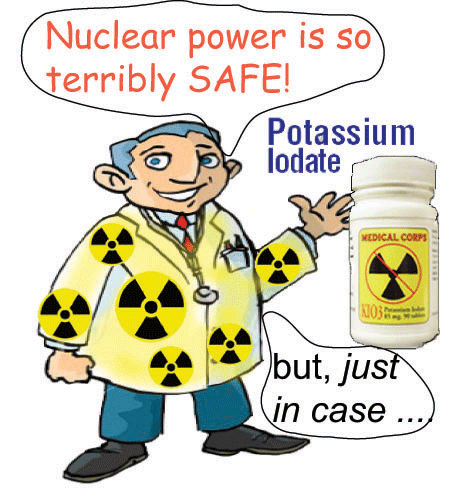 Commission will be visiting Canada, as part of its international junket.
Presumably the South Australian Nuclear Fuel Chain Commission will be keen to keep up with all the safety requirements that Canada has.
Greedy businessmen just can’t wait for the Royal Commission’s final report
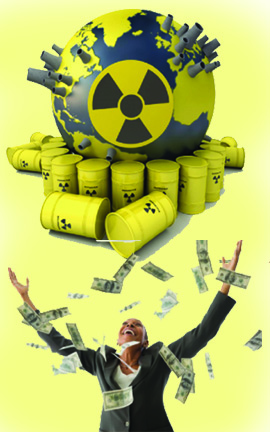 Nuclear Royal Commission urged to fast-track storage talks DANIEL WILLS STATE POLITICAL EDITOR THE ADVERTISER MARCH 03, 2015 BUSINESS has urged South Australia’s nuclear Royal Commission to fast-track consideration of hosting the nation’s first major waste dump, amid fears the state could miss out on a lucrative opportunity to take a foothold in a future storage industry.
The Federal Government has announced a new tender process for a national radioactive waste management facility and is seeking site nominations until May 5. However, South Australia’s Royal Commission is not expected to conclude until late this year or early 2016.
“Maybe we need to fast track that. Maybe that’s the part of the Commission that needs to come out first. “We can’t just wait until the Commission is over. They’re calling for it now….
Federal Industry Minister Ian Macfarlane said an independent advisory panel has been established to assess nominations and advise on the suitability of applicant sites.
The Federal Government has promised “a package of benefits” for the tender winner……..
Australian Conservation Foundation nuclear free campaigner Dave Sweeney called for the tender to be delayed amid fears a rushed process could harm communities and the environment….
Nuclear business lobby geared up to make submissions to the South Australian Nuclear Fuel Chain Royal Commission
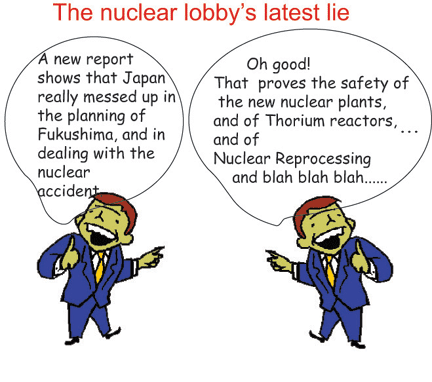
Mr Hundertmark said it was not simple to “overcome the anti-nuclear feeling” but that modern nuclear technology was far safer than older reactors, such as Fukushima in Japan
 Kevin Scarce, who is in favour of a debate on nuclear and is heading up the Royal Commission, has said he was sick of hearing politicians say they’re not opposed to nuclear power then doing nothing about it.
The $20bn blueprint to create a nuclear industry in SA TORY SHEPHERD POLITICAL EDITOR THE ADVERTISER FEBRUARY 22, 2015 A $20 BILLION blueprint to create a South Australian nuclear industry that turns around the state’s fortunes by employing tens of thousands of people has been developed by a panel of experts.
The draft plan says the project would make the state a “world centre” for nuclear energy by offering storage for radioactive waste, enriching our uranium and building nuclear reactors, creating a new industry.
SA Nuclear Energy Systems Pty Ltd, chaired by Bruce Hundertmark, comprises a range of nuclear experts and hopes to work with the US Department of Energy and other major international entities in its quest to make the plan a reality.
The group, which has an office in Wayville, hopes to make a submission to the Royal Commission into a nuclear industry. Continue reading
Nuclear Royal Commission puts up barriers to community participation
Conservation Council of South Australia, 22 May 15 The SA Nuclear Royal Commission is putting huge barriers in the way of the community to formally participate in the current submission process, with Aboriginal people, people from remote, regional or rural areas, youth, and those with language difficulties particularly affected.
The Royal Commission is currently calling for public input in response to a series of Issues Papers. However, in the Submissions Guidelines they insist that submissions must be typed (not hand-written), and before lodging, a person has to swear in front of a Justice of the Peace (or equivalent) that it is their work.
“This requirement to find a JP will make it very difficult for many in remote areas, and especially for Aboriginal people of South Australia,” said Karina Lester, Yankunytjatjara Anangu Traditional Owner.
“How many JP’s live on the APY Lands or Maralinga Tjarutja Lands. How far does one have to travel to track down a JP?
“This is very unfair of the Commission to put these requirements in place as this will disengage the community and it will be all too hard to put in a submission.
“All South Australians need to contribute into this Royal Commission and feel that they have been consulted the right way.
“Anangu and the Aboriginal people of South Australia have been the ones directly impacted by the Nuclear Industry in the past. The Government of SA are not learning from the past and hearing and respecting the voices of those who have lost loved ones, lost their sight, skin infections, cancers, and the list goes on,” said Ms Lester.
A sworn oath in front of a Justice of the Peace to lodge a submission is:
– NOT required under the Royal Commissions Act 1917
– NOT required for equivalent Federal or State Parliamentary inquiries
“ Requiring a member of the public to travel to a JP and swear an oath in front of them before they can lodge a submission is a highly unusual, unnecessary and surprising restriction which will stop people getting involved,” said Conservation Council SA Chief Executive Craig Wilkins.
“If they are concerned about fake or spam submissions, all they need is for individuals to self declare and sign a coversheet. To be forced to swear an oath in front of a JP just to have your say is simply not necessary.
“Rather than creating a genuine community conversation as the Premier hoped, barriers like this will directly prevent a large number South Australians from participating and submitting their views.
“We urge the Commission to change their rules to allow as many South Australians as possible to participate, ” he said.
The last of 3 public information sessions about the Royal Commission will be held today at Adelaide University at 1pm. Media Contact: Meg Sobey, Communications Officer, 0411 028 930 meg.sobey@conservationsa.org.au
South Australia Nuclear Fuel Chain Royal Commission Community Consultation Coober Pedy 14 May 2015
Transcript by Noel Wauchope, 20 May 2015 This transcript is a reliable account of the proceedings, but is not word for word accurate. As far as possible, I have used the exact words.
Small Modular Nuclear Reactors touted to the South Australian Royal Commission
SA inquiry hears of new breed of small nuclear reactors, Financial Review, by Simon Evans, 19 May 15 “…………..The nuclear royal commission being headed by former South Australian governor Kevin Scarce will examine the suitability of small reactors in the Australian energy market and will also scrutinise emerging technologies known as fast neutron reactors. The commission started in mid-April and Mr Scarce has held several community forums across South Australia in the past few weeks and is holding open sessions at the state’s three universities, including Adelaide University, over the next three days starting on May 19.
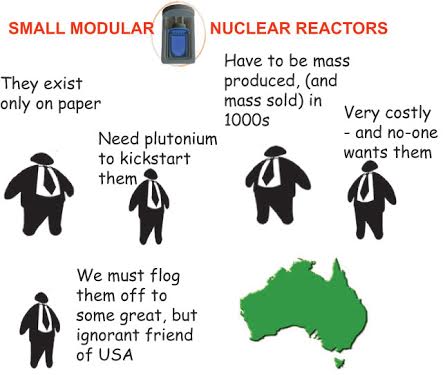
The issues paper says some of the new-generation reactors are “designed to use thorium as a fuel”. …………
Mr Scarce also points out that in Britain, which has a deregulated electricity market like the NEM, a new nuclear power generation project for Hinkley Point in Somerset had developed a regulated “contract for difference” model for the purchase of the electricity supplied by the facility to retailers. The £16 billion ($31.30 billion) project, which is being developed by French utility EDF, has started earthworks but there have been delays because of uncertainty around the final investment decision for what would be Britain’s first new nuclear power plant in two decades……..http://www.afr.com/business/sa-inquiry-hears-of-new-breed-of-small-nuclear-reactors-20150519-gh4p53
South Australia’s Pro Nuclear Royal Commission to visit Fukushima and elsewhere
 Nuclear Royal Commission to visit Fukushima disaster area, Adelaide Now PAUL STARICK CHIEF REPORTER THE ADVERTISER MAY 17, 2015 FORMER governor Kevin Scarce will inspect the Fukushima region, which was ravaged by a nuclear power plant accident, as part of the Royal Commission he is leading.
His three-person delegation next week will study the failed processes which resulted in a significant amount of radioactive waste being released into the atmosphere at the Daiichi Nuclear Plant in March, 2011.
They expect to go inside the 30km nuclear disaster exclusion zone, from which more than 150,000 people were ordered to evacuate as a result of the accident, caused by coolant loss following a tsunami.
“We’ll be looking at technologies in Japan and we’ll also be looking to talk to people who are against the nuclear fuel cycle,” Rear Admiral Scarce said.
The fact-finding mission is part of a global study tour of more than a fortnight, which also includes Taiwan, Finland, Austria, France and the United Kingdom……..
The delegation also will visit the Vienna-based International Atomic Energy Agency, the United Nations agency which promotes the safe, secure and peaceful use of nuclear technologies……..
he said SA needed to examine future economic opportunities as car and component manufacturing closes or declines……
Rear Admiral Scarce has completed community meetings across the state in venues including Mount Gambier, Port Augusta, Berri, Coober Pedy, Maralinga, Oak Valley and Umuwa on the Anangu Pitjantjatjara Yankunytjatjara lands.
The Royal Commission’s community meetings this week will be held at UniSA’s Mawson Lakes campus tomorrow, Flinders University’s Tonsley Park campus on Wednesday and Adelaide University’s Bonython Hall on Friday. See www.nuclearrc.sa.gov.au for details. http://www.adelaidenow.com.au/news/south-australia/nuclear-royal-commission-to-visit-fukushima-disaster-area/story-fnpp66pk-1227358258362
Senator Bob Day wants nuclear submarines built in South Australia
 9 February 2015 Family First Senator Bob Day today welcomed the South Australian Government’s move for a Royal Commission into the nuclear industry, saying the decision has enhanced prospects for submarines to be built in South Australia….
“On nuclear-powered subs, since 1 July in Federal Parliament I’ve been urging the Senate to follow the example of the late Norm Foster, the former Labor MP who had the courage to cross the floor to support uranium mining at Olympic Dam. Now the Government is going a step further to investigate how the nuclear industry would benefit South Australia.”
“This opens the door to nuclear submarines. I’ve been an advocate for nuclear submarines for many years, and the former Defence Minister welcomed my ‘opening the nuclear submarines debate’ during Question Time late last year [video]. One of the major obstacles to Australia considering nuclear submarines has been the absence of a domestic nuclear industry.”……
Canadian nuclear manufacturer to make submission to #NuclearCommission SAust
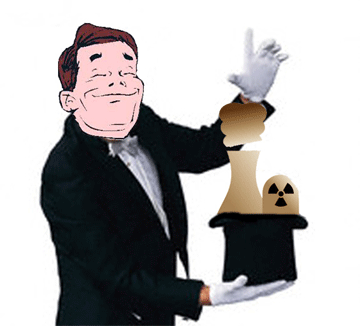
The Australian pro nuclear Thorium lobby has asked the Canadian firm Terrestrial Energy to put in a Submission to the South Australian Nuclear Fuel Chain Royal Commission. This company is trying to market the Integral Molten Salt Reactor (IMSR).
Australians need to be aware of the agressive marketing methods of the purveyors of these new, untested highly expensive nuclear gimmicks.
Crystal ball-gazing in South Australia’s Nuclear Commission ISSUES PAPER No. 3
 Dennis Matthews, 13 May 15 NUCLEAR FUEL CYCLE (sic) ROYAL COMMISSION ISSUES PAPER THREE
ELECTRICITY GENERATION FROM NUCLEAR FUELS
Once again we have an issues paper full of pro-nuclear conjecture and crystal ball-gazing with statements like “research has been undertaken”, “under development”, “are proposed”, “soon to demonstrate”, “could potentially”, “could, if commercialised”, “may be”,” might encourage” and “could have”. The history of the nuclear industry is a history of overstated optimism. Policy makers would do well to stick to the facts rather than optimistic forecasts from vested interests.
Ionising has been constantly dropped from “ionising radiation”, especially in the section on operational health and safety. At best this is sloppy science but given the history of the nuclear industry, it might well be considered mischievous.
The word “nuclear” is frequently dropped especially when talking about nuclear reactors. This demonstrates the sensitivity of the nuclear industry to its image. Ironically, the nuclear industry appears to be loathe to admit that it has anything to do with its own scientific and technical foundation. Continue reading
Issues Summary: SOUTH AUSTRALIA’S NUCLEAR FUEL CYCLE ROYAL COMMISSION
SOUTH AUSTRALIA’S NUCLEAR FUEL CYCLE ROYAL COMMISSION ISSUES- SUMMARY -May 2015 Prepared on behalf of the Conservation Council SA by Dr Jim Green, Friends of the Earth, Melbourne. The Conservation Council of South Australia (Conservation SA) is the peak environment group in the state, representing around 50 non-profit environmental organisations.Millions are being wasted on a commission dominated by pro-nuclear interests
Dennis Matthews 11 May 15 The energy and capital intensive, economically and environmentally disastrous, desalination plant fiasco (The Advertiser, 11/5/15) epitomises the mental bankruptcy of the South Australian Liberal-Labor duopoly.
Hard on the heels of the desalination disaster comes an equally desperate proposal by the Liberal-Labor duopoly – the expansion of the nuclear industry in South Australia. This capital intensive, environmentally and economically disastrous proposal comes at a time when South Australia could be capitalising on its natural advantage in renewable energy.
Millions are being wasted on a commission dominated by pro-nuclear interests whilst essential services such as regional hospitals are being closed thereby shifting health costs onto taxpayers in regional areas.
And amongst the ideas being discussed by the Scarce Commission is guess what – a nuclear powered desalination plant.
Talk about slow learners.
South Australia Nuclear Royal Commission Issues Paper 4 – misleading and serious omissions
the issues paper appears to be talking about a so-called public-private-partnership (PPT).
There is no mention of “user pays” or “polluter pays” principles. Nor is there any discussion of the role of Government economic regulation of such a venture.
Dennis Matthews, 8 May 15 NUCLEAR FUEL CYCLE (sic) ROYAL COMMISSION
ISSUES PAPER FOUR
MANAGEMENT, STORAGE, AND DISPOSAL OF NUCLEAR AND RADIOACTIVE WASTE
Once again, the word “ionising” has been omitted from “ionising radiation”. It is hard to believe that this is an oversight and appears to be a deliberate move by the nuclear industry to play down the fact that radiation from radioactive substances is very different in its effect on living tissue from other forms of radiation such as visible light and radio waves.
In addition a new ploy has emerged, not only has nuclear waste been differentiated from radioactive waste but in the majority of cases it is simply referred to as “waste” and we end up with terms like “waste disposal facility”.
I anticipate that in the near future the nuclear industry, its fellow travellers, and the unsuspecting public will be using these sterilised and misleading terms. For example, it would be a simple matter to quote sections of the issues papers out of context in such a way that terms like “radiation”, “waste” and “waste disposal facility” can be bandied about until they become the standard.
As previously, there is widespread use of terms like “proposed”, “under development”, “being developed”, “would involve”, and research is “ongoing”. Such terms have no place in a document that is being used to determine government policy, especially on such a contentious issue as expansion of the nuclear industry.
This issues paper is in three sections: Nuclear and Radioactive Waste, Facilities and Techniques for the Management, Storage and Disposal of (nuclear and radioactive) Waste, and Risks and Opportunities.
- NUCLEAR AND RADIOACTIVE WASTES
Dennis Matthews exposes South Australia Royal Commission “Issues Paper 2” spin
In relation to the dangers of ionising radiation the issues paper refers simply to “radiation” thereby lumping it together with electromagnetic radiation including such innocuous things as visible light and radio waves.

Dennis Matthews, 8 May 15 NUCLEAR FUEL CYCLE (sic) ROYAL COMMISSION
ISSUES PAPER TWO
FURTHER PROCESSING OF (uranium and thorium) MINERALS AND MANUFACTURE OF MATERIALS CONTAINING RADIOACTIVE AND NUCLEAR SUBSTANCES
Two things stand out in this the second Issues Paper for the Scarce Nuclear Industry Commission.
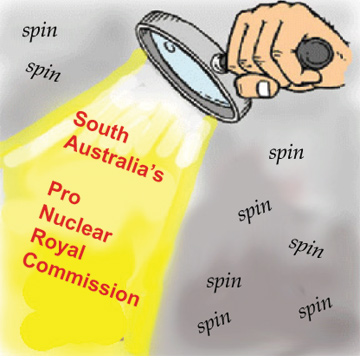
One is the consistent use of pro-nuclear jargon/spin, the other is the frequency with which statements are accompanied by provisos.
The pro-nuclear jargon/spin started right from the beginning of this whole process with the name of the Commission. Instead of using the neutral, straight forward term “nuclear industry”, the value –laden, scientifically incorrect, misleading phrase “nuclear fuel cycle” was chosen. This was accompanied by similarly misleading, nuclear industry, feel-good phrases such as “value adding” and “enrichment”.
The most obvious nuclear industry ploy used in this discussion paper is to refer to “radiation” rather than “ionising radiation”. This is unscientific, misleading and potentially confusing to many readers who are familiar with the fact that “radiation” includes microwaves, radiowaves, visible light, and infrared radiation, none of which is ionising.
This issues paper makes frequent use of vague terms such as “may allow”, “ongoing”, “possible”, “currently being developed”, “may be”, “could be influenced”, “being developed”, and “emerging technologies”. These are hardly encouraging or appropriate terms for producing serious policy, especially on such a contentious issue as expanding the nuclear industry in SA.
This issues paper is in four sections: Further Processing, Manufacture, Viability, and Risks and Opportunities. Continue reading
What Australia’s nuclear lobby is most worried about
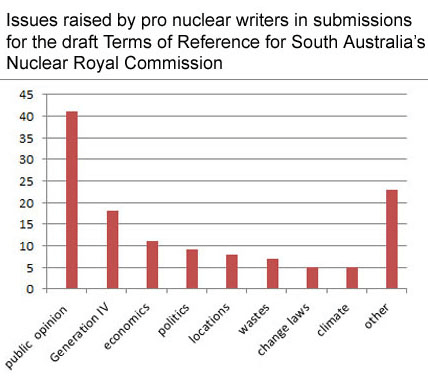
 Pro nuclear Submissions for the Draft Terms of Reference for South Australia’s Nuclear Royal Commission gives an insight into the preoccupations of Australia’s nuclear lobby.
Dennis Matthews, of South Australia, took the trouble to analyse the themes raised in pro nuclear submissions.
The overwhelming concern of the nuclear lobby appears to be – the need to win over the public to supporting the nuclear industry – the necessity of “educating” the public. (It struck me that their idea of education might be similar to British tobacco’s idea of informing the public of the benefits of cigarette smoking.)
The second most important topic was the benefits of “Generation IV nuclear technology”, particularly Small Modular Recators. (They don’t even exist yet – but never mind)
Way behind these two topics, were arguments for the nuclear industry on grounds of economics, politics, locations for reactors, waste disposal, need to change Australia’s laws, and fixing climate change.
A very few submissions dealt with (in this order) military advantages, radiation no real threat, energy demand, Australia’s international role, benefits to Aborigines, expertise, and medical uses.
So I guess we can expect that the first onslaught of the pro nuclear campaign will be an allout publicity and “educational” effort – no doubt supported by a sycophantic media, and by educational institutions who know which side their bread is buttered.
ISSUES RAISED BY THE PRO-NUCLEAR SUBMISSIONS TO THE
DRAFT TERMS OF REFERENCE
SCARCE COMMISSION INTO EXPANDING THE NUCLEAR INDUSTRY Continue reading
1 This month

of the week – Australians for War Powers Reform (AWPR)
To see nuclear-related stories in greater depth and intensity
 Antinuclear