Even the pro Nuclear Royal Commission admits the threat of the nuclear industry to precious groundwater
 Groundwater a significant issue: nuclear royal commission, IN Daily,
 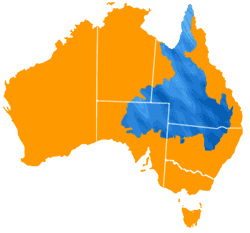 Adelaide Indpendent News, 30 April PETER GILL | 30 APRIL 2015 The potential impact of a nuclear waste storage facility on South Australia’s groundwater systems is one of the “significant issues” that need to be addressed in any consideration of expanding the nuclear fuel cycle, according to the royal commission.The second issues paper published by the royal commission says the siting and operation of a waste storage or disposal facility must take potential environmental impacts into account.
“In addition to the management of radiative exposure, a significant issue is the potential for the contamination of groundwater sources.
“Addressing that issue requires an understanding of the current frequency, flow and volume of surface and ground waters. “Management of water resources from sourcing and storage will be required if such a facility were to be sited in South Australia.
“Also significant is the potential risk of land contamination at handling, storage and disposal sites.
“Aside from its ecological impact upon animals and plants, contamination of the environment has implications for the health and safety of humans who use those resources.”
The issues paper, entitled Management, Storage and Disposal of Nuclear and Radioactive Waste,was released last week and followed the royal commission’s first public forum in Mt Gambier. Similar forums will be held in Port Augusta today (Thursday 30 April), Port Pirie tomorrow, and Berri on 5 May………http://indaily.com.au/business-insight/2015/04/30/groundwater-a-significant-issue-nuclear-royal-commission/
Minerals Council pushes for overturning of Australia’s environmental laws
When Oscar Archer spruiked on ABC Radio National for then entire nuclear chain to be set up, he left the first and most important step as a little addition near the end of his spruik. That was the necessity of overturning Australia’s Federal and State environmental laws. The Nuclear Lobby now takes this up
 Review emissions target, nuclear ban: Minerals Council The Minerals Council of Australia has called for a review of the ban on nuclear power and warned that Australia’s post-2020 emission-reduction target cannot be properly formulated without extensive economic modelling……
Fibs and half-truths told by the South Australian Nuclear Royal Commission
Confusing and dishonest propaganda is already the modus operandi of South Australia’s Nuclear Royal Commission.
How Kevin Scarce, the (only known) Commissioner reported on their visit to Mt Gambier:
1. Public response “It is clear from our first public forum held in Mount Gambier this week that the community is keenly interested in having their say on the nuclear fuel cycle.
2. Information provided “It was also clear that the Issues Papers were a valued source of information for the community, as the information is evidence-based and provides helpful guidance on the topics which submissions will best assist the inquiry”.
What really happened at Mt Gambier.:
1. Public (dubious) response Royal Commission (presumably Kevin Scarce + unknowns) held public forum at Mt Gambier on April 20. Only 35 people attended. Then Commissioner talked with “business leaders” . – a lot of secrecy about who’s involved in this Royal Commission.
2, Information (not) provided. Out of 4 Issues Papers touted by the Commission, in fact only one EXPLORATION, EXTRACTION AND MILLING (of Uranium and Thorium) (very narrow and inadequate) has yet been released..
Pro nuclear vested interests predominate in submissions to Nuclear Royal Commission
Dennis Matthews 24 Apr 15 In 2011 The Chief Executive, Prof. Stephen Martin, of the influential Committee for Economic Development of Australia (CEDA) wrote in an article on nuclear power calling for “a rational debate, not one based on vested interests” (The Australian, 10/11/11).
Less than four years later, at least 14 of the submissions to the draft terms of reference for the inquiry into the nuclear industry are from individuals, companies or organisations with a clear vested interest in the nuclear industry.
The SA Government and the inquiry commissioner have constantly assured us that the inquiry will be objective and rational.
This raises the question “why have so many pro-nuclear vested interests felt emboldened to try to influence the inquiry’s terms of reference?”
This is a question that only the SA Government can answer.
In the meantime, for an objective, rational debate it is incumbent on the commissioner to either ignore or heavily discount the views of vested interests.
35 people attended Kevin Scarce’s Nuclear Royal Commission Forum at Mt Gambier
Royal Commission (presumably Kevin Scarce + unknowns) held public forum at Mt Gambier on April 20. 35 people attended. Then Commissioner talked with “business leaders” . – a lot of secrecy about who’s involved in this Royal Commission.
Dennis Matthews on the agendas and style of submissions to the draft ToR of the Nuclear Royal Commission
Dennis Matthews, 23 Apr 15 I have just finished reading submissions to the draft terms of reference of the inquiry into the so-called “nuclear fuel cycle”. I was struck by the fawning attitude of many submissions from those who have a vested interest in the nuclear industry, and by the derogatory language used to describe those who oppose the nuclear industry.
One submission from an organisation with an apparent vested interest offered to help the commission with “independent” experts, whilst another claimed to be neither “pro nor anti-nuclear”.
Concerns about the Chernobyl and Fukushima disasters were dismissed as based on ideology.
 Pro-nuclear submissions referred to “every anti-nuke zombie” “lurching out of their coffins”, to “an ignorant and anti-scientific audience”, to “fear mongers”, to the “anti-nuclear lobby fear industry”, to “anti-nuclear propaganda”, and to “emotive arguments”.
The confidence with which supporters of the nuclear industry addressed their inappropriate remarks to the inquiry does nothing to allay fears that there is a strong pro-nuclear undercurrent to the inquiry.
France’s involvement in South Australia’s Nuclear Royal Commission
This Nuclear Royal Commission is becoming a bigger farce with each passing day!
We already knew that the Royal Commission was seeking help from Canada- notorious for the corruption in its nuclear industry
The Advertiser (South Australia’s voice for the nuclear industry) has informed us , apparently with joy and delight, that:
“The French want to sell the state their world-leading uranium enrichment and electricity-generating nuclear technology.”
“Suggestions proposed by the French have already been incorporated into its terms of reference”
“the French Ambassador, Christophe Lecourtier, also briefed Mr Weatherill on the transformation of the regional economy of Normandy, as host to significant sectors of French’s nuclear industry.
The ambassador argued parallels could be found with the South Australian economy if it were to become the home of a fledgling Australian uranium enrichment and nuclear energy industry.
Normandy has the French government’s most modern and main export reactor design, the so-called European pressurised reactor (EPR), which is currently under construction.”
It all sounds so very fine and dandy.
EXCEPT for:
1 France’s Nuclear Financial Crisis France’s State owned nuclear company AREVA now a costly burden France’s nuclear corporation AREVA in deep financial trouble – needs tax-payer bailout.
2. France’s Nuclear Safety Crisis UK nuclear strategy faces meltdown as faults are found in identical French project. Future of the entire Flamanville-3 project in doubt, with more problems at EPR nuclear reactor
First Nuclear Royal Commission Issues paper indicates an expensive farce
The paper appears to be totally confused by what is a cyclic process. For example, the phrase “once-through” cycle is an oxymoron and reprocessing spent fuel is just that, not recycling. These terms come from the nuclear industry’s spin doctors.
Nowhere in this Issues Paper is information given on Government funding of the nuclear industry either directly in the form of grants and through government supplied services such as exploration, testing, environmental, and occupational health and safety services or indirect in the form of administrative services associated with the nuclear industry. We have no way of telling, for example, whether government expenditure has been recouped through royalties.
 NUCLEAR FUEL CYCLE (sic) ROYAL COMMISSION
ISSUES PAPER ONE
EXPLORATION, EXTRACTION AND MILLING (of Uranium and Thorium), critique by Dennis Matthews, 20 Apr 15
This, the first issues paper of the SA Government’s commission into expanding SA’s role in the nuclear industry, will confirm the worst fears of those who suspect that this commission is an expensive farce funded by the taxpayers of SA , and that the decision to expand the nuclear industry in SA is an ALP-LP-nuclear industry done deal.
The issues paper is the product of the SA Government’s mining bureaucracy, a bureaucracy that has a long history of a gung-ho environmental vandalism in the name of development. In the days when uranium mining was being considered at Roxby, Beverley and Honeymoon it was called the Dept of Mines & Energy but was known in the environment circles as the Dept of Mines & Mines, there never was any interest in anything form of energy other than coal, gas, oil and uranium.
Thanks to the Australian Democrats we got the Renewable Energy Target (RET) which overnight led to significant investment in wind energy in SA. We then got an even better result in the form of rooftop solar, the ultimate challenge to the fossil-nuclear fuel lobby and to multinational energy corporations in general. Not surprisingly the Liberal-Labor duopoly is now trying to reverse this challenge to big business’ control over electricity generation. To a ruling duopoly, which has given us widespread privatisation of essential services, consumer control over electricity generation is anathema.
The issues paper has four sections. Continue reading
Nuclear Royal Commission needs balance – Jim Green
 20 Apr 15 The SA government’s Nuclear Fuel Cycle Royal Commission kicks off in Mount Gambier today Dr Jim Green, national nuclear campaigner with Friends of the Earth, Australia, said:
“Kevin Scarce promised a ‘balanced’ royal commission but three of the five members of his ‘expert panel’ are pro-nuclear, with just one critic. There’s nothing wrong with including nuclear advocates on the panel but there should be balance.
“One way or another Kevin Scarce needs to act to restore credibility to the Royal Commission. Otherwise it will be treated with the same ridicule as the Switkowski Review, which was comprised entirely of ‘people who want nuclear power by Tuesday’ according to comedian John Clarke.”
Despite its bias, the 2006 Switkowski Review was sceptical about proposals to expand Australia’s role in the nuclear fuel cycle, as was BHP Billiton in its submission to the Switkowski Review (see attachment below). Conditions are no more favourable now than in 2006. Despite the hype about a nuclear ‘renaissance’, the number of reactors has declined over the past decade.
Dr Green said: “Presumably the Royal Commission sees Mount Gambier as a potential site for a nuclear power reactor. The local community should consider the legacy of high-level nuclear waste that would remain in the Mount Gambier region indefinitely since there is no disposal site for high-level nuclear waste in Australia − or anywhere in the world for that matter. The only deep underground nuclear waste repository in the world − in the US state of New Mexico − has been shut down following an underground chemical explosion that spewed radiation to the outside environment and contaminated 22 workers.
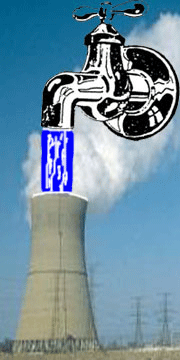 “Nuclear power is incredibly thirsty − a single reactor requires 35−65 millions litres of cooling water daily. The huge water intake pipes destroy marine life by the tonnes.”
The local community should also consider scientific research linking nuclear reactors to increases in childhood leukemias. UK radiation biologist Dr Ian Fairlie notes that over 60 studies have examined cancer incidence in children near nuclear power plants and more than 70% of those studies found increased cancer rates. Dr Fairlie concludes that “the matter is now beyond question, i.e. there’s a very clear association between increased child leukemias and proximity to nuclear power plants”.1
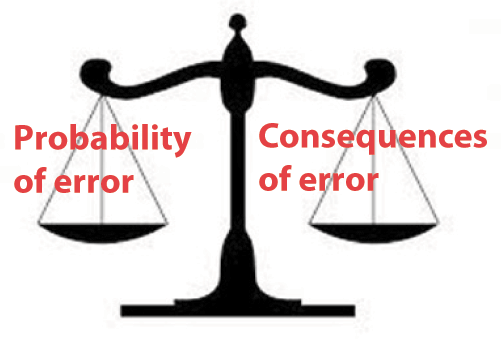 “The community of south-east SA also needs to consider the small risk of a catastrophic accident. The costs of the Fukushima disaster in Japan will probably exceed $500 billion − more than enough to ruin not only the local economy but the entire state’s economy,” Dr Green concluded.
Contact: Jim Green 0417 318 368, jim.green@foe.org.au
——————————————–
ATTACHMENT Continue reading
Friends of the Earth Adelaide: Submission on TOR of ROYAL COMMISSION INTO THE NUCLEAR FUEL CYCLE
SUBMISSION ON THE TERMS OF REFERENCE FOR THE ROYAL COMMISSION INTO THE NUCLEAR FUEL CYCLE
To the Attorney-General Department submissions@agd.sa.gov.au
Friends of the Earth Adelaide urge you to consider the following Terms of Reference to be included for the Royal Commission into nuclear energy.
The Royal Commission will be undermined if it does not include the following Terms of Reference:
1. Balanced and fair representation in the Royal Commission
(a) provision must be made for qualified anti-nuclear people on the royal commission, so all evidence is public; including
(b) funding for anti-nuclear people to make their case (since the industry will be spending lots of money presenting their side).
2. Environmental impacts of uranium mining in South Australia The terms of reference should explicitly look at:
(a) long term worker health and safety (why are no lifelong records of exposure kept);
(b) Roxby’s record of tailings dam collapses/breaches;
(c) damage to underground aquifers and the loss of biodiversity;
(d) net economic subsidy of mining and exploration, as opposed to actual income for the state (rather than big mining companies).
3. Enrichment The Terms of Reference should include any requests from industry for subsidies industry to build and operate any enrichment facilities, as well as power and water requirements, worker health, transport safety and security, and waste management.
4. Nuclear waste The Royal Commission must look widely at nuclear waste management in South Australia, including uranium tailings. The Commission should examine proposals to host international nuclear waste and status of the waste industry globally.
5. Nuclear waste dump
(a) the commission should examine the full cost of maintaining and guarding a waste-dump for 30, 50, 100, 1000 years or more, factoring in real world cost experience of testing potential waste dump sites; (b) South Australia’s legacy contaminated nuclear sites include Maralinga, the Port Pirie Uranium Treatment Complex, and Radium Hill. There are unresolved concerns over the status of these sites in relation to public health and environmental impacts, and the Royal Commission provides an opportunity to finally resolve these issues.
6. Nuclear Power The economic analysis should:
(a) compare cost of nuclear energy to renewable energy, in terms of real world, not theoretical estimates; (b) proper analysis of cost of building a power plant, including the cost of water, electricity etc, versus the returns to the state and taxpayers (not the big companies);
(c) potential cost of an accident during transport or storage, and cost of cleanup;
(d) the record of the global nuclear industry’s optimistic predictions and its failure to live up to those predictions (in relation to issues such us global demand, global capacity, construction costs, facility start-up dates, technological difficulty, and safety);
(e) the reasons for the nuclear industry’s failure to live up to its predictions and the likelihood that that pattern will be repeated in Australia.
7. Climate Change solutions and Renewable Energy The Terms of Reference should include
(a) an analysis of alternative energy sources to address the challenge of climate change, including the potential for growth in renewables and other low carbon technologies; (
b) compare nuclear reprocessing/power generation ( including insurance!) to solar thermal plants; to large solar PV arrays; to building windfarms; to adding storage to the grid;
(c) consider probability of major floods/droughts from climate change displacing assumptions of dry, geological stability, and
(d) the developmental status and economic viability of proposed technologies (in light of past failures to accurately estimate costs and delivery times).
8. Negative impact on other export industries The terms of reference should include a thorough analysis of the opportunity costs of a further embrace of the nuclear cycle, including the impact on our clean and green food and wine reputation, and the tourism and international student markets, particularly if South Australia were to host an international repository for high-level nuclear waste
9. Insurance, financial risk, public liabilities and subsidies; The terms of reference should include:
(a) A comprehensive examination of the potential liability of the SA Government in the case of an incident or accident;
(b) tax-payer subsidies required to support each proposed role in nuclear energy (in light of past failures to accurately estimate costs and delivery times);
(c) risks of transport of radioactive materials, both within Australia and on the high seas.
10. Proliferation of nuclear weapons The terms of reference should address the nuclear proliferation and global and regional security implications of Australian involvement in nuclear fuel cycle activities. Progress in halting proliferation, spread of nuclear technology, terrorist attacks etc should be reviewed.
11. International Geopolitical response The terms of reference should also include likely foreign government reactions to each proposed role in the nuclear energy cycle.
12. Public participation Friends of the Earth Adelaide call upon the royal commission to canvass public attitude to each proposed role in nuclear energy, nationally, regionally, and locally and to ensure an appropriate public participation process is undertaken before any decisions are finalised.
1 This month

of the week – Australians for War Powers Reform (AWPR)
To see nuclear-related stories in greater depth and intensity
 Antinuclear