Planned nuclear dump sites – Access denied to Barngarla Native Title Representative Body.
 Everybody For A NUclear Free Future, 14 July 18, After claiming there was no aboriginal heritage issues at the proposed Kimba suppositories, DIIS denies entry to Barngarla Native Title Representative Body.
“We wrote to the department on 21 February requesting access for sites, for the purposes of that assessment being carried out, and advising that the DAC would contact the department after that assessment had been complete for the purpose of working a way forward for these consultation processes. The department advised that they couldn’t provide access to the sites. You’ve been provided a redacted version of the report. The material that was provided following our initial submissions—I think that was only provided to you in the last few days—is somewhat compromised, but it has identified that there are nine confirmed sites and nine potential sites that are affected.
As part of that assessment team, which included some of the DAC board members here. Mr Brandon McNamara, who’s a Barngarla elder, invited the department to come along to a board meeting on 3 March and that invitation was declined. There were also statements made to the assessment team that the engagement of Dr Gorring to carry out the assessment was premature, which we find quite surprising. If the department has already issued statements that there’s no heritage and not provided information about what heritage assessments of its own it has made, to then make a comment that for Barngarla to carry out its own heritage assessments was premature is a bit surprising.”
ENuFF[SA]
Office Admin
https://www.facebook.com/sanuclearfree/
Earthquakes happen in the Kimba area – not a good place for a nuclear waste dump.

Michael Skeet Kilowsky Fight To Stop Nuclear Waste Dump In Flinders Ranges SAEyre Peninsula, SA, ML 4.5 1998 February 26, 14:13 UT
(Friday, February 27, 12:43 am CDST)
This earthquake occurred north of Cleve and south of Kimba on the Eyre Peninsula in South Australia, about 250km northwest of Adelaide. It was felt over northern Eyre Peninsula, and on Yorke Peninsula at a distance of about 110km from the epicentre. The maximum reported intensity was Modified Mercalli Intensity 4. Located by Sutton Earthquake Centre, PIRSA Adelaide. https://www.facebook.com/groups/344452605899556/?ref=bookmarks
Breathtaking hypocrisy of nuclear enthuisiasts Minister Josh Frydenberg, and Rowan Ramsey
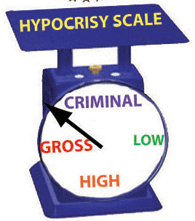 Paul Waldon Fight To Stop Nuclear Waste Dump In Flinders Ranges SA,
An excerpt from Rowan Ramsey’s news letter…
[“Minister Josh Frydenberg visit to Wilpena and Rawnsley Park.” Members of the SA Department for Environment and Water discussed their pursuit of a nomination for World Heritage for parts of the Flinders ranges with Federal Environment Minister Josh Frydenberg, Rowan and State Tourism Minister David Ridgeway in May.
The department is engaged in conversations with stakeholders to proceed. Both the Minister and Rowan also attended the 50 year celebration of tourism at Rawnsley Park. Congratulations to the Smith family on the world class experience they have created and their role in increasing the profile of tourism in the Flinders Ranges.] So I put it to everyone, what is Josh Frydenberg’s and his coterie’s sudden interest in World Heritage, Tourism or the environment of the Flinders, and politics.? https://www.facebook.com/groups/344452605899556/
Earthquake rocks planned area for nuclear waste dump Eastern Eyre Peninsula
Earthquake rocks Eastern Eyre Peninsula https://www.eyretribune.com.au/story/5500632/earthquake-rocks-eastern-eyre-peninsula/?cs=1825 Kathrine Catanzariti Eyre Tribune, 2 July 18 Kathrine Catanzariti
Eastern Eyre Peninsula was rocked by a 3.7 magnitude earthquake on Sunday morning.
At 11.57am, an earthquake occurred north east of Cleve towards Mangalo, at a depth of 10 kilometres.
According to Geoscience Australia, the earthquake could have been felt by people up to 47 kilometres away.
Did you feel the shake? Did you receive any damage? Let us know!
Voting in Flinders Ranges Council is open to a broad range of people


Voting in council elections is open to a broader range of people than state and federal elections.
The voters’ roll for council elections consists of two components – the House of Assembly (State) roll, and the council supplementary roll.
If you are on the State (House of Assembly) electoral roll you will automatically receive a voting pack in the mail in late October 2018.
If you are not enrolled on the House of Assembly roll you may be eligible to register on the council supplementary roll if:
You have been resident at your current address for one month and are not on the State Electoral Roll;
You are a sole owner/occupier of rateable property;
You are NOT an Australian Citizen but you have been a resident at your current address for one month;
You are a landlord for rateable property;
You are an organisation/business owner or occupier of rateable property; or
You are a group of owners or occupiers of rateable property.
To register for Council’s Supplementary Voters Roll please download the appropriate form from Councils website here: http://www.frc.sa.gov.au/election
Brett Stokes shows how plans for nuclear waste dumping in South Australia have breached S.A. law

Nuclear Waste Storage Facility (Prohibition) Act 2000. – No public money to be used to encourage or finance construction or operation of nuclear
waste storage facility
13. Despite any other Act or law to the contrary, no public money may be appropriated,
expended or advanced to any person for the purpose of encouraging or financing any activity
associated with the construction or operation of a nuclear waste storage facility in this State.
Prohibition against construction or operation of nuclear waste storage facility
8. A person must not construct or operate a nuclear waste storage facility.
Prohibition against importation or transportation of nuclear waste for delivery to nuclear
waste storage facility
9. A person must not—
(a) bring nuclear waste into the State; or
(b) transport nuclear waste within the State,
for delivery to a nuclear waste storage facility in the State
Brett Stokes – Appendices to Submission to Senate on Selection process for a national radioactive waste management facility in South Australia
Appendix A
Breaches of s13 of the NWSF(P) Act 2000:
During 2015 and 2016, s13 has been breached by spending of public money on many promotional and planning aspects of nuclear waste importation, in particular the “Business Case” prepared by JacobsMCM for Kevin Scarce (Attorney General’s Department tender AGD 027852).
This “single-quote” Business Case document has been criticised because it was prepared by people with vested interests.
This “single-quote” Business Case document contains economic predictions which have been challenged by UniSA economists Barbara Pocock and Richard Blandy and by many others.
These economic predictions have been promoted as “facts” by Kevin Scarce and associates.
The amendment to s13 in early 2016 did not allow “spruiking” for nuclear waste importation, said Mark Parnell MLC.
– “The law now says that the Government can use public money to consult the community but they’re not to use public money for promoting or designing or even buying land for a nuclear waste dump.” – Mark Parnell MLC, April 2016
Many people have spoken out about the biased information and processes involved with the public funded Nuclear Schools Engagement Program, the public funded KNOW Nuclear advertising campaign, the public funded Your Say Nuclear advertising campaign and the public funded Nuclear Citizens Juries.
Therefore s13 has been breached during 2016 by participants in the Nuclear Schools Engagement Program, the KNOW Nuclear advertising campaign, the Your Say Nuclear advertising campaign and the Nuclear Citizens Juries.
The Nuclear Schools Engagement Program involved indoctrination of young children who were not all fooled:
“Listen to us more rather than spend days like today talking to us. Answer questions that deal with the negatives. Many questions were dodged by the experts.” Mt Lofty/Bridgewater Primary School.
“The day has provided an opportunity to find out more about nuclear storage in SA, but we feel as though the information has been biased and pro-nuclear” Streaky Bay/Ceduna.
“It was great to be given the opportunity and it was informative but all information has been very bias toward pro-nuclear. The other side needs to be heard!” Cleve Area School and Cowell Area School.
Appendix B
Threats and conspiracy to commit offences prohibited under s8 and s9 of the NWSF(P) Act 2000:
Since early 2016, there has been an open conspiracy to breach s8 and s9, with planning and promotion of importation and storage of nuclear waste into South Australia.
Detailed plans for importation and storage of nuclear waste into South Australia were produced in the “Business Case” prepared by JacobsMCM for Kevin Scarce (Attorney General’s Department tender AGD 027852).
These plans were then promoted by Kevin Scarce and associates.
Geologists warn that the Barndioota region is a dangerous site for nuclear waste dumping
Barb Walker to Quorn – Out & About Fight To Stop Nuclear Waste Dump In Flinders Ranges SA
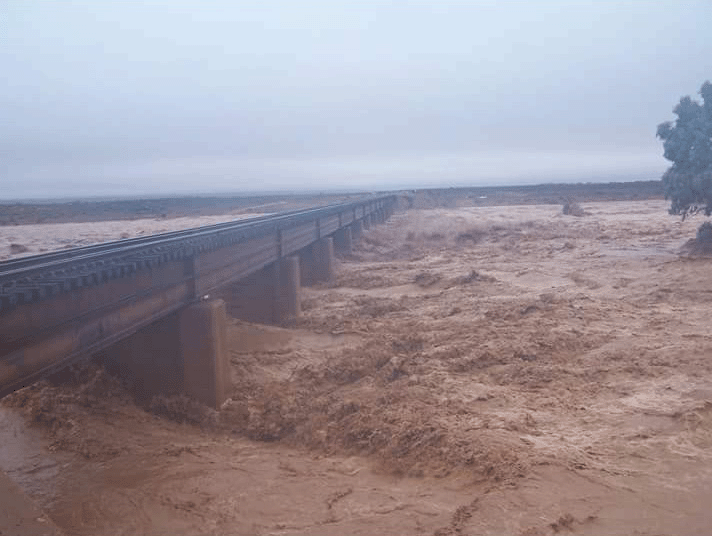 From: Professor Chris von der Borch
For distribution: The Advertiser, The Transcontinental, The Town Crier, Quorn Out and About, The Mercury and Get About – Hawker.
Received: Sunday, June 24th 2018
Subject: Proposed nuclear waste dump near Hawker.
“A site on the western slopes of the Flinders Range west of Hawker is one of the key areas currently under consideration for storage of low level, and the much more dangerous intermediate level, nuclear waste. A number of distinguished geological colleagues and myself, who collectively share many decades of geological research in the proposed area, are very concerned that the one of the suggested storage sites, in the Barndioota region, ticks “all the wrong boxes” as a fail-safe option.
Such nuclear waste, which would have a radioactive half-life of tens of thousands of years, needs a careful consideration of the geological parameters of a proposed responsible storage site, rather than what appears to be “political expediency”! And the site under consideration would certainly not satisfy these geological considerations.
It lies in one of the most seismically active regions of Australia. It lies in a zone which is subject to catastrophic flash-flooding and mudflow activity. The area is adjacent to a major saline lake, Lake Torrens, which is a “terminal drainage area”, meaning that all surface and underground run-off from the ranges ends up in the periodically drying surface lake sediments. So the bottom line is that, were such a storage site were to break down within the next several thousand years, radioactive material would end up in the surface sediments of Lake Torrens. Dry desert winds would then have the potential to disperse radioactive dust over large areas which may well be occupied by humans in the future.” https://www.facebook.com/search/top/?q=Fight%20To%20Stop%20Nuclear%20Waste%20Dump%20In%20Flinders%20Ranges%20SA
South Australian top university big-wigs are nuclear industry promoters
South Australia’s academic bigwigs infected with pronuclear delusions.
UniSA Chancellor Jim McDowell is also Chair of the ANSTO Board & ex-CEO of BAE.
AdUni Chancellor is Nuclear Fuel Chain Royal Commissioner Kevin Scarce.
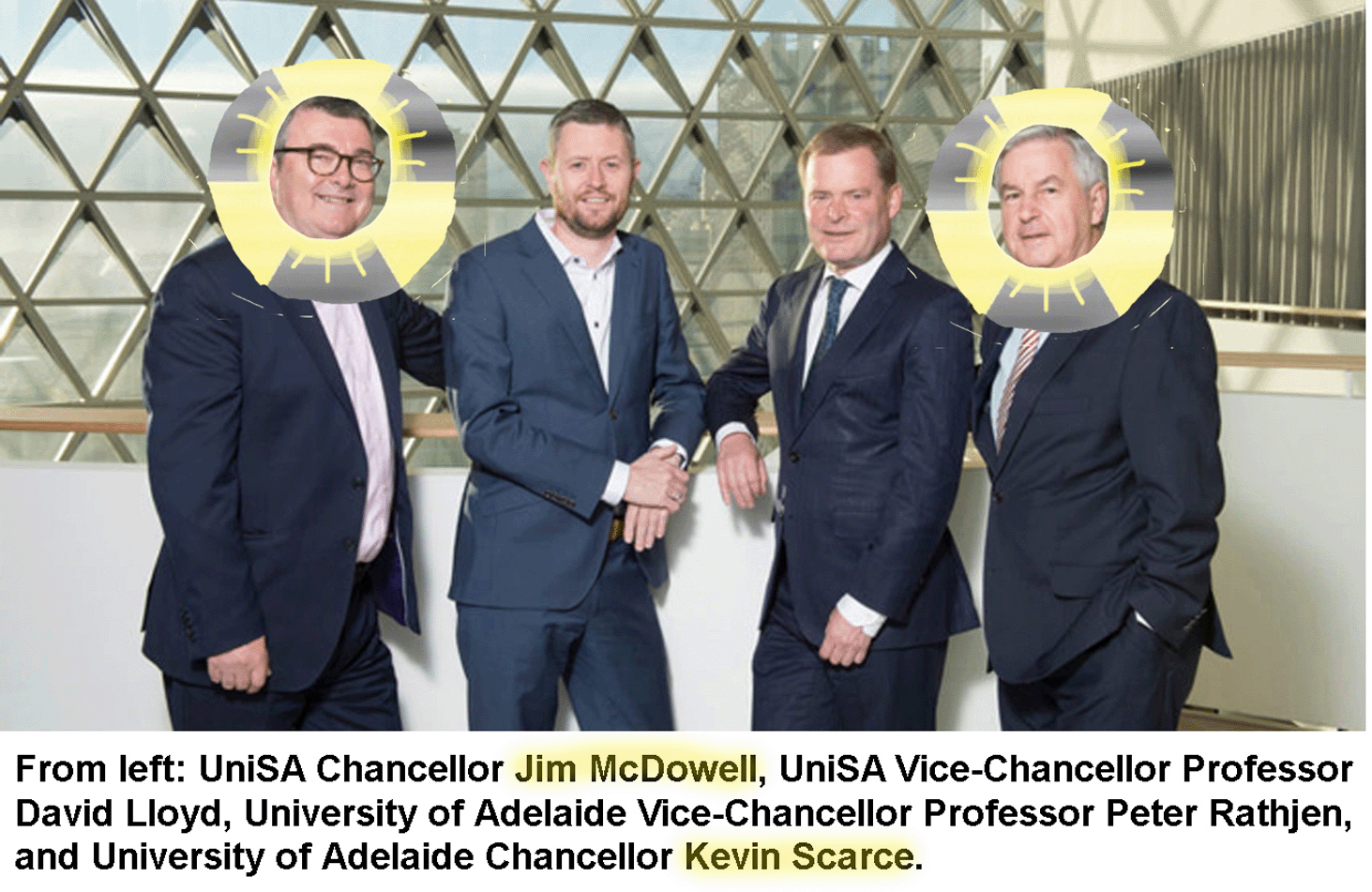
University of Adelaide and UniSA in merger talks, InDaily, Bension Siebert- 19 June 18 The University of Adelaide and UniSA have announced historic talks to merge into a single university which they claim could be immediately placed within the world’s top 100 universities.
The governing councils of both universities have agreed to a six-month “period of collaboration” to negotiate a potential merger, according to a joint statement released by the universities today.
University of Adelaide Vice-Chancellor Professor Peter Rathjen and UniSA Vice-Chancellor David Lloyd will oversee a joint report into the prospective merger, to be delivered by the end of the year.
The university councils will decide on the viability and merits of a merger at that time.
In a joint statement, University of Adelaide Chancellor Kevin Scarce and UniSA Chancellor Jim McDowell say now is the right time to consider joining together as a single university.
“Now is the time to facilitate a conversation about whether uniting our universities would create a new internationally renowned university of scale that would be well placed to anticipate and respond to this changing landscape,” the statement reads……..
Merging the Adelaide University and UniSA was an ambition of former Labor Premier Jay Weatherill in 2015, but universities and both sides of federal politics were opposed to the idea. ……..
However, this morning Federal Education Minister Simon Birmingham, Premier Steven Marshall and SA Labor Leader Peter Malinauskas all congratulated the universities on the move. …..https://indaily.com.au/news/2018/06/19/breaking-university-adelaide-unisa-merger-talks/
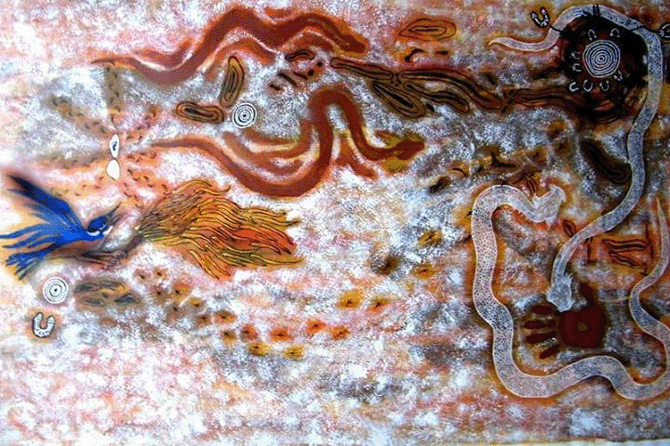
Nuclear waste dumping would destroy Adnyamathanha traditional land and cultural heritage
Heather Mckenzie Stuart Fight To Stop Nuclear Waste Dump In Flinders Ranges SA, 19 June 18
South Australian Premier Marshall’s pro nuclear stance, in agreement with nuclear stooge MP Troy Bell
 Marshall still open to nuclear power In Daily, Tom Richardson ADELAIDE April 11, 2018 Marshall today embarked on his third regional tour since seizing office at last month’s election, visiting the South-East seat of Mount Gambier where Liberal-turned-Independent MP Troy Bell is a firm advocate for nuclear power.
Marshall and Bell broke bread this morning, their second face-to-face meeting since election day.
Bell quit the party after being charged with dishonesty offences following an ICAC investigation. He is pleading not guilty in an ongoing court case……….
“I’ve always worked with Troy Bell… it’s quite obvious we share a lot of common aspirations for the people of the South-East,” he said.
One of those aspirations could yet be the establishment of a nuclear generator after Marshall last year flagged his interest in considering the industry, despite Royal Commissioner Kevin Scarce rejecting it as a commercially viable option “in the foreseeable future”.
“There will be a time when it may become viable, and desperate times call for desperate solutions – and we are in a desperate situation,” Marshall told media in February 2017.
Bell, who spearheaded the Liberals’ South-East fracking moratorium before he left the party-room, is a strong advocate for nuclear power and told InDaily he was “absolutely happy to lead the discussion” about establishing a local industry.
Asked if he would advocate for a nuclear generator in the South-East, he said: “A small modular one – yes definitely.”….https://indaily.com.au/news/local/2018/04/11/marshall-still-open-nuclear-power/
South Australian government decides against process towards Aboriginal Treaty
Kyam Maher started the treaty process as Aboriginal affairs minister and is now Labor’s spokesman for the portfolio.
“For far, far too long, policymakers have been doing things to Aboriginal people, not with Aboriginal people.”
A “massive amount of work” had been put in by Aboriginal people towards a treaty, he said.
He said the Premier had done “very, very little consultation” on the issue.
“To decide unilaterally without consultation to not go ahead with the most important reform process in Aboriginal affairs that we’re undertaking, I think there will be a lot of anger and it will be very difficult for the new government to operate with Aboriginal communities … letting them down in this way,” he said.
Yesterday, the Lower House of Victoria’s Parliament voted in favour of negotiating Australia’s first Aboriginal treaty, after the state’s Labor Government won crucial support from the Greens.
SA Government decides not to go ahead with Aboriginal treaties http://www.abc.net.au/news/2018-06-08/sa-govt-decides-not-to-go-ahead-with-aboriginal-treaty/9851166 The South Australian Government has scrapped a process to negotiate treaties with the state’s Aboriginal nations.
It comes on the same day the Northern Territory pledged to work towards a treaty with its Indigenous peoples. Continue reading
Japanese companies join in starting storage battery business in South Australia
TEPCO JV to enter Australia battery biz
http://the-japan-news.com/news/article/0004473933May 30, 2018
TOKYO (Jiji Press) — Jera Co., a joint venture between Tokyo Electric Power Company Holdings Inc. and Chubu Electric Power Co., said Tuesday that it will enter storage battery business in Australia.
The thermal power and fuel company agreed to explore opportunities to deploy energy storage solutions in the Asia-Pacific region with Australian power company Lyon Group and Fluence Energy LLC, a U.S. storage battery maker partly held by German industrial giant Siemens AG.
Under their plan, the three companies will spend a total of ¥120 billion to build solar power plants equipped with lithium-ion batteries in three regions in Australia.
Their combined power generation capacities will reach some 550,000 kilowatts.
One of the power plants will be built in South Australia. It will have a 100,000-kilowatt battery system, one of the largest in the world.
The generated electricity will be sold locally. The companies aim to start running the power plants in 2019.
Jera expects to invest around ¥10 billion. The company hopes to learn know-how about the storage battery business, as the renewable energy market is forecast to expand.

South Australian Parliament Bill to protect whistleblowers
 SA parliament to debate whistleblower laws https://www.news.com.au/national/breaking-news/sa-parliament-to-debate-whistleblower-laws/news-story/8f7d5ba0d9a0fba3619d027096423c6c
A law shielding South Australian journalists from liability for refusing to reveal their sources has passed state parliament’s lower house.
Laws to strengthen protection of whistleblowers have passed South Australia’s lower house of parliament.
The Liberal government on Wednesday passed legislation to shield journalists from criminal or civil liability if they do not disclose the identity of their sources when the information is in the public interest.
The proposed legislation would make the default rule that journalists cannot be compelled to answer a question or produce a document that may disclose the identity of an informant.
Federal Government National Nuclear Waste Dump Selection Process – a B-grade horror movie plot.

Image courtesy Kim Mavromatis
Kim Mavromatis No Nuclear Waste Dump Anywhere in South Australia, 28 May 18 The Federal Government National Nuclear Waste Dump Selection Process for South Australia is like a B-grade horror movie plot.
Australian Federal Liberal Government’s Land Selection Criteria for a National Radioactive Nuclear Waste Dump proposed for South Australia :
· Nothing scientific about the land selection process – anyone can nominate their land, including Pro-Nuclear Ex-Federal Liberal politicians – and get paid 4 times what it’s worth.
· Doesn’t matter where the land is located.
· Don’t worry about your neighbours – their land will appreciate in value with a toxic radioactive Nuclear Waste Dump next-door.
· The majority of Aboriginal people, who say NO to a Nuclear Waste Dump, will be given the same amount of respect they received during British Nuclear testing at Maralinga and Emu Fields.
· Doesn’t matter if the region is a national icon and major tourism attraction.
· Don’t worry about seismic activity or if the area is prone to flooding.
· Doesn’t matter if the land nominated is in an important grain-growing region.
· Doesn’t matter that building a Nuclear Waste Dump facility in South Australia is against the law.
· You can trust politicians to keep their word – once in place the Nuclear Waste Dump won’t get changed from an Intermediate to High-Level Nuclear Waste Dump.
· Special Note : the new South Australian Premier Steven Marshall and the state Liberals said No to a Nuclear Waste Dump before the election.
· Most of the state won’t have a say in the Clayton’s consultation process – community support will only be solicited within a 50km radius of the Nuclear Waste Dump – and 2 million carrots will help bribe the locals.
· Don’t worry about Nuclear Waste accidents – there won’t be any and they won’t be catastrophic. It’s not irresponsible to ship nuclear waste half way across the country through populated Australian cities and towns, on busy public roads and highways, on ships and trains – no safety concerns – livelihoods won’t be lost – property values dive – who pays the insurance? – nothing to see here, move along.
· The Nuclear Waste Dump will be in operation for 100 years and monitored for 200-300 years, but don’t worry that Intermediate-Level Nuclear Waste can remain highly radioactive for 100,000 years and can be as hazardous as High-Level Nuclear Waste.
· Don’t worry that the temporary canisters holding the Nuclear Waste above ground are temporary because nothing is permanent.
· In 60 years, the nuclear industry hasn’t found a solution for Nuclear Waste, but she’ll be right mate, they’ll find a solution in the next 60 years.
· The Nuclear Waste Dumps proposed for South Australia are located near Kimba (Eyre Peninsula grain-growing region), 75kms from the Spencer Gulf coastline – and in the Flinders Ranges near Hawker (national icon and major tourism attraction), 29kms from Lake Torrens and 84kms north of Port Augusta.
Q&A
Q: Once in place how easy is it for politicians to change an Intermediate-Level Nuclear Waste Dump into a High-Level Nuclear Waste Dump?
A: Very easy.
Q: How long does it take High-Level Nuclear Waste to become harmless?
A: It never becomes harmless.
Q: Compare High-level Nuclear Waste (spent nuclear fuel) Radioactivity to Uranium ore?
A: After 30 years, High-Level Nuclear Waste is 10,000x more radioactive than uranium ore – after 140 yrs, 1,000x more radioactive – after 2,000 yrs, 100x more radioactive – after 43,000 yrs, 10x more radioactive – after 10 million yrs, same radioactivity as uranium ore (NWMO Nuclear Waste Management Org, Canada). https://www.facebook.com/groups/1314655315214929/
South Australia’s battles against nuclear waste dumping won, – and now fought again
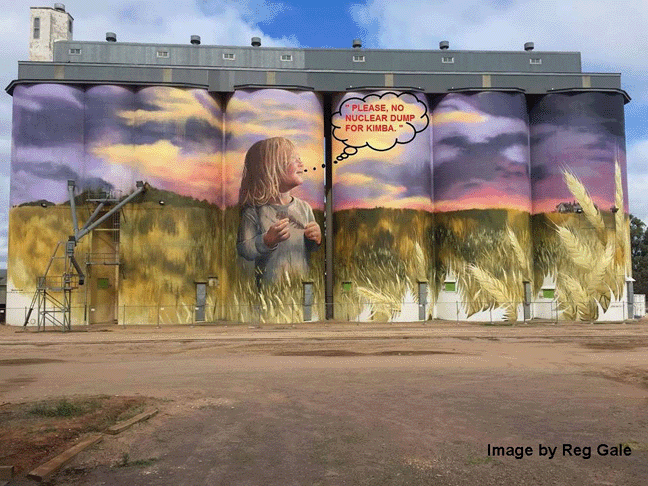
EXTRACT from: A journey to the heart of the anti-nuclear resistance in Australia: Radioactive Exposure Tour 2018, NUCLEAR MONITOR Author: Ray Acheson ‒ NM859.4719, May 2018 “……The federal government of Australia wants to build a facility to store and dispose of radioactive waste in South Australia, either at Wallerberdina Station near Hawker or on farming land in Kimba.
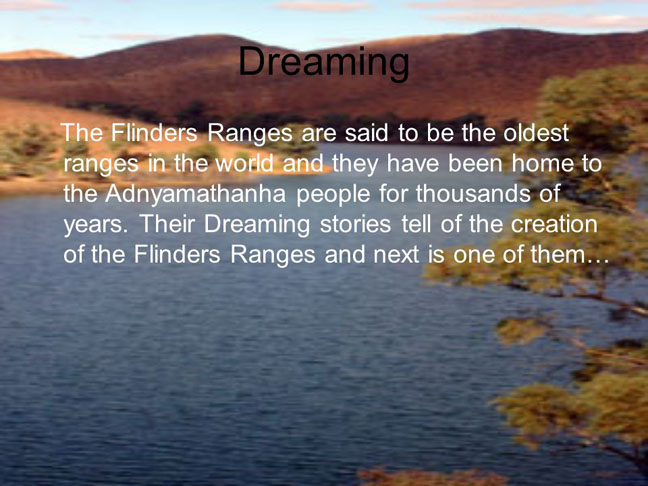
Wallerberdina Station is located in the Flinders Ranges, the largest mountain range in South Australia, 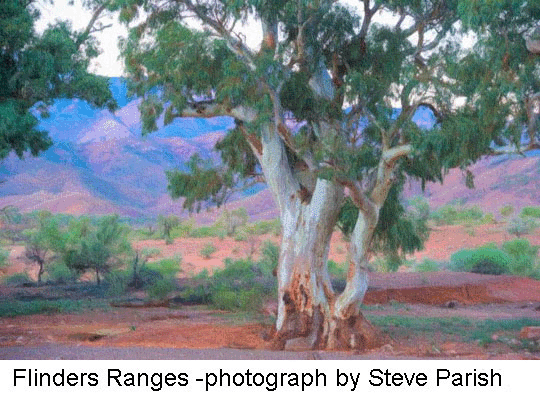 540 million years old. Approaching from the north on our drive down from Lake Eyre can only be described as breathtaking. The red dirt, the brown and green bush, and the ever-changing purples, blues, and reds of the mountains themselves are some of the most complex and stunning scenes one can likely see in the world.
Most people might find it shocking that the federal government would want to put a nuclear waste dump smack in the middle of this landscape. But after visiting other sites on the Rad Tour, it was only yet another disappointment ‒ and another point of resistance.
What is known is that the Wallerberdina site is of great cultural, historical, and spiritual significance to 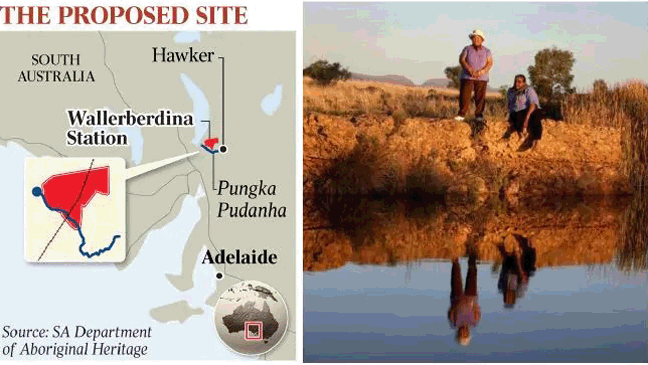 the Adnyamathanha people. It borders the Yappala Indigenous Protected Area, which is a crucial location for biodiversity in the Flinders Ranges. Its unique ecosystem provides a refuge for many native species of flora and fauna, contains many archaeological sites as well as the first registered Aboriginal Songline of its type in Australia, and is home to Pungka Pudanha, a natural spring and sacred woman’s site.
In case that isn’t enough, the area is a known floodplain. Our travels around the proposed site contained ample evidence of previous floods that sent massive trees rushing down the plain, smashing into each other and into various bridges and other built objects. The last big flood occurred in 2006.
The Adnyamathanha Traditional Owners were not consulted before their land was nominated for consideration by the government for the waste dump. “Through this area are registered cultural heritage sites and places of huge importance to our family, our history and our future,” wrote Adnyamathanha Traditional Owners in a 2015 statement. “We don’t want a nuclear waste dump here on our country and worry that if the waste comes here it will harm our environment and muda (our lore, our creation, our everything).”
We met Adnyamathanha Traditional Owners Vivianne and Regina McKenzie, and Tony Clark, at the proposed site. They invited us into the Yappala Indigenous Protected Area to view the floodplains and swim in the beautiful Pungka Pudanha. We’d just been camping at Wilpena Pound in the Flinders Ranges National Park only a few kilometres away. It is impossible to understand the government’s rationale for wanting to build a toxic waste dump on this land so cherished by its Traditional Owners, local communities, and tourists alike.

The McKenzies have been working tirelessly to prevent the proposed dump from being established, as have other local activists. Fortunately, they have some serious recent successes to inspire them. In 2015, the federal government announced a plan to import 138,000 tonnes of high-level nuclear waste from around the world to South Australia as a commercial enterprise. But Traditional Owners began protesting immediately, arguing that the so-called consultations were not accessible and that misinformation was rife. In 2016, a Citizen’s Jury, established by then Premier Jay Weatherill and made up of 350 people, deliberated over evidence and information. In November that year, two-thirds of the Jury rejected “under any circumstances” the plan to import or store high-level waste.24 They cited lack of Aboriginal consent, unsubstantiated economic assumptions and projections, and lack of confidence in the governmental proposal’s validity.
Other battles against proposed nuclear waste dumps have been fought and won in South Australia. From 1998 to 2004, the Kupa Piti Kungka Tjuta, a council of senior Aboriginal women from northern South Australia, successfully campaigned against a proposed national nuclear waste dump near Woomera. In an open letter in 2004, the Kungkas wrote: “People said that you can’t win against the Government. Just a few women. We just kept talking and telling them to get their ears out of their pockets and listen. We never said we were going to give up. Government has big money to buy their way out but we never gave up.”
Connected communities
The attempts by the Australian government and the nuclear industry to impose a waste dump in the Flinders Ranges, just like their attempts to impose waste dumps and uranium mines elsewhere in the country, or their refusal to compensate victims and survivors of nuclear testing, are all mired with racism. They are rooted in a fundamental dismissal and devaluation of the lives and experiences of indigenous Australians, and of proximity to cities but more importantly, to power.The industry and government’s motivations for imposing nuclear violence on these people and this land are militarism and capitalism.
Profit over people. Weapons over wellbeing. Their capacity for compassion and duty of care has been constrained by chronic short-termism ‒ a total failure to protect future generations. The poison they pull out of the earth, process, sell, allow others to make bombs with, and bury back in the earth, wounds us all now and into the future.
But nuclear weapons are now prohibited under international law. New actors are challenging the possession of nuclear weapons in new ways, and nucleararmed states are facing a challenge like never before.
The nuclear energy industry ‒ and thus the demand for uranium ‒ is declining. Power plants are being shuttered; corporations are facing financial troubles. Dirty and dangerous, the nuclear industry is dying.
This is in no small part due to the relentless resistance against it. This resistance was fierce throughout all of the country we visited, from Woomera up to Lake Eyre, from Roxby Downs to the Flinders Ranges. We listened to stories of those living on this land, we heard their histories, witnessed their actions, and supported their plans…..
1 This month

of the week – Australians for War Powers Reform (AWPR)
To see nuclear-related stories in greater depth and intensity
 Antinuclear