Words Before Waste: South Australians Call for More Consultation on Federal Radioactive Waste Plan
 New research shows that, while South Australians are divided on the issue of a nuclear waste dump, a clear majority believe more consultation should be undertaken before any final decision is made regarding a proposed disposal and storage facility near Kimba on the Eyre Peninsula.
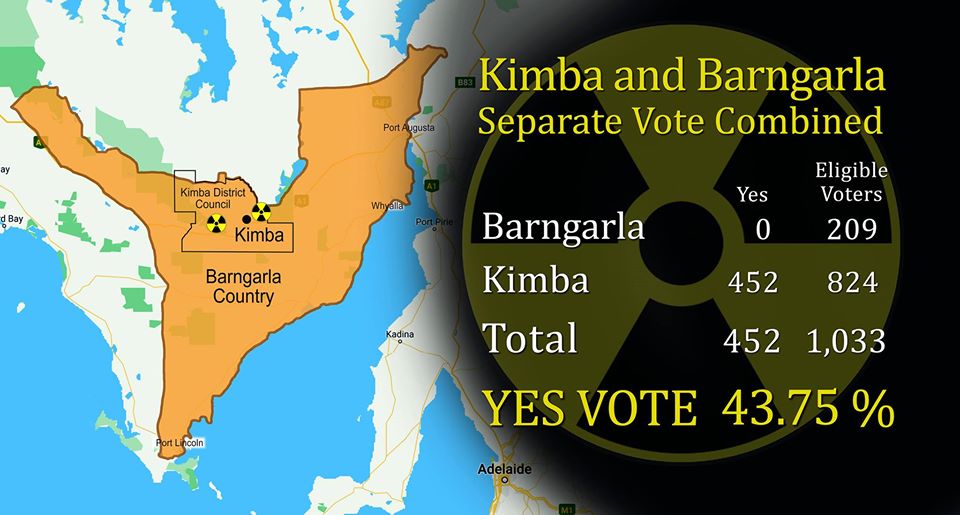
The Australia Institute recently surveyed 510 South Australians about the proposed nuclear waste facility.
Key Findings:
- Two in three South Australians (66%) say the traditional custodians of the land, the Barngarla people, should be formally consulted via a ballot before any proposal is advanced.
- Three in five South Australians (60%) believe the whole SA population should be formally consulted via a ballot before any proposal is allowed to go ahead.
- Two in five South Australians (40%) oppose the nuclear waste dump, while the same share of respondents (40%) support the plan.
- One in two South Australians (51%) oppose the potential use of the South Australian ports and roads to transport nuclear waste.
“This issue is dividing the state and there is a strong appetite for more consultation with both the Barngarla people and the general South Australian public,” said Noah Schultz-Byard, South Australian Director at The Australia Institute.
“Our research has shown that a significant number of people hold concerns about the transportation of nuclear waste on South Australian roads and through South Australian ports.
“In 2016 the current Premier Steven Marshall said he had much greater ambitions for South Australia than for it to become a nuclear waste dump. If that is still the case, the Premier should support a state Parliamentary inquiry and a far broader community conversation regarding the proposed federal facility.”
“This is a highly controversial proposal, with many questions unanswered and a lot of misinformation flying around. It’s little wonder the community is divided,” said Craig Wilkins, Chief Executive of Conservation SA.
“However, one thing is crystal clear: the Barngarla people, who are the formal native title owners of the area, have consistently said they have not been properly consulted. The South Australian people clearly believe further consultation, particularly with Barngarla Traditional Owners, must take place before this proposal progresses.
“There is no hurry: federal authorities have confirmed that there is safe and secure storage at Lucas Heights in Sydney for decades. So, let’s get the process and the consultation right – starting with genuine and respectful engagement with the Barngarla people,” he said.
South Australian Labor calls on the Federal Government to halt its plans to dump nuclear waste at Kimba.
 SUSAN CLOSE MP Shadow Minister for Environment and Water EDDIE HUGHES MP Member for Giles 15 Sept 20,
Kimba site selection process flawed, waste dump plans must be scrapped
South Australian Labor is calling on the Federal Government to halt its plans to dump nuclear waste at Kimba. The The decision follows the release of the Senate Economics Legislation Committee report on the National Radioactive Waste Management Amendment (Site Specification Community Fund and Other Measures) Bill 2020.
The report found there was a deliberate attempt to remove judicial review rights from the Barngarla people and the farming community of the Kimba area.
In June this year, the Federal Opposition voted against this legislation in the House of Representatives.
SA Labor has consistently expressed its concerns about the site selection process and the lack of consultation with native title holders. Quotes attributable to Shadow Minister for Environment Susan Close
This was a dreadful process from start to finish, resulting in fractures within the local community over the dump.
The SA ALP has committed to traditional owners having a right of veto over any nuclear waste sites, yet the federal government has shown no respect to the local Aboriginal people.
Quotes attributable to Member for Giles Eddie Hughes
This report clearly reflects that any mediation undertaken with the Barngarla people did not have any legal or political weight.
This has been a very divisive process from the beginning due to individual land owners nominating the sites.
Instead of rushing this quick fix by dumping in SA, the federal government should do the work on a long-term plan for the management of nuclear waste in Australia.
We clearly have an obligation to manage our domestic nuclear waste in a responsible way for the long term. This proposal falls far short of meeting that obligation.
Not welcome, not needed: Community alliance united in response to divided Senate report on Kimba radioactive waste plan
 September 15, 2020 ‒ www.nodumpalliance.org.au/senate_nuclear_waste_report Federal government plans to transport, dump and store radioactive waste in South Australia are not needed, not welcome and will be actively contested says the South Australian community based No Dump Alliance.
This statement comes in response to a new Senate report into plans to change the federal radioactive waste laws by removing the community’s right of legal review.
The government controlled Senate Committee report had multiple conflicting findings which highlights the lack of political consensus. The report does not present a compelling case for the proposed changes including the legal override. In the three minority reports Committee members have raised serious concerns and opposition including over the heavy handed legal exclusion, the denial of Aboriginal and wider community rights and protections and the lack of proven need for the planned national facility.
“In the 21st Century it is unacceptable to try and airbrush away Aboriginal peoples concern over nuclear risks”, said NDA spokesperson Karina Lester. “The Barngarla Native Title holders were excluded from the Kimba community ballot about the waste plan and now the federal government is trying to deny them the right to contest the plan in court. This is not only unfair to the Barngarla people but a clear insult to the concerns expressed by Aboriginal people from right across South Australia to any dumping and storage of radioactive waste on our traditional lands from outside the state”.
The federal plan has attracted many critics as the government has failed to demonstrate that moving waste to Kimba is either necessary or responsible.
“This plan is a clear example of government overreach,” said NDA spokesperson and state secretary of the Maritime Union Jamie Newlyn. “South Australian communities have not had any say in the controversial plan but would face increased radioactive transport risks. The plan is deeply deficient and the process is fatally flawed”.
NDA member groups have committed to escalate their efforts around the Kimba waste push and will work against the federal government’s move to reduce community and environment protections in the Senate.
“We have a long, proud and united history of overturning radioactive waste plans in SA,” said Karina Lester. “From the senior desert law women the Kupa Piti Kungka Tjuta challenging Federal waste dump plans in the late 90’s and early 2000’s to the Scarce Royal Commission (2015-2017) our community has taken action to protect and stand up for our state. The federal government – and the Marshall government – should be under no illusions – this will be opposed”.
The nuclear stigma – some Kimba residents selling their assets before the nuclear dump sets sail?
South Australian MP Peter Treloar says “Kimba nuclear waste dump is a federal issue”, but he’s fine with it anyway
Kimba nuclear waste site OK with Member for Flinders ahead of proposed new electoral boundaries, ABC, ABC Eyre Peninsula, By Evelyn Leckie and Gary-Jon Lysaght 28 Aug 20
With proposed electoral boundaries changing for the Eyre Peninsula, local MP Peter Treloar is poised to take on a community that remains divided on hosting the country’s nuclear waste.
Key points:
- Proposed electoral boundaries may lead to Kimba falling within the state seat of Flinders
- Peter Treloar is poised to take on Kimba’s nuclear waste storage issues
- The Kimba community remains divided on the region’s nuclear waste site
The Member for Flinders, whose electorate is slated to include Kimba after the redistribution, said although the nuclear waste dump was ultimately a federal issue, he had no problem with its proposed location.
“The Kimba community have decided themselves that they’re prepared to be accepting of that, so this process is playing out in the federal jurisdiction,” Mr Treloar said………
Earlier this year a cross-party parliamentary committee found “significant risk” that local Indigenous groups were not consulted about the nuclear dump to a standard required under international law. ……
https://www.abc.net.au/news/2020-08-27/flinders-member-weighs-in-on-nuclear-waste-in-kimba/12603022
BHP’s Uranium mine Olympic Dam makes a financial loss for second year running
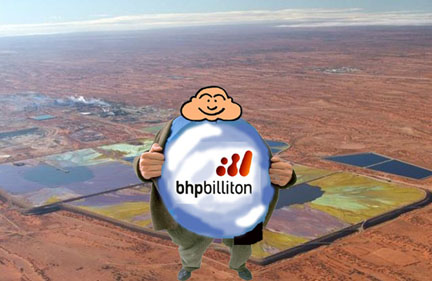 Olympic Dam records a second financial year loss, of US$79 million on revenue of US$1.46 billion in 2019-20. Giving a total three-year loss of approx. US$100 million on revenues of approx. US$4 billion, with last profit in 2017-18 fin yr of only US$39 million. Olympic Dam records a second financial year loss, of US$79 million on revenue of US$1.46 billion in 2019-20. Giving a total three-year loss of approx. US$100 million on revenues of approx. US$4 billion, with last profit in 2017-18 fin yr of only US$39 million.
Olympic Dam Mining revenues are at approx. only 2.5 per cent of total BHP corporate revenues, Not very convincing… Olympic Dam reports $US79 million loss, is on the lookout for new leader Olympic Dam’s turnaround story is not yet complete, with BHP’s mega mine posting another loss for the past financial year as it starts the hunt for a new leader. Cameron England, Business Editor, The Advertiser August 18, 2020 The Olympic Dam mine in South Australia’s Far North has increased its full year loss and is on the lookout for a new leader, global miner BHP has announced. In reporting its full year results, BHP said Olympic Dam, which produces copper, uranium, gold and silver, had made a full year loss before interest and tax of $US79 million, on revenues of $US1.463 billion. This is up from a loss the previous financial year of $US58 million on revenues of $1.351 billion. The mine last reported a profit, of $US39 million off revenues of $US1.255 billion in 2017-18, and has for many years underperformed in comparison with BHP’s high-margin assets such as Western Australian iron ore……… BHP also announced Laura Tyler – asset president Olympic Dam since 2018 – would be promoted to chief technical officer, and a new leader would be sought for the mine……. “A replacement for the Asset President Olympic Dam will be the subject a future announcement.’’In the interim, Justin Bauer, currently general manager surface development & planning, will become acting asset president…….. But the company is yet to give solid commitments around timelines, financial investments and job numbers for the expansion, as it continues work on internal feasibility studies. |
Kimba area locals point out the unsolved problems of nuclear waste transport to Napandee
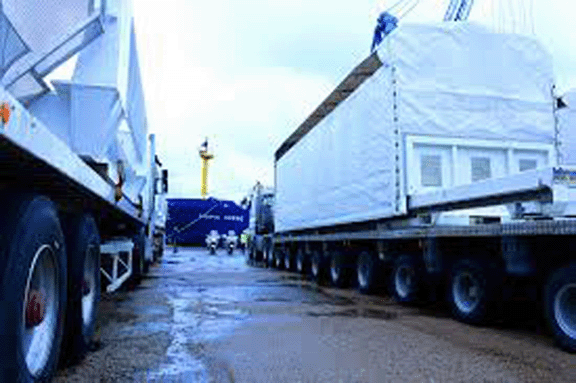
Kazzi Jai Fight To Stop A Nuclear Waste Dump In South Australia, 11 Aug 20
Noted disadvantages are that waste might pass close to Kimba … (after actually coming through a number of other locations)
-
Annette Ellen Skipworth Thats a lot of road to upgrade to take the weight of the canisters ..
Loads of Murray water..
Who is paying to upgrade the roads..
Government or local council and the maintenance of said roads.. 100 years i believe to dump will operate..Roni Skipworth Criterion 2 what hogwash to rail the Waste from Port Lincoln. Still has to go to Kimba Silos as we don’t have a RAILWAY SYSTEM ANYMORE being closed down by Viterra last year n all grain movement is trucked along our 3 local highways on dirt roads all over EP.
Looks like no one has worked out the transport side of things yet and why should we the locals who like using these dirt roads to get from A to B put up with these Trucks fucking them up so we can’t use or then not allowed cos of the Dump

Former weapons chief executive now South Australian Premier’s top advisor

This could shed some light on the South Australian government’s silence on the Federal plan for a nuclear waste dump in South Australia. We can expect the South Australian government to now support the nuclear waste dump at Napandee, and to promote schemes to make south Australia a nuclear hub, especially with nuclear submarines production.
|
Weapons of Influence: BAE arms boss turns Premier’s right-hand man https://www.michaelwest.com.au/weapons-of-influence-bae-arms-boss-turns-premiers-right-hand-man/ Michael West Media, by Michelle Fahy | Jun 12, 2020 As part of her series of investigations into the close links between the military industry and politics, Michelle Fahy reports on former weapons chief executive for BAE, Jim McDowell, who is now at the centre of government in the Defence State, South Australia. Jim McDowell was employed in the weapons industry for 37 years. Born in Belfast, he studied law then spent 18 years with Northern Ireland firm Bombardier Shorts. After that, he joined British Aerospace (now BAE Systems) in Singapore and worked his way up through various positions in Asia. In 2001, McDowell was appointed CEO of BAE Systems Australia. During a decade in that role he oversaw BAE’s 2008 acquisition of Tenix Defence, a deal that doubled the size of the company and resulted in BAE becoming Australia’s largest weapons-maker at the time. It remains one of the largest today, mostly for building Australia’s warships, among other projects. In September 2011, Jim McDowell left Adelaide for Riyadh, where he ran BAE’s Saudi Arabian operation for a little over two years. Saudi Arabia is crucial to BAE’s business, its third largest market after the US and the UK (Australia is fourth). The company has been supplying combat aircraft to the Saudis since the 1960s. Several of its arms deals have been dogged by controversy (and continue to be due to the Saudi role in the humanitarian catastrophe in Yemen), and some by corruption. In the UK, a Serious Fraud Office investigation into BAE’s relationship with the Saudis was notoriously shut down in December 2006 following intense pressure from the Saudi government and the UK’s then prime minister Tony Blair, citing national security reasons. The capitulation of the Serious Fraud Office was later deemed “unlawful, an “abject surrender” and a “threat to the reputation of British justice” by the British High Court. By the time McDowell arrived, all that was in the past and it was back to business. In a media release describing a visit of the BAE Board to Saudi Arabia in March 2012, McDowell said, “Saudi Arabia is a key market for the company. We want to be considered as an industrial and a strategic partner for the Kingdom… The meeting was a wonderful way to strengthen relations.” Several multi-billion pound arms deals were concluded during the period McDowell was BAE’s chief executive in Saudi Arabia. Back to Australia with ANSTOIn December 2013, McDowell resigned from BAE and returned to Australia. He was immediately appointed to the board of the Australian Nuclear Science and Technology Organisation, as deputy chair. Then Industry Minister Ian Macfarlane said, “Mr McDowell’s business background coupled with his knowledge of international marketing and joint ventures will support the development of emerging business opportunities…” ANSTO’s chair, Dr Paul Greenfield, said, “This is a dynamic and exciting time for ANSTO and this is reflected in the overall contribution nuclear science and technology is now making across a range of key areas.” Earlier that year (in February 2013), ANSTO had signed a formal research cooperation agreement with the Defence Science and Technology (DST) Organisation. This was a period when DST, under Chief Defence Scientist Alex Zelinsky, signed a number of collaborative agreements with military industrial companies, including BAE in October 2013 and, as we have covered previously, Lockheed Martin in March 2014, among others. At the completion of Dr Greenfield’s term, in August 2014, McDowell was appointed chair of the ANSTO board, a position he held for the next four years. McDowell’s timely departure from the military industry created an influx of new opportunities for him from a government with a policy of recognising industry as a “fundamental input to capability”. Following his rapid appointment to the ANSTO board, over the next four years, McDowell was awarded lucrative contracts across six major areas by Defence (see table), which together totalled almost $1.5 million in consultancy fees. To supplement the government’s largesse, in the same four-year period, McDowell accepted appointments as Chancellor of the University of South Australia and to the Council of the Australian Strategic Policy Institute. He also joined the boards of eight public companies, most of which operate in the military industrial sector. In addition to those in the chart, McDowell was made chair of another two private companies, duMonde Group Pty Ltd and Total Construction Pty Ltd (dates of those appointments are not publicly available). In 2017, it appears McDowell was engaged simultaneously in at least 12 different roles. Continue reading |
BHP Olympic Dam copper-uranium mine operates on outdated 1991 era Occupational Radiation Exposure Limits:
BHP Olympic Dam copper-uranium mine operates on outdated 1991 era Occupational Radiation Exposure Limits:
A Bill for a new Radiation Protection and Control Act 2020 goes to the SA Parliament for debate on/from Tues 2nd June, involving a range of untenable 1982 Indenture Act legal privileges to BHP that are retained in the Bill and proposed to be just rolled over into a new Act – which is unfit for the 2020’s…
Please see a Briefing Paper (4 pages) – with sub-headings covering key points:
“BHP Olympic Dam operates under outdated 1991 era Radiation Exposure Standards”
Briefing Paper prepared by David Noonan, Independent Environment Campaigner, 18 May 2020
Strong evidence to Reform a 30-year old standard and apply a Safer Lower Worker Exposure Limit p.1
BHP Olympic Dam underground mine workers face a significant increase in cancer risk p.2
BHP Olympic Dam workers face radiation health impacts double that of cancer risks alone p.3
The Bill and the Olympic Dam mine expansion must trigger a Radiation Safety Review p.4
How long will SA wait to Review and Reform worker radiation exposure health risks?
A radioactive waste dump will NOT unite the Kimba community
Paul Waldon This Is Not Progress!
The socially, economically and environmentally blind radioactive waste embracing Mayor of Kimba is now calling for unification in a community that he helped divide, while proclaiming extra services for the dying towns hospital that may prove to be unattainable. He ignorantly goes on to imply that only a radioactive dump will give birth to upgraded communication network for the town.
Meanwhile the ignorant farmer come nuclear profiteer has falsely touted opportunities for the town of Kimba, a town now in decline, where property values are falling, people are vacating and its own people are driving outside the region to shop.
We have heard a speaker for the Department of Industry, Innovation and Science continually claim a “strong level of information,” if so why haven’t they answered questions pertaining to the lack of consultation regarding the determination of transport routes, availability of resources, training, infrastructure emergency preparedness, response and risk management for potential incidents during any shipment, this is but a few issues the DIIS have failed to address.
And let us not forget that Kimba’s unemployment @ 2%, minus those too old, too young, unable to work due to restraints and those opposed to the dump, makeup a number that could be a quarter of that 2%, which is likely to be insufficient to manage a radioactive dump.
The half full ANSTO facility at Lucas Heights which has seen recent upgrades costing the taxpayer millions of dollars is the most logistical centralized site for a radioactive dump when based on volume of waste per kilometer.
A nuclear waste dump for Eyre Peninsula conflicts with the Strategic Plan for the Eyre Peninsula Natural Resources Management Region – 2017-2027
Susan Craig shared a No Nuclear Waste Dump Anywhere in South Australia
The dangers of so called intermediate level nuclear waste, include the devaluation of the region’s agriculture

Bev Spriggs Fight To Stop A Nuclear Waste Dump In South Australia, 10 Mar 20, The dangers of so called intermediate level nuke waste, – it is considered high level waste in the countries that want us to take it. Mr Baldock will be astonished to learn of the devaluation of his crops and the rest of his land and that of his neighbours once that poison comes to town. As for the 45 job creations….that may happen during construction, then they will disappear and there will only be 8 to 10 jobs to caretake the facility. The 31 mill promised for the community will happen once only, when it is gone there will be no more. https://www.facebook.com/groups/941313402573199/
Flinders University, South Australia: collusion with nuclear power promotion, Prof Pam Sykes, and the scam of “hormesis”
The Industry Push to Force Nuclear Power in Australia, Part 1 of A Study of the “Report of the inquiry into the prerequisites for nuclear energy in Australia” Australian Parliamentary Committee 2020.by nuclearhistory, February 29, 2020“………….The most recent nuclear collaboration between Australia and a nuclear power for nuclear purposes commenced in the year 2000. At that time a US Department of Energy Contractor named Bobby Scott, based at Los Alamos and at Lovelace Respiratory Research Laboratory, New Mexico, came to Adelaide carrying contract documents. The documents were to be signed by the US DOE and involved personnel of Flinders University. Bobby Scott is a well known (to people in the field) as a leading advocate for the theory of radiation hormesis. The contract to be signed was the first of a number. From the time of the signing of that contract, Flinders University engaged in very strong advocacy of the expansion of nuclear industry in South Australia. Prof Pam Sykes was flown from Adelaide to Los Almos and undertook training and seminars in Hormesis. The concept that radioactive substances are, in her words, “like vitamins”.
I have fully explained that this unproven theory flies in the face of reality in terms of radiological safety and data from monitoring of dose and disease all over the world, including, contrary to the claims of the school hormesis, the naturally high background radiation regions of Iran and India. In those parts of Iran and India, (the five northern provinces in Iran, and Kerala in India) some cancer rates are among the highest in the world. Further, in those Iranian provinces breast cancer in teenage women is more common than it is even in the West. And so on. There are five types of cancer in northern Iran which have very high rates. In south western Kerala, the rates of female thyroid cancer is very, very high.
Contrary the to statements made by the school of hormesis, headquartered at Los Alamos, USA and Flinders University Adelaide. From 2000 on, Flinders University promoted the idea of radioactive substances such as uranium and its decay products and the fission products as being “like vitamins”, necessary for life. By 2011 the university was promoting the idea that an expansion of the state’s uranium mines would be good for the health of South Australians, because the natural background here is “too low” for good health. Presumably the transport of tons of additional uranium ore by train from the mines to the ports in open railway trucks would result in faint clouds of radionuclide “vitamins” being dispersed over the whole population of the state in precisely the right theoretical dose, taking into account, somehow, automatically, the age, gender and health status of each South Australian. (I didn’t write what Sykes did, so don’t blame me.). In 2011 the US DOE funded Flinders University put its pedal to the metal and flew into the debate, labelling South Australians who disagreed with it’s position in words which were insulting and which labelled us as lunatics, radiophobes and totally ignorant of radiological safety principles, cowardly, and devoid of reason. Read it here: https://news.flinders.edu.au/blog/2011/07/14/radiation-response-a-meltdown-in-reason/
Whyalla urgently needs a policy to prevent becoming the radioactive trash port
“A question was asked to (Whyalla) council regarding potential use of the port for the transport of intermediate level waste. The response is on the council website under Council Meeting Minutes Monday 17/2/20. There is no current policy.
As a community we should have a policy. We should be standing up on behalf of the divided Kimba community and refuse the use of the port and surrounding roads and rail. It is the responsibility of the council to represent the community, not to bow down and take orders from the state government.” – Mr Andrew Williams.
Link source to Minutes: http://www.whyalla.sa.gov.au/…/council%20minutes%20-%20PUBL…
No, Mr Baldock, our children do not deserve this dirty, long-lasting, nuclear trash dump
 Paul Waldon Fight To Stop A Nuclear Waste Dump In South Australia, 21 Feb 20, People leaving, property values dropping, large tracts of land hitting the market, children’s heritage being sold and/or eroded, a once strong community now divided, people happier to shop outside their community, these are the trademarks of a dying town with poor opportunities.
An aggressive social cancer fueled by a desperate and ignorant nuclear embracing dichotomy trying to grasp the doctrines of the indentured servitude bound nuclear coterie with a vested interest spouting factoids will surely fail to attract new business and people to the region.
Meanwhile Andrew Baldock, nuclear profiteer, social axe man has continued to state “We are doing this for the children!”
Well Baldock my children, my children’s children’s children don’t deserve this. https://www.facebook.com/groups/941313402573199/
1 This month

of the week – Australians for War Powers Reform (AWPR)
To see nuclear-related stories in greater depth and intensity
 Antinuclear