 Gore power to you: former vice-president launches Victoria’s green energy plan http://www.theage.com.au/victoria/gore-power-to-you-former-vicepresident-launches-victorias-green-energy-plan-20170713-gxaggu.html, Adam Carey, 13 July 17,
New battery storages that can deliver four hours of power to two regional Victorian towns of 100,000 people, and a solar farm that would power more than 400 trams are key projects in Victoria’s new plan to increase renewable energy supply and reduce reliance on burning coal.
 The battery will be up and running by this summer, the state government says, and will provide at least 40 megawatts of power in western Victoria, where the electricity network is relatively weak, boosting reliability in towns including Bendigo, Horsham, Ararat, Red Cliffs and Kerang.
Proposals that Bendigo or Ballarat lose electricity during a record-breaking east coast heatwave in February to guarantee power to NSW were angrily rejected by Victoria’s energy minister Lily D’Ambrosio, who told the Australian Energy Market Operator “it was absolutely not appropriate that Victoria had to pay consequences for failures in New South Wales”.
Victoria’s roll-out of renewable energy supply has gained extra urgency since the April closure of the Hazelwood coal-fuelled generator, which provided 20 per cent of the state’s baseload power supply.
Tenders for the $25 million project are being evaluated by the Department of Environment, Land, Water, and Planning, and is part of a nationwide embrace of battery energy, including Tesla founder Elon Musk’s commitment this month to build the world’s largest lithium-ion battery in South Australia.
Grid-scale batteries can store renewable energy to be used at times of peak demand, improving energy security and shielding consumers from severe price spikes.
The Andrews Government announced on Thursday its plan to spend $146 million on a series of renewable energy initiatives in a bid to meet its target of 40 per cent green energy for the state by 2025.
The renewable energy action plan, launched by former US vice-president Al Gore, will underpin the state’s attempt to achieve zero net greenhouse gas emissions by 2050.
It includes $48.1 million for the purchase of renewable energy certificates, much of which will go towards solar power for Melbourne’s trams.
 A 75mw solar farm that will power Melbourne’s 410 trams is due to open in the state’s north-west late next year. The powering of Melbourne’s tram network with solar energy is notional. Electricity from the solar farm will flow into the general power supply and the government will purchase renewable energy certificates for 35mw of power, which is enough to operate the city’s tram system.
The plan also features $8 million for small-scale “micro-grid” initiatives to create power at a local level, independent of the energy grid.
Mr Gore said the renewable energy plan was a “highly impressive” example of a state taking the initiative to create jobs through projects that will cut carbon emissions.
“All over the world there has been a dramatic change in the marketplace, with electricity generated with renewable sources falling below the cost of electricity generated by fossil fuels,” Mr Gore said.
Before taking a short ride on an E-Class tram, Mr Gore predicted Melbourne’s solar-powered trams “will become a symbol of the renewable energy revolution worldwide”.
Energy and Environment Minister Lily D’Ambrosio said the renewable energy plan “represents the most significant government investment in renewable energy in Victoria’s history”.
She said the plan would also drive down power prices for Victorians, who face a 15 to 20 per cent hike in their power bills from January 1.
Ms D’Ambrosio said the global economy was moving away from coal-generated power and Victoria had no option but to head in the same direction.
“When we stand still at a national level we are actually taking Australians backwards,” she said.
“The only investment that is occurring globally in new generation is around renewable energy.”
The government’s launch of a new renewable energy plan follows recent comments by Ms D’Ambrosio that Victoria might work with other states and set a renewable energy target to the exclusion of the Turnbull government.
 The Turnbull government has not committed to a renewable energy target, despite it being one of the recommendations of the Finkel review it commissioned into Australia’s energy needs.
State energy ministers are due to meet with federal Energy Minister Josh Frydenberg this week, however, Mr Frydenberg has signalled there will be no resolution on a clean energy target for Australia at the meeting, because the federal cabinet is still debating the issue.
July 14, 2017
Posted by Christina Macpherson |
energy, Victoria |
Leave a comment
Inside Melbourne’s secret suburban hydro power system, The Age, Darren Gray, 29 June 17 From the outside, it looks like a green shipping container on an industrial block in the suburbs. But on the inside, there’s plenty going on.
The box is part of a little-known but growing Melbourne Water network of “mini-hydro” electric plants generating electricity in suburban Melbourne, and in the hills beyond. With the addition of Melbourne Water’s 14th hydroelectric plant, a “mini-hydro” to be turned on on Thursday in Mt Waverley, Melbourne Water’s hydroelectric system generates enough power to supply more than 14,100 homes. Eleven of the plants are “mini-hydro” plants.
It’s a system that the water company hopes to expand further. “We are looking at up to 10 sites in our stage three program, which is in feasibility study now,” said Melbourne Water senior project manager Ian Royston, during a visit to the new Dandenong North “mini-hydro”.
This plant, which sits between two huge water storage tanks and EastLink, and about 40 metres away from the closest house, started operating in April. It is one of five new “mini-hydro” plants commissioned since December……
The hydroelectric power generated earns a decent return for Melbourne Water, which is paid by a power company for feeding electricity into the grid. Melbourne Water also earns money from trading LRECs, which currently trade on the spot market at about $76 per megawatt hour and are bought by companies to satisfy requirements under the renewable energy target. On current prices LRECs could generate about $3.3 million a year for Melbourne Water, given that most of the power it produces qualifies for the scheme…….
Melbourne Water’s counterparts in New South Wales, at Sydney Water, also have a range of plants producing energy. It has three mini-hydro systems on its network, at Prospect, Woronora and North Head.
“We also have eight co-generation systems in wastewater treatment plants, which take biogas from wastewater treatment and use it to create heat and electricity,” said Paul Plowman from Sydney Water.
June 30, 2017
Posted by Christina Macpherson |
energy, Victoria |
Leave a comment
 Network owner Ausnet sees grid dominated by wind and solar http://reneweconomy.com.au/network-owner-ausnet-sees-grid-dominated-by-wind-and-solar-19103/ By Giles Parkinson on 16 May 2017
Ausnet Services, the largest operator of electricity and gas networks in Victoria, has given its vision of what the grid of the future might look like in that state – and it is one dominated by wind and solar.
That is probably not surprising, given that the state government is likely to have its target of 40 per cent renewable energy generation by 2025 locked into legislation in the next few months. But it does reflect how quickly the nature of generation in the state most dependent on brown coal will change. Continue reading →
May 16, 2017
Posted by Christina Macpherson |
solar, Victoria, wind |
Leave a comment
 AusNet trial successfully takes part of Melbourne suburb off-grid http://reneweconomy.com.au/ausnet-trial-successfully-takes-part-melbourne-suburb-off-grid-21015/ By Sophie Vorrath on 11 May 2017 A solar and battery storage mini-grid trial by Victorian network operator AusNet Services has succeeded in taking part of a Melbourne suburb completely off grid, demonstrating how utilities can use solar, battery storage and the internet of things to boost energy security and reliability in the future.
AusNet said on Wednesday that eight homes had been successfully separated from Victoria’s main electricity grid and operated together as a stand-alone solar and battery storage powered mini grid, as part of the company’s Mooroolbark Mini Grid trial.
The homes, including two that had neither solar or batteries, were able to maintain power by sharing electricity via AusNet’s powerlines that connect the mini grid, before being successfully re-integrated with the main grid.
AusNet said the cloud-based mini grid control system – which has been provided by locally-based energy technology company GreenSync – and the stabiliser took the mini grid through a sequence of stages to test the stability of the mini grid as an independent, unified renewable energy system.
The stabiliser, developed by Power Technology Engineered Solutions, is essentially a smart battery storage system that smooths renewable energy supply and consumption across the mini grid by either delivering or absorbing power when needed.
Parker, speaking at Energy Network Australia’s Welcome to the Grid Edge conference on Wednesday, said that the achievement was a “major milestone” on the road to a future grid with high penetration of solar and storage.
“The electricity network will continue to play an important role in our energy future, but we need to make sure it is able to support technology such as solar panels and battery storage for the benefit of all customers,” he said.
“In the future, we may be able to use this technology to keep homes powered during major storm events.
“We could also use (it) to smooth peak demand on our network, helping to reduce the need to build expensive power stations and therefore reducing costs to customers.”
The next step for the trial is to test additional control functionality to manage peak loads and generation on the network, as well as further testing of the stand-alone supply scenario involving additional customers being integrated into the stand-alone mini grid.
May 12, 2017
Posted by Christina Macpherson |
solar, Victoria |
Leave a comment
 Victoria seeks two 20MW large scale batteries to be installed by January, REneweconomy, By Giles Parkinson on 27 April 2017 Victoria has announced that it is seeking two 20MW battery storage installations – with a total of 100MWH of storage – to be located in the western part of the state where network strength is low.
The announcement came following an exceptionally strong market response to its call for expressions of interest – that attracted more than 100 enquiries – and as it prepares to ramp up its state-based target of reaching 40 per cent renewable energy by 2025.
Earlier this year the Andrews Labor Government announced $25 million to support large-scale energy storage, and a total of 100MW of battery storage, to enhance the reliability of its grid and unlock economic growth in areas experiencing network constraints.
It ran two expressions of interest processes – one specifically for a 20MW/80MWh facility in western Victoria and another more general one for up to 100MW of energy storage.
It has now refined its needs and is now formally looking for two large scale battery storage installations – both of 20MW, with a total of 100MWh – to be in place by January next year, when the summer peak is expected……..
Acting minister for energy, environment and climate change Lisa Neville said the government was looking to support projects that integrated both existing and new renewable energy generation, with storage, distribution and management technologies.
“Large scale energy battery storage will improve the reliability of Victoria’s energy grid and enhance energy security. We are encouraging significant local and international investment opportunities for businesses to work together in modernising our energy system.”
Full guidelines for applicants will be available on 1 May 2017 here. http://reneweconomy.com.au/victoria-seeks-two-20mw-large-scale-batteries-installed-january-79103/
April 28, 2017
Posted by Christina Macpherson |
storage, Victoria |
Leave a comment
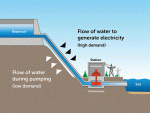 Push for a mini hydro-electric scheme in Yarra Valley town of Warburton, The Age Darren Gray, 25 Apr 17, Up to 120 homes could be powered by a mini hydro-electric scheme that’s been proposed by locals for Warburton, in the upper reaches of the Yarra Valley.
The hydro project, which would involve using water from the fast-flowing Ythan Creek as it flows through the local golf course, would produce year-round power to be fed into the electricity grid.
The proposed scheme would also restore some of the picturesque town’s early 20th century heritage, by reviving hydro power at the site of an old hydro scheme that operated at the property from 1919 onwards.
The historic hydro plant powered the old Parbury Timber Mill during the daytime, while at night it powered local street lights and part of the town for years, before Warburton was connected to the electricity grid.
The modern hydro project, expected to cost close to $1 million, is the brainchild of Warburton residents Luke Whiteside and Nick Killey…….http://www.theage.com.au/victoria/push-for-a-mini-hydroelectric-scheme-in-yarra-valley-town-of-warburton-20170424-gvrf2d.html
April 26, 2017
Posted by Christina Macpherson |
energy, Victoria |
Leave a comment
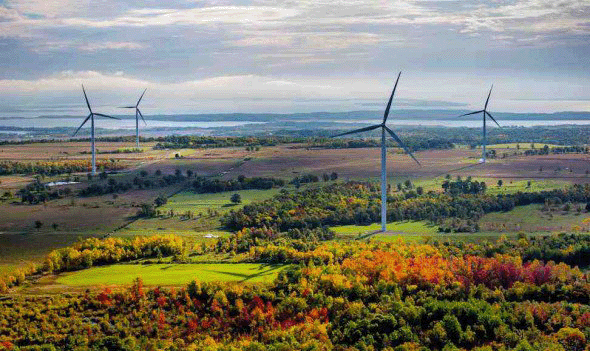
Construction underway on Victoria’s 132MW Mt Gellibrand wind farm http://reneweconomy.com.au/construction-underway-on-victorias-132mw-mt-gellibrand-wind-farm-88672/ By Sophie Vorrath on 19 April 2017 Acciona Energy has broken ground on its 132MW Mt Gellibrand wind farm, a $258 million project in Victoria’s western plains that was fast-tracked after winning a state government tender designed to reboot renewables investment in the state, and side-step a capital strike by major utilities.
At a turning of the sod ceremony at the wind farm’s site, 25km east of Colac, Acciona managing director Andrew Thomson said the company expected to see Mt Gellibrand “pouring” clean energy into the grid within about 15 months – at a time when the nation would be seeking to increase its capacity for renewable power generation.
Thomson said the new wind farm would be a “massive economic driver” for the region over the next 25 years, creating 100 local jobs in the construction phase, and up to 10 operations and maintenance roles continuing for decades ahead.
Of course, generating local jobs and investment was a key aim of the Andrews government tender, alongside meeting its legislated target of 25 per cent renewables by 2020, and 40 per cent by 2025. Continue reading →
April 21, 2017
Posted by Christina Macpherson |
Victoria, wind |
Leave a comment
 Ararat Wind Farm fully commissioned, supplying power to Victoria and ACT http://reneweconomy.com.au/ararat-wind-farm-fully-commissioned-supplying-power-to-victoria-and-act-51770/ By Sophie Vorrath on 19 April 2017 The recently completed 240MW Ararat Wind Farm in south-western Victoria is now operating at full capacity, feeding enough renewable energy into the grid to power 120,000 homes, 37,000 of them in Canberra.
The wind farm, which is operated and managed by Canberra-based company Windlab, was fully commissioned on Wednesday this week, after several years in the works. It first began sending power to the grid in Victoria in August 2016. This graph below, from the Energy and Climate College, shows how it has expanded production.
The project gained significance as the first wind farm to be contracted after the reinstatement of a bipartisan federal renewable energy target – that is, after the Coalition and Labor agreed to cut the RET to 33,000GWh from 41,000GWh).
In Ararat’s case, the go-ahead was buoyed by the signing of a power purchase agreement with the ACT government, which guaranteed the purchase of approximately 40 per cent of its annual output – a contract it is now delivering on.
“The ACT’s agreement with the Ararat Wind Farm provided certainty for investors and enabled construction to commence in late 2015,” ACT climate minister Shane Rattenbury said on Wednesday.
“This is good news for consumers as well as climate change mitigation, as the ACT government has locked-in a set price for the renewable electricity produced by 10 wind and solar projects, including Ararat, for the next 20 years.”
Rattenbury – whose predecessor, Simon Corbell, is widely regarded as the mastermind of the nation-leading renewables policy – said that the Capital was showing the federal government how to deliver on clean energy.
“If the generators make more money than the set price for the electricity they sell into the national electricity market, they pay the difference back to the ACT,” Rattenbury said.
Ararat Mayor, Paul Hooper, described the wind farm as a “really significant” project for the city, bringing $450 million of investment, 350 jobs at its construction peak, and more than $40 million into the local economy during construction, which lasted about 18 months.
“It was completed on time and to a very high standard,” Hooper said, adding that project developer RES Australia had been “…very, very good corporate citizens” throughout the development.
April 21, 2017
Posted by Christina Macpherson |
ACT, Victoria, wind |
Leave a comment
Households being lured into misleading electricity and gas deals: energy watchdog, The Age, 15 Apr 17 Adam Morton The head of Victoria’s energy watchdog has warned that households are being lured into deals with the promise of large discounts unaware that companies can ratchet up prices at any time.
Ron Ben-David, the chairman of the Essential Services Commission, says discounts of up to 40 per cent offered by electricity and gas retailers are rarely locked in, and called for a dramatic rethink to make power bills fairer for consumers…….
With Victoria holding a bipartisan review of the retail electricity and gas markets headed by former Labor deputy premier John Thwaites and ex-Liberal cabinet minister Terry Mulder, Dr Ben-David is urging reforms to force more effective competition between companies.
Should those steps fail, he says Parliament should consider the “nuclear option” – starting to re-regulate electricity pricing – just eight years after the state became the first in the country to fully de-regulate.
Power bills have increased dramatically in recent years, with retail margins playing a significant part in the rise in Victoria in particular. Several submissions to the review suggest retailers are making large profits and vulnerable households are paying the highest prices.
Last month, think tank the Grattan Institute found up to 43 per cent of household power bills goes into the pockets of electricity retailers as profits.
Prime Minister Malcolm Turnbull ordered an Australian Competition and Consumer Commission inquiry, and Victorian Premier Daniel Andrews appointed himself chair of a new cabinet taskforce on energy and promised to keep the state’s electricity supply “as affordable, resilient and secure” as possible……..
The energy review is due to report to the government by May 31. http://www.theage.com.au/victoria/households-being-lured-into-misleading-electricity-and-gas-deals-energy-watchdog-20170415-gvlgyw.html
April 17, 2017
Posted by Christina Macpherson |
energy, Victoria |
Leave a comment
Victorian Government To Invest $1 Million Into Regional Renewable Energy Development https://cleantechnica.com/2017/04/12/victorian-government-investment-1-million-regional-renewable-energy-development/
by Joshua S Hill The Victorian Labor Government has announced it will commit $1 million in funding to establish a series of community hubs to drive renewable energy projects in regional Victoria, while also exploring the renewable energy potential of empty mine shafts in the state’s center.
An announcement made on Wednesday by the state’s Minister for Energy, Environment and Climate Change, Lily D’Ambrosio, by the Andrews Labor Government, will see a total of $900,000 committed for three, two-year pilot Community Power Hubs in the towns of Bendigo, Ballarat, and the Latrobe Valley region. The community-owned and operated hubs would aim to drive investment into regional Victoria renewable energy projects, create jobs, and help reduce electricity bills. The hubs would also provide legal and technical expertize, as well as start-up funding.
An additional $100,000 has been committed to a feasibility study into the renewable energy potential of empty mine shafts in Bendigo. A further $50,000 will be provided to the City of Greater Bendigo to support the study, which will specifically investigate the potential of using solar powered pumped hydro to generate and store electricity in mine shafts which have long been empty. Early calculations already suggest that such a project could generate up to 784 kilowatt-hours, while simultaneously boosting the reliability of the local electricity grid, creating much-needed local jobs, and supporting the growth of local businesses.
“Interest in community energy projects has increased significantly over the years, with communities wanting greater control over their energy and associated costs,” said Lily D’Ambrosio. “Solar pumped hydro has the potential to store and generate significant amounts of energy. This feasibility study is the first key step towards realising the benefits of solar pumped hydro for the Bendigo region.”
April 14, 2017
Posted by Christina Macpherson |
energy, Victoria |
Leave a comment

 Turnbull warns party faithful against drift to the right, Adam Carey, Eryk Bagshaw, The Age, 2 Apr 17,
Malcolm Turnbull has stared down the right-wing of his own party which has hamstrung his leadership and asserted that the Liberals should be the party of the “sensible centre”…….
April 3, 2017
Posted by Christina Macpherson |
politics, Victoria |
Leave a comment
 Hazelwood exits, taking with it myth of cheap fossil fuels, REneweconomy By Giles Parkinson on 30 March 2017 The giant Hazelwood brown coal generator shut down the last of its 8 units at 4pm yesterday, the latest and the most powerful symbol of the vast and rapid change in our energy system.
Conservatives and the fossil fuel lobby might have wanted to describe the closure of the western world’s most polluting power plant as a futile act, given the attempts by the Trump government to jump back into last century’s technology and ignore climate science.
But just one day after Hazelwood closed, a new $1 billion solar PV and battery storage plant was being unveiled for South Australia, with its proponents insisting that construction would begin later this year.
Indeed, solar projects are popping up everywhere. Concannon, the former head of Hazelwood – once a staunch critic of Australia’s renewable energy target – has switched camps, heading up a large-scale solar company and plans 300MW of solar, possibly with storage, in South Australia.
He’s not the only one, with Lyon Solar’s announcement and Zen Energy and others, including Adani and DPP Energy, all planning major solar projects in South Australia.
In Queensland, the push to solar is even more rapid. One major energy user, Sun Metals, is building its own 116MW solar plant because the cost of electricity in a grid almost entirely dependent on coal and gas is too expensive.
Meanwhile, the incumbents have got other things to think about, particularly SAPN’s prediction that the cost to households and business of solar and storage will be around 15c/kWh within a few years.
Think about what that means. That is cheaper than just the transport cost of delivering electricity down the poles and wires.
Few in the industry doubt that we are shifting rapidly to a faster, cleaner, smarter and cheaper energy system. The imponderable is that no one knows what the business model looks like.
Networks are convinced that they will remain essential, because someone has to connect the homes, business, and communities. But they, too, are worried that things will move so fast that consumers – having been badly treated by utilities in the past decade – will simply take matters into their own hands.
If SAPN’s forecast are right, they will have an overwhelming economic incentive to do so. To deal with that, it is hard to see how networks will avoid any other action than to write off the value of their networks so they can compete.
The outlook for traditional gentailers, is more bleak. The cosy oligopoly that dominated supply, and accounted for virtually all demand, is starting to unravel……..
The Finkel Review will not, as the conservatives hope, recommend the sort of fantasy dance back into the last century that Donald Trump is trying to achieve in the US. Already, the conservatives sense this and are beginning to attack.
“What would he know,” they say, “he’s only an electrical engineer and the chief scientist.”
And the tribal politics won’t help either. The Greens appear to be the only ones who “get” what is happening, and don’t have vested interests in business and unions to protect. The final report into the Senate inquiry into the retirement of coal-fired power stations split three ways. Only the Greens seemed to understand the need for an orderly transition.
Indeed, denial is the last refuge of the incumbents and the ideologues. Technology marches on, and because it is so readily available to consumers, so will they. This is not about ideology any more. It is about simple economics. The rest is just detail, and politics. http://reneweconomy.com.au/hazelwood-exits-taking-myth-cheap-fossil-fuels-15425/
March 31, 2017
Posted by Christina Macpherson |
climate change - global warming, Victoria |
1 Comment


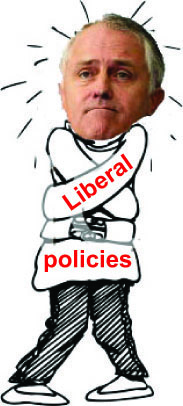 The Turnbull government has not committed to a renewable energy target, despite it being one of the recommendations of the Finkel review it commissioned into Australia’s energy needs.




 Antinuclear