Western Australia’s Yeelirrie uranium proposal poses genuine extinction threat
 State and national environment and Indigenous groups have called on the state EPA to reject Canadian company Cameco’s proposal to mine uranium at Yeelirrie in WA’s East Murchison region.
The call comes as the groups formally provided the EPA with a detailed critique highlighting specific community, environmental and procedural issues, along with wider nuclear industry safety and security concerns. Over 2,000 individual submissions were made to the EPA opposing the Yeelirrie uranium proposal.
A key specific concern involves the threat of species being made extinct as a result of the project. “This proposal threatens to make 15 species of subterranean fauna extinct,” said CCWA nuclear free campaigner Mia Pepper.
“We want the EPA to reject the proposal because of these unacceptable impacts. In its current form the project is likely to cause the extinction of ten species of stygofauna and five species of troglofauna.* These creatures might be small and hard to count but that does not mean that they don’t matter.”
Many of the area’s Traditional Owners have opposed proposals to mine uranium at Yeelirrie for more than 40 years. Pastoral operators and other stakeholders have also raised concerns about the impact on scarce water resources and the problems of dust and airborne pollution from a planned 9 kilometre open pit and large stockpiles of radioactive material in a region known for regular high winds.
“There is scant economic incentive for this mine,” said ACF campaigner Dave Sweeney. “The uranium market remains depressed and the commodity price has flat-lined. Cameco wants a paper approval to effectively warehouse a product that lacks social license and demand.
“Cameco – and two other WA uranium hopefuls – are racing to get assessments approved before the next state election. This might make sense for a company but it doesn’t make for good public policy.
“We are deeply concerned about fast tracked approvals for deficient proposals and urge the EPA to say no to extinction by saying no to this uranium mine.”
Western Australia systematically eroding Aboriginal heritage rights
 Separate but unequal: the sad fate of Aboriginal heritage in Western
  Australia The Conversation, Tod Jones Senior Lecturer, Human Geography, Curtin University December 7, 2015 There is systemic discrimination against Aboriginal heritage in Western Australia. This does not come from a racist administrator somewhere who hates Aboriginal heritage, but from the evolution of the institutions, rules and conventions that make up cultural heritage management.
Let me explain why.
Western Australia manages the heritage sites of Aboriginal and non-Aboriginal sites through different institutional channels, under different laws. This system is now providing much higher levels of protection for non-Aboriginal heritage.
There are several obvious imbalances. Should the Aboriginal Heritage Amendment bill that’s currently before parliament be passed, the maximum penalty for an individual illegally disturbing a non-Aboriginal heritage site will be A$1 million and two-years imprisonment, but for an Aboriginal site it will be A$100,000 and 12 months imprisonment, doubled on a second offence (it is currently A$20,000 and imprisonment for nine months, increasing to A$40,000 and two years for a second offense).
Less obviously, since Colin Barnett’s government took office in 2008 it has gradually reduced protection by reinterpreting definitions within theAboriginal Heritage Act 1972 to severely curtail the number of new sites. To date, some 1,262 sites have been blocked from gaining protection.
In 2012 the definition of “sacred” was reinterpreted to only include sites “devoted to a religious use rather than a place subject to mythological story, song or belief” – leading to the deregistration of 35 sites. This was found earlier this year to be a “misconstruction” by Justice John Chaney in the Supreme Court of Western Australia. Dreamtime stories have long been and continue to be considered sacred to Aboriginal people.
Furthermore, a recent report by UWA archaeologists indicates that more than 3,000 Aboriginal heritage sites have lost registration status as part of sweeping changes in classifications in the Aboriginal Heritage Register.
At no stage have Aboriginal custodians been notified about the changing status of their heritage……….
Proposed amendments to the Aboriginal Heritage Act
Western Australian Greens appalled at plan for funding out-of-state renewable energy projects
 WA considers funding out-of-state renewable energy projects, The Fifth Estate Annie Kane | 8 December 2015 Electricity generator and retailer Synergy, owned by the Government of Western Australia, is considering paying for renewable energy projects in other states in order to meet renewable energy targets.
According to The West Australian, the company is looking at paying for wind farms and solar plants in eastern states to help meet the Renewable Energy Target, which requires electricity providers to get 20 per cent of their power supplies from large-scale renewable sources by 2020…..
Move is a “bastardisation of the Renewable Energy Target”
The move, however, has been criticised by WA Greens energy spokesperson Robin Chapple, who said: “The idea of our tax dollars going towards renewable projects interstate is a bastardisation of the Renewable Energy Target.
“Why would we pay for clean energy projects that we won’t ever receive electricity from? “The fact that this has even been floated just shows how short-term this government is in its thinking.
“Here is an industry that could create new jobs, lower the price of electricity and greatly improve our environment. “The excuse that our system is over capacity is ridiculous.”
He said that by retiring the state’s fossil-fuel generators could help bring in new renewable capacity and therefore work towards the 2020 target.
Mr Chapple added: “As a state we should, and could, be doing a lot more around renewables. Frankly, the costs of this technology are dropping so fast, and our natural resources are so good, that it is only a matter of time for WA.
“I am dumbfounded by Mr Rowe’s comments, and I sincerely hope that these ideas are not borne out.” http://www.thefifthestate.com.au/innovation/energy/wa-considers-funding-out-of-state-renewable-energy-projects/79284
Paladin called on to close and rehabilitate Malawi uranium mine
 Conservation Council of Western Australia, 20 Nov 15 Shareholders at Perth based company Paladin’s AGM will call for the non-operational Kayelekera uranium mine in Malawi to be closed and rehabilitated. Calls for rehabilitation follow years of community opposition to the mine and failure to prevent the release of radioactive material into the environment.
The mine has been under ‘care and maintenance’ for several years due to the falling demand for uranium globally.
Charles Roche from the Mineral Policy Institute who will be attending the meeting said “With predicted operating costs almost double the long-term uranium price, there is a real danger that Kaylekera will be abandoned or sold off to reduce company debt. Instead of endless optimism Paladin should be honest about the possibility of re-commencing of mining in the next few years and begin rehabilitation works to protect communities, secure the site and end the cycle of financial losses”.
Mia Pepper, CCWA nuclear free campaigner who is in Africa at the Nuclearization of Africa conference this week said “We’ve been asking, along with French group CRIIRAD, for Paladin to release monitoring data from testing downstream from the mine. CRIIRAD have completed intermittent tests which indicate there is some radiological impact from the Kayelekera mine on the environment.”
“As the mine is about to go into a third year of being in Care and Maintenance we are concerned about the ongoing management of water on site and the structural integrity of the site. We would like to see this mine going into early rehabilitation, given the failures of Paladin to address community concerns, the clear local opposition to the project and the failure to contain radiological material onsite and an uncertain future. Rehabilitation should be done to the same standards expected in West Australia.”
Paladin has two uranium exploration projects in WA, also on hold given the stagnant uranium price and no mid term prospects of improvement. Paladin’s project in Qld is on hold indefinitely given that the Queensland Government reinstated the ban on uranium in Qld. Their JV proposal in the NT is also indefinitely on hold given strong opposition from the NT Government and Alice Springs residents.
Investors urged to dump Toro Energy at company AGM
 Conservation Council of Western Australia, 18 Nov 15, Traditional Owners and environment groups will ask shareholders to withdraw support for Toro Energy highlighting community opposition to the company’s uranium mine plans and a flat lining uranium market at the Toro’s AGM today.
Vicki Abdullah, Traditional Owner of the Lake Maitland area where the company plans to mine uranium will be attending the AGM today.
Ms Abdullah said, “I’ve told Toro Energy time and time again that they are not allowed to mine at Lake Maitland, they have no right to destroy our homelands, our sacred places and the burial sites of our old people. You wouldn’t let them do that your home or your ancestors. Well I won’t let them do it to mine.”
CCWA Director Piers Verstegen, said “After ongoing weak performance we expect Toro Energy will be asking shareholders to ‘hang in there and be patient’, however the reality is that community opposition and weak market are serious impediments that are not going to go away.
“Uranium is unnecessary, unsafe and unwanted and we will be asking Toro shareholders to place their investments in more lucrative and responsible industries like renewable energy.
“Toro must also face reality and cease pressuring local communities and Traditional Owners causing anxiety and conflict over a mine that will never make economic sense” concluded Mr Verstegen.
Cameco’s uranium plans in Western Australia stalled indefinitely by low prices
 Uranium miner Cameco to move in WA when demand lifts for nuclear energy, Perth Now
October 28, 2015 North American uranium miner Cameco plans to advance its WA projects when demand picks up.
The company says it is frustrated by roadblocks to uranium mining in WA, particularly from the WA Labor Party, which may stop new uranium mines from going ahead if elected.
Cameco Australia managing director Brian Reilly said uranium miners would need access to more Australian ports to export its products in the future……..http://www.perthnow.com.au/business/uranium-miner-cameco-to-move-in-wa-when-demand-lifts-for-nuclear-energy/news-story/cb93a50d83666159909dfa00d4b94c7c
Australian media continues to confuse return of Lucas Heights wastes with plan to import world’s radioactive trash
 Why does the media continue to confuse the return of nuclear waste to Lucas Heights (permitted due to contracts, in Australian law) with the ill conceived plan to invite the world’s radioactive trash in, as a supposedly $squillion dollar industry – (which is illegal in Australia)
 WA site ‘ideal’ for nuclear dump https://au.news.yahoo.com/thewest/wa/a/29976367/wa-site-ideal-for-nuclear-dump/ Andrew Probyn | Federal Political Editor | Canberra November 3, 2015, The man behind WA’s only short-listed site for a radioactive waste dump says the mulga scrub near Leonora would be ideal home for the world’s spent nuclear fuel rods.
Glenn Baker, who owns 100ha submitted by Leonora Shire Council for low and intermediate level radioactive waste dump, said the area had the stable geology, environment and remoteness necessary for a world repository of high level nuclear waste.
The South Australian Nuclear Fuel Cycle Royal Commission has been told the industry could be worth $28 billion over the next three decades, such is the global demand for nuclear waste storage.
Mr Baker’s property “Waarmba” is one of seven sites short-listed for a federal radioactive waste management facility to dispose more than 4200 cubic metres of low-level waste from hospitals and universities, and store almost 700 cubic metres of intermediate waste from Lucas Heights nuclear reactor in Sydney. Continue reading
Western Australia’s wave power microgrid – a world first
 World-first wave power microgrid to be trialled in WA http://www.abc.net.au/news/2015-10-29/world-first-wave-power-microgrid-to-be-trialled-in-wa/6896994 By Emily Piess A WA energy company is about to trial the world’s first renewable microgrid power station using wave energy as one of its sources.
Perth-based Carnegie Wave Energy will build the pilot project on Garden Island, using wave and solar energy to supply power to the Defence Department and a desalination plant. Chief executive Michael Ottaviano said the technology could be used to provide power to regional townships near the coast, as well as island communities. “This is a model for islands to move away from diesel-power generation into a combination of renewables,” Mr Ottaviano said.
“It’s also [a model for] regional towns in Western Australia, particularly those that are either off-grid and also running on diesel, or those that are on the so-called fringes of a grid, typically on the end of long transmission lines.”
Mr Ottaviano said the technology could reduce WA’s reliance on transmission lines that are expensive to maintain and upgrade. “It can cost hundreds of millions of dollars to upgrade, so as a way to avoid that sort of large expense, embedding renewable microgrids on the end of those transmission lines will be the future of clean power in Western Australia,” he said.
“The Garden Island microgrid project will do the equivalent amount of power for about 2,000 to 3,000 households, so it’s already of commercial scale.” Western Power is partnering with Carnegie and will provide technical expertise on the project.The microgrid, which will cost up to $10 million to build, will produce about five megawatts of energy, a significant portion of the Defence Department’s electricity use on Garden Island.
If the trial is successful, Mr Ottaviano said the microgrid model could be used in regional centres such as Albany and Geraldton. “This potentially could be rolled out to thousands and millions of households across Western Australia and beyond that really across the globe,” he said. “The potential for these sorts of projects is enormous.”Carnegie will undertake a detailed design phase before construction begins next year.
The microgrid is due to be completed by the end of 2016.
Don’t let Western Australia be a radioactive quarry and waste dump
CCWA Campaign: Let’s keep WA nuclear free! Don’t let WA be a radioactive quarry and waste dump http://ccwa.org.au/campaigns/nuclearfreewa
(Check out the information provided here about uranium exploration in WA and the Kintyre, Wiluna, Mulga Rock and Yeelirrie uranium mine proposals – and radiation and health issues)
Nuclear Free WA , 23 Oct 15 WA has never had a commercial uranium mine; we’ve had state wide bans on uranium mining and federal restrictions on uranium mining and a long history of public opposition.
After the 2007 state election the newly elected State Liberal Government lifted a long standing ban on uranium in WA. This came shortly after the Australian Labor Party changed the three mine policy which has since the 1980s meant that there could only be three uranium mines operating in Australia. With these two decisions WA has become the target for many uranium miners.
There are now approximately 140 companies with uranium interests in WA, there are three proposed mines which are engaged in the State’s EPA approvals process followed closely by another two proposals which are advancing their exploration programs followed by about 80 + other uranium explorations.
Uranium mining in WA is not a done deal
No uranium mine has been approved in WA at a state level or a federal level and there is mounting concern in the communities about the dangers and implications of mining uranium. There are strong calls for a public inquiry into uranium mining from environment, social justice and public health groups, from traditional owners, unions and politicians.
WA has a strong history of opposition against the nuclear industry, we know it’s radioactive, we know that uranium and its by products can cause cancer, we know uranium mining and milling is water intensive and that we’re a dry state, we know that in Australia despite regulations and controls we have contaminated mine sites and weapons test sites that have never been cleaned up to a safe standard.
Nuclear and climate change
The nuclear industry and those who support it continue to talk about nuclear power being the solution to climate change, but we know there is carbon pollution associated with every stage of the nuclear fuel chain. We know that as ore grades decline mining and milling processes become more and more carbon intensive. Nuclear Power is polluting, radioactive, expensive and finite; it is unsafe, unwanted and un-necessary.
Western Australia’s Wave powered Desalination Plant Now Operational
ASX Announcement Friday, 23rd October, 2015 Wave Powered Desalination Plant • Wave powered desalination plant operational • First bottle presented to WA Water Minister Hon Mia Davies at AWA Conference http://carnegiewave.com/wp-content/uploads/2015/10/151023_DPP-ASX.pdf • MAK Water agency agreement extended to remote islands, first opportunities underway
Wave energy developer Carnegie Wave Energy Limited (ASX: CWE) is pleased to announce the world’s first wave energy powered seawater reverse osmosis desalination plant is fully integrated and operational. Carnegie’s desalination pilot plant on Garden Island (co-located with the Perth Wave Energy Project) was successfully commissioned off the electricity grid earlier this year, and is now fully integrated with the CETO wave energy power plant, meaning that the desalination plant is capable of running both off the grid and directly off hydraulic power from Carnegie’s wave project, or a combination of both.
The first bottle of wave-powered desalinated water produced was presented by Carnegie’s Chief Operating Officer, Greg Allen, to the Western Australian Minister for Water the Honourable Mia Davies MLA at the Australian Water Association’s (AWA) Annual Western Australian Conference today. Mr Allen presented on wave energy integrated desalination at the Conference timed to coincide with National Water Week (presentation attached). Carnegie’s Wave Powered Desalination Project won the 2014 AWA Innovation award.
Perth home entirely powered by solar energy shows the way
Perth gets first home powered almost totally by solar http://www.abc.net.au/news/2015-10-08/first-perth-home-almost-totally-solar-powered/6835726 By Kathryn Diss A Hilton home has become the first in Perth to use the Sun to meet almost all of its power needs by storing the energy in batteries while still remaining  connected to the power grid. (diagram at left not realistic!)
The home uses solar for 97 per cent of its power needs and also offloads excess supply onto the grid, in what could become a mainstream feature in the future.
Environmental scientist Josh Byrne built the home in Perth’s southern suburbs two years ago with a 10-star energy rating.
But despite having an energy efficient home solar panels on his roof, Mr Byrne was still paying power bills.
So, Curtin University’s Jemma Green proposed a battery storage trial at the home to try to further reduce his power bills. She had spent the past year researching and getting approvals for the project while seeking funding to pay for the batteries and her research. Continue reading
Western Australian Wiluna uranium project in the doldrums for the forseeable future
 WA’s first uranium mine likely to be delayed as Toro Energy puts Wiluna on hold WESTERN Australia’s first new uranium mine is likely to be delayed due to the ongoing downturn in demand and prices, Perth Now, 1 Oct 15
Toro Energy has put its Wiluna uranium project on hold as it waits for market conditions to improve. The company began drilling at the project in 2014 and had expected to start operations in 2017.
“We will get to build Wiluna when we get the price that makes Wiluna economic. We are not seeing that price today,” managing director Vanessa Guthrie told AAP.
Wiluna, 960 kilometres northeast of Perth, is the first new uranium mine in WA to receive federal 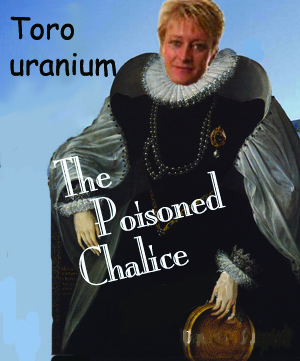 government approval since the lifting of a ban on uranium mining in 2008.
The project will require prices between $60 and $70 a pound to make money, Dr Guthrie said.
Long term uranium prices currently hover around $45 per pound, almost half the levels of five years ago. Prices are expected to dip further because of large stockpiles……..
Global uranium production has stalled in the past two years as depressed uranium prices have curtailed exploration activities and the opening of new mines……http://www.perthnow.com.au/business/was-first-uranium-mine-likely-to-be-delayed-as-toro-energy-puts-wiluna-on-hold/story-fnhocr4x-1227552733503
Western Australia’s govt slow to re-register Aboriginal sacred sites
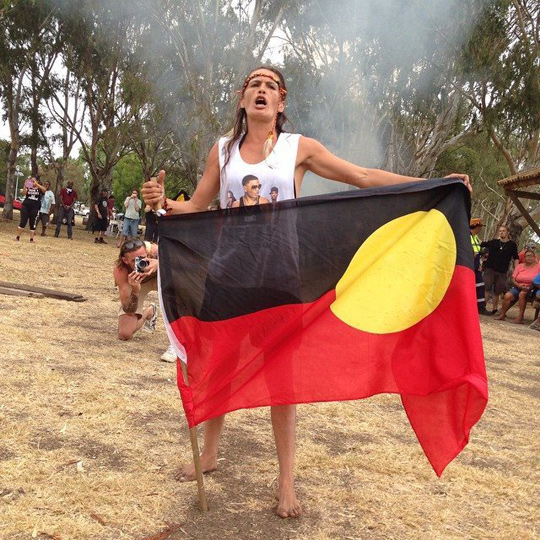 WA Government ‘dragging feet’ over sacred site registration: Indigenous group, ABC News 25 Sep 15 By Kathryn Diss An Aboriginal heritage group has accused the State Government of dragging its feet on reinstating several sacred sites it deregistered over the past year.
Several culturally significant sites around WA have had their protection withdrawn on the basis they no longer fit the definition of a sacred site.
Guidelines issued by the Department of Aboriginal Affairs stated that to be a recognised sacred site, a place needed to have been devoted to religious use rather than simply mythological stories, songs or beliefs.
But in a test case in April challenging the Aboriginal Cultural Materials Committee’s (ACMC) deregistration of a site in Port Hedland, the Supreme Court quashed the decision to remove it from the protected list.
Dr Stephen Bennetts from the Aboriginal Heritage Action Alliance said it had been months since the ruling was handed down and the government had not yet reinstated the other sites.
Dr Bennetts said he is concerned the sites could be damaged if they were not adequately protected. “It is quite possible some of those may have already been damaged,” he said.
Dr Bennetts said it was a scandal none of the custodians of the deregistered sites had been notified of the court’s decision.
“Because we know the reasoning the ACMC deregistered them in the first place was to make it easier for developers to get their approvals that was the exact reason,” he said………..http://www.abc.net.au/news/2015-09-25/call-for-indigenous-heritage-sites-to-be-re-registered/6804082
Walkatjurra Walkabout completes 5th walk against uranium mining in West Australia
http://walkingforcountry.com/2015/09/17/41888/ 16 Sep 15: “The Walkatjurra Walkabout, which started in 2011, finished its 5th walk in the North Eastern Goldfields town of Leonora on Tuesday. The walk, a collaboration of Aboriginal and non-indigenous people, is a moving community protest against the proposed uranium mines in the region.
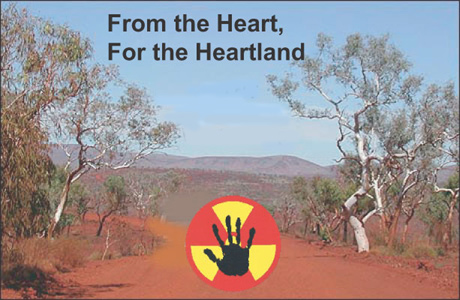
The month long walk, lead by local Traditional Owners, covered almost 450 km’s from Wiluna to Leonora, passing Toro Energy’s Wiluna uranium mine proposal at Lake Way and Cameco’s proposed uranium mine at Yeelirrie Station. Walk participants included local Traditional Owners, people
from Australia, Japan, Taiwan, England, Sweden, Aotearoa (New Zealand), America and France.
The walks continue to attract people interested in learning about Aboriginal culture, caring for country and to share a united vision for a nuclear free world.
 The walk was also joined at Yeelirrie for two days by Federal Greens senators Rachel Siewert and Co-Deputy Greens leader Scott Ludlam along with state Greens MLC Robin Chapple.
The visit included a tour of Toro Energy’s uranium project at Lake Way near Wiluna with walkers and Toro Energy. Many of the participants have first hand experience of the
dangers of the nuclear industry, especially those from Japan and Taiwan, whose nuclear industry are fuelled by Australian uranium. … “
Video: Walkajurra Walkabout protest Toro uranium mining project
 Walkajurra Walkabout begins fifth protest of Toro uranium mining project Anti-nuclear protesters have come together for the fifth consecutive Walkajurra Walkabout to oppose energy company’s Toro Energy uranium mining project.
By Craig Quartermaine Yellarie Source: NITV News 31 AUG 2015
TRANSCRIPT Malarndirri McCarthy: The Walkajurra Walkabout has international anti-nuclear protesters and traditional owners gathered together on some of the richest uranium deposits in the country.
Craig Quartermaine: I’m here at Yellerie Station for the Walkajurra Walkabout that will continue for the next two weeks it’s a dynamic mix of people who make their way through country
After protesters set up camp, they had a breakdown of the meeting with Toro Energy before turning in for the night……
Kado Muir is the Tjurrura man who has lead the event for the last five years .
Kado Muir, Walkajurra Walkabout organiser: So if they ever got the approval to mine it, it would dig up a 50 kilometre area, taking uranium out of the ground, turning it over, extracting the ore, leaving radioactive materials behind, all this beautiful land will end up being a radioactive wasteland……..Basically all these people share this common goal with us the Aboriginal people of this land of keeping uranium in the ground and shutting down the nuclear industry.
1 This month

of the week – Australians for War Powers Reform (AWPR)
To see nuclear-related stories in greater depth and intensity
 Antinuclear