Australian govt fast tracks approval for Cameco uranium mine, despite environmental concerns
Environment Minister Greg Hunt has granted conditional approval to Canadian uranium miner Cameco to develop the Kintyre mine in WA’s north.
But Dave Sweeney from the Australian Conservation Foundation said the East Pilbara mine, adjacent to the Karlamilyi National Park, will harm the environment and people.
“On Anzac eve the government has backed the wrong diggers,” he said. “This mine plan does not enjoy broad support and the mining company has said it has no immediate plans to develop the project because of the low commodity price.
“The federal government had time to genuinely examine this plan. “Instead, it has chosen to fast-track an approval before a national holiday”.
Mia Pepper, from the Conservation Council of WA, said the mine, of which Cameco owns 70 per cent and Mitsubishi holds the remainder, also threatens water quality in the region.
“It is irresponsible for Minister Hunt to have given approval for this project at this time”, she said.
“A unique part of our country faces an unnecessary threat because of this approval.
“We will continue our work with the local Parnngurr community and many wider community members and organisations to stop a poor political decision becoming a polluting Pilbara mine”.
West Australian Environment Minister Albert Jacob granted conditional approval for the mine to go ahead last month. Environment Minister Greg Hunt was contacted for comment.
Kintyre uranium project approved, for when and if uranium price improves
Federal approval granted for Cameco to develop Kintyre uranium mine in Pilbara, ABC News 24 Apr 15 By Tyne McConnon and Ebonnie Spriggs A proposed uranium mine in Western Australia’s Pilbara region has been granted conditional Federal environmental approval.
One of the world’s largest uranium producers, Cameco Australia, wants to build the Kintyre open-cut uranium mine 270 kilometres north-east of the town of Newman.
The project received conditional approval from Western Australia’s Environment Minister Albert Jacob last month……..
In a statement, Cameco said the approval by the Federal Environment Minister Greg Hunt included conditions covering radiation, ground and surface water, terrestrial fauna and mine closure……..
Environmentalists fear long-term impact of uranium waste
Environmentalists have previously condemned the proposal, citing concerns over the level of radiation monitoring required of the company throughout the Karlamilyi National Park, where the mine would be located.
Campaigner Mia Pepper said current regulations for safely managing uranium in Australia were deficient. “The thing with uranium is that it’s different to other minerals. It’s radioactive, and that radiation is very hard to manage in our environment that [has] very, very dry periods and very, very wet periods,” she said.
“That radiation is so mobile in our environment when we start mining it, you know, it becomes hugely dangerous, and I don’t know of anywhere where they can safely mine uranium.
“What’s left behind after mining is radioactive mine waste, and that stays in our environment forever, really, or for at least 10,000 years. “It’s a very long period of time, and it will be there long after this company has stopped existing and long after this Government has changed.”
Traditional owners, the Martu people, signed a land-use deal with Cameco in 2012.
The company said a development decision would be made when market conditions were favourable to new uranium production…http://www.abc.net.au/news/2015-04-24/uranium-mine-kintyre-given-federal-approval-cameco-says/6418974
Australian tax-payers funding shonky climate economics with $4m Bjørn Lomborg centre
So is this “methodology” the Abbott Government has spent $4million on any good?……
while cost-benefit analysis can be useful, it doesn’t work when you apply it to climate change policy.
How do you price, for example, the loss of a Pacific island nation and what that would mean for the cultures that have thrived there? What’s the price losing multiple species of flora and fauna or the Great Barrier Reef Jotzo adds:
Climate change is exceptional because it has all of these dimensions that go beyond the practical capability of cost benefit analysis.
 Australian taxpayers funding climate contrarian’s methods with $4m Bjørn Lomborg centre Graham Readfearn, Guardian 23 Apr 15 Lomborg’s think tank methods underplay the impact of climate change and have ‘no academic credibility’ says leading climate economist. Danish political scientist and climate change contrarian Bjørn Lomborg says the poorest countries in the world need coal and climate change just isn’t as big a problem as some people make out.
Australia’s Prime Minister Tony Abbott says “coal is good for humanity” and there are more pressing problems in the world than climate change, which he once described as “crap” but now says he accepts.
So it’s not surprising then that the latter should furnish the former with $4 million of taxpayer funds to start an Australian arm of Lomborg’s Copenhagen Consensus Centre (CCC) at the University of Western Australia’s business school.
The CCC has consistently said that targets to cut greenhouse gas emissions are too expensive and money should be spent elsewhere
After a couple of weeks of doubt and confusion over the origins and the funding of the centre, latest reports suggest that the idea came from the Prime Minister’s office.
A spokesperson for the Prime Minister told Fairfax media it was “the government’s decision to bring the Lomborg consensus methodology to Australia”.
More on this “methodology” and some pretty fundamental problems with it in a bit.
Students at UWA are gathering names on a petition and campaigning in protest, saying Lomborg’s appointment as an adjunct (unpaid) professor there damages the university’s reputation and is an embarrassment. The University’s Student Guild claimed that “students, staff and alumni” were outraged. Continue reading
International nuclear lobby pleased with Abbott’s gift to climate contrarian Lomborg
 Nuclear lobby backs Abbott’s $4m gift to climate contrarian Lomborg, Independent Australia Giles Parkinson 23 April 2015, When push comes to shove to act on global warming, Big Mining will wheel in nuclear as a ploy to stall the take up of renewables. Is pro-nuclear Bjorn Lomborg’s thinktank in WA just a cynical move by Abbott to kill the clean energy industry? RenewEconomy’s Giles Parkinson runs the ruler over the nuclear option. THE PRO-NUCLEAR lobby has welcomed the decision by the Abbott government to award $4 million to Bjorn Lomborg, a climate “contrarian” who favours nuclear energy and opposes deployment of renewable energy.
Michael Schellenberger, president of the US-based Breakthrough Institute, a pro-nuclear think tank, tweeted over the weekend that the Australian government’s granting of funds to Lomborg was no different to the German government’s funding of an environmental think tank that favours renewable energy.
The difference may be that the Energiewende, or energy transition, is official bipartisan government policy in Germany. But Australia does not – at least officially, although its actions suggest otherwise – embrace climate obstructionism and nuclear technology. And it has defunded independent climate analysis such as that from the Climate Commission.
The tweet from the Breakthrough Institute might be unremarkable, but for that institution’s recent alliance with the pro-nuclear lobby in Australia, and the joint release of an “EcoModernist Manifesto” last week that says present day renewables are incapable of providing zero carbon energy, and that nuclear fission is the only technology capable of meeting most, if not all, the energy demands of a modern economy.
This, it would appear, seems to concur with the not-so-subtle secret agenda of Australian Coalition government policy. Continue reading
Australia breaches international law in evicting remote Aboriginal communities
 In 2011, Barnett’s government displayed a brutality in the community of Oombulgurri which the other homelands can expect. “First, the government closed the services,” wrote Tammy Solonec of Amnesty International:
It closed the shop, so people could not buy food and essentials. It closed the clinic, so the sick and the elderly had to move, and the school, so families with children had to leave, or face having their children taken away from them. The police station was the last service to close, then eventually the electricity and water were turned off. Finally, the 10 residents who resolutely stayed to the end were forcibly evicted [leaving behind] personal possessions. [Then] the bulldozers rolled into Oombulgurri. The WA government has literally dug a hole and in it buried the rubble of people’s homes and personal belongings.
In South Australia, the state and federal governments launched a similar attack on the 60 remote Indigenous communities.
The closure of Indigenous homelands breaches Article 5 of the International Convention for the Elimination of Racial Discrimination
Evicting Indigenous Australians from their homelands is a declaration of war John Pilger, Guardian 23 Apr 15 Australia occasionally interrupts its ‘normal’ mistreatment of Aboriginal people to deliver a frontal assault, like the closure of Western Australia’s homelands
Australia has again declared war on its Indigenous people, reminiscent of the brutality that brought universal condemnation on apartheid South Africa. Aboriginal people are to be driven from homelands where their communities have lived for thousands of years. In Western Australia, where mining companies make billion dollar profits exploiting Aboriginal land, the state government says it can no longer afford to “support” the homelands.
Vulnerable populations, already denied the basic services most Australians take for granted, are on notice of dispossession without consultation, and eviction at gunpoint. Aboriginal leaders have warned of “a new generation of displaced people” and “cultural genocide”.
The prime minister, Tony Abbott, has revived this assault on a people who represent Australia’s singular uniqueness. Soon after coming to office, the federal government cut $534m in Indigenous social programs, including $160m from the Indigenous health budget and $13.4m from Indigenous legal aid. …….
In announcing that the Australian government would no longer honour the longstanding commitment to Aboriginal homelands, Abbott sneered, “It’s not the job of the taxpayers to subsidise lifestyle choices.” Continue reading
Traditional owners not consulted about criteria for closing down remote Aboriginal communities
KLC head says remote communities not given ‘chance to improve’, ABC Online Indigenous By Nicolas Perpitch March 27, 2015 The head of the Kimberley Land Council says Aboriginal communities should have been made aware of the criteria by which they were assessed in a WA Government report to give them the chance to improve.
A July 2013 draft discussion paper prepared by the Department of Housing, and seen by the ABC, recommended funding be stopped to 75 remote Aboriginal communities and very limited to another 53.
Indigenous Affairs Minister Peter Collier has received the final version of the report and said it would go into the makeup of a new funding model to be released “very soon”.
The draft discussion paper assessed communities against 15 indicators, including health, education, access to food, electricity and drinking water.
KLC chairman Anthony Watson said communities did not know there were criteria they had to meet.
“We should have been made aware of it and at least we would have been engaged with it,” he said.
“They’ve done the study, coming in, without the consultation.
Mr Watson said communities needed to be able to demonstrate they were working towards the Government’s requirements, and at the same time traditional owners should have been consulted about the criteria. Continue reading
Judge overturns West Australian Government’s decision to deregister Port Hedland Aboriginal sacred site
 WA court overturns decision to deregister Port Hedland Aboriginal heritage site http://www.abc.net.au/news/2015-04-01/aboriginal-heritage-test-case-port-hedland/6366250/?site=indigenous&topic=latest By Nicolas Perpitch and Laura Gartry April 01, 2015 The Supreme Court has quashed a decision by a West Australian Government committee to deregister a Port Hedland Aboriginal sacred site, in a test case that opens the door to a class action by traditional owners.
In his judgement, Justice John Chaney referred the case back to the Aboriginal Cultural Materials Committee (ACMC).
The committee had recommended to State Indigenous Affairs Minister Peter Collier that land and waters around parts of Port Hedland port should no longer be considered an Aboriginal sacred site because it had not been used for religious purposes.
“I conclude that the committee did not give consideration to the question of whether or not the Marapikurrinya Yintha was a place of importance or special significance because the question did not arise for consideration in light of the conclusion that it was not a sacred site,” Justice Chaney said in his judgement.
“The ACMC asked itself the wrong questions and identified the wrong issues, thereby falling into jurisdictional error.” Continue reading
University of Western Australia appoints climate change sceptic
 Climate ‘sceptic’ Bjorn Lomborg’s Australian influence grows as he joins University of WA, The Age April 2, 2015 Markus Mannheim Public service editor One of the world’s best-known climate contrarians, Bjorn Lomborg, will establish a base in Perth as his influence in Australia grows.
The controversial Dane has struck a four-year deal with the University of Western Australia to run a policy research centre in its business school, which will focus on the nation’s future prosperity.
Dr Lomborg said he planned to spend a “significant amount of time” in Australia following his appointment this month as one of the Abbott government’s advisers on foreign aid.
That appointment was criticised sharply by the Labor opposition and environmental activists, who questioned why someone who played down the effects of global warming should be advising on Pacific Island nations, which are particularly vulnerable to climate change. http://www.theage.com.au/federal-politics/political-news/climate-sceptic-bjorn-lomborgs-australian-influence-grows-as-he-joins-university-of-wa-20150401-1mcowc.html
Wiluna uranium project not viable due to flooding risks
Lake Way flooding proves Wiluna unviable http://www.robinchapple.com/lake-way-flooding-proves-wiluna-unviable 27 Mar 15, (Good photos) After yesterday flying over Lake Way to see the extent of flooding in the area, WA Greens spokesperson on uranium Robin Chapple MLC has expressed deep concern about the future of proposed uranium mining on the lake bed.
Remote Aboriginal communities in distress over W.A. moves to get them off their land
“And those remote communities stand there waiting for their verdict but don’t know what they’ve done to appear before the Liberal Government’s jury.”
Remote community residents frightened they will be forced off their land: Aboriginal elder ABC News 26 Mar 15 By Lucy Martin People in remote Indigenous communities are panicking about their future, say an Aboriginal elder and MP, as the Western Australian Government maintains no community will close without consultation.
Pintupi elder Bobby West said life was good in the isolated community of Kiwirrkurra in Western Australia’s Gibson Desert.
“It’s a friendly and safe community, much better than close by in the town area. We’re not planting marijuana or selling drugs in small communities. Yeah, we got a good life out here,” he said.
It has remained that way for decades, but Mr West said residents were growing increasingly frightened they would soon be forced off their land. Continue reading
Flooding danger to uranium tailings at proposed Wiluna uranium mine
 Chapple says water could increase the risk at Toro, Kalgoorlie Miner, 26 Mar 15 Mining and Pastoral MLC Robin Chapple has expressed concerns about plans to mine uranium in Wiluna after the “flooding” of Lake Way.
His comments came this week after a flyover revealed what Mr Chapple termed flooding on the lake bed. Toro Energy plans to store radioactive tailings from the proposed Wiluna uranium mine — up to 100 million tonnes — in the mined-out Centipede and Millipede pits, which will also be on the lake bed and are now underwater. The company has cited flooding as a non-issue, claiming the lake to be a natural drainage point, according to Mr Chapple.
Mr Chapple said the extensive flooding at Lake Way raised serious concerns about Toro’s ability to manage water effectively while mining on a lake bed. “I do not believe this company has properly accounted, nor planned, for potential flooding to the extent we have seen this week at Lake Way,” he said
“Not only would floodwaters of this magnitude carry radioactive material to other parts of the ecosystem, but on drying out could potentially release large quantities of oxidised uranium … into the atmosphere.
Mia Pepper Nuclear Free Campaigner Conservation Council of Western AustraliaAbout the flooding of Lake Way – the proposed site for the “Wiluna uranium project” including three pits on Lake Way. We’ve raised the issue that Toro Energy want to store about 100 million tonnes of radioactive tailings in two mined out pits on the lake bed (Centipede and Millipede) – the Department of Mines and Petroleum haven’t yet approved or even seen a tailings management plan from the company. We are focused on making sure the tailings don’t end up in this lake!
Conservation Council of Western Australia (Inc.) City West Lotteries House, 2 Delhi St, West Perthmia.pepper@ccwa.org.au www.ccwa.org.au M 0415 380 808 T (08) 9420 7291 F (08) 9420 7273
Getting Aboriginals off their land, to facilitate mining industries
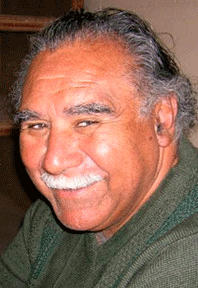 Ghillar Michael Anderson, leader of the Euahlayi people and ambassador of the Aboriginal Tent Embassy in Canberra, wrote an open letter to the United Nations on March 3, in which he states that the proposed closures of remote communities are to open up the land for mining.
“For the Western Australian government to now dispossess and displace the peoples of these homelands is designed to facilitate an expeditious expansion of mining interests and other developments,” he wrote.
The announcement of the closures coincides with the introduction of the Aboriginal Heritage Amendment Bill by the Barnett government last November. The bill, which is about to be debated in state parliament, proposes changes to the Aboriginal Heritage Act 1972. These simplify the process of gaining permission to develop Aboriginal sites, as the chief executive of the DAA will have sole discretion over whether to deem heritage protection. This would continue a DAA trend over recent years of site assessment which is beneficial to industry.
Are Mining Interests Behind Western Australian Remote Aboriginal Community Closures? http://www.vice.com/en_au/read/are-mining-interests-behind-western-australian-remote-aboriginal-community-closures March 20, 2015 by Paul Gregoir Yesterday, 18,000 people turned out at rallies across Australia in protest of the Western Australian government’s proposal to close up to 150 remote Aboriginal communities.
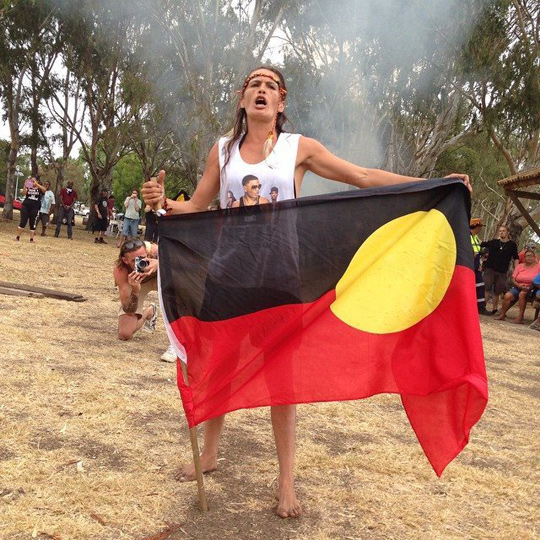
Climate change, extreme heat and bushfires in WA
 The heat is on: climate change, extreme heat and bushfires in WA http://apo.org.au/research/heat-climate-change-extreme-heat-and-bushfires-wa
- Western Australia is experiencing a long-term increase in average temperatures and in 2014 the state recorded its highest ever annual average maximum temperature.
- The number of heatwave days in Perth has increased by 50% since 1950.
- Nine of Western Australia’s hottest Januarys on record have occurred in the last 10 years.
- The number of days per year
with severe fire danger weather is projected to almost double in south west Western Australia by 2090 if global carbon emissions are not drastically reduced.
Recent fires in Western Australia have been influenced by record hot dry conditions.
- The long-term trend to hotter weather in Western Australia has worsened fire weather and contributed to an increase in the frequency and severity of bushfires.
- The concept of a normal bushfire season is rapidly changing as bushfires increase in number, burn for longer and affect larger areas of land.
- By 2030, the number of professional firefighters in WA will need to more than double to meet the increasing risk of bushfires.
3. The economic, social and environmental costs of increased extreme heat and bushfire activity is likely to be immense.
- In Perth, from 1994-2006, there were over 20 heat attributable deaths per year. If average maximum temperatures were 2°C warmer, this number would almost double to 40 deaths.
- Some of Western Australia’s most fire-prone regions may become unlivable as the risks to lives and property caused by bushfires continue to increase.
- Without effective action on climate change, there will be 20 times the number of dangerous days for outdoor workers by 2070, reducing productivity.
4. Tackling climate change is critical to protecting Western Australia’s prosperity.
- As a nation we must join the global effort to substantially reduce emissions and rapidly move away from fossil fuels to renewable energy if we are to limit the severity of extreme heat and bushfires both in Western Australia and nationally.
National protests against plans to close remote Aboriginal communities
#SOSBlakAustralia call goes out across the land to save remote Indigenous communities, Crikey MARIE MCINERNEY | MAR 19, 2015 A day of action to protest plans to close remote Indigenous communities in Western Australia ended up not only trending nationally on Twitter but hit the streets in real-life, with rallies across Australia, from Derby and Roebourne to Townsville and Tasmania.
The largest protest was, understandably, in Perth, fuelled by Prime Minister Tony Abbott’s “lifestyle choice” comments last week. They also prompted this call today by Close the Gap campaign co-chairs Mick Gooda and Kirstie Parker for the governments to re-engage with Aboriginal and Torres Strait Islanders, saying the decisions being made about remote communities are “highly damaging and a breach of inherent rights”.
Such was the growing momentum on the issue that Premier Colin Barnett addressed the rally in Perth – see The West Australian’s report and other media coverage of the protest (and 2015 Close the Gap day events):……
Below is a selection of the #SOSBlakAustralia tweets that captured virtual and real-life protest through the day, from organisations and individuals, including high profile sports and arts figures. Not even a pending cyclone was going to stop them: [tweets reproduced here] http://blogs.crikey.com.au/croakey/2015/03/19/sosblakaustralia-call-goes-out-across-the-land-to-save-remote-indigenous-communities/
Western Australia’s huge wind power potential blocked by Federal and State governments
While there are only three large-scale wind farms in WA, smaller community-based operations have been successful at locations including Denmark, Bremer Bay, Rottnest Island, Kalbarri, Denham and Coral Bay.
An expansion of the Albany wind farm means it meets 80 per cent of the town’s power needs.
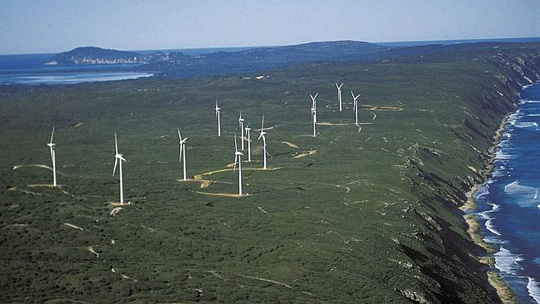
Wind power: WA wind farms ineffective for renewable energy TREVOR PADDENBURG PERTHNOW MARCH 16, 2015 WA is one of the windiest places on the planet with wide open spaces for wind farms, yet the state remains a renewable energy backwater, latest figures reveal.
Clean Energy Council data for significant wind farm projects shows WA generates less than 500MW of power from a total of 308 turbines around the state.
That’s half of Victoria’s wind generation at 939MW from 454 turbines and well below South Australia, which generates 1205MW of electricity from 561 turbines.
One reason is debate about health effects and noise emissions from wind turbines, even though numerous studies including a recent National Health and Medical Research Council review ruled there was no truth to claims that turbines cause health effects.
Aside from the question of health effects, the wind energy industry in WA is in crisis from a political double whammy, with the Federal Government signalling it wants to scrap Australia’s renewable energy target and the WA Government signing new contracts that tie electricity production to coal.
Estimates put investment in large-scale renewable energy projects in 2014 at 10 per cent of the figure for 2013.
That’s despite the Australian Institute saying wind had the potential to supply 40 per cent of Australia’s energy needs and was now cheaper to produce than coal.
Clean Energy Council policy director Russell Marsh said WA should be a world leader but it remained in the doldrums, underfunded and undervalued by governments fixated on coal.
“WA has a great wind resource and the space. But the review of the renewable energy target has basically closed the industry down,” he said. Continue reading
1 This month

of the week – Australians for War Powers Reform (AWPR)
To see nuclear-related stories in greater depth and intensity
 Antinuclear