Mounted police, canine squad & dozens of police move Aboriginal protestors at Perth’s Heirisson Island
 Heirisson Island Aboriginal protest: Police move in to clear campers, ABC News 13 Mar 15 By Rebecca Trigger Angry scenes erupted at Perth’s Heirisson Island today as police and the city moved to dismantle an Aboriginal camp, set up in response to the State Government’s plan to close remote communities.
Dozens of officers, including mounted police and the canine squad moved in on the island at about 3:00pm, Continue reading
Melbourne rally in protest at plan to close remote Aboriginal communities
Aboriginal rally brings Melbourne CBD to standstil SAMANTHA LANDY HERALD SUN MARCH 13, 2015 HUNDREDS of Aboriginal rights activists have shut down Melbourne’s CBD in a protest against the planned closure of remote indigenous communities in Western Australia. The demonstrators brought Swanston St to a standstill during the evening peak, disrupting traffic and almost a dozen tram routes for about an hour and a half from 6pm…….
Ms Onus said Mr Abbott’s comments that living in remote communities was a “lifestyle choice” were “blatantly racist”. “These people live where their ancestors have been for tens of thousands of years,” she said.
“There will be (thousands of) Aboriginal refugees if these communities close. “We know what happens to homeless Aboriginal people — they’re often criminalised. “They’re gonna end up in prisons and hospitals and homeless shelters.”
Ms Onus said protests were also being held in other capital cities.
Victoria Police spokesman Adam West said there were no incidents during the protest.samantha.landy@news.com.au http://www.heraldsun.com.au/news/victoria/aboriginal-rally-brings-melbourne-cbd-to-standstill/story-fni0fit3-1227261910970
A new project off the coast of Australia may make wave power a reality
Renewable energy Looks swell, The Economist 14 Mar 15 A new project off the coast of Australia may make wave power a reality
Mar 14th 2015 NO LAND stands between Antarctica and Australia’s west coast—just a vast ocean, rippled and rocked by the Roaring Forties. For centuries these westerlies, which blow between latitudes 40° S and 50° S, powered ships sailing from Europe to Asia. These days, they are also creating waves in the world of renewable energy. At the end of February, a demonstration project designed to use the ocean swell they produce went live. As a result Australia’s largest naval base now gets part of both its electricity and its fresh water courtesy of the ’Forties.

Carnegie Wave Energy, in Perth, has been working since 1999 on what it calls CETO technology. Ceto was the ancient Greek goddess of sea monsters, and Carnegie’s particular monsters are buoys that resemble giant macaroons. They float a metre or two below the ocean’s surface, bobbing up and down in the swell and generating electricity as they do so. The current version, CETO 5, has a capacity of 240kW per buoy. Three of the beasts are now tethered to the sea bed 3km from HMAS Stirling, on Garden Island. They also help to run a desalination plant on the base, for fresh water is a valuable commodity in Western Australia’s arid climate………
Carnegie aspires to bigger and better buoys it hopes will generate a megawatt each when launched in 2017. These versions, CETO 6, will be 20 metres across and will produce electricity inside themselves instead of at an onshore power plant. That means no pipe is needed; a submarine power cable will do instead……….
Carnegie also has its sights on markets farther afield. Military bases around the world need secure supplies of energy and water. And wave energy is attractive to island countries like the Maldives that must, at the moment, import fossil fuel at some expense. Whether submarine wave power of this sort will ever become truly mainstream is moot. But Carnegie is showing that, in appropriate circumstances, it could indeed have the wind behind it. http://www.economist.com/news/science-and-technology/21646176-new-project-coast-australia-may-make-wave-power-reality-looks-swell
Respected Aboriginal women elders explain the importance of the Homelands
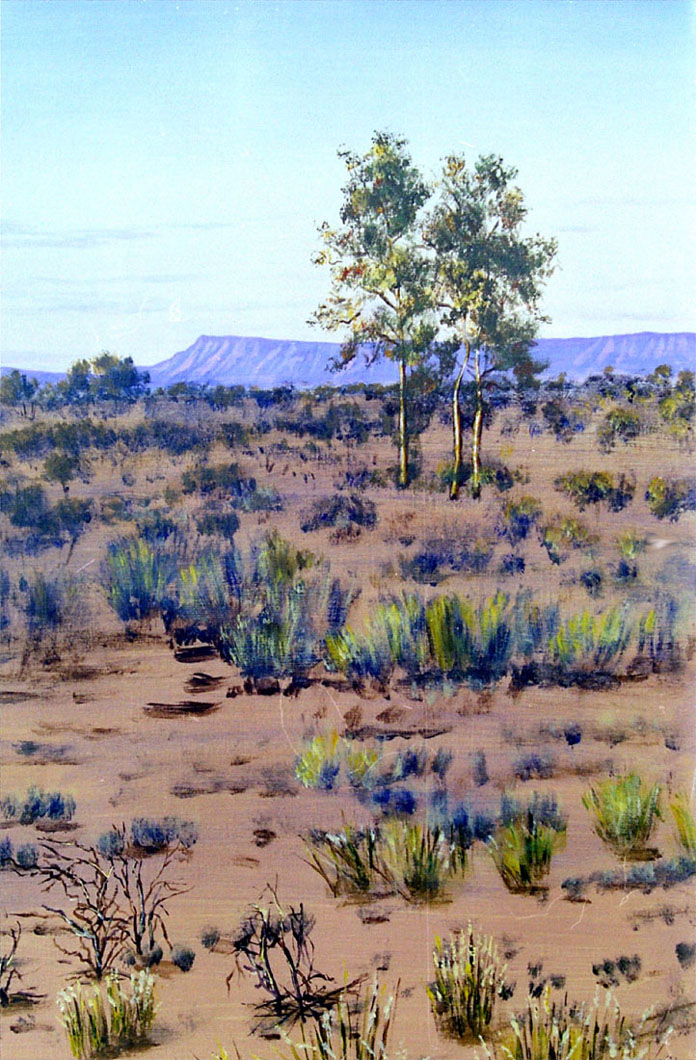 ‘People wanted to go back to homeland’
Mr McLarty said many of the small communities were created in response to government policy last century which saw Aboriginal people forcibly amalgamated into camps with other tribes.
“People wanted to move back to their own homeland,” he said.
“People wanted to go out to their own community, to feel some ownership, because they didn’t feel like they belong here in another tribal area.”
He said the Prime Minister’s comments may come from a lack of understanding of Aboriginal people’s history.
The women said remote communities were being unfairly painted as dysfunctional.
They argued that in most communities, children were safer and happier being raised ‘on-country’, where there was not the steady flow of drugs and alcohol and they could learn the traditional culture.
 Remote Aboriginal community closures: Return to country or risk losing traditional homes forever, elders warn http://www.abc.net.au/news/2015-03-11/indigenous-community-members-called-on-to-return-to-country/6304716 By Erin Parke and Rebecca Trigger Senior Aboriginal women from WA’s Kimberley say the Prime Minister’s “lifestyle choice” comments are a wake-up call and people who have drifted from their bush communities should return or risk losing them forever.
The call comes in the wake of Tony Abbott’s suggestion that living in remote Aboriginal communities was a “lifestyle choice” that could not be endlessly subsidised by the Government.
Senior Miriuwung Gajerrong woman and chairperson of the Kimberley Aboriginal Law and Culture Centre Merle Carter said the comments should spur people into action.
“For all of our people who are living in town, who are fringe-dwellers, just because of alcohol, go back to your communities,” she said.
“With the statement that Premier Colin Barnett made about closing the Aboriginal communities, and Tony Abbott backing him up, this might be a wake-up call.” Continue reading
Murky dealings in Western Australia’s Kintyre uranium mine proposal
Do the Martu people really want uranium mined nearby their communities? It does not sound like it but their permission is ‘official’…….
Wiluna Elder Geoff Cooke will fight to the end to prevent mining on his Country.
“We are the custodians of the land. Uranium is a poison. Our rivers will be poisoned. Our trees will be poisoned. Our food will be contaminated. Our people will become sick.

Uranium mine proposal approved – on Martu Country, The Stringer, by Gerry Georgatos March 7th, 2015 Western Australia’s largest national park is facing its biggest threat – uranium mining. Last Thursday, the State’s Environment Minister approved a uranium mine proposal while in the background an investigation is plodding along into allegations of improper dealings by some Traditional Owners.
Anti-uranium campaigner and conservationist Mia Pepper said, “The Minister, Albert Jacobs, approved the proposed uranium mine at Kintyre, a unique ecosystem that was excised from the Karlamilyi National Park to allow mining.” In the Northern Territory, Jabiluka was excised from the World Heritage listed Kakadu. When it comes to uranium mining – and mining in general – anything can happen, even in the middle of a world famous and world heritage listed national park.
“Uranium mining would impact on scarce water resources and a number of significant and vulnerable species including the bilby, marsupial mole and rock wallaby, ” said Ms Pepper.
The Federal Environment Minister, Greg Hunt, will decide the final approval check, but it is a given. The national park and Kintyre are surrounded by Martu communities. It is Martu Country but for those with the huge quid in mind, it is uranium country. The Parnngurr community has been fighting against the uranium proposal. Continue reading
Western Australian government dismissive about environmental concerns re Kintyre uranium mine
Pilbara uranium mine: Minister dismisses concerns over environmental approval ABC News 6 Mar 15 Western Australia’s Environment Minister Albert Jacob has dismissed concerns about his conditional approval of a Pilbara uranium mine. One of the world’s largest uranium producers, Cameco, is proposing to build the Kintyre open-cut mine about 270 kilometres north-east of Newman.
Environmentalists have condemned the decision, citing concerns over the level of radiation monitoring required of the company throughout the Karlamilyi National Park, where the mine would be located……..
the WA Conservation Council’s Mia Pepper said the Government should ensure any animal which is consumed by traditional landowners, not just those that are endangered, also remain protected.”In that area there is a lot of hunting and the big concern is around the radiological uptake in bush foods, which could impact public health,” she said.
“Whether there’s a big risk or a small risk, the point is that there should be monitoring and there should be evidence that the company can provide to the community to say that there is no risk.”……..
Traditional owners, the Martu people, signed a land-use deal with Cameco in 2012.
Kintyre now requires federal environmental approval.
The Conservation Council said environmental groups have vowed to continue to fight the project and will take their concerns to Canberra.http://www.abc.net.au/news/2015-03-06/minister-dismisses-concerns-over-uranium-mine-approval/6286908
Corruption investigation does not stop Western Australia from approving Kintyre uranium mine
 WA uranium mine approved despite looming corruption investigation, WA Today March 6 Steve Holland WA Environment Minister Albert Jacob approved a controversial uranium mine proposal on Thursday despite a looming investigation into the dealings of representatives of the traditional owners of the land.
Cameco Australia, in a joint venture project with Mitsubishi Development, acquired the Kintyre uranium deposit in WA’s remote Pilbara region in 2008 and the final stages of approval are edging closer.
But dealings of the representatives of the local Martu people, including the business practices of the Western Desert Lands Aboriginal Corporation, are currently under investigation by the Office of Regional Indigenous Corporations, or ORIC. Continue reading
Western Australia government – new laws to stifle protest
 Protesters face new laws Daniel EmersonMarch 6, 2015, The Barnett Government has declared war on radical protesters with new laws criminalising thumb-locks, barrel locks or any other way of physically preventing or threatening lawful activity.The laws – introduced to the Legislative Council last week without fanfare – reverse the onus of proof, carry maximum penalties of two years jail or a $24,000 fine and ensure cost recovery for any police response.
Stung in recent years by campaigns against shark culling, gas processing at James Price Point and, more recently, logging of Mowen Forest in the South West, the Government says it needs enhanced laws to combat evolving tactics of protesters. The Opposition has warned the wording of the Bill prohibiting the “physical prevention of a lawful activity” is so broad it could capture a range of activities, including sit-in protests at electorate offices or marches that impede traffic.
The laws make intentionally or physically preventing a lawful activity an offence punishable by 12 months jail or a $12,000 fine. Police suspicion is enough to determine the intention was there, which the accused person must disprove in court.
The penalties double when the conduct risks physical harm to anyone, including the accused. It will also be an offence to manufacture or possess any “thing” suspected to be used for physically preventing lawful action……..
WA Premier Colin Barnett talks about “review” of remote Aboriginal communities, but won’t meet their leaders
Barnett made the comments to PerthNow on Thursday morning, the same time as a meeting of the alliance of WA land councils in Broome.
Aboriginal land councils used the meeting to insist that Aboriginal people be given a say in issues like the remote community closures, declaring in a joint statement that “governments cannot decide where Aboriginal people live in Western Australia”.
Barnett was invited to attend that meeting but declined due to “prior commitments”.
He told PerthNow that a “comprehensive look” at the viability of remote Aboriginal communities was “under way” and he expected it to uncover evidence of “abuse”…… Continue reading
Western Australian government approves Cameco’s Kintyre uranium mine , (with weak conditions)
Cameco’s Kintyre uranium mine in Pilbara conditionally approved by WA Government ABC News By Ebonnie Spriggs and Lucie Bell, 5 Mar 15 A proposed uranium mine in Western Australia’s Pilbara region has been granted conditional environmental approval by the State Government……Cameco Australia, is proposing to construct and operate the Kintyre open-cut uranium mine 270 kilometres north east of Newman.
The joint venture project with Mitsubishi Development would include an airstrip, processing plant, waste rock dump, tailings storage facility, offices, accommodation and a haul road.
The company plans to truck uranium oxide concentrate from the site, at the western edge of the Great Sandy Desert in the east Pilbara, to the Port of Adelaide.
WA Environment Minister Albert Jacob has now conditionally approved the project.
It is understood Kintyre will be subject to conditions including those relating to mandatory reporting, the protection of fauna, public availability of data and radiation risks……
It is understood the project will now be subject to approval by the Federal Environment Minister Greg Hunt, who is expected to respond within 30 days. http://www.abc.net.au/news/2015-03-05/kintyre-uranium-mine-in-wa-pilbara-gains-conditional-approval/6284264
Western Australia’s superb opportunities for $1billion in Renewable Energy
 $1 billion in untapped clean energy opportunities in WA http://ecogeneration.com.au/news/1_billion_in_untapped_clean_energy_opportunities_in_wa/091292/26 February 2015 Western Australia has an exciting opportunity to join the race for renewable energy and the investment and jobs it brings, according to the Clean Energy Council.
The CEC says that while Australia’s renewable energy industry has grown from a niche player to a multi-billion dollar industry, Western Australia hasn’t fully capitalised on the opportunities on offer.
“The Western Australian Government can step up to the plate and attract more renewable energy projects to the state with just a few simple policy measures,” Clean Energy Council CEO Kane Thornton said.
“I have written to Energy Minister Dr Mike Nahan to ask him to advocate for a bipartisan resolution to the Renewable Energy Target, which would see Western Australia attract more than $1 billion in new investment out to 2020.
The CEC has recommended 15 policy measures that would help Western Australia become a leading renewable energy state, while driving greater competition and consumer choice in the electricity sector.
The CEC launched its new Guide to improving electricity use in your business in Perth this week.
The guide aims to provide small and medium-sized businesses with more information on how they can reduce their operating costs through measures like installing solar and storage, or shifting their energy use.
The guide is part of the CEC’s Future-Proofing in Australia’s Electricity Distribution Industry project, which aims to enhance the flexibility and resilience of Australia’s electricity distribution systems for the future. The project is supported by $878,000 funding from the Australian Renewable Energy Agency.
To download the Guide to improving electricity use in your business, visitcleanenergycouncil.org.au/fpdi
For more information on the Clean Energy Council’s Western Australia Directorate, contact Dermot Costello atdcostello@cleanenergycouncil.org.au.
Continuing process of removing Aboriginals from their land, making way for mining
Aboriginal people driven from their land Green Left, Friday, February 20, 2015 By Emma Murphy “…………..It is now eight years since the Howard Coalition government launched its appalling intervention into NT Aboriginal Communities — the NT Emergency Response package. While the intervention may seem like old news, it continues to be raised as an example of the increasing neoliberal offensive against Aboriginal people’s right to their own land, identity, and self-determination.
History certainly did not stop in 2007 when the intervention started. Aspects of the intervention, such as income management and increased police presence, have continued and there have been many more attacks as well, not just in the NT, but across the country.
The intervention and policies banning bilingual education and undermining NT homelands, were really about launching an attack on Aboriginal identity and culture. They were about undermining a way of life that really isn’t compatible with capitalism; a way of life that involved collective property rights and aspirations other than home ownership and careers. It is a way of life that embraces multilingualism, sustainability and quite often strong opposition to the extractive resource industry.
Many of the policies in the NT were seen, in one way or another, as forcing Aboriginal people off their land, whether to free up resource-rich land for the extractive industries or to push remote Aboriginal people into larger, more “viable” service hubs.
Right now in Western Australia, Aboriginal people living in remote communities are facing a similar disastrous social experiment. The Barnett government has foreshadowed the closure of more than 100 remote communities. Continue reading
Australian Aboriginals’ widespread resistance to fracking
Australia Needs New Approaches to Fracking http://firstpeoples.org/wp/australia-needs-new-approaches-to-fracking/ Fracking in Australia continues to meet widespread resistance from Aboriginals. In Western Australia, Buru Energy’s negotiations with traditional landowners in the Canning Basin have been largely unsuccessful, and communities are organizing camp outs to stop the company. In Queensland, the weakening of environmental protections has prompted the Mithaka Peoples to go the UN Special Rapporteur on the Rights of Indigenous Peoples, claiming that “Australia has taken no action to ensure that we are consulted and involved in these decisions, or to protect our rights to our culture.” In the Northern Territory, communities have formed the Northern Territory Frack Free Alliance to oppose the drilling of boreholes and wells near aquifers.
The Australian government is attempting to circumvent these groups with legislative and regulatory changes. While this may accelerate the issuance of permits in the short term, Australia cannot expect to develop a sustainable oil economy without Aboriginal support, and will need to drastically shift its approaches to fracking on Aboriginal territories.
This post is excerpted from First Peoples Worldwide’s Corporate Monitor, a monthly report on key trends affecting companies interacting with Indigenous Peoples. To sign up for monthly e-mail updates, click here.
Western Australian Premier would not meet Aboriginal land councils about remote communities
Colin Barnett turned down invitation to meet Aboriginal land councils, Guardian, Calla Wahlquist, 20 Feb 15
Councils called meeting with WA premier because they had received no offer of consultation over plans to pull funding from remote Aboriginal communities The Western Australian premier, Colin Barnett, turned down an invitation to meet Aboriginal land councils about a government proposal to close up to 150 of the state’s remote communities, one day before telling parliament he would consult Aboriginal people closely. Continue reading
World’s first wave-energy farm connected to grid is switched on in Western Australia.
“We’ve specifically designed the technology to be scalable and one of the main aims of this project was to show you could plug multiple wave units together and have them operating in sync.
“This technology… can operate in a variety of water depths, swell directions and seafloor conditions and can generate power for both onshore and offshore consumption,”
 WA wave energy project turned on to power naval base at Garden Island ABC News 18 Feb 15, The world’s first wave-energy farm connected to the electricity grid has been switched on in Western Australia.
The project by Perth-based Carnegie Wave Energy will provide renewable electricity for Australia’s largest naval base, HMAS Stirling, on Garden Island.
The same system is also used to run a small desalination plant, which will be used to supply up to one-third of the base’s fresh water needs. Continue reading
1 This month

of the week – Australians for War Powers Reform (AWPR)
To see nuclear-related stories in greater depth and intensity
 Antinuclear