Australian govt to cut off basic services to up to 200 indigenous communities
The remote communities are mainly located across the northern tip of Australia and the Kimberley in the country’s northwest. The federal government announced late last year that it would stop paying for the utilities, making states responsible for the communities. The Western Australia (WA) state government says it can’t afford to cover the costs.
Rodney Dillon, an indigenous advisor at Amnesty International Australia, told VICE News that some members of the indigenous communities might not survive a move.
“It would be a complete culture shock, a complete mental shock,” Dillon said. “This is their homeland. It’s where they belong it’s where they are proud. They are the keepers of the land. Some might stay and die on the land. The older individuals won’t manage it — it might kill them.”……..
Initial hopes of establishing a $1 billion “Royalties for Regions” fund, which would have used 25 percent of the state’s mining royalties to cover the cost of power and water for the communities, were quashed this week by WA Premier Colin Barnett, who stressed that the government has not yet reached a solution.
Minster for Regional Development Terry Redman originally floated the “Royalties for Regions” idea, but has since said he was “misunderstood” by the media. He stressed to VICE News that it was simply one option……….
Asked if communities had been contacted about the potential closures, the state’s Aboriginal Affairs Minister Peter Collier said last week that a consultation that involved “going out to all the communities” would be “just nonsensical,” and that “consultation in a general sense will continue” instead.
Dillon said such a consultation has been non-existent so far.
“The communities haven’t been contacted, no one’s asking anything,” he said. “This is going to be done without consultation, it will be a couple of blokes with a coffee in Perth making these decisions.”
The government will decide which communities stay open and which are “not viable” for investment, Dillon added.
The Partnership of Western Australian Aboriginal Land Councils invited Barnett and other key WA politicians to discuss the issue in early March, but they have yet to receive a response…….
The criteria that determines whether a community is viable has not been released, but both Redman and Barnett have stressed the likelihood that at least some of the 274 communities in the state will have to close, perhaps as many as 200.
Lauren Pike, a spokeswoman for the Kimberley Land Council, described what happened in 2011 when the government shuttered an indigenous community in Oombulgurri, a community in the eastern Kimberley, and relocated the residents to Wyndham, about 45 kilometers away.
“The result was just devastating,” Pike said. “They literally told these people to get out of their homes and that they couldn’t stay or come back, and then dumped them in the mangroves around the town.
“Houses weren’t provided — nothing was provided,” she continued. “People in the town literally had to hand out borrowed sleeping bags and blankets for these people coming in so they could have something to sleep on outside. It caused so much trouble in the community, and it only got worse from there. Suddenly people had access to alcohol, to illicit substances. It was just an absolute state of poverty.”……..
Dillon believes any future living conditions in the remote communities would consist of the bare minimum.
“They would be moved to very poor conditions,” he said. “They’re frightened and scared and they speak a different language. Now they’re all possibly going to be moved into slums and shanty towns in the city.”
Groups campaigning against the closure also believe moving the indigenous people into new towns would cost the government more in the long run than if they just maintained the status quo. https://news.vice.com/article/australia-may-stop-providing-water-and-power-to-remote-aboriginal-communities
Western Australia’s remote Aboriginal communities will not be getting state royalties – Premier Barnett
Western Australia’s Conservation Council condemn’s govt’s approval to Kintyre uranium mine proposal
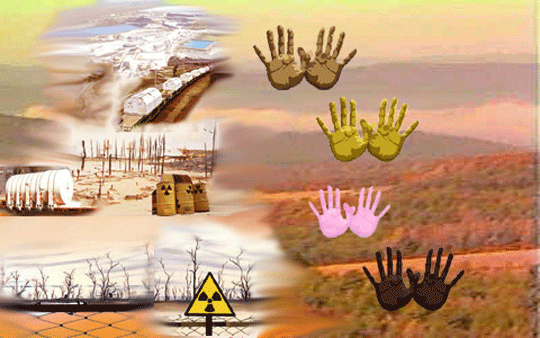 Minister approves uranium mine threat to National Park The states peak environment group, the Conservation Council of WA, has condemned the decision by Environment Minister Albert Jacob to approve the Kintyre uranium mine proposal in an excised area from WA’s biggest National Park, Karlamilyi.
Piers Verstegen, Director of the Conservation Council said “The Kintyre uranium proposal directly threatens the unique desert environment of the Karlamilyi National Park, the intricate water network of the Karlamilyi River water catchment and many endangered and threatened species.”
“This decision shows a weakening of standards for environmental protection and is a reminder that uranium and other environmentally significant and dangerous projects must retain Federal oversight under the EPBC Act, something both Governments are trying axe.”
Mia Pepper, Nuclear Free Campaigner of the Conservation Council of WA said “In an attempt to gain public support for uranium this Government is desperately trying to ‘normalise’ uranium. But uranium is not like any other mineral; it is radioactive and poses a significant and long term risk to the environment and public health. It is the asbestos of the 21st century and we cannot afford to treat it like any other mineral.”
“This decision is just one of many still needed before construction could begin at the proposed mine. This is a bad deal but not a done deal and we will continue to explore every avenue possible to challenge this uranium proposal.”
“Cameco the proponent of the Kintyre uranium mine has a shocking operating record overseas we will be watching their every move here and internationally, uniting with other communities that have been negatively impacted by this company.” Ms Pepper concluded.
For the convenience of uranium mining, Aborigines are moved off remote homelands
 Waging a war over land rights MEENA MENON , THE HINDU,January 19, 2015 ‘Protests are continuing in various parts of Australia over mining’
In her book of poems, Love Dreaming, aboriginal writer Ali Cobby Eckermann from Australia writes, “Every grain of sand in this big red country is a pore on the skin of my family.” Her writing and her new book, Too Afraid to Cry reflect the alienation of the ‘Stolen generation’ of children who were selectively taken away from their families and raised by white people and also the plight of her people who are waging a war over land rights.
Thousands of people from indigenous communities plan to hold massive protests over land issues on Australia Day on January 26, she says. Protests are continuing in various parts of Australia over mining uranium and minerals and even Kakadu National Park, on the UNESCO World Heritage Site is under threat.
In New Delhi to deliver the annual Navayana lecture, she told The Hindu in an interview that a serious lack of understanding between cultures persists in Australia at a political level and with mining it has expanded. “We worry for our children. Now the Western Australian government wants to use bulldozers and close 150 or 180 small aboriginal communities — they say it is not sustainable to keep these communities going. Where do these people go? They can wander to the city to become a makeshift community under tarpaulin as they are not going to rehouse them,” she says.
The sudden move, she suspects, is to do with mining and removing people from the area so that even that little bit of resistance is gone. That’s the scary part but the aboriginal people will survive. It’s all about land, the war is over land, she says and no one really articulates it like that. “Why would they want these remote areas which are mineral rich to be emptied of people. Western Australia is among the richest mining areas but why is not the government saying some percentage of that mining rights should go to the community. That doesn’t happen, the miners don’t pay tax and we watch the money fly away,” she points out. Continue reading
Tony Abbott ‘frozen in time’ as Western Australia sizzles with climate change
 WA sizzles as scientists reveal 2014 was the hottest in a century news.com.au JANUARY 18, 2015 NOT even the beach offered respite from the sun’s nuclear intensity as WA sizzled and the mercury approached 40C in Perth on Saturday…….Ambulance officers advised the elderly to stay inside and drink plenty of water and slip, slop, slap was the order of the day as the UV index peaked at 14. Readings of 11 and above are considered “extreme”.
New research from the US National Oceanic and Atmospheric Administration and the US space agency NASA shows 2014 was the hottest year in more than a century, reviving alarm about global warming.And WA’s top meteorologists agree, saying West Australians face decades of rising temperatures with hotter, drier and more extreme summers as a result of climate change.
Australia in 2014 experienced its third hottest year and hottest decade on record, according to the Bureau of Meteorology.
“It’s climate change. Temps across Australia are warming. There is no getting away from it,” weather bureau spokesman Neil Bennett said.
The NOAA report found that “globally averaged temperature over land and ocean surfaces for 2014 was the highest among all years since record-keeping began in 1880”. The average temperature in 2014 was 0.69C above the 20th century average, beating the previous record-holding years of 2005 and 2010. Russia, Alaska, parts of the US and South America, eastern and western coastal Australia, North Africa and most of Europe all experienced record heat.
Federal Labor environment spokesman Anthony Albanese said in the wake of the NOAA report that Prime Minister Tony Abbott can no longer ignore the evidence on climate change. “Tony Abbott is frozen in time while the world warms around us,” he said……http://www.news.com.au/national/western-australia/wa-sizzles-as-scientists-reveal-2014-was-the-hottest-in-a-century/story-fnii5thn-1227188545684?from=public_rss
Western Australian Government’s plan to extinguish native title & land rights in one hit
Deal to extinguish native title & land rights in one hit, The Stringer by Gerry Georgatos January 14th, 2015 More than 300 Noongar people gathered at a Perth park last Saturday to speak out against the South West Aboriginal Land and Sea Council’s (SWALSC) support for the Western Australian Government $1.3 billion in-kind package proposal. The Government offer if accepted by Noongar people will come on the condition that their native title rights are extinguished, and therefore whatever shot they have at land rights are extinguished.
It was the largest gathering of the Noongar community, with many high profile Elders, together in the one place on the issue of the Government proposal. The SWALSC have held many community consultations but not one of these community meetings brought together as many Noongars as were present at the ‘No Surrender’ event. The majority of SWALSC community consultations have had less than a dozen people attend.
One of the ‘No Surrender’ campaign organisers, Mervyn Eades said that if the Government proposal is passed through authorisation meetings then “our land and cultural rights will be extinguished.”
“There is nothing in this deal by the Government that provides any certainty over our land rights. We must not accept this deal. We must preserve our lore over the White man’s law.”
“There have been more than 300 native title determinations and more than 900 Indigenous land use agreements but our people wherever in this country have not benefited. Native title has divided and sold out our people. We will not sell out Noongar people,” said Mr Eades.
Noongar cultural advisor and language speaker, Joe Collard, said the South West Aboriginal Land and Sea Council is short-changing the claimant groups.
“Our native title representative body, our champion, the South West Aboriginal Land and Sea Council has let down our people. It has got nothing right in any of this. It does not even know or have any idea of our rightful claimant areas, of our clans, of our family run lines.”
Mr Collard said there is enough support in the Noongar community that if it is galvanised can topple the executive leadership of the SWALSC……….
Senior Elder Margaret Culbong said, “We never ceded this land, so we are not going to just give it up. Native title I never agreed with and this deal is less than native title. Neither is native title or this Government’s offer anything to do with land rights.”
Authorisation meetings commence at the end of the month. hestringer.com.au/deal-to-extinguish-native-title-land-rights-in-one-hit-9339#.VLlxTdKUcnk
Despite Minderoo’s objections, uranium exploration will go ahead on Andrew Forrest’s land in W.A.
West Australian Mines Minister Bill Marmion gave the exploration proposal the go-ahead after the mining warden recommended it be rejected in February 2014.
Mining Warden Kevin Tavener said the application for three exploration permits on Minderoo should be rejected because of the company’s low cash position.
It was a decision that reverberated throughout the industry as junior mining companies typically do not have access to deep cash reserves……..
Forrest’s Minderoo expressed its disappointment at the decision.
“Minderoo is disappointed at the minister’s decision to allow exploration by Cauldron Energy within the historical and environmentally fragile parts of Minderoo station,” a spokesperson said.
“As we have continuously stated on the public record, Minderoo supports development as long as it has no negative impact on the environment, and specifically protects the delicate environment of the Ashburton River.”http://www.miningaustralia.com.au/news/uranium-exploration-given-the-go-ahead-on-forrest
Andrew Forrest a majority shareholder in uranium company
The deal comes just days after Forrest bought Harvey Beef for a reported $40 million.
The uranium buy came as a surprise to the industry, with spot prices yet to recover to pre-Fukushima levels and dropping as low as US$30.75……..http://www.miningaustralia.com.au/news/andrew-forrest-invests-in-west-australian-uranium
Western Australia’s dramatic drop in indigenous sites receiving heritage listing
Slump in recommended indigenous sites receiving heritage listing VICTORIA LAURIE, THE AUSTRALIAN JANUARY 10, 2015 A STEEP drop in Aboriginal sites being added to Western Australia’s heritage register is leading to “a vast sea of ignorance” that will thwart heritage protection, according to Carmen Lawrence, the chair of the Australian Heritage Council.The dramatic drop in Aboriginal sites being registered — from 80 per cent of sites recommended to the Department of Aboriginal Affairs to only 6 per cent — has occurred over three years, from 2011 to May last year.
At least 27 sites registered under the Aboriginal Heritage Act have also had their status cancelled in the past year.
Ms Lawrence said the failure to register sites would make it even harder to identify the state’s heritage, lore and culture, which needed protection. “I’m concerned that we’re going back in time to a place we’d abandoned, the respect and protection levels of the 1950s,” she said.
“In the case of Burrup rock art in the Pilbara, it was unprotected for many years because nobody knew anything about it and Aboriginal voices weren’t heard.”………
Ms Lawrence said amendments to the Aboriginal Heritage Act, now before parliament, removed the requirement for a specialist anthropologist to assess sites. She was also concerned a “sacred” site applied only to those places where religious activity was conducted.
“I’m deeply concerned that song cycles and dreaming lines are explicitly excluded from consideration in this state due to a narrowing of definition,” she said. “Leaving that out is a major part of indigenous heritage. James Price Point is a good example: there are middens and burial sites along the Lurujarri Heritage Trail near Broome, but a lot of the significance relates to songs and dreaming tracks.”
She said a 2011 State of the Environment report found indigenous heritage was neither well protected nor well recorded……..http://www.theaustralian.com.au/national-affairs/indigenous/slump-in-recommended-indigenous-sites-receiving-heritage-listing/story-fn9hm1pm-1227180010783?sv=dc1f2218356b75c3fbcaafe8c6f6e071
Community opposition to Yeelirrie uranium mining should influence EPA’s assessment of Cameco’s plans
Conservation council highlights opposition to Yeelirrie uranium mine bid http://www.abc.net.au/news/2014-12-10/conservation-council-highlights-opposition-to/5957632
The Environmental Protection Authority (EPA) is currently assessing the company’s plans to mine uranium at Yeelirrie, an open pit mine site 70 kilometres south-west of Wiluna.
The EPA approved a similar proposal for the same project submitted by BHP Billiton in 2010, before it was sold to Cameco in 2012.
The council’s Mia Pepper said a public inquiry into the project was needed.
She said traditional owners and locals in the area had opposed uranium mining at Yeelirrie for 40 years.
“Yeelirrie in the traditional language means place of death which is a strong indication about local knowledge and there’s also white communities there that have opposed the project for over 40 years,” she said.
Perth council wants renewable energy to be a requirement in home building plans
 Perth council to seek mandate on renewable energy for new homes, ABC News, 10 Dec 14 720 ABC Perth By Emma Wynne A Perth council is hoping to radically alter its planning scheme to require new homes to have their own energy supply.
Nedlands council, which covers some of Perth’s wealthiest suburbs, will apply to the WA Planning Commission to alter their planning scheme to require installation of onsite power generations, such as solar panels or wind power, in all new home building…….http://www.abc.net.au/news/2014-12-10/perth-council-hopes-to-mandate-renewable-energy/5954842
Shutting down Australia’s Aboriginal areas -(opening lands up for what?)
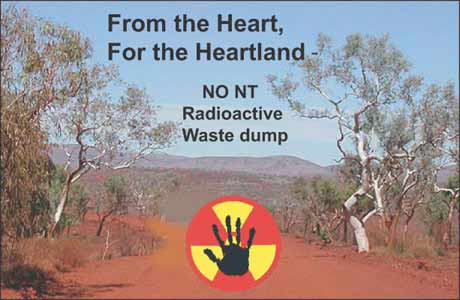 Shutting down Australia’s Aboriginal areas, Aljazeera, New funding laws threaten the existence of remote indigenous communities already facing profound social issues. Royce Kurmelovs 07 Dec 2014 Perth, Australia – The West Australian state government may bulldoze 150 remote indigenous communities that it says are too expensive to keep open under a new funding arrangement between federal and state authorities.
Canberra has offered each state a one-time, lump-sum payment to take over the responsibility of financing remote Aboriginal communities indefinitely.
In an ultimatum, Western Australia was offered $90m, enough to fund remote communities through to 2017.
But as of June 30, 2015, past federal funding agreements will end, effectively giving Western Australia authorities about seven months before they must start working out how to fund remote communities in the future – and which ones will have to close.
Similar arrangements have been made with South Australian, Queensland, Victorian and Tasmanian state governments.
All have so far remained silent on the details with the exception of South Australia, which rejected a $10m payment on the basis that it was not enough for the obligation being created.
South Australia’s Minister for Aboriginal Affairs and Reconciliation Ian Hunter warned if his government was forced to accept the new arrangement, 60 remote communities – home to 4,000 people – would have to close.
Futures in question
So far, Western Australian Premier Colin Barnett has taken a cautionary tone, telling Al Jazeera it is “still very early”, while admitting that community closures are inevitable……………
The fear is that changes to federal policy and funding arrangements that have raised the possibility of community closures only threatens to derail any achievements made to date.
That such closures may occur around the country is also what has lead the National Congress of Australia’s First Peoples (NCAFP) to label the issue one of the “most significant” facing Australia’s indigenous peoples to date.
“This is about our people’s right to stay on our land,” NCAFP co-chair Kirstie Parker told Al Jazeera. “People are very frightened that the days are numbered and their communities will be closed.”
In an effort to address the issue, Parker and her co-chair Les Malezer called on Prime Minister Tony Abbott to act in an open letter last week, but so far they have not received a response.
For others such as Tammy Solonec, Amnesty International Australia’s (AIA) indigenous peoples rights manager, there are serious questions about the Western Australia government’s ability to properly manage the transition………….
Lessons to be learned
The risk now is that the experience of Oombulgurri’s closure may be repeated across the country, and for Solonec this would be the worst case scenario.
“We can never let it happen again. If we’re going to talk about closing communities, we need to do it in a better way,” said Solonec.
What’s needed she said are “creative solutions” to actually solve the profound social issues within some remote communities, and prevent people being removed from their land.
Her view is echoed by Parker, who said self-determination is the key and closing down communities merely on the basis that they are “dysfunctional” will not solve problems, but only push them onto other communities.
“Our communities are left wondering about the future of our communities and of our children,” said Parker.
“This scenario doesn’t address the problems in our communities everyone knows are there, it doesn’t deal with the people. To do that you sit down and talk with them.” http://www.aljazeera.com/indepth/features/2014/12/shutting-down-australia-aboriginal-areas-2014124124749741868.html
Need to be alert on solar panel safety, too
Solar panel safety warning http://www.watoday.com.au/wa-news/solar-panel-safety-warning-20141206-121n4t.html December 6, 2014 The state’s energy safety watchdog has issued a warning about solar panels installed during the past year.
The Director of Energy Safety, Ken Bowron, said some of the systems had used dangerous power switches.
“The switches are used to disconnect the current produced by solar panels so electricians can work safely on a home or business,” he said. The defective switches are NHP dc Solar Isolator Swtiches KDA-432 and KDM-432. The supplier of the switches has issued a product recall.
“The defective switches were sold between July 2013 and October 2014. It is important that anyone who had a solar system installed between these dates checks if any of the defective switches have been fitted to the installation,” Mr Bowron said.
Western Australian government’s high-handed changes to Aboriginal Heritage Act anger traditional owners
Traditional owners rally against changes to WA Aboriginal Heritage Act, Guardian, Helen Davidson, 290 Nov 14 Proposed amendments could see owners stripped of say over sacred site listings, which will have lower standards than buildings Proposed amendments to the Aboriginal Heritage Act in Western Australia could see traditional owners stripped of any say over the heritage listing of their sacred sites in a lowering of standards compared to built heritage sites.
A representation of about 50 traditional owners from across Western Australia travelled to Perth to deliver a petition signed by 1,600 people calling for the amendment to be dropped and redrafted. Ten people also met with the Aboriginal affairs minister, Peter Collier, to discuss their concerns.
The proposed amendments would give the final say on the heritage value of cultural sites on Aboriginal land to the CEO and minister of the Department of Aboriginal Affairs, speeding up the approval process for mining and development applications. There would be no avenue for appeal by Indigenous groups, the delegation said.
They also said there has been no consultation with Indigenous people in the designing of the amendment, which has no requirement for an Indigenous person to be on the Aboriginal cultural materials committee and has removed a previous requirement for at least one anthropologist.
“We want the legislation removed, brought back to the table and properly negotiated and consulted on with Aboriginal people,” Simon Hawkins, CEO of the Yamatji Marlpa Aboriginal Corporation, told Guardian Australia.
“We want the legislation to reflect modern legislation in other states in terms of how they manage cultural heritage issues … even just brought up to the standard of built heritage legislation of WA, which has very strong controls on conservation management, protection, education on sites. Why is cultural Aboriginal heritage treated so differently and [with] such lower standards? We don’t understand that, it seems so unfair.”……..
The delegation follows a meeting of 250 traditional owners, elders and community members in Port Hedland in September, to which the minister was invited but did not attend…….
The chair of the Kimberley Land Council, Anthony Watson, was left still wary of the government’s plans after the meeting.
“We pushed the minister to try and have the discussion, but due to the timeframe it looks like they have their mind set [on introducing the bill]. It’s a very dangerous the position we’re in,” Watson told Guardian Australia.
“If the bill is getting pushed through, rushed through, without consultation then it’s discriminatory and there is going to be problems across our region for Aboriginal people.”……….http://www.theguardian.com/australia-news/2014/nov/20/traditional-owners-rally-against-changes-to-wa-aboriginal-heritage-act?utm_source=PoliticOz&utm_campaign=2cdc26cb18-PoliticOZ_21_November_2014&utm_medium=email&utm_term=0_673b6b002d-2cdc26cb18-302705445
Aboriginals rally against closure of 150 Aboriginal communities in Western Australia
Protests against closure of 150 Aboriginal communities, Green Left Saturday, November 22, 2014 By Alex Salmon, Perth
Aboriginal activists rallied on the steps of parliament house in Perth on November 12 to protest against the Western Australian government’s plan to close 150 remote Aboriginal communities. The rally also condemned the federal government’s plan to cut funding to 180 remote indigenous communities in Western Australia. Bropho, from the Swan Valley Nyungah community, told the rally: “Closing down these communities will only make more people homeless and [in] despair.
“The way we choose to live should be our choice. We shouldn’t have the domination of government people telling us how to live and where to live. We will fight to get our community and our land back. Our fight will continue.”
In an open letter to Colin Barnett on November 17, Nyungah activist Iva Hayward Jackson said that only a small amount of the revenue from the mining would be needed to cover the costs of maintaining these communities and other improvements and that “it’s only fair to share in the richness of the land with the idea of equality in the treatment of Aboriginal people.
“After all, Aboriginal people are the traditional ‘owners’ of the land and waterways that holds all the precious resources that made Australia a rich and wealthy country in the modern world.” Amnesty International released a statement urging the Western Australian government not to forcibly evict Aboriginal people from the communities, as demolishing houses and denying indigenous people the right to practice their culture is a breach of human rights and international law.
Tammy Solonec, a human rights lawyer working with Amnesty International, slammed the hypocrisy of Western Australian Premier Colin Barnett for admitting that closing the communities will be traumatic for the people involved, while continuing a policy that will force indigenous people to break their connections to land and culture and force them to move to larger towns where they will have greater exposure to drugs, alcohol, violence and crime……….https://www.greenleft.org.au/node/57858
1 This month

of the week – Australians for War Powers Reform (AWPR)
To see nuclear-related stories in greater depth and intensity
 Antinuclear