Shire of Leonora deputy president says no thanks to foreign nuclear waste pitch
|
Leonora was identified as a prime candidate in WA for a dumping site similar to a facility being built in Finland, where a 2km-deep tunnel would be drilled to store bentonite clay-sealed copper cylinders full of radioactive waste.Speaking on Channel 7’s Flashpoint on Monday night, Shire of Leonora deputy president Ross Norrie said he didn’t feel there was any amount of money that could convince residents to get onboard plans for a global nuclear waste dump.
“They are offering big bucks to store it, but I think Finland and Norway are way more advanced with their storage projects,” he said. “The feeling was, no, we are not going to accept nuclear waste from offshore and currently the policy is we don’t any way.” Leonora has been touted as a local nuclear waste storage site due to the proposed Azark Project at Clover Downs Station 15km out of town. Mr Norrie said the Shire was only interested in storing waste produced locally, such as at the proposed Yeelirrie uranium mine, and from Lucas Heights in NSW. “The storage facility we are talking about is one of the safest going,” he said. “We need to be around the table because we do have Australia’s largest deposit of uranium.” Australian Nuclear Association president Robert Parker said safety would not be a concern if a global waste storage was built in the Goldfields. When they drill down into the rock and they go down 500m they check that water hasn’t moved for millions of years,” he said. “If that water has not moved, and they can verify it hasn’t, then that (nuclear waste) is going down there and it is not coming back ever. “It is a certain, sure, engineered solution to the migration of these old bits of waste through the environment.” Former Greens Senator Scott Ludlam said storing the world’s nuclear waste near Leonora would be disastrous. “The reason the industry asks for remote high isolation sites … is they know the engineered containment will leak,” he said. “How will you explain that to Aboriginal people or crew who live in these remote mining towns or remote communities that the reason you are trying to put it as far from centres of population as possible is that you know the stuff is going to leak.” Reform WA president Daniel Nikolic said economic benefits of nuclear waste storage were big. |
|
|
New political party Reform WA wants nuclear power as an option for Western Australia
New political party Reform WA wants nuclear power as an option for Western Australia
Kalgoorlie Mayoral Candidate John Katahana wants a Small Nuclear Reactor for the town
 Cannabis, nuclear power and Mardi Gras: General Hercules’ out-of-this-world pitch for Kalgoorlie mayoral tilt, The West Australian,
Western Australian Labor joins Queensland Labor in clearly rejecting nuclear power
 Dave Sweeney, 27 Aug 19, It was a big weekend of Labor politics with state conferences in both WA and Queensland.
In WA the following motions were adopted on Sunday 25/8:
WA Labor is committed to implementing a best process and practise approach to uranium assessment and regulation. We urge federal Labor – and the federal government – to reflect this on a national level and retain the long standing and prudent nuclear action trigger for uranium mining and the clear prohibition on nuclear power in the federal EPBC Act (1999) during the current EPBC review process.
WA Labor commits to rigorous scrutiny of any further approvals or applications by any of the four WA uranium mine proposals approved under the previous government. WA Labor will apply the highest regulatory standards to any project and will work with affected communities and key stakeholders including trade unions and workers in order to reduce risks.
WA Labor welcomes the resolution passed unanimously by the 2018 National Labor Conference committing Labor in government to sign and ratify the United Nations Treaty on the Prohibition of Nuclear Weapons and calls on the Australian Government to sign and ratify the Treaty as an urgent humanitarian imperative.
Queensland Labor reaffirmed their clear policy opposition to uranium mining and also adopted a wider nuclear free position on Sunday:
In order to protect human health and Queensland’s unique natural values, Queensland Labor affirms its commitment to ensuring that Queensland remains nuclear free.
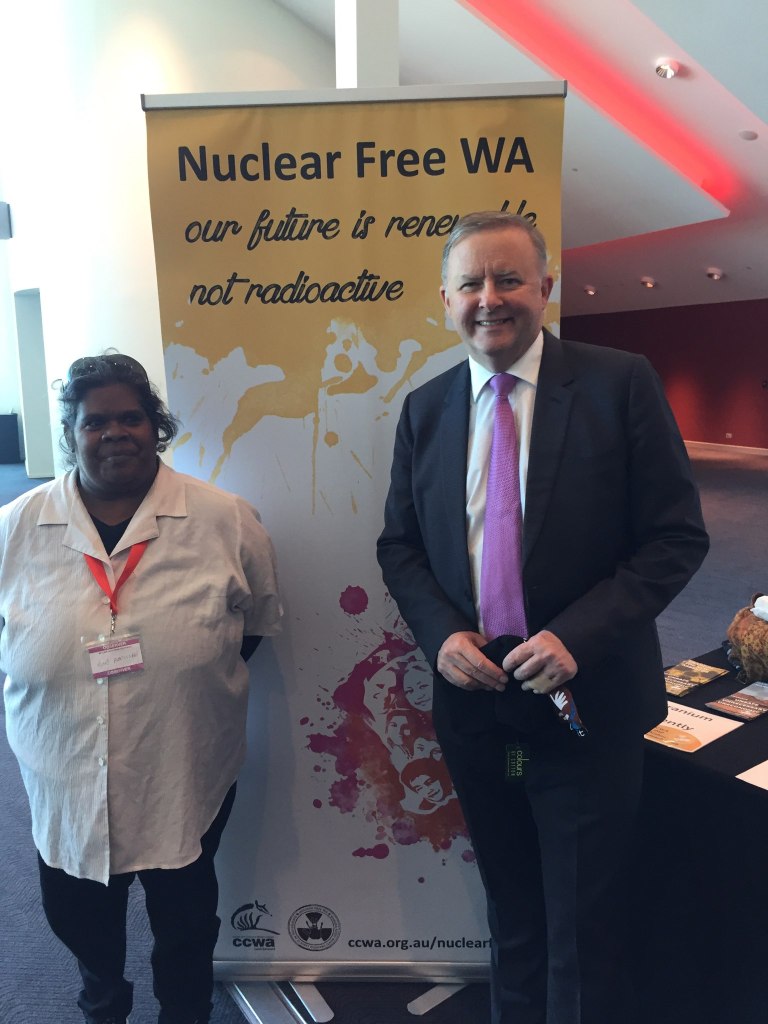
There was a good presence and profile (WA) and support at both events – see attached pic from WA with Leader of the Opposition Albanese and Yeelirrie defender Vicky Abdullah – a massive shout out to KA, Vicki, Mia, along with Piers and the wider crew from CCWA. The WA nuke free team did a superb job of putting the issue strongly on the radar at Conference. Thanks also to our comrades and champions in Labor and the progressive trade unions.
Yeelirrie uranium project court outcome shows environment laws in need of urgent repair
|

Hasty, secretive federal approval of Yeelirriee uranium project shows contempt for the scientific environmental evidence
News of the project’s approval did not emerge until around Anzac Day later that month, with no releases announcing the minister’s decision, prompting Australian Conservation Foundation (ACF) nuclear free campaigner Dave Sweeney’s call that it was a “clandestine approval under the cover of a national election”.
Yeelirrie, which sits within the boundaries of Ms Price’s vast federal electorate of Durack, had a long history of resistance.
It was previously rejected by the WA Environmental Protection Authority which flagged, among others, concerns about the project’s impact on 12 species living underground and in the water table.
Some species were only found in the area covered by the project and there were fears they could go extinct as the miner dug through groundwater to get to the uranium below.
It was later approved at a state level by the then-Barnett government, and several options on how to proceed were presented to Ms Price by the federal Department of the Environment and Energy on April 5 this year.
But the release last week of a statement of reasons from Ms Price – secured by the ACF – has revealed she signed off on the project with a less stringent set of environmental conditions than those recommended by the department, noting that if she attached the more onerous conditions “there is a real chance that the project could not go ahead”.
“I was satisfied that if the project did not go ahead and the social and economic benefits would not be realised, this would have an adverse effect on the region and the State as a whole,” Ms Price wrote.
The Wilderness Society WA state director Kit Sainsbury said the revelation meant the minister put economic and social conditions ahead of what should be her primary consideration – the environment.
“To see both at the state and federal level such contempt for the scientific evidence suggesting that this project is environmentally unsustainable – yet receiving approval – is galling and highly contentious,” he said.
“As the Yeelirrie decision proves, too often decisions affecting the environment are made behind closed doors … a national body with teeth can stand up for the communities which need it and their country they honour.”……….
Tjiwarl native title holders and conservationists are also appealing a Supreme Court decision against their challenge to the WA government’s approval of Yeelirrie, which Ms Price had previously told media she would wait for the outcome of before signing off on the approval. …….. https://www.watoday.com.au/national/western-australia/new-light-on-wa-uranium-mine-approval-sparks-call-to-put-environment-before-economics-20190709-p525mx.html
Lithium is valuable for many clean devices, but we can’t just ignore the wastes from its mining
Enormous lithium waste dump plan shows how shamefully backward we are SMH, Emma Young, 25 June 19 Emma Young covers breaking news with a focus on science and environment, health and social justice for WAtoday. We are all – well, all of us who are privileged enough – existing on a spectrum somewhere between “concerned” and “downright panicking” about human impact on the environment.
Western Australia holds some of the world’s richest known lithium deposits and now has an emerging industry to process that lithium here, not just ship it to China as previously done.
It’s part of a plan to make us more than just the world’s quarry; a bigger player in an industry promising big money, and bring jobs and industry to the South West.
But we have run up against a reality, in the very recognisable area of the Ferguson Valley: a reality predictable, yet startling.
Lithium mining will leave its own scars on a landscape already littered with tens of thousands of abandoned mining voids, pits, equipment and piles of tailings – and create its own waste.
In WA’s South West, processing of spodumene ore from the Greenbushes lithium mine will result in 600,000 tonnes per year of waste material being dumped – or ‘stacked’, if you want the euphemism – only 3.5km outside the charming little town of Dardanup.
Let me repeat that: 600,000 tonnes per year.
The application has offended the residents who already put up with dust, rubbish and runoff from the existing and already enormous landfill site.
To them, it’s on the nose.
And it’s not just sand and dirt. It’s waste of a kind so new to Australia that they had to get samples from China to find out what to classify it as.
Cleanaway submitted to the EPA that it was inert and non-toxic waste.
Yet no sustainable market exists for its reuse.
“By storing tailings in dedicated storage cells, in the event a sustainable market for reuse was developed, the material might one day be recovered,” it submitted, optimistically, to the Environment Protection Authority considering its proposal.
Somehow, I find it hard to believe that it is any miner or processor’s priority to find or develop such a market.
New explorer for rare earths in W.A. – doesn’t mention processing, or radioactive wastes
Vimy Resources managing director Mike Young talks up uranium industry, despite its gloomy market
 Vimy Resources eyes US uranium fix, Stuart McKinnon, The West Australian 1 June 2019 Vimy Resources managing director Mike Young refers to himself as a “silver-lining guy” and jokingly admits “you have to be … in uranium”.
The Andrew Forrest-backed Vimy has a completed definitive study for its $493 million Mulga Rock uranium project 200km east of Kalgoorlie, has two granted mining leases and other key approvals in place. It just needs the price of yellowcake to roughly treble so it can push the button.
The spot price of uranium has been in the doldrums since the 2011 Fukushima nuclear disaster in Japan, which prompted a phasing out of nuclear power in western countries, particularly in Europe.
Despite several false dawns, sentiment for the commodity has remained stubbornly low for the past eight years.
But the forthright Mr Young and Vimy’s chief nuclear officer Julian Tapp are hopeful the market might be approaching an inflection point.
They see a looming decision of the US Government as a potential catalyst to move uranium prices higher.
President Donald Trump is expected to decide next month whether to introduce trade restrictions to protect US-based uranium producers……..
If a quota is introduced, the company is hopeful Australia’s close relations with the US could win the country key concessions as it has done with aluminium and steel.
But whatever the outcome, Vimy believes a decision will provide clarity to a market starved of certainty for the past 18 months. US utilities, representing nearly a third of the global uranium demand, have effectively been on a buying strike since the start of last year.
…… “Politically, people are now thinking of nuclear as an avenue to emissions-free, dispatchable power 24/7 in all weather conditions,” Young said. “There’s still an anti-nuclear lobby, but by and large mainstream environmental scientists are getting on board nuclear power.” ….. https://thewest.com.au/business/spinifex/vimy-resources-eyes-us-uranium-fix-ng-b881212458z
Yeelirrie has a low grade of uranium, and Cameco has closed McArthur River mine with a much higher grade
It’s not worth wiping out a species for the Yeelirrie uranium mine, SBS, BY GAVIN MUDD “……. So are the economic benefits worth wiping out a species?
Short answer: no. But let’s, for a moment, ignore these subterranean animals and look at whether the mine would be beneficial.
Yeelirrie is one of Australia’s largest uranium deposits – and yet it has a low grade of 0.15 per cent (as uranium oxide). This refers to the amount of uranium found in rock. For comparison, the average grade of uranium mines globally is normally 0.1 to 0.4 per cent of uranium oxide (with some higher and others lower).
And Cameco’s Cigar Lake and McArthur River mines in Canada have typically been 15-20 per cent of uranium oxide. Despite such rich ore, McArthur River was uneconomic and closed indefinitely in early 2018.
What’s more, the future of nuclear power is not bright. According to the World Nuclear Industry Status Report, the number of nuclear reactors under construction around the world is at its lowest point in a decade, as renewable energy increases. The amount of nuclear electricity produced each year is flat. And nuclear’s share of global electricity is constantly falling behind renewables……..https://www.sbs.com.au/news/it-s-not-worth-wiping-out-a-species-for-the-yeelirrie-uranium-mine
It’s not worth wiping out a species for the Yeelirrie uranium mine
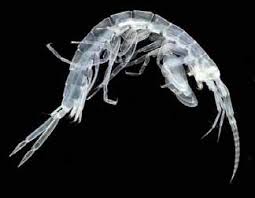 SBS, BY GAVIN MUDD 26 Apr 19, Like the rest of the Western Australian outback, there’s a wonderful paradox where the land appears barren, but is, in fact, rich with biodiversity – and animals are under threat of extinction if the mine goes ahead. The Western Australian outback may look bare at first glance, but it’s teeming with wildlife, often beneath the surface.
The Tjiwarl Traditional Owners have fought any uranium mining on their land for the last 40 years, and the decision by the government wasn’t made public until the day before Anzac Day……..
This region is home to several of Australia’s deposits of uranium and not only holds cultural significance as part of the Seven Sisters Dreaming Songline, but also environmental significance. If the mine goes ahead, groundwater levels would drop by 50cm and wouldn’t fully recover for 200 years. And 2,422 hectares of native vegetation would be cleared.
I visited the site 16 years ago and, like the rest of the Western Australian outback, there’s a wonderful paradox where the land appears barren, but is, in fact, rich with biodiversity.
Native animals living in underground water, called stygofauna, are one such example of remarkable Australian fauna that aren’t obvious at first glance. These animals are under threat of extinction if the Yeelirrie uranium mine goes ahead.
Stygofauna are ecologically fragile
Most stygofauna are very tiny invertebrates, making up species of crustaceans, worms, snails and diving beetles. Some species are well adapted to underground life – they are typically blind, pale white and with long appendages to help them find their way in total darkness.
n 2016, the Western Australian Environmental Protection Agency (EPA) advised against building the Yeelirrie uranium mine because it would threaten the stygofauna species there, despite the proposed management strategies of Cameco Australia, the mine owner.
Stygofauna are extremely local, having evolved in the site they’re found in. This means individual species aren’t found anywhere else in the world. EPA chairman Tom Hatton said:
Despite the proponent’s well-considered management strategies, based on current scientific understanding, the EPA concluded that there was too great a chance of a loss of species that are restricted to the impact area.
And to get to the uranium deposit, the miners need to dig through the groundwater, a little like pulling the plug in the middle of the bathtub. Stygofauna have adapted to living at different levels of the water, so pulling out the plug could dry out important parts of their habitat.
Stygofauna are also susceptible to any changes in the chemistry of the groundwater. We simply do not know with confidence what mining will do to the groundwater chemistry at Yeelirrie in the long term. Various wastes will be backfilled into former pits, causing uncertainty for the welfare of surrounding stygofauna.
The approval conditions suggest that the mine should not be allowed to cause extinction – but if this does happen, nothing can be done to reverse it. And there would be no penalty to Cameco either – which has said it can’t guarantee such a condition can be met………..https://www.sbs.com.au/news/it-s-not-worth-wiping-out-a-species-for-the-yeelirrie-uranium-mine
Western Australian Aboriginal community uses solar hydropanel to solve problem of uranium in water
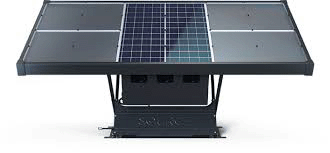 Buttah Windee in remote WA now has clean water thanks to solar hydropanel technology https://www.abc.net.au/news/2019-03-31/solar-hydropanels-fix-water-supply-in-remote-community/10941788?fbclid=IwAR2j446RfOuRIZNBC0K1xY6CWBq3Jnn48zx0b-WiuI8o96Jklb-bL1pfZHQ
Key points:
- Six solar hydropanels have been installed in the small WA community, capturing 900 litres of water a month from the air
- The community had discovered its water supply contained uranium more than twice the national health standard, and the State Government deemed it too expensive to address
- With the help of crowdfunding and technology donated by a WA company, the residents of the community no longer need to live elsewhere
The remote Aboriginal community is 760 kilometres north-east of Perth on the outskirts of Meekatharra.
Almost a decade ago, resident Andrew Binsiar discovered the community’s water was tainted with naturally occurring uranium at more than twice the national health standard.
“I was actually very surprised,” he said.
“You’d imagine people would test the water for human consumption before people are allowed to drink it.”
Unable to drink the community’s tap water, most of the 50 people who lived at Buttah Windee left.
Too expensive to fix: State Government
But for Andrew Binsiar and his wife Janine, leaving the home where they had raised their five children was not an option.
He turned to the State Government for help, but was told fixing the water supply would be too expensive.
“They come out and put up ‘do not drink the water’ signs and that was their solution to it,” Mr Binsiar said.
The State Government offered to move the remaining residents into state housing in Meekatharra, but Mr Binsiar was apprehensive about exposing his family to the town’s social issues.
“We knocked them back … for the simple reason I’d already been there and done that. My life changed when I moved here,” he said.
“I wasn’t a very good father when I lived in Meeka.”
Solar hydropanels pull water from air
Almost a decade on, Buttah Windee is the first remote Aboriginal community in Australia to use innovative technology for its water supply.
Six solar hydropanels have been installed at the outback community, donated by a WA company who heard about the community’s plight and wanted to help out.
Director of Wilco Electrical Frank Mitchell said the units captured water from the air and produced up to 900 litres of water a month.
“Those fans, you can hear them whirring away, are just drawing in air all day, all around, and the piece of material inside collects … the moisture in the air, then condenses down into the tank where it’s got a pump straight out to the tap,” he said.
Mr Binsiar said it was a simple idea, which should be introduced to all remote communities.
“Water is a basic human right that everyone deserves,” he said.
“It could mean better health for your children … I would guarantee that most communities have bad water.”
Crowdfunding rallies support
The near decade-long battle for clean drinking water has not come easily for the Buttah Windee residents, with Mr Binsiar turning to crowdfunding as a last resort.
Word spread quickly when Mr Binsiar began the fundraising campaign last year, and people from across Australia donated nearly $26,000 in three months.
“It was a huge success. The Australian public have been awesome,” he said.
Mr Binsiar used the funds to install a reverse osmosis water treatment plant.
“Reverse osmosis takes out all the contaminants in the water … on the back end of it, it puts the minerals your body needs back into the water,” he said.
“They’ve given us a chance where no-one else would and we are really proud of what we have done here.”
Barramundi fish farm to boost employment
The two separate systems now supply the community with safe drinking water and enough water to run a small barramundi fish farm.
Mr Binsiar and several residents built the fish farm hoping it would eventually provide local employment and a potential source of income. “Hopefully we can continue on and make it bigger and provide this region with fresh barramundi,” he said.
“I’d like to welcome everyone out to Buttah Windee and come and look at the work we do.”
Lynas considers relocating its rare earths processing to Western Australia
 Lynas looks to WA, not Wesfarmers, for its Malay solution, WA Today, By Hamish Hastie, Colin Kruger and Darren Gray, March 27, 2019 Western Australia might hold the key to Lynas Corp’s future despite the rare earths miner rejecting a $1.5 billion takeover offer from Perth-based Wesfarmers on Wednesday.
WA’s Environmental Protection Authority (EPA) confirmed it had recently met with the company to discuss approvals in the state.
“These discussions are preliminary in nature and no formal submission for any change has been presented to the EPA,” a spokeswoman for the agency said.
The discussions could help solve the problems in Malaysia which threaten the company’s future, and made it vulnerable to what analysts and investors described as a low-ball bid from Wesfarmers on Tuesday.
Lynas faces an uncertain future after the Malaysian government imposed strict new conditions on its billion-dollar Malaysian operation which could force it to shut down in September.
This includes the permanent removal of a residue with naturally occurring radiation, Water Leached Purification Residue (WLP), from Malaysia.
According to institutional investors, Lynas discussed plans last month to relocate some of its rare earths processing back to Western Australia. All processing is currently handled in Malaysia.
Lynas chief executive Amanda Lacaze denied there was any plan to extract and retain the controversial WLP residue in WA – the state where it is mined – but did confirm it planned to expand its processing operations outside of Malaysia.
She confirmed that Western Australia was a contender.
We operate in a growth industry and we are looking at how we grow our business with the market,” Ms Lacaze said.
According to the EPA, in February 2017 the rare earths miner applied to make changes to conditions of its rare earths operation at its Mt Weld mine in Laverton, 700 kilometres north east of Perth, and “secondary processing” at Meenar in the Shire of Northam 100km north east of Perth.
Lynas received approval for the mine and Meenar processing facility in 1998, but decided to set up its processing plant in 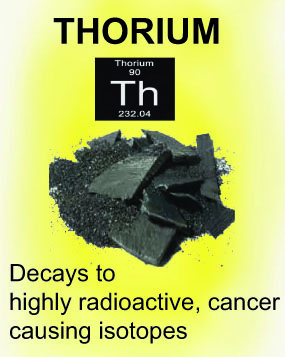 Malaysia instead.
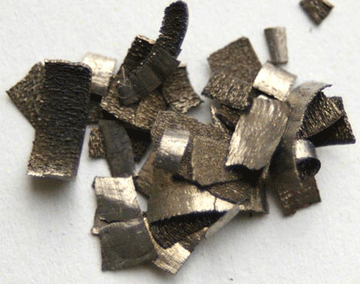
Anti-nuclear groups had fought the facility in both countries over concerns about rare earths radioactive by-product thorium.
On Wednesday, Ms Lacaze played down the Wesfarmers bid, saying the highly conditional nature of the approach meant there was “nothing substantive with which to engage”.
“This business is not for sale,” she told the media after the company said “it will not engage with Wesfarmers on the terms outlined in the indicative and highly conditional proposal”.
Lynas said its key assets included its position as “the only significant” rare earths miner and processor outside of China, and its Mt Weld ore body – a long life Tier 1 asset……… https://www.watoday.com.au/business/companies/lynas-looks-to-wa-not-wesfarmers-for-its-malay-solution-20190327-p5186c.html
Adani protesters shut down WA Parliament, ejected from public gallery
WA Today, By Nathan Hondros, March 19, 2019 Protesters against a coal mining project in Queensland briefly shut down question time in WA Parliament on Tuesday.
About eight protesters in the public gallery interrupted Housing Minister Peter Tinley to shout slogans about Adani’s Carmichael mine in Queensland’s Galilee Basin…….https://www.watoday.com.au/politics/western-australia/adani-protesters-shut-down-wa-parliament-ejected-from-public-gallery-20190319-p515kv.h
Dismissing Aboriginal objections, Leonora Shire Council, (Western Australia) wants an underground nuclear waste dump!
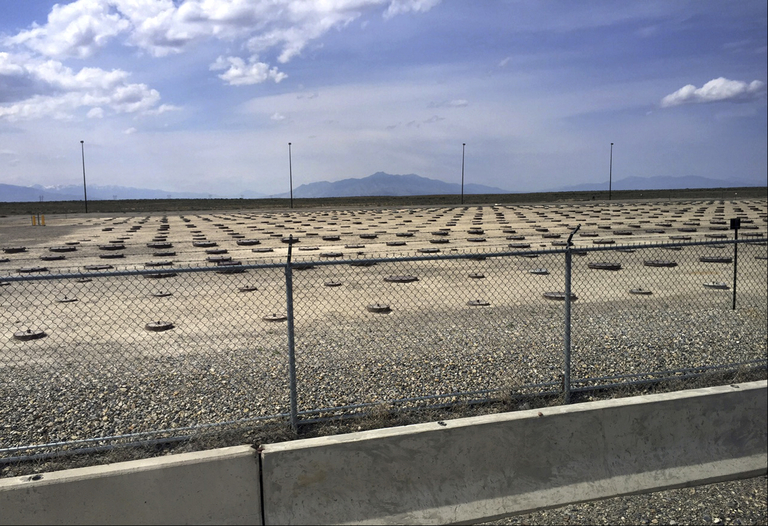
Outback WA council keeps hand raised for nuclear waste facility, as legal action halts progress on SA sites ABC North and West ,By Gary-Jon Lysaght , 12 Mar 19, While the search for a place to store Australia’s nuclear waste remains on hold pending a decision by the Federal Court, a small council in outback Western Australia still has its hand raised as a potential site.
Key points:
- Kimba and Hawker in South Australia are being considered as sites for storing nuclear waste
- A company called the Azark Project has a proposal to store waste in a “seismically stable” location near Leonora in the WA Goldfields
- The Federal Government says it is currently not considering Leonora as a potential location
Leonora, a WA Goldfields town about 200 kilometres north of Kalgoorlie, is being touted as a potential location for an underground nuclear waste disposal facility.
The Federal Government is considering sites at Kimba and Hawker in South Australia for an above-ground facility capable of permanently storing low-level waste and temporarily storing intermediate-level waste.
Nuclear waste being stored at Australia’s Nuclear Science and Technology Organisation (ANSTO) would be sent to the nuclear waste disposal facility…….
He said the Azark proposal was to store low-level and intermediate-level waste underground on a permanent basis. ……
Leonora not being considered
The Department of Industry, Innovation and Science said it was currently not considering Leonora as a potential location and that detailed studies were continuing at the three nominated sites in South Australia.
Lyndhurt and Napandee are the properties near Kimba being considered and the site near Hawker is called Wallerberdina Station.
A proposed community ballot on support for the facility in Kimba and Hawker has been on hold pending legal action.
The Leonora Shire Council remains in favour of a nuclear waste facility near the town, saying it could provide jobs and much-needed infrastructure for the small town.However, Leonora Shire President Peter Craig said that support could wane because of what he described as a lack of consultation from Azark.
“Azark did have a community meeting back in April 2018, which was pretty positive, there were some questions that still needed to be answered,” he said.
“To this day, in our view, as a council, Azark have failed in consultation work with the community…….
Mr Craig said Azark had consulted people one-on-one but not in a wider group since the 2018 meeting. ……
Cultural and environmental concerns
Throughout the site selection process at both Kimba and Hawker there has been opposition from local Aboriginal groups, who say a facility would impinge on sacred land.
Dave Sweeney from the Australian Conservation Foundation said local Aboriginal groups at Leonora remained strongly opposed to the facility.
“[Azark] says there’s no chance of any impact on water — there’s no evidential basis for that,” he said.
“They say there is no cultural or heritage issues — that is contested by local Aboriginal people.
“When this was first flagged, Aboriginal people who have deep concerns about this proposal got a petition together that rapidly got, in a number of days, around 500 signatures.
“In a remote region, that’s a quick and significant expression of concern.”……
Mr Sweeney said the Federal Government should stop the site selection process.
“We desperately need, right now, for the brakes to go on the federal process at Kimba and at Hawker and an independent assessment of the best ways we can manage radioactive waste.” https://www.abc.net.au/news/2019-03-12/goldfields-council-continues-support-for-nuclear-waste-facility/10887644?pfmredir=sm&fbclid=IwAR1mUzAfXLzOl5CeF41xkST82NALrwTf4xs8pVRnfW5v5U1FS9KxJZoLX04
1 This month

of the week – Australians for War Powers Reform (AWPR)
To see nuclear-related stories in greater depth and intensity
 Antinuclear